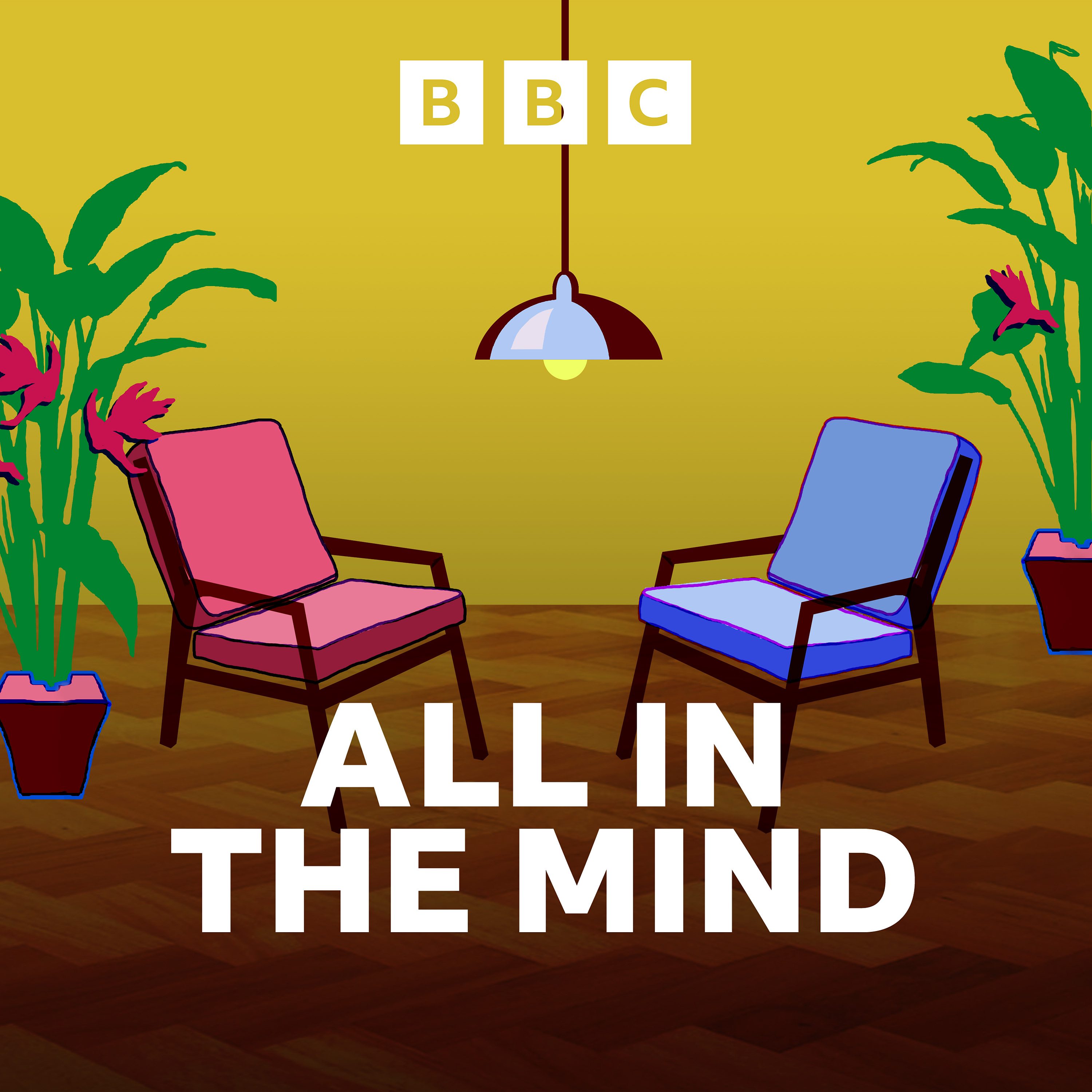
All in the Mind
- Episodios
- 312
- Se publica
- cada semana
- Último episodio
- 13 Oct 2026
Sobre el podcast
The show on how we think, feel and behave. Claudia Hammond delves into the evidence on mental health, psychology and neuroscience.
Episodios 312
Depression that's hard to treat
In presenting All in the Mind for 20 years, Claudia has explored the idea several times that depression is not just one thing, but more of an umbrella term and that different causes might need different …
Notas del episodio
In presenting All in the Mind for 20 years, Claudia has explored the idea several times that depression is not just one thing, but more of an umbrella term and that different causes might need different solutions. For this special edition focussing on hard to treat depression, she finds out whether that more personalised approach to understanding depression is now filtering through to the treatments that people are offered.
Hard to treat depression, where the usual approaches like talking therapies and anti-depressants don’t seem to work in the long-term, may happen in 30% of people with depression. Katie tells Claudia how living with depression that's difficult to treat is an ongoing journey and that learning new approaches has helped to recognise it more quickly and be able to lean into opportunities to do more about it.
Studio guest, Barney Dunn, Professor of Clinical Psychology at Exeter University, explains new ways of helping people who may find themselves in a treatment gap. He discusses new research clinics across the country addressing this 'missing middle' that allow people to self-refer.
And Claudia meets Ed Bullmore, author of 'The Inflamed Mind: A radical new approach to depression' who called for a better understanding of the root causes of depression in his book nearly a decade ago. How far does he see that progress has been made?
Plus, Claudia goes to Kings College London to experience a new approach that's being trialled for use in your own home. Transcranial direct current stimulation or TDCS, involves a very small electric current applied to the temples. Research assistant Mia German and Professor Cynthia Fu explain the latest evidence. What does wearing the headset actually feel like?
Presenter: Claudia Hammond Producer: Erika Wright Editor: Ilan Goodman Studio Manager: Tim Heffer Production coordinator: Jana Bennett-Holesworth
How do we judge someone’s emotions?
Claudia Hammond chats to All in the Mind Awards judge, writer and former doctor Adam Kay. Adam shares his mental health first aid kit, the importance of saying thank you and why you should nominate someone for …
Notas del episodio
Claudia Hammond chats to All in the Mind Awards judge, writer and former doctor Adam Kay. Adam shares his mental health first aid kit, the importance of saying thank you and why you should nominate someone for an Award.
Plus, how do you judge another person’s emotions? New research suggests that children and adults use different information to reach a conclusion on how someone is feeling.
And Claudia is joined by Kavita Vedhara, professor of health psychology at Cardiff University. Kavita shares how stress can scramble your internal GPS and how the brain may have evolved from two separate systems.
If you would like to nominate someone for the All in the Mind Awards, then head to bbc.co.uk/allinthemindawards. You’ll find the terms and conditions and the privacy notice on the website, and you must be over 18 to send in a nomination. You have until 1pm on Friday the 8th of January 2027 to enter.
Presenter: Claudia Hammond Producer: Sophie Ormiston Editor: Ilan Goodman Studio Manager: Mary Stone Production coordinator: Jana Holesworth
The psychology of ghosting
Have you ever had a partner or friend suddenly stop all communication without any explanation? This week we're talking all about the psychology of ghosting.Is ghosting another person ever acceptable? And if we …
Notas del episodio
Have you ever had a partner or friend suddenly stop all communication without any explanation?
This week we're talking all about the psychology of ghosting.
Is ghosting another person ever acceptable? And if we want to reject someone, how can we do it more kindly?
And Claudia visits a unique canal boat project supporting people who have experienced psychosis, where she hears stories of recovery, connection and hope.
What difference can early intervention in psychosis make to someone’s recovery?
Presenter: Claudia Hammond Presenter's friend: Dr Bruce Clark Producer: Gerry Holt Production coordinator: Jana Holesworth Sound engineer: Tim Heffer
Details of organisations offering help and support with mental health are available at bbc.co.uk/actionline, or you can call for free, at any time to hear recorded information on 08000 155 998.
All in the Mind Awards launch and how music can impact Parkinson’s
The All in the Mind Awards are back for 2027, and nominations are open now!Claudia Hammond hears from previous finalists on what the Awards mean to them – and Sir Stephen Fry sends in a special note on why the …
Notas del episodio
The All in the Mind Awards are back for 2027, and nominations are open now!
Claudia Hammond hears from previous finalists on what the Awards mean to them – and Sir Stephen Fry sends in a special note on why the Awards are so important.
Also, how can music make a difference to life with Parkinson’s disease? We investigate prompted by one of our listeners, and hear how even just imagining music could have an impact.
And Claudia is joined by Daryl O’Connor, professor of psychology at the University of Leeds, who shares new research on how listening to music calms our brains. Plus, Claudia and Daryl try some slow-paced breathing in the studio to help lower stress levels.
If you would like to nominate someone for the All in the Mind Awards, then head to bbc.co.uk/allinthemindawards. You’ll find the terms and conditions and the privacy notice on the website, and you must be over 18 to send in a nomination. You have until 1pm on Friday the 8th of January 2027 to enter.
Presenter: Claudia Hammond Producer: Sophie Ormiston & Gerry Holt Assistant producer: Tabitha Taylor Buck Editor: Ilan Goodman Studio Manager: Tim Heffer Production coordinator: Jana Holesworth
Are we too quick to label ‘normal’ distress?
Most of us have experienced difficult feelings like grief or stress or sadness – but are we too quick to label these feelings as a mental health problem? Clinical psychologist and author of You Are Not a …
Notas del episodio
Most of us have experienced difficult feelings like grief or stress or sadness – but are we too quick to label these feelings as a mental health problem?
Clinical psychologist and author of You Are Not a Diagnosis Tanya Byron thinks we are – and we should also stop saying things like, “I’m traumatised”, “totally triggered” or “I’m so OCD”.
So why does the language we use matter - and why does Tanya feel she's seeing a rise in self-diagnosis?
Catherine Loveday, Professor of Cognitive Neuroscience from the University of Westminster, also joins us in the studio to give her take on the debate.
Plus, we tackle a listener's question about why some sounds can make us feel spine-tinglingly good and why are we ticklish? Presenter: Claudia Hammond Producer: Gerry Holt Content editor: Ilan Goodman Production coordinator: Jana Holesworth Studio engineer: Steve Greenwood
Details of help and support with some of the issues raised are available at bbc.co.uk/actionline
Can you change your personality?
Are you an extrovert or an introvert? A type A or a type B? Or maybe you don't care about the categories but you would like to be less shy or more organised? Claudia Hammond and her panel of experts discuss …
Notas del episodio
Are you an extrovert or an introvert? A type A or a type B? Or maybe you don't care about the categories but you would like to be less shy or more organised? Claudia Hammond and her panel of experts discuss personality in front of a live audience at Cheltenham Science Festival.
Professor Kathryn Paige Harden from the University of Texas at Austin discusses how much of our personality is down to our genes and how much is down to environment. And she explains why children can end up with such different personalities from their siblings and parents despite sharing so many genes.
Professor Anu Realo from the University of Warwick describes how important personality is for wellbeing and health, and how cultural differences in personality traits are not as pronounced as we might think.
And Professor Vincent Deary from Northumbria University has spent many years running a clinic for people who are chronically ill and who can sometimes find that their illness changes who they are. He makes the case for working to accept ourselves as we are before we think about changing.
Producer: Lorna Stewart Content Editor: Ilan Goodman Technical Producers: Emma Harth & Gayl Gordon Production Coordinator: Jana Holesworth
Is it ADHD or perimenopause?
Are ADHD-like symptoms during perimenopause just down to hormonal changes or could they actually be revealing undiagnosed ADHD? Brain fog can be a key symptom of both, which means it's not always easy to tell …
Notas del episodio
Are ADHD-like symptoms during perimenopause just down to hormonal changes or could they actually be revealing undiagnosed ADHD? Brain fog can be a key symptom of both, which means it's not always easy to tell the difference, leaving women unsure. 'Scummy Mummies' podcaster Helen Thorn shares her experience, while Claudia Hammond unpicks the evidence with Dr Jessica Agnew-Blais. And Kerry explains the impact of getting an ADHD diagnosis in adulthood.
And Catherine Loveday, Professor of Cognitive Neuroscience at the University of Westminster, discusses the difficulties of accurate cognitive tests to measure brain fog.
Plus, brand-new research on a different way to teach mental health classes in schools. Previously, All in the Mind revealed that evidence for teaching universal strategies was often disappointing. Now Professor Tim Dalgleish at the University of Cambridge has results of a new approach called One Step Back.
And finally, for anyone who runs or goes to the gym, there's a new study of what's happening in the body when exercising to our favourite music.
Presenter: Claudia Hammond Producer: Erika Wright Editor: Ilan Goodman Production coordinator: Jana Bennett-Holesworth Sound engineer: Neva Missirian
The promise of psychedelics
With moves to fast-track research into psychedelics to treat serious mental health conditions in the US and a flurry of new scientific studies, we look at the issue here. How convincing is the evidence that …
Notas del episodio
With moves to fast-track research into psychedelics to treat serious mental health conditions in the US and a flurry of new scientific studies, we look at the issue here.
How convincing is the evidence that drugs like psilocybin, the active ingredient in magic mushrooms, can help with treatment-resistant depression - and after decades of research, are we on the cusp of seeing these treatments in the UK?
Claudia discusses the science with Dr James Rucker, consultant psychiatrist at South London and Maudsley NHS Foundation Trust, and she chats with Raya, who took part in one of Dr Rucker's studies to hear about what she experienced.
And why do we often miss what’s right in front of us?
We hear about inattentional blindness and what we miss from the world around us with mathematician Kit Yates.
And Dr Peter Olusoga, senior lecturer in psychology from Sheffield Hallam University, joins us in the studio with a surprise test of attention for our listeners - and brings with him an intriguing new study about why you think your phone is vibrating…
...when it isn’t.
Presenter: Claudia Hammond Producer: Gerry Holt Editor: Ilan Goodman Production coordinator: Jana Bennett-Holesworth Sound engineer: Andrew Garratt
Details of organisations offering support with mental health, or feelings of despair are available at bbc.co.uk/actionline.
Political emotions; Shared play; Forgotten women in psychology
In this week’s programme, guest Catherine Loveday, Professor of Cognitive Neuroscience at the University of Westminster, talks to Claudia Hammond about whether people feel emotions about politics differently in …
Notas del episodio
In this week’s programme, guest Catherine Loveday, Professor of Cognitive Neuroscience at the University of Westminster, talks to Claudia Hammond about whether people feel emotions about politics differently in the body to everyday emotions.
Visiting the Institute for the Science of Early years & Youth lab, a child developmental psychology lab studying shared play between parents and children, Claudia observes a mum and daughter participating in their latest study and speaks to director and child psychologist Professor Sam Wass from the University of East London. He explains how these parent-child interactions may be fundamental to how families connect with one another and why paying attention to the same things as your children is the best way to help them sustain their attention on their own as they get older.
Dr Madeleine Pownall, a feminist psychologist and associate professor in psychology at the University of Leeds, talks to All in the Mind about her new book Absent Minds: The Untold Story of the Women who Changed Psychology Forever.
Presenter: Claudia Hammond Producer: Helena Selby Editor: Ilan Goodman Production Co-ordinator: Jana Bennett-Holesworth
Could a keto diet help treat bipolar depression?
Claudia Hammond explores intriguing early evidence that a ketogenic diet - high fat, low carbs - might help treat bipolar depression.We already know this diet can help with some kinds of epilepsy. But now …
Notas del episodio
Claudia Hammond explores intriguing early evidence that a ketogenic diet - high fat, low carbs - might help treat bipolar depression.
We already know this diet can help with some kinds of epilepsy. But now, after a promising pilot study, the Wellcome trust is funding a £7.9 million trial to look at whether it could also help reduce depression in people living with bipolar disorder. Professor Daniel Smith and research fellow Dr Iain Campbell from the University of Edinburgh, take us into the emerging field of ‘metabolic psychiatry’.
Also in the programme, Professor Nilli Lavie of UCL reveals what happens to our brain’s grey matter as we try to stay focused in an age of constant distraction. As information and entertainment are always within reach, her research asks how these shifting habits may be reshaping our attention - and our brains.
And Professor Daryl O’Connor discusses emerging research into the hormone oxytocin and its surprising role in wound healing, as well as new insights into how cultural experiences might help slow the ageing process.
Presenter: Claudia Hammond Producer: Pamela Rutherford Studio Manager: Tim Heffer Production Coordinator: Jana Bennett-Holesworth Content Editor: Ilan Goodman
How does reading fiction impact our imagination and mental health?
How does reading shape our mind and spirit? Why do novels make us feel more human? In front of a live audience at the Hay Festival of Literature & Arts, Claudia Hammond looks at the science of what reading does …
Notas del episodio
How does reading shape our mind and spirit? Why do novels make us feel more human?
In front of a live audience at the Hay Festival of Literature & Arts, Claudia Hammond looks at the science of what reading does to the mind and explores the profound impact it can have on our lives and well-being. She is joined on stage by award-winning novelist and travel writer Joanna Kavenna; Dr Paula Byrne, Jane Austen biographer, writer and co-founder of ReLit: The Bibliotherapy Foundation and Ben Alderson-Day, Professor in Psychology at Durham University and lead researcher on ReaderBank, an ongoing research project studying reading, imagination and wellbeing. With these leading experts in psychology and the literary world, she examines the range of imaginative experiences that fiction readers have, whether novels can deepen our capacity for empathy and the therapeutic effect of reading on our minds.
Presenter: Claudia Hammond Producer: Helena Selby Editor: Ilan Goodman Production Co-ordinator: Jana Bennett-Holesworth
What do out-of-body experiences tell us about consciousness?
What would you say is the difference between the mind and the brain? Claudia delves into this complex question after listener Paul got in touch to ask about Near Death Experiences. What can they tell us about …
Notas del episodio
What would you say is the difference between the mind and the brain?
Claudia delves into this complex question after listener Paul got in touch to ask about Near Death Experiences. What can they tell us about the mind, the brain and who we are? Anil Seth, Professor of Cognitive and Computational Neuroscience at the University of Sussex and author of Being You tackles this profound topic.
Studio guest Catherine Loveday discusses brand new research on how exactly the brain brings old memories from our pasts into our minds.
And Anita got in touch after hearing our discussion of knowledge theft, asking what motivates idea-stealing and whether it’s always intentional. Lillian Ellis, Assistant Professor at the Darden School of Business at the University of Virginia shares the evidence on 'cryptomnesia' - the common act of plagiarising ideas unconsciously.
Presenter: Claudia Hammond Producer: Erika Wright Editor: Ilan Goodman Production coordinator: Jana Bennett-Holesworth Studio engineers: Mary Stone and Sue Maillot
Overcoming OCD
Everyone experiences unwanted thoughts from time to time. But how does it feel to be trapped in a constant cycle of intrusive thoughts and repetitive behaviours?This is the reality of life for many people with …
Notas del episodio
Everyone experiences unwanted thoughts from time to time.
But how does it feel to be trapped in a constant cycle of intrusive thoughts and repetitive behaviours?
This is the reality of life for many people with obsessive compulsive disorder, a common - but commonly misunderstood - mental health condition.
So today we’re dedicating the programme to understanding OCD and how it’s treated.
We’ll visit Britain’s only inpatient unit, Seacole Ward at Springfield Hospital in London, where we’ll meet Albert and Emily who explain what it’s like when life is governed by OCD, and consultant psychiatrist Dr Ilenia Pampaloni who likens intensive treatment to "bootcamp" where patients must face their worst fears 24 hours a day.
We're also joined in the studio by Dr Bruce Clark, consultant child and adolescent psychiatrist at the Maudsley Hospital in London, to tackle some ingrained OCD stereotypes and dissect the common phrase, "I'm a bit OCD".
Bruce offers advice on how to spot early signs of OCD and what we should do if we’re worried - and explains how he stays hopeful because the condition is so treatable.
Presenter: Claudia Hammond Producer: Gerry Holt Editor: Ilan Goodman Production coordinator: Jana Bennett-Holesworth Sound engineers: Giles Aspen & Tim Heffer
Details of organisations offering information and support with obsessive-compulsive disorder are available at bbc.co.uk/actionline
Toxic work behaviours, mind blanking, and why spending time with friends makes you more yourself
Claudia Hammond and guests offer insights into tackling knowledge theft and discourteous emails. Dr Emma Russell, occupational psychologist and reader in occupational and organisational psychology from the …
Notas del episodio
Claudia Hammond and guests offer insights into tackling knowledge theft and discourteous emails.
Dr Emma Russell, occupational psychologist and reader in occupational and organisational psychology from the University of Sussex, has insights into perpetrators of disrespectful emails. And studio guest Dr Pete Olusoga, senior lecturer in psychology at Sheffield Hallam University, tells Claudia about new research into knowledge theft and how to make repairs if it happens.
And Dr Madoka Kumashiro, from Goldsmiths, University of London, will discuss the Michaelangelo phenomenon – the idea that spending time with people who bring out the best in us helps to reveal our ideal inner self.
And finally, Pete Olusoga has research on mind-blanking which is increasingly thought to be a distinct brain state, different to mind-wandering or sleep.
Presenter: Claudia Hammond Producers: Lorna Stewart and Gerry Holt Studio Managers: Giles Aspen and Mary Stone Production Coordinator: Jana Bennett-Holesworth Content Editor: Ilan Goodman
How to be OK in a world that isn’t
How can we feel ok in a world that isn’t? With multiple global crises going on at the same time, it can make many of us feel very uncertain and anxious. But why are we affected by events happening so far from …
Notas del episodio
How can we feel ok in a world that isn’t?
With multiple global crises going on at the same time, it can make many of us feel very uncertain and anxious.
But why are we affected by events happening so far from home - and what can we do to help ourselves feel better in difficult times?
Clinical psychologist Linda Blair and Channel 4 News international editor Lindsey Hilsum share their wisdom.
And should we plan in 20 minutes a day just for worrying? That’s the idea of a “worry window”, where we block off a time to get all our worrying done in one so we can enjoy the rest of our day.
Daryl O’Connor, professor of psychology at the University of Leeds, brings us the evidence.
Also this week, can we really be addicted to social media?
Claudia tasks Andy Przybylski, professor of human behaviour and technology at the University of Oxford, with answering this surprisingly tricky question.
Presenter: Claudia Hammond Producer: Gerry Holt Editor: Ilan Goodman Production coordinator: Jana Bennett-Holesworth Studio engineer: Steve Greenwood
Details of organisations offering support with some of these issues are available at bbc.co.uk/actionline
Navigating the Pacific without technology
How well can you remember the details of your childhood? Sometimes, the memories are there, but a little hazy. But what if you could trick your brain into thinking you looked like your younger self again? Would …
Notas del episodio
How well can you remember the details of your childhood? Sometimes, the memories are there, but a little hazy. But what if you could trick your brain into thinking you looked like your younger self again? Would that help you recall more childhood memories? A new study has tried exactly this, so Claudia Hammond meets Professor Jane Aspell to have a go at an illusion that makes you believe you have a younger version of your face.
Imagine navigating across an ocean, only using the feel of waves hitting your boat to locate yourself. That’s exactly what master navigators in the Marshall Islands do, and in August, Professor Hugo Spiers and doctoral student Maria Ahmad joined local sailors on a three day voyage in the Pacific. They tell Claudia how Marshallese sailors are able to navigate in this way and what this can teach us about the brain.
And Claudia is joined in the studio by Daryl O’Connor, professor of psychology at the University of Leeds. Daryl shares how self-affirmation can be an easy intervention to boost wellbeing, and new research on why the more often you see a public health campaign, the less your brain engages with the message.
Presenter: Claudia Hammond Producer: Sophie Ormiston Editor: Ilan Goodman Studio Manager: Sue Maillot Production coordinator: Jana Bennett-Holesworth
Asylum hotels and mental health
More than 32,000 asylum seekers are being housed in hotels in the UK, the latest figures show.There's been intense political debate in recent weeks focused on the cost – both financially for the government and …
Notas del episodio
More than 32,000 asylum seekers are being housed in hotels in the UK, the latest figures show.
There's been intense political debate in recent weeks focused on the cost – both financially for the government and for local communities.
But what about the cost to the mental health of those living in the hotels?
Today we’re going to hear from an asylum seeker who spent more than a year in a hotel in London, and we’ll examine the evidence for the impact on people’s mental health with clinical psychologist Dr Janelle Spira.
Dr Peter Olusoga, senior lecturer in psychology at Sheffield Hallam University, joins us in the studio with the latest research, including a study that raises the prospect of using a common acne drug to cut risk of schizophrenia and new evidence on the psychology of losing.
And what if we could mentally reframe winter to make it more enjoyable? We get some tips from clinical psychologist Dr Stephanie Fitzgerald.
Presenter: Claudia Hammond Producer: Gerry Holt Content editor: Ilan Goodman Production coordinator: Jana Holesworth Studio engineer: Tim Heffer
Details of organisations offering support with mental health, or feelings of despair, are available at bbc.co.uk/actionline.
Are mental health classes in schools working?
It is now compulsory for schools across the UK to teach children about mental health and wellbeing. Whilst it might seem like classes for everyone on these topics might be helpful, a new study has found that in …
Notas del episodio
It is now compulsory for schools across the UK to teach children about mental health and wellbeing. Whilst it might seem like classes for everyone on these topics might be helpful, a new study has found that in some cases, they may actually be worsening mental health problems. How could this be? Claudia Hammond is joined by Dr Lucy Foulkes to discuss the possible reasons why.
Listener Paul got in touch to ask why some drivers get road rage. What is it about being in a car that makes people see red? On hand to answer is traffic psychologist Professor Dwight Hennessy, who has been studying the phenomenon for years.
And Claudia is joined in the studio by Catherine Loveday, Professor of Cognitive Neuroscience at the University of Westminster. Catherine brings us new research looking at how we remember emotional memories and why musicians show a higher resistance to pain. Plus, we reflect on some of your feedback on hoarding disorder.
Presenter: Claudia Hammond Producer: Sophie Ormiston Editor: Ilan Goodman Studio Manager: Donald MacDonald Production coordinator: Jana Bennett-Holesworth
Should we be using trigger warnings?
This programme may contain information that you might find to be evidence-based and informative... Trigger warnings are everywhere. They’re used in the news, on social media and in academia to flag potentially …
Notas del episodio
This programme may contain information that you might find to be evidence-based and informative...
Trigger warnings are everywhere.
They’re used in the news, on social media and in academia to flag potentially distressing material so we can emotionally prepare ourselves or avoid it.
But what if they actually make things worse?
We interrogate a growing body of evidence that suggests they aren’t working in the way they are intended. So should we still be using trigger warnings?
Also this week, we’ll hear from psychotherapist and author Stephen Grosz who'll share what he has learnt about love and gift-giving from four decades of conversations with his patients.
And Daryl O’Connor, Professor of Psychology at the University of Leeds, joins us in the studio and brings news of a study on links between discrimination and inflammation in the body, and why carrying out acts of kindness for others comes with benefits for you...
Presenter: Claudia Hammond Producer: Gerry Holt Content editor: Ilan Goodman Production coordinator: Jana Holesworth Studio engineer: Bob Nettles
Are there multiple subtypes of autism, and how vivid are your memories?
Autism tends to be viewed as a spectrum, but a new study published this month in Nature suggests that there are both genetic and behavioural differences between early and later diagnosed autism. So is autism …
Notas del episodio
Autism tends to be viewed as a spectrum, but a new study published this month in Nature suggests that there are both genetic and behavioural differences between early and later diagnosed autism. So is autism still a spectrum, or should we be thinking of it as having multiple different subtypes? Claudia Hammond talks to Professor Uta Frith, who has pioneered autism research for decades, about what this means for how we view autism now.
The universities of Cambridge and Durham are launching a study to help them unlock the secrets of vivid memory. Postdoctoral researchers Kasia Mojescik and Martha McGill tell Claudia how they plan to find out what makes a memory vivid, why some memories are more vivid than others, and how people can get involved in their work.
And Claudia is joined in the studio by Catherine Loveday, Professor of Cognitive Neuroscience at the University of Westminster. Catherine brings us new research on how state-level income inequality can impact how children’s brains develop, and the myriad ways music can affect dining experiences.
If you'd like to take part in the vivid memories research survey, you can find it here: https://www.english.cam.ac.uk/research/memory/get-involved/
Presenter: Claudia Hammond Producer: Sophie Ormiston Editor: Ilan Goodman Studio Manager: Donald MacDonald Production coordinator: Jana Holesworth
Why do we hoard?
Many of us can empathise with that feeling of keeping stuff for years and years. We might keep treasured objects with real sentimental value, or we might have items for a long time - and yet we can't really …
Notas del episodio
Many of us can empathise with that feeling of keeping stuff for years and years.
We might keep treasured objects with real sentimental value, or we might have items for a long time - and yet we can't really explain why.
For those of us who don’t like getting rid of our belongings, life can feel very full of stuff.
But when does a tendency to hold on to things become more worrying?
It can be difficult to put a figure on just how many people have what's known as hoarding disorder but it was classified as a mental health condition in 2013.
So what causes this complex and little discussed issue – and is it more than just a problem of too much stuff?
Claudia visits a woman who describes how hoarding has taken over her life to the extent that she doesn’t let anyone into her home. We also meet her psychologist to understand what underpins hoarding disorder and how it’s treated.
And joining us in the studio is Daryl O’Connor, professor of psychology at the University of Leeds, who brings an intriguing study about a phenomenon known as “environmental sensitivity”.
He explains what it is and its new-found links with very common mental health conditions.
Presenter: Claudia Hammond Producer: Gerry Holt Content editor: Ilan Goodman Production coordinator: Jana Holesworth Studio engineer: Tim Heffer
Details of organisations offering help and support with mental health or self-harm are available at bbc.co.uk/actionline.
What is beliefism, and can you spot a liar?
Just looking at the news can give the feeling that today’s world is more polarised than ever. And the stats show that in Britain, the majority of people believe that society is divided. How can we go about …
Notas del episodio
Just looking at the news can give the feeling that today’s world is more polarised than ever. And the stats show that in Britain, the majority of people believe that society is divided. How can we go about bridging this divide? Paul Dolan, professor of behavioural science at LSE, has written a book called Beliefism on exactly this. He chats to presenter Claudia Hammond about how we can learn to get along with people we disagree with, and how doing this can impact our lives for the better.
Also, The Celebrity Traitors starts this Wednesday on BBC One. To convince their fellow contestants that they’re innocent, the Traitors have to be pretty good at deception. But how can the Faithfuls successfully identify their lies? Claudia speaks to Sharon Leal, senior research fellow in forensic psychology at the University of Portsmouth, to scrutinise the psychological evidence on deceit – and Sharon’s research has real life impacts on how police conduct their interviews.
And Claudia is joined in the studio by Pete Olusoga, senior lecturer in psychology at Sheffield Hallam University. Pete shares new research that suggests the bigger a problem is, the smaller it seems, and how being nosy at work could be causing undue stress.
Presenter: Claudia Hammond Producer: Sophie Ormiston Editor: Ilan Goodman Studio Manager: Emma Harth Production coordinator: Jana Holesworth
The rise of AI therapy
Would you ever share your most intimate, personal circumstances with an AI - and then use its advice in your day-to-day life?If the answer is yes, then you are not alone. Many people are turning to human-like …
Notas del episodio
Would you ever share your most intimate, personal circumstances with an AI - and then use its advice in your day-to-day life?
If the answer is yes, then you are not alone. Many people are turning to human-like AI chatbots for help with their mental health.
So we're going to spend the programme exploring the fascinating and growing phenomenon of AI therapists.
We’ll find out how and why people are using it by listening in to some very personal AI ‘therapy’ sessions. How does it work - and can it be effective?
As its real-world use far outpaces the evidence, we’ll find out the potential pitfalls – and positives.
Can AI therapy really help us?
Presenter: Claudia Hammond Presenter's friend: Professor Catherine Loveday Producer: Gerry Holt Researcher: Mohan Shi Content editor: Ilan Goodman Production coordinator: Jana Holesworth
Details of organisations offering support with mental health, or feelings of despair are available at bbc.co.uk/actionline.
All in the Mind Awards Ceremony
Many of us will experience mental health problems at some point in our lives – and it is often the help and support of those around us that can make all the difference to how we cope and recover.The BBC Radio 4 …
Notas del episodio
Many of us will experience mental health problems at some point in our lives – and it is often the help and support of those around us that can make all the difference to how we cope and recover.
The BBC Radio 4 All in the Mind Awards recognises the unsung heroes who have helped make that difference.
Claudia Hammond meets the finalists and announces the winners in the All in the Mind Awards ceremony, recorded with a live audience at the BBC Radio Theatre in London.
Presenter: Claudia Hammond Producers: Lorna Stewart, Hannah Fisher & Gerry Holt Content Editor: Glyn Tansley Awards Coordinators: Jana Bennett-Holesworth & Siobhan Maguire
If you are suffering distress or despair, details of help and support are available at BBC Action Line.
The Psychology of Curiosity at Cheltenham Science Festival
Is curiosity good for us, or should we learn a lesson from what curiosity did to the cat? And why does curiosity drive some people to explore the ends of the earth and beyond, while others just really aren’t …
Notas del episodio
Is curiosity good for us, or should we learn a lesson from what curiosity did to the cat? And why does curiosity drive some people to explore the ends of the earth and beyond, while others just really aren’t very curious at all?
As a journalist and author, Claudia Hammond has turned curiosity into a profession. She invites a panel of people for whom curiosity is also at the centre of what they do to discuss the psychology of curiosity in front of an audience at the Cheltenham Science Festival. They are...
Tim Peake – astronaut, test pilot and author. His lifelong curiosity took him to live for six months on the International Space station. While he was there he famously ran the London Marathon on a treadmill and he was the first British astronaut to walk in space.
Gosia Goclowska - a lecturer in the department of psychology at the University of Bath. She researches some of the more unusual emotions we experience such as curiosity, awe and surprise.
And Matthias Gruber - an associate professor of psychology at the University of Cardiff. His research focuses on the neuroscience of curiosity and learning.
Producer: Lorna Stewart Production Coordinator: Jana Holesworth Sound Engineers: Gayl Gordon and Giles Aspen
All About Twins
This week is all about twins. On today's programme we'll hear from a very special pair who are through to the final of the All in the Mind Awards, which celebrates those who have made a real difference to …
Notas del episodio
This week is all about twins.
On today's programme we'll hear from a very special pair who are through to the final of the All in the Mind Awards, which celebrates those who have made a real difference to people’s mental health.
We'll hear how the special bond between Lisa and Rose Betts really mattered when Lisa was going through a very tough time with her mental health.
And the insight Lisa and Rose give us into their world got us thinking about the unique science of twins. What is it that fascinates us so much - and what can twins teach us about ourselves and the human experience?
Claudia is joined in the studio by Daryl O’Connor, professor of psychology at the University of Leeds, and handily a twin himself, to dive headfirst into the evidence on twin relationships.
Presenter: Claudia Hammond Producers: Gerry Holt (a twin) & Hannah Fisher Studio Manager: Tim Heffer Editor: Glyn Tansley Production coordinator: Jana Bennett-Holesworth (has twins)
If you are suffering distress or despair, details of help and support are available at BBC Action Line.
Are you flourishing? And why a playful approach can help us cope
Do you feel like you’re flourishing? If you’ve not heard that term before, it’s not just about wellbeing, it’s about your whole life being good. Guest psychologist Dr Peter Olusoga joins Claudia in the studio …
Notas del episodio
Do you feel like you’re flourishing?
If you’ve not heard that term before, it’s not just about wellbeing, it’s about your whole life being good.
Guest psychologist Dr Peter Olusoga joins Claudia in the studio to discuss the results of the Global Flourishing Study, a huge new study of more than 200,000 people in 22 countries.
What are the key takeaways on how we might help ourselves to flourish?
Pete also brings the science on a new psychological term – ‘lemonading’. It’s all about bringing a playful approach to life to help us cope in difficult times.
And we reveal more of our All in the Mind Awards finalists ahead of this month’s ceremony, including the story of a lifesaving breastfeeding group, and a nurse who was a rock for someone going through difficult psychiatric treatment.
Presenter: Claudia Hammond Producers: Gerry Holt & Hannah Fisher Studio Manager: Phil Lander Editor: Glyn Tansley
Aha moments and contagious laughter
What's going on in your brain when you experience an 'aha!' moment?Imagine you've been stuck on a problem for ages, but then the answer suddenly comes to you out of nowhere, like a bolt of lightning. Claudia …
Notas del episodio
What's going on in your brain when you experience an 'aha!' moment?
Imagine you've been stuck on a problem for ages, but then the answer suddenly comes to you out of nowhere, like a bolt of lightning. Claudia Hammond is joined in the studio by professor of cognitive neuroscience Sophie Scott to understand how these 'aha' moments happen.
Sophie also brings us her own research into contagious laughter and why some types of laughter are more likely to give us the giggles than others.
And Claudia meets another All in the Mind Awards finalist. This time it's Flynn Mellor, nominated by his mum Janine for his unwavering care whilst she was unwell. Claudia visits the pair at home and hears from Janine how Flynn's support saved her life.
The All in the Mind Awards ceremony takes place at the BBC Radio Theatre in London on 18 June, and there is a ballot for free tickets which closes at midday on 31 May. You can enter online by going to www.bbc.co.uk/showsandtours/shows.
If you are suffering distress or despair and need support, including urgent support, a list of organisations that can help is available at bbc.co.uk/actionline.
Presenter: Claudia Hammond Producers: Sophie Ormiston, Hannah Fisher and Gerry Holt Studio Manager: Emma Harth Editor: Glyn Tansley
The state of mental health services and more All in the Mind Awards finalists
This week, we're taking a look at the state of mental health services in the UK. Claudia Hammond is joined in the studio by the BBC's social affairs correspondent Michael Buchanan to dissect how long people are …
Notas del episodio
This week, we're taking a look at the state of mental health services in the UK. Claudia Hammond is joined in the studio by the BBC's social affairs correspondent Michael Buchanan to dissect how long people are having to wait for care and what is being done to tackle the issues.
We also hear from two more finalists in the All in the Mind Awards.
First up is Duncan who nominated psychiatrist Dr Ilenia Pampaloni, who in 2023 treated him on the UK's only inpatient OCD ward. Claudia hears how Dr Pampaloni's treatment has helped Duncan have his first year of stability in 20 years.
And Claudia visits the group KidsTime Haringey, nominated by Chuks. KidsTime works with families where the parents have mental health disorders, and we hear how the group has helped Chuks rebuild his relationship with his children through specialised workshops and sessions.
The All in the Mind Awards ceremony takes place at the BBC Radio Theatre in London on 18 June, and there is a ballot for free tickets which closes at midday on 31 May. You can enter online by going to www.bbc.co.uk/showsandtours/shows.
If you are suffering distress or despair and need support, including urgent support, a list of organisations that can help is available at bbc.co.uk/actionline.
Presenter: Claudia Hammond Producers: Sophie Ormiston, Hannah Fisher, Gerry Holt Studio Manager: Tim Heffer Editor: Glyn Tansley
What is interoception, and how mood can affect how well your vaccine works
This week we’re talking about interoception. That's the way the brain interprets the many signals that come from the body. How useful is this skill, can you perfect it – and when might it have a more negative …
Notas del episodio
This week we’re talking about interoception. That's the way the brain interprets the many signals that come from the body.
How useful is this skill, can you perfect it – and when might it have a more negative effect?
In the studio with Claudia is health psychologist Professor Kavita Vedhara who explains why watching 15 minutes of the Two Ronnies, some Fawlty Towers and a bit of Elvis Presley, could boost how well your vaccine works.
And Claudia meets a group from Essex who are finalists in this year’s All in the Mind awards.
The group teaches women who are experiencing anxiety, depression or abusive relationships how to ride a bike. We’ll hear how this simple community initiative is connecting people and even transforming lives, and why they just can’t stop smiling.
The awards take place at the BBC Radio Theatre in London on 18 June and there is a ballot for free tickets which closes at midday on 31 May. You can enter online by going to www.bbc.co.uk/showsandtours/shows. Presenter: Claudia Hammond Producer: Gerry Holt, Hannah Fisher and Helena Selby Studio Manager: Jackie Margerum Production Coordintator: Siobhan Maguire Content Editor: Glyn Tansley
Aquí están los 100 episodios más recientes de 312. Los anteriores están en el feed del podcast.
Podcasts similares
Más podcasts de Salud y forma física