

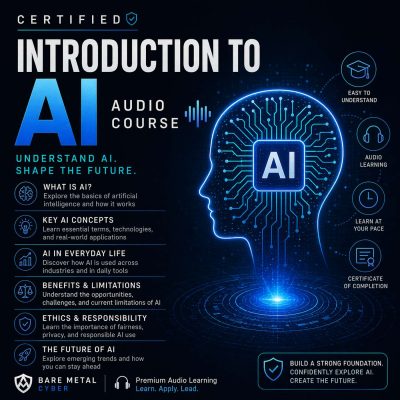
Episode 8 — Knowledge Representation — How Machines Store Facts
Notas del episodio
For AI to reason, it needs to store and organize information. This episode explores knowledge representation, the frameworks that allow machines to capture facts, relationships, and rules. From semantic networks linking concepts to ontologies defining categories, we examine how different structures model the world. Logic-based systems like first-order logic provide precision, while production rules offer flexibility. Knowledge graphs, increasingly common today, connect entities into vast webs of meaning, powering systems like search engines and digital assistants.
But representation is not just about storage; it’s about inference. We cover how inference engines draw conclusions, how probabilistic and fuzzy logic manage uncertainty, and how non-monotonic reasoning allows systems to revise conclusions when new evidence arrives. Case-based reasoning and hybrid methods demonstrate the blending of symbolic and statistical approaches. Applications in expert systems, robotics, and natural language processing show how representation shapes performance. This episode makes clear that how you represent knowledge determines what a system can know — and what it can’t. Produced by BareMetalCyber.com, where you’ll find more cyber prepcasts, books, and information to strengthen your certification path.
Todos los episodios de Certified – Introduction to AI Audio Course