

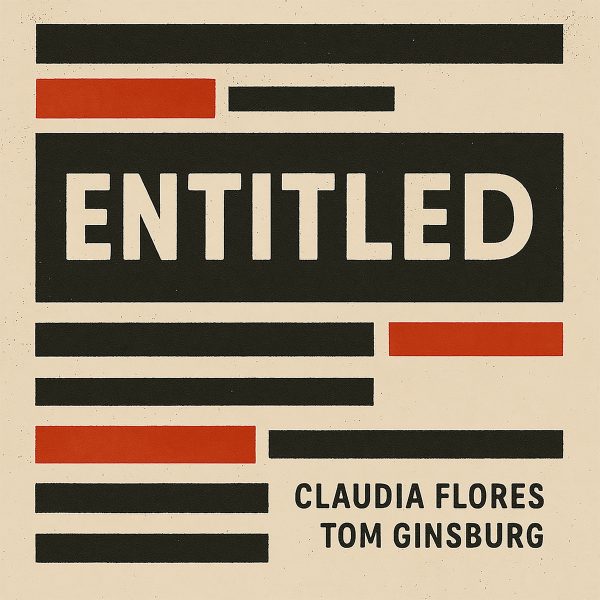
Entitled
- Episodios
- 50
- Se publica
- cada mes
- Último episodio
- 8 Oct 2026
Sobre el podcast
Rights matter, but conversations about rights can be polarizing, confusing and frustrating. Lawyers and law professors Claudia Flores and Tom Ginsburg have traveled the world getting into the weeds of global human rights debates. On Entitled, they use that expertise to explore the stories and thorny questions around why rights matter and what’s the matter with rights. Entitled is produced with the support of University of Chicago Law School and Yale Law School, and is part of the award winning University of Chicago Podcast Network.
Episodios 50
Sanctioned: Cuba Under the US Embargo with Raúl Rodríguez Rodríguez
For over six decades, the U.S. embargo on Cuba has stood as one of the longest and most comprehensive sanction regimes in modern history. But what are the real-world human, economic, and geopolitical costs of …
Notas del episodio
For over six decades, the U.S. embargo on Cuba has stood as one of the longest and most comprehensive sanction regimes in modern history. But what are the real-world human, economic, and geopolitical costs of economic coercion?
In this episode of Entitled, we sit down with Dr. Raúl Rodríguez Rodríguez, Director of the Center for Hemisphere and United States Studies at the University of Havana. We explore how decades of policy designed to pressure a government shape the everyday lives of citizens—from fuel restrictions, to inflated costs of basic goods, power blackouts, and lack of clean water—who actually pays the price for sanctions?
Hosted by Simplecast, an AdsWizz company. See pcm.adswizz.com for information about our collection and use of personal data for advertising.
Electing the Bench: Mexico’s Judicial Overhaul and the Rule of Law with Julio Ríos-Figueroa
Mexico is navigating one of the most sweeping judicial transformations in modern constitutional history—a controversial reform replacing thousands of career federal and state judges with bench positions decided …
Notas del episodio
Mexico is navigating one of the most sweeping judicial transformations in modern constitutional history—a controversial reform replacing thousands of career federal and state judges with bench positions decided by direct popular vote. But what does this mean for the rule of law, institutional independence, and the future of checks and balances in Latin America's second-largest economy?
In this episode, we sit down with Julio Ríos-Figueroa, Associate Professor of Law at ITAM and one of the region's leading experts on comparative judicial politics and empirical legal studies. Together, we unpack the mechanics and fallout of this radical shift.
Hosted by Simplecast, an AdsWizz company. See pcm.adswizz.com for information about our collection and use of personal data for advertising.
Who's Entitled to Passport Privilege with Dimitry Kochenov
While citizenship is often celebrated as a cornerstone of democracy and equality, constitutional scholar Dimitry Kochenov argues it functions as something far more troubling: a global caste system. In this …
Notas del episodio
While citizenship is often celebrated as a cornerstone of democracy and equality, constitutional scholar Dimitry Kochenov argues it functions as something far more troubling: a global caste system.
In this episode, we speak with Kochenov, who is also a professor of legal studies at the Central European University, about how citizenship acts as a tool of exclusion—a "passport apartheid" assigned almost entirely by the luck of where or to whom you were born. We explore the deep tension between human rights and nationality, examining how the abstract machinery of passports erases individual humanity in favor of arbitrary borders. From the illusion of international reciprocity to practical alternatives grounded in individualized assessment, Kochenov challenges us to rethink how we grant dignity, mobility, and rights in a modern world.
Hosted by Simplecast, an AdsWizz company. See pcm.adswizz.com for information about our collection and use of personal data for advertising.
The Crisis of Gender Apartheid in Afghanistan with Rina Amiri
When the Taliban regained control of Afghanistan in 2021, they didn't just alter the country's political landscape—they systematically dismantled the legal and social reality for all women and girls. Through a …
Notas del episodio
When the Taliban regained control of Afghanistan in 2021, they didn't just alter the country's political landscape—they systematically dismantled the legal and social reality for all women and girls. Through a continuous rollout of oppressive edicts, women and girls have been banned from universities, barred from working for NGOs, and forbidden from even speaking aloud in public spaces. International legal experts and activists are increasingly calling this reality gender apartheid.
In this episode, we sit down with Rina Amiri, top diplomat and former U.S. Special Envoy for Afghan Women, Girls, and Human Rights. Having spent decades navigating the complex world of conflict resolution and international peacebuilding at the UN and the State Department, Amiri brings an unparalleled level of insight to one of the most critical human rights crises of our time.
Hosted by Simplecast, an AdsWizz company. See pcm.adswizz.com for information about our collection and use of personal data for advertising.
Are All Afghanistan's Women Potential Refugees? (Re-release)
The collapse of the Afghan government has raised grave concerns for the future of the country, particularly for women. Exit is not a generally available option, but should it be? This week, we wanted to …
Notas del episodio
The collapse of the Afghan government has raised grave concerns for the future of the country, particularly for women. Exit is not a generally available option, but should it be? This week, we wanted to re-release our conversation about the rights of women in Afghanistan as we prepare to release a special conversation with Rina Amiri who was the US Special Envoy for Afghan Women, Girls, and Human Rights.
Hosted by Simplecast, an AdsWizz company. See pcm.adswizz.com for information about our collection and use of personal data for advertising.
Caste Across Borders: Dalit Workers and Immigrant Exploitation
In this episode of Entitled, we examine how caste discrimination doesn’t end at the borders of India. As Dalit workers migrate to the US in search of better wages, many encounter familiar patterns of exclusion …
Notas del episodio
In this episode of Entitled, we examine how caste discrimination doesn’t end at the borders of India. As Dalit workers migrate to the US in search of better wages, many encounter familiar patterns of exclusion and abuse right here in the United States.
We speak with Qayam Masumi and Roja Singh, members of the Dalit Solidarity Forum, an advocacy organization dedicated to raising awareness about caste discrimination. They are advocating on behalf of Dalit workers who they say were trafficked from India to come to New Jersey to build a new temple connected to BAPS, a major Hindu religious organization with a global presence. Many workers reported extremely long hours and wages as low as about $1.20 per hour, and have suffered from severe health and safety violations.
Resources:
https://www.iswaa.com/
https://dalitsolidarityforumusa.com/justice-for-baps-workers/
https://docs.google.com/forms/d/e/1FAIpQLSepVVrJLD0_OJn6wxn2HU4PMDocReBh0V8qMTwAFgRbcf2Lcw/viewform
Hosted by Simplecast, an AdsWizz company. See pcm.adswizz.com for information about our collection and use of personal data for advertising.
Inside The Fight for Freedom with Myanmar's UN Ambassador
In this episode of Entitled, we sit down with Ambassador Kyaw Moe Tun, who has served as the Representative of Myanmar to the United Nations since October 2020. Despite the February 2021 military coup, he …
Notas del episodio
In this episode of Entitled, we sit down with Ambassador Kyaw Moe Tun, who has served as the Representative of Myanmar to the United Nations since October 2020. Despite the February 2021 military coup, he remains in his position, representing the interests of the democratic government and opposing the military junta at the UN. He has survived threats and has been challenged by the junta, but the UN has continued to recognize him as the representative.
As Myanmar continues to face political upheaval and widespread displacement following the coup, Ambassador Tun offers a firsthand perspective on the country’s ongoing crisis and its implications for the global human rights landscape. We explore the challenges of representing a nation in turmoil, the role of international institutions in responding to democratic backsliding, and what accountability can—and should—look like on the world stage.
Hosted by Simplecast, an AdsWizz company. See pcm.adswizz.com for information about our collection and use of personal data for advertising.
Human Rights Under Pressure: A Conversation with Kenneth Roth
On this episode of Entitled, we sit down with Kenneth Roth, the longtime former executive director of Human Rights Watch and one of the world’s most prominent advocates for international human rights. Over …
Notas del episodio
On this episode of Entitled, we sit down with Kenneth Roth, the longtime former executive director of Human Rights Watch and one of the world’s most prominent advocates for international human rights. Over nearly three decades leading Human Rights Watch, Roth helped shape the global human rights movement, documenting abuses, pressuring governments, and elevating the role of international law in holding leaders accountable.
In this conversation, he reflects on how the human rights landscape has evolved—from the optimism of the post–Cold War era to today’s more complex environment marked by rising authoritarianism, democratic backsliding, and geopolitical competition. Flores and Ginsburg ask Roth how human rights advocates can remain effective when powerful states challenge international norms and institutions. They discuss the role of documentation and public pressure in exposing abuses, the growing influence of authoritarian governments on the global stage, and the ways civil society can still drive accountability even in hostile political climates.
Hosted by Simplecast, an AdsWizz company. See pcm.adswizz.com for information about our collection and use of personal data for advertising.
The Student Movement that Pushed for Change in Bangladesh
On this episode of Entitled, Tom and Claudia talk with human rights advocate Rafia Khondoker about the state of women’s rights and democratic freedoms in Bangladesh. Last week, the Bangladesh Nationalist Party …
Notas del episodio
On this episode of Entitled, Tom and Claudia talk with human rights advocate Rafia Khondoker about the state of women’s rights and democratic freedoms in Bangladesh. Last week, the Bangladesh Nationalist Party secured a landslide victory in the first national election since the 2024 uprising, approving a referendum on major constitutional reforms—the "July Charter"—seeking to strengthen judiciary independence, safeguard democracy and increase women's participation in politics.
Drawing on her legal training and on-the-ground experience, Khondoker unpacks the gap between constitutional promises and lived realities. She explains how formal legal protections can coexist with systemic barriers—political pressure, social norms, and institutional weaknesses—that limit meaningful access to justice for women and marginalized communities.
Hosted by Simplecast, an AdsWizz company. See pcm.adswizz.com for information about our collection and use of personal data for advertising.
From Prison to Exile: Leopoldo López and the Fight for Venezuela
In this episode of Entitled, we speak with Leopoldo López about authoritarianism, resistance, and the future of Venezuela. Recorded before the U.S. intervention, the conversation centers on López’s long …
Notas del episodio
In this episode of Entitled, we speak with Leopoldo López about authoritarianism, resistance, and the future of Venezuela. Recorded before the U.S. intervention, the conversation centers on López’s long opposition to the Maduro regime—through political organizing, imprisonment, exile, and international advocacy.
Following the interview, Tom and Claudia reflect on developments since the conversation was recorded, turning to the U.S. intervention and its implications for sovereignty, legitimacy, and democratic change in Venezuela.
Hosted by Simplecast, an AdsWizz company. See pcm.adswizz.com for information about our collection and use of personal data for advertising.
Pakistan’s Supreme Court Under Strain: A Judge Resigns Amid Constitutional Attacks and Rising Authoritarianism
We speak to Mansoor Ali Shah, who served as the Senior Puisne Judge of the Supreme Court of Pakistan until just last month. Shah is one of two judges who resigned after parliament passed a constitutional …
Notas del episodio
We speak to Mansoor Ali Shah, who served as the Senior Puisne Judge of the Supreme Court of Pakistan until just last month. Shah is one of two judges who resigned after parliament passed a constitutional amendment that curbed its remit and will no longer allow the Supreme Court to hear constitutional cases. The judges say the reform “stands as a grave assault on the constitution”.
Hosted by Simplecast, an AdsWizz company. See pcm.adswizz.com for information about our collection and use of personal data for advertising.
Who's Afraid of Gender: Entitled Podcast Live
Why has gender—once a term of analysis and identity—become one of the most explosive political flashpoints of our time? From the halls of the United Nations to state legislatures across the United States …
Notas del episodio
Why has gender—once a term of analysis and identity—become one of the most explosive political flashpoints of our time? From the halls of the United Nations to state legislatures across the United States, debates over gender and sexuality now shape elections, social movements, and international alliances.
In this live episode of the "Entitled" podcast, hosts Claudia Flores and Tom Ginsburg sit down with Graeme Reid, U.N. Independent Expert on Sexual Orientation and Gender Identity, and Emily Bazelon, staff writer for The New York Times Magazine and senior research fellow at Yale Law School, to explore how gender has become a global battleground. Together, they’ll unpack the forces driving the backlash — from the rise of nationalist and religious movements to the politics of fear and control — and examine why gender has become a defining priority of the Trump administration and its international allies. Join us for a timely, provocative conversation about the past, present, and future of the global gender wars — and what’s really at stake when societies decide who gets to define gender itself.
Hosted by Simplecast, an AdsWizz company. See pcm.adswizz.com for information about our collection and use of personal data for advertising.
Silencing the Special Procedures: Sanctions and the UN Human Rights System
This year, the US government has issued sanctions on a number of experts from the UN to the International Criminal Court for speaking out about human rights in Gaza. President Donald Trump authorized sanctions …
Notas del episodio
This year, the US government has issued sanctions on a number of experts from the UN to the International Criminal Court for speaking out about human rights in Gaza. President Donald Trump authorized sanctions on the International Criminal Court (ICC) and its Chief Prosecutor Karim Khan with the goal of stopping the ICC from undertaking its independent mandate. UN experts strongly condemned the move, calling it “an attack on global rule of law."
In this episode of Entitled, we discuss how sanctions are being used and abused by the Trump administration, and how other UN members are responding to the sanctioning of their colleagues for speaking out.
Hosted by Simplecast, an AdsWizz company. See pcm.adswizz.com for information about our collection and use of personal data for advertising.
Is It Time To Rethink The Binary In Sports?
When South African runner Caster Semenya dominated international competitions, sports authorities demanded she prove she was “really” a woman. The rules they created—targeting women with intersex traits or …
Notas del episodio
When South African runner Caster Semenya dominated international competitions, sports authorities demanded she prove she was “really” a woman. The rules they created—targeting women with intersex traits or naturally higher testosterone—have since reshaped the future of women’s sports.
In this episode of Entitled, we unpack the controversial regulations of World Athletics, the recent European Court of Human Rights ruling, and the wider human rights questions at stake. Are these policies about fairness—or about enforcing outdated ideas of gender?
Hosted by Simplecast, an AdsWizz company. See pcm.adswizz.com for information about our collection and use of personal data for advertising.
What If Kings Are Good for Democracy?
What does it mean when people start calling Donald Trump a king? And why are some political theorists — on both the right and left — exploring the possibility of leaving democracy behind? All this debate got …
Notas del episodio
What does it mean when people start calling Donald Trump a king? And why are some political theorists — on both the right and left — exploring the possibility of leaving democracy behind? All this debate got co-host Tom Ginsburg thinking about an argument he’s been turning over in his head for years: could constitutional monarchy actually be the best form of government?
Is it possible that constitutional monarchy actuallystrengthensdemocracy? Do monarchs serve as symbols of national unity that modern republics are missing? And is America’s obsession with political dynasties — the Obamas, the Bushes, the Kennedys — actually more monarchical than we’d like to admit?
This wide-ranging conversation takes us from Thailand to the United Kingdom, from the founding ideals of the U.S. Constitution to the rise of populist leaders. Along the way, Tom and Claudia debate whether democracy is still holding strong — or if we’re inching toward something more authoritarian.
Hosted by Simplecast, an AdsWizz company. See pcm.adswizz.com for information about our collection and use of personal data for advertising.
Why Mahmoud Khalil's Lawyer Is Losing Faith In The Justice System
As student protests over Gaza sweep college campuses, one case is testing the limits of free speech and immigration law in America. Mahmoud Khalil, a Columbia student and lawful permanent resident, was arrested …
Notas del episodio
As student protests over Gaza sweep college campuses, one case is testing the limits of free speech and immigration law in America. Mahmoud Khalil, a Columbia student and lawful permanent resident, was arrested by ICE without a warrant and sent to a remote detention center in Louisiana—allegedly for his political advocacy.
In this episode, we sit down with Khalil's lawyer Baher Azmy, who is also the Legal Director of the Center of Constitutional Rights, to unpack the disturbing legal maneuver behind Khalil’s detention: a rarely used immigration clause that gives the Secretary of State near-total discretion to deport individuals deemed a “foreign policy risk.” What does this case reveal about the future of dissent and academic freedom?
Hosted by Simplecast, an AdsWizz company. See pcm.adswizz.com for information about our collection and use of personal data for advertising.
Are We Witnessing The End of The Postwar Order?, with Former President of the U.N. Dennis Francis
What happens when the country that helped design the international human rights system starts to dismantle it?In this episode, we speak with the former president of the U.N. General Assembly, Ambassador Dennis …
Notas del episodio
What happens when the country that helped design the international human rights system starts to dismantle it?
In this episode, we speak with the former president of the U.N. General Assembly, Ambassador Dennis Francis, about the growing threats to global cooperation and human rights—from authoritarian drift, to shrinking U.S. commitments, to rising fears inside the U.N. system itself.
Is this the end of the liberal international order? And if so, what comes next?
Hosted by Simplecast, an AdsWizz company. See pcm.adswizz.com for information about our collection and use of personal data for advertising.
Trump And Human Rights: Take One
What happens when the government turns the law into a weapon? In these first few months of the second Trump administration human rights advocates, legal scholars, and university leaders are warning of a …
Notas del episodio
What happens when the government turns the law into a weapon? In these first few months of the second Trump administration human rights advocates, legal scholars, and university leaders are warning of a political landscape where funding is slashed, free speech is chilled, and legal institutions are bent to serve those in power. From defunding human rights initiatives to threatening universities and using the justice system for political retribution, many say the future of democracy is on the line.
In this episode, we explore the growing fear—and defiance—among those on the frontlines. Can universities withstand political pressure? Will the rule of law hold against efforts to consolidate power? What does the future of human rights look like in this new environment, and can it adapt, change and survive?
Hosted by Simplecast, an AdsWizz company. See pcm.adswizz.com for information about our collection and use of personal data for advertising.
Is Bitcoin Good For Human Rights?
This week, our co-hosts Professors Tom Ginsburg and Claudia Flores discuss bitcoin, the cryptocurrency soaring in both popularity and value. In the last month, the price of a single bitcoin has risen from …
Notas del episodio
This week, our co-hosts Professors Tom Ginsburg and Claudia Flores discuss bitcoin, the cryptocurrency soaring in both popularity and value. In the last month, the price of a single bitcoin has risen from around $70,000 to almost $100,000. Its cultural impact is immense, yet confusing and controversial. Those who associate bitcoin with MAGA conservatives and get-rich-quick day traders might be surprised to learn that some see it as a tool to protect human rights.
Alex Gladstein, Chief Strategy Officer at the Human Rights Foundation, is optimistic about the revolutionary power of bitcoin to enable resistance and challenge global structures of economic inequality. In this episode, we hear from him on how bitcoin is uniquely positioned to support global human rights efforts.
Hosted by Simplecast, an AdsWizz company. See pcm.adswizz.com for information about our collection and use of personal data for advertising.
Inside the UN: Unpacking the Role of Human Rights Experts
United Nations special experts have a crucial role in upholding international human rights law. These independent specialists hold mandates to report and advise on different areas within human rights as special …
Notas del episodio
United Nations special experts have a crucial role in upholding international human rights law. These independent specialists hold mandates to report and advise on different areas within human rights as special rapporteurs, independent experts, or members of working groups. But how exactly do these appointments work, and what are the responsibilities, capabilities, and on-the-ground impacts of these experts?
In this episode, we hear from our very own co-host, Professor Claudia Flores, member of the UN Working Group on Discrimination against Women and Girls and Professor Fionnuala ni Aolain, former UN special rapporteur on counter-terrorism. Professors Flores and ni Aolain describe their work as UN mandate holders and how they address the most pressing issues in their areas of expertise.
Hosted by Simplecast, an AdsWizz company. See pcm.adswizz.com for information about our collection and use of personal data for advertising.
The Future of Justice: What’s Next for Israel/Gaza in International Law?
Since our last episode on the ongoing conflict between Israel and Gaza, we wanted to do an update on where international law currently stands in the conflict. This year, the conflict has triggered several legal …
Notas del episodio
Since our last episode on the ongoing conflict between Israel and Gaza, we wanted to do an update on where international law currently stands in the conflict. This year, the conflict has triggered several legal cases at international courts, including at the International Court of Justice, which has accused Israel of war crimes, crimes against humanity and genocide.
In this episode, we speak with Aslı Ü. Bâli, a Professor of Law at Yale University who teaches international law and human rights in the Middle East, and Francesca Albanese, the United Nations Special Rapporteur on The Occupied Palestinian Territories.
Hosted by Simplecast, an AdsWizz company. See pcm.adswizz.com for information about our collection and use of personal data for advertising.
Is There A Place For Natural Law In Today's World?
We've all heard about different kinds of laws...but there is a higher order law that often gets overlooked—it's called Natural Law. The idea behind Natural Law is that all humans are born with an innate …
Notas del episodio
We've all heard about different kinds of laws...but there is a higher order law that often gets overlooked—it's called Natural Law. The idea behind Natural Law is that all humans are born with an innate understanding of what's right and what's wrong, and that laws should be based on morality. In today's world, where there is no shortage of international wars, authoritarian leaders, human rights violations, and more, where and how can Natural Law be applied?
On this episode, we speak with Mary Ellen O'Connell, Professor of Law at Notre Dame and an expert on international law. O'Connell has been studying Natural Law over her career, and gives a justification for how it could be applied in scenarios from the Russia vs. Ukraine war, international human rights, and more.
Hosted by Simplecast, an AdsWizz company. See pcm.adswizz.com for information about our collection and use of personal data for advertising.
Can Law Govern War? Gaza, Israel and Beyond
When it comes to discussion about the conflict in Gaza, there is an endless parade of commentators on both sides telling us what is right or wrong, legitimate or illegal, a crime or a justified attack, but in …
Notas del episodio
When it comes to discussion about the conflict in Gaza, there is an endless parade of commentators on both sides telling us what is right or wrong, legitimate or illegal, a crime or a justified attack, but in all that debate and discussion the actual international laws of war often get pushed to the sidelines.
We’re planning to do a series of episodes on this conflict in the coming weeks, but we wanted to start by getting a baseline understand on the laws of war with an international expert.
Oona Hathaway is a professor of international law and a member of the Advisory Committee on International Law at the United States Department of State since 2005. For decades, she’s been exploring the complicated legal questions that are coming to the forefront since October 7th which makes her the perfect guest for this episode.
Hosted by Simplecast, an AdsWizz company. See pcm.adswizz.com for information about our collection and use of personal data for advertising.
Is Gender Apartheid A Thing?
The word apartheid gets used in many different contexts to indicate the severity of crimes across the globe. But its use is controversial because the word has a very specific definition in international law …
Notas del episodio
The word apartheid gets used in many different contexts to indicate the severity of crimes across the globe. But its use is controversial because the word has a very specific definition in international law. Even more controversial is the concept of expanding the term to include gender.
If there is one place on earth where it could be argued that a gender apartheid designation is needed its Afghanistan. Since the US withdrawal from the country, the Taliban have instituted a brutal repression of women. But is it gender apartheid?
What would it mean for us to create this designation and assign it to Afghanistan? Does cultural relativism throw a legitimate wrench into this argument or does that take the concept too far?
We discuss all these questions on this episode with Mohammad “Musa” Mahmodi, a Research Fellow in Law at the Schell Center for International Human Rights at Yale, Zahra Motamedi, an Associate Research Fellow at Yale, and Karima Bennoune, the Lewis M. Simes Professor of Law at the University of Michigan and author of “Your Fatwa Does Not Apply Here”.
Hosted by Simplecast, an AdsWizz company. See pcm.adswizz.com for information about our collection and use of personal data for advertising.
Is The Right to Read Under Threat?
In recent years, book bans have swept the nation. According to PEN America, more than 4,000 books have been banned in some capacity in public schools since July 2021. Books that discuss topics like racial …
Notas del episodio
In recent years, book bans have swept the nation. According to PEN America, more than 4,000 books have been banned in some capacity in public schools since July 2021. Books that discuss topics like racial justice or have characters that identify as LGBTQ+ are just some of the examples that have received widespread attention. While book bans are not a new phenomenon, parents rights groups have accelerated their attacks on what books can be put on school's shelves, leaving a bigger question up for debate: Who should decide what books are available, and moreover, who has the right to read certain books?
The American Library Association has been helping to support libraries as democratic institutions for decades by providing resources to librarians about what books to select based on the information needs of the communities to which they serve. In this episode, we speak with Deborah Caldwell-Stone, Director of the American Library Association's Office for Intellectual Freedom and Director of the Freedom to Read Foundation. Caldwell-Stone discusses why book bans have increased in recent years, and why she says the right to read needs to be protected.
Hosted by Simplecast, an AdsWizz company. See pcm.adswizz.com for information about our collection and use of personal data for advertising.
Do We Have The Right to Lie?
As kids, we all heard someone tell us that it's wrong to lie...but as we grew older, we realized that people lie all the time. Politicians, presidents, and even executives at corporations tell lies—big and …
Notas del episodio
As kids, we all heard someone tell us that it's wrong to lie...but as we grew older, we realized that people lie all the time. Politicians, presidents, and even executives at corporations tell lies—big and small. As citizens, there are obvious exceptions where lying is wrong, for instance; perjury, lying on your employment application, or lying to get a bank loan. But do we have a right to lie? And if so, what are the boundaries?
On this episode, we speak with UCLA Professor of Philosophy and Law Seana Shiffrin and George Washington University Professor of Law Catherine Ross. They discuss both the philosophical arguments against lying and the legal arguments against notorious lies made by President Trump and former Congressman George Santos.
Hosted by Simplecast, an AdsWizz company. See pcm.adswizz.com for information about our collection and use of personal data for advertising.
LIVE: Free Expression & Social Media
We’re doing something special for this month’s episode. In October of 2023, we hosted a live recording here at the University of Chicago. Tom Ginsburg was joined on stage by renowned scholar Genevie Laikier to …
Notas del episodio
We’re doing something special for this month’s episode. In October of 2023, we hosted a live recording here at the University of Chicago. Tom Ginsburg was joined on stage by renowned scholar Genevie Laikier to have a conversation about free speech on social media. In other words, it was very relevant to our current season about the right to free expression.
We’re going to share that recording with you this month. We hope you enjoy, and thanks to everyone who listened to our podcast this year.
Hosted by Simplecast, an AdsWizz company. See pcm.adswizz.com for information about our collection and use of personal data for advertising.
S3E3: The Complicated Right To Protest
Some might say one of the most important ways we exercise the right to free expression is through protests. And we’ve certainly seen groups all over the world using that right in the last few years, from the …
Notas del episodio
Some might say one of the most important ways we exercise the right to free expression is through protests. And we’ve certainly seen groups all over the world using that right in the last few years, from the George Floyd protests in the U.S. to democratic marches in Hong Kong to demonstrations in Chile, Venezuela, Iran and Peru.
On the surface this right may seem straightforward, but there are many thorny questions to grapple with: when does a protest become a violent violation of other rights, what does it mean to protest in the age of surveillance, does the content of the protest matter for it to be protected? On this episode, we speak with Jameel Jaffer, Adjunct Professor of Law and Journalism and Executive Director of the Knight First Amendment Institute at Columbia University.
Hosted by Simplecast, an AdsWizz company. See pcm.adswizz.com for information about our collection and use of personal data for advertising.
S3E2: Sticks and Stones: The Problem of Hate Speech
We all know the phrase: “sticks and stones may break my bones, but words will never hurt me.” But is that actually true? Recent research in psychology has shown that words can cause a plethora of different …
Notas del episodio
We all know the phrase: “sticks and stones may break my bones, but words will never hurt me.” But is that actually true? Recent research in psychology has shown that words can cause a plethora of different harms. Should this make us re-think our approach to hate speech?
In the US we’ve been hesitant to regulate hate speech, while other countries have been incredibly stringent. Which approach is right, and why? And, how do we even define what hate speech is anyway?
To get some answers we sit down with Yale Professor Robert Post and Laura Beth Nielsen the Chair of the Department of Sociology at Northwestern University.
Hosted by Simplecast, an AdsWizz company. See pcm.adswizz.com for information about our collection and use of personal data for advertising.
S3E1: How Free Is Free Speech On Campus?
On the third season of Entitled, we're circling back to the first fundamental right: the freedom of speech. Lawyers and law professors Claudia Flores and Tom Ginsburg begin this season by peeling back the …
Notas del episodio
On the third season of Entitled, we're circling back to the first fundamental right: the freedom of speech. Lawyers and law professors Claudia Flores and Tom Ginsburg begin this season by peeling back the curtains of how this right is currently playing out at universities across the country. In recent years, there have been tensions — and intense clashes — around speakers invited to campus, what professors are allowed to say in the classroom, and what subject matter should even be allowed to be taught. Now, with many of these cases making their way to the courts, is free speech at universities entering a dangerous new era?
In this episode, they speak with Robert Post, Sterling Professor of Law at Yale Law School; and Ben Wizner, Director of the Speech, Privacy and Technology Project at the ACLU; and Komi Frey, Director of Faculty Outreach at the Foundation for Individual Rights and Expression.
Hosted by Simplecast, an AdsWizz company. See pcm.adswizz.com for information about our collection and use of personal data for advertising.
Aquí están los 40 episodios más recientes de 50. Los anteriores están en el feed del podcast.
Podcasts similares
Más podcasts de Cultura y sociedad





¿Es tu podcast?
Confírmalo con una entrada en tu feed: aquí recibes un código, lo añades como podcast:txt en el canal de tu feed y nosotros lo comprobamos. Después tu podcast aparecerá como «verificado» en SoundNode.