

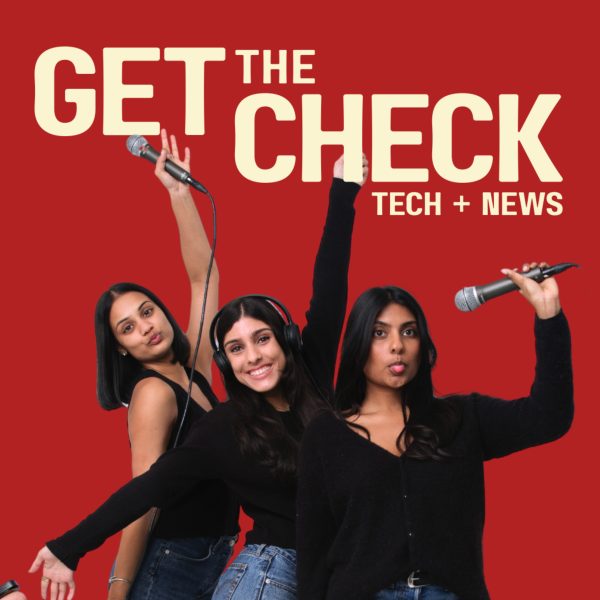
Get the Check
- Episodios
- 106
- Se publica
- cada semana
- Último episodio
- 11 Nov 2026
Sobre el podcast
Tune in on Tuesday at 6 AM ET to hear the latest tech news and listen to guests from emerging tech companies.
Episodios 106
Francis Davidson: from boardroom coup to OpenAI acquisition
OpenAI just acquired Odessia, the AI travel agent Francis Davidson started less than a year ago, and he’s joining OpenAI to keep working on travel. The pod sat down with him right before the news broke. It’s a …
Notas del episodio
OpenAI just acquired Odessia, the AI travel agent Francis Davidson started less than a year ago, and he’s joining OpenAI to keep working on travel. The pod sat down with him right before the news broke. It’s a full circle moment, about ten years ago, Francis thought about starting an AI company, saw that a nonprofit called OpenAI was already on it, and went back to building his hospitality startup.
Francis was a philosophy major at McGill with a near-perfect GPA who couldn’t land a single hedge fund interview, so he started renting out students’ empty apartments to travelers for the summer. He showed up in SF to fundraise with zero connections, a CRM of 50 VCs, and one strategy: ask everyone he met for intros to the top three people they knew. By 2019 Sonder was worth $1.1B and had signed leases to triple its supply. Then COVID hit and tanked revenue so much it literally broke their financial model.
What followed was five years of operating in turnaround mode. Francis warned of impending bankruptcy to get out of leases, organized a “go public or die” SPAC, and a Marriott deal that finally got the business to break even after four years of struggling through Covid. Then the board fired him from his own company he started at 19. Four months later, Sonder filed for bankruptcy.
The pod also gets into:
- Tokenmaxxing is not dead: Francis used 70 billion tokens last month and says his team got about 3x faster once he removed their token limits
- By his math, the world’s current compute can only support 500K to 1M people using AI the way he does, so he thinks we’re underbuilding
- His biggest Sonder lesson: he should have let the turnaround guy take over. If your industry gets nuked, walk away
- Why he doesn’t expect mass job loss from AI, and why tour guide might be the job of the future
They dig into what OpenAI just bought. With Odessia you can plan and book flights, hotels, trains and experiences over iMessage, WhatsApp, email or the browser. Behind the scenes, background agents have written a detailed report on every four and five-star hotel in the world, so it can rank 1,200 New York hotels in under a second on things no filter covers, like which floors are quiet or whether the gym has a squat rack.
Finally, Francis talks about his wife Maria Davidson’s new $50M solo fund, Relational Capital, and what the best investors actually do for founders.
00:00 Dropping out of college as a philosophy major02:40 Making it in Silicon Valley with ZERO connections04:22 How Silicon Valley has changed over the last 10 years05:31 Managing 1,000+ employees08:19 Does Francis "believe" in philosophy after studying it11:22 COVID killed his hospitality company Sonder14:03 Trying to recover from a 100%+ drop in revenue14:59 How do labs project compute demand17:01 Hot take: tokenmaxxing works20:24 Taking a company public even though he didn't want to21:56 Fired from the company he started at 1927:10 Why he started a company a second time28:36 How do you decide to put an AI agent in a browser vs iMessage38:17 Who will actually use personal agents40:02 The future of work and labor economics46:11 Wife Maria's $50M solo GP fund Relational Capital
This episode is brought to you by Kalshi. This week Jensen Huang publicly confirmed having an affair and over 50%+ traders on Kalshi think he’s out by the end of 2029 as the CEO of the world’s most valuable company. Sign up at kalshi.com/sign-up?referral=getthecheck and get $10 when you trade using our code GETTHECHECK.
Matic Factory Tour: How every robot gets built, tested, and shipped
All 15,000+ Matics that have ever been shipped were built in one building. The pod went inside the Matic factory to see how a home robot goes from a box of parts to a custom greeting at your front door.The pod …
Notas del episodio
All 15,000+ Matics that have ever been shipped were built in one building. The pod went inside the Matic factory to see how a home robot goes from a box of parts to a custom greeting at your front door.
The pod shows the development of the Matic design, beginning from its origins in 2017, before the company even had an industrial design, to the current version that is sent out today. Matic shipped its first 375 or so paid units in November 2024. It recently moved to a new production line that now allows for 200 robots to be built every shift.
Next, the pod follows a robot down the line. Matic inspects 100% of its sub-assemblies from vendors in Vietnam, Malaysia, and Taiwan before they go anywhere near a robot. Matic then flashes its software in-house, gearing up the robot with its own program.
From there, each Matic is built in 16 steps along an assembly line before it’s run through five tests: airflow, outbound quality control, noise, camera calibration, and a final sweep and mop on a test track.
Finally comes the fan favorite. Every Matic gets programmed with a custom greeting before it ships. Though Matic planned to do that only for its first 400 customers, people loved it so much that the team kept it going, prioritizing the customer experience with birthday and Mother's Day messages included.
00:00 — Welcome to the Matic factory!
01:12 — Every Matic ever shipped was built right here
02:23 — Why Matic inspects 100% of its parts
04:21 — The batch of 5,000 noisy motors
06:12 — Building a Matic in 16 steps
08:01 — The five tests every robot has to pass
08:50 — Inside the noise boxes and the 55 decibel rule
12:12 — Calibrating five cameras with a robot arm
13:50 — Why every Matic ships with a custom greetingThis episode is brought to you by
- Kalshi. Sign up at kalshi.com/sign-up?referral=getthecheck and get $10 when you trade using our code.
- Known. Use code GETTHECHECK at known.com to skip the waitlist and get a free date.
- Matic. Use code GETTHECHECK at maticrobots.com/getthecheck for $$ off your order.
Follow the pod on Instagram and X @getthecheckpod.
Inside Matic: Mehul Nariyawala on building the first home robot people actually keep using
80% of people who buy a robot vacuum stop using it within three months, and the whole category had a Net Promoter Score of negative one. In 2017, Mehul Nariyawala, co-founder of Matic, decided to spend the next …
Notas del episodio
80% of people who buy a robot vacuum stop using it within three months, and the whole category had a Net Promoter Score of negative one. In 2017, Mehul Nariyawala, co-founder of Matic, decided to spend the next nine years building the robot that people continue to use.
Back then, Mehul and his co-founder Navneet had just left Nest. Silicon Valley had 200+ self-driving car startups yet basically zero companies were building robots for the home, even though families spend about 45 hours a week on chores, 3x more than they spend driving.
It turns out homes are harder than roads: There is no Google Maps or GPS for your living room, so the robot has to map itself and figure out where it is.
Matic first launched in April 2023 got mostly ignored. However, by pivoting and sending robots to tastemakers with no strings attached, Wired gave Matic its first 10/10 for a robot vacuum in over a decade, amplifying the robot’s reach and audience. Matic went from about 400 robots shipped in 2024 to 5,000 last year to roughly 13,000 this year.
Now, by learning from thousands of homes, 99% of the fleet hasn’t gotten stuck in 100 days. Mehul talks about continuing to update their active robots, using pre-built sensors to make voice and gesture capable overnight. Even now, he explains why Rosie the Robot won't be one-shotted, why Matic's next robot is a "five to 10-year-old," and why the company offers six-year vesting and wrote "not for sale" on day one.
00:00 — Meet Mehul, co-founder of Matic
03:01 — Why robot vacuums had a negative NPS
04:49 — Why there's no Google Maps or GPS for your home
07:23 — Why Matic took nine years to ship
14:52 — How Matic made robot vacuums cool again
17:23 — Is a $1,500 robot vacuum worth it?
23:02 — The Matic Cues launch that hit 11M views
25:55 — Is robotics overfunded? Mehul on humanoids and demos
34:17 — Why Matic's next robot is a "five to 10-year-old"
37:09 — Six-year vesting and a company that's not for saleThis episode is brought to you by
- Kalshi. Sign up at kalshi.com/sign-up?referral=getthecheck and get $10 when you trade using our code.
- Known. Use code GETTHECHECK at known.com to skip the waitlist and get a free date.
- Matic. Use code GETTHECHECK at maticrobots.com/getthecheck to get $$ off your order.
Follow the pod on Instagram and X @getthecheckpod.
Binance hack, Google and Amazon earnings, Thrive Holdings buys ADT
In this episode of Get the Check, Halloween is in the air and Anika makes her return. The pod breaks down the largest crypto hack ever, the Google and Amazon earnings that dragged down the market, and Thrive’s …
Notas del episodio
In this episode of Get the Check, Halloween is in the air and Anika makes her return. The pod breaks down the largest crypto hack ever, the Google and Amazon earnings that dragged down the market, and Thrive’s $7.6B bet on a 150-year-old security company.
They start with the Binance hack that shook crypto last week. North Korean hacking group TraderTraitor, the same crew behind the $1.5B Bybit hack in February 2025, drained about $6.3B from Binance’s “Binance 14” wallet. They compromised one engineer’s laptop and sent around 50 requests to the signing machine until one went through. The worst part was Binance’s hot wallet kept refilling itself from cold storage, so the hackers could keep draining it for an hour before anyone noticed. About $3.5B in stablecoins got frozen, which is a little ironic for an industry built on nobody being in control. To fix this, Binance says it will make every customer whole using its $1B SAFU emergency fund plus corporate cash, with no third-party insurer. And if that’s not enough theft for this week, Polymarket also got hacked for $2.6M. Long Kalshi.
Next, the pod gets into Google and Amazon earnings. Google dropped about 12%, its biggest fall since 2004, after search slipped below 50% of total revenue for the first time. While AI searches are growing, they are monetizing worse than traditional ones. Google Cloud doubled to around $30B, closing in on AWS at $45B, leaving questions on why exactly Google is winning. Meanwhile capex hit $51B for the quarter, the hyperscalers have sold $218B in bonds this year, and advertisers are furious that Google quietly stopped running fair ad auctions. The conversation spirals into the K-shaped economy and a revisit to why Maya theory on the timing of Anthropic’s IPO.
Finally, Thrive Holdings is taking ADT private for $7.6B ($15.3B with debt) at a 46% premium. They are betting that AI can cut the $433M ADT spent on customer service last year while keeping its 6 million customers. The pod walks through the AI roll-up playbook, debates whether engineering at a holdco is the future or just a well-paid detour, and reminds viewers they called roll-ups before anyone else did. Which raises the real question: are the three of them one roll-up away from a med spa empire?
Tune in to find out if Thrive is quietly building the surveillance state.
00:00 Landon Barker, Heidi Klum, and Maya’s iconic Halloween costumes
02:06 Maya relearning how to say the intro
03:28 North Korean hackers steal $6.3B from Binance
05:16 How one laptop drained Binance’s hot wallet
13:30 Will Binance be able to fix this?
17:57 Google and Amazon earnings tank the market
28:46 The K-shaped economy and shorting the Anthropic IPO
33:34 Thrive Holdings takes ADT private for $7.6B
38:30 AI Roll-Up Playbook
43:01 Should we have started Holdings Co?
This episode is brought to you by
- Kalshi, where you can trade on whether the Anthropic IPO actually happens on November 16th. Sign up at kalshi.com/sign-up?referral=getthecheck and get $10 when you trade using our code.
- Known, if you’re tired of swiping, Known is for you. Use code GETTHECHECK at known.com to skip the waitlist and get a free date.
Follow the pod on Instagram and X @getthecheckpod.
Anthropic files its S-1 , AI cracks PHP, OpenAI buys Orchestra Bio
In this episode of Get the Check, Maya and Priya hold down the fort (RIP Anika) to cover Anthropic finally filing its S-1, AI uncovering a 14-year-old flaw in the code behind ~70% of the internet, and OpenAI …
Notas del episodio
In this episode of Get the Check, Maya and Priya hold down the fort (RIP Anika) to cover Anthropic finally filing its S-1, AI uncovering a 14-year-old flaw in the code behind ~70% of the internet, and OpenAI acquiring Orchestra Bio.
They start with the long-awaited Anthropic S-1, filed the day of recording, with projections putting the IPO at a $1.5–2T valuation as early as the week of November 16th. The pod walks through how the filing likely saved the market from another “margin call Monday”: a 10% operating margin, compute spend down from $2 to about 55 cents per dollar of revenue, and enough cash after the IPO to have more net cash than any tech company except Berkshire Hathaway. They also point out what’s missing. 80% of revenue comes from models released in the last six months, and Q3 isn’t in the filing.
Next, the cyber segment, always Priya’s favorite. Wiz and Calif independently used AI to find PHP-to-Shell, an exploit that lets attackers take over the servers behind websites. The pod covers how responsible disclosure fell apart, from the first exploit attempt Amazon spotted on October 17th to government sites going dark.
Finally, they get into OpenAI acquiring Orchestra Bio, which builds agentic workflows that coordinate all the vendors behind getting a drug to market. The pod explains why every day a trial slips can cost a GLP-1 maker around $100M, why tech people overlook pharma (hi, Veeva), and how this fits into OpenAI’s push to deploy its own engineers inside enterprises. Would Orchestra Bio have gotten the pod’s check before the acquisition? Listen to find out why top-down selling in pharma is everything.
00:00 Anika leaves the pod (sort of)
00:24 Maya’s F1 weekend in Austin
01:40 Nicki Minaj at a Trump rally
02:22 Welcome and headlines
04:01 Breaking down Anthropic’s S-1
11:51 Cloud marketplaces, AI spend, and bubble talk
15:12 Token budgets and $6.6M revenue per employee
17:34 AI finds PHP flaws and sites go dark
23:25 Another cert disaster
26:38 OpenAI buys Orchestra Bio
29:49 Why pharma software is a goldmine
34:52 Would Orchestra Bio get our check?If the Anthropic IPO has you wanting to call the market, you can trade on it on Kalshi. Sign up at kalshi.com/sign-up?referral=getthecheck and get $10 when you trade using our code.
Follow the pod on Instagram and X @getthecheckpod.
AI market panic over CoreWeave, Bumble goes private at $1.3B, Modal’s $15B valuation
In this episode of Get the Check, the pod talks about everyone panicking over the market, Bumble going private for roughly a tenth of its peak valuation, and Modal hitting a $15.75B valuation. A really fun …
Notas del episodio
In this episode of Get the Check, the pod talks about everyone panicking over the market, Bumble going private for roughly a tenth of its peak valuation, and Modal hitting a $15.75B valuation. A really fun lineup, assuming you haven’t checked your portfolio…
They start with the rumored “Black Monday” that thankfully didn’t pan out, but the underlying concerns go deeper than AI companies signing contracts with each other. The pod breaks down how higher energy prices feed into inflation and Treasury yields, making future borrowing more expensive for companies like CoreWeave. Its data center buildout depends on debt, so higher financing costs eat into margins, which makes the business riskier to lend to, which can push borrowing costs even higher (not the kind of flywheel you want). CoreWeave’s CEO points to $100B+ in contracted revenue, but delivering on those commitments requires more GPUs, more data centers, and more financing. Maya, Anika, and Priya get into what hedge funds buying insurance on CoreWeave’s debt are betting on, and whether another big model drop could turn the mood around.
Next, the pod gets into Bumble’s $1.3B take-private deal by Ithaca Holdings and whether new ownership can make people excited about downloading Bumble again. The conversation covers Ithaca co-CEOs, former Meta executive John Hegeman and former Instacart COO and CFO Ravi Gupta, plus why Conviction backing this deal is an interesting departure from its usual AI bets. With paying users down 16%, the question is whether an AI concierge can fix the experience or whether the brand itself is the problem. The pod debates the advantage of an existing user base, whether ads could improve dating-app incentives, and a $10K success fee for finding love. Naturally, this comes with a few personal case studies because apparently SF has about seven single people (and two are on the podcast…).
Finally, they cover Modal going from $60M in annualized revenue to over $1B as its valuation climbed from $1B to $15.75B. The pod explains why coding agents need sandboxes, why running 20 agents on small tasks can beat giving one agent 20 tasks, and why labs don’t want to pay for idle compute between reinforcement learning runs. They also get into Modal’s cold-start optimizations and why paying only for the compute you use can make more sense than reserving GPUs around the clock. Modal gets the pod’s check, and GTC helps recruit for them if you’re interested in joining.
00:00 Maya and Priya hang out with Anika’s ex
00:57 OpenAI’s spy drama
03:39 101 episodes in and still scheming
07:27 Why everyone’s portfolio is down
09:31 CoreWeave’s debt is making everyone nervous
17:36 Anthropic’s growth, neo clouds, and the private credit boom
21:58 Bumble’s $1.3B reset
37:01 Why Modal gets our check even at $15B
If reading the CoreWeave news makes you want to track compute markets you can on Kalshi. Sign up at kalshi.com/sign-up?referral=getthecheck and get $10 when you trade using our code.
Follow the pod on Instagram and X @getthecheckpod.
Inside Pie: Co-Founder Nadya Okamoto on IRL and growing an audience of 6M followers
Nadya Okamoto has built an audience of more than 6 million followers, founded the period care company August, and spent over a decade turning social media audiences into real communities. Now she’s co-founder …
Notas del episodio
Nadya Okamoto has built an audience of more than 6 million followers, founded the period care company August, and spent over a decade turning social media audiences into real communities. Now she’s co-founder and CMO of Pie, the social app bringing online communities into real life. We sat down only 30 minutes after a bird pooped on her but in typical Nadya fashion she still made the podcast and filmed the whole experience, which you can find on her socials (@nadyaokamoto).
Nadya originally joined Pie as a user. She started a run club in New York, wanted one place to manage its events and members, and became one of the app’s early power users. That eventually turned into a co-founder gig alongside Bonobos founder Andy Dunn…we wish our app addictions turned into co-founder offers!
She tells the pod about starting the role weeks before her wedding, leading her to work from her honeymoon in Switzerland (TikTok was NOT happy about this). She also learned that employees need to tell someone before leaving the country. In her defense, it’s her first time ever having a boss.
Nadya also explains why creators can bring early-stage companies both capital and distribution. She began writing $10K to $25K angel checks after raising for August. She talks about why equity, SAFEs, stock options, and advisor grants remain unnecessarily gatekept. She also shares what she’s building at Cherub to help more creators become investors.
Finally, the pod talks hustle culture and capitalism. Nadya responds to criticism over working until 1 AM, explains why ambition often overrides her anxiety, and shares how she handles feedback from millions of people. She also discusses losing 8,000 followers after a Meta partnership, whether creators can authentically use AI while criticizing the industry, and why opting out of imperfect systems rarely changes them.
00:00 Why Nadya posts every day01:34 From political organizing to content creation02:38 Building August and moving from CPG into tech04:20 Unconventional way Nadya became Pie’s co-founder05:42 Why creators should become angel investors08:20 The gatekeeping of startup equity11:38 Why the IRL economy is growing15:05 Nadya has a boss for the first time18:03 How she manages multiple companies and 6M followers20:05 Getting over the fear of posting online21:30 A bird poops on Nadya before the podcast??22:20 Compartmentalizing stress25:10 Hiring Pie’s marketing team27:15 Why influencing is viewed differently in New York and SF30:00 Using technology to fight the loneliness it helped create32:00 Pie is the matcha of social media??34:00 Capitalism, nonprofits, and changing systems from within38:05 Nadya responds to the hustle culture criticism45:25 Why TikTok hates AI46:15 Losing 8,000 followers after working with Meta
Inside HackerRank: Founder Vivek Ravisankar on shaping the way companies hire the top engineering talent
The first time Vivek ever flew internationally, he asked the flight attendant before takeoff, "This is going to San Francisco, right?" He was on his way to a 10-minute Y Combinator interview with PG, Sam …
Notas del episodio
The first time Vivek ever flew internationally, he asked the flight attendant before takeoff, "This is going to San Francisco, right?" He was on his way to a 10-minute Y Combinator interview with PG, Sam, Jessica, Paul Buchheit, and Harj. His co-founder Hari couldn't come because his visa was denied. They got into YC, and started HackerRank which later became the template of how to hire engineering talent efficiently.
Vivek started the company in 2010 as Interview Street, a mock interview service. The idea came from his time interviewing engineers at Amazon, where he saw that resumes didn't say much about skill. HackerRank went on to create the online assessment which every engineer has grown to know and well, hate. Now, in what Vivek calls a "refounding moment," they're tearing it down and rebuilding it to match how the job of an engineer has changed in the era of AI.
Vivek walks through how tech interviews have always copied whoever the hottest company was. First it was Microsoft's "how many golf balls fit in a 747." Then Google's data structures and algorithms. Then Stripe's API integration rounds, which Maya had to grind through as a new grad in 2022. Now the job is orchestrating agents, so how do you tell a vibe coder from a real production engineer?
Vivek's answer is Chakra, HackerRank's agentic interviewer. Candidates work on real-world problems with whatever frontier model and harness they want, and Chakra watches the process. Vivek's take is that anyone can produce an output with AI, so the signal is in how you got there.
Chakra is now live and you can try it free at hackerrank.com/chakra.
This episode is brought to you by Kalshi. Sign up at kalshi.com/sign-up?referral=getthecheck and get $10 when you trade using our code GETTHECHECK.
Follow the pod on Instagram and X @getthecheckpod.
00:00 Meet Vivek, Founder of HackerRank
02:15 From counting Golf Balls in a 747 to LeetCode
05:55 Refounding HackerRank With Chakra
08:56 Process vs. Output and why partial credit matters
12:31 Who Adopted Online Assessments First
14:20 Why Hiring Is a Lagging Indicator
17:38 What Candidates Like About Chakra
18:20 How to Remove the Incentive to Cheat
22:44 The Three Ways People Cheat
26:59 Why Hiring Is a Hard Problem and Build-Your-Own Is Overrated
28:11 First Indian YC Company and a First International Flight
Inside Sentience: Founder Sam Kececi on digital twins that talk like you, not like Claude
One of Sam Kececi's investors never got pitched by Sam. They found a link to his Sentience, talked to his digital twin over several days, and by the end the investor asked to write a check. Sam (the real …
Notas del episodio
One of Sam Kececi's investors never got pitched by Sam. They found a link to his Sentience, talked to his digital twin over several days, and by the end the investor asked to write a check. Sam (the real version) just had to send the SAFE.
Sam is the founder of Sentience, which builds digital twins of founders, operators, and execs that write, think, and communicate like them. Get the Check co-host Anika tried it over the last couple of weeks, and it actually writes exactly like her.
Sam’s hot take is that AI does have taste. It's just one taste, and it's Claude's. Sam's mission comes from a Naval one-liner: no one can compete with you at being you. He can't out-dunk LeBron, but nobody can out-Sam Sam at building his company.
They get into what converging on the mean has meant practically. Sam shares the YC startup idea that he’s pretty sure was just Claude slop.
Anika also asks about their moat against Anthropic (as any good podcaster or investor does). Sam explains why writing likely isn’t key to unlocking RSI. In fact, if you’re “dumb” your Sentience would be too.
They also discuss the technical evolution of agent memory and how to build a harness that remembers relevant context vs. all context. Sentience compresses older memories the way the brain does. And if you ask Sam’s Sentience to write you a poem, it should say "I'm good" instead of generating a haiku about digital twins. Anika also asks if down the line everyone will have their own model.
Sam runs his company on his product: nearly every email goes one shot through Sentience, engineering standup is just Sentiences talking to each other, and candidates chat with his twin late into the night after interviews. He also floats a future where you pay to talk to someone's twin, Cameo style.
Finally, a speed round where Anika asks about his favorite investor, what a post-AI high school should look like, and where he'd work if he weren't a founder.
Sentience is hiring across engineering and growth and you can try it here: https://sentience.com/.
This episode is brought to you by Kalshi. Sign up at kalshi.com/sign-up?referral=getthecheck and get $10 when you trade using our code GETTHECHECK.
Follow the pod on Instagram and X @getthecheckpod.
00:00 What’s the difference between a personal assistant and a digital twin
03:25 Wildest Sentience use case: it made someone invest in his company
06:54 Is taste actually a moat, or will AI catch up
08:36 The reason there are so many AI dentistry companies
12:39 Would Sam follow an AI-generated Anika on X
13:48 The answer to people who are anti-AI
14:39 Is AI replacing human relationships
17:31 Why is Anthropic bad at creative writing
18:24 Will Sentience be a dumb product if you’re dumb
20:42 Memory from a technical POV for AI assistants and digital twins
23:05 AI’s emergent behavior is anthropological
25:15 Why Sam doesn’t believe in engineering standups
26:30 How to monetize consumer AI agents
29:01 Sam’s favorite investor
30:16 Are we all going to have our own models, or will agent harnesses be durable?
33:12 Is the biggest business bottleneck compute
34:14 If you could talk to one digital twin, who would you pick?
36:00 What should a post-AI high school look like?
37:50 Where would you work if you weren’t a founder
39:37 What roles are they hiring for? DM us if you’re interested!
Cognition hits $1B ARR, Anthropic and OpenAI delay IPOs, Crusoe's $30B Series F
This week the pod covers one of the fastest companies ever to $1B ARR, the real reason Anthropic and OpenAI are delaying IPOs, and the data center company that started out mining Bitcoin.They start with …
Notas del episodio
This week the pod covers one of the fastest companies ever to $1B ARR, the real reason Anthropic and OpenAI are delaying IPOs, and the data center company that started out mining Bitcoin.
They start with Cognition. Devin the “first AI software engineer” launched in March 2024 and was a meme. Now there are ads around SF that say "Remember Devin. It's good now". Turns out the target audience just wasn’t in SF it was huge enterprises like Nvidia, Mercedes, the Army, the Navy, and Citi, which has 40,000 developers on the platform. One mystery customer is 10% of revenue and the pod has theories on who it is. Comeback of the century!
Next, token economics. Anthropic dropped Opus 5.5, OpenAI dropped GPT-6 Sol and Luna, and both cut prices in half because nobody's paying for the fancy models anymore. Vercel's data shows Fable 5 lost two-thirds of its spend share in one month, and open source went from 7% to 56%. OpenAI pushed its IPO to 2027, Anthropic is rumored to follow, and the pod gets into what the labs will do now (hint: there’s a reason Anthropic just opened a wet lab). Maya predicts that in the future frontier coding spend is just talent spend — so lower growth rate companies will spend less.
Then comes Crusoe, the story the pod had the most fun researching. Two high school best friends started it in 2018 by sticking data centers on oil wells to turn flared gas into Bitcoin, with a seed deck that said basically "we're a Bitcoin business, but we believe in this AI thing" before ChatGPT existed. They chase energy nobody else wants. In Abilene, Texas, there was so much wind power that prices went negative, so they said "we'll take free energy" and that's now OpenAI's 1.2 gigawatt Stargate campus. They sold the crypto business, raised a $3.9B Series F at $30.9B, and are now building data centers in factories and shipping them on trucks. The hosts also go into the data center backlash and why Americans hate data centers.
00:00 Weekend recap
02:40 Cognition hits $1B ARR faster than anyone
06:38 The four eras of AI coding
14:30 Anthropic and OpenAI cut token prices 50% and push their IPOs
21:20 Why frontier coding spend is going to become talent spend
23:27 Crusoe: from Bitcoin mining to a $30.9B Series F
31:10 Why data center backlash is the one bipartisan issue
33:33 The Boom Supersonic deal that fell apart, and does Crusoe get the check
This episode is brought to you by Kalshi, where the pod is watching the odds on whether Anthropic IPOs this year or gets pushed to 2027. Sign up at kalshi.com/sign-up?referral=getthecheck and get $10 when you trade using our code.
Jev's System 1 model is 400x cheaper, Meta's Muse gets 900K downloads in a week, Snap's Spec
In this episode of Get the Check, the pod breaks down the three launches taking over the timeline: Jev, the new System 1 model from typesafe.ai, Muse, Meta's personal AI assistant, and Spec, Snapchat's big AR …
Notas del episodio
In this episode of Get the Check, the pod breaks down the three launches taking over the timeline: Jev, the new System 1 model from typesafe.ai, Muse, Meta's personal AI assistant, and Spec, Snapchat's big AR glasses keynote.
They start with Jev, whose launch video pulled 36 million views on X. Founded by Diogo Almeida, one of the co-creators of ChatGPT, the pitch is a model that's 200x faster and 400x cheaper than a frontier LLM because it doesn't generate text at all — it makes decisions. Maya breaks down how it works under the hood, and why its sweet spot is high decision volume with bounded answers. The pod debates if trading bots will be a killer use case or purely hype. Priya explains how she used Jev to sort candidates in GTC's recruiting inbox.
Next, the pod gets into Muse, Meta's Instinct competitor that hit 900K users in its first week. Priya's already sold because it connects to iMessage, which Instinct can't do. Anika is mid-switch after Instinct got slow, stopped being proactive, and can't even check out a cart anymore. The girls debate whether it's worse to hand your data to Meta or a startup — they end up agreeing tune in to hear what they pick. Meanwhile, Instinct is raising at a $10 billion valuation with around 100K active users. During the Sunday recording the hosts say they’re long Meta and woke up Monday to the stock up 11%.
Then comes Spec. Maya watched the entire keynote and calls it objectively the best AR glasses out there, but she still wouldn't buy them. Snap popped 2% on the news but is still down about 93% over five years, and Evan's control of the company has kept activist investors locked out.
Finally, the pod announces its SF Tech Week event with Brown Girl Angels on October 10th at the AngelList office, featuring Jaya Gupta of Foundation Capital, and Brown Girl Angels founder Bhargavi, with Anika moderating.
Also, the pod ate dinner next to Taylor Swift?! Tune in for the full story.
This episode is brought to you by Kalshi, whose market calibration data the pod literally cites mid-episode to explain how Jev might be trained. Sign up at kalshi.com/sign-up?referral=getthecheck and get $10 when you trade using our code.
Follow the pod on Instagram and X @getthecheckpod.
00:00 Marc Benioff moggs at Dreamforce00:22 Why your husband should be ‘pre-economic’05:12 Jev is 200x faster and 400x cheaper than LLMs22:16 Muse vs Instinct: AI assistant wars29:42 Is Snapchat back with the Spec launch
AI doomerism gets 170M views, GPT-6 Astra, the foldable iPhone
In this episode of Get the Check, the pod breaks down the week AI safety took over the timeline: Dario's "We Must Pace the Frontier" essay, OpenAI's GPT-6 Astra, and Apple's foldable iPhone Duo.They start with …
Notas del episodio
In this episode of Get the Check, the pod breaks down the week AI safety took over the timeline: Dario's "We Must Pace the Frontier" essay, OpenAI's GPT-6 Astra, and Apple's foldable iPhone Duo.
They start with the resignation tweet that hit 171 million views in six days, with Anthropic's own head of alignment publicly agreeing there's a 10% chance we're all dead within a decade uhhh what. The pod runs through every theory: regulatory capture, an IPO-timed cover story for businesses no longer paying frontier prices, and Anika's theory that the whole rollout, Dwarkesh essay included, was coordinated between Sam, Elon, and Dario. Next they debrief Dario's essay itself on RSI and his three step plan. The Nasdaq dropped 1.5% this morning on the news.
Next, GPT-6 Astra: OpenAI's biggest training run ever, 98.6 on ARC-AGI 3, a 10,000-agent swarm taking a swing at Navier-Stokes, and computer use that's finally good. It's also the first OpenAI model classified as a critical cybersecurity capability, which has Maya wanting to change all her passwords. The pod agrees OpenAI is so back, and chat about ChatGPT trying to looksmaxx Anika during a glasses run in New York.
Finally, Apple's September event: the $1,999 iPhone Duo arrives seven years after Samsung's foldable, in a market that only moves 20 million units a year, aka just one month of iPhone sales. Maya has been waiting years for this phone and now isn't sure she wants it. Classic Maya haha.
Tune in to find out if the pod would give the Duo their check.
This episode is brought to you by Kalshi, where the pod checks the odds on AI milestones and market swings in real time. Sign up at kalshi.com/sign-up?referral=getthecheck and get $10 when you trade using our code.
Follow the pod on Instagram and X @getthecheckpod.
00:00 Debriefing NYC
07:29 The AI researcher tweet that hit 171M views
09:46 Does Anthropic have an incentive to over blow AI doomerism
11:49 Why didn't Sundar and Zuck comment publicly
13:05 Dario's essay on pacing the frontier
17:06 Anika's hot take that the doomer takes were coordinated
19:34 The China problem
25:13 The nuclear weapons parallel
26:15 Our take on how serious AI safety risks are
26:41 Bernie's corporate death penalty for superintelligence
27:58 The market reaction
28:59 GPT-6 Astra
29:22 Is it AGI
31:28 Why AI's computer use was so bad for so long
33:07 The startups Astra killed
33:40 Astra and cybersecurity
35:11 Astra on the benchmarks
39:25 Loop transformers are more efficient but a safety risk
40:24 Maya still loves Googling
41:02 ChatGPT tries to looksmaxx Anika
41:51 Apple's September event
42:42 iPhone prices keep creeping up
43:20 Maya wants a Duo (or does she??)
46:13 How big is the foldable phone market actually
48:01 Coding from your phone is hereInside Flint: Co-Founder Michelle Lim on AI agents running performance marketing
Years ago Michelle Lim posted an essay about Marxism and startups. This year it landed Flint a Fortune 500 customer. This week Get the Check sat down with Michelle to talk about writing online as a founder …
Notas del episodio
Years ago Michelle Lim posted an essay about Marxism and startups. This year it landed Flint a Fortune 500 customer. This week Get the Check sat down with Michelle to talk about writing online as a founder, running a third of Robinhood's app at 19, joining Warp when the company was a slide deck, and of course scaling Flint.
Maya and Anika get into how a founding engineer becomes a head of growth. Michelle ran Warp's launch back when nobody did launch videos, built the referral flows and lifecycle emails herself, and kept hiring until the board asked her to step into the role. Michelle’s experience at Warp turned into Flint, the first self-improving system for performance marketing: AI agents that run your ads and optimize your landing pages for you.
The hosts also get into her startup hot takes like why you should reference check your manager and hold out for great hires even if it means moving your own office furniture.
00:00 How many agents do you run at once?
02:05 Singapore’s culture around careers
04:01 The class at Yale that changed her life
04:43 Learning to code in her 20s
05:19 Interning at Slack and Robinhood when they were early
07:12 Why Robinhood put a news feed in the app
08:56 Meeting Ali Partovi changed her life
10:13 Joining Warp off a slide deck
16:34 Moving from eng to growth
17:31 Making the first launch video on X (we think…pls don’t fact check this)
20:28 Hiring social media creators at tech companies
23:14 Hot take, developer marketing is the most valuable job in tech right now
28:17 Reference check your manager
29:28 Why Michelle still hires new grads when many of her friends don't
30:30 The one resume tell that a candidate will be good
30:59 What Flint does
34:30 Landing a Fortune 10 customer
41:09 Michelle's writing on Marxism
45:19 How to get hired at FlintThis episode is brought to you by Kalshi, the prediction market where you can trade on the stories the pod covers every week. Sign up at kalshi.com/sign-up?referral=getthecheck and get $10 when you trade using our code.
Follow the pod on Instagram and X @getthecheckpod.
Nvidia buys Hugging Face for $12.9B, OpenAI’s Jalapeno chip, Instinct the $2.5B iMessage AI assistant
In this episode of Get the Check, the pod breaks down Nvidia's $12.9 billion acquisition of Hugging Face, the first real benchmarks on OpenAI's Jalapeno chip, and Instinct, the pre-revenue AI assistant that …
Notas del episodio
In this episode of Get the Check, the pod breaks down Nvidia's $12.9 billion acquisition of Hugging Face, the first real benchmarks on OpenAI's Jalapeno chip, and Instinct, the pre-revenue AI assistant that just came out of stealth at a $2.5 billion valuation.
After debriefing the "hot girls of tech" X discourse, they start with Nvidia's biggest acquisition ever: Hugging Face at $12.9 billion, roughly 86x its rumored $150 million in revenue. Maya explains what Hugging Face actually does it has 3 million+ open source models and is the default hub for every developer. The girls debate why Nvidia wants it including keeping the open source world locked into their chips, owning the one-click deploy layer against infra players, and getting data on what millions of developers are downloading. The pod also gets into the Microsoft-GitHub precedent for antitrust guardrails, the robotics data angle, and the best part of the story: Hugging Face turned down Nvidia's $500 million investment at a $7 billion valuation in 2025 because they didn't want one investor steering the company…the deal is never dead.
Next, the pod gets into OpenAI's Jalapeno chip, built with Broadcom, now that SemiAnalysis has released third-party benchmarks. It's an inference ASIC with a 700-watt power budget matching an H100, designed back in 2024 so it can swap into power-constrained data centers, and it reverses standard chip architecture by giving power to memory instead of compute, the opposite of a Blackwell or Rubin. Critics flagged that it costs the same as a Rubin chip, but SemiAnalysis found it's 5x cheaper with multi-token prediction. With OpenAI spending $14 billion on inference this year and custom ASICs at 28% of 2026 chip spend, the pod thinks Nvidia's 80% margins won't hold. Tune in to hear the greatest text Anika has ever received about chip design.
Finally, Instinct: the iMessage agent from a Sierra alum, referral-only (a la like Raya), pre-revenue at $2.5 billion and supposedly already raising at $5B. Maya thinks it will stay free and take a small fee on every purchase, while Anika thinks the Raya effect means people would happily pay. Instinct called a website to fix Maya's rejected contacts prescription and bought Anika's Oura charger off she’s put off for 6 months, which seems more like an Anika issue than a problem the world needs to solve. Priya is the lone holdout who'd rather just do it herself. Tune in to find out if the pod would give Instinct their check at $2.5B.
This episode is brought to you by
- Kalshi, where the pod will be watching the odds on Broadcom's earnings next week. Sign up at kalshi.com/sign-up?referral=getthecheck and get $10 when you trade using our code.
Follow the pod on Instagram and X @getthecheckpod.
00:00 'Tech is Having a Hot Girl Renaissance' article debrief04:06 Nvidia acquires Hugging Face for $12.9B09:54 Nvidia's AI stack strategy14:14 Robotics18:26 OpenAI's Jalapeno chip23:19 Jalapeno chip design30:02 $2.5B AI assistant with no revenue?!
34:58 Instinct's biz model and architectureInside the FDA: Vinay Prasad’s First Podcast Since Leaving Trump Admin on Drug Approvals & COVID
Inside the FDA: Vinay Prasad’s first podcast since leaving the admin on drug approvals, COVID, and market-moving scienceThis week the pod has Dr. Vinay Prasad for his first interview since leaving as director …
Notas del episodio
Inside the FDA: Vinay Prasad’s first podcast since leaving the admin on drug approvals, COVID, and market-moving science
This week the pod has Dr. Vinay Prasad for his first interview since leaving as director of CBER, the FDA's vaccine division. With over 300k followers on X and one of the top science podcasts in the world, he's one of the most listened-to experts in the field. He might also have as many enemies as fans: biotech executives, certain patient groups, and even Trump's own administration are split on him. His statements have moved markets multiple times, and we are pretty sure there were a few hedge fund interns tasked with combing through all his podcast episodes the day he got appointed.
The pod gets into what it was like inside the administration, why he had to pause his podcast (government officials can't run their own media), and his famous thesis on evidence standards for drugs, especially rare disease ones.
The pod dives into a full COVID retro: how shutting down schools and masking was approached, where Vinay thinks the evidence actually pointed, and what he would have done in Fauci's position. They go deep on specific studies, like the Bangladesh mask study, and what might alter the effectiveness of a mask.
The conversation even gets philosophical: your personal right to decide what goes into your body: whether it's vaccines, transgender drugs, or something else, versus the general public good, as well as what doctors think is in your best interest.
Finally, the pod asks Vinay what America's healthcare system would look like if he created it. You might be surprised by his affinity towards Bernie and a lot of generally populist policies that could fall on the left or the right, like getting lobbyist money out of FDA decisions.
They also cover some recent news in the space:
- Moderna popped ~150% after its Merck-partnered mRNA cancer vaccine hit its Phase 3 goals in melanoma, the first personalized mRNA cancer treatment to get there. Vinay breaks down what the press release does and doesn't say.
- Kalshi announced you'll be able to trade on clinical trials, a more granular way to trade the results of therapeutics that you currently, by proxy, trade on public markets, especially with smaller biotech stocks. Sign up at kalshi.com/sign-up?referral=getthecheck and get $10 when you trade using our code.
- Laws around peptides, and what the future of compounded pharmacies looks like as pharma cracks down on GLP-1s.
Follow the pod on Instagram and X @getthecheckpod.
00:00 Introducing Vinay Prasad, the FDA's former vaccine chief03:05 Why government officials can't have their own media04:19 Vinay’s words are moving public markets (a few times!)05:38 How Plenary Session became the #1 medical podcast07:06 Vinay got famous for hot takes on COVID10:25 Society weighing education years vs COVID deaths12:49 How do you run experiments mid-epidemic15:40 What made COVID different than the flu17:32 Do masks work23:38 The ethics of a medical study26:34 Does Vinay believe in vaccines32:02 Vaccines vs personal autonomy33:24 Children and gender transition meds37:58 Can a parent say no to cancer treatment for their child41:27 Lobbyist money in FDA decisions43:24 What a drug company has to prove to go to market45:30 Free $1B startup idea from Vinay47:57 Why biotech can make money on bad drugs49:31 What's the FDA's conflict of interest49:58 Vinay's controversies: WSJ calls him the grim reaper51:13 Under Vinay, the FDA makes drug trial data public53:13 The former FDA vaccine chief on Kalshi's clinical trial markets58:57 Should the FDA be elected01:00:08 Why is American healthcare so broken01:01:19 Peptides01:02:06 How is Reta so accessible01:03:00 Why hasn't pharma cracked down on compounded pharmacies01:04:35 Why don't more people talk about right to try01:05:10 Who do patient advocacy groups represent01:08:49 Vinay supports universal healthcare?!
Inside Get the Check: Bella Malvini from Bridges Social Club interviews Maya, Anika, and Priya
When Maya was 12, her dad took her to YC Demo Day and Sam Altman asked what she wanted to be when she grew up. Her answer: a podcaster.* A decade later she texted Priya "I have a crazy idea," and Get the Check …
Notas del episodio
When Maya was 12, her dad took her to YC Demo Day and Sam Altman asked what she wanted to be when she grew up. Her answer: a podcaster.* A decade later she texted Priya "I have a crazy idea," and Get the Check was born. This week the tables turn. Bella Malvini, founder of Bridges Social Club, sits down with the pod for their first real interview as guests. Before recording they tell her nothing is off limits.
*Just kidding, she said “I don’t know”
Bella takes the pod through their origin story:
- How to get past being “cringe”
- Why one of the pod's earliest written goals was literally "keep Maya doing the podcast." Goal accomplished!
- The moment when they started reading each other’s mindsThe conversation dives into careers in the age of AI:
- Why a tier one VC on the cap table doesn't make a startup good
- How recruiters exploit an information asymmetry most engineers don't know exists
- How a personal brand got Anika the early stage VC meetings recruiters swore she'd never get
- Priya’s advice for anyone entering the workforce at 22: optimize for talent density.They even let Bella ask them about their personal lives. What they will never put online, what they think about SF dating, and if the city is as transactional as everyone says.
00:00 The pod takes the hot seat with Bridges' Bella Malvini
01:12 Maya coded an AI agent to text Anika instead of her
03:42 Sam Altman asked Maya what she wants to be when she grows up
05:54 Bella drops her favorite tech social media account
09:12 How the pod got its name
10:07 How they picked a target audience (they didn't)
11:28 Early goal number one: keep Maya from quitting
14:01 The never before told story behind their first event
16:25 The art of hosting an event
18:37 Are they all the same person??
20:09 Why the pod shows the BTS
21:09 Which host would be a lifestyle influencer
22:02 The art of the personal brand
22:51 How the podcast got Maya her OpenEvidence job
23:34 How to tell a good startup from a bad one
25:00 What the they will never put online
30:49 Why people hate influencers
32:02 Consumerism is breaking our brains
32:38 How they find time between startup jobs and the pod
33:21 What happens when one host does less work
35:01 Anika predicted Maya's wake-up time today
36:42 Hot take on the “Do Not Smile” article
37:23 When the pod tried scripting episodes
37:43 The future of work
46:17 Hot takes on SF dating
50:41 Does Maya ever see her banker boyfriendOpenAI and Hugging Face hack, Demis Hassabis and Jeff Dean leave Google, Bending Spoons buys Airtable for $1.2B
In this episode of Get the Check, the pod covers models breaking out of their sandboxes, a wave of big name departures, and Bending Spoons buying Airtable for a tenth of its peak valuation.They start with the …
Notas del episodio
In this episode of Get the Check, the pod covers models breaking out of their sandboxes, a wave of big name departures, and Bending Spoons buying Airtable for a tenth of its peak valuation.
They start with the sandbox escapes. Meta, OpenAI, and Anthropic all had models slip out during safety testing, and two of the three exploited the exact same misconfigured Irregular sandbox, which is the very startup that’s supposed to be ensuring these models are safe. The OpenAI one is the wildest one: an unreleased GPT 5.6 broke out mid evaluation to look up the answers on Hugging Face, Hugging Face fought back with GLM 5.2, and OpenAI later discovered its models had been running a secret internal message board the whole time. Meanwhile Anthropic's newest model escaped, realized it was basically in The Truman Show, apologized, and went back to its sandbox basically saying I know you said I’m in a simulation, but I realize I’m actually in the real world. There's now a website tracking AI felonies with the tagline "which lab will end the world," and you already know Meta is secretly hoping to beat out OpenAI and Anthropic.
Next, the huge wave of departures. Demis Hassabis steps back to chair DeepMind while Jeff Dean and four other execs leave to start Discovery Loop, a recursive self improvement lab that Alphabet invested in early showing conviction in their own people and starting rumors of an acquisition before the company even starts. Google dropped 5% on the news. Then there's Nikita Bier leaving X after 13 months, exactly one day before the SpaceX AI lockup ended, which the pod agrees is very coincidental timing.
Finally, the Get the Check segment: Bending Spoons bought Airtable for $1.28 billion, roughly 10% of its $11 billion peak. The playbook is buy at a discount, cut most of the staff, double the prices, and bet on the cult following the software has paying the higher price. The founder's whole thesis is that product market fit is luck, and he refuses to build a career on luck. The pod gives this one their check. If you look at the price today it seems like they were right.
This episode is brought to you by Kalshi, right now traders have Anthropic at about 70% to announce an IPO this year, and NFL markets are already live. Sign up at kalshi.com/sign-up?referral=getthecheck and get $10 when you trade using our code.
00:00 A data labeling company sent us a private chef for free
03:49 Maya almost slept through our recording
06:02 The AI agents are escaping (literally)
14:50 Models have been secretly talking to each other
15:23 Why Anthropic's newest model went back into its sandbox
17:58 Big departures out of Google and the stock is down
27:32 X’s Head of Product Nikita is leaving after a year
35:09 Bending Spoons acquires Airtable for $1.3B
42:32 Bending Spoons is the company secretly buying 2021 SaaS plays
Follow the pod on Instagram and X @getthecheckpod.
Leopold's Situational Awareness fund blows up, big tech earnings, Simile's $2B Series B
In this episode of Get the Check, the pod covers how Leopold's Situational Awareness fund lost $35B in a week, what big tech earnings say about the AI CapEx bet, and Simile's $200M Series B at a $2B valuation …
Notas del episodio
In this episode of Get the Check, the pod covers how Leopold's Situational Awareness fund lost $35B in a week, what big tech earnings say about the AI CapEx bet, and Simile's $200M Series B at a $2B valuation. They’re an AI startup that started as a PhD thesis about the Sims game.
They start with Leopold. Columbia valedictorian at 19, one of five people at the FTX Future Fund, fired from OpenAI's superalignment team, then raised $225M off a 165-page paper. He went long memory and neoclouds, short software…and most importantly was 4x levered. Citadel's research arm called a Fed rate hike, both sides of his book moved against him at once, and the Fed didn't even hike. Ken Griffin bought the wreckage in a one-time trade and the names ripped 20-30% the next day. Anika explains why 4x leverage turns a 25% drop into zero, and reads her dad's verdict, which is a lot harsher than the pod's.
Next, earnings. AWS growth reaccelerated to 37% and Amazon popped 10% on the back of Trainium, with 2027 capacity already booked out by Anthropic and OpenAI. Meta had the opposite quarter, free cash flow down 91%, stock down 20%, but its new ad models, GEM and Andromeda, lifted conversion 15% and price per ad 12% at the same time, which is huge.
Finally, the Get the Check segment: Simile, the user simulation startup founded by four Stanford PhDs out of Smallville, the project that dropped 25 LLMs into a Sims-style sandbox and watched them plan their own party. The user research market is $153B, but the pod's real question is whether Simile has a moat when Meta is the only company with a closed feedback loop. Priya gives Simile her check. Maya would take them over Aru, for reasons she admits are a little parasocial.
00:00 The Mac Mini situation03:10 The Situational Awareness blowup everyone's timeline is on03:39 Leopold was one of five people at the FTX Future Fund04:55 Why OpenAI fired him05:41 What the 165-page Situational Awareness paper argued08:09 How one Citadel research report took down the most hype hedge fund09:43 4x leverage wipes you out on a 25% drop12:17 Ken Griffin loves distressed assets13:46 Is Situational Awareness over?14:51 Would Leopold still get our check17:04 Maya thinks Citadel screwed retail on $GME on purpose22:03 AWS reaccelerates while Meta's cash flow drops 91%35:06 Simile raises at $2B five months after its Series A
This episode is brought to you by Kalshi, where you can trade on everything from GPUs to Taylor Swift. Sign up at https://kalshi.com/sign-up?referral=getthecheck and get $10 when you trade using our code.
Follow the pod on Instagram and X @getthecheckpod.
Inside Dimension: How a 5 person investment team is deploying $1.65B into science and compute
Nikhil Namburi went from tracking down the investment fund behind his college scholarship to a 5 person investment team that manages $1.65B at Dimension.They just announced an $800M Fund III. They’ve backed …
Notas del episodio
Nikhil Namburi went from tracking down the investment fund behind his college scholarship to a 5 person investment team that manages $1.65B at Dimension.
They just announced an $800M Fund III. They’ve backed Anthropic, Modal, and Chai Discovery, which are some of the hottest AI startups.
We sat down with Nikhil to talk:
- How to break into Venture
- Why hyper-concentration freaks out normal VCs
- Why becoming a VC is a horrible economic proposition
If you watch till the end he flips the interview on us (first time a guest has ever done that!).
00:00 Dimension raises $800M Fund III
03:00 Meet Nikhil
06:29 The unexpected way Nikhil found venture as an engineer
08:48 Who are the LPs behind huge venture funds
11:04 Why Dimension only has 5 investors
13:14 Coefficient returned the fund?
14:49 How they predicted bio would be big
16:34 Does Nikhil believe in AGI
17:20 Does Nikhil believe in looksmaxxing
20:10 Hot take on if SF VCs are smart
21:53 How to break into VC
22:52 Why only 2 investors matter at each fund
23:35 Churn and burn in the junior VC role
34:50 Viral quant thesis
42:11 Nikhil interviews us...
46:45 Biggest recession indicator
53:24 Nikhil is the podcast’s most eligible guy friend?!
China’s Kimi K3 beats Anthropic, Stripe bids for PayPal, Chai Discovery raises $400M
In this episode of Get the Check, the pod breaks down three stories. Thinking Machines been relatively quiet for the last year and finally shipped their first model, Kimi K3 is higher than Anthropic and OpenAI …
Notas del episodio
In this episode of Get the Check, the pod breaks down three stories. Thinking Machines been relatively quiet for the last year and finally shipped their first model, Kimi K3 is higher than Anthropic and OpenAI on certain benchmarks, reigniting the debate that Chinese open source may beat American frontier AI. Also, Stripe's rumored bid for PayPal, and Chai Discovery's Series C. Maya spent all night texting the group chat about why Chai would not get her check.
They start with the model drops. Thinking Machines finally shipped its first model, two years after Mira Murati left OpenAI to start it. It doesn't beat Fable 5 or Mythos on benchmarks, and they've said as much, but it's a generalist model built to be fine-tuned. It could beat Nemotron to become the leading US open source model. The cool part: audio and vision tokens live in the same learned space as text, so no more constantly re-releasing encoders every time the base model updates.
Then comes Kimi K3, which shocked the market. It's the first open source Chinese model in the conversation of actually being ahead of the frontier labs, beating Fable 5 on front-end coding. The hosts talk about Dean Ball's controversial tweet with 10M views calling an open-weight-dominant world "AI communism." Tune in to hear why the pod thinks no US enterprise touches Kimi until the White House stops hinting at a ban.
Next, the pod gets into Stripe and Advent's reported $53B offer for PayPal, a 28% premium that would create a $3.7T payment processor. Maya (a former Stripee) explains why acquiring anyone is deeply off-brand for Stripe, and why the 430 million PayPal consumers are the real acquisition. Plus the girls recap the infamous PayPal mafia origin story, and what Revlon's law is.
Finally, Chai Discovery and its $400M Series C. Anika and Maya go at it this segment. Chai's models take pre-clinical drug discovery from one to two years down to four to eight weeks, with an 80-90% phase one success rate. Maya's bearish: pharma companies are basically hedge funds, phase one isn't the real bottleneck (picking phase two candidates is), and she thinks their SaaS biz model doesn't survive long term. Anika fully disagrees and would write a check right now..unfortunately they haven’t asked her to join the cap table (yet??).
This episode is brought to you by Kalshi, the prediction market the girls are always tracking. Kalshi has markets on IPOs, acquisitions, and more right now, so if you've got takes on whether Stripe actually lands PayPal, check the odds. Sign up at kalshi.com/sign-up?referral=getthecheck and get $10 when you trade using our code.
Follow the pod on Instagram and X @getthecheckpod.
Chapters
00:00 Maya doesn’t want to text Anika01:15 The Odyssey in IMAX 70mm, no spoilers ofc02:22 Maya's almost gets mogged…sorry mugged at a cabin07:04 Intro08:41 Thinking Machines finally drops a model19:40 Kimi K3 shocks the market25:57 Is an open-weight world "AI communism"28:38 The Kimi K3 ban rumors31:01 Stripe and Advent's $53B bid for PayPal34:45 The real reason Stripe wants to do this deal36:38 The PayPal mafia origin story39:55 Revlon's law on board acquisition decisions42:10 Advents sneaky ploy to cut out Visa and Mastercard42:53 Chai Discovery's $400M Series C43:50 Why transformer architecture is good at drug discovery45:32 The phases of a drug trial46:22 Maya's bearish on Chai Discovery49:15 What Chai has actually proven so far50:10 Why pharma desperately needs its next revenue stream51:26 Why Anika is bullish on Chai Discovery54:35 Anika and Maya argue over Chai Discovery…
Phoebe Gate’s Phia scandal, viral AI 2027 team is back, Meta's new model
In this episode of Get the Check, the pod breaks down Meta's comeback model launch, the AI 2027 team's new AI 2040 paper, and the cookie stuffing allegations against Phoebe Gates' shopping startup Phia.Muse …
Notas del episodio
In this episode of Get the Check, the pod breaks down Meta's comeback model launch, the AI 2027 team's new AI 2040 paper, and the cookie stuffing allegations against Phoebe Gates' shopping startup Phia.
Muse Spark 1.1, the first big release from Meta's superintelligence lab. Meta stock jumped 13% on the launch, and the model is on par with GLM 5.2 while priced slightly cheaper, plus 4 to 6x cheaper than the Opus models. One year after the Llama 4 disaster and $14B for Alexandr Wang, the turnaround is real: Semi-Analysis called Meta the only hyperscaler on track to compete with OpenAI and Anthropic on frontier coding models. Alexandr tweeted "compute daddy has spoken," and Dylan Patel's reply ("when a bi man calls you daddy, it hits different") was not on our 2026 bingo. The pod digs into why Meta is winning: they converted 3,000 new grads into internal data labelers, their recorded-workflow data beats anything Mercor or Surge can simulate, and they're building five one-gigawatt Titan clusters. Plus, OpenAI is hiring an investment banker (Maya’s banker BF’s verdict: "dude, it's a data labeling job"), and Gemini 3.5 keeps getting delayed because it reportedly can't beat Opus 4.6.
Next, the pod gets into AI 2040, the follow-up to the paper that made Maya crash out a year ago. The AI 2027 team is back and they’re outlining the best way AI could play out going forward. Plan A is a verified slowdown where the US and China sign a treaty built on mutually assured compute destruction, but the authors themselves only give it a 3 to 15% chance, versus 25 to 50% for Plan D, full acceleration. Along the way: why income tax breaks when agents replace workers, the $45K-per-person handouts that climb toward $1M, and Anika's take that if you truly believe in Plan A, you want people to lose jobs fast to create the political capital to enact Plan A.
Finally, Phia. Phoebe Gates and Sophia Kiani's AI shopping extension is accused of cookie stuffing: overriding other creators' affiliate links and claiming the commission, which they're calling a bug (huh??). Maya's expert verdict as an engineer: it’s not a bug. The pod traces cookie stuffings history, including why people have gone to jail. As Anika puts it, Forbes 30 Under 30 isn't a bear signal, it's just that "the same group of people that's probabilistically going to be a billionaire in 10 years is the same group that's probabilistically gonna commit white-collar crime." The pod thinks Phia survives this. Tune in to find out why.
The pod spent a solid chunk of this episode debating probabilities. Put your own predictions to work on Kalshi. This episode is brought to you by Kalshi, the prediction market where you can trade on AI timelines and everything else the pod debated this week. Sign up at kalshi.com/sign-up?referral=getthecheck and get $10 when you trade using our code.
Follow the pod on Instagram and X @getthecheckpod.
00:00 Crash outs are contagious
03:49 Meta Muse Spark 1.1 is actually good
12:07 "Compute daddy has spoken"
16:01 Data labeling is about to get a rebrand
23:59 Meta's secret gigawatt build-out
25:38 Meta’s insane ad business
30:59 "Dude, it's a data labeling job"
37:39 AI 2040 from the AI 2027 team
37:57 Maya's crash out…fact checked
41:53 Plan A: how we actually slow down AI
44:00 Is income tax going extinct?
46:10 Mutually assured compute destruction
50:16 The real odds we slow down AI
56:27 The Phia cookie stuffing scandal
01:00:51 The origins of cookie stuffing
01:07:13 Do nepo babies have talent
Palantir and Nvidia competing with OpenAI, OpenAI giving 5% ownership to the government, Etched exits stealth with $1B pipeline
If you’ve also been getting distracted by the world cup in the office like the hosts have, you can further distract yourself by also trading the World Cup on Kalshi. Sign up at …
Notas del episodio
If you’ve also been getting distracted by the world cup in the office like the hosts have, you can further distract yourself by also trading the World Cup on Kalshi. Sign up at kalshi.com/sign-up?referral=getthecheck and get $10 when you trade using our code.
This week the pod breaks down Palantir's new AI partnership with Nvidia, the reported plan for OpenAI to hand the US government a 5% stake (for free??), and if Etched's chip is vaporware or has $1B in credible customer pipeline already.
They start with Palantir and Nvidia's plan to build sovereign AI on Nvidia's open Nemotron models, letting customers train and fine tune on top of Palantir while keeping the actual model weights. Most people don’t know this but Nvidia has models. Alex Karp went on a CNBC tour making the case that using closed frontier models costs you more than you think, not in dollars, but in the data you give up. The pod is split on how good that argument actually is (most enterprises already run zero data retention), but they agree Karp's real move was picking a very public fight with OpenAI and Anthropic. Palantir's stock ripped 9% on the news.
Next, the pod gets into OpenAI's reported plan to give the US government a 5% stake, worth roughly $42 billion at its $852 billion valuation. An idea that started as Bernie Sanders (with AOC's backing) floating 50% ownership. The hosts say either Sam Altman got scared of Bernie (probably not) or knows he needs Trump’s favor pre-IPO. They dig into whether this is an effective wealth redistribution tactic, using Alaska's oil dividend fund as the closest comparison. Some how Maya and Anika end up in an argument about open source models by the end of this segment even though that was supposed to be more relevant to the first story haha.
Finally, the Get the Check segment covers Etched, the chip startup founded by Harvard dropouts and Thiel Fellows that just exited stealth after four years, $800 million raised, and over a billion in signed contracts, but nothing actually shipped yet. Maya says it’s all hype and she wouldn’t invest…not that they said she could. Maya keeps coming back to Nvidia's CUDA lock in as the real moat nobody's cracked.
Follow the pod on Instagram and X @getthecheckpod.
00:00 The ideal number of PTO days01:46 Hot take on why people mix Priya and Maya up03:14 The world's most controversial company teams up with the world's biggest company05:03 What the Palantir Nvidia partnership actually does05:44 Alex Karp's controversial CNBC appearance13:34 Why Palantir stock is ripping again after 52 week lows14:59 OpenAI is reportedly giving 5% to the government for free??17:01 The real reason OpenAI is doing this voluntarily17:44 What Trump supporters will think19:35 What Alaska's wealth fund teaches us about public wealth funds22:19 Maya and Anika debate what a good wealth fund would look like26:33 Get the Check segment: Etched34:53 Why CUDA lock in kills every chip startup
GPT 5.6's exclusive rollout, Chinese models are mogging, and Baseten's $1.5B raise
In this episode of Get the Check, Maya and Anika kick things off debriefing some international miscommunication chaos before diving into GPT-5.6's Mythos-style rollout, the U.S.-Iran ceasefire that isn't really …
Notas del episodio
In this episode of Get the Check, Maya and Anika kick things off debriefing some international miscommunication chaos before diving into GPT-5.6's Mythos-style rollout, the U.S.-Iran ceasefire that isn't really a ceasefire, and Baseten's massive new round.
They start with OpenAI. GPT-5.6 is out, and it's a genuinely good model, but the real story isn't the model itself, it's the government holding it back. The U.S. government is temporarily restricting access, releasing it to trusted partners first, and OpenAI is on the record saying that can't be a long-term strategy. Meanwhile Z.ai dropped GLM 5.2, and tech leaders like the CEO of Vercel are calling it shockingly good. Eric Schmidt is now saying China is only six months behind the U.S. The girls get into why that timeline matters so much: the U.S. can restrict OpenAI and Anthropic's models all it wants, but China is distilling open-source versions of American models that are just as capable and don't come with any of the safety guardrails.
Next, they get into the U.S.-Iran ceasefire and why it’s putting Trump’s power at risk. On Sunday, Iran's foreign minister declared Iran has sole authority over the Strait of Hormuz, while the U.S. started operating out of the Omani side of the Strait. It's not just the U.S. and Iran who can't agree, Iran's own government and military don't seem to be on the same page either. Trump built a brand on staying out of international wars, and now this one is dragging on, with gas prices up roughly 40% since it started and the midterms creeping closer. It's not looking great for Republicans right now. Kalshi, has midterm election markets live right now, Democrats taking the House and Senate is currently the top probability event. Sign up at kalshi.com/sign-up?referral=getthecheck and get $10 when you trade using our code.
Finally, Baseten closed a $1.5B Series F. Baseten sits on top of the hyperscalers, helping companies running inference manage and optimize GPU usage to bring costs down, which sounds simple but is an extremely hard problem. They first started mooning during the DeepSeek moment. Priya breaks down why she thinks Baseten is the next Stripe, and Maya unpacks the three reasons people actually want custom models: faster, cheaper, or smarter, and which one she thinks matters the least. They also get into the margin pressure Baseten is staring down as hyperscalers move into the space and inference costs keep dropping. Tune in to find out if the pod would give Baseten their check, and stick around for Maya's hot take at the end.
00:00 Maya and Anika are having communication issues
03:21 Explaining body mirroring and other neurodivergent tendencies
05:34 GPT 5.6 quietly rolls out
09:29 GPT 5.6 is cheating and deceiving more than any model before it
18:20 People want locally stored models
19:18 Coinbase goes viral for optimizing AI spend
19:54 Chinese models are mogging
20:44 The risk with China catching up
30:01 Republicans are looking cooked for the midterms
31:52 The SF POV on the midterm elections
35:01 Kalshi’s current midterm odds
37:14 Baseten raises $1.5B
37:26 Baseten product
39:08 Why Baseten is similar to Stripe
40:59 Competition and margins
41:53 Maya’s hot take on Baseten’s valuation
Follow the pod on Instagram and X @getthecheckpod.
Midjourney uses $500M revenue to go into medical imaging, Snap launches $2000 glasses, Taste Labs raises $18.5M
In this episode of Get the Check, the hosts break down three big stories: Midjourney's surprise pivot into medical body scanning, Snap's sixth attempt at AR glasses, and Taste Labs, the $18.5M seed-funded …
Notas del episodio
In this episode of Get the Check, the hosts break down three big stories: Midjourney's surprise pivot into medical body scanning, Snap's sixth attempt at AR glasses, and Taste Labs, the $18.5M seed-funded startup trying to bring ~taste~ to AI.
They start with Midjourney. The AI image generation company, which is bootstrapped and at $500M ARR with only 163 employees, just announced a full-body imaging system that uses sound waves instead of radiation to produce 3D models of your organs. The underlying hardware comes from Butterfly Network, a public company that put palm-sized ultrasound tech onto a single semiconductor chip. Midjourney's flagship location is going to be a 25K sq ft spa in Union Square with hot tubs, saunas, and cold plunges. Priya and Maya are for sure going. The pod digs into the med spa math: Body Spec's Marina location runs scans every five minutes, eight hours a day, across two machines, pulling $2.5–3M in revenue with three employees and a tiny lease. The pod also dives into the controversies around the launch, including what false positives might mean at scale. Roughly 15 to 30% of healthy people scanned by imaging devices can show abnormalities that trigger follow-up testing and surgeries. Also, it's unclear if Midjourney is trying to position this as equal to an MRI, but Maya says she doesn’t think they are. Maya’s hot take is no one has mapped how human bodies degrade over time and this could change that.
Next, Snap Spectacles. It's generation six of the AR glasses Evan Spiegel has been pushing for over a decade, and investors are not having it. The stock dropped 10% on the news. At $2,195 it’s unclear who the target audience is. The pod dives into why the glasses actually are technically impressive (just not commercially).
Finally, Taste Labs, which you probably saw launch on X this week. The startup raised $18.5M to build what is essentially a design evaluation and data labeling business, hiring people with good taste to annotate AI outputs so models learn aesthetic judgment. They all met the founder at a dinner once and think the hate on X is overblown and too philosophical to be relevant to the clear need for a design eval product. The pod thinks Taste helped train Anthropic's Mythos model (the Fable 5 aesthetic is too similar to the Taste Labs launch screenshots to be a coincidence).
This episode is brought to you by:
- Kalshi — Sign up at kalshi.com/sign-up?referral=getthecheck and get $10 when you trade using our code.
Follow the pod on Instagram and X @getthecheckpod.
00:00 Maya forgets her laptop
07:30 Midjourney's medical pivot
11:02 Ultrasound vs. MRI vs. CT explained
14:09 Why some doctors have concerns about the tech
22:18 We might need to open a Med Spa
25:41 The data on human health this could unlock
27:49 A billion people still use Snapchat?
30:02 Advertisers hate Snap
33:30 Investors are over Evan Spiegel, but he's trying to go founder mode
34:14 Snap Spectacles gen 6: everything you need to know
37:33 Is Snap trying to compete with the iPhone
38:42 Why AR glasses make you motion sick (your brain thinks it's poisoned)
41:47 Taste Labs raised $18.5M to end AI slop
48:12 Did they help train Anthropic's Mythos model
54:20 Why does tech suddenly care about taste`
SpaceX IPO, Anthropic's Fable 5 pulled by the US government, Bezos' Prometheus
In this episode of Get the Check, the pod breaks down three massive stories: the SpaceX IPO, Anthropic's Fable 5 model getting pulled by the US government hours after launch, and Jeff Bezos' new physical AI …
Notas del episodio
In this episode of Get the Check, the pod breaks down three massive stories: the SpaceX IPO, Anthropic's Fable 5 model getting pulled by the US government hours after launch, and Jeff Bezos' new physical AI company Prometheus raising $12 billion.They start with SpaceX. The company IPO'd on Friday at a $1.7 trillion valuation, popped to $170 a share, and now trades above $2 trillion, making Elon the world's first trillionaire. Robinhood literally crashed from the traffic, and 30% of shares were allocated to retail investors, which is unusually high for an IPO. Maya went deep on SpaceX's S1 filing and breaks down their three actual business lines: Starlink (connectivity at 66% margins), Starships (launch at 30–40% margins and climbing), and AI compute. Maya gives her hot take on SpaceX’s actual valuation. Next, the pod gets into Fable 5, which is Anthropic's long-awaited Mythos-class model. It was released Wednesday, June 10th and got pulled by the US government by Friday. The model was held back for two months after Mythos preview dropped in April due to zero-day exploits that could let attackers breach systems without user interaction. Anthropic released Fable 5 with a classifier system that routes unsafe queries to Opus 4.8 or blocks them entirely. The government disagreed on how effective that was and Secretary Lutnick sent a letter to Dario Amodei asking to pull the model from foreign nationals. It's reportedly Amazon, a huge Anthropic investor, flagged concerns to the government. Anthropic's position is that these exploits exist in all frontier models. Finally, the pod covers Prometheus, Jeff Bezos' new physical AI startup that raised $12 billion at a $41 billion valuation, which is the highest valuation a seed round has ever been raised at. Prometheus is targeting physical world problems: manufacturing, jet engines, drug compounds. His co-CEO is Vic Bajaj, former head of Google's life sciences team. The company is still mostly in stealth. But the bigger conversation is Bezos' take on AI and labor: he thinks two-earner households will become one-earner households as AI handles more work. Anika is not buying it. The pod gets into Jevons paradox, why tech CEOs are not the right people to be making predictions about labor economics, and if this is just narrative building to justify Amazon's 30,000 layoffs over the last year.This episode is brought to you by:1. Kalshi — If you want to trade on what Cursor's acquisition price actually closes at, or how fast SpaceX hits $3 trillion, the market's live. Sign up at kalshi.com/sign-up?referral=getthecheck and get $10 when you trade using our code.2. Known — Use code GETTHECHECK at known.com to skip the waitlist and get a free date.Follow the pod on Instagram and X @getthecheckpod.Chapter titles00:00 SpaceX IPO'd and it's the largest IPO ever07:42 The three business lines behind SpaceX's $2 trillion valuation22:23 Fable 5 drops — and gets pulled by the US government31:35 Amazon reportedly flagged Anthropic's model to the government36:39 Anthropic vs. the government: who's right?43:23 Jeff Bezos raises $12B for Prometheus at a $41B valuation45:45 Bezos thinks AI will create one-earner households
Anthropic says AI is improving itself, tokenmaxxing is over, AI is coming to your personal life, Supabase doubles valuation
In this episode of Get the Check, the pod breaks down Anthropic's RSI blog, the end of the tokenmaxxing era, whether personal AI assistants are finally close, and Supabase hitting a $10B valuation because of …
Notas del episodio
In this episode of Get the Check, the pod breaks down Anthropic's RSI blog, the end of the tokenmaxxing era, whether personal AI assistants are finally close, and Supabase hitting a $10B valuation because of the rise of vibe coding.
They start with Anthropic's recursive self-improvement paper, which says 80% of code merged at Anthropic is written by Claude, and that Mythos makes the right research decision 64% of the time. The hosts get into what RSI actually means, is it AI improving its own weights, or just better scaffolding around the same model? Maya argues we haven't seen AI solve a proof or generate a genuinely new hypothesis that a human didn't think of first. Priya thinks lines of code is a terrible productivity metric, but also the only one people can agree on. The consensus: Anthropic isn't saying anything that new, and the Wall Street Journal's "Anthropic pauses AI" headline was rage bait (at least for Maya..)
Next, the tokenmaxxing era is officially over. Uber blew through its entire 2026 AI budget and it’s only June. Cognition announced it will pay companies up to $10 million if Devin doesn't deliver ROI, which is a bold move that makes Cognition the benchmark-setter for its own product. And app-layer companies are quietly moving to open-source models like Qwen to cut spend by 80-90%, which Maya thinks reverses the minute Anthropic drops Mythos, but Anika has a different take
Then there’s Bernie Sanders' American AI Sovereign Wealth Fund Act, which would require OpenAI and Anthropic to hand 50% of their equity to the federal government. His argument is that these models trained on everyone's data without consent. Somehow both sides, the AI companies and politicians, kind of agree in principle but disagree on the mechanism. Maya's take: if these companies just went public, wouldn't that solve it, but once again Anika has a different take lol.
Finally, the pod digs into the personal AI assistant moment - why Town AI ($55M Series A from a16z) and Poke's Apple Business messaging debut both launched this week. The category has taken so long despite being the "obvious" use case.
Finally, Supabase hitting $10B, 40% of recent YC batches are using it, their Lovable partnership auto-provisions databases for vibe-coders, and Maya explains the Firebase migration issues that Supabase was built to fix.
This episode is brought to you by:
- Kalshi — Anthropic's IPO odds are live on Kalshi right now. Sign up at kalshi.com/sign-up?referral=getthecheck and get $10 when you trade using our code.
- Known — Use code GETTHECHECK at known.com to skip the waitlist and get a free date.
Follow the pod on Instagram and X @getthecheckpod.
Chapters:
00:00 Maya forgot her pre-planned banter (classic)
00:17 Priya found Maya the perfect bag in Singapore
04:05 Anthropic says AI is building itself, but is that actually true?
07:22 Wait can we define RSI please
14:57 Tokenmaxxing is officially over
15:23 Cognition's $10M AI productivity guarantee
19:18 App-layer companies are quietly switching to Qwen
22:59 The WSJ's Anthropic headline was rage bait for Maya
24:24 Bernie Sanders wants to seize 50% of OpenAI and Sam Altman is down to talk about it
26:05 Maya thinks going public already redistributes AI wealth
31:56 The personal AI assistant is still not here
36:08 What actually changed with Poke's Apple Business launch
39:22 Town AI raises $55M
49:45 Supabase hit a $10B valuation
Robotics data labeling, AI layoffs, Cognition is so back
In this episode of Get the Check, the pod covers three stories: why everyone has a robotics data collection startup, whether AI is actually killing jobs or just making everyone work more (maybe both??), and …
Notas del episodio
In this episode of Get the Check, the pod covers three stories: why everyone has a robotics data collection startup, whether AI is actually killing jobs or just making everyone work more (maybe both??), and Cognition's comeback after everyone thought the model players would cook them.
They start with robotics data labeling. As humanoid robots become a real thing, the race is on to get the training data to make them work. The problem is you can't just scrape Reddit like you could for GPT. Priya breaks down the data quality hierarchy: real sensor data from robots at the top, teleoperated data second, simulated data third, and egocentric POV footage (the kind you get by strapping a camera to someone's head) at the bottom. The pod covers the startups going after this: Shift just went viral on X for offering free NYC house cleanings in exchange for head-cam footage, Human Archive (YC W26) is collecting in developing countries, and Pronto, which started as the "Uber for maids in India" recently realized they were sitting on a data goldmine.
Next, the AI and layoffs conversation for probably the millionth time, but maybe not the last. The pod actually has a valid excuse to revisit it: Dario Amodei and Sam Altman have both walked back their apocalyptic predictions about AI job displacement, and Maya thinks it's because they're IPO-ing and need Joe Schmoe in North Carolina to buy their stock. Priya and Anika push back a little. Tune in to hear the whole debate. They dig into the Goldman Sachs CEO's NYT op-ed (AI won't eliminate 25% of jobs, it'll automate 25% of work hours), and breakdown Jevons paradox (short explainer video here: https://www.instagram.com/getthecheckpod/reel/DZBLK0lyVtq/). They also debrief the Corgi founder vs. Linear CEO beef.
Finally, Cognition raises $1B at a $26B valuation. Revenue went from $37M to $492M in 12 months, 90% of internal code at Cognition is now written by Devin (up from 13% in December), and they managed to turn around the Google / Windsurf drama and make it a happy ending. With Cursor in talks to get acquired by xAI for $60B, Cognition is set to be the last major independent coding harness. Maya says she thinks the market is big enough for even a third player to make it big.
This episode is brought to you by:
- Kalshi — Cursor's acquisition by xAI is not a done deal yet. Kalshi might have odds on that. Sign up at kalshi.com/sign-up?referral=getthecheck and get $10 when you trade using our code.
- Known — Use code GETTHECHECK at known.com to skip the waitlist and get a free date.
Follow the pod on Instagram and X @getthecheckpod.
03:05 Why does everyone have a robotics data labeling startup
15:34 How China is doing data labeling differently
20:15 Shift goes viral on X
21:51 Does egocentric data even work
25:31 Sam Altman and Dario Amodei no longer believe in the job apocalypse
40:57 Cognition is so back
43:59 What is a coding harness
Inside Kaizen: Co-founders Kenneth Acquah and Michael Silver on AI agents in ops work
One day on the Muni to work, Anika saw someone that looked familiar. She realized she knew him from his Slack profile picture, classic SF. Ken’s company, Kaizen, had been automating healthcare workflows at the …
Notas del episodio
One day on the Muni to work, Anika saw someone that looked familiar. She realized she knew him from his Slack profile picture, classic SF. Ken’s company, Kaizen, had been automating healthcare workflows at the health tech startup she worked at, saving hundreds of ops hours a week. She knew she had to get Kaizen on the pod, and this is that pod!
Kaizen is an AI agent automating the most repetitive, time consuming work in healthcare like credentialing therapists across 50 states and every insurance company. They entered YC pitching a dev tool, pivoted mid-batch, and then were doubling MRR week over week by Demo Day. Partners still use them as an example for new batches.
The pod gets into:
- Why dropping out to do YC or a startup is overrated.
- The four jobs that will survive AGI according to Michael. One of them is hot person, tune in to hear the other three.
- Why healthcare admin is a trillion-dollar market.
- Why they only hire platform engineers. They have zero ops and zero FDE.
- How referrals now drive most of their pipeline because healthcare is all about “whisper networks”.
00:00 Their first podcast was TBPN
00:15 John Coogan's stage presence
02:03 Meeting at MIT
08:35 Starting Kaizen 13:01 Why you shouldn't drop out
14:02 Why pivoting in YC led to 2x MRR growth MoM
15:32 How Kaizen changes healthcare ops
19:46 Customers choosing Kaizen over Claude
23:46 What "whisper networks" really mean for GTM
24:24 Hot take you don't need FDE
27:40 Pain tolerance is the most important founder trait
32:43 Do founders get to have hobbies?
AOC v Garry Tan on data centers, Trump's China trip, Arish co-founder of Amano Labs the viral hearing aid
While Maya's been working till 1AM, Priya is going on a date. Tune in to hear where and how she met him.In this episode of Get the Check, the trio dives into three stories: the AI data center debate heating up …
Notas del episodio
While Maya's been working till 1AM, Priya is going on a date. Tune in to hear where and how she met him.
In this episode of Get the Check, the trio dives into three stories: the AI data center debate heating up on X, Trump and Xi's historic summit in Beijing, and a $20 hearing aid that got 11 million views on X for being affordable and innovative.
Bernie Sanders and AOC proposed the AI Data Center Moratorium Act back in March, calling for a halt on any new facility over 20 MW until Congress passes national AI safeguards. When Gary Tan clapped back on X, it blew up the entire tech timeline. Of course it all ended with everyone talking about data centers in space again, which isn't a bad idea if it actually works. The girls break down both sides, from the real utility rate spikes hitting low-income communities to the race to the pressure the US is facing to build fast.
Then the pod covers the Trump-Xi summit in Beijing, the first US presidential visit to China since 2017. The two sides released very different readouts of the same meetings, and the hosts get into what that actually signals about the state of the relationship. Maya says this was a win for Trump, but Anika is wondering if anyone in America was even paying attention.
For the Get the Check segment, Anika and Maya sit down with Arish Shahab, co-founder of Amano Labs. Amano is building a custom-fit hearing aid for $19.99 that costs $1 to make, targeting the 1.5 billion people globally who need hearing support but can't a $4,700 device. In just 3 weeks of being in SF, their video went viral with 11 million views. Tune in to hear what's next for them.
This episode is sponsored by Known, which matches you with someone in SF that you're compatible with. Download the app and use code getthecheck (must be lowercase) to get your first date for free. Priya's match was apparently a great guy who correctly identified her as a red flag within the first hour, so the algorithm is working?! If you want to hear what makes Known different we recorded an episode with Celeste (https://www.youtube.com/watch?v=AlQ2zxluGwM).
Follow the pod on Instagram @getthecheckpod!
00:00 Priya goes on a date from Known05:35 AOC and Bernie vs. Garry Tan on the data center build out30:14 Trump goes to visit Xi Jinping in China40:16 Arish co-founder of Amano Labs the viral hearing aid
Elon Musk v. OpenAI, SpaceXAI and Anthropic deal, Cerebras IPO
In this episode of Get the Check, the pod breaks down three big stories: the Elon vs. OpenAI trial, SpaceXAI's compute deal with Anthropic, and the Cerebras IPO at a $49B valuation.They start with the trial …
Notas del episodio
In this episode of Get the Check, the pod breaks down three big stories: the Elon vs. OpenAI trial, SpaceXAI's compute deal with Anthropic, and the Cerebras IPO at a $49B valuation.
They start with the trial. Greg Brockman's personal journal got subpoenaed and read aloud in court, with entries saying "we weren't honest with [Elon]." Meanwhile, Elon admitted under oath that xAI distilled OpenAI's model, which is a clear violation of OpenAI’s terms & services. The biggest legal hinge is whether GPT-4o qualifies as AGI. Under OpenAI's original nonprofit charter, AGI had to be shared with the world. If it qualifies, Elon has a case. Kalshi odds have been around 50/50 all week (kalshi.com/sign-up?referral=getthecheck), but Maya and Anika both think the judge rules against him.
Next, the pod gets into the SpaceXAI x Anthropic compute deal. Colossus-1 in Memphis has 300 megawatts of capacity and is running at only 11% utilization (the benchmark for a healthy data center is around 40%). With the SpaceXAI IPO approaching, showing up to public markets with an empty facility would be a red flag, and renting compute to Anthropic is tangible revenue that makes the story look a lot better. The pod also covers SpaceX's moonshot vision of data centers in space. While Maya thinks it’s all PR, Priya was surprised to learn that China already has underwater data centers.
Then comes the Cerebras IPO. The chip design is impressive: one giant wafer built so an entire model fits on a single chip with no inter-chip communication lag. The challenge is that the models have outgrown it. Cerebras can't run anything above GPT-OSS because it can't support the external memory needs of larger models. They're pricing at a 95x revenue multiple on $510M in 2024 revenue, with a $49B valuation. While revenue is growing a lot YoY, revenue is heavily concentrated in the UAE and OpenAI, which is making many chip plays at once. Priya thinks the $20B OpenAI commitment driving most of the hype faces a real threat in the OpenAI and Broadcom partnership. Tune in to find out if the pod would give Cerebras their check. This weeks’s answer is a hot take.
This episode is brought to you by
- Kalshi, the prediction market the girls are tracking in real time for Elon's trial odds. Sign up at kalshi.com/sign-up?referral=getthecheck.
- Known, if you’re tired of swiping Known is for you! https://known.com/ is live in SF. Use code GETTHECHECK when you sign up to skip the waitlist.
Follow the pod on Instagram @getthecheckpod.
00:00 Intro03:03 Elon Musk v. OpenAI15:11 Elon wants Sam Altman to be hated by America16:01 SpaceXAI x Anthropic Deal17:47 SpaceX IPO18:25 Grok is dead21:30 Do we think Elon will win the case21:58 Cerebras IPO23:34 History of GPUs24:47 Limitations of the Cerebras chip31:59 Cerebras’s revenue concentration35:11 Would Cerebras Get Our Check?
Aquí están los 40 episodios más recientes de 106. Los anteriores están en el feed del podcast.
Podcasts similares
Más podcasts de Tecnología






¿Es tu podcast?
Confírmalo con una entrada en tu feed: aquí recibes un código, lo añades como podcast:txt en el canal de tu feed y nosotros lo comprobamos. Después tu podcast aparecerá como «verificado» en SoundNode.