

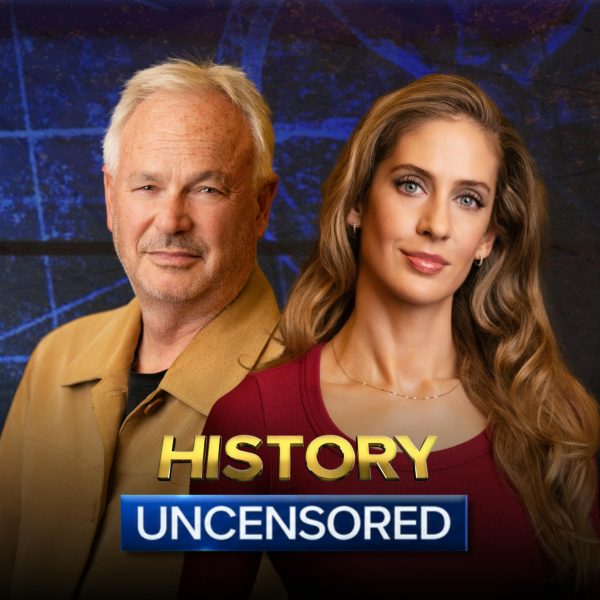
History Uncensored
- Episodios
- 60
- Se publica
- cada semana
- Último episodio
- 3 Nov 2026
Sobre el podcast
Every headline has a history. Bianca Nobilo and Tim Marshall uncover the hidden historical forces behind geopolitics, war, myth, and scandal to expose how power really works and why the past is weaponised. Whatever is happening in the world, History Uncensored asks: how did we get here?
Episodios 60
Can Britain Win A War Without America?
For ad-free & bonus content, join the Uncensored Club: piersmorgan.tv Britain once ruled a quarter of the world. Its navy dominated the seas and its military projected power across continents. But today, could …
Notas del episodio
For ad-free & bonus content, join the Uncensored Club: piersmorgan.tv
Britain once ruled a quarter of the world. Its navy dominated the seas and its military projected power across continents. But today, could Britain sustain a major war without America?
Britain is being told to prepare for the possibility of serious disruption. The Government's new 'Be Ready' campaign is urging households to stockpile three days' worth of essentials, including food, bottled water and emergency supplies, amid growing concerns about cyberattacks, hostile states and the threat of conflict. With ministers increasingly warning that Britain must be prepared for war, and Donald Trump raising fresh questions about America's commitment to NATO, how secure is Britain's reliance on the United States?
In this episode of History Uncensored, Tim Marshall and Bianca Nobilo explore how Britain went from global superpower to a nation increasingly dependent on American military strength.
From the decline of the British Empire and the end of the Cold War to shrinking armed forces, depleted stockpiles and weakened industrial capacity, how did Britain lose the ability to sustain a major war?
And if America could no longer be relied upon, could Britain defend itself?
(00:01:18) Britain: prepare for war
(00:01:15) Britain’s geographic advantage
(00:05:49) The rise of an empire
(00:10:58) The World Wars - decline begins
(00:13:52) Britain’s shrinking map
(00:17:54) Reliance on America, nukes & NATO
(00:20:58) Cold War & "The End of History"
(00:25:12) Can Britain revive the home front?
(00:29:34) Could modern Britain sustain a war?
Learn more about your ad choices. Visit podcastchoices.com/adchoices
The Truth Behind Why Israel Was Created In Palestine
How was Israel created, why was it established in the Middle East, and what decisions shaped the country we know today? As Israel votes in its first national election since the October 7, 2023 attacks, the …
Notas del episodio
How was Israel created, why was it established in the Middle East, and what decisions shaped the country we know today?
As Israel votes in its first national election since the October 7, 2023 attacks, the country's history is once again closely linked to its present. With the war in Gaza and the future of Israelis and Palestinians still at the centre of global attention, understanding how the region reached this point has never been more important.
In this episode of History Uncensored, we explore the story behind Israel's creation in 1948 and how the movement for a Jewish homeland reshaped Palestine. From the events that led to Israel's establishment to the displacement of Palestinians and the ongoing struggle between two peoples with competing national aspirations, we look at how the past continues to shape the politics, conflicts, and future of the Middle East.
(00:01:20) Before Zionism there was Zion
(00:02:07) Why Jews wanted a homeland
(00:09:11) Theodor Herzl and political Zionism
(00:12:30) Pogroms rip through the Russian Empire
(00:14:08) Could Israel have been somewhere else?
(00:16:23) Why Palestine?
(00:23:29) A dictator’s offer
(00:26:47) Partition Plan for Palestine
(00:30:08) 1948 - Israel is born
#history #israel #elections #palestine
Learn more about your ad choices. Visit podcastchoices.com/adchoices
Why Violent Protests Span France's History | Is Napoleon To Blame?
Why does France have such a long history of political unrest and revolution? As the latest riots dominate the headlines and President Emmanuel Macron speaks out, understanding France’s past may offer important …
Notas del episodio
Why does France have such a long history of political unrest and revolution? As the latest riots dominate the headlines and President Emmanuel Macron speaks out, understanding France’s past may offer important clues to the tensions unfolding today.
In this episode, Tim Marshall and Bianca Nobilo explore why France has experienced such recurring political upheaval and how centuries of revolution, regime change and resistance continue to shape the country’s political culture.
(00:00:12) A timeline of riots & revolution
(00:00:26) Can history explain Paris' protests?
(00:01:52) Normandy and a broken bargain
(00:04:18) Birth of the barricade
(00:06:39) Power concentrated in Paris
(00:07:49) How the weather shaped history
(00:11:15) Taking to the streets
(00:15:17) France’s final kings
(00:20:49) Ideas beyond borders
(00:26:13) The role of historic memory
(00:28:43) 'Violence can pay'
(00:31:02) Join the club! Exclusive content
Learn more about your ad choices. Visit podcastchoices.com/adchoices
How DEADLY Is Russia’s ‘Plague’ And Will It Be Used As A Bioweapon?
Was the suspected plague death of Darya Shipilova in Russia an accident, or could it point to a wider threat from biological weapons? In this episode, hosts Bianca Nobilo and Tim Marshall investigate the …
Notas del episodio
Was the suspected plague death of Darya Shipilova in Russia an accident, or could it point to a wider threat from biological weapons? In this episode, hosts Bianca Nobilo and Tim Marshall investigate the history of plague as a weapon, exploring how it has been used and feared from ancient Egypt to the modern day. As questions emerge over the circumstances surrounding the suspected case in Russia, we examine the history of biological warfare, the dangers of weaponising deadly diseases, and the concerns surrounding Russia’s potential bioweapons capabilities.
(00:00:19) Plague as a weapon
(00:01:02) Soviet biological weapons program
(00:07:06) How it spread: Fleas, rats & trade
(00:09:25) Empire weakened by plague
(00:11:41) 'Leaking out of every orifice'
(00:15:17) Black Death, The Decameron & Bianca's pirate links
(00:18:25) Shakespeare & the bubonic plague
(00:22:13) Who else used biological warfare? Germany, Japan & Unit 731
(00:29:54) Empathy with our ancestors
(00:31:57) Watch more History Uncensored & 'avoid cliches like the plague'
Learn more about your ad choices. Visit podcastchoices.com/adchoices
Why Are The Houthis Attacking Saudi Arabia? Yemen’s War Explained
Who are the Houthis, and how did they become powerful enough to challenge Saudi Arabia and disrupt global trade? Following the attack on Riyadh airport, Bianca Nobilo and Tim Marshall examine how Yemen’s long …
Notas del episodio
Who are the Houthis, and how did they become powerful enough to challenge Saudi Arabia and disrupt global trade?
Following the attack on Riyadh airport, Bianca Nobilo and Tim Marshall examine how Yemen’s long running war has become a major regional and global security threat.
From Yemen’s strategic position on the Red Sea and the Bab el-Mandeb strait to the origins of the Houthi movement and its long running rivalry with Saudi Arabia, we explore why instability on the kingdom’s southern border poses such a significant security threat.
(00:00:00) Bianca and Tim discuss "Why now?"
(00:02:01) How ancient geography shapes today
(00:04:50) Look to history to understand the Houthis
(00:08:30) Enter British empire
(00:12:49) An Iranian proxy?
(00:18:26) Path to resolution?
(00:20:39) Asymmetric warfare
Learn more about your ad choices. Visit podcastchoices.com/adchoices
The Strange History of Hijacking - From Russia to 9/11 | With Bianca Nobilo & Tim Marshall
The news is out… Tim Marshall joins Bianca Nobilo as co-host of History Uncensored! In this brand-new episode, Tim and Bianca explore the strange, dramatic and often terrifying history of aircraft hijackings …
Notas del episodio
The news is out… Tim Marshall joins Bianca Nobilo as co-host of History Uncensored!
In this brand-new episode, Tim and Bianca explore the strange, dramatic and often terrifying history of aircraft hijackings.
Following the attack aboard a Flydubai flight travelling from Dubai to Tel Aviv on September 30, they look back at the origins of hijackings, the political motives behind them and their evolution into a defining feature of modern terrorism.
From the Cold War and Russia to 9/11, Tim and Bianca revisit some of the most notorious hijackings in history.
(00:00:00) Hijackings 'as old as air travel'
(00:00:40) BIG NEWS - welcoming Tim Marshall
(00:01:19) Flydubai to 9/11 - History of hijacking
(00:02:19) Hijacking's origins
(00:04:40) Before hijacking there was piracy
(00:08:39) Baron Franz Nopcsa
(00:10:44) First recorded aircraft hijacking??
(00:12:47) Terrorism was not always the reason
(00:14:27) D.B. Cooper mystery, 1971
(00:16:24) Hijackings reflect geopolitical tension
(00:22:44) The changing face of hijacking
(00:24:57) Flydubai incident 2026
(00:27:34) Terrorism as theatre and propaganda of the deed
(00:34:14) Dawson's Field hijackings
(00:37:58) How will historians view the Flydubai attack?
(00:42:13) History Uncensored's goal
Learn more about your ad choices. Visit podcastchoices.com/adchoices
Putin Is REWRITING History - Here’s Why It Matters | With Bill Browder
How does Vladimir Putin use history to justify Russia’s war in Ukraine? In this episode, Bianca Nobilo speaks to Bill Browder about the Kremlin’s use of historical narratives and how Putin’s version of Russia’s …
Notas del episodio
How does Vladimir Putin use history to justify Russia’s war in Ukraine?
In this episode, Bianca Nobilo speaks to Bill Browder about the Kremlin’s use of historical narratives and how Putin’s version of Russia’s past has helped frame the war as a fight against fascism, Nazism and threats to the Russian people.
They explore why Putin needs these myths to sustain support for the war, and whether the West should pay closer attention to the history leaders invoke before they act.
(00:00:00) How history is wielded as a weapon
(00:02:37) History, manipulation, propaganda
(00:04:50) Putin understands history is emotive - Bill Browder
(00:07:41) Do Putin’s historic narratives contradict?
(00:10:24) 'We need to start paying a lot more attention'
(00:14:05) Would Putin stop at Ukraine?
(00:15:55) Bill Browder on being expelled from Russia
(00:19:47) Do Russians believe Putin's version of history?
(00:23:23) A warning to world leaders
(00:25:23) Could Russia use nukes? What does history suggest?
(00:28:17) Bianca's goal
Learn more about your ad choices. Visit podcastchoices.com/adchoices
Why This Trump–Xi Meeting Is More Dangerous Than It Looks | With Ian Bremmer
On September 24, Donald Trump and Xi Jinping, the leaders of two global rivals will meet at the White House. But to understand why this meeting matters, we have to go back to 1985, when Ronald Reagan welcomed …
Notas del episodio
On September 24, Donald Trump and Xi Jinping, the leaders of two global rivals will meet at the White House. But to understand why this meeting matters, we have to go back to 1985, when Ronald Reagan welcomed China’s leader Li Xiannian to Washington.
Back then, the balance of power looked completely different. 41 years later, Trump and Xi meet in a world of trade wars, Taiwan tensions, AI competition and global conflict.
Bianca Nobilo is joined by American political scientist Ian Arthur Bremmer to take a look at the history of the world’s biggest superpowers.
(00:00:14) Trump and Xi - leaders and legacy
(00:00:51) How China became a U.S. rival
(00:03:34) How the past shapes these leaders - with Ian Bremmer
(00:05:54) How leaders use and control history
(00:11:05) Term limits v decades
(00:15:38) Taiwan - how important is this moment?
(00:19:04) The Thucydides Trap
(00:23:16) AI, Cuban Missile Crisis, and mutually assured destruction
(00:27:30) This moment in the broad sweep of history
(00:29:34) Bianca's goal
Learn more about your ad choices. Visit podcastchoices.com/adchoices
The 2,000-Year History of AI - Could It Now REALLY Kill Us All? | With George Zarkadakis
Artificial intelligence could change humanity forever. But the history of AI began thousands of years before computers, machine learning and ChatGPT existed. In just a few decades, humans have gone from …
Notas del episodio
Artificial intelligence could change humanity forever. But the history of AI began thousands of years before computers, machine learning and ChatGPT existed.
In just a few decades, humans have gone from mechanical computers and early ideas about machine intelligence to powerful AI systems capable of generating text and images, writing code, solving complex problems and performing tasks once thought to require human intelligence.
But how did we get here?
Bianca Nobilo explores the fascinating 2,000 year history of artificial intelligence, alongside AI engineer George Zarkadakis.
(00:00:05) AI - millennia in the making(00:00:29) From Talos to Turing... to total extinction?
(00:04:23) Theory of Mind - with George Zarkadakis
(00:05:55) Gods and demons - When does fear creep in?
(00:08:14) Scientific foundations
(00:11:51) Sex, war and robots
(00:15:12) Is AI conscious?
(00:16:56) Consciousness v intelligence
(00:22:17) "We don't know what's happening inside those machines"
(00:26:39) Human extinction in the coming decades - is it likely?
(00:32:40) Does AI have a survival instinct?
(00:36:15) 'Mutually assured destruction' and Cold War parallels
(00:37:41) Is there an off switch?
(00:40:37) Will humanity view this as our greatest mistake?
(00:42:30) Why it’s so hard to stop research
Learn more about your ad choices. Visit podcastchoices.com/adchoices
Did 9/11 Begin The End Of American Power? | With John Bolton
Attorney and former United States Ambassador to the United Nations, John Bolton joins Bianca Nobilo to reflect on the decisions that followed September 11 and how they reshaped American foreign policy and the …
Notas del episodio
Attorney and former United States Ambassador to the United Nations, John Bolton joins Bianca Nobilo to reflect on the decisions that followed September 11 and how they reshaped American foreign policy and the world. From NATO’s historic invocation of Article 5 and relations with Russia, to the rise of China and the conflict with Iran, Bolton examines the choices that brought America to this moment. Is Donald Trump an aberration, or is America’s post Cold War foreign policy tradition disappearing? And if Bolton could return to September 10, 2001, what would surprise him most about the 25 years that followed? (00:00:00) 9/11 - 25 years on (00:02:46) America under attack - with John Bolton (00:04:16) Cold War rivals briefly align (00:07:18) The only time NATO invoked Article 5 (00:11:05) 'I don't stand by all the actions taken' after 9/11 - Bolton (00:13:47) Did fear drive decisions on Iraq? (00:20:41) Was America distracted as China rose? (00:22:46) Differences with Trump (00:26:50) 'Trump is an aberration' (00:29:00) 'The end of history'
Learn more about your ad choices. Visit podcastchoices.com/adchoices
Can Britain Become A Superpower Again? | With David Reynolds
Britain was once the world’s dominant global power. A relatively small island nation built an empire spanning nearly a quarter of the Earth’s land, controlled vital trade routes, and became the centre of the …
Notas del episodio
Britain was once the world’s dominant global power. A relatively small island nation built an empire spanning nearly a quarter of the Earth’s land, controlled vital trade routes, and became the centre of the Industrial Revolution. But how did Great Britain punch so far above its weight - and when did that extraordinary system of power actually break? The UK today remains a nuclear power, a permanent member of the UN Security Council, a major NATO and a country with enormous diplomatic, cultural and educational reach. Is that enough to remain a consequential global power or is Britain increasingly living off the legacy of a power it no longer possesses? Bianca Nobilo explores the rise and decline of British power with historian David Reynolds, Emeritus Professor of International History at Cambridge and author of Britannia Overruled. (00:00:00) Britain - a historical anomaly (00:04:24) 'Accidental empire' - Historian David Reynolds (00:06:01) How a tiny island became a global power (00:09:55) The world's strongest navy (00:12:02) Empire as a "multiplier" of British power (00:14:00) Was it ACTUALLY a superpower? (00:18:19) When does status start to decline? (00:21:51) How Churchill shaped how Britain sees itself (00:24:56) America and Britain - an 'inconceivable' relationship (00:31:03) Lost influence (00:34:57) Brexit and Britain's new identity (00:37:45) Bianca's goal
Learn more about your ad choices. Visit podcastchoices.com/adchoices
How Is Migration Being Used As A WEAPON In Europe? | With Peter Frankopan
Across Europe, migration is increasingly becoming a source of geopolitical tension and in some cases: a tool of state power. In recent weeks, Europe’s borders have produced extraordinary scenes: around 72,000 …
Notas del episodio
Across Europe, migration is increasingly becoming a source of geopolitical tension and in some cases: a tool of state power. In recent weeks, Europe’s borders have produced extraordinary scenes: around 72,000 people crossed from Morocco illegally into the Spanish enclave of Ceuta, while a record 230 people reached Britain in a single inflatable boat. Meanwhile, tunnels have been discovered beneath the borders between Belarus and its EU neighbours, amid accusations that Russia and its allies are exploiting migration as part of a wider hybrid strategy. But how much of this is deliberate and how much is simply the result of conflict, economic pressure, criminal smuggling networks and misinformation? Bianca Nobilo is joined by historian Peter Frankopan to dissect how migration is being used as a weapon in Europe. (00:00:00) Ceuta, Russia and migration as a weapon (00:02:17) An unprecedented era? - with Peter Frankopan (00:04:02) Migration as a tool - what history tells us (00:05:53) How unique is what's happening today? (00:09:12) When do attitudes start to change? (00:12:30) Age of information (00:15:22) Why Ceuta? History and geography combine (00:18:42) Attempts to destabilise Europe? (00:21:31) Are liberal democracies more vulnerable? (00:23:42) Key lessons from history
Learn more about your ad choices. Visit podcastchoices.com/adchoices
Allies to Enemies: How Israel & Iran’s Relationship COLLAPSED | With Trita Parsi
For decades, Israel and Iran have been portrayed as bitter enemies - but their history tells a far more complicated story. Long before today’s war, Iran and Israel were strategic partners, trading oil, weapons …
Notas del episodio
For decades, Israel and Iran have been portrayed as bitter enemies - but their history tells a far more complicated story. Long before today’s war, Iran and Israel were strategic partners, trading oil, weapons, intelligence and military technology - even after Iran’s 1979 Islamic Revolution. Their relationship stretches back much further, through the Persian Empire, Cyrus the Great and centuries of Jewish life under Persian rule. So how did two countries that once secretly armed and relied on each other become existential enemies? Bianca Nobilo traces the unlikely history of Iran and Israel; from the ancient world to the secret alliance of the 20th century, the Iranian Revolution, the Iran-Iraq War and the geopolitical upheavals that ultimately transformed cooperation into confrontation. Joining Bianca to discuss all of this and more is Iranian-Swedish writer and political analyst Trita Parsi. (00:00:00) Israel and Iran - allies to enemies (00:00:43) A relationship millennia in the making (00:06:47) Uncensoring the history with Trita Parsi (00:10:17) Corrupting history "for their own purposes" (00:12:23) What changed? Soviet Union & Saddam Hussein (00:14:48) State of Israel is formed (00:17:53) Cooperation and collaboration (00:21:43) What changed after the Islamic Revolution (00:24:59) Iran-Contra affair (00:27:45) U.S. role in today's hostile relationship
Learn more about your ad choices. Visit podcastchoices.com/adchoices
Who is the REAL Benjamin Netanyahu? | History Of Israel's Prime Minister | With Anshel Pfeffer
Benjamin Netanyahu is one of the most consequential - and controversial - political leaders of the 21st century. To supporters, he is "King Bibi," the leader who has kept Israel secure through decades of war …
Notas del episodio
Benjamin Netanyahu is one of the most consequential - and controversial - political leaders of the 21st century. To supporters, he is "King Bibi," the leader who has kept Israel secure through decades of war and regional instability. To critics, he is responsible for prolonging conflict and undermining the prospects for peace. He also faces an arrest warrant issued by the International Criminal Court over alleged war crimes and crimes against humanity - allegations he rejects, and which Israel disputes. No leader has shaped modern Israel for longer. Born just 17 months after the creation of the State of Israel, Netanyahu has governed the country for nearly 19 years - almost a quarter of its history. But to understand the decisions he is making today in Gaza, Iran, the United States and on Israel's future, you first have to understand the history that shaped him. Bianca Nobilo is joined by Israel Correspondent for The Economist Anshel Pfeffer to uncover the Israeli Prime Minister's past.
00:00 Netanyahu 'wants to write his own history'
00:38 Bibi, "King of Israel", "Butcher of Gaza"
02:52 Netanyahu's upbringing - with Anshel Pfeffer
04:46 Death of his brother Yoni
08:48 Made in America?
11:33 Views on Palestinians and Palestine
15:53 Churchillian complex - "A really severe case"
19:09 Iran - the external enemy
26:08 Does ego shape his global role?
30:18 Will history remember him kindly?
Learn more about your ad choices. Visit podcastchoices.com/adchoices
Is Opus Dei Infiltrating Power In Washington? Investigative Journalist Reveals All Of Scandal
Opus Dei presents itself as a Catholic movement dedicated to finding holiness in everyday life. Critics and former members, however, allege a far darker reality. Bianca Nobilo is joined by investigative …
Notas del episodio
Opus Dei presents itself as a Catholic movement dedicated to finding holiness in everyday life. Critics and former members, however, allege a far darker reality. Bianca Nobilo is joined by investigative journalist Gareth Gore, author of Opus, who traces the organisation's rise from its founding in Spain in 1928 to its influence in politics, finance and the Catholic Church. He examines allegations of psychological manipulation, labour exploitation, human trafficking and abuse - claims Opus Dei strongly denies - and explores the controversial legacy of founder Josemaría Escrivá, the movement's culture of secrecy, and its global reach. Gore also explains how he had a meeting with Pope Leo XIV, where he called for an independent Vatican investigation, Opus Dei's detailed rebuttal to his book, and questioned whether one of the world's most influential Catholic organisations is facing reform or renewed growth. Opus Dei rejects Gareth Gore's characterisation of the organisation and denies allegations of human trafficking and other wrongdoing discussed in this conversation. 00:00 Opus Dei's troubling history 02:03 Alleged abuses - investigative journalist Gareth Gore 03:42 Controversial traditions & corporal mortification 07:35 Children as alleged targets 11:35 Opus Dei cracks America 14:56 Opus Dei & Spain's civil war 17:13 Allegations: human trafficking & sexual misconduct 20:29 Opus Dei response 22:35 An audience with Pope Leo 28:30 What should people know?
Learn more about your ad choices. Visit podcastchoices.com/adchoices
Worse Than The Strait Of Hormuz? Iran War ESCALATION As Houthis Block Tankers | With Tim Marshall
As attention remains focused on the of years. Strait of Hormuz, another strategic waterway is emerging as a critical geopolitical flashpoint: Bab el-Mandeb, the ancient "Gate of Tears." Why has this narrow …
Notas del episodio
As attention remains focused on the of years. Strait of Hormuz, another strategic waterway is emerging as a critical geopolitical flashpoint: Bab el-Mandeb, the ancient "Gate of Tears." Why has this narrow passage between the Red Sea and the Indian Ocean has become one of the world's most important maritime chokepoints? From ancient trade routes and imperial rivalries to the Houthis' attacks on commercial shipping and the risk of wider regional escalation, Bab el-Mandeb has shaped global commerce for thousands of years. The expansion of the Iran conflict into the Red Sea has created a new threat to global energy markets, raising concerns over the security of one of the world's busiest shipping routes. Nearly two weeks after the latest escalation between the United States and Iran, tensions intensified when the Iran-backed Houthis announced a blockade of Saudi vessels transiting the Bab el-Mandeb Strait, a vital maritime gateway at the southern entrance to the Red Sea. This week, Bianca Nobilo is joined by journalist and author Tim Marshall to see how consequential unfolding events could be...
Learn more about your ad choices. Visit podcastchoices.com/adchoices
Has The Iran War Shattered US Power In The Middle East? | With Dr Andreas Krieg
Has America and Israel's war with Iran marked the beginning of the end of the post-1991 American order in the Middle East? For more than three decades after the Gulf War, the United States appeared to guarantee …
Notas del episodio
Has America and Israel's war with Iran marked the beginning of the end of the post-1991 American order in the Middle East? For more than three decades after the Gulf War, the United States appeared to guarantee regional security, protect global energy routes and shape the outcome of major conflicts. The 2026 war with Iran has prompted renewed debate over whether that era has come to an end. The conflict raises fundamental questions about who really emerged as the winners and losers, whether Israel's long-standing strategy of forward defence has reached its limits, why the Strait of Hormuz may now represent a strategic weapon more powerful than nuclear deterrence, and whether perpetual war has become the defining feature of the region's security order. Bianca Nobilo is joined by Dr Andreas Krieg, author and Fellow at the Institute of Middle Eastern Studies, to give an in-depth analysis of the forces reshaping the Middle East and the global balance of power.
Learn more about your ad choices. Visit podcastchoices.com/adchoices
Has Russia's War Against NATO And Europe Already Begun?
Across Europe, governments and intelligence agencies have accused Russia of escalating a campaign of hybrid warfare, from sabotage and GPS interference to cyber operations and suspected attacks on critical …
Notas del episodio
Across Europe, governments and intelligence agencies have accused Russia of escalating a campaign of hybrid warfare, from sabotage and GPS interference to cyber operations and suspected attacks on critical infrastructure. Much of the attention is focused on Kaliningrad - Russia's heavily militarised exclave on the Baltic Sea - and the nearby Suwałki Gap, NATO's only land link to the Baltic states. Bianca Nobilo explores how a medieval Prussian city became one of Europe's most strategically important military flashpoints. Tracing the history of Königsberg, the Second World War, the Soviet Union and NATO's expansion, she takes a look at why Kaliningrad remains central to Russia's military strategy and how the Suwałki Gap is considered one of the alliance's greatest vulnerabilities. Could this war continue to shape Europe's security and what does that mean for the future?
Learn more about your ad choices. Visit podcastchoices.com/adchoices
Is The USA STILL A Democracy? | 250 Years Of American Independence
When did America actually become a democracy and could it be losing it? As the United States marks 250 years since independence, this episode examines one of the country's biggest founding myths: that America …
Notas del episodio
When did America actually become a democracy and could it be losing it? As the United States marks 250 years since independence, this episode examines one of the country's biggest founding myths: that America has always been a democracy. From the Constitution of 1787 to the Voting Rights Act of 1965, the programme traces how political rights gradually expanded from a system that excluded most Americans - including enslaved people, women, Native Americans and many Black citizens - to something closer to universal democracy. If full democratic participation only became a reality around sixty years ago, what does that mean for the strength and resilience of the American system today? Bianca Nobilo is joined by Professor of Political Science, Lucan Way, to explore what democracy has meant to Americans over the years. 00:00 Is America still a democracy? 02:22 Defining democracy - with Lucan Way 05:02 When did America become a full democracy? 09:43 Nixon and Trump 12:44 Free press (costs money) 15:00 Competitive authoritarian 18:33 Where have we seen this before? 21:57 The counter argument 25:59 Does democracy ebb and flow?
Learn more about your ad choices. Visit podcastchoices.com/adchoices
Why Can’t 'Broken Britain' KEEP a Prime Minister? From Scandal to Assassination
Keir Starmer is stepping down as the UK’s Prime Minister, less than two years after winning the election with a landslide victory. Between 1979 and 2016, Britain had five prime ministers in 37 years… and since …
Notas del episodio
Keir Starmer is stepping down as the UK’s Prime Minister, less than two years after winning the election with a landslide victory. Between 1979 and 2016, Britain had five prime ministers in 37 years… and since 2016, it has had six in roughly a decade. So is the UK political system broken, or is this chaos exactly what the parliamentary model was designed to do? Bianca Nobilo looks back at three centuries of the history behind the headlines to determine if this is a constitutional crisis - or the system working exactly as intended. 00:00 Why can't Britain keep a Prime Minister? 02:09 Assassination of Spencer Perceval 03:28 Shortest tenure: From George Canning to Liz Truss 05:44 What's different today? 2016 - 2026 07:03 What's causing the chaos? 10:14 Is Britain broken?
Learn more about your ad choices. Visit podcastchoices.com/adchoices
How Has Putin's Childhood Dictated Russian Strategy? | With Mark Galeotti
Who is the real Vladimir Putin? For decades, the Russian president has been portrayed as everything from a master strategist and nationalist strongman to a ruthless former spy. How much of that image reflects …
Notas del episodio
Who is the real Vladimir Putin? For decades, the Russian president has been portrayed as everything from a master strategist and nationalist strongman to a ruthless former spy. How much of that image reflects reality and how much is carefully crafted mythology? Bianca Nobilo is joined by historian and Russia expert Mark Galeotti to examine the formative experiences that shaped Putin's worldview, from his lonely childhood in Soviet Leningrad to his years in the KGB and rise to power in the Kremlin. What misconceptions continue to define Western perceptions of Putin? What drives his decision-making? What does his personal history might reveal about Russia's future plans in Ukraine and beyond?
Learn more about your ad choices. Visit podcastchoices.com/adchoices
Is Israel Using White Phosphorus In Lebanon, And Is It Legal?
White phosphorus has been used on battlefields for more than a century, but its deployment over populated areas continues to spark fierce legal and ethical debate. Bianca Nobilo examines the growing scrutiny …
Notas del episodio
White phosphorus has been used on battlefields for more than a century, but its deployment over populated areas continues to spark fierce legal and ethical debate. Bianca Nobilo examines the growing scrutiny surrounding Israel's use of white phosphorus in Lebanon, where human rights groups have raised concerns about the impact on civilians. Capable of burning at extreme temperatures and causing severe injuries, the substance occupies a controversial legal grey area because it is often classified as a smoke-screening munition rather than a chemical weapon. From its origins in the 17th century to its use in modern conflicts, the history of white phosphorus reveals why it remains one of warfare's most controversial weapons. As concerns mount over its use in civilian areas, questions continue to be asked about whether military necessity can ever justify the risks it poses.
Learn more about your ad choices. Visit podcastchoices.com/adchoices
The WILD History Of The UFC: 1993 To Trump's White House | With Luke Thomas
How did the UFC go from a controversial fringe spectacle in 1993 to hosting an event at the White House? Combat sports journalist Luke Thomas joins Bianca Nobilo to discuss the UFC's extraordinary rise, its …
Notas del episodio
How did the UFC go from a controversial fringe spectacle in 1993 to hosting an event at the White House? Combat sports journalist Luke Thomas joins Bianca Nobilo to discuss the UFC's extraordinary rise, its ties to Donald Trump, and how the promotion became one of the most influential forces in modern sports and culture. From its no-holds-barred beginnings to the heart of American political power, they examine the remarkable journey of the UFC, the key figures who transformed the sport, and the cultural shift that took mixed martial arts from the margins to the mainstream. With the UFC now firmly embedded in American popular culture, what does its White House debut say about the sport's evolution and its growing influence beyond the octagon?
Learn more about your ad choices. Visit podcastchoices.com/adchoices
Why Does FIFA Survive EVERY Scandal?
Racketeering. Wire fraud. Money laundering. Those are the charges that helped bring down some of the most powerful figures in world football. Not a crime syndicate, but FIFA — the organisation that governs the …
Notas del episodio
Racketeering. Wire fraud. Money laundering. Those are the charges that helped bring down some of the most powerful figures in world football. Not a crime syndicate, but FIFA — the organisation that governs the world's most popular sport. With more member associations than the United Nations and an audience measured in billions, FIFA oversees the biggest sporting event on Earth: the World Cup. But alongside its global influence has come decades of controversy, from corruption scandals and bribery allegations to accusations of sportswashing and close relationships with authoritarian governments. From Fascist Italy in 1934 to Argentina's military dictatorship in 1978, and more recently Russia 2018 and Qatar 2022, critics argue that World Cups have repeatedly been used to boost the international standing of powerful leaders and regimes. So why does scandal never seem to stick? How has FIFA remained one of the most powerful institutions in global sport despite years of scrutiny? Bianca Nobilo is joined by sports historian and former professional footballer Jules Boykoff, who examines the role of sportswashing, the commercialisation of the game, and the global influence of football's most powerful organisation.
Learn more about your ad choices. Visit podcastchoices.com/adchoices
Is Russia Losing? War Reporter Reveals TRUTH About Ukraine Conflict
Is Putin fighting a war from a position of power…. or desperation? Ukraine’s drones have been attacking his home town of St Petersburg - pushing the war well and truly into the heart of Russia. At the same …
Notas del episodio
Is Putin fighting a war from a position of power…. or desperation? Ukraine’s drones have been attacking his home town of St Petersburg - pushing the war well and truly into the heart of Russia. At the same time…Russia continues relentless bombing of Ukrainian cities and claims to be advancing. So the question everyone is asking but nobody seems to be able to answer clearly is this: who is ACTUALLY winning? And ultimately: after more than four years of this war.. is this conflict ending - or just changing? Bianca Nobilo interviews war correspondent Sam Kiley, who was reporting on the ground in Kharkiv before the February 2022 invasion, to answer these questions.
Learn more about your ad choices. Visit podcastchoices.com/adchoices
History of Cuba: Spanish Colonization, Revolution and Communism 1492-2026
Why has one island shaped the ambitions of empires, triggered superpower confrontations, and repeatedly found itself at the centre of world history? This is the story of Cuba - the largest island in the …
Notas del episodio
Why has one island shaped the ambitions of empires, triggered superpower confrontations, and repeatedly found itself at the centre of world history? This is the story of Cuba - the largest island in the Caribbean, just 90 miles from Florida, and one of the most strategically important pieces of real estate on Earth. Long before Fidel Castro, Che Guevara and the Cuban Missile Crisis, Cuba was coveted by great powers for a simple reason: geography. Spain built an empire around it. Britain tried to seize it. The United States spent generations trying to dominate it. The Soviet Union turned it into the frontline of the Cold War. Today, as Russian warships return to Havana and China expands its footprint on the island, Cuba's strategic importance is once again impossible to ignore. But geopolitics is only half the story. From the first Indigenous societies and the arrival of Columbus, through conquest, slavery and sugar plantations, independence wars, American intervention, dictatorship, revolution and communism, Cuba's history is a story of competing visions of freedom, sovereignty and power. It is a story of extraordinary resilience, profound suffering, revolutionary ambition and enduring controversy. Bianca Nobilo explores just over five centuries of conflict, looking at one thing that never changed: Cuba was never just an island. It was a strategic platform - one the world has been fighting over ever since.
Learn more about your ad choices. Visit podcastchoices.com/adchoices
The DANGEROUS Similarity Between Cuba & Taiwan
A small island sitting dangerously close to a rival superpower. A military flashpoint shaped by ideology, geography, and fear. Is that Cuba - or Taiwan? In this deep-dive, Bianca Nobilo explores the striking …
Notas del episodio
A small island sitting dangerously close to a rival superpower. A military flashpoint shaped by ideology, geography, and fear. Is that Cuba - or Taiwan? In this deep-dive, Bianca Nobilo explores the striking parallels between Cuba and Taiwan, two islands shaped by the ambitions of far larger powers. From the Cuban Missile Crisis to rising tensions in the Taiwan Strait, Bianca looks at why great powers become obsessed with strategically placed islands just offshore and what that reveals about the return of spheres of influence in global politics. Cuba became central to America’s Cold War anxieties, just like how Taiwan now sits at the heart of U.S-China rivalry - both islands represent something far bigger than territory alone. At its core, this is a story about power, fear, and the return of great-power competition.
Learn more about your ad choices. Visit podcastchoices.com/adchoices
The Dark History Behind Modern Eugenics | "This Stuff Is NUTS!"
Eugenics is often treated as a dead ideology buried with Nazi Germany but historians and scientists argue the idea never truly disappeared - it simply evolved. Bianca Nobilo speaks to geneticists Adam …
Notas del episodio
Eugenics is often treated as a dead ideology buried with Nazi Germany but historians and scientists argue the idea never truly disappeared - it simply evolved.
Bianca Nobilo speaks to geneticists Adam Rutherford and Professor Debby Sneed, exploring how eugenics became tied to empire, racial hierarchy, forced sterilisation and genocide. Later examining the flawed science that sustained it and tracing how ancient Sparta and classical Greece were later mythologised by modern extremists.
Was eugenics defeated after World War II? Or did the bad science that fuelled some of history’s worst atrocities simply adapt to a new age?
Learn more about your ad choices. Visit podcastchoices.com/adchoices
Why Powerful Men Are Obsessed With the Roman Empire
Why do powerful men keep idolising the ancient world? From Xi Jinping invoking Thucydides at a US-China summit, to Putin’s “Third Rome,” to Elon Musk posting “America is New Rome,” modern leaders repeatedly …
Notas del episodio
Why do powerful men keep idolising the ancient world? From Xi Jinping invoking Thucydides at a US-China summit, to Putin’s “Third Rome,” to Elon Musk posting “America is New Rome,” modern leaders repeatedly reach back to Greece and Rome when talking about power, destiny and empire. Bianca Nobilo explores what leaders’ historical obsessions, like Hitler and Napoleon reveal about them and why ancient figures like Caesar, Augustus, Alexander and Sparta still hold such political and psychological power today. Chronopolitics also comes into play - the political use of the past to legitimise the present and claim authority over the future - because the ancient world can justify almost anything: democracy, empire, conquest, republican virtue, dictatorship, restraint or glory. So the real question isn’t whether leaders read the classics. It’s what they’re trying to authorise through them. What historical figures do YOU notice modern leaders admiring?
Learn more about your ad choices. Visit podcastchoices.com/adchoices
History Of Time: How the Clock Led to Capitalism
What even is time? Physicists still can’t fully agree. Einstein showed that time bends and warps. Theoretical physicist Carlo Rovelli argues it may not fundamentally exist at all. And yet modern life is ruled …
Notas del episodio
What even is time? Physicists still can’t fully agree. Einstein showed that time bends and warps. Theoretical physicist Carlo Rovelli argues it may not fundamentally exist at all. And yet modern life is ruled by clocks, schedules, deadlines and timestamps measured down to fractions of a second. Across ancient civilizations, humans developed ways to make the invisible movements of the sky measurable - first through monuments, then sundials, water clocks and eventually mechanical timekeeping. Featuring interviews with science communicator Finn Burridge from Royal Observatory Greenwich and author Jonathan Martineau, Bianca Nobilo examines how time evolved from a natural experience into a system that structures modern life itself.
Learn more about your ad choices. Visit podcastchoices.com/adchoices
Aquí están los 40 episodios más recientes de 60. Los anteriores están en el feed del podcast.
Podcasts similares
Más podcasts de Educación





¿Es tu podcast?
Confírmalo con una entrada en tu feed: aquí recibes un código, lo añades como podcast:txt en el canal de tu feed y nosotros lo comprobamos. Después tu podcast aparecerá como «verificado» en SoundNode.