

Kabbalah for Everyone
- Episodios
- 270
- Se publica
- cada semana
- Último episodio
- 11 Nov 2026
Sobre el podcast
You have probably heard about Kabbalah either as a Hollywood phenomenon or something that is beyond the world that we live in. Kabbalah actually has incredible secrets that can transform your daily life. This is your chance to connect to this incredible ancient wisdom and change your life for the better.
Cherished for his incredible warmth and non-judgmental personality, this hipster is not your typical rabbi. He is real, raw, unconventional and loved by thousands across the world. Rabbi Bernath has been teaching Kabbalah for over 15 years. He is also the author of three books, and continuously produces engaging content on his many social media & podcast platforms. As a professional voice-over artist, screen-writer and documentarian, he has been a part of dozens of productions, including the award winning CBC Documentary "Kosher Love".
Participantes
- Rabbi Yisroel BernathPresentación
Episodios 270
Kabbalah for Everyone — Lesson 23: Chessed: The Courage to Make Room for Another Person
Send us Fan MailWhat if kindness isn't really about what we give, but about how much room we're willing to make for another human being?In Lesson 23 of Kabbalah for Everyone, Rabbi Yisroel Bernath …
Notas del episodio
What if kindness isn't really about what we give, but about how much room we're willing to make for another human being?
In Lesson 23 of Kabbalah for Everyone, Rabbi Yisroel Bernath takes us on a journey from the mind into the heart as we explore Chessed, the first of the seven emotional Sefirot.
After weeks of studying Chochmah, Binah, and Daas, we discover what happens when spiritual understanding becomes emotional reality. Chessed is far more than being nice or performing occasional acts of generosity. It is the courage to step beyond ourselves and recognize that another person's life, pain, joy, and needs genuinely matter.
Drawing on the life of Avraham, the teachings of the Tanya, and the mystical principle Olam Chessed Yibaneh, the world is built through kindness, we explore why giving is essential to creation itself.
There's a challenging question at the heart of this lesson: Are we giving because someone needs us, or because we need to be needed? We examine the difference between genuine love and people-pleasing, why boundaries can actually protect kindness, and how the smallest gestures of attention can transform relationships.
Your Lesson 23 Worksheet
Key Points
- From the Mind to the Heart: Chochmah brings insight, Binah develops understanding, Daas makes truth personally real, and Chessed transforms that truth into love and action.
- Chessed Begins With Noticing: Before we can help another person, we must first recognize their reality. Sometimes the most meaningful kindness is simply paying attention.
- Avraham's Radical Hospitality: Avraham teaches that kindness isn't an interruption of spirituality. It is spirituality expressed through human connection.
- The World Is Built Through Kindness: Olam Chessed Yibaneh reminds us that existence itself is a Divine gift. We receive life so that we can become givers of life.
- When Giving Becomes About the Giver: Not everything that looks generous is genuine Chessed. Sometimes our giving is driven by guilt, insecurity, control, or the desire to feel needed.
- Boundaries Are Not the Opposite of Love: True kindness asks what will genuinely help another person, even when that requires saying no.
- Kindness Begins at Home: Our greatest opportunities for Chessed often appear in ordinary moments with our spouses, children, friends, and colleagues.
- The Power of Small Acts: A phone call, a compliment, a moment of undivided attention, or an invitation to sit together can change someone's world.
- The Seven-Day Chessed Challenge: Each day, ask: Who can I notice? What can I give beyond what is required? Does my giving truly serve the other person? And once during the week, perform an anonymous act of kindness.
- Become a Home for Kindness: The ultimate goal is not merely to perform acts of Chessed, but to build a life in which other people have room to belong.
#Kabbalah #kabala #chabad #chassidus #Tanya #KabbalahForEveryone #Rabbiyisroelbernath #Chessed #Chesed
Got your own question for Rabbi Bernath? He can be reached at [email protected] or http://www.theloverabbi.com
Single? You can make a profile on www.JMontreal.com and Rabbi Bernath will help you find that special someone.
Donate and support Rabbi Bernath’s work http://www.jewishndg.com/donate
Follow Rabbi Bernath’s YouTube Channel https://www.youtube.com/user/ybernath
Access Rabbi Bernath's Articles on Relationships https://medium.com/@loverabbiKabbalah for Everyone — Lesson 22: Daas: How to Close the Gap Between What You Know and How You Actually Live
Send us Fan MailWe all know things we don't actually live. We know we shouldn't respond when we're angry. We know we can't control everything. We know that our worth isn't determined by …
Notas del episodio
We all know things we don't actually live. We know we shouldn't respond when we're angry. We know we can't control everything. We know that our worth isn't determined by other people's opinions. We know we should be more patient, grateful, and present…. yet, when life gets difficult, all that wisdom seems to disappear.
Why?
In Lesson 22 of Kabbalah for Everyone, Rabbi Yisroel Bernath explores Daas (Daat), the third intellectual faculty in Kabbalah and Chassidus, and the missing bridge between what we understand and how we actually live. Chochmah allows us to see a truth. Binah helps us understand it. But Daas is what makes that truth personal, emotionally meaningful, and real.
Drawing on the Tanya, the Zohar, and the teachings of the Chassidic masters, we discover why spiritual growth isn't about collecting more information or chasing emotional highs. It's about developing a deeper relationship with the truths we already know.
Through relatable examples involving relationships, anxiety, self-worth, and everyday decisions, Rabbi Bernath introduces a simple practice called One Truth. One Week. It's an invitation to take one truth you already believe and give it enough attention that it begins to shape your choices. Because the real test of spirituality isn't how inspired you feel during a beautiful class or on Yom Kippur. It's what remains on an ordinary Wednesday afternoon.
Download the PDF Worksheet HERE: https://www.dropbox.com/scl/fi/c2jcgszres7o16zufmumf/Lesson-22-Daat.pdf?rlkey=76snuyv1c0mw4a74afnrrqb7s&dl=0
Key Points
1. The Danger of “I Know” - Understanding something intellectually doesn't necessarily mean it has changed how we live.
2. Daas Is Connection, Not Information - The Torah uses the word yada to describe intimate connection. True knowing means developing a personal relationship with a truth.
3. The Bridge Between Head and Heart - Daas connects our intellectual understanding to our emotional world, allowing spiritual truths to influence our feelings and choices.
4. Attention Creates Intimacy - Whatever we repeatedly focus on begins to acquire emotional weight. The question is whether we're giving our attention to fear, resentment, and imagined catastrophes, or to gratitude, trust, and purpose.
5 The Key That Opens and Closes - The Zohar describes Daas as the key to the six emotional attributes. Spiritual maturity involves knowing which thoughts deserve entry into our hearts and which do not.
6. Spiritual Growth Isn't About Emotional Fireworks - You don't have to feel inspired every moment for a truth to be deeply internalized. Sometimes the greatest evidence of growth is quietly showing up and doing what matters.
7. The Four Stages of Daas - Stay with the truth. Bring it close. Let it matter. Let it last.
8. The Wednesday Test - Real transformation isn't measured by whether we stop struggling. It's measured by whether truth becomes available to us in the middle of the struggle.
Got your own question for Rabbi Bernath? He can be reached at [email protected] or http://www.theloverabbi.com
Single? You can make a profile on www.JMontreal.com and Rabbi Bernath will help you find that special someone.
Donate and support Rabbi Bernath’s work http://www.jewishndg.com/donate
Follow Rabbi Bernath’s YouTube Channel https://www.youtube.com/user/ybernath
Access Rabbi Bernath's Articles on Relationships https://medium.com/@loverabbiKabbalah for Everyone - Lesson 21: Binah: How a Flash of Insight Becomes a Life You Can Actually Build
Send us Fan MailHave you ever had a moment of incredible clarity? A flash of inspiration that made you see your life, your relationships, or your purpose completely differently? You felt certain something was …
Notas del episodio
Have you ever had a moment of incredible clarity? A flash of inspiration that made you see your life, your relationships, or your purpose completely differently? You felt certain something was about to change. Then a few days later, life went back to normal. Why does that happen?
In Lesson 21 of Kabbalah for Everyone, Rabbi Yisroel Bernath explores Binah, the second intellectual faculty of the soul, and reveals how we transform fleeting moments of inspiration into genuine understanding and lasting personal growth.
Drawing from the Tanya, Chabad Chassidut, and everyday human experience, Rabbi Bernath explains the difference between Chochmah, the initial spark of wisdom, and Binah, the patient process of developing that spark into something meaningful.
Discover why intuition isn't always truth, why overthinking can prevent genuine understanding, and how our interpretations shape our emotions, relationships, and decisions.
Through relatable stories about marriage, parenting, difficult conversations, spiritual growth, and even those text messages we probably shouldn't send, this lesson introduces the Three Dimensions of Binah: Depth, Breadth, and Length.
You'll also learn a practical 90-second exercise to help you pause, question your assumptions, and respond with greater wisdom.
At its heart, this lesson offers a beautiful perspective on love and relationships: perhaps truly loving someone means remaining curious enough to keep discovering who they are.
Because sometimes the most powerful words we can say are simply… Help me understand.
Download the PDF Worksheet HERE: https://www.dropbox.com/scl/fi/z7v81y588z41fl2ixhaeh/Lesson-21-Binah-Stay-With-It.pdf?rlkey=ijobgb6pfa4iali9pk55082za&dl=0
Key Points
- Chochmah vs. Binah vs. Daat: Discover how wisdom begins as a flash, develops into understanding, and eventually becomes a truth we can internalize.
- Why inspiration fades: Understand why powerful spiritual experiences and life-changing realizations don't automatically produce lasting transformation.
- The Three Dimensions of Binah: Learn to develop any idea through depth (what is really true?), breadth (what else matters?), and length (how does this apply to real life?).
- The danger of premature certainty: Explore how quickly we interpret situations, assume intentions, and turn incomplete information into emotional stories.
- Understanding before reacting: Learn how Binah can transform difficult conversations, communication in marriage, parenting, and personal relationships.
- When thinking becomes overthinking: Recognize the difference between healthy contemplation that produces clarity and endless rumination that keeps us stuck.
- Wisdom and timing: Discover why even the right idea can become harmful when applied at the wrong moment, and how genuine understanding includes knowing when and how to act.
- Humility without becoming a doormat: Understand why bittul, the Chassidic concept of self-transcendence, does not require abandoning personal dignity or healthy boundaries.
- The 90-Second Binah Practice: Ask three questions before responding: What actually happened? What else could be true? What response fits this moment?
- Binah as a form of love: Discover why deep relationships require patience, curiosity, listening, and the willingness to understand another person beyond our first impressions.
- Turning knowledge into spiritual growth: Explore the Chabad practice of hisbonenus, contemplation that allows Divine wisdom to become personally meaningful.
#Binah #Chochmah #Kabbalah #chassidus #Tanya #JewishWisdom #JewishSpirituality #chabad #kabala #chassidut #personalgrowth
Got your own question for Rabbi Bernath? He can be reached at [email protected] or http://www.theloverabbi.com
Single? You can make a profile on www.JMontreal.com and Rabbi Bernath will help you find that special someone.
Donate and support Rabbi Bernath’s work http://www.jewishndg.com/donate
Follow Rabbi Bernath’s YouTube Channel https://www.youtube.com/user/ybernath
Access Rabbi Bernath's Articles on Relationships https://medium.com/@loverabbiKabbalah for Everyone - Lesson 20: Chochmah - The Power of “What?”
Send us Fan MailWhat if wisdom does not begin with having the answer, but with creating enough space to see something new?In Lesson 20 of Kabbalah for Everyone, Rabbi Yisroel Bernath takes a deep dive into …
Notas del episodio
What if wisdom does not begin with having the answer, but with creating enough space to see something new?
In Lesson 20 of Kabbalah for Everyone, Rabbi Yisroel Bernath takes a deep dive into Chochmah, the first intellectual faculty described in Tanya: the initial flash of insight before an idea has been fully developed. Rather than treating Chochmah as simply “being smart,” this class explores it as the capacity to see the essential point before explanations, assumptions, ego, and old stories take over.
Rabbi Bernath also clarifies an important distinction from the previous lessons: the three souls and Chochmah, Binah, and Da’at are not a one-to-one map. The three souls describe who inside us is speaking and what it wants; Chochmah, Binah, and Da’at describe how an idea moves through the mind.
At the heart of the lesson is the Chassidic reading of Chochmah as “Koach Mah” - the power of “What?” Wisdom begins when “I know” becomes quiet enough to ask: What am I missing? What is really happening? What does G-d want from me here? This is not low self-esteem. It is bittul - the humility to recognize that our current perspective may not be the whole reality.
Through examples from relationships, business, anxiety, and anger, the lesson offers a practical spiritual tool: The Thirty-Second Holy Pause. Before reacting, stop the old script, ask one honest question, wait for one clear point, and then let Binah develop it later.
Sometimes it is simply seeing differently.
Download the PDF Worksheet for Lesson 20 HERE: https://www.dropbox.com/scl/fi/0hp35s9alu7f7y00zzjph/Lesson-20-The-Holy-Pause-Chochmah.pdf?rlkey=d0vbl7v05ju3qiudolcpv807y&dl=0
Key Points
- Chochmah is the first point of an idea, the flash before full understanding.
- Chochmah is not the same thing as being knowledgeable or intelligent.
- The three souls and Chochmah-Binah-Da’at are two different maps of the same human being.
- The three souls ask: Who inside me is speaking, and what does it want?
- Chochmah, Binah, and Da’at ask: How is an idea moving through my mind?
- A sudden thought is not automatically holy, wise, or true.
- Chochmah is compared to sight because it grasps the whole point at once.
- Binah is compared to hearing because it develops understanding piece by piece.
- Chochmah helps us see the essence before getting lost in details.
- Koach Mah - “What?” represents openness, receptivity, and intellectual humility.
- Bittul does not mean “I am worthless.” It means, “I am not the entire reality.”
- You cannot receive a new idea while you are busy defending the old one.
- Three major enemies of Chochmah are certainty, speed, and ego.
- Chochmah introduces three different movements: Maybe. Pause. What is true?
- Wisdom asks not only, “What is this really?” but also, “What is this becoming?”
- The Thirty-Second Holy Pause is a practical way to interrupt automatic reactions.
- The goal is not to get a complete answer immediately - just one true point.
- Chochmah must eventually be developed through Binah and internalized through Da’at.
- A central spiritual question of the lesson is: “What does G-d want from me here?”
- Real wisdom may begin with the courage to say: “Maybe I don’t know yet.”
#Kabbalah #kabala #Judaism #Jewish #Chochmah #Tanya #chabad #chassidus #chassidut #chassidic #Tanya #JewishWisdom #JewishSpirituality
Got your own question for Rabbi Bernath? He can be reached at [email protected] or http://www.theloverabbi.com
Single? You can make a profile on www.JMontreal.com and Rabbi Bernath will help you find that special someone.
Donate and support Rabbi Bernath’s work http://www.jewishndg.com/donate
Follow Rabbi Bernath’s YouTube Channel https://www.youtube.com/user/ybernath
Access Rabbi Bernath's Articles on Relationships https://medium.com/@loverabbiKabbalah for Everyone - Lesson 19: The Three Ways Your Mind Serves You | Chochmah, Binah & Da’at — From Knowing to Living
Send us Fan MailWhy is it that we can know something is true, understand it perfectly—and still struggle to actually live it? In this lesson of Kabbalah for Everyone, Rabbi Yisroel Bernath explores the three …
Notas del episodio
Why is it that we can know something is true, understand it perfectly—and still struggle to actually live it? In this lesson of Kabbalah for Everyone, Rabbi Yisroel Bernath explores the three intellectual powers described in Kabbalah and Tanya: Chochmah, Binah, and Da’at.
Chochmah is the flash of insight.
Binah takes that insight apart, develops it, and understands it.
Da’at connects you to the idea deeply enough that it begins to influence your emotions, choices, and actions.We connect these three powers of the mind to the framework we’ve been developing throughout the course: the G-dly Soul, Rational Soul, and Animal Soul, the 101st moment, and Truth. Plan. Power.
The question is no longer simply: What do I know? It becomes: Has what I know actually become part of me? Through practical examples, reflection exercises, and the 90-second Inner Team Meeting, we explore how Torah ideas can travel from inspiration, to understanding, to genuine inner change.
I put together a Lesson 19 worksheet so you can follow along, take notes, and work through the exercises afterward.
Download the PDF here:
https://www.dropbox.com/scl/fi/wxx5lf2h5ia86va6nlvp1/Lesson-19-The-Three-Ways-Your-Mind-Serves-You.pdf?rlkey=v4nqppzmx0iymjmp7h0k9lj20&dl=0Key Points
- Chochmah: the flash of wisdom, the initial spark or “aha.”
- Binah: developing the idea, asking questions, understanding how and why.
- Da’at: connecting to the idea until it becomes personally real.
- Knowing something intellectually is not the same as being connected to it.
- Da’at helps bridge the distance between what I know and how I live.
- The G-dly Soul provides direction; the Rational Soul helps translate; the Animal Soul brings energy.
- Inspiration without development often disappears.
- Understanding without connection may never change behavior.
- Real spiritual growth happens when an idea travels from the mind into the heart and then into action.
- The Inner Team Meeting asks: What is true? What is my next wise step? What energy can help me do it?
- Kabbalah does not ask us to destroy our natural drives, but to educate and redirect them.
- Do not wait until every part of you agrees before doing something good.
- The goal is not simply to learn more Torah—it is for Torah to increasingly become part of who we are.
---
The School for Sensitive Souls - Only 4 Spots Left
If you feel deeply, notice everything, absorb the emotional world around you, overthink, care intensely, or sometimes wonder whether your sensitivity is a blessing or a burden, The School for Sensitive Souls was created for you.
I’m intentionally keeping this group to just 18 participants, and there are now only 4 spots remaining.
Learn more and register:
https://www.kabbalah4everyone.com/checkout/sensitive-souls---
Support Kabbalah for Everyone
If these classes have brought value to your life, you can help us continue making this learning accessible. You can also sponsor a class in honour or in memory of someone, for a birthday, anniversary, yahrtzeit, refuah, or another meaningful occasion.
Support or sponsor a class:
https://www.charidy.com/kabbalah4everyone#Kabbalah #Judaism #chabad #chassidus #ChassidicTeachings #chassidut #Chochmah #Binah #Daat #Tanya #JewishSpirituality #Jewishpsychology
Got your own question for Rabbi Bernath? He can be reached at [email protected] or http://www.theloverabbi.com
Single? You can make a profile on www.JMontreal.com and Rabbi Bernath will help you find that special someone.
Donate and support Rabbi Bernath’s work http://www.jewishndg.com/donate
Follow Rabbi Bernath’s YouTube Channel https://www.youtube.com/user/ybernath
Access Rabbi Bernath's Articles on Relationships https://medium.com/@loverabbiKabbalah for Everyone - Lesson 18: Truth, Plan, Power | Getting Your Whole Self on the Same Team
Send us Fan MailWhat happens when one part of you knows what is right, another part is overthinking everything, and another part simply wants what it wants?In Lesson 18 of Kabbalah for Everyone, Rabbi Yisroel …
Notas del episodio
What happens when one part of you knows what is right, another part is overthinking everything, and another part simply wants what it wants?
In Lesson 18 of Kabbalah for Everyone, Rabbi Yisroel Bernath offers a simple, practical Kabbalah framework for understanding the G-dly Soul, Rational Soul, and Animal Soul: Truth. Plan. Power.
The G-dly Soul helps us identify what is true. The Rational Soul turns that truth into a realistic next step. The Animal Soul provides the passion, drive, stubbornness, and energy to actually do it.
The goal of spiritual growth is not to become less human or to wage permanent war against yourself. It is to teach the different parts of yourself how to work together. This class explores anger, anxiety, procrastination, jealousy, technology, relationships, spiritual growth, failure, and the practical art of turning natural human energy into something holy.
Download the PDF Worksheet HERE
https://www.dropbox.com/scl/fi/b35i5vc2elld2eb1oowz9/Lesson-18-Truth-Plan-Power.pdf?rlkey=yuwgpoatle0ft9ruf7u8l614u&dl=0Key Points
- The three souls do not need to become identical—they need to learn their proper roles.
- Truth: What is actually true here? What does my deepest G-dly self know?
- Plan: What is one wise, realistic next step?
- Power: What natural energy already inside me can help me take that step?
- Feelings contain information, but they do not always provide instruction.
- You can hear an emotion without handing it the steering wheel.
- The Rational Soul should be a translator of truth, not an attorney for every impulse.
- Spiritual growth often means giving your natural drives a better assignment.
- Stubbornness can become loyalty. Anger can become courage. Ambition can become contribution. Sensitivity can become compassion.
- The goal is not to destroy the “ox,” but to harness its strength.
- You do not need perfect motives before doing something good.
- Sometimes holiness is transformation; sometimes holiness is simply restraint.
- The 90-Second Inner Team Meeting: What is true? What is the next wise step? What power can help me do it?
- Growth is not about becoming less human. It is about becoming more integrated and more whole.
The School for Sensitive Souls is now open. This will be a much more intimate experience, and registration is intentionally limited to 18 participants. Register HERE https://www.kabbalah4everyone.com/checkout/sensitive-souls
Some of you have also asked how you can support Kabbalah for Everyone and help make these classes possible and accessible: https://www.charidy.com/kabbalah4everyone
#Kabbalah #KabbalahForEveryone #chabad #chassidus #Tanya #KabbalahForEveryone #GodlySoul #AnimalSoul #RationalSoul #JewishSpirituality #Spirituality #qabbala
Got your own question for Rabbi Bernath? He can be reached at [email protected] or http://www.theloverabbi.com
Single? You can make a profile on www.JMontreal.com and Rabbi Bernath will help you find that special someone.
Donate and support Rabbi Bernath’s work http://www.jewishndg.com/donate
Follow Rabbi Bernath’s YouTube Channel https://www.youtube.com/user/ybernath
Access Rabbi Bernath's Articles on Relationships https://medium.com/@loverabbiKabbalah for Everyone - Lesson 17: The Destination, the Road, and the Fuel: How to Get Your Whole Self Moving in One Direction
Send us Fan MailDownload the PDF worksheet HERE https://www.dropbox.com/scl/fi/q8oy2i8fo6dg3f8j1xbfp/Lesson-17-Integration-of-the-Three-Souls.pdf?rlkey=nxq3ybh2okjepuml8dj1176wj&dl=0What if spiritual growth is …
Notas del episodio
Download the PDF worksheet HERE https://www.dropbox.com/scl/fi/q8oy2i8fo6dg3f8j1xbfp/Lesson-17-Integration-of-the-Three-Souls.pdf?rlkey=nxq3ybh2okjepuml8dj1176wj&dl=0
What if spiritual growth is not about defeating the parts of yourself you struggle with? In this class, Rabbi Yisroel Bernath explores a powerful Chassidic model of inner transformation through the Nefesh HaElokit, Nefesh HaSichlit, and Nefesh HaBahamit, the G-dly soul, rational soul, and animal soul.
The G-dly soul gives us direction. The rational soul translates truth into something practical and livable. And the animal soul supplies the passion, drive, desire, and energy needed to actually move. Rather than viewing spiritual life as an endless inner civil war, this class offers a more integrated path: learning how to educate desire instead of shaming it, redirect intensity instead of suppressing it, and turn ambition, fear, stubbornness, pleasure, and even the need for recognition into forces that can serve a higher purpose. The goal is to become more whole.
Key Points
- The G-dly soul gives the destination. It asks: What is true? What does G-d want? What is my purpose?
- The rational soul builds the road. It translates big spiritual truths into realistic next steps.
- The animal soul provides the fuel. Desire, ambition, intensity, stubbornness, pleasure, and instinct can become powerful sources of energy when properly directed.
- The goal is integration, not inner warfare. Kabbalah asks us to bring our different parts into alignment.
- Hisbonenut changes the heart. Contemplation helps Torah ideas move from information into lived emotional reality.
- Desire should be educated, not worshipped or hated. The question is not only, “How do I stop this?” but also, “What is this energy looking for, and where does it belong?”
- Truth. Translation. Training. Identify the higher truth, translate it into one practical action, and train the natural self through repetition.
- Do not wait until every part of you agrees before doing good. Action itself can become part of the transformation.
- The obstacle can become fuel. The very trait that seems to interfere with growth may eventually become part of what carries you forward.
#Kabbalah #chassidus #Tanya #kabala #WednesdayMorningKabbalah #qabbala #soul #chabad #DirahBiTachtonim #NefeshHaElokis #NefeshHaSichlis #NefeshHaBahamis #tohu #Tikkun
NEW COURSE The School for Sensitive Souls
If this class speaks to the part of you that feels deeply, thinks deeply, absorbs deeply, or sometimes carries more than you know what to do with, Rabbi Bernath is beginning a new course on October 15th called:
The School for Sensitive Souls
It is a journey through sensitivity, empathy, overthinking, boundaries, emotional intensity, relationships, burnout, and the spiritual gifts hidden inside a sensitive soul — all through the lens of Kabbalah and Chassidus.
The goal is not to become less sensitive.
It is to learn how to carry your sensitivity without letting it carry you.
Register HERE https://www.kabbalah4everyone.com/checkout/sensitive-souls
Got your own question for Rabbi Bernath? He can be reached at [email protected] or http://www.theloverabbi.com
Single? You can make a profile on www.JMontreal.com and Rabbi Bernath will help you find that special someone.
Donate and support Rabbi Bernath’s work http://www.jewishndg.com/donate
Follow Rabbi Bernath’s YouTube Channel https://www.youtube.com/user/ybernath
Access Rabbi Bernath's Articles on Relationships https://medium.com/@loverabbiKabbalah for Everyone - Lesson 16: The 101st Time | Why Being Good Is Not the Same as Growing | How the Three Souls Learn to Work Together
Send us Fan MailYou can download the PDF Worksheet HEREhttps://www.dropbox.com/scl/fi/kti2i04bd6rgxgcpsuzr7/Lesson-16-The-101st-Time-Why-Being-Good-is-Not-the-Same-as-Growing.pdf?rlkey=nm3er9rfzuf41sy9sg7m6zw6b& …
Notas del episodio
You can download the PDF Worksheet HERE
In Lesson 16, Rabbi Yisroel Bernath brings together the ideas of the Animal Soul, Rational Soul, and G-dly Soul and asks one of the most practical questions in Kabbalah: How do we know when we are actually growing?
The Alter Rebbe teaches that there is a profound difference between reviewing something 100 times and reviewing it 101 times. One hundred may already be impressive, but if it has become our normal pattern, it may simply be habit. The 101st time represents the step beyond what comes naturally.
This class explores the Kabbalastic concept of oved, a person who is actively serving, stretching, refining, and becoming. It also introduces tikkun, the process of mending and elevating our nature rather than rejecting it.
We discover that even our best traits, kindness, generosity, discipline, intelligence, spirituality, can become more conscious and more G-dly. The goal is not to hate who we are or force ourselves into someone else’s personality. It is to stop allowing habit to become the ceiling of our growth.
Ultimately, the lesson shows how the three souls can work together: the G-dly soul provides direction, the rational soul translates truth into something we can understand, and the animal soul brings the passion and energy to live it.
The question becomes deeply personal: Where is my 101st time?
Key Points
1. Being good and growing are not always the same thing: A trait can be beautiful and still be automatic. Kabbalah asks us to take what is already good and make it more conscious, refined, and connected to G-d.
2. Oved means someone who is actively serving: The Alter Rebbe emphasizes the present tense. An oved is not someone who has “arrived,” but someone who is still doing the inner work.
3. The 101st time represents going beyond habit: The famous teaching of 100 versus 101 repetitions is not about a magical number. It is about moving one step beyond our established nature.
4. Your 101 is personal: One person’s growth may be giving more. Another person’s may be learning to receive. One may need more discipline; another may need more softness.
5. Going beyond nature does not mean harming yourself: Deep spiritual work is not self-punishment, burnout, or unhealthy deprivation. Growth stretches us without destroying the vessel.
6. Every soul has intellect and emotion: The Animal Soul, Rational Soul, and G-dly Soul each have their own way of thinking and wanting.
7. The Animal Soul has a very intelligent lawyer: Desire often comes first, and then the mind creates sophisticated reasons to justify it. A powerful question is:
Did my reason create the desire, or did my desire hire the reason?8. Tikkun begins with the Rational Soul: The Animal Soul is immersed in desire. The G-dly Soul already wants Hashem. The Nefesh HaSichlit can understand both sides and translate Divine truth into language the natural self can absorb.
9. Kabbalah educates the translator: Learning, contemplation, and prayer help the mind stop serving every impulse and begin teaching the heart a different way to see reality.
10. Iskafya comes before transformation: Sometimes growth begins simply by saying no to an impulse. Over time, deeper work can refine what we actually enjoy and desire.
11. The G-dly Soul also needs Ratzo and Shov: Spiritual yearning must return to life. The goal is not to escape the physical world, but to bring holiness into relationships, work, food, money, family, and ordinary life.
12. The goal is integration: The dream is not a human being fighting themselves forever. It is a person whose mind, heart, body, personality, and passions increasingly become partners in serving Hashem.
13. Growth begins with the willingness to say “maybe”: Maybe I am wrong. Maybe there is another way. Maybe this pattern is not permanent. Maybe G-d is asking me for my 101st step.
14. Dirah BiTachtonim happens inside us too: G-d does not only want the obviously spiritual parts of us. He wants our habits, emotions, intellect, body, and ordinary life to become His home.
Got your own question for Rabbi Bernath? He can be reached at [email protected] or http://www.theloverabbi.com
Single? You can make a profile on www.JMontreal.com and Rabbi Bernath will help you find that special someone.
Donate and support Rabbi Bernath’s work http://www.jewishndg.com/donate
Follow Rabbi Bernath’s YouTube Channel https://www.youtube.com/user/ybernath
Access Rabbi Bernath's Articles on Relationships https://medium.com/@loverabbiKabbalah for Everyone - Lesson 15: The Part of You That Never Forgot: Discovering the G-dly Soul
Send us Fan MailDownload the PDF Worksheet HEREhttps://www.dropbox.com/scl/fi/gagsu8grekp6yowaaca65/Lesson-15-Nefesh-Elokit.pdf?rlkey=7azd1oa13zbj43al7t11w6m01&dl=0What if the deepest part of you was never …
Notas del episodio
Download the PDF Worksheet HERE
What if the deepest part of you was never damaged, never lost, and never truly disconnected? In Lesson 15 of Kabbalah for Everyone, Rabbi Yisroel Bernath explores the Nefesh HaElokit, the Divine Soul. Drawing on Tanya, this class teaches that our Divine identity is not something we earn through spiritual achievement. It is something already present within us, even when buried beneath distraction, failure, shame, or spiritual exhaustion. As Rabbi Bernath puts it, there is an enormous difference between something being gone and something being covered.
The lesson explores how the Divine soul differs from the animal soul and rational soul, and how all three are ultimately meant to work together. The animal soul brings energy and passion, the rational soul translates and directs, and the Divine soul provides the deeper orientation: “G-d is real. I belong to G-d. What am I here to do?”
Through Tanya’s teachings on Chochmah, Binah and Daat, thought, speech and action, ratzo v’shov, and Dirah BiTachtonim, Rabbi Bernath shows that spirituality is not about escaping ordinary life. The soul came here precisely to illuminate it.
The practical invitation is beautifully simple: don’t wait until you feel spiritual. Give your soul a garment, one thought, one sentence, one mitzvah, one concrete action. Holiness does not have to remain a feeling; it can enter your calendar, your relationships, your money, your body, and your everyday life. Ultimately, teshuvah is not about creating a new self. It is about uncovering the part of you that always remembered where home was.
Key Points
- Your Divine soul is not something you earned. Spiritual accomplishments reveal the soul; they do not manufacture it.
- Hidden does not mean gone. Failure, distraction, resentment, anxiety, or shame may conceal the soul, but they do not redefine its essence.
- The three souls ask different questions:
Animal soul: What do I want?
Rational soul: What makes sense?
Divine soul: What is true before Hashem? - Chochmah, Binah and Daat turn spiritual truth into lived awareness. An idea moves from inspiration, to understanding, to something personally real.
- Thought, speech and action are the soul’s garments. You do not need to wait for inspiration before doing something holy.
- The soul did not descend simply for its own growth. It came to transform the body, animal soul, and physical world and through doing so, the soul itself rises higher.
- Ratzo must lead to Shov. We rise spiritually not to escape life, but to return to life carrying G-dliness with us.
- Teshuvah begins with dignity, not self-destruction. A mistake can demand responsibility without becoming your identity.
- The ultimate goal is integration. Divine direction, rational understanding, animal passion, and physical action can all become partners in making this world a dwelling place for G-d.
Wednesday, September 16 at 7:30 PM
THE FORGIVENESS EXPERIMENT: LIVE
What Are You Ready to Stop Carrying Into the New Year?An honest, interactive evening about forgiveness, repair, letting go, and what we want to leave behind before Yom Kippur.
Register HERE https://www.jewishndg.com/civicrm/event/info?id=109&reset=1
#Kabbalah #kabala #KabbalahForEveryone #Judaism #mysticism #jewishmysticism #NefeshHaElokis #DivineSoul #Tanya #chassidus #Chochmah #Binah #Daas #chabad #Teshuvah #RatzovShov #JewishSpirituality #soul #purpose #mitzvah #spiritualgrowth #InnerWork #JewishWisdom #Hashem
Got your own question for Rabbi Bernath? He can be reached at [email protected] or http://www.theloverabbi.com
Single? You can make a profile on www.JMontreal.com and Rabbi Bernath will help you find that special someone.
Donate and support Rabbi Bernath’s work http://www.jewishndg.com/donate
Follow Rabbi Bernath’s YouTube Channel https://www.youtube.com/user/ybernath
Access Rabbi Bernath's Articles on Relationships https://medium.com/@loverabbiKabbalah for Everyone - Lesson 14: The Mind in the Middle: Who Is Educating Your Inner Voice?
Send us Fan MailIn Lesson 14, Rabbi Yisroel Bernath explores the Nefesh HaSichlit, the Rational Soul, the part of us that thinks, analyzes, interprets, plans, and explains. But the mind is not automatically …
Notas del episodio
In Lesson 14, Rabbi Yisroel Bernath explores the Nefesh HaSichlit, the Rational Soul, the part of us that thinks, analyzes, interprets, plans, and explains. But the mind is not automatically wise or holy. Sometimes it becomes the brilliant lawyer hired by our desires, constructing sophisticated arguments for what we already wanted to do.
Kabbalah teaches that the rational soul can become something far more powerful: a bridge between the G-dly soul and the animal soul. It can take the higher truths the soul knows and translate them into language that the ordinary human being can actually understand and live. The mind’s job is not simply to accumulate knowledge, but to bring truth from the head into the heart and ultimately into action.
The lesson asks a deeply contemporary question: Who is educating your mind? Every conversation, social-media feed, advertisement, piece of Torah, repeated thought, and person we surround ourselves with teaches us what is normal, important, desirable, frightening, and true. If the mind is going to guide the heart, then the mind itself needs an education.
Through the Kabbalah concepts of Daat Tachton and Daat Elyon, Rabbi Yisroel Bernath explores two ways of seeing reality: beginning from our world and searching for G-d, or beginning with G-d as the true reality and asking what our life is doing within His purpose. The Nefesh HaSichlis helps us hold both perspectives, practical responsibility together with spiritual meaning.
Ultimately, the measure of spiritual wisdom is not how sophisticated our ideas become, but what kind of person those ideas produce. The lesson culminates in the Rebbe Rashab’s teaching that even the deepest contemplation of Chassidus is worthwhile if it leads a person to genuinely desire to do another Jew a favor. The highest truth must eventually become kindness, patience, humility, courage, and a softer heart.
- The rational soul is “the mind in the middle.” It can listen upward to the G-dly soul or downward to the animal soul.
- Intelligence is not the same as wisdom. A clever mind can become extraordinarily talented at rationalizing desires it has already decided to pursue.
- The mind needs chinuch. We are constantly educating our minds through what we watch, read, hear, repeat, and surround ourselves with.
- The mind can be a lawyer or a translator. A lawyer defends appetite; a translator takes the truth of the G-dly soul and expresses it in a way the natural self can absorb.
- Spirituality is not self-rejection. The goal is not to scream at the animal soul, but to educate it, explain to it, and gradually help it experience holiness as meaningful and desirable.
- Daat Tachton and Daat Elyon represent two cameras on reality. One begins with the world and works toward G-d; the other begins with G-d and asks how the world fits into His purpose.
- Inspiration must become integration. An awakening from above may inspire change, but the rational soul asks: What does this mean tomorrow morning? What habit follows? What actually changes?
- Knowledge is incomplete until it reaches the heart. The purpose of Chassidic contemplation is transformation, thought into feeling, feeling into action.
- Feelings matter, but they are not automatically facts or instructions. The rational soul creates the space to ask, “What is true? What is mine to do?”
- Overthinking is not the same as wisdom. Overthinking circles endlessly around “What if?” Wisdom moves toward clarity: “What is true? What belongs to me? What can I release?”
- Freedom often begins with one word: “Wait.” The pause between impulse and response creates room for understanding, choice, and dignity.
- The practical avodah is to catch the lawyer, become the translator, examine your mental inputs, and turn Torah into one concrete act.
- The ultimate test of Chassidus is the human being who emerges from it. Did the learning make you gentler, more generous, slower to judge, more courageous, and more aware of another person?
- The deepest question of the lesson: Am I thinking in order to discover the truth, or am I thinking until I find permission to do what I already wanted?
- The closing movement: the G-dly soul illuminates the rational soul, the rational soul educates the animal soul, and the entire human being becomes a Dirah BiTachtonim, a home for Hashem.
#Kabbalah #kabala #Judaism #Jewish #KabbalahForEveryone #NefeshHaSichlis #RationalSoul #chassidus #Tanya #JewishWisdom #InnerVoice #MindAndHeart#GdlySoul #FreeChoice #Bichirah #JewishSpirituality #ChabadChassidus #personalgrowth #SelfAwareness #EmotionalIntelligence #spiritualgrowth #Mindfulness #InnerWork #JewishLearning #ChabadNDG #TruthOverRationalization
Got your own question for Rabbi Bernath? He can be reached at [email protected] or http://www.theloverabbi.com
Single? You can make a profile on www.JMontreal.com and Rabbi Bernath will help you find that special someone.
Donate and support Rabbi Bernath’s work http://www.jewishndg.com/donate
Follow Rabbi Bernath’s YouTube Channel https://www.youtube.com/user/ybernath
Access Rabbi Bernath's Articles on Relationships https://medium.com/@loverabbiKabbalah for Everyone - Lesson 13: Educating the Animal Soul
Send us Fan MailWhat if the parts of yourself you struggle with most are not meant to be destroyed, but redirected?In Lesson 13 of Kabbalah for Everyone, Rabbi Yisroel Bernath moves beyond simply identifying …
Notas del episodio
What if the parts of yourself you struggle with most are not meant to be destroyed, but redirected?
In Lesson 13 of Kabbalah for Everyone, Rabbi Yisroel Bernath moves beyond simply identifying the Nefesh HaBahamit, the animal soul and discovers the deeper Kabbalistic vision: the goal is not to become less human, less passionate, less ambitious, or less emotional. The goal is to educate the enormous energy already inside us.
Drawing from Tanya, we explore itkafya, the ability to create space between an impulse and our response; the inner “courtroom” of the beinoni, where a feeling may make its argument without being allowed to issue the verdict; and ultimately the possibility of redirecting the animal soul itself toward holiness.
The ox is powerful. Unharnessed, it can destroy a field. Harnessed, that very same strength can produce a harvest. Your stubbornness can become loyalty. Your ambition can become service. Your sensitivity can become compassion. Your appetite for life can itself become part of your relationship with G-d.
The goal is not spirituality despite being human. It is spirituality through being human.
Key Points
A voice is not a verdict. An impulse, emotion, or thought may speak loudly without being given authority over what you think, say, or do.
The beinoni is not someone without struggle. Spiritual greatness can exist right in the middle of an ongoing inner battle.
Itkafya creates freedom. Sometimes holiness begins with the ability to say, “I want this, but I do not have to obey it right now.”
Don’t kill the ox. Harness it. The raw energy behind difficult traits may contain tremendous spiritual power.
Same ox. Different plow. Stubbornness can become persistence. Competition can become self-improvement. Pleasure can become beautiful Shabbat. Ambition can become service.
The Nefesh HaSichlit is the translator. Our rational mind can help translate the G-dly soul’s truths into language the animal soul can actually understand.
Dirah BiTachtonim happens inside us too. G-d wants a dwelling not only in the obviously holy parts of life, but in our bodies, appetites, personalities, passions, and physical energy.
Transformation does not mean sanctifying harmful behavior. We reject what is destructive while asking what healthy, holy power may exist underneath it.
Do not confuse recurring struggle with failure. Needing to choose again today does not erase yesterday’s victory.
The ultimate question is not, “Why am I not somebody else?” It is: “What am I going to do with the soul and temperament G-d gave me?”
Tonight Wednesday September 2 at 7:30pm EST on Zoom
https://www.jewishndg.com/civicrm/event/register?reset=1&id=110
September 16th at 7:30pm EST on Zoom
The Forgiveness Experiment: LIVE
https://www.jewishndg.com/civicrm/event/register?id=109
The School for Sensitive Souls
https://www.kabbalah4everyone.com/checkout/sensitive-souls
#Kabbalah #kabala #Jewish #Judaism #KabbalahForEveryone #Rabbiyisroelbernath #Tanya #chassidus #chabad #ChabadChassidus #JewishWisdom #NefeshHaBahamis #AnimalSoul #Beinoni #Itkafya #DirahBiTachtonim #JewishSpirituality #SelfMastery #Transformation #purpose
Got your own question for Rabbi Bernath? He can be reached at [email protected] or http://www.theloverabbi.com
Single? You can make a profile on www.JMontreal.com and Rabbi Bernath will help you find that special someone.
Donate and support Rabbi Bernath’s work http://www.jewishndg.com/donate
Follow Rabbi Bernath’s YouTube Channel https://www.youtube.com/user/ybernath
Access Rabbi Bernath's Articles on Relationships https://medium.com/@loverabbiKabbalah for Everyone - Lesson 12: The Two Kings Within: Meeting the Animal Soul
Send us Fan MailHow Tanya teaches us to understand our inner conflict without shame and choose who gets to rule the city.Download the PDF worksheet herehttps://www.dropbox.com/scl/fi/ueahmlvp3pptfisjb3a22/Lesson …
Notas del episodio
How Tanya teaches us to understand our inner conflict without shame and choose who gets to rule the city.
Download the PDF worksheet here
Why can one part of us sincerely want holiness, meaning, kindness, and growth, while another part wants comfort, recognition, revenge, or simply five more minutes in bed?
In this lesson, Rabbi Yisroel Bernath introduces one of Tanya’s foundational teachings: the Nefesh HaElokit, the G-dly soul, and the Nefesh HaBahamit, the animal soul. Rather than seeing our contradictions as proof that something is wrong with us, Tanya gives us a radically compassionate map of the human being: the struggle itself is part of the spiritual life.
We explore the animal soul not as something evil that must be destroyed, but as a powerful, self-oriented life force filled with desire, intelligence, emotion, and enormous energy. Its “horsepower” can pull us toward ego and indulgence or be redirected toward love, generosity, ambition and community.
Using Tanya’s famous metaphor of two kings fighting over a small city, we discover that spiritual success does not mean never feeling anger, jealousy, temptation, or resistance. The beinoni may still experience the battle; freedom means learning that not every feeling deserves the throne.
The lesson concludes with a practical tool, The Two Kings Pause: identify what the animal soul wants, listen for what the G-dly soul wants, and choose one concrete next action. You may not control the first feeling, but you can often choose the next sentence.
Key Points
Not every voice inside you is your deepest identity.
Tanya describes two inner orientations: the G-dly soul and the animal soul.
The animal soul is not inherently evil; it experiences life primarily with the self at the center.
The animal soul possesses intellect, emotion, thought, speech, and action, it can be remarkably sophisticated at justifying what it wants.
Through kelipat nogah, ordinary desires and physical energies can either descend into self-indulgence or be elevated toward holiness.
The goal is often not to eliminate desire but to ask: “Where does this energy belong?”
Tanya compares the human being to a small city ruled by two competing kings.
The beinoni teaches us that spiritual greatness is not the absence of struggle; it is choosing wisely within the struggle.
Moach shalit al halev, the mind can govern the heart—does not mean suppressing emotion. It means emotion does not automatically dictate behavior.
The practical process: Name the animal soul. Listen for the G-dly soul. Choose one next action.
Don’t measure your day by whether you struggled. Ask: “Who ruled the city in the next moment?”
When you fail, repair and choose again. The battle itself can become avodah.
--
Wednesday, September 2
NO FEELING IS FINAL The Elul Art of Beginning Again
What if the way you feel right now isn’t the truth about who you are? Elul reminds us: you are never stuck. You are not your worst mistake, your fear, your disappointment, or the version of yourself you’re ready to outgrow.
Join me for a special Elul evening exploring teshuvah as return, the possibility of reconnecting with who you really are and beginning again.
Wednesday, September 2
Live on Zoom
7:30–8:30 PM — Lecture
8:30–9:30 PM — Interactive Workshop & Guided ProcessingACCESS HERE https://www.jewishndg.com/civicrm/event/register?id=110&reset=1
--
#Kabbalah #chabad #Jewish #Judaism #KabbalahForEveryone #Tanya #chassidus#JewishWisdom #AnimalSoul #TwoSouls #Beinoni #spiritualgrowth #SelfAwareness #InnerConflict #EmotionalAwareness #FreeChoice #JewishSpirituality #kabala #KabbalahForLife #jewishmysticism #mysticism
Got your own question for Rabbi Bernath? He can be reached at [email protected] or http://www.theloverabbi.com
Single? You can make a profile on www.JMontreal.com and Rabbi Bernath will help you find that special someone.
Donate and support Rabbi Bernath’s work http://www.jewishndg.com/donate
Follow Rabbi Bernath’s YouTube Channel https://www.youtube.com/user/ybernath
Access Rabbi Bernath's Articles on Relationships https://medium.com/@loverabbiKabbalah for Everyone - Lesson 11: The Map Behind the Map What Kabbalah Really Is, Where It Came From, and Why It Matters
Send us Fan MailAfter ten classes exploring the language and ideas of Kabbalah, we finally step back and ask the most basic question: What is Kabbalah?In this lesson, Rabbi Yisroel Bernath traces the inner …
Notas del episodio
After ten classes exploring the language and ideas of Kabbalah, we finally step back and ask the most basic question: What is Kabbalah?
In this lesson, Rabbi Yisroel Bernath traces the inner tradition of Torah from Avraham and Sinai through the Zohar, the Ramak, the Arizal, the Baal Shem Tov, and Chabad Chassidus. More importantly, we uncover the common thread running through it all: Kabbalah teaches us that reality has an inside.
The visible world is real, but it is never the whole story. Torah has an inner dimension. A mitzvah has an inner dimension. The soul has an inner structure. Creation itself carries hidden Divine meaning.
This class brings the entire Kabbalah for Everyone journey together and gives you a simple framework for recognizing what makes an idea truly Kabbalistic and how to bring that wisdom into ordinary life.
Key Points
Kabbalah means “received wisdom”an inner Torah transmitted through generations.
Jewish mystical tradition reaches back to Avraham and Sinai, and unfolds through the prophets, the Zohar, the Ramak, the Arizal, the Baal Shem Tov, and Chabad Chassidus.
Kabbalah teaches that reality has an inside. What we see on the surface is real, but it is not the whole story.
Kabbalah asks how the Infinite relates to the finite, how Divine unity appears as multiplicity, and how G-d can be hidden while remaining fully present.
Kabbalah gives us the architecture; Chassidus teaches us how to live inside the building.
The concepts we have studied throughout the series all share one movement: hidden becoming revealed, soul entering body, meaning entering action, heaven entering earth.
The ultimate goal is not to escape the physical world, but to uncover the Divine depth already within it.
The simplest definition: Kabbalah teaches us to see reality from the inside out.
And the practical question remains: Becheyn? What changes in my life because I know this?
#KabbalahForEveryone #Kabbalah #jewishmysticism #chassidus #chabad #zohar #Arizal #baalshemtov #Tanya #JewishWisdom #Spirituality #InnerTorah #Nistar #Atzmus #DirahBetachtonim #Tzimtzum #sefirot #soul #divinepurpose #Becheyn #Rabbiyisroelbernath #JewishLearning #Torah #spiritualgrowth
Got your own question for Rabbi Bernath? He can be reached at [email protected] or http://www.theloverabbi.com
Single? You can make a profile on www.JMontreal.com and Rabbi Bernath will help you find that special someone.
Donate and support Rabbi Bernath’s work http://www.jewishndg.com/donate
Follow Rabbi Bernath’s YouTube Channel https://www.youtube.com/user/ybernath
Access Rabbi Bernath's Articles on Relationships https://medium.com/@loverabbiKabbalah for Everyone Lesson 10: Dirah BiTachtonim - Why the Highest Essence Wants to Live in the Lowest Place.
Send us Fan MailDownload the PDF handout HERE: https://www.dropbox.com/scl/fi/05t6vd3goxbg6iz9iiwsg/Lesson-10-Dirah-Bitachtonim.pdf?rlkey=5854kgstayu6p2rzyyxitawtd&dl=0In Lesson 10 of Kabbalah for Everyone …
Notas del episodio
Download the PDF handout HERE:
In Lesson 10 of Kabbalah for Everyone, Rabbi Yisroel Bernath explores one of the most central teachings in Kabbalah: Dirah BiTachtonim, G-d’s desire for a dwelling place in the lowest world.
After Lesson 9 introduced Atzmut, the Absolute Essence of Hashem, this lesson asks the next question: Where does G-d want G-d’s Essence to be at home?
The answer is shocking and beautiful: not only in the heavens, not only in spiritual ecstasy, not only in moments of inspiration, but here, in this physical world. This class explains why G-d wants a home specifically in the world of concealment, struggle, bodies, money, food, relationships, work, and ordinary routines. Through Torah, mitzvot, refinement, and practical action, we transform the physical world from a place where G-d is hidden into a lichtiker dirah, a bright and illuminated home for G-d.
Key Points / Takeaways
1. Dirah BiTachtonim means G-d wants a home here: Not a visit. Not a guest appearance. A real dwelling place where G-d’s Essence can be revealed.
2. Tachtonim means the lowest level of concealment: This is not about geography. It means a world where G-dliness can feel hidden, distant, or forgotten.
3. G-d chooses the lowest world on purpose: Precisely because this world is dark and physical, transforming it reveals something deeper than effortless spirituality ever could.
4. Nista’aveh means Divine desire beyond logic: The Alter Rebbe explains that G-d’s desire for a home below is not based on a reason we can fully understand. It comes from Atzmut, G-d’s Essence.
5. A home is different from presence: G-d is everywhere, but a home means G-d’s presence is welcomed, revealed, and expressed.
6. A lichtiker dirah is an illuminated home: It is not enough for G-d to be hidden in the walls. The home must shine. Judaism wants the physical world to become visibly holy.
7. Mitzvot are the building materials: Tefillin, Shabbat candles, tzedakah, kosher food, Torah study, honest business, kind speech, each mitzvah is another brick in G-d’s home.
8. Spirituality is not escape: Kabbalah turns the whole idea upside down: the goal is not to run away from the physical world, but to sanctify it from within.
9. The work must come from below: Lasting transformation happens when we don’t just receive inspiration from above, but change our own perspective, habits, actions, and environment.
10. Moshiach is the completed Dirah: The ultimate future is when the world itself will no longer hide G-d, and the home we have been building will finally be fully revealed.
#Kabbalah #chassidus #KabbalahForEveryone #DirahBiTachtonim #ChabadChassidus #PracticalKabbalah #JewishWisdom #Atzmus #Mitzvos #TorahForLife #spiritualgrowth #JewishSpirituality #MakeThisWorldHoly #divinepurpose #Tanya #InnerWork #AvodasHashem #MoshiachNow #WednesdayMorningKabbalah #SoulWisdom #LivingWithPurpose
Got your own question for Rabbi Bernath? He can be reached at [email protected] or http://www.theloverabbi.com
Single? You can make a profile on www.JMontreal.com and Rabbi Bernath will help you find that special someone.
Donate and support Rabbi Bernath’s work http://www.jewishndg.com/donate
Follow Rabbi Bernath’s YouTube Channel https://www.youtube.com/user/ybernath
Access Rabbi Bernath's Articles on Relationships https://medium.com/@loverabbiKabbalah for Everyone Lesson 9: Atzmut - Beyond Nature and MiraclesFinding G-d in the Ordinary Moments of Life
Send us Fan MailIn this lesson, Rabbi Yisroel Bernath explores one of the deepest ideas in Kabbalah: Atzmut, the Absolute Essence of Hashem. After learning about Mimaleh, the Divine energy that fills the world …
Notas del episodio
In this lesson, Rabbi Yisroel Bernath explores one of the deepest ideas in Kabbalah: Atzmut, the Absolute Essence of Hashem. After learning about Mimaleh, the Divine energy that fills the world, Sovev, the Divine energy that transcends the world, and Ratzon and Ta’anug, will and delight, this class goes deeper still.
What is beyond nature? What is beyond miracles? What is beyond what we understand, feel, or experience? Kabbalah teaches that Hashem is not only found when the sea splits. He is also found when the heart beats, the lungs breathe, the body works, and an ordinary day quietly becomes a gift.
This lesson helps us stop waiting for dramatic inspiration and begin recognizing Hashem in real life: in mitzvahs, gratitude, prayer, relationships, patience, and the small choices that turn the world into a home for G-d. Based on the attached Atzmut chapter.
Key Takeaways
1. Nature is G-d hidden in a pattern: Teva is not the absence of Hashem. It is Hashem concealed inside the steady rhythm of creation.
2. Miracles are G-d breaking the pattern: Nissim reveal that Hashem is not limited by nature, systems, habits, or expectations.
3. Atzmut is beyond both nature and miracles: Hashem is not defined by hiddenness or revelation. He can be found in both, because He transcends both.
4. The greatest miracles are often the ones we stop noticing: Breathing, waking up, walking, healing, functioning, these are not “ordinary.” They are constant gifts.
5. Faith must move from makif to pnimi: It is not enough for faith to hover around us as inspiration. It has to enter our thoughts, speech, and actions.
6. Atzmus is revealed in simple mitzvahs: The highest Divine Essence is not only found in mystical experiences. It is revealed in lighting candles, giving tzedakah, putting on tefillin, saying a bracha, and choosing kindness.
7. Don’t wait to feel spiritual before living spiritually: The beinoni may not control every feeling, but can choose thought, speech, and action.
8. The goal is Dirah B’Tachtonim: Hashem wants a home here, in this world, in this body, in this relationship, in this moment, even before the coffee fully kicks in.
#KabbalahForEveryone #Atzmut #chassidus #ChabadChassidus #JewishWisdom #PracticalKabbalah #NatureAndMiracles #Teva #Nissim #DivineEssence #spiritualgrowth #JewishSpirituality #TorahForLife #InnerWork
Got your own question for Rabbi Bernath? He can be reached at [email protected] or http://www.theloverabbi.com
Single? You can make a profile on www.JMontreal.com and Rabbi Bernath will help you find that special someone.
Donate and support Rabbi Bernath’s work http://www.jewishndg.com/donate
Follow Rabbi Bernath’s YouTube Channel https://www.youtube.com/user/ybernath
Access Rabbi Bernath's Articles on Relationships https://medium.com/@loverabbiKabbalah for Everyone Lesson 8: Ratzon and Ta’anug: What Your Soul Really Wants
Send us Fan MailYou can download the PDF worksheet here: https://www.dropbox.com/scl/fi/oy2ioeforqhuspaxj2cz6/Lesson-8-Ratzon-and-Taanug.pdf?rlkey=7bkm55v1r9xwpujfy535uih7z&dl=0What is the difference between …
Notas del episodio
You can download the PDF worksheet here:
https://www.dropbox.com/scl/fi/oy2ioeforqhuspaxj2cz6/Lesson-8-Ratzon-and-Taanug.pdf?rlkey=7bkm55v1r9xwpujfy535uih7z&dl=0What is the difference between doing what is right and actually loving what is right? Kabbalah teaches that two powerful forces shape our inner lives: Ratzon, the power of will, and Ta’anug, the deeper experience of delight. Ratzon gives us the strength to act even when we do not feel inspired. Ta’anug is the inner sweetness we experience when our choices become aligned with who we truly are.
In this lesson, Rabbi Yisroel Bernath explores the spiritual journey from obligation to connection, from discipline to joy, and from simply showing up to discovering that holiness can feel like coming home.
The goal is not to wait until we feel inspired before doing what is right. It is to use holy will to educate the heart, until the truths we once struggled to choose become the truths we genuinely love.
Key Points
- Ratzon means will: the power to choose, commit, and move forward.
- Ta’anug means delight: the inner sweetness of living in alignment with the soul.
- Will is often the beginning of spiritual growth, while delight is a deeper stage of internal connection.
- We do not need to understand or feel everything before taking the first meaningful step.
- Na’aseh v’nishma teaches that action can open the door to deeper understanding.
- Acting with kindness before feeling kind is not hypocrisy; it is emotional and spiritual maturity.
- Our feelings are real, but they do not always deserve to control our actions.
- A passing desire may be loud, while a deeper delight can be quiet and true.
- We can train our hearts to find joy in prayer, Torah, mitzvot, honesty, generosity, and healthy relationships.
- The goal of Judaism is not dry obedience, but loyalty that grows into love and delight.
- Repeated acts of holy will educate the heart.
- The truth we once obeyed can eventually become the truth we love.
- A spiritual life becomes real when inspiration enters our choices, habits, and relationships.
- The deepest question is not only, “What do I want?” but “What kind of person do I want to become?”
#Ratzon #Taanug #WillAndDelight #Kabbalah #KabbalahForEveryone #JewishWisdom #spiritualgrowth #SpiritualDiscipline #FindingJoy #InnerPurpose #SoulAlignment #JewishSpirituality #EmotionalMaturity #personalgrowth
Got your own question for Rabbi Bernath? He can be reached at [email protected] or http://www.theloverabbi.com
Single? You can make a profile on www.JMontreal.com and Rabbi Bernath will help you find that special someone.
Donate and support Rabbi Bernath’s work http://www.jewishndg.com/donate
Follow Rabbi Bernath’s YouTube Channel https://www.youtube.com/user/ybernath
Access Rabbi Bernath's Articles on Relationships https://medium.com/@loverabbiKabbalah for Everyone Lesson 7: Memaleh and Sovev: Finding G-d Within and Beyond
Send us Fan MailPDF Worksheet https://www.dropbox.com/scl/fi/x2tyitbgce3vgau5jdk0z/Lesson-7-Sovev-and-Mimaleh.pages?rlkey=pw1kjroso872vevz9hp74yh2w&dl=0How can an infinite G-d be present in the ordinary details …
Notas del episodio
PDF Worksheet https://www.dropbox.com/scl/fi/x2tyitbgce3vgau5jdk0z/Lesson-7-Sovev-and-Mimaleh.pages?rlkey=pw1kjroso872vevz9hp74yh2w&dl=0
How can an infinite G-d be present in the ordinary details of our lives? Kabbalah teaches that we experience Divine energy in two ways: Memaleh, the light of G-d that enters our world in a form we can understand and absorb, and Sovev, the Divine presence that remains larger than anything we can fully comprehend.
In this lesson, Rabbi Yisroel Bernath explores how these two spiritual forces shape our faith, our growth, and our everyday lives. Some moments give us clarity, direction, and practical understanding. Other moments leave us in awe, reminding us that life and G-d will always be greater than our explanations.
True spiritual growth requires both: the inspiration that expands us and the practical vessel that allows that inspiration to become part of who we are.
Key Points
- Memaleh is the Divine light that enters our lives in a way we can understand, absorb, and apply.
- Sovev is the Divine presence that surrounds and transcends our understanding without ever being absent.
- G-d’s hiddenness does not mean G-d is gone; sometimes concealment creates the space we need to grow.
- Inspiration becomes transformation only when we build a vessel through habits, choices, mitzvot, and healthier actions.
- Without practical structure, spirituality can remain vague and temporary.
- Without mystery and wonder, spirituality can become limited to the size of our own understanding.
- Healthy spiritual growth requires both clarity and awe, grounding and expansion.
- The purpose of a spiritual experience is not to escape ordinary life, but to return to it more awake, compassionate, and purposeful.
- Some truths are meant to be understood, while others are first meant to be honoured and lived.
- The surrounding light fulfills its purpose when it inspires inward change.
#Kabbalah #Memaleh #Sovev #FindingGod #chassidus #chabad #JewishWisdom #mysticism #Faith #JewishSpirituality #KabbalahForEveryone #KabbalahForLife #kabala #chassidut #ChassidicTeachings
Got your own question for Rabbi Bernath? He can be reached at [email protected] or http://www.theloverabbi.com
Single? You can make a profile on www.JMontreal.com and Rabbi Bernath will help you find that special someone.
Donate and support Rabbi Bernath’s work http://www.jewishndg.com/donate
Follow Rabbi Bernath’s YouTube Channel https://www.youtube.com/user/ybernath
Access Rabbi Bernath's Articles on Relationships https://medium.com/@loverabbiKabbalah for Everyone Lesson 6: When Hidden Truth Becomes Visible Life
Send us Fan MailPDF Handout for Lesson 6 https://www.dropbox.com/scl/fi/j1g9pqz4m12xww0h5i8yi/Lesson-6-When-Hidden-Truth-Becomes-Visible-Life.pdf?rlkey=7umxy3kyctvtxj8hy4gxjx0zt&dl=0In Lesson 6 of Kabbalah for …
Notas del episodio
PDF Handout for Lesson 6 https://www.dropbox.com/scl/fi/j1g9pqz4m12xww0h5i8yi/Lesson-6-When-Hidden-Truth-Becomes-Visible-Life.pdf?rlkey=7umxy3kyctvtxj8hy4gxjx0zt&dl=0
In Lesson 6 of Kabbalah for Everyone, Rabbi Yisroel Bernath continues the journey into Becheyn, the practical result of everything we learn.
This class explores how the deepest hidden truths of Torah are not meant to remain hidden. They are meant to become visible in our speech, relationships, choices, mitzvahs, and daily life.
Through the Chassidic language of Neshama and Guf, soul and body and Nigleh and Nistar, the revealed and hidden dimensions of Torah, this lesson shows that Judaism is not asking us to choose between heaven and earth. It is asking us to bring heaven into earth.
The goal is not inspiration that floats. The goal is truth that lands. A soul without a body remains unexpressed. A body without a soul becomes mechanical. But when soul and body work together, hidden wisdom becomes revealed life.
Key Takeaways
1. Becheyn means the bottom line: Every deep idea must eventually ask: What changes because of this? How does this truth become real in my life?
2. Creation is built with tension: Kabbalah teaches that Hashem created a world of opposites, hidden and revealed, soul and body, heaven and earth, not so they remain enemies, but so they can be transformed into harmony.
3. A soul without a body is not the goal: Spiritual inspiration without practical action may feel beautiful, but it has not yet fulfilled its mission.
4. A body without a soul is also incomplete: Action without meaning can become dry, automatic, and disconnected. The body needs the light of the soul.
5. Nigleh and Nistar need each other
Nigleh gives us structure, law, and practical direction. Nistar gives us depth, fire, and inner meaning. Together, they create a living Judaism.6. The hidden must become visible: The deepest truths of Torah are meant to show up in how we speak to our family, handle frustration, give tzedakah, pray, forgive, work, and respond to life.
7. Becheyn is spiritual honesty: It asks us to stop admiring ideas from a distance and begin giving them an address in real life.
8. One small action can embody a great truth: A kind word, a restrained reaction, a moment of prayer, a mitzvah done with intention — this is how the infinite enters the ordinary.
#KabbalahForEveryone #Rabbiyisroelbernath #Becheyn #PracticalKabbalah #chassidus #ChabadChassidus #JewishWisdom #NeshamaAndGuf #SoulAndBody #NiglehAndNistar #HiddenTruthVisibleLife #TorahForLife #spiritualgrowth #InnerWork #AvodasHashem #MindHeartAction #LivingTorah #JewishSpirituality #PracticalJudaism #SoulWisdom #WednesdayMorningKabbalah #Kabbalah
Got your own question for Rabbi Bernath? He can be reached at [email protected] or http://www.theloverabbi.com
Single? You can make a profile on www.JMontreal.com and Rabbi Bernath will help you find that special someone.
Donate and support Rabbi Bernath’s work http://www.jewishndg.com/donate
Follow Rabbi Bernath’s YouTube Channel https://www.youtube.com/user/ybernath
Access Rabbi Bernath's Articles on Relationships https://medium.com/@loverabbiHelp Us Keep the Light Going: A Special Message from Rabbi Yisroel Bernath
Send us Fan MailSupport the raffle at www.ndgraffle.com.In this special episode, Rabbi Yisroel Bernath opens his heart to the worldwide community that has grown around the podcast.The podcast is more than a …
Notas del episodio
Support the raffle at www.ndgraffle.com.
In this special episode, Rabbi Yisroel Bernath opens his heart to the worldwide community that has grown around the podcast.
The podcast is more than a weekly teaching. It is part of the larger mission of Chabad NDG: creating spaces of belonging, supporting students and families, helping people through crisis, and bringing Torah, healing, hope, and Jewish wisdom into everyday life.
With the annual Chabad NDG raffle now 80% of the way toward its goal, Rabbi Bernath invites listeners to become active partners in sustaining this work. Every raffle ticket helps keep the doors open, in Montreal, online, and in the hearts of people around the world.
As a special gift, supporters will also receive access to the new Kabbalah for Everyone platform, featuring audio and video courses, practical spiritual tools, deeper teachings, and a growing community of people committed to learning and growth.
Support the raffle at www.ndgraffle.com.
Got your own question for Rabbi Bernath? He can be reached at [email protected] or http://www.theloverabbi.com
Single? You can make a profile on www.JMontreal.com and Rabbi Bernath will help you find that special someone.
Donate and support Rabbi Bernath’s work http://www.jewishndg.com/donate
Follow Rabbi Bernath’s YouTube Channel https://www.youtube.com/user/ybernath
Access Rabbi Bernath's Articles on Relationships https://medium.com/@loverabbiThe Gift of Feeling Too Much: Why Your Sensitivity Is Not Your Weakness
Send us Fan MailIn this special class in honour of his birthday, Rabbi Yisroel Bernath explores one of the most misunderstood human traits: sensitivity. While the world often tells us to toughen up and grow …
Notas del episodio
In this special class in honour of his birthday, Rabbi Yisroel Bernath explores one of the most misunderstood human traits: sensitivity. While the world often tells us to toughen up and grow thicker skin, Chassidus teaches that the goal is not to suppress our emotions but to refine them. Drawing from Tanya, Torah Or, Likkutei Torah, and the teachings of the Rebbeim, Rabbi Bernath explains that some souls are created to feel more deeply because they are called to illuminate more deeply. Participants discover the difference between being emotionally controlled and spiritually refined, learn why criticism, overwhelm, and empathy affect certain people so intensely, and gain practical Chassidic tools for transforming emotional vulnerability into inner strength, purpose, and closeness to G-d.
Key Points
Why some people are born with “thinner skin and deeper souls.”
The world’s advice: harden yourself. Kabbalah advice: refine yourself.
The exposed nekudas halev (point of the heart) and the spiritual gift of deep feeling.
The soul’s descent into the world as a mission of refinement, not self-protection.
The difference between iskafya (self-mastery) and ishapcha (inner transformation).
Why feeling overwhelmed does not mean you are failing spiritually.
Learning to distinguish between the voice of fear and the voice of the soul.
Healthy boundaries without losing compassion.
Transforming criticism, rejection, and emotional pain into spiritual growth.
How sensitive people can become extraordinary sources of healing, empathy, leadership, and light.
Practical daily Chassidic exercises for emotional resilience and refinement.
A birthday reflection on gratitude for the unique mission of every soul.
#Kabbalah #Sensitivity #SensitiveSouls #chassidus #Tanya #Rabbiyisroelbernath #JewishWisdom #EmotionalHealth #spiritualgrowth #InnerHealing #Refinement #Iskafya #Ishapcha #NekudasHalev #soul #emotionalresilience #MentalWellness #purpose #SelfMastery #HeartOpen #BirthdayClass #personalgrowth #chabad #Transformation #DeepSouls
Got your own question for Rabbi Bernath? He can be reached at [email protected] or http://www.theloverabbi.com
Single? You can make a profile on www.JMontreal.com and Rabbi Bernath will help you find that special someone.
Donate and support Rabbi Bernath’s work http://www.jewishndg.com/donate
Follow Rabbi Bernath’s YouTube Channel https://www.youtube.com/user/ybernath
Access Rabbi Bernath's Articles on Relationships https://medium.com/@loverabbiKabbalah for Everyone Lesson 5: Becheyn: When Truth Becomes Real Life
Send us Fan MailDownload the PDF worksheet here https://www.dropbox.com/scl/fi/ufwb7djkxo78pr3mvfyd6/Lesson-5-Becheyn-The-Practical-Result.pdf?rlkey=62pr1zyzfyx2ijazuda5d60hc&dl=0In Lesson 5 of Kabbalah for …
Notas del episodio
Download the PDF worksheet here https://www.dropbox.com/scl/fi/ufwb7djkxo78pr3mvfyd6/Lesson-5-Becheyn-The-Practical-Result.pdf?rlkey=62pr1zyzfyx2ijazuda5d60hc&dl=0
In Lesson 5 of Kabbalah for Everyone, Rabbi Bernath explores the Chabad idea of becheyn, the practical result, the bottom line, the moment when an idea stops being “beautiful” and starts becoming life-changing. The lesson teaches that authentic spiritual growth is not complete when we understand something, or even when we feel inspired by it. It becomes complete when it changes how we speak, react, choose, love, restrain ourselves, and live. In classic Kabbalah fashion: mind must guide the heart, the heart must energize action, and Torah must find an address in real life.
Key Points
1. Becheyn means the bottom line: The question is not only, “What did I understand?” but “What changed because of it?”
2. Mind and heart need a practical landing place: Sechel without action can become cold. Emotion without direction can become chaotic. Becheyn brings both into life.
3. Tanya teaches that the brain can rule the heart: We may not choose every first feeling, but we can often choose what happens next.
4. Deed is essential: Study matters deeply, but its purpose is to shape actual behavior.
5. Daat makes truth personal: It is not enough to visit an idea. We need to stay with it until the idea visits us and begins to shape us.
6. Brilliance without conclusion can avoid transformation: Sometimes we hide behind complexity. Becheyn asks: what is the next honest step?
7. The Three Night Questions create daily accountability: What did I do today? What could I have done today? What deeper truth do I want my life to reflect?
8. Soul and body both matter: Spirituality is not escaping real life. It is bringing the soul into the body, the home, the schedule, the conversation, and the choices.
9. Nigleh and Nistar need each other: The revealed Torah gives structure. The hidden Torah gives fire. Together, they create grounded holiness.
10. The real test of inspiration is the next ten minutes: One apology. One boundary. One softer response. One mitzvah with intention. One less sarcastic remark. That is becheyn.
#Kabbalah #KabbalahForEveryone #RabbiBernath #Becheyn #chabad #ChabadWisdom #PracticalKabbalah #Tanya #PirkeiAvot #MindAndHeart #Daat #JewishWisdom #chassidus #spiritualgrowth
Got your own question for Rabbi Bernath? He can be reached at [email protected] or http://www.theloverabbi.com
Single? You can make a profile on www.JMontreal.com and Rabbi Bernath will help you find that special someone.
Donate and support Rabbi Bernath’s work http://www.jewishndg.com/donate
Follow Rabbi Bernath’s YouTube Channel https://www.youtube.com/user/ybernath
Access Rabbi Bernath's Articles on Relationships https://medium.com/@loverabbiKabbalah for Everyone Lesson 4: When the Heart Finally Listens. How to Turn What We Know Into What We Feel
Send us Fan MailDownload the PDF worksheet here https://www.dropbox.com/scl/fi/iy4yhwcp9c0yj10sq3t3p/Lesson-4-Kabbalah-for-Everyone-Lesson-4-How-the-Mind-shapes-the-Heart.pdf?rlkey=3dr82wh93x6kyhkj1o7k2tl0x&dl=0 …
Notas del episodio
Download the PDF worksheet here https://www.dropbox.com/scl/fi/iy4yhwcp9c0yj10sq3t3p/Lesson-4-Kabbalah-for-Everyone-Lesson-4-How-the-Mind-shapes-the-Heart.pdf?rlkey=3dr82wh93x6kyhkj1o7k2tl0x&dl=0
In the last lesson, Rabbi Yisroel Bernath introduced the Chassidic teaching of Sechel and Middot, the mind and the heart and how the mind can teach the heart how to feel.
In this Lesson 4, we go deeper. This class explores one of the most honest human struggles: Why do we often know what is right, but still feel pulled in the wrong direction? Why doesn’t the heart automatically follow what the mind understands?
Kabbalah teaches that information alone does not transform us. A thought has to be contemplated, personalized, and internalized until it becomes emotionally alive.
This lesson is a practical guide to helping the heart listen: in relationships, parenting, prayer, anxiety, anger, and personal growth. Not by shutting down emotions, but by educating them. Because the goal is not to become less human. The goal is to become a more guided, more aligned, more G-dly human.
Key Points
1. Knowing is not the same as feeling: We can know something is true and still not live from it. Kabbalah asks us to move truth from the head into the heart.
2. The heart does not change through information alone: The heart changes through reflection, repetition, and personal connection. A cold idea needs to become a warm reality.
3. Sechel gives birth to Middot: In Kabbalah, emotions are meant to be born from understanding. When we deeply contemplate something, it eventually shapes how we feel.
4. Middot al pi Sechel is emotional maturity: The goal is not to silence emotion. The goal is emotion guided by clarity, truth, and purpose.
5. Anger, anxiety, love, and fear all need guidance: Every feeling has energy. Sechel helps us ask: Where should this energy go? What is this feeling trying to teach me?
6. Real growth happens in the pause: Between the feeling and the reaction, there is a sacred space. That is where the mind can teach the heart.
7. Kabbalah is not abstract spirituality: It is a way of seeing your real life differently, your marriage, your parenting, your prayer, your stress, your choices, your Tuesday afternoon meltdown over an email.
#KabbalahForEveryone #Rabbiyisroelbernath #SechelAndMiddot #WhenTheHeartListens #MindAndHeart #chassidus #ChabadChassidus #JewishWisdom #PracticalKabbalah #InnerWork #EmotionalGrowth #spiritualgrowth #Kabbalah #chassidus
Got your own question for Rabbi Bernath? He can be reached at [email protected] or http://www.theloverabbi.com
Single? You can make a profile on www.JMontreal.com and Rabbi Bernath will help you find that special someone.
Donate and support Rabbi Bernath’s work http://www.jewishndg.com/donate
Follow Rabbi Bernath’s YouTube Channel https://www.youtube.com/user/ybernath
Access Rabbi Bernath's Articles on Relationships https://medium.com/@loverabbiKabbalah for Everyone Lesson 3: Sechel & Middot - When the Mind and Heart Learn to Work Together
Send us Fan MailPDF WORKSHEET HERE https://www.dropbox.com/scl/fi/euwxk4fy1yzrnskwp3vx2/Lesson-3-Kabbalah-for-Everyone-Sechel-Middot.pdf?rlkey=d8c74r14gkmqmtxidzdwtx9gu&dl=0In Lesson 3 of Kabbalah for Everyone …
Notas del episodio
PDF WORKSHEET HERE https://www.dropbox.com/scl/fi/euwxk4fy1yzrnskwp3vx2/Lesson-3-Kabbalah-for-Everyone-Sechel-Middot.pdf?rlkey=d8c74r14gkmqmtxidzdwtx9gu&dl=0
In Lesson 3 of Kabbalah for Everyone, Rabbi Yisroel Bernath explores one of the most practical ideas in Kabbalah: the relationship between Sechel and Middot — the mind and the emotions.
We all know the struggle. Sometimes our mind knows the right thing, but our heart is not interested in attending the meeting. Other times, our emotions are so strong that our mind becomes the intern in the back of the room taking notes. Kabbalah teaches that healthy living is not about shutting down emotion, and it is not about letting feelings run the show. The goal is Middot Al Pi Sechel, emotions guided by wisdom. In this class, we’ll learn how intellect can give direction to emotion, how emotion can give warmth and life to intellect, and how real spiritual maturity happens when the mind and heart stop fighting and start becoming partners. Based on the chapter “Sechel and Middos: Intellect and Emotions.”
Key Takeaways
1. Sechel means the mind: Sechel is our ability to think clearly, step back, analyze, and ask: What is true? What is right? What is really happening here?
2. Middot means the heart: Middot are our emotions and character traits — love, fear, anger, compassion, desire, excitement, frustration, and kindness.
3. The mind alone can become cold: A person can understand something intellectually and still not be moved by it. Knowing the truth is important, but it has to become alive in the heart.
4. Emotions alone can become messy: Feelings are powerful, but without guidance they can go too far. Even love can become unhealthy when it has no boundaries.
5. Kabbalah wants partnership, not domination: The goal is not for the mind to crush the heart or for the heart to hijack the mind. The goal is for the mind to guide the heart, and the heart to energize the mind.
6. Real love is not always giving someone what they want: Sometimes love says yes. Sometimes love says no. The parent taking a dangerous object away from a child is not being cruel; that is love guided by wisdom.
7. Avraham’s kindness was not wild kindness: Avraham Avinu embodied chesed, but his kindness was guided by truth and purpose. That is the model of healthy emotion: warm, powerful, and directed.
8. Emotional maturity means pausing before reacting: Before we act from a feeling, we ask: Is this feeling true? Is it proportionate? Is it helping me become the person Hashem wants me to be?
#KabbalahForEveryone #Rabbiyisroelbernath #SechelAndMiddot #Sechel #Middot #MindAndHeart #chassidus #ChabadChassidus #JewishWisdom #PracticalKabbalah #EmotionalGrowth #spiritualgrowth #InnerWork #Kabbalah #KabbalahForRealLife #kabala #qabbalaGot your own question for Rabbi Bernath? He can be reached at [email protected] or http://www.theloverabbi.com
Single? You can make a profile on www.JMontreal.com and Rabbi Bernath will help you find that special someone.
Donate and support Rabbi Bernath’s work http://www.jewishndg.com/donate
Follow Rabbi Bernath’s YouTube Channel https://www.youtube.com/user/ybernath
Access Rabbi Bernath's Articles on Relationships https://medium.com/@loverabbiKabbalah for Everyone Lesson 2: Halbashah & Hafshotah in Real LifeHow to Bring Deep Truth Down and Uncover the Essence Beneath the Noise
Send us Fan MailDownload a PDF worksheet for this class here https://www.dropbox.com/scl/fi/jb129gcn2kkv7nnoyhjd4/kabbalah_for_everyone_halbashah_hafshotah_part2_handout.pdf?rlkey=godgbfmvxitvxdq5ch699h6wp&dl=0I …
Notas del episodio
Download a PDF worksheet for this class here https://www.dropbox.com/scl/fi/jb129gcn2kkv7nnoyhjd4/kabbalah_for_everyone_halbashah_hafshotah_part2_handout.pdf?rlkey=godgbfmvxitvxdq5ch699h6wp&dl=0
In Lesson 1, we introduced the Chassidic concepts of Halbashah and Hafshotah, how a deep idea becomes clothed in language, story, metaphor, and practical form, and how we can strip away the outer layers to uncover the essence within.
In Lesson 2, Rabbi Yisroel Bernath takes these ideas deeper and makes them real. This class explores how Halbashah and Hafshotah are not only tools for understanding Kabbalah, but tools for living with more clarity, compassion, and purpose. How do we understand a person beyond their behavior? How do we translate spiritual inspiration into actual change? How do we look beneath emotional reactions, relationship struggles, and inner confusion to discover what is really going on?
Sometimes life needs to be explained. Sometimes life needs to be peeled back.
And sometimes, with a little Chassidus, we realize the “problem” was only the garment, not the essence.Key Takeaways
1. Deep truth needs clothing: A lofty idea only changes us when it becomes understandable, relatable, and practical.
2. Not everything on the surface is the essence: A reaction, habit, fear, or conflict may be real — but it may not be the deepest truth.
3. Halbashah helps us bring inspiration into action: If an idea remains abstract, it can be beautiful but useless. Chassidus teaches us to bring it down into daily life.
4. Hafshotah helps us see beneath the noise: Instead of getting stuck in the drama, we learn to ask: What is really happening underneath?
5. Relationships require both movements: We need to “clothe” love in actual behavior, and we need to “unclothe” conflict to see the vulnerable human being underneath.
6. The goal is not to escape real life: The goal is to bring the deepest truths of the soul into the ordinary moments of Wednesday morning.
#KabbalahForEveryone #Rabbiyisroelbernath #Halbashah #Hafshotah #chassidus #ChabadChassidus #Kabbalah #JewishWisdom #PracticalKabbalah #spiritualgrowth
Got your own question for Rabbi Bernath? He can be reached at [email protected] or http://www.theloverabbi.com
Single? You can make a profile on www.JMontreal.com and Rabbi Bernath will help you find that special someone.
Donate and support Rabbi Bernath’s work http://www.jewishndg.com/donate
Follow Rabbi Bernath’s YouTube Channel https://www.youtube.com/user/ybernath
Access Rabbi Bernath's Articles on Relationships https://medium.com/@loverabbiKabbalah for Everyone Lesson 1: Exploring Halbashah & Hafshotah
Send us Fan MailDownload the PDF Worksheet HEREhttps://www.dropbox.com/scl/fi/2il6xvdh6mb06qpis82oe/Kabbalah-Lesson-1-Halbashah-and-Hafshotah-..pdf?rlkey=a5evw8spp0s02ep32qfueuu6n&dl=0In this new Kabbalah for …
Notas del episodio
Download the PDF Worksheet HERE
https://www.dropbox.com/scl/fi/2il6xvdh6mb06qpis82oe/Kabbalah-Lesson-1-Halbashah-and-Hafshotah-..pdf?rlkey=a5evw8spp0s02ep32qfueuu6n&dl=0
In this new Kabbalah for Everyone class, Rabbi Yisroel Bernath opens the Chassidic concepts of Halbashah and Hafshotah, “clothing” and “unclothing” an idea.
Sometimes a truth is too deep to grasp directly, so it must be dressed in stories, examples, metaphors, and real-life language. That is Halbashah. And sometimes we are stuck on the outside of things, the drama, the details, the noise and we need to strip away the layers to discover the essence underneath. That is Hafshotah.
This class explores how Chassidus teaches us not only how to understand lofty spiritual ideas, but how to understand ourselves, our relationships, our struggles, and our connection with G-d in a more honest and practical way.
Key Points
1. Every definition has a boundaryWhen we define something, we are saying both what it is and what it is not. That is true in language, relationships, identity, and spirituality.
2. Not all knowledge can be explainedSometimes we know something deeply, but we cannot yet articulate it. Chassidus calls this a kind of soul-knowledge, a recognition that comes from somewhere deeper than logic.
3. Halbashah means bringing an idea downA lofty idea becomes understandable when it is “dressed” in a story, example, metaphor, or practical application.
4. Hafshotah means uncovering the essenceWe remove the outer layers and ask: What is really going on here? What is the deeper truth beneath the surface?
5. This is not only about studying KabbalahIt is a tool for life: understanding people, calming emotional reactions, learning Torah, praying with more depth, and finding the soul inside the situation.
6. The goal is integrationThe deepest wisdom is not to stay in the clouds. It is to climb high enough to see the truth, and then bring it down into real life, real choices, and real kindness.Got your own question for Rabbi Bernath? He can be reached at [email protected] or http://www.theloverabbi.com
Single? You can make a profile on www.JMontreal.com and Rabbi Bernath will help you find that special someone.
Donate and support Rabbi Bernath’s work http://www.jewishndg.com/donate
Follow Rabbi Bernath’s YouTube Channel https://www.youtube.com/user/ybernath
Access Rabbi Bernath's Articles on Relationships https://medium.com/@loverabbiThe House of David & The Forgiveness Experiment
Send us Fan MailTonight at Congregation TBDJ in Montreal, Rabbi Zolly Claman invited Rabbi Yisroel Bernath to share a unique talk as part of his series on the Characters from the Torah. Rabbi Bernath explored …
Notas del episodio
Tonight at Congregation TBDJ in Montreal, Rabbi Zolly Claman invited Rabbi Yisroel Bernath to share a unique talk as part of his series on the Characters from the Torah. Rabbi Bernath explored the life of King David through the lens of The Forgiveness Experiment, asking what it really means to forgive without becoming naïve, passive, or unsafe. Moving from Cain and Abel, Isaac and Ishmael, Jacob and Esau, and Joseph and his brothers, the class showed how Tanach slowly develops a deeper language of forgiveness, from failed repair, to fragile reconciliation, to Joseph’s powerful refusal to let his brothers define his life story.
The heart of the class focused on David HaMelech: David sparing Shaul, absorbing Shimei’s public curses, grieving Avshalom, and ultimately becoming not only the one who forgives, but the one who must ask for forgiveness. Through David, we saw that forgiveness is not weakness. It is spiritual strength. It is the courage to release resentment without erasing truth, to hold boundaries without becoming bitter, and to stop giving someone else the pen to your story.
Key Takeaways
-Forgiveness is not pretending the wound never happened; it is deciding that the wound will not become the author of your life.
-Joseph teaches us that people may intend harm, but they do not get to define the meaning of our story.
-David teaches us that true greatness is measured not only by how we act on the throne, but how we respond when we are humiliated, attacked, and vulnerable.
-Forgiveness and boundaries can coexist. David spares Shaul, but he does not move back into the palace.
-Shimei represents the person who attacks when we are already bleeding — and David’s response teaches us the discipline of not letting resentment turn us into someone we do not want to become.
-Divine forgiveness does not erase consequences. David’s teshuvah after Bat Sheva is real, but the story still carries responsibility and repair.
-The House of David is not built by perfect people. It is built by people who fall, return, forgive, ask forgiveness, and keep choosing life.
Rabbi Bernath’s New Book: The Forgiveness Experiment is Now #1 Best Seller on Amazon!
Paperback: https://www.amazon.com/Forgiveness-Experiment-What-Would-Your/dp/1069217638
Kindle: https://www.amazon.com/dp/B0FR2QNJL6
Audiobook: https://www.audible.com/pd/B0GMS5DCKH/?source_code=AUDFPWS0223189MWT-BK-ACX0-495504&ref=acx_bty_BK_ACX0_495504_rh_us
#HouseOfDavid #theforgivenessexperiment #Rabbiyisroelbernath #KingDavid #DavidHaMelech #Forgiveness #Teshuvah #JewishWisdom #Tanach #BiblicalPersonalities #JosephAndHisBrothers #Shimei #Avshalom #ShaulHaMelech #EmotionalHealing #spiritualgrowth #lettinggo #BoundariesAndForgiveness #JewishLearning #TBDJ #MontrealJewishCommunity #HeartOpenJudaismGot your own question for Rabbi Bernath? He can be reached at [email protected] or http://www.theloverabbi.com
Single? You can make a profile on www.JMontreal.com and Rabbi Bernath will help you find that special someone.
Donate and support Rabbi Bernath’s work http://www.jewishndg.com/donate
Follow Rabbi Bernath’s YouTube Channel https://www.youtube.com/user/ybernath
Access Rabbi Bernath's Articles on Relationships https://medium.com/@loverabbiThe Story of Ruth: Loss, Loyalty & Redemption
Send us Fan MailWhy do we read the story of Ruth on Shavuot? Beneath the surface of this beautiful Megillah lies one of the most dramatic stories in all of Tanach, famine, exile, conversion, controversy, loss …
Notas del episodio
Why do we read the story of Ruth on Shavuot? Beneath the surface of this beautiful Megillah lies one of the most dramatic stories in all of Tanach, famine, exile, conversion, controversy, loss, courage, and the hidden birth of redemption.
In this class, Rabbi Yisroel Bernath explores the deeper story behind Ruth, Naomi, and Boaz through Midrash, Talmud, Zohar, and Kabbalah. Together we’ll uncover the shocking halachic debate surrounding Ruth’s conversion, the spiritual meaning behind her loyalty, and the extraordinary chain of Divine Providence that ultimately gave birth to King David and Moshiach. This is a story about what happens when life appears to fall apart… only to reveal a deeper plan unfolding underneath it all.
Key Points:
• Why Elimelech abandoned the Jewish people during the famine and the consequences that followed
• Ruth’s radical choice to embrace Judaism despite uncertainty and rejection
• The deeper meaning of “Where you go, I will go” according to the Talmud
• Boaz, Ruth, and the hidden hand of Divine Providence
• The controversial halachic debate: Could Ruth even marry into the Jewish people?
• Why King David’s lineage was questioned generations later
• The spiritual lesson of apparent failure, loss, and hidden redemption
• How the story of Ruth became the blueprint for MoshiachGot your own question for Rabbi Bernath? He can be reached at [email protected] or http://www.theloverabbi.com
Single? You can make a profile on www.JMontreal.com and Rabbi Bernath will help you find that special someone.
Donate and support Rabbi Bernath’s work http://www.jewishndg.com/donate
Follow Rabbi Bernath’s YouTube Channel https://www.youtube.com/user/ybernath
Access Rabbi Bernath's Articles on Relationships https://medium.com/@loverabbiThe Kingdom Within: Presence, Dignity & the Courage to Receive - Entering the Week of Malchut
Send us Fan MailAs we arrive at the final week of Sefirat HaOmer, Rabbi Yisroel Bernath explores the profound and deeply practical world of Malchut, the sefirah of sovereignty, presence, dignity, and …
Notas del episodio
As we arrive at the final week of Sefirat HaOmer, Rabbi Yisroel Bernath explores the profound and deeply practical world of Malchut, the sefirah of sovereignty, presence, dignity, and embodiment. In Chassidic thought, Malchut is not about domination or ego-driven power, but about becoming a grounded vessel for truth, connection, and Divine presence. Through powerful analogies, relatable stories, and authentic Kabbalistic teachings, this class explores what it means to lead without controlling, to receive without shame, and to stand in your worth without needing to prove yourself. Malchut is where spirituality stops being theoretical and finally becomes lived reality.
Key Points:
Malchut as “sovereignty through humility,” not control or domination
Why true leadership creates space instead of demanding attention
The paradox of Malchut: having nothing of its own, yet revealing everything
The symbolism of the moon, the sea, and the womb in Chassidic teachings
How listening, receptivity, and emotional presence create deeper relationships
The difference between grounded confidence and ego-driven authority
Why many people struggle more with receiving than giving
Shabbat and Malchut: learning to stop striving and simply dwell
How to embody dignity without needing external validation
Turning everyday moments into vessels for the Shechinah, the Divine Presence
#Judaism #Kabbalah #Malchut #SefiratHaOmer #chassidus #JewishWisdom #presence #Leadership #humility #spiritualgrowth #Authenticity #DivinePresence #Shechinah #EmotionalGrowth #SelfWorth #Relationships #Mindfulness #personalgrowth #Shabbat #InnerWork
Got your own question for Rabbi Bernath? He can be reached at [email protected] or http://www.theloverabbi.com
Single? You can make a profile on www.JMontreal.com and Rabbi Bernath will help you find that special someone.
Donate and support Rabbi Bernath’s work http://www.jewishndg.com/donate
Follow Rabbi Bernath’s YouTube Channel https://www.youtube.com/user/ybernath
Access Rabbi Bernath's Articles on Relationships https://medium.com/@loverabbiReal Connection, Not Just Chemistry: Entering the Week of Yesod
Send us Fan MailAs we step into the week of Yesod, we move from the inner emotional world into the place where everything becomes real, where feelings turn into connection, and potential becomes relationship …
Notas del episodio
As we step into the week of Yesod, we move from the inner emotional world into the place where everything becomes real, where feelings turn into connection, and potential becomes relationship. In this class, Rabbi Yisroel Bernath explores Yesod not just as a mystical concept, but as the very foundation of how we bond with others, with ourselves, and with G-d.
Drawing on teachings from Kabbalah and Chassidus we uncover the deeper meaning of authentic connection, what it means to show up fully, to be emotionally present, and to build relationships rooted in truth rather than fear. This is not just about connection, it’s about becoming someone who can be trusted with connection. Because Yesod asks one powerful question: Are you relating… or are you just reacting?
Key Points & Takeaways:
Yesod is the bridge between emotion and expression, it’s where everything you feel becomes how you connect.
True connection is not intensity, it’s consistency.
Healthy Yesod means being present, honest, and emotionally available without losing yourself.
Distorted Yesod shows up as people-pleasing, emotional dependency, or confusing attention for connection.
Real intimacy requires vulnerability, but also boundaries.
Trust is built not in big moments, but in small, repeated acts of alignment.
The goal is not just to feel deeply, but to connect truthfully.
You don’t need to perform connection. You need to embody it.
#Kabbalah #chassidus #chassidut #SefiratHaOmer #Sefirah #sefirot #yesod #JewishWisdom #EmotionalConnection #Authenticity #HealthyRelationships #spiritualgrowth #InnerWork #Connection #Trust #Vulnerability #Consistency
Got your own question for Rabbi Bernath? He can be reached at [email protected] or http://www.theloverabbi.com
Single? You can make a profile on www.JMontreal.com and Rabbi Bernath will help you find that special someone.
Donate and support Rabbi Bernath’s work http://www.jewishndg.com/donate
Follow Rabbi Bernath’s YouTube Channel https://www.youtube.com/user/ybernath
Access Rabbi Bernath's Articles on Relationships https://medium.com/@loverabbiThe Courage to Soften: Entering the Week of Hod
Send us Fan MailIn a world that rewards being right, being strong, and holding it all together, the Sefirah of Hod invites us into a very different kind of strength. In this heart-open class, Rabbi Yisroel …
Notas del episodio
In a world that rewards being right, being strong, and holding it all together, the Sefirah of Hod invites us into a very different kind of strength. In this heart-open class, Rabbi Yisroel Bernath explores the power of humility, not as weakness, but as the courage to soften, to acknowledge truth, and to release the need to control. Drawing from Kabbalah, Chassidic teachings and real-life experiences, this session unpacks how Hod shows up in our relationships, our inner dialogue, and our spiritual growth. When we stop defending and start listening, something shifts. Hod is where we become more honest, more connected, and ultimately, more whole.
Key Takeaways:
Humility is not thinking less of yourself, it’s being honest enough to let go of defensiveness
Why “being right” can quietly damage relationships and what to choose instead
The difference between healthy humility and losing yourself
How to say “I’m sorry” in a way that actually heals
Letting go of control as a path to deeper connection
How Hod creates space for others, for truth, and for growth
The role of acknowledgment in emotional and spiritual maturity
#Kabbalah #SefiratHaOmer #Sefirah #Hod #Spirituality #TreeofLife #humility #EmotionalGrowth #lettinggo #Authenticity #Relationships #InnerWork #chassidus #JewishWisdom #spiritualgrowth #Connection #healing #RabbiBernath
Got your own question for Rabbi Bernath? He can be reached at [email protected] or http://www.theloverabbi.com
Single? You can make a profile on www.JMontreal.com and Rabbi Bernath will help you find that special someone.
Donate and support Rabbi Bernath’s work http://www.jewishndg.com/donate
Follow Rabbi Bernath’s YouTube Channel https://www.youtube.com/user/ybernath
Access Rabbi Bernath's Articles on Relationships https://medium.com/@loverabbi
Aquí están los 40 episodios más recientes de 270. Los anteriores están en el feed del podcast.
Recomendado por Kabbalah for Everyone

Podcasts similares
Más podcasts de Religión y espiritualidad


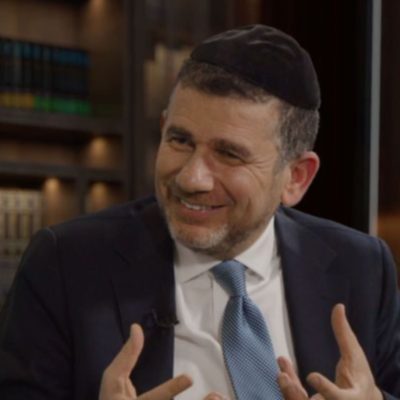


¿Es tu podcast?
Confírmalo con una entrada en tu feed: aquí recibes un código, lo añades como podcast:txt en el canal de tu feed y nosotros lo comprobamos. Después tu podcast aparecerá como «verificado» en SoundNode.