

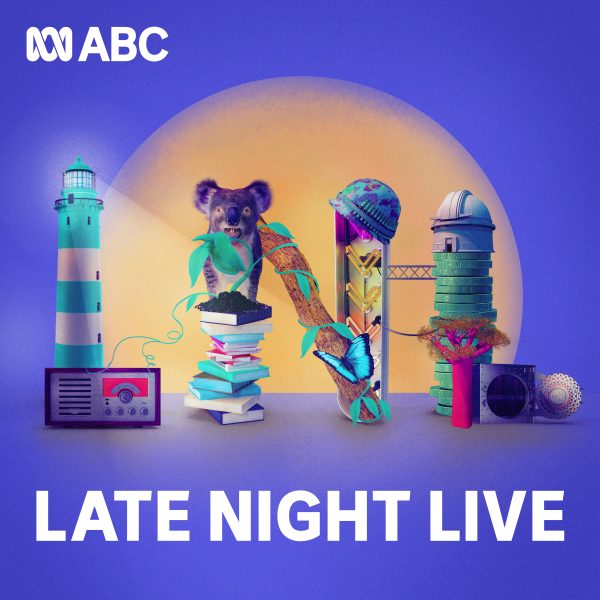
Late Night Live – Separate stories podcast
- Episodios
- 250
- Se publica
- a diario
- Último episodio
- 12 Nov 2026
Sobre el podcast
Incisive analysis, fearless debates and nightly surprises. Explore the serious, the strange and the profound with David Marr. This LNL podcast contains the stories in separate episodes. Subscribe to the full podcast wherever you get your podcasts.
Episodios 250
How has the Israel-Palestine conflict impacted on Australian politics and society?
The Manning Clark and Dymphna Clark Lectures explore major social, cultural, historical, and political issues facing Australian society. This year Louise Adler and George Browning will give the combined 2026 …
Notas del episodio
The Manning Clark and Dymphna Clark Lectures explore major social, cultural, historical, and political issues facing Australian society. This year Louise Adler and George Browning will give the combined 2026 Manning Clark and Dymphna Clark Lectures which will examine the impact of the Israel-Palestine conflict on Australian society and politics. The lecture is on Tuesday 17 November at 6.30pm at the Australian Centre for Christianity and Culture in Canberra. The event will also be livestreamed.
- Guest: Louise Adler, former publisher, former Adelaide Writers’ Week Director and member of the Jewish Council of Australia’s Advisory Committee.
- Guest: Bishop George Browning - Anglican Bishop of Canberra Goulburn (retired), former President and now Patron of the Australia Palestine Advocacy Network (APAN), Patron of Palestinian Christians in Australia, patron of Jerusalem-based Sabeel Ecumenical Liberation Theology Center.
- Producer: Catherine Zengerer
Get in touch: Email us at [email protected]
Isabel Allende's creative secrets
What makes a story unforgettable? For Isabel Allende, it takes unruly characters, family secrets, political upheaval and a healthy dose of imagination. The celebrated novelist opens up about the alchemy of …
Notas del episodio
What makes a story unforgettable? For Isabel Allende, it takes unruly characters, family secrets, political upheaval and a healthy dose of imagination. The celebrated novelist opens up about the alchemy of storytelling, why writers should ignore the advice to write what they know, and what keeps her imagination alive.
- Guest: Isabel Allende, writer. Storytelling
- Producer: Ali Benton
Why so much cinema has been lost forever
We've been making motion pictures for well over 100 years, but an incalculable number of films have vanished: destroyed in noxious fires, lost in estates, even traded as war booty. A new book tells the stories …
Notas del episodio
We've been making motion pictures for well over 100 years, but an incalculable number of films have vanished: destroyed in noxious fires, lost in estates, even traded as war booty. A new book tells the stories of these doomed productions, from the early silent film era right through to our digital age of 'cloud' storage.
- Guest: Simon Miraudo, writer and film critic, author 'Last Rites for Lost Films: Charred Celluloid, Digital Decay and the Certain Death of Cinema', Low Heroes Press
- Producer: Jack Schmidt
Get in touch:
Email us at [email protected]
The telephone phenomenon
The arrival of the telephone changed the world. Strangers were connected, less travel was required, and social mores changed. Stilted telegram messages gave way to informal conversations, laughter, shouting and …
Notas del episodio
The arrival of the telephone changed the world. Strangers were connected, less travel was required, and social mores changed. Stilted telegram messages gave way to informal conversations, laughter, shouting and gossip. In the USA, the first country to rapidly commercialise everyday phone usage, one company dominated that rollout: Bell. Alexander Graham Bell, while not the sole inventor of the phone, led its development, and secured the patent.
- Guest: James Gleick, science writer and historian, Author of 'The Telephone: A New History' (Picador)
- Producer: Ann Arnold
Contact Late Night Live via email here.
Can science predict the collapse of a rock arch?
Natural rock arches can take millions of years to form, but sometimes only moments to fall. From Malta's famous Azure Window to Utah's towering sandstone formations, why do these extraordinary structures …
Notas del episodio
Natural rock arches can take millions of years to form, but sometimes only moments to fall. From Malta's famous Azure Window to Utah's towering sandstone formations, why do these extraordinary structures collapse? And can science help us predict, or even prevent, their demise?
Guest: Jeffrey Moore, Professor, Geology & Geophysics, University of Utah.
Producer: Ali Benton
Poland's court crisis
The Polish Constitutional Tribunal, which was heavily politicised by the previous Government, has been holding up multiple reforms that would restore rights, for example to abortion. After an attempted takeover …
Notas del episodio
The Polish Constitutional Tribunal, which was heavily politicised by the previous Government, has been holding up multiple reforms that would restore rights, for example to abortion. After an attempted takeover of the tribunal by judges aligned with the current liberal Government, it is possible the right will be more unified and in a stronger position to win next year's election.
- Guest: Bartosz Brzesinski, senior reporter for Politico Europe
- Producer: Ann Arnold
Ian Dunt's UK: a British view of the US midterms, plus Labour's immigration overhaul
Ian Dunt on the fallout from America’s midterm elections and why Britain can no longer afford to rely on Washington. Plus, Labour’s sweeping immigration overhaul: longer waits for permanent residency and …
Notas del episodio
Ian Dunt on the fallout from America’s midterm elections and why Britain can no longer afford to rely on Washington. Plus, Labour’s sweeping immigration overhaul: longer waits for permanent residency and refugee settlement periods of up to 30 years.
- Guest: Ian Dunt: iNews columnist and regular LNL commentator
- Producer: Ali Benton
Richard Dawkins on selfish genes, and the future of artificial intelligence
Fifty years since the publication of his ground-breaking book, The Selfish Gene, Richard Dawkins reflects on the ideas that defined his career, the debates the book sparked around the world, and what fifty …
Notas del episodio
Fifty years since the publication of his ground-breaking book, The Selfish Gene, Richard Dawkins reflects on the ideas that defined his career, the debates the book sparked around the world, and what fifty years of subsequent research have confirmed, refined or challenged. He also reflects on the developments in artificial intelligence, where they may take us in the evolutionary process and how it's being used in determining the characteristics of babies. Professor Dawkins is touring Australia with Thinkable events.
- Guest: Professor Richard Dawkins, evolutionary biologist and author
- Producer: Catherine Zengerer
Get in touch: Email us at [email protected]
Eisenkot handed tough task of forming Israeli government
Former Israeli military chief Gadi Eisenkot has been asked to try to form a new coalition government, meeting Israel's President Isaac Herzog in Jerusalem on Sunday to receive his invite to start negotiations …
Notas del episodio
Former Israeli military chief Gadi Eisenkot has been asked to try to form a new coalition government, meeting Israel's President Isaac Herzog in Jerusalem on Sunday to receive his invite to start negotiations. But as it stands, every prospective deal will require major concessions.
- Guest: Irris Makler, journalist and former Jerusalem correspondent
David Kilcullen on when to go in and when to pull out of war
Since federation Australia has fought alongside Britain and the United States in almost every major war of the twentieth and twenty-first centuries. But earlier this year Australia, following Britain’s lead …
Notas del episodio
Since federation Australia has fought alongside Britain and the United States in almost every major war of the twentieth and twenty-first centuries. But earlier this year Australia, following Britain’s lead, declined to join the US in its war on Iran. Military strategist David Kilcullen argues we should be doing more thinking for ourselves in terms of our own national interests, as well as bearing in mind the ethical considerations of both getting into, and out of, war.
- Guest: David Kilcullen, CEO at Cordillera Applications Group, UNSW Professor of International and Political Studies, and Professor of Practice in the Center on the Future of War at Arizona State University
- Producer: Catherine Zengerer
Get in touch: Email us at [email protected]
Scanlon survey finds Australians are more anxious, disillusioned
Australians are 'more divided' and 'more pessimistic', according to the latest annual survey by the Scanlon Foundation. The latest report (Mapping Social Cohesion 2026), with data from 10,000 participants …
Notas del episodio
Australians are 'more divided' and 'more pessimistic', according to the latest annual survey by the Scanlon Foundation. The latest report (Mapping Social Cohesion 2026), with data from 10,000 participants, found that one in three respondents expressed anxiety about their future — triple the number of respondents who expressed the same pessimism in Scanlon's first 2006 survey. On the issue of migration, more Australians are of the view that the current intake is too high, but most still agree that immigrants improve Australians society.
- Guest: Dr James O'Donnell, demographer at ANU, lead investigator at Scanlon Foundation
Get in touch:
Email us at [email protected]
What did gun control look like in Renaissance Italy?
The fifteenth and sixteenth centuries were the age when developments in technology and design meant guns rapidly became small enough and affordable enough to be held and used by ordinary men. Italy led the way …
Notas del episodio
The fifteenth and sixteenth centuries were the age when developments in technology and design meant guns rapidly became small enough and affordable enough to be held and used by ordinary men. Italy led the way, helped along by Leonardo da Vinci. They caused havoc, and changed both the art of war between states, and arguments between gentlemen, forever. The posed a difficult question for the ruling Italian states - how to balance their need for defence versus how to control their use in everyday life.
- Guest: Catherine Fletcher, professor of history at Manchester Metropolitan University and author of The Firearm Revolution: From Renaissance Italy to the European Empires published by Princeton University Press
- Producer: Catherine Zengerer
Get in touch:
Email us at [email protected]
Bruce Shapiro's USA: a blue tsunami sweeps the US
US correspondent Bruce Shapiro brings his analysis of the 'blue wave' that saw the Democrats take both the House and the Senate in resounding repudiation of Trumpian politics in the US mid-term elections. There …
Notas del episodio
US correspondent Bruce Shapiro brings his analysis of the 'blue wave' that saw the Democrats take both the House and the Senate in resounding repudiation of Trumpian politics in the US mid-term elections. There were surprise Senate wins in North and South Carolina, Texas, Ohio, Kansas, Iowa and Maine as well as the victory for Democrat Abdul El-Sayed in Michigan who campaigned on getting "money out of politics, money in your pocket and Medicare for all". So did any possible future presidential candidates emerge in the race? What does the future look like for the Republicans? And what changes will the Democrats be able to make with Donald Trump vowing to veto any policies they put forward?
- Guest: Bruce Shapiro, contributing editor with The Nation magazine and Director of the Global Center for Journalism and Trauma.
- Producers: Catherine Zengerer and Jack Schmidt
Get in touch:
Email us at [email protected]
Does the Sally Rooney affair amount to censorship?
The bestselling Irish author Sally Rooney and her publisher Faber have removed her books from UK shelves, due to current legislation which designates the group 'Palestine Action' as a terrorist organisation …
Notas del episodio
The bestselling Irish author Sally Rooney and her publisher Faber have removed her books from UK shelves, due to current legislation which designates the group 'Palestine Action' as a terrorist organisation. Rooney has previously expressed support for the group and donated earnings. She explained in a statement that 'the fulfilment of contracts to publish my work in the UK could now constitute a serious criminal offence.' But does the Rooney affair amount to censorship? Meanwhile, the Palestine Action ban will be reviewed by the UK Supreme court this week.
- Guest: Tanjil Rashid, culture editor at the New Statesman
- Producer: Taryn Priadko
Get in touch:
Email us at [email protected]
Why were Uyghurs fighting in Syria's civil war?
When NPR correspondent Emily Feng found herself in Syria after the fall of Bashar Al Assad, the last people she expected to see were Uyghurs from Xinjiang. But there they were, walking arm in arm with Syrian …
Notas del episodio
When NPR correspondent Emily Feng found herself in Syria after the fall of Bashar Al Assad, the last people she expected to see were Uyghurs from Xinjiang. But there they were, walking arm in arm with Syrian Arab fighters. Thousands of Uyghurs were living in Syria – and they’d become a vital part of the rebel forces that toppled the Assad regime at the end of 2024. But what motivated their fighting, so far from home?
- Guest: Emily Feng, NPR correspondent in Washington DC, formerly covering China and Taiwan. Author of 'Our Hearts Burned for Home: Uyghur Militants in Syria’s Civil War'
- Producer: Taryn Priadko
Get in touch:
Email us at [email protected]
Dinosaurs under the hammer: the billionaire buyers
A dinosaur skeleton called Jodie has sold for $66 million Australian dollars, but instead of going on public display, she could soon be adorning a billionaire’s living room. Science communicator Conor O’Keeffe …
Notas del episodio
A dinosaur skeleton called Jodie has sold for $66 million Australian dollars, but instead of going on public display, she could soon be adorning a billionaire’s living room. Science communicator Conor O’Keeffe explores the growing market for dinosaur fossils and what it means for science.
- Guest: Conor O'Keeffe, ABC journalism fellow, and host of the forthcoming podcast, Science Friction, The Lost Dinosaurs
- Producer: Ali Benton
Singapore's legal battle with Indonesia over smoke haze
Singapore is threatening to prosecute companies responsible for some of the worst fires in years in neighbouring Indonesia, as the region grows increasingly frustrated with a persistent, toxic smoke haze that …
Notas del episodio
Singapore is threatening to prosecute companies responsible for some of the worst fires in years in neighbouring Indonesia, as the region grows increasingly frustrated with a persistent, toxic smoke haze that is causing thousands of respiratory illnesses and could cost the Singapore economy billions. While the two governments have set up a joint taskforce to address the issue, diplomatic relations are fraying. The Indonesian fires stem from clearing forests for palm oil plantations, and have been made significantly worse by this year's super El Niño.
- Guest: Sean Tseng, Adjunct Senior Research Fellow at the Asia-Pacific Centre for Environmental Law at the National University of Singapore
- Producer: Catherine Zengerer
Anna Henderson's Canberra: ISIS death penalty, progressive antisemitism and Matt Canavan's lower house run
An Australian doctor from Perth who worked in ISIS medical centres could face the death penalty in Iraq. Antisemitism envoy Jillian Segal's report has called out what she has described as "progressive …
Notas del episodio
An Australian doctor from Perth who worked in ISIS medical centres could face the death penalty in Iraq. Antisemitism envoy Jillian Segal's report has called out what she has described as "progressive antisemitism", but the government is waiting for recommendations from the Royal Commission before taking action. And Nationals leader Matt Canavan has announced he will nominate for preselection in the Queensland seat of Capricornia, while One Nation's candidate for the seat remains a mystery.
Guest: Anna Henderson, chief political correspondent, SBS
Flavio Bolsanaro flees Brazil after losing election
One day after vowing to remain in Brazil after losing the election to Lula da Silva, Brazil's opposition leader, Flavio Bolsonaro, has sought asylum in the United States, fleeing an investigation into …
Notas del episodio
One day after vowing to remain in Brazil after losing the election to Lula da Silva, Brazil's opposition leader, Flavio Bolsonaro, has sought asylum in the United States, fleeing an investigation into money-laundering. Brazil has form when it comes to locking up past leaders – Jair Bolsanaro remains under house arrest, serving a 27 year sentence for leading a coup against Lula. Lula himself served 580 days in prison for a corruption conviction that was later overturned by the Supreme Court. Lula won a decisive victory in the run-off election, but at 81, questions are being asked about how long he can hold on to the leadership.
- Guest: Deborah Barros Leal Farias, Associate Professor in politics at UNSW
- Producer: Catherine Zengerer
Geoffrey Bardon and Papunya art
The prevailing view of the origins of the Aboriginal art movement, as we know it today, is that it was started by Geoffrey Bardon, a white school teacher from Sydney who went to Papunya in Central Australia in …
Notas del episodio
The prevailing view of the origins of the Aboriginal art movement, as we know it today, is that it was started by Geoffrey Bardon, a white school teacher from Sydney who went to Papunya in Central Australia in the early 1970s. A new biography paints a complex picture of a man whose mental ill-health both hampered and helped his passion for this art.
- Guest: Kitty Hauser, Sydney-based historian and author. New book 'Art Mania: Geoffrey Bardon and the painting men of Papunya' (Giromondo Publishing, 1 Nov, 2026)
- Producer: Ann Arnold
The lawyers who fled fascism, and started again in Australia
Around 300 European lawyers fled totalitarian regimes and arrived in Australia between the 1920s and 1950s, only to find their qualifications and experience counted for little. Some were interned as 'enemy …
Notas del episodio
Around 300 European lawyers fled totalitarian regimes and arrived in Australia between the 1920s and 1950s, only to find their qualifications and experience counted for little. Some were interned as 'enemy aliens', others were sent to work in the fields and factories. A new podcast, Emergency Exit, explores their stories and the intellectual legacy they left behind.
Guest: Katherine Biber, historian and Professor of Law, University of Technology, Sydney
Podcast: Emergency Exit
Producer: Ali Benton
Israel's deadlocked election
Correspondent Irris Makler joins Late Night Live from Israel, as the votes continue to be tallied. Neither PM Benjamin Netanyahu nor his main opponent Gadi Eisenkot look to have a clear pathway to forming a …
Notas del episodio
Correspondent Irris Makler joins Late Night Live from Israel, as the votes continue to be tallied. Neither PM Benjamin Netanyahu nor his main opponent Gadi Eisenkot look to have a clear pathway to forming a coalition majority of 61 seats, while the so-called Arab parties look to have made gains. So, what happens next?
Guest:
- Irris Makler, veteran Middle East correspondent, SBS, ABC, France24
Get in touch:
We'd love to hear from you. Email us at [email protected]
Was the Voice referendum doomed from the start?
Three years ago, 60 per cent of Australians voted to reject the Voice to Parliament proposal in a referendum. A new book seeks to understand why, through analyses of extensive polling and survey …
Notas del episodio
Three years ago, 60 per cent of Australians voted to reject the Voice to Parliament proposal in a referendum. A new book seeks to understand why, through analyses of extensive polling and survey data.
- Guests:
- Professor Murray Goot, Macquarie University and Professor Emeritus Tim Rowse, Western Sydney University, co-authors 'The Year Our Voice Broke' (2026)
Ian Dunt's UK: Britain’s budget, Brexit, and the battle over Reform
The UK prepares for its budget, with the cost of living, public services and a struggling economy high on the agenda. Meanwhile, Andy Burnham has reopened the debate over freedom of movement with Europe, and an …
Notas del episodio
The UK prepares for its budget, with the cost of living, public services and a struggling economy high on the agenda. Meanwhile, Andy Burnham has reopened the debate over freedom of movement with Europe, and an undercover ITV investigation has raised fresh questions about racism and sexism in Nigel Farage’s Reform UK.
- Guest: Ian Dunt, I-Paper columnist and regular LNL correspondent
- Producer: Ali Benton
Decoding the language of bones
Bones are an archive of human experience, preserving traces of disease, violence, labour and time. In The Language of Bones, forensic anthropology reveals what human remains can tell us about lives long since …
Notas del episodio
Bones are an archive of human experience, preserving traces of disease, violence, labour and time. In The Language of Bones, forensic anthropology reveals what human remains can tell us about lives long since ended. From ancient ossuaries and catacombs to modern forensic investigations, skeletons offer clues to the past that written history often overlooks.
- Guest: Carla Valentine, author, The Language of Bones
- Producer: Jackie Dent
France on the brink: debt, revolt and Marine Le Pen’s moment
France’s political crisis is deepening, with a mounting debt burden, a paralysed parliament and growing public anger over the future of the country’s social model. As governments struggle to agree on a budget …
Notas del episodio
France’s political crisis is deepening, with a mounting debt burden, a paralysed parliament and growing public anger over the future of the country’s social model. As governments struggle to agree on a budget, Marine Le Pen’s far right is waiting in the wings.
- Guest: James Waterhouse, BBC Paris Correspondent
- Producer: Ali Benton
Anna Henderson's Canberra: the debate over political violence
Anna Henderson discusses the ongoing debate over the connection between the tone of political rhetoric and real world acts of violence, since the attack on Independent MP Helen Haines, the motive for which is …
Notas del episodio
Anna Henderson discusses the ongoing debate over the connection between the tone of political rhetoric and real world acts of violence, since the attack on Independent MP Helen Haines, the motive for which is still under investigation. Federal parliament spent the day allowing time for reflections on the attack, and sending messages of support for Dr Haines. Meanwhile the Ombudsman has criticised the federal government for its use of algorithms in aged care assessments, warning the government has not learned the lessons from Robodebt.
Guest: Anna Henderson, chief political correspondent, SBS
From Truman to Trump: how Queen Elizabeth II handled 13 US presidents
Over her 70 year reign, Queen Elizabeth II encountered 13 US presidents - from Harry S Truman to Donald J Trump. The journalist Susan Page details how the Queen wielded her subtle influence over the world's …
Notas del episodio
Over her 70 year reign, Queen Elizabeth II encountered 13 US presidents - from Harry S Truman to Donald J Trump. The journalist Susan Page details how the Queen wielded her subtle influence over the world's most powerful men.
- Guest: Susan Page, Washington bureau chief for USA Today, author of 'The Queen and Her Presidents'
- Producer: Ali Benton
The countdown to Israel's monumental election
Journalist and former correspondent Irris Makler joins Late Night Live from Israel, days away from the nation's elections. Polling suggests neither Netanyahu's Likud party, nor the challenging bloc lead by Gadi …
Notas del episodio
Journalist and former correspondent Irris Makler joins Late Night Live from Israel, days away from the nation's elections. Polling suggests neither Netanyahu's Likud party, nor the challenging bloc lead by Gadi Eisenkot will win enough seats to form a majority.
- Guest: Irris Makler, journalist and former Jerusalem correspondent, France24
A teenager in the Indonesian coup
A rare bystander's view of the 1965 coup where neighbours, including soon to be President Suharto, were key players. Tari Lang's family were radical intellectuals, working for the Sukarno Government. Sukarno …
Notas del episodio
A rare bystander's view of the 1965 coup where neighbours, including soon to be President Suharto, were key players. Tari Lang's family were radical intellectuals, working for the Sukarno Government. Sukarno was ousted, and their lives would never be the same.
- Guest: Tari Lang, author of 'My neighbour, the dictator' (Published by Monsoon, distributed by Simon & Schuster)
- Producer: Ann Arnold
Aquí están los 40 episodios más recientes de 250. Los anteriores están en el feed del podcast.
Podcasts similares
Más podcasts de Cultura y sociedad


¿Es tu podcast?
Confírmalo con una entrada en tu feed: aquí recibes un código, lo añades como podcast:txt en el canal de tu feed y nosotros lo comprobamos. Después tu podcast aparecerá como «verificado» en SoundNode.