

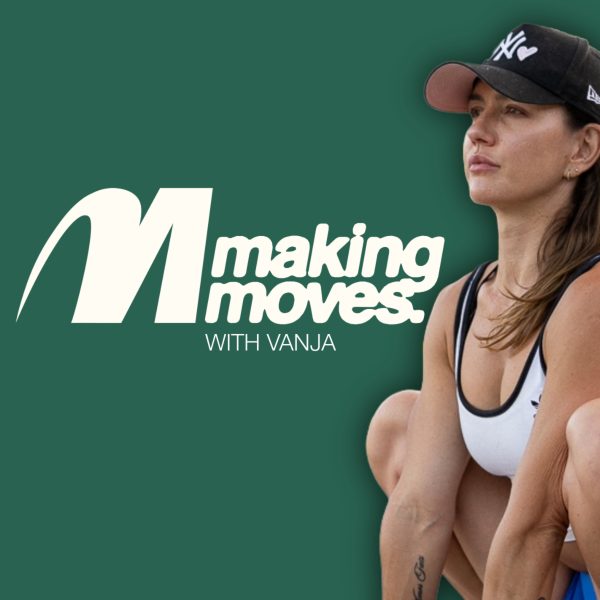
Making Moves with Vanja
- Episodios
- 59
- Se publica
- cada semana
- Último episodio
- 15 Nov 2026
Sobre el podcast
This is the Making Moves Podcast hosted by Vanja Moves.
Episodios 59
I Tried Jiu-Jitsu for 2 Hours and Learned Self-Defense Masterclass
Pedro Valente started jiu-jitsu before he could walk. Grandmaster Hélio Gracie taught him from the age of two. Today he runs Valente Brothers in Miami with his two brothers. He's 51 and has never had a …
Notas del episodio
Pedro Valente started jiu-jitsu before he could walk. Grandmaster Hélio Gracie taught him from the age of two. Today he runs Valente Brothers in Miami with his two brothers. He's 51 and has never had a cigarette, a drink, a Coca-Cola or a sweet.
Their jiu-jitsu is all about self-defence. He taught me what to do if someone attacks you in the street: how to escape a choke, a grab from behind and a bear hug, and how to get up off the ground safely.
Between drills I asked him who tied his first white belt. What it was like living at Hélio's house before he moved to America at 18. What he thinks of sport BJJ. Whether a woman can really defend herself against a much bigger man. And how he raises his son to say no to peer pressure.
Then I tested his mobility in a resting squat and took him through my drills. At the end he gave his advice if you want to change: picture who you'll be in ten years, with and without the habit.
Watch the full episode with all the drills on YouTube: https://youtu.be/bL9blXsGuCc
Guest: Pedro Valente https://www.instagram.com/pedrovalentevb/
Filmed at Valente Brothers, North Miami Beach https://www.instagram.com/valentebrothers/
Grab the Mobility Kit: https://movesmethod.com/yttk
Apply for 1:1: https://movesmethodprogram.com/apply
Follow me:
Instagram: https://www.instagram.com/vanja.moves/
Making Moves Instagram: https://www.instagram.com/makingmoveswithvanja/
TikTok: https://www.tiktok.com/@vanja.moves
Hanging Fixed What Years of Rehab Couldn’t
When was the last time you hung from something? For most people the honest answer is childhood. You stopped playing, you started sitting, and you let one of the most human positions there is die completely.In …
Notas del episodio
When was the last time you hung from something? For most people the honest answer is childhood. You stopped playing, you started sitting, and you let one of the most human positions there is die completely.
In this episode Vanja breaks down the power of the dead hang: how it decompresses the spine, opens the shoulders into a range modern life never uses, and loads the grip, forearms and elbows in exactly the stretched position tissue needs to get healthy again. The same practice that fixed years of shoulder injuries, compressed spinal discs and elbow issues, after rehab exercises never touched the problem.
Also covered: why grip strength keeps showing up in the research as one of the strongest predictors of longevity we have, why most people drop off the bar after 10 to 15 seconds, and what that number is really telling you about the state of your body.
Then the practical part: a three-step build from assisted hanging, to a full passive dead hang, to a daily practice you barely notice doing. Plus the day Vanja hung on a bar for 23 minutes, and why that had nothing to do with adrenaline and everything to do with the unremarkable daily reps nobody sees.
Test yourself today. Find a bar, hang, and note your number. That is your starting point.
The Mobility Kit is linked below and in the pinned comment: https://movesmethod.com/yttk
Ready to be coached 1:1? Apply here: https://movesmethodprogram.com/apply
10 Years A Pro Athlete, I Couldn't Squat Like My Grandmother | How I Found Mobility
Vanja was a pro athlete for a decade, and still couldn't squat to the floor like her 80-year-old grandmother. This is her origin story: the frozen shoulder nobody could fix, the Bikram yoga that never …
Notas del episodio
Vanja was a pro athlete for a decade, and still couldn't squat to the floor like her 80-year-old grandmother. This is her origin story: the frozen shoulder nobody could fix, the Bikram yoga that never delivered, the seminar with Ido Portal that humbled her, and the idea that runs through everything she teaches now, we are humans first and movers second.
Get the Mobility Kit: https://movesmethod.com/yttk
Apply for 1:1 coaching: https://movesmethodprogram.com/apply
Instagram: https://www.instagram.com/vanja.moves/Deep Squat: The Resting Position You Lost (And How To Get It Back)
The deep squat is a resting human position most adults have lost. When did you last sit all the way down, heels flat, ass to grass, resting at the bottom like it's a chair? In this episode Vanja covers what a …
Notas del episodio
The deep squat is a resting human position most adults have lost. When did you last sit all the way down, heels flat, ass to grass, resting at the bottom like it's a chair? In this episode Vanja covers what a deep squat asks of your ankles, knees, hips and spine, why sitting all day is the opposite position, how floor access and the sit-and-rise test predict how you age, and the step-by-step to rebuild your deep squat from wherever you're starting.
Follow for daily movement tips:
Instagram: https://www.instagram.com/vanja.moves/
Instagram: https://www.instagram.com/joshfearfit/
Making Moves Podcast: https://open.spotify.com/show/51jujEvcN9nE3lGq2IqRwU
Mobility Kit: https://movesmethod.com/yttk · 1:1 coaching: https://movesmethodprogram.com/apply
Keywords: deep squat, resting squat, ass to grass, ankle mobility, hip mobility, sit and rise test, floor access, longevity, squat mobility, how to squat deep, heels flat squat, knee pain
Educational only, not medical advice.
You Don't Rise To The Occasion. You Fall To Your Environment.
The way you look and feel in your body today is no accident. Your environment built it, and you allowed it. Most people fight with willpower and mindset while the room they live in trains them the other way …
Notas del episodio
The way you look and feel in your body today is no accident. Your environment built it, and you allowed it. Most people fight with willpower and mindset while the room they live in trains them the other way every single day. In this episode I break down the three environments running your body without your permission: physical (your street, your kitchen, your stairs), social (the people whose standard you inherit), and technology (the feed that decides what feels normal before you're even awake). You don't rise to the occasion. You fall to the level of your environment. Build the room, and the body follows.
Grab the Mobility Kit: https://movesmethod.com/yttk
Apply to work with us 1:1: https://movesmethodprogram.com/apply
Follow Vanja: https://www.instagram.com/vanja.moves/
This content is for educational purposes only and is not intended as medical advice. Always consult healthcare professionals for personalized guidance regarding health conditions.
Years of Injuries Taught Me This
The body teaching you to move has been broken in more places than I can count: chronic tendinitis, two frozen shoulders, disc issues, hip flexor strains, posture problems, ganglion cysts and nerve damage in my …
Notas del episodio
The body teaching you to move has been broken in more places than I can count: chronic tendinitis, two frozen shoulders, disc issues, hip flexor strains, posture problems, ganglion cysts and nerve damage in my spine. Today it doesn't break. In this episode I go through every injury and the lesson it forced on me, and the pattern that runs through all of them: the conventional approach manages problems, movement done right removes them. Your body isn't fragile. It's waiting for you to learn its language.
Grab the Mobility Kit: https://movesmethod.com/yttk
Apply to work with us 1:1: https://movesmethodprogram.com/apply
Follow Vanja: https://www.instagram.com/vanja.moves/
This content is for educational purposes only and is not intended as medical advice. Always consult healthcare professionals for personalized guidance regarding health conditions.
I Retired at 38. Then I Realized I Was Destroying Myself.
Peter Corbett built a company from his apartment to tens of millions, sold it to a public company, and retired at 38. Then he spent nine months in hospice learning to soften the part of him that only knew how …
Notas del episodio
Peter Corbett built a company from his apartment to tens of millions, sold it to a public company, and retired at 38. Then he spent nine months in hospice learning to soften the part of him that only knew how to push. In this conversation we get into the difference between working hard and suffering, why you were never built to regulate yourself alone, the heart as a muscle you can train, and the whiteboard moment where he wrote you are dying and a 300lb founder went on to lose 100 pounds. If you've been telling yourself you don't have time to fix your body or your mind, your room is on fire and you're refusing to put it out.Grab the Mobility Kit: https://movesmethodprogram.com/pod2627-kit-spApply to work with us 1:1: https://movesmethodprogram.com/pod2627-1on1-spFollow Vanja: https://www.instagram.com/vanja.moves/
Follow Peter: https://www.instagram.com/corbett3000/
This content is for educational purposes only and is not intended as medical advice. Always consult healthcare professionals for personalized guidance regarding health conditions.
The One Rule That Changed My Life Forever
Most people build a life and then try to squeeze a body into the leftover cracks. The job picks the city, the city picks the commute, the commute picks the schedule, and the body gets whatever's left. I did it …
Notas del episodio
Most people build a life and then try to squeeze a body into the leftover cracks. The job picks the city, the city picks the commute, the commute picks the schedule, and the body gets whatever's left. I did it backwards. My body comes first, and every other decision is downstream of that one. In this episode I open the whole system: five layers, the standard mistake at each, and a four-week sequence you can run inside a normal 9-to-5 with kids and a mortgage. The thing nobody wants to hear: you can't out-train your life. Your body adapts to how you live the other 23 hours, not the hour you train.
Grab the Mobility Kit: https://movesmethod.com/yttk
Apply to work with us 1:1: https://movesmethodprogram.com/apply
Follow Vanja: https://www.instagram.com/vanja.moves/
This content is for educational purposes only and is not intended as medical advice. Always consult healthcare professionals for personalized guidance regarding health conditions.
I Stopped Sitting in Chairs for 30 Days
I stood up from my desk one day and felt my body adapting to the chair without asking my permission. So I did the obvious thing. I removed every chair from my life for thirty days.No couch, no office chair, no …
Notas del episodio
I stood up from my desk one day and felt my body adapting to the chair without asking my permission. So I did the obvious thing. I removed every chair from my life for thirty days.
No couch, no office chair, no stool. If I wanted to sit, I went to the ground and stayed there. What happened over those thirty days didn't just change the way I move. It changed what I believe about how we live.
In this episode we break down why the chair quietly takes your deep squat, your cross-legged sit and your ability to get off the floor, why discomfort on the ground is information not damage, what the East understands about the floor that the West walks past, and why the twenty-three hours outside the gym matter more than the one inside it.
It was never gone. It was just waiting for you to sit back down.
Follow for daily movement tips:
Instagram: https://www.instagram.com/vanja.moves/
Instagram: https://www.instagram.com/joshfearfit/
Ready to get your floor back? 👉 Grab the Mobility Kit: here
The Person I'm Most Worried About Feels Fine
I want to talk to the person who feels fine. Not the person in pain, I talk to them all the time. The person who'd say their body feels okay. Because that person is often in more danger than the one who's …
Notas del episodio
I want to talk to the person who feels fine. Not the person in pain, I talk to them all the time. The person who'd say their body feels okay. Because that person is often in more danger than the one who's already hurting.
Pain is a signal. Feeling fine is just the absence of one. And the absence of a signal is not the same as good news. This episode is about the decline that happens quietly, in the years when nothing hurts, until the day you need the capacity and it isn't there.
In this episode we break down how decline actually works (it's a cliff edge, not a slope), what your body is losing while you feel fine, the permission structure that fine creates, and how to use the window before it closes.
Fine is the floor, not the ceiling.
Follow for daily movement tips:
Instagram: https://www.instagram.com/vanja.moves/
Instagram: https://www.instagram.com/joshfearfit/
Ready to use the window? 👉 Grab the Mobility Kit: https://movesmethod.com/yttk
Weak People Don't Have Weak Bodies, They Have Weak Standards
I want to say something that's going to make a lot of people uncomfortable. Your body is not the problem. Your standards are. The stiffness, the weakness, the chronic pain, the body that feels ten years older …
Notas del episodio
I want to say something that's going to make a lot of people uncomfortable. Your body is not the problem. Your standards are. The stiffness, the weakness, the chronic pain, the body that feels ten years older than it should, none of that happened to you. It's the consequence of what you've been willing to accept. And the good news is that standards are the one thing you have complete control over. …Stop lifting! Why my strength peaked after 3 months off
I walked away from the gym for ninety days because I was scared of what I'd lose. Turns out the thing I was afraid to lose had quietly been running me for years.This episode is about the difference between …
Notas del episodio
I walked away from the gym for ninety days because I was scared of what I'd lose. Turns out the thing I was afraid to lose had quietly been running me for years.This episode is about the difference between needing something and choosing it. I stripped out every weight, every machine, every bit of structure I'd built my identity on, and asked one question: what am I actually made of without all of this? …The $5 Trillion Lie About Your Body
A coach said my last reel was too harsh. So I went on the podcast and made it harsher. The wellness industry is a $5 trillion scam built on the lie that your body is fragile. I break down the four-stage …
Notas del episodio
A coach said my last reel was too harsh. So I went on the podcast and made it harsher. The wellness industry is a $5 trillion scam built on the lie that your body is fragile. I break down the four-stage playbook the industry runs on you. I name the businesses getting rich off your decline. I walk you through the pain science behind why soft coaching literally programmes pain into people's bodies. And I give you the joint-by-joint truth about why your knees, hips, and back actually hurt. …Movement as a Love Language
Movement, when you pay attention to it, is one of the most honest things about a person. Words lie. Posts lie. How someone moves, you can't really fake.About 400 years ago a French philosopher gave us an idea …
Notas del episodio
Movement, when you pay attention to it, is one of the most honest things about a person. Words lie. Posts lie. How someone moves, you can't really fake.
About 400 years ago a French philosopher gave us an idea that's been running quietly in the background of how we relate to our bodies ever since: that you are one thing and your body is another. A vehicle. A biological carrier. Something to be managed, decorated, fixed, fought.
In this episode Vanja takes that idea apart. Why most of what modern people call psychological — anxiety, numbness, restlessness — is actually a body that hasn't moved, hasn't been listened to, hasn't been inhabited. Why most of what we call "loving our bodies" is actually managing them from outside. Why coming back into your body sometimes hurts before it heals. And why the only relationship that lasts from your first breath to your last is the one most people never deliberately have.
You can't love something you don't live in.
Follow for daily movement tips:
Instagram: https://www.instagram.com/vanja.moves/
Instagram: https://www.instagram.com/joshfearfit/
Ready to start being in your body? 👉 Grab the Mobility Kit: https://movesmethod.com/yttk
You're Building Your 80-Year-Old Self Right Now
There are two versions of you at 80. Same height, same weight, same genetics, same knees, same hips, same back. One of them wakes up tomorrow and squats down in the garden to pull a weed. Stays there for ten …
Notas del episodio
There are two versions of you at 80. Same height, same weight, same genetics, same knees, same hips, same back. One of them wakes up tomorrow and squats down in the garden to pull a weed. Stays there for ten minutes. Picks up her grandkid, actually lifts him, spins him around. Sits cross-legged on the floor for a card game and stands up in one motion at the end.
The other one can't get off the toilet without a rail.
Same person. The only thing different between them is what happens in the next 30 years — the 30 years that are happening to you right now.
In this episode Vanja unpacks why the script we've all inherited about aging — managing in your 40s, compromising in your 50s, declining in your 60s, depending in your 70s — describes a population that has been sitting in chairs for sixty years. That's not aging. That's inactivity aged. Why accommodation is how independence quietly dies, one small agreement at a time, over thirty years. Why physical dignity is the foundation of every other kind. And why the 80-year-old you are building right now has no voice except yours.
Follow for daily movement tips:
Instagram: https://www.instagram.com/vanja.moves/
Instagram: https://www.instagram.com/joshfearfit/
Ready to invest in the 80-year-old you? 👉 Grab the Mobility Kit: https://movesmethod.com/yttk
You're Not Building a New Body. You're Uncovering an Original One.
Every adult you know has lost what every seven-year-old has for free. Squatting for hours in the dirt. Hanging from things. Sitting cross-legged through a whole movie. None of it was exceptional — it was the …
Notas del episodio
Every adult you know has lost what every seven-year-old has for free. Squatting for hours in the dirt. Hanging from things. Sitting cross-legged through a whole movie. None of it was exceptional — it was the baseline specification of the species you belong to.
This episode is about the trade civilization quietly made with your body. Schools, offices, cars, phones, furniture, shoes — all real gifts. The bill was small and daily and invisible. You paid with the squat. You paid with the hang. You paid with the ability to sit on the floor. And the cruellest part isn't the loss — it's that you stop being the self that ever had it.
In this episode we break down why what we call "aging" is mostly decades of disuse wearing its costume, why your body responds faster than it has any right to when you start patiently reclaiming what you stopped asking of it, and why this isn't construction — it's archaeology. The body you had at seven is still in there.
Where the hell have you been.
Follow for daily movement tips:
Instagram: https://www.instagram.com/vanja.moves/
Instagram: https://www.instagram.com/movesmethod/
Ready to start the dig? 👉 Grab the Mobility Kit: https://movesmethod.com/yttk
End-Range Strentgh, Why Most Programs Fails
You’ve been training consistently. Your numbers are going up. You look capable. And your body still breaks down.That’s not bad luck. That’s end-range vulnerability — and it’s the single biggest gap in how most …
Notas del episodio
You’ve been training consistently. Your numbers are going up. You look capable. And your body still breaks down.
That’s not bad luck. That’s end-range vulnerability — and it’s the single biggest gap in how most people train. Most programs build performance in the middle of your range. Which produces a body that performs in the middle of its range. Fine — until life asks for the edges. And it always does. Without warning.
In this episode we break down what end-range strength actually is, why your nervous system treats unfamiliar ranges as threats, what the research says about full range loading, and exactly how to start building the capacity that holds your body together when life puts it somewhere it didn’t plan for.
Strong in the middle is not strong. It’s rehearsed.
Follow for daily movement tips:
Instagram: https://www.instagram.com/vanja.moves/
Instagram: https://www.instagram.com/joshfearfit/
Ready to close the gap? 👉 Grab the Mobility Kit: https://movesmethod.com/yttk
Mobility Coach Exposes the Biggest Lie About Stretching
You’ve been stretching the same spots every morning for years. And you’re still tight. Still stiff. Still wondering why nothing is changing.Here’s what nobody tells you: stretching doesn’t change your tissue …
Notas del episodio
You’ve been stretching the same spots every morning for years. And you’re still tight. Still stiff. Still wondering why nothing is changing.
Here’s what nobody tells you: stretching doesn’t change your tissue. It temporarily convinces your nervous system to allow more range. A few hours later you’re back to where you started, because nothing was trained. Nothing was actually built.
In this episode we break down the real science of what happens during a stretch, why flexibility and mobility are not the same thing, why you can be extremely flexible and have almost zero usable range, and what actually creates lasting change in how your body moves.
Stop trying to lengthen what’s tight. Start training it.
Follow for daily movement tips:
Instagram: https://www.instagram.com/vanja.moves/
Ready to build range you actually own? 👉 Grab the Mobility Kit: https://movesmethod.com/yttk
What Your Coach Never Taught You About Movement
Most fitness coaches are teaching you how to exercise. Not how to move. And those are not the same thing.One builds a body that performs inside a gym. The other builds a body that works everywhere under any …
Notas del episodio
Most fitness coaches are teaching you how to exercise. Not how to move. And those are not the same thing.
One builds a body that performs inside a gym. The other builds a body that works everywhere under any demand, for the rest of your life. The gap between these two things is where most injuries live. And most coaches have no idea it exists.
In this episode we break down why the certification industry is producing coaches who can build a body that looks capable but isn’t, what real movement competency actually looks like, and how to tell the difference between a coach who knows exercise and one who actually knows movement.
Strong in a gym is not strong. It’s rehearsed. And there’s a difference.
Follow for daily movement tips:
Instagram: https://www.instagram.com/vanja.moves/
Instagram: https://www.instagram.com/makingmoveswithvanja/
Ready to move the right way? 👉 Grab the Mobility Kit: https://movesmethod.com/yttk
Why “Perfect Form” Creates Fragile Body or Stop Obsessing over perfect body. (do this instead)
Your gym made you strong. But strong in a very specific, very narrow, very predictable set of circumstances.Most people training consistently still get injured picking up groceries, tweaking their back reaching …
Notas del episodio
Your gym made you strong. But strong in a very specific, very narrow, very predictable set of circumstances.
Most people training consistently still get injured picking up groceries, tweaking their back reaching into the back seat, or slipping on wet tiles and not being able to catch themselves. That's not a fitness failure. That's a nervous system gap.
In this episode, we break down why the obsession with perfect form is quietly making you fragile, what movement intelligence actually is and why you lost it, how your nervous system prunes the movements you stop practicing, and how to train for the unpredictable world you actually live in - not the controlled environment of a gym floor.
Strong in a straight line is not strong. It's rehearsed. And there's a difference.
Follow for daily movement tips:
Instagram: https://www.instagram.com/vanja.moves/
Instagram: https://www.instagram.com/makingmoveswithvanja/
Ready to build a body that's actually resilient?
Why Chronic Pain Sufferers Aren't Broken, They're Underprepared
Rest when it hurts. Protect the area. Wait it out. That's what we've all been told and for millions of people, it's exactly why they never fully recover.Most chronic pain isn't caused by damage. It's caused by …
Notas del episodio
Rest when it hurts. Protect the area. Wait it out. That's what we've all been told and for millions of people, it's exactly why they never fully recover.
Most chronic pain isn't caused by damage. It's caused by a nervous system that's been running on high alert for so long that it produces pain signals with less and less provocation. The more you avoid, the more sensitive you become. The more sensitive you become, the more everything hurts.
In this episode, we break down the actual science of pain, what it is, where it comes from, and why your brain creates it. You'll discover how to tell the difference between pain worth pushing through and pain that needs your respect, why progressive movement beats rest for most chronic presentations, and how to rebuild capacity in the ranges your body has been avoiding.
By the end of this episode, you will never think about pain the same way again.
Why Losing Muscle Is More Dangerous Than You Think
Most people don't think about muscle until it's too late — until they can't get off the floor, until they fall, until they're in a hospital bed wondering how they got there. But muscle loss doesn't start at 70 …
Notas del episodio
Most people don't think about muscle until it's too late — until they can't get off the floor, until they fall, until they're in a hospital bed wondering how they got there. But muscle loss doesn't start at 70. It starts in your 30s, quietly compounding every single year.
In this episode, we break down why muscle is your most important longevity organ — how it regulates blood sugar, protects your brain, prevents falls, and determines how independent you'll be in your 70s and 80s. We also cover the science of grip strength, BDNF, metabolic flexibility, and why a nursing home study of 87-year-olds should completely change how you think about aging.
This is for anyone who thinks they're too old to start, too busy to train, or too far gone to reverse the damage. You're not. Your muscles are waiting to respond — they don't care how old you are, only the stimulus you give them.
This content is for educational purposes only and is not intended as medical advice. Always consult healthcare professionals for personalized guidance regarding health conditions.
👉 Grab the kit here: http://movesmethod.com/yttk
Follow for daily movement tips:
Instagram: https://www.instagram.com/vanja.moves/
Instagram: https://www.instagram.com/joshfearfit/
The Truth About Counting Calories (Everyone Gets This Wrong)
You've been told to count calories. You've also been told it's obsessive and toxic. So which is it?Most people are stuck between two extremes — logging every grape they eat, or completely ignoring what's on …
Notas del episodio
You've been told to count calories. You've also been told it's obsessive and toxic. So which is it?
Most people are stuck between two extremes — logging every grape they eat, or completely ignoring what's on their plate and wondering why nothing is changing. The truth is somewhere more useful than either camp.
In this episode, we break down what you actually need to know about food, fuel, and why building nutritional awareness is the fastest shortcut to results that last.
You'll discover:
- Why most people are unknowingly eating the wrong amounts — even when they think they're eating clean
- The real difference between protein, carbs, fats, and fiber — and which one to prioritise first
- Why the "healthy salad" might be sabotaging your progress
- How to use tracking as a short-term education tool — not a lifelong obsession
- What true intuitive eating actually looks like (hint: it's not guessing)
Stop hoping your nutrition is right. Start knowing. This episode gives you the framework to understand your food, make better decisions, and eventually put the app down for good.
Instagram: https://www.instagram.com/vanja.moves/
The kit: http://movesmethod.com/yttk
Rewire Your Anxious Brain: From Fear to Fearless Using Neuroscience
Fear isn't the problem. The story you tell yourself about fear is the problem.Most people think courage means the absence of fear. But that's not how it works. Courage is action in the presence of fear. And …
Notas del episodio
Fear isn't the problem. The story you tell yourself about fear is the problem.
Most people think courage means the absence of fear. But that's not how it works. Courage is action in the presence of fear. And your brain can learn it.
In this episode, I'm breaking down the neuroscience of fear and showing you the exact four-step process to rewire your brain: recognize the pattern, reframe the story, use gradual exposure, and build resilient thinking.
You'll discover how your amygdala creates false alarms, why avoidance is just fear in disguise, how to use neuroplasticity to change your brain's response to discomfort, and the one daily practice that will expand your tolerance for courage.
I wasn't born fearless. I was born terrified. But I learned how to rewire my brain through movement, discomfort, and intentional practice. And by the end of this episode, you'll have the exact tools to do the same.
Stop waiting for fear to disappear. Start moving with it.
Instagram: https://www.instagram.com/vanja.moves/
Ready to build unshakable mental and physical resilience? Start here: http://movesmethod.com/yttk
Self-care VS Self-respect
Movement isn't self-care. It's self-respect.Most people think movement is something you do when you feel like it—a bubble bath for your body, optional and soft. But that's the lie that's keeping you weak …
Notas del episodio
Movement isn't self-care. It's self-respect.Most people think movement is something you do when you feel like it—a bubble bath for your body, optional and soft. But that's the lie that's keeping you weak. Movement isn't therapy or pampering. It's the non-negotiable responsibility you have to the one body you'll ever get.In this episode, I break down why treating movement as "self-care" is actually self-sabotage, and how reframing it as self-respect changes everything.You'll discover why your body is either adapting to strength or adapting to weakness (there's no middle ground), the difference between entitlement and discipline when it comes to your body, why "listening to your body" has become an excuse for neglect, and the 4-step system to make movement non-negotiable in your life.Ready to reclaim your body and maintain your independence for life? Get the Mobility Toolkit that's helping over 160,000 people move like humans again: http://movesmethod.com/yttkYour future self is depending on the choices you make today. Will you be independent at 80, or dependent at 60? The choice is yours.
Your body didn't betray you. You abandoned it.
I know that's hard to hear. But most people think their body just stopped cooperating one day - that they woke up and suddenly everything hurt, suddenly they couldn't squat, suddenly they were stiff and weak …
Notas del episodio
I know that's hard to hear. But most people think their body just stopped cooperating one day - that they woke up and suddenly everything hurt, suddenly they couldn't squat, suddenly they were stiff and weak and broken. But that's not what happened at all.In this episode, I reveal the uncomfortable truth about why your body feels the way it does - and why it's actually good news.You'll discover:• Why your body adapted to become stiff, weak, and painful (and how it's actually trying to help you)• The exact moment disconnection began for you (hint: it wasn't when you felt pain)• How I went from broken athlete to moving better than ever by rebuilding my relationship with my body• The 4-step process to start listening to your body again and reverse years of adaptationYour body is still waiting for you. It's still capable of healing, adapting, and becoming strong again. You just have to stop abandoning it and start showing up.🎯 Want to work one on one with me and my team to improve your mobility?👉Go here to apply now: https://movesmethodprogram.com/applyListen on Spotify: https://creators.spotify.com/pod/profile/vanja-moves1/Follow for daily movement tips:Instagram: https://www.instagram.com/vanja.moves/Instagram: https://www.instagram.com/joshfearfit/
Your Nervous System Is Why You Can't Touch Your Toes
Stretching harder makes you tighter. If you've been forcing painful positions thinking that's progressive overload for flexibility, you've been applying the wrong method.The fitness industry has confused pain …
Notas del episodio
Stretching harder makes you tighter. If you've been forcing painful positions thinking that's progressive overload for flexibility, you've been applying the wrong method.The fitness industry has confused pain with adaptation, but the research shows the complete opposite. Flexibility improvements are approximately 90% neurologically mediated—not structural adaptations or muscle lengthening. Your nervous system acts as a range of motion gatekeeper, and every time you push through pain in a stretch, you're reinforcing the neural pattern that movement at that range is dangerous.In this episode, you'll discover why pain-based stretching creates the opposite of your intended outcome, the specific neurological mechanisms behind range of motion and how to work with them instead of against them, the exact protocol that produces results in weeks instead of years, and why flexibility training is actually teaching you how to approach adaptation in every area of your life.This isn't about touching your toes or doing the splits. It's about understanding that force creates protection, while patience and precision create adaptation. Whether you're a strength athlete, endurance runner, or just someone trying to move better, this episode will completely change how you approach flexibility training—and everything else
How Type 1 Diabetes Changed His Body & Made Him Stronger| Drew Harrisburg
Most people think diabetes is a life sentence of limitations. Drew Harrisburg proves it's actually an opportunity for optimization.When Drew was diagnosed with type 1 diabetes at 22, he thought his life was …
Notas del episodio
Most people think diabetes is a life sentence of limitations. Drew Harrisburg proves it's actually an opportunity for optimization.
When Drew was diagnosed with type 1 diabetes at 22, he thought his life was over. But one workout changed everything—it dropped his blood glucose from dangerously high to normal range in minutes. That moment revealed a truth most people never discover: movement isn't just exercise, it's medicine.In this episode, Drew shares how he transformed from devastated patient to thriving athlete by treating movement as his primary tool for managing diabetes. You'll discover why adversity doesn't build character—it reveals it, how different types of exercise affect blood sugar in completely different ways, the five-pillar system for turning any limitation into an optimization opportunity, and why your biggest challenges might be hiding your greatest strengths.Drew proves that with the right mindset and approach, you can be happier and healthier with a chronic condition than you ever were without it. This conversation will change how you think about movement, adversity, and what your body is truly capable of.
Instagram: https://www.instagram.com/vanja.moves/ Instagram: https://www.instagram.com/drewsdailydose/
Your Secret Weapon for Better Gains Isn’t in the Gym
You're not overtraining. You're under-recovering.Most people obsess over their training program, their macros, their supplements - but treat recovery like it's optional. Then they wonder why they're exhausted …
Notas del episodio
You're not overtraining. You're under-recovering.
Most people obsess over their training program, their macros, their supplements - but treat recovery like it's optional. Then they wonder why they're exhausted, their gains have stalled, and they feel older than they should.Here's what nobody tells you: You don't get stronger in the gym. Training is where you break your body down - you create micro-tears in muscle tissue, deplete energy stores, and stress your nervous system. That's the entire point. That stress is the stimulus for adaptation.But the adaptation - the actual getting stronger part, the building muscle, the improving performance - that only happens if you recover properly. And most people are completely failing at this part of the equation.
In this episode, you'll discover:
• Why most people think they're overtraining when they're actually under-recovering
• The difference between acute inflammation (necessary for adaptation) and chronic inflammation (destroys your progress) • The 4 non-negotiable foundations of recovery that no tool or supplement can replace
• Why sleep is your #1 recovery tool and my exact sleep optimization protocol (pitch black room, 65-68°F, consistent schedule, no screens 1 hour before bed)
• How to eat for recovery: adequate protein, quality carbs, healthy fats, and why nutrient timing doesn't matter as much as consistency
• Why stress management is essential - your body doesn't differentiate between physical and mental stress
• My daily breathwork practice: 5-10 minutes of box breathing to shift from fight-or-flight to rest-and-digest mode
• Why movement-based recovery (walking, mobility work) enhances recovery without creating additional stress
• Recovery tools that actually work: sauna protocol (15-20 min at 170-180°F, 2-3x/week), cold therapy timing (NOT right after training), massage vs root cause fixes, and red light therapy for cellular energy production
• My complete daily recovery protocol that takes 10-15 minutes and fits seamlessly into your routine
Here's the key insight: Most people are trapped in chronic inflammation because they never fully recover. They train hard Monday, don't sleep enough, are stressed at work, eat processed food, then train hard again Wednesday before fully recovering from Monday. The inflammation never resolves. This leads to chronic pain, persistent fatigue, disease, and accelerated aging.The goal isn't to eliminate inflammation. The goal is to support your body's natural inflammatory response. Create acute inflammation through smart training, then create the conditions for it to resolve through proper recovery.I share exactly how I structure my recovery: the foundations first (sleep, nutrition, stress management, movement), then I layer in recovery tools to enhance the process. Sauna when I have access. Cold therapy used strategically. Red light therapy used consistently because it fits easily into my routine during morning mobility and evening wind-down.
The most important takeaway: Recovery is not optional. It's not a luxury. It's a biological necessity. Your body cannot adapt to training stress without adequate recovery. You cannot build the body or performance you want without giving your body what it actually needs.Start with the foundations. Master those before spending money on recovery tools. Then experiment with tools that fit your lifestyle and that you can do consistently. Consistency matters way more than perfection.
Sponsored by BestQool - Use code BESTMOVES10 at https://www.bestqool.com/ for red light therapy devices that support cellular recovery. The Pro 100 delivers 109mW/cm² at 3 inches with four wavelengths for comprehensive tissue coverage.
Affiliate disclosure: The BestQool link is an affiliate link. I may earn a small commission if you purchase, at no extra cost to you. I only recommend products I genuinely use.
6 Lies About Stretching, Aging & Strength (The Truth)
Does your body feel stiff when you wake up? Back hurt when you sit too long? Knees click when you squat? You've been told this is normal aging - but it's a lie.The fitness industry has been feeding you lies for …
Notas del episodio
Does your body feel stiff when you wake up? Back hurt when you sit too long? Knees click when you squat? You've been told this is normal aging - but it's a lie.
The fitness industry has been feeding you lies for decades. Lies about stretching, aging, strength training, and what your body actually needs to be strong and resilient. And these lies are keeping you weak, stiff, and in pain.
Your body is not fragile. It's not broken. It's not failing you. It's adapting perfectly to whatever you expose it to. The fitness industry has convinced you that your body needs to be fixed, treated, manipulated, or forced into compliance. But your body doesn't need to be fixed. It needs to be challenged, loaded, moved - given the stimulus it requires to maintain capability and resilience.This isn't about becoming an athlete. This isn't about performance or aesthetics. This is about maintaining your basic human right to move without pain and limitation, to be capable in your own body, to age without falling apart. And you can do that at any age, starting from any baseline.
🎯 Want to work one on one with me and my team to improve your mobility?
👉Go here to apply now: https://movesmethodprogram.com/apply
Follow for daily movement tips: https://www.instagram.com/vanja.moves/
Aquí están los 40 episodios más recientes de 59. Los anteriores están en el feed del podcast.
Podcasts similares
Más podcasts de Salud y forma física




¿Es tu podcast?
Confírmalo con una entrada en tu feed: aquí recibes un código, lo añades como podcast:txt en el canal de tu feed y nosotros lo comprobamos. Después tu podcast aparecerá como «verificado» en SoundNode.