

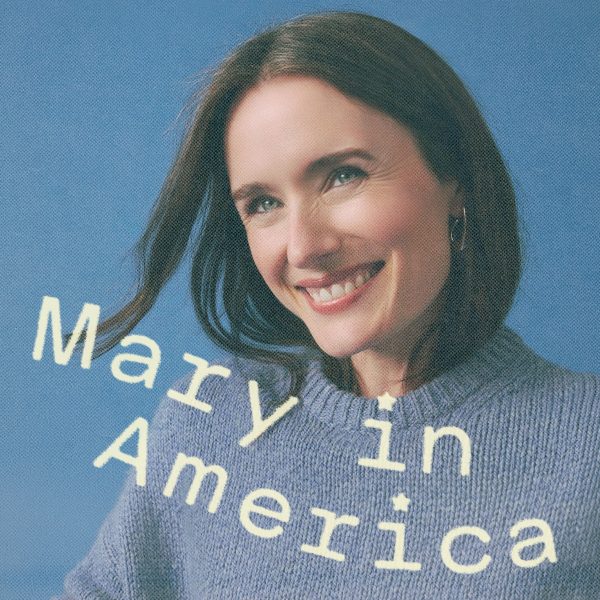
Mary in America
- Episodios
- 26
- Se publica
- cada semana
- Último episodio
- 12 Nov 2026
Sobre el podcast
Mary in America is a weekly conversation about how the machine of society works. Journalist and author Mary Childs jumps into the minds of the greatest, most interesting people who are shaping the world we live in, to understand the structures we build, the stories we tell, the games we play, and the choices we make. Why is it like that? Who made it that way? Should we change it? Can we?
Episodios 26
Honest Accounting with Mona Chalabi
Mona Chalabi is a data journalist who hand-draws beautiful, colorful and often surprising charts that add context, or scale, or feeling. Like her Pulitzer-prize winning work illustrating the barely-imaginable …
Notas del episodio
Mona Chalabi is a data journalist who hand-draws beautiful, colorful and often surprising charts that add context, or scale, or feeling. Like her Pulitzer-prize winning work illustrating the barely-imaginable enormity of Jeff Bezos’s wealth compared to the median US household. Mona’s brand-new first book, Ten Lives, closely tracks the finances and fortunes of one person in each of the ten income brackets in the US, over the course of five years. It’s also accidentally part memoir, tracking and disclosing her own situation. She sits down to tell us about how uncomfortable these conversations were and are, how disclosing it all has changed and will change her life, and why she did it anyway.
Further reading:
9 Ways to Imagine Jeff Bezos’ Wealth
The story of Gaza’s destruction in 100 lives
High income improves evaluation of life but not emotional well-being by Daniel Kahneman and Angus Deaton, 2010
“Happiness, income satiation and turning points around the world” A. T. Jebb, L. Tay, E. Diener, S. Oishi, 2018
Why We Can't Learn to Stop Worrying and Love This Economy
For the past few years, there’s been a persistent and mystifying disconnect in the economy: the data show that the economy is doing great, but Americans have never been more bummed about it than they have been …
Notas del episodio
For the past few years, there’s been a persistent and mystifying disconnect in the economy: the data show that the economy is doing great, but Americans have never been more bummed about it than they have been this year. This is showing up in weird ways: Usually when we feel bad or anxious about the economy we’ll spend less. But we just aren’t. What gives? To help us solve this macro mystery that’s been befuddling economists, we brought in an expert in the micro: Oyin Adedoyin, a personal finance reporter with The Wall Street Journal. She is out in the world talking with people about their finances, their hopes, and their economic stresses. Taken together, the stories she’s covered paint a nuanced and complex picture of our economic health. Based on that reporting, we sat down to try out some theories to explain this disconnect.
Further reading:
WSJ: They’re in Their 60s and Their Student Loans Won’t Let Them Retire by Oyin Adedoyin
Board of Governors of the Federal Reserve System via FRED: Survey of Household Economics and Decisionmaking: adults with 3 months emergency savings
University of Michigan: Survey of Consumers, survey questions
Bank of America Institute: Consumer Checkpoint: Strength in numbers
Foreign Policy: No One Has a Plan for American Decline by Nick Danforth
Somebody Has to Pick the Stocks
Adriana Robertson is a law professor at the University of Chicago who, a decade ago, got fixated on index funds. They seemed so important – the best, or maybe only, good investing advice was to put your money …
Notas del episodio
Adriana Robertson is a law professor at the University of Chicago who, a decade ago, got fixated on index funds. They seemed so important – the best, or maybe only, good investing advice was to put your money in an index fund, right? So, she wondered, what exactly is an index fund? How does one get made? She poked around and couldn’t find research that answered her questions. So unfortunately she had to do it herself. And what she found was that these “passive” investing vehicles aren’t really passive at all. At the end of the day, somebody has to pick the stocks. She joins us to tell us what index funds – and for that matter, capital markets in general – are supposed to be doing, and if they are actually doing it.
Further Reading:
Adriana Z. Robertson - Passive in Name Only: Delegated Management and “Index” Investing
Harry Markowitz - Portfolio Selection
Lucian A. Bebchuk - The Case for Increasing Shareholder Power
Yueran Ma - What Adam Smith Didn’t Foresee About Capitalism
They're Spying on You to Charge You More
When we go to buy something – online, on our phones, in person, doesn't matter – there’s an entire invisible infrastructure behind whatever price we see. Companies have dedicated data scientists who use our zip …
Notas del episodio
When we go to buy something – online, on our phones, in person, doesn't matter – there’s an entire invisible infrastructure behind whatever price we see. Companies have dedicated data scientists who use our zip codes, computer type, browsing history, cursor movements, SO much information, to determine how much they can charge us, how much we are willing to pay. On the consumer side, basically nobody likes it. So how did it get to this, and what can we do about it? In part it’s because our technological capabilities have advanced at a faster rate than our social structures, rules and laws. Stephanie Nguyen was Chief Technologist at the Federal Trade Commission from 2021 to 2025, where she worked on cases against companies who were surveillance-pricing us unfairly. She unpacks how companies are spying on us, when that crosses a line, and what changes we’re starting to see as consumers fight back.
Further Reading:
Surveillance Prices. Hidden Fees. Shifting Costs. This Madness Must Stop. - The New York Times
"The Loyalty Trap: How Loyalty Programs Hook Us with Deals, Hack our Brains, and Hike Our Prices" by Samuel A.A. Levine and Stephanie T. Nguyen
“The Degradation of Prices: Platform Power, the Erosion of Price Comparison, and Rebuilding Comparison Shopping in the Digital Economy” by Stephanie T. Nguyen & Shaoul Sussman
FTC’s complaint in its case against Amazon
Maybe There Was an Egg Cartel After All - Politico (on price collusion)
What's So Critical About These Minerals?
Critical minerals and rare earths – special rocks – do everything from make our cars go to treat cancer. But the vast majority of production, processing, and manufacturing largely happens in or is controlled by …
Notas del episodio
Critical minerals and rare earths – special rocks – do everything from make our cars go to treat cancer. But the vast majority of production, processing, and manufacturing largely happens in or is controlled by China. For decades, we didn't think that was a problem. Plus, mines were dirty and dangerous and we preferred that they be located elsewhere. But in recent years, as global trade has turned from a tool of diplomacy to a weapon, we and every other country realized that it’s probably suboptimal to cede these literally-critical elements. Mining economist Gracelin Baskaran loves these rocks, and tells us what makes them so important, why the US was so lackadaisical about them, and what we’re doing about it now.
Further Reading & Listening:
Planet Money - How to get what Greenland has, with permission
The Millionaires Hiding in Plain Sight
Over a decade ago, Eric Zwick got assigned an unusual project at the U.S. Treasury: Find out how much tax businesses were paying. But the data was a mess, so Eric and two friends helped comb through it and, in …
Notas del episodio
Over a decade ago, Eric Zwick got assigned an unusual project at the U.S. Treasury: Find out how much tax businesses were paying. But the data was a mess, so Eric and two friends helped comb through it and, in doing so, got to build a topographic map of business activity and profitability in America. And it suddenly revealed a class of people who had been hard to see before: the “everywhere millionaires,” or the “stealthy wealthy.” People who built an amazing amount of wealth selling things like cars, $5 electric toothbrushes, and seamless gutters. He tells us about these everywhere millionaires, the policies that helped them get so rich, and how this revelation helped reshape his understanding of the U.S.
Further Reading/Listening
Owen Zidar & Eric Zwick - The Everywhere Millionaire
Min Jin Lee on Education, Grudges, and Her Current and Future Novels
When novelist Min Jin Lee writes a book, she goes deep. She spends years researching, interviewing relevant people whose experiences and jobs will comprise her characters and plot. In her new book American …
Notas del episodio
When novelist Min Jin Lee writes a book, she goes deep. She spends years researching, interviewing relevant people whose experiences and jobs will comprise her characters and plot. In her new book American Hagwon, she threw herself into the intense schooling and education systems, and extracted lessons that are sincerely useful, which she unpacks in this episode, including: a focus on achievement obscures the point of learning; community is how to survive; karma is real, just be patient; and how – unprompted! – it all goes back to bond markets.
Further reading/listening:
Min Jin Lee: American HagwonMin Jin Lee: Pachinko
Planet Money: Economic fact in literary fiction
Why Being Unpopular is Expensive for Countries
Being a country’s central banker is a technical job. But, just like high school, if you are a popular central banker, it pays off. Aditi Sahasrabuddhe is a political scientist at Brown University, and has …
Notas del episodio
Being a country’s central banker is a technical job. But, just like high school, if you are a popular central banker, it pays off. Aditi Sahasrabuddhe is a political scientist at Brown University, and has researched just how much it pays to be popular. It’s the kind of question that the field of economics largely neglects. Aditi looks at central-bank-likeability through the manifestation of swap lines, currency exchanges made available between two economies. These become especially important in a moment of crisis, and a close connection between central bankers can mean the difference between an economy that sinks and one that swims.
Further Reading:
Aditi Sahasrabuddhe: Banker’s Trust
Liaquat Ahamed: Lords of Finance
Financial Times: Swap lines are geopolitical infrastructure
Financial Times: A less independent Fed raises risks to a key crisis tool
Financial Times: Will the Fed continue to assume its global responsibilities?
Emily Oster Doesn't Mind the Haters
Emily Oster is not a doctor. She’s an economics professor at Brown University, and for years she’s been applying her economics lens and ability to read studies and analyze data to help decode health research …
Notas del episodio
Emily Oster is not a doctor. She’s an economics professor at Brown University, and for years she’s been applying her economics lens and ability to read studies and analyze data to help decode health research. Her conclusions sometimes produce runaway hits – as in Expecting Better, her book upending the “conventional pregnancy wisdom” – and at other times are wildly unpopular – as with her recommendation to re-open schools while the pandemic was still raging. Emily tells us about the gaps that open up as science progresses, and how people jump into those gaps with theories, political agendas, and grifts. We talk about why we tend to make health and science a political team sport, if we can learn to parse data ourselves, and how to practice living with uncertainty.
Further reading:
Expecting Better, by Emily Oster
Schools Aren’t Super-Spreaders by Emily Oster
The Safety Turducken by Emily Oster
Can America’s Students Recover What They Lost During the Pandemic? by Alec MacGillis
Transformative Experience by L. A. Paul
The Rise of Female Autonomy and the Decline of Fertility: The Role of Mismatch, by Claudia Goldin
Earthing the Human Body Influences Physiologic Processes
The Bond Market Rules Everything Around Me/You/Us
Bonds around the world have been selling off, kind of a lot. And that selloff has sent interest rates on government debt to or near their highest in decades— for US government debt, but also debt from the UK …
Notas del episodio
Bonds around the world have been selling off, kind of a lot. And that selloff has sent interest rates on government debt to or near their highest in decades— for US government debt, but also debt from the UK, Germany, France, Japan. What gives? We pulled in one of the people who buys and sells those bonds, Ed Al-Hussainy, at Columbia Threadneedle, which manages a lot of money for other people and institutions. Ed reads the market tea leaves for us about why this is happening, what it means for participants in the US economy, and how much we need to worry.
Further Reading:
Harper’s: Debt Reckoning, by Mary Childs
WSJ: The Bond Market Issues World Leaders a Failing Grade, by Greg Ip
Goldman Sachs: Why Global Bond Yields Are Expected to Stay Elevated
Why do we love gold so much?
Gold was on a tear in August. People, investors, and central banks around the world were buying more and more, in large part because it’s seen as a stable alternative to the dollar, or to any currency. But…why? …
Notas del episodio
Gold was on a tear in August. People, investors, and central banks around the world were buying more and more, in large part because it’s seen as a stable alternative to the dollar, or to any currency. But…why? Why gold? What makes it so special? Friend of the show Jacob Goldstein wrote a book called Money: The True Story of a Made-Up Thing, and he explains the real, physical reasons why we love gold so much, and the long history of our collective obsession.
Further Reading
Money: The True Story of a Made-Up Thing, by Jacob Goldstein
What Should Not Be For Sale?
If you live in the worlds of financial markets and economics, sometimes it can be hard to remember that not all of life can be neatly packaged into data points and lists of pros and cons. And …
Notas del episodio
If you live in the worlds of financial markets and economics, sometimes it can be hard to remember that not all of life can be neatly packaged into data points and lists of pros and cons. And Nobel-Prize-winning-economist and Stanford professor Al Roth is pretty convincing that markets are Good, and that, if you think it through, we *should* allow some kind of market in the trade of *some* human organs. But across the Stanford campus, philosopher Debra Satz says those frameworks are missing things, important things. She wrote a book that suggests that some things simply should not be for sale. That book is called Why Some Things Should Not Be For Sale. We needed remedial help remembering why some things should not be for sale. What things, exactly? And why?
Further Reading
Why Some Things Should Not Be For Sale: The Moral Limits of Markets, by Debra Satz
Organs, Sex Work, and Drugs: A Nobel Economist on Why Banning Things Can Backfire, Mary in America
AI and Alienation
AI is creating unfathomable wealth for a handful of people, upending labor markets, and jacking up electricity bills for the rest of us. But somehow we have to figure out how to still be a society. We’ve done …
Notas del episodio
AI is creating unfathomable wealth for a handful of people, upending labor markets, and jacking up electricity bills for the rest of us. But somehow we have to figure out how to still be a society. We’ve done it before – AI is just the latest "General Purpose Technology" we have to adapt to. Many of the vectors we worry about here are even more pronounced abroad – visible inequality, inconsistent water and energy, and large populations of young people facing increasingly dire job prospects. Rohit Lamba, an economist at Cornell, studies AI’s spread around the world and especially in India. He offers a few ways to think about the big questions so this disruption can be less painful than past ones.
Further Reading:
Breaking the Mold: India’s Untraveled Path to Prosperity, by Rohit Lamba and Raghuram G Rajan
Barron’s: Why India Is Becoming a Data-Center Hub, Whether Communities Like It or Not
World Bank: AI Offers Lifeline to Developing Economies in an Era of Weak Growth
The AI Hedge Fund Implosion That Wasn't
At the end of July, you may have heard the sound of a hedge fund blowing up. Situational Awareness, a fund focused on the new AI world, had a sudden firesale of its holdings. It seemed like an AI bubble …
Notas del episodio
At the end of July, you may have heard the sound of a hedge fund blowing up. Situational Awareness, a fund focused on the new AI world, had a sudden firesale of its holdings. It seemed like an AI bubble barometer—a way to tell whether the markets have gone too far. Amelia Pollard, investment correspondent at the Financial Times, has been breaking stories on the drama every step of the way. And she says this hedge-fund-implosion was weird and distinct from its hedge-fund-implosion peers and precedents in a few revealing ways. One big example: after it crashed, Situational Awareness didn’t go away. In fact, it’s kind of doing well. Have we learned how to bubble better? Or are we just postponing future pain?
Representatives for Citadel declined to comment.
This episode was fact checked by Francis Carr.
Further reading:
How Leopold Aschenbrenner, the ‘golden child’ of the AI trade, was laid low (gift link)
How to Get to Sesame Street
Making educational content for kids is fun, but also really hard to do well. Kids are not an ideal audience: they are prone to wandering away, getting distracted, not remembering the plot. Scott Cameron is the …
Notas del episodio
Making educational content for kids is fun, but also really hard to do well. Kids are not an ideal audience: they are prone to wandering away, getting distracted, not remembering the plot. Scott Cameron is the head of content & IP strategy at Sesame Workshop, which makes the beloved and long running show Sesame Street. We were curious what makes kid’s content good, what it can achieve, and what Sesame’s history can tell us about how we live today.
Further Watching:
AI can do it all. Chat, is that bad?
Jae Woo Lee loves coding. To him, it’s an art form, like poetry. He’s a legendary professor of computer science at Columbia, where he teaches advanced programming to hundreds of students a year. Which means …
Notas del episodio
Jae Woo Lee loves coding. To him, it’s an art form, like poetry. He’s a legendary professor of computer science at Columbia, where he teaches advanced programming to hundreds of students a year. Which means he’s on the front lines of the war between AI and education. And what he is seeing…is not exactly heartening. He tells us why coding by hand is still an art worth learning, why it’s still important to do things the hard way, and what we lose when we don’t.
Further Reading
"The Mind Behind the Infamous Advanced Programming: Jae Woo Lee", The Columbia Spectator
What is the International Criminal Court and why are "we" "dismantling" it?
The US Secretary of State Marco Rubio just announced his intention to “dismantle” the International Criminal Court “brick by brick.” Which raised some important questions. Like, what IS the ICC, actually? Where …
Notas del episodio
The US Secretary of State Marco Rubio just announced his intention to “dismantle” the International Criminal Court “brick by brick.” Which raised some important questions. Like, what IS the ICC, actually? Where did it come from, and what power does it have? Why does the US want to dismantle it, and is that even possible? We sit down with Maria Elena Vignoli, a lawyer at Human Rights Watch who calls herself a “constructive critic” of the Court. She walks us through the Court’s history, its mission, and its fragile future.
“The United States does not recognize the authority of international bureaucrats an ocean away who seek to upend America’s 250-year history of self-governance and impose an illegitimate legal order on our sovereign nation,” says State Department Spokesperson Tommy Pigott. “America’s sovereignty is and always will be non-negotiable. A wide range of options are available to ensure the ICC is completely and utterly incapable of threatening the U.S. and our people. No diplomatic option will be off-limits in the campaign to dismantle the threat posed by the ICC to Americans.”
This episode was fact checked by Francis Carr.
Further reading:
Why does the US want to ‘dismantle’ the international criminal court? By Kenneth Roth
Has the Government Borrowed Too Much?
Martha Gimbel, economist and cofounder of the Yale Budget Lab, is a normal, cool person, but she has the same disease as me: she’s obsessed with the US debt. How much our government has borrowed. Like me, she …
Notas del episodio
Martha Gimbel, economist and cofounder of the Yale Budget Lab, is a normal, cool person, but she has the same disease as me: she’s obsessed with the US debt. How much our government has borrowed. Like me, she thinks constantly about what the potential consequences of all that borrowing might be. So what happens when we’ve borrowed too much? How will we know if it’s happened? Is it already too much? How will my life change once we are beyond too much?
Further Reading
"Americans Are Already Paying Dearly for the National Debt", The Atlantic
How the Dollar Became a Weapon
The US dollar is completely dominant all around the world. It shows up in 90% of all foreign exchange transactions every day. Pretty much anywhere in the world, you can whip out a dollar and use it. Central …
Notas del episodio
The US dollar is completely dominant all around the world. It shows up in 90% of all foreign exchange transactions every day. Pretty much anywhere in the world, you can whip out a dollar and use it. Central banks around the globe hold dollars in reserve. And for the past few decades, US government officials have started to take advantage of that global dominance in a new way: using the dollar itself as a weapon of diplomacy, of economic warfare.
Edward Fishman was one such official. He worked at Treasury and the State Department as they were pioneering these novel tactics, and last year, he wrote a book about it, called “Chokepoints: American Power in the Age of Economic Warfare.” In this week’s conversation, we go deep on peer-pressuring banks and sliding manila envelopes across tables, how abstract chokepoints stack up against physical ones, and what this new diplomatic strategy means for a world at war.
This episode was fact checked by Francis Carr.
How Much Does Extreme Heat Cost Us?
It’s really hot. Extreme heat is one of the more invisible – and pernicious – climate-related threats that we have to figure out how to live with. It claims 2.3 million lives every year, and reduces …
Notas del episodio
It’s really hot. Extreme heat is one of the more invisible – and pernicious – climate-related threats that we have to figure out how to live with. It claims 2.3 million lives every year, and reduces productivity 2-3%, for every one degree Celsius above 20 degrees. Kathy Baughman McLeod, CEO of Heat Resilience Action, has been trying for figure out what tools we can borrow from financial markets and from the world of insurance to help mitigate the economic effects. She’s created insurance for nature, helped start naming heat waves like we do for hurricanes, and created tiny insurance for laborers that pays out when it’s too hot to work – which enabled thousands of people to safely sit out of the heat without losing out on wages. Kathy shows us a useful way to think about climate risks, and how simple it can be to price them.
This episode was fact checked by Francis Carr.
One Default After Another
Liaquat Ahamed is a legendary and Pulitzer-prize-winning author and economic historian who is obsessed with scouring history to find the worst possible unforced financial errors. He wrote The Lords of Finance …
Notas del episodio
Liaquat Ahamed is a legendary and Pulitzer-prize-winning author and economic historian who is obsessed with scouring history to find the worst possible unforced financial errors. He wrote The Lords of Finance, about 1929, and just published 1873: The Rothschilds, the First Great Depression, and the Making of the Modern World, which tells the story of a bond-fueled boom, bubble, and bust. The events of that era set the stage for the world we live in. Liaquat jumps into some conspiracy-theory origins and defuses them with facts. He’s a celebrity to Mary, and she wanted to sit him down to find out what—if any— parallels we can draw and lessons we can extract from this history.
Further Reading:
Gary Shteyngart, our National Psychic
Bestselling novelist Gary Shteyngart has spent the past 20 years predicting, with trademark pessimism and terrifying accuracy, the immediate future. His novel Super Sad True Love Story was written and published …
Notas del episodio
Bestselling novelist Gary Shteyngart has spent the past 20 years predicting, with trademark pessimism and terrifying accuracy, the immediate future. His novel Super Sad True Love Story was written and published in the internet-as-savior optimistic early-2010s but predicts all of the negative consequences of technology that most of us failed to even remotely anticipate. The MySpaceification of formerly objective information, the concentration of influence, the factioning of identity groups -- he saw it all coming. How?? Can we also learn to see like this? Is it useful or terrible to have this kind of vision?
Further Reading -
Vera, or Faith by Gary Shteyngart
Super Sad True Love Story by Gary Shtyengart
Lake Success by Gary Shteyngart
The Russian Debutante's Handbook by Gary Shteyngart
Who Owns Ancient Art?
Did you hear the one about the lady in Austin, Texas who bought a marble bust at a Goodwill for $34.99 and it turned out to be a Roman antiquity? Well. When she took it to an auction house to sell it, she …
Notas del episodio
Did you hear the one about the lady in Austin, Texas who bought a marble bust at a Goodwill for $34.99 and it turned out to be a Roman antiquity? Well. When she took it to an auction house to sell it, she learned it had been looted during WWII. Which meant it had all kinds of history. To untangle what to do, that lady called Leila Amineddoleh, a lawyer who works to repatriate art where it "belongs" — whatever that means.
FURTHER READING
Goodwill Sold a Bust for $34.99. It's an Ancient Roman Relic., The New York Times
"Class Apartheid" in America (and cigarettes)
Xochitl Gonzalez is a bestselling novelist, but, to me, she’s an economist. Her books are about collisions between economic classes; she captures precarity and luxury, access and scrappiness, often with …
Notas del episodio
Xochitl Gonzalez is a bestselling novelist, but, to me, she’s an economist. Her books are about collisions between economic classes; she captures precarity and luxury, access and scrappiness, often with gentrification as the site of these collisions. She has this freakishly astute lens because, she says, she herself has “changed economic classes,” not once but three times — an experience she’s now writing about in a forthcoming memoir.
Further Reading:
How to Price the Priceless
Al Roth won a Nobel prize for his work helping create a market for matching kidney donors with people who needed kidneys. You know what would really help people who need kidneys though? If they could just buy …
Notas del episodio
Al Roth won a Nobel prize for his work helping create a market for matching kidney donors with people who needed kidneys. You know what would really help people who need kidneys though? If they could just buy them. But almost no country allows that, because it feels like it would create bad outcomes, and because it feels gross. Al loves thinking about these awkward intersections of money and morality. He calls these “repugnant markets.” And he has pretty thoroughly convinced me that it would be GOOD to let people pay for organs.
Further Reading:
Introducing Mary in America
Mary in America, a new show from journalist Mary Childs about why we are the way we are. Out now. Join us. Subscribe to the show! YouTube Instagram TikTok Website
Podcasts similares
Más podcasts de Cultura y sociedad






¿Es tu podcast?
Confírmalo con una entrada en tu feed: aquí recibes un código, lo añades como podcast:txt en el canal de tu feed y nosotros lo comprobamos. Después tu podcast aparecerá como «verificado» en SoundNode.