

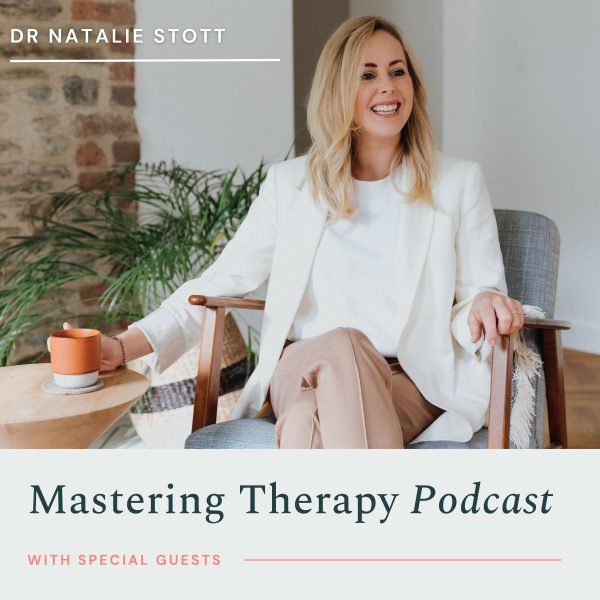
Mastering Therapy
- Episodios
- 73
- Se publica
- cada semana
- Último episodio
- 19 Nov 2026
Sobre el podcast
Welcome to the Mastering Therapy Podcast with me, Dr. Natalie Stott, a clinical psychologist. If you're a psychologist, psychotherapist, or counsellor looking to expand your skills, gain confidence, and discover fresh ways to make an impact with your clients, this is the show for you. We all know that creating meaningful change for our clients is incredibly fulfilling, but let’s face it—this work can be challenging, especially if you feel like you don’t have a big team around you. Mastering Therapy is a weekly podcast that can be your go-to source of professional development and connection, where therapists can learn from one another, share practical insights, and navigate the challenges of therapy together. Join us as Natalie sits down with experienced practitioners who dive into the nitty-gritty of what really happens in a therapy session. You’ll get a front-row seat to their methods, language, and strategies, as well as honest conversations about potential pitfalls and what to look out for. Whether you specialise in working with adults, children, or use a particular modality—or even an integrative approach—there’s something here for everyone who wants to add practical tools to their therapy toolkit. To stay up-to-date with new episodes and access valuable resources, visit www.masteringtherapy.com. You can also connect with us on social media and subscribe on all major podcast platforms. Looking forward to sharing this journey with you!
Episodios 73
S5E9: A practical take on SEO and AI Search for Therapists
S5E9: A practical take on SEO and AI Search for TherapistsCan prospective clients actually find your therapy website?In this practical solo episode, Dr Natalie Stott explains how SEO and AI search affect …
Notas del episodio
S5E9: A practical take on SEO and AI Search for Therapists
Can prospective clients actually find your therapy website?
In this practical solo episode, Dr Natalie Stott explains how SEO and AI search affect private-practice therapists. She covers the language clients really use, Google Search Console, local listings and the information every therapy website should make clear. You’ll also learn how AI agents can review your website, identify useful improvements and help you make changes without replacing your voice with generic AI slop.
Timestamps00:43 Why website visibility matters
03:51 SEO and AI search explained
07:38 What prospective clients are searching for
11:11 Using Google Search Console
15:24 Using an AI agent to improve your website
20:02 Helping clients find you beyond your website
22:05 Business profiles in ChatGPT
23:55 Where to begin
RESOURCES MENTIONED- AI website audit prompt
- Google Search Console:
- Microsoft Bing Webmaster Tools:
- Google Business Profile eligibility:
- OpenAI Business Hub
** Check out Mastering Therapy’s Youtube Channel for all podcast episodes **
For notification on up coming episodes and for occasional summaries of tools discussed on the podcast sign up here: www.masteringtherapy.com
To recommend a topic you’d like to hear about, or if you’d like to appear on the podcast please get in touch at www.masteringtherapy.com/podcast
*****
Subscribe to the Mastering Therapy Podcast YouTube channel
Follow Mastering therapy on instagram
Connect with Dr Natalie Stott on LinkedIn
AIRNOTE
AirNote is an affordable AI-powered note-taking app designed specifically for therapists in private practice. It securely transcribes sessions and creates professional clinical notes, without the price tag of many traditional AI scribes. Priced at only £14.99 per month. Available to mac users only
DOWNLOAD AIRNOTE (1 month free trial using to code 30FREE)
Supervisor Platform is an online directory designed for therapists, psychologists, counsellors, and other mental health professionals to connect with qualified clinical supervisors. It makes it easy for practitioners to browse, compare, and contact supervisors based on their expertise, approach, and availability, while giving supervisors a professional space to showcase their services.
- Supervisor Platform (with 3 months free trial code 'WELCOME3')
- To search for a new supervisor visit HERE
- For free resources on supervision visit HERE
Disclaimer: The Mastering therapy podcast and the information provided by Dr Natalie Stott (Dclinpsych, HPCP reg), is solely intended for informational and educational purposes and should only be used by qualified professionals.
Mentioned in this episode:
AIRNOTE | AI SCRIBE FOR THERAPISTS
AirNote is an affordable AI-powered note-taking app designed specifically for therapists in private practice. It securely transcribes sessions and creates professional clinical notes, without the price tag of many traditional AI scribes. Early user price is at £9.99 p/m, no hidden costs. Available to mac users only DOWNLOAD AIRNOTE (FREE TRIAL available)
S5E8: Working with Stuckness in Therapy | Dr Robyn Walser
S5E8: Working with Stuckness in Therapy | Dr Robyn WalserEPISODE SUMMARYWhat do you do when therapy feels stuck and you notice yourself working harder than your client?Dr Natalie Stott is joined by clinical …
Notas del episodio
S5E8: Working with Stuckness in Therapy | Dr Robyn Walser
EPISODE SUMMARYWhat do you do when therapy feels stuck and you notice yourself working harder than your client?
Dr Natalie Stott is joined by clinical psychologist and ACT trainer Dr Robyn Walser to explore creative hopelessness and the therapist’s role in helping clients recognise unworkable patterns. They discuss the difference between feeling good and living well, how therapists slip into convincing or rescuing, and how to challenge a client without shaming them. Robyn also explores using what is happening in the therapeutic relationship, handing responsibility back to the client and adapting ACT work when control has served a protective function following trauma.
GUESTDr Robyn Walser is a clinical psychologist, author and internationally recognised Acceptance and Commitment Therapy trainer. She has worked with ACT since its early development and spent more than 25 years working at the US National Center for PTSD.
Website: https://robynwalser.com
RESOURCES- BOOK: You Are Not Your Trauma by Robyn D. Walser and Darrah Westrup
- BOOK: Acceptance and Commitment Therapy: Deliberate Practice to Develop and Enhance Skills in ACT by Robyn D. Walser and Manuela O’Connell: [LINK REQUIRED]
- Robyn Walser’s website and free materials: https://robynwalser.com
** Check out Mastering Therapy’s Youtube Channel for all podcast episodes **
For notification on up coming episodes and for occasional summaries of tools discussed on the podcast sign up here: www.masteringtherapy.com
To recommend a topic you’d like to hear about, or if you’d like to appear on the podcast please get in touch at www.masteringtherapy.com/podcast
*****
Subscribe to the Mastering Therapy Podcast YouTube channel
Follow Mastering therapy on instagram
Connect with Dr Natalie Stott on LinkedIn
AIRNOTE
AirNote is an affordable AI-powered note-taking app designed specifically for therapists in private practice. It securely transcribes sessions and creates professional clinical notes, without the price tag of many traditional AI scribes. Priced at only £14.99 per month. Available to mac users only
DOWNLOAD AIRNOTE (1 month free trial using to code 30FREE)
Supervisor Platform is an online directory designed for therapists, psychologists, counsellors, and other mental health professionals to connect with qualified clinical supervisors. It makes it easy for practitioners to browse, compare, and contact supervisors based on their expertise, approach, and availability, while giving supervisors a professional space to showcase their services.
- Supervisor Platform (with 3 months free trial code 'WELCOME3')
- To search for a new supervisor visit HERE
- For free resources on supervision visit HERE
Disclaimer: The Mastering therapy podcast and the information provided by Dr Natalie Stott (Dclinpsych, HPCP reg), is solely intended for informational and educational purposes and should only be used by qualified professionals.
Mentioned in this episode:
AIRNOTE | AI SCRIBE FOR THERAPISTS
AirNote is an affordable AI-powered note-taking app designed specifically for therapists in private practice. It securely transcribes sessions and creates professional clinical notes, without the price tag of many traditional AI scribes. Early user price is at £9.99 p/m, no hidden costs. Available to mac users only DOWNLOAD AIRNOTE (FREE TRIAL available)
S5E7 Narcissism in Therapy: Moving past social media labels | Dr Ruth-Ann Harpur
S5E7 Narcissism in Therapy: Moving past social media labels | Dr Ruth-Ann HarpurWhat do you do when a client arrives in therapy convinced that their partner, parent or sibling is a narcissist?In this episode …
Notas del episodio
S5E7 Narcissism in Therapy: Moving past social media labels | Dr Ruth-Ann Harpur
What do you do when a client arrives in therapy convinced that their partner, parent or sibling is a narcissist?
In this episode, Dr Natalie Stott speaks with clinical psychologist Dr Ruth Ann Harpur about the sizeable gap between narcissism as a clinical concept and narcissism as social-media shorthand for somebody who has behaved badly. The conversation also tackles the difficult boundary between a painful relationship and abuse. Ruth explains why coercive control, financial restriction and physical violence require direct assessment, careful attention to safety and appropriate specialist support. Narcissism and abuse are not synonyms. Harm should be named clearly without turning a diagnosis into a moral verdict. They also consider critical parents, therapist anger and the point at which consuming yet another video about narcissism stops helping a client build a life beyond the relationship.
Content note: This episode discusses emotional and psychological abuse, coercive control, financial abuse and physical violence.
Guest Information:
Dr Ruth Ann Harpur is a clinical psychologist specialising in relationships and issues of narcissism. Her work includes supporting people with narcissistic traits, people affected by damaging or abusive relationships, and couples seeking to understand difficult relational patterns. She also creates educational content about narcissism, personality and relationships.
Website: https://www.ruthannharpur.co.uk/
YouTube: https://www.youtube.com/@drruthannharpur
Instagram: https://www.instagram.com/drruthannharpur/
TikTok: https://www.tiktok.com/@drruthannharpur
Resources mentioned:
- *Disarming the Narcissist* by Wendy T. Behary: https://www.newharbinger.com/9781684037728/disarming-the-narcissist/
- *Rethinking Narcissism* by Dr Craig Malkin: https://www.drcraigmalkin.com/
- Heal NPD videos by Dr Mark Ettensohn: https://www.healnpd.org/videos
- The Nameless Narcissist YouTube channel, mentioned in the discussion of self-esteem regulation:
** Check out Mastering Therapy’s Youtube Channel for all podcast episodes **
For notification on up coming episodes and for occasional summaries of tools discussed on the podcast sign up here: www.masteringtherapy.com
To recommend a topic you’d like to hear about, or if you’d like to appear on the podcast please get in touch at www.masteringtherapy.com/podcast
*****
Subscribe to the Mastering Therapy Podcast YouTube channel
Follow Mastering therapy on instagram
Connect with Dr Natalie Stott on LinkedIn
AIRNOTE
AirNote is an affordable AI-powered note-taking app designed specifically for therapists in private practice. It securely transcribes sessions and creates professional clinical notes, without the price tag of many traditional AI scribes. Priced at only £14.99 per month. Available to mac users only
DOWNLOAD AIRNOTE (1 month free trial using to code 30FREE)
Supervisor Platform is an online directory designed for therapists, psychologists, counsellors, and other mental health professionals to connect with qualified clinical supervisors. It makes it easy for practitioners to browse, compare, and contact supervisors based on their expertise, approach, and availability, while giving supervisors a professional space to showcase their services.
- Supervisor Platform (with 3 months free trial code 'WELCOME3')
- To search for a new supervisor visit HERE
- For free resources on supervision visit HERE
Disclaimer: The Mastering therapy podcast and the information provided by Dr Natalie Stott (Dclinpsych, HPCP reg), is solely intended for informational and educational purposes and should only be used by qualified professionals.
Mentioned in this episode:
AIRNOTE | AI SCRIBE FOR THERAPISTS
AirNote is an affordable AI-powered note-taking app designed specifically for therapists in private practice. It securely transcribes sessions and creates professional clinical notes, without the price tag of many traditional AI scribes. Early user price is at £9.99 p/m, no hidden costs. Available to mac users only DOWNLOAD AIRNOTE (FREE TRIAL available)
S5E6: How to Find Your Therapy Niche with Josephine Hughes
S5E6: How to Find Your Therapy Niche with Josephine HughesDo therapists really need a niche, or is this simply another piece of marketing advice that makes private practice feel more complicated than it already …
Notas del episodio
S5E6: How to Find Your Therapy Niche with Josephine Hughes
Do therapists really need a niche, or is this simply another piece of marketing advice that makes private practice feel more complicated than it already is?
In this episode, Dr Natalie Stott speaks with counsellor and Good Enough Counsellors podcast host Josephine Hughes about finding the clients you genuinely want to work with. They explore why being trained to work with a wide range of people can make narrowing your focus feel uncomfortable, particularly when you are worried about finding enough clients.
Josephine explains that a niche does not have to box you in. It gives potential clients, colleagues, search engines and AI a clearer signal about the work you offer. A client may never search for “single-incident trauma”, but they might search for help after a road accident or because they panic every time they get behind the wheel.
They also discuss what happens when you are highly skilled in an area you no longer enjoy, whether you need to be an expert before choosing a specialism and why your niche can change as your practice develops.
Josephine shares a practical exercise for identifying the common thread running through the clients you most enjoy working with. If the instruction to “find your niche” has left you staring blankly at your website biography, this is a useful place to begin.
KEY TAKEAWAYS
- A niche helps clients recognise that your work is relevant to them.
- Clients often search using situations and everyday experiences rather than therapy terminology.
- Different presentations may share an underlying emotional theme or “root”.
- Choosing a niche does not prevent you from accepting other suitable referrals.
- You can test your wording, notice who responds and adapt your focus over time.
- You do not need to become an expert before beginning to develop a specialism.
- Reviewing three clients you worked particularly well with can reveal useful patterns.
- The work you are good at is not necessarily the work you want to build your practice around.
GUEST
Josephine Hughes is a BACP Accredited Counsellor who mentors therapists as they develop their private practices. She hosts the Good Enough Counsellors podcast and runs the Good Enough Counsellors community on facebook
- Josephine’s free handout mentioned in the episode
- Josephine Hughes
- Good Enough Counsellors podcast
** Check out Mastering Therapy’s Youtube Channel for all podcast episodes **
For notification on up coming episodes and for occasional summaries of tools discussed on the podcast sign up here: www.masteringtherapy.com
To recommend a topic you’d like to hear about, or if you’d like to appear on the podcast please get in touch at www.masteringtherapy.com/podcast
*****
Subscribe to the Mastering Therapy Podcast YouTube channel
Follow Mastering therapy on instagram
Connect with Dr Natalie Stott on LinkedIn
AIRNOTE
AirNote is an affordable AI-powered note-taking app designed specifically for therapists in private practice. It securely transcribes sessions and creates professional clinical notes, without the price tag of many traditional AI scribes. Priced at only £14.99 per month. Available to mac users only
DOWNLOAD AIRNOTE (1 month free trial using to code 30FREE)
Supervisor Platform is an online directory designed for therapists, psychologists, counsellors, and other mental health professionals to connect with qualified clinical supervisors. It makes it easy for practitioners to browse, compare, and contact supervisors based on their expertise, approach, and availability, while giving supervisors a professional space to showcase their services.
- Supervisor Platform (with 3 months free trial code 'WELCOME3')
- To search for a new supervisor visit HERE
- For free resources on supervision visit HERE
Disclaimer: The Mastering therapy podcast and the information provided by Dr Natalie Stott (Dclinpsych, HPCP reg), is solely intended for informational and educational purposes and should only be used by qualified professionals.
Mentioned in this episode:
Supervisor platform
SUPERVISOR PLATFORM: Visit www.supervisorplatform.com to search supervisors You can list your profile for free for 3 months
S5E5: Practical AI for Therapists: Green, Amber and Red Uses
S5E5: Practical AI for Therapists: Green, Amber and Red UsesHow can therapists make practical use of AI without handing over sensitive information, clinical judgement or half the contents of their inbox?In this …
Notas del episodio
S5E5: Practical AI for Therapists: Green, Amber and Red Uses
How can therapists make practical use of AI without handing over sensitive information, clinical judgement or half the contents of their inbox?
In this solo episode, Dr Natalie Stott explores how AI has moved beyond simple chatbot prompts. Today’s tools can listen, create, research and act on your behalf. That brings useful opportunities for clinical work and private practice. It also introduces risks that cannot be solved by removing a client’s name and hoping for the best.
Natalie introduces a green, amber and red framework for assessing AI use. She also explains the differences between consumer chatbots, clinical scribes, agents and AI builders.
Practical examples include creating accessible therapy worksheets, rehearsing psychoeducation through voice mode, preparing for appraisal, auditing a private-practice website and using AI as a research or marketing assistant. The episode also considers AI scribes, agent permissions and why human review remains essential.
Resources mentioned:
- Airnote: AI Scribe for therapists
- ICO Guidance on AI
- AI SEO AUDIT-to use with agents
- Free AI health Check
** Check out Mastering Therapy’s Youtube Channel for all podcast episodes **
For notification on up coming episodes and for occasional summaries of tools discussed on the podcast sign up here: www.masteringtherapy.com
To recommend a topic you’d like to hear about, or if you’d like to appear on the podcast please get in touch at www.masteringtherapy.com/podcast
*****
Subscribe to the Mastering Therapy Podcast YouTube channel
Follow Mastering therapy on instagram
Connect with Dr Natalie Stott on LinkedIn
AIRNOTE
AirNote is an affordable AI-powered note-taking app designed specifically for therapists in private practice. It securely transcribes sessions and creates professional clinical notes, without the price tag of many traditional AI scribes. Priced at only £14.99 per month. Available to mac users only
DOWNLOAD AIRNOTE (1 month free trial using to code 30FREE)
Supervisor Platform is an online directory designed for therapists, psychologists, counsellors, and other mental health professionals to connect with qualified clinical supervisors. It makes it easy for practitioners to browse, compare, and contact supervisors based on their expertise, approach, and availability, while giving supervisors a professional space to showcase their services.
- Supervisor Platform (with 3 months free trial code 'WELCOME3')
- To search for a new supervisor visit HERE
- For free resources on supervision visit HERE
Disclaimer: The Mastering therapy podcast and the information provided by Dr Natalie Stott (Dclinpsych, HPCP reg), is solely intended for informational and educational purposes and should only be used by qualified professionals.
Mentioned in this episode:
Supervisor platform
SUPERVISOR PLATFORM: Visit www.supervisorplatform.com to search supervisors You can list your profile for free for 3 months
S5E4: How Therapists can start and grow a business | Dr Jo Carlile from PEAR
S5E4: How Therapists can start and grow a business | Dr Jo Carlile from PEARWhat happens when a therapist has a business idea but no idea how to build it?In this episode, Dr Natalie Stott speaks with clinical …
Notas del episodio
S5E4: How Therapists can start and grow a business | Dr Jo Carlile from PEAR
What happens when a therapist has a business idea but no idea how to build it?
In this episode, Dr Natalie Stott speaks with clinical psychologist and Pear founder Dr Jo Carlile about moving from private practice into entrepreneurship. Jo explains why she now sees every private therapist as a founder. She also shares how her therapist identity helped her spot gaps in the way people find therapy and in the support available to private practitioners.
This is a candid conversation about the parts of building a business that are rarely covered in clinical training. Jo talks about finding the right co-founder, getting help when you are not remotely techy and testing an idea before spending heavily on it. She also explains why she and her co-founder stepped back from fundraising after realising that the expected pace did not fit the lives or business they wanted to build.
Natalie and Jo also discuss one of the hidden costs of founder life: the work does not stay neatly in the room. There is always another email, post or idea waiting. They explore what sustainable ambition can look like when clinical work, parenting and personal life all need real space too.
If you have ever thought, “I could build something, but where on earth would I start?”, this episode offers a refreshingly practical answer. Start small. Talk to people. Test whether anybody wants the thing. Then build from what you learn.
KEY TAKEAWAYS
- Private therapists already run businesses, even when “entrepreneur” is not part of their professional identity.
- A business idea can develop gradually from noticing gaps in your own work and the wider therapy landscape.
- Support does not have to mean finding a co-founder. It can come from networks, mentors and people with complementary expertise.
- Early-stage businesses benefit from testing demand before investing heavily in a polished product.
- Fundraising can bring money and momentum, but it can also change who sets the pace and who you answer to.
- Clinical work often has a natural boundary. Founder work can spread into evenings, weekends and mental space unless you contain it deliberately.
- Visibility may never feel like the enjoyable part of the job. It can still be useful when it serves a clear purpose.
Guest Information:
Dr Jo Carlile is a clinical psychologist and co-founder of Pear, a therapy matching platform and therapist community. Pear helps people find a therapist and offers its therapist members community and marketing support.
Website: https://www.ilovepear.com
Email: [email protected]
Social media:
Website:
Resources
- Pear therapy matching platform and therapist community: https://www.ilovepear.com
** Check out Mastering Therapy’s Youtube Channel for all podcast episodes **
For notification on up coming episodes and for occasional summaries of tools discussed on the podcast sign up here: www.masteringtherapy.com
To recommend a topic you’d like to hear about, or if you’d like to appear on the podcast please get in touch at www.masteringtherapy.com/podcast
*****
Subscribe to the Mastering Therapy Podcast YouTube channel
Follow Mastering therapy on instagram
Connect with Dr Natalie Stott on LinkedIn
AIRNOTE
AirNote is an affordable AI-powered note-taking app designed specifically for therapists in private practice. It securely transcribes sessions and creates professional clinical notes, without the price tag of many traditional AI scribes. Priced at only £14.99 per month. Available to mac users only
DOWNLOAD AIRNOTE (1 month free trial using to code 30FREE)
Supervisor Platform is an online directory designed for therapists, psychologists, counsellors, and other mental health professionals to connect with qualified clinical supervisors. It makes it easy for practitioners to browse, compare, and contact supervisors based on their expertise, approach, and availability, while giving supervisors a professional space to showcase their services.
- Supervisor Platform (with 3 months free trial code 'WELCOME3')
- To search for a new supervisor visit HERE
- For free resources on supervision visit HERE
Disclaimer: The Mastering therapy podcast and the information provided by Dr Natalie Stott (Dclinpsych, HPCP reg), is solely intended for informational and educational purposes and should only be used by qualified professionals.
S5E3: Working With Sexual Abuse: Disclosure, Memory and Intimacy | Dr Kelly Savery
CONTENT NOTEThis episode discusses sexual abuse, including childhood sexual abuse, trauma memory, shame and the effects of abuse on sex and relationships. Please listen in a way that prioritises care of …
Notas del episodio
CONTENT NOTEThis episode discusses sexual abuse, including childhood sexual abuse, trauma memory, shame and the effects of abuse on sex and relationships. Please listen in a way that prioritises care of yourself
EPISODE SUMMARYHow do you name possible sexual abuse without turning therapy into another experience in which something is being done to the client?
In this episode, Dr Natalie Stott speaks with counselling psychologist and EMDR trained Dr Kelly Savery about working with sexual abuse and sexual trauma. They explore the language of victimhood and survival, the care required around first disclosures and what to do when a client has not named what happened. Kelly offers ways to raise concerns tentatively while leaving control with the client.
The conversation also explores fragmented trauma memory. Do clients need a clear, chronological account before therapy can help? Kelly explains why therapists can work with present-day shame, disgust and bodily responses without trying to excavate a complete narrative.
The episode closes with the impact of this work on clinicians. Kelly discusses supervision, peer connection, caseload management and her approach to staying present without visualising traumatic material.
Timestamps
- 6:24 — Language: victim vs. survivor
- 15:49 — Fragmented memories & historical disclosures
- 43:48 — Hope & recovery
GUESTDr Kelly Savery is a counselling psychologist, EMDR-accredited practitioner and CAT therapist. She is the founder of Taproot Psychology and specialises in supporting adults affected by sexual abuse and sexual trauma.
Dr Kelly website: https://www.drkelly.uk/
Taproot Psychology: https://www.taprootpsychology.com/
RESOURCES- Trauma Memory animation, using a filing-cabinet metaphor to explain dissociative memory: https://youtu.be/P0DeP2ZfYy0?si=h1j-B9CUezQWTUVM
- Self-paced course for people experiencing sexual-intimacy difficulties after sexual abuse: https://www.drkelly.uk/
- Dr Kelly Savery’s trauma retreats and intensive trauma therapy: [CURRENT PROGRAMME LINK REQUIRED]
- Training and supervision for therapists working with sexual abuse, intimacy and sexual pleasure: [TRAINING LINK REQUIRED]
Mentioned in this episode:
AIRNOTE | AI SCRIBE FOR THERAPISTS
AirNote is an affordable AI-powered note-taking app designed specifically for therapists in private practice. It securely transcribes sessions and creates professional clinical notes, without the price tag of many traditional AI scribes. Early user price is at £9.99 p/m, no hidden costs. Available to mac users only DOWNLOAD AIRNOTE (FREE TRIAL available)
S5E2 What Community Psychology can teach every therapist | Dr Ron Dodzro
S5E2 What Community Psychology can teach every therapist | Dr Ron DodzroHow much of what brings someone to therapy can really be understood by looking at the individual alone?In this episode, Dr Natalie Stott …
Notas del episodio
S5E2 What Community Psychology can teach every therapist | Dr Ron Dodzro
How much of what brings someone to therapy can really be understood by looking at the individual alone?
In this episode, Dr Natalie Stott is joined by clinical psychologist Dr Ron Dodzro, also known as The Accessible Psychologist on social media, to explore community psychology and what changes when therapists widen the lens beyond the person sitting in front of them.
Drawing on his work in prisons and with young people affected by community violence, Ron discusses what it means to formulate the systems around a person, particularly when those systems may be contributing to their distress. He shares how his work has extended beyond individual therapy to include parents, teachers, prison officers and wider organisations.
Natalie and Ron also explore power and trust in therapy, including a striking example where Ron’s attempt to protect a young man’s confidentiality inadvertently made him feel less safe.
They discuss race and therapist identity, what our ideas about “professionalism” might communicate to different clients, and why sharing a demographic with someone doesn’t necessarily mean they will experience you as the right therapist for them.
An episode about looking beyond the individual and becoming more curious about what sits around the therapy room as well as what happens inside it.
Guest Information:
Dr Ron Dodzro is a clinical psychologist whose work spans trauma, community psychology and community violence. He has worked within the prison system and now works predominantly in community, charity and private settings, including with children and young people affected by community violence.
He is also co-founder of Psychologists the Streets Deserve (PTSD) providing psychological therapy, training and consultancy around trauma, PTSD and community violence.
Ron shares his work online as The Accessible Psychologist
Find Ron:
Instagram: The Accessible Psychologist
Organisation/Website: Psychologists the Streets Deserve (PTSD)
** Check out Mastering Therapy’s Youtube Channel for all podcast episodes **
For notification on up coming episodes and for occasional summaries of tools discussed on the podcast sign up here: www.masteringtherapy.com
To recommend a topic you’d like to hear about, or if you’d like to appear on the podcast please get in touch at www.masteringtherapy.com/podcast
*****
Subscribe to the Mastering Therapy Podcast YouTube channel
Follow Mastering therapy on instagram
Connect with Dr Natalie Stott on LinkedIn
AIRNOTE
AirNote is an affordable AI-powered note-taking app designed specifically for therapists in private practice. It securely transcribes sessions and creates professional clinical notes, without the price tag of many traditional AI scribes. Priced at only £14.99 per month. Available to mac users only
DOWNLOAD AIRNOTE (1 month free trial using to code 30FREE)
Supervisor Platform is an online directory designed for therapists, psychologists, counsellors, and other mental health professionals to connect with qualified clinical supervisors. It makes it easy for practitioners to browse, compare, and contact supervisors based on their expertise, approach, and availability, while giving supervisors a professional space to showcase their services.
- Supervisor Platform (with 3 months free trial code 'WELCOME3')
- To search for a new supervisor visit HERE
- For free resources on supervision visit HERE
Disclaimer: The Mastering therapy podcast and the information provided by Dr Natalie Stott (Dclinpsych, HPCP reg), is solely intended for informational and educational purposes and should only be used by qualified professionals.
Mentioned in this episode:
AIRNOTE | AI SCRIBE FOR THERAPISTS
AirNote is an affordable AI-powered note-taking app designed specifically for therapists in private practice. It securely transcribes sessions and creates professional clinical notes, without the price tag of many traditional AI scribes. Early user price is at £9.99 p/m, no hidden costs. Available to mac users only DOWNLOAD AIRNOTE (FREE TRIAL available)
S5E1: What if compassion makes a client feel worse? | Professor Paul Gilbert
S5E1: What if compassion makes a client feel worse? | Professor Paul GilbertWhat do you do when a client understands compassion perfectly well, but rejects it, distrusts it or feels worse when you introduce …
Notas del episodio
S5E1: What if compassion makes a client feel worse? | Professor Paul Gilbert
What do you do when a client understands compassion perfectly well, but rejects it, distrusts it or feels worse when you introduce it?
Professor Paul Gilbert developed Compassion Focused Therapy for precisely the clients who cannot simply “be kinder” to themselves. In this episode, he explains the three clinical shocks that helped shape CFT. This is for those moments when clients can produce more balanced thoughts but deliver them in a cold or hostile tone. Many people experience kindness as weak, undeserved or almost toxic. For others, receiving care might activate painful memories held within the attachment system.
Dr Natalie Stott, Host and clinical psychologist discuss empathic bridging, the importance of social trust and why receiving compassion from others can be particularly difficult. Paul also revisits the familiar three circles model. He explains threat, drive and the system often called “soothing” through their evolutionary functions, including the role of connection in helping us return to a regulated state.
The conversation finishes with practical ways to bring compassion into everyday behaviour. These include changing the emotional tone of self-talk, practising one compassionate skill at a time and validating the emotion underneath an immediate reaction.
Guest Information:
Professor Paul Gilbert is a professor of clinical psychology at the University of Derby. He is the founder of Compassion Focused Therapy and the Compassionate Mind Foundation. His work has shaped clinical understandings of compassion, shame, self-criticism and threat.
Website: https://www.compassionatemind.co.uk/
** Check out Mastering Therapy’s Youtube Channel for all podcast episodes **
For notification on up coming episodes and for occasional summaries of tools discussed on the podcast sign up here: www.masteringtherapy.com
To recommend a topic you’d like to hear about, or if you’d like to appear on the podcast please get in touch at www.masteringtherapy.com/podcast
*****
Subscribe to the Mastering Therapy Podcast YouTube channel
Follow Mastering therapy on instagram
Connect with Dr Natalie Stott on LinkedIn
Supervisor Platform is an online directory designed for therapists, psychologists, counsellors, and other mental health professionals to connect with qualified clinical supervisors. It makes it easy for practitioners to browse, compare, and contact supervisors based on their expertise, approach, and availability, while giving supervisors a professional space to showcase their services.
- Supervisor Platform (with 3 months free trial code 'WELCOME3')
- To search for a new supervisor visit HERE
- For free resources on supervision visit HERE
Disclaimer: The Mastering therapy podcast and the information provided by Dr Natalie Stott (Dclinpsych, HPCP reg), is solely intended for informational and educational purposes and should only be used by qualified professionals.
Mentioned in this episode:
AIRNOTE | AI SCRIBE FOR THERAPISTS
AirNote is an affordable AI-powered note-taking app designed specifically for therapists in private practice. It securely transcribes sessions and creates professional clinical notes, without the price tag of many traditional AI scribes. Early user price is at £9.99 p/m, no hidden costs. Available to mac users only DOWNLOAD AIRNOTE (FREE TRIAL available)
Season 5 trailer: Out September 17th 2026
Mastering Therapy is back for Season 5.And this season we’re going quite a few places.We open with Professor Paul Gilbert, founder of Compassion Focused Therapy, getting very practical. We talk through how to …
Notas del episodio
Mastering Therapy is back for Season 5.And this season we’re going quite a few places.
We open with Professor Paul Gilbert, founder of Compassion Focused Therapy, getting very practical. We talk through how to work with clients that really dislike the very concept of compassion despite in therapy recognising they might really need it
I’m talking to Dr Ron, The Accessible Psychologist, about community psychology, diversity, working in UK prisons and why he thinks being anti-diagnosis can sometimes be a position of privilege.
There’s Dr Kelly Savery on working with survivors of sexual abuse, including the conversations about sex and intimacy that therapists can be reluctant to have.
And we’re going beyond the clinical work too.
Josephine Hughes joins me to talk about niching and finding the work you really want to do. Blake Roberts from Therapy with Blake talks about social media, visibility and why therapists find putting themselves online so uncomfortable. I also speak to Jo from Pear about building a therapy matching service, fundraising and moving into the business world.
And, twelve months after our first conversation, ChatGPT is back. This time we get further into AI and therapy, safety, ethics and what we should be telling clients who are already using AI between sessions.
There are also conversations on ACT, narcissism and plenty more.
Have a listen to the trailer for a few clips from what’s coming.
Season 5 starts Thursday 17th September, with a new episode every Thursday through to December.
Follow Mastering Therapy now so you don’t miss the first episode and make sure you get yourself on the mailing list.
BONUS: When Clients Disappear: The Reality of Therapy Endings (PT2)
BONUS: When Clients Disappear: The Reality of Therapy Endings (PT2)Ever had a client vanish just before their final session? Or wondered why endings can feel so awkward sometimes for everyone in the room? This …
Notas del episodio
BONUS: When Clients Disappear: The Reality of Therapy Endings (PT2)
Ever had a client vanish just before their final session? Or wondered why endings can feel so awkward sometimes for everyone in the room? This bonus episode of Mastering Therapy is a practical guide to therapy terminations, with a clinician’s eye on what really happens (and what goes unsaid). The conversation explores messy endings, why clients “ghost”, and how therapists can plan for sessions that fizzle or never happen at all.
Expect practical tools on handling your own reactions, scripts for easing those tricky conversations, and fresh reflections on when saying “goodbye” does or doesn’t mean the work is finished. Useful whether you’re NHS-based or in private practice. No mention of Acceptance and Commitment Therapy (ACT), but plenty to chew over all the same.
The host is Dr. Natalie Stott, clinical psychologist, founder of Mastering Therapy and host of the Mastering Therapy podcast.
Timestamps
What Kind of Ending Is This? 2:56
When Clients Ghost 7:00
Planned Endings & Practical Options 13:10
Therapist-Led Endings 20:07
Resources mentioned:
What to do when guide HERE
- Clients' perspectives on therapy termination - PubMed
- 6 Strategies for Ethical Termination of Psychotherapy | Society for the Advancement of Psychotherapy
- Do all therapists do that when saying goodbye? A study of commonalities in termination behaviors - PubMed
- Termination of psychotherapy: a systematic review - PMC
** Check out Mastering Therapy’s Youtube Channel for all podcast episodes **
For notification on up coming episodes and for occasional summaries of tools discussed on the podcast sign up here: www.masteringtherapy.com
To recommend a topic you’d like to hear about, or if you’d like to appear on the podcast please get in touch at www.masteringtherapy.com/guest
For private psychology services and therapy visit www.drnataliestott.com
*****
Subscribe to the Mastering Therapy Podcast YouTube channel
Follow Mastering therapy on instagram
Connect with Dr Natalie Stott on LinkedIn
Supervisor Platform is an online directory designed for therapists, psychologists, counsellors, and other mental health professionals to connect with qualified clinical supervisors. It makes it easy for practitioners to browse, compare, and contact supervisors based on their expertise, approach, and availability, while giving supervisors a professional space to showcase their services.
- Supervisor Platform (with 3 months free trial code 'WELCOME3')
- To search for a new supervisor visit HERE
- For free resources on supervision visit HERE
Disclaimer: The Mastering therapy podcast and the information provided by Dr Natalie Stott (Dclinpsych, HPCP reg), is solely intended for informational and educational purposes and should only be used by qualified professionals.
Mentioned in this episode:
AIRNOTE | AI SCRIBE FOR THERAPISTS
AirNote is an affordable AI-powered note-taking app designed specifically for therapists in private practice. It securely transcribes sessions and creates professional clinical notes, without the price tag of many traditional AI scribes. Early user price is at £9.99 p/m, no hidden costs. Available to mac users only DOWNLOAD AIRNOTE (FREE TRIAL available)
BONUS: What to do when... a client goes blank during therapy Sessions
What really happens when a client goes blank in therapy?This episode dives into dissociation and distress in therapy sessions. Dr Natalie Stott helps make sense of those in-the-room moments where clients …
Notas del episodio
What really happens when a client goes blank in therapy?
This episode dives into dissociation and distress in therapy sessions. Dr Natalie Stott helps make sense of those in-the-room moments where clients disconnect or shut down. Instead of offering set techniques, she shares what clients say actually helps, mistakes therapists often make, and how to understand what's really going on beneath the surface. There’s a strong focus on noticing before intervening, working collaboratively, and pacing sessions with care.
Highlights include:
01:15 What clients need when dissociating
04:11 Perfectionism and the urge to fix
10:13 Client quotes on what dissociation feels like
14:05 Distress vs dissociation—key differences
21:05 Therapist errors and how to avoid them
Resources mentioned:
GET THE WHAT TO DO WHEN GUIDE....
** Check out Mastering Therapy’s Youtube Channel for all podcast episodes **
For notification on up coming episodes and for occasional summaries of tools discussed on the podcast sign up here: www.masteringtherapy.com
To recommend a topic you’d like to hear about, or if you’d like to appear on the podcast please get in touch at www.masteringtherapy.com/guest
For private psychology services and therapy visit www.drnataliestott.com
*****
Subscribe to the Mastering Therapy Podcast YouTube channel
Follow Mastering therapy on instagram
Connect with Dr Natalie Stott on LinkedIn
Supervisor Platform is an online directory designed for therapists, psychologists, counsellors, and other mental health professionals to connect with qualified clinical supervisors. It makes it easy for practitioners to browse, compare, and contact supervisors based on their expertise, approach, and availability, while giving supervisors a professional space to showcase their services.
- Supervisor Platform (with 3 months free trial code 'WELCOME3')
- To search for a new supervisor visit HERE
- For free resources on supervision visit HERE
Disclaimer: The Mastering therapy podcast and the information provided by Dr Natalie Stott (Dclinpsych, HPCP reg), is solely intended for informational and educational purposes and should only be used by qualified professionals.
Mentioned in this episode:
AIRNOTE | AI SCRIBE FOR THERAPISTS
AirNote is an affordable AI-powered note-taking app designed specifically for therapists in private practice. It securely transcribes sessions and creates professional clinical notes, without the price tag of many traditional AI scribes. Early user price is at £9.99 p/m, no hidden costs. Available to mac users only DOWNLOAD AIRNOTE (FREE TRIAL available)
Bonus: What to do when... you are asked a personal question by a client
Do you wonder how much of yourself to share with clients in therapy?Self-disclosure in therapy can feel like a tightrope walk,one foot in humanity, one in professionalism, and absolutely no brick walls in …
Notas del episodio
Do you wonder how much of yourself to share with clients in therapy?
Self-disclosure in therapy can feel like a tightrope walk,one foot in humanity, one in professionalism, and absolutely no brick walls in sight. In this sharp, practical episode, Dr Natalie Stott explores the everyday moments when clients ask about your personal life, and how your answer (or non-answer) shapes the relationship. Get clear on the difference between purposeful self-disclosure and those accidental reveals, like a stray photo on LinkedIn or being spotted with your dog at the park. We talk genuine connection, boundaries, and those inevitable “Are you married?” curveballs. This episode is essential listening for anyone navigating the unscripted art of being real in the consulting room.
TIMESTAMPS
- 01:17 Common client questions therapists get (and what throws us)
- 05:07 The four types of self-disclosure—yes, even the accidental ones
- 08:10 Why small disclosures can strengthen trust and reduce shame
- 11:01 Red flags: When disclosure meets your own needs, not your client’s
- 15:11 Online presence: your digital self is always in the room
- 18:06 Practical ways to respond to personal questions (without making it weird)
Guest Information:
Social media: https://instagram.com/masteringtherapy
Website: www.masteringtherapy.com
** Check out Mastering Therapy’s Youtube Channel for all podcast episodes **
For notification on up coming episodes and for occasional summaries of tools discussed on the podcast sign up here: www.masteringtherapy.com
To recommend a topic you’d like to hear about, or if you’d like to appear on the podcast please get in touch at www.masteringtherapy.com/guest
For private psychology services and therapy visit www.drnataliestott.com
*****
Subscribe to the Mastering Therapy Podcast YouTube channel
Follow Mastering therapy on instagram
Connect with Dr Natalie Stott on LinkedIn
Supervisor Platform is an online directory designed for therapists, psychologists, counsellors, and other mental health professionals to connect with qualified clinical supervisors. It makes it easy for practitioners to browse, compare, and contact supervisors based on their expertise, approach, and availability, while giving supervisors a professional space to showcase their services.
- Supervisor Platform (with 3 months free trial code 'WELCOME3')
- To search for a new supervisor visit HERE
- For free resources on supervision visit HERE
Disclaimer: The Mastering therapy podcast and the information provided by Dr Natalie Stott (Dclinpsych, HPCP reg), is solely intended for informational and educational purposes and should only be used by qualified professionals.
Mentioned in this episode:
AIRNOTE | AI SCRIBE FOR THERAPISTS
AirNote is an affordable AI-powered note-taking app designed specifically for therapists in private practice. It securely transcribes sessions and creates professional clinical notes, without the price tag of many traditional AI scribes. Early user price is at £9.99 p/m, no hidden costs. Available to mac users only DOWNLOAD AIRNOTE (FREE TRIAL available)
Bonus: What to do when... you're wrapping up the therapy session
How do you end your therapy sessions?This episode looks at the art of closing a clinical hour in therapy by host Dr Natalie Stott. The discussion focuses on those crucial last few minutes of a session, how they …
Notas del episodio
How do you end your therapy sessions?
This episode looks at the art of closing a clinical hour in therapy by host Dr Natalie Stott. The discussion focuses on those crucial last few minutes of a session, how they shape the client's week, and what endings can reveal about both therapist and client. The episode covers practical ideas, common challenges in managing endings, and reflects on the role of therapist self-awareness. Full of practical tips and honest reflections, this episode offers a thoughtful approach to a part of therapy training many miss.
Highlights include:
00:25 Why endings in therapy matter
02:52 How memory works in therapy endings
05:02 Attachment patterns and client behaviour at the end of sessions
10:01 Practical time management and clear closing routines
13:05 Handling “hand on the door” disclosures
Guest Information:
Dr Natalie Stott is a Clinical Psychologist and host of the Mastering Therapy podcast. She creates practical CPD-style episodes, workshops and resources for psychologists, psychotherapists and counsellors who want to build confidence and skill in the therapy room.
Follow Dr Natalie Stott on Instagram
Get notified about the workshops
** Check out Mastering Therapy’s Youtube Channel for all podcast episodes **
For notification on up coming episodes and for occasional summaries of tools discussed on the podcast sign up here: www.masteringtherapy.com
To recommend a topic you’d like to hear about, or if you’d like to appear on the podcast please get in touch at www.masteringtherapy.com/guest
*****
Subscribe to the Mastering Therapy Podcast YouTube channel
Follow Mastering therapy on instagram
Connect with Dr Natalie Stott on LinkedIn
Supervisor Platform is an online directory designed for therapists, psychologists, counsellors, and other mental health professionals to connect with qualified clinical supervisors. It makes it easy for practitioners to browse, compare, and contact supervisors based on their expertise, approach, and availability, while giving supervisors a professional space to showcase their services.
- Supervisor Platform (with 3 months free trial code 'WELCOME3')
- To search for a new supervisor visit HERE
- For free resources on supervision visit HERE
Disclaimer: The Mastering therapy podcast and the information provided by Dr Natalie Stott (Dclinpsych, HPCP reg), is solely intended for informational and educational purposes and should only be used by qualified professionals.
Mentioned in this episode:
AIRNOTE | AI SCRIBE FOR THERAPISTS
AirNote is an affordable AI-powered note-taking app designed specifically for therapists in private practice. It securely transcribes sessions and creates professional clinical notes, without the price tag of many traditional AI scribes. Early user price is at £9.99 p/m, no hidden costs. Available to mac users only DOWNLOAD AIRNOTE (FREE TRIAL available)
S4E11: When Compassion Meets Cash: The Therapist’s Money Dilemmas | Dr Katja Windheim
S4E11: When Compassion Meets Cash: The Therapist’s Money Dilemmas | Dr Katja WindheimLet’s talk about the money elephant in the therapy room. In this episode, clinical psychologist Katja Windheim aka “The Money …
Notas del episodio
S4E11: When Compassion Meets Cash: The Therapist’s Money Dilemmas | Dr Katja Windheim
Let’s talk about the money elephant in the therapy room. In this episode, clinical psychologist Katja Windheim aka “The Money Psychologist”— joins us to dissect why charging, chasing payments, and setting fees make therapists squirm more than the average tax return.
We get specific about how feelings, professional culture, and early training all shape our relationship to cash and what to do when your compassionate side wants to offer therapy for the price of a sandwich. Expect practical tips on strong financial boundaries, cancellation policies that don’t make you hate your diary, and why money talk belongs in supervision just as much as client dynamics. There’s no magic wand here, but you might start seeing your terms and conditions in a whole new light.
TIMESTAMPS
- 02:55 Where the “Money Psychologist” idea came from
- 10:39 Self-funding, cancellations, and client attendance patterns
- 15:37 Making cancellation policies that actually work for you
- 22:26 The awkward business of clients who can only afford limited sessions
- 24:14 Sliding scales—pitfalls, resentments, and alternatives
- 27:20 Signs you’re pricing out of guilt or financial stress
- 33:05 What happens when a client’s money stress enters the therapy room
- 35:37 If your boundaries are all over the place, where to start
KEY TAKEAWAYS
- Discuss and repeat your cancellation policy at multiple points, including during initial sessions and in reminder emails.
- Treat financial boundaries with the same seriousness as therapeutic ones, and actually bring them to supervision.
- Avoid piecemeal flexibility—if you bend the rules for one, you’ll end up resenting the lot.
- Sliding scales quickly get complicated; consider offering limited low-cost slots, doing third-sector work, or creating community resources instead.
- Before diving into a piece of work, clarify up front how many sessions a client can fund, and plan accordingly.
- If you’re regularly overbooking or undercharging, pause and get support—consider a business mentor, peer discussion, or a coach.
- Money worries in clients often show up in the room—name the discomfort, don’t avoid it, and be aware of your own triggers.
GUEST
Katja Windheim is a clinical psychologist working under the name “The Money Psychologist”. She specialises in helping therapists untangle the practical and emotional knots around money, fees, and boundaries within their practices. She regularly runs live Zoom webinars on the emotional side of money in independent practice. Recorded versions of these are available for purchase on her website. She also offers small group coaching for those professionals who wish to explore this further. If you'd like to hear news and updates about these offers, please sign up to her newsletter on her website.
RESOURCES
- The Money Psychologist website
- Connect with Katja on LinkedIn
- Access to future workshops and coffee mornings:
- Free Resource: Reflective audio on managing late cancellations & DNAs
** Check out Mastering Therapy’s Youtube Channel for all podcast episodes **
For notification on up coming episodes and for occasional summaries of tools discussed on the podcast sign up here: www.masteringtherapy.com
To recommend a topic you’d like to hear about, or if you’d like to appear on the podcast please get in touch at www.masteringtherapy.com/guest
For private psychology services and therapy visit www.drnataliestott.com
*****
Subscribe to the Mastering Therapy Podcast YouTube channel
Follow Mastering therapy on instagram
Connect with Dr Natalie Stott on LinkedIn
Supervisor Platform is an online directory designed for therapists, psychologists, counsellors, and other mental health professionals to connect with qualified clinical supervisors. It makes it easy for practitioners to browse, compare, and contact supervisors based on their expertise, approach, and availability, while giving supervisors a professional space to showcase their services.
- Supervisor Platform (with 3 months free trial code 'WELCOME3')
- To search for a new supervisor visit HERE
- For free resources on supervision visit HERE
Disclaimer: The Mastering therapy podcast and the information provided by Dr Natalie Stott (Dclinpsych, HPCP reg), is solely intended for informational and educational purposes and should only be used by qualified professionals.
Mentioned in this episode:
AIRNOTE | AI SCRIBE FOR THERAPISTS
AirNote is an affordable AI-powered note-taking app designed specifically for therapists in private practice. It securely transcribes sessions and creates professional clinical notes, without the price tag of many traditional AI scribes. Early user price is at £9.99 p/m, no hidden costs. Available to mac users only DOWNLOAD AIRNOTE (FREE TRIAL available)
S4E10: Understanding Maternal Rage: A Guide for Therapists | Dr Caroline Boyd
S4E10: Understanding Maternal Rage: A Guide for Therapists | Dr Caroline BoydEPISODE SUMMARYIs it just anger—or is it maternal rage? Dr. Natalie Stott sits down with Caroline to unpack why mothers feel rage so …
Notas del episodio
S4E10: Understanding Maternal Rage: A Guide for Therapists | Dr Caroline Boyd
EPISODE SUMMARY
Is it just anger—or is it maternal rage? Dr. Natalie Stott sits down with Caroline to unpack why mothers feel rage so acutely, and why it matters to name it as a distinct experience. We look at the four contextual forces shaping maternal anger, how cultural myths make mothers feel inadequate, and how therapists can best support clients when rage is shrouded in shame. The episode covers practical steps for mapping client “parts”, bringing the body into therapy, and normalising anger in the context of motherhood and clinical practice. There’s also discussion on therapist disclosure, staying mindful of your own triggers, and ways to deepen your work with mothers. Acceptance and Commitment Therapy (ACT) gets a mention in passing, but this conversation keeps the focus crisply UK-centric.
TIMESTAMPS
• 00:00 Definition and importance of maternal rage
• 00:10 Four contextual forces behind maternal anger
• 08:05 Therapist perspectives: bringing your own experiences into sessions
• 10:40 Asking mums about their own upbringing and anger
• 15:12 Mapping parts, parts work, and nervous system regulation
• 21:13 Impact of childhood experiences on adult anger
• 27:04 Using body awareness for anger management
• 41:06 Mapping parts and relating to “adult self”
• 44:32 Therapist disclosure and managing activation
• 51:00 Courses and resources for therapists and mums
KEY TAKEAWAYS
• Maternal rage is distinct from everyday anger—it’s shaped by societal, cultural, and personal forces.
• Mapping parts (IFS-informed) helps clients understand protective, wounded, perfectionist, and avoidant pieces of themselves.
• Normalising anger, referencing current research, and naming its prevalence helps reduce client shame.
• Therapists should sensitively explore how anger was held and expressed in clients’ upbringing.
• Body-based techniques and nervous system regulation are essential for helping mothers manage anger.
• Consider the impact of perfectionism and inner critic parts, which often drive maternal distress.
• Therapist disclosure needs careful consideration—check your motives and the client’s readiness before sharing.
GUEST
Clinical psychologist Dr Caroline Boyd has over 10 years' experience working in the NHS and mental health settings, and she supports parents from pregnancy to childbirth and beyond. Caroline offers anger courses, workshops and 1:1 therapy, alongside training and supervision, in her independent psychology practice, Parent Therapy Hub. Caroline is the author of Mindful New Mum, and her published research explores mothers' experiences of intrusive thoughts about their babies. Her work has been featured in You magazine, Grazia, the Telegraph, and BBC R4’s Woman's Hour. She is an Ambassador for UK perinatal mental health charity, PANDAS, and appeared as an expert guest on ITV’s daytime show, This Morning, to discuss postpartum depression. Caroline shares psychology ideas on Instagram and in the media to help parents feel less alone and more connected - to themselves and their children.d writes extensively on maternal rage, using parts work and body-based approaches.
Contact her- Website
RESOURCES
• Caroline’s maternal rage course for mums use MASTERINGTHERAPY code for £100 OFF
Training & Supervision for therapists: HERE
The course helps mums move from anger and shame to understanding and repair - in just six, manageable video lessons designed to fit around busy family life.
You don’t need to be experiencing full-blown rage to benefit. Many mums take the course simply to understand their emotions better and reconnect with themselves and those they love.
It’s for every mum who’s ever felt stretched too thin by:
🎯 Broken sleep that leaves you on edge
🎯 The invisible mental load that never ends
🎯 Toddler meltdowns that test every ounce of patience
🎯 Feeling unseen or unsupported by your partner or family
🎯 The pressure to do it all perfectly and sacrifice your own needs
** Check out Mastering Therapy’s Youtube Channel for all podcast episodes **
For notification on up coming episodes and for occasional summaries of tools discussed on the podcast sign up here: www.masteringtherapy.com
To recommend a topic you’d like to hear about, or if you’d like to appear on the podcast please get in touch at www.masteringtherapy.com/guest
For private psychology services and therapy visit www.drnataliestott.com
*****
Subscribe to the Mastering Therapy Podcast YouTube channel
Follow Mastering therapy on instagram
Connect with Dr Natalie Stott on LinkedIn
Supervisor Platform is an online directory designed for therapists, psychologists, counsellors, and other mental health professionals to connect with qualified clinical supervisors. It makes it easy for practitioners to browse, compare, and contact supervisors based on their expertise, approach, and availability, while giving supervisors a professional space to showcase their services.
- Supervisor Platform (with 3 months free trial code 'WELCOME3')
- To search for a new supervisor visit HERE
- For free resources on supervision visit HERE
Disclaimer: The Mastering therapy podcast and the information provided by Dr Natalie Stott (Dclinpsych, HPCP reg), is solely intended for informational and educational purposes and should only be used by qualified professionals.
Mentioned in this episode:
AIRNOTE | AI SCRIBE FOR THERAPISTS
AirNote is an affordable AI-powered note-taking app designed specifically for therapists in private practice. It securely transcribes sessions and creates professional clinical notes, without the price tag of many traditional AI scribes. Early user price is at £9.99 p/m, no hidden costs. Available to mac users only DOWNLOAD AIRNOTE (FREE TRIAL available)
S4E9 Changing emotion with emotion in EFT | Dr Anna Oldershaw
S4E9 Changing emotion with emotion in EFT | Dr Anna OldershawEPISODE SUMMARYMost therapists are comfortable talking about emotions, but Emotion Focused Therapy (EFT) takes things several steps further. In this …
Notas del episodio
S4E9 Changing emotion with emotion in EFT | Dr Anna Oldershaw
EPISODE SUMMARY
Most therapists are comfortable talking about emotions, but Emotion Focused Therapy (EFT) takes things several steps further. In this episode, Dr. Natalie Stott sits down with Dr Anna Oldershaw, consultant clinical psychologist and EFT trainer, to demystify the nuts, bolts, and chairs of EFT. They explore why “changing emotion with emotion” is central, the art of letting clients discover their own “Rome”, and why the therapy is more than a rebranding of common practice. Whether you’re curious about chairwork, anxious about secondary anger, or wondering how EFT fits in alongside Acceptance and Commitment Therapy (ACT), you’ll leave with something practical for your next session.
TIMESTAMPS
- 00:03 What is Emotion Focused Therapy, and why does it matter?
- 02:20 How Dr. Anna Oldershaw stumbled upon EFT (and SPEAKS therapy for anorexia)
- 05:39 Can you integrate EFT with schema therapy or ACT?
- 07:35 Chairwork: making internal parts less terrifying
- 09:38 EFT’s view on emotions: adaptive, maladaptive, and what’s really going on when clients say they’re “just angry”
- 16:54 Working with clients’ own process, not parachuting in with answers
- 26:31 The nuts and bolts of running a chair task (and what to do if things go off piste)
- 31:19 What can clients do between sessions to keep the work alive?
- 45:24 Interested in training in EFT? How to start
KEY TAKEAWAYS
• Use “chairwork” to facilitate clients’ dialogues with critical or protective parts—let them find their own insights, not yours.
• Distinguish between primary adaptive emotions (helpful, situation-relevant), primary maladaptive emotions (old wounds replaying), and secondary emotions (reactions to other feelings). Don’t take clients’ first answers at face value.
• When chairwork risks a shouting match between parts, focus on building assertiveness in the “experiencing” chair and softening of the critic—don’t force a negotiation.
• Listen for process “markers” as sessions begin to decide which EFT task (chair, focusing, imagery) will actually fit.
• To boost client awareness between sessions, ask them to notice and name when certain inner critics or feelings emerge—no need to “fix”, just notice.
• Be careful about overlaying your own formulation. Use conjecture gently, reflect back, and let the client’s experience lead.
• If a client experiences blocks (i.e., “I can’t go there”), work with the blocking part directly—don’t bulldoze through.
GUEST
Dr Anna Oldershaw
Consultant clinical psychologist, internationally accredited EFT trainer and supervisor, and director of the Emotion Focused Therapy Institute. Specialises in eating disorders and developed the SPEAKS therapy approach for anorexia.
RESOURCES
FREE EFT training- apply HERE
Emotion Speaks
Overview of Emotion-Focused Therapy, research, and videos
Core Skills Training (Level 1)
Four-day EFT training focused on core tasks you can use immediately (Next course in May 26)
Advanced Empathic Attunement
For therapists wanting to refine moment-to-moment emotional work
SPEAKS Therapy (Eating Disorders)
Integrates Emotion-Focused Therapy and Schema Therapy
• Les Greenberg’s EFT videos and further resources: Emotion Focused Therapy Institute UK – Video Resource
** Check out Mastering Therapy’s Youtube Channel for all podcast episodes **
For notification on up coming episodes and for occasional summaries of tools discussed on the podcast sign up here: www.masteringtherapy.com
To recommend a topic you’d like to hear about, or if you’d like to appear on the podcast please get in touch at www.masteringtherapy.com/guest
For private psychology services and therapy visit www.drnataliestott.com
*****
Subscribe to the Mastering Therapy Podcast YouTube channel
Follow Mastering therapy on instagram
Connect with Dr Natalie Stott on LinkedIn
Supervisor Platform is an online directory designed for therapists, psychologists, counsellors, and other mental health professionals to connect with qualified clinical supervisors. It makes it easy for practitioners to browse, compare, and contact supervisors based on their expertise, approach, and availability, while giving supervisors a professional space to showcase their services.
- Supervisor Platform (with 3 months free trial code 'WELCOME3')
- To search for a new supervisor visit HERE
- For free resources on supervision visit HERE
Disclaimer: The Mastering therapy podcast and the information provided by Dr Natalie Stott (Dclinpsych, HPCP reg), is solely intended for informational and educational purposes and should only be used by qualified professionals.
Mentioned in this episode:
AIRNOTE | AI SCRIBE FOR THERAPISTS
AirNote is an affordable AI-powered note-taking app designed specifically for therapists in private practice. It securely transcribes sessions and creates professional clinical notes, without the price tag of many traditional AI scribes. Early user price is at £9.99 p/m, no hidden costs. Available to mac users only DOWNLOAD AIRNOTE (FREE TRIAL available)
S4E8: Beyond Diagnosis: Building Confidence in Neurodiversity-Affirming Practice | Dr Jo Mueller & Dr Lauren Breese
S4E8: Beyond Diagnosis: Building Confidence in Neurodiversity-Affirming Practice | Dr Jo Mueller & Dr Lauren BreeseEPISODE SUMMARYThis episode of Mastering Therapy welcomes clinical psychologists Dr. Lauren …
Notas del episodio
S4E8: Beyond Diagnosis: Building Confidence in Neurodiversity-Affirming Practice | Dr Jo Mueller & Dr Lauren Breese
EPISODE SUMMARY
This episode of Mastering Therapy welcomes clinical psychologists Dr. Lauren Breese and Dr. Jo Mueller of the neurodiversity practice (alongside Dr Sibohan Higgins) for a sharp, practical exploration of adult autism and neurodivergent parenting. They discuss the misconceptions that trip up therapists, why autism isn’t synonymous with mental health struggles, and the surprisingly liberating power of discussing neurodivergence early.
There’s a clear rundown of adapting therapy for autistic adults—including navigating unpredictable sessions, sensory overwhelm, and boundaries that actually protect your client’s (and your own) battery. Whether you’re staring at daunting NHS assessment paperwork or questioning how direct to be, this episode is packed with straightforward guidance and a few witty asides.
02:24 Autism Misconceptions
05:07 Trauma and Autism
06:26 Raising Neurodiversity
10:05 Neuroaffirming Framing
15:21 Adapting Therapy
21:58 Assessment Paperwork
26:50 Late Diagnosis Triggers
29:43 Parenting Pressure Points
32:06 Protect Your Battery
36:15 Resources and Wrap Up
Guest Information:
Dr. Lauren Breese and Dr. Jo Mueller are clinical psychologists and co-founders of The Neurodiversity Practice. They work with neurodivergent people and their families, offering therapy, consultancy, and training. Their work includes an online community for neurodivergent parents and resources for clinicians.
Website: The Neurodiversity Practice
Resources discussed
- The Neurodivergent Parent Space (support community run by the guests)
- Autistic Girls Network website
- Jo's Blog
- The Hidden 20% Podcast
- The Neurodivergent Woman Podcast
- Deborah Kingston’s EMDR training for neurodivergent presentations
https://www.theneurodiversitypractice.com/
Resources mentioned:
** Check out Mastering Therapy’s Youtube Channel for all podcast episodes **
For notification on up coming episodes and for occasional summaries of tools discussed on the podcast sign up here: www.masteringtherapy.com
To recommend a topic you’d like to hear about, or if you’d like to appear on the podcast please get in touch at www.masteringtherapy.com/guest
For private psychology services and therapy visit www.drnataliestott.com
*****
Subscribe to the Mastering Therapy Podcast YouTube channel
Follow Mastering therapy on instagram
Connect with Dr Natalie Stott on LinkedIn
Supervisor Platform is an online directory designed for therapists, psychologists, counsellors, and other mental health professionals to connect with qualified clinical supervisors. It makes it easy for practitioners to browse, compare, and contact supervisors based on their expertise, approach, and availability, while giving supervisors a professional space to showcase their services.
- Supervisor Platform (with 3 months free trial code 'WELCOME3')
- To search for a new supervisor visit HERE
- For free resources on supervision visit HERE
Disclaimer: The Mastering therapy podcast and the information provided by Dr Natalie Stott (Dclinpsych, HPCP reg), is solely intended for informational and educational purposes and should only be used by qualified professionals.
Mentioned in this episode:
Supervisor platform
SUPERVISOR PLATFORM: Visit www.supervisorplatform.com to search supervisors You can list your profile for free for 3 months
S4E7: Online Therapy Across Borders: Risk, Cover, Compliance | Dr Tess Browne
S4E7: Online Therapy Across Borders: Risk, Cover, Compliance | Dr Tess BrowneEPISODE SUMMARYWhat happens when your therapy room has no borders—literally? In this episode, Dr. Natalie Stott and Dr Tess Browne …
Notas del episodio
S4E7: Online Therapy Across Borders: Risk, Cover, Compliance | Dr Tess Browne
EPISODE SUMMARY
What happens when your therapy room has no borders—literally? In this episode, Dr. Natalie Stott and Dr Tess Browne tackle the practical realities of working with clients overseas, from risk management to insurance headaches. If you’ve debated taking your private practice global, wondered about how to safeguard clients abroad, or been baffled by tax as a travelling clinician, this one’s for you. The discussion steers clear of legal jargon, focusing instead on the right questions to ask your insurer, accountant, and yourself. There's also a free downloadable with all questions you need to be asking so scroll down to get it
TIMESTAMPS
- 00:48 The real-world challenges of working with clients abroad
- 02:00 How Dr Tess Browne built her global practice online
- 04:12 What makes risk manageable (and when it gets tricky)
- 08:04 Screening and safeguarding clients across borders
- 15:08 Insurance, licensing, and crucial questions for your provider
- 27:07 Navigating tax if you work overseas or with international clients
- 33:21 Networks, support, and the reality of ongoing global therapy work
KEY TAKEAWAYS
- Always clarify both your insurance’s worldwide coverage and its legal jurisdiction—“worldwide” isn’t always what it seems.
- Add a clause to terms and conditions about being UK-based, subject to UK law, and the limits of confidentiality (especially when escalating risk in another country).
- When onboarding clients abroad, collect in-country emergency contacts and ensure the client’s consent to use them.
- Make sure both you and the client know the emergency services number in their country—expats often don’t.
- State your title clearly and honestly (e.g., UK-registered clinical psychologist), especially in countries with protected titles or different regulations.
- Contact local psychological societies before working with clients in unfamiliar countries—responses are often more helpful than expected.
- Before changing countries or tax residency, speak to an accountant who understands cross-border income and double taxation.
RESOURCES
- Mastering Therapy website and mailing list: masteringtherapy.com
- UK Digital Nomad Psychologists Facebook group: [LINK]
- Supervisor Platform: [LINK]
- Statutory Residence Test info (HMRC): [LINK]
Guest Information:
GUEST
Dr Tess Browne is a UK-trained clinical psychologist with NHS experience who spent 7 years practising in Hong Kong and now runs a thriving global online practice. Her main clients are often high-achieving expats and perinatal women, making her a pragmatic guide on the ins and outs of overseas therapy.
Social media: @drtessbrowne (on IG & LinkedIn)
Website: www.drtessbrowne.com
Resources mentioned:
FREE RESOURCE- Downloadable Overseas toolkit- All the questions you need to ask the relevant people in one neat document
** Check out Mastering Therapy’s Youtube Channel for all podcast episodes **
For notification on up coming episodes and for occasional summaries of tools discussed on the podcast sign up here: www.masteringtherapy.com
To recommend a topic you’d like to hear about, or if you’d like to appear on the podcast please get in touch at www.masteringtherapy.com/guest
For private psychology services and therapy visit www.drnataliestott.com
*****
Subscribe to the Mastering Therapy Podcast YouTube channel
Follow Mastering therapy on instagram
Connect with Dr Natalie Stott on LinkedIn
Supervisor Platform is an online directory designed for therapists, psychologists, counsellors, and other mental health professionals to connect with qualified clinical supervisors. It makes it easy for practitioners to browse, compare, and contact supervisors based on their expertise, approach, and availability, while giving supervisors a professional space to showcase their services.
- Supervisor Platform (with 3 months free trial code 'WELCOME3')
- To search for a new supervisor visit HERE
- For free resources on supervision visit HERE
Disclaimer: The Mastering therapy podcast and the information provided by Dr Natalie Stott (Dclinpsych, HPCP reg), is solely intended for informational and educational purposes and should only be used by qualified professionals.
S4E6: The Power of Empathic Confrontation and Mode Mapping: Schema Therapy | Dr Jo White
S4E6: The Power of Empathic Confrontation and Mode Mapping: Schema Therapy | Dr Jo WhiteEver had a client say, “I know it’s not logical, but I just feel… defective”?This episode of Mastering Therapy unpacks …
Notas del episodio
S4E6: The Power of Empathic Confrontation and Mode Mapping: Schema Therapy | Dr Jo White
Ever had a client say, “I know it’s not logical, but I just feel… defective”?
This episode of Mastering Therapy unpacks schema therapy with ISST-certified schema therapist and supervisor Dr Jo White. Hosts Dr Natalie Stott and Jo tackle the origins of schema therapy, why Jeff Young developed it when CBT wasn’t cutting the mustard, and what exactly a “schema” is. Expect practical metaphors, mode maps, and hear how limited reparenting can shift entrenched patterns. From how schemas form in childhood, to the therapist’s role with healthy adult mode, this episode is full of clinical pearls for anyone curious about alternative models or thinking beyond core beliefs. There’s even a nod to chairwork, imagery rescripting, and handling those confrontational moments in therapy.
TIMESTAMPS
• 00:00 What is schema therapy and why did it emerge?
• 04:22 How to explain a schema to clients (metaphors that actually work)
• 09:48 Introducing “modes”—and why behaviours matter
• 17:58 Limited reparenting: what it is and how boundaries play a role
• 21:59 Empathic confrontation: cold tap, hot tap, and getting the balance right
• 28:29 Schema therapy in brief: is short-term work possible?
• 31:15 Mapping out modes and schemas with clients
• 33:53 Experiential techniques: chairwork, imagery, and mode mapping
• 40:11 Therapist schemas and supervision: you’re in it too
• 45:39 Training routes and schema therapy resources
KEY TAKEAWAYS
• Use “schema glasses” as a client-friendly metaphor—schemas filter every situation.
• Limited reparenting is in-session modelling of healthy adult responses; boundaries are key.
• Modes describe how schemas play out: learn to identify vulnerable child, coping, critic and healthy modes.
• Empathic confrontation helps clients change entrenched patterns—adjust the “hot and cold” for effectiveness.
• Always map modes and schemas collaboratively—help clients spot their emotional triggers and bodily responses.
• Imagery rescripting can reduce schema sensitivity; the therapist actively steps in to rewrite old memories.
• Long-term schema therapy is ideal, but elements can be adapted for briefer interventions (with caution).
Guest Information: Dr Jo White
ISST-certified schema therapist, trainer, and supervisor. Experienced in integrating schema therapy into clinical practice and supervision. Clear, practical approach to teaching therapists.
Website: https://www.schematherapyworks.co.uk/dr-jo-white
Resources mentioned:
** Check out Mastering Therapy’s Youtube Channel for all podcast episodes **
For notification on up coming episodes and for occasional summaries of tools discussed on the podcast sign up here: www.masteringtherapy.com
To recommend a topic you’d like to hear about, or if you’d like to appear on the podcast please get in touch at www.masteringtherapy.com/guest
For private psychology services and therapy visit www.drnataliestott.com
*****
Subscribe to the Mastering Therapy Podcast YouTube channel
Follow Mastering therapy on instagram
Connect with Dr Natalie Stott on LinkedIn
Supervisor Platform is an online directory designed for therapists, psychologists, counsellors, and other mental health professionals to connect with qualified clinical supervisors. It makes it easy for practitioners to browse, compare, and contact supervisors based on their expertise, approach, and availability, while giving supervisors a professional space to showcase their services.
- Supervisor Platform (with 3 months free trial code 'WELCOME3')
- To search for a new supervisor visit HERE
- For free resources on supervision visit HERE
Disclaimer: The Mastering therapy podcast and the information provided by Dr Natalie Stott (Dclinpsych, HPCP reg), is solely intended for informational and educational purposes and should only be used by qualified professionals.
S4E5: Stop processing parts without mapping their purpose first (IFS & EMDR)| Dr David Polidi
What happens when you blend the structured world of EMDR with the nuanced, parts-based approach of IFS?Dr. Natalie Stott sits down with David Polidi—EMDR therapist and “IFS guru” (his clients’ words, not …
Notas del episodio
What happens when you blend the structured world of EMDR with the nuanced, parts-based approach of IFS?
Dr. Natalie Stott sits down with David Polidi—EMDR therapist and “IFS guru” (his clients’ words, not his)—to get practical about integrating Internal Family Systems and Eye Movement Desensitisation and Reprocessing in complex trauma work. They tackle everything from how to honour protectors (without bulldozing them) to what actually happens in this mysterious “Phase 2.5,” and how to avoid getting tangled in your own parts as a therapist. Plus, the age-old questions: Do you really need bilateral stimulation? And can you use a parts lens without an IFS certificate? No hype, just candour, solid tips, and welcome reassurance for therapists at every stage.
TIMESTAMPS
• 00:00 Introduction and purpose of blending IFS and EMDR
• 02:41 The “Syzygy model” and holding both maps in session
• 06:24 EMDR’s Phase 2.5/Discovery Phase—what is it, why is it useful?
• 14:43 What to do when protectors hijack reprocessing work
• 24:24 When negotiations with parts fail—what next?
• 27:13 Why blend models at all? And do you have to pick sides?
• 33:15 What happens between sessions? Homework for clients (and therapists)
• 36:42 Getting started: books, trainings, and the value of consultation
KEY TAKEAWAYS
• Always check in with every part—genuine consent trumps protocol when reprocessing trauma memories.
• Use “Phase 2.5” (Discovery Phase) with blended protectors—pause, get curious, and only proceed when all parts are on board.
• The “fire drill” is a quick, practical tool: name your own therapist parts at the start of sessions and gently ask them to step aside.
• Don't bulldoze protectors—forced reprocessing often brings backlash and, at best, patchy results.
• EMDR's structure maps well onto IFS’s parts work, but the pace needs to match your client’s system—not your agenda.
• It’s OK to use parts language without formal IFS training, as long as you’re respectful, collaborative, and guided by your client’s experience.
• Encourage clients to build ongoing relationships with their parts between sessions (quick daily check-ins can genuinely help).
RESOURCES
S4E5: Stop processing parts without mapping their purpose first (IFS & EMDR)| Dr David Polidi
Guest Information: David Polidi is a practising EMDR therapist known for integrating IFS into trauma work. He recently edited a collaborative book on IFS-informed EMDR, gathering voices from trainers, teachers, and therapists innovating at the frontier of blended models.
Social media:
Website:
Resources mentioned:
- IFS Training Programs | IFS Institute
- Intro to IFS informed EMDR – EMDR Insight
- IFS Informed EMDR Training Program — Syzygy Institute
- David's Book
** Check out Mastering Therapy’s Youtube Channel for all podcast episodes **
For notification on up coming episodes and for occasional summaries of tools discussed on the podcast sign up here: www.masteringtherapy.com
To recommend a topic you’d like to hear about, or if you’d like to appear on the podcast please get in touch at www.masteringtherapy.com/guest
For private psychology services and therapy visit www.drnataliestott.com
*****
Subscribe to the Mastering Therapy Podcast YouTube channel
Follow Mastering therapy on instagram
Connect with Dr Natalie Stott on LinkedIn
Supervisor Platform is an online directory designed for therapists, psychologists, counsellors, and other mental health professionals to connect with qualified clinical supervisors. It makes it easy for practitioners to browse, compare, and contact supervisors based on their expertise, approach, and availability, while giving supervisors a professional space to showcase their services.
- Supervisor Platform (with 3 months free trial code 'WELCOME3')
- To search for a new supervisor visit HERE
- For free resources on supervision visit HERE
Disclaimer: The Mastering therapy podcast and the information provided by Dr Natalie Stott (Dclinpsych, HPCP reg), is solely intended for informational and educational purposes and should only be used by qualified professionals.
Mentioned in this episode:
Supervisor platform
SUPERVISOR PLATFORM: Visit www.supervisorplatform.com to search supervisors You can list your profile for free for 3 months
S4E4: Therapist Drift. Skill or laziness? | Dr Gracie Mclaven
S4E4: Therapist Drift. Skill or laziness? | Dr Gracie MclavenEPISODE SUMMARYIs “therapist drift” a mark of incompetence, or creative clinical freedom? In this episode, Dr. Gracie McLaven sits down with Dr …
Notas del episodio
S4E4: Therapist Drift. Skill or laziness? | Dr Gracie Mclaven
EPISODE SUMMARY
Is “therapist drift” a mark of incompetence, or creative clinical freedom? In this episode, Dr. Gracie McLaven sits down with Dr. Natalie Stott to deconstruct the practical realities of blending therapy models, from DDP to EMDR and ACT, in a world obsessed with protocols and evidence bases.
The conversation sidesteps the usual platitudes, digging into the messy, human reality of clinical practice, where intuition meets integration and sometimes, the best work happens outside the boxes.
Expect a wry look at the NHS, a nod to the limits of randomised controlled trials, and some honest discussion about how to find your therapeutic style amid ever-mounting pressures on frontline services.
KEY TAKEAWAYS
- Using multiple therapy models isn’t always “drift”—sometimes, it’s exactly what complex cases require.
- The relationship between therapist and client can be more important than rigid protocol adherence.
- Formulating cases can be fluid—messy minds need not stick to neatly drawn CBT diagrams.
- Short-term models like CBT aren’t always containing enough for intense trauma work.
- There are risks in assuming the evidence base is neutral; cultural bias and financial motivations play a role.
- Feedback cycles with clients—check-ins, reviews, testimonials—are key to knowing whether you’re actually helping.
- Regular, varied supervision is crucial for independent or integrative practitioners.
Guest Information:
Dr. Gracie McLaven
Clinical psychologist in private practice, with a wide-ranging background in attachment, trauma, and integrative work. Known for her reflective, relationship-focused approach to therapy and strong views on what makes therapy effective.
Social media:
Website: https://brainbodywealth.co.uk/
Resources mentioned:
** Check out Mastering Therapy’s Youtube Channel for all podcast episodes **
For notification on up coming episodes and for occasional summaries of tools discussed on the podcast sign up here: www.masteringtherapy.com
To recommend a topic you’d like to hear about, or if you’d like to appear on the podcast please get in touch at www.masteringtherapy.com/guest
For private psychology services and therapy visit www.drnataliestott.com
*****
Subscribe to the Mastering Therapy Podcast YouTube channel
Follow Mastering therapy on instagram
Connect with Dr Natalie Stott on LinkedIn
Supervisor Platform is an online directory designed for therapists, psychologists, counsellors, and other mental health professionals to connect with qualified clinical supervisors. It makes it easy for practitioners to browse, compare, and contact supervisors based on their expertise, approach, and availability, while giving supervisors a professional space to showcase their services.
- Supervisor Platform (with 3 months free trial code 'WELCOME3')
- To search for a new supervisor visit HERE
- For free resources on supervision visit HERE
Disclaimer: The Mastering therapy podcast and the information provided by Dr Natalie Stott (Dclinpsych, HPCP reg), is solely intended for informational and educational purposes and should only be used by qualified professionals.
S4E3: Clinical Supervision PART 2: The Bits Nobody Taught You | Dr Paul Grantham
S4E3: Clinical Supervision PART 2: The Bits Nobody Taught You | Dr Paul GranthamEPISODE SUMMARYWhat really makes supervision high quality, and why do most of us avoid thinking about it until there’s a complaint …
Notas del episodio
S4E3: Clinical Supervision PART 2: The Bits Nobody Taught You | Dr Paul Grantham
EPISODE SUMMARY
What really makes supervision high quality, and why do most of us avoid thinking about it until there’s a complaint on the horizon? In this episode, Dr. Natalie Stott and Dr Paul Grantham wade into the murky waters of supervision for therapists—shining a light on everything from note-taking and record keeping to supervision of supervision (yes, it’s a thing). Listen in as they pick apart the shoulds, coulds, and musts of being a supervisor, who should keep the notes, what to do when things go off-piste, and how private practice is a whole different kettle of fish. Plenty here for supervisors and supervisees alike, plus a nod to models like Acceptance and Commitment Therapy (ACT) for good measure.
TIMESTAMPS
- 00:00:02 – Why supervision matters (and what nobody tells you)
- 00:01:57 – How to become a supervisor, and does accreditation matter?
- 00:04:10 – Bridging theory and practice: why ongoing support trumps a certificate
- 00:05:42 – Supervision of supervisors: why “peer groups” aren’t just for show
- 00:10:48 – How supervisors can (accidentally) do real harm
- 00:14:58 – Supervision records and notes: who keeps them, who gets to see them, and why it matters
- 00:20:12 – How much experience do you really need before supervising others?
- 00:23:04 – The markers of a genuinely good supervisor
- 00:26:01 – What supervisees should do if their gut says “something’s not right”
- 00:29:45 – Training, resources, and the elusive ‘perfect supervisor’
KEY TAKEAWAYS
• Choose supervision courses that are third-party accredited if you want real quality control—anyone can call themselves a supervisor, but not all courses are equal.
• Peer supervision groups are helpful, but having an external, experienced facilitator can turn “that’s interesting…” into real professional growth.
• Private practice supervisors risk creating echo chambers—seek out challenge, not just comfort.
• Keep supervision records: treat them like client notes, ensure they’re agreed upon by both supervisor and supervisee, and know under what conditions they might be accessed.
• Good contracts should specify who holds the records, when they can be released, and include a process for conflict (consider a “grandparent” supervisor).
• For ethical dilemmas and fitness-to-practice queries, clear note-keeping protects everyone—don’t rely on memory when the court calls.
• Supervision of supervision prevents stagnation and isolation and helps supervisors tackle challenges they missed in training.
GUEST
Dr Paul Grantham
A seasoned psychologist and clinical supervisor who runs one of the few independent, BPS-accredited supervision training courses. Draws on decades of experience with clinical supervision in both organisational and private practice settings.
RESOURCES
• SDS Seminars: info and supervision courses – [LINK]
• David Milne’s book: Evidence-Based Clinical Supervision – [LINK]
CALL TO ACTION
Subscribe to the podcast and join the mailing list for more CPD essentials, supervision tips, and frank discussion—minus the fluff.
DISCLAIMER
For education only. Not a substitute for professional supervision or clinical judgement.
Guest Information:
Social media:
Website:
Resources mentioned:
- Free Editable Supervision Contract
- Evidence-Based Clinical Supervision: Principles and Practice | Wiley
- SDS Seminars: info and supervision courses –
** Check out Mastering Therapy’s Youtube Channel for all podcast episodes **
For notification on up coming episodes and for occasional summaries of tools discussed on the podcast sign up here: www.masteringtherapy.com
To recommend a topic you’d like to hear about, or if you’d like to appear on the podcast please get in touch at www.masteringtherapy.com/guest
For private psychology services and therapy visit www.drnataliestott.com
*****
Subscribe to the Mastering Therapy Podcast YouTube channel
Follow Mastering therapy on instagram
Connect with Dr Natalie Stott on LinkedIn
Supervisor Platform is an online directory designed for therapists, psychologists, counsellors, and other mental health professionals to connect with qualified clinical supervisors. It makes it easy for practitioners to browse, compare, and contact supervisors based on their expertise, approach, and availability, while giving supervisors a professional space to showcase their services.
- Supervisor Platform (with 3 months free trial code 'WELCOME3')
- To search for a new supervisor visit HERE
- For free resources on supervision visit HERE
Disclaimer: The Mastering therapy podcast and the information provided by Dr Natalie Stott (Dclinpsych, HPCP reg), is solely intended for informational and educational purposes and should only be used by qualified professionals.
Mentioned in this episode:
Supervision Contract download
FREE Supervision Contract- Download yours at https://supervisorplatform.com/supervision-contract
S4E2: What's the point in Clinical Supervision Part 1: Dr Paul Grantham
S4E2: What's the point in Clinical Supervision Part 1: Dr Paul GranthamSupervision in therapy: necessary evil or vital lifeline? This episode of Mastering Therapy sees Dr. Natalie Stott joined by Dr Paul …
Notas del episodio
S4E2: What's the point in Clinical Supervision Part 1: Dr Paul Grantham
Supervision in therapy: necessary evil or vital lifeline? This episode of Mastering Therapy sees Dr. Natalie Stott joined by Dr Paul Grantham, founder of SDS Seminars, to dig into the messy world of supervision standards, expectations, and practicalities. Whether you’re working in private practice or deep in the NHS trenches, clarity matters—especially when every regulatory body seems to follow its own script. From navigating BPS and HCPC requirements to handling complaints (without breaking into a sweat), this is a sharp, practical guide to making supervision work for you. If you’ve ever wondered whether a WhatsApp group counts (spoiler: it doesn’t), or how to get feedback that actually helps, grab your notebook. Acceptance and Commitment Therapy (ACT) may not be centre stage, but process and collaboration are—prepare for useful distinctions and a few uncomfortable truths.
KEY TAKEAWAYS
- HCPC doesn’t require clinical supervision, but don’t get complacent—when complaints arise, absence of supervision looks very bad.
- BPS and BABCP differ wildly: BABCP insists on close supervision and evidence for accreditation, while BPS offers detailed but mostly “advisory” guidance.
- WhatsApp chats and peer chitchat do not count as proper supervision, especially when you need defensible records.
- Contracts in supervision are more than admin—they clarify roles, expectations, and safety, and should be reviewed regularly (not just filed and forgotten).
- Discussing mutual expectations before signing a contract prevents mismatched assumptions and hidden frustrations.
- Supervisors should actively seek feedback, using simple, solution-focused questions (not lengthy forms), to measure usefulness and adjust approaches.
- Power dynamics in supervision are real—addressing time, boundaries, and change needs honest discussion for effective, ethical practice.
GUEST
Dr Paul Grantham
Consultant clinical psychologist and founder of SDS Seminars, known for shaping supervision training across the UK.
Resources mentioned:
- FREE supervision contract
- Supervision Guidance – BABCP
- Supervision guidance for psychologists – page with PDF download
- Guidance for supervisees | The HCPC
- Guidance for supervisors | The HCPC
** Check out Mastering Therapy’s Youtube Channel for all podcast episodes **
For notification on up coming episodes and for occasional summaries of tools discussed on the podcast sign up here: www.masteringtherapy.com
To recommend a topic you’d like to hear about, or if you’d like to appear on the podcast please get in touch at www.masteringtherapy.com/guest
For private psychology services and therapy visit www.drnataliestott.com
*****
Subscribe to the Mastering Therapy Podcast YouTube channel
Follow Mastering therapy on instagram
Connect with Dr Natalie Stott on LinkedIn
Supervisor Platform is an online directory designed for therapists, psychologists, counsellors, and other mental health professionals to connect with qualified clinical supervisors. It makes it easy for practitioners to browse, compare, and contact supervisors based on their expertise, approach, and availability, while giving supervisors a professional space to showcase their services.
- Supervisor Platform (with 3 months free trial code 'WELCOME3')
- To search for a new supervisor visit HERE
- For free resources on supervision visit HERE
Disclaimer: The Mastering therapy podcast and the information provided by Dr Natalie Stott (Dclinpsych, HPCP reg), is solely intended for informational and educational purposes and should only be used by qualified professionals.
Mentioned in this episode:
Supervision Contract download
FREE Supervision Contract- Download yours at https://supervisorplatform.com/supervision-contract
S4E1: 6 things the best ACT therapists do differently: Dr Joe Oliver
S4E1: 6 things the best ACT therapists do differently: Dr Joe Oliver Are you curious about what sets great ACT therapists apart? This episode of Mastering Therapy looks at ACT with special guest Dr Joe Oliver …
Notas del episodio
S4E1: 6 things the best ACT therapists do differently: Dr Joe Oliver Are you curious about what sets great ACT therapists apart? This episode of Mastering Therapy looks at ACT with special guest Dr Joe Oliver, director of contextual consulting, a highly skilled clinical psychologist and ACT trainer. The discussion covers what experienced ACT therapists do differently, how to use perspective taking, metaphors, and present moment work well, and how to guide clients from values to real action. …Season 4 Trailer
Season 4 coming on Thursday 12th Feb 2026 ** Check out Mastering Therapy’s Youtube Channel for all podcast episodes ** For notification on up coming episodes and for occasional summaries of tools discussed on …
Notas del episodio
Season 4 coming on Thursday 12th Feb 2026 ** Check out Mastering Therapy’s Youtube Channel for all podcast episodes ** For notification on up coming episodes and for occasional summaries of tools discussed on the podcast sign up here: www.masteringtherapy.com To recommend a topic you’d like to hear about, or if you’d like to appear on the podcast please get in touch at www.masteringtherapy.com/guest For private psychology services and therapy visit www.drnataliestott.com ***** Subscribe to…S3E13: 20 Questions every therapist needs to ask themselves each year
How do you reflect on your year in practice? This episode marks the final of season three and offers a thoughtful approach to wrapping up the therapy year. Podcast Host and Clinical psychologist Dr. Natalie …
Notas del episodio
How do you reflect on your year in practice? This episode marks the final of season three and offers a thoughtful approach to wrapping up the therapy year. Podcast Host and Clinical psychologist Dr. Natalie Stott leads listeners through the “Big 20 Questions” – a set of prompts designed to spark reflection and help therapists take stock, plan ahead, and care for themselves as well as their clients. …SHORTS: S2E4 Why therapists need to talk about sex
SHORTS: S2E4 Why therapists need to talk about sex Full episode: https://podcasts.apple.com/gb/podcast/s2e4-why-therapists-must-talk-about-sex-with-lu-cook/id1773673403?i=1000698029637 Youtube …
Notas del episodio
SHORTS: S2E4 Why therapists need to talk about sex Full episode: https://podcasts.apple.com/gb/podcast/s2e4-why-therapists-must-talk-about-sex-with-lu-cook/id1773673403?i=1000698029637 Youtube: https://youtu.be/C9ViCr9kmCw Guest Information: Louise Cook is a COSRT / BACP / NCPS registered Psychosexual and Relationship Psychotherapist currently working in private practice. She specialises in working with couples and individuals who are struggling in their intimate life. …S3E12: IFS & parts work | Dr Zandra Bamford
S3E12: IFS & parts work | Dr Zandra Bamford Have you ever wondered why some parts of you work so hard to protect you, while others seem to hold you back?This episode dives into Internal Family Systems (IFS) …
Notas del episodio
S3E12: IFS & parts work | Dr Zandra Bamford
Have you ever wondered why some parts of you work so hard to protect you, while others seem to hold you back?
This episode dives into Internal Family Systems (IFS) with psychologist and certified IFS consultant Dr Zandra Bamford. Together with host Dr. Natalie Stott, they break down the basics of the IFS model, from managers and firefighters to exiles and the core self. Discover how IFS works, where it comes from, and why it can help clients heal old wounds. The episode covers how IFS can be combined with other therapy styles, what training in IFS looks like, and the importance of self-awareness for therapists. There’s also a live demonstration where Dr. Natalie Stott explores her own conflicting parts, showcasing the process in action.
Highlights include:
00:47 What are managers, firefighters, and exiles in IFS?
04:26 Exploring the core self: is it always present?
11:15 IFS vs other therapy methods: integrating approaches
14:02 Training in IFS: why it’s different and what to expect 38:24 Live demonstration: experiencing IFS with conflicting parts
Guest Info
Dr. Zandra Bamford
Clinical Psychologist & Certified IFS Consultant
Visit Zandra Bamford’s website here
Trainings, Workshops and Retreats:
https://therapy-northwest.cademy.io
Book Online Internal Family Systems Therapy:
https://internalfamilysystemstherapyonline.simplybook.it/v2/
Resources discussed
• BOOK: No Bad Parts by Richard Schwartz
• IFS informed EMDR (book, edited by David Pallidi, upcoming)
• IFS training programmes (Level 1, Level 2, experiential workshops)
• Mastering Therapy website and mailing list for further resources
This episode offers a clear look at IFS, the roles different parts play in our inner world, and how connecting to our core self can change the way we live and work. Perfect for therapists wanting fresh perspective or anyone interested in therapy models that bring compassion and curiosity to the healing journey.
** Check out Mastering Therapy’s Youtube Channel for all podcast episodes **
For notification on up coming episodes and for occasional summaries of tools discussed on the podcast sign up here: www.masteringtherapy.com
To recommend a topic you’d like to hear about, or if you’d like to appear on the podcast please get in touch at www.masteringtherapy.com/guest
For private psychology services and therapy visit www.drnataliestott.com
*****
Subscribe to the Mastering Therapy Podcast YouTube channel
Follow Mastering therapy on instagram
Connect with Dr Natalie Stott on LinkedIn
Supervisor Platform is an online directory designed for therapists, psychologists, counsellors, and other mental health professionals to connect with qualified clinical supervisors. It makes it easy for practitioners to browse, compare, and contact supervisors based on their expertise, approach, and availability, while giving supervisors a professional space to showcase their services.
- Supervisor Platform (with 3 months free trial code 'WELCOME3')
Disclaimer: The Mastering therapy podcast and the information provided by Dr Natalie Stott (Dclinpsych, HPCP reg), is solely intended for informational and educational purposes and should only be used by qualified professionals.
S3E11: Values Clarification beyond the card sort
S3E11: Values Clarification beyond the card sort What’s your go-to values exercise in therapy? This episode dives into values work in ACT (Acceptance and Commitment Therapy) with Dr. Natalie Stott, a clinical …
Notas del episodio
S3E11: Values Clarification beyond the card sort What’s your go-to values exercise in therapy? This episode dives into values work in ACT (Acceptance and Commitment Therapy) with Dr. Natalie Stott, a clinical psychologist and founder of Supervisor Platform. The conversation busts the myth that values work is just about worksheets and gives creative ways for therapists to help clients clarify and live by their values. Dr. …
Aquí están los 40 episodios más recientes de 73. Los anteriores están en el feed del podcast.
Podcasts similares
Más podcasts de Educación





¿Es tu podcast?
Confírmalo con una entrada en tu feed: aquí recibes un código, lo añades como podcast:txt en el canal de tu feed y nosotros lo comprobamos. Después tu podcast aparecerá como «verificado» en SoundNode.