

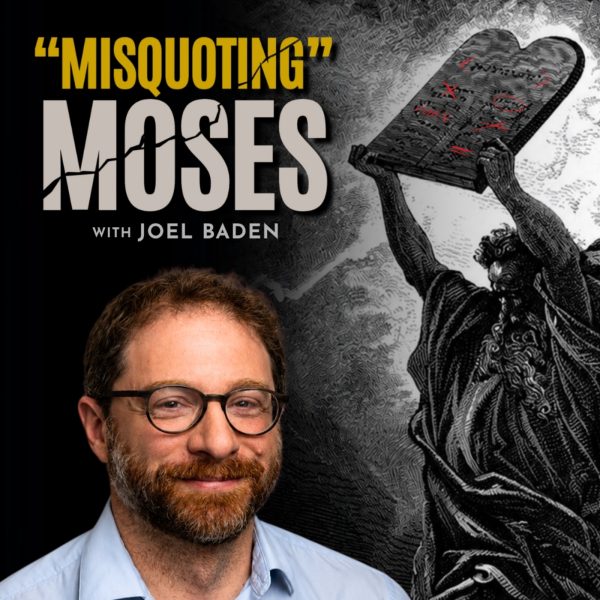
Misquoting Moses with Joel Baden
- Episodios
- 16
- Se publica
- cada semana
- Último episodio
- 13 Nov 2026
Sobre el podcast
Who wrote the Hebrew Bible, when, and why? Why does it contain so many competing perspectives and why do scholars sometimes disagree about what its words originally meant? In Misquoting Moses, Yale professor Joel Baden and co-host Megan Kraege explore the surprising history, authorship, translation, and interpretation of the Hebrew Bible. Each week, they bring the questions and evidence scholars have debated for centuries out of the university and into lively, accessible conversations for anyone curious about the Bible.
Episodios 16
Ranking Ancient Israel's 5 Greatest Kings
History is written by the victors, or so the saying goes. But when it comes to the Hebrew Bible, I'm delighted to tell you that things are much more complicated. We are never talking about texts that were just …
Notas del episodio
History is written by the victors, or so the saying goes. But when it comes to the Hebrew Bible, I'm delighted to tell you that things are much more complicated. We are never talking about texts that were just written, but texts that were edited, compiled, copied, and changed over centuries by scribes with their own agenda. Today we're shining the spotlight back on Israel's 5 greatest kings to show how long and prosperous reigns got sidelined or even maligned, and even the supposedly pious religious reformers still got a little cleaning up in the edit, and why none of them are King David.
The Golden Calf Wasn't A "False God"
Moses ascends the mountain to commune with God. With their leader gone, the people of Israel awaiting his return in the desert panic, so his brother does what anyone would in that situation. He fashions a …
Notas del episodio
Moses ascends the mountain to commune with God. With their leader gone, the people of Israel awaiting his return in the desert panic, so his brother does what anyone would in that situation. He fashions a golden idol shaped like a calf out of everyone's molten jewelry. They throw a party complete with food, drink, and dancing, and when Moses returns, he's pretty miffed that he wasn't invited - and at the whole calf thing. You already know what happens next. It's not good. Broken tablets, divine wrath, and a sudden outbreak of plague. Aaron gets off remarkably easy. And the story quickly moves on. But perhaps you, as a reader, didn't. There are just so many details about this story that don't make sense. Why did Aaron make a calf in the first place? What did the Israelites exactly do wrong that angered Moses and their deity so? And why does Aaron say "THESE are your GODS, O Israel" when he only makes one calf, and Israel only worships one God? Today on Misquoting Moses, we're unpacking the polemical battleground that is the golden calf incident.
The Bible's Most Boring Chapters Are Its Best Propaganda
Generation after generation, begat after begat, lists of names stretching on for what feels like endless chapters. I'm not talking about the The Silmarillion or even The Iliad. If you have ever tried to read …
Notas del episodio
Generation after generation, begat after begat, lists of names stretching on for what feels like endless chapters. I'm not talking about the The Silmarillion or even The Iliad. If you have ever tried to read the Bible straight through from cover to cover, chances are your eyes glazed over right around Genesis 4-5. And 11. And 25. And 36. And Exodus 1. And many, many more times. Every time, you quietly skipped ahead to the good stuff. Ever read Chronicles? Like all the way through? No you haven't. I get it. Genealogies don't really preach, and they're not particularly great reading either. Until you finally give them a chance… and find a guy who lives to be 969 years old, another guy who doesn't die and instead seemingly ascends straight to heaven, the names of cities disguised as people, family drama that begins in the womb, and the age-old verbal assault of accusing your neighbors of being the product of incest. Get ready to scratch those genealogies off your DNF list.
One Editor Rewrote Israel's History
You've seen the multi-season television drama where every single episode follows the exact same formula. The main characters abandon their core values, face a massive crisis, get invaded by a foreign power, cry …
Notas del episodio
You've seen the multi-season television drama where every single episode follows the exact same formula. The main characters abandon their core values, face a massive crisis, get invaded by a foreign power, cry out for mercy, and get rescued by a heroic judge or king, only to repeat the whole cycle over again. No, sorry, I'm thinking of the books of Joshua through Kings! But this repetitive loop isn't lazy writing. It's a carefully crafted ideological framework built by a desperate group of thinkers trying to make sense of national catastrophe. Today, we're diving into the Deuteronomistic History to uncover the editorial engine driving the historical books of the Bible, and why its authors rewrote Israel's history to save their future.
God's Real Name Isn't in Your Bible
Abraham prayed to El Shaddai. Moses encountered a burning bush revealing the personal name YHWH. Solomon built a temple for a national God who allegedly lived in a cloud of thick darkness. If you line up every …
Notas del episodio
Abraham prayed to El Shaddai. Moses encountered a burning bush revealing the personal name YHWH. Solomon built a temple for a national God who allegedly lived in a cloud of thick darkness. If you line up every description of God in the early books of the Hebrew Bible, you don't get a single, consistent character. The God of the patriarchs looks and acts like a local Canaanite mountain deity, while the God of the Exodus is a fiery desert warrior who leads armies into battle. Today, we're tracking the dramatic evolution of Israel's God from a localized tribal storm deity sharing a crowded pantheon into the universal, singular creator of the universe.
Where Did the Israelites Actually Come From?
The Bible offers two different accounts of how the ancient Israelites took possession of the Promised Land. In the last part of Numbers and in the book of Joshua, the Israelites sweep the land in a lightning …
Notas del episodio
The Bible offers two different accounts of how the ancient Israelites took possession of the Promised Land. In the last part of Numbers and in the book of Joshua, the Israelites sweep the land in a lightning military campaign, completely destroying all the Canaanites, then apportioning the land among the Israelite tribes. But in the book of Judges, the allotment of land comes first, and it is only afterward that they attempt to take possession of it - each tribe its own land, in a much slower and less systematic process than what we just witnessed in Joshua. Also according to Judges, some of the most significant cities, including Jerusalem remained under Canaanite control.
But scholars don't think that either of these stories actually happened. So, why would Israel tell these stories about their own origins? And what can we actually know about the origins of the society who would later produce the most influential set of texts in the world? Today, we're asking all those questions.
Prophecy in the Hebrew Bible
For three years, the prophet Isaiah wandered naked around Jerusalem. Ezekiel lay on his left side for three hundred and ninety days, then flipped over, and lay on his right for another forty. After this stunt …
Notas del episodio
For three years, the prophet Isaiah wandered naked around Jerusalem. Ezekiel lay on his left side for three hundred and ninety days, then flipped over, and lay on his right for another forty. After this stunt was over, he went on a new diet of barley cakes - cooked over cook manure. Hosea marries a prostitute and names their child "unloved". Elijah calls down fire from heaven, and Elisha makes an axe head float.
We often think of prophets as predicting the future, but this picture is of something much stranger. Today, we're investigating the role of prophecy in the Hebrew Bible, and above all, why it's so weird.
What the Bible Stole from Babylon
The creation of the world out of primordial chaos. A catastrophic global flood that ends when birds confirm the re-emergence of dry land. A baby cast into the river in a basket sealed with bitumen, who would be …
Notas del episodio
The creation of the world out of primordial chaos. A catastrophic global flood that ends when birds confirm the re-emergence of dry land. A baby cast into the river in a basket sealed with bitumen, who would be rescued and one day become a great leader. Sound familiar? Today, we're talking about the myths even more ancient than the biblical texts, that will be suspiciously familiar to any reader of the Bible, to ask how the biblical authors adapted, borrowed from, and subverted the great myths of Mesopotamia.
The Most Famous Prayer in Judaism Isn't Monotheistic
"Hear, O Israel: YHWH our God, YHWH is one." Thus begins the most important prayer in Judaism, taken directly from Deuteronomy 6:4. Rendered this way, it appears to encapsulate the monotheistic essence of …
Notas del episodio
"Hear, O Israel: YHWH our God, YHWH is one." Thus begins the most important prayer in Judaism, taken directly from Deuteronomy 6:4. Rendered this way, it appears to encapsulate the monotheistic essence of Judaism. One god, one creator of the heavens and the earth, one deity to worship - that's how most readers encounter the Bible. But in antiquity, the picture was a lot more crowded. The authors of the Bible not only acknowledged the existence of other deities, but that their own communities worshipped them. Today, we're talking about the polytheism hidden in the Hebrew Bible, and how ancient Israelite religion evolved from a word of many gods into the strict monotheism we recognize today.
What Version of the Bible Did Jesus Read?
There is a scene in the Gospel of Luke where Jesus walks into a synagogue in Nazareth, stands up to read, and someone hands him the scroll of Isaiah. He finds his place and begins… "The Spirit of the Lord is …
Notas del episodio
There is a scene in the Gospel of Luke where Jesus walks into a synagogue in Nazareth, stands up to read, and someone hands him the scroll of Isaiah. He finds his place and begins… "The Spirit of the Lord is upon me, because he has anointed me to bring good news to the poor," and so on. I'm sure you've read it… but there's a question here that almost nobody asks: what exactly was he holding? ... Because there was no printed and bound Bible in Jesus' time. Today we are talking about how the Hebrew Bible actually became the Hebrew Bible… and what version of that Bible Jesus would have had access to.
What are the Oldest Texts in the Bible?
If you open a Bible, the oldest thing in it should be on page one. Right? In the beginning? That is where it starts. Except the oldest words ever written in the entire Hebrew Bible are not in Genesis. In fact …
Notas del episodio
If you open a Bible, the oldest thing in it should be on page one. Right? In the beginning? That is where it starts. Except the oldest words ever written in the entire Hebrew Bible are not in Genesis. In fact, one of the undisputed oldest texts is buried in the middle of a book most people skip, in a victory song about a woman who drives a tent peg through a general's skull. Today we are talking about the oldest texts in the Bible… not the oldest manuscripts or the oldest events recorded, but the oldest actual writing, some of it centuries older than the stories wrapped around it. How do scholars figure out which parts came first, and what does the oldest layer of the Bible tell us about ancient Israel's history and beliefs?
King David Killed His Way to the Throne
When you think of King David, images of the shepherd boy, the giant-slayer, and Israel's greatest king probably come to mind. That's the David people know. But strip away the Sunday school version, and the …
Notas del episodio
When you think of King David, images of the shepherd boy, the giant-slayer, and Israel's greatest king probably come to mind. That's the David people know. But strip away the Sunday school version, and the biblical text itself tells a very different, much darker story about how he actually rose to power. In this episode of Misquoting Moses, Dr. Joel Baden and Megan Kraege reveal why "mafia don" might be a more fitting description for David than "shepherd turned king."
Is the Hebrew Bible / Old Testament Historically Reliable?
The great flood of Noah. The walls of Jericho tumbling down. The ten plagues striking Egypt. The Red Sea splitting in two. These are some of the most famous biblical stories ever told — but did any of them …
Notas del episodio
The great flood of Noah. The walls of Jericho tumbling down. The ten plagues striking Egypt. The Red Sea splitting in two. These are some of the most famous biblical stories ever told — but did any of them actually happen the way the Bible describes? In this episode of Misquoting Moses, as Dr. Joel Baden and Megan Kraege talk about how historians and archaeologists actually evaluate the Hebrew Bible as a historical source, they uncover what holds up... and what doesn't.
Exodus Has Ten. But Deuteronomy's Commandments Are Older.
Moses climbs Mount Sinai, God hands him two stone tablets, and the Ten Commandments are born. That's the story many people grew up with. But here's the thing: the Bible actually gives us two different versions …
Notas del episodio
Moses climbs Mount Sinai, God hands him two stone tablets, and the Ten Commandments are born. That's the story many people grew up with. But here's the thing: the Bible actually gives us two different versions of the Ten Commandments, in two different books, and they don't quite match. So which one did Moses actually write down? Or did he write either of them at all? In this episode of Misquoting Moses, Dr. Joel Baden and Megan Kraege ask who actually wrote the Ten Commandments, and what centuries of scribes, editors, and translators did to the text along the way.
The Bible Doesn't Start the Way You Think | Inaugural Episode of "Misquoting Moses" with Joel Baden
In the beginning, God created the heavens and the earth. You've heard that line a thousand times. But what if I told you it's not actually the first sentence of the Bible… that's a translation choice. And what …
Notas del episodio
In the beginning, God created the heavens and the earth. You've heard that line a thousand times. But what if I told you it's not actually the first sentence of the Bible… that's a translation choice. And what if I told you Genesis actually tells the story of creation twice, in two different ways that don't quite agree with each other? In this inaugural episode of Misquoting Moses, Dr. Joel Baden and Megan Kraege dive into translation issues in Genesis and how its sources can account for some pretty interesting differences in the text.
Misquoting Moses Is Coming August 7
Who wrote the Hebrew Bible, when, and why? Why does it contain so many competing perspectives and why do scholars sometimes disagree about what its words originally meant? In Misquoting Moses, Yale professor …
Notas del episodio
Who wrote the Hebrew Bible, when, and why? Why does it contain so many competing perspectives and why do scholars sometimes disagree about what its words originally meant?
In Misquoting Moses, Yale professor Joel Baden and co-host Megan Kraege explore the surprising history, authorship, translation, and interpretation of the Hebrew Bible. Each week, they bring the questions and evidence scholars have debated for centuries out of the university and into lively, accessible conversations for anyone curious about the Bible.
Here's a taste of what's to come. First episode "In the Beginnings" launches Friday, August 7.
Podcasts similares
Más podcasts de Historia


¿Es tu podcast?
Confírmalo con una entrada en tu feed: aquí recibes un código, lo añades como podcast:txt en el canal de tu feed y nosotros lo comprobamos. Después tu podcast aparecerá como «verificado» en SoundNode.