

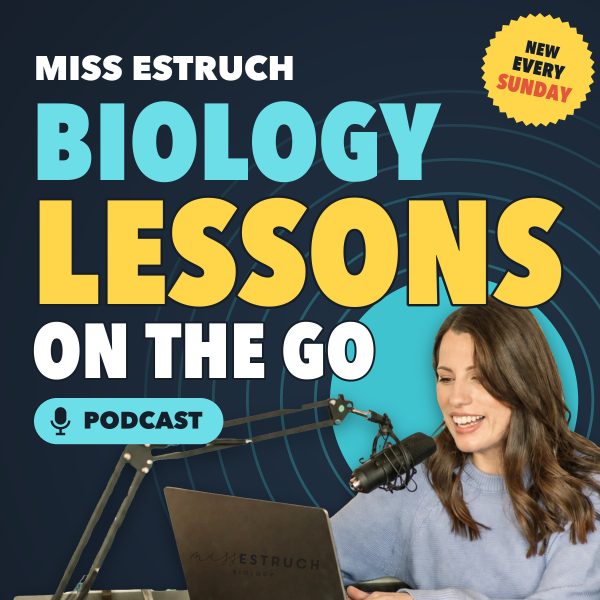
Miss Estruch: Biology Lessons on the Go
- Episodios
- 7
- Se publica
- a diario
- Último episodio
- 22 Nov 2026
Sobre el podcast
Welcome to Miss Estruch: Biology Lessons on the Go! Take your Biology learning wherever you go with audio lessons from Miss Estruch Biology. Whether you're revising for your GCSEs or A Levels, these lessons help you understand key biological concepts, consolidate your knowledge and prepare for your exams. Covering AQA GCSE Biology, AQA A Level Biology, OCR A Level Biology, Cambridge International (CIE) A Level Biology and AP Biology, you'll find lessons on everything from cell biology, genetics and evolution to ecology, photosynthesis, respiration and human physiology. Perfect for revising
Episodios 7
AQA A-Level Biology | Paper 1: Topics 1–4 | Entire Paper Revision
AQA A-Level Biology | Paper 1: Topics 1–4 | Entire Paper RevisionWelcome to Miss Estruch Biology Lessons on the Go!Don't forget to SUBSCRIBE to the podcast so you never miss an episode. Get your Biology …
Notas del episodio
AQA A-Level Biology | Paper 1: Topics 1–4 | Entire Paper Revision
Welcome to Miss Estruch Biology Lessons on the Go!
Don't forget to SUBSCRIBE to the podcast so you never miss an episode. Get your Biology revision wherever you are – on the bus, at the gym, out for a walk or sitting down studying!
In this episode, we're covering the ENTIRE content for AQA A-Level Biology Paper 1 (and AS Level): Topics 1–4.
We'll go through biological molecules, nucleic acids, cells, transport across membranes, the immune system, exchange, mass transport, DNA and genes, genetic diversity and taxonomy.
Download your FREE workbook to follow along with this lesson, organise your notes and reinforce your understanding as you listen.
👉 https://www.missestruch.co.uk/youtubeworkbooksChapters
0:00 Introduction
0:44 Biological Molecules & Enzymes
50:14 Nucleic Acids
1:04:25 Cells
1:39:53 Transport Across Cell Membranes
1:55:40 Cell Recognition & Immune System
2:25:30 Exchange
3:01:54 Mass Transport
3:41:11 DNA, Genes & Chromosomes
3:56:38 Genetic Diversity & Adaptation
4:14:11 Species & TaxonomyWant more structure, support and accountability with your A-Level Biology revision?
The Biology Study Club includes:
2 live AQA and OCR lessons every week.
Monthly marking and feedback on your work.
2 marked mock exams per year.
Exclusive revision resources.
Expert Biology support.
A community of students working towards the same goal.
👉 https://www.missestruch.co.uk/biology-study-clubBoost your recall with my A-Level Biology notes and flashcards.
👉 https://www.missestruch.co.uk/store#ALevelBiology #AQABiology #BiologyRevision #MissEstruchBiology
AQA A-Level Biology | Topic 5: Energy Transfers in and Between Organisms | Full Topic Revision
AQA A-Level Biology | Topic 5: Energy Transfers in and Between Organisms | Full Topic RevisionWelcome to Miss Estruch Biology Lessons on the Go!Don't forget to SUBSCRIBE to the podcast so you never miss an …
Notas del episodio
AQA A-Level Biology | Topic 5: Energy Transfers in and Between Organisms | Full Topic Revision
Welcome to Miss Estruch Biology Lessons on the Go!
Don't forget to SUBSCRIBE to the podcast so you never miss an episode. Get your Biology revision wherever you are – on the bus, at the gym, out for a walk or sitting down studying!
In this episode, we're covering the ENTIRETY of AQA A-Level Biology Topic 5: Energy Transfers in and Between Organisms.
This is an A-level-only topic, exploring photosynthesis, respiration, energy transfer through ecosystems and nutrient cycles.
FREE Workbook
Download your FREE workbook to follow along with this lesson, organise your notes and reinforce your understanding as you listen.
👉 https://www.missestruch.co.uk/youtubeworkbooks
What's covered in this episode?
1. Photosynthesis
The light-dependent reaction.
Chlorophyll and photoionisation.
Electron transfer chains.
Photophosphorylation and ATP production.
Chemiosmosis and ATP synthase.
Photolysis of water.
The production of reduced NADP.
The light-independent reaction and Calvin cycle.
Carbon dioxide fixation by RuBP.
The role of rubisco.
Glycerate 3-phosphate (GP) and triose phosphate (TP).
The reduction of GP and regeneration of RuBP.
The use of triose phosphate to produce organic molecules.
Limiting factors affecting photosynthesis.
Agricultural practices to increase photosynthetic rates.
2. Respiration
Glycolysis and its role in aerobic and anaerobic respiration.
Phosphorylation of glucose.
Triose phosphate and pyruvate formation.
ATP production and reduced NAD.
Anaerobic respiration and the production of lactate or ethanol.
The link reaction.
Formation of acetyl coenzyme A.
The Krebs cycle.
Oxidation-reduction reactions.
Substrate-level phosphorylation.
The electron transport chain.
Oxidative phosphorylation and chemiosmosis.
ATP synthase and the proton gradient.
The use of lipids and amino acids as respiratory substrates.
3. Energy and Ecosystems
Biomass and energy stores.
Measuring biomass using dry mass and carbon mass.
Calorimetry.
Gross primary production (GPP).
Net primary production (NPP).
Respiratory losses.
Productivity in producers and consumers.
Calculating energy transfer efficiency.
Food chains and trophic levels.
Energy losses between trophic levels.
Farming practices to improve the efficiency of energy transfers.
4. Nutrient Cycles
Nutrient recycling in ecosystems.
The nitrogen cycle.
Nitrogen fixation, ammonification, nitrification and denitrification.
The role of saprobionts and decomposition.
The phosphorus cycle.
The role of mycorrhizae.
Natural and artificial fertilisers.
Fertiliser leaching and eutrophication.
By the end of this episode, you'll have worked through the whole of AQA A-Level Biology Topic 5!
Join the Biology Study Club (TBSC)
Want more structure, support and accountability with your A-Level Biology revision?
The Biology Study Club includes:
4 live lessons every week.
Monthly marking and feedback on your work.
2 marked mock exams per year.
Exclusive revision resources.
Expert Biology support.
A community of students working towards the same goal.
👉 https://www.missestruch.co.uk/biology-study-club
Biology Flashcards
Test your knowledge of photosynthesis, respiration, energy transfers and key biological terminology using my Biology flashcards.
👉 https://www.missestruch.co.uk/store
#ALevelBiology #AQABiology #Photosynthesis #CellularRespiration #MissEstruchBiology
AQA A-Level Biology | Topic 4: Genetic Information, Variation and Relationships Between Organisms | Full Topic Revision
AQA A-Level Biology | Topic 4: Genetic Information, Variation and Relationships Between Organisms | Full Topic RevisionWelcome to Miss Estruch Biology Lessons on the Go!Don't forget to SUBSCRIBE to the podcast …
Notas del episodio
AQA A-Level Biology | Topic 4: Genetic Information, Variation and Relationships Between Organisms | Full Topic Revision
Welcome to Miss Estruch Biology Lessons on the Go!
Don't forget to SUBSCRIBE to the podcast so you never miss an episode. Get your Biology revision wherever you are – on the bus, at the gym, out for a walk or sitting down studying!
In this episode, we're covering the ENTIRETY of AQA A-Level Biology Topic 4: Genetic Information, Variation and Relationships Between Organisms.
We'll explore DNA, genes, protein synthesis, genetic diversity, evolution, classification and biodiversity.
FREE Workbook
Download your FREE workbook to follow along with this lesson, organise your notes and reinforce your understanding as you listen.
👉 https://www.missestruch.co.uk/youtubeworkbooks
What's covered in this episode?
1. DNA, Genes and Chromosomes
The structure of DNA in prokaryotic and eukaryotic cells.
Linear and circular DNA.
Histones and chromosome structure.
Mitochondrial and chloroplast DNA.
Genes and gene loci.
The genetic code: triplets, universal, non-overlapping and degenerate.
Coding and non-coding DNA.
Introns and exons.
2. DNA and Protein Synthesis
The genome and proteome.
The structure of mRNA and tRNA.
Transcription and the role of RNA polymerase.
Differences between transcription in prokaryotes and eukaryotes.
Pre-mRNA and RNA splicing.
Translation and the formation of polypeptides.
The roles of ribosomes, tRNA and ATP.
How the base sequence of DNA determines the amino acid sequence of a polypeptide.
3. Genetic Diversity: Mutation and Meiosis
Gene mutations and chromosome mutations.
Base substitution and deletion.
Mutagenic agents.
Non-disjunction and changes in chromosome number.
The stages of meiosis.
Independent segregation of homologous chromosomes.
Crossing over.
How meiosis produces genetically different haploid cells.
Random fertilisation and genetic variation.
Comparing mitosis and meiosis.
4. Genetic Diversity and Adaptation
Genetic diversity and allele frequencies.
The role of mutation in producing new alleles.
Natural selection and evolution.
Directional and stabilising selection.
Antibiotic resistance in bacteria.
Adaptations: anatomical, physiological and behavioural.
5. Species and Taxonomy
The biological species concept.
Fertile offspring and species recognition.
Courtship behaviour.
Phylogenetic classification.
Taxonomic hierarchy: domain, kingdom, phylum, class, order, family, genus and species.
Binomial naming.
How immunology and genome sequencing help establish evolutionary relationships.
6. Biodiversity Within a Community
Biodiversity at different scales.
Species richness.
Index of diversity and how to calculate it.
The effects of farming on biodiversity.
Balancing food production and conservation.
7. Investigating Diversity
Measuring genetic diversity within and between species.
Comparing DNA, mRNA and amino acid sequences.
Using similarities and differences to investigate evolutionary relationships.
Random sampling and investigating variation.
Calculating means and interpreting standard deviations.
By the end of this episode, you'll have worked through the whole of AQA A-Level Biology Topic 4!
Join the Biology Study Club (TBSC)
Want more structure, support and accountability with your A-Level Biology revision?
The Biology Study Club includes:
4 live lessons every week.
Monthly marking and feedback on your work.
2 marked mock exams per year.
Exclusive revision resources.
Expert Biology support.
A community of students working towards the same goal.
👉 https://www.missestruch.co.uk/biology-study-club
Biology Flashcards
Strengthen your recall of essential Biology terminology, genetic processes and key concepts with my Biology flashcards.
👉 https://www.missestruch.co.uk/store
#ALevelBiology #AQABiology #Genetics #Evolution #MissEstruchBiology
AQA A-Level Biology | Topic 3: Organisms Exchange Substances with Their Environment | Full Topic Revision
AQA A-Level Biology | Topic 3: Organisms Exchange Substances with Their Environment | Full Topic RevisionWelcome to Miss Estruch Biology Lessons on the Go!Don't forget to SUBSCRIBE to the podcast so you never …
Notas del episodio
AQA A-Level Biology | Topic 3: Organisms Exchange Substances with Their Environment | Full Topic Revision
Welcome to Miss Estruch Biology Lessons on the Go!
Don't forget to SUBSCRIBE to the podcast so you never miss an episode. Get your Biology revision wherever you are – on the bus, at the gym, out for a walk or sitting down studying!
In this episode, we're covering the ENTIRETY of AQA A-Level Biology Topic 3: Organisms Exchange Substances with Their Environment.
We'll explore how organisms exchange substances with their surroundings, from gas exchange and digestion to mass transport in animals and plants.
Download your FREE workbook to follow along with this lesson, organise your notes and reinforce your understanding as you listen.
👉 https://www.missestruch.co.uk/youtubeworkbooks
1. Surface Area to Volume Ratio
The relationship between surface area and volume.
How surface area to volume ratio changes as organisms increase in size.
Why larger organisms require specialised exchange surfaces and mass transport systems.
The relationship between surface area to volume ratio and metabolic rate.
2. Gas Exchange
Adaptations of gas exchange surfaces.
Gas exchange in single-celled organisms.
The insect tracheal system: spiracles, tracheae and tracheoles.
Gas exchange in fish, including gill filaments, lamellae and counter-current exchange.
Gas exchange in plants, including stomata and mesophyll cells.
Xerophytic plants and adaptations to reduce water loss.
The human gas exchange system.
The structure and function of alveoli.
Ventilation and the mechanics of breathing.
The roles of the diaphragm and intercostal muscles.
Lung disease, smoking and air pollution.
Interpreting data about risk factors and respiratory disease.
3. Digestion and Absorption
The role of hydrolysis in digestion.
Carbohydrate digestion by amylases and disaccharidases.
Lipid digestion by lipases and the role of bile salts.
Protein digestion by endopeptidases, exopeptidases and dipeptidases.
Absorption of monosaccharides and amino acids in the ileum.
Co-transport mechanisms.
Micelles and lipid absorption.
4. Mass Transport in Animals
Haemoglobin and oxygen transport.
Red blood cells and their adaptations.
The oxyhaemoglobin dissociation curve.
Cooperative binding and the Bohr effect.
Different haemoglobins and adaptations to different environments.
The mammalian circulatory system.
The structure of the human heart.
The cardiac cycle, pressure changes and valve movements.
Arteries, arterioles, veins and capillaries.
Tissue fluid formation and return to the circulatory system.
Cardiovascular disease and associated risk factors.
5. Mass Transport in Plants
Xylem structure and function.
The cohesion-tension theory of water transport.
Transpiration and factors affecting its rate.
Phloem structure and function.
Translocation and the mass flow hypothesis.
Tracer and ringing experiments investigating transport in plants.
Want more structure, support and accountability with your A-Level Biology revision?
The Biology Study Club includes:
2 AQA and 2 OCR live lessons every week.
Monthly marking and feedback on your work.
2 marked mock exams per year.
Exclusive revision resources.
Expert Biology support.
A community of students working towards the same goal.
👉 https://www.missestruch.co.uk/biology-study-club
Test yourself on key definitions, biological processes and essential terminology using my Biology flashcards.
👉 https://www.missestruch.co.uk/store
#ALevelBiology #AQABiology #GasExchange #BiologyRevision #MissEstruchBiology
AQA A-Level Biology | Topic 2: Cells | Full Topic Revision
AQA A-Level Biology | Topic 2: Cells | Full Topic RevisionWelcome to Miss Estruch Biology Lessons on the Go!Don't forget to SUBSCRIBE to the podcast so you never miss an episode. Get your Biology revision …
Notas del episodio
AQA A-Level Biology | Topic 2: Cells | Full Topic Revision
Welcome to Miss Estruch Biology Lessons on the Go!
Don't forget to SUBSCRIBE to the podcast so you never miss an episode. Get your Biology revision wherever you are on the bus, at the gym, out for a walk or sitting down studying!
In this episode, we're covering the ENTIRETY of AQA A-Level Biology Topic 2: Cells.
Whether you're learning this topic for the first time or revising for your A-Level exams, this lesson will help you understand cell structure, cell division, transport across membranes and the immune system.
FREE Workbook
Download your FREE workbook to follow along with this lesson, organise your notes and reinforce your understanding as you listen.
👉 https://www.missestruch.co.uk/youtubeworkbooks
1. Structure of Eukaryotic Cells
The structure and function of eukaryotic organelles.
The nucleus, mitochondria, chloroplasts and ribosomes.
The Golgi apparatus, lysosomes and endoplasmic reticulum.
Cell walls and vacuoles.
Specialised cells, tissues, organs and organ systems.
2. Structure of Prokaryotic Cells and Viruses
Differences between prokaryotic and eukaryotic cells.
Circular DNA, plasmids and murein cell walls.
Capsules and flagella.
The structure of viruses, including genetic material, capsids and attachment proteins.
3. Methods of Studying Cells
Optical, transmission electron and scanning electron microscopes.
Magnification and resolution.
Calculating actual size and magnification.
Cell fractionation and ultracentrifugation.
4. All Cells Arise from Other Cells
The cell cycle and interphase.
DNA replication and mitosis.
Prophase, metaphase, anaphase and telophase.
The role of spindle fibres and centromeres.
Cytokinesis.
Uncontrolled cell division, tumours and cancer.
Binary fission in prokaryotes.
How viruses replicate inside host cells.
Required practical 2: Investigating mitosis and calculating mitotic index.
5. Transport Across Cell Membranes
The fluid mosaic model.
Phospholipids, proteins, glycoproteins and glycolipids.
The role of cholesterol.
Simple diffusion and facilitated diffusion.
Osmosis and water potential.
Active transport and co-transport.
The absorption of sodium ions and glucose in the ileum.
Required practical 3: Investigating water potential.
Required practical 4: Investigating membrane permeability.
6. Cell Recognition and the Immune System
Cell-surface antigens and cell recognition.
Phagocytosis and the role of lysosomes.
T lymphocytes and the cellular immune response.
B lymphocytes and the humoral immune response.
Antibody structure and antigen-antibody complexes.
Clonal selection and monoclonal antibodies.
Plasma cells and memory cells.
Primary and secondary immune responses.
Vaccination and herd immunity.
Active and passive immunity.
HIV and the development of AIDS.
ELISA testing and the medical applications of monoclonal antibodies.
Join the Biology Study Club (TBSC)
Want more structure, support and accountability with your A-Level Biology revision?
The Biology Study Club is my online revision community designed to help you work towards those top grades.
Membership includes:
2 live AQA and OCR lessons every week.
Monthly marking and feedback on your work.
2 marked mock exams per year.
Exclusive revision resources.
Expert Biology support.
A community of students working towards the same goal.
👉 https://www.missestruch.co.uk/biology-study-club
Biology Flashcards
Want to test your knowledge and improve your recall?
My Biology flashcards help you actively retrieve key definitions, processes and concepts.
👉 https://www.missestruch.co.uk/store
#ALevelBiology #AQABiology #CellBiology #BiologyRevision #MissEstruchBiology
AQA A-Level Biology | Topic 1: Biological Molecules | Full Topic Revision
AQA A-Level Biology | Topic 1: Biological Molecules | Full Topic RevisionWelcome to Miss Estruch Biology Lessons on the Go!Don't forget to SUBSCRIBE to the podcast so you never miss an episode. Get your Biology …
Notas del episodio
AQA A-Level Biology | Topic 1: Biological Molecules | Full Topic Revision
Welcome to Miss Estruch Biology Lessons on the Go!
Don't forget to SUBSCRIBE to the podcast so you never miss an episode. Get your Biology revision wherever you are – on the bus, at the gym, out for a walk or sitting down studying!
In this episode, we're covering the ENTIRETY of AQA A-Level Biology Topic 1: Biological Molecules in one comprehensive lesson.
Whether you're learning this topic for the first time or revising for your A-Level exams, this episode will help you understand the key biological molecules, their structures, properties and functions.
FREE Workbook
Download your FREE workbook to follow along with this lesson, organise your notes and reinforce your understanding as you listen.
You can complete the activities as you go or use the workbook to structure your own revision.
👉 https://www.missestruch.co.uk/youtubeworkbooks
We'll work through the entire AQA Topic 1 specification, including:
1. Monomers and Polymers
The difference between monomers and polymers.
Condensation and hydrolysis reactions.
How monomers join together to form biological macromolecules.
2. Carbohydrates
Monosaccharides, including glucose, fructose and galactose.
Alpha and beta glucose.
Disaccharides, including maltose, sucrose and lactose.
Glycosidic bonds and condensation reactions.
Polysaccharides: starch, glycogen and cellulose.
The structure and functions of different carbohydrates.
3. Lipids
Triglyceride structure.
Glycerol and fatty acids.
Ester bonds and condensation reactions.
Saturated and unsaturated fatty acids.
Phospholipid structure and their role in cell membranes.
4. Proteins
The structure of amino acids.
Peptide bonds and condensation reactions.
Primary, secondary, tertiary and quaternary protein structure.
Globular and fibrous proteins.
The structure and functions of haemoglobin and collagen.
5. Nucleic Acids: DNA and RNA
The structure of nucleotides.
The components of DNA and RNA.
Phosphodiester bonds.
The structure of DNA, including complementary base pairing.
Differences between DNA and RNA.
6. ATP
The structure of ATP.
ATP hydrolysis and condensation.
The role of ATP as an immediate energy source in cells.
7. Water
The structure and properties of water.
Hydrogen bonding.
Water as a solvent.
Water's role in transport, temperature regulation and metabolic reactions.
8. Inorganic Ions
The importance of inorganic ions in biological systems.
The roles of hydrogen, iron, sodium, phosphate and other important ions.
How ions can act as cofactors and contribute to biological processes.
Timestamps
0:00:00 Intro
0:00:36 Monomers and polymers
0:02:58 Carbohydrates
0:20:41 Lipids
0:29:51 Proteins
0:38:46 Enzymes0:50:03 Nucleic acids0:57:43 ATP0:59:51 Water
1:02:50 Inorganic ions
Join The Biology Study Club
Want more structure, support and accountability with your A-Level Biology revision?
The Biology Study Club is my online revision community designed to help you work towards those top grades.
Membership includes:
4 live lessons every week.
Monthly marking and feedback on your work.
2 marked mock exams per year.
Exclusive revision resources.
Expert Biology support.
A community of students working towards the same goal.
Find out more and join us here:
👉 https://www.missestruch.co.uk/biology-study-club
AQA Flashcards
Want to test your knowledge and improve your recall?
My Biology flashcards are designed to help you actively retrieve key definitions, processes and concepts, rather than simply rereading your notes.
Explore the flashcard collection here:
👉 https://www.missestruch.co.uk/store
Follow Miss Estruch Biology for more Biology lessons, revision advice and exam preparation.
#ALevelBiology #AQABiology #BiologyRevision #BiologicalMolecules #MissEstruchBiology
AQA A-Level Biology | Topic 1: Biological Molecules | Full Topic Revision
AQA A-Level Biology | Topic 1: Biological Molecules | Full Topic RevisionWelcome to Miss Estruch Biology Lessons on the Go!Don't forget to SUBSCRIBE to the podcast so you never miss an episode. Get your Biology …
Notas del episodio
AQA A-Level Biology | Topic 1: Biological Molecules | Full Topic Revision
Welcome to Miss Estruch Biology Lessons on the Go!
Don't forget to SUBSCRIBE to the podcast so you never miss an episode. Get your Biology revision wherever you are – on the bus, at the gym, out for a walk or sitting down studying!
In this episode, we're covering the ENTIRETY of AQA A-Level Biology Topic 1: Biological Molecules in one comprehensive lesson.
Whether you're learning this topic for the first time or revising for your A-Level exams, this episode will help you understand the key biological molecules, their structures, properties and functions.
FREE Workbook
Download your FREE workbook to follow along with this lesson, organise your notes and reinforce your understanding as you listen.
You can complete the activities as you go or use the workbook to structure your own revision.
👉 https://www.missestruch.co.uk/youtubeworkbooks
We'll work through the entire AQA Topic 1 specification, including:
1. Monomers and Polymers
The difference between monomers and polymers.
Condensation and hydrolysis reactions.
How monomers join together to form biological macromolecules.
2. Carbohydrates
Monosaccharides, including glucose, fructose and galactose.
Alpha and beta glucose.
Disaccharides, including maltose, sucrose and lactose.
Glycosidic bonds and condensation reactions.
Polysaccharides: starch, glycogen and cellulose.
The structure and functions of different carbohydrates.
3. Lipids
Triglyceride structure.
Glycerol and fatty acids.
Ester bonds and condensation reactions.
Saturated and unsaturated fatty acids.
Phospholipid structure and their role in cell membranes.
4. Proteins
The structure of amino acids.
Peptide bonds and condensation reactions.
Primary, secondary, tertiary and quaternary protein structure.
Globular and fibrous proteins.
The structure and functions of haemoglobin and collagen.
5. Nucleic Acids: DNA and RNA
The structure of nucleotides.
The components of DNA and RNA.
Phosphodiester bonds.
The structure of DNA, including complementary base pairing.
Differences between DNA and RNA.
6. ATP
The structure of ATP.
ATP hydrolysis and condensation.
The role of ATP as an immediate energy source in cells.
7. Water
The structure and properties of water.
Hydrogen bonding.
Water as a solvent.
Water's role in transport, temperature regulation and metabolic reactions.
8. Inorganic Ions
The importance of inorganic ions in biological systems.
The roles of hydrogen, iron, sodium, phosphate and other important ions.
How ions can act as cofactors and contribute to biological processes.
By the end of this episode, you'll have worked through the whole of AQA A-Level Biology Topic 1!
Join The Biology Study Club
Want more structure, support and accountability with your A-Level Biology revision?
The Biology Study Club is my online revision community designed to help you work towards those top grades.
Membership includes:
4 live lessons every week.
Monthly marking and feedback on your work.
2 marked mock exams per year.
Exclusive revision resources.
Expert Biology support.
A community of students working towards the same goal.
Find out more and join us here:
👉 https://www.missestruch.co.uk/biology-study-club
AQA Flashcards
Want to test your knowledge and improve your recall?
My Biology flashcards are designed to help you actively retrieve key definitions, processes and concepts, rather than simply rereading your notes.
Explore the flashcard collection here:
👉 https://www.missestruch.co.uk/store
Follow Miss Estruch Biology for more Biology lessons, revision advice and exam preparation.
#ALevelBiology #AQABiology #BiologyRevision #BiologicalMolecules #MissEstruchBiology
Podcasts similares
Más podcasts de Educación



¿Es tu podcast?
Confírmalo con una entrada en tu feed: aquí recibes un código, lo añades como podcast:txt en el canal de tu feed y nosotros lo comprobamos. Después tu podcast aparecerá como «verificado» en SoundNode.