

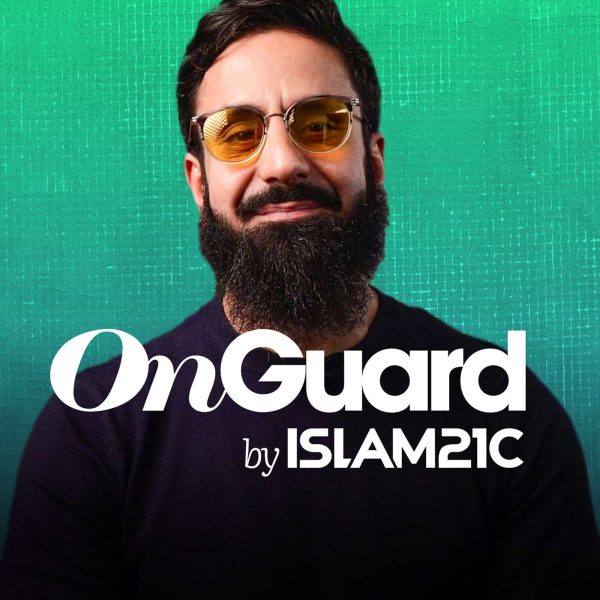
OnGuard – For the Ummah, For the Truth
- Episodios
- 18
- Se publica
- cada mes
- Último episodio
- 27 Oct 2026
Sobre el podcast
OnGuard is a brand new podcast hosted by Ustadh Hamza Tzortzis focusing on Islam21c's transformative campaigns.
Episodios 18
"DON'T believe in yourself" | The strange power of admitting you're powerless (ft. Sh Mustafa Almansur)
What if the biggest obstacle to your future isn't your circumstances, your resources, or your abilities — but the fact that you're relying on yourself?In this deeply moving episode of OnGuard, Dr …
Notas del episodio
What if the biggest obstacle to your future isn't your circumstances, your resources, or your abilities — but the fact that you're relying on yourself?
In this deeply moving episode of OnGuard, Dr Hamza Andreas Tzortzis sits down with Sh Mustafa Almansur to explore the true meaning of īmān, tawakkul (trust in Allah), and the extraordinary possibilities that open up when we stop depending solely on ourselves.
Sh Mustafa shares the emotional story of his estrangement from his son, and the seemingly irrational decision to travel thousands of miles to Saudi Arabia without knowing whether his son would even agree to see him.
Together, they challenge some of our deepest assumptions about self-belief, anxiety, control, success, and what it actually means to trust Allāh.
Is īmān simply something we possess, or something we actively do? Does tawakkul mean expecting Allah to give us what we want? And how can accepting that we don't control the outcome actually liberate us to take action?
Drawing on the Qur'an, the life of the Prophet ﷺ, and powerful personal experiences, this conversation explores how a genuine relationship with Allah can transform what we believe is possible.
**Sometimes, the moment you stop relying on yourself is the moment everything changes.**
Watch, reflect, and share with someone who needs this reminder.
Chapters:
00:00:00 Introduction
00:03:00 Why are Muslims struggling with fear and anxiety?
00:06:10 Where is Allah in your calculations?
00:12:00 Are you limiting what Allah can do for you?
00:15:00 Changing ourselves and the Muslim Ummah
00:18:00 Is this just positive thinking or the prosperity gospel?
00:23:00 Does tawakkul guarantee worldly success?
00:30:00 Īmān is not just something you believe
00:35:00 Do you actually depend on Allāh?
00:37:40 My son thought I abandoned him
00:42:00 Why we demand guarantees before trusting Allāh
00:45:00 Lessons from the Prophet ﷺ at the Battle of the Trench
00:49:00 Knowing Allah versus experiencing His names
00:53:00 How to practise tawakkul when you're anxious
01:00:00 Why knowledge alone isn't enough
01:04:00 Taking action without controlling the outcome
01:09:00 Why a believer should never say 'impossible'
01:10:00 Practical advice for Muslims and the Ummah
01:14:00 Hamza's challenge: Does everything depend on Allāh?
01:18:40 Remembering that Allah is always with you🌟 Support Our Mission 🌟
To extend the reach of our impactful content, kindly consider making a contribution (www.islam21c.com/guardians). Your support helps us make a difference.
👇 Stay Connected & Never Miss an Update 👇
1️⃣ Subscribe: Hit the 'Subscribe' button and don't forget to ring the 🔔 bell, ensuring you'll be the first to know when we upload fresh content.
2️⃣ Social Media: Stay up-to-date and join the conversation on our social media platforms:
📸 Instagram www.instagram.com/islam21c
👍 Facebook www.facebook.com/islam21c
🐦 Twitter www.twitter.com/islam21c
🗨️ Telegram t.me/islam21c
Thank you for your continued support and engagement.Jesus' Muslim Followers Could Rewrite Christian History (ft. Paul Williams)
What if the greatest challenge to modern Christianity comes not from Islam — but from Christianity's own forgotten history?Who really followed the teachings of Jesus (ʿĪsā عليه السلام)? His …
Notas del episodio
What if the greatest challenge to modern Christianity comes not from Islam — but from Christianity's own forgotten history?
Who really followed the teachings of Jesus (ʿĪsā عليه السلام)? His 'brother' James and the original disciples who knew him personally, or Paul, whose teachings came to dominate Christianity despite never meeting Jesus?
In this fascinating episode of OnGuard, Dr Hamza Andreas Tzortzis sits down with Paul Williams of @BloggingTheology to uncover a largely forgotten chapter of Christian history — one with potentially revolutionary implications for how we understand the religion of Jesus.
They explore the beliefs of the earliest followers of Jesus, the extraordinary significance of James, the rise of Pauline Christianity, and why the original Jesus movement may have had far more in common with Islam today than most people realise.
But this conversation goes beyond Christian origins. Paul also challenges conventional Muslim approaches to daʿwah, reflects on his journey with Blogging Theology, and shares insights from his engagement with leading Christian academics.
As Paul puts it, the implications could amount to a “Copernican revolution” in how we understand Christianity.
Was the original religion of Jesus forgotten? And what happened to those who followed it?
Watch the full conversation and decide for yourself.
CHAPTERS
00:00 Intro
01:31 Are Muslims debating the wrong Christians?
02:27 Is Christianity really declining?
09:04 Should Muslims prioritise Christian daʿwah?
13:17 A better way to invite Christians to Islam
19:01 Dialogue, debates and finding common ground
24:08 What's wrong with Christianity today?
29:25 James: The forgotten brother of Jesus
33:09 What religion did Jesus' first followers practise?
38:49 James vs Paul: Two different religions?
41:56 Who truly represented Jesus?
47:46 The religion of Jesus vs the religion about Jesus
51:02 Were Jesus' earliest followers Muslim?
52:01 How Christians explain the differences
55:00 The forgotten diversity of early Christianity
01:08:01 Why the original disciples matter more than Paul
01:15:22 Books that could change this debate
01:19:27 How Blogging Theology began
01:24:00 Christian scholars and the prophethood of Muhammad ﷺ
01:25:33 Sincerity and the dangers of online daʿwah
01:31:10 Final advice: Be more prophetic, less pathetic
Subscribe to Islam21c for more thought-provoking conversations on Islam, history, theology and the challenges facing Muslims today.
Share this episode with someone interested in the historical Jesus, early Christianity or Muslim-Christian dialogue.
#OnGuard #BloggingTheology #Christianity🌟 Support Our Mission 🌟
To extend the reach of our impactful content, kindly consider making a contribution (www.islam21c.com/guardians). Your support helps us make a difference.
👇 Stay Connected & Never Miss an Update 👇
1️⃣ Subscribe: Hit the 'Subscribe' button and don't forget to ring the 🔔 bell, ensuring you'll be the first to know when we upload fresh content.
2️⃣ Social Media: Stay up-to-date and join the conversation on our social media platforms:
📸 Instagram www.instagram.com/islam21c
👍 Facebook www.facebook.com/islam21c
🐦 Twitter www.twitter.com/islam21c
🗨️ Telegram t.me/islam21c
Thank you for your continued support and engagement.How DAWAH could become a SIN (ft. Sh Shaqur Rehman)
What if your daʿwah is successful in the eyes of people — but rejected by Allāh?In this powerful episode of OnGuard, Shaykh Shaqur Rehman joins us for a deep and unusually candid discussion about ikhlāṣ …
Notas del episodio
What if your daʿwah is successful in the eyes of people — but rejected by Allāh?
In this powerful episode of OnGuard, Shaykh Shaqur Rehman joins us for a deep and unusually candid discussion about ikhlāṣ: sincerity for the sake of Allāh.
But this isn't simply a reminder to “check your intentions”.
What happens when the algorithm rewards you for being seen? When daʿwah becomes a personal brand? When views, followers, praise and influence begin affecting how you speak, what you post — and even why you post it?
Could an outwardly good Islamic video earn no reward at all? Could the very likes and shares we celebrate become evidence against us?
Shaykh Shaqur explores riyāʾ (showing off), sumʿah (seeking to be heard), the danger of celebrity daʿwah and “one-man shows”, why accountability matters, and how an intention can change even while performing a good deed.
Most importantly, the discussion turns practical: how do we actually protect our hearts while doing public work for Islam?
Through lessons from the Qurʾān and Sunnah, personal experiences, and remarkable examples from the Salaf, this is an urgent conversation for every Muslim who teaches, posts, speaks, campaigns, creates content — or simply wants their good deeds to be accepted by Allāh.
Chapters
00:00 Can your daʿwah become a sin?
01:12 Ikhlāṣ in the age of algorithms
05:10 How Shayṭān targets our intentions
12:49 What does ikhlāṣ actually mean?
18:52 The crunch moment: sincerity when it hurts
25:18 Riyāʾ, public deeds and “faking it”
34:25 “Build the ʿabd first”
37:43 The problem with one-man daʿwah
43:32 Lesser shirk and speaking for an audience
51:58 When a good deed becomes sinful
58:22 Riyāʾ and sumʿah in the social-media age
01:05:18 Why does it have to be a “big deed”?
01:09:41 Protecting your intention as an online daee
01:21:11 Why your private worship matters
01:30:19 Extraordinary examples of ikhlāṣ from the Salaf
01:38:37 A final warning for the digital age
🌟 Support Our Mission 🌟
To extend the reach of our impactful content, kindly consider making a contribution (https://islam21c.com/guardians). Your support helps us make a difference.🌟 Support Our Mission 🌟
To extend the reach of our impactful content, kindly consider making a contribution (www.islam21c.com/guardians). Your support helps us make a difference.
👇 Stay Connected & Never Miss an Update 👇
1️⃣ Subscribe: Hit the 'Subscribe' button and don't forget to ring the 🔔 bell, ensuring you'll be the first to know when we upload fresh content.
2️⃣ Social Media: Stay up-to-date and join the conversation on our social media platforms:
📸 Instagram www.instagram.com/islam21c
👍 Facebook www.facebook.com/islam21c
🐦 Twitter www.twitter.com/islam21c
🗨️ Telegram t.me/islam21c
Thank you for your continued support and engagement.MEN DON'T TALK - A Muslim Therapist on What’s Really Happening to Men
Muslim men are struggling with anxiety, depression, loneliness, addiction and pressures that often remain completely hidden from the people around them. But why do so many men suffer in silence — and what …
Notas del episodio
Muslim men are struggling with anxiety, depression, loneliness, addiction and pressures that often remain completely hidden from the people around them. But why do so many men suffer in silence — and what should Muslims actually do about it?
In this episode of OnGuard, Dr Hamza Andreas Tzortzis sits down with Ahmed Tomal of Tawfiq Therapy for a frank discussion about the mental health challenges facing Muslim men today.
They explore anxiety, depression, loneliness, addiction, relationships, suicidal thoughts, emotional suppression and the difficulty many men have in asking for help. Ahmed also breaks down what therapy can genuinely offer — while warning against uncritically importing assumptions and ideologies from modern therapeutic culture into an Islamic framework.
Can a man be strong and still admit he is struggling? How should husbands communicate when stress begins damaging their marriages? What does useful therapy actually look like? And how can Islam, family, community and professional support work together before somebody reaches breaking point?
A candid and practical conversation about what Muslim men may be going through behind closed doors — and why simply saying “I’m fine” may not be enough.
Chapters:
00:00 Introduction
02:30 Meet Ahmed Tomal
03:39 Can mental-health language be weaponised?
06:34 Why focus on Muslim men?
07:12 What Muslim men are struggling with
09:33 Depression and suicidal ideation
10:44 How anxiety is treated
15:55 Exposure-response prevention and Prophet Musa
22:06 Hamza’s experience with boxing anxiety
27:32 Childhood experiences and coping mechanisms
34:39 Suppressed emotions, anger and relationships
47:53 Understanding depression
59:19 Responding directly to suicidal thoughts
1:00:08 What happens during therapy?
1:08:00 Therapy, ideology and Islamic values
1:12:42 Suicide rates in Muslim communities
1:16:59 Is “toxic masculinity” the right term?
1:24:46 Islamic guidance on emotions and grief
1:30:52 Why Muslim men avoid seeking help
1:37:48 Final advice: hold on and seek support🌟 Support Our Mission 🌟
To extend the reach of our impactful content, kindly consider making a contribution (www.islam21c.com/guardians). Your support helps us make a difference.
👇 Stay Connected & Never Miss an Update 👇
1️⃣ Subscribe: Hit the 'Subscribe' button and don't forget to ring the 🔔 bell, ensuring you'll be the first to know when we upload fresh content.
2️⃣ Social Media: Stay up-to-date and join the conversation on our social media platforms:
📸 Instagram www.instagram.com/islam21c
👍 Facebook www.facebook.com/islam21c
🐦 Twitter www.twitter.com/islam21c
🗨️ Telegram t.me/islam21c
Thank you for your continued support and engagement.What Muslim Mental Health Gurus Aren’t Telling You (ft. Imam Abdullah Hasan)
Is modern therapy really neutral?Imam Abdullah Hasan argues that beneath many popular approaches to psychology, counselling and psychotherapy lie assumptions about what a human being is, what suffering means …
Notas del episodio
Is modern therapy really neutral?
Imam Abdullah Hasan argues that beneath many popular approaches to psychology, counselling and psychotherapy lie assumptions about what a human being is, what suffering means, what constitutes illness, and what healing should look like.
And when Muslims adopt those frameworks wholesale — then simply add Qur’anic verses, hadith or Islamic terminology — are we actually producing “Islamic psychology”? Or are we importing an entirely different worldview into Islam?
In this fascinating OnGuard conversation, Dr Hamza Andreas Tzortzis sits down with Imam Abdullah Hasan, who combines traditional Islamic scholarship with formal study in psychology, counselling and psychotherapy.
They explore the philosophical foundations of Freud, Carl Rogers and modern therapy; why Imam Abdullah believes Muslims must build from an Islamic understanding of the qalb, nafs, rūḥ and fiṭrah; the development and criticism of psychiatric diagnosis; the “chemical imbalance” narrative around depression; pharmaceutical influence; grief and human suffering; trauma culture and self-diagnosis; the effect therapeutic language can have on families; and what an authentically Islamic approach to human flourishing might look like.
Imam Abdullah also shares the deeply personal experience of losing his mother, and explains why Islam does not promise us a life without pain — but gives suffering meaning, purpose and a path through it.
This is not an argument to ignore genuine suffering or deny people support. It is a challenge to Muslims to examine the assumptions underneath the solutions we are being offered — and to rediscover the extraordinarily rich understanding of the human being already contained within our own tradition.
Chapters
00:00 Coming up
02:44 Meet Imam Abdullah Hasan
04:47 Is modern psychology harming Muslims?
14:00 Building psychology from an Islamic worldview
28:52 What’s wrong with “Islamic CBT”?
31:46 Who decides what counts as mental illness?
43:11 The chemical imbalance theory and antidepressants
50:46 Can secular psychology really be “Islamised”?
65:00 Grief, depression and the meaning of suffering
75:51 Trauma, suicide and turning back to Allāh
84:10 Has therapy culture made us more fragile?
86:16 Should Muslims study psychology?
90:48 What is actually causing the mental health crisis?
95:05 Where to learn more from Imam Abdullah Hasan
99:54 A final warning to the Muslim community🌟 Support Our Mission 🌟
To extend the reach of our impactful content, kindly consider making a contribution (www.islam21c.com/guardians). Your support helps us make a difference.
👇 Stay Connected & Never Miss an Update 👇
1️⃣ Subscribe: Hit the 'Subscribe' button and don't forget to ring the 🔔 bell, ensuring you'll be the first to know when we upload fresh content.
2️⃣ Social Media: Stay up-to-date and join the conversation on our social media platforms:
📸 Instagram www.instagram.com/islam21c
👍 Facebook www.facebook.com/islam21c
🐦 Twitter www.twitter.com/islam21c
🗨️ Telegram t.me/islam21c
Thank you for your continued support and engagement.Is the West civilised? This is why "right' and "wrong" keep changing (ft. Sh Dr Haitham al-Haddad)
What makes a society truly civilised?Is civilisation measured by wealth, military strength and global influence—or by the moral principles that restrain power and protect human dignity?In this extended OnGuard …
Notas del episodio
What makes a society truly civilised?
Is civilisation measured by wealth, military strength and global influence—or by the moral principles that restrain power and protect human dignity?
In this extended OnGuard conversation, Dr Hamza Andreas Tzortzis sits down with Shaykh Dr Haitham al-Haddad to explore akhlāq: the Islamic understanding of character, morality and the way human beings relate to Allah, themselves, one another and the world around them.
They examine who has the authority to define right and wrong, why secular moral frameworks can produce radically different conclusions over time, and whether human reason and desire can ever provide a stable foundation for ethics.
The discussion then moves from the individual to the civilisational. Can a society flourish without morality? What happens when pleasure, greed, ribā, family breakdown and the pursuit of power become embedded within a nation? And why do powerful countries so often begin to resemble the very forces they once claimed to oppose?
Shaykh Haitham also explains why Muslims should aspire to civilisational strength—not for domination or oppression, but to protect justice, resist tyranny and prevent the weak from being exploited by those with greater power.
Drawing upon the Qur’an, the Prophetic mission and examples from Islamic history, this conversation presents akhlāq not merely as good manners or private spirituality, but as the moral foundation upon which individuals, families, communities and entire civilisations must be built.
A wide-ranging discussion on morality, power, justice, trust, ʿaqīdah, tawakkul, barakah—and what it really means to be civilised.
🌟 Support Our Mission 🌟
To extend the reach of our impactful content, kindly consider making a contribution (www.islam21c.com/guardians). Your support helps us make a difference.
👇 Stay Connected & Never Miss an Update 👇
1️⃣ Subscribe: Hit the 'Subscribe' button and don't forget to ring the 🔔 bell, ensuring you'll be the first to know when we upload fresh content.
2️⃣ Social Media: Stay up-to-date and join the conversation on our social media platforms:
📸 Instagram www.instagram.com/islam21c
👍 Facebook www.facebook.com/islam21c
🐦 Twitter www.twitter.com/islam21c
🗨️ Telegram t.me/islam21c
Thank you for your continued support and engagement.Hamza Tzortzis asked a real scholar for candid advice. This was the answer. (ft. Sh Dr Mostafa al-Shaybani)
In this special episode of OnGuard, Hamza Andreas Tzortzis sits with the world-renowned Mauritanian scholar Shaykh Dr Mostafa al-Shaybani for a deeply personal conversation on da‘wah, sincerity, fame, the …
Notas del episodio
In this special episode of OnGuard, Hamza Andreas Tzortzis sits with the world-renowned Mauritanian scholar Shaykh Dr Mostafa al-Shaybani for a deeply personal conversation on da‘wah, sincerity, fame, the Qur’an, family, and the crisis of Muslim online influence.
Hamza asks the Shaykh to advise him directly — as someone involved in leadership, public da‘wah, online work, and mentoring others — on how Muslim speakers, activists, influencers and students should protect themselves from ego, ostentation, fame, algorithm-chasing and losing sight of the real purpose of calling people to Allāh.
The Shaykh’s answer is a powerful reminder: before public da‘wah must come private worship; before chasing followers must come sincerity; and before trying to “win” arguments must come a heart shaped by the Qur’an.
This is essential viewing for anyone involved in da‘wah, Islamic content, community work, teaching, activism, or public Muslim discourse.
Chapters:
00:00 Hamza asks for sincere mentorship
02:44 Private worship and the weight of da‘wah
06:37 Why are you calling people to Allāh?
08:10 The Qur’an is guidance, not just barakah
12:10 Surah al-Baqarah and reshaping the Muslim mind
17:18 Tadabbur: the Qur’an as transformation
21:22 Reading sīrah as Qur’anic guidance
22:40 Your da‘wah starts at home
24:47 Fame: the enemy of the da‘i
29:40 Basīrah, hikmah and long-term da‘wah
36:10 Qur’an, marriage and the da‘i’s inner life
42:29 Let the Qur’an choose your da‘wah priorities
44:11 Followers, hearts and success from Allāh
46:38 Hamza’s journey back to the Qur’an
Subscribe to Islam21c for more conversations on faith, family, da‘wah, politics, society and the challenges facing Muslims today.
Share this episode with anyone involved in da‘wah, Islamic content, community leadership or Muslim public discourse.
🌟 Support Our Mission 🌟
To extend the reach of our impactful content, kindly consider making a contribution (https://islam21c.com/guardians). Your support helps us make a difference.
👇 Stay Connected & Never Miss an Update 👇
1️⃣ Subscribe: Hit the 'Subscribe' button and don't forget to ring the 🔔 bell, ensuring you'll be the first to know when we upload fresh content.
2️⃣ Social Media: Stay up-to-date and join the conversation on our social media platforms:
📸 Instagram https://instagram.com/islam21c
👍 Facebook https://facebook.com/islam21c
𝕏 X https://twitter.com/islam21c
🗨️ Telegram https://t.me/islam21c
Thank you for your continued support and engagement.🌟 Support Our Mission 🌟
To extend the reach of our impactful content, kindly consider making a contribution (www.islam21c.com/guardians). Your support helps us make a difference.
👇 Stay Connected & Never Miss an Update 👇
1️⃣ Subscribe: Hit the 'Subscribe' button and don't forget to ring the 🔔 bell, ensuring you'll be the first to know when we upload fresh content.
2️⃣ Social Media: Stay up-to-date and join the conversation on our social media platforms:
📸 Instagram www.instagram.com/islam21c
👍 Facebook www.facebook.com/islam21c
🐦 Twitter www.twitter.com/islam21c
🗨️ Telegram t.me/islam21c
Thank you for your continued support and engagement."Go after their women" - How a Civilisation Was Hijacked (ft. Sheikh Shaqur Rehman)
What happens when Muslim men and women are separated from their fitrah, their roles, their families — and each other?In this OnGuard podcast, Shaykh Shaqur Rehman joins us for a deep discussion on the Power of …
Notas del episodio
What happens when Muslim men and women are separated from their fitrah, their roles, their families — and each other?
In this OnGuard podcast, Shaykh Shaqur Rehman joins us for a deep discussion on the Power of a Muslim Woman, the role of motherhood and wifehood in Islamic civilisation, the crisis facing Muslim families, and how modern society has reshaped the way men and women see themselves.
This is not just a discussion about feminism, university, marriage, or gender roles. It is about the heart of the Muslim home, the future of the Ummah, and the urgent need to rebuild men, women, families, and communities upon submission to Allāh.
We discuss how colonialism, liberal modernity, materialism, online discourse, broken family structures, and schooling from a young age have shaped Muslim men and women — and what it takes to undo that damage through tarbiyah, leadership, sisterhood, brotherhood, haya, family, and community.
Chapters:
00:00 Reclaiming the Power of a Muslim Woman
12:06 How the Muslim family was hijacked
20:38 Real Islamic masculinity and male leadership
34:04 How society reprogrammed men and women
49:11 Muslim women, media and da’wah
01:00:10 Motherhood, wifehood and the path to Jannah
01:06:17 University, apostasy and protecting the dīn
01:22:38 Rebuilding families, tribes and communities
🌟 Support Our Mission 🌟
To extend the reach of our impactful content, kindly consider making a contribution (https://islam21c.com/guardians). Your support helps us make a difference.
👇 Stay Connected & Never Miss an Update 👇
1️⃣ Subscribe: Hit the 'Subscribe' button and don't forget to ring the 🔔 bell, ensuring you'll be the first to know when we upload fresh content.
2️⃣ Social Media: Stay up-to-date and join the conversation on our social media platforms:
📸 Instagram https://instagram.com/islam21c
👍 Facebook https://facebook.com/islam21c
𝕏 X https://twitter.com/islam21c
🗨️ Telegram https://t.me/islam21c
Thank you for your continued support and engagement.🌟 Support Our Mission 🌟
To extend the reach of our impactful content, kindly consider making a contribution (www.islam21c.com/guardians). Your support helps us make a difference.
👇 Stay Connected & Never Miss an Update 👇
1️⃣ Subscribe: Hit the 'Subscribe' button and don't forget to ring the 🔔 bell, ensuring you'll be the first to know when we upload fresh content.
2️⃣ Social Media: Stay up-to-date and join the conversation on our social media platforms:
📸 Instagram www.instagram.com/islam21c
👍 Facebook www.facebook.com/islam21c
🐦 Twitter www.twitter.com/islam21c
🗨️ Telegram t.me/islam21c
Thank you for your continued support and engagement.How to Deal With That Voice in Your Head (ft. Imran Hussein)
What happens when you know Islam is true… but still feel empty inside?In this powerful episode of OnGuard, Hamza Tzortzis speaks to Imran Hussein about anxiety, intrusive thoughts, depression, nihilism, and the …
Notas del episodio
What happens when you know Islam is true… but still feel empty inside?
In this powerful episode of OnGuard, Hamza Tzortzis speaks to Imran Hussein about anxiety, intrusive thoughts, depression, nihilism, and the search for meaning in a world full of distractions.
Imran shares his deeply personal journey through an existential crisis, describing the moment life seemed to lose its meaning — and how turning back to Allah transformed darkness into clarity. But this is not just a story about “mental health”. It is a conversation about iman, purpose, knowledge, the heart, and why intellectual certainty alone is not always enough to keep a person grounded.
Why do so many Muslims feel spiritually disconnected despite believing in Islam?
How should we understand anxiety, OCD, intrusive thoughts and depression through an Islamic lens?
What does it mean to seek help without shame?
And how can we hold on to hope when everything feels dark?
This episode is for anyone who has ever felt lost, numb, anxious, overwhelmed, or distant from Allah — and for anyone trying to support someone who is.
This podcast is part of our broader anti-suicide campaign, Hold On.
Hold on to life. Hold on to hope. Hold on to the mercy of Allāh.
Subscribe to Islam21c for more conversations on Islam, society, belief, family, mental health, and the challenges facing Muslims today.
Chapters:
00:00 Intro
01:08 Introducing Imran Hussein and the Hold On campaign
02:36 Losing meaning: the questions that would not go away
06:37 Anxiety, derealisation, and the search for answers
11:53 The desperate du’a and the Qur’an moment
16:07 From relief to da’wah
18:15 When anxiety returned: why knowledge alone is not enough
25:47 Understanding anxiety, doubts, and obsessive cycles
30:23 Practical and spiritual tools for anxiety
37:42 Getting help, letting thoughts pass, and prophetic guidance
48:17 Reframing anxiety as a test from Allāh
52:12 Grief, hope, and never despairing of Allah’s mercy
55:49 How family, friends, and brotherhood can help
01:03:27 Hold on to hope and Allah’s mercy
01:05:16 Final reflections
🌟 Support Our Mission 🌟
To extend the reach of our impactful content, kindly consider making a contribution (https://islam21c.com/guardians). Your support helps us make a difference.
👇 Stay Connected & Never Miss an Update 👇
1️⃣ Subscribe: Hit the 'Subscribe' button and don't forget to ring the 🔔 bell, ensuring you'll be the first to know when we upload fresh content.
2️⃣ Social Media: Stay up-to-date and join the conversation on our social media platforms:
📸 Instagram https://instagram.com/islam21c
👍 Facebook https://facebook.com/islam21c
𝕏 X https://twitter.com/islam21c
🗨️ Telegram https://t.me/islam21c
Thank you for your continued support and engagement.🌟 Support Our Mission 🌟
To extend the reach of our impactful content, kindly consider making a contribution (www.islam21c.com/guardians). Your support helps us make a difference.
👇 Stay Connected & Never Miss an Update 👇
1️⃣ Subscribe: Hit the 'Subscribe' button and don't forget to ring the 🔔 bell, ensuring you'll be the first to know when we upload fresh content.
2️⃣ Social Media: Stay up-to-date and join the conversation on our social media platforms:
📸 Instagram www.instagram.com/islam21c
👍 Facebook www.facebook.com/islam21c
🐦 Twitter www.twitter.com/islam21c
🗨️ Telegram t.me/islam21c
Thank you for your continued support and engagement.DON'T Misunderstand What’s Happening Right Now (Shaykh Haitham & Hamza Tzortzis)
The world is changing — fast.From escalating global conflicts to shifting political powers, it feels like history is unfolding in front of us. But here’s the real question:Are we actually understanding what’s …
Notas del episodio
The world is changing — fast.
From escalating global conflicts to shifting political powers, it feels like history is unfolding in front of us. But here’s the real question:
Are we actually understanding what’s happening?
In this episode of OnGuard, Hamza Tzortzis sits down with Shaykh Dr Haitham al-Haddad to unpack a perspective many Muslims are missing. Because if we misunderstand the nature of this world — its purpose, its struggles, its conflicts — then everything else starts to feel confusing.
This isn’t just about geopolitics.
It’s about how a Muslim should see the world.
And if we get that wrong… the consequences are bigger than we think.
🧠 What you’ll learn in this episode:
Why confusion about world events is increasing
The Islamic framework for understanding conflict and change
What most people misunderstand about the nature of this life
Why clarity starts with the right foundations
How Muslims should respond in times of global uncertainty
📌 Watch till the end:
Because the final insight reframes everything — and gives you a completely different way of looking at what’s happening right now.
Chapters:
0:00 The World Is Changing
0:25 Why Most People Misunderstand What’s Happening
2:10 A Rapidly Changing World & Competing Powers
5:05 Why Muslims Feel Confused Today
8:30 Different Reactions: Agreement, Doubt & Conflict
12:15 The Missing Foundation in Understanding Reality
16:40 This Life Is a Test — Not What You Think
21:10 Why Conflict Is Part of the Design of Life
26:05 The Danger of Expecting Comfort & Stability
31:20 Islamic Framework vs Modern Worldview
36:45 How Muslims Should Interpret Global Events
42:10 Where the Ummah Is Getting It Wrong
47:30 Reframing Success, Struggle & Change
53:15 Intellectual & Spiritual Confusion Explained
58:40 The Consequences of Getting This Wrong
1:04:10 What Needs to Change in the Muslim Mindset
1:09:30 Real Change Starts With This
1:14:50 Practical Takeaways for Muslims Today
1:19:30 Final Reflections — Understanding the World Properly
🌟 Support Our Mission 🌟
To extend the reach of our impactful content, kindly consider making a contribution (https://islam21c.com/guardians). Your support helps us make a difference.
👇 Stay Connected & Never Miss an Update 👇
1️⃣ Subscribe: Hit the 'Subscribe' button and don't forget to ring the 🔔 bell, ensuring you'll be the first to know when we upload fresh content.
2️⃣ Social Media: Stay up-to-date and join the conversation on our social media platforms:
📸 Instagram https://instagram.com/islam21c
👍 Facebook https://facebook.com/islam21c
𝕏 X https://twitter.com/islam21c
🗨️ Telegram https://t.me/islam21c
Thank you for your continued support and engagement.🌟 Support Our Mission 🌟
To extend the reach of our impactful content, kindly consider making a contribution (www.islam21c.com/guardians). Your support helps us make a difference.
👇 Stay Connected & Never Miss an Update 👇
1️⃣ Subscribe: Hit the 'Subscribe' button and don't forget to ring the 🔔 bell, ensuring you'll be the first to know when we upload fresh content.
2️⃣ Social Media: Stay up-to-date and join the conversation on our social media platforms:
📸 Instagram www.instagram.com/islam21c
👍 Facebook www.facebook.com/islam21c
🐦 Twitter www.twitter.com/islam21c
🗨️ Telegram t.me/islam21c
Thank you for your continued support and engagement.The War on Muslim Womanhood (ft. Imam Tom Facchine)
What does it really mean to speak about the power of a Muslim woman in a world already saturated with assumptions about gender, autonomy, success, and value?In this thought-provoking OnGuard conversation, Hamza …
Notas del episodio
What does it really mean to speak about the power of a Muslim woman in a world already saturated with assumptions about gender, autonomy, success, and value?
In this thought-provoking OnGuard conversation, Hamza Tzortzis is joined by Imam Tom Facchine (Yaqeen Institute) for a wide-ranging discussion sparked by Islam21c’s Power of a Muslim Woman campaign. But this is not the conversation many might expect.
Together, they explore:
• Why modern society subtly reshaped how we think about women and “empowerment”
• The quiet pressure many women feel to justify or even apologise for following their fitrah and divine guidance
• How homemaking, motherhood, and femininity became culturally devalued
• The liberal assumptions that influence how all of us — men and women — see the world
• Why debates around feminism often miss the deeper questions entirely
• The "crisis of Islamic scholarship" that leads to many sisters not getting the support they deserve
• And more
This episode isn’t about slogans or culture-war soundbites. It’s about stepping back and asking:
❓ Who defines value?
❓ What counts as power?
❓ And why do so many feel conflicted about answers Islam has long provided?
Whether you’re navigating these questions personally, as a parent, or simply trying to understand the world we inhabit, this discussion offers clarity, nuance, and reflection.
For more information about the Power of a Muslim Woman campaign and to sign up for updates, visit https://pomw.org
Chapters:
00:00 — Intro
03:57 — Why this conversation can’t be avoided
07:04 — How “empowerment” gets defined
10:45 — You’re swimming in liberal waters
14:21 — Why feminism feels persuasive
18:08 — Feminism vs Islam: different starting points
22:17 — Who actually defines value?
26:31 — Homemaking and cultural status
30:43 — “Pretend I’m a sister…”
34:55 — The pressure to justify choices
39:14 — When Islam is reframed in liberal terms
43:36 — Masculinity, femininity, and discomfort
48:00 — Strength vs stereotype
51:51 — The quiet belittling of homemaking
56:09 — The apology trap
1:00:13 — The crisis of Islamic scholarship
1:04:38 — Authority, trust, and confusion
1:09:01 — Internal tensions within Muslim spaces
1:13:43 — Disagreement without defensiveness
1:18:35 — Confidence without apology
1:23:47 — Noticing the water we’re swimming in
1:29:13 — Imagine I’m a sister…🌟 Support Our Mission 🌟
To extend the reach of our impactful content, kindly consider making a contribution (www.islam21c.com/guardians). Your support helps us make a difference.
👇 Stay Connected & Never Miss an Update 👇
1️⃣ Subscribe: Hit the 'Subscribe' button and don't forget to ring the 🔔 bell, ensuring you'll be the first to know when we upload fresh content.
2️⃣ Social Media: Stay up-to-date and join the conversation on our social media platforms:
📸 Instagram www.instagram.com/islam21c
👍 Facebook www.facebook.com/islam21c
🐦 Twitter www.twitter.com/islam21c
🗨️ Telegram t.me/islam21c
Thank you for your continued support and engagement.“Hopelessness is Always a LIE” (ft. Psychiatrist Dr Zeyn Green-Thompson)
In this powerful episode of OnGuard by Islam21c, Hamza Andreas Tzortzis sits down with Dr Zeyn Green-Thompson, a medical doctor and psychiatrist, for an honest and profoundly moving conversation on mental …
Notas del episodio
In this powerful episode of OnGuard by Islam21c, Hamza Andreas Tzortzis sits down with Dr Zeyn Green-Thompson, a medical doctor and psychiatrist, for an honest and profoundly moving conversation on mental health, hope, and the Muslim experience.
Together, they explore some of the most difficult and often unspoken topics in our communities, including depression, hopelessness, and s**cidal ideation. Dr Zeyn brings rare clarity by combining clinical psychiatry with an Islamic worldview, showing how īmān, meaning, and responsibility can reshape the way we understand suffering and recovery.
This discussion goes beyond labels and quick fixes. We talk about:- What hopelessness really means from a clinical perspective
- Why despair is central to s**cidal intent
- The biological, psychological, social and spiritual dimensions of mental health
- How Islamic concepts such as duty, patience, humility, and hope offer practical protection
- How Muslims should approach others who are struggling, with empathy rather than harshness
- Why listening matters more than giving blanket advice
Dr Zeyn also shares real clinical insights from his work in psychiatry, reflecting on how timeless Islamic principles can be communicated in ways that help both Muslims and non-Muslims.
This is not just an intellectual discussion. It is personal, reflective, and deeply human. Whether you are struggling yourself, supporting someone else, or simply want a more grounded way to think about mental wellbeing, this conversation is essential viewing.
Chapters:
00:00 – Why This Episode Is Different
02:59 – S**cide & Mental Health in the Muslim Community
06:29 – What Is Hopelessness, Clinically Speaking?
10:04 – The Critical Shift: From Ideation to Intent
13:09 – “Hopelessness Is Always a Lie”
16:34 – When Depression Overwhelms Rational Thought
19:39 – Biology, Psychology & Social Triggers Explained
22:54 – Why Muslims Must Add the Spiritual Dimension
25:54 – Duty, Not Outcomes: A Powerful Mental Framework
29:04 – Why This Approach Works for Non-Muslims Too
31:54 – A Personal Childhood Story of Shame & Isolation
35:14 – How to Speak to Someone Who Is Struggling
38:24 – The Prophetic Method of Compassionate Guidance (ﷺ)
41:54 – When Religion Becomes Harsh or Hollow
45:24 – What the Muslim Community Needs to Relearn
48:34 – Final Reflections: Hope as an Act of Truth
50:54 – Faith, Capacity & Moral Responsibility
54:14 – When Someone Is Not Sinning, But Suffering
57:34 – Why Shaming Worsens Mental Health🌟 Support Our Mission 🌟
To extend the reach of our impactful content, kindly consider making a contribution (www.islam21c.com/guardians). Your support helps us make a difference.
👇 Stay Connected & Never Miss an Update 👇
1️⃣ Subscribe: Hit the 'Subscribe' button and don't forget to ring the 🔔 bell, ensuring you'll be the first to know when we upload fresh content.
2️⃣ Social Media: Stay up-to-date and join the conversation on our social media platforms:
📸 Instagram www.instagram.com/islam21c
👍 Facebook www.facebook.com/islam21c
🐦 Twitter www.twitter.com/islam21c
🗨️ Telegram t.me/islam21c
Thank you for your continued support and engagement.Capítulos
Cargando capítulos…
“Most Jews are anti-Israel” - Meet the Jews SILENCED by western media (ft. Rabbi Elhanan Beck)
“They stole land from the Palestinians and they stole identity from Jews.”In this remarkable conversation, Rabbi Elhanan Beck — a Palestinian-born rabbi from Stamford Hill — shares his powerful story and deep …
Notas del episodio
“They stole land from the Palestinians and they stole identity from Jews.”
In this remarkable conversation, Rabbi Elhanan Beck — a Palestinian-born rabbi from Stamford Hill — shares his powerful story and deep insights into the clear distinction between Judaism and Zionism.
He explains why true Judaism is rooted in faith, humility, and obedience to God, while Zionism, as he argues, transformed a spiritual religion into a political and national project divorced from its sacred origins.
Together, we explore:
🔹 What it truly means to be Jewish according to the Torah
🔹 The 13 principles of faith outlined by Maimonides
🔹 How Zionism emerged as a secular movement
🔹 The Jewish understanding of exile and the promised land
🔹 The peaceful vision of the Messiah in Jewish scripture
🔹 Centuries of coexistence between Muslims and Jews
This is a heartfelt and eye-opening discussion that challenges common narratives and offers a glimpse into an authentic Jewish perspective on faith, identity, and justice.
Also watch:
Jewish Rabbi gives an Islamic History lesson
https://youtu.be/xbI2S9wG--o🌟 Support Our Mission 🌟
To extend the reach of our impactful content, kindly consider making a contribution (www.islam21c.com/guardians). Your support helps us make a difference.
👇 Stay Connected & Never Miss an Update 👇
1️⃣ Subscribe: Hit the 'Subscribe' button and don't forget to ring the 🔔 bell, ensuring you'll be the first to know when we upload fresh content.
2️⃣ Social Media: Stay up-to-date and join the conversation on our social media platforms:
📸 Instagram www.instagram.com/islam21c
👍 Facebook www.facebook.com/islam21c
🐦 Twitter www.twitter.com/islam21c
🗨️ Telegram t.me/islam21c
Thank you for your continued support and engagement.Capítulos
Cargando capítulos…
Safeguarding children in a sexualised society - Yusuf Patel
A quiet name change on a school register. Pronouns switched without a word to the parents. Then the reveal: at home she’s one child, at school she’s another. That’s the moment most families realise they can’t …
Notas del episodio
A quiet name change on a school register. Pronouns switched without a word to the parents. Then the reveal: at home she’s one child, at school she’s another. That’s the moment most families realise they can’t outsource their children’s formation—and it’s where our conversation with Yusuf Patel begins.
We dig into how parents can confidently navigate RSE in UK schools without retreating from education altogether. Yusuf explains why emailing questions (not just chatting at the gate) creates an audit trail that compels a school to reflect: what exactly is being taught, which parts are compulsory, and how will the religious background of pupils be respected? We unpack the latest legal clarity on biological sex, what it means for toilets, uniforms, social transitioning, and safeguarding, and how to press for policy updates that protect freedom of belief in the classroom. Real case studies show how calm complaints turned into apologies, revised policies, and cancelled sessions when materials crossed the line—proof that small, strategic wins protect many children.
Then we turn the lens homeward. Values are caught, not taught, so we talk about building a lived Islam that children can see: praying on time, modelling charity, showing gratitude and tawbah, and aligning daily choices with faith. Yusuf calls fathers to emotional availability—hugs, words of affection, and presence that inoculate against online echo chambers and peer pressure. And when a child says, “I’m not a boy,” we offer a roadmap rooted in love: slow down, look beneath the label, rebalance home routines, limit digital triggers, and seek a trusted Muslim counsellor who explores underlying needs rather than fast-tracking identity claims.
If you’re a parent, teacher, or governor looking for practical steps, legal awareness, and heart-level guidance, this conversation will equip you to engage schools wisely and strengthen your home. Subscribe, share with a fellow parent, and leave a review with the one question you’ll email your school this week. Your voice—and your love—can change the outcome.Chapters:
0:00 Chapter 1 - Intro
1:41 Chapter 2 - The Challenge of Sexualised Education
2:10 Chapter 3 - Step One: Know What’s Being Taught
3:55 Chapter 4 - The Power of Engagement
5:35 Chapter 5 - Know Your Rights: The Parental Toolkit
8:54 Chapter 6 - Case Study: A Father’s Impact
11:25 Chapter 7 - Real-Life Incident: A Child Punished for His Faith
13:59 Chapter 8 - Every Success Counts
15:08 Chapter 9 - Teach Children to Speak Out
16:47 Chapter 10 - Courage in the Classroom
19:14 Chapter 11 - Gender Ideology in Primary Education
24:17 Chapter 12 - Advice to Parents
25:31 Chapter 13 - Develop a Child's Relationship With Allah
28:07 Chapter 14 - The Absent Father Problem
30:24 Chapter 15 - The Sunnah of Showing Love
34:18 Chapter 16 - How to Raise Dysfunctional Children
40:04 Chapter 17 - If your child comes to you and says...
46:15 Chapter 18 - Conclusion
This is part of our Guarding Innocence campaign. Sign up by visiting https://guardinginnocence.org
🌟 Support Our Mission 🌟
To extend the reach of our impactful content, kindly consider making a contribution (www.islam21c.com/guardians). Your support helps us make a difference.
👇 Stay Connected & Never Miss an Update 👇
1️⃣ Subscribe: Hit the 'Subscribe' button and don't forget to ring the 🔔 bell, ensuring you'll be the first to know when we upload fresh content.
2️⃣ Social Media: Stay up-to-date and join the conversation on our social media platforms:
📸 Instagram www.instagram.com/islam21c
👍 Facebook www.facebook.com/islam21c
🐦 Twitter www.twitter.com/islam21c
🗨️ Telegram t.me/islam21c
Thank you for your continued support and engagement.Capítulos
Cargando capítulos…
Is your heart still facing the right Qibla? Shaykh Abu Aaliyah Surkheel
Shaykh Abu Aaliyah explores modernity as a philosophical worldview that trades meaning for power, examining how Muslims can navigate these challenging waters while preserving their faith and purpose.• Modernity …
Notas del episodio
Shaykh Abu Aaliyah explores modernity as a philosophical worldview that trades meaning for power, examining how Muslims can navigate these challenging waters while preserving their faith and purpose.
• Modernity is not about technology but the philosophical assumptions underpinning our world for the past 300-350 years
• Most people today don't realise what they've lost as meaninglessness has become the default philosophy of our culture
• Muslims are susceptible to "ideological osmosis" – absorbing modern ideas even while practicing their faith
• Rather than building a competing "juggernaut," Muslims need an “ark of salvation”, built on Quran, Sunnah and scholarly consensus
• We need scholars who understand both traditional Islamic knowledge and modernity's philosophical underpinnings
• Consumerism is perhaps the most spiritually destructive aspect of modernity, directly feeding into "hubb al-dunya" (love of worldly things)
• Many Muslims have become fixated on outward expressions of faith while neglecting the purification of the heart
• The path forward requires "shrinking our souls" rather than expanding them – cultivating humility instead of self-promotion
• Muslims must position themselves as healers offering the balm of Tawhid to a spiritually wounded world
• True progress isn't measured by how far or fast we move, but by maintaining our direction toward Allah
Receive one of 25 free copies of "A Muslim's Guide to Modernity" by leaving a thoughtful comment about what you've learned from this conversation.
🌟 Support Our Mission 🌟
To extend the reach of our impactful content, kindly consider making a contribution (www.islam21c.com/guardians). Your support helps us make a difference.
👇 Stay Connected & Never Miss an Update 👇
1️⃣ Subscribe: Hit the 'Subscribe' button and don't forget to ring the 🔔 bell, ensuring you'll be the first to know when we upload fresh content.
2️⃣ Social Media: Stay up-to-date and join the conversation on our social media platforms:
📸 Instagram www.instagram.com/islam21c
👍 Facebook www.facebook.com/islam21c
🐦 Twitter www.twitter.com/islam21c
🗨️ Telegram t.me/islam21c
Thank you for your continued support and engagement.Capítulos
Cargando capítulos…
A Masterclass Completely DEBUNKING ISRAEL for 3 Hours Straight (Ft. Abdullah Andalusi)
Palestinians have inhabited their land for millennia, with genetic studies confirming 70-90% correspondence between modern Palestinians and ancient Canaanites from 4,000 years ago. This scientific evidence …
Notas del episodio
Palestinians have inhabited their land for millennia, with genetic studies confirming 70-90% correspondence between modern Palestinians and ancient Canaanites from 4,000 years ago. This scientific evidence directly contradicts the Zionist narrative that portrays Palestinians as newcomers to the region.
• Genetic research shows Palestinians have preserved more ancient Canaanite DNA than European Jews who have approximately 40-50% correspondence
• Ben-Gurion himself acknowledged Palestinians descended from Jewish farmers who lived in the region 2,000 years ago
• The land was called "Palestine" for over two millennia, named after the Philistines encountered by Herodotus around 500 BCE
• Lord Balfour admitted Britain "deliberately declined to accept the principle of self-determination" in Palestine
• Einstein opposed Zionist political control, advocating instead for a "secured bi-national status in Palestine"
• Anti-Zionism is not anti-Semitism – Ben-Gurion understood Palestinian opposition was to foreign occupation, not Judaism
• The occupation of West Bank and Gaza violates the UN Charter principle that territory cannot be acquired through conquest
• Israel's security arguments parallel those used to justify slavery and other historical oppressions
• Under Islamic governance, Jews historically enjoyed protections and rights denied them in Christian Europe
Our history shows Muslims, Christians, and Jews can coexist peacefully under a system that respects religious differences while ensuring equal rights. We must challenge false narratives and work toward justice based on historical truth.🌟 Support Our Mission 🌟
To extend the reach of our impactful content, kindly consider making a contribution (www.islam21c.com/guardians). Your support helps us make a difference.
👇 Stay Connected & Never Miss an Update 👇
1️⃣ Subscribe: Hit the 'Subscribe' button and don't forget to ring the 🔔 bell, ensuring you'll be the first to know when we upload fresh content.
2️⃣ Social Media: Stay up-to-date and join the conversation on our social media platforms:
📸 Instagram www.instagram.com/islam21c
👍 Facebook www.facebook.com/islam21c
🐦 Twitter www.twitter.com/islam21c
🗨️ Telegram t.me/islam21c
Thank you for your continued support and engagement.Capítulos
Cargando capítulos…
He “Un-Gayed” Himself: the Man the LGBT Lobby Wished Didn’t Exist (ft. Ali Jaffery)
When Ali Jaffery first experienced same-sex attraction at age 12, he began an 11-year journey of silence, shame, and self-loathing. Growing up in a conservative Muslim family with limited male mentorship, he …
Notas del episodio
When Ali Jaffery first experienced same-sex attraction at age 12, he began an 11-year journey of silence, shame, and self-loathing. Growing up in a conservative Muslim family with limited male mentorship, he felt fundamentally different and broken—convinced that his feelings made him unworthy in the eyes of Allah.
This profound conversation reveals the transformative moment when Ali began dismantling what he calls "the identity paradigm"—the false notion that experiencing same-sex attraction makes someone inherently different or forces them to choose between their faith and their feelings.
Ali articulates a powerful alternative framework grounded in Islamic tradition: differentiating between having desires (which aren't sinful) and acting upon them (which involves choice). Through deep reflection on the Qur’an, he discovered that the divine message wasn't about condemning people with certain attractions but rather calling everyone toward taqwa (God-consciousness) regardless of their internal struggles.
The healing journey Ali describes involves brotherhood, healthy masculine connections, and psychological insights that reveal how his sexualised attractions masked deeper needs for acceptance and belonging. Most movingly, he shares how honesty about his struggles led to a fulfilling marriage with a woman who responded to his disclosure with remarkable compassion…
For anyone navigating the complex intersection of faith and so-called “sexuality”—or simply trying to understand how Islamic teachings can address contemporary challenges with both compassion and principle—this episode offers rare wisdom. Ali's story demonstrates that neither shame-filled silence nor identity-based surrender are the only options, showing instead a third way: how struggle itself can become a pathway to spiritual growth and authentic relationships.
In this episode, Ali and the host Hamza Andreas Tzortzis discuss:
- First experiencing same-sex attraction at age 12 while lacking masculine role models and mentorship
- Carrying the secret for 11 painful years due to shame, fear and self-loathing
- Finding the courage to speak openly in counselling sessions at university
- Distinguishing between having desires and acting upon them – a crucial Islamic principle
- Discovering that healthy male relationships and brotherhood were what he truly craved beneath sexualised attractions
- Reframing the Quranic story of Prophet Lūt عليه السلام as calling people toward taqwa
- Building a successful marriage based on complete transparency and shared spiritual values
- Creating support systems for Muslims with same-sex attraction to find community without shame
- Emphasising that Allah judges actions rather than feelings we don't control
- Offering a third path beyond both denial and identity-based approaches to same-sex attraction
…and more.
🌟 Support Our Mission 🌟
To extend the reach of our impactful content, kindly consider making a contribution (www.islam21c.com/guardians). Your support helps us make a difference.
👇 Stay Connected & Never Miss an Update 👇
1️⃣ Subscribe: Hit the 'Subscribe' button and don't forget to ring the 🔔 bell, ensuring you'll be the first to know when we upload fresh content.
2️⃣ Social Media: Stay up-to-date and join the conversation on our social media platforms:
📸 Instagram www.instagram.com/islam21c
👍 Facebook www.facebook.com/islam21c
🐦 Twitter www.twitter.com/islam21c
🗨️ Telegram t.me/islam21c
Thank you for your continued support and engagement.Capítulos
Cargando capítulos…
The Islamic Approach to Suicide: Finding Hope in Darkness
Sheikh Haitham Al-Haddad offers profound Islamic insights on preventing suicide, addressing hopelessness, and finding meaning during difficult times. Through Quranic principles and prophetic guidance, he …
Notas del episodio
Sheikh Haitham Al-Haddad offers profound Islamic insights on preventing suicide, addressing hopelessness, and finding meaning during difficult times. Through Quranic principles and prophetic guidance, he provides a comprehensive approach to mental distress that addresses physical, emotional, intellectual, and spiritual dimensions.
• Life is inherently a test, so difficulties should be expected rather than surprising
• The sanctity of life in Islam extends to all creatures, with human life holding special value
• Despairing of Allah's mercy may be a greater sin than many realize
• Muslims have the lowest suicide rates among religious groups in the UK, demonstrating religion's protective effect
• Those contemplating suicide often mistakenly believe death ends suffering, when Islamic teaching shows accountability continues
• Finding hope requires understanding both dunya (worldly) and akhira (afterlife) perspectives
• Effective support combines physical practices (prayer, exercise), intellectual understanding, and emotional connection
• Remembering the temporary nature of this life compared to eternity helps contextualise current suffering
• Every challenge contains hidden opportunities for spiritual growth and development
• Muslims are created to lead humanity by example, carrying divine light to benefit others
Visit Islam21c.com/HoldOn to access resources from our campaign designed to provide Islamic tools for preventing suicide and addressing hopelessness in our communities.🌟 Support Our Mission 🌟
To extend the reach of our impactful content, kindly consider making a contribution (www.islam21c.com/guardians). Your support helps us make a difference.
👇 Stay Connected & Never Miss an Update 👇
1️⃣ Subscribe: Hit the 'Subscribe' button and don't forget to ring the 🔔 bell, ensuring you'll be the first to know when we upload fresh content.
2️⃣ Social Media: Stay up-to-date and join the conversation on our social media platforms:
📸 Instagram www.instagram.com/islam21c
👍 Facebook www.facebook.com/islam21c
🐦 Twitter www.twitter.com/islam21c
🗨️ Telegram t.me/islam21c
Thank you for your continued support and engagement.Capítulos
Cargando capítulos…
Podcasts similares
Más podcasts de Religión y espiritualidad


¿Es tu podcast?
Confírmalo con una entrada en tu feed: aquí recibes un código, lo añades como podcast:txt en el canal de tu feed y nosotros lo comprobamos. Después tu podcast aparecerá como «verificado» en SoundNode.