


Parsha- SoulWords
- Episodios
- 89
- Se publica
- cada semana
- Último episodio
- 20 Nov 2026
Sobre el podcast
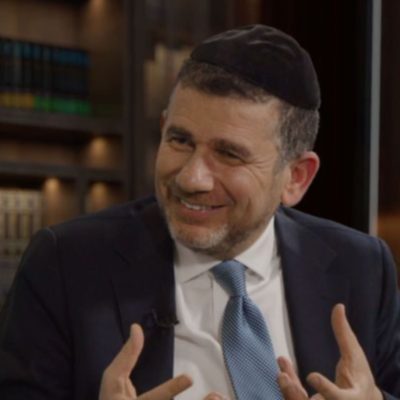
SoulWords provides Torah classes and lectures from renowned teacher, Rabbi Shais Taub, on a wide range of spiritual topics.
Episodios 89
Yaakov Escapes Lavan | Beyond the Story: Vayeitzei (Ep. 7)
Yaakov’s departure from Lavan serves as a timeless spiritual and psychological playbook for recognizing and breaking free from manipulative family dynamics. Drawing on the Haggadah’s teaching that Lavan was …
Notas del episodio
Yaakov’s departure from Lavan serves as a timeless spiritual and psychological playbook for recognizing and breaking free from manipulative family dynamics. Drawing on the Haggadah’s teaching that Lavan was even more dangerous than Pharaoh because he operated from within under the guise of a loving benefactor, Rabbi Taub breaks down Lavan’s tactics—playing the victim, rewriting reality, guilt-tripping, veiled threats, and gaslighting—alongside Yaakov’s calm, decisive resolution. Rather than seeking closure, winning an argument, or building an impenetrable wall, Yaakov establishes a clear, practical boundary ("a pile of stones, not a wall"), illustrating how understanding our true spiritual mission empowers us to disengage from toxic control and move forward with clarity and strength.Rivkah's Pregnancy | Beyond the Story: Toldos (Ep. 6)
Why did Rivkah experience such turmoil during her pregnancy, and why did finding out she was carrying twins—Yaakov and Eisav—bring her comfort? In this episode of BEYOND the STORY on Parshas Toldos, Rabbi Shais …
Notas del episodio
Why did Rivkah experience such turmoil during her pregnancy, and why did finding out she was carrying twins—Yaakov and Eisav—bring her comfort? In this episode of BEYOND the STORY on Parshas Toldos, Rabbi Shais Taub explains the Kabbalistic concept of the two souls inside each of us, showing why our inner inconsistency isn’t hypocrisy, why the animal soul is amoral rather than evil, and how channeling that fierce, chaotic drive becomes the ultimate engine for serving Hashem.Sarah's Passing | Beyond the Story: Chayei Sarah (Ep. 5)
The Zohar identifies Avraham with the soul and Sarah with the body. Why, then, does Hashem tell Avraham to listen to Sarah? Isn’t the soul supposed to guide the body? In this episode of BEYOND the STORY, Rabbi …
Notas del episodio
The Zohar identifies Avraham with the soul and Sarah with the body. Why, then, does Hashem tell Avraham to listen to Sarah? Isn’t the soul supposed to guide the body? In this episode of BEYOND the STORY, Rabbi Shais Taub explores what Avraham’s mourning for Sarah reveals about the relationship between body and soul. Through the teachings of Chassidus, we discover why the soul needs the body, what feminine spirituality teaches us about serving Hashem, and why ordinary physical life is central to our purpose.Abraham and the Inn | Beyond the Story: Vayera (Ep. 4)
Why did Avraham welcome weary travelers to an oasis in the middle of the desert, wine and dine them with five-star hospitality, and then threaten them with a massive bill if they refused to thank G-d after the …
Notas del episodio
Why did Avraham welcome weary travelers to an oasis in the middle of the desert, wine and dine them with five-star hospitality, and then threaten them with a massive bill if they refused to thank G-d after the meal? Rabbi Shais Taub takes a fresh look at this famous story from Parshas Vayera to uncover a deep psychological truth: why the illusion of self-reliance makes us spiritually numb, and how feeling helpless can actually awaken genuine gratitude.Abraham and Great Wealth | Beyond the Story: Lech Lecha (Ep. 3)
Why did Hashem promise Avraham that his descendants would leave Egypt with great wealth? And why did Rochel choose to remain buried along the road rather than alongside Yaakov in Me’aras HaMachpelah? Rabbi …
Notas del episodio
Why did Hashem promise Avraham that his descendants would leave Egypt with great wealth? And why did Rochel choose to remain buried along the road rather than alongside Yaakov in Me’aras HaMachpelah? Rabbi Shais Taub connects these two stories to reveal the purpose within spiritual descent—and how the places we think of as mere passageways can become the very places where we make a home for HashemNoah Building the Ark | Beyond the Story: Noach (Ep. 2)
Why did Noach spend 120 years building the teivah and work around the clock feeding its animals while so much of his mission unfolded miraculously? Understanding when Hashem requires human effort and when He …
Notas del episodio
Why did Noach spend 120 years building the teivah and work around the clock feeding its animals while so much of his mission unfolded miraculously? Understanding when Hashem requires human effort and when He provides without it reveals the true relationship between hishtadlus and bitachon: our work creates a vessel, while the blessing comes entirely from Hashem. Teachings and stories from the BaalAdam Naming the Animals | Beyond the Story: Bereishis (Ep. 1)
Why was Adam’s ability to name the animals proof that his wisdom surpassed that of the angels? In the first episode of BEYOND the STORY, Rabbi Shais Taub explores the deeper meaning of this familiar Torah …
Notas del episodio
Why was Adam’s ability to name the animals proof that his wisdom surpassed that of the angels? In the first episode of BEYOND the STORY, Rabbi Shais Taub explores the deeper meaning of this familiar Torah story—and what it reveals about our ability to recognize the Divine within physical life. Rediscover the Torah stories you’ve known since childhood. In this weekly live class, Rabbi Shais Taub unWhy You Need to Speak Up
The name of this week's Torah portion Emor literally means "speak." Why is it important that we speak? What is the special power of speech?
Why You Need to Know That You're Holy
The Torah reading of Kedoshim begins: "You shall be holy because I, the L-rd your G-d, am holy." Why is this single statement considered to be the foundation of mitzvah observance?
Spiritual Psychology of the Sin Offering
Why does the Torah require one to bring a sin offering for an inadvertent sin? What is the point of atoning for something that was an accident? The answer can only be understood by first explaining the Torah's …
Notas del episodio
Why does the Torah require one to bring a sin offering for an inadvertent sin? What is the point of atoning for something that was an accident? The answer can only be understood by first explaining the Torah's view on our subconscious motives.You Can Fake Caring But You Can't Fake Showing Up
In this week's portion, Moshe makes a financial audit of the charitable contributions made toward the building of the sanctuary in the desert. Why does Rashi say that Moshe counted "the weight" of the donations …
Notas del episodio
In this week's portion, Moshe makes a financial audit of the charitable contributions made toward the building of the sanctuary in the desert. Why does Rashi say that Moshe counted "the weight" of the donations made by the people and not the value? To answer this question, we must answer another question: What is the value of a mitzvah that is performed without feeling?Self-Esteem is Like a Unicorn
What are the real causes of shame and self-consciousness and what can be done to overcome them? The answer lies in understanding the mysterious "tachash" animal (sometimes translated as a unicorn) whose …
Notas del episodio
What are the real causes of shame and self-consciousness and what can be done to overcome them? The answer lies in understanding the mysterious "tachash" animal (sometimes translated as a unicorn) whose colorful skins were used to decorate the sanctuary in the wilderness.Answering the Wicked Son: When the Rebbe Reached Out to Bobby Fischer
Four fifths of our people did not leave Egypt at the time of the Exodus. Why will the coming redemption with Moshiach be different? Why is the answer to the wicked son of the Haggadah to remind him that if he …
Notas del episodio
Four fifths of our people did not leave Egypt at the time of the Exodus. Why will the coming redemption with Moshiach be different? Why is the answer to the wicked son of the Haggadah to remind him that if he had been in Egypt he would not have been redeemed? We will understand all of this in light of a little known story about when the Lubavitcher Rebbe reached out to chess master Bobby Fischer wA Father's Parting Words
Just before they were separated for twenty-two years, Yaakov shared a final message with his son Yosef. How did these words keep Yosef alive through all of his trials and travails? What message would you want …
Notas del episodio
Just before they were separated for twenty-two years, Yaakov shared a final message with his son Yosef. How did these words keep Yosef alive through all of his trials and travails? What message would you want to be your last to your child?Can You Ever Please a Narcissist?
How did our patriarch Yaakov finally separate himself from his abusive father-in-law Lavan? What can we learn from this story about how to deal with people whose fragile egos feel assaulted by our very …
Notas del episodio
How did our patriarch Yaakov finally separate himself from his abusive father-in-law Lavan? What can we learn from this story about how to deal with people whose fragile egos feel assaulted by our very existence? Based on Hasvaaduyos 10 Kislev, Shabbos Parshas Vayeitzei 5746 pp. 655-656 and 664-666.Maslow Vs Frankl
Which is more essential to life: material security or spiritual clarity? Looking at the first Jewish home, our mother Sarah's tent, we can answer this question and also settle an ideological debate between two …
Notas del episodio
Which is more essential to life: material security or spiritual clarity? Looking at the first Jewish home, our mother Sarah's tent, we can answer this question and also settle an ideological debate between two great 20th century Jewish psychologists, Abraham Maslow and Viktor Frankl.Does It Matter What They Think of Us?
Should we be concerned when high profile celebrities spread anti-Jewish hatred? The answer is contained in this week's Torah portion of Vayeira.
Is Serving G-d Supposed to Make Your Life Better?
The story of Avraham's travels in the Torah reading of Lech Lecha leads to a discussion about whether doing G-d's will is supposed to actually make our lives better.
Torah Study as Self-Care
The Jewish people have always turned to the words of Torah for comfort and strength. What important lesson does the story of Noah's Ark teaching us about the need to immerse ourselves in the holy words of Torah?
Hidden Joy
What does the Torah portion of Vayeilech reveal about the hidden joy within Shabbos Shuvah? Based on Sefer HaSichos 5749 pp. 6-7.
Blessing or Curse?
Is everything G-d does really for the good? If so, are we meant to always feel that way? Two classic Aramaic translations of a single word represent two different perspectives on evil. Based on Likkutei Sichos …
Notas del episodio
Is everything G-d does really for the good? If so, are we meant to always feel that way? Two classic Aramaic translations of a single word represent two different perspectives on evil. Based on Likkutei Sichos vol. 19, pp. 133-139.What's a Brain Without Feet?
Understanding the relationship between a leader and his people from the fact that Moshe was blamed for the sin of the Golden Calf although he was not present when it happened. Based on Likkutei Sichos, vol. 21, p. 175.
Mind Control, Heart Control
The Torah describes the mitzvah of the arm Tefilin as an action ("you shall bind them... on your arm") whereas the mitzvah of the head Tefilin is described as a state of being ("they should be... on your …
Notas del episodio
The Torah describes the mitzvah of the arm Tefilin as an action ("you shall bind them... on your arm") whereas the mitzvah of the head Tefilin is described as a state of being ("they should be... on your head.") What is the legal and mystical distinction between these two expressions? What does it teach us about the difference between the mind and the heart? Based on Likkutei Sichos, vol. 39, pp.Should We Demand Moshiach?
In this week's portion, Moshe blesses the people "May you be multiplied one thousand-fold and may G-d do for you that which He said about you." What are these two blessings? And why is the second one so vague? …
Notas del episodio
In this week's portion, Moshe blesses the people "May you be multiplied one thousand-fold and may G-d do for you that which He said about you." What are these two blessings? And why is the second one so vague? Hear the strange story of when the Baal Shem Tov and his students bankrupted a poor man by literally eating him out of house and home. What does this teach us about the need to pray? And howSmashing the Modern Day Idols
In this week's Haftarah, the prophet Yirmiyahu rebukes his people: "They say to the wood, 'You are my father,' and to the stone, 'You gave birth to me.'" What are the "stone" and "wood" of our day? How do we …
Notas del episodio
In this week's Haftarah, the prophet Yirmiyahu rebukes his people: "They say to the wood, 'You are my father,' and to the stone, 'You gave birth to me.'" What are the "stone" and "wood" of our day? How do we identify and rectify the idol worship in our own lives? Based on Likkutei Sichos vol. 17, p. 145.Has Materialism Stolen Our Soul?
The worship of Ba'al Peor was considered loathsome even by pagans. How were so many Jews in the wilderness attracted to it? The truth is that the core belief of Ba'al worship is very much alive and prevalent …
Notas del episodio
The worship of Ba'al Peor was considered loathsome even by pagans. How were so many Jews in the wilderness attracted to it? The truth is that the core belief of Ba'al worship is very much alive and prevalent today in the worldview known as materialism. How do we combat this popular ideology that reduces all reality to physical things? How do we bring an appreciation for spirituality back to this wWho Knows the Real You?
The Torah portion of Chukas describes the passing of Aharon and how his loss was greatly mourned by the Jewish people. Why was Aharon so universally beloved? And what can we learn from this about our own hidden …
Notas del episodio
The Torah portion of Chukas describes the passing of Aharon and how his loss was greatly mourned by the Jewish people. Why was Aharon so universally beloved? And what can we learn from this about our own hidden potential? Based on Sichos Kodesh 5741, vol. 4, pp. 439-440.Are You the Kohen Gadol?
Why did 250 followers of Korach accept a challenge that they knew would lead to their deaths? And why did Moshe tell them that he empathized with their desire? In preparation for the Rebbe's yahrzeit on 3 …
Notas del episodio
Why did 250 followers of Korach accept a challenge that they knew would lead to their deaths? And why did Moshe tell them that he empathized with their desire? In preparation for the Rebbe's yahrzeit on 3 Tammuz, we consider the Rebbe's call for every Jew to assume a role of leadership. Based on Likkutei Sichos vol. 18, pp. 187-195.Life is Like a Grape
Why do we have to know that the mission of the Spies took place "in the days of the ripening of the grapes"? What eternal lesson is there for us? How is life like a grape? Why are the Spies described as "men"? …
Notas del episodio
Why do we have to know that the mission of the Spies took place "in the days of the ripening of the grapes"? What eternal lesson is there for us? How is life like a grape? Why are the Spies described as "men"? What does this teach us about the differences between men and women in terms of their approach to integrating spirituality with the material world? Also, how did Kaleiv know that the spies cWho Should Light the Menorah?
Anyone could light the Menorah in the Temple, even a non-kohen; yet only a kohen could prepare the wicks and oil. What is the deeper meaning of this law and how does it apply to our lives? Whose responsibility …
Notas del episodio
Anyone could light the Menorah in the Temple, even a non-kohen; yet only a kohen could prepare the wicks and oil. What is the deeper meaning of this law and how does it apply to our lives? Whose responsibility is it to light the fame of Yiddishkeit in the hearts of other Jews? Based on Likkutei Sichos vol. 2, p. 317.
Aquí están los 40 episodios más recientes de 89. Los anteriores están en el feed del podcast.
Podcasts similares
Más podcasts de Educación





¿Es tu podcast?
Confírmalo con una entrada en tu feed: aquí recibes un código, lo añades como podcast:txt en el canal de tu feed y nosotros lo comprobamos. Después tu podcast aparecerá como «verificado» en SoundNode.