

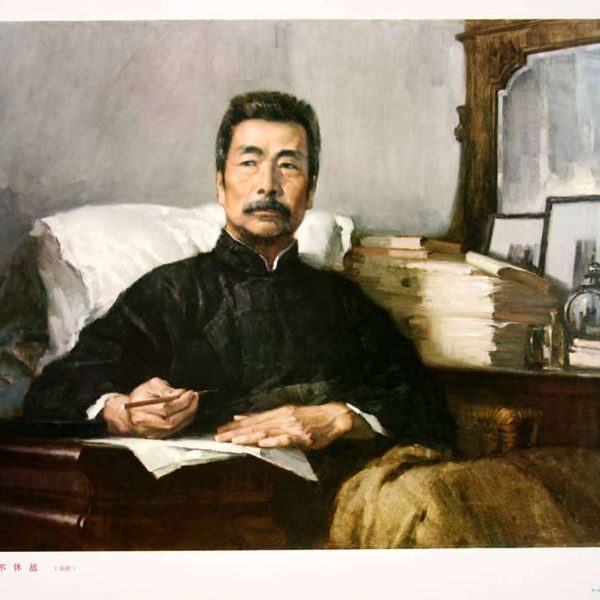
People’s History of Ideas Podcast
- Episodios
- 138
- Se publica
- cada mes
- Último episodio
- 21 Oct 2026
Sobre el podcast
In this podcast, Matthew Rothwell, author of Transpacific Revolutionaries: The Chinese Revolution in Latin America, explores the global history of ideas related to rebellion and revolution. The main focus of this podcast for the near future will be on the history of the Chinese Revolution, going all the way back to its roots in the initial Chinese reactions to British imperialism during the Opium War of 1839-1842, and then following the development of the revolution and many of the ideas that were products of the revolution through to their transnational diffusion in the late 20th century.
Episodios 138
The Localist Opposition within the Communist Party in Jiangxi (January to February 1930)
Mao moves to eliminate opposition to land reform among Jiangxi Communists.Further reading and listening:Stuart Schram, ed., Mao’s Road to Power, vol. 3: From the Jinggangshan to the Establishment of the Jiangxi …
Notas del episodio
Mao moves to eliminate opposition to land reform among Jiangxi Communists.
Further reading and listening:
Stuart Schram, ed., Mao’s Road to Power, vol. 3: From the Jinggangshan to the Establishment of the Jiangxi Soviets, July 1927-December 1930
Pang Xianzhi and Jin Chongji, Mao Zedong: A Biography, vol. 1: 1893-1949
Mao Zedong nianpu, 1893-1937 (毛泽东年谱)
Li Qingzhao, “Like a Dream”
Philip Huang, et al., Chinese Communists and Rural Society, 1927-1934
Joseph Fewsmith, Forging Leninism in China: Mao and the Remaking of the Chinese Communist Party, 1927–1934
Stephen Averill, “The Origins of the Futian Incident”
Stephen Averill, “Party, Society, and Local Elite in the Jiangxi Communist Movement”
Michael Dutton, Policing Chinese Politics
Textum Dergi special issue on ChinaSome names from this episode:
Li Qingzhao, Song Dynasty poet (1084-1155)
Guo Huaruo, Communist military theoretician
Xiao Ke, Red Army commander
Peng Pai, Communist peasant organizer
Chen Duxiu, Communist leader during the period of the first united front with the Guomindang
Mikhail Borodin, Comintern agent and political head of Soviet mission to aid the Guomindang
Peng Dehuai, commander of the 5th Red Army
Huang Gonglüe, commander of the 6th Red Army
Zeng Shan, party secretary of Yanfu district, close ally of MaoEpisode artwork:
The room where the February 7 Meeting was heldSubscribe on Substack: peopleshistoryofideas.substack.com
Urban Revolution in Beijing during the Great Leap Forward: An Interview with leading China scholar Fabio Lanza
This interview with Dr. Fabio Lanza of the University of Arizona touches on topics related to his new book, Urban Revolution: People’s Communes in Beijing. Topics include the transformation of cities under …
Notas del episodio
This interview with Dr. Fabio Lanza of the University of Arizona touches on topics related to his new book, Urban Revolution: People’s Communes in Beijing. Topics include the transformation of cities under socialism, women’s liberation, the political economy of socialist society, the Great Leap Forward, and the role of barbers and hairdressers under socialism.
Further reading:
Fabio Lanza, Urban Revolution: People’s Communes in Beijing
Fabio Lanza, The End of Concern: Maoist China, Activism, and Asian Studies
Joel Andreas, Disenfranchised: The Rise and Fall of Industrial Citizenship in China
Mariarosa Dalla Costa, “Women and the Subversion of the Community”
Sigrid Schmalzer, “China's Great Leap Famine: Malthus, Marx, Mao, and Material Scarcity”
Sigrid Schmalzer, Red Revolution, Green Revolution: Scientific Farming in Socialist China
Gail Hershatter, The Gender of Memory: Rural Women and China's Collective Past
Jeremy Brown, City Versus Countryside in Mao's China. Negotiating the Divide
Kimberly Ens Manning, “Making a Great Leap Forward? The Politics of Women’s Liberation in Maoist China”
H-PRC Website (Besides articles and reviews by anglophone scholars, H-PRC also has a section (Revisiting the Revolution) with translations of essays by Chinese scholars on the history of the People’s Republic of China.)Episode artwork: The cover of Fabio Lanza's new book, Urban Revolution
Subscribe on Substack: peopleshistoryofideas.substack.com
Winning Over Enemy Troops: Mao’s Leninist Approach to Fomenting Mutiny in the Guomindang (January 1930)
When the enemy advances, Mao and Zhu retreat from Fujian into Jiangxi province, drawing the Guomindang’s joint suppression force deep in after them, only to later circle back around and defeat it. In this …
Notas del episodio
When the enemy advances, Mao and Zhu retreat from Fujian into Jiangxi province, drawing the Guomindang’s joint suppression force deep in after them, only to later circle back around and defeat it. In this episode we discuss how Mao conducted propaganda directed at enemy troops in order to win them over to join the Red Army.
Further reading:
Stuart Schram, ed., Mao’s Road to Power, vol. 3: From the Jinggangshan to the Establishment of the Jiangxi Soviets, July 1927-December 1930
Pang Xianzhi and Jin Chongji, Mao Zedong: A Biography, vol. 1: 1893-1949
Bixin Huang, “A Movement Without Vitality: Communist Revolution in Fujian, 1924-1934”
Mao Zedong nianpu, 1893-1937 (毛泽东年谱)
Agnes Smedley, The Great Road: The Life and Times of Chu Teh [Zhu De]Some names from this episode:
Lin Biao, commander of the first column of the Fourth Red Army
Jin Handing, commander of the joint-suppression force launched against the western Fujian base area
Lo Pinghui, Yunnanese colonel who switched from the Guomindang to the CommunistsEpisode artwork: photo of Jin Handing
Subscribe on Substack: peopleshistoryofideas.substack.com
A Single Spark Can Start a Prairie Fire (January 1930) (Part Two)
We conclude our close reading of Mao’s January 5, 1930 letter to Lin Biao. In this episode, Mao discusses his method for understanding the possibilities for revolution in China, as well as the particular …
Notas del episodio
We conclude our close reading of Mao’s January 5, 1930 letter to Lin Biao. In this episode, Mao discusses his method for understanding the possibilities for revolution in China, as well as the particular tactics to be employed by the Red Army. He also conducts a minor self-criticism.
Further reading:
Stuart Schram, ed., Mao’s Road to Power, vol. 3: From the Jinggangshan to the Establishment of the Jiangxi Soviets, July 1927-December 1930
Pang Xianzhi and Jin Chongji, Mao Zedong: A Biography, vol. 1: 1893-1949
Mao Zedong, “A Single Spark Can Start a Prairie Fire”Some names from this episode:
Lin Biao, commander of the first column of the Fourth Red Army
Lu Diping, general who ruled Hunan from 1928–29 and Jiangxi from 1929-31Episode artwork:
Envelope from a different letter that Mao wrote to Lin BiaoSubscribe on Substack: peopleshistoryofideas.substack.com
A Single Spark Can Start a Prairie Fire (January 1930) (Part One)
We begin our close reading of Mao’s January 5, 1930 letter to Lin Biao.Further reading:Stuart Schram, ed., Mao’s Road to Power, vol. 3: From the Jinggangshan to the Establishment of the Jiangxi Soviets, July …
Notas del episodio
We begin our close reading of Mao’s January 5, 1930 letter to Lin Biao.
Further reading:
Stuart Schram, ed., Mao’s Road to Power, vol. 3: From the Jinggangshan to the Establishment of the Jiangxi Soviets, July 1927-December 1930
Pang Xianzhi and Jin Chongji, Mao Zedong: A Biography, vol. 1: 1893-1949
David Apter and Tony Saich, Revolutionary Discourse in Mao’s Republic
Mao Zedong, “A Single Spark Can Start a Prairie Fire”Some names from this episode:
Lin Biao, commander of the first column of the Fourth Red Army
Li Lisan, leading Communist
He Long, leader of a soviet in the Hunan-Hubei border region
Li Wenlin, leader of Donggu base area
Fang Zhimin, leader of Northeastern Jiangxi sovietEpisode artwork:
Picture of a prairie fire (in Illinois)Subscribe on Substack: peopleshistoryofideas.substack.com
How Brainwashing was Good and Maoist Propaganda was True: An Interview with leading China scholar Aminda Smith
This interview with Dr. Aminda Smith of Michigan State University touches on topics including why good PRC history is left history; thought reform, reeducation through labor, and brainwashing; the veracity of …
Notas del episodio
This interview with Dr. Aminda Smith of Michigan State University touches on topics including why good PRC history is left history; thought reform, reeducation through labor, and brainwashing; the veracity of the propaganda produced for a global audience during the Mao years; and the Maoist legacy in China today.
Further reading and watching:
Aminda Smith, Thought Reform and China’s Dangerous Classes
Aminda Smith, “The Maoism of PRC History”
Aminda Smith, “Brainwashing and World Revolution”
Aminda Smith, “The Legacies of 'Brainwashing': Cold War Ideology and Modern Chinese History” (the content of this talk is similar to the paywalled book chapter on brainwashing)
Stephen Andors, China’s Industrial Revolution
Positions Politics website
H-PRC website
Brian DeMare, Land Wars: The Story of China's Agrarian Revolution
Richard Wolin, The Wind From the East: French Intellectuals, the Cultural Revolution, and the Legacy of the 1960s
Philosophy is no Mystery
Mao Zedong, “On Contradiction”
Jonathan Spence, The Search for Modern China
Zheng Yangwen, Ten Lessons in Modern Chinese History
Maurice Meisner, Mao's China and After
Jonathan Spence, The Gate of Heavenly Peace: The Chinese and Their Revolution
Rebecca Karl, Mao Zedong and China in the Twentieth-Century World: A Concise History
Yueran Zhang, “Leninists in a Chinese Factory: Reflections on the Jasic Labour Organising Strategy”
“Seeing through Muddied Waters, Part 1: Jasic, Strikes & Unions”
“New Alliance of Students-Workers in Struggle of Union Formation: The Case of Jasic Conflict”
“Longing for the Cultural Revolution in China Today”
Rae Yang, Spider Eaters: A MemoirChen Duxiu Update (or, the Devil Makes Work for Idle Hands) (1929)
The story of how the co-founder and first General Secretary of the Chinese Communist Party became a Trotskyist.Further reading:Gregor Benton, China’s Urban Revolutionaries: Explorations in the History of …
Notas del episodio
The story of how the co-founder and first General Secretary of the Chinese Communist Party became a Trotskyist.
Further reading:
Gregor Benton, China’s Urban Revolutionaries: Explorations in the History of Chinese Trotskyism, 1921-1952
Gregor Benton, Prophets Unarmed: Chinese Trotskyists in Revolution, War, Jail, and the Return from Limbo
Lee Feigon, Chen Duxiu: Founder of the Chinese Communist Party
Chang Kuo-t’ao [Zhang Guotao], The Rise of the Chinese Communist Party (2 volumes)
Tony Saich, The Rise to Power of the Chinese Communist Party
Jane Price, Cadres, Commanders, and Commissars: The Training of the Chinese Communist Leadership, 1920-1945Some names from this episode:
Chen Duxiu, co-founder of the Communist Party of China
Li Dazhao, co-founder of the Communist Party of China
Zheng Chaolin, Chinese Trotskyist
Li Lisan, leading Communist
Yin Kuan, resigned as Provincial Secretary in Anhui
Peng Shuzhi, resigned as Provincial Secretary in Zhili
Wang Zekai, Chinese Trotskyist
Liu Bojian, former Provincial Secretary in Hubei
Ren Xu, Chinese Trotskyist
Xiang Ying, Jiangsu Provincial Secretary following the 6th Party Congress
Cai Zhende, member of Jiangsu Provincial Committee
Zhou Enlai, head of the Organization Department of the Central Committee
Wang Ruofei, sent to work in a factory in Moscow as punishment for Trotskyism before recanting
Qu Qiubai, top leader of Communist Party from the summer of 1927 until the Sixth Congress
Zhang Guotao, leading CommunistEpisode artwork:
Chen Duxiu with Peng Shuzi in 1932Did the German Communists Really Say “After Hitler, Our Turn?” Exploring the Historical Evidence
Responding to listener queries about the evidence behind this common assertion regarding the KPD’s underestimation of the fascist threat.Further reading:Jane Degras, ed., The Communist International, 1919-1943 …
Notas del episodio
Responding to listener queries about the evidence behind this common assertion regarding the KPD’s underestimation of the fascist threat.
Further reading:
Jane Degras, ed., The Communist International, 1919-1943: Documents, vol. 3: 1929-1943
International Press Correspondence
Communist International journal (1933)
Documents from the 13th Plenum of the ECCISome names from this episode:
Chen Duxiu, co-founder of the Communist Party of China
Hermann Remmele, leading KPD Reichstag member
Heinrich Brüning, German Chancellor from 1930-1932
Osip Piatnitsky, leading Comintern figure
Wilhelm Pieck, leader of KPD from 1934Episode artwork:
Autonome Antifa (M) poster from 1991Revolution in the ‘20s, Go For It: The ‘Third Period’ Comes to China
The 1920s that is. The Comintern lets the Chinese Communist Party’s Central Committee know how the objective conditions in China are ripening for revolution.Further reading:Nikolai Bukharin, “On the …
Notas del episodio
The 1920s that is. The Comintern lets the Chinese Communist Party’s Central Committee know how the objective conditions in China are ripening for revolution.
Further reading:
Nikolai Bukharin, “On the International Situation and the Tasks of the Chinese Communist Party”
Nicholas Kozlov and Eric Weitz, “Reflections on the Origins of the ‘Third Period’: Bukharin, the Comintern, and the Political Economy of Weimar Germany”
Robin Kelley, Hammer and Hoe: Alabama Communists during the Great Depression
Theodore Rosengarten, All God’s Dangers: The Life of Nate Shaw
Sebastian Haffner, Failure of a Revolution: Germany 1918-1919
Chen Jian, Zhou Enlai: A Life
Jane Degras, ed., The Communist International, 1919-1943: Documents, vol. 3: 1929-1943
So Wai-chor, The Kuomintang Left in the National Revolution, 1924–1931Some names from this episode:
Nikolai Bukharin, general secretary of the executive committee of the Comintern (1926-1929)
Rosa Luxemburg, German communist leader murdered in 1919
Karl Liebknecht, German communist leader murdered in 1919
Li Lisan, leading Communist
Stalin, Stalin
Feng Yuxiang, northwestern warlord who turned on Chiang Kai-shek during Sino-Soviet war
Wang Jingwei, the overall leader of the Guomindang Left
Chen Gongbo, main ideologue of the Reorganization Comrades Association
Chen Duxiu, co-founder of the Communist Party
He Long, leader of a soviet in the Hunan-Hubei border regionEpisode artwork:
Li Lisan with familyThe Chinese Communist Party Interventions in the 1929 Sino-Soviet War
How the Chinese Communist Party tried to turn war into revolution in Manchuria in 1929.Further reading:Bruce A. Elleman and Stephen Kotkin, eds., Manchurian Railways and the Opening of ChinaMichael M. Walker …
Notas del episodio
How the Chinese Communist Party tried to turn war into revolution in Manchuria in 1929.
Further reading:
Bruce A. Elleman and Stephen Kotkin, eds., Manchurian Railways and the Opening of China
Michael M. Walker, The 1929 Sino-Soviet War
Chong-Sik Lee, Revolutionary Struggle in Manchuria: Chinese Communism and Soviet Interest, 1922-1945
“Japan Moves Town to Reach Coal Vein”Some names from this episode:
Miles Lampson, British minister to China
Yang Jingyu, Fushun special branch secretary of the CCP
Liu Shaoqi, Communist labor organizer and secretary of the CCP’s Manchurian Committee from June 1929 to March 1930
Ting Chün-yang, veteran communist sent to Manchuria
Meng Yongqian, veteran communist sent to ManchuriaEpisode artwork:
Postcard of a Fushun coal mine from the early 1940sThe 1929 Sino-Soviet War Concludes
The final Soviet offensive, and some details on Chiang Ching-kuo’s activities as a student in Moscow.Further reading:Bruce A. Elleman and Stephen Kotkin, eds., Manchurian Railways and the Opening of …
Notas del episodio
The final Soviet offensive, and some details on Chiang Ching-kuo’s activities as a student in Moscow.
Further reading:
Bruce A. Elleman and Stephen Kotkin, eds., Manchurian Railways and the Opening of China
Michael M. Walker, The 1929 Sino-Soviet War
Jay Taylor, The Generalissimo's Son: Chiang Ching-Kuo and the Revolutions in China and TaiwanSome names from this episode:
Zhang Xueliang, Manchurian warlord
Feng Yuxiang, northwestern warlord who turned on Chiang Kai-shek during Sino-Soviet war
Joseph Stilwell, United States military attaché in China
Mikhail Borodin, Comintern agent and political head of Soviet mission to aid the Guomindang during the first Communist-Guomindang united front
Chiang Ching-kuo, son of Chiang Kai-shek
Zhou Enlai, leading Communist
Vasily Blyukher, commander of the Special Far Eastern Army
Aleksandr Cherepanov, commander of the 39th Rifle Division in the Soviet Far EastEpisode artwork: Picture of a young Chiang Ching-kuo
The 1929 Sino-Soviet War Begins
Some basic military history of the beginning of the war.Further reading:Bruce A. Elleman and Stephen Kotkin, eds., Manchurian Railways and the Opening of ChinaMichael M. Walker, The 1929 Sino-Soviet WarJohn …
Notas del episodio
Some basic military history of the beginning of the war.
Further reading:
Bruce A. Elleman and Stephen Kotkin, eds., Manchurian Railways and the Opening of China
Michael M. Walker, The 1929 Sino-Soviet War
John Erickson, The Soviet High Command: A Military-Political History, 1918-1941Some names from this episode:
Vasily Blyukher (née Gurov, aka Galen), commander of the Special Far Eastern Army
Gebhard Leberecht von Blücher, Prussian general in Napoleonic wars
Aleksandr Cherepanov, commander of the 39th Rifle Division in the Soviet Far East
Andrei Bubnov, head of the political administration of the Soviet Red Army
Feng Yuxiang, warlord close to both the USA and the Soviet Union
A. I. Traynin, captain of the Soviet warship Sverdlov
Mok Yiuming, captain of the Chinese gunboat Lishui
Fedor Vulahov, lead petty officer of the Sverdlov
R. I. Yuanzem, commander of the Soviet warship Red East
I. I. Nikitin, captain of the Soviet warship Sun Yatsen
I. A. Onufriev, the commander of the 2nd “Amur” Rifle DivisionEpisode artwork:
Photo of Soviet soldiers with captured Guomindang bannersThe Chinese Eastern Railway: Background to the 1929 Sino-Soviet War
The Guomindang moves to seize Soviet assets in Manchuria. Also, subscribe to the new substack at https://peopleshistoryofideas.substack.com/.Further reading:Bruce A. Elleman and Stephen Kotkin, eds., Manchurian …
Notas del episodio
The Guomindang moves to seize Soviet assets in Manchuria. Also, subscribe to the new substack at https://peopleshistoryofideas.substack.com/.
Further reading:
Bruce A. Elleman and Stephen Kotkin, eds., Manchurian Railways and the Opening of China
Michael M. Walker, The 1929 Sino-Soviet WarSome names from this episode:
Li Lisan, Chairman of Central Committee Propaganda Department
Chen Duxiu, Co-founder of the Chinese Communist Party
Li Dazhao, Co-founder of the Chinese Communist Party
Lev Karakhan, Soviet deputy commissioner for foreign affairs in 1919 and acting commissioner in 1929
Zhang Zuolin, Manchurian warlord killed by Japan in 1928
Zhang Xueliang, Manchurian warlord, son of Zhang Zuolin
Martemyan Nikitich Ryutin, Bolshevik leader of Harbin soviet in 1917Episode artwork: Flag of the Chinese Eastern Railway
“On the Problem of Party Organization” (The Gutian Resolution—Part Three)
Mao discusses problems in party organization and how to fix them.Further reading:Stuart Schram, ed., Mao’s Road to Power, vol. 3: From the Jinggangshan to the Establishment of the Jiangxi Soviets, July …
Notas del episodio
Mao discusses problems in party organization and how to fix them.
Further reading:
Stuart Schram, ed., Mao’s Road to Power, vol. 3: From the Jinggangshan to the Establishment of the Jiangxi Soviets, July 1927-December 1930
Pang Xianzhi and Jin Chongji, Mao Zedong: A Biography, vol. 1: 1893-1949
“On the Revolutionary “Three-in-One” Combination”
Episode artwork: May 1967 poster “Resolutely Protect the Policy of the Revolutionary Three-in-One Combination”“The Problem of Correcting Erroneous and Nonproletarian Ideological Tendencies in the Party” (The Gutian Resolution—Part Two)
We continue our textual analysis of the Gutian Resolution.Further reading:Stuart Schram, ed., Mao’s Road to Power, vol. 3: From the Jinggangshan to the Establishment of the Jiangxi Soviets, July 1927-December …
Notas del episodio
We continue our textual analysis of the Gutian Resolution.
Further reading:
Stuart Schram, ed., Mao’s Road to Power, vol. 3: From the Jinggangshan to the Establishment of the Jiangxi Soviets, July 1927-December 1930
Pang Xianzhi and Jin Chongji, Mao Zedong: A Biography, vol. 1: 1893-1949
Mao Zedong, “On Correcting Mistaken Ideas in the Party”
“Bury the Slave Mentality Advocated by China’s Khrushchov” in Peking Review (April 14, 1967)
Some names from this episode:
Liu Shaoqi, top level Communist Party leader attacked as China’s Khrushchev during the Cultural Revolution
Zhou Enlai, head of the Organization Department of the Central Committee
Li Lisan, leading Communist
Qu Qiubai, top leader of Communist Party from the summer of 1927 until the Sixth Congress
Huang Chao, salt merchant who led a rebellion from 875-884
Li Chuang (Li Zicheng), bandit leader who seized Beijing in 1644 and was later defeated by the Manchus
Hong Xiuquan, leader of the Taiping Revolution and claimed to be the younger brother of Jesus Christ
Chen Yi, member of Front Committee of Fourth Red Army
Episode artwork: Gutian villageThe Gutian Resolution (End of 1929) (Part One)
On the importance of the Resolution, and a beginning discussion of the actual text.Further reading:Stuart Schram, ed., Mao’s Road to Power, vol. 3: From the Jinggangshan to the Establishment of the Jiangxi …
Notas del episodio
On the importance of the Resolution, and a beginning discussion of the actual text.
Further reading:
Stuart Schram, ed., Mao’s Road to Power, vol. 3: From the Jinggangshan to the Establishment of the Jiangxi Soviets, July 1927-December 1930
Pang Xianzhi and Jin Chongji, Mao Zedong: A Biography, vol. 1: 1893-1949
Mao Zedong, “On Correcting Mistaken Ideas in the Party”
Episode artwork: Photo of the Gutian CongressTwo Letters and “On Correcting Mistaken Ideas in the Party” (November to December 1929)
We look at two letters written by Mao on November 28, 1929, and introduce our discussion of “On Correcting Mistaken Ideas in the Party” and the other parts of the Gutian Resolution.Further reading:Pang Xianzhi …
Notas del episodio
We look at two letters written by Mao on November 28, 1929, and introduce our discussion of “On Correcting Mistaken Ideas in the Party” and the other parts of the Gutian Resolution.
Further reading:
Pang Xianzhi and Jin Chongji, Mao Zedong: A Biography, vol. 1: 1893-1949
Stuart Schram, ed., Mao’s Road to Power, vol. 3: From the Jinggangshan to the Establishment of the Jiangxi Soviets, July 1927-December 1930
Mao Zedong, “On Correcting Mistaken Ideas in the Party”
Abimael Guzmán, “Report of the Meeting of the Central Leadership with the Cangallo-Fajardo Regional Committee”
Peking Review (Feb. 3, 1967)
Some names from this episode:
Li Lisan, Chairman of Central Committee Propaganda Department
Yang Kaihui, Mao’s first wife
Mao Anying, Mao’s first son
Chen Yi, member of Front Committee of Fourth Red Army
Chen Duxiu, former general secretary of the Communist Party
Mao Zemin, Mao’s brother
Xie Hanqiu, observer from the Fujian Provincial Committee
Liu Heting, Guomindang military commander
Jin Handing, Guomindang military commander
Zhang Zhen, Guomindang military commander
Episode artwork: He Kongde’s Gutian Meeting posterThe Battle for Shanghang (mid-September 1929)
The Communists take the fortified city of Shanghang in southwestern Fujian.Further reading and watching:Agnes Smedley, The Great Road: The Life and Times of Chu Teh [Zhu De]The Battle for Dien Bien PhuPang …
Notas del episodio
The Communists take the fortified city of Shanghang in southwestern Fujian.
Further reading and watching:
Agnes Smedley, The Great Road: The Life and Times of Chu Teh [Zhu De]
The Battle for Dien Bien Phu
Pang Xianzhi and Jin Chongji, Mao Zedong: A Biography, vol. 1: 1893-1949
Stuart Schram, ed., Mao’s Road to Power, vol. 3: From the Jinggangshan to the Establishment of the Jiangxi Soviets, July 1927-December 1930
Some names from this episode:
Lin Biao, commander of the first column of the Fourth Red Army
Lu Hanmin, Guomindang militarist
Liu Angong, special envoy sent by Party Center to the Fourth Red Army
Episode artwork: Aerial view of modern ShanghangThe Politburo in Shanghai Discusses the Line Struggle in the Red Army and Issues the September Instruction
The Central Committee turns out to support centralized leadership. Also, the Comintern publishes Mao’s obituary.Further reading:Pang Xianzhi and Jin Chongji, Mao Zedong: A Biography, vol. 1: 1893-1949Stuart …
Notas del episodio
The Central Committee turns out to support centralized leadership. Also, the Comintern publishes Mao’s obituary.
Further reading:
Pang Xianzhi and Jin Chongji, Mao Zedong: A Biography, vol. 1: 1893-1949
Stuart Schram, ed., Mao’s Road to Power, vol. 3: From the Jinggangshan to the Establishment of the Jiangxi Soviets, July 1927-December 1930
Joseph Fewsmith, Forging Leninism in China: Mao and the Remaking of the Chinese Communist Party, 1927–1934
Mao Zedong nianpu, 1893-1937 (毛泽东年谱)
Chen Jian, Zhou Enlai: A Life
Zhou Enlai, Selected Works of Zhou Enlai, vol. 1
Some names from this episode:
Chen Yi, replaced Mao as secretary of the Front Committee
Xiang Zhongfa, General secretary of the CP
Zhou Enlai, head of the Organization Department of the Central Committee
Li Lisan, Leading Communist
Liu Angong, special envoy sent by Party Center to the Fourth Red ArmyMao gets Kicked from Party Leadership, and Organizes a Land Reform in Western Fujian
The line struggle continues and does not go Mao’s way. Plus, comments on the historiography.Further reading:Pang Xianzhi and Jin Chongji, Mao Zedong: A Biography, vol. 1: 1893-1949Stuart Schram, ed., Mao’s Road …
Notas del episodio
The line struggle continues and does not go Mao’s way. Plus, comments on the historiography.
Further reading:
Pang Xianzhi and Jin Chongji, Mao Zedong: A Biography, vol. 1: 1893-1949
Stuart Schram, ed., Mao’s Road to Power, vol. 3: From the Jinggangshan to the Establishment of the Jiangxi Soviets, July 1927-December 1930
Joseph Fewsmith, Forging Leninism in China: Mao and the Remaking of the Chinese Communist Party, 1927–1934
Mao Zedong nianpu, 1893-1937 (毛泽东年谱)
Chen Jian, Zhou Enlai: A Life
Some names from this episode:
Liu Angong, special envoy sent by Party Center to the Fourth Red Army
Lin Biao, commander of the first column of the Fourth Red Army
Chen Yi, replaced Mao as secretary of the Front Committee
Zhou Enlai, head of the Organization Department of the Central Committee
Jiang Hua, secretary general of the political department of the Fourth Red Army
Episode artwork: photo of Jiang HuaMao’s 14 June 1929 Letter to Lin Biao
We continue our close reading of Mao’s letter to Lin Biao. In this episode, Mao discusses the roving rebel band mentality and the organizational state of affairs in the army, party, and mass …
Notas del episodio
We continue our close reading of Mao’s letter to Lin Biao. In this episode, Mao discusses the roving rebel band mentality and the organizational state of affairs in the army, party, and mass organizations.
Further reading:
Pang Xianzhi and Jin Chongji, Mao Zedong: A Biography, vol. 1: 1893-1949
Stuart Schram, ed., Mao’s Road to Power, vol. 3: From the Jinggangshan to the Establishment of the Jiangxi Soviets, July 1927-December 1930
Agnes Smedley, The Great Road: The Life and Times of Chu Teh [Zhu De]
Mao Zedong, “On Correcting Mistaken Ideas in the Party”
Some names from this episode:
Liu Angong, special envoy sent by Party Center to the Fourth Red Army
Yang Sen, Sichuan warlord
Zhu Yunqing, chief political advisor to the Fourth Red Army
Episode artwork: photo of Zhu YunqingThe Line Struggle Between Mao Zedong and Zhu De (May to June 1929)
The Party Center’s intervention in the Fourth Red Army combines with a string of military victories to bring a simmering dispute between Mao and Zhu to a head.Further reading:Pang Xianzhi and Jin Chongji, Mao …
Notas del episodio
The Party Center’s intervention in the Fourth Red Army combines with a string of military victories to bring a simmering dispute between Mao and Zhu to a head.
Further reading:
Pang Xianzhi and Jin Chongji, Mao Zedong: A Biography, vol. 1: 1893-1949
Stuart Schram, ed., Mao’s Road to Power, vol. 3: From the Jinggangshan to the Establishment of the Jiangxi Soviets, July 1927-December 1930
Joseph Fewsmith, Forging Leninism in China: Mao and the Remaking of the Chinese Communist Party, 1927–1934
Mao Zedong nianpu, 1893-1937 (毛泽东年谱)
Some names from this episode:
Zhou Enlai, head of the Organization Department of the Central Committee
Liu Angong, special envoy sent by Party Center to the Fourth Red Army
Lin Biao, commander of the first column of the Fourth Red Army
Peng Dehuai, commander of the Fifth Red ArmyThe Red Army Victorious: The Conquest of Several Counties in Jiangxi and Fujian in the Spring of 1929
The conquest of Yudu, Xingguo, Ningdu, Longyan, and Yongding counties by the Fourth Red Army. Zhu De reminisces. Also, poetry.Further reading:Pang Xianzhi and Jin Chongji, Mao Zedong: A Biography, vol. 1 …
Notas del episodio
The conquest of Yudu, Xingguo, Ningdu, Longyan, and Yongding counties by the Fourth Red Army. Zhu De reminisces. Also, poetry.
Further reading:
Pang Xianzhi and Jin Chongji, Mao Zedong: A Biography, vol. 1: 1893-1949
Stuart Schram, ed., Mao’s Road to Power, vol. 3: From the Jinggangshan to the Establishment of the Jiangxi Soviets, July 1927-December 1930
Peng Dehuai, Memoirs of a Chinese Marshall
Agnes Smedley, The Great Road: The Life and Times of Chu Teh [Zhu De]
Joseph Fewsmith, Forging Leninism in China: Mao and the Remaking of the Chinese Communist Party, 1927–1934
Mao Zedong nianpu, 1893-1937 (毛泽东年谱)
Some names from this episode:
Zhou Enlai, head of the Organization Department of the Central Committee
Peng Dehuai, leader of the Fifth Red ArmyMao Tells Zhou Enlai about Guerrilla Warfare
Mao’s April 5, 1929 reply to Zhou Enlai.Further reading:Pang Xianzhi and Jin Chongji, Mao Zedong: A Biography, vol. 1: 1893-1949Stuart Schram, ed., Mao’s Road to Power, vol. 3: From the Jinggangshan to the …
Notas del episodio
Mao’s April 5, 1929 reply to Zhou Enlai.
Further reading:
Pang Xianzhi and Jin Chongji, Mao Zedong: A Biography, vol. 1: 1893-1949
Stuart Schram, ed., Mao’s Road to Power, vol. 3: From the Jinggangshan to the Establishment of the Jiangxi Soviets, July 1927-December 1930
David Apter and Tony Saich, Revolutionary Discourse in Mao’s Republic
Tony Saich, The Rise to Power of the Chinese Communist Party
Michael Heinrich, Karl Marx and the Birth of Modern Society: The Life of Marx and the Development of His Work
Some names from this episode:
Zhou Enlai, head of the Organization Department of the Central Committee
Xiang Zhongfa, General secretary of the CP
Guo Fengming, bandit turned Guomindang local despot in Changting
Liu Shiyi, Guomindang commander
Ye Ting, Communist military leader
He Long, Communist military leaderThe Party Center Attempts to Assert Control over the Red Army and Orders Mao and Zhu to Report to Shanghai
A close look at Zhou Enlai’s February 7, 1929, letter to Mao Zedong and Zhu De.Further reading:Pang Xianzhi and Jin Chongji, Mao Zedong: A Biography, vol. 1: 1893-1949Stuart Schram, ed., Mao’s Road to Power …
Notas del episodio
A close look at Zhou Enlai’s February 7, 1929, letter to Mao Zedong and Zhu De.
Further reading:
Pang Xianzhi and Jin Chongji, Mao Zedong: A Biography, vol. 1: 1893-1949
Stuart Schram, ed., Mao’s Road to Power, vol. 3: From the Jinggangshan to the Establishment of the Jiangxi Soviets, July 1927-December 1930
E. H. Carr, Foundations of a Planned Economy, vol. 3
Tony Saich, The Rise to Power of the Chinese Communist Party
Some names from this episode:
Zhou Enlai, head of the Organization Department of the Central Committee
Xiang Zhongfa, General secretary of the CP
Li Lisan, Leading CommunistMao’s March 20 Letter to the Central Committee, and the 5th Red Army’s Retreat from the Jinggangshan (January to April 1929)
Mao plans to expand guerrilla warfare, and meets up with Peng Dehuai in Ruijin.Further reading:Pang Xianzhi and Jin Chongji, Mao Zedong: A Biography, vol. 1: 1893-1949Stuart Schram, ed., Mao’s Road to Power …
Notas del episodio
Mao plans to expand guerrilla warfare, and meets up with Peng Dehuai in Ruijin.
Further reading:
Pang Xianzhi and Jin Chongji, Mao Zedong: A Biography, vol. 1: 1893-1949
Stuart Schram, ed., Mao’s Road to Power, vol. 3: From the Jinggangshan to the Establishment of the Jiangxi Soviets, July 1927-December 1930
Stephen Averill, Revolution in the Highlands: China’s Jinggangshan Base Area
Peng Dehuai, Memoirs of a Chinese Marshall
Some names from this episode:
Yuan Wencai, Bandit leader who joined with Mao Zedong
Wang Zuo, Bandit leader who joined with Mao Zedong
He Changgong, secretary of the Ninggang County Party following the departure of the Fourth Red Army
Long Chaoqing, former secretary of the Ninggang County Committee of the Communist Party
Peng Dehuai, leader of the Fifth Red Army
Li Wenlin, Communist guerrilla commander
Duan Yuequan, Communist guerrilla commander
Liu Shiyi, Guomindang commander
Xiao Jiabi, reactionary militia leaderOn the Experience of the National Bourgeoisie in the New Democratic Revolution
Some reflections on the experience of Shanghai capitalists after 1949 prompted by the ‘Notice to Merchants and Intellectuals’ that Mao issued after taking Changting in 1929.Further reading:Stuart Schram, ed …
Notas del episodio
Some reflections on the experience of Shanghai capitalists after 1949 prompted by the ‘Notice to Merchants and Intellectuals’ that Mao issued after taking Changting in 1929.
Further reading:
Stuart Schram, ed., Mao’s Road to Power, vol. 3: From the Jinggangshan to the Establishment of the Jiangxi Soviets, July 1927-December 1930
Yao Wenyuan, “On the Social Basis of the Lin Piao Anti-Party Clique” (for heavenly horses reference)
David Apter and Tony Saich, Revolutionary Discourse in Mao’s Republic
Lynn White, Policies of Chaos: The Organizational Causes of Violence in China’s Cultural Revolution
David Barbosa, “Rong Yiren, a Chinese Billionaire, Dies at 89”
Some names from this episode:
Wu Zhongyi, Shanghai capitalist
Rong Yiren, Shanghai capitalistA New Communist Order in Changting (March 1929)
Looking at what Mao and Zhu De did to install a new Communist order after conquering Changting.Further reading:Pang Xianzhi and Jin Chongji, Mao Zedong: A Biography, vol. 1: 1893-1949Agnes Smedley, The Great …
Notas del episodio
Looking at what Mao and Zhu De did to install a new Communist order after conquering Changting.
Further reading:
Pang Xianzhi and Jin Chongji, Mao Zedong: A Biography, vol. 1: 1893-1949
Agnes Smedley, The Great Road: The Life and Times of Chu Teh [Zhu De]
Stuart Schram, ed., Mao’s Road to Power, vol. 3: From the Jinggangshan to the Establishment of the Jiangxi Soviets, July 1927-December 1930
Mao Zedong, “On New Democracy”
Some names from this episode:
Guo Fengming, bandit turned Guomindang local despot in Changting
Feng Yuxiang, warlord close to both the USA and the Soviet Union
Wang Jingwei, leader of the Guomindang left
Dai Jitao, Guomindang ideologue
Yan Xishan, warlord accused by Mao of being a running dog for the Japanese imperialistsLeaving Donggu, Taking Changting (February to March 1929)
How the Fourth Red Army spent their time in Donggu, and how they took the first city in the new base area in the Jiangxi-Fujian border region.Further reading:Pang Xianzhi and Jin Chongji, Mao Zedong: A …
Notas del episodio
How the Fourth Red Army spent their time in Donggu, and how they took the first city in the new base area in the Jiangxi-Fujian border region.
Further reading:
Pang Xianzhi and Jin Chongji, Mao Zedong: A Biography, vol. 1: 1893-1949
Agnes Smedley, The Great Road: The Life and Times of Chu Teh [Zhu De]
Joseph Fewsmith, Forging Leninism in China: Mao and the Remaking of the Chinese Communist Party, 1927–1934
Gao Hua, How the Red Sun Rose: The Origins and Development of the Yan’an Rectification Movement, 1930-1945
Stephen Averill, “The Origins of the Futian Incident”
Some names from this episode:
Xiao Ke, an officer in the Fourth Red Army
Peng Pai, Communist peasant organizer
Long Chaoqing, important early Communist in Jinggangshan area
Peng Dehuai, Leader of the 5th Red Army
Guo Fengming, Bandit turned Guomindang local despot in ChangtingFrom Dabodi to Donggu: The Retreat from the Jinggangshan Continues (February 1929)
The Mao-Zhu Army raises funds in Ningdu and moves on to the Donggu base area for rest and recovery. Background on Donggu.Link to map of Jiangxi province …
Notas del episodio
The Mao-Zhu Army raises funds in Ningdu and moves on to the Donggu base area for rest and recovery. Background on Donggu.
Link to map of Jiangxi province: https://www.chinamaps.org/china/provincemaps/jiangxi-province-map.html
Further reading:
Stuart Schram, ed., Mao’s Road to Power, vol. 3: From the Jinggangshan to the Establishment of the Jiangxi Soviets, July 1927-December 1930
Pang Xianzhi and Jin Chongji, Mao Zedong: A Biography, vol. 1: 1893-1949
Agnes Smedley, The Great Road: The Life and Times of Chu Teh [Zhu De]
Joseph Fewsmith, Forging Leninism in China: Mao and the Remaking of the Chinese Communist Party, 1927–1934
Some names from this episode:
Wang Chuxi, big landlord in Donggu area who lived in Futian
Ye Jianying, Communist who led division of the National Revolutionary Army which took Ji’an during the Northern Expedition
Duan Qifeng, Donggu bandit chief who joined with Communists
Wang Zuo, Bandit leader who joined with Mao Zedong
Lai Jingbang, first leader of the Donggu communists
Wang Liangzhao, younger brother to Wang Chuxi
Aquí están los 40 episodios más recientes de 138. Los anteriores están en el feed del podcast.
Podcasts similares
Más podcasts de Historia


¿Es tu podcast?
Confírmalo con una entrada en tu feed: aquí recibes un código, lo añades como podcast:txt en el canal de tu feed y nosotros lo comprobamos. Después tu podcast aparecerá como «verificado» en SoundNode.