Radiolab
- Episodios
- 676
- Se publica
- cada semana
- Último episodio
- 23 Oct 2026
Sobre el podcast
Radiolab is on a curiosity bender. We ask deep questions and use investigative journalism to get the answers. A given episode might whirl you through science, legal history, and into the home of someone halfway across the world. The show is known for innovative sound design, smashing information into music. It is hosted by Lulu Miller and Latif Nasser.
Episodios 676
Octomom
First aired back in 2020, this episode follows the story of an octopus living one mile under the ocean as she performs a heroic act of heart and determination.In 2007, Bruce Robison’s robot submarine stumbled …
Notas del episodio
First aired back in 2020, this episode follows the story of an octopus living one mile under the ocean as she performs a heroic act of heart and determination.
In 2007, Bruce Robison’s robot submarine stumbled across an octopus settling in to brood her eggs. It seemed like a small moment, but as he went back to visit her month after month, what began as a simple act of motherhood became a heroic feat that has never been equaled by any known species on Earth.
This episode was reported and produced by Annie McEwen.
If you need more ocean in your life, check out the incredible Monterey Bay Aquarium live cams (especially the jellies!): www.montereybayaquarium.org/animals/live-cams
Here’s a pic of Octomom sitting on her eggs (© 2007 MBARI), Nov. 1, 2007.
If you need more ocean in your life, check out the incredible Monterey Bay Aquarium live cams (especially the jellies!): Live Cams of Monterey Bay Aquarium!!Signup for our newsletter!! It includes short essays, recommendations, and details about other ways to interact with the show. Sign up (https://radiolab.org/newsletter)!
Radiolab is supported by listeners like you. Support Radiolab by becoming a member of The Lab (https://members.radiolab.org/) today.
Follow our show on Instagram, Twitter and Facebook @radiolab, and share your thoughts with us by emailing [email protected].
Leadership support for Radiolab’s science programming is provided by the Simons Foundation and the John Templeton Foundation. Foundational support for Radiolab was provided by the Alfred P. Sloan Foundation.Hosted by Simplecast, an AdsWizz company. See pcm.adswizz.com for information about our collection and use of personal data for advertising.
The Smell of Hell
Throughout human history, there’s been one element we’ve always associated with death. Just the smell of it is an alarm bell that says, “something here is dangerous.” But what if our noses have been wrong all …
Notas del episodio
Throughout human history, there’s been one element we’ve always associated with death. Just the smell of it is an alarm bell that says, “something here is dangerous.” But what if our noses have been wrong all along?
In this episode of our series Viscera: Gripping Tales of the Human Body, we take you to a live performance in Boston where we reveal how this much-maligned element might be better understood as the smell of life.
LATERAL CUTS:
Want to see a Viscera show? Join us for Radiolab Presents: Viscera, live in New York City on Thursday, November 5th. All about the sometimes freaky world of organ transplants, with special guest Mary Roach discussing her upcoming book, Replaceable You: Adventures in Human Anatomy. Get your tickets at wnyc.org/events.
EPISODE CREDITS:
Reported by - Avir Mitra and Matt Kielty
with help from - Mona Madgavkar
Produced by - Mona Madgavkar and Matt Kielty
with mixing help from - Jeremy Bloom
Fact-checking by - Rachel Gross
and Edited by - Pat Walters
Liveshow production support - Natalia Ramirez, Sarah Sandbach, Maia Appleby Melamed, and Jeremy Bloom.EPISODE CITATIONS:
Videos -
- Watch the video of Radiolab Presents: Viscera live at WBUR CitySpace (https://zpr.io/PZF3BqnbKKJD)
Articles -
- A possible chemical explanation for the events associated with the death of Gloria Ramirez at Riverside General Hospital (https://zpr.io/sbjXYcPenGSH), the paper explaining Livermore Lab’s hypothesis.
Books -
- The Great Secret (https://zpr.io/PGCmihSFBHj4), by Jennet Conant about the birth of chemotherapy in the laboratory of war.
Signup for our newsletter!! It includes short essays, recommendations, and details about other ways to interact with the show. Sign up (https://radiolab.org/newsletter)!
Radiolab is supported by listeners like you. Support Radiolab by becoming a member of The Lab (https://members.radiolab.org/) today.
Follow our show on Instagram, Twitter and Facebook @radiolab, and share your thoughts with us by emailing [email protected].
Leadership support for Radiolab’s science programming is provided by the Simons Foundation and the John Templeton Foundation. Foundational support for Radiolab was provided by the Alfred P. Sloan Foundation.
Hosted by Simplecast, an AdsWizz company. See pcm.adswizz.com for information about our collection and use of personal data for advertising.
Math Vs Machine
In less than four years, mathematician Steve Strogatz watched AI go from flailing at basic arithmetic to solving problems that baffle the world’s best mathematicians. In September of 2026, Open AI announced it …
Notas del episodio
In less than four years, mathematician Steve Strogatz watched AI go from flailing at basic arithmetic to solving problems that baffle the world’s best mathematicians. In September of 2026, Open AI announced it had solved a Millennium Prize Problem, one of math’s highest achievements. In short, mathematics is right now on the cusp of a reckoning that may be coming for all of us. In this episode, Steve grapples with the idea that the window might be closing on humanity’s effort to unpuzzle, or learn, or understand the world around us.
Special thanks to Ravi Vakil, Alex Kontorovich, Bob Wright.
EPISODE CREDITS:
Reported by - Maria Paz Gutierrez and Soren Wheeler
Produced by - Soren Wheeler and Maria Paz Gutierrez
Fact-checking by - Diane Kelly
and Edited by - Pat WaltersEPISODE CITATIONS:
Videos -
- On deep learning for cancer diagnosis and treatment (https://zpr.io/TPnVfbPH8gTr), by Regina Barzilay (MIT Professor of AI & Health)
Articles -
- Mathematics Isn’t Just a Game to Let A.I. Solve. History Shows Why (https://zpr.io/n67amKFPuiYA), by Steven Strogatz and Alex Townsend
- OpenAI Releases Findings on 377 Math Problems, Further Roiling Field (https://zpr.io/YDjQXvYfqkvA), by Kenneth Chang and Siobhan Roberts
Books -
- Big Math: The Hidden Codes that rule our World (https://zpr.io/BFuYZ29qt8av), by Steven Strogatz and Alex Townsend
Sign up for our newsletter!! It includes short essays, recommendations, and details about other ways to interact with the show. Signup (https://radiolab.org/newsletter)!
Radiolab is supported by listeners like you. Support Radiolab by becoming a member of The Lab (https://members.radiolab.org/) today.
Follow our show on Instagram, Twitter and Facebook @radiolab, and share your thoughts with us by emailing [email protected].
Leadership support for Radiolab’s science programming is provided by the Simons Foundation and the John Templeton Foundation. Foundational support for Radiolab was provided by the Alfred P. Sloan Foundation.
Hosted by Simplecast, an AdsWizz company. See pcm.adswizz.com for information about our collection and use of personal data for advertising.
A 4-Track Mind
In this short episode, first aired in 2011, a neurologist issues a dare to a ragtime piano player and a famous conductor. When the two men face off in an fMRI machine, the challenge is so unimaginably difficult …
Notas del episodio
In this short episode, first aired in 2011, a neurologist issues a dare to a ragtime piano player and a famous conductor. When the two men face off in an fMRI machine, the challenge is so unimaginably difficult that one man instantly gives up. But the other achieves a musical feat that ought to be impossible.
Reporter Jessica Benko went to Michigan to visit Bob Milne, one of the best ragtime piano players in the world, and a preternaturally talented musician. Usually, Bob sticks to playing piano for small groups of ragtime enthusiasts, but he recently caught the attention of Penn State neuroscientist Kerstin Betterman, who had heard that Bob had a rare talent: He can play technically challenging pieces of music on demand while carrying on a conversation and cracking jokes. According to Kerstin, our brains just aren't wired for that. So she decided to investigate Bob's brain, and along the way she discovered that Bob has an even more amazing ability ... one that we could hardly believe and science can't explain.
Sign up for our newsletter!! It includes short essays, recommendations, and details about other ways to interact with the show. Signup (https://radiolab.org/newsletter)!
Radiolab is supported by listeners like you. Support Radiolab by becoming a member of The Lab (https://members.radiolab.org/) today.
Follow our show on Instagram, Twitter and Facebook @radiolab, and share your thoughts with us by emailing [email protected].
Leadership support for Radiolab’s science programming is provided by the Simons Foundation and the John Templeton Foundation. Foundational support for Radiolab was provided by the Alfred P. Sloan Foundation.
Hosted by Simplecast, an AdsWizz company. See pcm.adswizz.com for information about our collection and use of personal data for advertising.
Grass Apes
When you think about grass, what do you think of? Pool parties? Suburbs? Allergies? What about: human history? It turns out, unassuming grass, which exists on every continent, has an epic story to tell. One of …
Notas del episodio
When you think about grass, what do you think of? Pool parties? Suburbs? Allergies? What about: human history? It turns out, unassuming grass, which exists on every continent, has an epic story to tell. One of transforming the planet, and … us. From what we eat, to how our body might be shaped and the ways we perceive the world. Senior Correspondent Molly Webster speaks to biologist and writer David George Haskell in this tiny ode to Grass.
This episode was inspired by “Grass Fed”, a Radiolab outdoor theatre performance at Little Island in New York City. “Grass Fed” featured biologist and writer David George Haskell; Foley artist Steven Wendt; and dance company, Pilobolus. Special thanks to all the artists, and to Little Island, Sarah Sandbach, Natalia Ramirez, and Soren Wheeler.
EPISODE CREDITS:
Hosted by - Molly Webster
Reported by - Molly Webster
with help from - Jo Strogatz and Anisa Vietze
Produced by - Sarah Qari
with help from - Jo Strogatz, Molly Webster
Original vocals from - Jo Strogatz
with mixing from - Jeremy S. Bloom
Fact-checking by - Nora Belblidia
and Edited by - Pat Walters
EPISODE CITATIONS:
Articles -
- The Other Almanac 2026 (https://www.otheralmanac.com/), by David George Haskell a print-only magazine contains an essay All Hail Grass, Maker of Humans! by David George Haskell all about grass’s role in human history.
Books -
- How Flowers Made Our World” (https://zpr.io/r4ybZJea8WV9) by David George Haskell which has a chapter all about grass in it (it’s a flowering plant, if you didn’t know!)
Sign up for our newsletter!! It includes short essays, recommendations, and details about other ways to interact with the show. Signup (https://radiolab.org/newsletter)!
Radiolab is supported by listeners like you. Support Radiolab by becoming a member of The Lab (https://members.radiolab.org/) today.
Follow our show on Instagram, Twitter and Facebook @radiolab, and share your thoughts with us by emailing [email protected].
Leadership support for Radiolab’s science programming is provided by the Simons Foundation and the John Templeton Foundation. Foundational support for Radiolab was provided by the Alfred P. Sloan Foundation.
Hosted by Simplecast, an AdsWizz company. See pcm.adswizz.com for information about our collection and use of personal data for advertising.
The Sweetest Thing
“What is the sweetest thing in the world?” After co-host Latif Nasser’s sons ask him this deceptively simple question, he goes on a quest to find it. Is it a West African Katemfe berry? Or an industrial sugar …
Notas del episodio
“What is the sweetest thing in the world?” After co-host Latif Nasser’s sons ask him this deceptively simple question, he goes on a quest to find it. Is it a West African Katemfe berry? Or an industrial sugar substitute cooked up in a lab? Or an ingredient hiding in plain sight in all of our pantries? A simple mystery that will make you question what sweetness even is, how our tongues (and other body parts you wouldn’t expect) determine what we like, and how far you would go to taste something sweeter than anyone has ever experienced.
Thank you to Latif’s sons for indulging us, to Nicola Twilley and Cynthia Graber at Gastropod, to Anni Laffitte, Nazli Parvizi at Museum of Food and Drink, to food icons Claire Saffitz and Sam Seneveratne who did a live show version of this episode with us at the Tribeca Festival. And thank you to Davy Gardner and his wonderful team of audio folks at the Tribeca Festival.
Thank you to Jialin Deng who composed the song that was our ‘sonic seasoning’. And to Laura Rickman and everyone else at Columbia University’s Mortimer B Zuckerman Mind Brain Behavior Institute for hosting us.
And big thanks to experimental psychologist Charles Spence at Oxford, sweetness chemist Grant DuBois, Danielle Reed at Monell Chemical Senses Center, and nutritional scientist Sarah Berry at King’s College London who all talked to us about their research. And Brian Everett of Honest Organic Farms.
And a very special thanks to Sean Oomens, inventor of producer Jess Yung’s favorite candy, nerd gummy clusters
EPISODE CREDITS:
Reported by - Latif Nasser
with help from - Jessica Yung, Maria Paz Gutierrez, Jessica Yung, Ekedi Fausther-Keeys, and Natalia Ramirez
Produced by - Jessica Yung
with help from - Mona Madgavkar, Maria Paz Gutierrez, Gabby Santas, and Maia Appleby Melamed
with mixing help from - Jeremy Bloom
Fact-checking by - Sophie Samiee
and Edited by - Pat WaltersEPISODE CITATIONS:
Videos:
Articles -
- Race to Redesign Sugar (https://zpr.io/VpsMxfPRbxaz) by Nicola Twilley
- The Search for Sweet (https://zpr.io/JmeDkVhrd2dK) by Burkhard Bilger
- How My Trip to Quit Sugar Became A Journey Into Hell (https://zpr.io/ni6xgC38Qmyf) by Caity Wever
- How Much of Our Existence Do We Owe to Sugar? (https://zpr.io/M2py48SxnQAT) by Jackie Flynn Mogensen
- Scientists Find Sugar In Space (https://zpr.io/e94UtUuhPtbT) by Rebecca Dzombak
Sign up for our newsletter!! It includes short essays, recommendations, and details about other ways to interact with the show. Signup (https://radiolab.org/newsletter)!
Radiolab is supported by listeners like you. Support Radiolab by becoming a member of The Lab (https://members.radiolab.org/) today.
Follow our show on Instagram, Twitter and Facebook @radiolab, and share your thoughts with us by emailing [email protected].
Leadership support for Radiolab’s science programming is provided by the Simons Foundation and the John Templeton Foundation. Foundational support for Radiolab was provided by the Alfred P. Sloan Foundation.
Hosted by Simplecast, an AdsWizz company. See pcm.adswizz.com for information about our collection and use of personal data for advertising.
23 Weeks 6 Days
When Kelley Benham and her husband Tom French finally got pregnant, after many attempts and a good deal of technological help, everything was perfect. Until it wasn't. Their story raises questions that, until …
Notas del episodio
When Kelley Benham and her husband Tom French finally got pregnant, after many attempts and a good deal of technological help, everything was perfect. Until it wasn't. Their story raises questions that, until recently, no parent had to face… and that are still nearly impossible to answer.
This hour, which we first released in 2013, we spend the entire episode on the story of Kelley and Tom, whose daughter was born at 23 weeks and 6 days, roughly halfway to full term. Their story contains an entire universe of questions about the lines between life and death, reflex and will, and the confusing tug of war between two basic moral touchstones: doing no harm...and doing everything in our power to help. Kelley has written about her experience in a brilliant series of articles in the Tampa Bay Times.
If you want to know more about what we talk about in the update tacked onto the end of this episode, check out the links below:
Check out the book that Tom and Kelley wrote about Juniper here:
And when you're done listening to the episode, be sure to check out the video below--but be warned, it does contain spoilers.
EPISODE CREDITS:
Reported by Jad Abumrad
Produced by Matt Kielty and Jad Abumrad
Update produced by Pat Walters and Anisa Vietze
with mixing help from Jeremy Bloom
Sign up for our newsletter!! It includes short essays, recommendations, and details about other ways to interact with the show. Signup (https://radiolab.org/newsletter)!
Radiolab is supported by listeners like you. Support Radiolab by becoming a member of The Lab (https://members.radiolab.org/) today.
Follow our show on Instagram, Twitter and Facebook @radiolab, and share your thoughts with us by emailing [email protected].
Leadership support for Radiolab’s science programming is provided by the Simons Foundation and the John Templeton Foundation. Foundational support for Radiolab was provided by the Alfred P. Sloan Foundation.
Hosted by Simplecast, an AdsWizz company. See pcm.adswizz.com for information about our collection and use of personal data for advertising.
60 Words
We’re coming up on the 25th anniversary of the 9/11 attacks, and it had us thinking about an episode we produced in 2014. It’s the story of one sentence, written in the hours after September 11th, 2001, that …
Notas del episodio
We’re coming up on the 25th anniversary of the 9/11 attacks, and it had us thinking about an episode we produced in 2014. It’s the story of one sentence, written in the hours after September 11th, 2001, that has led to the longest war in U.S. history. We examine how just 60 words of legal language have blurred the line between war and peace.
In the hours after the attacks of Sept. 11, 2001, a lawyer sat down in front of a computer and started writing a legal justification for taking action against those responsible. The language that he drafted and that President George W. Bush signed into law—called the Authorization for Use of Military Force (AUMF)—has at its heart one single sentence, 60 words long. Over the last decade, those 60 words have become the legal foundation for the "war on terror." In this collaboration with BuzzFeed, reporter Gregory Johnsen tells us the story of how this has come to be one of the most important, confusing, troubling sentences of the last two decades. We go into the meetings that took place in the chaotic days just after 9/11, speak with Congresswoman Barbara Lee and former Congressman Ron Dellums about the vote on the AUMF. We hear from former White House and State Department lawyers John Bellinger & Harold Koh. We learn how this legal language unleashed Guantanamo, Navy Seal raids and drone strikes. And we speak with journalist Daniel Klaidman, legal expert Benjamin Wittes and Virginia Senator Tim Kaine about how these words came to be interpreted, and what they mean for the future of war and peace.
LATERAL CUTS -
Really anything from our sister show, More PerfectEPISODE CREDITS:
Reported by - Kelsey Padgett
with help from - Matt Kielty
Produced by - Matt Kielty
with help from - Kelsey PadgettSign up for our newsletter!! It includes short essays, recommendations, and details about other ways to interact with the show. Signup (https://radiolab.org/newsletter)!
Radiolab is supported by listeners like you. Support Radiolab by becoming a member of The Lab (https://members.radiolab.org/) today.
Follow our show on Instagram, Twitter and Facebook @radiolab, and share your thoughts with us by emailing [email protected].
Leadership support for Radiolab’s science programming is provided by the Simons Foundation and the John Templeton Foundation. Foundational support for Radiolab was provided by the Alfred P. Sloan Foundation.
Hosted by Simplecast, an AdsWizz company. See pcm.adswizz.com for information about our collection and use of personal data for advertising.
Dolly Parton's America: Sad Ass Songs
The world lost a legend recently, and we wanted in some small way to pay tribute to the great Dolly Parton. So we’re playing you an episode from a series we had a small part in back in 2017, Dolly Parton’s …
Notas del episodio
The world lost a legend recently, and we wanted in some small way to pay tribute to the great Dolly Parton. So we’re playing you an episode from a series we had a small part in back in 2017, Dolly Parton’s America.
The series kicked off with a simple question: How did the queen of the boob joke become a feminist icon? Helen Morales, author of “Pilgrimage to Dollywood,” gave us a stern directive – look at the lyrics! So we dive into Dolly’s discography, starting with the early period of what Dolly calls “sad ass songs” to find remarkably prescient words of female pain, slut-shaming, domestic violence, and women being locked away in asylums by cheating husbands. We explore how Dolly took the centuries-old tradition of the Appalachian “murder ballad”—an oral tradition of men singing songs about brutally killing women—and flipped the script, singing from the woman’s point of view. And as her career progresses, the songs expand beyond the pain to tell tales of leaving abuse behind.How can such pro-woman lyrics come from someone who despises the word feminism? Best to let Dolly tell you herself.
EPISODE CREDITS:
Reported by - Jad Abumrad and Shima Oliaee
Produced by - Jad Abumrad
with help from - W. Harry Fortuna
Original music from - Alex Overington
Sound design contributed by - Alex Overington
and Edited by - Suzie LechtenbergSignup for our newsletter!! It includes short essays, recommendations, and details about other ways to interact with the show. Sign up (https://radiolab.org/newsletter)!
Radiolab is supported by listeners like you. Support Radiolab by becoming a member of The Lab (https://members.radiolab.org/) today.
Follow our show on Instagram, Twitter and Facebook @radiolab, and share your thoughts with us by emailing [email protected].
Leadership support for Radiolab’s science programming is provided by the Simons Foundation and the John Templeton Foundation. Foundational support for Radiolab was provided by the Alfred P. Sloan Foundation.Hosted by Simplecast, an AdsWizz company. See pcm.adswizz.com for information about our collection and use of personal data for advertising.
Patient Zero
The greatest mysteries have a shadowy figure at the center—someone who sets things in motion and holds the key to how the story unfolds. In epidemiology, this central character is known as Patient Zero—the case …
Notas del episodio
The greatest mysteries have a shadowy figure at the center—someone who sets things in motion and holds the key to how the story unfolds. In epidemiology, this central character is known as Patient Zero—the case at the heart of an outbreak. This hour, Radiolab digs up an episode we first produced in 2011 and hunts for Patient Zeroes from all over the map. We start with the story of perhaps the most iconic Patient Zero of all time: Typhoid Mary. Then, we dive into a molecular detective story to pinpoint the beginning of the AIDS, and we re-imagine the moment the virus that caused the global pandemic sprang to life. After that, we're left wondering if you can trace the spread of an idea the way you can trace the spread of a disease. In the end, we find ourselves faced with a choice between competing claims about the origin of the high five.
Signup for our newsletter!! It includes short essays, recommendations, and details about other ways to interact with the show. Sign up (https://radiolab.org/newsletter)!
Radiolab is supported by listeners like you. Support Radiolab by becoming a member of The Lab (https://members.radiolab.org/) today.
Follow our show on Instagram, Twitter and Facebook @radiolab, and share your thoughts with us by emailing [email protected].
Leadership support for Radiolab’s science programming is provided by the Simons Foundation and the John Templeton Foundation. Foundational support for Radiolab was provided by the Alfred P. Sloan Foundation.Hosted by Simplecast, an AdsWizz company. See pcm.adswizz.com for information about our collection and use of personal data for advertising.
Nigel and the Real Gannet
In 2016, Chris Bell, a ranger with New Zealand’s Department of Conservation, was the sole human inhabitant of a small island off the west coast of the country, called Mana Island. He was there to take care of …
Notas del episodio
In 2016, Chris Bell, a ranger with New Zealand’s Department of Conservation, was the sole human inhabitant of a small island off the west coast of the country, called Mana Island. He was there to take care of the island’s fragile and recovering ecosystem, including a colony of Australasian Gannets at the top of a high cliff overlooking the sea. But there was one catch. All but one of these striking seabirds were fake, made of concrete and paint.
This week on Radiolab, producer Annie McEwen tells us a love story about a rogue bird and what happens when the things we want for animals clash with what they seem to choose for themselves.
Special thanks to Melody Thomas and Kirsten Johnstone from Popsock Media, the New Zealand-based podcast company. Thanks also to Mathias Kom and Ariel Sharratt from The Burning Hell and Steven Lambke at You’ve Changed Records.
Visit Friends of Mana Island at https://manaisland.org.nz/ to learn more about conservation efforts on Mana Island.
EPISODE CREDITS:
Reported by - Annie McEwen
Produced by - Annie McEwen
with mixing help from - Jeremy Bloom
Fact-checking by - Diane A. Kelly
and Edited by - Alex NeasonEPISODE CITATIONS:
Videos -
There are many Nigel-inspired songs, poems, and plays find links to a few of them below:
- See Nigel with his concrete mate (https://zpr.io/kZZC9erwauCD)
- Nigel the Gannet song video by The Burning Hell (theburninghell.com)
- Nigel [w/ score] (https://zpr.io/t47J6VkqAXLj) by Angus Davison
- Nigel the Lonely Seabird (https://zpr.io/4gSSv5MX8xTa) by Daniel Henderson
- Nigel (https://zpr.io/FuLupaZG42sn) by Avem
- Nigel No Mates (https://zpr.io/hckrSSdBXKE9 ) by Dainius Kučinskas
- Nigel Gannet (https://zpr.io/kddxySdXqd3C) by Fred Pilcher
- Nigel (https://zpr.io/88HdTWRSd2UF) an Experimental Animated Short Film About a Lonely Gannet
- Nigel, the Seabird, (https://vimeo.com/1023401693) by Chloé Aktaş, debuted at The Elysian Theater in Los Angeles in 2025
Literature -
Sign up for our newsletter!! It includes short essays, recommendations, and details about other ways to interact with the show. Signup (https://radiolab.org/newsletter)!
Radiolab is supported by listeners like you. Support Radiolab by becoming a member of The Lab (https://members.radiolab.org/) today.
Follow our show on Instagram, Twitter and Facebook @radiolab, and share your thoughts with us by emailing [email protected].
Leadership support for Radiolab’s science programming is provided by the Simons Foundation and the John Templeton Foundation. Foundational support for Radiolab was provided by the Alfred P. Sloan Foundation.Hosted by Simplecast, an AdsWizz company. See pcm.adswizz.com for information about our collection and use of personal data for advertising.
Red Herring
It was the early '80s, the height of the Cold War, when something strange began happening off the coast of Sweden. The navy reported a mysterious sound deep below the surface of the ocean. Again, and again, and …
Notas del episodio
It was the early '80s, the height of the Cold War, when something strange began happening off the coast of Sweden. The navy reported a mysterious sound deep below the surface of the ocean. Again, and again, and again they would hear it near their secret military bases, in their harbors, and up and down the Swedish coastline. After thorough analysis the navy was certain. The sound was an invasion into their waters, an act of war, the opening salvos of a possible nuclear annihilation. Or was it? Today, Annie McEwen pulls us down into a deep-sea mystery, one of international intrigue that asks you to consider the possibility that maybe, just maybe, your deepest beliefs could be as solid as...air.
Special thanks to Ben Wilson, Ola Tunander, Hans Gordon, Andreas Timmelstad, Klaus Helmersen, and Meg Bolz.
LATERAL CUTS -
- Atomic Artifacts (https://radiolab.org/podcast/atomic-artifacts)
- Neither Confirm Nor Deny (https://radiolab.org/podcast/confirm-nor-deny)
EPISODE CREDITS:
Reported by - Annie McEwin
with help from - Magnus Ormstadt
Produced by - Annie McEwin, Matt Kielty, Sarah Qari
Original music and sound design contributed by - Jeremy BloomSign up for our newsletter!! It includes short essays, recommendations, and details about other ways to interact with the show. Signup (https://radiolab.org/newsletter)!
Radiolab is supported by listeners like you. Support Radiolab by becoming a member of The Lab (https://members.radiolab.org/) today.
Follow our show on Instagram, Twitter and Facebook @radiolab, and share your thoughts with us by emailing [email protected].
Leadership support for Radiolab’s science programming is provided by the Simons Foundation and the John Templeton Foundation. Foundational support for Radiolab was provided by the Alfred P. Sloan Foundation.Hosted by Simplecast, an AdsWizz company. See pcm.adswizz.com for information about our collection and use of personal data for advertising.
The Shoe Thrower
When no one seems to be listening, how far do you go to be heard? In December 2008, George W. Bush made a surprise visit to Baghdad for a press conference. And at the very end of his remarks, a shoe came flying …
Notas del episodio
When no one seems to be listening, how far do you go to be heard?
In December 2008, George W. Bush made a surprise visit to Baghdad for a press conference. And at the very end of his remarks, a shoe came flying past his head.
It was “the shoe heard around the world,” and countless jokes and memes ensued.
But in the pandemonium, many missed the story of the man at the center: Muntadhar Al-Zaidi, a weary journalist trying to get the world to see the Iraq War in a different light. Even fewer people know what happened to him after.
Nearly two decades later, Radiolab reporter Sarah Qari tracked Al-Zaidi down to learn the story of his life. What she found was a story about grief, anger, and the line where journalism ends and protest begins.
Special thanks to Azmat Khan and Mustafa Salim.
EPISODE CREDITS:
Reported by Sarah Qari, with help from Mariam Dwedar
Translation by Mais Al-Bayaa and Mariam Dwedar
Produced by Sarah Qari
Sound design contributed by Sarah Qari
Mixed by Jeremy Bloom
Editing help from Annie McEwen
Fact-checking by Emily Krieger and Heba Elorbany
LATERAL CUTS:
If you liked this episode and want to hear more fascinating deep dives we’ve done on The War on Terror, check out our episode:- 60 Words (https://radiolab.org/podcast/60-words),
- or our series The Other Latif (https://www.wnycstudios.org/podcasts/other-latif)
EPISODE CITATIONS:
Collaborator’s Work -- Mariam Dwedar (https://www.mariamdwedar.com/)
- Made in Palestine (https://zpr.io/JBAuqi5zyZMT) - a documentary short
- @mariamdwedar - Instagram handle
- Mais Al-Bayaa
- Iraq Uncovered (https://zpr.io/ebuUcjSFcUJp) - documentary
- Iraq’s Secret Sex Trade (https://zpr.io/u9HnCWmnQggG) - documentary
- Go Back to Where You Came From (https://zpr.io/J8rxafGCCgUA) - documentary
- @maisalbayaa - Instagram
Journal Articles _
- The Art of Shoe-Throwing: Shoes as a Symbol of Protest and Popular Imagination (https://zpr.io/6gmuuavLWuHu), by Yasmin Ibrahim
Films -
- The President’s Cake (https://zpr.io/bjFeNa2qFYvD) - A story of life in Iraq under sanctions during the 1990s.
Inspired by the shoe throw -
- Photos of shoe protests around the world (https://zpr.io/QsMGyWeK8MRR)
- This music video (https://zpr.io/Xi5XhHYmWFHv)
- This Halloween costume (https://zpr.io/fH97iB4fjL9U)
- This play (https://zpr.io/Naj7vWaYfzpv)
If you want more fun facts that didn’t make it into the story, follow Sarah at @bysarahqari on Instagram, where she’ll be sharing more in the coming weeks.
Sign up for our newsletter!! It includes short essays, recommendations, and details about other ways to interact with the show. Signup (https://radiolab.org/newsletter)!
Radiolab is supported by listeners like you. Support Radiolab by becoming a member of The Lab (https://members.radiolab.org/) today.
Follow our show on Instagram, Twitter and Facebook @radiolab, and share your thoughts with us by emailing [email protected].
Leadership support for Radiolab’s science programming is provided by the Simons Foundation and the John Templeton Foundation. Foundational support for Radiolab was provided by the Alfred P. Sloan Foundation.Hosted by Simplecast, an AdsWizz company. See pcm.adswizz.com for information about our collection and use of personal data for advertising.
Return of Alpha Gal
Several years ago, in 2016, we told a story about Amy Pearl. For as long as she could remember, Amy loved meat in all its glorious cuts and marbled flavors. And then one day, for seemingly no reason, her body …
Notas del episodio
Several years ago, in 2016, we told a story about Amy Pearl. For as long as she could remember, Amy loved meat in all its glorious cuts and marbled flavors. And then one day, for seemingly no reason, her body wouldn’t tolerate it. No steaks. No brisket. No weenies. It made no sense: why couldn’t she eat something that she had routinely enjoyed for decades?
It turned out Amy was not alone. And the answer to her mysterious allergy involved maps, a dancing lone star tick, and a very particular sugar called Alpha Gal.
In this update, we discover that our troubles with Alpha Gal go way beyond food. We go to NYU Langone Health hospital to see the second ever transplant of a kidney from a pig into a human, talk to some people at Revivicor, the company that bred the pig in question, and go back to Amy to find out what she thinks about this brave new world.
The original episode was reported by Latif Nasser, and produced by Annie McEwen and Matt Kielty. Sound design and scoring from Dylan Keefe, Annie McEwen, and Matt Kielty. Mix by Dylan Keefe with Arianne Wack.
The update was reported and produced by Sarah Qari. It was sound designed, scored, and mixed by Jeremy Bloom.
LATERAL CUTS:
- How does a tick bit can cause a red meat allergy? - An episode from our friends over at Science Friday, who had a recent conversation with the researcher who discovered the connection, decades ago.
Support Radiolab by becoming a member today at Radiolab.org/donate.
Sign up for our newsletter!! It includes short essays, recommendations, and details about other ways to interact with the show. Signup (https://radiolab.org/newsletter)!
Radiolab is supported by listeners like you. Support Radiolab by becoming a member of The Lab (https://members.radiolab.org/) today.
Follow our show on Instagram, Twitter and Facebook @radiolab, and share your thoughts with us by emailing [email protected].
Leadership support for Radiolab’s science programming is provided by the Simons Foundation and the John Templeton Foundation. Foundational support for Radiolab was provided by the Alfred P. Sloan Foundation.Hosted by Simplecast, an AdsWizz company. See pcm.adswizz.com for information about our collection and use of personal data for advertising.
Neither Confirm Nor Deny
In an episode we first ran back in 2014, we explore how a sunken nuclear submarine, a crazy billionaire, and a mechanical claw gave birth to a phrase that has hounded journalists and lawyers for 40 years and …
Notas del episodio
In an episode we first ran back in 2014, we explore how a sunken nuclear submarine, a crazy billionaire, and a mechanical claw gave birth to a phrase that has hounded journalists and lawyers for 40 years and embodies the tension between the public’s desire for transparency and the government’s need to keep secrets.
Whether it comes from government spokespeople or celebrity publicists, the phrase “can neither confirm nor deny” is the perfect non-denial denial. It’s such a perfect deflection that it seems like it’s been around forever, but reporter Julia Barton takes us back to the 1970s and the surprising origin story of what’s now known as a “Glomar Response.” With help from David Sharp and Walt Logan, we tell the story of a clandestine CIA operation to lift a sunken Soviet submarine from the ocean floor and the dilemma they faced when the world found out about it. It’s an episode we first released in 2014, but given some things in the news recently, it resonated with us again.
In the 40 years since that operation, the Glomar Response has become boilerplate language from an array of government agencies. With help from ProPublica editor Jeff Larson and NPR’s Dina Temple-Raston, we explore the implications of this ultimate information dodge. ACLU lawyer Jameel Jaffer explains how it stymies oversight, and we learn that, even 40 years later, governmental secrecy can be emotionally painful.
More information about Glomar:
After 40 years, many of the details of Project Azorian are only now coming to light. The US government’s default position has been to keep as much of it classified as possible. It took three years for retired CIA employee David Sharp to get permission to publish his account of Project Azorian. And FOIA played an indirect role in that, as Cold War historians got the CIA to release, in redacted form, an internal history of the mission. After that and a threat of legal action, Sharp was finally able to publish his manuscript in 2012.
We mentioned conspiracy theories that have swirled around Project Azorian filling the void where official silence has reigned. One of them is promulgated in the 2005 book “Red Star Rogue” by Kenneth Sewell and Clint Richmond. They posit that the K-129 was taken over by rogue Stalinist KGB agents in order to start a nuclear conflict. But the conflict was to be between the US and China, as, according to the authors, the sub had powers to disguise its sonic signature as a Chinese Navy vessel.
This book is the basis of the 2013 drama “Phantom,” which features Ed Harris and David Duchovny as Soviet military officers who sip vodka in a very un-Russian way.
Russian Naval historians, like Nikolai Cherkashin, are not only insulted by this take on the cause of the K-129’s demise, they say the true cause is much easier to pinpoint: They say an American vessel, possibly the USS Swordfish, collided with the Soviet submarine.
Despite the fact that the US government has turned over many documents about Project Azorian and what it found to the Russian government, many in the Russian Navy stand by their theory that it was far too easy for the US to locate the K-129 on the bottom of the Pacific, given the technology of the time. According to these theories, Project Azorian was nothing more than an elaborate cover-up disguised as ... an elaborate cover-up. We can neither confirm nor deny that we exactly understand how that would have worked in practice or execution.
It’s one of the more solemn moments of the Cold War, and one that the Glomar Response helped keep a secret for a very long time.
LATERAL CUTS:
What Lies Beneath (https://radiolab.org/podcast/what-lies-beneath)EPISODE CREDITS:
Reported by - Julia BartonSign up for our newsletter!! It includes short essays, recommendations, and details about other ways to interact with the show. Signup (https://radiolab.org/newsletter)!
Radiolab is supported by listeners like you. Support Radiolab by becoming a member of The Lab (https://members.radiolab.org/) today.
Follow our show on Instagram, Twitter and Facebook @radiolab, and share your thoughts with us by emailing [email protected].
Leadership support for Radiolab’s science programming is provided by the Simons Foundation and the John Templeton Foundation. Foundational support for Radiolab was provided by the Alfred P. Sloan Foundation.Hosted by Simplecast, an AdsWizz company. See pcm.adswizz.com for information about our collection and use of personal data for advertising.
The Holy Shiver
Lauren Brown gets goosebumps. A lot. Sometimes several times a day. When her partner, writer Carmen Maria Machado, noticed it...she couldn't stop thinking about it. Why does she get them in so many different …
Notas del episodio
Lauren Brown gets goosebumps. A lot. Sometimes several times a day. When her partner, writer Carmen Maria Machado, noticed it...she couldn't stop thinking about it. Why does she get them in so many different situations? What’s happening in her body and what does it mean? We take that question and run with it. We face chilly winds, sudden frights, and moments when the world seem to shift under your feet to figure out what the little bumps on our skin might be trying to tell us.
Special thanks to Rachel Gross, Gregory Rupik
EPISODE CREDITS:
Reported by Maria Paz Gutierrez
Produced by Maria Paz Gutierrez, Sindhu Gnanasambandan
Fact-checking by Angely MercadoEPISODE CITATIONS:
Website -
- Institute for Advanced Consciousnehttp://www.advancedconsciousness.orgss Studies (advancedconsciousness.org) - If you want to check out more of the work Felix and Nicco are conducting.
Software -
- Rewire website (https://rewire.bio) - Check out Felix and Nicco's Holy Shiver generator and signup for early access to their app.
Videos -
- Hallelujah (https://zpr.io/6ak2f), performed by Rufus Wainwright, accompanied by 1500 singers
- De Ushuaia a La Quiaca (https://zpr.io/PcYbN)
- Alysa Liu wins the Olympic gold medal for the United States (https://zpr.io/Q7pPNkYSTGVd)
Books -
- Her Body and Other Parties, by Carmen Maria Machado
- On Muscle: The Stuff That Moves Us and Why It Matters, by Bonnie Tsui (https://www.bonnietsui.com/)
Sign up for our newsletter!! It includes short essays, recommendations, and details about other ways to interact with the show. Signup (https://radiolab.org/newsletter)!
Radiolab is supported by listeners like you. Support Radiolab by becoming a member of The Lab (https://members.radiolab.org/) today.
Follow our show on Instagram, Twitter and Facebook @radiolab, and share your thoughts with us by emailing [email protected].
Leadership support for Radiolab’s science programming is provided by the Simons Foundation and the John Templeton Foundation. Foundational support for Radiolab was provided by the Alfred P. Sloan Foundation.Hosted by Simplecast, an AdsWizz company. See pcm.adswizz.com for information about our collection and use of personal data for advertising.
Atomic Artifacts
Back in the 1950s, facing the threat of nuclear annihilation, federal officials sat down and pondered what American life would actually look like after an atomic attack. They faced a slew of practical questions …
Notas del episodio
Back in the 1950s, facing the threat of nuclear annihilation, federal officials sat down and pondered what American life would actually look like after an atomic attack. They faced a slew of practical questions like: Who would count the dead and where would they build the refugee camps? But they faced a more spiritual question as well. If Washington DC were hit, every object in the the National Archives would be eviscerated in a moment. Terrified by this reality, they set out to save some of America’s most precious stuff. Today, we look back at the items our Cold War era planners sought to save and we ask the question: what objects would we preserve now?
We first released this episode back in 2020, but with our big fourth of July – 250 years! – just around the corner, we thought it was a strange but profound reflection on what this whole America thing that we’re celebrating… actually is.
Special thanks to Luke Manon, Ben Irving, Bill Pretzer, Jason Spier, and Garrett Graff for all his reporting that made this episode possible.
LATERAL CUTS -
The Cataclysm Sentence (https://radiolab.org/podcast/cataclysm-sentence)EPISODE CREDITS:
Reported by - Simon Adler
with help from - Tad Davis
Produced by - Simon Adler
Original music and sound design contributed by - SIMON ADLER
and Edited by - Pat WaltersSignup for our newsletter!! It includes short essays, recommendations, and details about other ways to interact with the show. Sign up (https://radiolab.org/newsletter)!
Radiolab is supported by listeners like you. Support Radiolab by becoming a member of The Lab (https://members.radiolab.org/) today.
Follow our show on Instagram, Twitter and Facebook @radiolab, and share your thoughts with us by emailing [email protected].
Leadership support for Radiolab’s science programming is provided by the Simons Foundation and the John Templeton Foundation. Foundational support for Radiolab was provided by the Alfred P. Sloan Foundation.Hosted by Simplecast, an AdsWizz company. See pcm.adswizz.com for information about our collection and use of personal data for advertising.
The Gondolier
Back in 2017, reporters Kristen Clark and David Conrad came to us with a story that dug into the difficult and often dark places discrimination creates. We start in Venice, Italy, where they meet gondolier Alex …
Notas del episodio
Back in 2017, reporters Kristen Clark and David Conrad came to us with a story that dug into the difficult and often dark places discrimination creates. We start in Venice, Italy, where they meet gondolier Alex Hai. On the winding canals in the hidden parts of Venice, we learn about the nearly 1000-year old tradition of the Venetian Gondolier, and how the global media created a 20-year battle between that tradition and a supposed feminist icon.
We circled back to Alex in 2026, to find out where the canal of life ended up leading after our initial reporting, and we’ve included some heartbreaking and heartwarming updates on Alex’s life at the end of this episode.
Special thanks to Alexis Ungerer, Summer, Alex Hai, Kevin Gotkin, Silvia Del Fabbro, Sandro Mariot, Aldo Rosso and Marta Vannucci, The Longest Shortest Time (Hillary Frank, Peter Clowney and Abigail Keel), Tim Howard, Nick Adams/GLAAD, Valentina Powers, Florence Ursino, Ann Marie Somma, Alex Overington, Jeremy Bloom and the people of Little Italy.
EPISODE CREDITS:
Reported by - David Conrad and Kristen Clark.
Produced by - Annie McEwen and Molly Webster.
with help from - Anisa Vietze
Fact-checking for the update by - Angely MercadoOTHER COOL THINGS:
Books -
- The Gondolier, by Alex Hai
Signup for our newsletter!! It includes short essays, recommendations, and details about other ways to interact with the show. Sign up (https://radiolab.org/newsletter)!
Radiolab is supported by listeners like you. Support Radiolab by becoming a member of The Lab (https://members.radiolab.org/) today.
Follow our show on Instagram, Twitter and Facebook @radiolab, and share your thoughts with us by emailing [email protected].
Hosted by Simplecast, an AdsWizz company. See pcm.adswizz.com for information about our collection and use of personal data for advertising.
This is Your Brain on Hormones
After reading something that said her menstrual cycle changes her brain each month, Senior Correspondent Molly Webster goes on a reporting mission to see if that’s true, and, if so, how. This journey into sex …
Notas del episodio
After reading something that said her menstrual cycle changes her brain each month, Senior Correspondent Molly Webster goes on a reporting mission to see if that’s true, and, if so, how.
This journey into sex hormones and the brain involves females and males, and exacting self-experimentation. It gets into PTSD, and ends with a new twist on self-care (hint: it’s biological). And, it starts to reveal a sneaky truth: that each one of us is at the mercy of a crashing sea of chemicals inside of us – those things we call hormones.
Special thanks to Emily Jacobs, Laura Pritschet, Pavel Shapturenka, and Dr. Catherine Woolley.
EPISODE CREDITS:
Hosted by - Molly Webster
Reported by - Molly Webster
Produced by - Mona Madgavkar
with help from - Molly Webster
Fact-checking by - Diane A. KellyEPISODE CITATIONS:
Articles -
**The experiments we feature in this episode are called: 28andMe, 28andOC, and 28andHe, all of which took place at Emily Jacobs lab at the University of California, Santa Barbara.**- The 28 Project (https://zpr.io/CSx6MnwZjRvp), background from the Jacobs lab
For more on how much variability there is between female and male animals, check out this “groundbreaking” study, referenced by Emily Jacobs in our episode
- Sex Bias in Neuroscience and Biomedical Research(https://zpr.io/ZRgKZzdNejUA), by Beery AK, Zucker I., Neurosci Biobehav Rev. 2011
Dr. Catherine Woolley has revolutionized the field of neuroscience and sex hormones, here’s more about her work …
- Sex Differences in the Brain Get Down to the Molecular Level Sex (https://zpr.io/UNCLE9J782N5), by Stephanie DeMarco, PhD, The Scientist.com
- Hormonal Effects on the Brain (https://zpr.io/DvNM9EkXdtGG), by Woolley, C.S. and Schwartzkroin, P.A. Epilepsia
Data sets -Audio -
In the episode, we mention Dr. Russ Poldrack and the Midnight Scan Club, as inspo for self-experimentation- The Midnight Scan Club (https://zpr.io/CLBhNQSxK844), by Science Friday.
Signup for our newsletter!! It includes short essays, recommendations, and details about other ways to interact with the show. Sign up (https://radiolab.org/newsletter)!
Radiolab is supported by listeners like you. Support Radiolab by becoming a member of The Lab (https://members.radiolab.org/) today.
Follow our show on Instagram, Twitter and Facebook @radiolab, and share your thoughts with us by emailing [email protected].
Leadership support for Radiolab’s science programming is provided by the Simons Foundation and the John Templeton Foundation. Foundational support for Radiolab was provided by the Alfred P. Sloan Foundation.Hosted by Simplecast, an AdsWizz company. See pcm.adswizz.com for information about our collection and use of personal data for advertising.
Bonus: Wild Animal Dads from Terrestrials
In honor of Father's Day, here is a family friendly bonus episode from our kids' podcast Terrestrials. What does it really mean to be a dad? In the animal world, fathers have long been painted as aggressive or …
Notas del episodio
In honor of Father's Day, here is a family friendly bonus episode from our kids' podcast Terrestrials.
What does it really mean to be a dad? In the animal world, fathers have long been painted as aggressive or absent. At best providers and protectors, but certainly not caregivers. And yet for every tale of a lion or chimp dad eating its own young (yikes!), there’s another creature who tells a sweeter story.Two HUMAN dads bring us on this DADventure: Dr. Eduardo Fernandez-Duque, who has spent decades studying owl monkey dads in the forests of Argentina, and Michael Feigelson, who once worried he wasn't cut out for the softer side of parenting.
They introduce us to seahorse dads who get pregnant, poison dart frog dads who give piggyback rides to their tadpoles, Darwin frogs who swallow their eggs to keep them safe, burying beetles who build "corpse cribs," jacana birds who do all the egg-sitting, and stickleback fish who construct intricate underwater nests for their young. Along the way, we learn that nature doesn’t offer just one model of fatherhood. Alongside Mother Nature... there just might be a Father Nature, too.
Special thanks to the Van Leer Foundation for the support of this episode.
Resources on Animal fatherhood
- Eduardo Duque's Owl Monkey Project: https://www.owlmonkeyproject.com/
- An interview with Eduardo in Yale News
- Lauren O’Connell lab – frog behaviour
- Short explainer: frog parenting research
- Stickleback fish parenting study (Alison Bell)
- Alison Bell lab video
Human fatherhood
- Fathertime by Sarah Blaffer Hrdy
- ECM interview: evolution of “man the nurturer”
- Lee Gettler – biology of fatherhood (video)
- Lee Gettler article in Early Childhood Matters
- Darby Saxbe book: Dad Brain
- Darby Saxbe Article in Early Childhood Matters
Talks, films & convenings
- Yale Conference on Fatherhood
- Live Recording of Yale Conference:
- Fathers and Fatherhood: From Molecules to Modern Families
- Fathertime documentary
Campaigns & global perspectives
- Equimundo's State of World's fathers report
- Men Care Changemakers Journey
- Parenting Out Loud (Elliot Rae)
Terrestrials was created by Lulu Miller with WNYC studios. This episode was produced by Tanya Chawla, with sound design by Mira Burt-Wintonick. Sarah Sandbach is our Executive Producer. Our team also includes Ana González, Alan Goffinski, Natalia Ramirez, and Joe Plourde. Fact checking by Angely Mercado.
Signup for our newsletter!! It includes short essays, recommendations, and details about other ways to interact with the show. Sign up (https://radiolab.org/newsletter)!
Radiolab is supported by listeners like you. Support Radiolab by becoming a member of The Lab (https://members.radiolab.org/) today.
Follow our show on Instagram, Twitter and Facebook @radiolab, and share your thoughts with us by emailing [email protected].
Leadership support for Radiolab’s science programming is provided by the Simons Foundation and the John Templeton Foundation. Foundational support for Radiolab was provided by the Alfred P. Sloan Foundation.
Hosted by Simplecast, an AdsWizz company. See pcm.adswizz.com for information about our collection and use of personal data for advertising.
On the Media: American Emergency
A little while back, our friends over at On the Media released a gripping and immersive reporting series about FEMA, the agency that is supposed to be there for all of us in the wake of disaster. In American …
Notas del episodio
A little while back, our friends over at On the Media released a gripping and immersive reporting series about FEMA, the agency that is supposed to be there for all of us in the wake of disaster. In American Emergency (https://zpr.io/MtrUmJU3yEMW), OTM investigates how the agency tasked with saving America became distrusted, despised… and defunded.
Today we talk to On the Media co-host Micah Loewinger about how this project came out, what reporting went into making it happen, and play a couple of fun and truly surprising bits of the story that the OTM team uncovered. And it’s a story that highlights the ideal and promise of good government, right alongside the frustration with bureaucracy and mismanagement, and of course the undercurrent of profound mistrust in governmental power.As natural disasters are getting more extreme and less predictable, this series makes sense of that tangle, and provides a prescient peek into FEMA’s future.
Special thanks to On the Media (https://zpr.io/MtrUmJU3yEMW). To hear Micah in person, talking more about the complex history of FEMA, join him on June 24th at WNYC's The Greene Space (https://wnyc.org/events/otm-fema).
Signup for our newsletter!! It includes short essays, recommendations, and details about other ways to interact with the show. Sign up (https://radiolab.org/newsletter)!
Radiolab is supported by listeners like you. Support Radiolab by becoming a member of The Lab (https://members.radiolab.org/) today.
Follow our show on Instagram, Twitter and Facebook @radiolab, and share your thoughts with us by emailing [email protected].
Leadership support for Radiolab’s science programming is provided by the Simons Foundation and the John Templeton Foundation. Foundational support for Radiolab was provided by the Alfred P. Sloan Foundation.Hosted by Simplecast, an AdsWizz company. See pcm.adswizz.com for information about our collection and use of personal data for advertising.
Oliver Sipple
One morning, Oliver Sipple went out for a walk. A couple hours later, to his own surprise, he saved the life of the President of the United States. In a story we reported back in 2017, we explain how in the …
Notas del episodio
One morning, Oliver Sipple went out for a walk. A couple hours later, to his own surprise, he saved the life of the President of the United States. In a story we reported back in 2017, we explain how in the days that followed, Sipple’s split-second act of heroism turned into a rationale for making his personal life into political opportunity. What happens next makes us wonder what a moment, or a movement, or a whole society can demand of one person. And how much is too much?
Through newly unearthed archival tape, we hear Sipple himself grapple with some of the most vexing topics of his day and ours - privacy, identity, the freedom of the press - not to mention the bonds of family and friendship.
Special thanks to Jerry Pritikin, Michael Yamashita, Stan Smith, Duffy Jennings; Ann Dolan, Megan Filly and Ginale Harris at the Superior Court of San Francisco; Leah Gracik, Karyn Hunt, Jesse Hamlin, The San Francisco Bay Area Television Archive, Mike Amico, Jennifer Vanasco and Joey Plaster.
EPISODE CREDITS:
Reported by - Reported by Latif Nasser and Tracie Hunte
Produced by - Produced by Matt Kielty, Annie McEwen, Latif Nasser and Tracie Hunte.Sign up for our newsletter!! It includes short essays, recommendations, and details about other ways to interact with the show. Signup (https://radiolab.org/newsletter)!
Radiolab is supported by listeners like you. Support Radiolab by becoming a member of The Lab (https://members.radiolab.org/) today.
Follow our show on Instagram, Twitter and Facebook @radiolab, and share your thoughts with us by emailing [email protected].
Leadership support for Radiolab’s science programming is provided by the Simons Foundation and the John Templeton Foundation. Foundational support for Radiolab was provided by the Alfred P. Sloan Foundation.Hosted by Simplecast, an AdsWizz company. See pcm.adswizz.com for information about our collection and use of personal data for advertising.
This American Roach
A couple summers ago, Radiolab reporter Alex Neason got out of the shower and almost stepped on her worst nightmare: an American Cockroach. It was flipped onto its back, struggling, and for a split second, Alex …
Notas del episodio
A couple summers ago, Radiolab reporter Alex Neason got out of the shower and almost stepped on her worst nightmare: an American Cockroach. It was flipped onto its back, struggling, and for a split second, Alex swears she felt the spiny tickle of its legs on the underside of her bare foot. And, like every other time she has come into contact with a roach, this sent her into a debilitating spiral of fear, anger, and disgust.
This week, Alex tries to understand what might be behind her fear, in the hopes she can overcome it. And in doing so, Alex learns more about these so-called pests than she could have ever wanted to.
Special thanks to Jessica Ware, Timothy Marzullo, Alexandra Bell, and Changlu Wang
EPISODE CREDITS:
Reported by - Alex Neason
Produced by - Jessica Yung and Annie McEwen
with mixing help from - Jeremy Bloom
Fact-checking by - Sophie Samiee
and Edited by - Pat WaltersEPISODE CITATIONS:
Articles -
- American Cockroaches, Racism, and the Ecology of the Slave Ship (https://zpr.io/UNKsMz7ZaLvb) by Lindsay Garcia, Arcadia
Books -
- Pests: How Humans Create Animal Villains (https://zpr.io/6E5wJBM4Kvcv) by Bethany Brookshire
- The Cockroach Papers (https://zpr.io/CvKePYxEMEAW) by Richard Schweid
- Cockroach (https://zpr.io/UuEAjmfqKccQ) by Marion Copeland
Other cool stuff -
- Have fun with neuroscience and ... Roaches @ www.backyardbrains.com
Sign up for our newsletter!! It includes short essays, recommendations, and details about other ways to interact with the show. Signup (https://radiolab.org/newsletter)!
Radiolab is supported by listeners like you. Support Radiolab by becoming a member of The Lab (https://members.radiolab.org/) today.
Follow our show on Instagram, Twitter and Facebook @radiolab, and share your thoughts with us by emailing [email protected].
Leadership support for Radiolab’s science programming is provided by the Simons Foundation and the John Templeton Foundation. Foundational support for Radiolab was provided by the Alfred P. Sloan Foundation.
Hosted by Simplecast, an AdsWizz company. See pcm.adswizz.com for information about our collection and use of personal data for advertising.
Worth
This episode makes three earnest, possibly foolhardy, attempts to put a price on the priceless. We figure out the dollar value for an accidental death, another day of life, and the work of bats and bees as we …
Notas del episodio
This episode makes three earnest, possibly foolhardy, attempts to put a price on the priceless. We figure out the dollar value for an accidental death, another day of life, and the work of bats and bees as we try to keep our careful calculations from falling apart in the face of the realities of life, and love, and loss.
In this story you’ll hear references to some of the issues that were on our minds when it first came out in 2014: wars in the middle east, drug costs and health care practices. Even as the exact shapes of these issues have evolved over the past dozen years, we feel the underlying questions are relevant and timeless: What is life worth? What about the earth?
EPISODE CREDITS:
Reported by - Molly Webster, Simon Adler, Tim Howard, and Matt Kielty
with help from - Shahib Al-Masawa
Produced by - Matt Kielty, Tim Howard
Fact-checking by - Michelle SorakaEPISODE CITATIONS:
Books -
- Memoir of A Debulked Woman (https://zpr.io/WJz2Ybvq3HmT) by Susan Gubar
- Being Mortal (https://zpr.io/8J47trRcbjKh) by Atul Gawande
Sign up for our newsletter!! It includes short essays, recommendations, and details about other ways to interact with the show. Signup (https://radiolab.org/newsletter)!
Radiolab is supported by listeners like you. Support Radiolab by becoming a member of The Lab (https://members.radiolab.org/) today.
Follow our show on Instagram, Twitter and Facebook @radiolab, and share your thoughts with us by emailing [email protected].
Leadership support for Radiolab’s science programming is provided by the Simons Foundation and the John Templeton Foundation. Foundational support for Radiolab was provided by the Alfred P. Sloan Foundation.
Hosted by Simplecast, an AdsWizz company. See pcm.adswizz.com for information about our collection and use of personal data for advertising.
Your Friendly Neighborhood Hookworms
For most of human history, people went about their daily lives with a worm or two (or fifty) in their guts. Only in the past century, with pharmaceuticals and sanitation practices, have we made significant …
Notas del episodio
For most of human history, people went about their daily lives with a worm or two (or fifty) in their guts. Only in the past century, with pharmaceuticals and sanitation practices, have we made significant strides towards deworming the whole of humanity. And that’s typically been thought of as a good thing, because having too many worms in your body can–quite literally–suck the life out of you.
But is it possible to have… too few worms? Science wonders if deworming ourselves has actually led to an increase in certain chronic diseases. On this episode, we dive into Necator americanus, a.k.a. the American Hookworm, and its mysterious relationship with each of us.
We trace the hookworm’s 118-year journey from a demonized economic depressant, to its use as a desperate D.I.Y. immunosuppressant, to its potential as a medical treatment for a number of chronic diseases, everything from asthma to MS.
We’re bringing back two stories from our 2009 episode Parasites plus new research on hookworms and autoimmune diseases, reported by Molly Webster
Special thanks to Ethan Hein for the use of his remix of Mozart's Piano Concerto No. 21. Plus, Doris Pierce, and Dan and Alice Hadley.
EPISODE CREDITS:
Reported by - Pat Walters and Molly Webster
with help from - {{wREPORTERS}}Produced by - Matt Kielty
with help from - Rebecca Rand
Fact-checking by - Diane A. Kelly
and Edited by - Arianne Wack
EPISODE CITATIONS:
Articles -
Effect of experimental hookworm infection on insulin resistance in people at risk of type 2 diabetes (https://pubmed.ncbi.nlm.nih.gov/37495576/) by Giacomin PR et al. Nat Commun. 2023 Jul 26
Signup for our newsletter!! It includes short essays, recommendations, and details about other ways to interact with the show. Sign up (https://radiolab.org/newsletter)!
Radiolab is supported by listeners like you. Support Radiolab by becoming a member of The Lab (https://members.radiolab.org/) today.
Follow our show on Instagram, Twitter and Facebook @radiolab, and share your thoughts with us by emailing [email protected].
Leadership support for Radiolab’s science programming is provided by the Simons Foundation and the John Templeton Foundation. Foundational support for Radiolab was provided by the Alfred P. Sloan Foundation.
Hosted by Simplecast, an AdsWizz company. See pcm.adswizz.com for information about our collection and use of personal data for advertising.
The Bad Show
With all of the black-and-white moralizing in our world today, we decided to bring back an old show from 2011 about the little bit of bad that's in all of us...and the little bit of really, really bad that's in …
Notas del episodio
With all of the black-and-white moralizing in our world today, we decided to bring back an old show from 2011 about the little bit of bad that's in all of us...and the little bit of really, really bad that's in some of us.
Cruelty, violence, badness... in this episode we begin with a chilling statistic: 91% of men, and 84% of women, have fantasized about killing someone. We take a look at one particular fantasy lurking behind these numbers, and wonder what this shadow world might tell us about ourselves and our neighbors. Then, we reconsider what Stanley Milgram's famous experiment really revealed about human nature (it's both better and worse than we thought). Next, we meet a man who scrambles our notions of good and evil: chemist Fritz Haber, who won a Nobel Prize in 1918...around the same time officials in the US were calling him a war criminal. And we end with the story of a man who chased one of the most prolific serial killers in US history, then got a chance to ask him the question that had haunted him for years: why?
EPISODE CREDITS:
Reported by - Pat Walters and Latif Nasser
Produced by - Pat Watlers
with help from - Carter Hodge.Sign up for our newsletter!! It includes short essays, recommendations, and details about other ways to interact with the show. Signup (https://radiolab.org/newsletter)!
Radiolab is supported by listeners like you. Support Radiolab by becoming a member of The Lab (https://members.radiolab.org/) today.
Follow our show on Instagram, Twitter and Facebook @radiolab, and share your thoughts with us by emailing [email protected].
Leadership support for Radiolab’s science programming is provided by the Simons Foundation and the John Templeton Foundation. Foundational support for Radiolab was provided by the Alfred P. Sloan Foundation.
Hosted by Simplecast, an AdsWizz company. See pcm.adswizz.com for information about our collection and use of personal data for advertising.
What is a Pig Worth?
In 2017, Wayne Hsiung and a crew of animal rights activists from Direct Action Everywhere broke into a Utah pig farm run by Smithfield Foods, one of the largest pork distributors in the world. They were there …
Notas del episodio
In 2017, Wayne Hsiung and a crew of animal rights activists from Direct Action Everywhere broke into a Utah pig farm run by Smithfield Foods, one of the largest pork distributors in the world. They were there to capture video of what they say were thousands of mistreated and abused animals kept in tiny metal cages barely bigger than their bodies. As they were leaving, they took two sick piglets out with them.
Prosecutors in Utah charged Wayne with burglary and theft. What came next was the court battle that he wanted all along. During his trial, Wayne made a truly bizarre argument that forced the jury, and all of us, to stare straight at our complicated, sometimes uncomfortable relationship with animals. This week on the show, we grapple with the impossible question at the center of it: What is the value of a piglet?
Special thanks to Kim Nederveen Pieterse, Nathan Peereboom, Jo Eidman, Sam Kozloff, Rachel Gross, Alex Allaux, and Joan Schaffner.
EPISODE CREDITS:
Reported by - Sindhu Gnanasambandan and Jae Minard
Produced by - Sindhu Gnanasambandan
with help from - Pat Walters
with mixing help from - Jeremy Bloom
Fact-checking by - Diane A. Kelly
and Edited by - Alex Neason and Pat WaltersEPISODE CITATIONS:
Articles -
- A Rabbit, is a rabbit, is a rabbit… Not under the Law (https://zpr.io/ezUPRE36VZVk) by Schaffner, J. E. in The Global Journal of Animal Law
- Animal Rights Activists Are Acquitted in Smithfield Piglet Case (https://zpr.io/ayaV9gDneNsw) by Andrew Jacobs in The New York Times
- Meet the Activists Risking Prison to Film VR in Factory Farms (https://zpr.io/HEXdpf5Q7VAB) by Andy Greenberg in Wired
Audio -
- VR Puts Viewers Inside the Grisly Reality of Factory Farms (https://zpr.io/pMHq5RVkzUM3) a 2-part podcast by Wired
Our newsletter comes out every Wednesday. It includes short essays, recommendations, and details about other ways to interact with the show. Sign up (https://radiolab.org/newsletter)!
Radiolab is supported by listeners like you. Support Radiolab by becoming a member of The Lab (https://members.radiolab.org/) today.
Follow our show on Instagram, Twitter and Facebook @radiolab, and share your thoughts with us by emailing [email protected].
Leadership support for Radiolab’s science programming is provided by the Simons Foundation and the John Templeton Foundation. Foundational support for Radiolab was provided by the Alfred P. Sloan Foundation.
Hosted by Simplecast, an AdsWizz company. See pcm.adswizz.com for information about our collection and use of personal data for advertising.
Forests on Forests
For much of history, tree canopies were pretty much completely ignored by science. It was as if researchers said collectively, "It's just going to be empty up there, and we've got our hands full studying the …
Notas del episodio
For much of history, tree canopies were pretty much completely ignored by science. It was as if researchers said collectively, "It's just going to be empty up there, and we've got our hands full studying the trees down here! So why bother?"
But then around the mid-1980s, a few ecologists around the world got curious and started making their way up into the treetops using any means necessary (ropes, cranes, hot air dirigibles) to document all they could find. It didn't take long for them to realize not only was the forest canopy not empty, it was absolutely filled to the brim with life. You've heard of treehouses? How about tree gardens?!
This week, we bring you a story we first released in 2022. We journey up into the sky and discover forests above the forest. We learn about the secret powers of these sky gardens from ecologist Korena Mafune, and we follow Nalini Nadkarni as she makes a ground-breaking discovery that changes how we understand what trees are capable of.
P.S. This episode is a layer cake of arboreal surprises (including the reappearance of a certain retired host.
LATERAL CUTS:
From Tree to Shining Tree (https://zpr.io/4cHtDdYTuNxT): The episode that started this journey, where we look down instead of up.EPISODE CREDITS:
Reported by - Annie McEwen
Produced by - Annie McEwenEPISODE CITATIONS:
Videos -
Inside the Fight to Save an Ancient Forest (and the Secrets it Holds) (https://zpr.io/XKipP2z4NFiM), by Michael Werner, Joe Hanson, and the PBS Overview team. We first learned about the magical world of the canopy from this beautiful video. It features Korena Mafune’s research up in the treetops, as well as the people who have dedicated their lives to saving what’s left of the old growth forests. We highly recommend checking it out!Signup for our newsletter!! It includes short essays, recommendations, and details about other ways to interact with the show. Sign up (https://radiolab.org/newsletter)!
Radiolab is supported by listeners like you. Support Radiolab by becoming a member of The Lab (https://members.radiolab.org/) today.
Follow our show on Instagram, Twitter and Facebook @radiolab, and share your thoughts with us by emailing [email protected].
Leadership support for Radiolab’s science programming is provided by the Simons Foundation and the John Templeton Foundation. Foundational support for Radiolab was provided by the Alfred P. Sloan Foundation.Hosted by Simplecast, an AdsWizz company. See pcm.adswizz.com for information about our collection and use of personal data for advertising.
The Resistance of a Cow
There’s something rotten in the cows of Denmark. And Minnesota. And Wisconsin. And Idaho. What could cause a previously thriving herd of majestic dairy cattle to stop drinking water and start drinking … urine? …
Notas del episodio
There’s something rotten in the cows of Denmark. And Minnesota. And Wisconsin. And Idaho. What could cause a previously thriving herd of majestic dairy cattle to stop drinking water and start drinking … urine? A Danish farmer calls a special investigator, who takes one look at his farm and nopes the heck out of there, refusing to return, citing “bad energy” coming from something nearby … a big building covered in Viking runes.
It’s not magic. It’s an invisible force that’s far more common. And yet deeply mysterious.
This episode plunges producers Matt Kielty and Simon Adler knee-deep in a decades-old dairy farm controversy, rooted in a fundamental suspicion of the invisible streams of electrons that keep our world humming.
Special thanks to Dr. Liz Brock
EPISODE CREDITS:
Reported by - Matt Kielty and Simon Adler
with help from - Clara Grunnet and Rebecca Rand
Produced by - Matt Kielty
with help from - Maria Paz Gutierrez
Original music from - Jeremy Bloom and Matt Kielty
Sound design contributed by - Jeremy Bloom
Mixed by - Jeremy Bloom
Fact-checking by - Angely Mercado and Sophie Samiee
and Edited by - Pat WaltersEPISODE CITATIONS:
Books -
- The Great Energy Transition: America from 1876 to 1929 (https://zpr.io/3PStsDgidpj5), by David Nye
- Powering American Farms: The Overlooked Origins of Rural Electrification (https://zpr.io/GdQ4pMCy4DAV), by Richard Hirsch
- Beyond the Barn – Dodging Cow Patties for 50 Years by a Country Vet (https://zpr.io/S8qS9HLEQBJe), by Don Sanders a memoir about his long career.
Signup for our newsletter!! It includes short essays, recommendations, and details about other ways to interact with the show. Sign up (https://radiolab.org/newsletter)!
Radiolab is supported by listeners like you. Support Radiolab by becoming a member of The Lab (https://members.radiolab.org/) today.
Follow our show on Instagram, Twitter and Facebook @radiolab, and share your thoughts with us by emailing [email protected].
Leadership support for Radiolab’s science programming is provided by the Simons Foundation and the John Templeton Foundation. Foundational support for Radiolab was provided by the Alfred P. Sloan Foundation.
Hosted by Simplecast, an AdsWizz company. See pcm.adswizz.com for information about our collection and use of personal data for advertising.
The Builders
In an episode first aired back in 2025 on our sister show, Terrestrials, we take you on a musical journey all about beavers. Few mammals have a bigger positive impact on the planet than the beaver. With its …
Notas del episodio
In an episode first aired back in 2025 on our sister show, Terrestrials, we take you on a musical journey all about beavers. Few mammals have a bigger positive impact on the planet than the beaver. With its bright orange buck teeth, the creature is an expert engineer that brings life wherever it waddles and even fights fires. Our story begins in the Bronx river, once known as the “open sewer” of New York City. After some humans decide to clean it up, we meet one of the river’s residents - José the beaver. We learn about the US government parachuting beavers out of planes into the mountains. And finally head to California where we discover how one beaver family saved acres of land from burning.
Special thanks to author Ben Goldfarb, Christian Murphy from the Bronx River Alliance and Dr. Emily Fairfax.
Terrestrials was created by Lulu Miller with WNYC Studios. This episode was produced by Ana González and sound-designed by Mira Burt-Wintonick. Our team includes Alan Goffinski, Joe Plourde and Tanya Chawla. Fact checking was by Diane Kelly.
Our advisors for this show were Ana Luz Porzecanski, Nicole Depalma, Liza Demby and Tovah Barocas.
EPISODE CITATIONS:
Books -- Eager: The Surprising, Secret Life of Beavers and Why They Matter (https://zpr.io/4QLuhrSMfurk), by Ben Goldfarb
- Beaverland: How One Weird Rodent Made America (https://zpr.io/3BbaViJK8Hk3), by Leila Philip’s
Videos -
- Watch the US government drop beavers out of planes (https://zpr.io/y2JJPwwyr3Bp).
- Watch Leave It to Beavers (https://zpr.io/JVGZYmNCTy6h), a documentary about beavers restoring rivers and wetlands.
Articles -
- How reintroducing beavers can enhance ecological health (https://zpr.io/KNxz3MtKL9sV), by Madison Pobis, Stanford Report.
- Beaver Dams Help Wildfire-Ravaged Ecosystems Recover Long after Flames Subside (https://zpr.io/kAnjEUPvPUeJ), by Isobel Sandcomb, Scientific American
HEY GROWN-UPS!
Love the show? Leave us a ⭐⭐⭐⭐⭐ rating and review on your podcast app—it helps curious listeners find us!
We want to hear from you! Share your thoughts about Terrestrials with us.
Subscribe to our weekly newsletter for bite-sized essays, activities, and ways to connect with the show.
Follow us on YouTube, Instagram, and TikTok for behind-the-scenes extras and more.
Listen to original music from Terrestrials on Spotify, Apple Music, or our music page.Got a badgering question for the team? Email us at [email protected] or submit a voice memo with your name, age, and your question using this form!
Terrestrials is made possible in part by listeners like you. Support the show by joining Radiolab’s membership program, The Lab—and we’ll send you a special thank-you gift from our team!
Leadership support for Radiolab’s science programming is provided by the Simons Foundation and the John Templeton Foundation. Foundational support for Radiolab was provided by the Alfred P. Sloan Foundation.Hosted by Simplecast, an AdsWizz company. See pcm.adswizz.com for information about our collection and use of personal data for advertising.
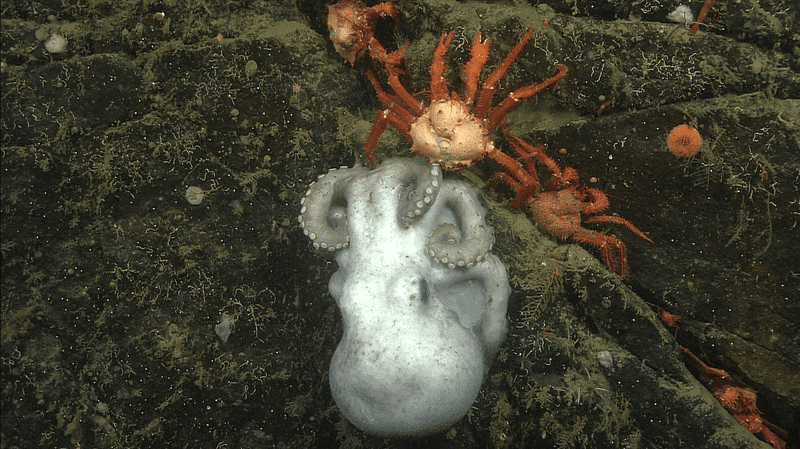

Aquí están los 100 episodios más recientes de 676. Los anteriores están en el feed del podcast.
Podcasts similares
Más podcasts de Historia