

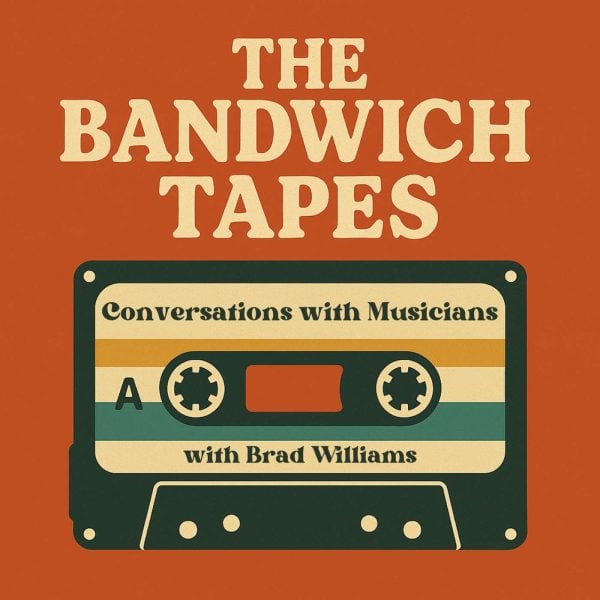
The Bandwich Tapes
- Episodios
- 203
- Se publica
- varias veces por semana
- Último episodio
- 23 Nov 2026
Sobre el podcast
The Bandwich Tapes is a podcast where host Brad Williams sits down with musicians for thoughtful conversations about the craft of making music. Each episode explores the experiences, influences, and creative decisions that shape an artist’s work. From improvisation and songwriting to collaboration, recording, and life on the road, the conversations go beyond biography to focus on how music actually gets made. Guests include instrumentalists, composers, songwriters, and producers from across the musical landscape. The tone is relaxed, curious, and musician-to-musician—an opportunity to hear artists reflect on their process, their collaborators, and the musical moments that have stayed with them. Whether you're a seasoned musician, a die-hard music fan, or simply someone who loves a good story, The Bandwich Tapes has something for everyone. So, come along for the ride as we explore the magic of music and the incredible journeys of the people who bring it to life.
Episodios 203
Glenn Kotche: Listening, Creativity, and a Life Beyond Musical Boundaries
On this episode of The Bandwich Tapes, I sit down with drummer, percussionist, and composer Glenn Kotche for a conversation about musical curiosity, listening, and a career that spans rock, classical …
Notas del episodio
On this episode of The Bandwich Tapes, I sit down with drummer, percussionist, and composer Glenn Kotche for a conversation about musical curiosity, listening, and a career that spans rock, classical percussion, experimental music, and improvisation. Best known for his work with Wilco, Glenn reflects on his early musical influences and the experiences that shaped his approach to rhythm and sound.
We explore Glenn’s background in marching percussion, including his time at Lake Park High School and The Cavaliers, along with his studies at the University of Kentucky with Jim Campbell. He shares lessons from working with Paul Wertico and discusses how those experiences helped shape his musical instincts and philosophy.
Glenn also takes us inside his work with Wilco, discussing the importance of playing without click tracks, responding to the musicians around him, and understanding how touch, feel, and subtle rhythmic choices can transform a performance. We talk about the relationship between a drummer and a singer and why serving the music often means knowing when to play less.
We discuss Glenn’s work as a composer, including his influential percussion piece Monkey Chant, his interest in Steve Reich, and his exploration of technologies like Sensory Percussion. He also reflects on collaborations with Phil Selway, Levon Helm, Maureen Tucker, Sylvan Esso, and Third Coast Percussion.
Throughout our conversation, Glenn emphasizes the importance of remaining curious, listening closely, and staying open to new musical experiences. It’s a thoughtful look at creativity, collaboration, and building a musical identity that extends beyond any single instrument or genre.
Key Takeaways- Glenn’s early experiences with marching percussion, including his time with The Cavaliers, developed technical discipline, precise listening skills, and the ability to make subtle musical adjustments in real time.
- Studying with Jim Campbell at the University of Kentucky exposed Glenn to an unusually broad range of percussion traditions, reinforcing his belief that musical growth comes from curiosity and diverse experiences.
- A memorable lesson from Paul Wertico taught Glenn that technically correct playing isn’t necessarily compelling playing. Musical intention, energy, and the willingness to take risks are essential parts of a meaningful performance.
- Wilco’s approach to live performance emphasizes flexibility rather than rigid tempos, allowing Glenn and his bandmates to respond to vocal phrasing, room acoustics, and the musical energy of a particular night.
- Glenn’s evolution as a drummer has involved developing greater sensitivity to touch, groove, and musical context, including an understanding of how rhythmic fills can communicate a song's direction.
- Revisiting Monkey Chant reinforced Glenn’s belief that compositions remain living works, capable of being reinterpreted and transformed by different performers and new technologies.
- Glenn encourages developing musicians to listen broadly, explore unfamiliar musical situations, and recognize that skills learned in one area of percussion can profoundly influence every other aspect of their playing.
Music from the Episode
Art of Almost - Wilco
Blue Black Nova - Wilco
Monkey Chant - Glenn Kotche
Clapping Music Variations - Glenn KotcheAbout the Podcast
The Bandwich Tapes is a podcast hosted by musician Brad Williams, featuring thoughtful conversations with musicians, songwriters, composers, producers, and other creative artists. Through discussions of musical influences, creative processes, collaboration, and the experiences that shape an artist’s work, the show explores not only how music is made but also why it matters.
Connect with the ShowQuestions, comments, or guest suggestions?
Email: [email protected]
Mathis Picard: The Art of Orchestration, Collaboration, and Musical Freedom
On this episode of The Bandwich Tapes, I sit down with French-born pianist and composer Mathis Picard to explore his musical journey, his fascination with stride piano, and the creative philosophy behind his …
Notas del episodio
On this episode of The Bandwich Tapes, I sit down with French-born pianist and composer Mathis Picard to explore his musical journey, his fascination with stride piano, and the creative philosophy behind his ambitious Sound Orchestra project. Mathis grew up in Europe before moving to New York at seventeen to study at Juilliard, where he studied under legendary pianist Kenny Barron. We talk about those formative experiences, his early discovery of Art Tatum, and the connections he hears between classical composition, jazz, funk, and electronic dance music.
A major part of our conversation centers on the Sound Orchestra, an ensemble Mathis first imagined when he was just thirteen years old. He shares how that original vision has evolved into a large group that combines horns, percussion, electric bass, and piano, with influences ranging from Duke Ellington and Earth, Wind & Fire to Ravel, Debussy, and the electronic producer Floating Points. We explore his approach to orchestration, the importance of rhythm and texture, and his desire to bring together acoustic and electronic musical traditions.
We also spend time discussing the creative process behind his recent projects, including his collection of preludes and fugues and the Sound Orchestra album. Mathis explains why he composes by hand, how traveling inspires his writing, and what happens when carefully constructed compositions are placed in the hands of musicians he trusts. His approach to recording emphasizes the energy of musicians performing together, preserving the spontaneous moments and imperfections that make each performance unique.
Throughout our conversation, we return to the importance of listening, collaboration, and leaving space for other musicians. Mathis reflects on the relationship between being a bandleader and a sideman, the lessons he learned from Kenny Barron, and the freedom that comes from allowing music to develop beyond the composer’s original intentions. It’s a conversation about musical curiosity, creative discipline, and the value of trusting the people around you.
Key Takeaways
- Mathis Picard’s Sound Orchestra began as an idea when he was thirteen and evolved into a large ensemble that brings together jazz orchestration, funk, percussion, and contemporary musical influences.
- His discovery of Art Tatum’s recording of “Tiger Rag” sparked a fascination with stride piano and its ability to create the sound and rhythmic complexity of an entire ensemble.
- Studying with Kenny Barron at Juilliard taught Mathis the importance of listening, musical calmness, and learning through playing rather than relying entirely on verbal instruction.
- Mathis draws inspiration from classical composers, including Ravel, Debussy, Poulenc, and Chopin, as well as Duke Ellington, Earth, Wind & Fire, and electronic dance music.
- His composition process relies on handwritten manuscript paper, allowing him to hear and consider each note before committing it to the page.
- The Sound Orchestra album was recorded in a single day, with the ensemble approaching the session like a live concert and preserving the spontaneous interactions between musicians.
- Mathis believes that great collaboration requires trust, restraint, and musical space, allowing individual performers to contribute their own ideas to a shared creative vision.
Music from the Episode
Fearless - Mathis Picard
A Bigger Picture Pt. 1 (Truth) - Mathis Picard
SunRise - Mathis Picard
Ho Azy - Mathis PicardAbout the Podcast
The Bandwich Tapes is a music interview podcast hosted by Brad Williams, featuring thoughtful conversations with musicians, composers, songwriters, and artists from across the musical spectrum. Through discussions about creativity, collaboration, technique, and the experiences that shape a musical life, the podcast explores not just the music people make, but the people and ideas behind it.
Connect with the Show
Questions, comments, or guest suggestions?
Dylan Mattingly: The Wonder of Music, the Art of Discovery, and The Wild Heart
Episode SummaryOn this episode of The Bandwich Tapes, I sit down with composer Dylan Mattingly for a fascinating conversation about curiosity, imagination, and the remarkable possibilities of music. Dylan’s …
Notas del episodio
Episode Summary
On this episode of The Bandwich Tapes, I sit down with composer Dylan Mattingly for a fascinating conversation about curiosity, imagination, and the remarkable possibilities of music. Dylan’s work moves freely between contemporary classical music, folk traditions, experimental tuning systems, and the expansive musical worlds he’s spent years imagining. We talk about his earliest experiences with music, from discovering the magic of a CD player as a child to realizing that marks on a piece of staff paper could become actual sound. Those early moments of wonder helped shape a creative philosophy that continues to guide his work.
We explore Dylan’s approach to composition, which often begins long before a single note is written. Rather than starting with melodies or harmonic ideas, he spends considerable time imagining the emotional experience he wants to create for listeners. We discuss his relationship with composer John Adams, the influence of Olivier Messiaen and Philip Glass, and the impact of artists like Bob Dylan, Joni Mitchell, Joanna Newsom, and Wilco. Dylan also shares his fascination with microtonal music and how unfamiliar tuning systems can help listeners experience even the simplest musical ideas as though they’re hearing them for the first time.
A major part of our conversation centers on Dylan’s album The Wild Heart, released on Nonesuch Records, and its relationship to his ambitious, nearly decade-long project History of Life. Drawing inspiration from Homer’s Odyssey, Charles Darwin’s voyage aboard the Beagle, and the countless individual lives that make up human history, the larger work explores how stories, music, and experiences evolve across generations.
Dylan explains how The Wild Heart offers a glimpse into that extraordinary musical universe and what it means to finally hear music that has long existed in his imagination.
We also dig into the recording process with Contemporaneous, the ensemble Dylan co-founded with conductor David Bloom in 2010. Dylan shares why capturing the energy of musicians playing together matters more to him than technical perfection, and how some of the album’s best performances emerged when the musicians stopped worrying about getting everything right and simply enjoyed playing. Along the way, we talk about the responsibility artists have to their audiences, the importance of trust between composers and performers, and how becoming a father has given Dylan an entirely new perspective on discovery and wonder.
This conversation reminded me that music isn’t simply about creating something new. Sometimes it’s about finding a way to experience something familiar with fresh ears. Dylan’s enthusiasm for that possibility is at the heart of everything he creates, and I thoroughly enjoyed hearing him explain not just how he makes music, but why he feels compelled to make it.
Key Takeaways- Dylan’s earliest musical experiences, including childhood encounters with recorded music and learning to write notes on staff paper, sparked a lifelong fascination with composition and musical possibility.
- His creative process often begins with years of imagining emotional experiences, philosophical questions, and sonic environments before translating those ideas into written music.
- John Adams played an important role in Dylan’s development as both a mentor and musical influence, encouraging him to take the artistic possibilities of composition seriously.
- Microtonal tuning offers Dylan a way to create unfamiliar musical environments where listeners can rediscover the emotional power of familiar harmonies and musical gestures.
- The Wild Heart draws on History of Life, an expansive project that connects ancient storytelling, Charles Darwin’s observations, and the shared experiences of human existence.
- Dylan’s longstanding relationship with Contemporaneous allows him to explore demanding music while maintaining the trust, freedom, and enjoyment necessary for meaningful performances.
- Recording The Wild Heart reinforced his belief that emotional authenticity, collective energy, and the pleasure of making music together are ultimately more important than technical perfection.
Music from the Episode
The Transmutation Notebooks - I. Ulysses Dance - Dylan Mattingly
Sunt Lacrimae Rerum (these are the tears of things) - Dylan Mattingly
The Transmutation Notebooks - II. Notes for Another Life - Dylan Mattingly
The Transmutation Notebooks - V. Past Ithaca -Dylan Mattingly
About the PodcastThe Bandwich Tapes is a podcast hosted by musician Brad Williams, featuring thoughtful conversations with musicians, songwriters, composers, producers, and other creative artists. Through discussions of musical influences, creative processes, collaboration, and the experiences that shape an artist’s work, the show explores not only how music is made but also why it matters.
Connect with the Show
Questions, comments, or guest suggestions?Email: [email protected]
James Woods: The Killer’s Wife — Inside the Songs, Part Three
On this episode of The Bandwich Tapes, I welcome back actor and songwriter James Woods for the third installment of our ongoing conversation about his album The Killer’s Wife. Over the course of these three …
Notas del episodio
On this episode of The Bandwich Tapes, I welcome back actor and songwriter James Woods for the third installment of our ongoing conversation about his album The Killer’s Wife. Over the course of these three interviews, we’ve explored the origins of the project, the musicians and creative team responsible for bringing it to life, and the decisions that shaped its sound and visual identity. This time, we dig further into the individual songs, examining the stories behind the lyrics, the musical choices that give those stories their emotional weight, and the creative process that continues to evolve as James reflects on the album.
We begin by discussing James’s songwriting partnership with Bob Wayne and the importance of allowing different artists to interpret the same material. James explains why he often prefers to let Bob read his lyrics without offering an explanation, giving him the freedom to discover his own musical interpretation. We also talk about producer Shooter Jennings and the remarkable musicians who contribute to these recordings. From a subtle banjo part to an unexpected harmonic shift, James shares how small creative suggestions can transform a song. Throughout the conversation, he emphasizes the collaborative nature of the project and the importance of creating an environment where everyone feels comfortable contributing ideas.
Much of our discussion centers on the storytelling within The Killer’s Wife. James takes us deeper into songs including “Harm’s Way,” “Man on the Radio,” “Wellfleet Cadillac,” “My Baby Girl,” and the album’s title track. He explains the historical references and hidden details woven into the lyrics, including the meaning behind the address “1620 Old Harm’s Way,” which he challenged me to decipher during our previous conversation. We also discuss the distinction between a character’s external quest and internal journey, the relationship between musical beauty and unsettling subject matter, and the deliberate contrasts that help the album unfold as a complete listening experience.
One particularly interesting part of our conversation explores the recording of “Man on the Radio.” James describes how an initial lyrical idea developed into a much larger musical scene, complete with a fictional radio broadcast, spontaneous performances, and an improvised passage representing the central character’s increasingly disturbed thoughts. We also discuss “Wellfleet Cadillac,” where a melodic arrangement creates a striking contrast with the darkness of the underlying story, and “My Baby Girl,” which James approaches through the perspective of a father trying to protect his daughter while recognizing that she must ultimately make her own decisions. Along the way, we return to the album’s central theme: the struggle between good and evil, and the possibility that compassion and moral courage can overcome even the darkest circumstances.
Our conversation also becomes deeply personal. James talks about his relationship with Sarah, whose photography and artistic direction have become essential parts of the Breakheart Music projects, and how their life together has given him the freedom to pursue songwriting. We discuss the influence of family, the people who help shape our lives, and the ways music can preserve our connections to those we’ve lost. I share some thoughts about my own father and the reasons I started this podcast, leading to a particularly meaningful exchange about music, memory, and the relationships that continue to influence us long after someone is gone.
As we bring this three-part conversation to a close, James reflects on what he’s learned about songwriting, collaboration, and trusting his creative instincts. He also shares some of the ideas taking shape for future recordings, including new approaches to arranging songs and allowing different musical interpretations to coexist. What I appreciate most about these conversations is James’s willingness to examine the process behind the music, sometimes discovering new connections and meanings in his own work as we’re talking. This final installment offers another perspective on The Killer’s Wife and the people, experiences, and creative decisions that brought the album to life.
Key Takeaways
- James’s collaboration with Bob Wayne and Shooter Jennings is built on mutual trust and the freedom to interpret material differently. Rather than controlling every creative decision, James encourages the musicians to bring their own ideas to the songs.
- The Killer’s Wife developed organically from James’s memories of encountering the real-life wife of a serial killer. As the songs took shape, the project became a larger fictional exploration of goodness, evil, love, and survival.
- The lyrics contain historical references, literary allusions, and hidden connections between songs. James explains how “1620 Old Harm’s Way” connects to the arrival of the Pilgrims in Cape Cod and how details like these help establish the album’s narrative world.
- “Man on the Radio” grew from a simple lyrical phrase into one of the album’s most elaborate productions, incorporating a fictional broadcast, ensemble performances, and improvised dialogue to explore a character’s distorted perception of reality.
- Musical contrast is central to the album’s identity. Songs such as “Wellfleet Cadillac” pair memorable, melodic arrangements with unsettling subject matter, creating an emotional tension that strengthens the storytelling.
- Sarah’s photography, visual concepts, and creative contributions help establish the atmosphere of the project, while the physical album packaging reinforces James’s desire to create a complete artistic experience.
- James sees songwriting as a continuation of the storytelling instincts he developed through acting, but he has learned to trust a more open-ended creative process in which the larger meaning of a project often emerges after the individual songs are written.
Music from the Episode
The Killer's Wife - James Woods
Harm's Way - James Woods
Shadows of the Past - James WoodsAbout the Podcast
The Bandwich Tapes is a podcast hosted by musician Brad Williams, featuring thoughtful conversations with musicians, songwriters, composers, producers, and other creative artists.Through discussions about musical influences, creative processes, collaboration, and the experiences that shape an artist’s work, the show explores not only how music gets made, but why it matters.
Connect with the Show
Questions, comments, or guest suggestions?Email: [email protected]
Explore James Woods’s music, physical album releases, and additional information through his official website and Breakheart Music.
Remy Morritt: Finding Your Voice Behind the Drums
Episode SummaryOn this episode of The Bandwich Tapes, I’m joined by drummer, singer, and session musician Remy Morritt. Originally from Seattle and now based in Los Angeles, Remy has built a career working with …
Notas del episodio
Episode Summary
On this episode of The Bandwich Tapes, I’m joined by drummer, singer, and session musician Remy Morritt. Originally from Seattle and now based in Los Angeles, Remy has built a career working with some remarkable artists, including Lizzy McAlpine, Christian Lee Hutson, Role Model, Fenne Lily, and Joey Dosik. We talk about his journey from playing along with records as a kid to becoming an in-demand studio and touring musician, and how his approach to the drums has evolved along the way.
Remy grew up surrounded by music, with parents who introduced him to artists like The Police, Steely Dan, Rush, and The Beatles, and an older sister who opened his ears to an entirely different world of music. We discuss those early influences, his years studying jazz at the University of Washington with drummer Ted Poor, and the importance of developing your ears and musical instincts before becoming too concerned with technique.
A big part of our conversation centers on Remy’s work with Lizzy McAlpine. He shares how he became part of her touring band, what it’s like recording with Lizzy and her collaborators, and how he approaches supporting a singer whose music depends so much on dynamics, melody, and emotional expression. We also get into the creative process behind his drum part on “A car wash and a new pair of pants,” and why being recognized for your individual musical voice can be more rewarding than simply delivering a technically perfect performance.
We spend time discussing the differences between recording remotely and working in a studio with other musicians, the challenges of balancing touring with life at home, and the evolution of Remy’s playing toward a more restrained, song-centered approach. His appreciation for drummers like Levon Helm, Jim Keltner, and Jeff Porcaro leads us into a conversation about feel, time, and the subtle decisions that make a drum part memorable.
What I particularly enjoyed about this conversation was Remy’s perspective on developing an identity as a musician. We talk about listening as a skill, learning directly from recordings, and understanding that the most important thing isn’t necessarily how much you can play, but whether what you’re playing actually serves the music.Connect with Remy Morritt through his website or Instagram to learn more about his work, recording services, and upcoming performances.
Key Takeaways- Finding your musical identity: Remy discusses how his playing has evolved from a more technically focused, aggressive approach toward one that emphasizes restraint, dynamics, space, and personal expression.
- The importance of early influences: Growing up with a wide variety of music, particularly through his parents and older sister, helped shape Remy’s musical curiosity and encouraged him to explore different styles.
- Learning from Ted Poor: Remy’s studies at the University of Washington provided valuable lessons in jazz, improvisation, musicianship, and the personal challenges of artistic development.
- Playing for the singer: Working with Lizzy McAlpine has reinforced the importance of listening to the vocalist, responding to phrasing and dynamics, and crafting drum parts that support a song's emotional direction.
- Developing a recognizable sound: Remy explains why he values being called into a session specifically for his musical personality rather than for his technical ability alone.
- Learning by playing along: Studying recordings by Levon Helm, Jim Keltner, Jeff Porcaro, and other influential drummers helped Remy understand the subtle differences in feel, placement, and musical intention that can’t always be learned from books or exercises.
- Building a sustainable musical career: From relocating to Los Angeles without guaranteed work to balancing remote recording, studio sessions, and touring, Remy shares his perspective on relationships, collaboration, and finding fulfillment in different seasons of a musician’s life.
Music from the Episode
High Hopes 3000 - Role Model
Carousel Horses - Christian Lee Hutson
Spring Into Summer - Lizzy McAlpine
A car wash and a new pair of pants - Lizzy McAlpineAbout the Podcast
The Bandwich Tapes is a music interview podcast hosted by musician Brad Williams. Each episode features conversations with musicians, songwriters, producers, and artists about their careers, creative processes, musical influences, and the experiences that shape their work. Through thoughtful, musician-to-musician conversations, the show explores not just the music people make, but how and why they make it.
Connect with the Show
Have a question, comment, or guest suggestion?Giacomo Copiello: Rethinking the Guitar, the Human Voice, and Musical Expression
Episode SummaryOn this episode of The Bandwich Tapes, I sit down with Italian classical guitarist and artistic researcher Giacomo Copiello to explore the relationship between technique, musical expression, and …
Notas del episodio
Episode Summary
On this episode of The Bandwich Tapes, I sit down with Italian classical guitarist and artistic researcher Giacomo Copiello to explore the relationship between technique, musical expression, and the instruments we play. Giacomo shares his journey from rock guitar to classical music and how his studies shaped his approach to performance and interpretation.
We discuss the eight-string Brahms Guitar, Paul Galbraith’s innovative vertical playing system, and how changes in posture and technique can open new musical possibilities. Giacomo also talks about his doctoral research at the University of Surrey, where he used performance, transcription, and experimentation to explore the connection between artistic practice and musical discovery.
We also explore his fascination with the human voice and how it influences his arrangements of music by Schubert and Mendelssohn. Throughout our conversation, Giacomo offers thoughtful insights into phrasing, interpretation, and the ways musicians can push beyond the traditional limitations of their instruments.
Key Takeaways
- Giacomo’s musical journey began with rock music, electric guitar, and artists like Jimi Hendrix before he discovered classical guitar and the possibilities of polyphonic music.
- Studying with Stefano Grondona introduced him to historical guitars and helped him understand how different instruments require different approaches to sound production, touch, and interpretation.
- Paul Galbraith’s vertical playing technique offers a different physical relationship with the guitar, but Giacomo emphasizes that this personal playing system should not be confused with the design or requirements of the eight-string Brahms Guitar itself.
- Giacomo’s practice-based PhD research at the University of Surrey allowed performance, transcription, and experimentation to generate academic questions rather than simply illustrate predetermined theories.
- His work with composer Stephen Goss helped him develop a research framework that respected artistic practice as a source of knowledge and discovery.
- Transcribing music by Schubert and Mendelssohn led Giacomo to explore how breath, vocal phrasing, resonance, and musical continuity can be translated to an instrument whose sound naturally decays.
- Through new arrangements, contemporary collaborations, and the publication of performance materials, Giacomo hopes to expand the Brahms Guitar repertoire and make the instrument more accessible to other musicians.
Music from the Episode
Felix Mendelssohn - Lieder ohne Worte, Op. 67 No. 2, MWV U 145: II. Allegro leggiero (Arr. G. Copiello for 2 Guitars)- Giacomo Copiello & Michele Tedesco
Franz Schubert - Schwanengesang, D. 957: No. 1, Liebesbotschaft (Arr. for Guitar by Giacomo Copiello)- Giacomo Copiello
Franz Schubert - Schwanengesang, D. 957: No. 4, Ständchen (Arr. for Guitar by Giacomo Copiello)- Giacomo Copiello
About the PodcastThe Bandwich Tapes is a podcast hosted by musician Brad Williams, featuring thoughtful conversations with musicians, songwriters, composers, producers, and other creative artists. Through discussions about musical influences, creative processes, collaboration, and the experiences that shape an artist’s work, the show explores not only how music gets made, but why it matters.
Connect with the ShowQuestions, comments, or guest suggestions?
Email: [email protected]
To learn more about Giacomo Copiello, explore his performances, recordings, research, and arrangements through his official website, YouTube channel, and social media.Caroline Owens: Finding Truth in the Music
Episode SummaryOn this episode of The Bandwich Tapes, I sit down with bluegrass singer-songwriter Caroline Owens to discuss musical influences, songwriting, artistic growth, and the importance of honesty in …
Notas del episodio
Episode Summary
On this episode of The Bandwich Tapes, I sit down with bluegrass singer-songwriter Caroline Owens to discuss musical influences, songwriting, artistic growth, and the importance of honesty in music. Caroline has one of those voices that immediately makes you believe what she’s singing. Throughout our conversation, we explore where that authenticity comes from and how it shapes her approach to both performing and writing songs.
We talk about Caroline’s early years growing up in Denton, North Carolina, where bluegrass music and nightly jam sessions were part of everyday life. She shares how Dolly Parton and Alison Krauss helped shape her musical identity, not simply through their singing but through the way they approached their music and treated others. We also discuss the remarkable experience of seeing musical heroes become friends and collaborators, including her work with The Isaacs, and why stepping outside your comfort zone is essential to growing as an artist.
A significant part of our conversation centers on Caroline’s project Low Flying Planes. She shares the story behind the title track, a deeply personal song she wrote several years ago and held onto until she felt ready to record it. We discuss the musicians who helped bring the project to life, the remarkable efficiency and creativity of Nashville’s studio players, and the challenges of finding the right moment to release music that means something to you.
We also spend time discussing Evangeline, a song Caroline co-wrote with Lacey Green that explores domestic abuse through the lens of traditional bluegrass storytelling. Caroline explains how the song challenged some of the genre’s familiar narratives and why she felt compelled to tell the story from a different perspective. She shares some of the deeply personal responses she’s received from listeners who recognize their own experiences, or those of someone they love, in the song.
Throughout our conversation, we return to the idea that great music doesn’t have to be complicated to be meaningful. Whether we’re talking about the influence of songwriters like Dean Dillon, Robert Lee Castleman, and John Pennell, or the responsibility of carrying musical traditions forward, Caroline brings a thoughtful perspective to the relationship between a song, the person singing it, and the people listening.
Key Takeaways
- Caroline began singing at just two years old and grew up surrounded by the thriving bluegrass community of Denton, North Carolina, where jam sessions helped develop her musical foundation.
- Dolly Parton and Alison Krauss were defining influences on Caroline’s singing, shaping her understanding of emotional honesty, musical expression, and the importance of connecting with an audience.
- Working with musical heroes, including The Isaacs, taught Caroline the value of building genuine friendships and embracing uncomfortable situations as opportunities for artistic growth.
- The title track of Low Flying Planes was written entirely by Caroline and remained unreleased for several years until she felt personally and artistically ready to share it.
- Caroline discusses the extraordinary musicianship of Nashville’s studio players and how their preparation, instincts, and efficiency helped shape the sound of her new project.
- Co-written with Lacey Green, Evangeline challenges traditional bluegrass murder-ballad conventions while addressing domestic abuse, giving listeners a powerful story with which many have personally connected.
- Caroline believes the lasting power of bluegrass and acoustic music comes from authenticity, emotional connection, and the ability of a well-written song to communicate something deeply human.
Music from the Episode
Telluride - Caroline Owens
Old Time Church - Caroline Owens (feat. The Isaacs)
Evangeline - Caroline OwensAbout the Podcast
The Bandwich Tapes is a podcast hosted by musician Brad Williams, featuring thoughtful conversations with artists, musicians, songwriters, producers, and other creative voices. Each episode explores the experiences, influences, collaborations, and creative decisions that shape a life in music. From the stage to the studio and everywhere in between, The Bandwich Tapes goes beyond the music to discover the stories and people behind it.
Connect with the Show
Have a question, comment, or suggestion for a future guest? I’d love to hear from you.
Email: [email protected]
Ella Reid: Finding Your Voice and Making Music on Your Own Terms
Episode SummaryOn this episode of The Bandwich Tapes, I sit down with Austin-based singer-songwriter Ella Reid for an honest and entertaining conversation about finding your creative voice, navigating the …
Notas del episodio
Episode Summary
On this episode of The Bandwich Tapes, I sit down with Austin-based singer-songwriter Ella Reid for an honest and entertaining conversation about finding your creative voice, navigating the realities of the music business, and learning when it’s time to explore something new. Originally from Minnesota, Ella’s journey has taken her through screenwriting, graphic design, and eventually to Texas, where she’s spent more than a decade building a career as a working musician. We talk about the musical influences that shaped her, from Guns N’ Roses and Gwen Stefani to the Indigo Girls, Ani DiFranco, and Broadway musicals, and how those seemingly different worlds continue to find their way into her songwriting.
Ella shares how developing her voice as a songwriter required more than simply learning to put words and melodies together. It meant becoming comfortable with vulnerability, learning to communicate emotions more directly, and understanding the importance of specificity in storytelling. We discuss the years she spent writing songs, the lessons she learned from other songwriters, and why she’s never been particularly interested in limiting herself to a single genre. Whether a song calls for country, pop, folk, rock, or even disco, Ella believes the music should go wherever the song needs to go.
We also get into the realities of making a living as an independent musician. Ella talks candidly about building her career through open mics, breweries, wineries, and venues throughout the Austin area, and the challenges of transitioning from performing for an existing audience to selling tickets to her own shows. We discuss the demands of booking, marketing, social media, and maintaining a creative identity while handling the business responsibilities that come with being an independent artist. It’s a conversation about perseverance, but also about recognizing your limits and finding ways to make a sustainable life in music.
One of the most interesting parts of our conversation is Ella’s return to her roots in screenwriting and musical theater. She’s been developing an original musical called The Death of Jerry Pine, a comedy exploring the lives, relationships, and struggles of performers trying to find their place in the world. Writing thirteen songs for the project has also led her deeper into music production, working in Logic Pro, experimenting with orchestration, and exploring opportunities in cinematic music and film and television licensing.
What I particularly appreciated about talking with Ella was her willingness to be candid about the uncertainty that comes with a creative career. She’s proud of what she’s accomplished, but she’s also asking important questions about what comes next. We talk about the difference between persistence and simply exhausting yourself, the importance of making art that feels genuine, and why sometimes the best way forward is to permit yourself to change direction.
Key Takeaways
- Ella’s musical influences range from rock and alternative music to folk, country, and Broadway, giving her a wide creative vocabulary that continues to shape her songwriting.
- Finding her voice as a songwriter required years of practice, emotional honesty, and learning to communicate specific experiences rather than hiding behind vague lyrics.
- Building a career in Austin taught Ella the importance of professionalism, consistency, and understanding the difference between performing for an existing audience and developing a dedicated fan base.
- Ella approaches every song as an individual creative statement, allowing its musical style and production to develop naturally rather than forcing it into a particular genre.
- The responsibilities of an independent musician extend far beyond performing, requiring skills in booking, marketing, design, promotion, and business management.
- Writing her original musical, The Death of Jerry Pine, has reconnected Ella with her screenwriting background while expanding her interests in music production, orchestration, and cinematic composition.
- After more than a decade as a working musician, Ella is learning to balance ambition with sustainability, recognizing that creative growth sometimes requires establishing boundaries and exploring new directions.
Music from the Episode
Nobody But Me - Ella Reid
About the PodcastThe Bandwich Tapes is a podcast hosted by musician Brad Williams, featuring thoughtful conversations with musicians, songwriters, composers, producers, and other creative artists. Through discussions of musical influences, creative processes, collaboration, and the experiences that shape an artist’s work, the show explores not only how music is made but also why it matters.
Connect with the ShowQuestions, comments, or guest suggestions?
Email: [email protected]
Richie Morales: Groove, Versatility, and a Life Behind the Drums
On this episode of The Bandwich Tapes, I sit down with drummer Richie Morales for a wide-ranging conversation about groove, versatility, preparation, and a career spent playing alongside some remarkable …
Notas del episodio
On this episode of The Bandwich Tapes, I sit down with drummer Richie Morales for a wide-ranging conversation about groove, versatility, preparation, and a career spent playing alongside some remarkable musicians.
Richie takes me back to his early years in Chicago and New York, where an eclectic musical upbringing and a willingness to learn opened doors to gigs with Ray Barretto, the Brecker Brothers, Spyro Gyra, Grover Washington Jr., Mike Stern, Al Di Meola, Dave Valentin, Bill Evans, and many others. We talk in depth about joining the Brecker Brothers, the intensity required to play that music, and what it meant to share a drum chair once occupied by some of his own heroes.
We also dig into Richie’s years with Spyro Gyra and the importance of developing a personal voice within an established band’s sound. Richie talks about working alongside great percussionists, learning the language of Afro-Cuban and Brazilian music on the bandstand, and understanding how a drummer and percussionist can create one unified rhythmic voice without getting in each other’s way.
A large part of our conversation is about education—not only Richie’s years as a teacher, but the kind of education that happens by playing with musicians who are more experienced than you. Richie reflects on the master-apprentice tradition that shaped him, his decision to return to school later in his career, and what today’s young musicians gain—and sometimes miss—in a world increasingly shaped by conservatories, YouTube, and social media.
And through all of it, we keep coming back to something fundamental: feel. Technique matters. Reading matters. Preparation matters. Versatility matters. But as Richie puts it, the feel is why people call you back.
Key Takeaways• Richie traces his versatility to an early musical environment filled with rock, blues, jazz, Latin music, classical music, R&B, and pop.
• His relationship with Randy and Michael Brecker grew out of New York’s club scene, particularly Seventh Avenue South, eventually leading to touring and recording with the Brecker Brothers.
• Playing the Brecker Brothers’ music required intensity, deep pocket, stylistic authenticity, interaction, and the ability to move comfortably between R&B, jazz, Afro-Cuban, Brazilian, and fusion vocabulary.
• Richie credits musicians including Ray Barretto, Manolo Badrena, Don Alias, Sammy Figueroa, and others with helping him understand how drums and percussion can work together as one rhythmic voice.
• His years with Spyro Gyra gave him time to move beyond simply learning an established band’s sound and begin putting his own musical personality into the music.
• Preparation and professionalism have been as important to Richie’s career as technique: learn the music, understand the style, show up ready, and don’t make the same mistake twice.
• Richie sees enormous value in music education and modern technology, but believes there is still no substitute for playing with experienced musicians and learning on the bandstand.
Music from the Episode
Bright Lights - Spyro Gyra
Spirit Walk - Richie Morales
Piri Ti Latino - Spyro Gyra
Pan Caribe - Richie MoralesAbout the Podcast
The Bandwich Tapes is a musician-to-musician conversation about the people, experiences, and ideas behind the music. I talk with artists about their careers, creative process, collaborations, influences, and the lessons they’ve learned along the way.
Connect with the Show
Questions, comments, or guest suggestions?Chad and James Hampton: Hunting for Purpose
On this episode of The Bandwich Tapes, I sit down with twin brothers Chad and James Hampton, founders of Huntin’ the Truth Ministries, pastors, outdoorsmen, authors, and hosts of Twin Factor. Their work brings …
Notas del episodio
On this episode of The Bandwich Tapes, I sit down with twin brothers Chad and James Hampton, founders of Huntin’ the Truth Ministries, pastors, outdoorsmen, authors, and hosts of Twin Factor. Their work brings together faith, hunting, mentorship, and a simple question that has become central to their ministry: What are you hunting for? Chad and James grew up hunting with their father, beginning with bow hunting when they were seven years old. …James Woods: The Killer’s Wife – Inside the Songs (Part Two)
Episode SummaryOn this episode of The Bandwich Tapes, I'm joined once again by actor, writer, and songwriter James Woods for the second installment of our three-part conversation about his new album, The …
Notas del episodio
Episode Summary
On this episode of The Bandwich Tapes, I'm joined once again by actor, writer, and songwriter James Woods for the second installment of our three-part conversation about his new album, The Killer's Wife. After exploring James's transition into songwriting and the beginnings of this remarkable project in our first conversation, we return to take a closer look at the music itself, the stories behind the songs, and the creative partnership that brought the album to life.
James takes us inside his collaboration with songwriter and musician Bob Wayne and Grammy-winning producer Shooter Jennings. We discuss how James's lyrics become the foundation for Bob's compositions, how Shooter approaches the recording process, and why the three have developed such a strong creative relationship. James also shares stories from the sessions at Sunset Sound, the musicians who helped shape the record, and the importance of allowing a song to develop naturally rather than forcing it into a predetermined structure.
Much of our conversation focuses on the cinematic nature of The Killer's Wife. James explains how the album gradually developed into a larger narrative built around a fictional radio broadcast and tent revival, with themes of good and evil, faith, violence, redemption, and hope. We explore the origins of "I Am the Blazing Sun" and "Hearts of Men," two songs that eventually became the album's musical and thematic bookends, and how an unexpected creative breakthrough helped bring the entire concept together.
We also dig into the songwriting itself, including "Shadows of the Past," "Early Ripe, Early Rotten," "The Killer's Wife," and "Harm's Way." James shares how personal memories, literature, mythology, film, and even something as simple as a street sign can become the starting point for a song. He explains why a single word can transform a lyric, how he decides what to reveal to the listener, and why he's willing to let the music reshape the structure of his writing.
What I enjoyed most about this conversation was hearing James examine his own creative process, sometimes discovering connections and influences he hadn't consciously considered while writing. It's a fascinating look at an artist finding a new form of expression, and at a group of collaborators who trust one another enough to take creative risks.This is part two of our three-part series with James Woods. We'll continue our exploration of The Killer's Wife in the next episode, going further into the songs, the production, and the stories behind the album.
Key Takeaways- A different kind of creative expression: James discusses how writing lyrics differs from acting and how songwriting has allowed him to explore personal memories, emotions, and experiences in ways he hadn't anticipated.
- The partnership with Bob Wayne and Shooter Jennings: James explains how his lyrics inspire Bob's compositions, how Shooter brings his instincts as a producer to the recording process, and why trust and creative freedom are essential to their collaboration.
- Building a cinematic concept album: The Killer's Wife evolved into a larger narrative framed by a fictional radio broadcast and tent revival, connecting individual songs through themes of good, evil, redemption, and hope.
- The origins of "I Am the Blazing Sun" and "Hearts of Men": Written at different points in the creative process, these songs eventually became the album's opening and closing statements, giving the project its larger thematic structure.
- Writing from experience and imagination: From the personal reflections of "Shadows of the Past" to the darker storytelling of "Early Ripe, Early Rotten," James explores how lived experiences, literary influences, and fictional narratives inform his lyrics.
- The power of a single word: James explains how changing a lyric from "bodies" to "secrets" in "The Killer's Wife" transformed a literal description into something more poetic and evocative.
- Authenticity over perfection: James discusses the importance of preserving the human element in recordings, embracing spontaneous performances, and allowing the musicians to bring their individual personalities to the music.
Music from the Episode
The Hearts of Men - James Woods
The Killer's Wife - James Woods
Shadows of the Past - James Woods
Harm's Way - James WoodsAbout the Podcast
The Bandwich Tapes is a music interview podcast hosted by musician Brad Williams. Each episode features conversations with musicians, songwriters, producers, and artists about their careers, creative processes, musical influences, and the experiences that shape their work. Through thoughtful, musician-to-musician conversations, the show explores not just the music people make, but how and why they make it.
Connect with the Show
Have a question, comment, or guest suggestion?Oz Noy: Clarity, Groove, and Finding Your Own Sound
On this episode of The Bandwich Tapes, I sit down with guitarist Oz Noy for a conversation about the musical path he has built over three decades in New York, the players who have helped shape his music, and …
Notas del episodio
On this episode of The Bandwich Tapes, I sit down with guitarist Oz Noy for a conversation about the musical path he has built over three decades in New York, the players who have helped shape his music, and why clarity and groove remain at the center of his approach. Oz talks about arriving in New York after already establishing himself as a working musician in Israel. Interestingly, becoming a solo artist was never really the plan. …Heavy Diamond Ring: Let Love Be Enough
On this episode of The Bandwich Tapes, I sit down with Sarah Anderson and Paul DeHaven of Heavy Diamond Ring for a conversation about a musical partnership that has lasted more than two decades, the evolution …
Notas del episodio
On this episode of The Bandwich Tapes, I sit down with Sarah Anderson and Paul DeHaven of Heavy Diamond Ring for a conversation about a musical partnership that has lasted more than two decades, the evolution of their approach to making records, and the band’s new EP, Let Love Be Enough. Sarah and Paul first met when they were young musicians in Colorado and quickly began making music together. Their partnership eventually led to more than a decade in Paper Bird and, later, Heavy Diamond Ring. …Ethan Setiawan: Finding the Groove in Little Storms
On this episode of The Bandwich Tapes, I sit down with mandolinist, singer, and recording engineer Ethan Setiawan to talk about his new album, Little Storms, and the musical relationships that have shaped the …
Notas del episodio
On this episode of The Bandwich Tapes, I sit down with mandolinist, singer, and recording engineer Ethan Setiawan to talk about his new album, Little Storms, and the musical relationships that have shaped the band behind it. Ethan talks about meeting his bandmates during his years in Boston and why chemistry, listening, and simply getting along can be every bit as important as technical ability when putting a group together. …Joel Rosenblatt: Pocket, Perspective, and the Next Chapter
On this episode of The Bandwich Tapes, I sit down with drummer, recording engineer, and educator Joel Rosenblatt for a conversation that goes well beyond drumming. Joel has spent his career moving between …
Notas del episodio
On this episode of The Bandwich Tapes, I sit down with drummer, recording engineer, and educator Joel Rosenblatt for a conversation that goes well beyond drumming. Joel has spent his career moving between remarkably different musical environments, including Michel Camilo, Spyro Gyra, Pure Prairie League, Blood, Sweat & Tears, Broadway productions including In the Heights and Hamilton, and countless recording sessions. …David Garfield: Fifty Years of Music Outside the Box
On this episode of The Bandwich Tapes, I sit down with keyboardist, composer, producer, and bandleader David Garfield for a conversation that quickly turns into a history lesson, a rhythm-section master class …
Notas del episodio
On this episode of The Bandwich Tapes, I sit down with keyboardist, composer, producer, and bandleader David Garfield for a conversation that quickly turns into a history lesson, a rhythm-section master class, and a look at what it actually means to spend a lifetime making music with other people. David takes me back to his formative years in St. …Brian Sachs of Mynd Reader: Songs, Space, and Second Chances
On this episode of The Bandwich Tapes, I sit down with Brian Sachs, drummer, songwriter, and co-founder of Mynd Reader, for a conversation about returning to music, discovering songwriting later in life, and …
Notas del episodio
On this episode of The Bandwich Tapes, I sit down with Brian Sachs, drummer, songwriter, and co-founder of Mynd Reader, for a conversation about returning to music, discovering songwriting later in life, and learning to approach creativity with a different set of priorities. Brian’s first musical life took place in New York City with The Authority, a band that came up alongside the Spin Doctors, Blues Traveler, and Joan Osborne in the city’s club scene. …Coyle Girelli: Songs, Soul, and the Long Road to Out of This Town
On this episode of The Bandwich Tapes, I sit down with singer-songwriter Coyle Girelli for a conversation about melody, singing, collaboration, and the experiences that have shaped his songwriting. We spend a …
Notas del episodio
On this episode of The Bandwich Tapes, I sit down with singer-songwriter Coyle Girelli for a conversation about melody, singing, collaboration, and the experiences that have shaped his songwriting. We spend a lot of time talking about his album Out of This Town and its deluxe edition, a collection with an unusual history that stretches back roughly a decade and grew out of his remarkable songwriting partnership with the late Mac Davis. …Kile Antone: Finding His Way Back to the Music
On this episode of The Bandwich Tapes, I sit down with South Carolina country artist Kile Antone for a conversation about music, songwriting, faith, identity, and finding your way back to something you thought …
Notas del episodio
On this episode of The Bandwich Tapes, I sit down with South Carolina country artist Kile Antone for a conversation about music, songwriting, faith, identity, and finding your way back to something you thought you had left behind. Kile’s path to country music has been anything but conventional. He began playing guitar as a teenager, but life eventually took him into law enforcement, ministry, and work as a paramedic. For nearly 30 years, he rarely performed country music in public. …James Woods: The Road Back Through Songwriting (Part One)
On this episode of The Bandwich Tapes, I sit down with James Woods for a conversation centered on a part of his creative life that may surprise people who primarily know him as an actor: songwriting. James …
Notas del episodio
On this episode of The Bandwich Tapes, I sit down with James Woods for a conversation centered on a part of his creative life that may surprise people who primarily know him as an actor: songwriting. James talks about the remarkable burst of creativity that has produced more than 75 songs and a series of concept albums created alongside Shooter Jennings and Bob Wayne. …Nate Morton: Preparation, Versatility, and the Art of Listening
On this episode of The Bandwich Tapes, I sit down with drummer and educator Nate Morton for a wide-ranging conversation about musicianship, preparation, versatility, listening, and the skills that build a …
Notas del episodio
On this episode of The Bandwich Tapes, I sit down with drummer and educator Nate Morton for a wide-ranging conversation about musicianship, preparation, versatility, listening, and the skills that build a career long after you leave the practice room. Nate is best known to many listeners as the drummer for NBC’s The Voice, a gig that requires him to move effortlessly between rock, pop, country, R&B, blues, and just about anything else that lands on the music stand. …Joey Baron: Why Great Musicians Don’t Waste Notes
On this episode of The Bandwich Tapes, I sit down with legendary drummer Joey Baron for one of the most thoughtful conversations I’ve ever had about what it truly means to make music. Rather than talking about …
Notas del episodio
On this episode of The Bandwich Tapes, I sit down with legendary drummer Joey Baron for one of the most thoughtful conversations I’ve ever had about what it truly means to make music. Rather than talking about chops or technique, Joey takes us deep into the ideas of touch, tone, sound production, and why a musician’s relationship with space is just as important as the notes they choose to play. …Joby Burgess: Solving Musical Problems One Sound at a Time
On this episode of The Bandwich Tapes, I sit down with acclaimed percussionist Joby Burgess for a fascinating conversation about life as one of the world’s most in-demand recording musicians. From film scores …
Notas del episodio
On this episode of The Bandwich Tapes, I sit down with acclaimed percussionist Joby Burgess for a fascinating conversation about life as one of the world’s most in-demand recording musicians. From film scores and orchestral performances to contemporary classical music and solo projects, Joby shares what it really means to build a career grounded in versatility, collaboration, and an endless curiosity about sound. …Aubory Bugg: Finding the Song in the World Around You
On this episode of The Bandwich Tapes, I sit down with singer-songwriter Aubory Bugg for a conversation about songwriting, collaboration, musical identity, and the experiences that shaped her forthcoming album …
Notas del episodio
On this episode of The Bandwich Tapes, I sit down with singer-songwriter Aubory Bugg for a conversation about songwriting, collaboration, musical identity, and the experiences that shaped her forthcoming album, I Think I Had Something Once. Aubory grew up in Granite City, Illinois, just outside of St. Louis, and we talk about how that small-town perspective continues to find its way into her writing. …Pat Steward: Groove, Feel, and the Art of Listening
On this episode of The Bandwich Tapes, I sit down with drummer Pat Steward for a wide-ranging conversation about groove, feel, listening, and the experiences that shape a musician over a lifetime. Pat has spent …
Notas del episodio
On this episode of The Bandwich Tapes, I sit down with drummer Pat Steward for a wide-ranging conversation about groove, feel, listening, and the experiences that shape a musician over a lifetime. Pat has spent decades behind the kit, including a long history with Bryan Adams, and I had the chance to see him perform in St. Louis shortly before we recorded this conversation. Watching him play reinforced something I have always admired about his drumming: there are no wasted notes. …Giulio Carmassi: Listening, Instinct, and a Life in Music
On this episode of The Bandwich Tapes, I sit down with multi-instrumentalist, composer, arranger, producer, and engineer Giulio Carmassi for a conversation about instinct, perseverance, and the unexpected turns …
Notas del episodio
On this episode of The Bandwich Tapes, I sit down with multi-instrumentalist, composer, arranger, producer, and engineer Giulio Carmassi for a conversation about instinct, perseverance, and the unexpected turns that shape a life in music. Giulio takes me back to his childhood in Pisa, Italy, where he began on drums before discovering jazz harmony at the piano. By his teens, he was improvising on multiple instruments and learning alongside musicians several times his age. …Ghost Hounds: Soul, Storytelling, and the Making of Justified
On this episode of The Bandwich Tapes, I sit down with SAVNT, lead singer of Ghost Hounds, for a conversation about the band’s new album Justified, vocal interpretation, storytelling, musical identity, and the …
Notas del episodio
On this episode of The Bandwich Tapes, I sit down with SAVNT, lead singer of Ghost Hounds, for a conversation about the band’s new album Justified, vocal interpretation, storytelling, musical identity, and the unexpected path that brought him into the group. We spend a lot of time talking about SAVNT’s approach as a singer. Sam Cooke was one of his earliest and most important influences, but his musical upbringing was much broader than any one genre. …Emanuele Naima: Reimagining Rhythm, Sound, and Steve Reich
On this episode of The Bandwich Tapes, I sit down with Italian guitarist, composer, producer, and sound engineer Emanuele Naima. Our conversation begins with Steve Reich's music and expands into a thoughtful …
Notas del episodio
On this episode of The Bandwich Tapes, I sit down with Italian guitarist, composer, producer, and sound engineer Emanuele Naima. Our conversation begins with Steve Reich's music and expands into a thoughtful exploration of sound, collaboration, and the freedom to pursue more than one creative path. Emanuele tells me how his interest in minimalist music and academic research led him to reimagine all three movements of Reich’s Electric Counterpoint. …Erik Hall: Simplicity, Repetition, and the Feel of the Music
On this episode of The Bandwich Tapes, I sit down with multi-instrumentalist and recording artist Erik Hall to talk about his evolving relationship with minimalist music. We begin with his large-ensemble …
Notas del episodio
On this episode of The Bandwich Tapes, I sit down with multi-instrumentalist and recording artist Erik Hall to talk about his evolving relationship with minimalist music. We begin with his large-ensemble interpretation of Simeon ten Holt’s Canto Ostinato, created in collaboration with Metropolis Ensemble and Sandbox Percussion following a performance at the Brooklyn Botanic Garden. …Josie Sal: Finding Her Voice with “Cowboys & Barbies”
On this episode of The Bandwich Tapes, I sit down with singer-songwriter Josie Sal to talk about her new single “Cowboys & Barbies,” songwriting, finding her sound, and what she is learning as she begins …
Notas del episodio
On this episode of The Bandwich Tapes, I sit down with singer-songwriter Josie Sal to talk about her new single “Cowboys & Barbies,” songwriting, finding her sound, and what she is learning as she begins building a career in music. “Cowboys & Barbies” started as an idea Josie carried around for nearly two years before deciding she was ready to write it. …
Aquí están los 40 episodios más recientes de 203. Los anteriores están en el feed del podcast.
Recomendado por The Bandwich Tapes

Podcasts similares
Más podcasts de Música






¿Es tu podcast?
Confírmalo con una entrada en tu feed: aquí recibes un código, lo añades como podcast:txt en el canal de tu feed y nosotros lo comprobamos. Después tu podcast aparecerá como «verificado» en SoundNode.