

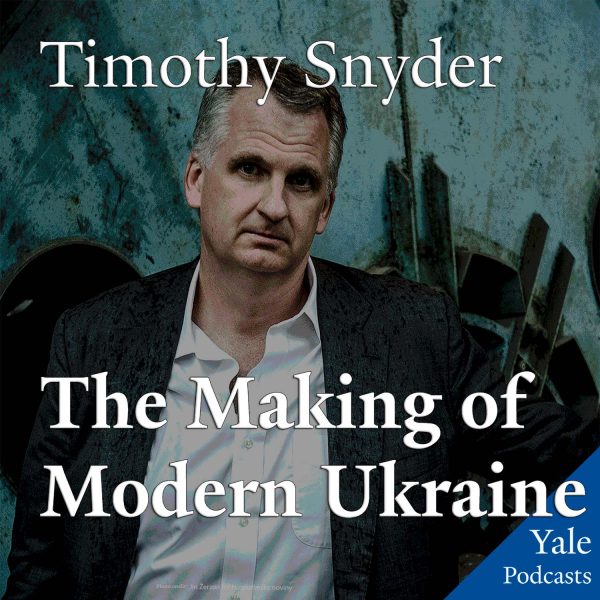
The Making of Modern Ukraine
- Episodios
- 24
- Formato
- Serie: escúchala desde el principio
- Último episodio
- 9 Dic 2022
Sobre el podcast
Ukraine must have existed as a society and polity on 23 February 2022, else Ukrainians would not have collectively resisted Russian invasion the next day. What does it mean for a nation to exist? Timothy Snyder explores these and other questions in a very timely course. This course was recorded live in a classroom at Yale University in the autumn of 2022.
Episodios 24
23: The Colonial, the Post-Colonial, the Global
How does all this tie together? Class 23 brings the effects of the past century of imperialism into sharp focus. Timothy Snyder is the Richard C. Levin Professor of History at Yale University and a permanent …
Notas del episodio
How does all this tie together? Class 23 brings the effects of the past century of imperialism into sharp focus.
Timothy Snyder is the Richard C. Levin Professor of History at Yale University and a permanent fellow at the Institute for Human Sciences in Vienna. He speaks five and reads ten European languages.
Ukraine must have existed as a society and polity on 23 February 2022, else Ukrainians would not have collectively resisted Russian invasion the next day. What does it mean for a nation to exist? Is this a matter of structures, actions, or both? Why has the existence of Ukraine occasioned such controversy? In what ways are Polish, Russian, and Jewish self-understanding dependent upon experiences in Ukraine? Just how and when did a modern Ukrainian nation emerge? For that matter, how does any modern nation emerge? Why some and not others? Can nations be chosen, and can choices be decisive? If so, whose, and how? Ukraine was the country most touched by Soviet and Nazi terror: what can we learn about those systems, then, from Ukraine? Is the post-colonial, multilingual Ukrainian nation a holdover from the past, or does it hold some promise for the future?
Course reading list
Video version of this course available on YouTube.22: Ukrainian Ideas in the 21st Century
Class 22 brings us closer to the modern day and looks at the role of culture. Timothy Snyder is the Richard C. Levin Professor of History at Yale University and a permanent fellow at the Institute for Human …
Notas del episodio
Class 22 brings us closer to the modern day and looks at the role of culture.
Timothy Snyder is the Richard C. Levin Professor of History at Yale University and a permanent fellow at the Institute for Human Sciences in Vienna. He speaks five and reads ten European languages.
Ukraine must have existed as a society and polity on 23 February 2022, else Ukrainians would not have collectively resisted Russian invasion the next day. What does it mean for a nation to exist? Is this a matter of structures, actions, or both? Why has the existence of Ukraine occasioned such controversy? In what ways are Polish, Russian, and Jewish self-understanding dependent upon experiences in Ukraine? Just how and when did a modern Ukrainian nation emerge? For that matter, how does any modern nation emerge? Why some and not others? Can nations be chosen, and can choices be decisive? If so, whose, and how? Ukraine was the country most touched by Soviet and Nazi terror: what can we learn about those systems, then, from Ukraine? Is the post-colonial, multilingual Ukrainian nation a holdover from the past, or does it hold some promise for the future?
Course reading list
Video version of this course available on YouTube.21: Comparative Russian Imperialism
Class 21 features guest lecturer, Professor Arne Westad, comparing Russian imperialism with other empires in recent centuries. Timothy Snyder is the Richard C. Levin Professor of History at Yale University and …
Notas del episodio
Class 21 features guest lecturer, Professor Arne Westad, comparing Russian imperialism with other empires in recent centuries.
Timothy Snyder is the Richard C. Levin Professor of History at Yale University and a permanent fellow at the Institute for Human Sciences in Vienna. He speaks five and reads ten European languages.
Ukraine must have existed as a society and polity on 23 February 2022, else Ukrainians would not have collectively resisted Russian invasion the next day. What does it mean for a nation to exist? Is this a matter of structures, actions, or both? Why has the existence of Ukraine occasioned such controversy? In what ways are Polish, Russian, and Jewish self-understanding dependent upon experiences in Ukraine? Just how and when did a modern Ukrainian nation emerge? For that matter, how does any modern nation emerge? Why some and not others? Can nations be chosen, and can choices be decisive? If so, whose, and how? Ukraine was the country most touched by Soviet and Nazi terror: what can we learn about those systems, then, from Ukraine? Is the post-colonial, multilingual Ukrainian nation a holdover from the past, or does it hold some promise for the future?
Course reading list
Video version of this course available on YouTube.20: Maidan and Self-Understanding with guest lecturer Marci Shore
What can be that breaking point in a person’s life? Class 20 brings us to Maidan and the Self-Understanding that resulted. Guest lecturer is Marci Shore, Associate Professor of History at Yale University. Marci …
Notas del episodio
What can be that breaking point in a person’s life? Class 20 brings us to Maidan and the Self-Understanding that resulted. Guest lecturer is Marci Shore, Associate Professor of History at Yale University.
Marci Shore, Ukrainian Night: An Intimate History of Revolution, New Haven: Yale University Press, 2018.
Timothy Snyder is the Richard C. Levin Professor of History at Yale University and a permanent fellow at the Institute for Human Sciences in Vienna. He speaks five and reads ten European languages.
Ukraine must have existed as a society and polity on 23 February 2022, else Ukrainians would not have collectively resisted Russian invasion the next day. What does it mean for a nation to exist? Is this a matter of structures, actions, or both? Why has the existence of Ukraine occasioned such controversy? In what ways are Polish, Russian, and Jewish self-understanding dependent upon experiences in Ukraine? Just how and when did a modern Ukrainian nation emerge? For that matter, how does any modern nation emerge? Why some and not others? Can nations be chosen, and can choices be decisive? If so, whose, and how? Ukraine was the country most touched by Soviet and Nazi terror: what can we learn about those systems, then, from Ukraine? Is the post-colonial, multilingual Ukrainian nation a holdover from the past, or does it hold some promise for the future?
Course reading list
Video version of this course available on YouTube.19: Oligarchies in Russia and Ukraine
Class 19 brings additional reminders of the impact Poland had on the formation of the Ukrainian state. Timothy Snyder is the Richard C. Levin Professor of History at Yale University and a permanent fellow at …
Notas del episodio
Class 19 brings additional reminders of the impact Poland had on the formation of the Ukrainian state.
Timothy Snyder is the Richard C. Levin Professor of History at Yale University and a permanent fellow at the Institute for Human Sciences in Vienna. He speaks five and reads ten European languages.
Ukraine must have existed as a society and polity on 23 February 2022, else Ukrainians would not have collectively resisted Russian invasion the next day. What does it mean for a nation to exist? Is this a matter of structures, actions, or both? Why has the existence of Ukraine occasioned such controversy? In what ways are Polish, Russian, and Jewish self-understanding dependent upon experiences in Ukraine? Just how and when did a modern Ukrainian nation emerge? For that matter, how does any modern nation emerge? Why some and not others? Can nations be chosen, and can choices be decisive? If so, whose, and how? Ukraine was the country most touched by Soviet and Nazi terror: what can we learn about those systems, then, from Ukraine? Is the post-colonial, multilingual Ukrainian nation a holdover from the past, or does it hold some promise for the future?
Course reading list
Video version of this course available on YouTube.18: Before and After the End of History
Class 18 brings into focus Marxism, dialectics, consumerism and nationalism during the transition from Khrushchev to Brezhnev. Timothy Snyder is the Richard C. Levin Professor of History at Yale University and …
Notas del episodio
Class 18 brings into focus Marxism, dialectics, consumerism and nationalism during the transition from Khrushchev to Brezhnev.
Timothy Snyder is the Richard C. Levin Professor of History at Yale University and a permanent fellow at the Institute for Human Sciences in Vienna. He speaks five and reads ten European languages.
Ukraine must have existed as a society and polity on 23 February 2022, else Ukrainians would not have collectively resisted Russian invasion the next day. What does it mean for a nation to exist? Is this a matter of structures, actions, or both? Why has the existence of Ukraine occasioned such controversy? In what ways are Polish, Russian, and Jewish self-understanding dependent upon experiences in Ukraine? Just how and when did a modern Ukrainian nation emerge? For that matter, how does any modern nation emerge? Why some and not others? Can nations be chosen, and can choices be decisive? If so, whose, and how? Ukraine was the country most touched by Soviet and Nazi terror: what can we learn about those systems, then, from Ukraine? Is the post-colonial, multilingual Ukrainian nation a holdover from the past, or does it hold some promise for the future?
Course reading list
Video version of this course available on YouTube.17: Reforms, Recentralization, Dissidence: 1950s-1970s
The impact of colonization in Europe in the 1950s through the 1970s is examined in Class 17. Timothy Snyder is the Richard C. Levin Professor of History at Yale University and a permanent fellow at the …
Notas del episodio
The impact of colonization in Europe in the 1950s through the 1970s is examined in Class 17.
Timothy Snyder is the Richard C. Levin Professor of History at Yale University and a permanent fellow at the Institute for Human Sciences in Vienna. He speaks five and reads ten European languages.
Ukraine must have existed as a society and polity on 23 February 2022, else Ukrainians would not have collectively resisted Russian invasion the next day. What does it mean for a nation to exist? Is this a matter of structures, actions, or both? Why has the existence of Ukraine occasioned such controversy? In what ways are Polish, Russian, and Jewish self-understanding dependent upon experiences in Ukraine? Just how and when did a modern Ukrainian nation emerge? For that matter, how does any modern nation emerge? Why some and not others? Can nations be chosen, and can choices be decisive? If so, whose, and how? Ukraine was the country most touched by Soviet and Nazi terror: what can we learn about those systems, then, from Ukraine? Is the post-colonial, multilingual Ukrainian nation a holdover from the past, or does it hold some promise for the future?
Course reading list
Video version of this course available on YouTube.16: Colonization, Extermination, Ethnic Cleansing
Why the 1940s was such a terrible time for Ukraine is the subject of Class 16. Timothy Snyder is the Richard C. Levin Professor of History at Yale University and a permanent fellow at the Institute for Human …
Notas del episodio
Why the 1940s was such a terrible time for Ukraine is the subject of Class 16.
Timothy Snyder is the Richard C. Levin Professor of History at Yale University and a permanent fellow at the Institute for Human Sciences in Vienna. He speaks five and reads ten European languages.
Ukraine must have existed as a society and polity on 23 February 2022, else Ukrainians would not have collectively resisted Russian invasion the next day. What does it mean for a nation to exist? Is this a matter of structures, actions, or both? Why has the existence of Ukraine occasioned such controversy? In what ways are Polish, Russian, and Jewish self-understanding dependent upon experiences in Ukraine? Just how and when did a modern Ukrainian nation emerge? For that matter, how does any modern nation emerge? Why some and not others? Can nations be chosen, and can choices be decisive? If so, whose, and how? Ukraine was the country most touched by Soviet and Nazi terror: what can we learn about those systems, then, from Ukraine? Is the post-colonial, multilingual Ukrainian nation a holdover from the past, or does it hold some promise for the future?
Course reading list
Video version of this course available on YouTube.15: Ukrainization, Famine, Terror: 1920s – 1930s
Class 15 explores a very dark and terrifying couple of decades. Timothy Snyder is the Richard C. Levin Professor of History at Yale University and a permanent fellow at the Institute for Human Sciences in …
Notas del episodio
Class 15 explores a very dark and terrifying couple of decades.
Timothy Snyder is the Richard C. Levin Professor of History at Yale University and a permanent fellow at the Institute for Human Sciences in Vienna. He speaks five and reads ten European languages.
Ukraine must have existed as a society and polity on 23 February 2022, else Ukrainians would not have collectively resisted Russian invasion the next day. What does it mean for a nation to exist? Is this a matter of structures, actions, or both? Why has the existence of Ukraine occasioned such controversy? In what ways are Polish, Russian, and Jewish self-understanding dependent upon experiences in Ukraine? Just how and when did a modern Ukrainian nation emerge? For that matter, how does any modern nation emerge? Why some and not others? Can nations be chosen, and can choices be decisive? If so, whose, and how? Ukraine was the country most touched by Soviet and Nazi terror: what can we learn about those systems, then, from Ukraine? Is the post-colonial, multilingual Ukrainian nation a holdover from the past, or does it hold some promise for the future?
Course reading list
Video version of this course available on YouTube.14: Interwar Poland’s Ukrainians
Why would a Polish guard help a Ukrainian cross into the Soviet Union in 1933? Class 14 takes you through the interwar years. Timothy Snyder is the Richard C. Levin Professor of History at Yale University and a …
Notas del episodio
Why would a Polish guard help a Ukrainian cross into the Soviet Union in 1933? Class 14 takes you through the interwar years.
Timothy Snyder is the Richard C. Levin Professor of History at Yale University and a permanent fellow at the Institute for Human Sciences in Vienna. He speaks five and reads ten European languages.
Ukraine must have existed as a society and polity on 23 February 2022, else Ukrainians would not have collectively resisted Russian invasion the next day. What does it mean for a nation to exist? Is this a matter of structures, actions, or both? Why has the existence of Ukraine occasioned such controversy? In what ways are Polish, Russian, and Jewish self-understanding dependent upon experiences in Ukraine? Just how and when did a modern Ukrainian nation emerge? For that matter, how does any modern nation emerge? Why some and not others? Can nations be chosen, and can choices be decisive? If so, whose, and how? Ukraine was the country most touched by Soviet and Nazi terror: what can we learn about those systems, then, from Ukraine? Is the post-colonial, multilingual Ukrainian nation a holdover from the past, or does it hold some promise for the future?
Course reading list
Video version of this course available on YouTube.13: Republics and Revolutions
Class 13 details the converging forces and end of empires. Timothy Snyder is the Richard C. Levin Professor of History at Yale University and a permanent fellow at the Institute for Human Sciences in Vienna. He …
Notas del episodio
Class 13 details the converging forces and end of empires.
Timothy Snyder is the Richard C. Levin Professor of History at Yale University and a permanent fellow at the Institute for Human Sciences in Vienna. He speaks five and reads ten European languages.
Ukraine must have existed as a society and polity on 23 February 2022, else Ukrainians would not have collectively resisted Russian invasion the next day. What does it mean for a nation to exist? Is this a matter of structures, actions, or both? Why has the existence of Ukraine occasioned such controversy? In what ways are Polish, Russian, and Jewish self-understanding dependent upon experiences in Ukraine? Just how and when did a modern Ukrainian nation emerge? For that matter, how does any modern nation emerge? Why some and not others? Can nations be chosen, and can choices be decisive? If so, whose, and how? Ukraine was the country most touched by Soviet and Nazi terror: what can we learn about those systems, then, from Ukraine? Is the post-colonial, multilingual Ukrainian nation a holdover from the past, or does it hold some promise for the future?
Course reading list
Video version of this course available on YouTube.12: Habsburg Curiosity
Was the Privilegium Maius true history? Class 12 traces the Habsburg family and their impact on Europe. Timothy Snyder is the Richard C. Levin Professor of History at Yale University and a permanent fellow at …
Notas del episodio
Was the Privilegium Maius true history? Class 12 traces the Habsburg family and their impact on Europe.
Timothy Snyder is the Richard C. Levin Professor of History at Yale University and a permanent fellow at the Institute for Human Sciences in Vienna. He speaks five and reads ten European languages.
Ukraine must have existed as a society and polity on 23 February 2022, else Ukrainians would not have collectively resisted Russian invasion the next day. What does it mean for a nation to exist? Is this a matter of structures, actions, or both? Why has the existence of Ukraine occasioned such controversy? In what ways are Polish, Russian, and Jewish self-understanding dependent upon experiences in Ukraine? Just how and when did a modern Ukrainian nation emerge? For that matter, how does any modern nation emerge? Why some and not others? Can nations be chosen, and can choices be decisive? If so, whose, and how? Ukraine was the country most touched by Soviet and Nazi terror: what can we learn about those systems, then, from Ukraine? Is the post-colonial, multilingual Ukrainian nation a holdover from the past, or does it hold some promise for the future?
Course reading list
Video version of this course available on YouTube.11: Ottoman Retreat, Russian Power, Ukrainian Populism
Class 11 looks at the ‘triangle’ and converging issues in the 18th Century. Timothy Snyder is the Richard C. Levin Professor of History at Yale University and a permanent fellow at the Institute for Human …
Notas del episodio
Class 11 looks at the ‘triangle’ and converging issues in the 18th Century.
Timothy Snyder is the Richard C. Levin Professor of History at Yale University and a permanent fellow at the Institute for Human Sciences in Vienna. He speaks five and reads ten European languages.
Ukraine must have existed as a society and polity on 23 February 2022, else Ukrainians would not have collectively resisted Russian invasion the next day. What does it mean for a nation to exist? Is this a matter of structures, actions, or both? Why has the existence of Ukraine occasioned such controversy? In what ways are Polish, Russian, and Jewish self-understanding dependent upon experiences in Ukraine? Just how and when did a modern Ukrainian nation emerge? For that matter, how does any modern nation emerge? Why some and not others? Can nations be chosen, and can choices be decisive? If so, whose, and how? Ukraine was the country most touched by Soviet and Nazi terror: what can we learn about those systems, then, from Ukraine? Is the post-colonial, multilingual Ukrainian nation a holdover from the past, or does it hold some promise for the future?
Course reading list
Video version of this course available on YouTube.10: Global Empires
Class 10 examines how several global empires shaped the development of Ukraine. Timothy Snyder is the Richard C. Levin Professor of History at Yale University and a permanent fellow at the Institute for Human …
Notas del episodio
Class 10 examines how several global empires shaped the development of Ukraine.
Timothy Snyder is the Richard C. Levin Professor of History at Yale University and a permanent fellow at the Institute for Human Sciences in Vienna. He speaks five and reads ten European languages.
Ukraine must have existed as a society and polity on 23 February 2022, else Ukrainians would not have collectively resisted Russian invasion the next day. What does it mean for a nation to exist? Is this a matter of structures, actions, or both? Why has the existence of Ukraine occasioned such controversy? In what ways are Polish, Russian, and Jewish self-understanding dependent upon experiences in Ukraine? Just how and when did a modern Ukrainian nation emerge? For that matter, how does any modern nation emerge? Why some and not others? Can nations be chosen, and can choices be decisive? If so, whose, and how? Ukraine was the country most touched by Soviet and Nazi terror: what can we learn about those systems, then, from Ukraine? Is the post-colonial, multilingual Ukrainian nation a holdover from the past, or does it hold some promise for the future?
Course reading list
Video version of this course available on YouTube.9: Polish Power and Cossack Revolution
Class 9 explores the influence of the Polish state on how Ukraine developed. Timothy Snyder is the Richard C. Levin Professor of History at Yale University and a permanent fellow at the Institute for Human …
Notas del episodio
Class 9 explores the influence of the Polish state on how Ukraine developed.
Timothy Snyder is the Richard C. Levin Professor of History at Yale University and a permanent fellow at the Institute for Human Sciences in Vienna. He speaks five and reads ten European languages.
Ukraine must have existed as a society and polity on 23 February 2022, else Ukrainians would not have collectively resisted Russian invasion the next day. What does it mean for a nation to exist? Is this a matter of structures, actions, or both? Why has the existence of Ukraine occasioned such controversy? In what ways are Polish, Russian, and Jewish self-understanding dependent upon experiences in Ukraine? Just how and when did a modern Ukrainian nation emerge? For that matter, how does any modern nation emerge? Why some and not others? Can nations be chosen, and can choices be decisive? If so, whose, and how? Ukraine was the country most touched by Soviet and Nazi terror: what can we learn about those systems, then, from Ukraine? Is the post-colonial, multilingual Ukrainian nation a holdover from the past, or does it hold some promise for the future?
Course reading list
Video version of this course available on YouTube.8: Early Jews of Modern Ukraine
In Class 8, guest lecturer Glenn Dynner, Professor of Judaic Studies and Director of the Bennett Center at Fairfield University, explores the early Jews of modern Ukraine. Timothy Snyder is the Richard C. Levin …
Notas del episodio
In Class 8, guest lecturer Glenn Dynner, Professor of Judaic Studies and Director of the Bennett Center at Fairfield University, explores the early Jews of modern Ukraine.
Timothy Snyder is the Richard C. Levin Professor of History at Yale University and a permanent fellow at the Institute for Human Sciences in Vienna. He speaks five and reads ten European languages.
Ukraine must have existed as a society and polity on 23 February 2022, else Ukrainians would not have collectively resisted Russian invasion the next day. What does it mean for a nation to exist? Is this a matter of structures, actions, or both? Why has the existence of Ukraine occasioned such controversy? In what ways are Polish, Russian, and Jewish self-understanding dependent upon experiences in Ukraine? Just how and when did a modern Ukrainian nation emerge? For that matter, how does any modern nation emerge? Why some and not others? Can nations be chosen, and can choices be decisive? If so, whose, and how? Ukraine was the country most touched by Soviet and Nazi terror: what can we learn about those systems, then, from Ukraine? Is the post-colonial, multilingual Ukrainian nation a holdover from the past, or does it hold some promise for the future?
Course reading list
Video version of this course available on YouTube.7: Rise of Muscovite Power
Class 7 continues the exploration of post-Viking states toward the rise of Muscovite power. Timothy Snyder is the Richard C. Levin Professor of History at Yale University and a permanent fellow at the Institute …
Notas del episodio
Class 7 continues the exploration of post-Viking states toward the rise of Muscovite power.
Timothy Snyder is the Richard C. Levin Professor of History at Yale University and a permanent fellow at the Institute for Human Sciences in Vienna. He speaks five and reads ten European languages.
Ukraine must have existed as a society and polity on 23 February 2022, else Ukrainians would not have collectively resisted Russian invasion the next day. What does it mean for a nation to exist? Is this a matter of structures, actions, or both? Why has the existence of Ukraine occasioned such controversy? In what ways are Polish, Russian, and Jewish self-understanding dependent upon experiences in Ukraine? Just how and when did a modern Ukrainian nation emerge? For that matter, how does any modern nation emerge? Why some and not others? Can nations be chosen, and can choices be decisive? If so, whose, and how? Ukraine was the country most touched by Soviet and Nazi terror: what can we learn about those systems, then, from Ukraine? Is the post-colonial, multilingual Ukrainian nation a holdover from the past, or does it hold some promise for the future?
Course reading list
Video version of this course available on YouTube.6: The Grand Duchy of Lithuania
Class 6 continues the foundations of the Kyiv state at a time when Lithuania was much larger than most people think. Timothy Snyder is the Richard C. Levin Professor of History at Yale University and a …
Notas del episodio
Class 6 continues the foundations of the Kyiv state at a time when Lithuania was much larger than most people think.
Timothy Snyder is the Richard C. Levin Professor of History at Yale University and a permanent fellow at the Institute for Human Sciences in Vienna. He speaks five and reads ten European languages.
Ukraine must have existed as a society and polity on 23 February 2022, else Ukrainians would not have collectively resisted Russian invasion the next day. What does it mean for a nation to exist? Is this a matter of structures, actions, or both? Why has the existence of Ukraine occasioned such controversy? In what ways are Polish, Russian, and Jewish self-understanding dependent upon experiences in Ukraine? Just how and when did a modern Ukrainian nation emerge? For that matter, how does any modern nation emerge? Why some and not others? Can nations be chosen, and can choices be decisive? If so, whose, and how? Ukraine was the country most touched by Soviet and Nazi terror: what can we learn about those systems, then, from Ukraine? Is the post-colonial, multilingual Ukrainian nation a holdover from the past, or does it hold some promise for the future?
Course reading list
Video version of this course available on YouTube.5: Vikings, Slavers, Lawgivers: The Kyiv State
In Class 5, Professor Snyder describes the foundations of the Kyiv state. Timothy Snyder is the Richard C. Levin Professor of History at Yale University and a permanent fellow at the Institute for Human …
Notas del episodio
In Class 5, Professor Snyder describes the foundations of the Kyiv state.
Timothy Snyder is the Richard C. Levin Professor of History at Yale University and a permanent fellow at the Institute for Human Sciences in Vienna. He speaks five and reads ten European languages.
Ukraine must have existed as a society and polity on 23 February 2022, else Ukrainians would not have collectively resisted Russian invasion the next day. What does it mean for a nation to exist? Is this a matter of structures, actions, or both? Why has the existence of Ukraine occasioned such controversy? In what ways are Polish, Russian, and Jewish self-understanding dependent upon experiences in Ukraine? Just how and when did a modern Ukrainian nation emerge? For that matter, how does any modern nation emerge? Why some and not others? Can nations be chosen, and can choices be decisive? If so, whose, and how? Ukraine was the country most touched by Soviet and Nazi terror: what can we learn about those systems, then, from Ukraine? Is the post-colonial, multilingual Ukrainian nation a holdover from the past, or does it hold some promise for the future?
Course reading list
Video version of this course available on YouTube.4: Before Europe
Do you speak the language or does the language speak you? In Class 4 Professor Timothy Snyder maps out the landscape ‘Before Europe.’ Timothy Snyder is the Richard C. Levin Professor of History at Yale …
Notas del episodio
Do you speak the language or does the language speak you? In Class 4 Professor Timothy Snyder maps out the landscape ‘Before Europe.’
Timothy Snyder is the Richard C. Levin Professor of History at Yale University and a permanent fellow at the Institute for Human Sciences in Vienna. He speaks five and reads ten European languages.
Ukraine must have existed as a society and polity on 23 February 2022, else Ukrainians would not have collectively resisted Russian invasion the next day. What does it mean for a nation to exist? Is this a matter of structures, actions, or both? Why has the existence of Ukraine occasioned such controversy? In what ways are Polish, Russian, and Jewish self-understanding dependent upon experiences in Ukraine? Just how and when did a modern Ukrainian nation emerge? For that matter, how does any modern nation emerge? Why some and not others? Can nations be chosen, and can choices be decisive? If so, whose, and how? Ukraine was the country most touched by Soviet and Nazi terror: what can we learn about those systems, then, from Ukraine? Is the post-colonial, multilingual Ukrainian nation a holdover from the past, or does it hold some promise for the future?
Course reading list
Video version of this course available on YouTube.3: Geography and Ancient History
In Class 3, Timothy Snyder, recently back from a visit to Ukraine, explores the geography and ancient history of the region. Timothy Snyder is the Richard C. Levin Professor of History at Yale University and a …
Notas del episodio
In Class 3, Timothy Snyder, recently back from a visit to Ukraine, explores the geography and ancient history of the region.
Timothy Snyder is the Richard C. Levin Professor of History at Yale University and a permanent fellow at the Institute for Human Sciences in Vienna. He speaks five and reads ten European languages.
Ukraine must have existed as a society and polity on 23 February 2022, else Ukrainians would not have collectively resisted Russian invasion the next day. What does it mean for a nation to exist? Is this a matter of structures, actions, or both? Why has the existence of Ukraine occasioned such controversy? In what ways are Polish, Russian, and Jewish self-understanding dependent upon experiences in Ukraine? Just how and when did a modern Ukrainian nation emerge? For that matter, how does any modern nation emerge? Why some and not others? Can nations be chosen, and can choices be decisive? If so, whose, and how? Ukraine was the country most touched by Soviet and Nazi terror: what can we learn about those systems, then, from Ukraine? Is the post-colonial, multilingual Ukrainian nation a holdover from the past, or does it hold some promise for the future?
Course reading list
Video version of this course available on YouTube.2: The Genesis of Nations
Class 2, The Genesis of Nations. Timothy Snyder is the Richard C. Levin Professor of History at Yale University and a permanent fellow at the Institute for Human Sciences in Vienna. He speaks five and reads ten …
Notas del episodio
Class 2, The Genesis of Nations.
Timothy Snyder is the Richard C. Levin Professor of History at Yale University and a permanent fellow at the Institute for Human Sciences in Vienna. He speaks five and reads ten European languages.
Ukraine must have existed as a society and polity on 23 February 2022, else Ukrainians would not have collectively resisted Russian invasion the next day. What does it mean for a nation to exist? Is this a matter of structures, actions, or both? Why has the existence of Ukraine occasioned such controversy? In what ways are Polish, Russian, and Jewish self-understanding dependent upon experiences in Ukraine? Just how and when did a modern Ukrainian nation emerge? For that matter, how does any modern nation emerge? Why some and not others? Can nations be chosen, and can choices be decisive? If so, whose, and how? Ukraine was the country most touched by Soviet and Nazi terror: what can we learn about those systems, then, from Ukraine? Is the post-colonial, multilingual Ukrainian nation a holdover from the past, or does it hold some promise for the future?
Course reading list
Video version of this course available on YouTube.1: Ukrainian Questions Posed by Russian Invasion
Class 1 is an introduction to the course and an exploration of questions raised by the Russian invasion of Ukraine. Timothy Snyder is the Richard C. Levin Professor of History at Yale University and a permanent …
Notas del episodio
Class 1 is an introduction to the course and an exploration of questions raised by the Russian invasion of Ukraine.
Timothy Snyder is the Richard C. Levin Professor of History at Yale University and a permanent fellow at the Institute for Human Sciences in Vienna. He speaks five and reads ten European languages.
Ukraine must have existed as a society and polity on 23 February 2022, else Ukrainians would not have collectively resisted Russian invasion the next day. What does it mean for a nation to exist? Is this a matter of structures, actions, or both? Why has the existence of Ukraine occasioned such controversy? In what ways are Polish, Russian, and Jewish self-understanding dependent upon experiences in Ukraine? Just how and when did a modern Ukrainian nation emerge? For that matter, how does any modern nation emerge? Why some and not others? Can nations be chosen, and can choices be decisive? If so, whose, and how? Ukraine was the country most touched by Soviet and Nazi terror: what can we learn about those systems, then, from Ukraine? Is the post-colonial, multilingual Ukrainian nation a holdover from the past, or does it hold some promise for the future?
Course reading list
Video version of this course available on YouTube.Trailer
Ukraine must have existed as a society and polity on 23 February 2022, else Ukrainians would not have collectively resisted Russian invasion the next day. What does it mean for a nation to exist? Timothy Snyder …
Notas del episodio
Ukraine must have existed as a society and polity on 23 February 2022, else Ukrainians would not have collectively resisted Russian invasion the next day. What does it mean for a nation to exist? Timothy Snyder explores these and other questions in a very timely course.
This course was recorded live in a classroom at Yale University in the autumn of 2022. Video of the course also available on YouTube
Podcasts similares
Más podcasts de Educación






¿Es tu podcast?
Confírmalo con una entrada en tu feed: aquí recibes un código, lo añades como podcast:txt en el canal de tu feed y nosotros lo comprobamos. Después tu podcast aparecerá como «verificado» en SoundNode.