

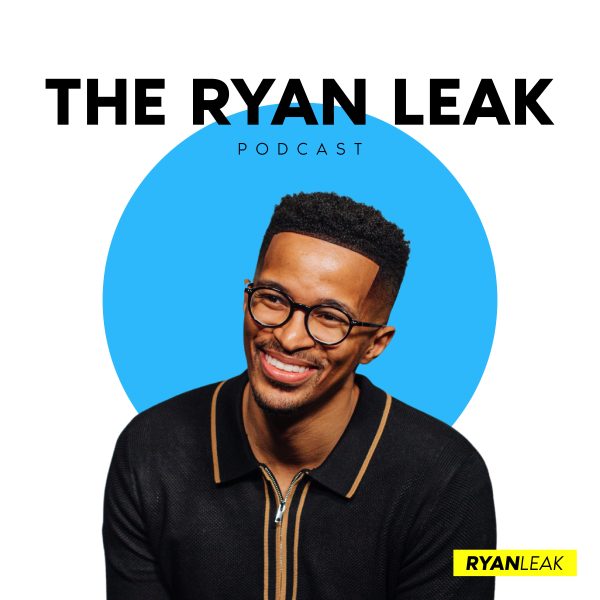
The Ryan Leak Podcast
- Episodios
- 145
- Se publica
- cada semana
- Último episodio
- 9 Nov 2026
Sobre el podcast
Welcome to The Ryan Leak Podcast. Ryan Leak is a dynamic speaker, executive coach, and best-selling author known for his engaging and transformative approach to leadership, personal growth, and professional development. He is highly sought after by Fortune 100 companies, professional sports teams, and organizations worldwide for his insights on leadership, communication, faith, resilience, and collaboration. This podcast is designed to drop nuggets of inspiration to help you get the most out of your life.
Episodios 145
Steer The Table
Every family has that one person who knows exactly how to turn a peaceful holiday dinner into a heated debate. But what if you didn’t have to let the loudest person determine the atmosphere?In week two of our …
Notas del episodio
Every family has that one person who knows exactly how to turn a peaceful holiday dinner into a heated debate. But what if you didn’t have to let the loudest person determine the atmosphere?
In week two of our eight-week holiday series, Ryan Leak shares how to steer conversations without controlling people, redirect uncomfortable discussions without creating more conflict, and use three kinds of questions to make your holiday gatherings more meaningful.
You’ll learn how to ask questions that make people laugh, remember, and hope, along with practical ways to navigate difficult topics before they take over the table.
This week’s challenge: Prepare three great questions before your next family gathering. One that makes people laugh, one that makes people remember, and one that makes people hope.
Download the free holiday conversation guide with thirty questions at ryanleak.com/holiday.
Can We Talk?
The holidays are coming, and so are the complicated family conversations. But what if the biggest problem isn’t what someone said or did? What if it’s the conversation you’ve been avoiding?In the first episode …
Notas del episodio
The holidays are coming, and so are the complicated family conversations. But what if the biggest problem isn’t what someone said or did? What if it’s the conversation you’ve been avoiding?
In the first episode of our eight-week holiday series, Ryan Leak explores why we talk about people instead of talking to them, how venting can become avoidance, and why addressing tension before the holidays might be the best gift you give your relationships.
You’ll learn practical ways to start uncomfortable conversations, approach conflict with curiosity, and take responsibility for your part even when the other person doesn’t respond the way you hoped.
This week’s challenge: Stop talking about one person and start talking to them. For Ryan’s latest holiday family guides and workbooks, check out ryanleak.com/holiday
Who Luck
What if the biggest opportunities in your life weren't just the result of hard work, but the people who opened doors for you? John Maxwell calls it Who Luck. In this episode, Ryan shares the remarkable chain of …
Notas del episodio
What if the biggest opportunities in your life weren't just the result of hard work, but the people who opened doors for you? John Maxwell calls it Who Luck. In this episode, Ryan shares the remarkable chain of relationships that took him from a college student with a camera to stages around the world, including an Instagram Reel that caught Oprah's attention. He also explores how one invitation helped introduce Brené Brown's work to millions. The truth is, nobody gets where they are alone. Behind every success story is someone who took a chance, made an introduction, or saw potential before there was proof. You'll be challenged to thank the people who helped you get where you are and become the person who opens doors for someone else. Because you might not be the person who changes the world, but you might be the person who gives the world access to someone who will.
The Doom and Gloom Trap
Negativity is everywhere. In your office, your group chats, your social media feed, and sometimes even your own thoughts. But just because the world has problems doesn't mean you have to be miserable. In this …
Notas del episodio
Negativity is everywhere. In your office, your group chats, your social media feed, and sometimes even your own thoughts. But just because the world has problems doesn't mean you have to be miserable. In this episode, Ryan challenges you to avoid the doom and gloom trap and recognize the difference between being realistic and being relentlessly negative. You'll discover why complaining drains your energy, how to shift from being a complainer to a contributor, and why optimism isn't naive. It's a choice. Life is hard, but you can still decide to enjoy it. And remember, attitude is contagious. Make sure yours is worth catching.
The Willpower Muscle
What if the hard thing you've been avoiding is actually the thing that's making you stronger? In this episode, Ryan explores the science behind willpower and why discipline isn't something you're born with …
Notas del episodio
What if the hard thing you've been avoiding is actually the thing that's making you stronger? In this episode, Ryan explores the science behind willpower and why discipline isn't something you're born with. It's something you build. From difficult conversations to daily habits, every decision to do what matters instead of what feels good is an opportunity to grow. You'll discover why comfort can be costly, how discipline creates freedom, and why you don't get to skip hard. You just get to choose your hard. Because the life you want is often on the other side of something you don't feel like doing.
The Perfect Plan Myth
What if the thing holding you back isn’t a lack of planning, but too much of it?We tell ourselves we’ll start when the plan is perfect, when we have more clarity, when we’ve done enough research, or when we …
Notas del episodio
What if the thing holding you back isn’t a lack of planning, but too much of it?
We tell ourselves we’ll start when the plan is perfect, when we have more clarity, when we’ve done enough research, or when we know exactly how everything will work out. But the perfect plan isn’t coming.
In this episode, Ryan challenges the myth that you need certainty before you take action. Some information is only available on the other side of action. You can plan, prepare, and research, but eventually you have to move.
You might not need more clarity. You might just need more courage.
Make the best plan you can. Take the next wise step. Learn. Adjust. Keep moving.
Because a good plan executed today is worth more than a perfect plan that never leaves the notebook.
Even If You Don't Feel Like It
What if you stopped waiting to feel like it?The truth is, you get the same results from doing hard things when you don’t feel like it as you do when you do. The mile still counts. The rep still counts. The page …
Notas del episodio
What if you stopped waiting to feel like it?
The truth is, you get the same results from doing hard things when you don’t feel like it as you do when you do. The mile still counts. The rep still counts. The page still counts. The conversation still counts.
In this episode, Ryan challenges the idea that motivation has to come before action. Sometimes you don’t feel your way into action. You act your way into a feeling.
Your feelings matter, but they don’t get to be your boss. They get a vote. They just don’t get a veto.
So go uninspired. Start uncertain. Show up tired. And if you can’t beat the fear before you start, do it scared.
It's All Hard
It’s all hard. Building a career is hard. Leading people is hard. Marriage is hard. Parenting is hard. Starting over is hard. Staying the course is hard.But some hard things get even harder the longer you avoid …
Notas del episodio
It’s all hard. Building a career is hard. Leading people is hard. Marriage is hard. Parenting is hard. Starting over is hard. Staying the course is hard.
But some hard things get even harder the longer you avoid them.
In this episode, Ryan talks about why avoiding a difficult decision doesn’t eliminate the consequences. It simply hands them to your future self, usually with interest. The conversation you don’t have today gets harder tomorrow. The boundary you refuse to set becomes more expensive later. And sometimes, indecision is a decision all by itself.
You don’t always get to choose between hard and easy. Sometimes you’re choosing between hard now and harder later.
It’s all hard. Choose the hard that builds the life you actually want.
Keep It Moving
Getting started takes bravery. Keeping going takes resilience.Life won’t always cooperate with your plans. Ideas flop. People disappoint you. Opportunities disappear. Doors close. And sometimes the hardest part …
Notas del episodio
Getting started takes bravery. Keeping going takes resilience.
Life won’t always cooperate with your plans. Ideas flop. People disappoint you. Opportunities disappear. Doors close. And sometimes the hardest part isn’t what happened. It’s figuring out how to move forward after it happened.
In this episode, Ryan talks about the difference between processing disappointment and parking in it, why you don’t always need closure to move forward, and what research on the “Progress Principle” teaches us about the surprising power of small wins.
You don’t have to fix everything today. You don’t need a massive breakthrough. Sometimes you just need one conversation, one email, one workout, one page, or one next step.
Whatever happened, it doesn’t get the final word.
Keep it moving.
Stop Fighting the Wrong Competitor
We spend a lot of energy trying to keep up with competitors who aren't even thinking about us. We scroll through someone's highlight reel and measure it against our behind-the-scenes. We compare our chapter 3 …
Notas del episodio
We spend a lot of energy trying to keep up with competitors who aren't even thinking about us. We scroll through someone's highlight reel and measure it against our behind-the-scenes. We compare our chapter 3 to their chapter 20. And every time we do it, we lose. Not because we're behind, but because we're running in the wrong race entirely.
In this episode, Ryan shares the questions that actually measure progress. Are you stronger than you were last year? Wiser? More disciplined? Have your relationships gotten better? If the answer is yes, you're winning, even when it doesn't look like winning on Instagram.
The greatest athletes in history weren't obsessed with the person in the lane next to them. They were obsessed with their own time, their own form, their own preparation. That's the competition worth showing up for.
Feedback is Data, Not a Verdict
Someone says “your presentation could’ve been stronger” and your brain hears “you’re a failure.” Someone says “I think you could listen more” and your brain hears “you’re a bad spouse.” We don’t process …
Notas del episodio
Someone says “your presentation could’ve been stronger” and your brain hears “you’re a failure.” Someone says “I think you could listen more” and your brain hears “you’re a bad spouse.” We don’t process feedback as information. We process it as judgment. And because it feels like a verdict, we defend ourselves against the very thing that could make us better. Ryan unpacks why defensiveness, not feedback, is the real enemy of growth.
In this episode, Ryan talks about treating criticism as data instead of a death sentence. Not all feedback is accurate. Some of it is projection. Some of it is jealousy. But some of it is gold. And if you reject all of it because some of it stings, you’ll miss the insights that could’ve changed your trajectory.
The Other Side of Me
There’s a gap between who we think we are and how people actually experience us. And that gap is where most of our relational problems live. Ryan asks the question he uses in every coaching session and keynote …
Notas del episodio
There’s a gap between who we think we are and how people actually experience us. And that gap is where most of our relational problems live. Ryan asks the question he uses in every coaching session and keynote: what’s it like to be on the other side of you? Not what your résumé says. Not what your bio reads. But the actual lived experience of working for you, living with you, being led by you.
In this episode, Ryan gets specific. What’s it like to be on the other side of your decisions? Your tone? Your urgency? Your stress? Would you want to work for you? Would you want to be married to you? Would you want your kids to grow up in a home led by someone who shows up the way you show up? You can’t improve what you’re not aware of. And the answer to that question might be the most valuable feedback you’ve ever received.
Thank God It’s Monday
We’ve built an entire culture around surviving the week just to get to the weekend. TGIF. We countdown the days. We post the memes. But if you dread five out of seven days of your life, that’s not just a bad …
Notas del episodio
We’ve built an entire culture around surviving the week just to get to the weekend. TGIF. We countdown the days. We post the memes. But if you dread five out of seven days of your life, that’s not just a bad job. That’s a bad life. You’re spending 71% of your week wishing it was over. That’s not a schedule. That’s a sentence. Ryan challenges everything we’ve normalized about hating Mondays.
In this episode, Ryan asks a question worth sitting with: does your team dread Monday because of the work, or because of the environment? Everybody can look forward to a Friday. That’s easy. But what if you could create a culture people actually looked forward to showing up to on a Monday? That’s not just management. That’s leadership. And if you’re not in leadership, you still set the tone for your own week. Anyone can thank God it’s Friday. The people who learn to thank God it’s Monday have figured out something the rest of the world is still chasing.
The Cost of Always Being Right
Would you rather be right or would you rather be connected? Ryan has met a lot of people who are always right. And he’s noticed something about them. They’re often alone. Not because they’re wrong, but because …
Notas del episodio
Would you rather be right or would you rather be connected? Ryan has met a lot of people who are always right. And he’s noticed something about them. They’re often alone. Not because they’re wrong, but because it’s exhausting to interact with someone who never considers the possibility that they might be. Ryan gets personal about seasons where he won every argument and lost every connection.
In this episode, Ryan unpacks why being right is addictive, why your brain literally rewards you with dopamine when you prove your point, and why that hit comes at the expense of the relationships that matter most. Relationships aren’t courtrooms. The people in your life aren’t opposing counsel. And every time you prioritize being right over being kind, you chip away at the thing that matters most. Be right sometimes. Be kind always.
What If They Aren’t Against You?
Your boss gives you tough feedback and you spend the whole weekend convinced they’re trying to push you out. Then Monday comes and they tell you they’re recommending you for a promotion. A friend doesn’t text …
Notas del episodio
Your boss gives you tough feedback and you spend the whole weekend convinced they’re trying to push you out. Then Monday comes and they tell you they’re recommending you for a promotion. A friend doesn’t text back for days and you build a whole narrative. They’re pulling away. They don’t care. Then they call and say their mom’s been in the hospital. Ryan unpacks why the story we tell ourselves is almost always worse than what’s actually happening.
In this episode, Ryan challenges the habit of assigning motives to people based on incomplete information. What if your coworker isn’t stealing your idea but just excited about it? What if your spouse isn’t criticizing you but just said it wrong? Before you build the case, ask the question. You might be surprised by what you find when you stop fighting people who were never fighting you.
Stop Waiting To Feel Ready
“I’ll start when I’m ready” might be the biggest lie we tell ourselves. I’ll start the business when I’m ready. I’ll have the conversation when I’m ready. I’ll write the book when I’m ready. And then the thing …
Notas del episodio
“I’ll start when I’m ready” might be the biggest lie we tell ourselves. I’ll start the business when I’m ready. I’ll have the conversation when I’m ready. I’ll write the book when I’m ready. And then the thing you were preparing for passes you by while you were still getting prepared. Ryan breaks down the difference between preparing and hiding, and why “I’m not ready” is often just a dressed-up version of “I’m scared.”
In this episode, Ryan shares his own journey of starting before he felt qualified and explains why confidence isn’t a prerequisite for action. It’s a byproduct of it. The perfect conditions you’re waiting for aren’t coming. But this morning is here. And sometimes the only thing standing between you and the life you want is the willingness to start messy.
The Tax of Distraction
Nobody’s going to send you an invoice for being distracted. But research says it takes 23 minutes to fully refocus after a single interruption. Multiply that by a dozen times a day and you’re losing hours. Not …
Notas del episodio
Nobody’s going to send you an invoice for being distracted. But research says it takes 23 minutes to fully refocus after a single interruption. Multiply that by a dozen times a day and you’re losing hours. Not minutes. Hours. We’re more connected than we’ve ever been and less focused than we’ve ever been. Ryan unpacks the hidden cost of the thing we’ve all normalized.
In this episode, Ryan challenges you to do an honest audit of where your time is actually going, not where you think it’s going. Because distraction doesn’t just steal your productivity. It steals your presence. And the people you love deserve more than a distracted version of you.
Helped, Heard, or Hugged
Someone you love comes to you with something heavy. And because you care, you immediately start solving it. You’ve got a plan, next steps, practically a spreadsheet. And you watch their face close. Because they …
Notas del episodio
Someone you love comes to you with something heavy. And because you care, you immediately start solving it. You’ve got a plan, next steps, practically a spreadsheet. And you watch their face close. Because they didn’t come to you for a solution. They came to you to be felt. Ryan unpacks the mismatch that ruins more conversations than conflict ever will.
In this episode, Ryan breaks down the three things people actually want when they share something vulnerable: to be helped, to be heard, or to be hugged. The problem? They rarely tell you which one. And we rarely ask. Whether you’re a fixer who needs to learn to listen or a sharer who needs to learn to name what you need, this episode gives both sides a job to do.
I Don’t Know
There’s a word most people have never heard that describes something most people do every day. It’s called ultracrepidarianism, giving opinions on things you have no real knowledge about. Ryan unpacks why we …
Notas del episodio
There’s a word most people have never heard that describes something most people do every day. It’s called ultracrepidarianism, giving opinions on things you have no real knowledge about. Ryan unpacks why we feel pressure to have a “take” on everything, why ChatGPT access doesn’t equal a PhD, and why the smartest people he’s ever been around are the ones most comfortable saying, “I don’t know.”
Here’s the irony: we all feel pressure to be a know-it-all, but nobody actually likes being around one. So we’re chasing the very thing we can’t stand in other people. In this episode, Ryan gives you permission to be a know-it-some, and explains why “I don’t have enough information to have a strong thought on that” might be the most powerful sentence you say this week.
Trust Me
Only 34% of Americans believe most people can be trusted. The average person has about five people they’d truly lean on for anything. And yet Ryan has never met a single person who thought they themselves were …
Notas del episodio
Only 34% of Americans believe most people can be trusted. The average person has about five people they’d truly lean on for anything. And yet Ryan has never met a single person who thought they themselves were untrustworthy. Nobody’s ever said, “Hey, whatever you’re about to tell me, I will absolutely use it against you in three months.” We all think we’re the vault. But almost nobody trusts the vaults around them. The math ain’t mathing.
In this episode, Ryan unpacks the broken trust economy and challenges listeners with two questions: What does your side of the trust equation actually look like? And how much are you letting past hurt determine the quality of your current and future relationships? You’ve got plenty of reasons not to trust people. But you might also have plenty of reasons to try again.
Keep Going
In 1989, a 23-year-old social worker started teaching classes and researching a topic nobody wanted to touch. For 21 years, almost nobody outside her department read her work. Then she gave a 20-minute talk …
Notas del episodio
In 1989, a 23-year-old social worker started teaching classes and researching a topic nobody wanted to touch. For 21 years, almost nobody outside her department read her work. Then she gave a 20-minute talk, and it changed the conversation in boardrooms, classrooms, and living rooms across the world. Ryan unpacks her story and the timeline most people never see behind the breakthrough everyone celebrates.
If you’re a teacher wondering if your students are listening, a parent who can’t tell if anything is landing, a pastor whose sermons feel like they’re falling on deaf ears, or a creative whose work gets 12 likes, this episode is for you. Sometimes you get to see the difference you made. Sometimes you just have to trust that it’s happening anyway.
Brother Lawrence
Most people think God shows up in the big moments. The big stage, the big breakthrough, the big answered prayer. But one of the most influential voices in 400 years of Christian history never preached a sermon …
Notas del episodio
Most people think God shows up in the big moments. The big stage, the big breakthrough, the big answered prayer. But one of the most influential voices in 400 years of Christian history never preached a sermon, never wrote a book, and never stood on a stage. He washed dishes in a monastery kitchen for decades. His name was Brother Lawrence, and he figured out something most of us are still missing.
In this episode, Ryan unpacks Brother Lawrence’s simple but life-changing idea and shares how it’s shown up in his own life in the most unexpected ways. Whether you’re a person of faith or not, this one is about presence, awareness, and finding meaning in the moments most people skip over. Because significance doesn’t always announce itself. Sometimes it whispers. And you’ll only hear it if you’re listening.
Are You Okay?
The most underrated form of care in any workplace or family is the courage to ask one more time, are you okay? And actually mean it.One in five adults in this country lives with a mental health condition in any …
Notas del episodio
The most underrated form of care in any workplace or family is the courage to ask one more time, are you okay? And actually mean it.
One in five adults in this country lives with a mental health condition in any given year. Which means, statistically, somebody you love is carrying something you can't see. And there's a real chance that somebody is you.
In this episode, Ryan opens up about something he's been thinking about for a while. Not as an expert. As a friend. He talks to the people quietly fighting to get out of bed, to put the smile on, to walk into the building. He talks to the people on the other side, the spouses, coworkers, friends, and managers who want to help somebody they love but don't know how.
You'll hear why asking for help is a sign of wisdom, not weakness. Why a text on a Tuesday is more powerful than any diagnosis. Why you shouldn't try to be the doctor. And why empathy stops being a concept the moment a person you love walks into your life carrying it.
This one is short, honest, and a little tender. If you've been carrying something, you'll feel seen. If you love somebody who has, you'll walk away with something specific you can do for them this week.
Bring it to one person. That might be the most important thing you do.
Invited to the Table or the Trial?
Most of us walk into hard conversations with the wrong goal. We're chasing agreement when we should be building connection. We're choosing accuracy when we should be choosing tone. And then we wonder why the …
Notas del episodio
Most of us walk into hard conversations with the wrong goal. We're chasing agreement when we should be building connection. We're choosing accuracy when we should be choosing tone. And then we wonder why the conversation went sideways.
In this episode, Ryan talks about the hard conversations almost everybody is sitting on right now. The one with your spouse. With your kid. With your boss. With the coworker who keeps dropping the ball. He walks through the internal shift that has to happen before the external one, why connection is the credit score of communication, and why John Gottman's research on the first three minutes of a conversation might change how you start the next one.
You'll learn the difference between an accusatory tone and an inviting tone, why same content can land in two completely different rooms, and the one question to ask yourself before you say the hard thing.
If you've been carrying a conversation around for weeks, this episode will give you the language to finally have it well.
It’s Hard For Me to Say This
We’ve confused boundaries with rejection. With selfishness. With being difficult.But what if boundaries aren’t walls meant to keep people out… what if they’re doors with locks on them?In this episode, Ryan …
Notas del episodio
We’ve confused boundaries with rejection. With selfishness. With being difficult.
But what if boundaries aren’t walls meant to keep people out… what if they’re doors with locks on them?
In this episode, Ryan talks about why so many of us struggle to say no, how people are trained by what we tolerate, and why the most compassionate people are often the clearest people. From late night work texts to overloaded calendars to relationships that quietly drain us, this conversation is a reminder that every yes costs something.
You’ll learn:
• Why boundaries are instruction, not punishment
• How resentment grows behind unspoken expectations
• The sentence most people need to start using today
• Why not everyone will like your boundary and why that’s okay
• How saying no to the wrong thing creates space for the right things
If you’ve been exhausted from trying to be available to everyone, this episode is for you.
The door has a lock.
You hold the key.
Just Kidding
Ever been in a professional meeting, a grown-up, serious, adult conversation, and somebody says one thing that hits you the wrong way, and suddenly you’re not a leader anymore? You’re seven. The playground …
Notas del episodio
Ever been in a professional meeting, a grown-up, serious, adult conversation, and somebody says one thing that hits you the wrong way, and suddenly you’re not a leader anymore? You’re seven. The playground version of you just hijacked the boardroom version of you, and now you’re saying things that the real you is going to regret by lunch. That’s age regression, and it happens to all of us.
In this episode, I’ll get honest about what triggers the kid in me to make cameos at the worst possible times, and I’ll walk you through how to recognize it, interrupt it, and make sure the grown-up shows up to grown-up conversations. Because the most important person to bring to your next hard conversation isn’t a mediator or a therapist. It’s your adult self.
Career Dysmorphia
You can be world-class at one thing and completely obsessed with another. I’ve got a friend who is the best speaker I know — the kind of communicator who stops rooms — but what he really wants to do is sing …
Notas del episodio
You can be world-class at one thing and completely obsessed with another. I’ve got a friend who is the best speaker I know — the kind of communicator who stops rooms — but what he really wants to do is sing. He’s an okay singer. And that gap between what he sees in the mirror and what the world actually sees? That’s career dysmorphia. It’s the professional version of looking at your reflection and seeing something that doesn’t match reality.
In this episode, I’ll unpack why so many of us chase the wrong gift while ignoring the right one, and I’ll walk you through five filters to help you find your sweet spot — where what you’re good at, what you love, what you’re called to, what the world needs, and what can sustain you all overlap. Because the world doesn’t need you to be good at everything. It just needs you to be great at your thing.
Challengers and Champions
We all love having people who believe in us. Champions encourage us, remind us who we are, and push us toward the rooms we’re afraid to enter.But if encouragement is the only voice in your life, you can stop …
Notas del episodio
We all love having people who believe in us. Champions encourage us, remind us who we are, and push us toward the rooms we’re afraid to enter.
But if encouragement is the only voice in your life, you can stop growing.
In this episode, Ryan unpacks the surprising history behind the phrase “devil’s advocate” and why every person needs both a Champion and a Challenger. One builds you up. The other stress tests you. One says, “Go.” The other says, “Not yet.” And both are necessary if you want to become who you’re called to be.
Because the greatest ideas don’t just survive applause. They survive scrutiny.
The Willpower Muscle
What if willpower isn't something you're born with, but something you build? In this episode, Ryan breaks down the brain science behind self-discipline (meet your anterior cingulate cortex, aka your "willpower …
Notas del episodio
What if willpower isn't something you're born with, but something you build? In this episode, Ryan breaks down the brain science behind self-discipline (meet your anterior cingulate cortex, aka your "willpower muscle") and shares the simple daily practice that helped him climb out of a season of coasting. You'll learn why most of us don't struggle because we don't know what to do. We struggle because we don't do what we know. Plus, a direct challenge to pick your hard thing and do it before your brain talks you out of it. If you've been waiting for motivation to show up, this is your sign to stop waiting and start training.
Right On Time
Most of us think we need more time. More margin. More space in the calendar.But what if the issue isn’t how much time you have… it’s what you’re missing inside the time you already have?In this episode, Ryan …
Notas del episodio
Most of us think we need more time. More margin. More space in the calendar.
But what if the issue isn’t how much time you have… it’s what you’re missing inside the time you already have?
In this episode, Ryan unpacks the powerful concept of kairos—a Greek word that means the right, decisive, or opportune moment. While we live in a world driven by chronos (schedules, deadlines, and clock-based time), the moments that shape our relationships, leadership, and legacy are often hidden in the quiet, unplanned spaces.
From parenting to meetings to everyday interactions, this episode will challenge you to stop rushing past what matters most—and start recognizing the moments that are right on time.
If you’ve ever felt too busy to be fully present, this one’s for you.
Aquí están los 40 episodios más recientes de 145. Los anteriores están en el feed del podcast.
Podcasts similares
Más podcasts de Economía y empresa





¿Es tu podcast?
Confírmalo con una entrada en tu feed: aquí recibes un código, lo añades como podcast:txt en el canal de tu feed y nosotros lo comprobamos. Después tu podcast aparecerá como «verificado» en SoundNode.