

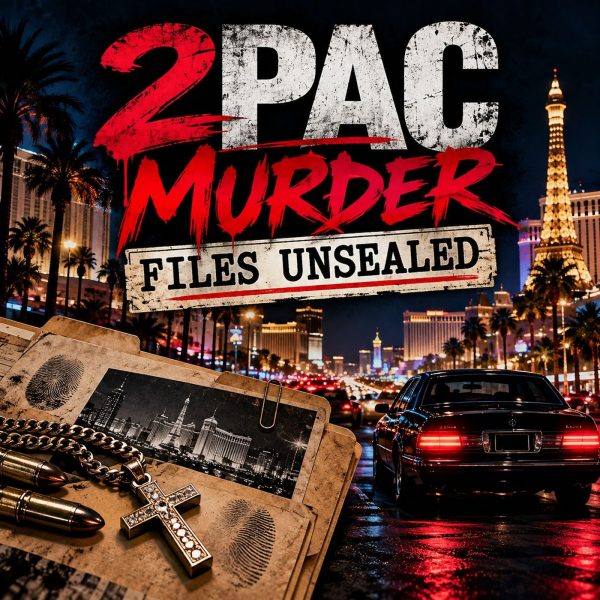
2pac Murder Files Unsealed
- Épisodes
- 69
- Parution
- quotidienne
- Dernier épisode
- 12 Nov 2026
À propos du podcast
On September 7, 1996, hip-hop icon Tupac Shakur—known worldwide as 2Pac—was shot in Las Vegas following a night that would become one of the most scrutinized moments in music and true-crime history. He died six days later at just 25 years old. 2Pac Murder Files Unsealed takes a deep dive into the murder of Tupac Shakur and the investigation that followed. From the events leading up to the Las Vegas shooting and the evidence gathered by investigators to witness accounts, competing theories, law-enforcement decisions, suspects, arrests, courtroom proceedings, and unanswered questions, each episode examines another piece of this decades-spanning case. Using publicly available records, court proceedings, historical reporting, interviews, and documented sources, the series separates established facts from allegations and speculation while exploring how one of the most famous unsolved murders in American popular culture developed into a major criminal prosecution decades later.
Disclaimer: 2Pac Murder Files Unsealed is an independent true-crime podcast created for informational, educational, documentary, and commentary purposes. This podcast is not affiliated with, sponsored by, authorized by, or endorsed by Tupac Shakur's estate, representatives, record labels, law-enforcement agencies, attorneys, courts, or any other individuals or organizations discussed in the series. Names and other identifying references are used to discuss matters of public record and public interest. The program may discuss allegations, theories, witness statements, media reports, and legal claims. Allegations should not be treated as established facts unless supported by the applicable court record or other reliable evidence. Individuals accused of crimes are presumed innocent unless and until proven guilty in a court of law. The series strives for accuracy and distinguishes documented facts from allegations, opinions, and historical speculation. Some information may change as court proceedings continue or additional records become available. This podcast may discuss murder, violence, and other disturbing subjects. Listener discretion is advised.
Épisodes 69
The Tupac Tapes With Angie Martinez - Netflix Releases November 27th
Netflix is launching a four-part video podcast titled The Tupac Tapes with Angie Martinez on November 27, 2026. The series features unreleased 1996 interview footage recorded in Los Angeles just months before …
Notes de l’épisode
Netflix is launching a four-part video podcast titled The Tupac Tapes with Angie Martinez on November 27, 2026. The series features unreleased 1996 interview footage recorded in Los Angeles just months before Tupac Shakur's tragic murder. Host Angie Martinez originally withheld the explosive audio for nearly three decades to prevent fueling dangerous coastal tensions and to protect the people involved. The program blends archival tape with modern roundtable discussions featuring hip-hop icons and journalists to analyze the rapper's legacy. Ultimately, the project aims to present a nuanced human portrait of Tupac beyond his public persona, showcasing his underlying vulnerabilities and frustrations.
This episode includes AI-generated content.Why Angie Martinez Hides Her Tupac Interview
Radio personality Angie Martinez has explained why she continues to withhold a lengthy, unreleased Tupac Shakur interview recorded in 1996. While only a small portion of the conversation aired initially, the …
Notes de l’épisode
Radio personality Angie Martinez has explained why she continues to withhold a lengthy, unreleased Tupac Shakur interview recorded in 1996. While only a small portion of the conversation aired initially, the full recording spans nearly two hours and features the rapper angrily criticizing various figures in the industry. Martinez chose to suppress the tapes to prevent escalating the dangerous East Coast versus West Coast feud happening at the time. Years later, she remains proud of her protective instincts, noting that the footage could have caused real harm. Additionally, she acknowledges that the conversation lacks the polish of a seasoned journalist, reflecting her own relative inexperience as a young broadcaster back then.
This episode includes AI-generated content.Hip-Hop Culture If 2Pac Lived
The episode explores the counterfactual legacy of Tupac Shakur, examining how the trajectory of hip-hop culture might have evolved if the iconic artist had not been killed in 1996. The piece speculates on …
Notes de l’épisode
The episode explores the counterfactual legacy of Tupac Shakur, examining how the trajectory of hip-hop culture might have evolved if the iconic artist had not been killed in 1996. The piece speculates on various aspects of his hypothetical future, including continued chart-topping music success, a potential Hollywood acting career, and a transition into political activism or governance. Additionally, the author contemplates personal milestones like starting a family and launching a record label, alongside industry-wide impacts such as potentially resolving the infamous East Coast-West Coast rivalry. Ultimately, the episode highlights the enduring magnitude of his influence by imagining the profound contributions he could have made as a mentor to modern rap stars and a cultural icon.
This episode includes AI-generated content.Tupac Shakur Murder Suspect's Defense Attorney Dies
Michael Sanft, a prominent Las Vegas attorney who notably defended the sole individual accused in the 1996 killing of Tupac Shakur, has passed away. Local news sources and the Clark County Coroner's Office …
Notes de l’épisode
Michael Sanft, a prominent Las Vegas attorney who notably defended the sole individual accused in the 1996 killing of Tupac Shakur, has passed away. Local news sources and the Clark County Coroner's Office confirmed his death, though specific circumstances were not publicly released. Originally raised in Tonga and San Diego, Sanft earned his law degree from Brigham Young University and practiced in Nevada starting in 2002. He recently represented Duane "Keffe D" Davis during his high-profile murder trial earlier in the year. Ultimately, a jury found Davis guilty and sentenced him to a lengthy prison term, and Sanft's client had been preparing an appeal.
This episode includes AI-generated content.Why Tupac Shakur’s "Keep Ya Head Up" Still Resonates
An Atwood Magazine article by Jada Moore explores the enduring cultural relevance of Tupac Shakur's 1993 song "Keep Ya Head Up" three decades after its initial launch. The episode highlights how the track …
Notes de l’épisode
An Atwood Magazine article by Jada Moore explores the enduring cultural relevance of Tupac Shakur's 1993 song "Keep Ya Head Up" three decades after its initial launch. The episode highlights how the track functions as an empowering tribute dedicated to Black women and single mothers, addressing their daily societal challenges and hardships. Furthermore, the commentary reflects on Shakur's raw lyricism, which confronts systemic neglect, poverty, and interpersonal mistreatment while urging listeners to maintain resilience. Ultimately, the piece underscores how the artist utilized his prominent platform to amplify messages of hope, respect, and social change that continue to resonate through contemporary times.
This episode includes AI-generated content.Tupac's Breakup Letter to Madonna Reveals Race Concerns
An authentic 1995 prison letter written by legendary rapper Tupac Shakur reveals that he ended his romantic relationship with pop icon Madonna due to concerns about racial differences and his public persona …
Notes de l’épisode
An authentic 1995 prison letter written by legendary rapper Tupac Shakur reveals that he ended his romantic relationship with pop icon Madonna due to concerns about racial differences and his public persona. Composed while the musician was incarcerated, the document addresses how dating a Black man might benefit her reputation while potentially alienating his own fan base. Furthermore, the correspondence expresses hurt over remarks Madonna made in the media regarding athletes and rappers, which prompted a defensive reaction from the young artist. Certified as genuine by publication researchers, the historical artifact is scheduled to head to an upcoming public auction.
This episode includes AI-generated content.Forty Facts You Didn't Know About Tupac
The episode outlines forty lesser-known facts about the iconic rapper Tupac Shakur, detailing various aspects of his personal life, artistic career, and enduring legacy. It highlights his early upbringing in …
Notes de l’épisode
The episode outlines forty lesser-known facts about the iconic rapper Tupac Shakur, detailing various aspects of his personal life, artistic career, and enduring legacy. It highlights his early upbringing in the Bronx and Harlem, his formal training in the arts, and his eventual rise to fame as a pioneering hip-hop artist and actor. The source explores his prolific recording habits and numerous commercial milestones, including achieving a number-one album while imprisoned and generating massive posthumous success. Additionally, the overview touches upon his connections to the Black Panther Party, various film roles he pursued, and the enduring conspiracy theories surrounding his tragic death. Ultimately, the episode paints a comprehensive picture of a cultural icon whose immense talent and turbulent life left an indelible mark on the music industry.
This episode includes AI-generated content.7 Things You Didn't Know About 2Pac’s ‘Makaveli...The Don Killuminati' Album
Released shortly after his tragic passing, The Don Killuminati: The 7 Day Theory stands out as the very first posthumous record by Tupac Shakur and the only one fully completed during his lifetime. The project …
Notes de l’épisode
Released shortly after his tragic passing, The Don Killuminati: The 7 Day Theory stands out as the very first posthumous record by Tupac Shakur and the only one fully completed during his lifetime. The project was initially conceived as an underground mixtape rather than a commercial release, recorded in a frantic seven-day whirlwind session driven by intense paranoia and bitter industry rivalries. Adopting the alias Makaveli inspired by the strategic philosophy of Niccolò Machiavelli, Tupac filled the tracks with aggressive hostility directed at various New York rivals. The album's provocative imagery, featuring the rapper crucified on a map of his enemies, further fueled enduring conspiracy theories regarding his demise. Despite failing to capture domestic radio charts, the multi-platinum classic achieved remarkable success overseas and cemented its legendary status in hip-hop history.
This episode includes AI-generated content.How Tupac Came to Rest in North Carolina
The episode explores the surprising final resting place of legendary rapper Tupac Shakur, whose remains were secretly buried in a neglected yard in Lumberton, North Carolina, by his mother, Afeni Shakur, in …
Notes de l’épisode
The episode explores the surprising final resting place of legendary rapper Tupac Shakur, whose remains were secretly buried in a neglected yard in Lumberton, North Carolina, by his mother, Afeni Shakur, in 2002. While public belief long held that his ashes were scattered in the Pacific Ocean after his 1996 murder, author Jeff Pearlman investigates the reality of the marker during his research for a new biography. The excerpt highlights the lack of dignity surrounding the abandoned gravesite, which sits on an empty property managed by a distant relative amid lingering neighborhood decay. Furthermore, the piece touches upon Tupac's enduring cultural legacy, discussing his final studio album under the alias Makaveli, the persistent conspiracies surrounding his death, and his massive global impact nearly three decades later. Ultimately, the narrative questions the absolute certainty of the grave's contents, leaving open the lingering mystique that continues to define the rapper's iconic status.
This episode includes AI-generated content.The Duality of Tupac's Relationship with Women
The episode explores the complex duality surrounding Tupac Shakur and his attitudes toward women. It analyzes how the legendary artist could simultaneously produce empowering, socially conscious anthems while …
Notes de l’épisode
The episode explores the complex duality surrounding Tupac Shakur and his attitudes toward women. It analyzes how the legendary artist could simultaneously produce empowering, socially conscious anthems while also releasing explicit or misogynistic tracks. Furthermore, the commentary highlights the impact of significant female figures in his upbringing alongside his legal troubles and shifting persona over time. Ultimately, public opinions remain deeply divided on whether his contradictory behavior reflected inner turmoil, a pragmatic view of reality, or unresolved personal conflicts before his untimely death.
This episode includes AI-generated content.Here's How Many Albums Tupac Sold After His Death
The episode explores the enduring legacy of Tupac Shakur, highlighting both his extreme fan devotion and his remarkable commercial success long after his passing. It recounts how an Iowa health official named …
Notes de l’épisode
The episode explores the enduring legacy of Tupac Shakur, highlighting both his extreme fan devotion and his remarkable commercial success long after his passing. It recounts how an Iowa health official named Jerry Foxhoven was allegedly dismissed from his position due to his obsessive sharing of Tupac quotes and music with coworkers. This extreme fandom mirrors a broader, nationwide fascination that has kept the artist's popularity extraordinarily high decades following his assassination. Furthermore, the article details his staggering posthumous album sales, noting that the majority of his platinum records were released after his death. Ultimately, these figures demonstrate that Tupac has sold more than 40 million albums since 1996, pushing his total career sales past 75 million copies worldwide.
This episode includes AI-generated content.Jada Pinkett Smith: Worthy and Unapologetic
In her memoir Worthy, Jada Pinkett Smith reflects on her journey from a turbulent upbringing in Baltimore to her career in Hollywood. She discusses her long-term marriage to Will Smith, revealing that they have …
Notes de l’épisode
In her memoir Worthy, Jada Pinkett Smith reflects on her journey from a turbulent upbringing in Baltimore to her career in Hollywood. She discusses her long-term marriage to Will Smith, revealing that they have been secretly separated since 2016 while maintaining a deep bond and refusing to divorce. The author also shares details about her struggles with depression, her experiences with hair loss, and the intense scrutiny she faced following the infamous Oscars slap. Furthermore, she honors her profound, multi-faceted friendship with the late rapper Tupac Shakur, emphasizing the valuable lessons she learned from their final disagreement before his tragic death.
This episode includes AI-generated content.AI Tupac, Rap Beefs, and Congressional Copyright Law
The episode examines the legal and ethical dilemmas surrounding the use of artificial intelligence to replicate the voices and likenesses of deceased celebrities. It centers on a controversy where rapper Drake …
Notes de l’épisode
The episode examines the legal and ethical dilemmas surrounding the use of artificial intelligence to replicate the voices and likenesses of deceased celebrities. It centers on a controversy where rapper Drake used an AI-generated version of Tupac Shakur in a diss track, prompting a cease-and-desist letter from the late artist's estate and drawing the attention of United States lawmakers. Because current regulations rely on a fragmented patchwork of state laws rather than comprehensive federal rules, determining liability remains complicated. In response to these emerging technologies, legislators have introduced the No Fakes Act, which aims to establish a federal digital replication right. However, experts and industry representatives continue to debate crucial details of this proposed legislation, such as postmortem protection limits and balancing the rights of grieving families against the creative freedoms of the public.
This episode includes AI-generated content.The Many Lives of Tupac Shakur
Bestselling author Jeff Pearlman explores the multifaceted life of Tupac Shakur in his book Only God Can Judge Me: The Many Lives of Tupac Shakur. Through extensive research and over six hundred interviews …
Notes de l’épisode
Bestselling author Jeff Pearlman explores the multifaceted life of Tupac Shakur in his book Only God Can Judge Me: The Many Lives of Tupac Shakur. Through extensive research and over six hundred interviews, Pearlman reveals a figure defined by constant dualities and contradictions, transitioning from an awkward, insecure teenager into a legendary hip-hop icon. The biography highlights Tupac's complex relationship with his mother, Afeni Shakur, a remarkable Black Panther who unfortunately struggled with a severe crack addiction. Additionally, the text uncovers how the rapper's public image as an ultimate sex symbol contrasted sharply with his actual lack of intimate guidance and understanding. Finally, the narrative illustrates how a devastating defeat in a local rap battle served as the catalyst for Tupac to reshape his musical style and adopt the gritty persona that propelled his eventual stardom.
This episode includes AI-generated content.Tupac Behind Bars Interview - Review
In this prison interview review on, Tupac Shakur discusses his rising popularity behind bars, attributing his success to deeply personal and prophetic music that resonates with fans. He clarifies that his art …
Notes de l’épisode
In this prison interview review on, Tupac Shakur discusses his rising popularity behind bars, attributing his success to deeply personal and prophetic music that resonates with fans. He clarifies that his art is spiritual and emotional rather than a glorification of the thug life, which he compares to a high school education that one must eventually outgrow. Tupac critiques the criminal justice system as a profitable business that preys on marginalized communities and parallels institutional corruption to the government's own gang-like behavior. He also reflects on youth violence, arguing that organized groups mirror the tactics of larger political powers and that genuine change requires community leadership rather than superficial portrayals.
This episode includes AI-generated content.State v. Davis: Tupac Shakur Murder Sentencing
At the sentencing hearing for Duane "Keffe D" Davis in the Tupac Shakur murder case, the prosecution and defense disputed various details regarding his criminal history, potential sentencing enhancements, and …
Notes de l’épisode
At the sentencing hearing for Duane "Keffe D" Davis in the Tupac Shakur murder case, the prosecution and defense disputed various details regarding his criminal history, potential sentencing enhancements, and past public commentary. While the defense argued that the state deliberately delayed prosecution and requested a standard term, the state pushed for the maximum possible punishment due to the defendant's extensive criminal background and attempts to profit from the crime. Emotional victim impact statements from Tupac's sister, Sekyiwa Shakur, and brother, Maurice Shakur, highlighted the enduring generational trauma and profound personal devastation caused by the artist's tragic 1996 death. Ultimately, the judge sentenced Davis to an aggregate term of 40 years to life in prison for first-degree murder with the use of a deadly weapon.
This episode includes AI-generated content.Jay-Z on Biggie, 2Pac, and the Coastal Feud
In a recent docuseries conversation with producer Rick Rubin, Jay-Z shared his perspective on how the friendship between The Notorious B.I.G. and 2Pac deteriorated into a bitter rivalry. According to Jay-Z …
Notes de l’épisode
In a recent docuseries conversation with producer Rick Rubin, Jay-Z shared his perspective on how the friendship between The Notorious B.I.G. and 2Pac deteriorated into a bitter rivalry. According to Jay-Z, tensions began when Biggie warned 2Pac about dangerous individuals in his circle, a caution that backfired when 2Pac shared those warnings with the people involved. The relationship fractured completely following the 1994 shooting of 2Pac at a Manhattan recording studio, after which 2Pac publicly accused Biggie and Sean Combs of having prior knowledge of the attack. This personal fallout was further escalated by the media and interconnected with pre-existing East Coast-West Coast tensions between competing record labels and regional scenes. Ultimately, this tragic chapter in hip-hop history became inseparable from the unresolved murders of both iconic artists in the mid-1990s.
This episode includes AI-generated content.From Friends to Rivals: Biggie and Tupac
Tupac Shakur and Biggie Smalls began their music careers as close companions who shared mutual respect, collaborated musically, and even socialized frequently. However, their relationship fractured after Tupac …
Notes de l’épisode
Tupac Shakur and Biggie Smalls began their music careers as close companions who shared mutual respect, collaborated musically, and even socialized frequently. However, their relationship fractured after Tupac survived a 1994 shooting in a recording studio lobby and suspected that Biggie was involved in the ambush. This suspicion fueled a bitter East Coast-West Coast rivalry that intensified through competing record labels and hostile musical exchanges. Tragically, both iconic rappers were killed in unsolved drive-by shootings before the feud could be fully resolved. Following Tupac's death, Biggie expressed deep regret over the regional hostility and sought to end the destructive conflict.
This episode includes AI-generated content.Top 6 Moments of Tupac Murder Trial
The episode on Tupac Shakur murder trial feature testimony regarding the Southside Compton Crips, an altercation at the Lakewood Mall involving a stolen Death Row Records chain, and a gang rivalry connected to …
Notes de l’épisode
The episode on Tupac Shakur murder trial feature testimony regarding the Southside Compton Crips, an altercation at the Lakewood Mall involving a stolen Death Row Records chain, and a gang rivalry connected to Suge Knight and Bad Boy Records. Reginald Wright Jr., the former head of security for Death Row Records, discusses his role, the security measures around Tupac Shakur, and events leading up to the Las Vegas shooting. Finally, Dr. Lisa Gavin provides expert forensic pathology testimony detailing Tupac's fatal gunshot wounds and subsequent medical interventions.
This episode includes AI-generated content.Officer Who Found 2Pac Retracing Final Night in Las Vegas
Chris Carroll, a retired Las Vegas police sergeant, retraces the tragic night Tupac Shakur was fatally shot following a Mike Tyson boxing match in 1996. Returning to the crime scenes three decades later, he …
Notes de l’épisode
Chris Carroll, a retired Las Vegas police sergeant, retraces the tragic night Tupac Shakur was fatally shot following a Mike Tyson boxing match in 1996. Returning to the crime scenes three decades later, he describes how a bicycle patrol pursued the victims' vehicle after hearing gunfire near Koval Lane and Flamingo Road. The convoy crashed nearly a mile away at Las Vegas Boulevard and Harmon Avenue after blowing its tires on a curb. Carroll details the chaotic intersection, his interaction with an uncooperative Suge Knight, and Tupac's final moments before losing consciousness.
This episode includes AI-generated content.2pac Above the Rim at Twenty-Five
Released in 1994, the cult classic basketball film Above the Rim emerged during a notable cinematic renaissance and is celebrated for its authentic portrayal of inner-city life and streetball culture. The movie …
Notes de l’épisode
Released in 1994, the cult classic basketball film Above the Rim emerged during a notable cinematic renaissance and is celebrated for its authentic portrayal of inner-city life and streetball culture. The movie was directed by Jeff Pollack and featured a talented ensemble cast that included Leon, Duane Martin, and Marlon Wayans, alongside Tupac Shakur in his memorable role as the antagonist Birdie. While critics initially dismissed the picture for relying on familiar clichés, many universally praised Shakur's magnetic performance and the project's deep connection to the gritty cultural aesthetic of the era. Behind the scenes, production was frequently disrupted by Shakur's escalating fame and severe legal troubles, capturing a turbulent yet pivotal transition period in the late rapper's life. Despite these mounting off-screen challenges and mixed contemporary reviews, the low-budget movie quickly recouped its costs and ultimately secured an enduring legacy within black cinema and sports film history.
This episode includes AI-generated content.Tupac Killer's Sentencing - Setta Shakur Statements Review
After nearly thirty years, Duane "Keefe D" Davis has been sentenced to forty years to life in prison for orchestrating the 1996 murder of legendary rapper Tupac Shakur. Prosecutors built their case primarily on …
Notes de l’épisode
After nearly thirty years, Duane "Keefe D" Davis has been sentenced to forty years to life in prison for orchestrating the 1996 murder of legendary rapper Tupac Shakur. Prosecutors built their case primarily on Davis's own admissions from books, interviews, and police interactions, establishing him as the leader who provided the weapon used in the fatal shooting. During the proceedings, the court heard emotional victim impact statements from Tupac's sister, Setta Shakur, who detailed the profound, generational trauma inflicted upon their family. Despite Davis's complaints regarding jail time credits and his declared intent to appeal, the judge emphasized that accountability was finally being served. Ultimately, the lengthy prison term brings a measure of long-awaited closure to the supporters and loved ones who mourned the icon's tragic death.
This episode includes AI-generated content.Tupac's Final Photograph: The Photographer's Story
Leonard Jefferson, a photographer who captured the final picture of Tupac Shakur in Las Vegas moments before the fatal shooting in September 1996, recounts his accidental involvement in the historic event. He …
Notes de l’épisode
Leonard Jefferson, a photographer who captured the final picture of Tupac Shakur in Las Vegas moments before the fatal shooting in September 1996, recounts his accidental involvement in the historic event. He describes selling his boxing match tickets, unexpectedly pulling up next to Tupac's vehicle in traffic, and snapping the iconic photograph with a Nikon camera. Jefferson details the chaotic aftermath, including being briefly detained by police who suspected he was part of the entourage, and the subsequent media frenzy surrounding the exclusive image. Over the years, Jefferson has faced various conspiracy theories regarding the authenticity of his photo and his presence at the scene, yet the picture remains one of the most famous and widely published last moments of a celebrity in history.
This episode includes AI-generated content.Tupac Shakur's Murderer Sentenced To 40 Years To Life In Prison
Duane “Keffe D” Davis received a sentence of 40 years to life in a Nevada prison for orchestrating the 1996 murder of legendary rapper Tupac Shakur. A Clark County jury convicted Davis of murder with a deadly …
Notes de l’épisode
Duane “Keffe D” Davis received a sentence of 40 years to life in a Nevada prison for orchestrating the 1996 murder of legendary rapper Tupac Shakur. A Clark County jury convicted Davis of murder with a deadly weapon, bringing legal closure to a nearly 30-year cold case stemming from a retaliatory drive-by shooting in Las Vegas. During the emotional sentencing hearing, Shakur’s siblings condemned the defendant and urged the judge to impose the maximum penalty for cutting the artist's life short. While prosecutors successfully utilized Davis's own memoir and prior public statements as core evidence of his guilt, his defense attorney argued that those admissions were merely fictitious stories told by an unreliable narrator. Despite plans by the defense to appeal the conviction, the court ultimately ensured that justice was served for the tragic death of the iconic musician.
This episode includes AI-generated content.2pac and Death Row Records Brotherhood Crusade Rally Rally, August 15, 1996
This episode review on the 1996 Brotherhood Crusade rally where prominent community leaders and Death Row Records artists, including Tupac Shakur, Snoop Dogg, and MC Hammer, united to address critical social …
Notes de l’épisode
This episode review on the 1996 Brotherhood Crusade rally where prominent community leaders and Death Row Records artists, including Tupac Shakur, Snoop Dogg, and MC Hammer, united to address critical social and political issues. Speakers heavily criticized Proposition 209, a deceptive measure disguised as a civil rights initiative that threatened to dismantle decades of progress made by minority communities through affirmative action. The event served as a platform to announce an upcoming massive fundraiser concert at the Shrine Auditorium aimed at rallying political opposition and community support. Artists and activists alike stressed the vital importance of voter registration, urging citizens to leverage their collective influence to demand systemic change and protect their rights. Ultimately, the gathering highlighted a powerful alliance between the hip-hop industry and civil rights advocates dedicated to grassroots mobilization and community defense against discriminatory policies.
This episode includes AI-generated content.Tupac Murder Eyewitness Testimony
During a weekend trip to Las Vegas in September 1996, Ingrid Stokes and her friends encountered Tupac Shakur and Suge Knight while driving down the Las Vegas Strip. They briefly followed the men's vehicle …
Notes de l’épisode
During a weekend trip to Las Vegas in September 1996, Ingrid Stokes and her friends encountered Tupac Shakur and Suge Knight while driving down the Las Vegas Strip. They briefly followed the men's vehicle toward a club called 662 before stopping at a red light near Flamingo and Koval Lane, where Stokes planned to switch driving duties with her friend because she felt more aggressive behind the wheel. While they were unbuckling and preparing to change seats with the convertible top down, sudden gunfire erupted nearby, causing complete chaos and panic. Stokes did not see the shooters or the gunfire itself, but she immediately urged her terrified friend to drive away from the scene. Although the women briefly returned to the area later, they experienced hostile treatment from police and ultimately chose not to speak about the traumatic incident publicly for decades due to fears of retaliation and neighborhood distrust of law enforcement.
This episode includes AI-generated content.The Father of Tupac Shakur Remembers
The episode review on an interview where Tupac Shakur’s father recounts his experience traveling to Las Vegas after his son was shot. He details finding Tupac in an induced coma at the hospital and shares his …
Notes de l’épisode
The episode review on an interview where Tupac Shakur’s father recounts his experience traveling to Las Vegas after his son was shot. He details finding Tupac in an induced coma at the hospital and shares his lingering suspicions surrounding the circumstances of the shooting, Suge Knight’s actions, and the official narrative. Furthermore, he expresses deep regret for briefly leaving his son's bedside to pick up his wife, believing that his absence left a dangerous opening. He also discusses his past involvement with the Black Panther Party, his strained relationship with Tupac's mother, Afeni, and his disagreement with the decision to ultimately remove life support.
This episode includes AI-generated content.Tupac Shakur: The Gridlock’d Interview (Review)
In a 1996 interview discussing his film Gridlock’d, Tupac Shakur shares his perspective on transitioning from a successful rap career to serious acting. He explains that his character, Spoon, mirrors his own …
Notes de l’épisode
In a 1996 interview discussing his film Gridlock’d, Tupac Shakur shares his perspective on transitioning from a successful rap career to serious acting. He explains that his character, Spoon, mirrors his own background of overcoming poverty and personal struggles, while working alongside co-star Tim Roth helped validate his artistic abilities. Furthermore, the artist addresses how the media often misrepresents his public persona and how he channels real-life experiences into both his music and film roles.
This episode includes AI-generated content.Tupac: Surviving Poverty, Fame, and the Streets
In this 1995 MTV News interview review, the legendary rapper Tupac Shakur reflects candidly on his turbulent upbringing, his unconventional journey into the music industry, and his personal philosophy on life …
Notes de l’épisode
In this 1995 MTV News interview review, the legendary rapper Tupac Shakur reflects candidly on his turbulent upbringing, his unconventional journey into the music industry, and his personal philosophy on life. He discusses moving to California as an impoverished youth, dropping out of high school to survive, and finding early mentorship among local street figures while his mother battled a crack addiction. Shakur also touches upon his early days with Digital Underground, his views on fatherhood, and his ambition to build community centers and youth sports programs in impoverished neighborhoods. Ultimately, the conversation reveals his complex identity, contrasting his hardened street persona with his deep artistic sensitivity and desire to foster positive community change.
This episode includes AI-generated content.Thug Messiah: The Legend of Tupac Shakur
Two decades after the unsolved murder of Tupac Shakur, the artist remains a towering cultural icon whose legacy transcends music and enters the realm of modern mythology. Raised by a prominent Black Panther …
Notes de l’épisode
Two decades after the unsolved murder of Tupac Shakur, the artist remains a towering cultural icon whose legacy transcends music and enters the realm of modern mythology. Raised by a prominent Black Panther activist mother, Shakur uniquely blended social consciousness and community activism with his artistic career, addressing profound societal issues rather than merely promoting a hedonistic lifestyle. Despite his tragic death in Las Vegas, various conspiracy theories persist, frequently implicating law enforcement corruption and internal power struggles within Death Row Records while several key witnesses and associates have also died under suspicious circumstances. Economically, his estate continues to thrive through posthumous releases and merchandise, making him immensely valuable in death. Ultimately, his enduring cultural footprint reaches far beyond commercial success, capturing the attention of theologians, political theorists, and global audiences alike.
This episode includes AI-generated content.
Voici les 40 derniers épisodes sur 69. Les épisodes plus anciens se trouvent dans le flux du podcast.
Podcasts similaires
Plus de podcasts : Culture et société






C’est votre podcast ?
Confirmez-le avec une entrée dans votre flux : vous recevez ici un code, vous l’ajoutez comme podcast:txt dans le canal de votre flux, et nous le vérifions. Votre podcast apparaît ensuite comme « vérifié » sur SoundNode.