

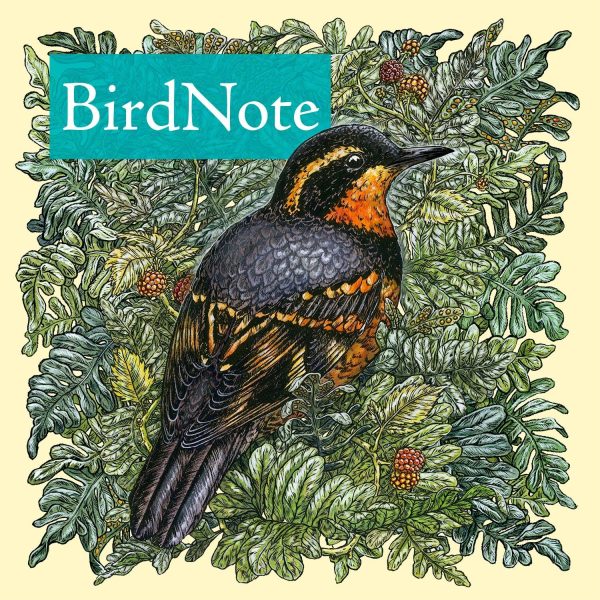
BirdNote Daily
- Épisodes
- 1 095
- Parution
- quotidienne
- Dernier épisode
- 14 Nov 2026
À propos du podcast
Escape the daily grind and immerse yourself in the natural world. Rich in imagery, sound, and information, BirdNote inspires you to notice the world around you.
Épisodes 1 095
Convocations, Coveys and Charms
Everybody’s heard of a gaggle of geese and a covey of quail. But what’s a group of penguins called? And a “conspiracy” of ravens? Maybe the way we label birds says more about us than it does about them.More …
Notes de l’épisode
Everybody’s heard of a gaggle of geese and a covey of quail. But what’s a group of penguins called? And a “conspiracy” of ravens? Maybe the way we label birds says more about us than it does about them.
More info and transcript at BirdNote.org.
Want more BirdNote? Subscribe to our weekly newsletter. Sign up for BirdNote+ to get ad-free listening and other perks.
BirdNote is a nonprofit. Your tax-deductible gift makes these shows possible.
Hosted by Simplecast, an AdsWizz company. See pcm.adswizz.com for information about our collection and use of personal data for advertising.
Chickadee Brains Are Bigger in the Cold
As the colder months arrive, birds that remain in northern climates face the harsh realities of staying warm and finding food. Some birds approach the food problem by storing it in advance — a behavior called …
Notes de l’épisode
As the colder months arrive, birds that remain in northern climates face the harsh realities of staying warm and finding food. Some birds approach the food problem by storing it in advance — a behavior called caching. Chickadees, nuthatches, jays, and some woodpeckers are known to cache large supplies of seeds in many places. But what enables birds such as this Black-capped Chickadee to find the seeds they’ve stored? They amplify spatial memory.
More info and transcript at BirdNote.org.
Want more BirdNote? Subscribe to our weekly newsletter. Sign up for BirdNote+ to get ad-free listening and other perks.
BirdNote is a nonprofit. Your tax-deductible gift makes these shows possible.
Hosted by Simplecast, an AdsWizz company. See pcm.adswizz.com for information about our collection and use of personal data for advertising.
Waxwing Nightlight
The warm colors and bright accents of the Bohemian Waxwing might make you think it glows in the dark. For the better part of two thousand years, that’s what people believed. Pliny reported that their feathers …
Notes de l’épisode
The warm colors and bright accents of the Bohemian Waxwing might make you think it glows in the dark. For the better part of two thousand years, that’s what people believed. Pliny reported that their feathers “shine like flames” in the dark forests of central Europe. The Germans allegedly used captive birds to light their way at night. But at the end of the sixteenth century, the great Italian birdman Ulysses Aldrovandi dismissed the notion that waxwings emit light. Today, we are fortunate that these winter nomads brighten our days.
More info and transcript at BirdNote.org.
Want more BirdNote? Subscribe to our weekly newsletter. Sign up for BirdNote+ to get ad-free listening and other perks.
BirdNote is a nonprofit. Your tax-deductible gift makes these shows possible.
Hosted by Simplecast, an AdsWizz company. See pcm.adswizz.com for information about our collection and use of personal data for advertising.
Titmice Lead the Way
In winter, many songbirds join flocks made up of multiple species that travel around looking for food, benefitting from safety in numbers. But a bird flock that doesn't move in the same direction soon scatters …
Notes de l’épisode
In winter, many songbirds join flocks made up of multiple species that travel around looking for food, benefitting from safety in numbers. But a bird flock that doesn't move in the same direction soon scatters to the wind. It turns out that the Tufted Titmouse, a small gray songbird, is often the one leading the flock. Researchers studying the flight paths of flocks found that the paths taken by the titmice best reflected the direction of the group as a whole, compared to other species in the group. This was especially true when the flock moved quickly between sites, when staying organized is key.
More info and transcript at BirdNote.org.
Want more BirdNote? Subscribe to our weekly newsletter. Sign up for BirdNote+ to get ad-free listening and other perks.
BirdNote is a nonprofit. Your tax-deductible gift makes these shows possible.
Hosted by Simplecast, an AdsWizz company. See pcm.adswizz.com for information about our collection and use of personal data for advertising.
Montezuma Oropendola – The Golden Pendulum
In a clearing where an ancient Mayan city once stood, the Montezuma Oropendola perches and sings. His courtship display is astonishing: he swings by his feet and sings, his tail describing a golden pendulum …
Notes de l’épisode
In a clearing where an ancient Mayan city once stood, the Montezuma Oropendola perches and sings. His courtship display is astonishing: he swings by his feet and sings, his tail describing a golden pendulum – the very source of his name in Spanish – oropendola.
¡Esuche este episodio en BirdNote en Español!
BirdNote is supported by The Cornell Lab of Ornithology, dedicated to conserving Earth’s biodiversity through education and science.
More info and transcript at BirdNote.org.
Want more BirdNote? Subscribe to our weekly newsletter. Sign up for BirdNote+ to get ad-free listening and other perks.
BirdNote is a nonprofit. Your tax-deductible gift makes these shows possible.
Hosted by Simplecast, an AdsWizz company. See pcm.adswizz.com for information about our collection and use of personal data for advertising.
Birding 101: Don’t Get Discouraged by Lookalikes
If you’re a new birder and find yourself feeling confused by lookalike birds, don’t be too hard on yourself. Some bird species look almost identical, and some of the most advanced birders get stumped.More info …
Notes de l’épisode
If you’re a new birder and find yourself feeling confused by lookalike birds, don’t be too hard on yourself. Some bird species look almost identical, and some of the most advanced birders get stumped.
More info and transcript at BirdNote.org.
Want more BirdNote? Subscribe to our weekly newsletter. Sign up for BirdNote+ to get ad-free listening and other perks.
BirdNote is a nonprofit. Your tax-deductible gift makes these shows possible.
Hosted by Simplecast, an AdsWizz company. See pcm.adswizz.com for information about our collection and use of personal data for advertising.
Goldeneyes and Whistling Wings
On a still winter afternoon, you may hear Common Goldeneyes flying low across the water. Whistlers, their wings sibilant, make the sound – as Ernest Hemingway wrote – of ripping silk. Common Goldeneyes nest in …
Notes de l’épisode
On a still winter afternoon, you may hear Common Goldeneyes flying low across the water. Whistlers, their wings sibilant, make the sound – as Ernest Hemingway wrote – of ripping silk. Common Goldeneyes nest in cavities, in northern boreal forests.
More info and transcript at BirdNote.org.
Want more BirdNote? Subscribe to our weekly newsletter. Sign up for BirdNote+ to get ad-free listening and other perks.
BirdNote is a nonprofit. Your tax-deductible gift makes these shows possible.
Hosted by Simplecast, an AdsWizz company. See pcm.adswizz.com for information about our collection and use of personal data for advertising.
Common Mergansers Pushed by the Ice
Around this time of year, Common Mergansers cross the U.S.-Canadian border on their way to wintering grounds in the Lower 48. But how do they know when to go? Ducks are well insulated against frigid winter …
Notes de l’épisode
Around this time of year, Common Mergansers cross the U.S.-Canadian border on their way to wintering grounds in the Lower 48. But how do they know when to go? Ducks are well insulated against frigid winter temperatures, but mergansers can find their fishy prey only by diving below the surface of open water. So they’re doing just fine, resting and feeding in southern Canada, until a thin veneer of ice forms on their lake, signaling the time has arrived to head south!
More info and transcript at BirdNote.org.
Want more BirdNote? Subscribe to our weekly newsletter. Sign up for BirdNote+ to get ad-free listening and other perks.
BirdNote is a nonprofit. Your tax-deductible gift makes these shows possible.
Hosted by Simplecast, an AdsWizz company. See pcm.adswizz.com for information about our collection and use of personal data for advertising.
The Western Sandpiper’s Winter Migration
Along the coast of Sinaloa in México, there are species of shorebirds with one of the longest migrations in the Western Hemisphere. One such species is the Western Sandpiper, here known as el playerito …
Notes de l’épisode
Along the coast of Sinaloa in México, there are species of shorebirds with one of the longest migrations in the Western Hemisphere. One such species is the Western Sandpiper, here known as el playerito occidental, wants to eat. But wetland habitats where they find their food are affected by the shrimp farming industry. Juanita Fonseca works with the Western Hemisphere Shorebird Reserve Network and with Manomet, creating guidelines that help shrimp farmers share the coastline with shorebirds.
Listen to this episode in Spanish here.
More info and transcript at BirdNote.org.
Want more BirdNote? Subscribe to our weekly newsletter. Sign up for BirdNote+ to get ad-free listening and other perks.
BirdNote is a nonprofit. Your tax-deductible gift makes these shows possible.
Hosted by Simplecast, an AdsWizz company. See pcm.adswizz.com for information about our collection and use of personal data for advertising.
Bird Feeders and Whaling Ships
In the opening lines of Moby Dick, the narrator, Ishmael, confesses to "a damp, drizzly November in my soul." One sure way to brighten November's damp and drizzly mood is to welcome birds into your yard with …
Notes de l’épisode
In the opening lines of Moby Dick, the narrator, Ishmael, confesses to "a damp, drizzly November in my soul." One sure way to brighten November's damp and drizzly mood is to welcome birds into your yard with birdfeeders. Black-oil sunflower seed is especially popular. Hang suet in a wire cage to attract a Northern Flicker like this one. Then, just add water, and you're all set.
BirdNote is supported by The Cornell Lab of Ornithology, dedicated to conserving Earth’s biodiversity through education and science.
More info and transcript at BirdNote.org.
Want more BirdNote? Subscribe to our weekly newsletter. Sign up for BirdNote+ to get ad-free listening and other perks.
BirdNote is a nonprofit. Your tax-deductible gift makes these shows possible.
Hosted by Simplecast, an AdsWizz company. See pcm.adswizz.com for information about our collection and use of personal data for advertising.
Spark Bird: Drew Lanham Takes Flight
Acclaimed ornithologist and writer J. Drew Lanham’s obsession with birds began when he was a kid, when he wished to take flight alongside them. He tried out cardboard wings and an umbrella, trying to defeat …
Notes de l’épisode
Acclaimed ornithologist and writer J. Drew Lanham’s obsession with birds began when he was a kid, when he wished to take flight alongside them. He tried out cardboard wings and an umbrella, trying to defeat gravity. He kept refining his designs and finding better jump-off spots. He eventually gave up on trying to fly, but he never stopped loving birds.
More info and transcript at BirdNote.org.
Want more BirdNote? Subscribe to our weekly newsletter. Sign up for BirdNote+ to get ad-free listening and other perks.
BirdNote is a nonprofit. Your tax-deductible gift makes these shows possible.
Hosted by Simplecast, an AdsWizz company. See pcm.adswizz.com for information about our collection and use of personal data for advertising.
How to Help Birds that are Far Away
University of Puget Sound professor and BirdNote science advisor Peter Hodum studies seabird conservation. And he says that if you can’t do something to address a problem, find someone who can.More info and …
Notes de l’épisode
University of Puget Sound professor and BirdNote science advisor Peter Hodum studies seabird conservation. And he says that if you can’t do something to address a problem, find someone who can.
More info and transcript at BirdNote.org.
Want more BirdNote? Subscribe to our weekly newsletter. Sign up for BirdNote+ to get ad-free listening and other perks.
BirdNote is a nonprofit. Your tax-deductible gift makes these shows possible.
Hosted by Simplecast, an AdsWizz company. See pcm.adswizz.com for information about our collection and use of personal data for advertising.
Calling Ducks Like A Champ
Every November, duck callers flock to Stuttgart, Arkansas to compete in the annual World Championship Duck Calling Contest. Hunters traditionally use calls to lure in ducks by imitating the quacks and …
Notes de l’épisode
Every November, duck callers flock to Stuttgart, Arkansas to compete in the annual World Championship Duck Calling Contest. Hunters traditionally use calls to lure in ducks by imitating the quacks and chattering of wild birds enjoying good habitat. But competition callers demonstrate their skills with a much broader repertoire. In this episode, 2025 World Champion Hayes Kibe describes what it’s like to blow for glory after becoming the youngest person to take first at just 15-years-old.
More info and transcript at BirdNote.org.
Want more BirdNote? Subscribe to our weekly newsletter. Sign up for BirdNote+ to get ad-free listening and other perks.
BirdNote is a nonprofit. Your tax-deductible gift makes these shows possible.
Hosted by Simplecast, an AdsWizz company. See pcm.adswizz.com for information about our collection and use of personal data for advertising.
Chorus Line in the Sky
A flock of small shorebirds, like Western Sandpipers, twists and turns, glittering in the sky. When threatened by a falcon, these birds take to the air, flying so close together that it's hard for a predator to …
Notes de l’épisode
A flock of small shorebirds, like Western Sandpipers, twists and turns, glittering in the sky. When threatened by a falcon, these birds take to the air, flying so close together that it's hard for a predator to capture one. A bird at one edge turns toward the middle, and a wave sweeps across the entire flock in less than a second.
More info and transcript at BirdNote.org.
Want more BirdNote? Subscribe to our weekly newsletter. Sign up for BirdNote+ to get ad-free listening and other perks.
BirdNote is a nonprofit. Your tax-deductible gift makes these shows possible.
Hosted by Simplecast, an AdsWizz company. See pcm.adswizz.com for information about our collection and use of personal data for advertising.
The Vampire Finch
Vampire Ground-Finches menace their victims in broad daylight, stabbing holes in their flesh, then devouring the blood. During the dry season, when their usual diet of seeds can be scarce, they turn to large …
Notes de l’épisode
Vampire Ground-Finches menace their victims in broad daylight, stabbing holes in their flesh, then devouring the blood. During the dry season, when their usual diet of seeds can be scarce, they turn to large seabirds, like boobies. Fluttering onto a booby’s back, the finch jabs its sharp beak in among the feathers until blood flows, making a meal of it. Why boobies tolerate this remains a mystery.
More info and transcript at BirdNote.org.
Want more BirdNote? Subscribe to our weekly newsletter. Sign up for BirdNote+ to get ad-free listening and other perks.
BirdNote is a nonprofit. Your tax-deductible gift makes these shows possible.
Hosted by Simplecast, an AdsWizz company. See pcm.adswizz.com for information about our collection and use of personal data for advertising.
Who’s That Spooky Bird?
Do you like to guess the bird calls before we identify them? Then here’s a short quiz of spooky, scary, and creepy bird sounds! This Halloween edition features three common species in North America and a rare …
Notes de l’épisode
Do you like to guess the bird calls before we identify them? Then here’s a short quiz of spooky, scary, and creepy bird sounds! This Halloween edition features three common species in North America and a rare bird from New Zealand.
More info and transcript at BirdNote.org.
Want more BirdNote? Subscribe to our weekly newsletter. Sign up for BirdNote+ to get ad-free listening and other perks.
BirdNote is a nonprofit. Your tax-deductible gift makes these shows possible.
Hosted by Simplecast, an AdsWizz company. See pcm.adswizz.com for information about our collection and use of personal data for advertising.
Hovering with Horned Larks
Horned Larks rival meadowlarks as the most colorful birds of North American grasslands. They live in prairies, fields, and tundra, but agriculture and development now intrude on many of the Horned Lark's …
Notes de l’épisode
Horned Larks rival meadowlarks as the most colorful birds of North American grasslands. They live in prairies, fields, and tundra, but agriculture and development now intrude on many of the Horned Lark's traditional nesting areas. The farmland Conservation Reserve Program encourages agricultural landowners to plant resource-conserving vegetation. This practice protects topsoil and provides habitat for birds like the Horned Lark, as well as other wildlife.
More info and transcript at BirdNote.org.
Want more BirdNote? Subscribe to our weekly newsletter. Sign up for BirdNote+ to get ad-free listening and other perks.
BirdNote is a nonprofit. Your tax-deductible gift makes these shows possible.
Hosted by Simplecast, an AdsWizz company. See pcm.adswizz.com for information about our collection and use of personal data for advertising.
Who’s Afraid of Corvids?
Of all the birds out there, the corvid family — the crows, ravens, and jays — might have the spookiest reputation. But the idea that corvids are spooky is far from universal — it's mainly in the Western world …
Notes de l’épisode
Of all the birds out there, the corvid family — the crows, ravens, and jays — might have the spookiest reputation. But the idea that corvids are spooky is far from universal — it's mainly in the Western world, as corvid researcher Kaeli Swift explained in season 3 of Bring Birds Back.
More info and transcript at BirdNote.org.
Want more BirdNote? Subscribe to our weekly newsletter. Sign up for BirdNote+ to get ad-free listening and other perks.
BirdNote is a nonprofit. Your tax-deductible gift makes these shows possible.
Hosted by Simplecast, an AdsWizz company. See pcm.adswizz.com for information about our collection and use of personal data for advertising.
Sunset Camp Raven
Writer and naturalist J. Drew Lanham tells the story of watching – and being watched by – a Common Raven.More info and transcript at BirdNote.org.Want more BirdNote? Subscribe to our weekly newsletter. Sign up …
Notes de l’épisode
Writer and naturalist J. Drew Lanham tells the story of watching – and being watched by – a Common Raven.
More info and transcript at BirdNote.org.
Want more BirdNote? Subscribe to our weekly newsletter. Sign up for BirdNote+ to get ad-free listening and other perks.
BirdNote is a nonprofit. Your tax-deductible gift makes these shows possible.
Hosted by Simplecast, an AdsWizz company. See pcm.adswizz.com for information about our collection and use of personal data for advertising.
The Whip-poor-will’s Whiskers
Near their frog-like mouths, Eastern Whip-poor-wills sport long, thin feathers that look a little like cat whiskers. Called rictal bristles, scientists are still investigating what these feathers do. They might …
Notes de l’épisode
Near their frog-like mouths, Eastern Whip-poor-wills sport long, thin feathers that look a little like cat whiskers. Called rictal bristles, scientists are still investigating what these feathers do. They might help nocturnal birds sense air currents in dark environments, allowing them to orient themselves in three dimensions, dodge obstacles, and catch their prey. It’s also possible that whiskery bristles do different things for different birds!
More info and transcript at BirdNote.org.
Want more BirdNote? Subscribe to our weekly newsletter. Sign up for BirdNote+ to get ad-free listening and other perks.
BirdNote is a nonprofit. Your tax-deductible gift makes these shows possible.
Hosted by Simplecast, an AdsWizz company. See pcm.adswizz.com for information about our collection and use of personal data for advertising.
Great Horned Owls in the Neighborhood
Not all owls live in the deep woods. Many Great Horned Owls make their homes in urban areas. Though mostly nocturnal, Great Horned Owls are also active early in the morning and just after sunset, offering a …
Notes de l’épisode
Not all owls live in the deep woods. Many Great Horned Owls make their homes in urban areas. Though mostly nocturnal, Great Horned Owls are also active early in the morning and just after sunset, offering a chance to see them hunting for rodents and other prey. Look for their distinctive horns, which are really just feather tufts. At night, you might hear their deep, syncopated hoots echoing through the neighborhood. Avoiding toxic rodenticides helps protect Great Horned Owls and other urban raptors.
More info and transcript at BirdNote.org.
Want more BirdNote? Subscribe to our weekly newsletter. Sign up for BirdNote+ to get ad-free listening and other perks.
BirdNote is a nonprofit. Your tax-deductible gift makes these shows possible.
Hosted by Simplecast, an AdsWizz company. See pcm.adswizz.com for information about our collection and use of personal data for advertising.
Seabirds Drink Salt Water
Seabirds have no problem drinking sea water. The salt they take in is absorbed and moves through their blood stream into a pair of salt glands above their eyes. The densely salty fluid is excreted from the …
Notes de l’épisode
Seabirds have no problem drinking sea water. The salt they take in is absorbed and moves through their blood stream into a pair of salt glands above their eyes. The densely salty fluid is excreted from the nostrils and runs down grooves in the bill. As the drop gets larger, the bird shakes its head to send the salt back to the ocean. A seabird's skull has a pair of grooves for the salt glands right over the eyes.
More info and transcript at BirdNote.org.
Want more BirdNote? Subscribe to our weekly newsletter. Sign up for BirdNote+ to get ad-free listening and other perks.
BirdNote is a nonprofit. Your tax-deductible gift makes these shows possible.
Hosted by Simplecast, an AdsWizz company. See pcm.adswizz.com for information about our collection and use of personal data for advertising.
Songbirds Teach Each Other Tricks
In the UK for years, milk came in bottles with foil caps. Great Tits, a common songbird, learned how to peck through the foil. The skill spread. But how? Researchers trained Great Tits in different ways of …
Notes de l’épisode
In the UK for years, milk came in bottles with foil caps. Great Tits, a common songbird, learned how to peck through the foil. The skill spread. But how? Researchers trained Great Tits in different ways of opening a box and re-released them. Knowledge of how to open the box spread rapidly, with most birds copying the trained bird in their group. In a follow-up study, the researchers made one method of opening the box more effective. Many birds quickly switched to the better method, suggesting the tits can stand up to peer pressure if they see there’s a better way of doing things.
More info and transcript at BirdNote.org.
Want more BirdNote? Subscribe to our weekly newsletter. Sign up for BirdNote+ to get ad-free listening and other perks.
BirdNote is a nonprofit. Your tax-deductible gift makes these shows possible.
Hosted by Simplecast, an AdsWizz company. See pcm.adswizz.com for information about our collection and use of personal data for advertising.
The Sound of a Thousand Geese Taking Off at Once
During migration, Snow Geese gather in the tens of thousands. They coordinate their movements, flying in a big, compact flock, which makes it harder for a predator to pick off a single bird. It is truly …
Notes de l’épisode
During migration, Snow Geese gather in the tens of thousands. They coordinate their movements, flying in a big, compact flock, which makes it harder for a predator to pick off a single bird. It is truly something to see.
More info and transcript at BirdNote.org.
Want more BirdNote? Subscribe to our weekly newsletter. Sign up for BirdNote+ to get ad-free listening and other perks.
BirdNote is a nonprofit. Your tax-deductible gift makes these shows possible.
Hosted by Simplecast, an AdsWizz company. See pcm.adswizz.com for information about our collection and use of personal data for advertising.
A Bird of Two Colors
Related to shearwaters and petrels, the Northern Fulmar will eat just about anything it finds on the surface of the ocean, from fish and squids to dead whales. While some have snow-white bodies and gray wings …
Notes de l’épisode
Related to shearwaters and petrels, the Northern Fulmar will eat just about anything it finds on the surface of the ocean, from fish and squids to dead whales. While some have snow-white bodies and gray wings, others are dark gray all over. That’s because fulmars are polymorphic, which is to say they come in multiple colors or “morphs”. The difference is genetic and doesn’t depend on age, sex, or season. This color variation may offer behavioral or habitat-based advantages to fulmars and other polymorphic species like Snow Geese, screech-owls, or Red-tailed Hawks.
More info and transcript at BirdNote.org.
Want more BirdNote? Subscribe to our weekly newsletter. Sign up for BirdNote+ to get ad-free listening and other perks.
BirdNote is a nonprofit. Your tax-deductible gift makes these shows possible.
Hosted by Simplecast, an AdsWizz company. See pcm.adswizz.com for information about our collection and use of personal data for advertising.
At the Escarpment
Long, upward slopes called escarpments offer a good chance of seeing some of the many raptor species found in Belize. Shaped like a compact Red-tailed Hawk, White Hawks are white overall with black markings and …
Notes de l’épisode
Long, upward slopes called escarpments offer a good chance of seeing some of the many raptor species found in Belize. Shaped like a compact Red-tailed Hawk, White Hawks are white overall with black markings and scan the landscape for reptile prey. Bat Falcons have a darkly barred chest and cinnamon belly, and chase down swifts, dragonflies, and the bats that give them their name. Ornate Hawk-Eagles stand over two feet tall and are capable of catching monkeys.
More info and transcript at BirdNote.org.
Want more BirdNote? Subscribe to our weekly newsletter. Sign up for BirdNote+ to get ad-free listening and other perks.
BirdNote is a nonprofit. Your tax-deductible gift makes these shows possible.
Hosted by Simplecast, an AdsWizz company. See pcm.adswizz.com for information about our collection and use of personal data for advertising.
Clean Nestboxes in October
It’s a wistful moment when your backyard birds — like these Black-capped Chickadees — depart their nestboxes. By October, it’s time for one last duty as nestbox landlord: to clean it out. Cleaning will reduce …
Notes de l’épisode
It’s a wistful moment when your backyard birds — like these Black-capped Chickadees — depart their nestboxes. By October, it’s time for one last duty as nestbox landlord: to clean it out. Cleaning will reduce the incidence of parasites in the box and make it more inviting to next spring’s tenants. It will also help you know for sure if it gets used again.
More info and transcript at BirdNote.org.
Want more BirdNote? Subscribe to our weekly newsletter. Sign up for BirdNote+ to get ad-free listening and other perks.
BirdNote is a nonprofit. Your tax-deductible gift makes these shows possible.
Hosted by Simplecast, an AdsWizz company. See pcm.adswizz.com for information about our collection and use of personal data for advertising.
Prairie Warblers — An Early Successional Species
Despite their name, Prairie Warblers nest in tree farms of recently planted pines, in fields overgrown with scattered shrubs, and in clearings under power lines. Biologists call these “early successional” …
Notes de l’épisode
Despite their name, Prairie Warblers nest in tree farms of recently planted pines, in fields overgrown with scattered shrubs, and in clearings under power lines. Biologists call these “early successional” habitats. They’re characterized by plants that are the first to return to land altered by clearing or fire. Prairie Warblers and similar birds have declined rapidly during the last 50 years, being pressed from all sides. But they’re now benefiting from conservation on several fronts, including the Michael Huber Prairie Warbler Preserve in New Jersey’s Pine Barrens and the Albany Pine Bush Reserve in New York.
More info and transcript at BirdNote.org.
Want more BirdNote? Subscribe to our weekly newsletter. Sign up for BirdNote+ to get ad-free listening and other perks.
BirdNote is a nonprofit. Your tax-deductible gift makes these shows possible.
Hosted by Simplecast, an AdsWizz company. See pcm.adswizz.com for information about our collection and use of personal data for advertising.
How Evolution Reshaped the Woodcock
Evolution works with what's at hand. So if you start with a normal bird skull – bill pointing forward, eyes oriented front or sideways, ears behind eyes – and introduce the challenge of seeing behind your head …
Notes de l’épisode
Evolution works with what's at hand. So if you start with a normal bird skull – bill pointing forward, eyes oriented front or sideways, ears behind eyes – and introduce the challenge of seeing behind your head while your bill is pushed deeply into the soil, what do you get? The American Woodcock! With its long bill constantly probing the soil for earthworms, its entire skull has been rearranged. Relative to other birds, woodcocks' eyes have moved toward the top and rear of the skull, pushing the ear openings downward. Apparently the brain followed suit!
More info and transcript at BirdNote.org.
Want more BirdNote? Subscribe to our weekly newsletter. Sign up for BirdNote+ to get ad-free listening and other perks.
BirdNote is a nonprofit. Your tax-deductible gift makes these shows possible.
Hosted by Simplecast, an AdsWizz company. See pcm.adswizz.com for information about our collection and use of personal data for advertising.
Spark Bird: Chidi Paige and the Yellow Warbler
When Chidi Paige moved from Nigeria to the U.S., she began running a youth STEM program and had to teach lessons on bird identification. She was in for a challenge: she had to learn the local bird species …
Notes de l’épisode
When Chidi Paige moved from Nigeria to the U.S., she began running a youth STEM program and had to teach lessons on bird identification. She was in for a challenge: she had to learn the local bird species quickly. On a birding trip, she spotted a Northern Yellow Warbler in a pine tree. The beautiful warbler got Chidi hooked on birding. She has designed several games to make learning bird identification fun for kids.
More info and transcript at BirdNote.org.
Want more BirdNote? Subscribe to our weekly newsletter. Sign up for BirdNote+ to get ad-free listening and other perks.
BirdNote is a nonprofit. Your tax-deductible gift makes these shows possible.
Hosted by Simplecast, an AdsWizz company. See pcm.adswizz.com for information about our collection and use of personal data for advertising.
Voici les 40 derniers épisodes sur 1 095. Les épisodes plus anciens se trouvent dans le flux du podcast.
Podcasts similaires
Plus de podcasts : Éducation





C’est votre podcast ?
Confirmez-le avec une entrée dans votre flux : vous recevez ici un code, vous l’ajoutez comme podcast:txt dans le canal de votre flux, et nous le vérifions. Votre podcast apparaît ensuite comme « vérifié » sur SoundNode.