

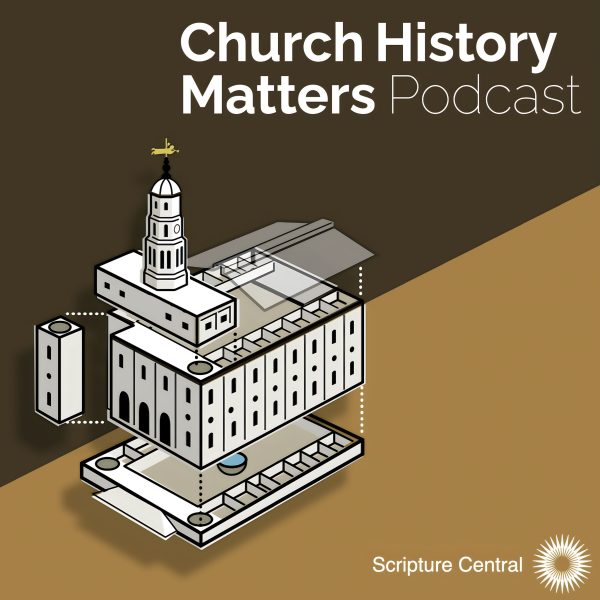
Church History Matters
- Épisodes
- 222
- Parution
- hebdomadaire
- Dernier épisode
- 10 Nov 2026
À propos du podcast
The Church History Matters Podcast features in-depth conversations between Scott and Casey where they dive deep into both the challenges and beauty of Latter-day Saint Church History
Épisodes 222
230 - Powers Combine to Prevent Utah Temples I Salt Lake Temple I Church History Matters
Please donate to help Scripture Central continue to bring you great content:https://form-renderer-app.donorperfect.io/give/scripture-central/donations Your donation will be doubled.In this episode of Church …
Notes de l’épisode
Please donate to help Scripture Central continue to bring you great content:https://form-renderer-app.donorperfect.io/give/scripture-central/donations Your donation will be doubled.
In this episode of Church History Matters, hosts Scott Woodward and Casey Griffiths explore the complex, 40-year history behind the construction of the Salt Lake Temple. They dive into Brigham Young's monumental push for temple building across the Utah territory, which included the strategic announcements and groundbreaking of the Logan and Manti temples to serve the pioneer Saints.
However, this era of immense growth was met with fierce national opposition. Scott and Casey unpack the escalating tensions with the U.S. Federal Government, detailing the intense legal and political campaigns launched to stop the practice of plural marriage. This intense crackdown not only threatened the Church's existence and drove its leaders underground, but it also deeply impacted the Saints' ongoing efforts to build the Kingdom.
#ChurchHistoryMatters #SaltLakeTemple #BrighamYoung #LDSChurchHistory #LatterDaySaintHistory #PluralMarriage #MantiTemple #LoganTemple #ScottWoodward #CaseyGriffiths #ChurchOfJesusChrist #pioneerhistory
229 - Evolution of the LDS Temple Endowment I Salt Lake Temple I Church History Matters
What happened to the evolution of temple doctrine in the Church of Jesus Christ of Latter-day Saints during the era of Wilford Woodruff? As the Church entered a new period of temple building and temple work …
Notes de l’épisode
What happened to the evolution of temple doctrine in the Church of Jesus Christ of Latter-day Saints during the era of Wilford Woodruff? As the Church entered a new period of temple building and temple work, ideas that had been developing for decades began to become more formalized—and the way Latter-day Saints understood salvation, family history, and the work performed for the dead began to change in important ways.In this episode of Church History Matters, Scott Woodward and Casey Griffiths are joined by Jennifer Mackley of the Wilford Woodruff Foundation to explore the fascinating history of temple doctrine during Wilford Woodruff’s lifetime and presidency. They examine the growing importance of genealogy and family history, the expansion of temple work for deceased ancestors, and the evolving language surrounding those who had died without receiving the ordinances of the gospel—including the eventual move away from the term “worthy dead.”From the temples of St. George and Logan to the emergence of a more organized approach to family history and proxy ordinances, this episode reveals how Latter-day Saint temple practices developed at a crucial turning point in Church history. What did Wilford Woodruff believe about the salvation of the dead? Why did genealogy become so closely connected with temple work? And how did these developments help shape the temple practices familiar to Latter-day Saints today?Join Scott, Casey, and Jennifer Mackley for a fascinating look at the history behind one of the most important developments in Latter-day Saint temple doctrine.#ChurchHistoryMatters #WilfordWoodruff #LDSHistory #TempleHistory #FamilyHistory #Genealogy #LDSChurchHistory #TempleWork #WilfordWoodruffFoundation
228 - Why the St. George Temple Was Built First I Salt Lake Temple I Church History Matters
How did the development of temples in Utah shape the doctrines and practices of The Church of Jesus Christ of Latter-day Saints? In this episode of Church History Matters, Scott Woodward and Casey Griffiths …
Notes de l’épisode
How did the development of temples in Utah shape the doctrines and practices of The Church of Jesus Christ of Latter-day Saints? In this episode of Church History Matters, Scott Woodward and Casey Griffiths explore how the Saints’ move west created new opportunities to expand temple worship, refine sacred ordinances, and deepen their understanding of eternal covenants.Discover how the construction of the St. George Utah Temple became a turning point in Latter-day Saint history. As the first temple completed in Utah, St. George provided a place where the Saints could perform endowments, seal families together, and carry out proxy ordinances for the dead on a much larger scale. The standardization of the endowment under Brigham Young and the experiences gained through temple worship helped establish patterns that would influence the Church’s future temples and contribute to the continuing development of Latter-day Saint temple doctrine.Join Scott and Casey as they explore the challenges, revelations, and sacred experiences that shaped temple worship in Utah—and discover how the early Saints’ efforts laid the foundation for the temple-centered faith practiced by Latter-day Saints today.Email newsletter: https://scripture-central.kit.com/church-history-matters#ChurchHistoryMatters #WilfordWoodruff #LDSHistory #TempleHistory #FamilyHistory #Genealogy #LDSChurchHistory #TempleWork #WilfordWoodruffFoundation
227 - Why the Saints Built A Temple in Utah I Salt Lake Temple I Church History Matters
When the Latter-day Saints left Nauvoo and made their way west to the Salt Lake Valley, they carried with them more than their belongings and their faith. They carried a profound desire to build temples where …
Notes de l’épisode
When the Latter-day Saints left Nauvoo and made their way west to the Salt Lake Valley, they carried with them more than their belongings and their faith. They carried a profound desire to build temples where they could make sacred covenants, receive their endowments, and bind themselves to God and to one another through the ordinances of the restored gospel. In this episode of Church History Matters, Scott Woodward and Casey Griffiths explore how that vision shaped the early years of the Church in Utah and led to one of the most ambitious building projects in Latter-day Saint history: the Salt Lake Temple.The story of the Salt Lake Temple is filled with extraordinary determination, remarkable successes, and daunting challenges. From the arrival of Johnston’s army and the resulting disruptions to the discovery of cracks in the temple’s foundation, the Saints repeatedly faced obstacles that threatened to delay their sacred work. Keeping a capable architect, securing the stone from the quarry, and overcoming the transportation challenges of building in the developing West—including the coming of the railroad—required ingenuity, resources, and years of sacrifice. Through it all, Brigham Young remained committed to creating a place where the Saints could participate in temple ordinances and strengthen their covenant relationship with God.But Brigham Young also knew that the Salt Lake Temple would take many years to complete. With a desire to see a temple dedicated and functioning during his lifetime, he directed attention to the construction of the St. George Utah Temple, which became the first temple completed in Utah and was dedicated in 1877, the year of his death. Its completion allowed the Saints to participate in temple ordinances while work continued on the great temple in Salt Lake City.Join Scott and Casey as they explore the faith, practical ingenuity, sacrifices, and setbacks behind the building of Utah’s early temples. Discover why temple building was about far more than stone walls and towering spires—and how the Saints’ determination to receive sacred ordinances helped shape their communities, their faith, and their enduring commitment to one another through covenants.#ChurchHistoryMatters #LDSHistory #SaltLakeTemple #StGeorgeTemple #BrighamYoung #LatterDaySaints #LDSChurchHistory #TempleCovenants #ChurchHistory #Restoration
226 - History of LDS Temple Worship I Salt Lake Temple I Church History Matters
What is the story behind the history of Latter-day Saints and temple worship? In this episode of Church History Matters, Scott Woodward and Casey Griffiths trace the remarkable history of Latter-day Saint …
Notes de l’épisode
What is the story behind the history of Latter-day Saints and temple worship? In this episode of Church History Matters, Scott Woodward and Casey Griffiths trace the remarkable history of Latter-day Saint temples from the earliest days of the Restoration to the iconic temple in Salt Lake City. The story begins in Kirtland, where the first temple of this dispensation was built, and continues to Nauvoo, where Joseph Smith introduced additional temple ordinances and teachings that would shape the future of temple worship.After the Saints arrived in Utah, the story took another important turn with the construction of the St. George Utah Temple, the first temple completed in the West. The experiences there—especially under President Wilford Woodruff—helped establish and refine important details of temple worship and temple work. Woodruff's leadership and efforts in St. George played a significant role in creating a foundation for the temple practices that would continue as the Salt Lake Temple rose from the ground.From Kirtland and Nauvoo to St. George and finally Salt Lake City, Scott and Casey explore the people, revelations, challenges, and turning points that shaped one of the most recognizable temples in the world. Why was the Salt Lake Temple designed the way it was? What did earlier temples teach the Saints? And how did Wilford Woodruff help establish the details of temple worship that would influence generations to come?Join Scott and Casey for a fascinating journey through the history of Latter-day Saint temples and discover how the story of the Salt Lake Temple is really part of a much larger story of Restoration, revelation, and covenant worship.#ChurchHistoryMatters #SaltLakeTemple #LDS #TempleHistory #KirtlandTemple #NauvooTemple #StGeorgeTemple #WilfordWoodruff #LDSHistory #ChurchHistory #restoration Email newsletter: https://scripture-central.kit.com/church-history-matters
225 - Is the Joseph Smith Daguerreotype Real? Latest Research I Joseph Smith I Church History Matters EP01
Is this really Joseph Smith? A recently discovered daguerreotype has sparked intense debate among historians, researchers, and Latter-day Saints. Could this remarkable photograph actually be an authentic image …
Notes de l’épisode
Is this really Joseph Smith? A recently discovered daguerreotype has sparked intense debate among historians, researchers, and Latter-day Saints. Could this remarkable photograph actually be an authentic image of Joseph Smith the Prophet?In this episode of Church History Matters, Scott Woodward and Casey Griffiths sit down with independent researcher Patrick A. Bishop and classical and forensic artist Joseph F. Brickey to explore the evidence behind the controversial daguerreotype. Patrick and Joseph share their research, discoveries, and insights—including the story behind their new film, Brother Joseph Again.What can forensic analysis, historical records, photographic technology, and Joseph Smith's known appearance tell us? Is the man in this daguerreotype really Joseph Smith—or is the evidence pointing to someone else? Scott and Casey dig into the arguments, examine the evidence, and ask the central question: Could we actually be looking at a photograph of the Prophet Joseph Smith?Watch this fascinating investigation and decide for yourself.What do you think? Is the daguerreotype really Joseph Smith? Let us know in the comments!#JosephSmith #ChurchHistory #LDS #LatterDaySaints #MormonHistory #JosephSmithDaguerreotype #ChurchHistoryMatters #BrotherJosephAgain #LDSHistory #Restoration
224- The Man BEHIND the Legend I Porter Rockwell I Church History Matters
Few figures in early Latter-day Saint history have a reputation as colorful—and as misunderstood—as Orrin Porter Rockwell. Known in popular memory as a fearless frontier scout, bodyguard, and legendary defender …
Notes de l’épisode
Few figures in early Latter-day Saint history have a reputation as colorful—and as misunderstood—as Orrin Porter Rockwell. Known in popular memory as a fearless frontier scout, bodyguard, and legendary defender of Joseph Smith, Porter has often been portrayed as a rough-and-tumble gunman whose reputation sometimes overshadowed the real person. But who was Porter Rockwell when the legends were stripped away?In this episode of Church History Matters, Scott Woodward and Casey Griffiths take a closer look at the man behind the myth. What was Porter Rockwell actually like when people met him? Why did friends and Church leaders describe such loyalty, courage, humor, generosity, and devotion in him? From his lifelong friendship with Joseph Smith to his relationships with ordinary Latter-day Saints, Porter’s story reveals a man whose personality could be as memorable as his reputation. Those who encountered him often remembered his kindness, hospitality, quick wit, unwavering loyalty, and willingness to stand by his friends through extraordinary circumstances.Scott and Casey explore the stories and firsthand impressions that help paint a fuller picture of Porter Rockwell—not simply as the legendary “Mormon Danite” of popular folklore, but as a complex human being whose faith, friendships, personality, and devotion shaped the way others remembered him. Who was Porter Rockwell really? And what can the testimony of those who knew him tell us about the man behind one of the most enduring legends of Latter-day Saint history?#Porterrockwell #Churchhistorymatters #caseygriffiths #scottwoodward
223- What Stories are Actually True? I Porter Rockwell I Church History Matters
Porter was more than a legendary frontiersman and lawman. He was a close friend of Joseph Smith, a protector of the Prophet, and a man whose life was deeply shaped by the events surrounding Joseph’s death. In …
Notes de l’épisode
Porter was more than a legendary frontiersman and lawman. He was a close friend of Joseph Smith, a protector of the Prophet, and a man whose life was deeply shaped by the events surrounding Joseph’s death. In June 1844, Porter helped Joseph and Hyrum cross the Mississippi River as they sought to avoid arrest. When Joseph decided to return to Nauvoo and face the authorities, Porter accompanied him part of the way toward Carthage. Joseph ultimately asked him to return to Nauvoo, concerned for his safety. It was the last time Porter saw Joseph alive.Porter's battle cry was, "Wheat! Wheat! Wheat!"The episode also examines one of the most striking and controversial events in Porter’s life: the shooting of Franklin A. Worrell on September 16, 1845, in Hancock County, Illinois. Worrell had been a lieutenant in the Carthage Greys and had previously guarded the jail where Joseph and Hyrum were killed. Porter was serving as a deputy under Sheriff Jacob Backenstos when he shot Worrell during a confrontation involving the sheriff. The circumstances, competing accounts, and questions surrounding the shooting make this a fascinating moment in the aftermath of the martyrdom. We’ll also explore Porter’s famous statement about Joseph: “When they killed Joseph, they killed the only friend I ever had.” What did Joseph mean to Porter? How did the martyrdom shape his life? And what can we learn about the man behind the legend?Join Scott and Casey as they explore the loyalty, courage, controversy, and enduring legacy of Porter Rockwell.Watch, like, and subscribe to Church History Matters for more stories from the history of The Church of Jesus Christ of Latter-day Saints.#PorterRockwell #JosephSmith #ChurchHistoryMatters #LDSHistory #CarthageJail #MormonHistory
222-Did Porter Rockwell Try to Kill Governor Boggs? I Porter Rockwell I Church History Matters
Few stories in early Latter-day Saint history are as legendary—or as controversial—as the accusation that Porter Rockwell attempted to assassinate Missouri Governor Lilburn W. Boggs.In this episode of Church …
Notes de l’épisode
Few stories in early Latter-day Saint history are as legendary—or as controversial—as the accusation that Porter Rockwell attempted to assassinate Missouri Governor Lilburn W. Boggs.In this episode of Church History Matters, Scott Woodward and Casey Griffiths take a closer look at the evidence surrounding one of the most famous allegations against the legendary “Destroying Angel.”Did Porter Rockwell really travel to Missouri with orders to kill Governor Boggs? Or did the story grow over time through accusations, rumors, and competing narratives?There is no hard evidence proving that Porter Rockwell was the man who shot Boggs, but there are plenty of claims on both sides. Scott and Casey examine the accusations made by John C. Bennett, the historical circumstances surrounding the shooting, and the case for and against Rockwell's involvement.And then there is the famous statement attributed to Porter Rockwell himself. When questioned about the shooting, Rockwell reportedly responded that if he had done the shooting, Boggs would have been dead.Was that a confession? A denial? A threat? Or simply classic Porter Rockwell?Join Scott and Casey as they separate documented history from legend, examine the competing claims, and ask whether one of the most notorious stories about Porter Rockwell can actually be proven.Was Porter Rockwell an attempted assassin—or was he the victim of a historical accusation that became legend?#ChurchHistoryMatters #PorterRockwell #JosephSmith #LDSHistory #MormonHistory #LilburnBoggs #MissouriMormonHistory #ChurchHistory
221 - Moroni Day Celebration I A New LDS Holiday I Church History Matters
September 21: Moroni Day — The Angel, the Prophet, and the Beginning of the Book of MormonWhat happened on the night of September 21, 1823? In this special episode of Church History Matters, Scott Woodward and …
Notes de l’épisode
September 21: Moroni Day — The Angel, the Prophet, and the Beginning of the Book of MormonWhat happened on the night of September 21, 1823? In this special episode of Church History Matters, Scott Woodward and Casey Griffiths are joined by Scripture Central founder Jack Welch to explore one of the most important dates in Latter-day Saint history: Moroni Day.According to Joseph Smith’s accounts, it was on the night of September 21 that the angel Moroni appeared to him and delivered a remarkable message about an ancient record buried in the earth—a record that would eventually become the Book of Mormon.Why did Moroni appear to Joseph Smith? What did Moroni tell him? What can we learn by comparing Joseph Smith’s accounts of these events? And why has September 21 become a meaningful day for remembering Moroni and the coming forth of the Book of Mormon?Scott, Casey, and Jack Welch dive into the historical accounts, the significance of Moroni’s message, and the remarkable connection between an ancient prophet and the Restoration of the gospel in the latter days.From the Hill Cumorah to the coming forth of the Book of Mormon, this episode explores the story behind one of the foundational events of the Restoration—and why September 21 deserves to be remembered as Moroni Day.Join Scott Woodward, Casey Griffiths, and Jack Welch for this special celebration of Moroni Day and the story of how an ancient record became a modern witness of Jesus Christ.What does Moroni’s appearance mean to you? Let us know in the comments!#MoroniDay #September21 #BookOfMormon #Moroni #JosephSmith #ChurchHistory #LatterDaySaints #Restoration #ScriptureCentral #ChurchHistoryMatters
220 - The Rise of Mitt Romney & The Mormon Moment I Religion & Politics I Church History Matters
In this episode of Church History Matters, Scott Woodward and Casey Griffiths explore the remarkable political rise of Mitt Romney—from his family’s political legacy and his career in business and Massachusetts …
Notes de l’épisode
In this episode of Church History Matters, Scott Woodward and Casey Griffiths explore the remarkable political rise of Mitt Romney—from his family’s political legacy and his career in business and Massachusetts politics to his campaigns for the presidency in 2008 and 2012. Romney’s candidacy brought unprecedented national attention to his Latter-day Saint faith. He ultimately became the first Latter-day Saint nominated for president by a major U.S. political party.
But Romney’s campaigns were about much more than politics. His candidacy helped usher in what became known as the “Mormon Moment,” a period when American media, popular culture, and the broader public took an extraordinary interest in the history, beliefs, practices, and people of the Church. From questions about Mormonism and the presidency to his famous “Faith in America” speech, Romney found himself at the center of a national conversation about religion and American public life. Scott and Casey examine what Mitt Romney represented to Latter-day Saints who watched one of their own come closer than any previous Latter-day Saint to occupying the White House.
They also explore the challenges he faced—including religious prejudice, questions about whether a Latter-day Saint president could separate church loyalty from constitutional responsibility, and the tension between Romney’s desire to define himself as a political candidate rather than simply as “the Mormon candidate.” Most importantly, what did the Mitt Romney moment mean for Latter-day Saints? Did his campaign change how Americans viewed the Church? Did it help normalize Latter-day Saint participation in American public life? And how did the experience shape the Church’s visibility and identity in the years that followed? Join Scott and Casey as they explore Mitt Romney, presidential politics, religious identity, and the “Mormon Moment”—and why this chapter in American political and Latter-day Saint history still matters today.
#ChurchHistoryMatters #MittRomney #LatterDaySaints #MormonMoment #LDSHistory #MormonHistory #ReligionAndPolitics #AmericanHistory #ScottWoodward #CaseyGriffiths
219 - White Horse Prophecy In Depth I Religion & Politics I Church History Matters
Did Joseph Smith really predict that the Constitution of the United States would one day “hang by a thread” and that the Latter-day Saints would step forward to save it? And what about the mysterious and …
Notes de l’épisode
Did Joseph Smith really predict that the Constitution of the United States would one day “hang by a thread” and that the Latter-day Saints would step forward to save it? And what about the mysterious and controversial White Horse Prophecy—a dramatic account involving the future of the United States, the Constitution, and the destiny of the Latter-day Saints? In this episode of Church History Matters, Scott Woodward and Casey Griffiths take a careful look at one of the most debated statements in Latter-day Saint history. The White Horse Prophecy has been repeated, quoted, expanded, and sometimes used to interpret modern politics for generations. But how much of it can actually be traced back to Joseph Smith? Scott and Casey examine the weaknesses in the prophecy's claim to authenticity, including the late recollection on which much of the account depends, the absence of a contemporary record, and questions about how the story changed and developed over time. The result is a fascinating example of why historians have to distinguish between what may have been remembered, what can be documented, and what later generations may have added to the story. But that does not mean every idea associated with the White Horse Prophecy should be dismissed. The famous concept that the Constitution of the United States would one day “hang by a thread” has a stronger historical foundation. Multiple sources attribute statements to Joseph Smith expressing concern for the future of the Constitution and describing a time when it would face grave danger. Scott and Casey explore those sources, their strengths and limitations, and what Joseph Smith may actually have meant. Join us as we separate prophecy from folklore, documentation from tradition, and historical evidence from later interpretation. What can we responsibly say Joseph Smith taught about the future of the Constitution? What parts of the White Horse Prophecy are difficult to substantiate? And why has this controversial story continued to capture the imagination of Latter-day Saints for more than a century?
218 - Ezra Taft Benson: Conspiracy Controversies I Religion & Politics I Church History Matters
After serving as U.S. Secretary of Agriculture under President Dwight D. Eisenhower, Ezra Taft Benson returned to full-time service as an Apostle and became one of the most influential—and sometimes …
Notes de l’épisode
After serving as U.S. Secretary of Agriculture under President Dwight D. Eisenhower, Ezra Taft Benson returned to full-time service as an Apostle and became one of the most influential—and sometimes controversial—leaders in modern Latter-day Saint history. In this episode of Church History Matters, Scott Woodward and Casey Griffiths examine Elder Benson's post-Washington years, including his outspoken warnings about communism during the Cold War, his strong advocacy for constitutional principles and free-market economics, his criticism of government welfare programs, and the debates surrounding his association with conservative political movements such as the John Birch Society. They explore how his political views were received both inside and outside the Church and how Church leaders worked to keep the Church politically neutral despite the personal convictions of individual Apostles. The episode also traces the remarkable transformation of Ezra Taft Benson's public ministry after he became the 13th President of The Church of Jesus Christ of Latter-day Saints. Rather than emphasizing politics, President Benson focused the Church on what he believed mattered most: becoming true disciples of Jesus Christ through daily scripture study and repentance. His landmark call for members to flood the earth with the Book of Mormon renewed worldwide interest in the keystone scripture of the Restoration, while his unforgettable teachings on pride, humility, and the Atonement of Jesus Christ continue to influence Latter-day Saints around the world. Join Scott and Casey as they separate history from myth, examine the historical context surrounding President Benson's political legacy, and discover how his prophetic ministry ultimately centered on Christ, the Book of Mormon, and the invitation for every disciple to come unto Him. Topics covered in this episode: Ezra Taft Benson after leaving Washington, D.C. Cold War fears and anti-communism The John Birch Society and political controversy Government welfare, self-reliance, and constitutional principles Republican politics and Church neutrality Becoming President of the Church Flooding the earth with the Book of Mormon "Beware of Pride" and the call to humility President Benson's lasting prophetic legacy #ChurchHistoryMatters #EzraTaftBenson #BookofMormon #LDSHistory #ChurchHistory #Restoration #JesusChrist #ScriptureStudy #Pride #Humility #ScottWoodward #CaseyGriffiths
217 - Ezra Taft Benson: His Life in Washington D.C. I Religion & Politics I Church History Matters
Discover the remarkable double life of Ezra Taft Benson—a man who simultaneously served as a high-ranking Washington statesman and a chosen Apostle of the Lord.In this video, we dive deep into the chaotic …
Notes de l’épisode
Discover the remarkable double life of Ezra Taft Benson—a man who simultaneously served as a high-ranking Washington statesman and a chosen Apostle of the Lord.In this video, we dive deep into the chaotic, inspiring, and historic eight years (1953–1961) Ezra Taft Benson spent serving as the U.S. Secretary of Agriculture under President Dwight D. Eisenhower. As an LDS Apostle, Benson brought an unwavering moral compass to Washington, but his strict free-market principles made him one of the most controversial political figures of the 1950s.From hanging in effigy by furious farmers to a historic, miraculous television broadcast that changed the nation's heart, we explore the jaw-dropping events that defined his tenure.The Prophet's Call: How President Eisenhower convinced a reluctant LDS Apostle to join his cabinet, and the unique condition Benson demanded before accepting.The Battle of the Barnyard: Why Benson’s fight to eliminate government price supports made him the target of intense political crossfire and protests.The Miracle of the 'Edward R. Murrow' Broadcast: The behind-the-scenes story of the 1954 See It Now television special that saved Benson's career overnight.Apostle to the Soviet Union: The emotional, historic 1959 visit to the Central Baptist Church in Moscow where Benson preached freedom and faith behind the Iron Curtain.The Spiritual Statesman: How his eight years in Babylon prepared him to eventually become the 13th President of The Church of Jesus Christ of Latter-day Saints.
216 - 3-Term Senator Elbert Thomas, GI Bill Hero I Religion & Politics I Church History Matters
For decades, Utah's Elbert D. Thomas represented Latter-day Saints on the national stage as one of the most influential members of Congress you've probably never heard of. In this episode of Church History …
Notes de l’épisode
For decades, Utah's Elbert D. Thomas represented Latter-day Saints on the national stage as one of the most influential members of Congress you've probably never heard of. In this episode of Church History Matters, Scott Woodward and Casey Griffiths explore the remarkable life and political career of the faithful Latter-day Saint, educator, missionary, and U.S. Senator who served during some of the most pivotal years in American history. After serving a five-year mission in Japan, Thomas brought a global perspective to Washington, D.C., where he became a leading advocate for workers' rights, public education, scientific research, and social welfare during the Great Depression.
Scott and Casey examine his strong support of Franklin D. Roosevelt's New Deal programs, his efforts to strengthen labor protections, expand educational opportunities, and help establish institutions such as the National Science Foundation. They also discuss his role in promoting the Civilian Conservation Corps, support for veterans' education, and his work toward greater federal investment in education and public welfare. The conversation also highlights Thomas's international vision. Long before the end of World War II, he warned about the persecution of European Jews, advocated for Jewish refugees fleeing Nazi oppression, and later became a vocal supporter of the newly formed United Nations and America's leadership in building a more peaceful postwar world. His experiences as an LDS missionary in Japan shaped his lifelong commitment to diplomacy, religious understanding, and international cooperation.
How did a devoted Latter-day Saint become one of the Senate's most progressive voices? Why did his impressive political career end amid the political tensions of the early Cold War? Join Scott and Casey as they uncover the fascinating story of Elbert D. Thomas and explore how his faith, education, and public service intersected during one of America's most consequential eras.
215 - U.S. Attempt to Expel Utah Senator Reed Smoot I Religion & Politics I Church History Matters
In this episode of Church History Matters, Scott Woodward and Casey Griffiths explore one of the most controversial political battles in Latter-day Saint history: the election and confirmation of Senator Reed …
Notes de l’épisode
In this episode of Church History Matters, Scott Woodward and Casey Griffiths explore one of the most controversial political battles in Latter-day Saint history: the election and confirmation of Senator Reed Smoot. Although Smoot was not a practicing polygamist, his position as an Apostle of The Church of Jesus Christ of Latter-day Saints led critics to question his loyalty to the United States and accuse the Church of continuing to wield improper political influence. Join Scott and Casey as they examine the famous Reed Smoot hearings, the national debate over religion and politics, and how this pivotal moment shaped the Church's relationship with the American government in the early twentieth century.
214 - How Polygamy Affected Utah Politics I Religion & Politics I Church History Matters
Religion and politics have always been intertwined in the history of The Church of Jesus Christ of Latter-day Saints—but where should the line be drawn? In this episode of Church History Matters, Scott Woodward …
Notes de l’épisode
Religion and politics have always been intertwined in the history of The Church of Jesus Christ of Latter-day Saints—but where should the line be drawn? In this episode of Church History Matters, Scott Woodward and Casey Griffiths explore the remarkable life and political career of Brigham H. Roberts, one of the Church's most influential scholars, historians, and public figures. From serving as a General Authority to becoming a nationally recognized political leader, B. H. Roberts found himself at the center of some of the biggest controversies of his era. Scott and Casey examine his election to the U.S. House of Representatives, why Congress ultimately refused to seat him because he continued to practice plural marriage, and how his political ambitions reflected the changing relationship between the Church, Utah, and the United States during the early twentieth century. The episode also explores Roberts's service in Utah politics, his passionate advocacy for the Democratic Party, and the challenges Church leaders faced as members became increasingly involved in partisan political life. These events provide important context for one of the Church's most significant political statements—the Political Manifesto—which established that General Authorities should not seek or hold prominent political office without First Presidency approval. Scott and Casey explain why this policy was adopted, how it reshaped the relationship between Church leadership and government service, and what lasting influence it continues to have today. Join us as we examine the fascinating intersection of faith, citizenship, and public service, and discover how the experiences of B. H. Roberts helped define the modern relationship between The Church of Jesus Christ of Latter-day Saints and American politics.
213 - Faith, Utah Politics and Opium I Religion & Politics I Church History Matters
In this episode of Church History Matters, hosts Scott Woodward and Casey Griffiths continue their exploration of politics and religion by examining some of the most challenging and fascinating chapters of …
Notes de l’épisode
In this episode of Church History Matters, hosts Scott Woodward and Casey Griffiths continue their exploration of politics and religion by examining some of the most challenging and fascinating chapters of Latter-day Saint history. Together they explore how political pressures, party loyalties, and national events shaped the Church and its members during the nineteenth century.
The discussion begins with the difficult subject of slavery in early Utah Territory, examining how Utah's territorial laws reflected the complicated political realities of the era and how Church leaders navigated an increasingly divided United States. Scott and Casey then turn to the unique political system that developed in Utah, explaining the origins of the People's Party and the Liberal Party, why they dominated territorial politics for decades, and why Church leaders ultimately encouraged their dissolution so Latter-day Saints could participate in the nation's two major political parties—the Democrats and Republicans.
The episode also takes an in-depth look at the remarkable story of Apostle Moses Thatcher. Once one of the Church's most gifted leaders, Thatcher's struggles with chronic illness, reliance on opium-based medications, growing political independence, and refusal to sign the Church's Political Manifesto placed him at odds with fellow Church leaders. His eventual release from the Quorum of the Twelve Apostles remains one of the most significant intersections of faith, politics, and personal conviction in Latter-day Saint history. How should religious organizations interact with political movements?
What lessons can modern believers learn from these historical experiences? And what does this history teach us about balancing civic engagement with religious devotion? Join Scott and Casey as they explore these important questions and uncover the historical context behind one of the most politically complex periods in Church history. In this episode you'll learn: • Why the People's Party and Liberal Party emerged—and why they disappeared. • How Utah transitioned into the national Democratic and Republican parties. • The life, political views, and challenges of Apostle Moses Thatcher. • The role of the Political Manifesto and its impact on Church leadership. • Lessons about religion, politics, and faithful citizenship that continue to resonate today. If you enjoy thoughtful conversations about Latter-day Saint history, be sure to like, subscribe, and share this episode with others interested in the Restoration and its historical context.
#ChurchHistoryMatters #ChurchHistory #LDSHistory #MormonHistory #ReligionAndPolitics #MosesThatcher #UtahHistory #Slavery #Restoration #ScottWoodward #CaseyGriffiths
212 - New Data: History of the LDS Church and Slavery I Religion & Politics I Church History Matters
How did the early Latter-day Saints navigate one of the most difficult and divisive issues in American history—slavery? In this episode of Church History Matters, hosts Casey Griffiths and Scott Woodward are …
Notes de l’épisode
How did the early Latter-day Saints navigate one of the most difficult and divisive issues in American history—slavery? In this episode of Church History Matters, hosts Casey Griffiths and Scott Woodward are joined by historian and author Paul Reeve for an in-depth discussion on slavery, race, and the Latter-day Saint experience in nineteenth-century America. Together, they explore the broader history of slavery in the United States, the political tensions that surrounded westward expansion, and how these national debates influenced the Utah Territory. What were the views of early Church leaders regarding slavery? Why did slavery exist in Utah Territory, and how did it differ from slavery in the American South? How did questions surrounding slavery affect Utah’s relationship with the federal government and its long road to statehood?
Drawing on historical documents and recent scholarship, Paul Reeve helps unpack the complex realities of race, slavery, territorial politics, and religion in the nineteenth century. The conversation examines the legal status of slavery in Utah, the experiences of enslaved individuals in the territory, and the ways national conflicts over slavery shaped perceptions of the Latter-day Saints during the years leading up to the Civil War and beyond.
211 - Joseph Smith's Political Platform for President I Religion & Politics I Church History Matters
What happens when a prophet runs for President of the United States? In this fascinating episode of Church History Matters, hosts Scott Woodward and Casey Griffiths are joined by historian and author Derek …
Notes de l’épisode
What happens when a prophet runs for President of the United States? In this fascinating episode of Church History Matters, hosts Scott Woodward and Casey Griffiths are joined by historian and author Derek Sainsbury to explore the remarkable 1844 presidential campaign of Joseph Smith. Together they examine why Joseph Smith entered the race for the nation's highest office, the political and religious circumstances that motivated his candidacy, and the bold reforms outlined in his campaign platform. The discussion explores Joseph Smith’s proposals for the gradual abolition of slavery through compensated emancipation, prison reform focused on rehabilitation rather than punishment, reducing the size and cost of the federal government, and providing stronger protections for religious minorities whose rights were often ignored on the American frontier. The episode also investigates one of the most unique aspects of Joseph Smith’s campaign—his use of Latter-day Saint missionaries as political representatives to spread awareness of his platform across the United States. Was Joseph Smith’s campaign a serious bid for the presidency, a protest against government failures, or a visionary attempt to address some of the nation’s most pressing problems? Join Scott, Casey, and Derek as they uncover the historical context, political ideas, and lasting significance of one of the most unusual presidential campaigns in American history.
210 - New Details on Joseph Smith's Run for President I Religion & Politics I Church History Matters
What happens when faith and politics collide? In this episode of Church History Matters, Scott Woodward and Casey Griffiths explore one of the most fascinating and controversial chapters in Latter-day Saint …
Notes de l’épisode
What happens when faith and politics collide? In this episode of Church History Matters, Scott Woodward and Casey Griffiths explore one of the most fascinating and controversial chapters in Latter-day Saint history: Joseph Smith’s views on religion, government, and the United States Constitution. What happened when Joseph Smith met with President Martin VanBuren?
What concerns did he have about the protection of religious liberty in America? And what led him to launch an unexpected campaign for President of the United States in 1844? Join Scott and Casey as they examine the political and religious climate of Joseph Smith’s day, the persecution that shaped his views on government, and the reforms he proposed in his presidential platform.
Along the way, they discuss Joseph’s teachings about constitutional principles, the role of religion in public life, and why his candidacy became a significant moment in both American and Latter-day Saint history. Whether you're interested in Church history, American history, or the ongoing relationship between faith and politics, this episode provides important context and thoughtful insights into Joseph Smith’s vision for the nation and his enduring reverence for the Constitution. #ChurchHistoryMatters #JosephSmith #Constitution #LDSHistory #ChurchHistory #AmericanHistory #ReligiousFreedom #PresidentialCampaign #LatterdaySaints #ScottWoodward #CaseyGriffiths
209 - Does Science Conflict With the Word of Wisdom? I Church History Matters I Word of Wisdom Series
This final episode in the Church History Matters series on the Word of Wisdom untangles the difference between revelation, policy, science, folklore, and culture, showing how modern-day science on health …
Notes de l’épisode
This final episode in the Church History Matters series on the Word of Wisdom untangles the difference between revelation, policy, science, folklore, and culture, showing how modern-day science on health matches up against a revelation on health from 1833.
Through historical sources, prophetic statements, and changing scientific principles over time, we explore the Word of Wisdom verse by verse and compare it to modern day medical knowledge. Whether you’ve wondered about meat in the Word of Wisdom, the Church’s history with caffeinated drinks, or how certain cultural assumptions developed among Latter-day Saints, this episode provides important context, clarity, and nuance for one of the most discussed revelations in Church history.
208 - Are Caffeine and Meat Against the Word of Wisdom? I Church History Matters I Word of Wisdom Series
In this episode of Church History Matters, we trace the fascinating and sometimes surprising history of the Word of Wisdom throughout the 1900s. How did a revelation originally framed as “not by commandment or …
Notes de l’épisode
In this episode of Church History Matters, we trace the fascinating and sometimes surprising history of the Word of Wisdom throughout the 1900s. How did a revelation originally framed as “not by commandment or constraint” become one of the defining markers of Latter-day Saint identity? Along the way, we explore the influence of Elder John A. Widtsoe and Leah Widtsoe’s influential book The Word of Wisdom, the leadership of President David O. McKay, and the growing cultural debates surrounding caffeine, chocolate, meat consumption, and other “gray areas” that shaped Mormon life in the twentieth century.
We’ll examine how Saints and leaders wrestled with questions the revelation itself does not explicitly answer: Is caffeine against the Word of Wisdom? What about cola drinks? Why did some members avoid chocolate or hot soup while others focused only on coffee, tea, alcohol, and tobacco? And how did cultural traditions, personal opinions, and local teachings sometimes become confused with doctrine?
207 - How the Word of Wisdom Became a Temple Standard I Church History Matters I Word of Wisdom Series
Join hosts Scott Woodward and Casey Griffiths for a fascinating deep dive into the evolution of the Word of Wisdom from the era of Brigham Young to Heber J. Grant. Discover how early Church leaders viewed the …
Notes de l’épisode
Join hosts Scott Woodward and Casey Griffiths for a fascinating deep dive into the evolution of the Word of Wisdom from the era of Brigham Young to Heber J. Grant. Discover how early Church leaders viewed the revelation as inspired counsel rather than a strict commandment, why enforcement varied across generations, and how attitudes toward tea, coffee, alcohol, and tobacco gradually changed over time. The episode also explores John Taylor and the intriguing “lost revelation” theory connected to the Word of Wisdom during his administration. Finally, Scott and Casey examine the pivotal moment under Heber J. Grant when full adherence to the Word of Wisdom became a requirement for temple attendance, forever shaping modern Latter-day Saint culture and identity.
206 - U.S. Constitution is Critical to Freedom Everywhere I Church History Matters I Religion & Politics
In this episode of Church History Matters, hosts Scott Woodward and Casey Griffiths explore the Latter-day Saint perspective on the divinely inspired nature of the United States Constitution as taught in the …
Notes de l’épisode
In this episode of Church History Matters, hosts Scott Woodward and Casey Griffiths explore the Latter-day Saint perspective on the divinely inspired nature of the United States Constitution as taught in the Doctrine and Covenants. What did Joseph Smith and early Church leaders think about the Constitution? What does it mean that God “established” the Constitution? Why is it applicable to all nations? And how should modern disciples understand these revelations today?
Together, Scott and Casey dive into key passages from the Doctrine and Covenants, including Sections 98 and 101, while unpacking the historical context surrounding religious liberty, agency, and the role of constitutional government in God’s plan. They also address common misunderstandings, modern political assumptions, and how faithful Saints can approach these teachings with both conviction and nuance. Whether you’re interested in Church history, constitutional principles, or restored doctrine, this episode offers thoughtful insights into one of the most discussed themes in Latter-day Saint scripture.
204 - Did Joseph Smith Drink Alcohol? I Church History Matters I Word of Wisdom Series
In this episode, we explore how Joseph Smith personally kept the Word of Wisdom as a divine principle of health, spiritual strength, and wise living—not just a list of restrictions. Revealed in 1833 and …
Notes de l’épisode
In this episode, we explore how Joseph Smith personally kept the Word of Wisdom as a divine principle of health, spiritual strength, and wise living—not just a list of restrictions. Revealed in 1833 and recorded in Doctrine and Covenants Section 89, the Word of Wisdom was originally given as “a principle with promise,” offering guidance on caring for the body and drawing closer to God.
Join us as we trace the history of the Word of Wisdom in The Church of Jesus Christ of Latter-day Saints, from its early introduction during Joseph Smith’s lifetime to its development as a defining standard of faith and discipleship. Discover how this revelation shaped Latter-day Saint identity and why it remains one of the most discussed and important teachings in the Church today.
203 - Word of Wisdom Command or Counsel? I Church History Matters I Word of Wisdom Series
In this exciting new series, hosts Scott Woodward and Casey Griffiths dive into one of the most talked-about and most requested topics from listeners of the show: the Word of Wisdom. First revealed to Joseph …
Notes de l’épisode
In this exciting new series, hosts Scott Woodward and Casey Griffiths dive into one of the most talked-about and most requested topics from listeners of the show: the Word of Wisdom. First revealed to Joseph Smith in 1833 as a revelation from the Lord (Doctrine and Covenants Section 89), the Word of Wisdom began as loving counsel for the Saints and has grown into a vital commandment and covenant marker for Church members around the world. Scott and Casey explore the origins of the revelation in Kirtland, the cultural context of health reform in early America, and the Lord’s counsel regarding strong drinks, tobacco, hot drinks, wholesome herbs, grains, and meat.
They also trace how the Word of Wisdom gradually evolved from inspired advice into a standard for temple worthiness and full fellowship in the Church. Why do some things seem emphasized more today than others? How did early Church leaders and members understand and live this law? And what does the Word of Wisdom teach us about obedience, revelation, and caring for both body and spirit? Join Scott and Casey for a fascinating historical and doctrinal journey through one of the most recognizable and sometimes misunderstood principles of the restored gospel. Whether you’ve wondered about coffee, tea, health practices, or the deeper spiritual purpose behind this commandment, this episode offers context, clarity, and powerful insight.
202 - Joseph Smith Promised Female Priests | Church History Matters I Women & Priesthood Series
In this episode, hosts Scott Woodward, Casey Griffiths and Lisa Tait explore the powerful and often overlooked theme of Joseph Smith’s vision of women as part of a “kingdom of priests.” From the earliest days …
Notes de l’épisode
In this episode, hosts Scott Woodward, Casey Griffiths and Lisa Tait explore the powerful and often overlooked theme of Joseph Smith’s vision of women as part of a “kingdom of priests.” From the earliest days of the Restoration in 1830, Joseph Smith taught expansive ideas about spiritual authority, inviting women into sacred spaces like the temple and organizing the Relief Society with language that echoed priesthood power, purpose, and covenant identity.
Women in the early Church blessed the sick, participated in temple ordinances, and understood themselves as active contributors in building God’s kingdom—not just as supporters, but as partners in a divine work rooted in shared access to heavenly power. As the Church grew and developed through the 19th and 20th centuries, the way these teachings were interpreted and practiced shifted, leading to a more formal distinction between priesthood office and women’s roles. Yet the original vision of a covenant community—where women and men alike are endowed with spiritual power—continues to shape conversations today. This episode traces that journey from Joseph Smith’s Nauvoo teachings to the present, highlighting both the continuity and the tension in how Latter-day Saint women relate to priesthood authority, and inviting viewers to reconsider what it means to truly become a “kingdom of priests” in the restored gospel of Jesus Christ.
201 - History of Women's Service in the Temple | Church History Matters I Women & Priesthood Series
In this episode, hosts Scott Woodward, Casey Griffiths, and Lisa Olsen Tait explore the rich and often overlooked history of women’s interaction with temple worship in The Church of Jesus Christ of Latter-day …
Notes de l’épisode
In this episode, hosts Scott Woodward, Casey Griffiths, and Lisa Olsen Tait explore the rich and often overlooked history of women’s interaction with temple worship in The Church of Jesus Christ of Latter-day Saints. Beginning in the era of Joseph Smith, they examine how women participated in sacred ordinances, contributed to temple preparation, and understood their relationship to priesthood power within these holy spaces.
Tracing developments from the early days of the Church through the 20th century, the discussion highlights how women’s roles in temple work expanded and adapted over time. From the Nauvoo Temple to later temple practices, the hosts uncover key moments, teachings, and experiences that shaped women’s spiritual authority and participation. This episode offers thoughtful insight into how temple worship has been a central place for women to engage with covenant-making, service, and the power of God throughout LDS history.
200 - Priesthood & Women During the 20th Century | Church History Matters I Women & Priesthood Series
In this episode, hosts Scott Woodward, Casey Griffiths and Lisa Tait explore the sweeping changes that reshaped The Church of Jesus Christ of Latter-day Saints in the mid-20th century, focusing on the rise of …
Notes de l’épisode
In this episode, hosts Scott Woodward, Casey Griffiths and Lisa Tait explore the sweeping changes that reshaped The Church of Jesus Christ of Latter-day Saints in the mid-20th century, focusing on the rise of the correlation movement under Harold B. Lee. As the Church experienced rapid global growth, leaders sought to simplify complex programs, unify curriculum, and create a structure that could function across cultures and languages. What began as an effort to streamline administration soon evolved into a broader theological and organizational shift—placing priesthood authority at the center of all Church functions. This transition helped the Church become a truly international faith, but it also redefined leadership dynamics, particularly for women, as long-standing auxiliary organizations were integrated into a more centralized, priesthood-led framework. The discussion highlights both the gains and the losses of this transformation for women in Church leadership. While correlation made programs more adaptable and scalable worldwide, it also reduced women’s institutional autonomy, limiting their control over budgets, publications, and decision-making processes.
The episode thoughtfully examines how this era reinforced male headship structurally, even as it laid the groundwork for future collaboration and expanded influence for women in later decades. By wrestling with questions of authority, partnership, and global diversity, this conversation invites viewers to consider how evolving structures have shaped—and continue to shape—the relationship between women, priesthood, and leadership in a worldwide Church.
Voici les 40 derniers épisodes sur 222. Les épisodes plus anciens se trouvent dans le flux du podcast.
Podcasts similaires
Plus de podcasts : Religion et spiritualité
C’est votre podcast ?
Confirmez-le avec une entrée dans votre flux : vous recevez ici un code, vous l’ajoutez comme podcast:txt dans le canal de votre flux, et nous le vérifions. Votre podcast apparaît ensuite comme « vérifié » sur SoundNode.