

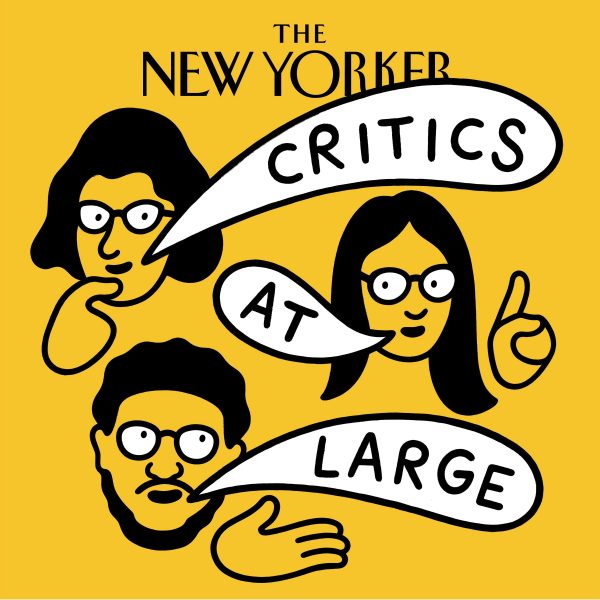
Critics at Large | The New Yorker
- Épisodes
- 153
- Parution
- hebdomadaire
- Dernier épisode
- 12 Nov 2026
À propos du podcast
Critics at Large is a weekly culture podcast from The New Yorker. Every Thursday, the staff writers Vinson Cunningham, Naomi Fry, and Alexandra Schwartz discuss current obsessions, classic texts they’re revisiting with fresh eyes, and trends that are emerging across books, television, film, and more. The show runs the gamut of the arts and pop culture, with lively, surprising conversations about everything from Salman Rushdie to “The Real Housewives.” Through rigorous analysis and behind-the-scenes insights into The New Yorker’s reporting, the magazine’s critics help listeners make sense of our moment—and how we got here.
Épisodes 153
“Club Kid” and the New Fatherhood
The protagonist of the new film “Club Kid” never meant to become a dad. Peter, played by Jordan Firstman, who also wrote and directed the film, is a gay party promoter whose years in the New York club scene are …
Notes de l’épisode
The protagonist of the new film “Club Kid” never meant to become a dad. Peter, played by Jordan Firstman, who also wrote and directed the film, is a gay party promoter whose years in the New York club scene are finally catching up with him. When his ten-year-old biological son unexpectedly comes into the picture, Peter is forced to reckon with his new role in life. On this episode of Critics at Large, Vinson Cunningham, Naomi Fry, and Alexandra Schwartz consider how depictions of fatherhood in the culture have evolved over time. After the women’s-liberation movement, postwar Don Draper-esque patriarchs gave way to a cohort of lovable sitcom dunces, laying the groundwork for the ultimate satire of American fatherhood: Homer Simpson. Today, dads seem to be more pals than patriarchs. Since 1965, partnered American fathers have nearly quadrupled the time they spend with their kids, resulting in a host of new ideas about what a dad is and how to be a good one. Amid seismic cultural shifts, one thing remains unchanged: paternal figures loom large in our lives, and yet there’s no such thing as a perfect dad. “Once you’re a parent, the performance of the role . . . it’s like nobody can actually inhabit it,” Cunningham says. “You think of the father as the person who ruined you or the person who saves you. And of course, you’re always both.”
Read, watch, and listen with the critics:
“Club Kid” (2026)
“Who’s the Boss” (1984-1992)
“The Cosby Show” (1984-1992)
“The Simpsons” (1989–)
“Married... with Children” (1987-1997)
“Little Women,” by Louisa May Alcott
“Mad Men” (2007-2015)
“The Dead Father,” by Donald Barthelme
“Pride and Prejudice,” by Jane Austen
“One Battle After Another” (2025)
“Hamnet” (2025)
“Sentimental Value” (2025)
“They Want to Be Better Fathers, One Braid at a Time,” by Isabella Kwai (The New York Times)
“Transcription,” by Ben Lerner
“Men at Work,” by Luke Winkie (Slate)
“A Great Leap Forward for American Fathers,” by Jessica Grose (The New York Times)
New episodes drop every Thursday. Follow Critics at Large wherever you get your podcasts.
Critics at Large is a weekly discussion from The New Yorker that explores the latest trends in books, television, film, and more. Join us every Thursday as we make unexpected connections between classic texts and pop culture.
Learn more about your ad choices. Visit podcastchoices.com/adchoices
The Cozy Conservatism of “The Gilded Age”
The HBO series “The Gilded Age,” created by the period-drama maestro Julian Fellowes, took a moment to find its audience. But several seasons in, the lush sets, immaculate costuming, and soapy plotlines have …
Notes de l’épisode
The HBO series “The Gilded Age,” created by the period-drama maestro Julian Fellowes, took a moment to find its audience. But several seasons in, the lush sets, immaculate costuming, and soapy plotlines have attracted a robust viewership, making it must-watch television. On this episode of Critics at Large, Vinson Cunningham, Naomi Fry, and Alexandra Schwartz consider the show’s appeal and whether its focus on high-society dramas makes it, as some critics have said, insipid or trivial. In his effort to bring the titular period to life, Fellowes both dramatizes and sanitizes the social tensions of the day, particularly in the case of the ruthless capitalist George Russell, whom viewers have affectionately nicknamed Train Daddy. Why are we so ready to cozy up to these historical avatars, even as anger toward modern billionaires’ meddling seems at an all-time high? “This show creates an avenue for viewers who politically are really opposed to that to actually indulge in it,” Schwartz says. “This is the sneak attack of Julian Fellowes.”
Read, watch, and listen with the critics:
“The Gilded Age” (2022–)
“The Age of Innocence”
“The Custom of the Country”
“OpenAI’s Hollywood Whisperer,” by Charlotte Klein (New York)
New episodes drop every Thursday. Follow Critics at Large wherever you get your podcasts.
Critics at Large is a weekly discussion from The New Yorker that explores the latest trends in books, television, film, and more. Join us every Thursday as we make unexpected connections between classic texts and pop culture.
Learn more about your ad choices. Visit podcastchoices.com/adchoices
Critics at Large Live: “I Need a Critic!”
On this episode of Critics at Large, recorded live at the twenty-seventh annual New Yorker Festival, Vinson Cunningham, Naomi Fry, and Alexandra Schwartz bring their advice series to the stage for the first …
Notes de l’épisode
On this episode of Critics at Large, recorded live at the twenty-seventh annual New Yorker Festival, Vinson Cunningham, Naomi Fry, and Alexandra Schwartz bring their advice series to the stage for the first time. They advise on a range of topics, including films to introduce children to the magic of movies, art to rekindle a feminist spark, and whether trying to optimize one’s inner life can diminish the capacity for genuine taste.
Read, watch, and listen with the critics:
“Gangs of New York” (2002)
“West Side Story” (1961)
“Crouching Tiger, Hidden Dragon” (2000)
“Casablanca” (1942)
“Raiders of the Lost Ark” (1981)
“Playtime” (1967)
“Duck Soup” (1933)
“E.T. the Extra-Terrestrial” (1982)
“Spirited Away” (2001)
The music video for Michael Jackson’s “Remember the Time”
The music video for Michael Jackson’s “Thriller”
“War and Peace,” by Leo Tolstoy
“Plays: The Seagull; Uncle Vanya; Three Sisters; The Cherry Orchard,” by Anton Chekov
“The Dolphin Letters, 1970-1979,” by Elizabeth Hardwick and Robert Lowell
“The Black Outside,” by Joy Priest
“Pricks in the Tapestry,” by Jameson Fitzpatrick
“The Morning of the Poem,” by James Schuyler
“Mommie Dearest” (1981)
Hole’s “Live Through This”
“Women Talking,” by Miriam Toews
“Women Talking” (2022)
“How to Say Babylon: A Memoir,” by Safiya Sinclair
“The Substance” (2024)
“Big Swiss,” by Jen Beagin
“Oreo,” by Fran Ross
“Life Itself!,” by Elaine Dundy
“Eureka Day,” by Jonathan Spector
“Middlemarch,” by George Eliot
“Pride and Prejudice,” by Jane Austen
“Looking for Mr. Goodbar,” by Judith Rossner
“The Vanishing Half,” by Brit Bennett
“Show Me a Hero” (2015)
“Ocean’s Eleven” (2001)
“Heart of the Beast” (2026)
New episodes drop every Thursday. Follow Critics at Large wherever you get your podcasts.Critics at Large is a weekly discussion from The New Yorker that explores the latest trends in books, television, film, and more. Join us every Thursday as we make unexpected connections between classic texts and pop culture.
Learn more about your ad choices. Visit podcastchoices.com/adchoices
“You Can See Everything” and the Nathan Fielder Effect
Nathan Fielder’s onscreen persona—flat, literal-minded, and seemingly baffled by ordinary social behavior—has made him one of our most distinctive cultural figures. On his Comedy Central series “Nathan for …
Notes de l’épisode
Nathan Fielder’s onscreen persona—flat, literal-minded, and seemingly baffled by ordinary social behavior—has made him one of our most distinctive cultural figures. On his Comedy Central series “Nathan for You,” his approach collided with the eagerness of ordinary people to be agreeable, and on the HBO series “The Rehearsal,” it became a kind of social science, as Fielder staged elaborate simulations of real life. Fielder’s latest project, “You Can See Everything,” a documentary he made with the director Lance Oppenheim, trains that deadpan gaze on Elizabeth Holmes, the disgraced founder of Theranos, who invited the filmmakers into her home in the weeks before she reported to prison for defrauding investors. On this episode of Critics at Large, Vinson Cunningham, Naomi Fry, and Alexandra Schwartz discuss the film and the strange mirroring between its two central figures: Fielder, performing an unnerving bluntness, and Holmes, wide-eyed and doll-like, who seems to remember almost nothing and insists she did nothing wrong. The hosts also consider what the movie says about the documentary form itself, and whether it can, or should, get at the truth. And with “You Can See Everything” earning fifteen million dollars in its opening weekend, a remarkable figure for a documentary, they ask what it says about us as viewers that we’re so caught in Fielder’s web. Schwartz says it speaks to “our very human need to trust people while knowing that no one is really fundamentally trustworthy, but wanting everyone to be.” As she puts it, “We’re all kind of on trial here, too.”
Read, watch, and listen with the critics:
“You Can See Everything” (2026)
“We Can Never Understand Elizabeth Holmes, or Nathan Fielder,” by Naomi Fry (The New Yorker)
“Lance Oppenheim Is Going Places,” by Alex Barasch (New York)
“Spoiler Alert: Keeping Movies Under Wraps,” by Richard Brody (The New Yorker)
“Nathan For You” (2013-17)
“The Rehearsal” (2022-)
New episodes drop every Thursday. Follow Critics at Large wherever you get your podcasts.
Critics at Large is a weekly discussion from The New Yorker that explores the latest trends in books, television, film, and more. Join us every Thursday as we make unexpected connections between classic texts and pop culture.
Learn more about your ad choices. Visit podcastchoices.com/adchoices
“The Social Reckoning” Shows How It All Went Wrong
In 2010, Time magazine’s Person of the Year was not a world leader or entertainment icon but Mark Zuckerberg, the twenty-six-year-old creator of Facebook. That same year, Zuckerberg got the Hollywood treatment …
Notes de l’épisode
In 2010, Time magazine’s Person of the Year was not a world leader or entertainment icon but Mark Zuckerberg, the twenty-six-year-old creator of Facebook. That same year, Zuckerberg got the Hollywood treatment in the bio-pic “The Social Network,” directed by David Fincher and written by Aaron Sorkin. On this episode of Critics at Large, Vinson Cunningham, Naomi Fry, and Alexandra Schwartz revisit “The Social Network,” which put forward an origin story for the company, captivating audiences and becoming a cultural touchpoint in the process. They compare it to Sorkin’s new film, “The Social Reckoning,” which dramatizes whistle-blowing by the former Facebook employee Frances Haugen and the resulting bombshell investigation conducted by the Wall Street Journal in 2021. In the earlier film, Jesse Eisenberg played Zuckerberg as a lonely, ambitious genius—a stark contrast to Jeremy Strong’s portrayal, in “The Social Reckoning,” of a man who puts profits before people at every turn. At its best, the new film functions as its own form of whistle-blowing. “The best reason to watch ‘The Social Reckoning’ is that a lot of people still don't understand some of these things about this company,” Cunningham says. “I do wonder if a kind of news-giving or news-bringing, however belated . . . is a salutary effect of these portrayals.”
Read, watch, and listen with the critics:
“The Social Network” (2010)
“The Social Reckoning” (2026)
“The Facebook Files” (The Wall Street Journal)
"Succession” (2018-23)
“Aaron Sorkin Made a Movie About Her. She Just Hopes Mark Zuckerberg Watches.” by Seija Rankin (The Hollywood Reporter)
"As Big Tech Takes Over Hollywood, the Picture Onscreen Gets Darker," by Alissa Wilkinson (The New York Times)
“Silicon Valley” (2014-19)
“Careless People: A Cautionary Tale of Power, Greed, and Lost Idealism,” by Sarah Wynn-Williams
“Don't Be Evil: Bad Bosses, Fake Promises, and My Escape from Big Tech,” by Claire Stapleton
“Edward Snowden and the Rise of Whistle-Blower Culture,” by Jill Lepore (The New Yorker)
“Data center opposition a rare issue uniting Americans across the political divide,” (60 Minutes)
New episodes drop every Thursday. Follow Critics at Large wherever you get your podcasts.
Critics at Large is a weekly discussion from The New Yorker that explores the latest trends in books, television, film, and more. Join us every Thursday as we make unexpected connections between classic texts and pop culture.
Learn more about your ad choices. Visit podcastchoices.com/adchoices
Tom Cruise-a-Palooza
Tom Cruise is often said to be the last of a dwindling breed: the true movie star. On this episode of Critics at Large, Vinson Cunningham, Naomi Fry, and Alexandra Schwartz consider the performances that have …
Notes de l’épisode
Tom Cruise is often said to be the last of a dwindling breed: the true movie star. On this episode of Critics at Large, Vinson Cunningham, Naomi Fry, and Alexandra Schwartz consider the performances that have earned him that designation. The hosts are joined by Tyler Foggatt, a senior editor at The New Yorker and a die-hard “Cruise-head,” who breaks down the chapters of the actor’s career. The early “heartthrob years,” marked by films like “Risky Business” and “The Color of Money,” established Cruise’s appeal onscreen and catapulted him into projects with respected directors such as Stanley Kubrick and Paul Thomas Anderson. Cruise’s affiliation with the Church of Scientology might have torpedoed the career of a different celebrity, but he remains irresistible to audiences, who have shown up at the box office throughout the past decade of his career—which has largely been defined by action flicks and jaw-dropping stuntwork. In “Digger,” the polarizing new film directed by Alejandro González Iñárritu, Cruise’s performance as a potbellied, aging oil baron is a rare departure from his usual fare. Might it signal another reinvention? “Cruise will probably default back to the formula that he knows works,” Foggatt says. “But maybe we'll get a couple ‘Digger’s between now and then.”
Read, watch, and listen with the critics:
“Digger” (2026)
“Risky Business” (1983)
“The Color of Money” (1986)
“Cocktail” (1988)
“Jerry Maguire” (1996)
“Born on the Fourth of July” (1989)
“Magnolia” (1999)
“Valkyrie” (2008)
The “Mission: Impossible” movies (1999-)
“War of the Worlds” (2005)
New episodes drop every Thursday. Follow Critics at Large wherever you get your podcasts.
Critics at Large is a weekly discussion from The New Yorker that explores the latest trends in books, television, film, and more. Join us every Thursday as we make unexpected connections between classic texts and pop culture.
Learn more about your ad choices. Visit podcastchoices.com/adchoices
What Survival Stories Tell Us (and Should We Listen?)
On this episode of Critics at Large, Vinson Cunningham, Naomi Fry, and Alexandra Schwartz discuss the perennial appeal of survival stories. They trace the theme of man versus nature from early novels like …
Notes de l’épisode
On this episode of Critics at Large, Vinson Cunningham, Naomi Fry, and Alexandra Schwartz discuss the perennial appeal of survival stories. They trace the theme of man versus nature from early novels like Daniel Defoe’s “Robinson Crusoe” to new releases like “Heart of the Beast,” in which Brad Pitt plays a grizzled veteran traversing the Alaskan wilderness with a canine companion. Survivalist themes are common in reality franchises like “Survivor,” now in its fifty-first season, and the History Channel show “Alone.” But a new offering from Channel 4, “Apocalypse,” takes the format in a darker direction: contestants profess their fears about societal collapse as they compete for food and shelter on an abandoned military base. As anxiety rises about the climate crisis and the potential for an A.I. takeover, the question of survival seems more pressing than ever—and yet these tales of rugged individualism can seem out of step with the times. “They don’t really describe our condition,” Cunningham says. “Unless you are in fact marooned somewhere, there are other people. It’s harder to dramatize surviving together than it is surviving alone.”
Read, watch, and listen with the critics:
“Heart of the Beast” (2026)
“A Marriage at Sea: A True Story of Love, Obsession, and Shipwreck,” by Sophie Elmhirst
“All is Lost” (2013)
“Hatchet,” by Gary Paulsen
“My Side of the Mountain,” by Jean Craighead George
“Island of the Blue Dolphins,” by Scott O'Dell
“Cast Away” (2000)
“Rescue Dawn” (2006)
“The Ecstatic Truth,” by Daniel Zalewski (The New Yorker)
“The Rise of the Novel: Studies in Defoe, Richardson and Fielding,” by Ian Watt
“The Revenant” (2015)
“Little House in the Big Woods,” by Laura Ingalls Wilder
“Alone” (2015-)
“Survivor” (2000-)
“Apocalypse” (2026)
“Tuesday, and After” (The New Yorker)
New episodes drop every Thursday. Follow Critics at Large wherever you get your podcasts.Critics at Large is a weekly discussion from The New Yorker that explores the latest trends in books, television, film, and more. Join us every Thursday as we make unexpected connections between classic texts and pop culture.
Learn more about your ad choices. Visit podcastchoices.com/adchoices
Introducing: “The Journey,” from In the Dark
“The Journey,” a five-part audio investigation by Ava Kofman, unravels the mystery of how Guojun Xuan and Silvia Zhang, a wealthy Los Angeles couple, obtained dozens of children through nearly as many …
Notes de l’épisode
“The Journey,” a five-part audio investigation by Ava Kofman, unravels the mystery of how Guojun Xuan and Silvia Zhang, a wealthy Los Angeles couple, obtained dozens of children through nearly as many surrogates—and exposes a scandal that threatens to undermine the entire surrogacy industry.
In Episode 1, “Gifts,” a woman in Texas agrees to carry a child for the couple. She thinks she’s helping a family in need. Then she becomes a whistle-blower.
In the Dark is an acclaimed investigative-journalism podcast that launched in 2016. Its third season won the 2025 Pulitzer Prize for audio.
To keep listening to “The Journey,” search for In the Dark wherever you get your podcasts.
Learn more about your ad choices. Visit podcastchoices.com/adchoices
That Back-to-School Feeling
As the school year resumes, Vinson Cunningham, Naomi Fry, and Alexandra Schwartz consider the work—and pleasure—of teaching and learning, reflect on their own experiences in the classroom, and counsel listeners …
Notes de l’épisode
As the school year resumes, Vinson Cunningham, Naomi Fry, and Alexandra Schwartz consider the work—and pleasure—of teaching and learning, reflect on their own experiences in the classroom, and counsel listeners on scholastic concerns. One teacher calls in asking for texts she could assign to combat apathy among her high-school students; another is looking for works that depict the highs and lows of her chosen career; and a graduate student seeks works of poetry to convince skeptics of the form’s artistic value. The hosts discuss the ways in which teaching is itself a kind of art form. “Teaching is so much a kind of performance,” Cunningham says. “You have to be the one out on the ledge . . . to establish a new frontier of, ‘You are allowed to be excited about this.’ ”
Read, watch, and listen with the critics:
“Less Than Zero,” by Bret Easton Ellis
Homer’s Odyssey
“Black Boy,” by Richard Wright
“The Great Gatsby,” by F. Scott Fitzgerald
“A Complicated Kindness,” by Miriam Toews
“Black Swan” (2010)
“The Holdovers” (2023)
“Democracy and Education,” by John Dewey
“The Class” (2008)
“The Simpsons” (1989-)
“Are You My Mother?,” by Merve Emre (The New Yorker)
“Dead Poets Society” (1989)
“Theme for English B,” by Langston Hughes
“Llull,” by Ariana Reines
“Odes,” by Sharon Olds
“The Red Poppy,” by Louise Glück
New episodes drop every Thursday. Follow Critics at Large wherever you get your podcasts.Critics at Large is a weekly discussion from The New Yorker that explores the latest trends in books, television, film, and more. Join us every Thursday as we make unexpected connections between classic texts and pop culture.
Learn more about your ad choices. Visit podcastchoices.com/adchoices
Remembering Dolly Parton
Upon news of Dolly Parton’s death last week, flags across the country were lowered to half-mast. A petition circulated to rename the Nashville airport in her honor, and social media read like a greatest-hits …
Notes de l’épisode
Upon news of Dolly Parton’s death last week, flags across the country were lowered to half-mast. A petition circulated to rename the Nashville airport in her honor, and social media read like a greatest-hits reel of the charisma and musical acumen that made her universally beloved. On this episode of Critics at Large, Vinson Cunningham and Naomi Fry are joined by three fellow New Yorker writers to celebrate Parton’s life and work, and the legacy she leaves behind. Kathryn Schultz, who penned Parton’s Postscript, discusses her undersung, “Oprah-like” business savvy and deep commitment to philanthropic causes; Amanda Petrusich distills Parton’s vast discography down to three essential tracks; and Lauren Michele Jackson considers how the star’s carefully crafted persona played up aspects of her femininity while transcending divisions of race and class. “The ready word one reaches for is ‘saint,’ right?” Schultz says. “This is someone who came from nothing and might reasonably have felt the instinct to hoard everything she had. And she had the absolute opposite instinct, which was to give as much away as she could.”
Read, watch, and listen with the critics:
“9 to 5” (1980)
Dolly Parton’s “Jolene”
“Dolly Parton for the People,” by Kathryn Schultz (The New Yorker)
“Dolly: My Life and Other Unfinished Business,” by Dolly Parton
“Country Music” (2019)
Dolly Parton’s “Better Get to Livin’ ”
“What Dolly Parton Built,” by Amanda Petrusich (The New Yorker)
Beyoncé’s “JOLENE”
Dolly Parton’s “The Bridge”
Dolly Parton’s “Little Bird”
“The United States of Dolly Parton,” by Lauren Michele Jackson (The New Yorker)
Barbara Walters’s 1978 interview with Dolly Parton
“Taking In the Scene at Daisy Chain Fields, the Zoomer Lilith Fair,” by Lauren Michele Jackson (The New Yorker)
“Back: Essays on the Soul and Spine of America,” by Lauren Michele Jackson
Dolly Parton’s “Backwoods Barbie”
New episodes drop every Thursday. Follow Critics at Large wherever you get your podcasts.Critics at Large is a weekly discussion from The New Yorker that explores the latest trends in books, television, film, and more. Join us every Thursday as we make unexpected connections between classic texts and pop culture.
Learn more about your ad choices. Visit podcastchoices.com/adchoices
What is Gen Z Afraid Of?
In May, two low-budget movies from début filmmakers opened in theatres and quickly made box-office history. “Obsession” and “Backrooms,” which together have grossed nearly a billion dollars, defied conventional …
Notes de l’épisode
In May, two low-budget movies from début filmmakers opened in theatres and quickly made box-office history. “Obsession” and “Backrooms,” which together have grossed nearly a billion dollars, defied conventional industry wisdom and inaugurated the burgeoning genre of “Gen Z horror.” On this episode of Critics at Large, Vinson Cunningham, Naomi Fry, and Alexandra Schwartz are joined by New Yorker culture editor and horror enthusiast Alex Barasch to discuss this new canon, beginning with the most recent entry, Alex Ullom’s “It Ends.” Like Curry Barker and Kane Parsons—the directors of “Obsession” and “Backrooms,” respectively—Ullom is a twentysomething who honed his craft on YouTube. This content pipeline has already become a model for Hollywood executives who are scrambling to cash in on the phenomenon. But these films’ sensitivity to the predicaments of young viewers, who grew up online and came of age during the pandemic, may be the real key to their commercial success. “It’s people responding to another member of their generation speaking directly to them,” Barasch says. “I hope that that is what is sought and funded and rewarded in this new era.”
Read, watch, and listen with the critics:
“Why Horror Still Haunts Us” (The New Yorker)
“Obsession” (2026)
“Backrooms” (2026)
“It Ends” (2026)
“The Twenty-Six-Year-Old Behind ‘Obsession,’ a Terrifying Tale of a Crush Gone Awry,” by Alex Barasch (The New Yorker)
“No Exit,” by Jean-Paul Sartre
“Weapons” (2025)
“Portal” (2007)
“Iron Lung” (2026)
New episodes drop every Thursday. Follow Critics at Large wherever you get your podcasts.Critics at Large is a weekly discussion from The New Yorker that explores the latest trends in books, television, film, and more. Join us every Thursday as we make unexpected connections between classic texts and pop culture.
Learn more about your ad choices. Visit podcastchoices.com/adchoices
Critics’ Cult Classics: Emily Nussbaum on “Slings & Arrows”
During her tenure as The New Yorker’s television critic, Emily Nussbaum famously railed against ranking the year’s best shows; she once wrote a piece entitled “I Hate Top Ten Lists.” But naming her favorite …
Notes de l’épisode
During her tenure as The New Yorker’s television critic, Emily Nussbaum famously railed against ranking the year’s best shows; she once wrote a piece entitled “I Hate Top Ten Lists.” But naming her favorite series of all time is an easier proposition, and the honor goes to a little-known Canadian production from the early two-thousands that dramatized the colorful characters and commercial struggles of a fictional Shakespearean theatre festival. In the final episode of this summer’s Critics at Large interview series, Alex Schwartz talks with Nussbaum about her love of “Slings & Arrows,” which pioneered a complex balance of comedy and drama that would eventually become a hallmark of prestige television. Today, Hollywood showrunners including David Simon, the creator of “The Wire,” sing its praises—and yet it remains largely overlooked by audiences. Nussbaum, who’s lately been writing as the magazine’s theatre critic, is on a mission to change that. “The history of TV is the confusion between whether something is good and whether it’s popular and commercial,” Nussbaum says. “ ‘Slings & Arrows’ is an example of a show that is the best show—regardless of how many people watch it.”
Read, watch, and listen with the critics:
“Cue the Sun,” by Emily Nussbaum“Slings and Arrows” (2003-2006)“Hamlet,” by William Shakespeare“Macbeth,” by William Shakespeare“King Lear,” by William Shakespeare“30 Rock” (2006-13)“Orange Is the New Black” (2013-19)“Call My Agent!” (2015-19)“The Studio” (2025—)“Next to Normal” (2025)“Succession” (2018-2023)
New episodes drop every Thursday. Follow Critics at Large wherever you get your podcasts.
Learn more about your ad choices. Visit podcastchoices.com/adchoices
Critics’ Cult Classics: Hannah Goldfield on the Food World’s Secret Tastemakers
In the second in a series of Critics at Large interview episodes devoted to the topic of cult classics, Naomi Fry talks with the New Yorker staff writer Hannah Goldfield about how that designation applies in …
Notes de l’épisode
In the second in a series of Critics at Large interview episodes devoted to the topic of cult classics, Naomi Fry talks with the New Yorker staff writer Hannah Goldfield about how that designation applies in the culinary realm. The two discuss specialty ingredients that appear on menus for only the briefest of moments, out-of-print cookbooks that go for hundreds of dollars on eBay, and once niche restaurants that have blown up in the TikTok era. Then, Goldfield makes her case for the particular staying power of Judy Rodgers’s “Zuni Café Cookbook,” which has influenced countless chefs and food writers—including Samin Nosrat, whose “Salt, Fat, Acid, Heat” immediately soared to the top of best-seller lists upon its release, in 2017. “The Zuni Café Cookbook,” though less accessible, has attracted such illustrious devotees for a reason. “It’s text-heavy. It’s huge in size. It’s a bit intimidating at first,” Goldfield says. “But if you are interested in cooking—or if you have a curiosity about it, even—it’s an incredible resource.”
Read, watch, and listen with the critics:
“Heartburn,” by Nora Ephron
“The Joy of Cooking,” by Irma S. Rombauer
“Cooking with Love,” by Ruth Sirkis
“The Surprising Endurance of Martha Stewart’s ‘Entertaining,’ ” by Hannah Goldfield (The New Yorker)
“Entertaining,” by Martha Stewart
“The Zuni Café Cookbook,” by Judy Rodgers
“Salt, Fat, Acid, Heat,” by Samin Nosrat
New episodes drop every Thursday. Follow Critics at Large wherever you get your podcasts.
Learn more about your ad choices. Visit podcastchoices.com/adchoices
Critics’ Cult Classics: Hanif Abdurraqib on Camp Lo’s “Uptown Saturday Night”
When it dropped in January of 1997, Camp Lo’s “Uptown Saturday Night” thrilled some listeners and confounded others. On the first in a series of Critics at Large interview episodes devoted to resurfacing …
Notes de l’épisode
When it dropped in January of 1997, Camp Lo’s “Uptown Saturday Night” thrilled some listeners and confounded others. On the first in a series of Critics at Large interview episodes devoted to resurfacing beloved cult classics, Vinson Cunningham talks with Hanif Abdurraqib, a contributing writer for The New Yorker and a diehard fan of the Camp Lo project. Abdurraqib describes “Uptown Saturday Night,” which leaned on Blaxploitation tropes to paint a strikingly cinematic picture of New York City, as “essentially a heist film” unto itself. Together, they discuss the album’s lukewarm reception at the time, and why its creative approach to storytelling seemed to land on deaf ears. One explanation is that the hip-hop marketplace of the era was increasingly demanding that musicians pick a lane: underground or mainstream, socially conscious or unapologetically opulent. “ ‘Uptown Saturday Night’ got lost in that because it didn’t really have a foothold in either world,” Abdurraqib says. “At a time when a lot of these guys with underground roots were bending to the hyper-commercialization of hip-hop, Camp Lo never changed who they were.”
Read, watch, and listen with the critics:
Camp Lo’s “Uptown Saturday Night”
Fugees’ “The Score”
“Uptown Saturday Night” (1974)
“Midnight Express” (1978)
“The Black Connection” (1974)Dynasty’s “Adventures in the Land of Music”
Elliott Wilson’s review of “Uptown Saturday Night” (The Source)
Slum Village’s “Fan-Tas-Tic (Vol. 1)”
Puff Daddy’s “No Way Out”
Pete Rock and Camp Lo’s “80 Blocks from Tiffany’s”
Camp Lo’s “Black Hollywood”
Jay-Z’s “American Gangster”
Wyclef Jean’s “The Carnival”
New episodes drop every Thursday. Follow Critics at Large wherever you get your podcasts.
Critics at Large is a weekly discussion from The New Yorker which explores the latest trends in books, television, film, and more. Join us every Thursday as we make unexpected connections between classic texts and pop culture.
Learn more about your ad choices. Visit podcastchoices.com/adchoices
The Irony and the Ecstasy of Colson Whitehead
Colson Whitehead’s ascent in the literary world has seemed, like much of what he does, impressively effortless. Though he’s best known for “The Underground Railroad” and “The Nickel Boys”—both of which were …
Notes de l’épisode
Colson Whitehead’s ascent in the literary world has seemed, like much of what he does, impressively effortless. Though he’s best known for “The Underground Railroad” and “The Nickel Boys”—both of which were awarded Pulitzer Prizes—his œuvre also includes a mystery set amid rival schools of elevator inspectors, a zombie novel, and an autobiographical coming-of-age story. On this episode of Critics at Large, Vinson Cunningham, Naomi Fry, and Alexandra Schwartz survey Whitehead’s wide-ranging body of work. The hosts are joined by their fellow staff writer Julian Lucas, who recently profiled Whitehead for The New Yorker. Together, they discuss three central works: “The Underground Railroad,” which catapulted its author from literary darling to mainstream celebrity; “Sag Harbor,” which fictionalizes, barely, Whitehead’s summers in the Hamptons and the family dramas that played out there; and “Harlem Shuffle,” the first installment of the crime trilogy that concluded this month, with the publication of “Cool Machine.” On the page, Whitehead is a true Gen X ironist, transmitting heavy histories and themes with levity. Despite the occasional darkness of his subject matter, he’s also one of our funniest novelists. “He has this way of, almost like a standup comedian, drawing you into this playful patter,” Lucas says. “Then your defenses go down, and that’s when he hits you with something that grabs you emotionally, or that pulls you into a story.”
Read, watch, and listen with the critics:
“The Elusive Promise of the First Person” (The New Yorker)
“The Nickel Boys,” by Colson Whitehead
“Colson Whitehead’s Big Score,” by Julian Lucas (The New Yorker)
“The Colossus of New York,” by Colson Whitehead
“The Underground Railroad,” by Colson Whitehead
“Sag Harbor,” by Colson Whitehead
“Harlem Shuffle,” by Colson Whitehead
“Cool Machine,” by Colson Whitehead
“Why Bother?” by Jonathan Franzen (Harper’s)
“The Odyssey” (2026)
“Who Owns the Odyssey?” (The New Yorker)
“Don’t Use A.I. to Do This,” by Colson Whitehead (The New York Times)
“John Henry Days,” by Colson Whitehead
New episodes drop every Thursday. Follow Critics at Large wherever you get your podcasts.Critics at Large is a weekly discussion from The New Yorker which explores the latest trends in books, television, film, and more. Join us every Thursday as we make unexpected connections between classic texts and pop culture.
Learn more about your ad choices. Visit podcastchoices.com/adchoices
The Golden Age of the American Idiot
The new game show “Nation’s Dumbest,” flips the classic “Jeopardy!” script on its head. The format: twelve famous-ish contestants are peppered with basic logic and trivia questions. The twist is that those who …
Notes de l’épisode
The new game show “Nation’s Dumbest,” flips the classic “Jeopardy!” script on its head. The format: twelve famous-ish contestants are peppered with basic logic and trivia questions. The twist is that those who perform well are sent home, with the last one standing receiving the title of “Nation’s Dumbest.” On this episode of Critics at Large, Vinson Cunningham, Naomi Fry, and Alexandra Schwartz consider how the figure of the idiot has evolved over time, from Shakespearean fools—whose position of apparent ignorance allows them to speak difficult truths—to more recent “happy fools” like Austin Powers and the goofy, stunt-obsessed heroes of the “Jackass” franchise. Once a laughingstock, the idiot has reached new heights of influence in the era of A.I. summaries and the infinite scroll. Resisting stupidity can feel like an uphill battle. “Whatever it is to be smart, I’m doing this Sisyphean thing of continuing to push it up the hill, and the rock feels heavy,” Cunningham says. “The question is: is society a wind at your back, or going in the opposite direction?”
Read, watch, and listen with the critics:
“Nation’s Dumbest” (2026-)
“Jeopardy!” (1984-)
“Austin Powers” (1997)
“Seinfeld” (1989-98)
“The White Lotus” (2021-)
“30 Rock” (2006-13)
“Tracy Morgan Turns the Drama of His Life Into Comedy,” by Vinson Cunningham (The New Yorker)
“American Humor,” by Constance Rourke
“Born Yesterday” (1950)
“Legally Blonde” (2001)
Green Day’s “American Idiot”
“Jackass: Best and Last” (2026)
Shakespeare’s “King Lear”
Shakespeare’s “Hamlet”
“A Short History of Stupidity,” by Stuart Jeffries
“The Year in Stupidity,” by Naomi Fry (The New Yorker)
“A Theory of Dumb,” by Lane Brown (New York)
“Naked Gun” (2025)
New episodes drop every Thursday. Follow Critics at Large wherever you get your podcasts.Critics at Large is a weekly discussion from The New Yorker which explores the latest trends in books, television, film, and more. Join us every Thursday as we make unexpected connections between classic texts and pop culture.
Learn more about your ad choices. Visit podcastchoices.com/adchoices
Who Owns the Odyssey?
In its nearly three-thousand-year history, the Odyssey has undergone as many twists and turns as its protagonist does on his journey home to Ithaca. Its origins as oral poetry suggest countless revisions before …
Notes de l’épisode
In its nearly three-thousand-year history, the Odyssey has undergone as many twists and turns as its protagonist does on his journey home to Ithaca. Its origins as oral poetry suggest countless revisions before it was even put into text—and many more followed, as translators have wrestled with how best to express Homer’s ancient Greek verse in their own languages. On this episode of Critics at Large, Vinson Cunningham, Naomi Fry, and Alexandra Schwartz consider the latest rendition, a film adaptation by the director Christopher Nolan. The movie’s two-hundred-and-fifty-million-dollar budget, A-list cast, and use of cutting-edge IMAX technology make it maximalist in every sense of the word. It’s elicited glowing reception from early viewers—and faced preëmptive criticism from the right. Drawing on the scholar Emily Wilson’s 2017 translation of the epic, Nolan has modernized the dialogue; his focus on the erosion of societal values also speaks directly to the anxieties of our era, in which so many norms and institutions feel newly precarious. “The Odyssey persists because the world does keep on evanescing behind us,” Cunningham says. “The question of how to move on is always fresh.”
Read, watch, and listen with the critics:
“The Odyssey” (2026)
“Planet of the Apes” (1968)
“Oppenheimer” (2023)
“Troy” (2004)
“Why the Odyssey Keeps Defeating Filmmakers,” by David Denby (The New Yorker)
“L’Odissea” (1968)
Emily Wilson’s translation of the Odyssey
Robert Fagles’s translation of the Odyssey
Daniel Mendelsohn’s translation of the Odyssey
“The Dark Knight” (2008)
Shakespeare’s “Hamlet”
New episodes drop every Thursday. Follow Critics at Large wherever you get your podcasts.
Critics at Large is a weekly discussion from The New Yorker which explores the latest trends in books, television, film, and more. Join us every Thursday as we make unexpected connections between classic texts and pop culture.
Learn more about your ad choices. Visit podcastchoices.com/adchoices
An American Playlist
This week, to commemorate two hundred and fifty years of the American experiment, Vinson Cunningham, Naomi Fry, and Alexandra Schwartz present an American playlist. On this special episode, the hosts hear from …
Notes de l’épisode
This week, to commemorate two hundred and fifty years of the American experiment, Vinson Cunningham, Naomi Fry, and Alexandra Schwartz present an American playlist. On this special episode, the hosts hear from listeners regarding the songs that best encapsulate their feelings about the U.S. today—and offer some tracks of their own. The resulting compilation reflects the country’s turbulent history, its uncertain present, and, crucially, listeners’ hopes for its future. “What we think of as nation-building—at least if you care about art, that’s not where the real action is,” Cunningham says. “The action is in our creative response to the circumstances that we’re given. And that’s what music is all about.”
Listen to a playlist of songs from this episode here. Featured tracks:
“Kids in America,” by Kim Wilde
“Miss America,” by David Byrne
“All-American Bitch,” by Olivia Rodrigo
“Django Jane,” by Janelle Monáe
“Help Save the Youth of America,” by Billy Bragg
“Almost Cut My Hair,” by Crosby, Stills, Nash & Young
“Free Fallin’,” by Tom Petty
“America,” by Simon & Garfunkel
“Battle Hymn of the Republic,” covered by Joan Baez
“Sleep Now in the Fire,” by Rage Against the Machine
“Your Flag Decal Won’t Get You Into Heaven Anymore,” by John Prine
“Compared to What,” by Roberta Flack
“Ohio/Machine Gun,” by The Isley Brothers
“Bob Dylan's 115th Dream,” by Bob Dylan
“Wild Goose Chase,” covered by Nora Brown
“That’s Life,” covered by James Brown
“Billy The Kid Suite,” by Aaron Copland
“A Change Is Gonna Come,” by Sam CookeNew episodes drop every Thursday. Follow Critics at Large wherever you get your podcasts.
Critics at Large is a weekly discussion from The New Yorker which explores the latest trends in books, television, film, and more. Join us every Thursday as we make unexpected connections between classic texts and pop culture.Learn more about your ad choices. Visit podcastchoices.com/adchoices
From The Political Scene: The Politics of the Big Game
Critics at Large will be back next week. In the meantime, you can hear Vinson Cunningham and Naomi Fry on a recent episode of The New Yorker’s Political Scene, hosted by Tyler Foggatt, where they consider …
Notes de l’épisode
Critics at Large will be back next week. In the meantime, you can hear Vinson Cunningham and Naomi Fry on a recent episode of The New Yorker’s Political Scene, hosted by Tyler Foggatt, where they consider several high-profile collisions of sports and politics. First, Cunningham talks to Foggatt about Donald Trump’s controversial appearance at a Knicks game during the team’s championship run. Then Fry and Foggatt discuss the U.F.C. fight that Trump hosted on the White House lawn—in celebration of America’s two-hundred-and-fiftieth anniversary, as well as his own eightieth birthday—and what it revealed about the President’s second term. Finally, the staff writer Louisa Thomas joins Foggatt to discuss how the Administration’s immigration policies, the war in Iran, and America’s precarious position on the international stage are impacting another major athletic event: the World Cup.
Tune in to The Political Scene wherever you get your podcasts.
Learn more about your ad choices. Visit podcastchoices.com/adchoices
Steven Spielberg’s Blockbusters
When “Jaws” hit theatres in 1975, no one—neither the studio executives involved nor the film’s twenty-six-year-old director, Steven Spielberg—was betting on its success. But it dominated at the box office and …
Notes de l’épisode
When “Jaws” hit theatres in 1975, no one—neither the studio executives involved nor the film’s twenty-six-year-old director, Steven Spielberg—was betting on its success. But it dominated at the box office and promptly revolutionized the way movies were promoted, distributed, and merchandised. On this episode of Critics at Large, Vinson Cunningham, Naomi Fry, and Alexandra Schwartz trace how Spielberg inaugurated a new phenomenon in Hollywood: the blockbuster. He would tap his own playbook again and again with such hits as “Close Encounters of the Third Kind,” “E.T.,” and “Jurassic Park,” all of which drew impressive audiences and profits. The hosts talk through his filmography, culminating in his new release, “Disclosure Day,” which both replicates and iterates on themes and techniques found in his earlier work. Though other directors may share his capacity for spectacle and action-packed set pieces, much of his appeal lies in his profound earnestness. “What Spielberg is so good at is bringing the human to the fore in these extreme, sci-fi circumstances,” Schwartz says. “And that’s what makes a great blockbuster.”
Read, watch, and listen with the critics:
“Jaws” (1975)
“Disclosure Day” (2026)
“Minority Report” (2002)
“Oscar Wars,” by Michael Schulman
“What Went Wrong” ’s episode about “Jaws”
“Close Encounters of the Third Kind” (1977)
“Jurassic Park” (1993)
“E.T.” (1982)
“Alf” (1986-90)
“Schindler’s List” (1993)
“One Battle After Another” (2025)
“American Journal,” by Robert Hayden
“Heart of the Beast” (2026)
“Sinners” (2025)
“Nope” (2022)
“Barbie” (2023)
“Obsession” (2026)
“Backrooms” (2026)New episodes drop every Thursday. Follow Critics at Large wherever you get your podcasts.
Critics at Large is a weekly discussion from The New Yorker which explores the latest trends in books, television, film, and more. Join us every Thursday as we make unexpected connections between classic texts and pop culture.Learn more about your ad choices. Visit podcastchoices.com/adchoices
Why We Cling to the Animal Kingdom
Since the days of Aesop, stories about animals have been used to explore distinctly human values, virtues, and vices. On this episode of Critics at Large, Vinson Cunningham, Naomi Fry, and Alexandra Schwartz …
Notes de l’épisode
Since the days of Aesop, stories about animals have been used to explore distinctly human values, virtues, and vices. On this episode of Critics at Large, Vinson Cunningham, Naomi Fry, and Alexandra Schwartz consider such childhood classics as E. B. White’s “Stuart Little” and C. S. Lewis’s “Chronicles of Narnia” series, as well as “The Sheep Detectives,” a recent entry in this canon that centers on a flock who learn poignant lessons about life and loss. Works of adult literature, too, have explored the animal-human bond. Our tendency to project onto animals translates to the real world in strange ways, with figures like Timmy the Whale and Punch the Monkey going viral on our social feeds even as our day-to-day lives are more detached from the natural world than ever before. But the distance between us can be instructive, too. “Reckoning with their similarity to us and also their total strangeness to us . . . that’s where works about animals really get me,” Schwartz says. “Not just as a direct transfer onto the human experience but also this other thing that really does enrich our lives: to be in contact with species that are not our own.”
Read, watch, and listen with the critics:
Homer’s Odyssey
“Stone Fox,” by John Reynolds Gardiner
“The Mare,” by Mary Gaitskill
“The Sheep Detectives” (2026)
“Stuart Little,” by E. B. White
“Bambi” (1942)
“The Lion King” (1994)
C. S. Lewis’s “Chronicles of Narnia” Series
“Tom and Jerry” (1940-67)
Aesop’s Fables
“Frederick,” by Leo Lionni
“ ‘Wake Up Dead Man’ and the Whodunnit Renaissance” (The New Yorker)
“Zootopia” (2016)
“Why Earnestness Is Everywhere” (The New Yorker)
“Babe” (1995)
“Tiger King” (2020-21)
“Monkey Business in ‘Chimp Crazy,’ ” by Vinson Cunningham (The New Yorker)
I am Bunny on TikTokNew episodes drop every Thursday. Follow Critics at Large wherever you get your podcasts.
Critics at Large is a weekly discussion from The New Yorker which explores the latest trends in books, television, film, and more. Join us every Thursday as we make unexpected connections between classic texts and pop culture.Learn more about your ad choices. Visit podcastchoices.com/adchoices
I Need a Critic: June, 2026, Edition
This week, Vinson Cunningham, Naomi Fry, and Alexandra Schwartz kick off the summer months with a new installment of the Critics at Large advice series. Listeners’ questions run the gamut: a high-school …
Notes de l’épisode
This week, Vinson Cunningham, Naomi Fry, and Alexandra Schwartz kick off the summer months with a new installment of the Critics at Large advice series. Listeners’ questions run the gamut: a high-school economics teacher seeks films for his students which aren’t set in the world of finance; a caller from Iran looks for cultural works to help endure periods of extreme uncertainty; and two friends on the cusp of college graduation ask for recommendations to guide them in their next chapter. “Art is not a thing separate from our troubles or from our awareness of the insane contingencies of life,” Cunningham says. “It’s meant as a companion and a response to those. I think that’s shining through in some of these questions.”
Read, watch, and listen with the critics:
“Sorry to Bother You” (2018)
“My Architect: A Son’s Journey” (2003)
“Les dites cariatides” (1984)
“Twenty Minutes in Manhattan,” by Michael Sorkin
The photography of Eugène Atget
The music of the Notorious B.I.G., Heavy D, Fat Joe, and Big Pun
“Sentimental Education,” by Gustave Flaubert
Václav Havel’s “Audience”
“The Best of Everything,” by Rona Jaffe
“How to Murder Your Life,” by Cat Marnell
“Becoming a Centenarian,” by Calvin Tomkins (The New Yorker)
“This Old Man,” by Roger Angell (The New Yorker)
“Tabula Rasa,” by John McPhee (The New Yorker)
“Kramer vs. Kramer” (1979)
“Divorcing,” by Susan Taubes
Elena Ferrante’s Neapolitan novels
“Ghost World,” by Daniel Clowes
“Frances Ha” (2012)
“Asparagus” (1979)
Roger Payne’s “Songs of the Humpback Whale”
“Raise High the Roof Beam, Carpenters and Seymour: An Introduction,” by J. D. Salinger
The poetry of Sylvia Plath, particularly “Tulips”
Tony Kushner’s “Angels in America”
“I Will,” by the Beatles
“St. Judy’s Comet,” by Paul Simon
“Sail Away Ladies,” by OdettaNew episodes drop every Thursday. Follow Critics at Large wherever you get your podcasts.
Critics at Large is a weekly discussion from The New Yorker which explores the latest trends in books, television, film, and more. Join us every Thursday as we make unexpected connections between classic texts and pop culture.
Learn more about your ad choices. Visit podcastchoices.com/adchoices
Our Modern Glut of Choice
For many of us, daily life is defined by a near-constant stream of decisions, from what to buy on Amazon to what to watch on Netflix. On this episode of Critics at Large, Vinson Cunningham, Naomi Fry, and …
Notes de l’épisode
For many of us, daily life is defined by a near-constant stream of decisions, from what to buy on Amazon to what to watch on Netflix. On this episode of Critics at Large, Vinson Cunningham, Naomi Fry, and Alexandra Schwartz consider how we came to see endless selection as a fundamental right. The hosts discuss “The Age of Choice,” a book by the historian Sophia Rosenfeld, which traces how our fixation with the freedom to choose has evolved over the centuries. Today, an abundance of choice in one sphere often masks a lack of choice in others—and, with so much focus on individual rather than collective decision-making, the glut of options can contribute to a profound sense of alienation. “When all you do is choose, choose, choose, what you do is end up by yourself,” Cunningham says. “Putting yourself with people seems to be one of the salves.”
This episode originally aired on March 13, 2025.
Read, watch, and listen with the critics:
“Could Anyone Keep Track of This Year’s Microtrends?” by Danielle Cohen (The Cut)
“The Age of Choice: A History of Freedom in Modern Life,” by Sophia Rosenfeld
“The Federalist Papers,” by Alexander Hamilton, James Madison, and John Jay
“What Does It Take to Quit Shopping? Mute, Delete and Unsubscribe,” by Jordyn Holman and Aimee Ortiz (The New York Times)New episodes drop every Thursday. Follow Critics at Large wherever you get your podcasts.
Critics at Large is a weekly discussion from The New Yorker which explores the latest trends in books, television, film, and more. Join us every Thursday as we make unexpected connections between classic texts and pop culture.
Learn more about your ad choices. Visit podcastchoices.com/adchoices
Where Do Men Go from Here?
The phrase “toxic masculinity,” deployed ad nauseum over the past decade, now borders on cliché, but the fact that men are in some kind of crisis feels beyond dispute. Statistics on boys’ prospects are bleak …
Notes de l’épisode
The phrase “toxic masculinity,” deployed ad nauseum over the past decade, now borders on cliché, but the fact that men are in some kind of crisis feels beyond dispute. Statistics on boys’ prospects are bleak, showing falling graduation rates, diminished employment opportunities, and dismal mental-health outcomes. Meanwhile, the manosphere has fanned the flames of these discontents. The question of what’s to be done is more pressing than ever. On this episode of Critics at Large, Vinson Cunningham, Naomi Fry, and Alexandra Schwartz consider a new wave of texts that aims to diagnose men’s ills, and to offer a path forward. The men in these works fall, broadly, into two lanes: the damaged, sometimes violent types who are front and center in such series as Richard Gadd’s “Half Man,” and the softer, more emotionally attuned protagonists of shows like “Heated Rivalry” and “DTF St. Louis.” But this tidy schematic falls apart in real life—and, as looksmaxxers have taught us, obsessing over models of manhood may only compound the problem. “Usually, if I’m thinking about being a man, it is in a self-reproving or self-indicting way that is not helpful to the situation,” Cunningham says. “When you’re asking how to be a man, often the real answer is just how to be a person.”
Read, watch, and listen with the critics:
“Half Man” (2026)
“Magnolia” (1999)
“Fight Club” (1999)
“Heated Rivalry” (2025—)
“‘Heated Rivalry,’ ‘Pillion,’ and the New Drama of the Closet” (The New Yorker)
“Adolescence” (2025)
“DTF St. Louis” (2026)
“The New Masculinity of ‘DTF St. Louis,’ ” by Alexandra Schwartz (The New Yorker)
“Lord of the Flies” (2026)
“Lord of the Flies,” by William Golding
“Can Starting from Scratch Save ‘Vanderpump Rules’?” by Naomi Fry (The New Yorker)
Clavicular’s appearance on “Impaulsive”
“Why So Many Guys Are Obsessed with Testosterone,” by Azeen Ghorayshi (The New York Times)
“Louis Theroux: Inside the Manosphere” (2026)
“The Pitt” (2025—)
New episodes drop every Thursday. Follow Critics at Large wherever you get your podcasts.Critics at Large is a weekly discussion from The New Yorker which explores the latest trends in books, television, film, and more. Join us every Thursday as we make unexpected connections between classic texts and pop culture.
Learn more about your ad choices. Visit podcastchoices.com/adchoices
How Romantasy Seduces Its Readers
A few years back, novels classed as “romantasy”—a portmanteau of “romance” and “fantasy”—might have seemed destined to attract only niche appeal. But since the pandemic, the genre has proved nothing short of a …
Notes de l’épisode
A few years back, novels classed as “romantasy”—a portmanteau of “romance” and “fantasy”—might have seemed destined to attract only niche appeal. But since the pandemic, the genre has proved nothing short of a phenomenon. Sarah J. Maas’s “A Court of Thorns and Roses” series has repeatedly topped best-seller lists, and Rebecca Yarros’s 2025 title “Onyx Storm” became the fastest-selling adult novel in decades. On this episode of Critics at Large, Vinson Cunningham, Naomi Fry, and Alexandra Schwartz are joined by their fellow New Yorker staff writer Katy Waldman as they delve into the realm of romantasy themselves. Together, they consider some of the most popular entries in the genre, and discuss how monitoring readers’ reactions on BookTok, a literary corner of TikTok, allows writers to tailor their work to fans’ hyperspecific preferences. Often, these books are conceived and marketed with particular tropes in mind—but the key ingredient in nearly all of them is a sense of wish fulfillment. “The reason that I think they’re so powerful and they provide such solace to us is because they tell us, ‘You’re perfect. You’re always right. You have the hottest mate. You have the sickest powers,’ ” Waldman says. “I totally get it. I fall into those reveries, too. I think we all do.”
This episode originally aired on February 13, 2025.
Read, watch, and listen with the critics:
“Did a Best-Selling Romantasy Novelist Steal Another Writer’s Story?,” by Katy Waldman (The New Yorker)
“The Song of the Lioness,” by Tamora Pierce
“A Court of Thorns and Roses,” by Sarah J. Maas
“Ella Enchanted,” by Gail Carson Levine
“Fourth Wing,” by Rebecca Yarros
“Onyx Storm,” by Rebecca Yarros
“Crave,” by Tracy Wolff
“Working Girl” (1988)
“Game of Thrones” (2011-19)
“The Vampyre,” by John Polidori
“Dracula,” by Bram Stoker
“Outlander” (2014–)New episodes drop every Thursday. Follow Critics at Large wherever you get your podcasts.
Learn more about your ad choices. Visit podcastchoices.com/adchoices
The Met Gala, “The Devil Wears Prada 2,” and the State of Style
In the original “The Devil Wears Prada,” a hapless Andrea Sachs stumbles into the office of Miranda Priestly, the exacting editor of Runway magazine and a titan of the fashion world. The film, released in 2006 …
Notes de l’épisode
In the original “The Devil Wears Prada,” a hapless Andrea Sachs stumbles into the office of Miranda Priestly, the exacting editor of Runway magazine and a titan of the fashion world. The film, released in 2006, was adapted from a novel by the former Vogue staffer Lauren Weisberger, and it spun the glamour of the industry into a crowd-pleasing confection for the big screen. Two decades later, the atmosphere of its sequel is darker. On this episode of Critics at Large, Vinson Cunningham, Naomi Fry, and Alexandra Schwartz discuss the reality-inflected elements of the new film, which finds Priestly and her team chasing clicks and catering to the whims of billionaires who might solve Runway’s financial woes. The question of billionaire influence was also present at this year’s Met Gala. The event’s lead sponsors were the Amazon founder Jeff Bezos and his wife, Lauren Sánchez Bezos, who reportedly donated ten million dollars to become honorary co-chairs. Attendees paid a hundred thousand dollars just to get in the door. Why, the hosts ask, does the gala still matter to the average fashion enthusiast? “It’s the one time where, divorced from utility and other reasons, it’s O.K. to just look at fashion,” Cunningham says. “I tend to defend our opportunities to just look at things that provoke pleasure.”
Read, watch, and listen with the critics:
The 2026 Met Gala
“The Devil Wears Prada” (2006)
“The Devil Wears Prada 2” (2026)
“Guys Are Wearing Slutty Little Reading Glasses Now” (GQ)New episodes drop every Thursday. Follow Critics at Large wherever you get your podcasts.
Critics at Large is a weekly discussion from The New Yorker which explores the latest trends in books, television, film, and more. Join us every Thursday as we make unexpected connections between classic texts and pop culture.
Learn more about your ad choices. Visit podcastchoices.com/adchoices
What “Michael” Tries to Show—or Hide
“Michael”—a new film, directed by Antoine Fuqua, charting Michael Jackson’s rise to fame—just had the best opening weekend in the history of bio-pics, proving that audiences are still eager to celebrate the …
Notes de l’épisode
“Michael”—a new film, directed by Antoine Fuqua, charting Michael Jackson’s rise to fame—just had the best opening weekend in the history of bio-pics, proving that audiences are still eager to celebrate the King of Pop. The movie also ends, pointedly, before the first in a series of allegations of child sexual abuse that have tainted Jackson’s reputation ever since. On this episode of Critics at Large, Vinson Cunningham, Naomi Fry, and their fellow staff writer Kelefa Sanneh consider how the unprecedented highs and horrific lows of Jackson’s life and career have made him a prism for modern ideas about stardom and power. Sanneh’s recent Profile of Fuqua details the Jackson estate’s involvement in the production, which resulted in a sanitized portrait of a deeply complex figure. Other works have assessed Jackson’s legacy more critically: the 2019 documentary “Leaving Neverland” lays out, in granular detail, the claims of two of Jackson’s accusers. “It’s just such a dissonance, seeing these two texts in such close proximity,” Fry says. “The thing with ‘Michael’ is, it doesn’t separate the art from the artist. It separates the artist from the wrongdoing entirely.”
Read, watch, and listen with the critics:
“Michael” (2026)
Michael Jackson’s “Thriller”
Michael Jackson’s “Dangerous”
“The Action-Film Director Who’s Taking On Michael Jackson,” by Kelefa Sanneh (The New Yorker)
“Quiet on Set: The Dark Side Of Kids TV” (2024)
“I’m Glad My Mom Died,” by Jennette McCurdy
“On Michael Jackson,” by Margo Jefferson
“Leaving Neverland” (2019)
Michael Jackson’s “Off the Wall”
“Justin Bieber, Pop Music’s Fallen Angel, Rises Again at Coachella,” by Vinson Cunningham (The New Yorker)New episodes drop every Thursday. Follow Critics at Large wherever you get your podcasts.
Critics at Large is a weekly discussion from The New Yorker which explores the latest trends in books, television, film, and more. Join us every Thursday as we make unexpected connections between classic texts and pop culture.
Learn more about your ad choices. Visit podcastchoices.com/adchoices
Why Earnestness is Everywhere
Cynicism is widely considered a defining quality of our conspiracy-addled, irony-poisoned age. But audiences and creatives alike now seem ready to cast it aside in favor of an attitude that’s long been out of …
Notes de l’épisode
Cynicism is widely considered a defining quality of our conspiracy-addled, irony-poisoned age. But audiences and creatives alike now seem ready to cast it aside in favor of an attitude that’s long been out of style: earnestness. On this episode of Critics at Large, Vinson Cunningham, Naomi Fry, and Alexandra Schwartz trace this trend from the outer-space buddy comedy “Project Hail Mary” to the real-life Artemis II mission, whose crew has spoken movingly about Earth as a “lifeboat” in the middle of a vast, mysterious universe. The hosts also consider two buzzy new books—Lena Dunham’s “Famesick,” and “Transcription,” by Ben Lerner—which find their authors turning to earnestness in midlife, after precocious beginnings. In this era of political, economic, and environmental precarity, younger generations, too, have come to celebrate big feelings, rather than living in fear of seeming cringe. “We’ve just seen too much awful stuff, and it's impossible to ironize,” Cunningham says. “The only sane response to that is to kind of sober up and say, ‘All right, what resources do humans still have?’ ”
Read, watch, and listen with the critics:
“Project Hail Mary” (2026)
“The Pitt” (2025-)
“Love on the Spectrum” (2022-)
“Heated Rivalry” (2025-)
“Famesick,” by Lena Dunham
“Girls” (2012-17)
“Transcription,” by Ben Lerner
“Climbing Cringe Mountain With Gen Z” (The New York Times)
“Amos & Boris,” by William Steig
László Krasznahorkai’s Nobel Prize lectureNew episodes drop every Thursday. Follow Critics at Large wherever you get your podcasts.
Critics at Large is a weekly discussion from The New Yorker which explores the latest trends in books, television, film, and more. Join us every Thursday as we make unexpected connections between classic texts and pop culture.
Learn more about your ad choices. Visit podcastchoices.com/adchoices
“Beef,” “The Drama,” and the New Marriage Plot
In 2019, marriage rates in the United States hit their lowest point in a hundred and forty years. They still haven’t rebounded. On this episode of Critics at Large, Vinson Cunningham, Naomi Fry, and Alexandra …
Notes de l’épisode
In 2019, marriage rates in the United States hit their lowest point in a hundred and forty years. They still haven’t rebounded. On this episode of Critics at Large, Vinson Cunningham, Naomi Fry, and Alexandra Schwartz consider how recent cultural offerings mirror this increasing dissatisfaction with matrimony. They discuss the new season of the Netflix anthology show “Beef,” which centers on two couples locked in a feud that gradually exposes the cracks in each relationship, and the A24 film “The Drama,” about a wedding that goes off the rails in spectacular fashion. They also consider real-life examples, including Lindy West’s recent memoir, “Adult Braces,” which has sparked a flurry of discourse about polyamory and open marriages. As such alternative ways of organizing our love lives enter the mainstream, the narrative around one of our oldest institutions is shifting, too. “I think we’re in a place where we’re trying to make marriage seem more like a positive choice, rather than an obvious obligation,” Schwartz says. “It’s a fascinating fiction that those who get married subscribe to, hoping that the fiction becomes true.”
Read, watch, and listen with the critics:
“Beef” (2023-)
“The White Lotus” (2021-)
“The Drama” (2026)
“Strangers,” by Belle Burden
“A Hymn to Life: Shame Has to Change Sides,” by Gisèle Pelicot
“Madame Bovary,” by Gustave Flaubert
“Parallel Lives,” by Phyllis Rose
“Adult Braces,” by Lindy WestNew episodes drop every Thursday. Follow Critics at Large wherever you get your podcasts.
Critics at Large is a weekly discussion from The New Yorker which explores the latest trends in books, television, film, and more. Join us every Thursday as we make unexpected connections between classic texts and pop culture.
Learn more about your ad choices. Visit podcastchoices.com/adchoices
The Guilty Pleasure of the Heist
Last fall, a group of masked men broke into the Louvre in broad daylight and made off with some of France’s crown jewels. The stunt swiftly became an online phenomenon. On this episode of Critics at Large …
Notes de l’épisode
Last fall, a group of masked men broke into the Louvre in broad daylight and made off with some of France’s crown jewels. The stunt swiftly became an online phenomenon. On this episode of Critics at Large, Vinson Cunningham, Naomi Fry, and Alexandra Schwartz discuss the sordid satisfaction of watching a heist play out, both onscreen and off. They dive into the debacle at the Louvre, along with a range of fictional depictions, from the fantasy of hyper-competence in “Ocean’s Eleven” to the theft that goes woefully awry in Kelly Reichardt’s “The Mastermind.” Part of the fun, it seems, lies in rooting for those who identify and exploit the blind spots of an institution. “Someone else, just like me, is seeing that everybody is an idiot. But, unlike me, they’re able to best those people in charge,” Fry says. “It’s an alternative morality—a morality of wits.”
This episode originally aired on November 13, 2025.
Read, watch, and listen with the critics:
“The Mastermind” (2025)
“Ocean’s Eleven” (2001)
Stella Webb’s impression of “the Louvre heist Creative Director”
Jake Schroeder’s “Ballad for the Louvre”
“Showing Up” (2022)
“The Italian Job” (1969)
“How to Beat the High Cost of Living” (1980)
“Drive” (2011)
“Le Cercle Rouge” (1970)
“This Is a Robbery: The World’s Biggest Art Heist” (2021)
“Good Time” (2017)
“George Santos and the Art of the Scam” (The New Yorker)New episodes drop every Thursday. Follow Critics at Large wherever you get your podcasts.
Critics at Large is a weekly discussion from The New Yorker which explores the latest trends in books, television, film, and more. Join us every Thursday as we make unexpected connections between classic texts and pop culture.
Learn more about your ad choices. Visit podcastchoices.com/adchoices
Voici les 40 derniers épisodes sur 153. Les épisodes plus anciens se trouvent dans le flux du podcast.
Podcasts similaires
Plus de podcasts : Culture et société



C’est votre podcast ?
Confirmez-le avec une entrée dans votre flux : vous recevez ici un code, vous l’ajoutez comme podcast:txt dans le canal de votre flux, et nous le vérifions. Votre podcast apparaît ensuite comme « vérifié » sur SoundNode.