

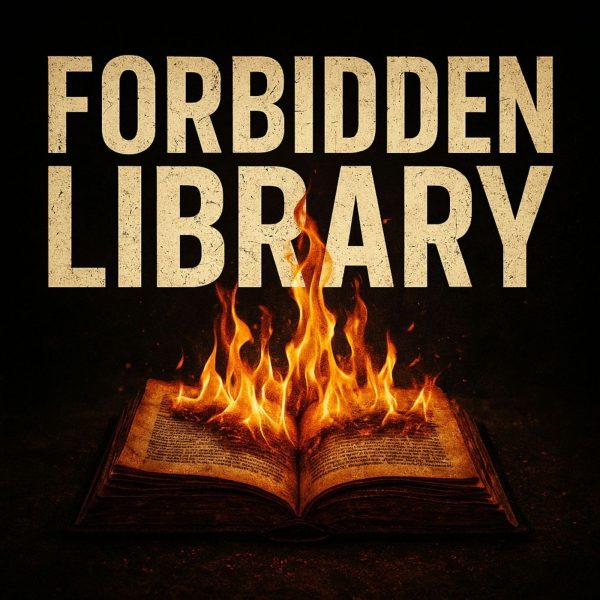
Forbidden Library
- Épisodes
- 60
- Parution
- hebdomadaire
- Dernier épisode
- 21 Nov 2026
À propos du podcast
The Forbidden Library explores the world’s most mysterious, forbidden, lost, and dangerous texts. Hosted by Ben Carter, each episode examines one remarkable book, manuscript, gospel, grimoire, codex, scroll, or sacred text—what it contains, where it came from, and why it became feared, hidden, or controversial. From lost gospels and ancient apocalypses to demonology, ritual magic, alchemy, and coded manuscripts, every episode opens a book you were never supposed to find. Unlock bonus content and full video episodes: https://www.patreon.com/theforbiddenknowledgenetwork
Épisodes 60
The Infancy Gospel of Thomas: The Childhood Stories That Didn’t Make the Gospels
The Infancy Gospel of Thomas is an early Christian apocryphal text about Jesus between roughly the ages of five and twelve. It is not the sayings Gospel of Thomas, and it was not written by the apostle Thomas …
Notes de l’épisode
The Infancy Gospel of Thomas is an early Christian apocryphal text about Jesus between roughly the ages of five and twelve. It is not the sayings Gospel of Thomas, and it was not written by the apostle Thomas, despite titles found in some later manuscripts. Its stories include Jesus making clay birds fly, confronting children and teachers, healing the injured, and displaying power that can appear both merciful and alarming.
The surviving text is not one stable book. Greek, Syriac, Latin, Ethiopic, Georgian, Irish, Slavonic, and Arabic traditions preserve changing forms, with different sequences, lengths, and theological emphases. A small Greek papyrus published in 2024, P.Hamb.Graec. 1011, is now the earliest known surviving witness, dated to the fourth or early fifth century. It preserves part of the clay-birds episode, but no title, author, or explanation of its use.
This episode follows the manuscript trail from a probable second-century Greek composition through Irenaeus’s hostile report of a related teacher story, a fifth-century Latin palimpsest, Syriac translations, a medieval Greek codex, and nineteenth-century editions that made one longer version famous. The central question is simple but difficult: can the surviving manuscripts recover the earliest form of this childhood gospel, or do they reveal a tradition that was changing from the beginning?
This podcast uses artificial intelligence in its research, writing, production, and narration. Episodes are editorially reviewed before publication.
#ForbiddenLibraryPodcast #ForbiddenLibrary #InfancyGospelOfThomas #ApocryphalGospels #EarlyChristianManuscripts
YES OR NO: Did the Infancy Gospel of Thomas ever have one original fixed form???????
The Emerald Tablet: The Short Text Behind a Vast Alchemical Tradition
The Emerald Tablet, or Tabula Smaragdina, is a brief and cryptic work on transformation, natural correspondence, and the relation between higher and lower orders of creation. Its fame far exceeds its length.The …
Notes de l’épisode
The Emerald Tablet, or Tabula Smaragdina, is a brief and cryptic work on transformation, natural correspondence, and the relation between higher and lower orders of creation. Its fame far exceeds its length.
The earliest known textual setting is medieval Arabic, within the Book of the Secret of Creation and the Art of Nature, attributed to Balinus, an Arabic literary figure associated with Apollonius of Tyana. Its frame story attributes hidden wisdom to Hermes Trismegistus and describes Balinus finding a book and green tablet in a concealed chamber. That is the book’s claim about its own authority; the surviving textual record begins much later than the ancient world invoked by the legend.
This episode follows the Tablet through Arabic manuscript traditions, Latin adaptation, medieval commentary, manuscript collections, early print, later religious and occult readings, and Isaac Newton’s surviving notes in Keynes MS 28 at King’s College, Cambridge. It asks how a short text acquired such authority, what its manuscripts can establish, and which questions remain open.
This podcast uses artificial intelligence in its research, writing, production, and narration. Episodes are editorially reviewed before publication.
#ForbiddenLibraryPodcast #ForbiddenLibrary #EmeraldTablet #TabulaSmaragdina #HermesTrismegistus
YES OR NO: Does the surviving evidence support an ancient origin for the Emerald Tablet??????
The Gospel of Peter: The Resurrection Story That Ends Mid-Sentence
Near the end of the second century, Serapion of Antioch learned that Christians at Rhossus were reading a book called the Gospel of Peter. He first permitted its use, then reconsidered after examining it and …
Notes de l’épisode
Near the end of the second century, Serapion of Antioch learned that Christians at Rhossus were reading a book called the Gospel of Peter. He first permitted its use, then reconsidered after examining it and hearing concerns about its teaching. Centuries later, a damaged Greek passion narrative copied into an Egyptian parchment codex became the leading candidate for that disputed book.
Now catalogued as BAAM 0522 at the Bibliotheca Alexandrina Antiquities Museum, the Akhmim manuscript preserves a narrative of Jesus’ trial, crucifixion, burial, resurrection, and an unfinished fishing episode. Its most striking scene describes guards at the tomb watching immense heavenly figures emerge with Jesus while a cross follows behind and answers a voice from heaven.
The manuscript itself has no surviving title at the beginning. “Gospel of Peter” is a modern scholarly identification based on its Petrine first-person voice, its content, and comparison with Serapion’s testimony preserved by Eusebius. The surviving codex is usually dated to the sixth or seventh century, while the work it preserves is commonly estimated to have been composed in the second century.
This episode follows the evidence from Rhossus to Akhmim, from Bouriant’s 1892 publication to the present Alexandria catalogue, asking what BAAM 0522 can reveal—and whether it is truly the Gospel of Peter Serapion encountered.
This podcast uses artificial intelligence in its research, writing, production, and narration. Episodes are editorially reviewed before publication.
#ForbiddenLibraryPodcast #ForbiddenLibrary #GospelOfPeter #AkhmimFragment #EarlyChristianTexts
YES OR NO: Is BAAM 0522 the same Gospel of Peter examined by Serapion at Rhossus??????
The Halloween Book That Was Never Meant to Be Opened
The Necronomicon is often described as the world’s most dangerous forbidden book: an ancient Arabic grimoire, translated into Greek and Latin, preserved in secret libraries, and sought by those who want contact …
Notes de l’épisode
The Necronomicon is often described as the world’s most dangerous forbidden book: an ancient Arabic grimoire, translated into Greek and Latin, preserved in secret libraries, and sought by those who want contact with inhuman powers. But the oldest recoverable evidence points somewhere else. The Necronomicon was created by American weird-fiction writer H. P. Lovecraft, who first named it in his 1922 story “The Hound,” published in Weird Tales in 1924.
Lovecraft gave the imaginary book a fictional author, Abdul Alhazred; an Arabic title, Al Azif; a medieval history; translators; editions; and library holdings. In 1927, he wrote a mock bibliography called “History of the Necronomicon,” making the invention resemble a documented textual tradition. Yet in a surviving letter from July 1936, Lovecraft plainly told teenage correspondent Willis Conover that he had invented both Alhazred and the Necronomicon.
This episode follows the real paper trail: pulp magazines, Lovecraft’s letters, a typed mock history preserved in the Willis Conover collection, the shared fictional books created by Lovecraft’s circle, and the later commercial occult books that adopted the title. Those later books are real publications, but they are not recovered copies of Lovecraft’s imaginary original.
The unresolved question is not whether a medieval manuscript waits in a hidden archive. It is why a fiction so clearly identified by its creator as fiction became a book that readers, libraries, publishers, and occult seekers continued to search for.
This podcast uses artificial intelligence in its research, writing, production, and narration. Episodes are editorially reviewed before publication.
#ForbiddenLibraryPodcast #ForbiddenLibrary #Necronomicon #HPLovecraft #ForbiddenBooks
YES OR NO: Did Lovecraft’s fictional bibliography make the Necronomicon feel real enough to outgrow its author???????
The Book of Abramelin: The Ritual Said to Reveal Your Guardian Angel
The Book of Abramelin presents itself as the spiritual inheritance of Abraham of Worms, a Jewish traveler who says he received sacred magical knowledge from an Egyptian teacher named Abramelin and passed it to …
Notes de l’épisode
The Book of Abramelin presents itself as the spiritual inheritance of Abraham of Worms, a Jewish traveler who says he received sacred magical knowledge from an Egyptian teacher named Abramelin and passed it to his son Lamech. Its central promise is striking: through sustained prayer, moral preparation, and divine assistance, a seeker may encounter a guardian angel before gaining authority over harmful spirits.
Yet the physical history of the book complicates its own story. The narrative places Abraham in the fifteenth century, and one French tradition gives the date 1458. But the most important surviving witnesses are German manuscripts from the early seventeenth century. An eighteenth-century French manuscript later became the basis for S. L. MacGregor Mathers's influential 1898 English translation, the version that shaped much modern occult thought. Later editors working from fuller German witnesses found substantial differences in structure, duration, and content.
This episode follows the text from Wolfenbüttel manuscripts and Paris collections to Aleister Crowley's reported attempt to perform its operation at Boleskine House. It examines the book's Jewish and Christian religious language, its magical letter squares, its later occult reputation, and the modern scholarly argument that it may be an early-modern compilation rather than an intact medieval autobiography. The unresolved question is not simply whether its promised angelic encounter occurred, but who gave the surviving text its powerful voice and why later readers trusted one changing manuscript tradition as ancient authority.
This podcast uses artificial intelligence in its research, writing, production, and narration. Episodes are editorially reviewed before publication.
#ForbiddenLibraryPodcast #ForbiddenLibrary #BookOfAbramelin #AbrahamOfWorms #HolyGuardianAngel
YES OR NO: Does the surviving evidence support a genuinely medieval Abramelin tradition???????
The Sworn Book of Honorius: The Medieval Grimoire Said to Reveal Heaven
The Liber iuratus Honorii, usually called the Sworn Book of Honorius, is a medieval Latin grimoire that presents itself as guarded sacred knowledge. Attributed to the otherwise unverified Honorius of Thebes, it …
Notes de l’épisode
The Liber iuratus Honorii, usually called the Sworn Book of Honorius, is a medieval Latin grimoire that presents itself as guarded sacred knowledge. Attributed to the otherwise unverified Honorius of Thebes, it promises an extraordinary goal: the beatific vision, the direct vision of God, alongside knowledge of angels, spirits, divine names, prayers, and sacred diagrams.
Its own prologue gives the book a dramatic origin. It claims that Honorius and eighty-nine masters from Naples, Athens, and Toledo assembled their knowledge because magical books faced destruction and their custodians feared persecution. But the surviving manuscripts do not independently confirm that meeting, its author, or a formal campaign against this particular work.
The earliest substantial witness discussed by modern scholarship is British Library Sloane Manuscript 3854, copied around the middle of the fourteenth century. Later copies change the picture further. Royal Manuscript 17 A XLII, produced in fifteenth-century England, preserves Latin and English material scattered among angel images, diagrams, related magical texts, and a later charm against ague. A further witness is associated with the antiquary John Dee, although ownership and annotation do not prove ritual use.
This episode follows the book from its medieval claims to its surviving pages, its royal-library custody, and its modern editions. The central question remains unresolved: how much of the Sworn Book's grand origin story was already part of its earliest form, and how much developed as scribes copied it into new manuscripts?
This podcast uses artificial intelligence in its research, writing, production, and narration. Episodes are editorially reviewed before publication.
#ForbiddenLibraryPodcast #ForbiddenLibrary #MedievalGrimoire #HonoriusOfThebes #ManuscriptHistory
YES OR NO: Did the Sworn Book's persecution story preserve a real historical memory???????
The Book of Oberon: The Elizabethan Grimoire of Fairies, Spirits, and Demons
The Book of Oberon is the modern name for Folger Shakespeare Library manuscript V.b.26, an anonymous English and Latin compilation assembled in late sixteenth-century England. Its contents include religious …
Notes de l’épisode
The Book of Oberon is the modern name for Folger Shakespeare Library manuscript V.b.26, an anonymous English and Latin compilation assembled in late sixteenth-century England. Its contents include religious invocations, spirit material, practical experiments, magical characters, diagrams, healing material, and passages concerning Oberyon, a king of the fairies. It is not solely a fairy book, and it was not known historically by the modern title now attached to its published edition.
The surviving manuscript carries internal dates including fifteen seventy-seven and fifteen eighty-three, but these date particular textual layers rather than proving that the whole book was written on one day. Later readers added marks and annotations. By the early nineteenth century, its opening and ending had been separated from its central section. Folger acquired the incomplete main portion in nineteen fifty-eight. In two thousand seven, it acquired a separately circulating continuation after distinctive nineteenth-century blue pagination showed that the pieces belonged together.
This episode follows that recovery while separating ritual promises from evidence that rituals were performed or succeeded. It examines the manuscript’s use of Christian language, its cautious claims about fairy knowledge, its modern translation and editorial reshaping, and the first fourteen pages that remain absent. Could those lost pages have contained an original title, a compiler’s name, or a key to the book’s intended order? The surviving record does not yet decide.
This podcast uses artificial intelligence in its research, writing, production, and narration. Episodes are editorially reviewed before publication.
#ForbiddenLibraryPodcast #ForbiddenLibrary #BookOfOberon #FolgerVB26 #ElizabethanGrimoire
YES OR NO: Could the missing opening pages change how we understand the Book of Oberon???????
The Red Dragon: The Grimoire Feared Across Europe
Le Dragon rouge, closely related to the French Grand Grimoire tradition, promised command over spirits, conversation with the dead, material gain, and hidden treasure. Its title pages and internal authorities …
Notes de l’épisode
Le Dragon rouge, closely related to the French Grand Grimoire tradition, promised command over spirits, conversation with the dead, material gain, and hidden treasure. Its title pages and internal authorities suggested a remote and dangerous inheritance. The surviving record is less settled: identifiable copies reveal a changing family of inexpensive French printed books, disputed dates, added material, and uncertain authorship.
This episode follows the Red Dragon through a documented 1818 encounter in Nancy, a related Grand Grimoire held by the Bibliothèque nationale de France, contested imprints claiming dates from 1411 to 1823, annotations signed “Barbier,” nineteenth-century catalogues, and the expanded 1873 Le Véritable dragon rouge. It also examines the internal signature of Antonio Venitiana del Rabbina, whose historical identity and authorship remain unverified.
No autograph manuscript or securely dated original-language manuscript has been established. The evidence primarily concerns French printed witnesses, related compilations, later additions, and modern editions—not a demonstrated chain of translations from an identified original. The central question remains open: how did a revisable printed grimoire acquire the authority of an ancient and feared book?
This podcast uses artificial intelligence in its research, writing, production, and narration. Episodes are editorially reviewed before publication.
#ForbiddenLibraryPodcast #ForbiddenLibrary #RedDragonGrimoire #GrandGrimoire #OccultBookHistory
YES OR NO: Did the Red Dragon gain authority mainly through later printed presentation??????
The Sixth and Seventh Books of Moses: The Occult Text That Spread Across the World
A surviving 1880 English volume promises “Moses’ magical spirit-art,” invoking Cabala, the Talmud, seals, sacred names, and hidden knowledge beyond the familiar five books of Moses. But its pages lead backward …
Notes de l’épisode
A surviving 1880 English volume promises “Moses’ magical spirit-art,” invoking Cabala, the Talmud, seals, sacred names, and hidden knowledge beyond the familiar five books of Moses. But its pages lead backward not to an authenticated ancient manuscript, but to German magical publishing, earlier unstable witnesses, and identifiable nineteenth-century sources.
This episode follows Johann Scheible’s 1849 Stuttgart compilation, Joseph Ennemoser’s 1844 writing embedded within later editions, the cataloged 1880 English translation, and L. W. de Laurence’s documented 1910 Chicago edition. Along the way, it examines altered figures, translation problems, competing imprints, textual parallels, and the carefully documented later communities that encountered versions of the book.
What survives is a complicated publishing history: older materials, modern additions, changing editions, and a title that carried extraordinary authority. What remains uncertain is the origin of every component, the route of every copy, and what particular readers believed the seals and words could do.
This podcast uses artificial intelligence in its research, writing, production, and narration. Episodes are editorially reviewed before publication.
#ForbiddenLibraryPodcast #ForbiddenTextsAndTheHistoryOfOccultBooks #SixthAndSeventhBooksOfMoses #JohannScheible #Grimoires
YES OR NO: Did the Mosaic title give this grimoire more authority than its textual history??????
The Key of Solomon: The Ritual Magic System Behind Western Occultism
The Key of Solomon, or Clavicula Salomonis, is among the most influential books in the history of Western ritual magic. Yet it is not a surviving ancient manual written by the biblical King Solomon. It is a …
Notes de l’épisode
The Key of Solomon, or Clavicula Salomonis, is among the most influential books in the history of Western ritual magic. Yet it is not a surviving ancient manual written by the biblical King Solomon. It is a diverse family of medieval and early-modern manuscripts, copied in Latin, Italian, French, English, Hebrew, and other forms, each presenting rituals under Solomon’s powerful name.
Its instructions include prayer, confession, purification, planetary timing, consecrated tools, ritual circles, divine names, pentacles, and operations intended to seek knowledge, recover lost property, gain favor, or constrain spiritual beings. The earliest presently identified direct fragment dates to approximately 1380 to 1410, and a substantial Italian manuscript survives from 1446. But Solomon’s reputation as a possessor of exorcistic wisdom is far older. Josephus, writing in the first century, attributed methods for expelling demons to Solomon, while the late-antique Testament of Solomon imagines the king commanding demons through a divinely given ring.
This episode follows the passage from ancient legend to medieval manuscript, and from manuscript variation to S. Liddell MacGregor Mathers’s influential 1889 English edition. It asks whether the Key preserves material from ancient Solomonic traditions, or whether medieval compilers used Solomon’s already ancient authority to organize a changing body of ritual knowledge. The evidence supports both a genuinely ancient legend and a much later surviving book. The unresolved question is whether there was ever one original Key at all.
This podcast uses artificial intelligence in its research, writing, production, and narration. Episodes are editorially reviewed before publication.
#ForbiddenLibraryPodcast #ForbiddenBooksOccultManuscriptsHistoryOfRitualMa #KeyOfSolomon #ClaviculaSalomonis #RitualMagic
YES OR NO: Was the Key of Solomon primarily a medieval creation using an ancient name???????
The Munich Manual of Demonic Magic: The Medieval Book Written for Necromancers
In the Bavarian State Library in Munich, a fifteenth-century paper manuscript survives under the shelfmark Clm 849. Traditionally described in Latin as a book of incantations, exorcisms, and enchantments, its …
Notes de l’épisode
In the Bavarian State Library in Munich, a fifteenth-century paper manuscript survives under the shelfmark Clm 849. Traditionally described in Latin as a book of incantations, exorcisms, and enchantments, its central section is now widely known as the Munich Handbook of Necromancy. This is not a medieval sermon condemning sorcery, nor a court record accusing someone of magic. It is a substantial collection of practical ritual instructions. …The Ars Goetia: The 72 Spirits Solomon Was Said to Command
The Ars Goetia is the best-known section of the Lemegeton Clavicula Salomonis, often called The Lesser Key of Solomon. In its surviving form, it is a seventeenth-century grimoire catalogue of seventy-two …
Notes de l’épisode
The Ars Goetia is the best-known section of the Lemegeton Clavicula Salomonis, often called The Lesser Key of Solomon. In its surviving form, it is a seventeenth-century grimoire catalogue of seventy-two spirits, each assigned a rank, a name, an appearance, an office, subordinate legions, and often a distinctive seal. The book claims the authority of King Solomon, the biblical ruler famed for wisdom and, in later legend, command over demons or jinn. …The First Apocalypse of James: The Secret Escape Teaching of the Hidden Brother
An ancient Christian revelation places James, remembered as the brother of Jesus and an important Jerusalem figure, before a final confrontation beyond death. In its vision, Jesus prepares James for suffering …
Notes de l’épisode
An ancient Christian revelation places James, remembered as the brother of Jesus and an important Jerusalem figure, before a final confrontation beyond death. In its vision, Jesus prepares James for suffering and teaches him how to answer hostile powers encountered during the soul’s ascent. …The Apocalypse of Peter: The Banned Vision of Heaven and Hell
The Apocalypse of Peter is an early Christian apocryphal work, probably composed in Greek during the first half of the second century CE. Written under Peter’s authority rather than generally accepted as the …
Notes de l’épisode
The Apocalypse of Peter is an early Christian apocryphal work, probably composed in Greek during the first half of the second century CE. Written under Peter’s authority rather than generally accepted as the historical apostle’s own work, it presents Jesus revealing resurrection, judgment, paradise, and differentiated punishments for the dead. The text stood unexpectedly close to the boundary of scripture. …The Ascension of Isaiah: The Prophet Who Saw the Seven Heavens
The Ascension of Isaiah is an ancient Jewish-Christian apocalyptic work attributed to the biblical prophet Isaiah but almost certainly composed and edited centuries after his lifetime. Its surviving form …
Notes de l’épisode
The Ascension of Isaiah is an ancient Jewish-Christian apocalyptic work attributed to the biblical prophet Isaiah but almost certainly composed and edited centuries after his lifetime. Its surviving form combines a martyrdom legend, in which Isaiah is accused under King Manasseh and sawn in two, with a visionary ascent through seven heavens. …The Book of Noah: The Lost Flood Scripture Hidden Inside Other Texts
The Book of Noah is a proposed lost Jewish writing known through traces in Second Temple literature: First Enoch, Jubilees, the Genesis Apocryphon, and fragmentary Dead Sea Scroll manuscripts. These traditions …
Notes de l’épisode
The Book of Noah is a proposed lost Jewish writing known through traces in Second Temple literature: First Enoch, Jubilees, the Genesis Apocryphon, and fragmentary Dead Sea Scroll manuscripts. These traditions expand the brief Genesis flood story into a wider drama of Watchers, giants, forbidden knowledge, evil spirits, angelic warnings, and remedies revealed to Noah. Jubilees says Noah recorded healing knowledge taught by angels and gave the book to Shem. …The Book of Jubilees: The Rewritten Genesis They Left Out of the Bible
The Book of Jubilees, also called Lesser Genesis or the Book of the Division of the Days, is an ancient Jewish rewriting of Genesis and the opening of Exodus. It presents Moses on Mount Sinai receiving not only …
Notes de l’épisode
The Book of Jubilees, also called Lesser Genesis or the Book of the Division of the Days, is an ancient Jewish rewriting of Genesis and the opening of Exodus. It presents Moses on Mount Sinai receiving not only commandments, but a complete angelic history dictated from heavenly tablets. Creation, the flood, the Watchers, Abraham, Jacob, Joseph, Passover, and Israel’s future are arranged by weeks of years and jubilees, with laws and festivals placed inside the structure of creation itself. …The Book of Watchers: The Fallen Angels Who Taught Forbidden Knowledge
The Book of Watchers, the opening major section of First Enoch, expands the brief Genesis account of the sons of God, human women, and the Nephilim into a full apocalyptic drama. Likely shaped in Jewish circles …
Notes de l’épisode
The Book of Watchers, the opening major section of First Enoch, expands the brief Genesis account of the sons of God, human women, and the Nephilim into a full apocalyptic drama. Likely shaped in Jewish circles around the third century before the common era, it tells of heavenly Watchers who descend on Mount Hermon, take wives, father violent giants, and teach arts the text presents as unauthorized and corrupting: weapons, adornment, enchantments, root-cutting, and celestial signs. …The Book of Enoch: The Angels, Giants, and Secrets Too Dangerous for the Bible
https://www.FKNpods.com Delve into the hidden pages of the Book of Enoch, an ancient text attributed to the biblical figure Enoch, which reveals stories of angels, giants, and forbidden knowledge that were left …
Notes de l’épisode
https://www.FKNpods.com Delve into the hidden pages of the Book of Enoch, an ancient text attributed to the biblical figure Enoch, which reveals stories of angels, giants, and forbidden knowledge that were left out of most biblical canons. Preserved in Ethiopian Christianity, this apocalyptic work offers a vision of cosmic rebellion and forbidden teachings that challenge the boundaries of canonical scripture. …The Gospel of Philip: The Lost Sacrament That Rewrites Early Christianity
https://www.FKNpods.com Delve into the hidden teachings of early Christianity with the Gospel of Philip, a mysterious non-canonical text discovered among the Nag Hammadi writings in 1945. This podcast episode …
Notes de l’épisode
https://www.FKNpods.com Delve into the hidden teachings of early Christianity with the Gospel of Philip, a mysterious non-canonical text discovered among the Nag Hammadi writings in 1945. This podcast episode explores the enigmatic sacrament known as the bridal chamber—allegedly a profound spiritual practice that suggests early Christianity was far more diverse and mystical than mainstream traditions acknowledge. …The Black Pullet: The Napoleonic Grimoire of Secret Occult Power
https://www.FKNpods.com Step into the shadowy world of The Black Pullet, a rare and mysterious grimoire allegedly linked to none other than Napoleon Bonaparte. This episode of Forbidden Library invites you to …
Notes de l’épisode
https://www.FKNpods.com Step into the shadowy world of The Black Pullet, a rare and mysterious grimoire allegedly linked to none other than Napoleon Bonaparte. This episode of Forbidden Library invites you to traverse the boundaries between the known and the hidden, delving into a text that reportedly contains secrets of immense occult power. …The Gospel of Mary Magdalene: The Lost Teachings of the Hidden Disciple
https://www.FKNpods.com Discover the hidden world of the Gospel of Mary Magdalene, a text that allegedly challenges the foundational narratives of Christianity. Unearthed from forgotten archives, this …
Notes de l’épisode
https://www.FKNpods.com Discover the hidden world of the Gospel of Mary Magdalene, a text that allegedly challenges the foundational narratives of Christianity. Unearthed from forgotten archives, this controversial manuscript presents Mary Magdalene as a key disciple, entrusted with enigmatic teachings that could unravel centuries-old doctrines. …The Gospel of Judas: The Betrayer Rewritten as the Chosen Disciple
https://www.theforbiddenknowledgenetwork.com In the clandestine archives of history, the Gospel of Judas emerges as a profound anomaly, challenging the traditional narrative that has defined Judas Iscariot as …
Notes de l’épisode
https://www.theforbiddenknowledgenetwork.com In the clandestine archives of history, the Gospel of Judas emerges as a profound anomaly, challenging the traditional narrative that has defined Judas Iscariot as the quintessential betrayer. This forbidden text, allegedly authored by the Gnostics, paints Judas not as a villain but as a trusted disciple who comprehended the esoteric teachings of Jesus. …The Vision That Was Banned : The Apocalypse of Peter
https://www.theforbiddenknowledgenetwork.com In a world where hidden manuscripts and buried teachings were often left to the shadows, the Apocalypse of Peter stands as a profound anomaly. Once considered for …
Notes de l’épisode
https://www.theforbiddenknowledgenetwork.com In a world where hidden manuscripts and buried teachings were often left to the shadows, the Apocalypse of Peter stands as a profound anomaly. Once considered for the New Testament, this enigmatic text promised revelations of the afterlife's mysteries. It depicted vivid scenes of heaven and hell, offering a glimpse into early Christian beliefs and practices. …The Apocalypse of Peter: The Vision That Was Banned
https://www.theforbiddenknowledgenetwork.com In a world where hidden manuscripts and buried teachings were often left to the shadows, the Apocalypse of Peter stands as a profound anomaly. Once considered for …
Notes de l’épisode
https://www.theforbiddenknowledgenetwork.com In a world where hidden manuscripts and buried teachings were often left to the shadows, the Apocalypse of Peter stands as a profound anomaly. Once considered for the New Testament, this enigmatic text promised revelations of the afterlife's mysteries. It depicted vivid scenes of heaven and hell, offering a glimpse into early Christian beliefs and practices. …The Book of Adam and Eve: The Version You Were Never Told
https://www.theforbiddenknowledgenetwork.com In this illuminating episode of Forbidden Library, we uncover a narrative hidden deep within the pages of "The Book of Adam and Eve," a text shrouded in mystery and …
Notes de l’épisode
https://www.theforbiddenknowledgenetwork.com In this illuminating episode of Forbidden Library, we uncover a narrative hidden deep within the pages of "The Book of Adam and Eve," a text shrouded in mystery and allegedly suppressed by religious authorities. According to preserved texts, this manuscript challenges the foundational myths of creation with an alternative cosmology that suggests a collaborative genesis, involving multiple divine entities. …The Grand Grimoire: The Most Dangerous Book Ever Written
https://www.theforbiddenknowledgenetwork.com In this investigative episode of Forbidden Library, we delve into the shadowy depths of The Grand Grimoire, a manuscript often labeled as the most dangerous book …
Notes de l’épisode
https://www.theforbiddenknowledgenetwork.com In this investigative episode of Forbidden Library, we delve into the shadowy depths of The Grand Grimoire, a manuscript often labeled as the most dangerous book ever written. Known for allegedly containing the true names of angels and demons, it poses a direct challenge to established religious doctrines. We explore how this enigmatic text has persisted through history, both coveted for its forbidden power and condemned as heretical. …The Apocalypse of Peter: The Vision That Was Banned
https://www.theforbiddenknowledgenetwork.com In an intriguing exploration of church history, we delve into the enigmatic case of a text known as the Apocalypse of Peter. Once considered for inclusion in the New …
Notes de l’épisode
https://www.theforbiddenknowledgenetwork.com In an intriguing exploration of church history, we delve into the enigmatic case of a text known as the Apocalypse of Peter. Once considered for inclusion in the New Testament, this text has intrigued scholars with its vivid, unsettling depictions of the afterlife and its stark divergence from established Christian doctrine. …The Book of Giants: The Scripture That Reveals What Came Before Us
https://www.theforbiddenknowledgenetwork.com Dive into the shadows of history with "Forbidden Library," where we explore "The Book of Giants," a cryptic manuscript proposing alternative origins of humanity and …
Notes de l’épisode
https://www.theforbiddenknowledgenetwork.com Dive into the shadows of history with "Forbidden Library," where we explore "The Book of Giants," a cryptic manuscript proposing alternative origins of humanity and pre-human civilizations. This text, allegedly unearthed in the Qumran Caves alongside other lost scriptures, suggests encounters between immense beings and celestial entities, challenging traditional biblical narratives. …The Lost Books of Enoch: What Was Too Dangerous to Include
https://www.theforbiddenknowledgenetwork.com Discover the hidden manuscripts and buried teachings of the Lost Books of Enoch, texts deemed too dangerous for inclusion in the official biblical canon. Allegedly …
Notes de l’épisode
https://www.theforbiddenknowledgenetwork.com Discover the hidden manuscripts and buried teachings of the Lost Books of Enoch, texts deemed too dangerous for inclusion in the official biblical canon. Allegedly filled with radical cosmological claims and compelling narratives, these texts challenge the core biblical narratives and unravel concealed systems of thought. …
Voici les 40 derniers épisodes sur 60. Les épisodes plus anciens se trouvent dans le flux du podcast.
Podcasts similaires
Plus de podcasts : Arts





C’est votre podcast ?
Confirmez-le avec une entrée dans votre flux : vous recevez ici un code, vous l’ajoutez comme podcast:txt dans le canal de votre flux, et nous le vérifions. Votre podcast apparaît ensuite comme « vérifié » sur SoundNode.