

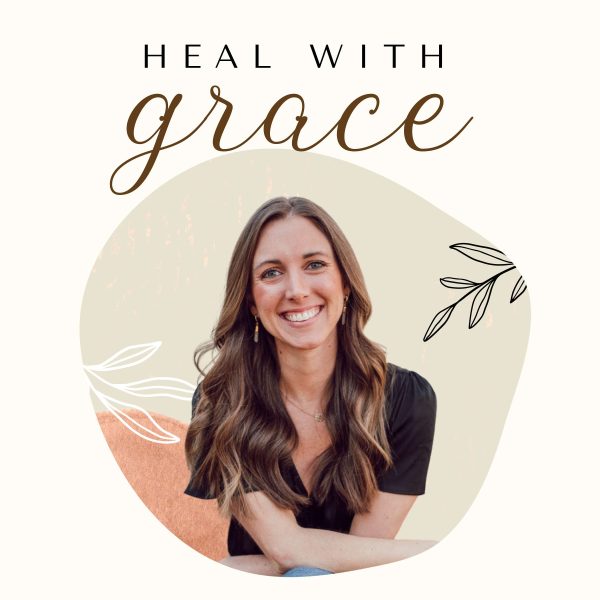
Heal with Grace
- Épisodes
- 150
- Parution
- hebdomadaire
- Dernier épisode
- 17 Nov 2026
À propos du podcast
Heal With Grace is a podcast that invites listeners into the world of holistic healing. Hosted by Grace Secker, a trained holistic psychotherapist, yoga therapist, and nervous system coach, each episode delves into the interconnected realms of mental, physical, and spiritual health. The podcast offers a unique blend of personal stories, professional insights, and practical tools for healing.
Épisodes 150
Ep 151. If I Had to Start Over Healing Chronic Pain & Illness, This Is What I'd Focus On
If you're trying to figure out how to heal chronic pain and illness and you don't even know where to start, this one's for you. In this episode, I'm sharing the four things I'd focus on …
Notes de l’épisode
If you're trying to figure out how to heal chronic pain and illness and you don't even know where to start, this one's for you. In this episode, I'm sharing the four things I'd focus on if I had to do my own healing all over again.
Here's the thing. I spent years in it. First it was back pain I was told came from hypermobility, a misaligned spine, and disc degeneration. Then a few years later it was headaches, gut issues, fatigue, and food intolerances. I was down to about 15 foods for a year and a half. I recovered from both. And when I look back, I can see what actually moved the needle and what kept me spinning.
We start with modern pain science and what neuroplastic symptoms really are. Your symptoms are real. AND understanding them isn't the thing that heals you. It's the foundation that lets you start having different experiences in your body.
From there, we get into the stuff that doesn't get talked about enough. Your tolerance for discomfort, and why regulation isn't about feeling calm all the time. Why the constant searching (one more supplement, one more test, one more specialist) can keep your brain on high alert. And how sometimes we're not really searching for healing. We're searching for certainty.
And the one I'd prioritize most: changing your relationship with your body before it feels better. Taking the road trip. Keeping the plans. Being in your life while your brain is still updating.
If you've been waiting for the symptoms to go away before your life can start again, I want you to hear this one.
This isn't about blaming yourself or thinking your way out of every medical condition. It's about giving you a clearer place to begin.
Resources mentioned
Mind Body Healing Method Evolution, end-of-year offer: sign up in the first seven days for an extra month (four instead of three) plus an extra 1:1 call with me, and lock in current pricing before the end of 2026: https://healwithgrace.co/How to work with Grace:
- Apply to the Mind Body Integration Training Founding Practitioner Cohort
- Mind-Body Healing Method Course - Regulate your nervous system now
- Free Masterclass: How to Know If Your Nervous System Is Behind Your Symptoms
- Work with us in private mind-body coaching
- Subscribe to my Substack for the deeper how-to's
Connect with Grace
150. The 2 Questions You Need to Ask Your Doctor If You Have Chronic Pain with Dr. Kim Fischer
If you're in the middle of chronic pain recovery and a doctor just offered you surgery, there's one question to ask before you say yes. Most of us were never taught to ask it.Dr. Kim Fischer is a …
Notes de l’épisode
If you're in the middle of chronic pain recovery and a doctor just offered you surgery, there's one question to ask before you say yes. Most of us were never taught to ask it.
Dr. Kim Fischer is a board-certified anesthesiologist. For years she's cared for patients coming in for their second or third spine surgery, and she kept wondering → if we fixed the structural problem, why is the pain still here? Then she developed pelvic pain herself. She saw all the doctors, did all the tests, and collected a lot of labels. A pelvic PT finally introduced her to mind-body medicine, and it clicked.
In this conversation, Kim shares the moment she poked her head over the blue curtain mid-surgery and a surgeon she deeply respects told her he didn't really know if the procedure would help the patient's pain. The patient on the table didn't know that. That gap is what she's working to close. Her question for you: "What is the likelihood that this procedure is going to make my pain go away?" Then listen for words like might, should, and I hope so.
We also get into the difference between managing pain and recovering. Managing is forever, and it's all about the symptom. Recovery is about your life → the concert, the road trip, the van trip one of her patients has been on for five months. Still some pain, BUT no more fear spiral. Kim walks through provocative testing, why fear (and sometimes frustration) shows up before the symptom does, and why "what else could be true?" might be one of the most important questions in medicine.
This is NOT an anti-surgery episode. Surgery has its place. This is about getting your agency back so you can make the choice that's right for you.
And if you heard about this work years ago and weren't ready yet, that's okay. Kim was told about her PT a full year before she went.
Connect with Dr. Kim Fischer
Beckon Health: https://beckon.health/ (sees patients in Colorado, Oregon, and a few other states)
How to work with Grace:
- Apply to the Mind Body Integration Training Founding Practitioner Cohort
- Mind-Body Healing Method Course - Regulate your nervous system now
- Free Masterclass: How to Know If Your Nervous System Is Behind Your Symptoms
- Work with us in private mind-body coaching
- Subscribe to my Substack for the deeper how-to's
Connect with Grace
Ep. 149: Most Popular Replay: 7 Habits for Successful Nervous System Regulation
This is a replay of our most popular episode yet, and it’s easy to see why it struck a chord.If you’ve been doing the nervous system work (reading the books, listening to the podcasts, buying the courses) but …
Notes de l’épisode
This is a replay of our most popular episode yet, and it’s easy to see why it struck a chord.
If you’ve been doing the nervous system work (reading the books, listening to the podcasts, buying the courses) but still feel stuck, this episode might shift something for you. After years in this space, I’ve learned that the practices matter, but how you show up to the process matters even more.
I’m walking you through the seven habits I consistently see in people who heal versus people who stay stuck. This isn’t a checklist or a protocol. These are ways of being, and once they become part of how you operate, they change everything.
Whether this is your first listen or your third, here’s what you’ll explore:
✨ Why waiting until you feel “ready” keeps you stuck, and what to do instead
✨ How identifying with being sick pushes your nervous system deeper into survival mode
✨ The quiet belief that healing isn’t for you, and why it’s one of the most treatable blocks
✨ What building safety in your daily life actually looks like
✨ Why consuming information without practicing keeps your brain in the same patterns
✨ How to stay in the process when healing feels anything but linear
If you’ve ever thought, “I’m doing all the right things, so why isn’t this working?” this conversation is for you. Be gentle with yourself as you listen. This isn’t about what you should have been doing all along. It’s about what’s available to you now.How to work with Grace:
- Apply to the Mind Body Integration Training Founding Practitioner Cohort
- Mind-Body Healing Method Course - Regulate your nervous system now
- Free Masterclass: How to Know If Your Nervous System Is Behind Your Symptoms
- Work with us in private mind-body coaching
- Subscribe to my Substack for the deeper how-to's
Connect with Grace
148. My Juicy Insights from the Mind-Body Conference
If you've ever wondered whether mind-body healing is real or just something people say when the tests come back clear, this one's for you. I just got back from the ATNS conference, and I'm …
Notes de l’épisode
If you've ever wondered whether mind-body healing is real or just something people say when the tests come back clear, this one's for you. I just got back from the ATNS conference, and I'm sharing what I learned, what I felt, and what it was like to walk on stage for the first time.
Two years ago I sat in that same audience with neck and shoulder pain, feeling like a total fraud. A therapist who teaches this work and still hurts? I was sure everyone could tell. I also remember watching the speakers and thinking, "I want to be up there one day." This year, Callie Krajcir and I presented on food fear and food intolerances. When I asked the room who had clients with a list of foods they can't eat, almost every hand went up.
We get into why stress and pushed-down emotions create real physical symptoms, and why that idea is way older than modern medicine. I share what I took away from Vanessa Blackstone's talk on safety as a privilege, and from a session on people living with both structural and neuroplastic conditions like cancer, ALS, and Parkinson's.
Then I get a little direct about language. The words you use about food, your body, your shoes, your posture, and the people around you are teaching your brain what's dangerous. If you're constantly judging the world, you're judging yourself too. You'll hear the simple practice I use to start shifting it.
If you've been on the fence about how much of your symptoms are physical and how much are stress, this episode gives you a clearer answer. And if you're still having symptoms and feel like you're failing, I want you to hear my story. You're not.
Resources mentioned
How to work with Grace:
- Apply to the Mind Body Integration Training Founding Practitioner Cohort
- Mind-Body Healing Method Course - Regulate your nervous system now
- Free Masterclass: How to Know If Your Nervous System Is Behind Your Symptoms
- Work with us in private mind-body coaching
- Subscribe to my Substack for the deeper how-to's
Connect with Grace
147. The Missing Piece of Nervous System Healing
If you've been breathing, grounding, and regulating your way through every day and still feel stuck, this one's for you.Nervous system education has gotten loud lately, and that's a beautiful …
Notes de l’épisode
If you've been breathing, grounding, and regulating your way through every day and still feel stuck, this one's for you.
Nervous system education has gotten loud lately, and that's a beautiful thing. But somewhere along the way, "nervous system healing" started to mean "stay calm at all costs." In this solo episode, I'm widening the lens. Because we're complex beings, and healing chronic pain and illness usually happens on more than one level at once: brain, body, emotions, relationships, beliefs, and the way we respond to our own experiences.
I also share a piece of my own story, the year-plus I spent eating only 10 to 15 foods, and what finally shifted when I realized it was never really about the food.
In this episode, you'll explore:
✨ How your brain makes predictions and why sensitization can keep real symptoms going long after an injury or illness has passed
✨ Why physical, functional, and nervous system support don't have to be either/or
✨ The difference between regulating to feel better and regulating to build capacity
✨ Body awareness vs. body monitoring, and why more awareness isn't always the answer
✨ How protective patterns like suppressed anger, people-pleasing, and perfectionism can show up in the body
✨ What progress really looks like (hint: it's not always fewer symptoms)
✨ Why the goal was never to spend your life healing. It was to get back to living.
If you've felt overwhelmed by all the approaches out there, this episode will help you see how the pieces fit together.
-----
🌿 Ready to go deeper? Join the Mind Body Healing Method, my small-group program for healing chronic pain and illness through four phases: Recognize, Regulate, Rewire, and Reclaim.
👉 Learn more and join: https://programs.healwithgrace.co/mbhm
#HealWithGrace #NervousSystemHealing #ChronicPainRecovery #NeuroplasticPain #MindBodyHealingHow to work with Grace:
- Apply to the Mind Body Integration Training Founding Practitioner Cohort
- Mind-Body Healing Method Course - Regulate your nervous system now
- Free Masterclass: How to Know If Your Nervous System Is Behind Your Symptoms
- Work with us in private mind-body coaching
- Subscribe to my Substack for the deeper how-to's
Connect with Grace
146. People Pleasing and Chronic Pain: Breaking the Good Girl Pattern
Are you the one who says "I'm happy to help" before you've even checked your calendar? People pleasing and chronic illness are more connected than most of us realize, and in this episode I'm …
Notes de l’épisode
Are you the one who says "I'm happy to help" before you've even checked your calendar? People pleasing and chronic illness are more connected than most of us realize, and in this episode I'm walking you through the overlap.
I call it the good girl pattern. Be nice. Be kind. Don't be too much. Don't have too many feelings. Nobody wrote these rules down for us. We soaked them up from TV, school, church, and family life. And for a lot of us, they stopped being a habit and became an identity.
BUT that pattern is not who you are. It's something you learned to stay accepted. Your nervous system is wired for belonging, so of course it worked. It kept you loved and included. It's also costing you more than you realize.
Every time you override a need, your body notices. Saying yes when you mean no. Smiling through irritation. Scanning the room to make sure everyone else is okay before you even sit down. Each one is a small stress hit, and they stack up over years. Eventually, when you don't say no, your body says it for you → through a migraine, fatigue, gut issues, or pain.
In this episode, I'm sharing how the good girl pattern shows up at work, in relationships, with friends, and around the holidays. I'm also getting honest about my own "I'm fine" era and what changed once I realized I'm a pretty particular introvert who needs a lot of downtime.
You'll also get a few simple practices to start this week. Noticing how often you say sorry. Pausing before your automatic yes. And asking at the end of each day, did that drain me or fill me?
This isn't about blaming your parents or where you grew up. It's about seeing the pattern clearly so your body doesn't have to keep protecting you this way.
Resources mentioned
The "nice, good girl" rules that made so many of us sick
Mind Body Healing MethodHow to work with Grace:
- Apply to the Mind Body Integration Training Founding Practitioner Cohort
- Mind-Body Healing Method Course - Regulate your nervous system now
- Free Masterclass: How to Know If Your Nervous System Is Behind Your Symptoms
- Work with us in private mind-body coaching
- Subscribe to my Substack for the deeper how-to's
Connect with Grace
145. How To Heal Food Sensitivities
If you've been cutting out food after food trying to heal your food sensitivities, and your safe list keeps getting shorter, this episode is for you. I'm recording from Austin, the city where I was …
Notes de l’épisode
If you've been cutting out food after food trying to heal your food sensitivities, and your safe list keeps getting shorter, this episode is for you. I'm recording from Austin, the city where I was once down to 10 to 15 foods for a year and a half.
I remember sitting at the food tasting for my own wedding and not being able to eat any of it. Just sitting there watching. So when I say I get it, I really get it.
Here's what I want you to hear. Your reactions are real. The bloating, the pain, the headaches after you eat, none of that is in your head. But reacting to food is not the root cause of your symptoms. When your brain learns that bread or dairy or tomatoes are dangerous, it does its job and protects you. It sends a symptom. And every time you cut out another food, the fear gets a little louder.
I also share something I don't talk about much. My eating disorder actually started with a restrictive anti-inflammatory paleo diet from a practitioner I trusted. I was just trying to help my body. We talk about why so many people with chronic symptoms end up in the same food-fear loop, and the patterns I see over and over: perfectionism, self-criticism, control. And why flexibility is one of the best things you can give yourself.
Then I walk you through what actually helped me feel safe with food again. Telling my brain before and after every meal that food is safe. Visualizing my body digesting it well, whether it was a Reese's peanut butter cup or chicken broth. Looking honestly at the stress in my life. It wasn't overnight. It was a practice, every single day.
If you're a therapist, coach, or health practitioner, stick around. I share the one language shift I want you to make with your clients starting today.
And if you have a true allergy like celiac or a nut allergy, this isn't about that. This is about the sensitivities and intolerances that showed up later in life and built up over time.
Resources mentioned:
Mind Body Healing Method, my small group nervous system programHow to work with Grace:
- Apply to the Mind Body Integration Training Founding Practitioner Cohort
- Mind-Body Healing Method Course - Regulate your nervous system now
- Free Masterclass: How to Know If Your Nervous System Is Behind Your Symptoms
- Work with us in private mind-body coaching
- Subscribe to my Substack for the deeper how-to's
Connect with Grace
144. What I've Learned About Treating Neuroplastic Symptoms
Most people never think to ask whether their symptoms have a nervous system root cause. They get the gut issues, the migraines, the fatigue, the pain, and they go looking for the structural answer. More …
Notes de l’épisode
Most people never think to ask whether their symptoms have a nervous system root cause. They get the gut issues, the migraines, the fatigue, the pain, and they go looking for the structural answer. More testing. More protocols. More specialists.
In this episode Grace goes back to her early days of switching her niche from eating disorders to chronic pain and illness, and shares the things she got wrong before she got solid.
The first one is safety. She used to move faster than her clients' nervous systems were ready for. Sending the podcast, sending the book, trying to convince someone that the thing they had been fighting for twenty years was actually a danger response. What she learned is that belief is not the entry point. Safety is. You do not need someone to agree with you on day one. You need them to feel safe enough to get curious.
The second one is the both/and. She spent a long time being wobbly about structural findings. The bulged disc. The SIBO. The autoimmune diagnosis. The cervical spine finding. She would back off and refer out, which left people stranded. Now she says it plainly. Structural things are real. They are also often not the reason the symptoms keep persisting. Holding both at once without flattening either one is a clinical skill, not a belief system, and it is learnable.
She also gets into the nuance she did not used to assess for, including neurodivergence, and why a framework that makes you less curious about the person in front of you is being used wrong.
Then there is the one that took the longest. You do not have to be certain to do this work. Not as a client, not as a practitioner. The 3am searching on WebMD and in the AI chats feels productive, but it is the nervous system demanding certainty before it is willing to stand down. Bodies do not hand you certainty. They hand you information. The work is building enough safety to keep moving while it is still unclear.
Resources mentioned:
Nervous System Screener questionnaire
Mind-Body Integration Method Practitioner Training, first cohort starts October 2026. Early bird pricing ends September 17, doors close October 2How to work with Grace:
- Apply to the Mind Body Integration Training Founding Practitioner Cohort
- Mind-Body Healing Method Course - Regulate your nervous system now
- Free Masterclass: How to Know If Your Nervous System Is Behind Your Symptoms
- Work with us in private mind-body coaching
- Subscribe to my Substack for the deeper how-to's
Connect with Grace
143. How to Get Unstuck in Your Healing with Doc Tovah
If you feel stuck in chronic pain recovery, this one is for you. Not the beginning part where you are figuring out what neuroplastic symptoms even are. The part where you have done the work, read the books …
Notes de l’épisode
If you feel stuck in chronic pain recovery, this one is for you. Not the beginning part where you are figuring out what neuroplastic symptoms even are. The part where you have done the work, read the books, hired the coaches, and something still has not moved.
Doc Tovah has been a chiropractor for 41 years and has hosted the TMS Roundtable for seven, with over 500 broadcasts. She is 69. Her mother had MS starting when Doc Tovah was eleven, she grew up in a house she describes as chaotic, and she was diagnosed with Crohn's along the way. She talks about that diagnosis almost in passing, which is the whole point.
She names the pattern she sees in people who stay stuck, and it is not effort. It is disconnection. People who cannot tell you what they feel. People who say "I don't know" so often that it becomes a freeze response. People who feel okay around others and fall apart the second they are alone with themselves. That gap is the work.
We also get into the part almost nobody says out loud, which is that a victim stance can be doing a job for you. It protected me from being seen and rejected for years, and I did not know it was happening. Doc Tovah has been there too and she says it plainly. You are the problem and you are the solution, and that is the good news.
Then she gives the practice. Not a technique to add to your list. A relationship. Coffee with your fear. Going to sleep with your loneliness. Sitting with the feeling instead of building a story around it. She says fear can paralyze you or it can be fuel, and the difference is not how brave you are, it is whether you stop fighting reality long enough to be with it.
One more thing she said that I keep thinking about. Pain is not punishing you. It is protecting you. And most people who feel stuck are not far away from healing. They are standing right at the door.
Connect with Doc Tovah
- TMS Roundtable, Doc Tovah's YouTube channel
- Doc Tovah websiteHow to work with Grace:
- Apply to the Mind Body Integration Training Founding Practitioner Cohort
- Mind-Body Healing Method Course - Regulate your nervous system now
- Free Masterclass: How to Know If Your Nervous System Is Behind Your Symptoms
- Work with us in private mind-body coaching
- Subscribe to my Substack for the deeper how-to's
Connect with Grace
142. The Training That Catapulted My Own Healing
If you have been circling the idea of mind-body practitioner training, this one is for you. Not the version where you collect a certificate. The version where the training changes you while you are learning …
Notes de l’épisode
If you have been circling the idea of mind-body practitioner training, this one is for you. Not the version where you collect a certificate. The version where the training changes you while you are learning it.
Before I took my first pain reprocessing therapy training, I had already done a lot of my own work. I had let go of most of the chronic pain. The food intolerances, the histamine reactions, the fatigue, all of it had come way down. And I had plateaued. Better, not free. There was still this low hum of managing my body instead of trusting it.
Then I went into the training and applied every single thing to myself. Light bulbs, over and over. That is the part nobody warns you about. When you learn how to guide someone else's nervous system, you are also signing up for the next chapter of your own.
I also say the thing I wish somebody had said to me five years ago. You do not have to be fully healed to help other people heal. I talk about the crash that had me lying on the couch wondering if everything I had learned was a fraud. The antidepressants I quit in college because I had decided, all on my own, that a therapist could not be on them. The imposter syndrome that has followed me my whole career. And the day my body ran an actual fever right before a three-day professional retreat, because walking into a room full of other clinicians felt that unsafe to my system.
I share what I did instead of staying in bed. It is the clearest example I have of teaching your body that you can be uncomfortable and still be safe.
If you have been quietly wondering whether you are meant to share this work with other people, the part about curiosity being the only real prerequisite is for you.
Resources mentioned
Mind Body Integration Training, my six-week live practitioner training. Founding cohort is application-based. Early bird pricing through September 17th; doors close October 2nd, first live session October 22nd.
Bring a colleague, and you each get $100 off.
https://programs.healwithgrace.co/mbimtHow to work with Grace:
- Apply to the Mind Body Integration Training Founding Practitioner Cohort
- Mind-Body Healing Method Course - Regulate your nervous system now
- Free Masterclass: How to Know If Your Nervous System Is Behind Your Symptoms
- Work with us in private mind-body coaching
- Subscribe to my Substack for the deeper how-to's
Connect with Grace
141. How to Prevent a Nervous System Flare While Traveling
I just got back from three weeks in Namibia, and regulating my nervous system while traveling got tested every single day of that trip.I'm not going to pretend it was smooth. We changed hotels more nights …
Notes de l’épisode
I just got back from three weeks in Namibia, and regulating my nervous system while traveling got tested every single day of that trip.
I'm not going to pretend it was smooth. We changed hotels more nights than not, lost service we'd already paid for, and a few days in, I felt the same warning signs that used to send me into a flare that lasted weeks. This time it lasted three days.
The difference wasn't that nothing went wrong. Things went wrong constantly. The difference was what I did next. I'd already padded my nervous system before I left, so when a flare showed up in the middle of nowhere with no doctor for hours, I had support lined up instead of panic. I got what I needed physically, then I went hard on the mind-body tools I actually teach: breath, visualization, journaling on what the flare might be asking for. It didn't erase the fear in the moment, but it kept the fear from running the show.
I'm also getting honest about the cold I came home with, and why I'm done calling every post-travel symptom "just jet lag" without asking what it's actually pointing to. In the past, coming home from a big trip meant a full week of feeling like I was falling apart. This time it didn't, and I want to walk you through why. If you've ever noticed your body has a pattern around travel, or around any kind of stress, this episode walks through how I'm learning to read that pattern instead of just riding it out.
Healing was never about never getting activated again. It's about widening how much activation you can hold before it takes you down. That's the real lesson this trip handed me, and it's what I'm handing you today.
Resources mentioned:
Episode 137. What I'm Doing to Prep My Nervous System for TravelHow to work with Grace:
- Apply to the Mind Body Integration Training Founding Practitioner Cohort
- Mind-Body Healing Method Course - Regulate your nervous system now
- Free Masterclass: How to Know If Your Nervous System Is Behind Your Symptoms
- Work with us in private mind-body coaching
- Subscribe to my Substack for the deeper how-to's
Connect with Grace
140. 5 Things I See People Do Who Recover
If you're trying to figure out how to recover from chronic pain and illness and you keep hitting the same wall, this is the episode I want you to save and come back to.Because here's what happens when …
Notes de l’épisode
If you're trying to figure out how to recover from chronic pain and illness and you keep hitting the same wall, this is the episode I want you to save and come back to.
Because here's what happens when you're stuck. Your frontal lobe (the logical, decision-making part of you) goes offline in a stress response. So you forget everything you've learned. I've been there. I was there a couple of years ago after my mold crash, years into being recovered, and I forgot half the skills I had. That's not failure. That's what a stressed nervous system does. So save this one. Come back to it when the flare hits and your brain goes one-track.
I'm walking through the five things I consistently see in people who go from stuck to recovered, and they're the same things that got me there. It starts with how you describe yourself (there's a real difference between "I'm someone with chronic fatigue" and "I'm a healing body," and it's not positive thinking; it's what your subconscious is running on). Then we get into stopping the 3am searching and the WebMD spiral, which feels productive but keeps your nervous system in threat mode.
We also talk about going into your emotions without being afraid of them, how to change your response when a flare shows up instead of freaking out and assuming you're back at square one, and the big one: living your life WHILE you still have symptoms. Because living first, carefully and gently, is what teaches the body it's safe. Waiting until you feel better keeps the alarm on.
None of this is willpower. It's all retraining. And it's completely learnable.
Resources mentioned:
Free neuroplastic symptom screener (2-minute quiz)
JournalSpeak by Nicole SachsHow to work with Grace:
- Apply to the Mind Body Integration Training Founding Practitioner Cohort
- Mind-Body Healing Method Course - Regulate your nervous system now
- Free Masterclass: How to Know If Your Nervous System Is Behind Your Symptoms
- Work with us in private mind-body coaching
- Subscribe to my Substack for the deeper how-to's
Connect with Grace
139. What I Wish Every Therapist or Coach Knew About the Nervous System
This one's for the therapists, coaches, and practitioners. (And honestly, if you're a listener who's ever sat across from a provider who didn't know how to help you stay. This episode is why …
Notes de l’épisode
This one's for the therapists, coaches, and practitioners. (And honestly, if you're a listener who's ever sat across from a provider who didn't know how to help you stay. This episode is why I made it.)
Here's the gap I want to name. Most of us were trained beautifully in one half of this work. We learned to hold space, build the therapeutic relationship, sit with hard feelings, work with trauma histories. What we were never taught is that the nervous system is actively generating physical symptoms in a huge portion of our caseloads. Some physicians in this space estimate close to 40% of people walking through a primary care door have symptoms driven this way. Those are the same people landing on our couches, in our rooms, on our Zoom calls. And a lot of us were never taught to even assess for it. I know I wasn't.
So in this episode I'm walking through the difference between regulating a nervous system and rewiring it, and why almost all of us were only trained for one. Regulation is state management. It's the longer exhale, the feet on the floor, the co-regulation. It's foundational and it matters enormously (a nervous system that never gets to feel safe cannot do deeper work). BUT if regulation is all we do, we're managing the danger alarm instead of updating it.
I also get into how the brain learns a symptom in the first place, what neuroplastic symptoms actually are, why "your pain is real AND the signal is coming from the brain" is the most important thing you can say to a client, and what changes on an ordinary Tuesday afternoon when you finally have a map for the client whose GI tests keep coming back normal.
And I'll tell you what this did for me: it didn't just change my clients' outcomes, it changed how it feels to do the work. I stopped doubting whether I could help.
Resources mentioned:
Free neuroplastic symptom assessment tool
Free practitioner masterclass, Tuesday, September 8
MindBody Integration Method practitioner training, launching this fallHow to work with Grace:
- Apply to the Mind Body Integration Training Founding Practitioner Cohort
- Mind-Body Healing Method Course - Regulate your nervous system now
- Free Masterclass: How to Know If Your Nervous System Is Behind Your Symptoms
- Work with us in private mind-body coaching
- Subscribe to my Substack for the deeper how-to's
Connect with Grace
138. Healing Chronic Pain That Hasn't Budged in Years with Dr. David Schechter
If you've been living with chronic pain that won't go away -> the kind that hasn't budged in years, no matter how many doctors, scans, or treatments you've thrown at it -> this conversation …
Notes de l’épisode
If you've been living with chronic pain that won't go away -> the kind that hasn't budged in years, no matter how many doctors, scans, or treatments you've thrown at it -> this conversation is going to give you something most appointments never have: a reason it makes sense, and a real way forward.
Dr. David Schechter has been treating chronic pain through a mind-body lens for decades. He trained under Dr. John Sarno himself -> the physician who started this entire field -> after walking into his office as a young medical student with knee pain that wouldn't quit. What Sarno told him that day changed the direction of his career. And what happened at that Monday night seminar might sound a lot like what you've been waiting to feel: a weight lifting.
In this episode, David breaks down the difference between acute and chronic pain, and why anything past the 3-6 month mark means your nervous system is involved -> no matter what your scans show. We get into the concept every patient needs to know: the nocebo effect. Because the words a doctor says to you ("you have a horrible spine," "you'll need surgery in five years") don't just describe your body. They can shape your pain. Language, as David puts it, is the software of the brain.
We also talk about what it takes to heal symptoms that have been around for years, not months -> the persistence, the doubts worth exploring, and why focusing on capacity instead of pain changes the trajectory. And he shares two stories I can't stop thinking about: patients who saw more than twenty physicians, and finally found their way to neuroplastic healing because AI pointed them somewhere no doctor had.
If your pain has been dismissed, mislabeled, or just plain stuck -> this one's for you.
Find Dr. David Schechter:
Website
Books:
The MindBody Workbook
Think Away Your Pain
ATNS Practitioner DirectoryHow to work with Grace:
- Apply to the Mind Body Integration Training Founding Practitioner Cohort
- Mind-Body Healing Method Course - Regulate your nervous system now
- Free Masterclass: How to Know If Your Nervous System Is Behind Your Symptoms
- Work with us in private mind-body coaching
- Subscribe to my Substack for the deeper how-to's
Connect with Grace
137. What I’m Doing to Prep My Nervous System for Travel
You know that feeling when a trip is coming up and your brain starts running a whole side operation at 3am? That's what this episode is about: how to calm your nervous system before a trip, instead of …
Notes de l’épisode
You know that feeling when a trip is coming up and your brain starts running a whole side operation at 3am? That's what this episode is about: how to calm your nervous system before a trip, instead of white-knuckling your way through the two weeks beforehand.
Grace is leaving for a three week trip and instead of packing her schedule and trying to get everything done before she goes, she's doing the opposite. She calls it her grounding period. No hard workouts. No last-minute house projects. No pretending the anxiety isn't there. Just noticing it, writing it down, and letting it be there without making it mean something's wrong.
She also tells the story of the time she went straight from an ayahuasca retreat in Costa Rica to a flight to Europe, no integration time, no rest, and how that taught her more about nervous system regulation than almost anything else has. Plus the physical, mental, emotional, and spiritual prep she does now, what she actually does when a flare hits mid-trip, and the realization she just had about jet lag that's going to blow your mind a little.
Resources mentioned:
John Sarno / mind-body pain literature
How to work with Grace:
- Apply to the Mind Body Integration Training Founding Practitioner Cohort
- Mind-Body Healing Method Course - Regulate your nervous system now
- Free Masterclass: How to Know If Your Nervous System Is Behind Your Symptoms
- Work with us in private mind-body coaching
- Subscribe to my Substack for the deeper how-to's
Connect with Grace
136. Your Chronic Pain Is 100% Real and Here's Why Your Nervous System Is Still Behind It
If you've ever had someone tell you your pain is real and then in the same breath tell you there's nothing wrong; this episode is for you.Here's the thing the medical model never made room for …
Notes de l’épisode
If you've ever had someone tell you your pain is real and then in the same breath tell you there's nothing wrong; this episode is for you.
Here's the thing the medical model never made room for: both can be true at the same time. Your chronic pain and illness are real. Completely, 100% real. And your nervous system is still driving it. That is not a contradiction. That is how pain actually works.
Symptoms are not a damage meter. They’re a danger signal. Your brain's best guess about how much threat your body is under. Which means two people can have the identical MRI findings and one of them is in agony and one of them is fine. And a person with completely clean scans can be in the worst pain of their life. The finding does not predict the feeling. That's not a flaw in the system; that's the system doing exactly what it was built to do.
Grace breaks this down in this episode with two groups: people whose testing comes back clean (negative testing is not the end of the road — for a lot of you, it's the beginning of the real answer), and people who do have real positive findings. Both have nervous system involvement. The nervous system is the volume dial on pain, and it decides how loud the signal gets turned up — regardless of what the scan shows.
There's also a sharp test in here worth knowing: pain that moves around from your shoulders to your hip to your jaw is not structural. Tissue damage doesn't travel. A dysregulated nervous system does. And pain that eases on vacation — if a beach touches it, it's nervous system.
Save this one for when you’re flaring and need to hear it again.
Resources mentioned:
- Dr. Schechter — mind-body physician [GEL: link to his previous HWG episode]
- Mind-Body Healing Method program for nervous system healing
How to work with Grace:
- Apply to the Mind Body Integration Training Founding Practitioner Cohort
- Mind-Body Healing Method Course - Regulate your nervous system now
- Free Masterclass: How to Know If Your Nervous System Is Behind Your Symptoms
- Work with us in private mind-body coaching
- Subscribe to my Substack for the deeper how-to's
Connect with Grace
135. What to Do When Healing Feels Stuck with Karden Rabin
If you've been doing the breathwork, the journaling, the somatic work and you're still stuck — this episode is the one that explains why.Karden Rabin didn't arrive at this work as a patient who …
Notes de l’épisode
If you've been doing the breathwork, the journaling, the somatic work and you're still stuck — this episode is the one that explains why.
Karden Rabin didn't arrive at this work as a patient who got lucky. He arrived as the practitioner who thought he had the answer. Twelve years as a bodyworker — craniosacral, structural integration, myofascial release, the whole thing. Then a seven-month horror show of back pain landed him on John Sarno's book. And he couldn't unknow it. He's now the founder of Somia International and the HEAL Program and the author of The Secret Language of the Body.
What he brings to this conversation is the frame most people in this space are missing. Every technique you've been using; breathwork, brain retraining, journaling, somatic exercises is doing the same thing. It's interrupting and updating a protective pattern your nervous system built when it believed you were in danger. Most of those patterns aren't dangerous anymore. They're just on loop. The game isn't collecting more tools. It's recognizing the pattern and updating it toward safety.
He also reframes something a lot of people in this work need to hear: calm isn't the goal. Calm is a dependent state; it's what happens when two things are true. You feel safe from danger (yin). And you know you can handle danger if it shows up (yang). Most people who've done a ton of inner work have a lot of yin. They're missing the yang. Not more softness - the felt sense that if life gets hard, you've got yourself.
We also go into the "I can't" — the deep freeze that lives underneath most type A behavior, right before the double espresso and the push-through. And why dissolving it is completely different from powering past it.
Resources mentioned:
- The Secret Language of the Body by Karden Rabin and Jennifer Mann
- Somia International / HEAL Program
- John Sarno — Healing Back PainHow to work with Grace:
- Apply to the Mind Body Integration Training Founding Practitioner Cohort
- Mind-Body Healing Method Course - Regulate your nervous system now
- Free Masterclass: How to Know If Your Nervous System Is Behind Your Symptoms
- Work with us in private mind-body coaching
- Subscribe to my Substack for the deeper how-to's
Connect with Grace
134. Nervous System 101: How to Know If It's Behind Your Chronic Pain or Illness
There's a specific kind of exhaustion that comes from understanding everything and still not changing. You've read the books. You've listened to the podcasts. You can explain neuroplastic …
Notes de l’épisode
There's a specific kind of exhaustion that comes from understanding everything and still not changing. You've read the books. You've listened to the podcasts. You can explain neuroplastic symptoms. You might even be fully bought in. And you're still sitting in your body going — so why isn't this working?
That's what this episode is about.
Here's the thing most people in this space haven't heard yet: insight and regulation are two completely different skills. They happen in different parts of your brain. You can have a life-changing realization about why your body does what it does, and your nervous system can sit there completely unmoved by it. Because it doesn't speak the language of insight. It speaks the language of experience.
If a symptom has been in your body for more than six months — the pain, the fatigue, the gut stuff, the dizziness — your nervous system is involved. That's true no matter what your labs say. No matter what specialists have or haven't found. No matter how many times someone has told you they're not sure what's wrong. Your nervous system and chronic pain or illness are connected in ways the old medical model just never had room for.
Grace shares from her own journey in this one — including a stretch where she went deep into the physical route, got caught in protocol after protocol, and realized she wasn't working with what actually mattered: the emotional state, the belief patterns, the stuff her body had been holding. The shift that changed everything for her wasn't more understanding. It was structure. A repeatable, sequenced framework for actually practicing regulation — not just knowing about it.
This episode is for you if you're somewhere between knowing and doing. If you've absorbed all the education and your body still hasn't caught up. If you're wondering whether the nervous system piece is really what's going on for you.
The map doesn't move you. The road does.
How to work with Grace:
- Apply to the Mind Body Integration Training Founding Practitioner Cohort
- Mind-Body Healing Method Course - Regulate your nervous system now
- Free Masterclass: How to Know If Your Nervous System Is Behind Your Symptoms
- Work with us in private mind-body coaching
- Subscribe to my Substack for the deeper how-to's
Connect with Grace
133. How Childhood Trauma Shapes Who We Become and What Clinicians Want to Know
If you've ever heard that childhood trauma and chronic illness are connected — and immediately thought "but was mine actually bad enough to count?" — this episode is for you.Dr. Monica Fitzgerald is a …
Notes de l’épisode
If you've ever heard that childhood trauma and chronic illness are connected — and immediately thought "but was mine actually bad enough to count?" — this episode is for you.
Dr. Monica Fitzgerald is a licensed clinical psychologist, trauma researcher, and director of the Center for Resilience and Well-being at the University of Colorado Boulder. And she breaks something open in this conversation that I think a lot of people need to hear: the big T and little T framework? It's outdated. What we now know is that the small, ongoing, repeated things — the criticism, the dismissal, the not-quite-feeling-safe — can wire your nervous system just as powerfully as a single event. Sometimes more.
She walks me through the three E's of trauma: the Event, the Experience, and the Effects. That second E is the one that changes everything. Two siblings can grow up in the same house and have completely different nervous system responses. Because trauma isn't just what happened — it's the meaning your system made of it, in the body of the person you were at that age, with the resources you had.
We also talk about the backpack most people are carrying. Full of moments that made them question themselves, doubt their own experience, feel like they needed to be more or better to deserve love or safety. That backpack doesn't stay in the past. It shows up in chronic pain, in not trusting your body, in handing your healing over to every provider and hoping they fix it. And it starts to get lighter when you stop going at it alone.
Monica's closing thought is something I'll be sitting with: we're not built to do this alone. None of us. And if a therapist you've seen has seemed overwhelmed by your story — that wasn't a sign your story was too much. It was a sign that wasn't the right fit.
RESOURCES MENTIONED:
- Dr. Monica Fitzgerald: Resilient Families Therapy
- Center for Resilience and Well-being, CU Boulder
How to work with Grace:
- Apply to the Mind Body Integration Training Founding Practitioner Cohort
- Mind-Body Healing Method Course - Regulate your nervous system now
- Free Masterclass: How to Know If Your Nervous System Is Behind Your Symptoms
- Work with us in private mind-body coaching
- Subscribe to my Substack for the deeper how-to's
Connect with Grace
132. How to Actually Start Regulating Your Nervous System
You've probably done a lot. The podcasts, the books, the breathwork, the therapy. You might be able to explain how your nervous system works better than most people can. And you're still not where you …
Notes de l’épisode
You've probably done a lot. The podcasts, the books, the breathwork, the therapy. You might be able to explain how your nervous system works better than most people can. And you're still not where you want to be.
That gap — between knowing and actually healing — is exactly what this episode is about.
Understanding and healing are two completely different skills. Understanding lives in the mind. Healing lives in the body. Your nervous system doesn't respond to insight. It responds to experience. You can have the clearest, most accurate awareness of what's keeping you stuck — and your body can still be sitting there completely unmoved by it.
Grace calls this the map versus the road. Insight is the map. Regulation is the road. And a map, no matter how accurate, no matter how detailed, never moved anyone a single inch.
She also goes into something a lot of people skip: you don't have to trace every trauma back to its origin or have everything figured out before you start. The work doesn't require perfect understanding first. It requires actually doing it. And there is a structure to it — it's not vague. It's sequenced, repeatable, something you can actually follow.
If you've been circling the information for a while and wondering when things are going to actually shift -> this one's for you.
Resources mentioned:
Free mind-body masterclass training
Practitioner training waitlistHow to work with Grace:
- Apply to the Mind Body Integration Training Founding Practitioner Cohort
- Mind-Body Healing Method Course - Regulate your nervous system now
- Free Masterclass: How to Know If Your Nervous System Is Behind Your Symptoms
- Work with us in private mind-body coaching
- Subscribe to my Substack for the deeper how-to's
Connect with Grace
131. How Andrea Reclaimed Health Anxiety and Bladder Symptoms
If you've been told your interstitial cystitis is something you just learn to manage — this episode is for you.Andrea spent two years cycling through doctors, prescriptions, the IC diet, and specialists …
Notes de l’épisode
If you've been told your interstitial cystitis is something you just learn to manage — this episode is for you.
Andrea spent two years cycling through doctors, prescriptions, the IC diet, and specialists. Her symptoms started as IC, then added vulvodynia, then joint pain. Different labels, same pattern: her nervous system running on constant high alert.
What finally shifted things wasn't a new protocol. It was the moment she fully, 100% believed her mind was driving her symptoms. Not a little bit. Not "maybe." All the way.
She talks about what that actually looked like in practice — stopping the elimination diets (which were making her more hypervigilant, not better), cancelling a specialist appointment, quitting the IC Facebook groups, never going back to medical Reddit. Not from giving up. From finally understanding what was causing her symptoms.
There's a moment in this conversation where Andrea describes going from counting the minutes between bathroom trips — giving herself gold stars for every three hours — to just... not. Not tracking it. Not thinking about it. That quiet shift in mental focus was the first real sign something was changing.
She also talks about the tools that helped. Heart coherence meditations. Channeling the feeling of vacation. The Eras Tour. Music. Not because they're magic, but because they showed her nervous system what safety actually feels like — and it turns out, you can practice that.
One of the things she said that stuck with me: "This was never just about the symptoms. I needed to change the way I approach life."
That's what this episode is really about.
Resources mentioned:
Andrea's Instagram: @instinctualmothering and @socialboob
How to work with Grace:
- Apply to the Mind Body Integration Training Founding Practitioner Cohort
- Mind-Body Healing Method Course - Regulate your nervous system now
- Free Masterclass: How to Know If Your Nervous System Is Behind Your Symptoms
- Work with us in private mind-body coaching
- Subscribe to my Substack for the deeper how-to's
Connect with Grace
130. How to build Self Trust in Healing with Dr. Rita Gupta
You've been to the specialists. You've done the tests. And you still feel like nobody really knows what's wrong — or how to fix it. That's not you failing. That's a gap in medicine that …
Notes de l’épisode
You've been to the specialists. You've done the tests. And you still feel like nobody really knows what's wrong — or how to fix it. That's not you failing. That's a gap in medicine that mind-body medicine chronic pain practitioners are finally starting to close.
Dr. Rita Gupta spent almost 20 years as a primary care physician watching her patients get sicker despite everything she offered. The referrals, the labs, the medications. She had access to every record, sat with them through every specialist visit. And she was watching people not get better. That wore on her.
Then she ruptured a disc in her neck and was told surgery was her only option. She didn't take it. She turned inward -> toward integrated medicine, mind-body work, pain reprocessing therapy, mindfulness. And she eventually left conventional medicine entirely to practice the kind of care she couldn't offer inside the system.
In this episode, we get into something that doesn't get talked about enough: self-trust as medicine. Not as a mindset hack or a feel-good concept. As an actual biological process that shifts your nervous system, lowers your threat response, and creates real relief.
Here's what changes when you stop trying to force your body into submission and learn to be with what's there instead: your threshold expands. The loop breaks. Your values become a compass instead of a source of grief.
Dr. Rita says it plainly - every time you can sit with a sensation without collapsing, you're building something. Not ignoring it. Not giving up. Building.
Resources mentioned in this episode:
- Alan Gordon / Pain Reprocessing Therapy
- Ellen Alden's Long COVID community
How to work with Grace:
- Apply to the Mind Body Integration Training Founding Practitioner Cohort
- Mind-Body Healing Method Course - Regulate your nervous system now
- Free Masterclass: How to Know If Your Nervous System Is Behind Your Symptoms
- Work with us in private mind-body coaching
- Subscribe to my Substack for the deeper how-to's
Connect with Grace
129. How the masks you carry impact your health
Most of us never decided to start performing. It just happened, early, quietly, because we needed to belong. And your body has been carrying the weight of every single mask.This is a solo episode, and it's …
Notes de l’épisode
Most of us never decided to start performing. It just happened, early, quietly, because we needed to belong. And your body has been carrying the weight of every single mask.
This is a solo episode, and it's one Grace has been sitting with for a while. Not about somatic tools or specific nervous system signals — about the deeper question underneath all of it. What does real healing actually require?
Here's what doesn't get said enough in the mind-body space about people pleasing and chronic symptoms: your body isn't malfunctioning. It's been watching you override yourself for years, and at some point, it stopped whispering and started screaming. That's not a breakdown. That's your nervous system saying she has to come back. What you think of as your personality? A lot of the time, it's just the most successful coping strategy you found before you were old enough to choose differently.
The path forward isn't a massive overhaul. You don't have to quit your job tonight or cut everyone off. It's a thousand tiny moments where you choose truth over performance. Every single one of those is a message to your nervous system -> she's back, it's safe to be her.
How to work with Grace:
- Apply to the Mind Body Integration Training Founding Practitioner Cohort
- Mind-Body Healing Method Course - Regulate your nervous system now
- Free Masterclass: How to Know If Your Nervous System Is Behind Your Symptoms
- Work with us in private mind-body coaching
- Subscribe to my Substack for the deeper how-to's
Connect with Grace
128. The Root Cause Behind Chronic Symptoms in High-Achieving Women with Ashley Novak, FNTP
Ashley Novak is a Certified Functional Nutritional Therapy Practitioner (NTP), Restorative Wellness Practitioner (RWP), and Holistic Lifestyle Coach with a BS in Biochemistry. As the founder of Seeded Sage …
Notes de l’épisode
Ashley Novak is a Certified Functional Nutritional Therapy Practitioner (NTP), Restorative Wellness Practitioner (RWP), and Holistic Lifestyle Coach with a BS in Biochemistry. As the founder of Seeded Sage Wholeness, she takes a root-cause approach to women's health — specializing in gut health, hormones, fertility, and acne. Ashley's work lives at the intersection of functional medicine, ancestral wisdom, and women's empowerment, helping her clients move from chasing symptoms to truly understanding their bodies. She co-hosts the Yoni University Podcast and is passionate about reclaiming women's health intuition and building a legacy of generational wellness. Follow her journey on Instagram @itsashleynovak.
In Ep 128 we go deep on the bridge between functional medicine and nervous system work. Why you can have the diagnoses, all of them, AND still need to start with your nervous system. Why Ashley calls it the "scab that never heals." What created the wound first, before the parasite, before the H. pylori, before the mold? Almost always stress.
We get into the "yes and" approach. Yes, the parasite is real. AND your body is freaking robust -> something weakened it before the parasite could take hold. We talk about why the women in Grace and Ashley's worlds are so often the highest functioning, the eldest daughters, the recovering perfectionists who do not realize they have been in fight or flight for 15 years.
We also unpack what women's health research gaps mean for fasting, sleep, fueling, and the ADHD reframe. (Women were not included in medical research until 1993. That is recent. That changes everything we have been told about female bodies.)
And we land on the free basics most people are still bypassing -> water, sleep, walking, sunlight, saying no. Not because the supplements are wrong. But because the body cannot use them until the basics are in place.
If you have been to every functional practitioner, gotten every test, taken every supplement, and you are still stuck -> this episode is the missing piece.
Connect with Ashley:
- Ashley Novak, Functional Nutritional Therapy Practitioner
- InstagramHow to work with Grace:
- Apply to the Mind Body Integration Training Founding Practitioner Cohort
- Mind-Body Healing Method Course - Regulate your nervous system now
- Free Masterclass: How to Know If Your Nervous System Is Behind Your Symptoms
- Work with us in private mind-body coaching
- Subscribe to my Substack for the deeper how-to's
Connect with Grace
127. What I'd Focus On If I Were Starting Over Healing Chronic Pain & Illness
If you have been at this for months. Or years. Doctor after doctor. Protocol after protocol. Nothing fully landing. This is the episode I needed when I was you.In Ep 127, I am taking you back to the early …
Notes de l’épisode
If you have been at this for months. Or years. Doctor after doctor. Protocol after protocol. Nothing fully landing. This is the episode I needed when I was you.
In Ep 127, I am taking you back to the early stages of my own healing. The crying in waiting rooms. The maxed-out credit cards. The functional practitioner who handed me a brain rewiring pamphlet that I dismissed because I was not ready.
There are six things I would do completely differently if I were starting over. These are not protocols. These are the patterns underneath all the protocols. Education first. Stop frantically searching. Build tolerance for discomfort. Chase trust instead of relief. Repair your relationship with your body before it feels better. Stop looking for the perfect approach.
Each of these took me years to learn. Some of them took specific clients of mine in the Mind Body Healing Method to teach me. If I can save you even a fraction of that time, this episode did its job.
If you find yourself constantly switching practitioners every 5 sessions, panic-searching at 2am, or treating your body like the enemy until it "earns" your love -> pin this one. Come back to it the next time you are about to swap programs.
Your body is not broken. You are not broken. You are missing the patterns under the protocols.
How to work with Grace:
- Apply to the Mind Body Integration Training Founding Practitioner Cohort
- Mind-Body Healing Method Course - Regulate your nervous system now
- Free Masterclass: How to Know If Your Nervous System Is Behind Your Symptoms
- Work with us in private mind-body coaching
- Subscribe to my Substack for the deeper how-to's
Connect with Grace
126. How Callie recovered from IC/OAB/IBS and manages OCD
If you have been told for years that interstitial cystitis or overactive bladder is just something you have to live with, this is the recovery story you need to hear. Callie Krajcir suffered with IC, OAB, IBS …
Notes de l’épisode
If you have been told for years that interstitial cystitis or overactive bladder is just something you have to live with, this is the recovery story you need to hear. Callie Krajcir suffered with IC, OAB, IBS, and vulvodynia for 25 years -> and got her life back in 2-3 years through nervous system work. Not the IC diet. Not another supplement. Not another procedure.
Callie is a bladder dietician, the vice chair of the Interstitial Cystitis Association, and runs Road to Remission, the leading recovery program for IC and OAB. Here's the part that catches everyone off guard -> she's a dietician who has stopped prescribing the IC diet to almost all of her clients. In this episode she and Grace get into exactly why, and what they're seeing instead.
They also get real about the OCD piece, which Callie was finally diagnosed with at 28 after two years of trying to figure out what was happening. She talks about relationship OCD, emetophobia, the fear loops most people in the pelvic pain community are stuck in, and why ERP (the gold standard OCD therapy) works on the exact same nervous system mechanism as PRT for chronic pain.
If you have been white-knuckling through every flight, every meal, every plan with friends -> scanning for bathrooms, bailing at the last second, terrified of strawberries and seltzer water -> this one is going to crack something open. Callie's honesty about what "healed" actually means when your symptoms used to be daily is worth the listen on its own.
Resources mentioned:
- Road to Remission with Callie Krajcir (IC / OAB recovery program)
- Callie's Instagram + podcast
- NoCD (OCD-specialized therapy company)
How to work with Grace:
- Apply to the Mind Body Integration Training Founding Practitioner Cohort
- Mind-Body Healing Method Course - Regulate your nervous system now
- Free Masterclass: How to Know If Your Nervous System Is Behind Your Symptoms
- Work with us in private mind-body coaching
- Subscribe to my Substack for the deeper how-to's
Connect with Grace
125. How To Heal Chronic Symptoms: 5 Phases That Actually Work
If you've been told you need to "regulate your nervous system" and you're still wondering what that actually means, this episode is the one. Today we're walking through how to heal chronic …
Notes de l’épisode
If you've been told you need to "regulate your nervous system" and you're still wondering what that actually means, this episode is the one. Today we're walking through how to heal chronic symptoms from the inside out -> the five phases I take every single client through inside the Mind Body Healing Method.
Most of us start this work doing one thing. Maybe a lot of somatic exercises. Maybe a ton of brain training. Maybe just reading book after book about the nervous system. And then we wonder why our symptoms aren't shifting. Here's what I've learned. It's not that any of those tools are wrong. It's that they were never meant to work on their own. Your body can't soften when your brain is still sounding the alarm. And your brain can't update if your body never gets to feel safe. They go together.
I'm walking you through Recognize. Rewire. Regulate. Integrate. Reclaim. Each phase is doing something specific -> changing your relationship to the signal, retraining the thinking brain, expanding what your body can hold, releasing what's been stuck for years, and then building a life you actually want to be in. We talk about why somatic work alone wasn't enough for me, why I waited to add body-based work until after brain training in my program, and why the integration phase is the part most people skip -> the one I think is the secret sauce.
If you've been in this work for a while and you're still stuck, this is the episode that will help you see where the gap actually is.
RESOURCES MENTIONED
- Pain Reprocessing Therapy (PRT)
- Liana, in-program therapist + coach
How to work with Grace:
- Apply to the Mind Body Integration Training Founding Practitioner Cohort
- Mind-Body Healing Method Course - Regulate your nervous system now
- Free Masterclass: How to Know If Your Nervous System Is Behind Your Symptoms
- Work with us in private mind-body coaching
- Subscribe to my Substack for the deeper how-to's
Connect with Grace
124. 7 Signs of a Dysregulated Nervous System Most People Miss
If you have been chasing test after test and the doctors keep telling you everything looks fine -> this is the episode where you find out why. Today Grace walks you through the 7 signs of a dysregulated nervous …
Notes de l’épisode
If you have been chasing test after test and the doctors keep telling you everything looks fine -> this is the episode where you find out why. Today Grace walks you through the 7 signs of a dysregulated nervous system that almost nobody connects back to chronic symptoms.
You are not making it up. Your pain is real. Your bloating is real. Your fatigue, your dizziness, your reactions to food and smells and weather -> all real. They are also exactly what nervous system dysregulation symptoms look like when your brain has been stuck in danger mode for a long time.
In this episode Grace breaks down what neuroplastic symptoms actually are, why "normal labs" are usually a green light not a dead end, and the checklist she walks every new client through in their first few weeks of working together. She also talks about why the labels you have been carrying around (IBS, MCAS, chronic fatigue, hypermobility flares, IC, OAB, migraines, fibro) are not life sentences, and what shifts when you stop identifying with the diagnosis and start training your brain.
If you have been doing the supplements and the elimination diets and the protocols and the PT and you still feel stuck -> the missing piece is your brain and your nervous system. Real talk: not everything is neuroplastic. But if even a few of these 7 signs land hard, you are in the right place. And there is a path forward.
Grace is hosting a FREE live masterclass on May 13th to take this one step further.
How to work with Grace:
- Apply to the Mind Body Integration Training Founding Practitioner Cohort
- Mind-Body Healing Method Course - Regulate your nervous system now
- Free Masterclass: How to Know If Your Nervous System Is Behind Your Symptoms
- Work with us in private mind-body coaching
- Subscribe to my Substack for the deeper how-to's
Connect with Grace
123. How Your Personality Traits Keep Your Nervous System Stuck
If you've ever caught yourself thinking "that's just me -> I'm an anxious person," or "I've always been a perfectionist, it's just how I am" -> this one's for you.In this episode …
Notes de l’épisode
If you've ever caught yourself thinking "that's just me -> I'm an anxious person," or "I've always been a perfectionist, it's just how I am" -> this one's for you.
In this episode, I'm walking you through the 6 personality traits that show up over and over again in people with chronic symptoms. Anxiousness. Pressure. Perfectionism. People pleasing. Catastrophizing. Black and white thinking. These aren't who you are. They're learned patterns. Which means they can be unlearned.
I'm digging into how each one keeps your nervous system stuck in threat mode, where it actually came from (hint -> it's almost never random), and the small shifts that start to loosen the grip. I'm also sharing the moment my therapist called me out on my own perfectionism in grad school -> and the light bulb that finally went off for me.
If you've been doing the work, listening to podcasts, reading the books, and you still feel like something keeps pulling you back into the loop -> it's probably one of these. Maybe more than one. The good news is, naming it is half the work. Once you can see the pattern, you can step outside of it.
You don't have to fix your personality. You just have to give your nervous system a different message than the one it's been getting for years.
Resources mentioned in this episode:
Sign up for my FREE Live Masterclass happening May 15th :
How to know if your symptoms are nervous system driven and what to do nextHow to work with Grace:
- Apply to the Mind Body Integration Training Founding Practitioner Cohort
- Mind-Body Healing Method Course - Regulate your nervous system now
- Free Masterclass: How to Know If Your Nervous System Is Behind Your Symptoms
- Work with us in private mind-body coaching
- Subscribe to my Substack for the deeper how-to's
Connect with Grace
122. Are You Putting Pressure on Yourself to Get Better? With Lindsay Vine
If you've been doing all the right things and still putting pressure on yourself to heal faster, this conversation might land deeply.Grace sits down with Lindsay Vine, an ME/CFS and long COVID recovery …
Notes de l’épisode
If you've been doing all the right things and still putting pressure on yourself to heal faster, this conversation might land deeply.
Grace sits down with Lindsay Vine, an ME/CFS and long COVID recovery coach who spent seven and a half years navigating her own healing journey, including a period of being fully bedbound. Lindsay now works one-on-one with clients and teaches mind-body and neuroplasticity courses within the healthcare system in British Columbia, Canada. She also co-created the CFS Programs Guide, a searchable resource covering 34+ recovery programs to help people find the right fit without the overwhelm.
Together, they explore how the pressure to "get better" can become the very thing keeping the nervous system stuck. They discuss the role of goodism — the deep need to be seen as good — and how it drives people to turn recovery into another achievement to get right. Lindsay shares her own turning point of shifting from valuing achievements to valuing who she is, and they talk through what it looks like when brain retraining feels fake, why positive psychology alone isn't always enough, and how doing less can sometimes be the real healing move. They also break down the three pathways that keep people stuck — worry, pressure, and self-criticism — and what to pivot to instead: gratitude, focusing on wins, and self-compassion.
This episode is for anyone who's ever thought, "I should have figured this out by now."
Find Lindsay:
Listen to Episode 14: Healing ME/CFS Using Brain Training and Nervous System Regulation
How to work with Grace:
- Apply to the Mind Body Integration Training Founding Practitioner Cohort
- Mind-Body Healing Method Course - Regulate your nervous system now
- Free Masterclass: How to Know If Your Nervous System Is Behind Your Symptoms
- Work with us in private mind-body coaching
- Subscribe to my Substack for the deeper how-to's
Connect with Grace
Voici les 40 derniers épisodes sur 150. Les épisodes plus anciens se trouvent dans le flux du podcast.
Podcasts similaires
Plus de podcasts : Forme et santé




C’est votre podcast ?
Confirmez-le avec une entrée dans votre flux : vous recevez ici un code, vous l’ajoutez comme podcast:txt dans le canal de votre flux, et nous le vérifions. Votre podcast apparaît ensuite comme « vérifié » sur SoundNode.