

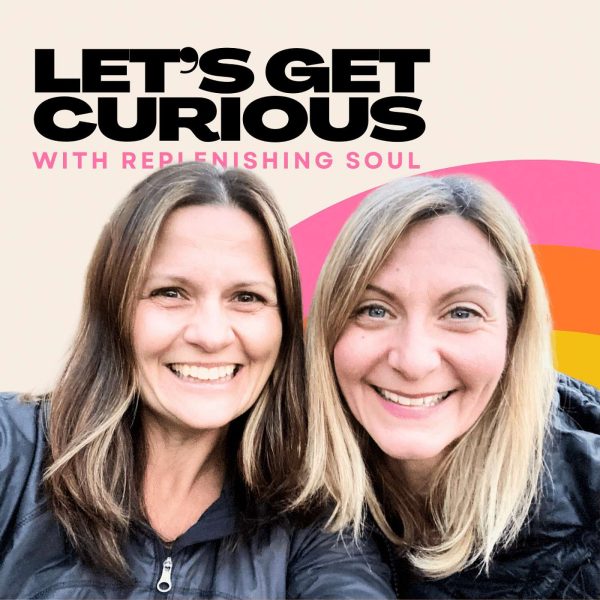
Let’s Get Curious with Replenishing Soul
- Épisodes
- 36
- Parution
- mensuelle
- Dernier épisode
- 18 Nov 2026
À propos du podcast
Let's Get Curious, a podcast where moms care for each other, tackling the conversations no one likes to have. We share insights on self-care and navigate parenthood, especially for those raising neurodivergent children, creating a supportive community for all moms. Join Lori & Dorothy as they share their professional expertise as healthcare professionals along with their personal stories of mom struggles. We are moms supporting moms.
Épisodes 36
#35 The Mouth at Rest: The Overlooked Key to Sleep, Breathing & Development with Speech Therapist, Lindsey Doyle
What does the way your child’s tongue rests in their mouth have to do with breathing, sleep, speech, feeding, and development? More than you might think! In this episode of Let’s Get Curious, we’re joined by …
Notes de l’épisode
What does the way your child’s tongue rests in their mouth have to do with breathing, sleep, speech, feeding, and development? More than you might think! In this episode of Let’s Get Curious, we’re joined by Lindsay Doyle, M.A., CCC-SLP, COM®, a speech-language pathologist and certified orofacial myofunctional therapist with nearly 20 years of experience and founder of Myo Speech & Feeding Center. Lindsay helps us understand the often-overlooked role of oral function and why looking beyond individual symptoms can make a difference.
Lindsay explains what proper oral rest posture looks like: the tongue resting gently against the roof of the mouth, lips closed, teeth slightly apart, and breathing happening through the nose. We explore how oral habits, airway concerns, and restricted oral tissues can affect the way the mouth and facial muscles function—and how these patterns may be connected to feeding difficulties, speech challenges, dental development, and sleep.
We also walk through potential signs parents can watch for at different stages of childhood, from infants struggling with breastfeeding or bottle-feeding to older children who mouth-breathe, snore, grind their teeth, have difficulty chewing, or experience persistent speech challenges. Lindsay shares why snoring and noisy sleep shouldn't simply be dismissed as normal, how myofunctional therapy works, and why collaboration among speech therapists, ENTs, dentists, and orthodontists can be important when evaluating the whole picture.
Most importantly, this conversation is about learning to notice the clues and asking better questions. If something doesn't seem right, don't be afraid to ask why, take videos to share with your child's healthcare providers, and seek a more complete evaluation. You don't need to have all the answers—you just need to stay curious, trust what you're observing, and advocate for a closer look when needed.
SHOW NOTES:
The Oral Developmental Checklist: created for you by Lori & Dorothy.
This checklist walks you through the different stages of your child's oral development, highlighting key milestones and what to look for along the way. Use it to track your child's progress, organize your observations, and bring helpful information to your next doctor's appointment so you can ask informed questions and feel more confident about your child's development.
Lindsey's Website: Myo Speech and Feeding Center
Book Recommendations:
Nobody Ever Told me (or my Mother) That!: Everything from Bottles and Breathing to Healthy Speech Development by Diane Barr
Sleep Wrecked Kids by Sharon Moore
Snored to Death by Dr. David McIntosh
Sleep Disordered Breathing: by Dr. David McIntosh
Breathe, Sleep, Thrive: by Dr. Shireen Lim
Disclaimer:
The information shared on this podcast is for informational purposes only and is based on the opinions and experience of Lori, Dorothy and their guests. The content should not be used as a substitute for professional medical advice, diagnosis or a treatment. Always seek the advice of your healthcare provider with any questions you may have regarding a medical condition. Never disregard professional medical advice or delay in seeking it because of something you heard on this podcast.#34: When Your Child Wants to, But Just Can’t: Our ADHD and Homeschooling Journey
What happens when your child wants to be at school—but their body and brain are telling them they can’t? In this deeply personal episode of Let’s Get Curious with Replenishing Soul, Lori shares an update on her …
Notes de l’épisode
What happens when your child wants to be at school—but their body and brain are telling them they can’t? In this deeply personal episode of Let’s Get Curious with Replenishing Soul, Lori shares an update on her daughter’s journey through learning challenges, ADHD, anxiety, and nervous-system dysregulation—and the difficult decision to homeschool.
After years of therapies, changing schools, learning about nutrition and the brain-gut connection, and exploring nervous-system regulation, Lori began noticing new clues. Her daughter was increasingly overwhelmed by school and everyday stimulation, withdrawing from activities she loved and eventually struggling to make it through even an hour of school. Lori found herself at a crossroads, facing fear and uncertainty about what would happen if she stepped away from traditional school.
Homeschooling became an unexpected season of healing. Instead of trying to recreate a classroom at home, Lori learned to follow her daughter’s lead, work with the way her brain learned best, incorporate movement and breaks, and give her nervous system the time it needed to recover. Slowly, her confidence returned—and eventually, so did her desire to return to school.
Today, her daughter is back in school full-time, rebuilding friendships, participating in sports, and discovering what she is capable of. The journey wasn't about finding one perfect answer. It was about paying attention, staying curious, and being willing to change course when something wasn't working.
Most importantly, Lori shares a message for every parent: watch for the clues, listen to your child’s words, track the patterns, learn how they learn, and follow your gut. Sometimes the most important question isn't “How do I get my child to keep going?” but “What does my child need right now?”
SHOW NOTES:
Below are a list of previous podcast we have done with experts in their fields. If you are curious about figuring out the "WHY" to your child's behaviors and/or struggles these episode can help. Don't wait around for the "Let's Wait and See" comment- be curious instead.
Episode #29: Why Crawling, Reflexes & Sensory Development Matter with Missy Broxton, Pediatric OT
Episode #25: Making Sense of Learning Strugges: A Pediatric Occupational Therapist Explains
Episode #6: Let's Talk Vision with Dr. Tina Schiller O.D.
Check out our LINKTREE SHOP for book recommendations:Disclaimer:
The information shared on this podcast is for informational purposes only and is based on the opinions and experience of Lori, Dorothy and their guests. The content should not be used as a substitute for professional medical advice, diagnosis or a treatment. Always seek the advice of your healthcare provider with any questions you may have regarding a medical condition. Never disregard professional medical advice or delay in seeking it because of something you heard on this podcast.#33: Reclaiming Your Identity, Sexuality & Desire After Motherhood with Sex Therapist Dr. Carli Blau
What happens when you love your partner—but you don’t feel like yourself anymore?In this candid and eye-opening episode of Let’s Get Curious with Replenishing Soul, Lori and Dorothy sit down with Dr. Carli …
Notes de l’épisode
What happens when you love your partner—but you don’t feel like yourself anymore?
In this candid and eye-opening episode of Let’s Get Curious with Replenishing Soul, Lori and Dorothy sit down with Dr. Carli Blau, licensed psychotherapist, certified sex therapist, and founder of Boutique Psychotherapy, to talk about something so many women experience but rarely talk about: losing yourself in motherhood, relationships, and the demands of everyday life.
Dr. Carli challenges the idea that we need to “get back” to the woman we used to be. Instead, she asks a better question: Who do you want to become now? Together, they explore confidence, body image, motherhood, chronic stress, and why women can find themselves putting their own needs, desires, and relationships at the bottom of an endless to-do list. If you’ve ever looked in the mirror and thought, Where did I go?, this conversation will hit home.
Then they get real about sex, intimacy, and desire after having kids. Why does affection sometimes feel like a dangerous game when a hug or kiss seems to automatically lead to sex? How do you maintain your sexual boundaries without rejecting your partner? What happens when you want intimacy but simply don’t have the energy or desire for sex? Dr. Carli shares her perspective on rebuilding connection, communicating needs, and taking responsibility for creating space for intimacy—without guilt, pressure, or obligatory sex.
They also unpack the connection between chronic stress, the nervous system, and sexual desire, especially for women navigating the additional demands of parenting neurodivergent children, caregiving, chronic illness, careers, and family life. Dr. Carli shares practical and surprisingly simple ways to reconnect with your body, confidence, senses, and sexuality—and yes, they talk about how to “wake her up” again.
Most importantly, this conversation is about connection, communication, accountability, and giving yourself permission to want more. Dr. Carli reminds us that our partners aren’t mind readers, obligatory sex isn’t the answer, and reconnecting with ourselves has to come before we can truly reconnect with someone else. If you’ve ever thought, “I love my partner, but I just don’t feel like myself anymore,” this episode will leave you laughing, thinking, and maybe asking yourself some very good—and very curious—questions.
Show Notes: 📚 Dr. Carli’s Recommended Reading
(affiliate links through Replenishing Soul)
Passionate Marriage: Keeping Love and Intimacy Alive in Committed Relationships — David Schnarch
A deeper look at intimacy, sexuality, emotional connection, and the ways couples can work through the challenges that get in the way of a passionate relationship. Dr. Carli describes this as a brilliant—and admittedly dense—book that she highly recommends.Strong Fathers, Strong Daughters: 10 Secrets Every Father Should Know — Meg Meeker, M.D.
Although written specifically for fathers raising daughters, Dr. Carli recommends this book for its insights into child psychology, parenting, connection, and understanding what children may really be communicating through their behavior.The Men on My Couch — Brandy Engler, Ph.D., with David Rensin
A fascinating look inside a sex therapist’s work with men and the desires, fears, relationships, and struggles they bring into therapy. Dr. Carli recommends it as a way for women to develop greater empathy and understanding for the men in their lives—and ultimately create more connection.He, She, and We — Robert A. Johnson
A series of three short books exploring relationships, love, sexuality, and the psychological dynamics between men and women through the lens of Jungian psychology and classical mythology. Dr. Carli describes these as especially interesting for creative minds and anyone curious about the deeper stories and psychology behind relationships.Disclaimer:
The information shared on this podcast is for informational purposes only and is based on the opinions and experience of Lori, Dorothy and their guests. The content should not be used as a substitute for professional medical advice, diagnosis or a treatment. Always seek the advice of your healthcare provider with any questions you may have regarding a medical condition. Never disregard professional medical advice or delay in seeking it because of something you heard on this podcast.Episode #32: The Hidden Connection Between Sensory Processing, Learning & Emotional Regulation with Pediatric OT Missy Broxton
What do picky eating, motion sickness, clothing sensitivities, handwriting struggles, emotional outbursts, and difficulty paying attention all have in common? The answer may surprise you: sensory processing.In …
Notes de l’épisode
What do picky eating, motion sickness, clothing sensitivities, handwriting struggles, emotional outbursts, and difficulty paying attention all have in common? The answer may surprise you: sensory processing.
In this episode, we continue our discussion of the Learning Pyramid by taking a deeper dive into one of its most important foundations: sensory processing. We're joined once again by pediatric occupational therapist Missy Broxton, who explains why sensory processing is the foundation for learning, behavior, emotional regulation, and everyday functioning. Missy breaks down all eight sensory systems—not just the five most of us learned about in school—and shows how challenges in these systems can affect everything from reading and handwriting to sleep, social skills, and transitions.
Through relatable stories and practical examples, you'll learn why many behaviors that appear defiant or disruptive are actually signs that a child's nervous system is overwhelmed. We also discuss why addressing sensory needs first can make a meaningful difference before focusing on academic or behavioral interventions.
Whether you're raising a neurodivergent child, navigating learning challenges, or simply trying to better understand your child's unique needs, this episode will give you a new perspective on what sensory processing really is and why it matters. You'll walk away with actionable insights, a deeper understanding of your child's behavior, and practical strategies to help them feel more regulated, confident, and ready to learn.
SHOW NOTES:
Vision Screening Questionaire: Optometric Vision Development & Rehabilitation Association: Vision Survey & Finding a doctor in your area
Convergence insufficiency symptom survey: PDF
Picky Eater Support and Finding a Practitioner: SOS Approach to Feeding
Kelly Mahler, Interoception Occupational Therapist: Website & Free Resources
Book by Robyn Gobbel: Raising Kids with Big, Baffling Behaviors:
Pyramid of Learning Image: PDF
Disclaimer:
The information shared on this podcast is for informational purposes only and is based on the opinions and experience of Lori, Dorothy and their guests. The content should not be used as a substitute for professional medical advice, diagnosis or a treatment. Always seek the advice of your healthcare provider with any questions you may have regarding a medical condition. Never disregard professional medical advice or delay in seeking it because of something you heard on this podcast.Raising Resilient Kids Starts With You: Breaking the Cycle of Negative Self-Talk with Dr. Paul Kesselman
The conversations we have with ourselves shape far more than we realize. In this thought-provoking episode, we welcome back Dr. Paul Kesselman to explore the powerful role of self-talk, how our inner dialogue …
Notes de l’épisode
The conversations we have with ourselves shape far more than we realize. In this thought-provoking episode, we welcome back Dr. Paul Kesselman to explore the powerful role of self-talk, how our inner dialogue influences our emotions, parenting, relationships, confidence, and overall mental health. Together, we unpack why the stories we tell ourselves can either move us toward growth or keep us stuck in cycles of doubt and fear.
Dr. Kesselman explains the difference between an internal and external locus of control, helping parents understand why some children naturally take ownership of challenges while others feel controlled by the world around them. We also dive into the concepts of growth mindset versus fixed mindset and discuss how our everyday language—both with ourselves and our children—can either build resilience or reinforce limiting beliefs.
Throughout the conversation, Lori and Dorothy share vulnerable personal stories about parenting teenagers, navigating self-doubt, and recognizing their own triggers. Dr. Kesselman offers practical strategies for interrupting negative thought patterns, responding more intentionally instead of reacting emotionally, and creating safe spaces where children feel comfortable sharing their struggles without fear of judgment.
Whether you're raising children, working through your own inner critic, or simply looking to build a healthier mindset, this episode is filled with actionable tools you can begin using today. You'll walk away with simple techniques to strengthen positive self-talk, foster resilience in your family, and model the emotional habits that help both children and adults thrive.
SHOW NOTES:
The Grit Workbook for Kids: by Elisa Nebolsine
The Kesselman Clinical Associates: Dr. Paul's website
Please help us to continue to grow by giving us a review or a ⭐
⭐ Enjoying the podcast? We'd love your support!
Please click the link below, scroll down to Ratings & Reviews, and leave a quick review. Your feedback helps more people discover the show.
Give Us A ReviewDisclaimer:
The information shared on this podcast is for informational purposes only and is based on the opinions and experience of Lori, Dorothy and their guests. The content should not be used as a substitute for professional medical advice, diagnosis or a treatment. Always seek the advice of your healthcare provider with any questions you may have regarding a medical condition. Never disregard professional medical advice or delay in seeking it because of something you heard on this podcast.Episode #30: Debunking Pelvic Floor Myths with Lori Yu, Pelvic Floor Physical Therapist
What if everything you've been told about your pelvic floor isn't entirely true? In this eye-opening episode of Let's Get Curious, Lori and DeeDee tackle some of the most common myths surrounding …
Notes de l’épisode
What if everything you've been told about your pelvic floor isn't entirely true? In this eye-opening episode of Let's Get Curious, Lori and DeeDee tackle some of the most common myths surrounding pelvic floor health and explain why so many women continue to struggle with symptoms that are often dismissed as "normal."
From the belief that Kegels fix everything to the idea that leaking after childbirth or during menopause is simply something women must accept, this conversation uncovers the truth behind pelvic floor dysfunction. Lori explains how the pelvic floor is influenced by much more than just muscle strength, including posture, breathing patterns, stress, hormonal changes, exercise habits, and even jaw tension. Together, they discuss why symptoms such as leaking, pelvic pressure, pain with intimacy, recurring UTI-like symptoms, and core weakness deserve attention rather than acceptance.
Listeners will also learn why being fit and active does not guarantee a healthy pelvic floor, how chronic tension can be just as problematic as weakness, and why many women unknowingly hold tension in their pelvic floor throughout the day. DeeDee shares her own personal experiences with prolapse, pelvic floor therapy, and the surprising connections she discovered between exercise, posture, and pelvic health.
Whether you're postpartum, navigating perimenopause or menopause, experiencing pelvic floor symptoms, or simply want to better understand your body, this episode offers practical education, empowering insights, and hope. Most importantly, Lori and DeeDee remind listeners that pelvic floor dysfunction is common—but it is not something you have to live with. With the right evaluation, support, and treatment, improvement is possible at any age.
Tune in as they debunk 11 pelvic floor myths, challenge outdated advice, and help you become a more informed advocate for your own health.
SHOW NOTES:
PODCAST EPISODED ON PELVIC HEALTH:
Episode #5: Beyond Birth: Nurturing Pelvic Health Beyond Pregnancy
Episode #20: The Feet-Pelvic Floor Connection: Why It Matters More Than You Think
Episode #27: Raising the Standard in Pelvic Floor Training- How the Buff Muff Pro Trainer Course is Redefining Pelvic Health Care
BOOK RECOMMENDATIONS (affiliate links):
Heal Pelvic Pain: The Proven Stretching, Strengthening, and Nutrition Program for Relieving Pain, Incontinence & IBS, and Other Symptoms Without Surgery
Estrogen Matters: Dr. Avrum Blumming
You Are Not Broken: Stop Should-ing All Over Your Sex Life: Dr. Kelly Casperson
WE'RE CELEBRATING - THIS WILL BE OUR 30TH PODCAST EPISODE
Please help us to continue to grow by giving us a review or a ⭐
⭐ Enjoying the podcast? We'd love your support!
Please click the link below, scroll down to Ratings & Reviews, and leave a quick review. Your feedback helps more people discover the show.
Give Us A ReviewDisclaimer:
The information shared on this podcast is for informational purposes only and is based on the opinions and experience of Lori, Dorothy and their guests. The content should not be used as a substitute for professional medical advice, diagnosis or a treatment. Always seek the advice of your healthcare provider with any questions you may have regarding a medical condition. Never disregard professional medical advice or delay in seeking it because of something you heard on this podcast.Episode #29: Why Crawling, Reflexes & Sensory Development Matter with Missy Broxton, Pediatric Occupational Therapist
In this episode, we welcome back pediatric occupational therapist Missy Broxton to explore one of the most foundational — and often overlooked — pieces of child development: primitive reflexes. With nearly …
Notes de l’épisode
In this episode, we welcome back pediatric occupational therapist Missy Broxton to explore one of the most foundational — and often overlooked — pieces of child development: primitive reflexes. With nearly three decades of experience and a deeply compassionate, whole-child approach, Missy helps us unpack the “Pyramid of Learning” and why so many learning, behavioral, sensory, and emotional challenges actually begin far below the surface. From attention and handwriting struggles to anxiety, coordination, and emotional regulation, this conversation shines a light on the critical building blocks children need in order to thrive.
Together, we dive into how primitive reflexes develop, why they’re essential in infancy, and what can happen when they don’t fully integrate. Missy explains the difference between voluntary and involuntary movement patterns, the importance of tummy time and crawling, and how early experiences — including pregnancy, delivery, trauma, stress, and even container baby culture — can impact neurological development. The discussion is both eye-opening and incredibly validating for parents who may have sensed something deeper was going on with their child’s struggles.
We also explore the powerful connection between reflex integration and everyday functioning. Missy shares how retained reflexes can affect everything from focus in the classroom and reading comprehension to social skills, confidence, and anxiety. One of the most fascinating parts of the conversation is hearing how her own journey learning about primitive reflexes completely changed the way she approached therapy — and why addressing the nervous system first can unlock progress where traditional approaches may hit a wall.
This episode is packed with practical insight, compassion, and hope for parents, caregivers, therapists, and educators alike. Whether you’re raising a neurodivergent child, navigating developmental concerns, or simply curious about how early movement patterns shape lifelong learning and regulation, this conversation will leave you seeing child development through an entirely new lens.
SHOW NOTES:
Online Primitive Reflex Course for parents and therapists: Harkla
Sonia Story- Online Resources & Website: Move, Play Thrive- Brain and Sensory Foundations
Missy Broxton's Website: Building Blocks Pediatric Therapies
BOOKS:
A Teacher's Window Into The Child's Mind- By Sally Goodard
Integrating Primitive Reflexes Through Play & Exercise:
Morro Reflex: Startle Reflex
ATNR: Asymmetrical Tonic Neck Reflex - separate left side of body from right
Spinal Galant Reflex: for bedwetting
STNR: Symmetrical Tonic Neck Reflex - separated upper body from lower body
Palmar Grasp & Babinski Reflex
TLR: Tonic Labyrinth Reflex
VIDEOS:
Fear Paralysis Video - watch here
Episode #28: Why Breathing, Sleep, and Tongue Position Matter for Your Child’s Development with Kelley Carter, pediatric Speech Pathologist
In today’s episode, DiDi and I sit down with speech-language pathologist Kelley Carter, who brings over 20 years of experience working with children and families. Kelley shares her journey from working in …
Notes de l’épisode
In today’s episode, DiDi and I sit down with speech-language pathologist Kelley Carter, who brings over 20 years of experience working with children and families. Kelley shares her journey from working in geriatrics to building a thriving pediatric practice focused on early intervention and whole-child development.
We dive into the world of myofunctional therapy—what it is, why it matters, and how something as simple as the way your child breathes, sleeps, or rests their tongue can impact everything from speech and feeding to behavior, sleep quality, and even facial development.
Kelley helps us connect the dots between mouth breathing, poor sleep, and symptoms that can often be mistaken for ADHD. She also walks us through early signs to look for in babies and young children—especially when it comes to feeding challenges, oral function, and airway health—so we can better support our kids from the very beginning.
If you’re a mom who has ever wondered about your child’s sleep, behavior, feeding, or development, this episode will open your eyes to a whole new perspective and give you practical insight into what to look for and when to seek support.
SHOW NOTES:
Have questions for Kelley you can reach her through her website below.
Speakeasy: website
⭐ If you’re loving the podcast, don’t forget to give us a star rating—it really helps us grow!
Please consider writing us a review on your favorite podcast platform as this keeps our podcast in the forefront for others to find us with ease.
Follow us on IG
THANK YOU!Disclaimer:
The information shared on this podcast is for informational purposes only and is based on the opinions and experience of Lori, Dorothy and their guests. The content should not be used as a substitute for professional medical advice, diagnosis or a treatment. Always seek the advice of your healthcare provider with any questions youEpisode #27: Raising the Standard in Pelvic Floor Training - How the Buff Muff Pro Trainer Course is Redefining Pelvic Health Care
If you’re a fitness professional, birth worker, PT, chiropractor, women’s health provider — or a mom who’s realized no one really taught you how your pelvic floor works — this episode is for you. In this …
Notes de l’épisode
If you’re a fitness professional, birth worker, PT, chiropractor, women’s health provider — or a mom who’s realized no one really taught you how your pelvic floor works — this episode is for you.
In this special conversation, we sit down with Kim Vopni (The Vagina Coach) and Natalie Headdings to share the evolution of their work — and introduce their newly updated Buff Muff Pro Trainer.
What began as prenatal birth preparation programs and postpartum recovery systems has evolved into a comprehensive, fitness-based pelvic floor training methodology designed for professionals & women who want to confidently and safely integrate pelvic health into their practice or lives.
In this episode, Kim shares how her journey — from witnessing childbirth and fearing what pregnancy might do to the body, to becoming a distributor of the EPI-NO device, to building global pelvic health education programs — led her to create the original Buff Muff Method. A method grounded in one simple but revolutionary idea:
The pelvic floor is a group of muscles.
And muscles respond to training.
Natalie shares how her experience as a doula and Pilates instructor exposed the massive gap between birth work and fitness — and how discovering Kim’s work changed her professional path entirely. Now a master trainer and co-creator of the updated Buff Muff Pro Course, she helps lead the next generation of professionals in evidence-informed pelvic floor training.
Together, they explain:
*Why pelvic floor education is still missing from most professional certifications
*What traditional postpartum care overlooks
*How to apply strength training principles like progressive overload to pelvic health
*Why breath, glutes, hips, and core function are inseparable from pelvic floor health
And how the newly updated Buff Muff Pro Trainer Course equips professionals to confidently assess, program, and support clients at every life stage — from prenatal to perimenopause and beyond.
This episode isn’t just about awareness.
It’s about equipping you with tools.
If you’ve ever felt underprepared when a client mentions leakage, prolapse, diastasis, painful intercourse, or postpartum recovery — this conversation will show you there is a better way to bridge the gap between fitness and pelvic health.
The Buff Muff Pro Trainer Course is designed to give you practical frameworks, movement progressions, and the confidence to talk about pelvic health without whispering — and without stepping outside your scope.
Listen in to learn how this updated training course is changing the standard for pelvic floor education inside the fitness and birth world.SHOW NOTES:
The Buff Muff Pro Trainer Course
The Bristol Poop Chart: print and post by your kiddos toilets. Teach them early what a healthy poop looks like.
YouTube: Watch Here
⭐ If you’re loving the podcast, don’t forget to give us a star rating—it really helps us grow!
Please consider writing us a review on your favorite podcast platform as this keeps our podcast in the forefront for others to find us with ease.
Follow us on IG
THANK YOU!Disclaimer:
The information shared on this podcast is for informational purposes only and is based on the opinions and experience of Lori, Dorothy and their guests. The content should not be used as a substitute for professional medical advice, diagnosis or a treatment. Always seek the advice of your healthcare provider with any questions youEpisode #26: Aging: What a Physical Therapist Want You to Know
In this deeply personal episode, Lori shares why aging has been weighing on her heart—and why she feels called to talk about it now. After more than 28 years as a physical therapist, much of that time spent …
Notes de l’épisode
In this deeply personal episode, Lori shares why aging has been weighing on her heart—and why she feels called to talk about it now. After more than 28 years as a physical therapist, much of that time spent working in nursing homes, Lori has witnessed the aging process up close. She’s walked into countless rooms to find frail older adults recovering from devastating falls, often saying the same thing: “I don’t know how I got here.” Those moments stayed with her, and this episode is Lori’s way of pulling back the curtain on what she’s seen, learned, and lived—both professionally and personally.
Lori opens up about how aging isn’t something that suddenly happens overnight, but something that builds quietly over decades through small losses in strength, balance, and mobility. Drawing from her years in geriatric care, she explains how losing the ability to do basic movements—like getting out of a chair, rising from the floor, or walking confidently—often leads to dependence, fear, and injury. Her goal in sharing this isn’t to scare listeners, but to empower them with awareness and a sense of control over their future.
With passion and clarity, Lori walks listeners through simple, real-life ways to assess where they are right now and what they can start doing differently. She explains the powerful connection between muscle, bone density, balance, and aging—especially for women navigating perimenopause and menopause—and why strength, mobility, and movement are essential long before problems show up. These aren’t extreme workouts or complicated routines, but practical, preventative tools grounded in decades of hands-on experience.
At its core, this episode is about hope. Lori believes deeply that it’s never too late to start, and that small, intentional actions taken today can dramatically change how we age tomorrow. This conversation is an invitation to move with purpose, shift your mindset, and learn from someone who has seen both sides of aging—what happens when we ignore it, and what’s possible when we choose to care for our bodies before it’s too late.
SHOW NOTES:
Mel Robbins podcast recommendations:
Dr. Vonda Wright: Look, Feel & Stay Younger Forever: #1 Orthopedic Surgeon's Proven Protocol
Dr. Staci Sims: The Ultimate Guide to Menopause: How to Boost Your Metabolism, Build Muscle and Balance Your Hormones
The Diary of a CEO: Cognitive Decline Expert: The Disease That Starts in Your 30's but Kills You in Your 70's
Article: Harvard Health Publishing on age and muscle loss
DISCLAIMER: The information shared on this podcast is for informational purposes only and is based on the opinions and experience of Lori Dorothy and their guests. The content should not be used as a substitute for professional medical advice. Diagnosis or a treatment. Always seek the advice of your healthcare provider with any questions you may have regarding a medical condition. Never disregard professional medical advice or delay in seeking it because of something you heard on this podcast
Episode #25: Making Sense of Learning Struggles: A Pediatric Occupational Therapist Explains
In this episode of Let’s Get Curious, we’re joined by Missy Broxton, MS, OTR/L, a pediatric occupational therapist with over 28 years of experience specializing in sensory integration, functional vision, and …
Notes de l’épisode
In this episode of Let’s Get Curious, we’re joined by Missy Broxton, MS, OTR/L, a pediatric occupational therapist with over 28 years of experience specializing in sensory integration, functional vision, and child development. Missy shares her bottom-up approach to occupational therapy, which focuses on building strong neurological and sensory foundations to support learning, behavior, and emotional regulation in children. …Episode #24: ADHD, Anxiety and Big Feelings: An Insightful Conversation with Child Psychologist Dr. Paul Kesselman
In this episode, Lori and Dorothy sit down with psychologist, Dr. Paul Kesselman to talk about some of the most common challenges families face—especially those raising neurodivergent kids and teens. They …
Notes de l’épisode
In this episode, Lori and Dorothy sit down with psychologist, Dr. Paul Kesselman to talk about some of the most common challenges families face—especially those raising neurodivergent kids and teens. They explore why anxiety is increasing, how ADHD and other forms of neurodivergence affect emotional regulation, and what parents can do when their child shuts down, can’t articulate what’s wrong, or repeats the same behaviors despite consequences. …Episode #23: The Power of the 24-Hour Rule: How One Pause Can Change Everything
In this lighthearted episode of Let’s Get Curious, hosts Lori and DiDi reconnect to talk about Lori’s simple but powerful idea—the “24-Hour Rule.” The concept began when Lori advised a friend, who was upset and …
Notes de l’épisode
In this lighthearted episode of Let’s Get Curious, hosts Lori and DiDi reconnect to talk about Lori’s simple but powerful idea—the “24-Hour Rule.” The concept began when Lori advised a friend, who was upset and ready to fire off a text, to write it out but wait a day before sending it. By the next morning, the friend no longer felt the need to send it at all. That small pause inspired a rule that encourages people to slow down, breathe, and think before reacting. …Episode #22: Polyvagal Wisdom for Birth, Postpartum, and Menopause with Chantal Traub
In this episode, we welcome back the incredible Chantal Traub—seasoned doula, women’s health educator, and author—who has dedicated her work to empowering women through life’s biggest transitions, from …
Notes de l’épisode
In this episode, we welcome back the incredible Chantal Traub—seasoned doula, women’s health educator, and author—who has dedicated her work to empowering women through life’s biggest transitions, from childbirth to menopause. You may remember her from episode 11, where she shared her journey of vision loss, navigating a meningioma, and moving through menopause. …Episode #21: How Your Body Stores Limiting Beliefs and How to Release Them
If you’ve ever felt like your mind and body are on two different pages—or if you’ve carried stress, self-doubt, or old stories for far too long—this episode will open your eyes to what’s possible when you …
Notes de l’épisode
If you’ve ever felt like your mind and body are on two different pages—or if you’ve carried stress, self-doubt, or old stories for far too long—this episode will open your eyes to what’s possible when you reconnect with your body’s wisdom. Our guest, Elizabeth Mehta, shares how her work helps people release what’s stored in the body, whether it’s stress in the nervous system, blocked energy in the chakras, or the old beliefs we’ve carried since childhood. …Episode #20: The Feet-Pelvic Floor Connection: Why It Matters More Than You Think
Have you ever stopped to think about how your feet might be affecting your pelvic floor? It might sound like a stretch, but the connection is real—and powerful. In this episode, I'm joined by Natalie Headdings …
Notes de l’épisode
Have you ever stopped to think about how your feet might be affecting your pelvic floor? It might sound like a stretch, but the connection is real—and powerful. In this episode, I'm joined by Natalie Headdings, a pelvic floor specialist, to explore the surprising relationship between what’s happening at ground level (your feet) and how it impacts your core, posture, and pelvic floor function. …Episode #19: Exhausted, Wired, or Stuck? How Light & Workout Timing Impact Hormones & Healing
In this episode, Dorothy and I are joined once again by Josh and Jeannie from RealFood Gangstas, and we dive into a conversation that bridges light, movement, nervous system regulation, and real-life balance …
Notes de l’épisode
In this episode, Dorothy and I are joined once again by Josh and Jeannie from RealFood Gangstas, and we dive into a conversation that bridges light, movement, nervous system regulation, and real-life balance. We kick things off with a Q&A about something that impacts us all—light exposure—and how something as simple as getting outside at the right time of day can deeply support your biology, hormones, and emotional regulation.
Josh explains why early morning sunlight is so crucial, how our biology is synced to the light-dark cycle, and how exposure to natural light—especially red and infrared light at sunrise—can be a game changer for your health. We talk about how blue light and screen time, especially for kids, are interfering with basic biological processes like melatonin production, cortisol regulation, and gut function. But this isn’t about being perfect—it’s about finding rhythm and balance in a modern world that often works against our biology.
From there, we shift into a powerful conversation around movement and the ideal time of day to work out. Josh and Jeannie break down how our cortisol rhythm, sun cycles, and seasonal shifts all influence the best time for movement—typically between 10am and 3pm, when our body is more metabolically ready. We talk about how morning or late-night workouts can sometimes spike stress hormones and interrupt key repair processes, especially for those dealing with autoimmune issues, hormone imbalances, or adrenal fatigue.
That said, this isn’t about restriction or rigid rules. We explore practical, flexible ways to honor your biology without losing the routines that support your mental and emotional health. Whether it's modifying your workouts, shifting walking times, or simply tuning into how your body feels on a given day, the RealFood Gangstas offer strategies that are both science-based and incredibly human.
SHOW NOTES:
My Circadian App: enter Realfg for a trial period
Midwest Red Light Therapy: use CODE: Eastwesthealing
Viva Rays: use CODE: Getoutside15
If you found this podcast to be helpful, enlightening or just relatable please consider writing us a positive review on your favorite podcast app and share this episode with someone you care about.
Please consider writing us a review on your favorite podcast platform as this keeps our podcast in the forefront for others to find us with ease.
Follow us on IG https://www.instagram.com/replenishing_soul/
Thank you for your interest!Disclaimer:
The information shared on this podcast is for informational purposes only and is based on the opinions and experience of Lori Dorothy and their guests. The content should not be used as a substitute for professional medical advice, diagnosis or a treatment. Always seek the advice of your healthcare provider with any questions you may have regarding a medical condition. Never disregard professional medical advice or delay in seeking it because of something you heard on this podcast.Episode #18: Chaos to Calm: Finding Nervous System Balance at Home
In this episode, we’re joined by Jessica Addeo—occupational therapist, nervous system coach, and founder of the Nervous System Mastery Institute. With over 17 years of experience in pediatrics and sensory …
Notes de l’épisode
In this episode, we’re joined by Jessica Addeo—occupational therapist, nervous system coach, and founder of the Nervous System Mastery Institute. With over 17 years of experience in pediatrics and sensory regulation, Jessica shares her personal and professional journey of realizing just how much her own nervous system was impacting her roles as a mother, wife, and therapist. That realization sparked a passion for making nervous system care practical, sustainable, and deeply supportive for others.
Jessica recounts a powerful moment from early motherhood when a short “weighted walk”—a common OT strategy—shifted her entire emotional state. It opened her eyes to how much regulation work she was already doing for children as a therapist, but not yet applying to herself. From that point forward, she began exploring how these same tools could transform not only her own life but the lives of other caregivers, parents, and professionals.
Together, we explore what it truly means to support the nervous system, what occupational therapy actually looks like in daily life, and how roles like parenting, partnering, and being a professional are all shaped by our internal regulation—or lack of it. Jessica breaks down important concepts like co-regulation, dysregulation, and why nervous system care starts with the adult in the room.
This conversation is packed with insight and validation for anyone navigating life with neurodivergent children, feeling overstimulated, or trying to show up fully in multiple roles. If you’ve ever felt like you’re pouring from an empty cup, this episode will leave you feeling seen, supported, and equipped with tools to shift from survival mode to regulation.Show Notes:
Nervous System Mastery Class:
A 4-Month Training to Help You Master Nervous System Science & Lead a Centered, Regulated, and Resilient Life-10 week summer edition starts 6/23/25
If you found this podcast to be helpful, enlightening or just relatable please consider writing us a positive review on your favorite podcast app and share this episode with someone you care about.
Please consider writing us a review on your favorite podcast platform as this keeps our podcast in the forefront for others to find us with ease.
Follow us on IG https://www.instagram.com/replenishing_soul/
Thank you for your interest!Disclaimer:
The information shared on this podcast is for informational purposes only and is based on the opinions and experience of Lori Dorothy and their guests. The content should not be used as a substitute for professional medical advice, diagnosis or a treatment. Always seek the advice of your healthcare provider with any questions you may have regarding a medical condition. Never disregard professional medical advice or delay in seeking it because of something you heard on this podcast.Episode #17: Strength Without Setbacks: Lifting Safely in Perimenopause
In this episode, Lori and Dorothy tackle a trending topic that’s been making waves across social media—lifting heavy weights during perimenopause and menopause. With so much buzz encouraging women to pick up …
Notes de l’épisode
In this episode, Lori and Dorothy tackle a trending topic that’s been making waves across social media—lifting heavy weights during perimenopause and menopause. With so much buzz encouraging women to pick up heavy weights to support bone density and strength, the hosts break down what this really means and why it's not something you should jump into blindly.
They share insights on the popular "4 reps for 4 sets" concept and explain how lifting truly heavy weight (like Lori’s 125 lb deadlift) requires much more than just grabbing a barbell. They highlight the importance of understanding form, building up gradually, and allowing the nervous system and muscles to adapt properly—especially if you’re new to strength training or returning after a break. Injury prevention is a major theme, as many women are hurting themselves by jumping into advanced routines too soon.
The conversation also dives into what good form really looks like, particularly for foundational exercises like the deadlift. Lori gives a practical breakdown of how poor form—like letting your back hunch or lifting with your spine—can derail progress and lead to pain. They also emphasize the need for good coaching, sharing tips on how to evaluate whether your trainer is actually helping or just chatting through your session.
Whether you're just starting your lifting journey or feeling unsure about how to do it safely, this episode offers valuable guidance, real-life examples, and a candid discussion on how to build strength intentionally and effectively during midlife and beyond.
GET 10% OFF Peri-Menopause and Menopause products at Hot or Just me?
USE THE CODE: Let's Get Curious
Link: https://hotorjustme.com/?ref=REPLENISHINGSOUL
If you found this podcast to be helpful, enlightening or just relatable please consider writing us a positive review on your favorite podcast app and share this episode with someone you care about.
Please consider writing us a review on your favorite podcast platform as this keeps our podcast in the forefront for others to find us with ease.
Follow us on IG https://www.instagram.com/replenishing_soul/
Thank you for your interest!Disclaimer:
The information shared on this podcast is for informational purposes only and is based on the opinions and experience of Lori Dorothy and their guests. The content should not be used as a substitute for professional medical advice, diagnosis or a treatment. Always seek the advice of your healthcare provider with any questions you may have regarding a medical condition. Never disregard professional medical advice or delay in seeking it because of something you heard on this podcast.Episode #16: Is It Hot, or Me? Taking Control of Midlife, One Hot Flash at a Time
Menopause is a wild ride, and no two experiences are the same. In this episode, we sit down with Carin Luna-Ostaseski, founder of Is It Hot, or Me?, to talk about the real, unfiltered journey of managing …
Notes de l’épisode
Menopause is a wild ride, and no two experiences are the same. In this episode, we sit down with Carin Luna-Ostaseski, founder of Is It Hot, or Me?, to talk about the real, unfiltered journey of managing symptoms, advocating for your health, and finding solutions that actually work.
Carin shares her personal story—how she went from feeling dismissed by doctors to taking control of her menopause journey, discovering what helps (and what doesn’t), and creating a platform full of resources, products, and support for women going through the same thing. As the creator of Is It Hot, or Me?, Carin curates a carefully selected range of products designed to help women through menopause, from cooling bedding and sleepwear to libido-boosting solutions and wellness tools. She also provides a growing library of expert-backed resources, a supportive community, and even a menopause quiz to help women figure out where to start.
From hot flashes and sleep struggles to libido shifts and self-care, we cover it all—plus, Carin gives us the inside scoop on how her website is helping women take charge of their menopause experience. If you've ever felt lost in this transition, this conversation is full of insight, honesty, and humor.
Listen in as we talk symptoms, solutions, and why being your own health advocate is so important.
Visit the Is It Hot, or Me? link in the show notes for your 10% discount!
Show Notes:
Hot or Just Me?: Peri-Menopause & Menopause relief products - use code LETSGETCURIOUS for 10% off
Midi Health: Online healthcare for midlife changes
The Menopause Society: website
Evernow: Online menopause support & treatment
Dipsea Stories: Spicy audiobooks and more
Try Quinn: App for audio erotica
The Gottman Institute: Researched based organization dedicated to strengthening relationships through science backed strategies.
If you found this podcast to be helpful, enlightening or just relatable please consider writing us a positive review on your favorite podcast app and share this episode with someone you care about.
Please consider writing us a review on your favorite podcast platform as this keeps our podcast in the forefront for others to find us with ease.
Follow us on IG https://www.instagram.com/replenishing_soul/
Thank you for your interest!Disclaimer:
The information shared on this podcast is for informational purposes only and is based on the opinions and experience of Lori Dorothy and their guests. The content should not be used as a substitute for professional medical advice, diagnosis or a treatment. Always seek the advice of your healthcare provider with any questions you may have regarding a medical condition. Never disregard professional medical advice or delay in seeking it because of something you heard on this podcast.Episode #15: What I Wish I Knew Before Becoming A Parent
In this heartfelt and eye-opening episode, we dive into the things we wish we had known before becoming parents. From the never-ending pressure of mom guilt to the societal expectations that set us up for …
Notes de l’épisode
In this heartfelt and eye-opening episode, we dive into the things we wish we had known before becoming parents. From the never-ending pressure of mom guilt to the societal expectations that set us up for unrealistic standards, we get real about the emotional and mental challenges of motherhood.
We share personal stories, the wisdom we've gathered along the way, and the lessons we wish we could go back and tell our pre-motherhood selves—like giving ourselves grace, embracing imperfection, and understanding that parenting is a lifelong lesson in letting go.
We also discuss:
✅ Why mom guilt is so pervasive and how to reframe it
✅ The shift from physical exhaustion to emotional exhaustion as kids grow
✅ The challenge of parenting multiple kids with different needs
✅ The importance of pivoting, adapting, and allowing space for mistakesIf you've ever felt like you're doing it wrong or wished for a roadmap to parenting, this episode is for you. Tune in for an honest conversation about the realities of raising kids and why it's okay to not have all the answers.
👉 Listen now wherever you get your podcasts!
Show Notes:
Mel Robbins Podcast: How to Create the Life You Want: Lessons From the #1 Happiness Researcher - Dr. Judith Joseph, MD
The book: The Prophet (a book made up on 26 poems- On children being one of those poems was also made into a song (see song link below)
Song: On Children (on Apple)
Song: On Children (On Spotify)
If you found this podcast to be helpful, enlightening or just relatable please consider writing us a positive review on your favorite podcast app and share this episode with someone you care about.
Follow us on IG https://www.instagram.com/replenishing_soul/
Thank you for your interest!Disclaimer:
The information shared on this podcast is for informational purposes only and is based on the opinions and experience of Lori Dorothy and their guests. The content should not be used as a substitute for professional medical advice, diagnosis or a treatment. Always seek the advice of your healthcare provider with any questions you may have regarding a medical condition. Never disregard professional medical advice or delay in seeking it because of something you heard on this podcast.Episode #14 -Stress Relief for Moms: Unlocking the Body’s Wisdom with Craniosacral & Somatics
In this episode, we dive into the world of somatic healing and craniosacral therapy with expert Elizabeth Mehta. As a craniosacral therapist and somatic healer based in Mercer Island, WA, Elizabeth shares her …
Notes de l’épisode
In this episode, we dive into the world of somatic healing and craniosacral therapy with expert Elizabeth Mehta. As a craniosacral therapist and somatic healer based in Mercer Island, WA, Elizabeth shares her journey from working in a medical school to holistic healing, exploring how the body holds onto stress, emotions, and trauma.
We discuss the growing mainstream recognition of somatics, the mind-body connection, and how this work supports emotional well-being, conflict resolution, and even parenting. Whether you're curious about somatic healing or looking for tools to navigate life’s stressors, this conversation is packed with valuable insights!
🎧 Tune in and discover how somatic healing can transform your life!If you found this podcast to be helpful, enlightening or just relatable please consider writing us a positive review on your favorite podcast app and share this episode with someone you care about.
Follow us on IG https://www.instagram.com/replenishing_soul/
Thank you for your interest!
Show Notes:
Elizabeth Mehta's website: Sound Somatics
Sound Somatics : Blog
Leadership workshops for Companies: Trainings
Craniosacral: What is craniosacral
Somatic Coaching: Personal CoachingBruce Lipton: Website
Disclaimer:
The information shared on this podcast is for informational purposes only and is based on the opinions and experience of Lori Dorothy and their guests. The content should not be used as a substitute for professional medical advice, diagnosis or a treatment. Always seek the advice of your healthcare provider with any questions you may have regarding a medical condition. Never disregard professional medical advice or delay in seeking it because of something you heard on this podcast.Episode #13 "Rare Disease, Big Impact: How One Mom Is Creating Change"
In this heartfelt episode, we explore the transformative journey of parenting through the lens of one mother’s extraordinary experience. Our dear friend Jennifer Sills candidly shares the challenges and …
Notes de l’épisode
In this heartfelt episode, we explore the transformative journey of parenting through the lens of one mother’s extraordinary experience. Our dear friend Jennifer Sills candidly shares the challenges and triumphs of raising two children with unique needs: Juliet, who has Okur-Chung Neurodevelopmental Syndrome, a rare genetic condition, and Jasper, who was later diagnosed with dyslexia.
Jen opens up about the emotional and logistical complexities of navigating diagnoses, advocating for her children, and building a global community through her nonprofit foundation. From the intensive early interventions for Juliet to the moment of relief and clarity brought by a diagnosis, this episode sheds light on the resilience, determination, and hope that define her story.
We also delve into how Jen’s journey with Juliet prepared her for supporting Jasper’s path, and the vital importance of community, genetic testing, and accessible care. Whether you're a parent, educator, or advocate, this episode is a powerful reminder of the strength in seeking answers, supporting others, and never giving up on making a difference.
Through candid conversations, we explore how to manage overwhelming situations, honor the tough moments, and find strength in vulnerability. With a focus on resilience, self-compassion, and staying connected to your true self, we discuss how to face the difficulties of life without losing sight of the wins—no matter how small.
Tune in to hear Jen’s inspiring story and learn how her family is driving change in the world of rare diseases and learning differences.
If you found this podcast to be helpful, enlightening or just relatable please consider writing a positive review on your favorite podcast app and please don't forget to subscribe.
If you'd like to be added to our monthly newsletter where we discuss a variety of topics from pelvic floor health, to parenting neuro-divergent and so much more visit here to sign up. https://replenishing-soul.newzenler.com/
Follow us on IG https://www.instagram.com/replenishing_soul/
Thank you for your interest!
Show notes:
CSNK2A1 Foundation: https://www.csnk2a1foundation.org/
Okur-Chung Neurodevelopmental Syndrome: https://rarediseases.org/rare-diseases/okur-chung-neurodevelopmental-syndrome/
Probably Genetic: https://www.probablygenetic.com/
Once Upon A Gene: https://effieparks.com/
Once Upon A Gene Podcast: True Stories of Raising Rare Kiddos
https://effieparks.com/podcast
Disclaimer:
The information shared on this podcast is for informational purposes only and is based on the opinions and experience of Lori Dorothy and their guests. The content should not be used as a substitute for professional medical advice, diagnosis or a treatment. Always seek the advice of your healthcare provider with any questions you may have regarding a medical condition. Never disregard professional medical advice or delay in seeking it because of something you heard on this podcastEpisode #12: The M Factor Film Re-cap
In this episode, Lori recaps her viewing of The M Factor, a 50-minute documentary exploring the profound impacts of hormonal changes during perimenopause and menopause. Featuring insights from leading doctors …
Notes de l’épisode
In this episode, Lori recaps her viewing of The M Factor, a 50-minute documentary exploring the profound impacts of hormonal changes during perimenopause and menopause. Featuring insights from leading doctors and experts, the film highlights how these hormonal shifts influence brain health, bone density, and overall well-being. Lori also shares takeaways from a post-screening talk by Dr. Kelly Casperson, a featured expert in the movie and a urologist from Bellingham, Washington, who emphasized the importance of breaking menopause taboos and advocating for women’s health.
Lori discusses striking findings, such as 250,000 U.S. women experiencing premature menopause annually and 50% reporting painful sex or decreased libido during this stage. She also highlights surprising connections between menopause and oral health, with 30% of women losing a tooth within five years due to estrogen loss. The film emphasizes that symptoms like brain fog, anxiety, and bone loss often begin years before menopause and are directly tied to hormonal changes, which require a deeper understanding and proactive care.
Through Lori’s recap, listeners are encouraged to embrace menopause as a natural transition, not a silent struggle, and to advocate for their health with better education and resources. With empowering insights from The M Factor, this episode continues the ongoing conversation about reframing menopause and supporting women during this transformative phase.
If you found this podcast to be helpful, enlightening or just relatable please consider writing a positive review on your favorite podcast app and please don't forget to subscribe.
If you'd like to be added to our monthly newsletter where we discuss a variety of topics from pelvic floor health, to parenting neuro-divergent and so much more visit here to sign up. https://replenishing-soul.newzenler.com/
Follow us on IG https://www.instagram.com/replenishing_soul/
Thank you for your interest!
Show Notes:
The M Factor on PBS:
The M Factor Film Website:
You're Not Broken: book by Dr. Kelly Casperson
Disclaimer:
The information shared on this podcast is for informational purposes only and is based on the opinions and experience of Lori Dorothy and their guests. The content should not be used as a substitute for professional medical advice, diagnosis or a treatment. Always seek the advice of your healthcare provider with any questions you may have regarding a medical condition. Never disregard professional medical advice or delay in seeking it because of something you heard on this podcastEpisode #11 - Brain Tumor Unveiled: Menopause, Vision Loss, and meningioma
In this episode, we dive into a compelling personal journey that began with a simple need for reading glasses but soon revealed a hidden medical mystery. It all started in 2019 when, despite a lifetime of …
Notes de l’épisode
In this episode, we dive into a compelling personal journey that began with a simple need for reading glasses but soon revealed a hidden medical mystery. It all started in 2019 when, despite a lifetime of perfect 20/20 vision, our guest noticed subtle yet concerning issues: clumsiness in the kitchen, difficulty reaching for items, and the appearance of a strange head tilt during her Zoom calls. Seeking answers, she visited various optometrists, all of whom attributed her symptoms to aging. Despite trying multiple glasses prescriptions, her symptoms persisted, leaving her feeling dismissed and frustrated.
Unwilling to accept the age-related explanation, she embarked on a long journey for answers. After seeing a chiropractor with no results and fearing something more serious, she enrolled in a perimenopause study led by Dr. Lisa Mosconi, hoping it might shed light on her condition. The study cleared her of cognitive decline, yet her symptoms remained, and she began to fear a neurological cause. Eventually, she secured a visit to a neuro-ophthalmologist, who quickly diagnosed her with fourth nerve palsy—a condition impairing the function of a specific eye muscle. The cause? A tumor pressing on the nerve, which had gone undetected for years.
This episode explores the challenges of advocating for one’s health, especially when dismissed due to age or unfamiliarity with specific symptoms. Join us as we uncover how persistence, self-advocacy, and a bit of luck finally led to an answer.
If you found this podcast to be helpful, enlightening or just relatable please consider writing a positive review on your favorite podcast app and please don't forget to subscribe.
If you'd like to be added to our monthly newsletter where we discuss a variety of topics from pelvic floor health, to parenting neuro-divergent and so much more visit here to sign up. https://replenishing-soul.newzenler.com/
Follow us on IG https://www.instagram.com/replenishing_soul/
Thank you for your interest!
Show Notes:
Chantal Traub: https://www.chantaltraub.com/
Menopause Coaching: https://www.chantaltraub.com/menopause-coach
Birthing Workshops: Pushing Power: https://www.chantaltraub.com/events
Courses/Classes: https://www.chantaltraub.com/courses
Instagram: https://www.instagram.com/chantal.traub/
Disclaimer:
The information shared on this podcast is for informational purposes only and is based on the opinions and experience of Lori Dorothy and their guests. The content should not be used as a substitute for professional medical advice, diagnosis or a treatment. Always seek the advice of your healthcare provider with any questions you may have regarding a medical condition. Never disregard professional medical advice or delay in seeking it because of something you heard on this podcastEpisode #10 -The Day I Cried Over Granola - how HRT helped
In this episode of Let's Get Curious, Lori shares a candid and humorous story about her journey through menopause, which she dubs “The Day I Cried Over Granola.” She recounts how the early signs of …
Notes de l’épisode
In this episode of Let's Get Curious, Lori shares a candid and humorous story about her journey through menopause, which she dubs “The Day I Cried Over Granola.” She recounts how the early signs of menopause appeared gradually, beginning with a lack of motivation, fatigue, and anxiety, which she initially dismissed as stress from moving and dealing with COVID. Over time, more typical menopause symptoms like hot flashes, night sweats, and eventually heart palpitations began to emerge.
A pivotal moment came when Lori experienced a particularly intense heart palpitation, prompting her to visit urgent care and eventually a cardiologist. Although the tests came back clear, the doctor subtly suggested her body might be going through “changes.” Lori realized that menopause had truly arrived, sparking her desire to dive deeper into understanding her symptoms and finding relief.
Lori and Dorothy reflect on how these changes impacted Lori’s day-to-day life, from losing interest in big family events to feeling constantly drained. Throughout the episode, the conversation mixes laughter with the realities of navigating menopause, while also shedding light on how stigmatized and misunderstood the experience can be—even by medical professionals.
If you found this podcast to be helpful, enlightening or just relatable please consider writing a positive review on your favorite podcast app and please don't forget to subscribe.
If you'd like to be added to our monthly newsletter where we discuss a variety of topics from pelvic floor health, to parenting neuro-divergent and so much more visit here to sign up. https://replenishing-soul.newzenler.com/
Follow us on IG https://www.instagram.com/replenishing_soul/
Thank you for your interest!
Show Notes:
Dr. Mary Claire: https://www.instagram.com/drmaryclaire/?hl=en
Dr. Lisa Mosconi: https://www.lisamosconi.com/
Disclaimer:
The information shared on this podcast is for informational purposes only and is based on the opinions and experience of Lori Dorothy and their guests. The content should not be used as a substitute for professional medical advice, diagnosis or a treatment. Always seek the advice of your healthcare provider with any questions you may have regarding a medical condition. Never disregard professional medical advice or delay in seeking it because of something you heard on this podcastEpisode #9 Vaginal Rejuvenation & Menopause What Every Women Should Know
In this candid and eye-opening episode, our friend Viviana shares her deeply personal story of navigating menopause, shedding light on the surprising and often overlooked realities women face. From the sudden …
Notes de l’épisode
In this candid and eye-opening episode, our friend Viviana shares her deeply personal story of navigating menopause, shedding light on the surprising and often overlooked realities women face. From the sudden onset of menopause symptoms like vaginal dryness and atrophy, Viviana explains how these changes impacted her life and led her to explore treatments like vaginal rejuvenation. She discusses the lack of information from doctors, the importance of being open about menopause, and how she found relief through proactive care. This conversation is a must-listen for women seeking to understand the unspoken truths of menopause and the importance of advocating for their health.
If you found this podcast to be helpful, enlightening or just relatable please consider writing a positive review on your favorite podcast app and please don't forget to subscribe.
If you'd like to be added to our monthly newsletter where we discuss a variety of topics from pelvic floor health, to parenting neuro-divergent and so much more visit here to sign up. https://replenishing-soul.newzenler.com/
Follow us on IG https://www.instagram.com/replenishing_soul/
Thank you for your interest!
Show Notes:
Thermiva: https://thermiva.org/thermiva
Dr. Lisa Mosconi: https://www.lisamosconi.com/
Disclaimer:
The information shared on this podcast is for informational purposes only and is based on the opinions and experience of Lori Dorothy and their guests. The content should not be used as a substitute for professional medical advice. Diagnosis or a treatment. Always seek the advice of your healthcare provider with any questions you may have regarding a medical condition. Never disregard professional medical advice or delay in seeking it because of something you heard on this podcastEpisode #8- Egg Freezing, Labor & Lessons: Dorothy's Birth Story
In this month's podcast episode Dorothy shares her journey to motherhood. She discusses her decision to freeze her eggs in her late thirties so she could have a sense of control of her fertility when and …
Notes de l’épisode
In this month's podcast episode Dorothy shares her journey to motherhood. She discusses her decision to freeze her eggs in her late thirties so she could have a sense of control of her fertility when and if she decided to get pregnant in the future. She shares about a moment she connects with the soul of her son the month she becomes pregnant. She takes us through her 43 hour labor (yes, you read that right) and the birth plan she envisioned, which ended up being the complete opposite of what actually happened. Dorothy reveals the lessons she learned, the biggest one being no matter how much you want to control and plan your life, sometimes the best plan you can have is to be prepared for no plan.
Join us for an insightful episode as Dorothy reflects on her path to becoming a mother and her marathon labor that ended with Dorothy pushing through an entire soccer game and soon afterwards meeting her baby boy.
Disclaimer:
The information shared on this podcast is for informational purposes only and is based on the opinions and experience of Lori Dorothy and their guests. The content should not be used as a substitute for professional medical advice. Diagnosis or a treatment. Always seek the advice of your healthcare provider with any questions you may have regarding a medical condition. Never disregard professional medical advice or delay in seeking it because of something you heard on this podcastEpisode #7 - A Path to Parenthood: Lori's IVF & Birth Story
In today's podcast, Lori shares her deeply personal journey to motherhood. She discusses the challenges of trying to conceive naturally, the emotional decision to turn to IVF, and the fears and hopes that …
Notes de l’épisode
In today's podcast, Lori shares her deeply personal journey to motherhood. She discusses the challenges of trying to conceive naturally, the emotional decision to turn to IVF, and the fears and hopes that came with it. Lori opens up about the difficult conversations with her husband, the heartbreak of a failed IVF attempt, and the process of overcoming feelings of inadequacy. Despite the setbacks, Lori's story is one of resilience and determination, ultimately leading to a joyful outcome. Join us for an intimate and inspiring episode as Lori reflects on her path to becoming a mother and the strength it took to get there.
Disclaimer:
The information shared on this podcast is for informational purposes only and is based on the opinions and experience of Lori Dorothy and their guests. The content should not be used as a substitute for professional medical advice. Diagnosis or a treatment. Always seek the advice of your healthcare provider with any questions you may have regarding a medical condition. Never disregard professional medical advice or delay in seeking it because of something you heard on this podcastEpisode #6: Let's Talk Vision with Dr. Tina Schiller O.D.
In this episode, Lori engages in an enlightening conversation with Dr. Tina Schiller OD, FCOVD, the esteemed owner of Summit Vision Center in Issaquah, WA. Lori shares her personal journey of working closely …
Notes de l’épisode
In this episode, Lori engages in an enlightening conversation with Dr. Tina Schiller OD, FCOVD, the esteemed owner of Summit Vision Center in Issaquah, WA.
Lori shares her personal journey of working closely with Dr. Tina when her daughter's vision challenges began impacting her learning. With a deep passion for the subject, Lori emphasizes the importance of understanding the distinction between sight and vision, advocating for comprehensive vision evaluations for every child.
Unlike milestones like walking or talking, vision problems can be tricky to spot because kids often learn to cope with them. Dr. Tina adeptly navigates this difference, explaining why conventional eye exams at the doctor's office or school might not catch important issues. She also offers valuable insights on what to look for at different ages that could indicate potential vision problems in children.
We're grateful for your support. If you enjoy our podcast and want us to keep bringing you helpful information, please subscribe, share, and leave us a review. Your support means the world to us!
Resources: Quality of life survey (vision survey) and how to find a vision doctor in your area:
https://www.covd.org/page/QOLSurvey
Convergence insufficiency Symptom Survery: https://wowvision.net/wp-content/uploads/2014/08/CI-Screening-and-symptom-survey.pdf
Child Development time line:https://www.covd.org/page/Child_Timeline
Infantsee: https://www.infantsee.org/about-us?sso=y
A public health program offering free eye exams between the ages of 6-12 months old.
Disclaimer:
The information shared on this podcast is for informational purposes only and is based on the opinions and experience of Lori Dorothy and their guests. The content should not be used as a substitute for professional medical advice. Diagnosis or a treatment. Always seek the advice of your healthcare provider with any questions you may have regarding a medical condition. Never disregard professional medical advice or delay in seeking it because of something you heard on this podcast
Podcasts similaires
Plus de podcasts : Enfants et parents




C’est votre podcast ?
Confirmez-le avec une entrée dans votre flux : vous recevez ici un code, vous l’ajoutez comme podcast:txt dans le canal de votre flux, et nous le vérifions. Votre podcast apparaît ensuite comme « vérifié » sur SoundNode.