

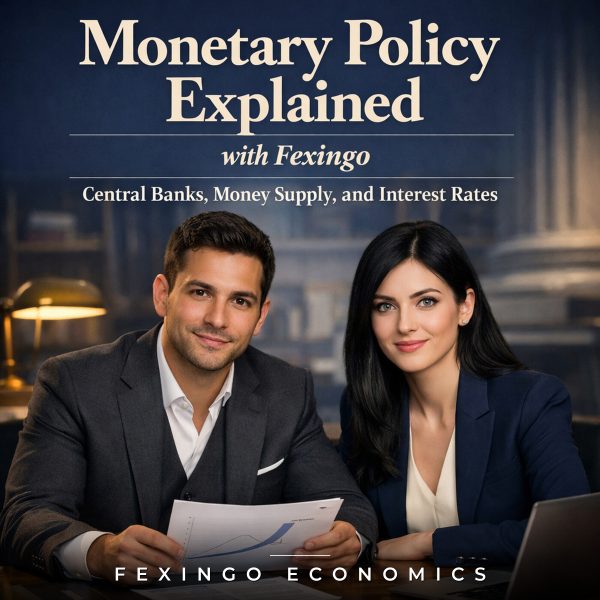
Monetary Policy Explained with Fexingo: Central Banks, Money Supply, and Interest Rates
- Épisodes
- 245
- Parution
- quotidienne
- Dernier épisode
- 15 Nov 2026
À propos du podcast
Lucas and Luna examine how central banks shape the economy through money supply and interest rates. Each episode dissects a specific policy move — a rate hike by the Federal Reserve, a quantitative easing program by the ECB, or a reserve requirement change by the People's Bank of China — and traces its impact on inflation, employment, and financial markets. Lucas brings the macroeconomic framework, citing exact data points from recent central bank statements and academic research. Luna pushes for the real-world implications: what does a 25-basis-point increase mean for a small business owner in Ohio or a bond trader in London? Together, they strip away jargon to reveal the mechanics of monetary transmission. The show serves investors, economics students, and professionals who need to understand policy signals without the noise. No hot takes, no political spin — just a clear-eyed look at how decisions made in marble halls ripple through the global economy. Can a central bank really steer growth without causing a recession? Lucas and Luna don't claim to have the answer, but they give you the tools to decide for yourself. #MonetaryPolicy #CentralBanks #FederalReserve #ECB #InterestRates #MoneySupply #QuantitativeEasing #Inflation #Macroeconomics #Economics #BondMarket #YieldCurve #LiquidityTrap #TaylorRule #FOMC #Business #FexingoBusiness #BusinessPodcast Keep every episode free: buymeacoffee.com/fexingo
Participants
- LucasAnimation
- LunaCoanimation
Épisodes 245
Why Central Banks Fear The Zero Lower Bound
We dive into the zero lower bound and why central banks struggle when rates hit zero. Using the Bank of Japan's experience, we explore how negative rates failed to spark inflation and what that means for …
Notes de l’épisode
We dive into the zero lower bound and why central banks struggle when rates hit zero. Using the Bank of Japan's experience, we explore how negative rates failed to spark inflation and what that means for monetary policy today.
#FexingoBusiness #BusinessPodcast #MonetaryPolicy #CentralBanks #ZeroLowerBound #NegativeInterestRates #BankOfJapan #Abenomics #InflationTargeting #EconomicsExplained #InterestRates #LiquidityTrap #FinancialMarkets #GlobalEconomy #LucasAndLuna #FinanceNews #EconomicTheory #PolicyAnalysis
Why Central Banks Keep Money In The System
Central banks have stopped shrinking their balance sheets, but the reason is less about panic and more about a hidden plumbing problem called the excess reserves regime. We break down why holding onto trillions …
Notes de l’épisode
Central banks have stopped shrinking their balance sheets, but the reason is less about panic and more about a hidden plumbing problem called the excess reserves regime. We break down why holding onto trillions in bank deposits isn't a mistake, it's a feature. Using data from the Federal Reserve's recent policy shifts and the mechanics of the overnight repo market, we explain how too much liquidity can actually freeze credit markets. This episode reveals why keeping money trapped in reserve accounts protects the financial system from sudden shocks, and what that means for interest rates on your savings account right now.
#FexingoBusiness #BusinessPodcast #EconomicsExplained #MonetaryPolicy #FederalReserve #BankReserves #LiquidityTrap #RepoMarket #InterestRates #MoneySupply #CentralBanking #FinancialStability #MacroEconomics #BankingSystem #InflationData #TreasuryBonds #CreditMarkets #FinancialEngineering
Why Central Banks Let Inflation Run Hot
Most people think central banks are terrified of inflation, but the Bank of Japan and the Federal Reserve have quietly accepted higher price growth as a feature, not a bug. In this episode, Lucas and Luna …
Notes de l’épisode
Most people think central banks are terrified of inflation, but the Bank of Japan and the Federal Reserve have quietly accepted higher price growth as a feature, not a bug. In this episode, Lucas and Luna unpack why modern monetary policy is no longer about returning to zero percent inflation, but rather targeting a gentle drift toward two percent from below. We look at the specific mechanics of how central banks use forward guidance to manage expectations, why they tolerate overshooting during recovery phases, and what this means for your savings rate in November 2026. This is not a lecture on theory; it is a breakdown of the new normal in global finance.
#MonetaryPolicy #InflationTargeting #CentralBanks #BankOfJapan #FederalReserve #InterestRates #Economics #Finance #BusinessPodcast #FexingoBusiness #Macroeconomics #ConsumerPrices #YieldCurve #ForwardGuidance #Liquidity #EconomicGrowth #MarketStrategy #PersonalFinance
The Liquidity Trap That Never Happened
We dissect the Federal Reserve's unexpected liquidity injection in late 2025, when banks hoarded cash instead of lending it. Lucas and Luna explore why the money supply expanded but credit markets stayed …
Notes de l’épisode
We dissect the Federal Reserve's unexpected liquidity injection in late 2025, when banks hoarded cash instead of lending it. Lucas and Luna explore why the money supply expanded but credit markets stayed frozen, focusing on the specific mechanics of reserve accumulation and the failure of traditional transmission channels to stimulate small business borrowing.
#MonetaryPolicy #FederalReserve #LiquidityTrap #BankReserves #MoneySupply #CreditMarkets #InterestRates #CentralBanks #EconomicsExplained #FexingoBusiness #BusinessPodcast #FinancialStability #CommercialLending #ReserveBalances #MacroEconomics #FinanceNews #LucasAndLuna #EconomicPolicy
The Central Bank Balance Sheet Puzzle
We drill into the mechanics of quantitative tightening and why central banks are suddenly nervous about their own balance sheets. Lucas walks through the Federal Reserve’s recent decision to cap runoff speeds …
Notes de l’épisode
We drill into the mechanics of quantitative tightening and why central banks are suddenly nervous about their own balance sheets. Lucas walks through the Federal Reserve’s recent decision to cap runoff speeds, while Luna explores the liquidity risks facing regional banks and the shadow banking sector. We look at specific data points from the November 2026 economic calendar, examining how reserve levels have shifted and what they mean for overnight lending rates. This episode moves beyond abstract theory to examine the concrete plumbing of the financial system, explaining why a few trillion dollars in asset reduction can create sudden friction in money markets. You will learn exactly how the Fed manages its Treasury holdings and why the speed of balance sheet normalization matters more than most investors realize.
#MonetaryPolicy #CentralBanks #QuantitativeTightening #FederalReserve #MoneySupply #InterestRates #LiquidityRisk #BankingSystem #EconomicsExplained #FinanceNews #MarketAnalysis #TreasuryYields #FinancialStability #Macroeconomics #FexingoBusiness #BusinessPodcast #LucasAndLuna #InvestorEducation
How Central Banks Quietly Move Money
Most people think central banks control the economy by flipping a switch on interest rates, but the real levers are hidden in daily operations. We break down open market operations and standing facilities using …
Notes de l’épisode
Most people think central banks control the economy by flipping a switch on interest rates, but the real levers are hidden in daily operations. We break down open market operations and standing facilities using the Federal Reserve's recent $80 billion repo transactions as our anchor. Lucas and Luna explain how overnight lending keeps the financial plumbing from clogging, why banks hoard cash when uncertainty rises, and what this tells us about liquidity stress before it hits the headlines. This is the mechanics of monetary policy you won't find in a textbook.
#MonetaryPolicy #FederalReserve #OpenMarketOperations #RepoMarket #LiquidityManagement #CentralBanking #InterestRates #MoneySupply #FinancialStability #BankReserves #EconomicsExplained #FexingoBusiness #BusinessPodcast #Macroeconomics #FinanceEducation #CashFlow #BankingSystem #EconomicMechanics
How Central Banks Create Money From Thin Air
Lucas and Luna unpack the mechanics of modern money creation, focusing on how central banks like the Federal Reserve generate liquidity through open market operations rather than printing physical cash. They …
Notes de l’épisode
Lucas and Luna unpack the mechanics of modern money creation, focusing on how central banks like the Federal Reserve generate liquidity through open market operations rather than printing physical cash. They examine the specific role of bank reserves, the distinction between base money and broad money supply, and why the expansion of the balance sheet does not automatically translate to inflation. Using concrete examples from recent monetary policy shifts and historical data points, the hosts clarify a common misconception about where money actually comes from in the digital economy.
#MoneySupply #CentralBanking #MonetaryPolicy #FederalReserve #BankReserves #Liquidity #InflationMechanics #OpenMarketOperations #BaseMoney #BroadMoney #EconomicsExplained #FinanceEducation #InterestRates #FexingoBusiness #BusinessPodcast #LucasAndLuna #Macroeconomics #FinancialLiteracy
The Hidden Tax of Negative Interest Rates
Central banks like the European Central Bank and the Bank of Japan have experimented with negative interest rates to stimulate spending, but the results were mixed. This episode explores how charging commercial …
Notes de l’épisode
Central banks like the European Central Bank and the Bank of Japan have experimented with negative interest rates to stimulate spending, but the results were mixed. This episode explores how charging commercial banks for holding excess reserves created unintended consequences, including a surge in cash hoarding by corporations and distortions in bond markets. We look at specific data from the Eurozone and Japan to understand why this policy tool often backfired on savers and borrowers alike.
#NegativeInterestRates #MonetaryPolicy #ECB #BankOfJapan #CentralBanks #FexingoBusiness #BusinessPodcast #EconomicsExplained #FinancialMarkets #CashHoarding #YieldCurve #InflationTargeting #CommercialBanks #ReserveRequirements #EurozoneEconomy #JapaneseEconomy #InterestRateRisk #FexingoEconomics
The Real Cost of Central Bank Balance Sheets
Central banks have expanded their balance sheets to unprecedented levels, but the accounting mechanics behind those assets are often misunderstood. Lucas and Luna dissect how the Federal Reserve’s holdings of …
Notes de l’épisode
Central banks have expanded their balance sheets to unprecedented levels, but the accounting mechanics behind those assets are often misunderstood. Lucas and Luna dissect how the Federal Reserve’s holdings of Treasury securities and mortgage-backed bonds create a unique profit-and-loss dynamic that differs sharply from traditional banking. They explore why central bank income is not revenue in the conventional sense, how remittance structures work when interest expenses exceed earnings, and what this means for fiscal sustainability as we navigate the November 2026 economic landscape. This episode moves beyond the broad strokes of monetary policy to examine the specific ledger entries that determine whether a central bank sends money back to the treasury or runs a deficit on its own books.
#FexingoBusiness #BusinessPodcast #MonetaryPolicy #FederalReserve #CentralBanking #BalanceSheet #InterestRates #TreasurySecurities #MortgageBackedBonds #EconomicsExplained #FinancialMarkets #InflationHedge #QuantitativeEasing #FiscalDeficit #BankReserves #LiquidityManagement #EconomicAnalysis #LucasAndLuna
How Central Banks Target Interest Rates
We explore the mechanics of how central banks actually steer interest rates in modern economies. Lucas and Luna break down the floor system, reserve requirements, and the subtle shifts in monetary policy …
Notes de l’épisode
We explore the mechanics of how central banks actually steer interest rates in modern economies. Lucas and Luna break down the floor system, reserve requirements, and the subtle shifts in monetary policy implementation. With today's date being November 06, 2026, we examine how the Federal Reserve and other major central banks maintain control over short-term rates without relying on scarce reserves. This episode provides a clear understanding of the tools that keep the economy stable and inflation in check.
#MonetaryPolicy #CentralBanks #InterestRates #FederalReserve #Economics #Finance #MoneySupply #Inflation #FexingoBusiness #BusinessPodcast #LucasAndLuna #BankingSystem #Reserves #FloorSystem #EconomicStability #FinancialMarkets #PolicyImplementation #Macroeconomics
The Yield Curve Inversion Mystery
Lucas and Luna unpack why the yield curve has been inverted for so long in late 2026, challenging the standard recession forecast. They examine the structural changes in Treasury issuance, the role of foreign …
Notes de l’épisode
Lucas and Luna unpack why the yield curve has been inverted for so long in late 2026, challenging the standard recession forecast. They examine the structural changes in Treasury issuance, the role of foreign central banks holding US debt, and how quantitative tightening is reshaping the relationship between short-term policy rates and long-term borrowing costs. This episode provides a concrete look at how market mechanics are decoupling from traditional recession signals.
#FexingoBusiness #BusinessPodcast #Economics #FinanceNews #YieldCurve #TreasuryBonds #FederalReserve #InterestRates #MonetaryPolicy #RecessionForecast #QuantitativeTightening #BondMarket #InflationData #GlobalMarkets #Macroeconomics #InvestmentStrategy #CentralBanking #FinancialLiteracy
The Real Cost of Central Bank Balance Sheets
We explore the hidden economics of central bank balance sheets, focusing on how the Federal Reserve manages its massive portfolio of Treasury bonds and mortgage-backed securities. With interest rates shifting …
Notes de l’épisode
We explore the hidden economics of central bank balance sheets, focusing on how the Federal Reserve manages its massive portfolio of Treasury bonds and mortgage-backed securities. With interest rates shifting in November 2026, the cost of holding these assets has become a critical variable in monetary policy. Lucas and Luna break down why the size of the balance sheet matters less than the composition of liabilities, and how reserve balances act as the new operating framework for liquidity. You will learn how the Fed earns money from its holdings, what happens when those earnings fall short of operational costs, and why the shift from a corridor to a floor system changed everything about how money moves through the banking system.
#FexingoBusiness #BusinessPodcast #MonetaryPolicy #FederalReserve #CentralBanks #MoneySupply #InterestRates #Economics #BalanceSheet #Liquidity #Reserves #TreasuryBonds #MortgageBackedSecurities #QuantitativeEasing #QuantitativeTightening #BankingSystem #FinancialStability #Macroeconomics
Central Banks And The Cost Of Holding Reserves
We drill into the often-overlooked mechanics of Interest on Reserve Balances, or IORB. With the Federal Reserve holding trillions in excess reserves, the rate it pays banks is no longer just a policy tool but a …
Notes de l’épisode
We drill into the often-overlooked mechanics of Interest on Reserve Balances, or IORB. With the Federal Reserve holding trillions in excess reserves, the rate it pays banks is no longer just a policy tool but a massive fiscal transfer. Lucas and Luna unpack how this mechanism shapes bank behavior, influences broader credit markets, and creates unintended incentives for liquidity hoarding. We look at the specific trade-offs central banks face when they prioritize financial stability over pure inflation control, using recent balance sheet data to show why the cost of doing business has shifted fundamentally since the post-2008 era.
#MonetaryPolicy #FederalReserve #InterestOnReserves #IORB #BankingSector #LiquidityManagement #FinancialStability #EconomicsPodcast #CentralBanking #FexingoBusiness #BusinessPodcast #MacroEconomics #MoneySupply #ReserveBalances #BankProfitability #CreditMarkets #LunaAndLucas #EconomicAnalysis
The Mechanics of Central Bank Balance Sheet Reduction
Lucas and Luna drill into the specific mechanics of quantitative tightening, focusing on how the Federal Reserve manages its balance sheet runoff without disrupting market liquidity. They examine the cap …
Notes de l’épisode
Lucas and Luna drill into the specific mechanics of quantitative tightening, focusing on how the Federal Reserve manages its balance sheet runoff without disrupting market liquidity. They examine the cap strategy used for Treasury holdings versus mortgage-backed securities, the role of reverse repurchase agreements as a shock absorber, and why the Fed’s approach differs from past crises. The conversation anchors to the current economic landscape in November 2026, exploring whether the passive reduction of assets can continue smoothly or if active interventions will be required as reserves dwindle.
#QuantitativeTightening #FederalReservePolicy #BalanceSheetRunoff #MonetaryEconomics #InterestRateHikes #TreasuryMarkets #MortgageBackedSecurities #LiquidityManagement #ReverseRepoFacility #BankReserves #FinancialStability #MacroeconomicOutlook #FexingoBusiness #BusinessPodcast #EconomicsExplained #CentralBanking #MoneySupply #MarketStructure
How Central Banks Use Floor Systems
The Federal Reserve shifted to a floor system in 2008, paying interest on reserves to control short-term rates without constant open market operations. Lucas and Luna explore why this structural change matters …
Notes de l’épisode
The Federal Reserve shifted to a floor system in 2008, paying interest on reserves to control short-term rates without constant open market operations. Lucas and Luna explore why this structural change matters for monetary policy today. They examine how the New York Fed manages liquidity via standing facilities rather than daily auctions. The discussion covers the mechanics of the Interest on Reserve Balances rate and its role in keeping the federal funds rate near the target range. Listeners will learn how central banks anchor rates by offering a risk-free alternative to lending in the private sector. This episode focuses on the operational shift from scarcity-based to abundance-based monetary policy frameworks.
#MonetaryPolicy #FederalReserve #InterestOnReserves #FloorSystem #LiquidityManagement #CentralBanking #EconomicsExplained #FinanceEducation #Macroeconomics #BankingRegulation #OpenMarketOperations #StandingFacilities #LucasAndLuna #FexingoBusiness #BusinessPodcast #FinancialMarkets #USFed #MoneySupply
The Central Bank Balance Sheet Puzzle
Lucas and Luna explore why central bank balance sheets have become the primary driver of monetary policy rather than just interest rates. They examine how quantitative easing transformed into a structural …
Notes de l’épisode
Lucas and Luna explore why central bank balance sheets have become the primary driver of monetary policy rather than just interest rates. They examine how quantitative easing transformed into a structural feature of modern finance, focusing on the Federal Reserve's post-2020 expansion and its implications for liquidity management. The discussion highlights specific mechanics like reverse repurchase agreements and reserve balances, offering listeners a concrete understanding of how money supply is managed today. This episode moves beyond traditional rate-cutting narratives to explain the hidden leverage in the banking system.
#MonetaryPolicy #CentralBanks #FederalReserve #BalanceSheet #QuantitativeEasing #InterestRates #MoneySupply #BankingSystem #LiquidityManagement #ReverseRepo #ReserveBalances #Inflation #EconomicsExplained #FinanceNews #BusinessPodcast #FexingoBusiness #EconomicAnalysis #MarketStructure
How Central Banks Set Interest Rates
Lucas and Luna dissect the mechanical reality of how central banks actually set interest rates in a modern banking system. Moving past the textbook IS-LM model, they explore the operational shift from …
Notes de l’épisode
Lucas and Luna dissect the mechanical reality of how central banks actually set interest rates in a modern banking system. Moving past the textbook IS-LM model, they explore the operational shift from scarce-reserve to abundant-reserve regimes, focusing on the floor rate mechanism and the role of overnight reverse repos. Using the Federal Reserve's recent policy framework as an anchor, the hosts explain why controlling the money supply through open market operations is no longer the primary tool for hitting inflation targets. Instead, they examine how paying interest on reserves creates a hard floor for short-term rates, ensuring that market participants never lend below the central bank's target. This episode clarifies the distinction between the policy rate and the effective federal funds rate, offering listeners a concrete understanding of the plumbing behind monetary policy.
#MonetaryPolicy #CentralBanks #FederalReserve #InterestRates #EconomicsExplained #BankingSystem #MoneySupply #FloorRate #ReserveBalances #LiquidityManagement #FinancialMarkets #InflationTargets #FexingoBusiness #BusinessPodcast #FinanceEducation #MacroEconomics #BankingMechanics #PolicyFramework
The Hidden Cost of Central Bank Balance Sheets
Most listeners know central banks set interest rates, but fewer understand how the size of their balance sheets actually dictates market liquidity. In this episode, Lucas and Luna unpack the mechanics of …
Notes de l’épisode
Most listeners know central banks set interest rates, but fewer understand how the size of their balance sheets actually dictates market liquidity. In this episode, Lucas and Luna unpack the mechanics of quantitative tightening and the unspoken friction it creates for corporate borrowing. We look at a specific case from late 2025 where a major European bank faced a liquidity crunch not because of bad loans, but because of shrinking central bank reserves. You will learn why the Fed's $8 trillion portfolio matters more to your local business loan than the federal funds rate itself, and how the shift from easy money to constrained reserves is reshaping risk premiums across global markets today in October 2026.
#CentralBanking #QuantitativeTightening #BalanceSheetAnalysis #MonetaryPolicy #LiquidityCrunch #FederalReserve #ECB #CorporateBondMarket #BankReserves #InterestRateRisk #FinancialStability #MacroEconomics #FexingoBusiness #BusinessPodcast #EconomicsExplained #FinanceNews #MarketStructure #CreditCycles
How Central Banks Manage Liquidity Traps
We drill into the mechanics of quantitative easing and how central banks inject liquidity without triggering hyperinflation. Lucas breaks down the Federal Reserve's balance sheet expansion post-2020, while Luna …
Notes de l’épisode
We drill into the mechanics of quantitative easing and how central banks inject liquidity without triggering hyperinflation. Lucas breaks down the Federal Reserve's balance sheet expansion post-2020, while Luna examines the unintended consequences for commercial bank lending behavior. We look at specific data points from the October 2026 quarter to understand why money supply growth has decoupled from traditional velocity metrics. This is not about printing money in the literal sense, but about altering the cost and availability of credit for businesses and households.
#QuantitativeEasing #CentralBanking #LiquidityTraps #MonetaryPolicy #FederalReserve #MoneySupply #InterestRates #InflationDynamics #BankReserves #CreditCreation #EconomicVelocity #BalanceSheetExpansion #FexingoBusiness #BusinessPodcast #FinanceExplained #EconomicsDaily #LucasAndLuna #MarketAnalysis
The Central Bank Balance Sheet Pivot
Most listeners think central banking is just about the interest rate setting. But on October twenty-seventh, two thousand and twenty-six, the real story is happening on the balance sheet. Lucas and Luna break …
Notes de l’épisode
Most listeners think central banking is just about the interest rate setting. But on October twenty-seventh, two thousand and twenty-six, the real story is happening on the balance sheet. Lucas and Luna break down how the Federal Reserve’s decision to stop expanding its holdings changes the cost of capital for everyone from mortgage borrowers to tech startups. We look at the specific mechanics of quantitative tightening versus rate cuts, why the Fed prefers shrinking assets over hiking rates in a sticky inflation environment, and what that means for your portfolio right now. This isn’t about abstract theory; it’s about the plumbing of the financial system and why the quiet work on the balance sheet matters more than the press conference.
#FexingoBusiness #BusinessPodcast #CentralBanking #FederalReserve #QuantitativeTightening #BalanceSheet #InterestRates #MonetaryPolicy #Inflation #Economics #FinanceNews #MoneySupply #TreasuryBonds #MortgageRates #Liquidity #FinancialMarkets #LucasAndLuna #DailyEconomics
How Central Banks Target Interest Rates
We dissect the Federal Reserve's modern operating framework, focusing on why the Fed Funds Rate is no longer a scarce resource but a corridor managed by abundant reserves. We look at the specific mechanics of …
Notes de l’épisode
We dissect the Federal Reserve's modern operating framework, focusing on why the Fed Funds Rate is no longer a scarce resource but a corridor managed by abundant reserves. We look at the specific mechanics of the Overnight Reverse Repurchase Agreement facility and how it acts as a hard floor for short-term rates. This episode explains why the era of quantity-based control ended in 2008 and how today's policy relies on price signals rather than balance sheet contraction. We examine the role of the Discount Window as a penalty rate and discuss why the current system requires trillions in reserves to function smoothly without breaking down during liquidity stress.
#FexingoBusiness #BusinessPodcast #Economics #FederalReserve #MonetaryPolicy #InterestRates #FedFundsRate #OvernightRRP #BankReserves #LiquidityManagement #CentralBanking #FinancialMarkets #RepoMarket #DiscountWindow #InflationControl #MoneySupply #EconomicPolicy #LucasAndLuna
How Central Banks Manage Financial Stability
Central banks have evolved from mere inflation fighters to guardians of systemic stability. In this episode, Lucas and Luna explore the controversial but necessary tools used to prevent financial collapses …
Notes de l’épisode
Central banks have evolved from mere inflation fighters to guardians of systemic stability. In this episode, Lucas and Luna explore the controversial but necessary tools used to prevent financial collapses, focusing on the Federal Reserve's use of discount window lending and stress testing frameworks like CCAR. We examine how these mechanisms act as a shock absorber for the economy, using specific examples from recent market volatility to show why liquidity is often more critical than solvency in a crisis.
#MonetaryPolicy #FinancialStability #FederalReserve #DiscountWindow #LiquidityCrisis #BankingRegulation #CCAR #SystemicRisk #FexingoBusiness #BusinessPodcast #EconomicsExplained #CentralBanking #StressTesting #BankReserves #CreditMarkets #MacroEconomics #FinancialSafetyNet #LucasAndLuna
How Central Banks Manage Financial Stability
Central banks have evolved from inflation hunters to guardians of financial stability. This episode explores how the Federal Reserve and other major institutions use tools like liquidity facilities, capital …
Notes de l’épisode
Central banks have evolved from inflation hunters to guardians of financial stability. This episode explores how the Federal Reserve and other major institutions use tools like liquidity facilities, capital requirements, and macroprudential oversight to prevent systemic crises. We look at the shift from pure price targeting to a broader mandate that includes monitoring credit bubbles and shadow banking risks. With Lucas and Luna breaking down specific mechanisms like the discount window and stress testing protocols, listeners will understand why central bankers now worry as much about bank runs as they do about consumer prices. Discover the hidden architecture that keeps the global economy from tipping during periods of high uncertainty.
#MonetaryPolicy #FinancialStability #CentralBanking #FederalReserve #LiquidityFacilities #MacroprudentialPolicy #ShadowBanking #SystemicRisk #CapitalRequirements #StressTesting #EconomicsExplained #FinanceNews #BankingRegulation #CreditMarkets #FexingoBusiness #BusinessPodcast #LucasAndLuna #EconomicAnalysis
The Real Cost of Zero Interest on Reserves
In this episode of Fexingo Business, Lucas and Luna unpack the often-overlooked mechanics of how central banks manage their balance sheets when interest rates are low. They focus on a specific structural shift …
Notes de l’épisode
In this episode of Fexingo Business, Lucas and Luna unpack the often-overlooked mechanics of how central banks manage their balance sheets when interest rates are low. They focus on a specific structural shift: why paying interest on reserves is not just a technical tool but a fundamental change in how money flows through the economy. With the market environment anchored to October 23, 2026, they explore how this policy affects bank lending behavior, the shadow banking system, and ultimately, the cost of capital for everyday businesses. You will learn about the precise mechanism that turns excess reserves from idle cash into active market leverage, and why some economists argue it creates a hidden subsidy for large financial institutions.
#MonetaryPolicy #InterestOnReserves #CentralBanking #FexingoBusiness #BusinessPodcast #EconomicsExplained #FederalReserve #BankLending #MoneySupply #FinancialMarkets #MacroEconomics #BankingSector #LiquidityManagement #CorporateFinance #InvestmentStrategy #EconomicPolicy #BankBalanceSheets #FinancialLiteracy
How Central Banks Set the Floor Rate
We explore why central banks no longer fight to control the exact quantity of money, but instead focus on setting a strict floor for interest rates. Using the Federal Reserve’s Overnight Reverse Repurchase …
Notes de l’épisode
We explore why central banks no longer fight to control the exact quantity of money, but instead focus on setting a strict floor for interest rates. Using the Federal Reserve’s Overnight Reverse Repurchase Agreement facility as our anchor, we explain how this tool creates a risk-free return benchmark that stabilizes short-term lending across the financial system. Lucas and Luna break down the mechanics of the reverse repo market, why it became essential after the 2019 liquidity stress, and how it allows policymakers to keep rates in a target range without constantly buying or selling assets. You will learn why having excess reserves changes everything about monetary transmission.
#MonetaryPolicy #CentralBanks #InterestRates #FederalReserve #ReverseRepo #MoneySupply #LiquidityManagement #FloorSystem #OvernightRates #BankingReserves #FinancialMarkets #EconomicsExplained #FinanceNews #InvestmentStrategy #Macroeconomics #FexingoBusiness #BusinessPodcast #EconomicAnalysis
Why Central Banks Let Inflation Run Hot
In this episode of Fexingo Business, Lucas and Luna explore the deliberate strategy behind modern central bank policy: allowing inflation to run slightly above target. We examine how central banks, including …
Notes de l’épisode
In this episode of Fexingo Business, Lucas and Luna explore the deliberate strategy behind modern central bank policy: allowing inflation to run slightly above target. We examine how central banks, including the Federal Reserve and the European Central Bank, have shifted from strict symmetric targeting to an asymmetric approach that tolerates overshoots. Using the post-2021 inflation surge as a case study, we break down why chasing perfect price stability can stifle economic growth and employment. The hosts discuss the trade-offs between immediate price control and long-term economic health, highlighting specific data points on core PCE and labor market resilience. This deep dive into monetary policy evolution helps listeners understand why their grocery bills might stay elevated longer than expected, and why central bankers aren't panicking about it.
#MonetaryPolicy #CentralBanks #InflationTargeting #FederalReserve #EuropeanCentralBank #EconomicGrowth #InterestRates #CorePCE #LaborMarket #FexingoBusiness #BusinessPodcast #FinanceExplained #EconomicsDaily #MoneySupply #FOMC #PriceStability #AsymmetricTargeting #LucasAndLuna
How Central Banks Signal Policy Intent
Central banks don't just set interest rates; they manage market expectations through forward guidance and balance sheet signaling. In this episode, we examine how the Federal Reserve and European Central Bank …
Notes de l’épisode
Central banks don't just set interest rates; they manage market expectations through forward guidance and balance sheet signaling. In this episode, we examine how the Federal Reserve and European Central Bank use verbal commitments to steer long-term yields without moving short-term policy rates. We look at the mechanics of yield curve control, the psychological weight of central bank language, and why markets often react more to what a central banker says than what they do. Lucas and Luna break down the difference between open and closed-ended guidance, using historical examples from the post-2008 era and the recent inflation cycles. If you want to understand why bond markets twitch on a press conference quote, this is your deep dive into the art of monetary communication.
#FexingoBusiness #BusinessPodcast #Economics #MonetaryPolicy #FederalReserve #ECB #InterestRates #YieldCurve #ForwardGuidance #CentralBanking #InflationTargeting #MarketExpectations #BondMarkets #Liquidity #FinancialMarkets #LucasAndLuna #FinanceNews #Macroeconomics
How Central Banks Lose Control Of Money Supply
Episode 218 examines the structural shift in monetary policy where central banks, particularly the Federal Reserve, have moved from controlling interest rates by managing the quantity of reserves to setting …
Notes de l’épisode
Episode 218 examines the structural shift in monetary policy where central banks, particularly the Federal Reserve, have moved from controlling interest rates by managing the quantity of reserves to setting rates while accepting whatever level of reserves the banking system demands. Lucas and Luna explore how this reversal happened post-2008, why the old money supply curves no longer apply, and what it means for inflation dynamics in October 2026. We look at the specific mechanics of the ample reserves regime, the role of the Overnight Reverse Repo facility, and why traditional monetarist metrics like M2 growth have become poor predictors of economic activity. This is a deep dive into the plumbing of modern finance, focusing on the disconnect between balance sheet expansion and consumer price index movements.
#MonetaryPolicy #FederalReserve #CentralBanks #MoneySupply #InterestRates #AmpleReserves #QuantitativeEasing #BankingSystem #Liquidity #Inflation #FOMC #FinancialPlumbing #EconomicsExplained #FinancePodcast #LucasAndLuna #FexingoBusiness #BusinessPodcast #EconomicTrends
How The Federal Reserve Actually Prints Money
Lucas and Luna dissect the mechanics of open market operations and reverse repos. We break down why the Fed’s balance sheet ballooned past eight trillion dollars during the pandemic, how it shrank through …
Notes de l’épisode
Lucas and Luna dissect the mechanics of open market operations and reverse repos. We break down why the Fed’s balance sheet ballooned past eight trillion dollars during the pandemic, how it shrank through quantitative tightening, and what the current reserve levels mean for short-term rates in late 2026. A concrete look at the plumbing of modern monetary policy.
#FederalReserve #MonetaryPolicy #OpenMarketOperations #QuantitativeEasing #QuantitativeTightening #ReverseRepo #BankReserves #InterestOnReserves #TreasuryBonds #M2MoneySupply #LiquidityPools #CentralBanking #FinanceExplained #EconomicsDaily #BusinessPodcast #FexingoBusiness #LucasAndLuna #MoneyPrinting
The Central Bank Balance Sheet Mystery
Lucas and Luna dissect the paradox of modern monetary policy: why central banks are simultaneously shrinking their balance sheets while global liquidity remains record-high. They examine the disconnect between …
Notes de l’épisode
Lucas and Luna dissect the paradox of modern monetary policy: why central banks are simultaneously shrinking their balance sheets while global liquidity remains record-high. They examine the disconnect between official reserve metrics and the actual cost of capital for corporations, using the Federal Reserve's ongoing quantitative tightening as a case study. The conversation reveals how shadow banking and money market funds have absorbed the shock, creating a hidden layer of liquidity that traditional models miss. Listeners will learn exactly how 'tightening' works when the money supply doesn't shrink in the way textbooks predict.
#MonetaryPolicy #FederalReserve #QuantitativeTightening #CentralBanks #LiquidityTraps #BalanceSheets #MoneySupply #ShadowBanking #InterestRates #EconomicsExplained #FinanceNews #InvestmentStrategy #MacroEconomics #BankReserves #MarketAnalysis #FexingoBusiness #BusinessPodcast #LucasAndLuna
Voici les 40 derniers épisodes sur 245. Les épisodes plus anciens se trouvent dans le flux du podcast.
Podcasts similaires
Plus de podcasts : Affaires






C’est votre podcast ?
Confirmez-le avec une entrée dans votre flux : vous recevez ici un code, vous l’ajoutez comme podcast:txt dans le canal de votre flux, et nous le vérifions. Votre podcast apparaît ensuite comme « vérifié » sur SoundNode.