

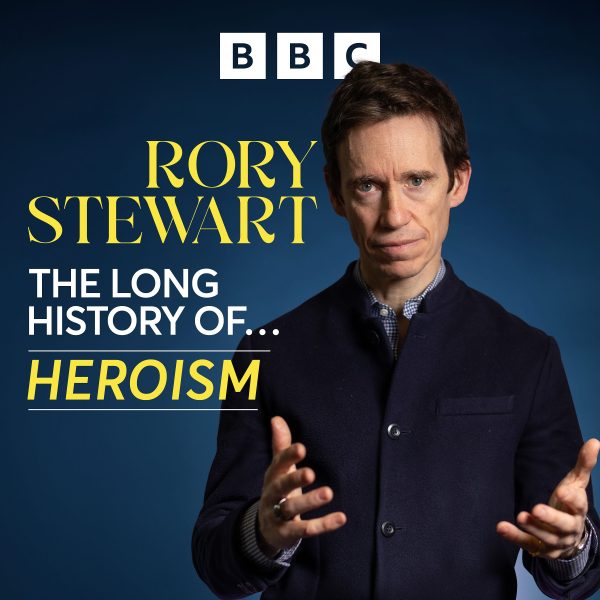
Rory Stewart: The Long History of…
- Épisodes
- 16
- Format
- Série – à écouter depuis le début
- Dernier épisode
- 1 Sep 2025
À propos du podcast
Rory Stewart with a radical take on the concepts that shape our lives.
Épisodes 16
Heroism: 5. New Heroes
Rory Stewart explores ideas of what it means to be a hero from the ancient world to the present day. How have these ideas changed? Why do heroes matter? Who are the heroes we need today?With the help of leading …
Notes de l’épisode
Rory Stewart explores ideas of what it means to be a hero from the ancient world to the present day. How have these ideas changed? Why do heroes matter? Who are the heroes we need today?
With the help of leading historians, psychologists, philosophers and theologians, he examines how heroism is continually questioned and re-invented in every age, and how these contrasting visions of the hero might speak to us in our own time. What does it mean for our moral life? How should we perceive and pursue human excellence?
In this episode, Rory explores ideas of the hero today.
Presenter: Rory Stewart Producer and sound design: Dan Tierney Editor: Tim Pemberton Commissioning Editor: Dan Clarke
Heroism: 4. Poster Heroes
Rory Stewart explores ideas of what it means to be a hero from the ancient world to the present day. How have these ideas changed? Why do heroes matter? Who are the heroes we need today?With the help of leading …
Notes de l’épisode
Rory Stewart explores ideas of what it means to be a hero from the ancient world to the present day. How have these ideas changed? Why do heroes matter? Who are the heroes we need today?
With the help of leading historians, psychologists, philosophers and theologians, he examines how heroism is continually questioned and re-invented in every age, and how these contrasting visions of the hero might speak to us in our own time. What does it mean for our moral life? How should we perceive and pursue human excellence?
In this episode, Rory explores ideas of the hero from the middle of the 20th century.
Presenter: Rory Stewart Producer and sound design: Dan Tierney Editor: Tim Pemberton Commissioning Editor: Dan Clarke
Heroism: 3. The Death of the Hero
Rory Stewart explores ideas of what it means to be a hero from the ancient world to the present day. How have these ideas changed? Why do heroes matter? Who are the heroes we need today?With the help of leading …
Notes de l’épisode
Rory Stewart explores ideas of what it means to be a hero from the ancient world to the present day. How have these ideas changed? Why do heroes matter? Who are the heroes we need today?
With the help of leading historians, psychologists, philosophers and theologians, he examines how heroism is continually questioned and re-invented in every age, and how these contrasting visions of the hero might speak to us in our own time. What does it mean for our moral life? How should we perceive and pursue human excellence?
In this episode, Rory explores ideas of the hero in the early 20th century.
Presenter: Rory Stewart Producer and sound design: Dan Tierney Editor: Tim Pemberton Commissioning Editor: Dan Clarke
Heroism: 2. Revolution and Pragmatism
Rory Stewart explores ideas of what it means to be a hero from the ancient world to the present day. How have these ideas changed? Why do heroes matter? Who are the heroes we need today?With the help of leading …
Notes de l’épisode
Rory Stewart explores ideas of what it means to be a hero from the ancient world to the present day. How have these ideas changed? Why do heroes matter? Who are the heroes we need today?
With the help of leading historians, psychologists, philosophers and theologians, he examines how heroism is continually questioned and re-invented in every age, and how these contrasting visions of the hero might speak to us in our own time. What does it mean for our moral life? How should we perceive and pursue human excellence?
In this episode, Rory explores ideas of the hero in the 18th and 19th centuries.
Presenter: Rory Stewart Producer and sound design: Dan Tierney Editor: Tim Pemberton Commissioning Editor: Dan Clarke
Heroism: 1. The Classical Hero
Rory Stewart explores ideas of what it means to be a hero from the ancient world to the present day. How have these ideas changed? Why do heroes matter? Who are the heroes we need today?With the help of leading …
Notes de l’épisode
Rory Stewart explores ideas of what it means to be a hero from the ancient world to the present day. How have these ideas changed? Why do heroes matter? Who are the heroes we need today?
With the help of leading historians, psychologists, philosophers and theologians, he examines how heroism is continually questioned and re-invented in every age, and how these contrasting visions of the hero might speak to us in our own time. What does it mean for our moral life? How should we perceive and pursue human excellence?
In this episode, Rory explores ideas of the hero from the classical world to the middle ages.
Presenter: Rory Stewart Producer and sound design: Dan Tierney Editor: Tim Pemberton Commissioning Editor: Dan Clarke
Heroism: Trailer
Rory Stewart explores the changing role of the hero throughout history.Listen first on BBC Sounds.
Ignorance: 6. Wisdom
We prize knowledge, and rightly so. We think of ignorance as a bad thing. But ignorance is inseparable from what we know.Knowledge can distract us, mislead us and endanger us. While ignorance is often the most …
Notes de l’épisode
We prize knowledge, and rightly so. We think of ignorance as a bad thing. But ignorance is inseparable from what we know.
Knowledge can distract us, mislead us and endanger us. While ignorance is often the most fundamental insight about our human condition. Ignorance is not simply the opposite of knowledge, but a positive force with its own momentum that gives meaning to our lives. It drives scientific discovery, fosters creativity and can be psychologically helpful.
That’s why Rory Stewart wants to make a radical case for embracing ignorance. He wants to encourage a way of knowing in which knowledge and ignorance exist in a relationship with each other.
With a cast of global thinkers, drawing on Western and Eastern ideas from the ancient world to the present day, Rory explores how a greater awareness and appreciation of ignorance can help us become more clear-thinking, humble, empathetic and wise.
Writer and presenter: Rory Stewart Producer: Dan Tierney Mixing: Tony Churnside Editor: Tim Pemberton Commissioning Editor: Dan Clarke
Readings by Rhiannon Neads
Contributions across the series from:
Alex Edmans - Professor of Finance at London Business School. Ani Rinchen Khandro - a life ordained nun in the Kagyu tradition of Tibetan Buddhism. Annette Martin - Assistant Professor in Philosophy at the University of Illinois, Chicago. Antony Gormley - sculptor. Carlo Rovelli - Theoretical physicist and Professor in the Department of Physics at Aix-Marseille University. Daniel DeNicola - Professor Emeritus of Philosophy at Gettysburg College in Pennsylvania – and author of ‘Understanding Ignorance: The Surprising Impact of What We Don't Know’ (2018). Daniel Whiteson - Professor of Physics at The University of California, Irvine. Derek Black - Author of ‘The Klansman’s Son: My Journey from White Nationalism to Antiracism’ (2024). Edith Hall - Professor in the Department of Classics and Ancient History, at Durham University. Fabienne Peter - Professor of Philosophy at the University of Warwick. Felix Martin - economist and fund manager. Iain McGilchrist - Psychiatrist, neuroscience researcher, philosopher and literary scholar. James C. Scott - Anthropologist and Sterling Professor Emeritus in Political Science at Yale University. Jay Owens - Author of ‘Dust: The Modern World in a Trillion Particles’ (2023). John Lloyd - Television and radio comedy producer and writer. Jonathan Evans, Baron Evans of Weardale - Former Director General of MI5. Karen Douglas - Professor of social psychology at the University of Kent. Mark Lilla - professor of humanities at Columbia University, New York City and author of ‘Ignorance and Bliss: On Wanting Not to Know’ (2024). Martin Palmer - Theologian, sinologist and translator of Daoist and Confucian texts. Mary Beard - Professor of Classics at the University of Cambridge. Michael Ignatieff - Professor in the Department of History at Central European University in Budapest and former Leader of the Liberal Party of Canada. Neil Hannon - singer-songwriter and frontman of The Divine Comedy. Nicholas Gruen - policy economist and social commentator. Rik Peels - Professor of Philosophy, Theology and Religion at Vrije Universiteit Amsterdam and author of ‘Ignorance: A Philosophical Study (2023)’. Robert Beckford - Theologian and Professor of Climate and Social Justice at the University of Winchester. Rowan Williams - Theologian and former Archbishop of Canterbury. Sandrine Parageau - Professor of Early Modern British History at Sorbonne University and author of ‘The Paradoxes of Ignorance in Early Modern England and France’ (2023). Stuart Firestein - Professor of Biological Sciences at Columbia University, New York City and author of ‘Ignorance: How It Drives Science’ (2012). Tom Forth - data scientist, Head of Data at ‘Open Innovations’ and co-founder of ‘The Data City’.
Ignorance: 5. The Psychology of Ignorance
We prize knowledge, and rightly so. We think of ignorance as a bad thing. But ignorance is inseparable from what we know.Knowledge can distract us, mislead us and endanger us. While ignorance is often the most …
Notes de l’épisode
We prize knowledge, and rightly so. We think of ignorance as a bad thing. But ignorance is inseparable from what we know.
Knowledge can distract us, mislead us and endanger us. While ignorance is often the most fundamental insight about our human condition. Ignorance is not simply the opposite of knowledge, but a positive force with its own momentum that gives meaning to our lives. It drives scientific discovery, fosters creativity and can be psychologically helpful.
That’s why Rory Stewart wants to make a radical case for embracing ignorance. He wants to encourage a way of knowing in which knowledge and ignorance exist in a relationship with each other.
With a cast of global thinkers, drawing on Western and Eastern ideas from the ancient world to the present day, Rory explores how a greater awareness and appreciation of ignorance can help us become more clear-thinking, humble, empathetic and wise.
Writer and presenter: Rory Stewart Producer: Dan Tierney Mixing: Tony Churnside Editor: Tim Pemberton Commissioning Editor: Dan Clarke
Readings by Rhiannon Neads
Contributions across the series from:
Alex Edmans - Professor of Finance at London Business School. Ani Rinchen Khandro - a life ordained nun in the Kagyu tradition of Tibetan Buddhism. Annette Martin - Assistant Professor in Philosophy at the University of Illinois, Chicago. Antony Gormley - sculptor. Carlo Rovelli - Theoretical physicist and Professor in the Department of Physics at Aix-Marseille University. Daniel DeNicola - Professor Emeritus of Philosophy at Gettysburg College in Pennsylvania – and author of ‘Understanding Ignorance: The Surprising Impact of What We Don't Know’ (2018). Daniel Whiteson - Professor of Physics at The University of California, Irvine. Derek Black - Author of ‘The Klansman’s Son: My Journey from White Nationalism to Antiracism’ (2024). Edith Hall - Professor in the Department of Classics and Ancient History, at Durham University. Fabienne Peter - Professor of Philosophy at the University of Warwick. Felix Martin - economist and fund manager. Iain McGilchrist - Psychiatrist, neuroscience researcher, philosopher and literary scholar. James C. Scott - Anthropologist and Sterling Professor Emeritus in Political Science at Yale University. Jay Owens - Author of ‘Dust: The Modern World in a Trillion Particles’ (2023). John Lloyd - Television and radio comedy producer and writer. Jonathan Evans, Baron Evans of Weardale - Former Director General of MI5. Karen Douglas - Professor of social psychology at the University of Kent. Mark Lilla - professor of humanities at Columbia University, New York City and author of ‘Ignorance and Bliss: On Wanting Not to Know’ (2024). Martin Palmer - Theologian, sinologist and translator of Daoist and Confucian texts. Mary Beard - Professor of Classics at the University of Cambridge. Michael Ignatieff - Professor in the Department of History at Central European University in Budapest and former Leader of the Liberal Party of Canada. Neil Hannon - singer-songwriter and frontman of The Divine Comedy. Nicholas Gruen - policy economist and social commentator. Rik Peels - Professor of Philosophy, Theology and Religion at Vrije Universiteit Amsterdam and author of ‘Ignorance: A Philosophical Study (2023)’. Robert Beckford - Theologian and Professor of Climate and Social Justice at the University of Winchester. Rowan Williams - Theologian and former Archbishop of Canterbury. Sandrine Parageau - Professor of Early Modern British History at Sorbonne University and author of ‘The Paradoxes of Ignorance in Early Modern England and France’ (2023). Stuart Firestein - Professor of Biological Sciences at Columbia University, New York City and author of ‘Ignorance: How It Drives Science’ (2012). Tom Forth - data scientist, Head of Data at ‘Open Innovations’ and co-founder of ‘The Data City’.
Ignorance: 4. Ignorance in Politics
We prize knowledge, and rightly so. We think of ignorance as a bad thing. But ignorance is inseparable from what we know.Knowledge can distract us, mislead us and endanger us. While ignorance is often the most …
Notes de l’épisode
We prize knowledge, and rightly so. We think of ignorance as a bad thing. But ignorance is inseparable from what we know.
Knowledge can distract us, mislead us and endanger us. While ignorance is often the most fundamental insight about our human condition. Ignorance is not simply the opposite of knowledge, but a positive force with its own momentum that gives meaning to our lives. It drives scientific discovery, fosters creativity and can be psychologically helpful.
That’s why Rory Stewart wants to make a radical case for embracing ignorance. He wants to encourage a way of knowing in which knowledge and ignorance exist in a relationship with each other.
With a cast of global thinkers, drawing on Western and Eastern ideas from the ancient world to the present day, Rory explores how a greater awareness and appreciation of ignorance can help us become more clear-thinking, humble, empathetic and wise.
Writer and presenter: Rory Stewart Producer: Dan Tierney Mixing: Tony Churnside Editor: Tim Pemberton Commissioning Editor: Dan Clarke
Readings by Rhiannon Neads
Contributions across the series from:
Alex Edmans - Professor of Finance at London Business School. Ani Rinchen Khandro - a life ordained nun in the Kagyu tradition of Tibetan Buddhism. Annette Martin - Assistant Professor in Philosophy at the University of Illinois, Chicago. Antony Gormley - sculptor. Carlo Rovelli - Theoretical physicist and Professor in the Department of Physics at Aix-Marseille University. Daniel DeNicola - Professor Emeritus of Philosophy at Gettysburg College in Pennsylvania – and author of ‘Understanding Ignorance: The Surprising Impact of What We Don't Know’ (2018). Daniel Whiteson - Professor of Physics at The University of California, Irvine. Derek Black - Author of ‘The Klansman’s Son: My Journey from White Nationalism to Antiracism’ (2024). Edith Hall - Professor in the Department of Classics and Ancient History, at Durham University. Fabienne Peter - Professor of Philosophy at the University of Warwick. Felix Martin - economist and fund manager. Iain McGilchrist - Psychiatrist, neuroscience researcher, philosopher and literary scholar. James C. Scott - Anthropologist and Sterling Professor Emeritus in Political Science at Yale University. Jay Owens - Author of ‘Dust: The Modern World in a Trillion Particles’ (2023). John Lloyd - Television and radio comedy producer and writer. Jonathan Evans, Baron Evans of Weardale - Former Director General of MI5. Karen Douglas - Professor of social psychology at the University of Kent. Mark Lilla - professor of humanities at Columbia University, New York City and author of ‘Ignorance and Bliss: On Wanting Not to Know’ (2024). Martin Palmer - Theologian, sinologist and translator of Daoist and Confucian texts. Mary Beard - Professor of Classics at the University of Cambridge. Michael Ignatieff - Professor in the Department of History at Central European University in Budapest and former Leader of the Liberal Party of Canada. Neil Hannon - singer-songwriter and frontman of The Divine Comedy. Nicholas Gruen - policy economist and social commentator. Rik Peels - Professor of Philosophy, Theology and Religion at Vrije Universiteit Amsterdam and author of ‘Ignorance: A Philosophical Study (2023)’. Robert Beckford - Theologian and Professor of Climate and Social Justice at the University of Winchester. Rowan Williams - Theologian and former Archbishop of Canterbury. Sandrine Parageau - Professor of Early Modern British History at Sorbonne University and author of ‘The Paradoxes of Ignorance in Early Modern England and France’ (2023). Stuart Firestein - Professor of Biological Sciences at Columbia University, New York City and author of ‘Ignorance: How It Drives Science’ (2012). Tom Forth - data scientist, Head of Data at ‘Open Innovations’ and co-founder of ‘The Data City’.
Ignorance: 3. Ignorance and Inspiration
We prize knowledge, and rightly so. We think of ignorance as a bad thing. But ignorance is inseparable from what we know.Knowledge can distract us, mislead us and endanger us. While ignorance is often the most …
Notes de l’épisode
We prize knowledge, and rightly so. We think of ignorance as a bad thing. But ignorance is inseparable from what we know.
Knowledge can distract us, mislead us and endanger us. While ignorance is often the most fundamental insight about our human condition. Ignorance is not simply the opposite of knowledge, but a positive force with its own momentum that gives meaning to our lives. It drives scientific discovery, fosters creativity and can be psychologically helpful.
That’s why Rory Stewart wants to make a radical case for embracing ignorance. He wants to encourage a way of knowing in which knowledge and ignorance exist in a relationship with each other.
With a cast of global thinkers, drawing on Western and Eastern ideas from the ancient world to the present day, Rory explores how a greater awareness and appreciation of ignorance can help us become more clear-thinking, humble, empathetic and wise.
Writer and presenter: Rory Stewart Producer: Dan Tierney Mixing: Tony Churnside Editor: Tim Pemberton Commissioning Editor: Dan Clarke
Readings by Rhiannon Neads
Contributions across the series from:
Alex Edmans - Professor of Finance at London Business School. Ani Rinchen Khandro - a life ordained nun in the Kagyu tradition of Tibetan Buddhism. Annette Martin - Assistant Professor in Philosophy at the University of Illinois, Chicago. Antony Gormley - sculptor. Carlo Rovelli - Theoretical physicist and Professor in the Department of Physics at Aix-Marseille University. Daniel DeNicola - Professor Emeritus of Philosophy at Gettysburg College in Pennsylvania – and author of ‘Understanding Ignorance: The Surprising Impact of What We Don't Know’ (2018). Daniel Whiteson - Professor of Physics at The University of California, Irvine. Derek Black - Author of ‘The Klansman’s Son: My Journey from White Nationalism to Antiracism’ (2024). Edith Hall - Professor in the Department of Classics and Ancient History, at Durham University. Fabienne Peter - Professor of Philosophy at the University of Warwick. Felix Martin - economist and fund manager. Iain McGilchrist - Psychiatrist, neuroscience researcher, philosopher and literary scholar. James C. Scott - Anthropologist and Sterling Professor Emeritus in Political Science at Yale University. Jay Owens - Author of ‘Dust: The Modern World in a Trillion Particles’ (2023). John Lloyd - Television and radio comedy producer and writer. Jonathan Evans, Baron Evans of Weardale - Former Director General of MI5. Karen Douglas - Professor of social psychology at the University of Kent. Mark Lilla - professor of humanities at Columbia University, New York City and author of ‘Ignorance and Bliss: On Wanting Not to Know’ (2024). Martin Palmer - Theologian, sinologist and translator of Daoist and Confucian texts. Mary Beard - Professor of Classics at the University of Cambridge. Michael Ignatieff - Professor in the Department of History at Central European University in Budapest and former Leader of the Liberal Party of Canada. Neil Hannon - singer-songwriter and frontman of The Divine Comedy. Nicholas Gruen - policy economist and social commentator. Rik Peels - Professor of Philosophy, Theology and Religion at Vrije Universiteit Amsterdam and author of ‘Ignorance: A Philosophical Study (2023)’. Robert Beckford - Theologian and Professor of Climate and Social Justice at the University of Winchester. Rowan Williams - Theologian and former Archbishop of Canterbury. Sandrine Parageau - Professor of Early Modern British History at Sorbonne University and author of ‘The Paradoxes of Ignorance in Early Modern England and France’ (2023). Stuart Firestein - Professor of Biological Sciences at Columbia University, New York City and author of ‘Ignorance: How It Drives Science’ (2012). Tom Forth - data scientist, Head of Data at ‘Open Innovations’ and co-founder of ‘The Data City’.
Ignorance: 2. The Limits of Knowledge
We prize knowledge, and rightly so. We think of ignorance as a bad thing. But ignorance is inseparable from what we know. Knowledge can distract us, mislead us and endanger us. While ignorance is often the most …
Notes de l’épisode
We prize knowledge, and rightly so. We think of ignorance as a bad thing. But ignorance is inseparable from what we know. Knowledge can distract us, mislead us and endanger us. While ignorance is often the most fundamental insight about our human condition. Ignorance is not simply the opposite of knowledge, but a positive force with its own momentum that gives meaning to our lives. It drives scientific discovery, fosters creativity and can be psychologically helpful. …Ignorance: 1. The Pursuit of Knowledge
We prize knowledge, and rightly so. We think of ignorance as a bad thing. But ignorance is inseparable from what we know. Knowledge can distract us, mislead us and endanger us. While ignorance is often the most …
Notes de l’épisode
We prize knowledge, and rightly so. We think of ignorance as a bad thing. But ignorance is inseparable from what we know. Knowledge can distract us, mislead us and endanger us. While ignorance is often the most fundamental insight about our human condition. Ignorance is not simply the opposite of knowledge, but a positive force with its own momentum that gives meaning to our lives. It drives scientific discovery, fosters creativity and can be psychologically helpful. …Ignorance: Trailer
Exploring the idea that understanding ignorance is as important as acquiring knowledge.
Argument: 3. Synthesis
Rory Stewart explores the strange human phenomenon of arguing and why it matters so deeply to our lives in a new series on BBC Radio 4. Argument became the way in which we answered the deepest questions of …
Notes de l’épisode
Rory Stewart explores the strange human phenomenon of arguing and why it matters so deeply to our lives in a new series on BBC Radio 4. Argument became the way in which we answered the deepest questions of philosophy, established scientific rules, and made legal decisions. It was the foundation of our democracies and the way in which we chose the policies for our state. Rory grew up believing that the way to reach the truth was through argument. …Argument: 2. Antithesis
Rory Stewart explores the strange human phenomenon of arguing and why it matters so deeply to our lives. Argument became the way in which we answered the deepest questions of philosophy, established scientific …
Notes de l’épisode
Rory Stewart explores the strange human phenomenon of arguing and why it matters so deeply to our lives. Argument became the way in which we answered the deepest questions of philosophy, established scientific rules, and made legal decisions. It was the foundation of our democracies and the way in which we chose the policies for our state. Rory grew up believing that the way to reach the truth was through argument. …Argument: 1. Thesis
Rory Stewart explores the strange human phenomenon of arguing and why it matters so deeply to our lives. Argument became the way in which we answered the deepest questions of philosophy, established scientific …
Notes de l’épisode
Rory Stewart explores the strange human phenomenon of arguing and why it matters so deeply to our lives. Argument became the way in which we answered the deepest questions of philosophy, established scientific rules, and made legal decisions. It was the foundation of our democracies and the way in which we chose the policies for our state. Rory grew up believing that the way to reach the truth was through argument. …
Podcasts similaires
Plus de podcasts : Histoire


C’est votre podcast ?
Confirmez-le avec une entrée dans votre flux : vous recevez ici un code, vous l’ajoutez comme podcast:txt dans le canal de votre flux, et nous le vérifions. Votre podcast apparaît ensuite comme « vérifié » sur SoundNode.