

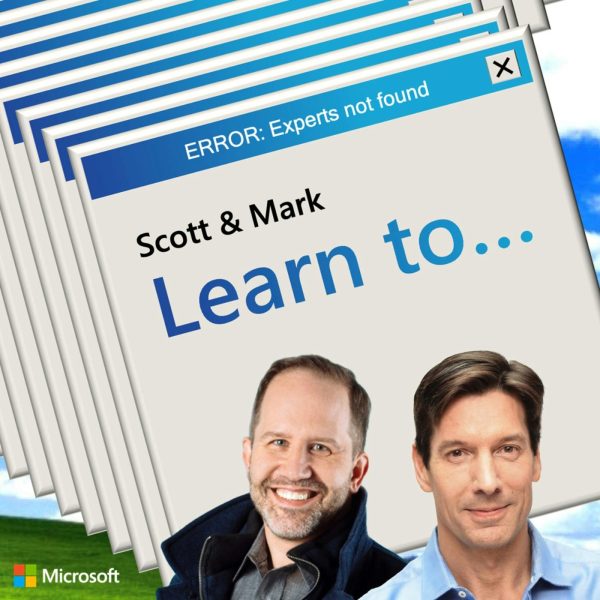
Scott & Mark Learn To…
- Épisodes
- 52
- Parution
- toutes les deux semaines
- Dernier épisode
- 4 Nov 2026
À propos du podcast
Join tech industry veterans Scott Hanselman and Mark Russinovich as they dive into the challenges and innovations of today’s fast-paced world. Whether you’re an experienced developer or simply curious about technology, each episode offers a fresh perspective on emerging trends, familiar topics, and insights that go beyond the strictly technical. From the latest in AI to effective ways to influence without authority, Scott and Mark set out to 'learn' something new in every episode, and they’re bringing you along for the ride. Join Scott and Mark for engaging discussions, expert advice, and a shared journey of learning and discovery. There's always something new to learn!
Épisodes 52
Scott & Mark Learn To...100 Duck-Sized Horses
In this episode, Scott Hanselman and Mark Russinovich explore new AI security research revealing how smaller, unrestricted models can leverage more powerful AI systems to complete tasks those systems would …
Notes de l’épisode
In this episode, Scott Hanselman and Mark Russinovich explore new AI security research revealing how smaller, unrestricted models can leverage more powerful AI systems to complete tasks those systems would normally refuse. Mark breaks down the research, its surprising results, and the potential security risks of AI models working together without understanding the bigger picture. Plus, Scott shares his approach to managing multiple AI agents, and the two discuss the challenges of keeping AI-powered development secure and efficient.
Takeaways:
Why breaking complex tasks into smaller pieces creates new AI security risks
How Scott uses AI agents to manage development tasks and reduce workload
What Mark’s latest research reveals about vulnerabilities in AI systems
Who are they?
View Scott Hanselman on LinkedIn
View Mark Russinovich on LinkedIn
Watch Scott and Mark Learn on YouTube
Listen to other episodes at scottandmarklearn.to
Discover and follow other Microsoft podcasts at microsoft.com/podcasts
Scott & Mark Learn To... Scroll TikTok
In this episode, Scott Hanselman and Mark Russinovich try something new as Mark reacts to TikTok videos exploring the decline of reading, shrinking attention spans, and the impact of AI on critical thinking …
Notes de l’épisode
In this episode, Scott Hanselman and Mark Russinovich try something new as Mark reacts to TikTok videos exploring the decline of reading, shrinking attention spans, and the impact of AI on critical thinking. What starts as a lighthearted experiment turns into a deeper debate about technology, education, and what it means to be human in an AI-driven world.
Takeaways:
How social media is changing our attention spans and reading habits
Why critical thinking matters in an AI-driven world
The risks of relying too heavily on AI to think for us
Who are they?
View Scott Hanselman on LinkedIn
View Mark Russinovich on LinkedIn
Watch Scott and Mark Learn on YouTube
Listen to other episodes at scottandmarklearn.to
Discover and follow other Microsoft podcasts at microsoft.com/podcasts
Scott & Mark Learn To... SemanticStart
In this episode, Scott Hanselman and Mark Russinovich dive into Mark’s new SemanticStart project, exploring how semantic search can make finding Windows apps, tools, and settings more intuitive. Along the way …
Notes de l’épisode
In this episode, Scott Hanselman and Mark Russinovich dive into Mark’s new SemanticStart project, exploring how semantic search can make finding Windows apps, tools, and settings more intuitive. Along the way, they experiment with AI-assisted coding, discuss how agents could interact with local tools, and debate a bigger question: does prompting an AI actually count as programming?
Takeaways:
How semantic search combines keywords, embeddings, and enriched data
Why AI is changing the way developers build and prototype software
Whether prompting an AI should actually be considered programming.
Who are they?
View Scott Hanselman on LinkedIn
View Mark Russinovich on LinkedIn
Watch Scott and Mark Learn on YouTube
Listen to other episodes at scottandmarklearn.to
Discover and follow other Microsoft podcasts at microsoft.com/podcasts
Scott & Mark Learn To... Fool's Gold
In this episode, Scott Hanselman and Mark Russinovich dive into the security risks surrounding increasingly capable open-weight AI models and Mark’s latest research into a new defense called Fool’s Gold. Mark …
Notes de l’épisode
In this episode, Scott Hanselman and Mark Russinovich dive into the security risks surrounding increasingly capable open-weight AI models and Mark’s latest research into a new defense called Fool’s Gold. Mark explains how safety guardrails can be removed from open models and explores an alternative approach: training models to provide convincing but deliberately flawed information when those protections are bypassed. They discuss how the technique works, whether it affects legitimate model behavior, and what it could mean for the future of AI safety as open models continue to advance.
Takeaways:
Why open-weight AI models can create new security risks
How Mark’s Fool’s Gold approach uses decoy responses as a defense decoy responses as a defense
Techniques that can protect against harmful use without degrading normal model performance
Who are they?
View Scott Hanselman on LinkedIn
View Mark Russinovich on LinkedIn
Watch Scott and Mark Learn on YouTube
Listen to other episodes at scottandmarklearn.to
Discover and follow other Microsoft podcasts at microsoft.com/podcasts
Scott & Mark Learn To...Enjoy the Journey
In this episode, Scott Hanselman and Mark Russinovich explore when to let AI solve a problem and when figuring it out is half the fun. They celebrate 30 years of Sysinternals by looking back at how the tools …
Notes de l’épisode
In this episode, Scott Hanselman and Mark Russinovich explore when to let AI solve a problem and when figuring it out is half the fun. They celebrate 30 years of Sysinternals by looking back at how the tools have evolved and how AI is changing software engineering and troubleshooting. Along the way, they debate efficiency versus learning by doing and consider a future where tools may increasingly be built for AI rather than humans.
Takeaways:
- How Sysinternals has evolved over the past 30 years
- How AI is changing software engineering and troubleshooting
- Why future developer tools may be designed for AI, not humans
Who are they?
View Scott Hanselman on LinkedIn
View Mark Russinovich on LinkedIn
Watch Scott and Mark Learn on YouTube
Listen to other episodes at scottandmarklearn.to
Discover and follow other Microsoft podcasts at microsoft.com/podcasts
Produced by Hangar Studios
Scott & Mark Learn To...Game
In this episode, Scott Hanselman and Mark Russinovich talk about gaming, from the countless hours they’ve spent playing over the years to why they gravitate toward very different types of games. Scott makes the …
Notes de l’épisode
In this episode, Scott Hanselman and Mark Russinovich talk about gaming, from the countless hours they’ve spent playing over the years to why they gravitate toward very different types of games. Scott makes the case for immersive single-player experiences like Crimson Desert, while Mark explains why Battlefield is his go-to for switching his brain off. Along the way, the conversation turns to the future of AAA games, AI-generated content, and whether knowing something was created by AI changes how we value it.
Takeaways:
- Different games serve different purposes for each player
- Can AI-generated games deliver the same value as something created primarily by people
- Does knowing the work and craftsmanship behind a game changes the experience
Who are they?
View Scott Hanselman on LinkedIn
View Mark Russinovich on LinkedIn
Watch Scott and Mark Learn on YouTube
Listen to other episodes at scottandmarklearn.to
Discover and follow other Microsoft podcasts at microsoft.com/podcasts
Produced by Hangar Studios
Scott & Mark Learn To...Rethink Authorship
In this episode, Scott Hanselman and Mark Russinovich explore how AI is rapidly changing the way software is built, from acting as a true research assistant to generating production-ready code and even helping …
Notes de l’épisode
In this episode, Scott Hanselman and Mark Russinovich explore how AI is rapidly changing the way software is built, from acting as a true research assistant to generating production-ready code and even helping write academic papers. They debate whether AI deserves credit for its work, discuss the future of developer tools like CLI vs. GUI and MCPs, and dive into creative AI projects like generating custom Doom levels from simple prompts. The conversation wraps with a thoughtful discussion about AI-generated art, creativity, and where human craftsmanship still matters most.
Takeaways:
- Human judgment is still essential, even when AI does most of the implementation
- AI is evolving from a coding assistant into a genuine research collaborator
- The industry hasn't settled how AI contributions should be credited
Who are they?
View Scott Hanselman on LinkedIn
View Mark Russinovich on LinkedIn
Watch Scott and Mark Learn on YouTube
Listen to other episodes at scottandmarklearn.to
Discover and follow other Microsoft podcasts at microsoft.com/podcasts
Produced by Hangar Studios
Scott & Mark Learn To...Process Explorer for Mac
In this episode, Scott Hanselman and Mark Russinovich explore Mark's latest AI-assisted coding project: bringing the iconic Sysinternals Process Explorer to macOS. They discuss how AI dramatically accelerated …
Notes de l’épisode
In this episode, Scott Hanselman and Mark Russinovich explore Mark's latest AI-assisted coding project: bringing the iconic Sysinternals Process Explorer to macOS. They discuss how AI dramatically accelerated development, where human expertise was still essential, and why building reliable software still requires careful iteration, debugging, and judgment. Along the way, they compare Windows and macOS internals and examine what these advances mean for the future of software development.
ZoomIt for Mac is now available here: Sysinternals ZoomIt for MacOS.
Takeaways:
- What it took to bring Process Explorer to macOS
- Key differences between Windows and macOS system tools.
- Practical lessons for building with AI effectively
Who are they?
View Scott Hanselman on LinkedIn
View Mark Russinovich on LinkedIn
Watch Scott and Mark Learn on YouTube
Listen to other episodes at scottandmarklearn.to
Discover and follow other Microsoft podcasts at microsoft.com/podcasts
Produced by Hangar Studios
Scott & Mark Learn To... Polypost: A Multi-Platform Post Editor
In this episode, Scott Hanselman and Mark Russinovich explore the realities of vibe coding by walking through a few of Mark's recent AI-assisted projects, including Polypost, a tool for writing and formatting …
Notes de l’épisode
In this episode, Scott Hanselman and Mark Russinovich explore the realities of vibe coding by walking through a few of Mark's recent AI-assisted projects, including Polypost, a tool for writing and formatting social media posts and a nearly feature-complete Mac version of ZoomIt. They discuss where AI excels, where it still struggles, and why building software has become less about writing code and more about guiding, testing, and refining an AI collaborator. Along the way, they share lessons on prompt engineering, user experience, debugging, and why human judgment remains essential even as AI accelerates development.
Polypost — multi-platform post editor
Takeaways:
- Successful AI development still relies on human decision-making
- Mark shares the challenges and wins of building Polypost with AI
- The iterative process of prompting, testing, and refining that turns AI-generated code into production-quality software
Who are they?
View Scott Hanselman on LinkedIn
View Mark Russinovich on LinkedIn
Watch Scott and Mark Learn on YouTube
Listen to other episodes at scottandmarklearn.to
Discover and follow other Microsoft podcasts at microsoft.com/podcasts
Produced by Hangar Studios
Scott & Mark Learn To...The Cutting Room Floor
In this episode, Scott Hanselman and Mark Russinovich pull back the curtain on Microsoft's Build conference with a look at the cutting room floor of Mark's Inside Azure Innovations breakout session. They …
Notes de l’épisode
In this episode, Scott Hanselman and Mark Russinovich pull back the curtain on Microsoft's Build conference with a look at the cutting room floor of Mark's Inside Azure Innovations breakout session. They explore fascinating technologies that didn't make the final presentation, including AI-powered network repair agents, advanced data center cooling systems, supply chain security innovations, prompt injection defenses, and groundbreaking approaches to cloud infrastructure. Along the way, they discuss how major technology presentations are assembled, the challenge of choosing what to showcase, and the incredible engineering work happening behind the scenes at Microsoft.
See the innovations that did make the final cut in the recording of Mark’s Inside Azure Innovations talk at Microsoft Build 2026: Inside Azure Innovations with Mark Russinovich.
Takeaways:
- How Mark decides what innovations make it into major conference presentations
- New technologies and tools being used to manage cloud infrastructure at scale
- Why some of the most interesting innovations never make it onto the conference stage
Who are they?
View Scott Hanselman on LinkedIn
View Mark Russinovich on LinkedIn
Watch Scott and Mark Learn on YouTube
Listen to other episodes at scottandmarklearn.to
Discover and follow other Microsoft podcasts at microsoft.com/podcasts
Produced by Hangar Studios
Scott & Mark Learn To...Build from Vibes to Craft
In this episode, Scott Hanselman and Mark Russinovich reflect on conversations from Microsoft Build before diving into a thoughtful debate about AI's impact on software engineering. They explore why coding is …
Notes de l’épisode
In this episode, Scott Hanselman and Mark Russinovich reflect on conversations from Microsoft Build before diving into a thoughtful debate about AI's impact on software engineering. They explore why coding is ultimately about clear specifications, testing, and evaluation, not just generating code and discuss whether AI will truly replace developers or simply change how software is built. Along the way, they compare AI-generated software to IKEA furniture versus custom craftsmanship, examine the future of junior engineers, and share their perspectives on quality, responsibility, and what it really means to ship software in an AI-driven world.
Takeaways:
- How experienced engineers evaluate AI-generated code
- The critical role of testing, evaluation, and human oversight in AI-assisted development
- Why clear specifications are still the foundation of successful software projects.
Who are they?
View Scott Hanselman on LinkedIn
View Mark Russinovich on LinkedIn
Watch Scott and Mark Learn on YouTube
Listen to other episodes at scottandmarklearn.to
Discover and follow other Microsoft podcasts at microsoft.com/podcasts
Produced by Hangar Studios
Scott & Mark Learn To...Double-Check References
In this episode, Scott Hanselman and Mark Russinovich dive into a growing issue in AI-driven research: hallucinated references in academic papers. After scanning thousands of conference submissions, Mark …
Notes de l’épisode
In this episode, Scott Hanselman and Mark Russinovich dive into a growing issue in AI-driven research: hallucinated references in academic papers. After scanning thousands of conference submissions, Mark uncovers widespread citation inaccuracies, sparking a broader conversation about accountability, cognitive surrender, and the risks of over-relying on AI tools. They explore where AI adds value versus where it erodes critical thinking, from academic writing to everyday coding and content creation. The conversation shifts into the realities of vibe coding, the tradeoffs of speed versus quality, and what it means to maintain taste and expertise in an AI-accelerated world, ultimately asking: if AI lowers the barrier to create, does it also lower the standard?
LLM Writing in Tech: Blogs and Articles
Takeaways:
- AI hallucinations are already impacting academic research quality
- The future challenge isn’t using AI; it’s maintaining standards while using it
- There’s a growing tension between efficiency and craftsmanship
Who are they?
View Scott Hanselman on LinkedIn
View Mark Russinovich on LinkedIn
Watch Scott and Mark Learn on YouTube
Listen to other episodes at scottandmarklearn.to
Discover and follow other Microsoft podcasts at microsoft.com/podcasts
Produced by Hangar Studios
Scott & Mark Learn To...Have Taste
In this episode, Scott Hanselman and Mark Russinovich unpack the tension between subjective preference and objective usability, arguing that strong product instincts come from years of exposure, experience, and …
Notes de l’épisode
In this episode, Scott Hanselman and Mark Russinovich unpack the tension between subjective preference and objective usability, arguing that strong product instincts come from years of exposure, experience, and pattern recognition rather than innate talent. Through examples ranging from UI design to AI-assisted coding, they highlight how good decision-making requires both a holistic systems view and attention to detail. The conversation also examines the limits of accelerating expertise, the role of education in building foundational thinking, and why human judgment remains critical even as AI tools become more capable.
Takeaways:
- Without clear intent and strong taste, outputs can drift or degrade
- Strong design decisions come from balancing small details
- Good product instincts come from repeated exposure to patterns, tools, and decisions over time
Who are they?
View Scott Hanselman on LinkedIn
View Mark Russinovich on LinkedIn
Watch Scott and Mark Learn on YouTube
Listen to other episodes at scottandmarklearn.to
Discover and follow other Microsoft podcasts at microsoft.com/podcasts
Produced by Hangar Studios
Scott & Mark Learn To... ZoomIt, Evolved
In this episode, Scott Hanselman and Mark Russinovich dive into the evolution of ZoomIt, exploring new features like panoramic screen capture, webcam overlays, and lightweight video editing tools. They …
Notes de l’épisode
In this episode, Scott Hanselman and Mark Russinovich dive into the evolution of ZoomIt, exploring new features like panoramic screen capture, webcam overlays, and lightweight video editing tools. They discuss the technical challenges behind building these capabilities, especially stitching images across any application and how AI-assisted coding is accelerating development while introducing new edge cases. Along the way, the conversation blends deep technical insight with candid, behind-the-scenes moments, highlighting both the complexity of modern software development and the value of experimentation and iteration.
Takeaways:
- ZoomIt is evolving into a more advanced, all-in-one screen tool
- Some of the most valuable moments in development and content come from failures
- AI-assisted coding can dramatically speed up development, but still requires close human oversight
Who are they?
View Scott Hanselman on LinkedIn
View Mark Russinovich on LinkedIn
Watch Scott and Mark Learn on YouTube
Listen to other episodes at scottandmarklearn.to
Discover and follow other Microsoft podcasts at microsoft.com/podcasts
Produced by Hangar Studios
Scott & Mark Learn To...Sculpt, not Spec
In this episode, Scott Hanselman and Mark Russinovich explore how software development is evolving in the age of AI, challenging the idea that everything should start with a fully defined spec. They highlight …
Notes de l’épisode
In this episode, Scott Hanselman and Mark Russinovich explore how software development is evolving in the age of AI, challenging the idea that everything should start with a fully defined spec. They highlight a more iterative, sculpting approach to building, where continuous refinement, testing, and human judgment are essential and discuss the realities of AI-assisted coding, including edge cases, maintenance, and the limits of productivity gains.
Takeaways:
- AI-assisted coding works best as an iterative process, not a one-shot, fully spec’d solution
- Edge cases and real-world usage quickly expose gaps that initial builds
- AI can accelerate development, but human review, testing, and bottlenecks still limit true productivity gains
Who are they?
View Scott Hanselman on LinkedIn
View Mark Russinovich on LinkedIn
Watch Scott and Mark Learn on YouTube
Listen to other episodes at scottandmarklearn.to
Discover and follow other Microsoft podcasts at microsoft.com/podcasts
Produced by Hangar Studios
Scott & Mark Learn To... Beyond the Vibes: How Models Learn and Stitch Panoramas
In this episode, Scott Hanselman and Mark Russinovich unpack how AI systems actually behave beneath the surface, pushing past hype into the messy reality of how models are trained, aligned, and deployed. They …
Notes de l’épisode
In this episode, Scott Hanselman and Mark Russinovich unpack how AI systems actually behave beneath the surface, pushing past hype into the messy reality of how models are trained, aligned, and deployed.
They explore whether AI systems are inherently benevolent or simply shaped by incentives, training data, and reinforcement learning, and why behaviors like deception can emerge under certain conditions. The conversation moves from philosophical questions about human nature versus machine behavior into the practical mechanics of large language models, including how reinforcement learning with human feedback shapes outputs and why alignment is far from perfect.
Along the way, they ground the discussion in a real engineering challenge, stitching a scrolling panorama from screen captures, to show how complex systems come together through heuristics, edge cases, and iteration.
Takeaways:
- AI behavior is shaped by training and incentives, not built-in intent or morality
- AI can accelerate coding, but testing, edge cases, and reliability require human oversight
- Reinforcement learning pushes models to be helpful and agreeable, sometimes at the cost of accuracy
Who are they?
View Scott Hanselman on LinkedIn
View Mark Russinovich on LinkedIn
Watch Scott and Mark Learn on YouTube
Listen to other episodes at scottandmarklearn.to
Discover and follow other Microsoft podcasts at microsoft.com/podcasts
Produced by Hangar Studios
Scott & Mark Learn To...Vibe Coding, for Real (Again)
In this episode, Scott Hanselman and Mark Russinovich dive into the realities of building complex software with AI coding agents. Mark shares his experience using modern models to implement a shared-memory …
Notes de l’épisode
In this episode, Scott Hanselman and Mark Russinovich dive into the realities of building complex software with AI coding agents. Mark shares his experience using modern models to implement a shared-memory transport for gRPC across Go and .NET, explaining how AI dramatically accelerated development while still requiring constant oversight. They discuss the surprising strengths and limitations of AI coding tools, to the massive productivity gains that make the frustration worthwhile. The conversation also explores the challenges of solving hard engineering problems, including an attempt to build a scrolling screenshot stitcher, and wraps with thoughts on the future of developer tooling and a potential live episode of the show.
Takeaways:
- AI coding agents can speed up complex development but still require human oversight
- Developers often need to guide and correct the model throughout the process
- Even with challenges, AI can reduce months of work to days
Who are they?
View Scott Hanselman on LinkedIn
View Mark Russinovich on LinkedIn
Watch Scott and Mark Learn on YouTube
Listen to other episodes at scottandmarklearn.to
Discover and follow other Microsoft podcasts at microsoft.com/podcasts
Produced by Hangar Studios
Scott & Mark Learn To...A Public 1-1 for Software Engineering Preceptorship
In this episode, Scott Hanselman and Mark Russinovich discuss their recent ACM paper and explore a growing challenge in the tech industry: how to develop the next generation of engineers. They debate the idea …
Notes de l’épisode
In this episode, Scott Hanselman and Mark Russinovich discuss their recent ACM paper and explore a growing challenge in the tech industry: how to develop the next generation of engineers. They debate the idea of preceptorship programs that train early-career developers inside companies, why many organizations avoid investing in junior talent, and how universities could play a larger role in bridging the gap between education and real-world experience. The conversation looks at the economics of hiring juniors, the risk of companies poaching trained talent, and what it might take to build a scalable pipeline for future technical leaders.
Takeaways:
- Many firms prefer hiring experienced engineers instead of developing new ones
- Universities could play a bigger role in connecting students with real industry work
- Retention incentives might help companies keep talent they train
Who are they?
View Scott Hanselman on LinkedIn
View Mark Russinovich on LinkedIn
Watch Scott and Mark Learn on YouTube
Listen to other episodes at scottandmarklearn.to
Discover and follow other Microsoft podcasts at microsoft.com/podcasts
Produced by Hangar Studios
Scott & Mark Learn To... Are Apps Dead?
In this episode, Scott Hanselman and Mark Russinovich dive into a wide-ranging conversation about the future of software, debating whether apps are dead in an era of AI agents, chat interfaces, and automation …
Notes de l’épisode
In this episode, Scott Hanselman and Mark Russinovich dive into a wide-ranging conversation about the future of software, debating whether apps are dead in an era of AI agents, chat interfaces, and automation. They explore the resurgence of text-based and terminal user interfaces, the limits of using large language models as stand-ins for deterministic workflows, and why reliability, security, and repeatability still demand traditional applications and SaaS platforms. Along the way, they unpack common misconceptions about AI replacing apps, argue for better UX and APIs instead of throwing AI at broken systems, and emphasize that AI is best used for reasoning and ambiguity, not as a replacement for well-designed software.
Takeaways:
- AI tools don’t eliminate the need for well-built apps
- Chat and terminal interfaces expand, not replace, software
- Dynamic interfaces blur boundaries, but durable apps still anchor workflows
Who are they?
View Scott Hanselman on LinkedIn
View Mark Russinovich on LinkedIn
Watch Scott and Mark Learn on YouTube
Listen to other episodes at scottandmarklearn.to
Discover and follow other Microsoft podcasts at microsoft.com/podcasts
Produced by Hangar Studios
Scott & Mark Learn To...Pilot Coding - Vibe Coding for Real
In this episode, Scott Hanselman and Mark Russinovich explore how AI-assisted vibe coding is changing the way complex software gets built, debugged, and refined. Mark walks through real-world experiments using …
Notes de l’épisode
In this episode, Scott Hanselman and Mark Russinovich explore how AI-assisted vibe coding is changing the way complex software gets built, debugged, and refined. Mark walks through real-world experiments using AI to tackle difficult engineering problems, including gRPC shared memory, Win32 UI work, and major new features coming to ZoomIt. The conversation digs into where AI meaningfully accelerates development, where it still requires careful human oversight, and how tools like screenshots, debug output, MCP servers, and multimodal feedback loops are reshaping modern developer workflows. The result is an honest, technical discussion about productivity gains, limitations, and the evolving role of human judgment in AI-driven software engineering.
Takeaways:
- Debug output and screenshots are critical for helping AI understand
- Faster iteration often leads to more polished software, not just quicker results
- Concurrency and low-level systems problems remain difficult for AI to solve without supervision
Who are they?
View Scott Hanselman on LinkedIn
View Mark Russinovich on LinkedIn
Watch Scott and Mark Learn on YouTube
Listen to other episodes at scottandmarklearn.to
Discover and follow other Microsoft podcasts at microsoft.com/podcasts
Produced by Hangar Studios
Scott & Mark Learn To... Get Ready for Ignite
In this episode, Scott Hanselman and Mark Russinovich pull back the curtain on what really goes into a large-scale conference talk, using their recent Ignite session as a case study. They reflect on the balance …
Notes de l’épisode
In this episode, Scott Hanselman and Mark Russinovich pull back the curtain on what really goes into a large-scale conference talk, using their recent Ignite session as a case study. They reflect on the balance between educational and soft talks, the importance of credibility and audience expectations, and why not every talk needs a rigid takeaway to be valuable. The conversation traces a playful but technically deep journey through computing history, from early machine code and Altair systems to modern Azure infrastructure, massive virtual machines, and experimental demos that intentionally blur the line between serious engineering and creative exploration. Along the way, they share behind-the-scenes lessons about live demos, pacing, risk, and why delight, curiosity, and a bit of silliness still matter in technical storytelling.
Takeaways:
- Setting expectations early helps the audience judge a talk on the right terms
- Credibility can come from perspective, not just authority
- Risky demos work when the fundamentals are solid
Who are they?
View Scott Hanselman on LinkedIn
View Mark Russinovich on LinkedIn
Watch Scott and Mark Learn on YouTube
Listen to other episodes at scottandmarklearn.to
Discover and follow other Microsoft podcasts at microsoft.com/podcasts
Produced by Hangar Studios
Scott & Mark Learn To... Where to get news?
In this episode, Scott Hanselman and Mark Russinovich dive into where they get their tech news and how their habits have evolved from the early days of blogging and RSS to today’s AI-focused email newsletters …
Notes de l’épisode
In this episode, Scott Hanselman and Mark Russinovich dive into where they get their tech news and how their habits have evolved from the early days of blogging and RSS to today’s AI-focused email newsletters. They reminisce about the heyday of blogs, the rise and fall of Google Reader, and Mark’s old NT Internals mailing list, which once had nearly 90,000 subscribers. They compare curated sources like Techmeme, The Verge, and The Information, and discuss how AI-driven newsletters have replaced RSS as the primary way they stay informed. The conversation also features a fun moment when Scott looks back at his 20-year-old blog posts and finds references to Mark’s tools that helped launch part of his career.
Takeaways:
- Tech news consumption has shifted from RSS feeds to curated AI-driven newsletters
- Blogging is still valuable as a personal knowledge archive, even decades later
- How tech history lives in old URLs, broken links, and archived posts
Who are they?
View Scott Hanselman on LinkedIn
View Mark Russinovich on LinkedIn
Watch Scott and Mark Learn on YouTube
Resources:
Techmeme: https://www.techmeme.com
– A leading tech news aggregator for technology business and breakthrough news.
The Verge: https://www.theverge.com
– Consumer technology news site covering tech, science, art, and culture.
The Information: https://www.theinformation.com
– A subscription-based publication focused on technology and business news.
The Rundown AI: https://www.therundown.ai
– Daily AI newsletter delivering news and practical applications in 5 minutes.
Superhuman: https://www.superhuman.ai
– Daily newsletter on AI tools, trends, and productivity tips.
The Neuron: https://www.theneuron.ai
– Daily AI newsletter with trends, tools, and tutorials for professionals.
The Batch: https://www.deeplearning.ai/the-batch
– Weekly newsletter curated by Andrew Ng’s team, focused on AI research and industry updates.
Turing Post: https://www.turingpost.com
– Newsletter exploring AI/ML trends, research, and interviews.
Produced by Hangar Studios
Scott & Mark Learn To… Second Brain
In this episode, Scott Hanselman and Mark Russinovich dive into how they each manage the flood of information, reminders, and ideas that fill their daily lives. From handwritten to-do lists to OneNote archives …
Notes de l’épisode
In this episode, Scott Hanselman and Mark Russinovich dive into how they each manage the flood of information, reminders, and ideas that fill their daily lives. From handwritten to-do lists to OneNote archives, they explore the balance between productivity tools and procrastination, and how offloading tasks can clear mental space. The two reflect on the psychology of lists, the illusion of control, and whether we’ll ever have a true second brain. A funny, self-aware, and relatable conversation about memory, focus, and the systems that keep us (mostly) functional.
Takeaways:
- Writing things down can free up mental space and reduce cognitive load
- Procrastination can serve a purpose when your brain keeps working in the background
- Organization doesn’t have to be perfect to be effective
Who are they?
View Scott Hanselman on LinkedIn
View Mark Russinovich on LinkedIn
Watch Scott and Mark Learn on YouTube
Listen to other episodes at scottandmarklearn.to
Discover and follow other Microsoft podcasts at microsoft.com/podcasts
Produced by Hangar Studios
Scott & Mark Learn To… The AI Productivity Trap: Senior Boost, Junior Drag
In this episode, Scott Hanselman and Mark Russinovich explore how artificial intelligence is reshaping software engineering and the career paths of developers. They discuss the emerging “AI boost” for …
Notes de l’épisode
In this episode, Scott Hanselman and Mark Russinovich explore how artificial intelligence is reshaping software engineering and the career paths of developers. They discuss the emerging “AI boost” for experienced engineers versus the “AI slowdown” that can hinder those early in their careers, emphasizing the need for companies to create structured learning environments rather than rely solely on AI-driven productivity. The conversation dives into mentorship, apprenticeship models, and how senior engineers must evolve into teachers to ensure vital knowledge transfer. Together, Scott and Mark challenge the industry to rethink how it trains, supports, and measures success for the next generation of software professionals.
Takeaways:
- Companies should reward senior engineers who invest time in developing junior talent
- Critical thinking and troubleshooting skills can’t be automated or shortcut through AI tools
- Senior developers gain efficiency, while newcomers risk falling behind without proper guidance
Who are they?
View Scott Hanselman on LinkedIn
View Mark Russinovich on LinkedIn
Watch Scott and Mark Learn on YouTube
Listen to other episodes at scottandmarklearn.to
Discover and follow other Microsoft podcasts at microsoft.com/podcasts
Produced by Hangar Studios
Scott & Mark Learn To… AI-Assisted Coding: Can AI Take the Wheel?
In this episode, Scott Hanselman and Mark Russinovich dive deep into the promises and pitfalls of AI-assisted coding. They debate whether large language models can truly handle complex software projects …
Notes de l’épisode
In this episode, Scott Hanselman and Mark Russinovich dive deep into the promises and pitfalls of AI-assisted coding. They debate whether large language models can truly handle complex software projects, discuss the limitations of current AI systems in areas like synchronization, and explore the difference between human learning and machine pattern-matching. Along the way, they touch on the dangers of over-anthropomorphizing AI, the rise of “thinking tokens” in new models, and the impact these tools may have on junior developers learning the craft.
Takeaways:
- The ongoing debate: can AI scale into true general intelligence or not?
- The risks of relying too heavily on AI when you don’t understand your own code
- What junior developers may lose and gain in a world of AI-assisted programming
Who are they?
View Scott Hanselman on LinkedIn
View Mark Russinovich on LinkedIn
Watch Scott and Mark Learn on YouTube
Listen to other episodes at scottandmarklearn.to
Discover and follow other Microsoft podcasts at microsoft.com/podcasts
Produced by Hangar Studios
Scott & Mark Learn To… Level Up: Navigating Career Growth in Microsoft
In this episode, Scott Hanselman and Mark Russinovich dive into the realities of career progression at Microsoft and in tech more broadly. They discuss the different paths engineers can take, whether through …
Notes de l’épisode
In this episode, Scott Hanselman and Mark Russinovich dive into the realities of career progression at Microsoft and in tech more broadly. They discuss the different paths engineers can take, whether through management, deep technical expertise, or individual innovation and the role that scope, impact, and even luck plays in promotions. Along the way, they reflect on the challenges of leveling, the importance of communication, and the balance between recognition, influence, and personal fulfillment in a long-term career.
Takeaways:
- Engineers can advance without becoming managers through individual contributions
- Communication and influence are critical for advancing to senior levels
- Promotions hinge on measurable business outcomes, not just effort or shipped work
Who are they?
View Scott Hanselman on LinkedIn
View Mark Russinovich on LinkedIn
Watch Scott and Mark Learn on YouTube
Listen to other episodes at scottandmarklearn.to
Discover and follow other Microsoft podcasts at microsoft.com/podcasts
Produced by Hangar Studios
Scott & Mark Learn To… Chatbot, Another Vibe-Coded Project by Mark
In this episode, Scott Hanselman and Mark Russinovich dive into the technical side of modern AI research and development workflows. They discuss the power of remote development with VS Code, building custom …
Notes de l’épisode
In this episode, Scott Hanselman and Mark Russinovich dive into the technical side of modern AI research and development workflows. They discuss the power of remote development with VS Code, building custom chatbot tools for jailbreak testing, and exploring token probabilities with log probes. Mark also shares how he leveraged AI to generate a working UX in one shot, why temperature settings matter for model outputs, and his plans to open source his custom chatbot client.
Takeaways:
- Discover how Mark uses VS Code split between local and cloud for AI research
- Explore the risks and creativity behind context injection jailbreak
- Get insights into model temperature settings and output logprobs
Who are they?
View Scott Hanselman on LinkedIn
View Mark Russinovich on LinkedIn
Watch Scott and Mark Learn on YouTube
Listen to other episodes at scottandmarklearn.to
Discover and follow other Microsoft podcasts at microsoft.com/podcasts
Produced by Hangar Studios
Scott & Mark Learn To… Refchecker, a Useful Tool Coded by Mark and AI
In this episode, Scott Hanselman and Mark Russinovich explore the challenges and opportunities of coding with AI assistants. They compare different models, discuss the quirks of “vibe coding,” and share …
Notes de l’épisode
In this episode, Scott Hanselman and Mark Russinovich explore the challenges and opportunities of coding with AI assistants. They compare different models, discuss the quirks of “vibe coding,” and share insights on building tools that bridge LLMs and APIs. Mark walks through his experience developing an academic reference checker, highlighting how AI can help structure messy data, uncover edge cases, and speed up complex development work. The conversation also touches on the evolving joy of coding, from puzzle-solving by hand to managing AI-driven workflows, and how these shifts are reshaping both productivity and creativity.
Takeaways:
- Mark’s journey building an academic reference checker with AI
- How AI assistants are changing the way developers find joy in coding
- RefChecker source code: https://github.com/markrussinovich/refchecker
Who are they?
View Scott Hanselman on LinkedIn
View Mark Russinovich on LinkedIn
Watch Scott and Mark Learn on YouTube
Listen to other episodes at scottandmarklearn.to
Discover and follow other Microsoft podcasts at microsoft.com/podcasts
Produced by Hangar Studios
Scott & Mark Learn To… What Makes Good 1-1s
In this episode, Scott Hanselman and Mark Russinovich share strategies for conducting more effective and purposeful one-on-one meetings. They emphasize the value of tailoring the approach to each individual …
Notes de l’épisode
In this episode, Scott Hanselman and Mark Russinovich share strategies for conducting more effective and purposeful one-on-one meetings. They emphasize the value of tailoring the approach to each individual, encouraging agenda-setting in advance, and prioritizing critical topics to ensure they are addressed. The discussion covers best practices for providing and receiving constructive feedback, maintaining visibility across teams, and striking a balance between trust and accountability. They also address the importance of recognizing contributions, differentiating between credit and “lift,” and using one-on-ones to proactively identify and remove obstacles.
Takeaways:
- Tailor meeting style to each person’s preferences for communication and frequency
- Avoid over-preparation or unnecessary large meetings when a small discussion will suffice
- Share discussion topics ahead of one-on-ones with senior leaders to maximize value
Who are they?
View Scott Hanselman on LinkedIn
View Mark Russinovich on LinkedIn
Watch Scott and Mark Learn on YouTube
Listen to other episodes at scottandmarklearn.to
Discover and follow other Microsoft podcasts at microsoft.com/podcasts
Produced by Hangar Studios
Scott & Mark Learn To... Live Vibe Coding - Who Talks More, Scott or Mark?
In this episode of Scott and Mark Learn To, Scott Hanselman and Mark Russinovich explore vibe coding with AI, testing how Copilot Agent Mode can analyze their transcripts to see who talks more on the show. They …
Notes de l’épisode
In this episode of Scott and Mark Learn To, Scott Hanselman and Mark Russinovich explore vibe coding with AI, testing how Copilot Agent Mode can analyze their transcripts to see who talks more on the show. They discuss coding with AI as a collaborative sculpting process, debate crediting AI for its contributions, and reflect on the human judgment still needed for prompting and refining outputs. Along the way, they generate graphs, poke fun at each other’s talk time, and share insights on how AI is changing coding and creative work.
Takeaways:
- See how Copilot Agent Mode can generate graphs from transcripts
- Learn the difference between vibe coding and spec-driven development
- Explore the potential for interactive charts using D3.js for podcast data
Who are they?
View Scott Hanselman on LinkedIn
View Mark Russinovich on LinkedIn
Watch Scott and Mark Learn on YouTube
Listen to other episodes at scottandmarklearn.to
Discover and follow other Microsoft podcasts at microsoft.com/podcasts
Produced by Hangar Studios
Voici les 40 derniers épisodes sur 52. Les épisodes plus anciens se trouvent dans le flux du podcast.
Podcasts similaires
Plus de podcasts : Éducation



C’est votre podcast ?
Confirmez-le avec une entrée dans votre flux : vous recevez ici un code, vous l’ajoutez comme podcast:txt dans le canal de votre flux, et nous le vérifions. Votre podcast apparaît ensuite comme « vérifié » sur SoundNode.