

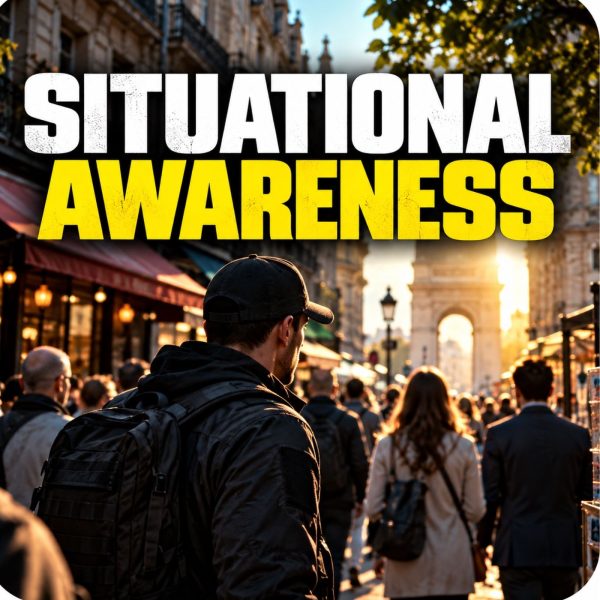
Situational Awareness Tactics
- Épisodes
- 563
- Parution
- quotidienne
- Dernier épisode
- 12 Nov 2026
Épisodes 563
The Invisible Threat: How Criminals Exploit Trust to Gain Access
Most security breaches begin with something surprisingly ordinary: a convincing message, an unexpected request, or a moment when someone lets their guard down. Criminals exploit predictable human behaviors …
Notes de l’épisode
Most security breaches begin with something surprisingly ordinary: a convincing message, an unexpected request, or a moment when someone lets their guard down. Criminals exploit predictable human behaviors, including trust, urgency, and the tendency to comply with seemingly legitimate authority. We examine how to recognize manipulation, identify suspicious requests, and develop habits that make it harder for someone to gain unauthorized access to your personal information.Before the Attack: Recognizing the Behavioral Warning Signs of Violence
Violent encounters do not always begin with obvious aggression. Some offenders use ordinary conversation, requests for assistance, or seemingly harmless approaches to assess a potential victim's reactions. This …
Notes de l’épisode
Violent encounters do not always begin with obvious aggression. Some offenders use ordinary conversation, requests for assistance, or seemingly harmless approaches to assess a potential victim's reactions. This episode examines the behavioral warning signs that may precede an assault, including repeated boundary violations, unwanted proximity, and attempts to isolate someone from others. We explore how situational awareness involves recognizing changes in behavior and context rather than treating every unfamiliar person as a potential threat.Why Going to the Ground Can Get You Killed: The Reality of Street Violence
Brazilian jiu-jitsu and wrestling provide valuable skills for controlling an opponent, but the realities of street violence introduce dangers that rarely exist in a controlled training environment. Concrete …
Notes de l’épisode
Brazilian jiu-jitsu and wrestling provide valuable skills for controlling an opponent, but the realities of street violence introduce dangers that rarely exist in a controlled training environment. Concrete surfaces, concealed weapons, multiple attackers, and limited escape routes can turn a technically dominant ground position into a dangerous liability. This episode of Situational Awareness Tactics examines why environmental awareness, maintaining mobility, and recognizing opportunities to disengage can be more important than winning a physical confrontation. We explore how understanding your surroundings before and during an encounter can dramatically influence your chances of escaping safely.The Shotgun Trap That Backfired: When Home Security Becomes a Legal Nightmare
After repeated burglaries, an Iowa property owner installed a hidden shotgun trap, believing it would finally stop intruders. Instead, the device seriously injured a burglar and resulted in a $30,000 judgment …
Notes de l’épisode
After repeated burglaries, an Iowa property owner installed a hidden shotgun trap, believing it would finally stop intruders. Instead, the device seriously injured a burglar and resulted in a $30,000 judgment against the owners. This episode explores the dangers of improvised security measures, the difference between deterrence and excessive force, and how homeowners can protect their property without creating deadly hazards.The Warning Signs Before Violence: What Happens in the 30 Seconds Before an Attack
Physical assaults sometimes emerge from escalating behavior that can be recognized before an attack begins. This episode examines personal-space violations, threatening movements, blocked exits, and changes in …
Notes de l’épisode
Physical assaults sometimes emerge from escalating behavior that can be recognized before an attack begins. This episode examines personal-space violations, threatening movements, blocked exits, and changes in interpersonal behavior. Learn how recognizing combinations of warning signs can create opportunities to disengage without treating every unusual behavior as dangerousThe Hidden Geometry of Danger: How Your Environment Determines Your Escape
: Doorways, narrow hallways, crowded restaurants, and furniture can dramatically affect your options during an emergency. Explore how environmental awareness and exit recognition help people make safer …
Notes de l’épisode
: Doorways, narrow hallways, crowded restaurants, and furniture can dramatically affect your options during an emergency. Explore how environmental awareness and exit recognition help people make safer decisions before violence begins. Learn why identifying escape routes is a fundamental component of personal security.Slicing the Shadows: Clearing Blind Corners and Thresholds in Low Light
Ambush predators rely on architectural cutouts, alley mouths, and parked vehicles to stage violent assaults. We break down close-quarters spatial mechanics: wide-angle cornering, structural clearance, avoiding …
Notes de l’épisode
Ambush predators rely on architectural cutouts, alley mouths, and parked vehicles to stage violent assaults. We break down close-quarters spatial mechanics: wide-angle cornering, structural clearance, avoiding fatal funnels, and managing conversational distances when visibility drops below effective ID range.The Most Dangerous Minutes: Situational Awareness After the Breach
The moment a tactical team secures a building, the psychological demands of the mission change dramatically. Operators must shift from immediate threat detection to evidence collection while maintaining …
Notes de l’épisode
The moment a tactical team secures a building, the psychological demands of the mission change dramatically. Operators must shift from immediate threat detection to evidence collection while maintaining awareness of potential dangers, unfamiliar surroundings, and rapidly changing conditions. This episode examines attentional tunneling, cognitive workload, threat perception, and decision-making under extreme time pressure. Drawing on the science of situational awareness, we explore why highly trained professionals can overlook critical environmental cues precisely when they believe the immediate danger has passed.What Are Your Rights When Police Search Your Vehicle?
Explain the difference between a traffic stop, an arrest, a consent search, and a search based on probable cause. Discuss how drivers s constitutional rights, and avoid escalating a police encounter
Situational Awareness vs. Hypervigilance: When Being Alert Becomes a Liability
Explain the difference between adaptive environmental awareness and trauma-related threat monitoring. Discuss attentional narrowing, false alarms, cognitive fatigue, and how excessive vigilance can sometimes …
Notes de l’épisode
Explain the difference between adaptive environmental awareness and trauma-related threat monitoring. Discuss attentional narrowing, false alarms, cognitive fatigue, and how excessive vigilance can sometimes interfere with effective decision-making.The Criminal at Your Front Door: Why Uniforms and Professional Credentials Can Create False Security
A technician arrives wearing a uniform, carrying professional equipment, and driving a company vehicle, but how much do those details actually tell us about whether someone is trustworthy? A Massachusetts …
Notes de l’épisode
A technician arrives wearing a uniform, carrying professional equipment, and driving a company vehicle, but how much do those details actually tell us about whether someone is trustworthy? A Massachusetts burglary investigation involving an exterminator illustrates how legitimate occupational access and familiar professional appearances can create opportunities for criminal behavior. We examine the psychology of perceived authority, the difference between familiarity and trustworthiness, and practical ways homeowners can verify service personnel without becoming unnecessarily suspicious. The episode also explores how offenders may exploit predictable routines and lapses in residential security.The Five-Second Scan: How to Read Your Environment Without Becoming Paranoid
How much can you learn about your surroundings in just five seconds? Situational awareness isn’t about constantly searching for danger. It’s about recognizing what is normal, identifying meaningful changes, and …
Notes de l’épisode
How much can you learn about your surroundings in just five seconds? Situational awareness isn’t about constantly searching for danger. It’s about recognizing what is normal, identifying meaningful changes, and making better decisions before problems develop. In this episode, we explore environmental scanning, attentional blindness, baseline behavior, and the psychology of threat perception. Using everyday situations such as gas stations, parking garages, and shopping centers, discover how to improve awareness without becoming anxious or hypervigilantBlackbeard: How Fear Became a Pirate’s Greatest Weapon
Blackbeard cultivated a terrifying reputation that often worked before a battle began. His appearance and willingness to threaten violence helped him intimidate opponents. Discover how reputation, fear, and …
Notes de l’épisode
Blackbeard cultivated a terrifying reputation that often worked before a battle began. His appearance and willingness to threaten violence helped him intimidate opponents. Discover how reputation, fear, and perceived power can shape human behavior.The Donner Party: What Extreme Starvation Does to Human Behavior
When the Donner Party became trapped in the Sierra Nevada during the winter of 1846, its members faced extreme hunger, cold, and uncertainty. Their ordeal raises important questions about survival psychology …
Notes de l’épisode
When the Donner Party became trapped in the Sierra Nevada during the winter of 1846, its members faced extreme hunger, cold, and uncertainty. Their ordeal raises important questions about survival psychology, decision-making under stress, and the effects of starvation on human behavior. As conditions deteriorated, the emigrants confronted increasingly desperate choices. Discover what this historical tragedy can teach us about the psychological challenges of surviving extreme conditions.“Hey, Can I Ask You Something?” Recognizing the Approach Before Trouble Starts
A stranger approaches in a parking lot and asks an innocent-sounding question. Is it harmless conversation or an attempt to close distance and occupy your attention? This episode examines how context, movement …
Notes de l’épisode
A stranger approaches in a parking lot and asks an innocent-sounding question. Is it harmless conversation or an attempt to close distance and occupy your attention? This episode examines how context, movement, positioning, and repeated boundary violations can provide more useful information than trying to guess someone’s intentions.Special Episode-Organized vs. Disorganized Killers: Does the FBI Distinction Still Hold Up?
For decades, the organized-disorganized framework taught people to read a crime scene as a window into the offender's mind — careful planning versus chaotic impulse. This episode breaks down where that model …
Notes de l’épisode
For decades, the organized-disorganized framework taught people to read a crime scene as a window into the offender's mind — careful planning versus chaotic impulse. This episode breaks down where that model came from in early FBI behavioral science, and why later research found that real offenders rarely sort that cleanly. We look at why relying on a single pattern can create a false sense of certainty, and what that means for how threats and behavioral cues should actually be assessed. It's a useful reminder that oversimplified models can feel reassuring while quietly leading judgment astray.The Parking Garage Problem: What Should You Notice Before Reaching Your Car?
Most people think parking-garage safety begins when they reach their vehicle, but situational awareness should start long before that moment. Parking structures create unusual environmental challenges …
Notes de l’épisode
Most people think parking-garage safety begins when they reach their vehicle, but situational awareness should start long before that moment. Parking structures create unusual environmental challenges, including obstructed sight lines, inconsistent lighting, isolated stairwells, noise, and countless places where another person can remain unnoticed. The goal is not to treat everyone as suspicious, but to recognize when ordinary environmental patterns suddenly stop looking ordinary. In this episode, we examine five things worth noticing before reaching your car: lighting, sight lines, people lingering, distractions, and changes around your vehicle. Good situational awareness is less about constantly looking for danger and more about noticing early enough to preserve your options.Are You Being Followed? The Situational Awareness Clues Most People Miss
Someone has been behind you for several minutes. You turn, they turn; you cross the street, and eventually they do too. This episode explores how situational awareness helps you distinguish ordinary coincidence …
Notes de l’épisode
Someone has been behind you for several minutes. You turn, they turn; you cross the street, and eventually they do too. This episode explores how situational awareness helps you distinguish ordinary coincidence from a developing pattern—and what you can do without panicking or unnecessarily confronting anyone.Airbags, Catalytic Converters and Cars: What Thieves Targeted Across Montgomery County
A single Montgomery County police summary offers a revealing look at what thieves are targeting when cars and homes are left vulnerable. Airbags disappeared from parked vehicles, catalytic converters were …
Notes de l’épisode
A single Montgomery County police summary offers a revealing look at what thieves are targeting when cars and homes are left vulnerable. Airbags disappeared from parked vehicles, catalytic converters were stolen, cars vanished, and burglars targeted a home and a storage unit. Here’s what happened—and what residents can learn from it.Hidden in Plain Sight: Everyday Objects as Self-Defense Tools
Most people never think twice about the ordinary objects they carry every day — but the right mindset can turn a pen, a set of keys, or a rolled-up magazine into a real line of defense. This episode walks …
Notes de l’épisode
Most people never think twice about the ordinary objects they carry every day — but the right mindset can turn a pen, a set of keys, or a rolled-up magazine into a real line of defense. This episode walks through common items you likely already have on you and how they can be used effectively if a threat ever catches you off guard. We focus on practical, low-cost options that don't require special training or gear to use in a pinch. It's a quick, grounded look at building awareness and readiness into your everyday carry, without needing anything extra.The Doorstep Is the Decision Point: Spotting the Walmart "Redelivery" Scam
The Hamblen County Sheriff's Office in East Tennessee is warning about scammers who place unauthorized orders on victims' Walmart accounts. Once the package arrives, someone posing as Walmart or contracted …
Notes de l’épisode
The Hamblen County Sheriff's Office in East Tennessee is warning about scammers who place unauthorized orders on victims' Walmart accounts. Once the package arrives, someone posing as Walmart or contracted delivery staff shows up to take it back, sometimes pushing to get inside. Deputies urge residents not to hand over packages or admit anyone based on a verbal claim alone. The best defense is a habit: verify through channels you control before you ever open the door.St. Louis Carjacking Spree Ends Near I-70 — Why Locked Doors and Exit Space Still Matter
On Sunday morning, Sept. 13, 2026, St. Louis police say a suspect carjacked a box truck, failed another attempt, then stole a Honda CR-V before a pursuit ended with spike strips near N. Broadway and I-70. The …
Notes de l’épisode
On Sunday morning, Sept. 13, 2026, St. Louis police say a suspect carjacked a box truck, failed another attempt, then stole a Honda CR-V before a pursuit ended with spike strips near N. Broadway and I-70. The investigation remained ongoing after the arrest. For everyday drivers, the episode is a reminder that carjackings often start at stops or approaches — and that locked doors, awareness, and room to drive away are practical defenses.Hiding in Plain Sight: The Billionaire, The Gray Man, and the Ultimate Camouflage
we break down the unexpected psychological overlap between elite tactical survival and the worlds of ultra-wealth. Explore how "quiet luxury" and the tactical "Gray Man" theory utilize the exact same principles …
Notes de l’épisode
we break down the unexpected psychological overlap between elite tactical survival and the worlds of ultra-wealth. Explore how "quiet luxury" and the tactical "Gray Man" theory utilize the exact same principles of counter-signaling to navigate high-threat environments. Discover why standing out in the modern world makes you an immediate target, whether you are carrying a fortune or aThey Weren’t Walking. They Were Sitting.
On Tuesday night in Brooklyn, two teenagers tried a gunpoint robbery outside a restaurant, then pulled a 23-year-old man and a 54-year-old woman out of their cars within minutes. The victims were not crossing a …
Notes de l’épisode
On Tuesday night in Brooklyn, two teenagers tried a gunpoint robbery outside a restaurant, then pulled a 23-year-old man and a 54-year-old woman out of their cars within minutes. The victims were not crossing a dark street. They were sitting in parked vehicles the exact posture most of us adopt without thinking, and the one street robbers prefer.Training for a Sky That's Watching You: NATO's New Drone Threat Drill
In late August, Green Berets ran Polish special forces through a new exercise at Hohenfels that treated the sky itself as the threat: crossing a simulated front, moving roughly sixty miles, and hitting a target …
Notes de l’épisode
In late August, Green Berets ran Polish special forces through a new exercise at Hohenfels that treated the sky itself as the threat: crossing a simulated front, moving roughly sixty miles, and hitting a target with a drone while more than a hundred "enemy" aircraft hunted them the whole way. This episode looks at why the story here isn't that drones exist, but that NATO is finally training operators to move and think as if they're being watched from above at every moment. It's a window into how situational awareness has to evolve when the threat isn't on the ground anymore, but overhead.The House Was Already Occupied. The Kids Still Had a Key.
In Hallandale Beach on August 24, a convicted felon on a GPS monitor climbed through a previously boarded window and was bagging property when a 10-year-old and a 12-year-old walked in. Cameras and the ankle …
Notes de l’épisode
In Hallandale Beach on August 24, a convicted felon on a GPS monitor climbed through a previously boarded window and was bagging property when a 10-year-old and a 12-year-old walked in. Cameras and the ankle monitor helped catch him after the fact. The usable lesson is not “buy more cameras.” It is a family arrival protocol so children never have to discover an armed stranger by opening the door.Brush Passes and Blind Spots: Awareness Lessons from Real Spycraft
Techniques like dead drops and brush passes only work because most people simply aren't paying attention to what's happening around them. This episode uses classic espionage tradecraft as a lens for …
Notes de l’épisode
Techniques like dead drops and brush passes only work because most people simply aren't paying attention to what's happening around them. This episode uses classic espionage tradecraft as a lens for understanding blind spots in everyday awareness — how misdirection works, what gets missed in plain sight, and why trained observers catch what everyone else walks past. It's a practical look at sharpening your own situational awareness by studying the methods designed to defeat it.Reading the Room Like an Operator: Bob "The Ninja" Porras on Situational Awareness
Carlos talks with Bob "The Ninja" Porras about how years inside Delta Force and "The Unit" shaped the way he reads people, spaces, and threats before anyone else even notices something's wrong. The conversation …
Notes de l’épisode
Carlos talks with Bob "The Ninja" Porras about how years inside Delta Force and "The Unit" shaped the way he reads people, spaces, and threats before anyone else even notices something's wrong. The conversation breaks down how elite operators train their attention, spot pre-attack indicators, and stay ahead of danger instead of reacting to it. It's a practical look at how battle-tested awareness skills translate directly to everyday personal safety.Can You Really Lose a Surveillance Team?
Surveillance detection routes, movie-inspired countermeasures, and how professional surveillance teams actually operate are three very different things — and this episode sorts out which is which. It unpacks …
Notes de l’épisode
Surveillance detection routes, movie-inspired countermeasures, and how professional surveillance teams actually operate are three very different things — and this episode sorts out which is which. It unpacks what genuinely goes into detecting and evading trained surveillance, why most amateur tactics collapse immediately, and how legitimate threat awareness differs from paranoia. The result strips away Hollywood tradecraft in favor of the real methodology used by intelligence and protective-services professionals.The Waterfront Mata Hari: How a Father-Daughter Spy Team Hunted Ships in New York Harbor
Before Pearl Harbor, naturalized American Simon Emil Koedel and his daughter Marie operated a covert Nazi intelligence ring targeting critical shipping movements right out of New York’s harbor bars. By …
Notes de l’épisode
Before Pearl Harbor, naturalized American Simon Emil Koedel and his daughter Marie operated a covert Nazi intelligence ring targeting critical shipping movements right out of New York’s harbor bars. By exploiting social dynamics, casual conversations, and routine operational oversights, this duo turned everyday interactions into high-value intel for enemy forces. This episode breaks down the situational awareness gaps, human-factor vulnerabilities, and social engineering tactics that allowed a father-daughter spy team to operate unnoticed in plain sight.
Voici les 40 derniers épisodes sur 563. Les épisodes plus anciens se trouvent dans le flux du podcast.
Podcasts similaires
Plus de podcasts : Éducation







C’est votre podcast ?
Confirmez-le avec une entrée dans votre flux : vous recevez ici un code, vous l’ajoutez comme podcast:txt dans le canal de votre flux, et nous le vérifions. Votre podcast apparaît ensuite comme « vérifié » sur SoundNode.