

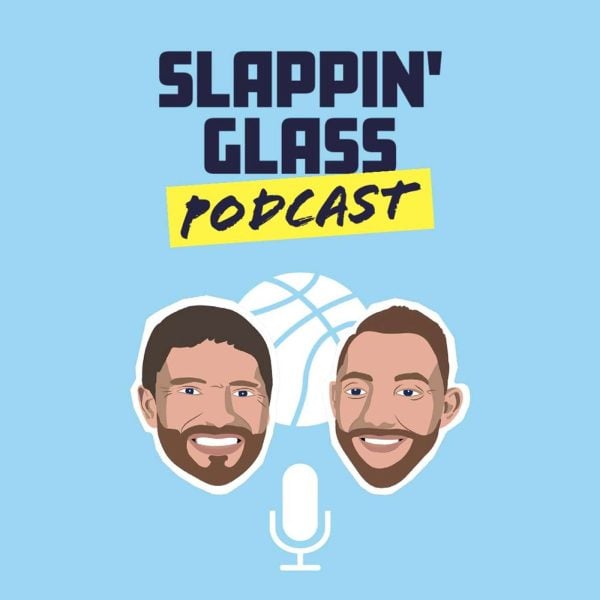
Slappin’ Glass Podcast
- Épisodes
- 308
- Parution
- hebdomadaire
- Dernier épisode
- 20 Nov 2026
À propos du podcast
Exploring basketball's best ideas, strategies, and coaches from around the world.
Épisodes 308
Ferdi Albrecht on Movement Variability, Microdosing, and Deceleration
Movement training is often reduced to teaching athletes the right technique. Ferdi Albrecht joins Slappin’ Glass to explain why basketball players need a wider range of movement solutions for the imperfect …
Notes de l’épisode
Movement training is often reduced to teaching athletes the right technique. Ferdi Albrecht joins Slappin’ Glass to explain why basketball players need a wider range of movement solutions for the imperfect positions they encounter in games. The conversation covers using warm-ups to build movement variability, identifying whether a skill limitation is actually rooted in strength or mobility, and matching athletic preparation to a team’s principles of play.
Ferdi also discusses microdosing movement and strength work, monitoring fatigue, and keeping high days high and low days low. During Start, Sub, or Sit, he ranks the movement qualities that are hardest to develop in taller athletes and shares practical ways to train change of direction, contact, and deceleration.
02:31 Movement variability and the “right technique”
04:26 Simple ways to build more movement solutions
07:12 Is it a skill issue or a movement issue?
10:54 Athleticism, Jokic, and Luka
14:02 Managing fatigue across a long season
18:18 What microdosing means
22:10 Monitoring fatigue with player questionnaires
25:31 Start, Sub, or Sit?! Movement qualities for tall athletes
30:27 Where taller athletes can excel
32:44 Training deceleration
36:06 Best investment in Ferdi’s career
38:20 Dan and Pat’s takeaways
41:12 Perception and action have to connect
44:09 Matching movement preparation to principles of play
46:59 Coaching cues and movement solutions
50:34 Closing / post-recording audio checkTo join coaches and championship winning staffs from the NBA to High School from over 70 different countries taking advantage of an SG Plus membership, visit HERE!
Joe Crispin on Playing with Soul, Creating Unkind Defenses, and the Coach’s Role | Air Force
Air Force Head Coach Joe Crispin joins Slappin’ Glass to explore teaching soul and spontaneity, building confidence through practice constraints, and making fast play a daily habit. The trio discusses how to …
Notes de l’épisode
Air Force Head Coach Joe Crispin joins Slappin’ Glass to explore teaching soul and spontaneity, building confidence through practice constraints, and making fast play a daily habit. The trio discusses how to balance player freedom with shot selection, use offensive advantages and shorter shot clocks to change behavior, and let players help reveal the concepts that fit their team.
During Start, Sub, or Sit?!, the conversation turns to creating an unkind environment for opposing offenses through run and jumps, zones, and fake traps, followed by the relationship between self awareness, confidence, and skepticism in coaching. Crispin also shares his approach to scouting, managing the flow of a game, and helping players and staff do their best work.
Timestamps:
02:21 Teaching soul and spontaneity
06:15 Player identity, trust, and freedom
10:12 Can you, should you, and did you mean it?
13:10 Sponsor messages
14:16 Constraints that change offensive habits
16:56 Analytics, scoring rewards, and player exceptions
19:18 Embracing messy learning
22:33 Making fast normal and listening to players
25:08 Nudging the offense toward useful concepts
28:26 Start, Sub, or Sit?! Disruptive defensive environments
31:50 Personnel and defensive pressure
33:34 Conceptual defense and recovering to neutral
36:30 Making fake traps credible
38:22 Start, Sub, or Sit?! Coaching characteristics
42:42 Challenging your philosophy
44:19 The head coach’s role
46:12 Managing the flow of a game
47:59 Scouting to disrupt the opponent’s core
50:45 Best investment: faith and perspective
52:24 Dan and Pat’s takeaways
61:21 What the trio could explore next
63:26 ClosingTo join coaches and championship winning staffs from the NBA to High School from over 70 different countries taking advantage of an SG Plus membership, visit HERE!
Tagging Up vs. Crashing Five | Offensive Rebounding Deep Dive
Dan Krikorian, Patrick Carney and Eric Fawcett discuss the next stage of the offensive rebounding conversation: strict tagging up, crashing five, and the space between them. Pat shares his early experience with …
Notes de l’épisode
Dan Krikorian, Patrick Carney and Eric Fawcett discuss the next stage of the offensive rebounding conversation: strict tagging up, crashing five, and the space between them. Pat shares his early experience with a staff sending five to the glass, while Dan breaks down the details that keep aggressive rebounding connected to transition defense: approaching on the high side, staying with the tag long enough, and making the rebounder’s first dribble go east-west.
The group explores freeing a strong offensive rebounder, adjusting to mismatches and scrambled defenses, and why the third player reaching the glass may matter more than adding a fourth or fifth. Eric shares observations from Division I tracking data, and Dan explains why transition numbers need to be checked against the film. The episode closes with a look at European teams and styles on the hosts’ watch lists.
What you will learn
- How crashing five changes the message players receive about offensive rebounding.
- Why low-side approaches, soft tags and early re-switches expose transition defense.
- How a one second press can buy time for teammates to recover.
- Where floor position and shot quality may justify more rebounding freedom.
- Why actual participation matters more than the number of players assigned to crash.
- How to separate transition possessions after turnovers from those after missed shots.
- What to watch when opponents use early screens to disrupt tags after made baskets.
To join coaches and championship winning staffs from the NBA to High School from over 70 different countries taking advantage of an SG Plus membership, visit HERE!
Ross Hodge on Defensive Adaptability, Solving Offensive Problems, and Attacking Zones | West Virginia
Ross Hodge joins Slappin’ Glass to discuss defensive adaptability, teaching defensive decision making, and adjusting a no middle defense against modern basketball offenses. The trio explores how to prepare …
Notes de l’épisode
Ross Hodge joins Slappin’ Glass to discuss defensive adaptability, teaching defensive decision making, and adjusting a no middle defense against modern basketball offenses. The trio explores how to prepare players for scramble situations, develop defensive feel, and defend the flat ball screens that challenge paint protection.
During Start, Sub, or Sit?!, the trio dives into offensive player development, including rim finishing, shot selection, passing, and drawing fouls. Hodge explains how better decisions create better finishes, why footwork and spacing matter for bigs, and how to help secondary playmakers avoid situations that demand difficult passes.
The trio also discusses zone offense, using step up ball screens and weak side screening to create advantages, and building practice plans that expose your offense to different defensive coverages. Hodge closes with his thoughts on investing in players, staff, and the people around your program.
Time Topic|02:28 | Ross Hodge joins the conversation
| 02:49 | Defensive adaptability and playing in the gray
| 05:49 | Teaching through scrambles and disadvantaged situations
| 08:25 | Personnel, peel switching, and defensive feel
| 12:57 | Building habits before adding freedom
| 17:38 | How North Texas protected the paint and limited threes
| 20:19 | Adapting no middle against middle third attacks
| 23:37 | Defending flat screens and adjusting the pickup point
| 26:45 | Start, Sub, or Sit?!
| 27:11 | Offensive puzzles: passing, finishing, and drawing fouls
| 30:12 | Guard finishing and shot selection
| 33:37 | Developing a big’s base, balance, and spacing
| 36:56 | Helping secondary players become better passers
| 39:24 | What defensive coaches learn from watching offense
| 41:22 | Ranking screening actions against zones
| 44:35 | Adjusting the offense to different zones
| 46:38 | Practicing against other defenses
| 49:38 | Using “punch” segments early in practice
| 51:24 | Foul line playmakers and driving against zones
| 53:49 | Best career investment: investing in people
| 55:57 | Dan and Pat’s takeawaysTo join coaches and championship winning staffs from the NBA to High School from over 70 different countries taking advantage of an SG Plus membership, visit HERE!
Brooks Savage on Offensive Evolution, From Tagging to Crashing, and Late-Game Comebacks | East Tennessee State
Brooks Savage has changed his offense several times since becoming a head coach. In this episode, the East Tennessee State coach explains how personnel, team strengths, and defensive identity shaped those …
Notes de l’épisode
Brooks Savage has changed his offense several times since becoming a head coach. In this episode, the East Tennessee State coach explains how personnel, team strengths, and defensive identity shaped those decisions—and why he became more effective once he stopped trying to be different for its own sake.
Savage also shares how he builds a clear team identity through standards, recruiting, and consistent language; why he prefers short, repetitive practices built around a few priorities; and how his approach to offensive rebounding has shifted from tagging up to more selective crashing. He discusses the decision to play without a traditional center, how he attacks a late-game deficit, and why coaches should use timeouts when the game calls for it instead of saving them for an imagined final moment.
What You’ll Learn
- How personnel and team strengths should shape an offense
- Why a program’s identity starts with standards and informs recruiting
- How to build culture through repeated language and daily expectations
- Why Savage favors short, focused practices with consistent priorities
- What his team learned by shifting from tagging up to crashing
- Why ETSU chose to play without a traditional center
- How he approaches pressing, lineups, and timeouts when trailing late
Timestamps
- 02:42 The evolution of Savage’s offense
- 07:54 Finding an edge through fundamentals
- 09:59 Choosing sets and preparing for opponents
- 12:03 How a set-heavy offense changes practice
- 15:02 Building practice around a team’s capacity
- 20:37 Moving from tagging up to crashing
- 24:29 Start, Sub, or Sit: identity and standards
- 28:58 Making culture real through language and behavior
- 32:00 Matching team identity to the university and community
- 33:52 Coaching players who fall below the standard
- 36:31 Creating a comeback by changing the game
- 40:02 Why ETSU plays without a traditional center
- 42:49 When to use timeouts
- 44:38 The best investment of Savage’s coaching career
To join coaches and championship winning staffs from the NBA to High School from over 70 different countries taking advantage of an SG Plus membership, visit HERE!
Kim Caldwell on Building a Connected System, Burning the Boats, and Practice Tipping Points | Tennessee
Tennessee Women’s Basketball Head Coach Kim Caldwell joins the podcast to detail the connected system behind her high-possession style of play.Caldwell explains how her teams pursue a 20-shot advantage through …
Notes de l’épisode
Tennessee Women’s Basketball Head Coach Kim Caldwell joins the podcast to detail the connected system behind her high-possession style of play.
Caldwell explains how her teams pursue a 20-shot advantage through forced turnovers, offensive rebounding, limiting their own turnovers, and getting to the foul line. She breaks down the habits that must be unlearned to play fast, how shot selection connects to floor balance, and why crashing four naturally establishes matchups for the press.
She also discusses subbing for fatigue rather than mistakes, giving defenders freedom within the run-and-jump, and the danger of introducing a Plan B that contradicts the team’s identity.
In Start, Sub, or Sit, Caldwell ranks communication, decision-making, and execution when players reach their physical limit. The conversation closes with her approach to full-court practices, eight-minute drills, conditioning, and choosing coaching jobs where winning is possible.
Timestamps
2:20 – Kim Caldwell joins the show
2:34 – The goal of creating 20 more shots
4:29 – Adjusting the shot-margin target by competition level
5:13 – Unteaching habits and training with a 12-second clock
6:33 – Defining a good shot within the system
7:41 – Preferred opponent shot profile
9:12 – Using defense to regain pace and momentum
10:47 – Substitution patterns and playing in short bursts
12:55 – Attacking teams that try to slow the game
14:36 – What Caldwell tracks during timeouts
16:49 – Crashing four and “building a house”
18:37 – Matching up and flowing into the run-and-jump
19:45 – Giving defenders freedom to err toward aggression
20:26 – Conviction, adaptation, and the danger of Plan B
23:04 – Protecting leads without abandoning pace
25:14 – Late-game shot selection and pressure adjustments
26:12 – Caldwell’s philosophy on calling timeouts
28:02 – Start, Sub, or Sit: Practice tipping points
30:12 – Player-to-player communication under fatigue
31:51 – Keeping chaos within the right boundaries
33:14 – Full-court practice and conditioning
35:03 – The eight-minute drill limit
36:46 – Finishing the final conversion of a drill
38:19 – Building practice plans with the staff
40:04 – Caldwell’s best career investment
41:39 – Slappin’ Glass takeawaysTo join coaches and championship winning staffs from the NBA to High School from over 70 different countries taking advantage of an SG Plus membership, visit HERE!
Jim Les on Building Urgency, Princeton Reads, and Multiple Offensive Modes | UC Davis
UC Davis Head Coach Jim Les joins the Slappin’ Glass Podcast to discuss the daily habits behind elite performance, building trust before asking for hard truth, and creating a team environment where productive …
Notes de l’épisode
UC Davis Head Coach Jim Les joins the Slappin’ Glass Podcast to discuss the daily habits behind elite performance, building trust before asking for hard truth, and creating a team environment where productive conflict can be handled quickly. Coach Les explains why urgency starts with what a staff is willing to tolerate, how written player goals can sharpen accountability, and why “the game knows” has become a central teaching idea in his program.
On the tactical side, he breaks down UC Davis’s use of Princeton and chin action, the value of a dynamic catch before the pick and roll, teaching split cuts through clear order of operations, and using multiple offensive modes during a game. The conversation closes with ball-screen coverage complexity, deciding whether to fix or cover a team weakness, and the coaching investment that has kept him learning for more than two decades.
Episodes Chapters
02:51 The traits of elite players and teams
03:22 Urgency habits and editing your life
08:40 How Coach Les changed as a communicator
11:17 Protecting the head coach’s voice
13:40 The game knows
15:47 Building a pre-practice habit system
18:17 Teaching passing off the dribble
19:36 Productive conflict inside a team
22:27 Staff communication and alignment
25:06 Investing in relationships with players
28:51 "Start Sub or Sit" Princeton into pick and roll
30:15 Dynamic catches and sprinting into the screen
32:03 Why Princeton punishes good defensive principles
34:55 Teaching split cuts and the feeder is the leader
36:36 Attacking the closeout before the ball screen
38:12 Using multiple offensive modes
40:02 "Start Sub or Sit" changes in coaching philosophy
41:41 Scaling ball-screen coverage complexity
45:19 Fixing a weakness or covering it
47:05 Coach Les’s best career investment
49:07 Slappin’ Glass recap
To join coaches and championship winning staffs from the NBA to High School from over 70 different countries taking advantage of an SG Plus membership, visit HERE!
Nevada Smith on "25" Speed, Confusion Zones, and Crashing Five | Siena
Siena University head coach Nevada Smith joins the Slappin’ Glass Podcast to discuss the difference between speed and pace, the details behind “25 Speed,” and how his teams work to create advantages within the …
Notes de l’épisode
Siena University head coach Nevada Smith joins the Slappin’ Glass Podcast to discuss the difference between speed and pace, the details behind “25 Speed,” and how his teams work to create advantages within the first five seconds of a possession.
Smith breaks down one-handed passing, finishing development, empty-side pick-and-rolls, high-slot spacing, attacking defensive absolutes, and creating “confusion zones” through guard-to-guard actions.
During “Start, Sub, or Sit,” he shares his approach to offensive rebounding, reading ball flight, crashing five, training disadvantaged transition situations, and developing point guards who can commit a second defender.
What You’ll Learn
- Why Smith separates speed from pace—and how he defines “25 Speed.”
- How finishing work and one-handed passing support a faster offense.
- Why high-slot spacing and empty-side pick-and-rolls create downhill attacks.
- How Siena identifies and attacks defensive absolutes.
- Why guard-to-guard actions create “confusion zones” against switching defenses.
- How shot selection and ball-flight recognition shape offensive rebounding.
- Why committing a second defender is Smith’s top point-guard skill.
- How the first 36 minutes inform Siena’s offense during the final four.
To join coaches and championship winning staffs from the NBA to High School from over 70 different countries taking advantage of an SG Plus membership, visit HERE!
Justin Downer on Offensive Decision Trees, The Power of Three, and Creating Productive Adversity | Point Loma
Point Loma Head Coach Justin Downer joins the Slappin’ Glass Podcast to discuss building offensive decision trees around advantage creation, organizing offense into four connected phases, and using the “power …
Notes de l’épisode
Point Loma Head Coach Justin Downer joins the Slappin’ Glass Podcast to discuss building offensive decision trees around advantage creation, organizing offense into four connected phases, and using the “power of three” to simplify reads.
Downer explains how Point Loma identifies its three best offensive leverage points, recruits primary ball handlers rather than traditional point guards, and teaches ball-screen decisions through three levels: the primary defender, the coverage, and the help behind it.
In Start, Sub, or Sit, the conversation shifts to creating productive adversity, building clear feedback loops, highlighting roles, tagging up, and switching with physicality.
What You’ll Learn
- How Point Loma organizes offense into four phases without making the players feel restricted by the structure.
- Why every offensive decision begins with identifying the advantage it is meant to create.
- How the “power of three” shapes decision trees, offensive actions, and player reads.
- Why Point Loma evaluates primary ball handlers through processing and decision-making rather than traditional point-guard traits.
- How to teach ball-screen reads through the primary defender, the coverage, and the help behind it.
- Why Downer corrects aggressively during teaching segments but avoids providing answers during competition.
- How role highlighting allows bench players to retain their strengths when their minutes change.
- Why tagging up, forcing left, and physical switching help Point Loma dictate the possession before the offense can create an advantage.
To join coaches and championship winning staffs from the NBA to High School from over 70 different countries taking advantage of an SG Plus membership, visit HERE!
Jeff Van Gundy On Defending Great Players, Scoring Via Cutting, and Giving Impactful Feedback | SG Classics
In this high-level, candid, and engaging return to the show, Los Angeles Clippers assistant coach Jeff Van Gundy joins Slappin' Glass for his third appearance. Van Gundy dives deep into what it takes to …
Notes de l’épisode
In this high-level, candid, and engaging return to the show, Los Angeles Clippers assistant coach Jeff Van Gundy joins Slappin' Glass for his third appearance. Van Gundy dives deep into what it takes to defend the NBA's best players—emphasizing the fundamentals of transition defense, rebounding, and avoiding reckless fouling. The conversation explores stunt vs. full help principles, creating physical defenses through communication, and the challenge of preparing against high-powered offenses.
A special edition of “Start, Sub, or Sit” covers skill development, offensive rebounding priorities, and what Van Gundy learned moving from broadcasting back to the NBA bench.
Authentic, honest, and packed with coaching wisdom, this episode is a must-listen for coaches at all levels looking to sharpen their defensive philosophies and leadership approach.
Topics Include:
- Defending elite players with discipline and fundamentals
- Communication as a driver of physicality
- The evolving role of offensive rebounding in the NBA and other levels
- How to give appropriate and impactful feedback to players
- Van Gundy’s “sniper rule” for transition defense 😂
- “Start, Sub, or Sit” on skill development and late-game coaching lessons
To join coaches and championship winning staffs from the NBA to High School from over 70 different countries taking advantage of an SG Plus membership, visit HERE!
Matt Fletcher on Guard-to-Guard Screening, Developing a Staff, and Personnel-Based Cutting | Concordia St. Paul
Concordia St. Paul head coach Matt Fletcher joins Slappin’ Glass to detail the guard-to-guard screening system his staff built around a roster of multiple point guards and an undersized five. Fletcher explains …
Notes de l’épisode
Concordia St. Paul head coach Matt Fletcher joins Slappin’ Glass to detail the guard-to-guard screening system his staff built around a roster of multiple point guards and an undersized five. Fletcher explains how “bump, tap, hit” gives screeners three answers—screen-and-roll, ghost, or hit-and-pop—while creating an empty side and forcing the defense into switch-or-stay decisions. …Vitor Galvani on Hedge & Plug Protection Plans, Guard-to-Guard Separation & Letting Shot Selection Set the Pace | Mexico City Capitanes
The 2026 G-League Coach of the Year, Vitor Galvani, joins us to detail how he built and adjusted Hedge & Plug in Brazil and the G League. He explains why the coverage made sense in what he calls a “scoring …
Notes de l’épisode
The 2026 G-League Coach of the Year, Vitor Galvani, joins us to detail how he built and adjusted Hedge & Plug in Brazil and the G League. He explains why the coverage made sense in what he calls a “scoring guards league,” how the pickup point changes the plug technique, the triggers for releasing the hedge, and why re-screens and late flips can put the coverage under real stress. …Chad Dickman on Unorthodox Spacing, Randomizing Blind Flares, & Forcing Defenses to Solve the Unfamiliar | Hood College
Hood College Head Coach Chad Dickman joins us to discuss how his offense uses spacing, pace, and unorthodox ball-screen actions to force defenses into decisions they rarely get to rehearse. Dickman explains the …
Notes de l’épisode
Hood College Head Coach Chad Dickman joins us to discuss how his offense uses spacing, pace, and unorthodox ball-screen actions to force defenses into decisions they rarely get to rehearse. Dickman explains the thinking behind Hood’s early empty-side flat ball screens, the intentionally “jumbled” three-man side, and why he wants the ballhandler making decisions before the defense can settle into its preferred coverage. …Charles Klask on Building Structure Into Flow Offense, Evaluating Rich Possessions, and Disruptive Switching | University of Washington
University of Washington assistant coach and longtime NBA coach Charles Klask joins Slappin’ Glass for a detailed conversation on building structure underneath a free-flowing offense, defining offensive …
Notes de l’épisode
University of Washington assistant coach and longtime NBA coach Charles Klask joins Slappin’ Glass for a detailed conversation on building structure underneath a free-flowing offense, defining offensive priorities, using analytics to shape behavior, and teaching switching defense. …Pat Juckem on Designing Practices That Transfer, Scoring Winning Habits, and Taking Emotion Out of Shot Selection | WashU
WashU Head Coach Pat Juckem joins the Slappin’ Glass Podcast to discuss practice design, competitive scoring, team engagement, and transition defense. Juckem breaks down how WashU structures practice through …
Notes de l’épisode
WashU Head Coach Pat Juckem joins the Slappin’ Glass Podcast to discuss practice design, competitive scoring, team engagement, and transition defense. Juckem breaks down how WashU structures practice through teaching, learning, and competitive segments, why the opening minutes should reveal a team’s identity, and how productive practices often require mistakes, uncertainty, and player-led problem solving. …T.J. Otzelberger on Defensive Trade-Offs, In-Game Information, and Competitive Endurance | Iowa State
Iowa State Head Coach TJ Otzelberger joins the Slappin’ Glass Podcast to discuss building one of college basketball’s most disruptive defensive identities. Coach Otzelberger explains why Iowa State prioritizes …
Notes de l’épisode
Iowa State Head Coach TJ Otzelberger joins the Slappin’ Glass Podcast to discuss building one of college basketball’s most disruptive defensive identities. Coach Otzelberger explains why Iowa State prioritizes mentality over scheme, beginning with its commitment to creating a “collision” on the first dribble, pressuring the ball inside the scoring area, and forcing opponents to play under duress. …Baldur Ragnarsson on Finding Patterns That Decide Games, Applying Pressure After Free Throws, and In-Season Conditioning | Álftanes
Coach Baldur Ragnarsson joins Slappin’ Glass to discuss basketball scouting, opponent game planning, defensive strategy, and high-intensity practice design. Ragnarsson explains how he combines full-game film …
Notes de l’épisode
Coach Baldur Ragnarsson joins Slappin’ Glass to discuss basketball scouting, opponent game planning, defensive strategy, and high-intensity practice design. Ragnarsson explains how he combines full-game film, tagged possessions, and statistical databases to identify player tendencies—particularly passing patterns—and turn a large amount of information into a clear game plan. …Hedge & Plug Solutions, Learning Frameworks, and European Film | SG Deep Dive
In this SG Deep Dive, Dan Krikorian, Patrick Carney, and Eric Fawcett examine how offenses are attacking the hedge-and-plug pick-and-roll coverage that continues to spread throughout European and modern …
Notes de l’épisode
In this SG Deep Dive, Dan Krikorian, Patrick Carney, and Eric Fawcett examine how offenses are attacking the hedge-and-plug pick-and-roll coverage that continues to spread throughout European and modern basketball. The conversation begins with why the coverage has become so effective. Hedge and plug allows the defense to pressure the ball without fully committing two defenders, protect the short roll, and remain compact behind the play. …Matt Jones on Building Better Shooters, Coaching Voice, and Re-Triggers in Conceptual Offense {International Pro Coach}
This week on the Slappin’ Glass Podcast, Dan and Pat are joined by International Pro Head Coach and player development specialist Matt Jones for a deep dive into shooting development, coaching communication …
Notes de l’épisode
This week on the Slappin’ Glass Podcast, Dan and Pat are joined by International Pro Head Coach and player development specialist Matt Jones for a deep dive into shooting development, coaching communication, and building conceptual offense. The conversation opens with Jones’ approach to evaluating shooters, beginning with one of his core beliefs: watch the player first. …Francesco Tabellini on Playing Relentless, Tagging Up Killers, and Attacking the Hedge & Plug
This week we’re joined in this SG Classics episode by International Head Coach Francesco Tabellini for a deep dive into the concepts behind his team’s relentless style of play. Tabellini opens the conversation …
Notes de l’épisode
This week we’re joined in this SG Classics episode by International Head Coach Francesco Tabellini for a deep dive into the concepts behind his team’s relentless style of play. Tabellini opens the conversation by unpacking the idea of “canceling the pauses” in the game — eliminating the dead space between offense and defense, defense and offense, and every small conversion moment in between. …Dr. Andy Galpin on Sleep, Strength, and the Hidden Stressors of Performance
In this episode, Dr. Andy Galpin joins Slappin’ Glass for a practical, high-level conversation on basketball performance, recovery, strength training, sleep, travel, and pregame preparation. Galpin breaks down …
Notes de l’épisode
In this episode, Dr. Andy Galpin joins Slappin’ Glass for a practical, high-level conversation on basketball performance, recovery, strength training, sleep, travel, and pregame preparation. Galpin breaks down why improving movement is not just about stretching, mobility work, or lifting weights, but about understanding the physical qualities that allow athletes to move with more range, force, control, and efficiency. …Jeremy Shulman on Defensive Tradeoffs, Uniqueness as a Strength, and Attacking the Hedge {UT Martin}
UT Martin Head Coach Jeremy Shulman joins the Slappin’ Glass podcast for a deep dive into building a defensive system around conviction, trade-offs, and player fit. Shulman discusses the philosophy behind his …
Notes de l’épisode
UT Martin Head Coach Jeremy Shulman joins the Slappin’ Glass podcast for a deep dive into building a defensive system around conviction, trade-offs, and player fit. Shulman discusses the philosophy behind his unique defensive approach, including why his teams lean toward containment, switch heavily, borrow matchup-zone principles without playing zone, and still find ways to generate turnovers without relying on full-court pressure. …SG Deep Dive: College Basketball’s NIL Economy & Its Impact on the Global Game with Kevin Sweeney
College basketball’s NIL era has quickly become one of the most disruptive forces in the global basketball market. In this Slappin’ Glass Deep Dive, Eric Fawcett sits down with Kevin Sweeney, college basketball …
Notes de l’épisode
College basketball’s NIL era has quickly become one of the most disruptive forces in the global basketball market. In this Slappin’ Glass Deep Dive, Eric Fawcett sits down with Kevin Sweeney, college basketball and NBA Draft writer for Sports Illustrated, to unpack what NIL money really looks like inside the modern college game, how schools are building rosters, and why the American college system is now pulling players from Europe and other international markets at a level that is reshaping…Scott Wylie Returns! Anticipation, System Fit and the Cognitive Edge of Elite Decision-Making {S2 Cognition}
Scott Wylie, co-founder of S2 Cognition, returns to Slappin’ Glass for a deeper look at how athletes process the game at speed — and how coaches can use that information to better teach, train, and build around …
Notes de l’épisode
Scott Wylie, co-founder of S2 Cognition, returns to Slappin’ Glass for a deeper look at how athletes process the game at speed — and how coaches can use that information to better teach, train, and build around their players. The conversation moves from theory into application: matching systems to cognitive profiles, understanding the trade-off between decision speed and accuracy, and designing practices that help players make better decisions under pressure. …Mihai Silvășan on Practice Intensity, Risk/Reward Tradeoffs, and The Art of Motivation {Cluj-Napoca}
This week on Slappin’ Glass, we’re joined by Mihai Silvășan, head coach of U-BT Cluj-Napoca, for a deep dive into motivation, practice intensity, pace, risk-taking, and the daily work of building a team that …
Notes de l’épisode
This week on Slappin’ Glass, we’re joined by Mihai Silvășan, head coach of U-BT Cluj-Napoca, for a deep dive into motivation, practice intensity, pace, risk-taking, and the daily work of building a team that can sustain success across a long European season. Coach Silvășan shares how he thinks about motivating players at different stages of their careers, from veterans playing for pride and legacy to younger players trying to make the next jump. …Dan Clements on "Lending Power", Mastery-Based Environments, and How Autonomy Ties to Motivation
In this week’s episode of Slappin’ Glass, we’re joined by coach developer and researcher Dan Clements for a conversation on building environments where players are motivated to learn, compete, and keep coming …
Notes de l’épisode
In this week’s episode of Slappin’ Glass, we’re joined by coach developer and researcher Dan Clements for a conversation on building environments where players are motivated to learn, compete, and keep coming back. The discussion starts with the difference between mastery-based and performance-based environments, and why the best coaches are able to chase results without letting every practice, conversation, and piece of feedback become purely outcome-driven. …Dave Collins on Anticipation, Shared Mental Models, and Blending Coaching Methods
In this week’s episode, we’re joined by Dr. Dave Collins for a wide-ranging conversation on coaching, skill acquisition, practice design, and the importance of knowing when different methods fit. As ecological …
Notes de l’épisode
In this week’s episode, we’re joined by Dr. Dave Collins for a wide-ranging conversation on coaching, skill acquisition, practice design, and the importance of knowing when different methods fit. As ecological dynamics, the constraints-led approach, cognitive science, and predictive processing continue to shape modern coaching conversations, Dave brings a balanced and practical lens to the discussion. …Attacking the Switch in Secondary Actions, Co-Creating Stories, and Elevated Horns Actions {SG Deep Dive}
In this week’s Slappin’ Glass Deep Dive, we go deeper into one of the most important offensive conversations in the modern game: how to attack switching defenses. As switching continues to become a preferred …
Notes de l’épisode
In this week’s Slappin’ Glass Deep Dive, we go deeper into one of the most important offensive conversations in the modern game: how to attack switching defenses. As switching continues to become a preferred solution for defenses at every level, offenses can no longer rely only on simply “getting the matchup” and hoping the possession solves itself. …Rusty Earnshaw on Leadership Mindsets, "The Invisibles", and Mastering Tough Conversations
In this episode of Slappin’ Glass, we sit down with performance coach and leadership expert Rusty Earnshaw to explore the evolving role of the modern coach, from tactician to culture architect. The conversation …
Notes de l’épisode
In this episode of Slappin’ Glass, we sit down with performance coach and leadership expert Rusty Earnshaw to explore the evolving role of the modern coach, from tactician to culture architect. The conversation dives into the concept of multiple mindsets, and how great coaches constantly shift between teaching, challenging, and competing environments, while also navigating emotional, tactical, and relational demands. …Nick Pasqua on Difficult Coaching Paths, Combining Euro and Princeton Offenses, and Efficient Player Analytics {Coker University}
In this episode, we’re joined by coach Nick Pasqua for a powerful and honest conversation on resilience, leadership, and building a program from the ground up. Coach Pasqua shares his unconventional path …
Notes de l’épisode
In this episode, we’re joined by coach Nick Pasqua for a powerful and honest conversation on resilience, leadership, and building a program from the ground up. Coach Pasqua shares his unconventional path through the profession — from early success and landing a head coaching job at 30, to being fired after one season, and then taking over one of the most challenging programs in Division II basketball. …
Voici les 40 derniers épisodes sur 308. Les épisodes plus anciens se trouvent dans le flux du podcast.
Podcasts similaires
Plus de podcasts : Sports


C’est votre podcast ?
Confirmez-le avec une entrée dans votre flux : vous recevez ici un code, vous l’ajoutez comme podcast:txt dans le canal de votre flux, et nous le vérifions. Votre podcast apparaît ensuite comme « vérifié » sur SoundNode.