

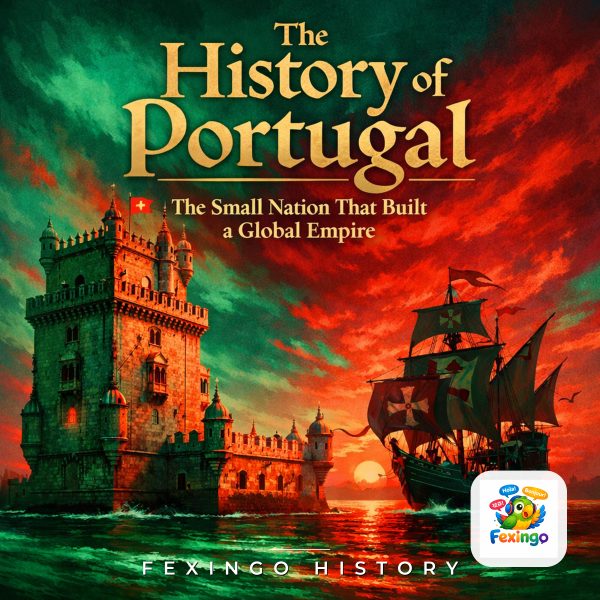
The History of Portugal: The Small Nation That Built a Global Empire — Fexingo History
- Épisodes
- 296
- Parution
- quotidienne
- Dernier épisode
- 17 Nov 2026
À propos du podcast
How did a small, sun-scorched nation on the edge of Europe become the continent's first global empire? From the reconquest of Lisbon in 1147 to the Carnation Revolution of 1974, Portugal's story is one of improbable ambition, breathtaking discovery, and profound cultural fusion. Join hosts Lucas and Luna as they trace the rise of the Kingdom of Portugal under the Burgundian dynasty, the Age of Discoveries that sent explorers like Vasco da Gama around Africa to India, and the creation of a maritime empire stretching from Brazil to Macau. They delve into the Treaty of Tordesillas, the spice trade monopoly, and the brutal realities of the slave trade that made Lisbon a wealthy capital. Along the way, they explore the avis dynasty's golden age, the devastating Lisbon earthquake of 1755, the rise of the Portuguese Empire in Africa under Salazar's Estado Novo, and the long shadow of colonialism that continues to shape Portuguese identity and its relationship with the Lusophone world. With a focus on key figures like Prince Henry the Navigator, King Manuel I, and Fernando Pessoa, as well as the cultural legacies of fado music, azulejo tiles, and port wine, this show offers a comprehensive, critical look at a nation that gave the world new oceans—and new ways of seeing. What does it mean for a small country to have left such a large mark on the globe? #Portugal #History #PortugueseEmpire #AgeOfDiscovery #VascoDaGama #PrinceHenryTheNavigator #TreatyOfTordesillas #SpiceTrade #Brazil #Macau #EstadoNovo #CarnationRevolution #LisbonEarthquake #Fado #Azulejo #FexingoHistory #WorldHistory #Podcast Keep every episode free: buymeacoffee.com/fexingo
Participants
- LucasAnimation
- LunaCoanimation
Épisodes 296
Portugal's Forgotten War with the Mughals
In 1622, a small Portuguese fleet anchored before the mighty walls of Hormuz, attempting to reclaim a key Indian Ocean trade hub from a combined Persian and English force. This episode explores the Battle of …
Notes de l’épisode
In 1622, a small Portuguese fleet anchored before the mighty walls of Hormuz, attempting to reclaim a key Indian Ocean trade hub from a combined Persian and English force. This episode explores the Battle of Hormuz, a desperate last stand that marked the beginning of Portugal’s decline as a global maritime power. We examine the strategic importance of the island fortress, the diplomatic maneuvering between Shah Abbas I and the East India Company, and the tactical errors made by Governor Diogo de Mendonça Furtado. Through the lens of this conflict, we uncover how internal decay in Lisbon allowed rival powers to erode Portuguese dominance, shifting the balance of power in Asia forever.
#Hormuz #BattleOfHormuz #PortugueseEmpire #ShahAbbasI #EastIndiaCompany #DiogoDeMendoncaFurtado #SafavidPersia #IndianOceanTrade #PortugueseIndia #EstadoDaIndia #GulfOfOman #17thCenturyHistory #ColonialHistory #NavalWarfare #PersianHistory #BritishEastIndiaCompany #LisbonDecline #History
The Knights of the Sword and the Cross
While Lisbon’s historians often focus on the maritime voyages that built a global empire, there was another kind of expansion happening inland and in Iberia’s heartland: the military orders. This episode …
Notes de l’épisode
While Lisbon’s historians often focus on the maritime voyages that built a global empire, there was another kind of expansion happening inland and in Iberia’s heartland: the military orders. This episode explores how the Knights Hospitaller, the Order of Christ, and the Templars transitioned from crusading fronts in the Holy Land to becoming the economic and political backbone of medieval Portugal. We look at the life of Dom Paio Peres Correia, the Grand Master who turned the Order of Christ into a formidable land-based power after the fall of Acre in 1291. You will hear about their massive estates, their unique legal autonomy, and how they navigated the complex relationship with the Portuguese crown. From the Battle of Ourique’s mythological echoes to the practical realities of managing vast agricultural holdings, this is the story of the knights who stayed behind while the caravels sailed away, shaping the social fabric of the kingdom long before the Age of Discovery.
#DomPaioPeresCorreia #OrderOfChrist #KnightsHospitaller #MilitaryOrders #PortugueseHistory #MedievalPortugal #FallOfAcre #IberianCrusades #Feudalism #KingDinis #Templars #KnightsTemplar #LisbonHistory #EstateManagement #ReligiousKnights #13thCentury #FexingoHistory #History
Portugal's Silk Road to Japan: The Nagasaki Decade
This episode explores the unique era of Portuguese-Japanese relations during the late 16th century, focusing on the cultural and religious exchanges that took place in Nagasaki. We follow the journey of Luis …
Notes de l’épisode
This episode explores the unique era of Portuguese-Japanese relations during the late 16th century, focusing on the cultural and religious exchanges that took place in Nagasaki. We follow the journey of Luis Frois, a Jesuit missionary who documented his experiences with remarkable detail, offering insights into the lives of figures like Oda Nobunaga, Tokugawa Ieyasu, and Toyotomi Hideyoshi. The narrative examines the phenomenon of Nanban culture, where European goods, ideas, and Christianity briefly flourished before political shifts led to its suppression. Listeners will encounter the story of Kirishitan converts, the diplomatic maneuvers at Azuchi Castle, and the complex relationship between Macau and Japanese ports. This conversation delves into the human side of empire-building, moving beyond trade routes to explore the personal interactions, misunderstandings, and genuine curiosity that defined this brief but significant period of cross-cultural contact between Europe and East Asia.
#PortugueseEmpire #JapanHistory #LuisFrois #Nagasaki #OdaNobunaga #TokugawaIeyasu #ToyotomiHideyoshi #Kirishitan #NanbanCulture #JesuitMissionaries #AzuchiCastle #Hirado #MacauTrade #CosmeTorres #ChristianityInJapan #SengokuPeriod #EuropeanJapanRelations #FexingoHistory
Portugal's Spice Monopoly and the Cartaz System
While previous episodes have explored the naval might of the Estado da Índia and the strategic forts like Malacca and Diu, this episode turns its gaze to the invisible machinery that held the empire together …
Notes de l’épisode
While previous episodes have explored the naval might of the Estado da Índia and the strategic forts like Malacca and Diu, this episode turns its gaze to the invisible machinery that held the empire together: the Cartaz system. We trace how Portuguese authorities transformed from mere traders into imperial tax collectors, issuing safe-conduct passes to merchant vessels across the Indian Ocean. The conversation examines the economic coercion behind these permits, the fierce resistance from Gujarati and Arab merchants, and the complex diplomacy required to maintain a monopoly without constant warfare. Through the lens of specific incidents involving local sultans and European rivals, we uncover how Portugal enforced its maritime rights through legalistic frameworks that blurred the line between trade regulation and piracy. This deep dive reveals the administrative grit behind the golden age of exploration, showing how small crews managed vast networks of compliance and conflict in the seventeenth century.
#CartazSystem #EstadoDaIndia #PortugueseEmpire #IndianOceanTrade #GoaHistory #AfonsoDeAlbuquerque #GujaratSultanate #MaritimeLaw #SafeConductPass #ColonialEconomics #LopoVazDeSiqueira #MalaccaFall #PortugueseNavy #MughalIndia #ArabMerchants #SeventeenthCentury #FexingoHistory #History
Portugal's African Gold: The Real Source of Empire
While we often picture Portuguese expansion through the lens of spice routes and naval battles in the Indian Ocean, the engine that fueled this entire enterprise was actually much closer to home. This episode …
Notes de l’épisode
While we often picture Portuguese expansion through the lens of spice routes and naval battles in the Indian Ocean, the engine that fueled this entire enterprise was actually much closer to home. This episode explores the crucial, often overlooked role of West Africa in building Portugal's global dominance. We focus on the Kingdom of Kongo, specifically the diplomatic and trade relationship between King Afonso I and the Portuguese crown during the early sixteenth century. You will hear about the complex negotiations over silver, the establishment of the Casa de Congos, and the surprising ways African political structures influenced European colonial policy. Through the eyes of missionaries like João dos Santos and the letters of Afonso himself, we uncover how a small kingdom in Central Africa became an indispensable partner—and sometimes a stubborn equal—in the creation of the first truly global empire. This is a story about mutual interest, cultural translation, and the hard reality that empires are built on partnerships, not just conquest.
#KingdomOfKongo #AfonsoI #PortugueseEmpire #WestAfricaHistory #CasaDeCongos #JoaoDosSantos #DiogoCao #16thCenturyHistory #ColonialTrade #AtlanticHistory #MissionaryHistory #AfricanRoyalty #ReligiousConversion #PreColonialAfrica #LisbonArchive #HistoricalDiplomacy #FexingoHistory #History
The Portuguese Empire's Hidden African Roots
While previous episodes have explored the naval might and Asian trade routes of Portugal, this episode turns to the Atlantic coast of Africa to uncover the deep, often overlooked foundations of the empire. We …
Notes de l’épisode
While previous episodes have explored the naval might and Asian trade routes of Portugal, this episode turns to the Atlantic coast of Africa to uncover the deep, often overlooked foundations of the empire. We examine the Kingdom of Kongo and its complex relationship with Lisbon, focusing on King Afonso I, a ruler who navigated diplomacy, faith, and sovereignty during the early 16th century. Lucas and Luna discuss how Kongo became one of the most significant Christian kingdoms in Africa, the role of the Feitoria trading posts, and the tragic economic shifts that led to the transatlantic slave trade. Through letters, treaties, and the legacy of the Casa de Congos, we explore how a small European nation built a global empire not just through cannons, but through intricate political entanglements in Central Africa.
#KingdomOfKongo #AfonsoI #PortugueseEmpire #CentralAfricaHistory #TransatlanticSlaveTrade #Feitoria #CasaDeCongos #PadroadoReal #EstadoDaIndia #LisbonDiplomacy #16thCenturyAfrica #CatholicismInAfrica #DiogoCao #SãoTomé #BantuCivilizations #ColonialHistory #FexingoHistory #History
The Man Who Stole Malacca and Built an Empire
While earlier episodes covered the Treaty of Tordesillas and the naval battles of Diu, this episode focuses on the single most critical strategic victory in Portuguese imperial history: the conquest of Malacca …
Notes de l’épisode
While earlier episodes covered the Treaty of Tordesillas and the naval battles of Diu, this episode focuses on the single most critical strategic victory in Portuguese imperial history: the conquest of Malacca in 1511. Led by Afonso de Albuquerque, the siege transformed a wealthy trading port into the linchpin of the Estado da Índia. We explore the tactical brilliance required to take the city, the complex diplomacy with local sultans, and how this victory allowed Portugal to control the spice trade between Asia and Europe. Lucas and Luna discuss the immediate aftermath, the establishment of the Feitoria system, and the cultural fusion that began in this Malaysian strait, offering a fresh look at how a small European kingdom projected power across the Indian Ocean.
#AfonsoDeAlbuquerque #ConquestOfMalacca #EstadoDaIndia #PortugueseEmpire #MalaccaStrait #IndianOceanTrade #SpiceTrade #Feitoria #PadroadoReal #SultanateOfMalacca #TunPerak #MuzaffarShah #CasaDaIndia #CaravelaLatina #NausDeGuerra #History #FexingoHistory #MaritimeHistory
The Portuguese Inquisition in Goa: Faith and Fear
While Lisbon’s Tribunal do Santo Offício is well known, the Portuguese Inquisition in India operated with distinct brutality and administrative complexity. This episode explores the establishment of the Goa …
Notes de l’épisode
While Lisbon’s Tribunal do Santo Offício is well known, the Portuguese Inquisition in India operated with distinct brutality and administrative complexity. This episode explores the establishment of the Goa Inquisition in 1560 under Dom Bartolomeu do Martir and its immediate impact on the local population. We examine how the tribunal targeted not only New Christians but also Hindus and Muslims, enforcing Catholic orthodoxy through public autos-da-fé that served as political theater for the Estado da Índia. Lucas and Luna discuss the role of the Jesuits in educating converts, the economic motivations behind seizing property from heretics, and the resistance movements that emerged among the hidden Jewish communities in the Konkan region. The conversation also touches on the legal debates surrounding the jurisdiction of the Inquisition versus local colonial authorities, revealing a system where faith was weaponized for imperial control.
#PortugueseInquisition #GoaInquisition #EstadoDaIndia #DomBartolomeudoMartir #AutoDaFe #CristaosNovos #KonkanRegion #JesuitMissionaries #IndianHistory #ColonialIndia #LisbonInquisition #HinduConversion #MuslimPersecution #TribunaldoSantoOficio #PortugueseEmpire #ReligiousFreedom #FexingoHistory #History
Portuguese India: Goa's Lost Golden Age
We explore the unique world of Portuguese India, centered in Goa from the early 1500s to the mid-1700s. This was not just a military outpost but a vibrant cultural hybrid where Catholicism blended with Hindu …
Notes de l’épisode
We explore the unique world of Portuguese India, centered in Goa from the early 1500s to the mid-1700s. This was not just a military outpost but a vibrant cultural hybrid where Catholicism blended with Hindu traditions and local languages. We examine the role of the Inquisition in shaping this society, the rise of Indo-Portuguese identity, and the tragic decline after the Maratha invasions. Listen as we uncover how Lisbon’s distant rule created a distinct colonial culture that survived long after the empire faded, featuring figures like Dom Manuel de Sousa Coutinho and the complex legacy of the Velhas Conquistas.
#Goa #PortugueseIndia #VelhasConquistas #Inquisition #IndoPortuguese #DomManueldeSousaCoutinho #MarathaEmpire #HinduCatholicism #Lusophone #ColonialHistory #IndianOceanTrade #KonkanCoast #Viceroyalty #CatholicMissionaries #GoanCulture #PortugueseEmpire #HistoryPodcast #FexingoHistory
Portugal's Secret Spice Network in the Indian Ocean
While previous episodes covered battles like Diu and political treaties, this episode explores the logistical miracle of the Portuguese spice trade. We trace the journey of pepper and cinnamon from the Malabar …
Notes de l’épisode
While previous episodes covered battles like Diu and political treaties, this episode explores the logistical miracle of the Portuguese spice trade. We trace the journey of pepper and cinnamon from the Malabar Coast to Lisbon, focusing on the Cartaz system and the Estado da Índia. Lucas and Luna examine how Afonso de Albuquerque secured Goa as a hub and how the Casa da Índia managed the massive influx of wealth. The conversation details the specific routes taken by naus de guerra, the role of feitorias in maintaining supply lines, and the economic pressure that forced Portugal to innovate its naval architecture. You will hear about the daily reality of loading spices, the corruption within the administration, and why this invisible network mattered more than any single battlefield victory in sustaining the empire for two centuries.
#PortugueseEmpire #EstadoDaIndia #CasaDaIndia #GoaHistory #SpiceTrade #AfonsoDeAlbuquerque #CaravelaLatina #IndianOceanTrade #LisbonCommerce #MalabarCoast #CartazSystem #Feitoria #PadroadoReal #NausDeGuerra #CinnamonRoute #PepperTrade #FexingoHistory #History
The Maroon Republic of Palmares: Brazil's Free State
In the heart of colonial Brazil, a vast network of escaped enslaved people built Zumbi’s Palmares, a republic that defied the Portuguese Empire for nearly a century. This episode explores how Quilombo dos …
Notes de l’épisode
In the heart of colonial Brazil, a vast network of escaped enslaved people built Zumbi’s Palmares, a republic that defied the Portuguese Empire for nearly a century. This episode explores how Quilombo dos Palmares became the largest and most enduring resistance movement in the Americas, surviving multiple invasions by Dutch and Portuguese forces. We trace the life of Zumbi, the last leader who turned a loose collection of settlements into a militarized state with its own laws and governance. Alongside Lucas and Luna, we examine the complex alliances between maroons, indigenous tribes, and poor whites, and the brutal siege that finally toppled the mountain fortress of Macaco in 1694. Discover how this hidden republic challenged the very foundations of slavery and shaped the cultural memory of Brazil long after its physical destruction.
#QuilomboDosPalmares #Zumbi #BrazilianHistory #MaroonRepublic #ColonialBrazil #EnslavedResistance #PortugueseEmpire #MacacoFortress #GangaZumba #CapitaoDosMocambos #AfroBrazilianCulture #SlaveryAbolition #HistoricalResistance #NewWorldColonies #LusoAfricanHistory #FexingoHistory #HistoryPodcast #UnsungHeroes
Portugal's Lost Gold Coast: Elmina and the Slave Trade
We often think of Portugal’s empire as a series of naval victories, but the real engine was the fortress at São Jorge da Mina. In 1482, Diogo Cão established this trading post on the Gold Coast of West Africa …
Notes de l’épisode
We often think of Portugal’s empire as a series of naval victories, but the real engine was the fortress at São Jorge da Mina. In 1482, Diogo Cão established this trading post on the Gold Coast of West Africa, transforming it into the crown jewel of Portuguese overseas holdings. This episode explores how Elmina became the central hub for the transatlantic trade in gold and enslaved people, reshaping both African societies and European economies. We look at the lives of those who lived within its walls—the Portuguese governors, the African traders, and the thousands of captives who passed through its gates. It is a story of brutal commerce, complex diplomacy, and the devastating human cost of empire.
#PortugueseEmpire #Elmina #SãoJorgeDaMina #DiogoCão #GoldCoast #WestAfrica #TransatlanticTrade #SlaveTradeHistory #AfricanHistory #Colonialism #15thCentury #EuropeanExploration #KingdomOfKongo #AfonsoI #PadroadoReal #Feitoria #History #FexingoHistory
The Battle of Alcácer Quibir: Portugal's Collapse
In 1578, King Sebastian of Portugal launched a disastrous crusade into Morocco that ended in total annihilation at the Battle of Alcácer Quibir. This episode explores the religious fervor and political …
Notes de l’épisode
In 1578, King Sebastian of Portugal launched a disastrous crusade into Morocco that ended in total annihilation at the Battle of Alcácer Quibir. This episode explores the religious fervor and political isolation that drove Sebastian to lead an army of 20,000 men into the desert heat, where they were destroyed by the Saadi Sultanate under Abd al-Malik. We examine the immediate aftermath: the capture of the king, the massive ransom demanded for his release, and how Philip II of Spain exploited the crisis to claim the Portuguese throne. The conversation details the economic devastation, the loss of key nobles and military leaders like Diogo Soares de Albergaria, and the beginning of the Iberian Union. Through letters from survivors and accounts of the prisoner exchange, we see how this single battle erased Portugal’s status as a global superpower and left it vulnerable to Spanish absorption for sixty years.
#KingSebastian #BattleOfAlcacerQuibir #PortugueseEmpire #SaadiDynasty #AbdAlMalik #PhilipIIOfSpain #IberianUnion #16thCenturyHistory #MaghrebiHistory #MilitaryDisaster #CrusadingIdeals #PortugueseSuccession #RansomPolitics #NunoMartins #DiogoSoaresDeAlbergaria #MoroccoCampaign #FexingoHistory #EuropeanHistory
The Portuguese Inquisition and the Crypto-Jews of Lisbon
In this episode, we explore the tragic fate of Portugal's Jewish crypto-Jews during the sixteenth century. We trace how King John III, fearing Ottoman influence and seeking religious unity, intensified the …
Notes de l’épisode
In this episode, we explore the tragic fate of Portugal's Jewish crypto-Jews during the sixteenth century. We trace how King John III, fearing Ottoman influence and seeking religious unity, intensified the Inquisition established in 1536. Lucas and Luna discuss the daily realities of the conversos, who practiced Judaism in secret while outwardly conforming to Catholicism. We examine specific cases from the Tribunal do Santo Ofício, including the use of denunciations and torture to root out heresy. The conversation also covers the Limpeza de Sangue statutes that barred new Christians from public office and the economic irony that the very people being persecuted were often essential to Portugal's global trade networks. This is a story of faith, fear, and the brutal machinery of state control.
#PortugueseHistory #LisbonInquisition #CryptoJews #Conversos #KingJohnIII #TribunaldoSantoOficio #LimpezaDeSangue #AutoDaFe #PortugueseEmpire #MediterraneanHistory #OttomanThreat #ReligiousPersecution #MedievalJudaism #ColonialEconomy #IberianPeninsula #FexingoHistory #HistoryPodcast #HumanRightsHistory
Portugal's Silk Road to Japan: The Nagasaki Decade
While much is made of the spice trade in India, Portugal’s most lucrative and culturally complex venture was its exclusive access to Japan from 1570 to 1639. This episode explores the Nanban trade, where …
Notes de l’épisode
While much is made of the spice trade in India, Portugal’s most lucrative and culturally complex venture was its exclusive access to Japan from 1570 to 1639. This episode explores the Nanban trade, where Portuguese traders introduced firearms, Christianity, and new foods to the Shogunate. We examine the life of Luis Fróis, the Jesuit missionary who chronicled Oda Nobunaga’s rise, and the intricate diplomatic dance between Lisbon, Madrid, and Kyoto. You will hear about the port of Nagasaki, the black ships that brought silver for silk, and the eventual crackdown by Tokugawa Ieyasu. This story reveals how a small European nation navigated the court politics of feudal Japan, becoming indispensable allies before being expelled as a perceived threat to national unity. It is a tale of cultural exchange, religious fervor, and geopolitical maneuvering that reshaped both nations.
#NanbanTrade #PortugueseJapan #NagasakiHistory #LuisFrois #OdaNobunaga #TokugawaIeyasu #JesuitMissionaries #SengokuPeriod #ChristianDaimyo #BlackShips #SilkRoadTrade #AzuchiCastle #HideyoshiEdict #Kirishitan #HiradoMerchants #MacauRoute #EuropeanExpansion #FeudalJapan #History #FexingoHistory
The Portuguese Navy That Ruled the Waves
We often think of empires as land-based conquests, but Portugal’s rise was fundamentally an oceanic phenomenon. In this episode, we explore how a small kingdom with limited manpower built the world’s first …
Notes de l’épisode
We often think of empires as land-based conquests, but Portugal’s rise was fundamentally an oceanic phenomenon. In this episode, we explore how a small kingdom with limited manpower built the world’s first truly global naval empire. We look at the strategic genius behind the Casa da Índia, the logistical miracle of maintaining supply lines across three continents, and the specific ships—like the nau and the caravel—that made it possible. From the shipyards of Lisbon to the foggy harbors of Calicut, we trace the bureaucratic and engineering innovations that allowed Portuguese commanders to project power far beyond their borders. You’ll meet the admirals who turned navigation into science and the merchants who financed voyages that defied common sense. It is a story of ambition, mathematics, and the sheer audacity of sailing into the unknown.
#PortugueseEmpire #AgeOfDiscovery #NavalHistory #CasaIndia #VascoDaGama #InfanteDomHenrique #Caravel #Nau #LisbonHarbor #Calicut #IndianOceanTrade #MaritimeTechnology #15thCentury #16thCentury #Exploration #GlobalTrade #FexingoHistory #History
Portugal's Lost Gold Coast: Elmina and the Slave Trade
In 1482, Portuguese explorer Diogo Cão arrived at a spot on the West African coast that would become the linchpin of global commerce. He built São Jorge da Mina, or Elmina Castle, transforming a quiet fishing …
Notes de l’épisode
In 1482, Portuguese explorer Diogo Cão arrived at a spot on the West African coast that would become the linchpin of global commerce. He built São Jorge da Mina, or Elmina Castle, transforming a quiet fishing village into Europe’s first major overseas trading post. This episode explores how this single fort became the engine of the transatlantic slave trade, shifting Portugal’s focus from gold to human beings. We trace the complex diplomacy between the Kingdom of Kongo, the Jolof Empire, and the rising power of Oyo, as European ships began to demand captives in exchange for textiles, copper, and iron. You will meet figures like Afonso I of Kongo, who tried to regulate the trade through treaties, and see how the demand for labor in Brazil eventually turned the Atlantic into a triangle of suffering. We also look at the architectural legacy of Elmina, its internal hierarchy, and the enduring resistance of the local populations who navigated these new, dangerous waters. This is not just a story of conquest, but of adaptation, survival, and the brutal economic machinery that reshaped two continents.
#ElminaCastle #SaoJorgeDaMina #DiogoCao #TransatlanticSlaveTrade #KingdomOfKongo #AfonsoI #PortugueseEmpire #WestAfricaHistory #GoldCoast #Colonialism #BrazilianSlavery #OyoEmpire #JolofEmpire #EuropeanColonization #AtlanticTrade #MedievalPortugal #FexingoHistory #History
Portuguese Cartaz System: Monopoly Wars in the Indian Ocean
We explore how Portugal enforced its spice monopoly through the cartaz system, a maritime pass requiring merchant ships to pay tribute and fly Portuguese flags. This episode details the conflict with Gujarati …
Notes de l’épisode
We explore how Portugal enforced its spice monopoly through the cartaz system, a maritime pass requiring merchant ships to pay tribute and fly Portuguese flags. This episode details the conflict with Gujarati merchants, the role of Afonso de Albuquerque, and the strategic importance of Diu. We examine the economic pressures on the Mamluk Sultanate and Ottoman Empire, as well as the resistance from local rulers like Mahmud Begada. The narrative covers the naval battles that secured the Estado da Índia and the complex diplomatic relations with Zaydi imams in Yemen. By focusing on the enforcement mechanisms rather than just discovery, we reveal the gritty reality of early global trade control.
#CartazSystem #EstadoDaIndia #AfonsoDeAlbuquerque #Diu #GujaratSultanate #MahmudBegada #MamlukSultanate #OttomanEmpire #IndianOceanTrade #SpiceMonopoly #MaritimeLaw #PassportSystem #VascoDaGama #ZaydiImamate #YemenHistory #PortugueseNavy #Caravel #HistoryPodcast #FexingoHistory
Portugal's Hidden War Against the Ottoman Empire
While much has been said about Portugal’s maritime trade routes and colonial settlements, this episode explores a different kind of empire: the diplomatic and military struggle against the rising Ottoman threat …
Notes de l’épisode
While much has been said about Portugal’s maritime trade routes and colonial settlements, this episode explores a different kind of empire: the diplomatic and military struggle against the rising Ottoman threat in the Indian Ocean. We dive into the life of Dom Francisco de Almeida, the first Viceroy of India, and his decisive victory at the Battle of Diu in 1509. This engagement wasn't just about spices; it was a clash of naval technologies and imperial ambitions that secured Portuguese dominance for decades. Lucas and Luna discuss how Lisbon navigated complex alliances with local Indian powers, the strategic importance of controlling the Red Sea, and the surprising role of Venetian merchants who feared Ottoman competition more than they feared the Portuguese. From the design of the naus to the political maneuvering in Goa, we uncover how a small European kingdom held its ground against one of history’s greatest empires.
#DomFranciscodeAlmeida #BattleofDiu #OttomanEmpire #PortugueseIndia #Estado da Índia #ViceroyofIndia #IndianOceanTrade #Naus #Caravels #Venice #MamlukSultanate #KhanzadaYusufAdil #GujaratSultanate #RedSea #Aden #Calicut #LopoVazdeSiqueira #History
The Tragic Fate of Portugal's Jewish Crypto-Jews
In this episode, we uncover the hidden history of the conversos and cristãos-novos in 16th-century Portugal. While earlier episodes covered military conquests and trade monopolies, we turn our attention to the …
Notes de l’épisode
In this episode, we uncover the hidden history of the conversos and cristãos-novos in 16th-century Portugal. While earlier episodes covered military conquests and trade monopolies, we turn our attention to the internal social fracture caused by the Inquisition. We explore how the expulsion of Jews from Spain in 1492 forced thousands into hiding in Lisbon, creating a parallel society that eventually triggered a royal crackdown under King John III. The narrative focuses on the Auto da Fé in 1506, the establishment of the Tribunal do Santo Ofício in 1536, and the specific mechanisms used to police faith and lineage. You will hear about the role of the Jesuits, the daily fears of merchants in Porto, and the complex legal categories of 'purity of blood' that defined Portuguese identity for centuries. This is not just a story of persecution, but of survival, adaptation, and the ultimate failure of religious homogeneity to hold a global empire together.
#PortugueseHistory #Inquisition #CryptoJews #Conversos #CristaosNovos #AutoDaFe #Lisbon1506 #KingJohnIII #SantoOficio #PurityOfBlood #SephardicJews #TortugaNetwork #AmsterdamGhetto #PortugueseEmpire #ReligiousPersecution #MedievalPortugal #FexingoHistory #History
Portugal's Black Gold Rush: The Angola Sugar Boom
While the Brazilian gold rush grabs headlines, a quieter economic engine was transforming Lisbon in the late seventeenth century: sugar produced by enslaved labor in Angola. This episode explores how the …
Notes de l’épisode
While the Brazilian gold rush grabs headlines, a quieter economic engine was transforming Lisbon in the late seventeenth century: sugar produced by enslaved labor in Angola. This episode explores how the capture of Luanda in 1648 shifted the center of gravity for Portugal’s Atlantic economy. We follow the rise of the Casa de Congos, the complex web of credit and debt that bound African kingdoms to European merchants, and the brutal reality behind the sweetness. Lucas and Luna examine how this 'black gold' bankrolled the Palácio de Mafra and reshaped the demographics of both Angola and Brazil, offering a deeper look at the human cost of Portugal’s global empire beyond the usual narratives of spice and gold.
#Angola #SugarPlantations #Luanda #TransatlanticSlaveTrade #PortugueseEmpire #17thCenturyHistory #AtlanticEconomy #CasaDeCongo #Colonialism #EnslavedLabor #LisbonHistory #Mafra #PedroCamoes #NunoBarcaAlvarenga #KingdomOfKongo #DutchInterregnum #BrazilianGold #FexingoHistory #History
The Treaty of Tordesillas: Dividing the World
In 1493, Pope Alexander VI issued the bull Inter Caetera, drawing an imaginary line in the Atlantic to split newly discovered lands between Spain and Portugal. This episode explores the diplomatic maneuvering …
Notes de l’épisode
In 1493, Pope Alexander VI issued the bull Inter Caetera, drawing an imaginary line in the Atlantic to split newly discovered lands between Spain and Portugal. This episode explores the diplomatic maneuvering that followed, as King João II of Portugal negotiated the Treaty of Tordesillas in 1494, shifting the boundary westward to claim what would become Brazil. We examine how this arbitrary geometric division shaped colonial borders for centuries, influenced the spread of languages like Portuguese and Spanish across continents, and set the stage for future conflicts over global trade routes. The narrative covers the roles of key figures such as Ferdinand and Isabella, the papal bulls Dudum Siquidem and Inter Caetera, and the concept of Mare Clausum versus Mare Liberum. Listeners will learn about the geopolitical tensions between the Iberian powers, the strategic importance of Cape Verde, and how a single line on a map altered the course of world history by determining which empire controlled vast swathes of Africa, Asia, and the Americas.
#TreatyOfTordesillas #PortugueseHistory #SpanishEmpire #AgeOfDiscovery #PopeAlexanderVI #InterCaetera #KingJoaoII #FerdinandAndIsabella #BrazilDiscovery #CapeVerde #MareClausum #IberianUnion #ColonialHistory #Geopolitics #MapMaking #PapalBulls #AtlanticOcean #FexingoHistory
The Azores: Portugal's Strategic Atlantic Archipelago
While earlier episodes covered the spice routes of India and the gold mines of Brazil, this episode shifts focus to the unsung strategic heart of the Portuguese Empire: the Azores. We explore how these nine …
Notes de l’épisode
While earlier episodes covered the spice routes of India and the gold mines of Brazil, this episode shifts focus to the unsung strategic heart of the Portuguese Empire: the Azores. We explore how these nine volcanic islands in the mid-Atlantic became the indispensable refueling station for caravels crossing the ocean. Lucas and Luna discuss the settlement led by Gonçalo Velho Cabo in the 1420s, the introduction of sugarcane that created the first colonial plantation economy, and the islands' critical role during the Iberian Union when they served as a bulwark against Spanish and Dutch threats. We also examine the tragic fate of the Santa Cruz, a merchant ship that vanished in 1938 with Franklin D. Roosevelt’s private papers, highlighting the Azores’ enduring mystery and geopolitical importance. This is the story of how a small archipelago helped stitch together the first global network.
#Azores #PortugueseEmpire #GoncaloVelhoCabo #AgeOfDiscovery #AtlanticHistory #SugarcanePlantation #Caravel #IberianUnion #SantaCruzShipwreck #FranklinDRoosevelt #Madeira #CanaryIslands #NavalStrategy #VolcanicArchipelago #LusoBrazilian #DutchInvasion #Horta #PontaDelgada #FexingoHistory #History
The Siege of Diu: How Portugal Held the Indian Ocean
In 1509, a tiny Portuguese fleet faced an overwhelming coalition of Ottoman, Mamluk, Gujarati, and Venetian naval forces at Diu on the west coast of India. This episode explores the Battle of Diu, often called …
Notes de l’épisode
In 1509, a tiny Portuguese fleet faced an overwhelming coalition of Ottoman, Mamluk, Gujarati, and Venetian naval forces at Diu on the west coast of India. This episode explores the Battle of Diu, often called the 'Water Lepanto,' where Admiral Fonseca used superior artillery and ship design to shatter the myth of Muslim naval invincibility. We look at the specific tactics of the caravel and the naus, the political tensions between Venice and the Ottomans, and how this single engagement secured Portugal’s monopoly on the spice trade for decades. From the gunpowder empires to the merchant republics, discover how a small European nation changed global maritime history through one decisive clash.
#BattleOfDiu #PortugueseEmpire #IndianOceanTrade #OttomanNavy #MamlukSultanate #GujaratSultanate #VeniceRepublic #AdmiralFonseca #NavalHistory #CaravelShip #SpiceTrade #GunpowderEmpires #MaritimeHistory #16thCentury #IndiaHistory #MiddleEastHistory #MilitaryTactics #FexingoHistory
Portuguese Armadas and the Battle of Diu
In this episode, we explore how a small kingdom dominated the Indian Ocean through naval warfare and strategic alliances. Lucas and Luna discuss the Battle of Diu in 1509, where a Portuguese fleet defeated a …
Notes de l’épisode
In this episode, we explore how a small kingdom dominated the Indian Ocean through naval warfare and strategic alliances. Lucas and Luna discuss the Battle of Diu in 1509, where a Portuguese fleet defeated a coalition of Mamluks, Ottomans, and Gujaratis. We examine the role of Afonso de Albuquerque, the use of heavy artillery on ships, and the creation of the Estado da Índia. The conversation also covers the Treaty of Tordesillas, the impact of the Padroado Real on global trade, and the cultural exchanges in Macau and Nagasaki. From the gold mines of Minas Gerais to the silk roads of Japan, we trace Portugal's global reach. Listeners will learn about the Bandeirantes, the Marquis of Pombal, and the secret life of Luso-Chinese communities. This episode highlights the military innovations and diplomatic maneuvers that allowed Portugal to build an empire despite its small size.
#BattleOfDiu #AfonsoDeAlbuquerque #EstadoDaIndia #PortugueseEmpire #IndianOceanTrade #MamlukSultanate #OttomanEmpire #GujaratSultanate #LourencoDeAlmeida #PadroadoReal #TreatyOfTordesillas #Caravel #NausDeGuerra #ArsenalDaMarinha #ManilaGalleon #Macau #Nagasaki #Bandeirantes #FexingoHistory #History
The Battle of Diu: How Portugal Held the Indian Ocean
In 1509, a small Portuguese fleet faced a massive coalition of Ottoman, Mamluk, and Gujarati ships off the coast of India. This episode explores the Battle of Diu, a naval engagement that decided the fate of …
Notes de l’épisode
In 1509, a small Portuguese fleet faced a massive coalition of Ottoman, Mamluk, and Gujarati ships off the coast of India. This episode explores the Battle of Diu, a naval engagement that decided the fate of the Indian Ocean trade for centuries. We look at Admiral Lourenço de Almeida’s tactics, the role of gunpowder warfare, and how this single victory allowed Portugal to establish the Estado da Índia. Join Lucas and Luna as they examine the ships, the commanders, and the geopolitical shift that turned the Mediterranean’s dominance into the Atlantic’s rise.
#BattleOfDiu #LourencoDeAlmeida #PortugueseEmpire #IndianOceanTrade #EstadoDaIndia #OttomanNavy #MamlukSultanate #GujaratSultanate #NavalWarfare #GunpowderEmpire #16thCenturyHistory #PortugueseMaritime #DiouIndia #VascoDaGama #AfonsoDeAlbuquerque #Caravel #HeavyGalleon #FexingoHistory
The Portuguese Empire's Forgotten African Capital
While we often focus on the spice routes of Asia or the sugar plantations of Brazil, Portugal’s earliest and most complex colonial relationship was with the Kingdom of Kongo in Central Africa. This episode …
Notes de l’épisode
While we often focus on the spice routes of Asia or the sugar plantations of Brazil, Portugal’s earliest and most complex colonial relationship was with the Kingdom of Kongo in Central Africa. This episode explores the diplomatic dance between King Afonso I and the Portuguese Crown, examining how a sophisticated African state engaged with European powers through letters, Catholicism, and trade before the shift toward the transatlantic slave trade fractured their alliance. We look at the specific terms of their treaty, the role of the Padroado Real, and the eventual breakdown of relations that led to centuries of conflict. Join Lucas and Luna as they unpack the nuanced history of Mbanza Kongo, the capital city, and the individuals who tried to bridge two vastly different worlds.
#PortugueseEmpire #KingdomOfKongo #KingAfonsoI #MbanzaKongo #PadroadoReal #TransatlanticSlaveTrade #CatholicMissionaries #DiplomaticHistory #CentralAfrica #16thCenturyHistory #Colonialism #AfricanHistory #PortugueseHistory #FexingoHistory #HistoryPodcast #HistoricalDocuments #ReligiousConflict #GlobalTrade
The Portuguese Naval Arsenal of Lisbon
While earlier episodes have explored the vast global reach of the Estado da Índia and the political maneuvering of figures like King Afonso I or the Marquis of Pombal, this episode zooms in on the physical …
Notes de l’épisode
While earlier episodes have explored the vast global reach of the Estado da Índia and the political maneuvering of figures like King Afonso I or the Marquis of Pombal, this episode zooms in on the physical engine that made such an empire possible: the Royal Shipyards of Lisbon. We trace the evolution of the Arsenal da Marinha from its medieval roots to its zenith under King Manuel I, examining how state-controlled shipbuilding allowed Portugal to dominate the spice trade despite having a tiny population. Lucas and Luna discuss the specific labor force of carpenters and caulkers, the technical innovations in hull design that produced the robust caravel and later the galleon, and the bureaucratic rigor of the Carta Régia that regulated every nail and plank. We also look at the strategic importance of these yards during the Iberian Union and the subsequent decline as European powers shifted their naval centers northward. This is a story about industrial policy, maritime technology, and the quiet, often overlooked workforce that kept the Portuguese fleet sailing for two centuries.
#ArsenalDaMarinha #RoyalShipyards #LisbonHistory #PortugueseEmpire #ManuelI #CaravelDesign #GalleonShip #NavalArchitecture #EstadoDaIndia #CartaRegia #MaritimeTrade #SpiceTrade #IberianUnion #PortugueseNavy #Shipbuilding #MarineEngineering #16thCenturyPortugal #FexingoHistory
Henry the Navigator's Secret Maps and the Age of Discovery
We explore the engine behind Portugal’s global expansion: Infante Dom Henrique, known as Henry the Navigator. While often romanticized as a patron of science, his true legacy lies in the institutionalization of …
Notes de l’épisode
We explore the engine behind Portugal’s global expansion: Infante Dom Henrique, known as Henry the Navigator. While often romanticized as a patron of science, his true legacy lies in the institutionalization of maritime exploration through the Sagres school of navigation. This episode examines how he transformed vague coastal rumors into systematic voyages, funding expeditions that mapped the African coast from 1419 onward. We look at the role of Jewish cartographers, the development of the caravel ship design, and the strategic logic behind seeking the source of West African gold. From the first landing on the Canary Islands to the establishment of the Feitoria de Arguin, we trace how a small kingdom built the infrastructure for an empire without ever conquering vast territories by force. Join us as we dissect the technical and political realities of early Portuguese seafaring.
#HenrytheNavigator #InfanteDomHenrique #SagresSchool #Caravel #AgeOfDiscovery #PortugueseEmpire #NunoTristão #GilEanes #BojadorCape #ArguinIsland #WestAfricanGold #JewishCartographers #PrinceBeatrice #HouseofAviz #MaritimeHistory #Lisbon #AtlanticOcean #History #FexingoHistory
Portugal's African Empire: Mbanza Kongo and King Afonso I
This episode explores the complex relationship between Portugal and the Kingdom of Kongo during the late 15th and early 16th centuries. We begin with the arrival of Diogo Cão in 1483 and the subsequent …
Notes de l’épisode
This episode explores the complex relationship between Portugal and the Kingdom of Kongo during the late 15th and early 16th centuries. We begin with the arrival of Diogo Cão in 1483 and the subsequent diplomatic exchanges that led to the conversion of King Nzinga a Nkuwu, who took the name João I. The narrative focuses on his son, Afonso I, a ruler who navigated the treacherous waters of colonial expansion while trying to preserve Kongo’s sovereignty. We examine the contradictions inherent in this alliance, including the introduction of Christianity alongside the slave trade, which ultimately destabilized the kingdom. Key figures include Afonso I, Pope Leo X, and Portuguese kings Manuel I and John III. We also touch upon the cultural syncretism of the time, the role of the Catholic Church in Kongo, and the eventual decline of the kingdom due to internal strife and external pressures. This story highlights how a powerful African state attempted to engage with European powers on its own terms, only to find itself ensnared by economic and religious dependencies that eroded its independence.
#MbanzaKongo #KingAfonsoI #PortugueseEmpire #AfricanHistory #DiogoCao #NzingaNkuwu #JoaoIKongo #PadroadoReal #SeCathedral #Feitoria #Senhorio #CartaRegia #BasilicaOfBomJesus #Lifanga #QumbaNtamba #DrumOfWar #NzambiAMpungu #History
Voici les 40 derniers épisodes sur 296. Les épisodes plus anciens se trouvent dans le flux du podcast.
Podcasts similaires
Plus de podcasts : Éducation







C’est votre podcast ?
Confirmez-le avec une entrée dans votre flux : vous recevez ici un code, vous l’ajoutez comme podcast:txt dans le canal de votre flux, et nous le vérifions. Votre podcast apparaît ensuite comme « vérifié » sur SoundNode.