

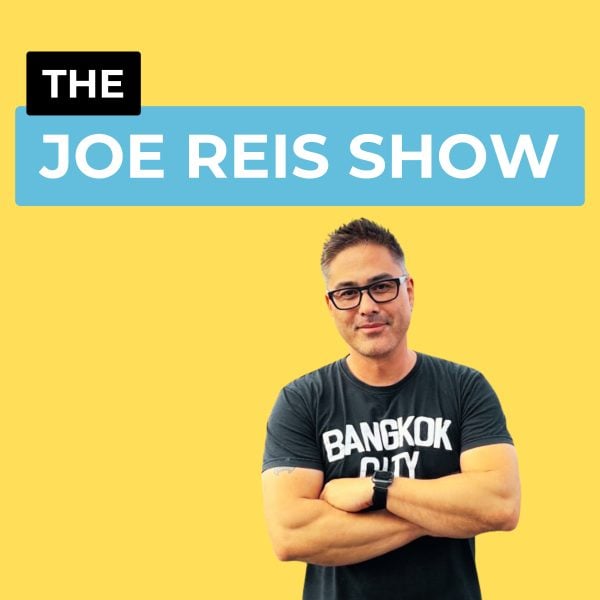
The Joe Reis Show
- Épisodes
- 426
- Parution
- hebdomadaire
- Dernier épisode
- 24 Nov 2026
À propos du podcast
I’m Joe Reis, co-author of Fundamentals of Data Engineering, creator of Mixed Model Arts, international speaker, and long-time observer of the tech industry’s favorite recurring mistakes. Weekly broadcasts from somewhere on the road. Expect raw solo rants and long-form conversations with the engineers and leaders actually building things. I dive into data, AI, architecture, and career survival. This podcast is invitation-only. Unsolicited guest pitches and PR outreach are not considered.
Épisodes 426
Data Governance in the Wild - Why Data Governance Needs a Reset Winfried Etzel
In this conversation, I sit down with Winfried—a German-Norwegian data governance nerd of 20 years and the first author to publish through Practical Data Media—to unpack his new book, Data Governance in the …
Notes de l’épisode
In this conversation, I sit down with Winfried—a German-Norwegian data governance nerd of 20 years and the first author to publish through Practical Data Media—to unpack his new book, Data Governance in the Wild.We dig into why so many data governance initiatives stall, why governance shouldn't be treated as a siloed technical discipline or a separate track from AI governance, and how human incentives, organizational politics, and Conway's Law shape what happens on the ground.
From old-school vs. new-school governance and the realities of federation (beyond data mesh buzzwords) to automation, Waymos, elevators, and where human accountability still has to hold the line, this episode (and book) covers both the structural mechanics and the human side of governing data in an AI-heavy world.
Do Data Roles Have a Future?
Does data engineering have a future? What about data roles in general? As AI makes it faster and cheaper to write code, build pipelines, and generate analytics/reports, what happens to the people doing the …
Notes de l’épisode
Does data engineering have a future? What about data roles in general? As AI makes it faster and cheaper to write code, build pipelines, and generate analytics/reports, what happens to the people doing the work?
In this episode of Freestyle Friday, I rant about how AI is reshaping data engineering, analytics, data science, and other data roles. We'll look at the changing economics of technical work, why fundamentals and business understanding still matter, and what this means for the next generation of data professionals.
The work isn't disappearing, but the roles built around it will likely look very different.
Is BI Dead? Why Hex Hit Reset and Rewrote Everything for the AI Agent Era w/ Barry McCardel (CEO Hex)
Traditional drag-and-drop BI is facing an existential crisis. In this live fireside chat at Hex Prompt, I sit down with Barry McCardel (Co-founder & CEO of Hex), right as Hex announces a major pivot: Hex 4.0, a …
Notes de l’épisode
Traditional drag-and-drop BI is facing an existential crisis. In this live fireside chat at Hex Prompt, I sit down with Barry McCardel (Co-founder & CEO of Hex), right as Hex announces a major pivot: Hex 4.0, a ground-up architectural rewrite built for a world where AI agents write code and traditional dashboards are turning into sand.Barry breaks down the hard realities facing data teams today:- Why wrapping legacy platforms in "agent harnesses" hit diminishing returns - How "vibe coding" across the enterprise is breaking the old centralized BI model - Why the future of analytics isn't drag-and-drop UI, but code with guardrails, context, and observability - The real KPIs modern data teams should track (eval pass rates vs. raw activity) - The emerging challenge of "cognitive surrender" when stakeholders stop critically evaluating data Whether you are an analytics engineer, data analyst, or data platform leader, this conversation offers an unfiltered look at what it takes to adapt when AI shifts the underlying substrate of data work from UI to code.
Why Analytics Engineering Is Changing Forever w/ Tristan Handy (dbt/Fivetran)
Tristan Handy (dbt/fivetran) joins me to discuss the tectonic shifts reshaping data teams, analytics engineering, and business intelligence in the age of agentic AI. Tristan opens up about stepping back into …
Notes de l’épisode
Tristan Handy (dbt/fivetran) joins me to discuss the tectonic shifts reshaping data teams, analytics engineering, and business intelligence in the age of agentic AI.
Tristan opens up about stepping back into "builder mode" after years as CEO, the parallels between the dot-com era and today's AI wave, and why data teams need to stop clinging to yesterday's work, such as dashboard maintenance and SQL ticket queues.
We also chat about the reality of context engineering, why traditional BI and point-and-click tools face an existential reckoning, how dbt charts approaches agentic abstractions, and why data practitioners must become deeply embedded business partners rather than pure pipeline mechanics.
The Great Data Interregnum: Morbid Symptoms of an Industry Between Eras
The old data industry is dying. The new one hasn't quite been born. And in between, we're seeing some strange things.In this episode, I explore the Great Data Interregnum, a period when the playbook, practices …
Notes de l’épisode
The old data industry is dying. The new one hasn't quite been born. And in between, we're seeing some strange things.
In this episode, I explore the Great Data Interregnum, a period when the playbook, practices, and architectures of yesterday are losing their coherence, but whatever replaces it remains uncertain.
Why AI Alone Can’t Fix Your Sh*tty Data Models w/ Kyle Nesbit (Credible Data)
In this episode of The Joe Reis Show, I sit down at my house in Salt Lake City with Kyle, founder of Credible Data. Before founding Credible, Kyle spent nearly 17 years at Google building core distributed …
Notes de l’épisode
In this episode of The Joe Reis Show, I sit down at my house in Salt Lake City with Kyle, founder of Credible Data.
Before founding Credible, Kyle spent nearly 17 years at Google building core distributed systems—including the in-memory shuffle/join backplane that powers BigQuery—before moving to Gradient Ventures and spending four years helping integrate Looker into GCP.
We dive deep into the reality of semantic layers, the origins of Malloy, and why the current hype around semantic layers often misses the mark. Kyle breaks down why SQL conflates data modeling and queries, how agents are shifting data work from painful bottom-up ETL to deterministic top-down domain modeling, and why giving an LLM an entire enterprise schema creates nothing but "data slop." We also get into the future of data engineering, what analysts should actually be learning today, and why unlocking the "long tail" of dark business data is where the true value lies.
Connect with Kyle & Credible: credibledata.com
Guest policy: The Joe Reis Show is strictly invite-only. Unsolicited guest pitches, PR agency solicitations, and booking requests are not accepted or reviewed.
Scott’s Tots and the Broken Promise Economy
Ever feel like you've been lied to?In Scott’s Tots, Michael Scott promises a class of third graders he’ll pay their college tuition if they finish high school. Ten years later they’ve held up their end, and he …
Notes de l’épisode
Ever feel like you've been lied to?
In Scott’s Tots, Michael Scott promises a class of third graders he’ll pay their college tuition if they finish high school. Ten years later they’ve held up their end, and he shows up to tell them he's broke.
A lot of people feel like those kids right now. They got the degree, learned to code, and followed the career plan they were handed, only to find a job market that feels empty and hollowed-out.
In this episode I use Scott’s Tots to look at who made these promises, why most of them were sincere but wrong, and what the consolation prizes look like today.
Guest policy: The Joe Reis Show is strictly invite-only. Unsolicited guest pitches, PR agency solicitations, and booking requests are not accepted or reviewed.
"Blue Washed": The Rise and Fall of IBM Watson Health and Explorys w/ Doug Meil
In this episode, I sit down with Doug Meil, software veteran and author of The Rise and Fall of Explorys and IBM Watson Health. A decade ago, IBM Watson was the undeniable face of the modern AI revolution …
Notes de l’épisode
In this episode, I sit down with Doug Meil, software veteran and author of The Rise and Fall of Explorys and IBM Watson Health. A decade ago, IBM Watson was the undeniable face of the modern AI revolution. Fresh off its historic Jeopardy win, IBM promised Watson would revolutionize entire industries and cure cancer. Instead, it became one of tech history’s most high-profile corporate implosions. Doug lived through the heart of it. His healthcare data startup, Explorys, was acquired in 2015 to serve as a foundational pillar for IBM Watson Health. What followed was a masterclass in what Doug calls the "paradox of inorganic growth"—an unravelling driven by corporate hubris, aggressive internal "blue washing," brutal cloud lock-ins, and leadership prioritizing marketing slogans over iterative product engineering. We dig deep into the untold engineering and product side of the acquisition, why enterprise mergers crush agile technical teams, and the enduring lessons today’s AI founders and leaders must take away before jumping headfirst into enterprise AI hype.Get Doug's book here: https://link.amazon/B05ATbGBL
Guest policy: The Joe Reis Show is strictly invite-only. Unsolicited guest pitches, PR agency solicitations, and booking requests are not accepted or reviewed.
Build a Career That Looks Like You
A lot of people ask me for career advice. My latest advice is learn the fundamentals, build useful things that interest you, and stop outsourcing your direction to everyone around you. But originality doesn’t …
Notes de l’épisode
A lot of people ask me for career advice. My latest advice is learn the fundamentals, build useful things that interest you, and stop outsourcing your direction to everyone around you.
But originality doesn’t automatically pay the bills, copying is part of learning, and “do what AI cannot” is lazy advice.
In this episode, I unpack the advice, its limits, and how to find your own way without betting your livelihood on it.
Guest policy: The Joe Reis Show is strictly invite-only. Unsolicited guest pitches, PR agency solicitations, and booking requests are not accepted or reviewed.
The Pendulums of Data
The data industry rarely moves in a straight line. We swing from centralized to decentralized, batch to real-time, general-purpose to specialized, abstraction to control, and governance to self-service.In this …
Notes de l’épisode
The data industry rarely moves in a straight line. We swing from centralized to decentralized, batch to real-time, general-purpose to specialized, abstraction to control, and governance to self-service.
In this episode, I unpack why these cycles keep repeating, what forces push the pendulum in each direction, and why every successful architecture eventually creates the conditions for its own backlash.
This Year’s Better Mousetrap: New Tech, Same Old Problems
We see a lot of hype cycles in our industry - Data mesh. Generative AI. Agents. Now context. Every cycle brings a new label and a familiar promise: this will finally make your organization’s data useful. The …
Notes de l’épisode
We see a lot of hype cycles in our industry - Data mesh. Generative AI. Agents. Now context. Every cycle brings a new label and a familiar promise: this will finally make your organization’s data useful. The technology has improved enormously. So why do the same problems keep coming back? In this episode, I explore how communication, incentives, and organizational politics shape what our tools actually deliver. Will context finally deliver the silver bullet to solve our problems? …DuckDB - The Past, Present, and Future, DuckLabs, and More w/ Hannes Mühleisen
Hannes Mühleisen (co-creator of DuckDB) joins me to chat about the past, present, and future of DuckDB, Ducklabs (recently acquired by AWS), and more.Note - parts edited due to AWS's request.Guest policy: The …
Notes de l’épisode
Hannes Mühleisen (co-creator of DuckDB) joins me to chat about the past, present, and future of DuckDB, Ducklabs (recently acquired by AWS), and more.
Note - parts edited due to AWS's request.
Guest policy: The Joe Reis Show is strictly invite-only. Unsolicited guest pitches, PR agency solicitations, and booking requests are not accepted or reviewed.
Why Off-The-Shelf AI Fails for Business Analytics w/ Rob Collie
In this episode, I'm joined by Rob Collie, CEO of P3 Adaptive, early pioneer of Power BI and Power Pivot at Microsoft, and author of the new book Fair Game: Customizing AI to Your Business is Easier Than You …
Notes de l’épisode
In this episode, I'm joined by Rob Collie, CEO of P3 Adaptive, early pioneer of Power BI and Power Pivot at Microsoft, and author of the new book Fair Game: Customizing AI to Your Business is Easier Than You Think. Most business leaders play with off-the-shelf ChatGPT or Claude and think it's magic until it completely face-plants on their actual company data. Why? Because the LLM is just one Lego brick. …Designing the AI-Driven Data Foundations: Architecture, Principles, and Practice w/ Sanjeev Mohan
Former Gartner VP Analyst and principal at SanjMo, Sanjeev Mohan, joins me to break down the reality of AI adoption, data foundations, and why enterprises are hitting roadblocks with agents and LLMs. From …
Notes de l’épisode
Former Gartner VP Analyst and principal at SanjMo, Sanjeev Mohan, joins me to break down the reality of AI adoption, data foundations, and why enterprises are hitting roadblocks with agents and LLMs. From comparing the current AI boom to the dot-com era to unpacking his new concept, ECL (Extract, Context, Link), Sanjeev explains why moving data around is no longer viable and why "there is no AI stack, only one stack." We also dive into capability overhang, artificial guardrails, the race to…Why Write Books?
This week at dbt Summit, Tristan Handy (co-founder of dbt) asked me why I write books. It's a good question, especially today when reading is declining and any answer is seemingly at your fingertips.In this …
Notes de l’épisode
This week at dbt Summit, Tristan Handy (co-founder of dbt) asked me why I write books. It's a good question, especially today when reading is declining and any answer is seemingly at your fingertips.
In this Freestyle Friday, I discuss why I write books, why they still matter, and much more. If you're interested in writing a book, this episode is definitely a must-listen.
Nobody Knows...
I talk to executives and practitioners around the world about AI and what comes next. Everyone has predictions and pontifications, and everyone seems to think someone else has the answers. But the more …
Notes de l’épisode
I talk to executives and practitioners around the world about AI and what comes next. Everyone has predictions and pontifications, and everyone seems to think someone else has the answers.
But the more conversations I have, the clearer it gets that nobody knows what's next.
In this episode, I explore that uncertainty and how we move forward anyway.
Because in the end, nobody knows...
Why AI Agents Will Break Modern Data Engineering (And How to Fix It) w/ Christophe Blefari (Nao)
In this episode of The Joe Reis Show, I catch up with my good friend Christophe Blefari, co-founder of NAO, to dig into what's actually happening on the front lines of AI agents and data engineering. We talk …
Notes de l’épisode
In this episode of The Joe Reis Show, I catch up with my good friend Christophe Blefari, co-founder of NAO, to dig into what's actually happening on the front lines of AI agents and data engineering. We talk about the evolution from building SQL IDEs to agentic analytics harnesses, how prompt-driven workflows are reshaping data teams, and why age-old problems like data discovery, modeling, and documentation are suddenly roaring back. …The Return of Conceptual Data Modeling w/ Sami Hero (CEO of Ellie.ai)
In this episode, I sit down with Sami Hero, CEO of Ellie.ai, to talk through the evolution of data modeling and why foundational conceptual modeling is more critical now than ever. With the explosion of AI …
Notes de l’épisode
In this episode, I sit down with Sami Hero, CEO of Ellie.ai, to talk through the evolution of data modeling and why foundational conceptual modeling is more critical now than ever. With the explosion of AI agents, LLMs, and semantic layers, many teams assume they can bypass data modeling and just let an AI infer meaning directly from raw tables. …Agents, Self-Service BI Redux, and "Death of Data Teams"
AI agents are being pitched as the “death of the data team,” with CEOs supposedly able to do the work themselves. We’ve heard versions of this promise before, from self-service BI to low-code analytics.In this …
Notes de l’épisode
AI agents are being pitched as the “death of the data team,” with CEOs supposedly able to do the work themselves. We’ve heard versions of this promise before, from self-service BI to low-code analytics.
In this episode, I revisit that history and ask what agents actually change. Who prepares the data, resolves conflicting definitions, and checks the answers? What does the hiring research tell us about demand for experienced people and opportunities for juniors?
Bringing Distributed Compute & AI to the Edge w/ David Aronchick (CEO of Expanso)
In this episode of the Joe Reis Show, I sit down with David Aronchick, co-founder of Expanso and one of the early pioneers behind Kubernetes, Kubeflow, and the CNCF. We dive deep into the evolving data …
Notes de l’épisode
In this episode of the Joe Reis Show, I sit down with David Aronchick, co-founder of Expanso and one of the early pioneers behind Kubernetes, Kubeflow, and the CNCF. We dive deep into the evolving data landscape and discuss why the architectural pendulum is swinging back from pure cloud centralization toward distributed edge compute. …Are You Still Hands-On?
I get asked all the time whether I’m still “hands-on.” The short answer: not in the traditional sense. My work has shifted toward writing, teaching, advising, investing, building companies, and working with the …
Notes de l’épisode
I get asked all the time whether I’m still “hands-on.” The short answer: not in the traditional sense. My work has shifted toward writing, teaching, advising, investing, building companies, and working with the people building what comes next. In this episode, I argue that technical relevance isn’t about staying trapped in the same operating mode forever, and that AI is drastically changing what “hands-on” even means. …Building with AI, DuckDB + RDF, and the Semantic Future w/ Dan Bennett (Head of Tech @ S&P Global)
On this episode of The Joe Reis Show, I’m joined by Dan Bennett, Head of Technology for the Enterprise Data Organization at S&P Global.We get into what it actually looks like to build with modern AI coding …
Notes de l’épisode
On this episode of The Joe Reis Show, I’m joined by Dan Bennett, Head of Technology for the Enterprise Data Organization at S&P Global.We get into what it actually looks like to build with modern AI coding tools like Claude Code. Not just as a toy, but for writing production-grade C++. …The Mixed Model Arts Manifesto
I discuss the The Mixed Model Arts Manifesto. That's it. That's the show.
Agentic Analytics and the Death of Dashboards? | Oliver Laslett (CTO of Lightdash)
Will AI agents solve the data industry's hardest challenges, or are we just amplifying existing chaos?In this episode, I chat with Oliver Laslett, Co-founder and CTO at Lightdash, to explore the frontier of …
Notes de l’épisode
Will AI agents solve the data industry's hardest challenges, or are we just amplifying existing chaos?In this episode, I chat with Oliver Laslett, Co-founder and CTO at Lightdash, to explore the frontier of agentic analytics, data modeling, and modern software engineering practices. …The Great Recomposition: Why Everything is Blurring Together
It feels like everything is converging right now. Data forms and systems are converging. Agile and Waterfall are starting to look strangely compatible. Software engineering, data engineering, and AI engineering …
Notes de l’épisode
It feels like everything is converging right now. Data forms and systems are converging. Agile and Waterfall are starting to look strangely compatible. Software engineering, data engineering, and AI engineering are bleeding into each other. In this episode, I explore why AI is collapsing boundaries we spent decades creating, and why semantics, architecture, specification, and judgment may matter more as a result. …Stop Overpaying for AI! The Rise of Small Open-Source Models w/ Daniel Svonava (Superlinked)
Are massive frontier AI models actually worth the cost?In this episode, I sit down with Daniel Svonava, Founder of Superlinked, to break down where AI is actually heading in production. We dive into why the …
Notes de l’épisode
Are massive frontier AI models actually worth the cost?In this episode, I sit down with Daniel Svonava, Founder of Superlinked, to break down where AI is actually heading in production. We dive into why the hype around massive frontier models is shifting toward targeted, small open-source models, and how to orchestrate smart agents without blowing through your budget.Daniel shares how Superlinked is building open-source inference infrastructure, why small models are rapidly closing the…The "X Is Dead" Fallacy
Every so often, the tech industry declares something dead. Data warehousing is dead. Data modeling is dead. Semantic layers are dead. SQL is dead. Now AI is supposedly making entire professions obsolete. I get …
Notes de l’épisode
Every so often, the tech industry declares something dead. Data warehousing is dead. Data modeling is dead. Semantic layers are dead. SQL is dead. Now AI is supposedly making entire professions obsolete. I get it. Ragebait gets the clicks and comments. But it's also lame and disingenuous. …Building Real AI Systems: Inside "Architected Intelligence" with Jacob Miller and Jeremy Mumford
In this episode, I crashed Pattern's office to sit down with Jacob Miller (VP of Platform Intelligence) and Jeremy Mumford (Lead AI Engineer) from Pattern to discuss their newly co-authored book, "Architected …
Notes de l’épisode
In this episode, I crashed Pattern's office to sit down with Jacob Miller (VP of Platform Intelligence) and Jeremy Mumford (Lead AI Engineer) from Pattern to discuss their newly co-authored book, "Architected Intelligence." We dive deep into the reality of building scalable AI systems, explaining why companies cannot simply put an LLM in front of everything. …My Podcast is Invitation Only. Please Stop Spamming Me.
I'm getting a ton of emails from individuals and PR agencies asking to be on my podcast. Almost all of it is AI slop spam of the most bland and uninteresting kind. "I have an AI startup solving X." Yeah, you …
Notes de l’épisode
I'm getting a ton of emails from individuals and PR agencies asking to be on my podcast. Almost all of it is AI slop spam of the most bland and uninteresting kind. "I have an AI startup solving X." Yeah, you and everybody else... my Goldendoodle also has an AI startup.
As a reminder my podcast is invite-only.
If you or your PR agency sends me these types of messages, I will ignore them or berate you for spamming me with this nonsensical and offensive slop.
The Post-Literate Engineer
Marshall McLuhan predicted a post-literate world in The Gutenberg Galaxy. That world may now be arriving: humans are reading less, AI is reading more, and engineers can increasingly produce code, schemas …
Notes de l’épisode
Marshall McLuhan predicted a post-literate world in The Gutenberg Galaxy. That world may now be arriving: humans are reading less, AI is reading more, and engineers can increasingly produce code, schemas, documentation, and infrastructure without fully understanding what they created. Perhaps this describes you? …
Voici les 40 derniers épisodes sur 426. Les épisodes plus anciens se trouvent dans le flux du podcast.
Podcasts similaires
Plus de podcasts : Technologies



C’est votre podcast ?
Confirmez-le avec une entrée dans votre flux : vous recevez ici un code, vous l’ajoutez comme podcast:txt dans le canal de votre flux, et nous le vérifions. Votre podcast apparaît ensuite comme « vérifié » sur SoundNode.