The Way Out Is In
- Épisodes
- 121
- Parution
- toutes les deux semaines
- Dernier épisode
- 16 Oct 2026
À propos du podcast
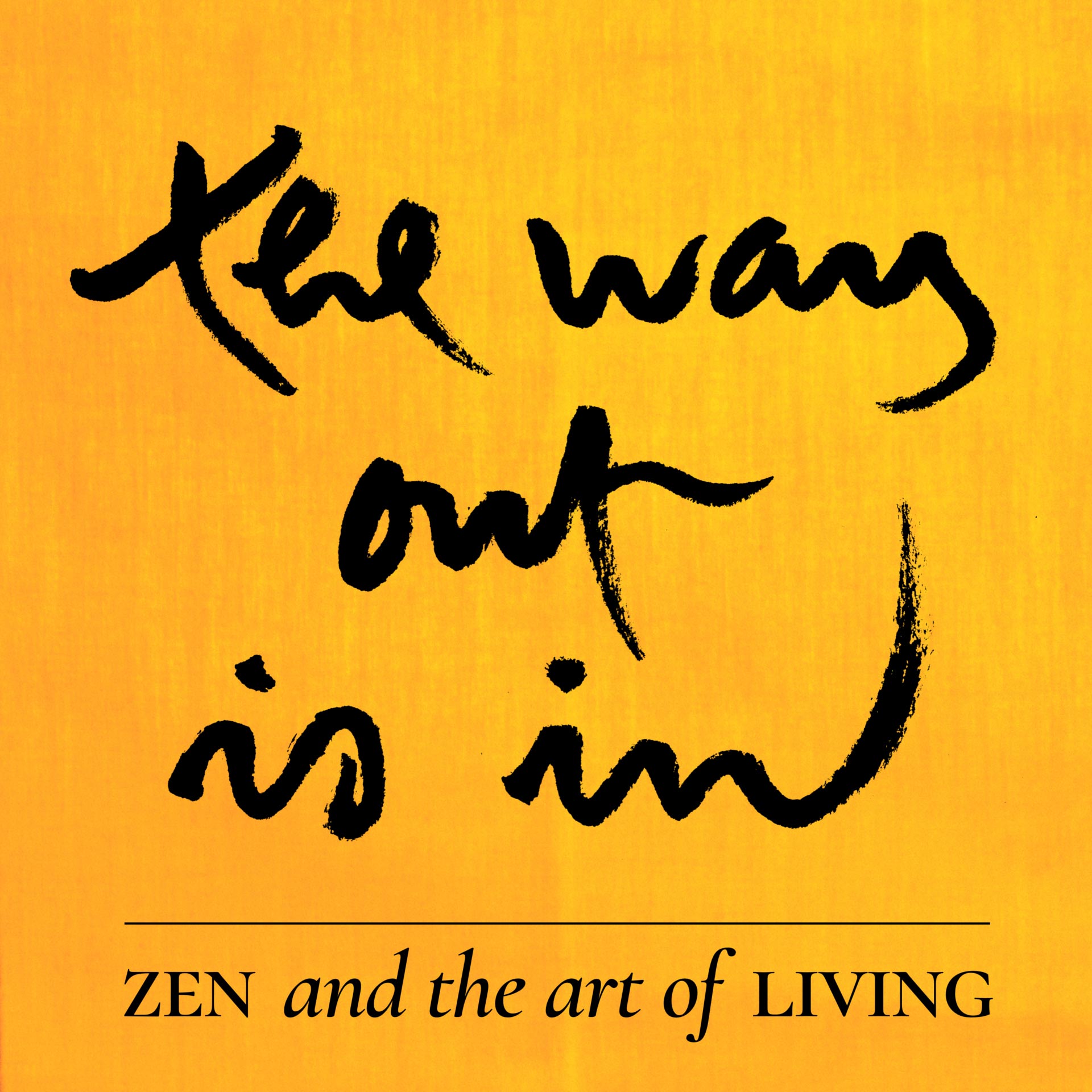
This podcast series is aimed at helping us to transcend our fear and anger so that we can be more engaged in the world in a way that develops love and compassion. Thich Nhat Hanh’s calligraphy ‘The Way Out Is In” highlights that the way out of any difficulty is to look deeply within, gain insights and then put them into practice. "The Way Out is In" is co-hosted by Brother Phap Huu, Thich Nhat Hanh's personal attendant for 17 years and the abbot of Plum Village's Upper Hamlet, and Jo Confino, who works at the intersection of personal transformation and systems change. The podcast is co-produced by the Plum Village App and Global Optimism, with support from the Thich Nhat Hanh Foundation.
Épisodes 121
Trust in Life (Episode #116)
If you wish to support our podcast, please follow this link. Thank you! Welcome to a new episode of The Way Out Is In: The Zen Art of Living, a podcast series mirroring Zen Master Thich Nhat Hanh’s deep …
Notes de l’épisode
If you wish to support our podcast, please follow this link. Thank you!
Welcome to a new episode of The Way Out Is In: The Zen Art of Living, a podcast series mirroring Zen Master Thich Nhat Hanh’s deep teachings of Buddhist philosophy: a simple yet profound methodology for dealing with our suffering, and for creating more happiness and joy in our lives.
In this episode, Zen Buddhist monk Brother Phap Huu and leadership coach Jo Confino discuss the concept of ‘trust in life’. Together, they explore how Buddhist teachings can help us to navigate the tension between accepting life as it is and wanting to control it.
The conversation further touches on the challenges of modern life, such as information overload and the tendency to seek quick fixes, and how these can be addressed through mindful practices; the role of suffering in personal growth and the importance of being present with one’s experiences; developing inner trust and understanding; the role of mindfulness, direct experience, and discernment in cultivating trust; the significance of simplicity, listening, and the practice of ‘beginner’s mind’ in spiritual growth; the Buddhist concept of aimlessness; and more.Co-produced by the Plum Village App:
https://plumvillage.app/And Global Optimism:
https://globaloptimism.com/With support from the Thich Nhat Hanh Foundation:
https://thichnhathanhfoundation.org/List of resources
Brother Phap Ling (Brother Spirit)
https://plumvillage.org/people/dharma-teachers/brother-phap-linhInterbeing
https://en.wikipedia.org/wiki/InterbeingThe Plum Village Tradition
https://en.wikipedia.org/wiki/Plum_Village_TraditionThe Sun My Heart
https://www.parallax.org/product/the-sun-my-heart/Mahayana
https://en.wikipedia.org/wiki/MahayanaDharma Talks: ‘Redefining the Four Noble Truths’
https://plumvillage.org/library/dharma-talks/redefining-the-four-noble-truthsOcean Vuong
https://www.oceanvuong.com/Dharma Talks: ‘The Noble Eightfold Path’
https://plumvillage.org/library/dharma-talks/the-noble-eightfold-pathThe Way Out Is In: ‘The Three Doors of Liberation (Episode #18)’
https://plumvillage.org/podcast/the-three-doors-of-liberation-episode-18Quotes
“Trust in God, but don’t forget to tie up your camel.”
“Understanding is love, is peace – because, when we understand suffering, we don’t want to create more suffering.”
“If we listen deeply, we can see how many conditions we have to generate the understanding that allows us to have joy and happiness in the present moment.”
“As a human being, we all have a spiritual dimension, and it’s not far away. It’s not found in a retreat. It’s not found in a monastery. It is everywhere. It’s in the ultimate dimension, the historical dimension. It’s in the trees. It is us. But we’re not able to activate it – our collective culture doesn’t allow us to tap into that. We have been afraid of being sensitive, of having empathy, and it’s hard to be in a world where we’re not conditionedto be with our feelings.”
“Thay said not to bring your intellectual mind into Dharma talks, because it will try to agree or disagree. The intellectual mind will try to consume the understanding, which becomes a blockage to deeper understanding of your deepest potentials.”
“In Buddhist Zen Mahayana literature, sometimes we have to be a learner, and sometimes we have to let go of the learning because it’s enough. Just practice. Enjoy the present moment.”
“Sometimes we draw a graph and think growth is always going up or being solid. But, sometimes, growth is knowing that we’re suffering but not being carried away by it – just being present and holding it and listening to it.”
Asking for Help (Episode #115)
If you wish to support our podcast, please follow this link. Thank you! Welcome to a new episode of The Way Out Is In: The Zen Art of Living, a podcast series mirroring Zen Master Thich Nhat Hanh’s deep …
Notes de l’épisode
If you wish to support our podcast, please follow this link. Thank you!Welcome to a new episode of The Way Out Is In: The Zen Art of Living, a podcast series mirroring Zen Master Thich Nhat Hanh’s deep teachings of Buddhist philosophy: a simple yet profound methodology for dealing with our suffering, and for creating more happiness and joy in our lives.
In this episode, Zen Buddhist monk Brother Phap Huu and leadership coach Jo Confino discuss the difficulty of asking for help, exploring the cultural and personal barriers that can prevent people from seeking assistance. They emphasize the importance of recognizing indirect requests for help, and the need for compassion and presence when one is asked for help; the role of community and nature in providing support; and the necessity of self-forgiveness and self-care.
The conversation underscores collective responsibility for addressing societal issues, and the power of shared vulnerability in fostering deeper connections. The hosts also share practical steps, from both teachings and their own lives.Co-produced by the Plum Village App:
https://plumvillage.app/And Global Optimism:
https://globaloptimism.com/With support from the Thich Nhat Hanh Foundation:
https://thichnhathanhfoundation.org/List of resources
Sister Chan Khong
https://plumvillage.org/about/sister-chan-khong
Brother Phap Ling (Brother Spirit)
https://plumvillage.org/people/dharma-teachers/brother-phap-linhInterbeing
https://en.wikipedia.org/wiki/InterbeingThe Plum Village Tradition
https://en.wikipedia.org/wiki/Plum_Village_TraditionWake Up Retreat 2026
https://plumvillage.org/articles/wake-up-retreat-2026-am-i-good-enoughThe Four Mantras of Love
https://plumvillage.org/gems/event/The-Four-Mantras-of-Love-V2DFQvyDMgD3NEx7GTKfXzEuropean Institute of Applied Buddhism
https://www.eiab.eu/Mahayana
https://en.wikipedia.org/wiki/MahayanaThe Way Out Is In: ‘The Three Jewels (Episode #89)’
https://plumvillage.org/podcast/the-three-jewels-episode-89
‘Beginning Anew’
https://www.parallax.org/mindfulnessbell/article/beginning-anew/The Way Out Is In: ‘True Love: Practicing in Relationships (Episode #31)’ https://plumvillage.org/podcast/true-love-practicing-in-relationship-episode-31
Quotes
“Because we are alive, everything is possible.”
“Unfortunately, as humans, we tend to only recognize that something is really happening when we experience it.”
“The beauty of mindfulness and meditation is to welcome the vulnerability in ourselves.”
“For someone to ask for help, they need someone to be compassionate.”
“When you can listen deeply, you can hear what the other person is not saying.”
“Asking for help is a leadership skill.”
“People think the environment is outside of themselves – but they are the environment.”
“We need to turn to ourselves, to take responsibility and to forgive ourselves, and then reach out to people in a way that benefits them. Because, when we ask for help, we give them permission to also experience that.”
Paths of Change and Resistance (Episode #114)
If you wish to support our podcast, please follow this link. Thank you! Welcome to a new episode of The Way Out Is In: The Zen Art of Living, a podcast series mirroring Zen Master Thich Nhat Hanh’s deep …
Notes de l’épisode
If you wish to support our podcast, please follow this link. Thank you!
Welcome to a new episode of The Way Out Is In: The Zen Art of Living, a podcast series mirroring Zen Master Thich Nhat Hanh’s deep teachings of Buddhist philosophy: a simple yet profound methodology for dealing with our suffering, and for creating more happiness and joy in our lives.
In this episode, Zen Buddhist monk Brother Phap Huu and leadership coach Jo Confino are joined by Zen Buddhist nun Sister True Dedication. Together, they explore the significance and offerings of the Plum Village community – a sanctuary of peace, healing, and mindfulness, in stark contrast to the fast-paced, consumer-driven world outside.
The three speakers further discuss the importance of a physical environment for spiritual practice, where individuals can reconnect with their true selves; the value of community living, where monastics share a collective career and work towards the flourishing of the community rather than individual success; the relevance of the five mindfulness trainings, which serve as ethical guidelines for personal and societal transformation; and much more.
The conversation also touches upon the need for support to maintain and expand the Plum Village facilities, the importance of generosity, and the impact of supporting engaged monastic communities.
Co-produced by the Plum Village App:
https://plumvillage.app/And Global Optimism:
https://globaloptimism.com/With support from the Thich Nhat Hanh Foundation:
https://thichnhathanhfoundation.org/List of resources
Interbeing
https://en.wikipedia.org/wiki/InterbeingPlum Village Tradition
https://en.wikipedia.org/wiki/Plum_Village_TraditionThe Bodhisattva vow
https://en.wikipedia.org/wiki/Bodhisattva_vowThe Five Mindfulness Trainings
https://plumvillage.org/mindfulness/the-5-mindfulness-trainingsThe Fourteen Mindfulness Trainings
https://plumvillage.org/mindfulness/the-14-mindfulness-trainingsEs Devlin
https://esdevlin.com/Rebecca Solnit
https://www.rebeccasolnit.net/The Way Out Is In: ‘Stepping into Freedom – Live Recording with Q&A Session (Episode #67)’
https://plumvillage.org/podcast/stepping-into-freedom-live-recording-with-qa-session-episode-67The Way Out Is In: ‘Cultivating Joy and Togetherness in the Midst of Hardship (Episode #95)’
https://plumvillage.org/podcast/cultivating-joy-and-togetherness-in-the-midst-of-hardship-episode-95Quotes
“Plum Village emerged from our teacher’s vision of how the world could look and feel different from mainstream society. From the beginning, Plum Village has been a community of resistance. We could even call it a community of resilience: a physical environment that holds different values to the mainstream consciousness. We can all recognize those values. It might be unbridled capitalism, craving, consumerism, violence, or excesses of different kinds that we see in our immediate lives, around us, and in the economic and labor systems that we’re a part of. The vision for Plum Village was, ‘What if we create a physical environment that models entirely different values?’ Embodying those values is the resistance. For example, embodying peace, harmony, collectiveness, and community rather than individualism.”
“We need to reclaim our sovereignty from the machines of our creation.”
“Plum Village is holding an environment of peace and healing and freedom from the rat race; freedom from the world of technological overwhelm.”
“At a retreat, we are invited into a space of sharing our generosity in presence. We’re not sitting for ourselves: we’re sitting for the collective. When we are taking care of our emotions, we’re also taking care of the emotions of the collective, because we start to see the interbeing of the individual and the collective, their interconnectedness.”
“We organize our life in such a way that we are literally cultivating compassion, mindfulness, patience, and inclusiveness every day. We’re not perfect, but this is our work in progress and it’s quite noble and, though we struggle so much, we feel in our bones that we’re doing this work every day. It also allows me to have some faith in the future as we enter this period of disruption for society, for the climate, for agriculture, for nature – to be able to cooperate, to live cooperatively, to share resources, and to moderate and temper our needs. These are such important human practices. The qualities we’re holding here – compassion, mindfulness – are a treasure trove for future generations. These are exactly the values that we want to trust will still be there in decades and centuries to come.”
“In each hamlet are 50 or 60 monastics living together, cultivating non-violence in their speech, in their thinking, in their way of being, in their way of washing a bowl, in their way of brushing their teeth, in their ways of being with the mosquitoes. We’re living as an example of non-violence in the world. And then being able to lift that up into our engagement with everyone who comes to us. It may sound like we’re describing a bubble. But, because we are living in a constant relationship with the thousands of people that come and spend time with us every year, another way to describe us is as being like a river bank with a river flowing through it. We’re a gentle river bank that caresses the water for a little bit before it moves on back into the world. And so people have a chance to taste these energies that we’re generating as a collective here.”
“The only way that we are going to save ourselves from the collapse of civilization is through a collective awakening. Individual awakening is not enough.”
“We’re not going to sort everything out in this lifetime, but what we can offer is more tools, more practices, more understanding, more care, and more compassion for the next generation, so that they can carry this path forward into the future.”
“Thay has really expanded this home – it’s not just for the monks and nuns. The monastery is also open for the lay community to come in and taste true peace.”
“When you come to Plum Village for seven days and don’t drive a vehicle, that’s already an impact. When you’re vegetarian for seven days, that’s an impact. When you are not expressing anger for seven days, that’s an impact. When you’re listening to yourself and healing some blockage that’s been waiting for you to look at it and embrace it, that’s an impact. That’s healing. That is already work for your ancestors, work for society. And so the journey of a monastery – or we could call it a practice center – is important because it is also a place where we know we can put down our masks. It can become a great equalizer. Everyone here, we’re human beings; it doesn’t matter what titles we hold in the world outside. Here, in the monastery, there’s a power to the monastic’s presence.”
“It is very clear from the teachings of Thay and the Buddha, and from our own moral compasses, that, if we don’t take care of our suffering – our loneliness, our violence, and our hatred, by naming it and saying, ‘Okay, I’m co-responsible, and it is my responsibility to also transform this’ – we’re not going to change the system.”
You Are Already the Person You Want to Become – Live Recording with Q&A Session (Episode #113)
If you wish to support our podcast, please follow this link. Thank you! Welcome to a new episode of The Way Out Is In: The Zen Art of Living, a podcast series mirroring Zen Master Thich Nhat Hanh’s deep …
Notes de l’épisode
If you wish to support our podcast, please follow this link. Thank you!
Welcome to a new episode of The Way Out Is In: The Zen Art of Living, a podcast series mirroring Zen Master Thich Nhat Hanh’s deep teachings of Buddhist philosophy: a simple yet profound methodology for dealing with our suffering, and for creating more happiness and joy in our lives.
This is our third live recording of the podcast made in London, England, in July, 2026, before a sold-out audience. In it, Zen Buddhist monk Brother Phap Huu and leadership coach Jo Confino are joined on stage by Zen Buddhist nun Sister True Dedication to explore the idea that the answers to life’s issues are often found within ourselves, rather than externally, and that we are already the person we want to become.
The discussion includes reflections on the challenges of recognizing one’s own worth and the societal pressures that contribute to feelings of inadequacy; how mindfulness, presence, and community are essential in cultivating self-acceptance and personal transformation; the role of kindness in daily life; the power of the present moment in fostering personal and collective change; practicing self-compassion; and much more.
The conversation concludes with questions from the audience answered by the three speakers.
Co-produced by the Plum Village App:
https://plumvillage.app/Plum Village UK:
https://plumvillage.uk/And Global Optimism:
https://globaloptimism.com/With support from the Thich Nhat Hanh Foundation:
https://thichnhathanhfoundation.org/List of resources
Sister True Dedication
https://plumvillage.org/people/dharma-teachers/sister-hien-nghiemKoan
https://en.wikipedia.org/wiki/KoanInterbeing
https://en.wikipedia.org/wiki/InterbeingPlum Village Tradition
https://en.wikipedia.org/wiki/Plum_Village_TraditionMeredith Monk
https://en.wikipedia.org/wiki/Meredith_MonkThe Way Out Is In: ‘Stepping into Freedom – Live Recording with Q&A Session (Episode #67)’
https://plumvillage.org/podcast/stepping-into-freedom-live-recording-with-qa-session-episode-67The Way Out Is In: ‘Cultivating Joy and Togetherness in the Midst of Hardship (Episode #95)’
https://plumvillage.org/podcast/cultivating-joy-and-togetherness-in-the-midst-of-hardship-episode-95Quotes
“Given everything that’s happening in the world, the person I’d like to become is this impossible person – a person who can find an answer to heal and stop all of the suffering, all of the injustice, all of the violence. We know that the pain and discomfort we feel in ourselves is not only a personal, individual discomfort; we’re feeling the pain of the world, and that’s reflected in our bodies and in our feelings. And so, when we can’t accept ourselves, or think we’re not enough, it’s also because we’re not enough in the face of all of this. How could we be?”
“All the suffering of the world is reflected in us in a really concrete way: we watch something on a screen and we have a bodily response. We feel the anxiety, we feel the tension. We felt the heat in the heat wave last week. And that’s doing something to us at an emotional level; a kind of existential fear is triggered. So that suffering is really visceral in us. But what’s really interesting is that there’s also the other side of this: if the suffering of the world is reflected in our bodies and in our minds, the beauty of the word is also there in us.”
“I understand how hard it is to not feel enough in the face of what I would like to do, or need to do, to respond to the world. But, at the same time, all of the goodness of the world is refracted and expressed in unique ways in each one of us. For me, that’s the key to unlocking the door to accepting myself.”
“Coming home to oneself and embracing the pain and the suffering is the first act of mindfulness.”
“Today we’re so afraid of our own pain, of our own suffering, and of our own capacity that we don’t engage anymore. We’re all in our little worlds. And part of the journey of becoming isn’t an individual matter, it’s about becoming as a whole society.”
“We really live in an era of optimization, and we need to pause for a moment and recognize how many parts of our lives we’re trying to optimize. That may be one of the sicknesses of this era. We can’t allow things to be as they are. So with all the mess going on in the world, the injustice and the violence and the inequality, we pick up these habits from the capitalist grind. But we’re not really offering a different energy.”
“Whether you’re in a shop, on the Tube, at work, or on a Zoom call, when something happens, if we have a default response to allow us to come back to our in-breath and out-breath, and take care of our nervous system and arrive back into ourselves, that’s already an act of kindness. We’re rescuing ourselves. We are giving ourselves a breather, literally.”
“Thich Nhat Hanh was very clear that what our society needs – what we all need – is a different way of being and a different quality of being. And he spoke about the preciousness of time. Time is not money, time is not success, time is not work. Time is life. And we know how short this time is that we have with our children, with our loved ones; the time we have is so short and so precious.”
“How we are being in time, how we are allowing the fullness of any moment to reveal itself, whether we’ve just had bad news or experienced a strong emotion, we can be with that in a certain way. And that is already action, that is already a response, and that’s already patterning something different into society.”
“I don’t really discriminate between micro-resistance and systemic resistance. But I do believe that, when we come together in community – like in moments like this, in the weekly sanghas that many of you are part of we’re reinforcing that capacity of breathing together as an act of resistance, walking together, listening deeply. And then that is penetrating into our lives. It makes us change makers, whether we call ourselves a change maker or not. That’s the Buddhist understanding of action, it’s acting at every level and it’s available to all of us. The closer we are to our truth, to our body, to our breathing, you will be surprised by the kind of courage that manifests.”
“Thay would say a smile can save someone’s life in the right circumstances.”
“Kindness for me is real and it’s a force that can shift and change.”
“Breathing is a life jacket. When those emotions really come, our teachers say you are more than one emotion. Come back and breathe. Don’t let that emotion take over your whole being because you’re so much more than just one emotion, you bring up another emotion to embrace it.”
“My dad would say, ‘One, two, three, smile.’ And we would smile, but we hated it also. But he has transmitted that reminder that even in the midst of agony, that smile is your right.”
“We don’t need to set aside time to be more true to ourselves, to be more true to our values, to be more free, and to be more awake to what’s going on. We can simply do it on our way to work. And what’s life for if it’s not for that? To feel that freedom, to feel that agency, and just to arrive fully into the richness, the mud, and the beauty of this life that we have a chance to be in.”
“Engaged Buddhism means bringing everything you’re learning into the here and now.”
Dharma and Business (Episode #112)
If you wish to support our podcast, please follow this link. Thank you! Welcome to a new episode of The Way Out Is In: The Zen Art of Living, a podcast series mirroring Zen Master Thich Nhat Hanh’s deep …
Notes de l’épisode
If you wish to support our podcast, please follow this link. Thank you!
Welcome to a new episode of The Way Out Is In: The Zen Art of Living, a podcast series mirroring Zen Master Thich Nhat Hanh’s deep teachings of Buddhist philosophy: a simple yet profound methodology for dealing with our suffering, and for creating more happiness and joy in our lives.
In this episode, Zen Buddhist monk Brother Phap Huu and leadership coach Jo Confino are joined by special guest Pham Minh Huong, businesswoman and spiritual practitioner, to discuss integrating Buddhist teachings into the business world.
Pham Minh Huong shares her journey from being a successful but lonely CEO to one who prioritizes trust, mindfulness, and community in her companies – by adopting practices like servant leadership and consensus-building, and by creating a culture of compassion and collaboration. She emphasizes the importance of presence, authenticity, and the power of mindfulness in navigating crises and maintaining a balanced life, but reflects also on the challenges of integrating spirituality into a business world dominated by metrics and competativeness.
Brother Phap Huu shares his own experience as the abbot of Upper Hamlet, while Jo reflects on writing about sustainable businesses for The Guardian and on his current work as leadership coach.
The conversation highlights the potential for businesses to be a source of meaning, connection, and positive change when guided by spiritual principles.
Ms Pham Minh Huong has nearly 30 years of experience in the finance and banking sector. Having previously served as Head of Treasury and Financial Markets at Citibank N.A., she was among the first members to contribute to its operational growth. She is a visionary leader and a pioneer in introducing new products to the market. Her significant contributions to the securities community and her personal professional reputation have established her as a highly respected leader in Vietnam’s financial market.
Co-produced by the Plum Village App:
https://plumvillage.app/And Global Optimism:
https://globaloptimism.com/With support from the Thich Nhat Hanh Foundation:
https://thichnhathanhfoundation.org/List of resources
Sister Chan Khong
https://plumvillage.org/about/sister-chan-khongBrother Phap Ung
https://plumvillage.org/people/dharma-teachers/brother-chan-phap-ungInterbeing
https://en.wikipedia.org/wiki/InterbeingPlum Village Tradition
https://en.wikipedia.org/wiki/Plum_Village_TraditionThe Way Out Is In: ‘The Three Jewels (Episode #89)’
https://plumvillage.org/podcast/the-three-jewels-episode-89Order of Interbeing
https://plumvillage.org/community/order-of-interbeing‘The Four Dharma Seals of Plum Village’
https://plumvillage.org/articles/the-four-dharma-seals-of-plum-villageThe Way Out Is In: ‘Space, Time, and the Ultimate Dimension (Episode #54)’
https://plumvillage.org/podcast/space-time-and-the-ultimate-dimension-episode-54The Art of Power
https://plumvillage.org/books/the-art-of-powerQuotes
“Now I have a path, there is nothing to fear.”
“When I first came to Plum Village, I saw that things were very organized, but I didn’t see leaders. And when I asked, people said, ‘That’s because of Yidma.’ Yidma, in Buddha’s teaching, is about consensus. But, at that time, I couldn’t believe that we could run a business in a slow way and build democratic governance as per Thay’s vision.”
“Good teacher, good methodology, and good friends.”
“If everything is important, then, actually, nothing is important.”
“What Buddhism and what the Buddha and Thay offer us is another dimension of really asking the question, ‘What is happiness? What is success?’”
“Engage, trust – and then there’s cooperation. And when there is cooperation, there is power and the result will come. We have to trust in that.”
“Sometimes it’s via absence that people recognize their love. If you’re always there, there’s not always the opportunity for that.”
A Quiet Beauty in Everything (Episode #111)
If you wish to support our podcast, please follow this link. Thank you! Welcome to a new episode of The Way Out Is In: The Zen Art of Living, a podcast series mirroring Zen Master Thich Nhat Hanh’s deep …
Notes de l’épisode
If you wish to support our podcast, please follow this link. Thank you!
Welcome to a new episode of The Way Out Is In: The Zen Art of Living, a podcast series mirroring Zen Master Thich Nhat Hanh’s deep teachings of Buddhist philosophy: a simple yet profound methodology for dealing with our suffering, and for creating more happiness and joy in our lives.
In this episode, Zen Buddhist monk Brother Phap Huu and leadership coach Jo Confino talk about finding beauty and reverence in the most ordinary of things.
Jo shares his new book, Between Earth and Sky, which documents his time in Mitla, Mexico, and his journey of deep looking and finding beauty in the seemingly empty land. Brother Phap Huu emphasizes the importance of mindfulness, stopping, and being present to see the wonder in everyday life.
The hosts further share the concept of consciousness in everything, and the need for reverence in our habits and interactions. The conversation also touches on reciprocity, the importance of community, and the journey of opening one’s heart through listening and acceptance.The episode concludes with a short meditation guided by Brother Phap Huu, to help listeners ground themselves in the present moment and to recognize the beauty in all life.
Co-produced by the Plum Village App:
https://plumvillage.app/And Global Optimism:
https://globaloptimism.com/With support from the Thich Nhat Hanh Foundation:
https://thichnhathanhfoundation.org/List of resources
Between Earth and Sky
https://www.parallax.org/product/between-earth-and-sky/Interbeing
https://en.wikipedia.org/wiki/InterbeingPlum Village Tradition
https://en.wikipedia.org/wiki/Plum_Village_TraditionOrder of Interbeing
https://plumvillage.org/community/order-of-interbeingThe Way Out Is In: ‘Space, Time, and the Ultimate Dimension (Episode #54)’
https://plumvillage.org/podcast/space-time-and-the-ultimate-dimension-episode-54Mitla
https://en.wikipedia.org/wiki/MitlaStephen Mitchell
https://en.wikipedia.org/wiki/Stephen_Mitchell_(translator)Tao Te Ching
https://en.wikipedia.org/wiki/Tao_Te_ChingSamsara
https://en.wikipedia.org/wiki/Sa%E1%B9%83s%C4%81raPema Chödrön
https://en.wikipedia.org/wiki/Pema_Ch%C3%B6dr%C3%B6nQuotes
“We can see beauty everywhere.”
“When we feel alive and present on this Earth, what more do we need?”
“The first act of meditation is learning to stop. It is learning to take a pause and feel the present moment. And feeling the present moment is more important than thinking about the present moment, because, when we attune ourselves into our own body, into our senses, what we see, what we smell, what we hear, what we touch gives us an opportunity to be in touch with life in the very here and now.”
“We can sit and look at a tree or even look at a rock and find all of life in that.”
“This is it.”
“We want to know what’s out in space, but we don’t know what is in our inner space.”
“Depending on how we show up, our way of being can shift and change our whole mental formation, our whole consciousness of reality.”
“Reverence creates a sense of reciprocity because, when we have reverence, we are in conversation with whatever is in front of us. So when we think of things as objects, we’re looking at them as separate from ourselves. But when we have reverence for things, we see that they are talking to us as well as we are talking to them.”
“The beauty of Zen is turning a simple moment into a beautiful ritual.”
“Reverence is a manifestation of our mental formations.”
“I invite everybody to hold their next cup of tea, or coffee, or orange juice, with two hands. It shifts you into a different space. A simple action with two hands, and I’m fully present. Just like when we join our palms and offer a bow, it represents the body and the mind that come together.”
Hiking Zen (Episode #110)
If you wish to support our podcast, please follow this link. Thank you! Welcome to a new episode of The Way Out Is In: The Zen Art of Living, a podcast series mirroring Zen Master Thich Nhat Hanh’s deep …
Notes de l’épisode
If you wish to support our podcast, please follow this link. Thank you!
Welcome to a new episode of The Way Out Is In: The Zen Art of Living, a podcast series mirroring Zen Master Thich Nhat Hanh’s deep teachings of Buddhist philosophy: a simple yet profound methodology for dealing with our suffering, and for creating more happiness and joy in our lives.
In this episode, Zen Buddhist monk Brother Phap Huu and leadership coach Jo Confino are joined by Zen Buddhist monk Brother Phap Xa to explore the revolutionary aspect of walking meditation – not just a physical activity but a spiritual practice that can help us ground ourselves and connect with the present moment.
Brother Phap Xa – who co-authored the book Hiking Zen with Brother Phap Luu – shares practical tips for walking meditation, and personal experiences such as the way this type of meditation has helped him deal with strong emotions and transformed his perspective on life.
The conversation also touches on the concept of aimlessness in walking meditation, the importance of walking for the sake of walking, the benefits of walking in silence, the idea of walking with ancestors, the practice of walking for others, and more.
The episode concludes with a short meditation guided by Brother Phap Huu, to help listeners connect with the present moment when walking.
Co-produced by the Plum Village App:
https://plumvillage.app/And Global Optimism:
https://globaloptimism.com/With support from the Thich Nhat Hanh Foundation:
https://thichnhathanhfoundation.org/List of resources
Brother Phap Xa
https://www.parallax.org/authors/brother-phap-xa/Brother Phap Luu
https://www.parallax.org/authors/brother-phap-luu/Stephan Harding
https://en.wikipedia.org/wiki/Stephan_HardingHiking Zen
https://www.parallax.org/product/hiking-zen/Interbeing
https://en.wikipedia.org/wiki/InterbeingPlum Village Tradition
https://en.wikipedia.org/wiki/Plum_Village_Tradition‘The Tortoise and the Hare’
https://en.wikipedia.org/wiki/The_Tortoise_and_the_HareOld Path White Clouds
https://www.parallax.org/product/old-path-white-clouds/The Way Out Is In: ‘The Three Doors of Liberation (Episode #18)’
https://plumvillage.org/podcast/the-three-doors-of-liberation-episode-18The Way Out Is In: ‘Guest Episode: Reconnecting with Gaia – A Deep Time Walk’
https://plumvillage.org/podcast/guest-episode-reconnecting-with-gaia-a-deep-time-walkQuotes
“Don’t take another step until you really believe that you can walk in freedom.”
“When we speak about freedom in the practice, it’s freedom to be fully in the present moment, with every step that we take, with every action that we can accumulate.”
“Whenever I am in fifth gear, I know I need to go down to first gear. And I don’t see it as a slowing down, as a bad thing – I see it as an upgrade to the presence, to the quality of freedom.”
“Meditation is in every action. That’s the way we look at it in our tradition. Meditation is to be engaged in the way we stand, the way we sit, the way we move – even the way we lay down. There is an attention that comes from bringing our mindfulness to how we are in the present moment.”
“I have arrived; I’m home wherever I go.”
“When you walk, don’t talk; just walk. This is one of the most difficult practices.”
“The miracle is not to walk on water, the miracle is to walk on this earth.”
“Walking meditation is an important practice for coming back to the present moment, because then we can recognize that there are many wonders happening in the present moment, inside and around us. And it’s already a wonder to be able to breathe, and to be able to be in touch with the many forms and colors around us.”
“Walk for the sake of walking.”
Father (Episode #109)
If you wish to support our podcast, please follow this link. Thank you! Welcome to a new episode of The Way Out Is In: The Zen Art of Living, a podcast series mirroring Zen Master Thich Nhat Hanh’s deep …
Notes de l’épisode
If you wish to support our podcast, please follow this link. Thank you!
Welcome to a new episode of The Way Out Is In: The Zen Art of Living, a podcast series mirroring Zen Master Thich Nhat Hanh’s deep teachings of Buddhist philosophy: a simple yet profound methodology for dealing with our suffering, and for creating more happiness and joy in our lives.
In this episode, Zen Buddhist monk Brother Phap Huu and leadership coach Jo Confino reflect on the passing of Brother Phap Huu’s father and the power of community in difficult moments, as well as considering insights into the teachings of no birth, no death.
This emotional conversation touches tender places and explores the Brother’s personal journey of grief and loss, from first hearing the news of his father’s stroke, to the funeral and the subsequent processing. Brother Phap Huu further explores his complicated relationship with his father, the sacrifices made by his parents, and his regret at not being able to fully express his gratitude and love.
Indeed, “It’s one thing to teach about ‘no birth, no death’, the passing of a loved one, but it’s a very different thing to experience it.”
The episode ends with a short meditation guided by Brother Phap Huu.Co-produced by the Plum Village App:
https://plumvillage.app/And Global Optimism:
https://globaloptimism.com/With support from the Thich Nhat Hanh Foundation:
https://thichnhathanhfoundation.org/List of resources
Bodh Gaya
https://en.wikipedia.org/wiki/Bodh_GayaBodhi tree
https://en.wikipedia.org/wiki/Bodhi_treeChristiana Figueres
https://www.globaloptimism.com/christiana-figueres‘The Fourteen Mindfulness Trainings’
https://plumvillage.org/mindfulness/the-14-mindfulness-trainingsInterbeing
https://en.wikipedia.org/wiki/InterbeingJeta Grove
https://en.wikipedia.org/wiki/JetavanaJoan Halifax
https://www.joanhalifax.org/‘Listening to Namo Avalokiteshvara’
https://plumvillage.app/listening-to-namo-avalokiteshvara/Plum Village Tradition
https://en.wikipedia.org/wiki/Plum_Village_TraditionSister Chan Khong
https://plumvillage.org/about/sister-chan-khongUpaya Zen Center
https://www.joanhalifax.org/upayaThe Way Out Is In: ‘Slow Down, Rest, and Heal: The Spirit of the Rains Retreat (Episode #7)’
https://plumvillage.org/podcast/slow-down-rest-and-heal-the-spirit-of-the-rains-retreatThe Way Out Is In: ‘The Three Jewels (Episode #89)’
https://plumvillage.org/podcast/the-three-jewels-episode-89Quotes
“Be kind in life because that kindness is something that you can never underestimate. It will come back. Just trust that.”
“For a lot of us immigrants in Canada, the temple was not just a spiritual and religious refuge, it was a cultural refuge. It was where we would see each other as Vietnamese. It was where we would smell the incense, eat the Vietnamese food, and hear the language… The temple was where we touched our little Vietnam and where everyone could feel that their longing was being answered by this community coming together.”
“The good training of Plum Village is to learn to see the flowers first.”
“It is never too late to say what needs to be said, even if someone has passed.”
“‘Enjoy and easy.’ Enjoy that no matter how hard life is, we can always taste joy. And no matter how hectic life is, learn to be at ease; be easy with yourself.”
“The practice of no birth, no death is also to see that life is also right here, right now.”
“For me, the practice of no birth and no death gives us permission to hold both and to not be tied down by only sorrow.”
“We’re here to connect the ultimate and the historical – not to see them as separate, but to bring them closer together.”
Renewing Buddhism – Live New Delhi Recording (Episode #108)
If you wish to support our podcast, please follow this link. Thank you! Welcome to a new episode of The Way Out Is In: The Zen Art of Living, a podcast series mirroring Zen Master Thich Nhat Hanh’s deep …
Notes de l’épisode
If you wish to support our podcast, please follow this link. Thank you!
Welcome to a new episode of The Way Out Is In: The Zen Art of Living, a podcast series mirroring Zen Master Thich Nhat Hanh’s deep teachings of Buddhist philosophy: a simple yet profound methodology for dealing with our suffering, and for creating more happiness and joy in our lives.
This episode was recorded live onstage in New Delhi, India, in February 2026, at the end of the pilgrimage In the Footsteps of the Buddha. Leadership coach Jo Confino was joined by Zen Buddhist nun Sister Tam Muoi and Dharma teacher Shantum Seth to discuss what it means to renew Buddhism, and Thich Nhat Hanh’s vision for doing so – including his emphasis on simplicity, equality, and making the teachings accessible and relevant to the contemporary world.
They also reflect on their 14-day pilgrimage in India, and how it deepened their understanding of and connection to the Buddha’s teachings. This includes Sister Tam Muoi’s insights about the strong sangha formed among the diverse group of 60 pilgrims from 16 different countries. She also reflects on her personal connection to India and her healing journey of reconnecting with the Buddha’s teachings in their land of origin.
Shantum Seth, who has been leading pilgrimages in India for over 30 years, explains the transformative power of these journeys in allowing people to connect with the Buddha as a human being and experience his teachings’ relevance to their own lives. He also shares plans for the Ahimsa Trust to establish a Plum Village center in India, to continue Thich Nhat Hanh’s legacy and bring the Dharma to a wider audience, especially a young one.
Shantum Seth, an ordained Dharmacharya (Dharma teacher) in the Buddhist Mindfulness lineage of Zen Master Thich Nhat Hanh, teaches in India and across the world. A co-founder of Ahimsa Trust, he has been a student of Thich Nhat Hanh’s teachings for the past 35 years, and, since 1988, has led pilgrimages and other multi-faith, educational, cultural, spiritual, and transformative journeys across diverse regions of India and Asia.
He is actively involved in educational, social, and ecological programmes, including work on cultivating mindfulness in society, including with educators, the Indian Central Reserve Police Force, and the corporate sector. Across various Indian sanghas, Dharmacharya Shantum is the primary teacher of different practices of mindfulness from Thich Nhat Hanh’s tradition.
Sister Tam Muoi (Sister Samadhi) is from the UK and was ordained in 2012 and became a Dharma teacher in 2022. Having encountered the practice whilst living in France, she became engaged in the French lay sangha and was ordained into the Order of Interbeing in 2004. She is actively supporting the recently created Being Peace Practice Centre in the UK and is deeply committed to the work of healing ancestral harm, and to participation in trainings and retreats exploring White Awareness. Read more here.
Co-produced by the Plum Village App:
https://plumvillage.app/
And Global Optimism:
https://globaloptimism.com/
With support from the Thich Nhat Hanh Foundation:
https://thichnhathanhfoundation.org/Recordist: Ann Nguyen
https://ann.earth
Sound editor: Joe Holtaway
https://joeholtaway.com
Publisher: Anca Rusu
Producer: Clay Carnill
https://claycarnill.com
Executive Producer: Catalin ZorziniList of resources
Interbeing
https://en.wikipedia.org/wiki/InterbeingPlum Village Tradition
https://en.wikipedia.org/wiki/Plum_Village_TraditionAdvaita Vedanta
https://en.wikipedia.org/wiki/Advaita_Vedanta
A Pebble for Your Pocket
https://www.parallax.org/product/a-pebble-for-your-pocket/Ashoka
https://en.wikipedia.org/wiki/AshokaBodh Gaya
https://en.wikipedia.org/wiki/Bodh_GayaBodhi tree
https://en.wikipedia.org/wiki/Bodhi_treeDehradun
https://en.wikipedia.org/wiki/DehradunJamun Village
https://ahimsatrust.org/jamun-village/Jeta Grove
https://en.wikipedia.org/wiki/JetavanaNalanda University
https://en.wikipedia.org/wiki/Nalanda_UniversityOld Path White Clouds
https://www.parallax.org/product/old-path-white-cloudsPushyamitra Shunga
https://en.wikipedia.org/wiki/Pushyamitra_ShungaSarnath
https://en.wikipedia.org/wiki/SarnathSister Chan Duc
https://plumvillage.org/people/dharma-teachers/sr-chan-ducSpittoon
https://en.wikipedia.org/wiki/SpittoonThe Stone Boy and Other Stories
https://www.parallax.org/product/the-stone-boy-and-other-stories/
Dharma Talks: ‘The Noble Eightfold Path’
https://plumvillage.org/library/dharma-talks/the-noble-eightfold-pathThe Way Out Is In: ‘The Three Jewels (Episode #89)’
https://plumvillage.org/podcast/the-three-jewels-episode-89Vulture Peak
https://en.wikipedia.org/wiki/Vulture_PeakXuanzang
https://en.wikipedia.org/wiki/XuanzangQuotes
“Often friends would tell Thay, ‘I try to do walking meditation. I find that difficult – but I love the sitting.’ And Thay would say, ‘Well, then sit. Do the practice that you enjoy.’ It’s so important to touch joy in whatever practice we do. It shouldn’t be hard work and creating more battles on your cushion.”
“Suffering is where we start. It’s your own suffering you have to handle. But also look at the suffering in the world. It’s not separate: other people’s suffering is your suffering; other people’s happiness is your happiness. That’s where we start. And then, know that all these things are interconnected. Nothing exists independently.”
“India is a great teacher because she’s confronting you all the time. That’s why we call her Mother India, I guess. She also challenges every preconception, and so, ‘Everything you say about India, the exact opposite is also true.’”
“It’s dangerous coming to India because you’re going to go back different.”
“Don’t believe something just because a teacher says it, or because it’s written in scripture, or has come from centuries-old tradition. Try it. And see how you feel.”
“Thay was a very revolutionary teacher because of his aspiration to make Buddhism relevant. He had seen the damage done by dogmatism, by fossilization. And so he was always thinking of new ways that we could make Buddhism appropriate.”
“Our precepts – the behavioral code for all the monastics and also for the lay friends – are rewritten every five or 10 years to update them. It’s quite extraordinary that Thay had the courage to do that; he faced criticism from many very traditional countries.”
“Something important about the Buddha Dharma is that it is very much about what we experience in this world. We’re not talking about something which is going to happen after some sort of transcendence. And that’s why I think the Buddha Dharma is relevant to our Earth: we have to care for this little planet of ours, we have to care for our rivers, we have to care for our climate, to care for each other. And it’s not about an outcome in some past or future life; the karma happens right here and now. Every action has a result and that result can be seen in this life and in this community.”
“You sit, you enjoy your breath, you get a little sense of being a Buddha for a moment. Maybe you can become a part-time Buddha, maybe a full-time Buddha. ‘Buddha’ just means ‘to be awake’ – and with mindfulness practice, being mindful is a type of awakening.”
In the Footsteps of the Buddha (6/6) | Loss and Transformation (Episode #107)
This week’s show was recorded using an improvised audio recording setup while the podcast team was on pilgrimage through India. Thank you for your understanding. 🙏 If you wish to support our podcast, please …
Notes de l’épisode
This week’s show was recorded using an improvised audio recording setup while the podcast team was on pilgrimage through India. Thank you for your understanding. 🙏
If you wish to support our podcast, please visit this link. Thank you!
Welcome to a new episode of The Way Out Is In: The Zen Art of Living, a podcast series mirroring Zen Master Thich Nhat Hanh’s deep teachings of Buddhist philosophy: a simple yet profound methodology for dealing with our suffering, and for creating more happiness and joy in our lives.
The final in a series of six episodes recorded during the In the Footsteps of the Buddha pilgrimage, this instalment was made in Sravasti, India, in February 2026. In it, leadership coach Jo Confino is joined by Zen Buddhist nun Sister Tam Muoi and Dharma teacher Shantum Seth to share their experiences and reflections as they visit Sravasti and Jeta Grove. They discuss the power of community, and how the sangha held space for grief when co-host Brother Phap Huu received news of his father’s passing.
They further explore themes of impermanence, non-attachment, transformation, the balance between the ultimate and historical dimensions in Buddhist teachings, and the importance of insight and practice. All three share personal stories illustrating these themes and the ways the pilgrimage has deepened their understanding of and connection to the Buddha’s legacy.
The episode concludes with the group singing a song composed by a fellow pilgrim, capturing the essence of the ‘way out is in’ teachings.About the pilgrimage:
In 1988, Shantum Seth was invited by Thich Nhat Hanh (Thay) to organize a pilgrimage to the sacred sites associated with the Buddha’s life across India. Subsequently, Thay encouraged Shantum to continue guiding such journeys each year, offering pilgrimage itself as a mindfulness practice – one that the Buddha had suggested.
Shantum has been leading these transformative journeys ever since, offering people from around the world the opportunity to follow In the Footsteps of the Buddha with awareness and insight. After 15 years at the United Nations, Shantum left to volunteer with the Ahimsa Trust, which represents Thay’s work in India and promotes the practice of “peace in oneself and peace in the world”.
Through Buddhapath, his expression of Right Livelihood, Shantum continues to guide pilgrimages and share the wisdom and culture of the places he visits in India and across Buddhist Asia, cultivating community through these deeply meaningful journeys.
To learn more about upcoming pilgrimages, visit www.buddhapath.com, or follow Shantum on Facebook and Instagram at @eleven_directions.Shantum Seth, an ordained Dharmacharya (Dharma teacher) in the Buddhist Mindfulness lineage of Zen Master Thich Nhat Hanh, teaches in India and across the world. A co-founder of Ahimsa Trust, he has been a student of Thich Nhat Hanh’s teachings for the past 35 years, and, since 1988, has led pilgrimages and other multi-faith, educational, cultural, spiritual, and transformative journeys across diverse regions of India and Asia.
He is actively involved in educational, social, and ecological programmes, including work on cultivating mindfulness in society, including with educators, the Indian Central Reserve Police Force, and the corporate sector. Across various Indian sanghas, Dharmacharya Shantum is the primary teacher of different practices of mindfulness from Thich Nhat Hanh’s tradition.
Sister Tam Muoi (Sister Samadhi) is from the UK and was ordained in 2012, becoming a Dharma teacher in 2022. Having encountered the practice whilst living in France, she became engaged in the French lay sangha and was ordained into the Order of Interbeing in 2004. She is actively supporting the recently created Being Peace Practice Centre in the UK and is deeply committed to the work of healing ancestral harm, and to participation in trainings and retreats exploring White Awareness. Read more here.
Co-produced by the Plum Village App:
https://plumvillage.app/
And Global Optimism:
https://globaloptimism.com/
With support from the Thich Nhat Hanh Foundation:
https://thichnhathanhfoundation.org/Recordist: Ann Nguyen
https://ann.earth
Sound editor: Joe Holtaway
https://joeholtaway.com
Publisher: Anca Rusu
Producer: Clay Carnill
https://claycarnill.com
Executive Producer: Catalin ZorziniList of resources
Interbeing
https://en.wikipedia.org/wiki/InterbeingPlum Village Tradition
https://en.wikipedia.org/wiki/Plum_Village_TraditionJeta Grove
https://en.wikipedia.org/wiki/JetavanaMangala Sutta
https://en.wikipedia.org/wiki/Ma%E1%B9%85gala_SuttaAvalokiteshvara
https://en.wikipedia.org/wiki/Avalokite%C5%9BvaraSong: ‘No Coming, No Going’
https://plumvillage.org/library/songs/no-coming-no-going-songAnathapindika
https://en.wikipedia.org/wiki/AnathapindikaAnuruddha
https://en.wikipedia.org/wiki/Anuruddha
Tathagata
https://en.wikipedia.org/wiki/Tath%C4%81gataShravasti
https://en.wikipedia.org/wiki/ShravastiSarnath
https://en.wikipedia.org/wiki/SarnathKushinagar
https://en.wikipedia.org/wiki/KushinagarDharma Talks: ‘The Noble Eightfold Path’
https://plumvillage.org/library/dharma-talks/the-noble-eightfold-pathAnapanasati Sutta
https://en.wikipedia.org/wiki/%C4%80n%C4%81p%C4%81nasati_SuttaAngulimala
https://en.wikipedia.org/wiki/A%E1%B9%85gulim%C4%81laDharma Talks: ‘Redefining the Four Noble Truths’
https://plumvillage.org/library/dharma-talks/redefining-the-four-noble-truthsPoem: ‘Please Call Me by My True Names’
https://www.parallax.org/mindfulnessbell/article/poem-please-call-me-by-my-true-namesLaurie Anderson
https://laurieanderson.com/Quotes
“Some non-attachments are more painful than others.”
“Thay talked about the fact that we allow 20% attachment; that we need to recognize we’re living in this life. And that we need to honor our feelings and our emotions in the historical dimension, whilst also in the ultimate dimension.”
“We can have joy and sadness at the same time. They do not cancel each other out.”
“We can have a moment of happiness and a moment of deep sadness, and we can contain both emotions at the same time.”
“Because of the years of practice, when the difficult time comes we’re able to meet it with a degree of equanimity and understanding and not be dragged into a vortex of despair and depression. We are able to meet the moment.”
“The matter of birth and death is as serious as if your turban is on fire.”
“The art of life is increasingly bringing the ultimate and historical dimensions together and recognizing that they inter-are.”
“Thay once said that what we practice in Plum Village is insight-based stress reduction or insight-based transformation. And what he meant was that once we’ve had an insight, everything is different. We cannot unlearn something that we’ve learned. And so all of our practice is about developing mindfulness, concentration, which leads to insight that is really understanding.”
“There’s no point practicing if we don’t generate some insights.”
“The insight is not there to be endlessly repeated, the insight is there to encourage us to practice. It’s like an anchor that helps us to stay put, and then we work at it.”
“Peace in oneself, peace in the world.”
“Happiness rests within oneself.”
“If I want transformation outside, I need to do it inside. And my general upbringing has been to shift outside things outside – not to ignore the injustices outside, but to have the presence and then the wisdom of the community to act in a skillful way.”
“In Zen circles we say that practicing with your family is the highest practice, the deepest Zen practice. That’s when you find out how you are doing. Because our parents know us as that stroppy teenager or that difficult child. We can’t float in as a spiritual practitioner; they can see straight through that.”
In the Footsteps of the Buddha (5/6) | The River of Life (Episode #106)
If you wish to support our podcast, please visit this link. Thank you! Welcome to a new episode of The Way Out Is In: The Zen Art of Living, a podcast series mirroring Zen Master Thich Nhat Hanh’s deep …
Notes de l’épisode
If you wish to support our podcast, please visit this link. Thank you!
Welcome to a new episode of The Way Out Is In: The Zen Art of Living, a podcast series mirroring Zen Master Thich Nhat Hanh’s deep teachings of Buddhist philosophy: a simple yet profound methodology for dealing with our suffering, and for creating more happiness and joy in our lives.
The fifth in a series of six episodes recorded during the In the Footsteps of the Buddha pilgrimage, this instalment was made in Kushinagar, India, in February 2026. In it, Zen Buddhist monk Brother Phap Huu and leadership coach Jo Confino are joined by Zen Buddhist nun Sister Tam Muoi and Dharma teacher Shantum Seth to reflect on the Buddha’s final days and the legacy and continuation of his teachings. They also discuss Thich Nhat Hanh’s passing and how Plum Village responded to his transition; the responsibility of current and future generations to continue his work and teachings; and the importance of the multi-fold community in preserving and spreading the Buddha’s teachings in a way that is relevant and accessible to the modern world.
Furthermore, Shantum Seth provides historical context about the Buddha’s final journey and the events after his passing, including the first Buddhist council and the spread of Buddhism; Brother Phap Huu draws parallels between the Buddha’s and Thich Nhat Hanh’s teachings and legacies; and Sister Tam Muoi discusses the importance of the monastic order in continuing the Buddha’s teachings – as well as Thich Nhat Hanh’s vision for the Plum Village tradition to evolve and adapt while staying true to its core principles.
About the pilgrimage:
In 1988, Shantum Seth was invited by Thich Nhat Hanh (Thay) to organize a pilgrimage to the sacred sites associated with the Buddha’s life across India. Subsequently, Thay encouraged Shantum to continue guiding such journeys each year, offering pilgrimage itself as a mindfulness practice – one that the Buddha had suggested.
Shantum has been leading these transformative journeys ever since, offering people from around the world the opportunity to follow In the Footsteps of the Buddha with awareness and insight. After 15 years at the United Nations, Shantum left to volunteer with the Ahimsa Trust, which represents Thay’s work in India and promotes the practice of “peace in oneself and peace in the world”.
Through Buddhapath, his expression of Right Livelihood, Shantum continues to guide pilgrimages and share the wisdom and culture of the places he visits in India and across Buddhist Asia, cultivating community through these deeply meaningful journeys.
To learn more about upcoming pilgrimages, visit www.buddhapath.com, or follow Shantum on Facebook and Instagram at @eleven_directions.Shantum Seth, an ordained Dharmacharya (Dharma teacher) in the Buddhist Mindfulness lineage of Zen Master Thich Nhat Hanh, teaches in India and across the world. A co-founder of Ahimsa Trust, he has been a student of Thich Nhat Hanh’s teachings for the past 35 years, and, since 1988, has led pilgrimages and other multi-faith, educational, cultural, spiritual, and transformative journeys across diverse regions of India and Asia.
He is actively involved in educational, social, and ecological programmes, including work on cultivating mindfulness in society, including with educators, the Indian Central Reserve Police Force, and the corporate sector. Across various Indian sanghas, Dharmacharya Shantum is the primary teacher of different practices of mindfulness from Thich Nhat Hanh’s tradition.
Sister Tam Muoi (Sister Samadhi) is from the UK and was ordained in 2012, becoming a Dharma teacher in 2022. Having encountered the practice whilst living in France, she became engaged in the French lay sangha and was ordained into the Order of Interbeing in 2004. She is actively supporting the recently created Being Peace Practice Centre in the UK and is deeply committed to the work of healing ancestral harm, participating in trainings and retreats exploring White Awareness. Read more here.
Co-produced by the Plum Village App:
https://plumvillage.app/
And Global Optimism:
https://globaloptimism.com/
With support from the Thich Nhat Hanh Foundation:
https://thichnhathanhfoundation.org/Recordist: Ann Nguyen
https://ann.earth
Sound editor: Joe Holtaway
https://joeholtaway.com
Publisher: Anca Rusu
Producer: Clay Carnill
https://claycarnill.com
Executive Producer: Catalin ZorziniList of resources
The Way Out Is In: ‘In the Footsteps of the Buddha (3/6) | The Heart of the Buddha’s Teachings (Episode #104)’
https://plumvillage.org/podcast/in-the-footsteps-of-the-buddha-3-6-the-heart-of-the-buddhas-teachings-episode-104The Way Out Is In: ‘In the Footsteps of the Buddha (2/6) | Enlightenment under the Bodhi Tree (Episode #103)’
https://plumvillage.org/podcast/in-the-footsteps-of-the-buddha-2-6-enlightenment-under-the-bodhi-tree-episode-103The Way Out Is In: ‘In the Footsteps of the Buddha (1/6) | The Buddha: Down to Earth (Episode #102)’
https://plumvillage.org/podcast/in-the-footsteps-of-the-buddha-1-6-the-buddha-down-to-earth-episode-102
Interbeing
https://en.wikipedia.org/wiki/InterbeingPlum Village Tradition
https://en.wikipedia.org/wiki/Plum_Village_TraditionKushinagar
https://en.wikipedia.org/wiki/KushinagarBlue Cliff Monastery
https://www.bluecliffmonastery.org/No Mud, No Lotus: The Art of Transforming Suffering
https://www.parallax.org/product/no-mud-no-lotus/The Order of Interbeing
https://plumvillage.org/community/order-of-interbeingThe Way Out Is In: ‘The Three Jewels (Episode #89)’
https://plumvillage.org/podcast/the-three-jewels-episode-89Mahāyāna Mahāparinirvāṇa Sūtra https://en.wikipedia.org/wiki/Mah%C4%81y%C4%81na_Mah%C4%81parinirv%C4%81%E1%B9%87a_S%C5%ABtra
Vinaya
https://en.wikipedia.org/wiki/VinayaAshoka
https://en.wikipedia.org/wiki/AshokaStephen Batchelor
https://en.wikipedia.org/wiki/Stephen_Batchelor_(author)Bodhicitta
https://en.wikipedia.org/wiki/BodhicittaSister Dao Nghiem
https://plumvillage.org/people/dharma-teachers/sr-dao-nghiemLetters from Thich Nhat Hanh
https://plumvillage.org/about/thich-nhat-hanh/lettersDharma Talks: ‘Redefining the Four Noble Truths’
https://plumvillage.org/library/dharma-talks/redefining-the-four-noble-truthsDharma Talks: ‘The Noble Eightfold Path’
https://plumvillage.org/library/dharma-talks/the-noble-eightfold-pathVasubandhu
https://en.wikipedia.org/wiki/VasubandhuSunyata
https://en.wikipedia.org/wiki/%C5%9A%C5%ABnyat%C4%81King Prasenajit
https://en.wikipedia.org/wiki/PasenadiKapilavastu
https://en.wikipedia.org/wiki/Kapilavastu_(ancient_city)Mahākāśyapa
https://en.wikipedia.org/wiki/Mah%C4%81k%C4%81%C5%9ByapaQuotes
“Thay really practiced the present moment, because in the present you’re also practicing impermanence. There’s only one moment to live and to touch life, and that is the very here and now.”
“All conditioned reality is subject to decay. Strive on diligently – essentially meaning, Everything is impermanent; keep up the practice.”“Dwelling happily in the present moment is the insight of meditation. But dwelling happily in the present moment doesn’t mean that suffering doesn’t exist; doesn’t mean that our anger and our frustration is not there. But, no matter what the situation is – whether it is loss, grief, frustration, chaos – as a practitioner, we have to have the ability to dwell in the very here and now, and allow ourselves to see that wonder, because that wonder is the light that shines through the darkness, the fog, the chaos.”
“When we’re reaching the end of our lives, we want to declutter. We want to put our affairs in order. We want to make sure, to the best of our abilities, that we leave life clean, that we don’t leave arguments, resentments, and suffering behind for the next generation to have to deal with.”
“I have never met an individual. I meet the entire lineage of that person stretching back to the beginning of time – because, if there’d been an interruption, then you wouldn’t exist.”
“The Buddha said, ‘I’ve never taught with a clenched fist, I have offered all the teachings for you to be calm, peaceful, transform your emotions, and be liberated. And so keep the Dharma as your island and be a light unto yourself, and keep the Dharma as your island.’ So he’s very clear that the Dharma is his continuation; the teachings and practice are his continuation.”
“In a country like India, the Buddha exists at a very ambient level, in the way we live our lives and feel the interconnectedness of everything, with nature, with other people.”
“If we know how to suffer, we’re going to suffer a whole lot less.”
“Thay would always include our lay friends. Whenever he was teaching in any ceremony he would always add, ‘And our lay friends, our sisters and our brothers from the lay community, the multi-fold community.’ He would always correct the language as he went along, even if it wasn’t written down, to include everybody. And this was such a teaching for us that we want to continue it. We do not want to be a monastic community where the monastics are the privileged ones. Instead, we are all practicing together and all have different capacities and different things that we can offer.”
“Thay once shared that his vision is that, one day, we’re all walking in the marketplace and see a monk walking by with peace and grace. And that monk is a bell of mindfulness. You see that monk and you stop and just breathe, connecting back to your spiritual dimension. And then you go on.”
“Thay empowered us, each of us, and now we can empower so many other people. And I think it’s a reminder that we don’t need to look for the teachers and what impact they had; instead, we can look at the impact we are having every day, in all the interactions we have, in all the people we meet, in all of the thoughts we have and all the words we speak, in all the actions. We, each of us, are a continuation. And we’re not a continuation to one other person; we’re a continuation to all of life. The way we are present in nature is the way that nature can be present for us. The way that we are available to other people then gives people the opportunity to be available to others.”
“Everything Thay did, he always reflected back to the Buddha. The Buddha’s whole way of teaching was also to empower everyone he met, to water the seeds of mindfulness and awakening in every person.”
In the Footsteps of the Buddha (4/6) | Fourfold Sangha: The Living Community (Episode #105)
If you want to support our podcast please visit this link. Thank you! Welcome to a new episode of The Way Out Is In: The Zen Art of Living, a podcast series mirroring Zen Master Thich Nhat Hanh’s deep teachings …
Notes de l’épisode
If you want to support our podcast please visit this link. Thank you!
Welcome to a new episode of The Way Out Is In: The Zen Art of Living, a podcast series mirroring Zen Master Thich Nhat Hanh’s deep teachings of Buddhist philosophy: a simple yet profound methodology for dealing with our suffering, and for creating more happiness and joy in our lives.
The fourth in a series of six episodes recorded during the In the Footsteps of the Buddha pilgrimage, this instalment was made in Vaishali, India, in February 2026. In it, Zen Buddhist monk Brother Phap Huu and leadership coach Jo Confino are joined by Zen Buddhist nun Sister Tam Muoi and Dharma teacher Shantum Seth to discuss new steps in the pilgrimage, like their visit to Nalanda University, an ancient seat of Buddhist learning, and Vulture Peak, where the Buddha gave some of his most important teachings. In Vaishali, the Buddha made the revolutionary decision to ordain the first nuns, which was a significant step towards gender equality in Buddhism.
Shantum Seth discusses the historical context and significance of these events and places, the importance of adapting Buddhist teachings to the present day, and a vision for Plum Village India to be a multifold community that embraces diversity and continues the legacy of the Buddha and Thich Nhat Hanh in a way relevant to the current times.Sister Tam Muoi and Brother Phap Huu share their personal experiences and reflections on the role of nuns and the evolution of the Plum Village community, emphasizing the importance of embodying Buddhist teachings, skillfully navigating change, and continuing Thich Nhat Hanh’s legacy of inclusivity and gender equality.
About the pilgrimage:
In 1988, Shantum Seth was invited by Thich Nhat Hanh (Thay) to organize a pilgrimage to the sacred sites associated with the Buddha’s life across India. Subsequently, Thay encouraged Shantum to continue guiding such journeys each year, offering pilgrimage itself as a mindfulness practice—one that the Buddha had suggested.
Shantum has been leading these transformative journeys ever since, offering people from around the world the opportunity to follow In the Footsteps of the Buddha with awareness and insight. After 15 years at the United Nations, Shantum left to volunteer with the Ahimsa Trust, which represents Thay’s work in India and promotes the practice of “peace in oneself and peace in the world”.
Through Buddhapath, his expression of Right Livelihood, Shantum continues to guide pilgrimages and share the wisdom and culture of the places he visits in India and across Buddhist Asia, cultivating community through these deeply meaningful journeys.
To learn more about upcoming pilgrimages, visit www.buddhapath.com, or follow Shantum on Facebook and Instagram at @eleven_directions.Shantum Seth, an ordained Dharmacharya (Dharma teacher) in the Buddhist Mindfulness lineage of Zen Master Thich Nhat Hanh, teaches in India and across the world. A co-founder of Ahimsa Trust, he has been a student of Thich Nhat Hanh’s teachings for the past 35 years, and, since 1988, has led pilgrimages and other multi-faith, educational, cultural, spiritual, and transformative journeys across diverse regions of India and Asia.
He is actively involved in educational, social, and ecological programmes, including work on cultivating mindfulness in society, including with educators, the Indian Central Reserve Police Force, and the corporate sector. Across various Indian sanghas, Dharmacharya Shantum is the primary teacher of different practices of mindfulness from Thich Nhat Hanh’s tradition.
Sister Tam Muoi (Sister Samadhi) is from the UK and was ordained in 2012, becoming a Dharma teacher in 2022. Having encountered the practice whilst living in France, she became engaged in the French lay sangha and was ordained into the Order of Interbeing in 2004. She is actively supporting the recently created Being Peace Practice Centre in the UK and is deeply committed to the work of healing ancestral harm, participating in trainings and retreats exploring White Awareness. Read more here.
Co-produced by the Plum Village App:
https://plumvillage.app/
And Global Optimism:
https://globaloptimism.com/
With support from the Thich Nhat Hanh Foundation:
https://thichnhathanhfoundation.org/Recordist: Ann Nguyen
https://ann.earth
Sound editor: Joe Holtaway
https://joeholtaway.com
Publisher: Anca Rusu
Producer: Clay Carnill:
https://claycarnill.com
Executive Producer: Catalin ZorziniList of resources
The Way Out Is In: ‘In the Footsteps of the Buddha (3/6) | The Heart of the Buddha’s Teachings (Episode #104)’
https://plumvillage.org/podcast/in-the-footsteps-of-the-buddha-3-6-the-heart-of-the-buddhas-teachings-episode-104The Way Out Is In: ‘In the Footsteps of the Buddha (2/6) | Enlightenment under the Bodhi Tree (Episode #103)’
https://plumvillage.org/podcast/in-the-footsteps-of-the-buddha-2-6-enlightenment-under-the-bodhi-tree-episode-103The Way Out Is In: ‘In the Footsteps of the Buddha (1/6) | The Buddha: Down to Earth (Episode #102)’
https://plumvillage.org/podcast/in-the-footsteps-of-the-buddha-1-6-the-buddha-down-to-earth-episode-102
Interbeing
https://en.wikipedia.org/wiki/InterbeingPlum Village Tradition
https://en.wikipedia.org/wiki/Plum_Village_TraditionNalanda University
https://en.wikipedia.org/wiki/Nalanda_University
‘Female Buddhas: A Revolution for Nuns in the Plum Village Tradition’
https://plumvillage.org/articles/female-buddhas-a-revolution-for-nuns-in-the-plum-village-traditionMahayana
https://en.wikipedia.org/wiki/MahayanaFlower Sermon
https://en.wikipedia.org/wiki/Flower_SermonNew Heart Sutra translation by Thich Nhat Hanh
https://plumvillage.org/about/thich-nhat-hanh/letters/thich-nhat-hanh-new-heart-sutra-translationSister Chan Duc
https://plumvillage.org/people/dharma-teachers/sr-chan-ducSister Chan Khong
https://plumvillage.org/about/sister-chan-khongThe Way Out Is In: ‘The Three Jewels (Episode #89)’
https://plumvillage.org/podcast/the-three-jewels-episode-89Pratimokṣa
https://en.wikipedia.org/wiki/Pratimok%E1%B9%A3aJoan Halifax
https://en.wikipedia.org/wiki/Joan_Halifax
Sutras: ‘The Ten Great Aspirations of Samantabhadra Bodhisattva’
https://plumvillage.org/library/sutras/the-ten-great-aspirations-of-samantabhadra-bodhisattvaVaishali
https://en.wikipedia.org/wiki/Vaishali_(ancient_city)
Notre Dame Academy, Patna
https://en.wikipedia.org/wiki/Notre_Dame_Academy,_PatnaTheravada
https://en.wikipedia.org/wiki/Theravada
Kapilavastu
https://en.wikipedia.org/wiki/Kapilavastu_(ancient_city)The Order of Interbeing
https://plumvillage.org/community/order-of-interbeing
Sujata
https://en.wikipedia.org/wiki/Sujata_(milkmaid)Kisa Gotami
https://en.wikipedia.org/wiki/Kisa_GotamiPatacara
https://en.wikipedia.org/wiki/Patacara
Khema
https://en.wikipedia.org/wiki/KhemaKing Prasenajit
https://en.wikipedia.org/wiki/PasenadiBodhi tree
https://en.wikipedia.org/wiki/Bodhi_treeBrahmajala Sutra
https://en.wikipedia.org/wiki/Brahmaj%C4%81la_S%C5%ABtraSariputra
https://en.wikipedia.org/wiki/%C5%9A%C4%81riputraNagarjuna
https://en.wikipedia.org/wiki/Nagarjuna
Vasubandhu
https://en.wikipedia.org/wiki/VasubandhuPadmasambhava
https://en.wikipedia.org/wiki/PadmasambhavaXuanzanh
https://en.wikipedia.org/wiki/XuanzangVisakha
https://en.wikipedia.org/wiki/Visakha
Theragatha
https://en.wikipedia.org/wiki/TheragathaDharma Talks: ‘Redefining the Four Noble Truths’
https://plumvillage.org/library/dharma-talks/redefining-the-four-noble-truthsVinaya
https://en.wikipedia.org/wiki/VinayaDharma Talks: ‘The Noble Eightfold Path’
https://plumvillage.org/library/dharma-talks/the-noble-eightfold-pathQuotes
“Thay knew that the harmony of energies is so important to success, as well as to creation and to living organisms. You need all the elements. You can’t cut one off, because that’s discrimination. Thay continues to keep pushing boundaries in the context of Buddhism, of traditions. In very traditional monasteries and temples, the nuns can’t teach the monks. Even today, in 2026. In some of the institutes in Vietnam, in China, the nuns are still on one side, the monks on the other side. The nuns have to wear one color, the monks another. But Thay unifies all in brown.”
“‘If, ten years after I’ve transitioned, Plum Village looks exactly the same, Thay will be very disappointed.’ I really took that as his empowerment. We need to keep moving forward. We’re in a river. We cannot stop the river. The river needs to carry on flowing.”
“The precepts are your teachers. And when the time comes, keep renewing the precepts to make them relevant.”
“I can make change by embodying my practice.”
“The full inclusion of everyone can bring balance to a community.”
“Plum Village is not just monks and nuns; Plum Village is a multifold sangha.”
“If we don’t adapt to the current generation, even if we have all the amazing teachings, if they’re not relevant to people then the tradition will die.”
“Buddhism is very inclusive; there’s a lineage for everyone.”
“A great reminder is to embody the change – and not just to have a sign or shout about it, because that doesn’t have the impact of harmony.”
In the Footsteps of the Buddha (3/6) | The Heart of the Buddha’s Teachings (Episode #104)
If you want to support our podcast please visit this link. Thank you! Welcome to a new episode of The Way Out Is In: The Zen Art of Living, a podcast series mirroring Zen Master Thich Nhat Hanh’s deep teachings …
Notes de l’épisode
If you want to support our podcast please visit this link. Thank you!
Welcome to a new episode of The Way Out Is In: The Zen Art of Living, a podcast series mirroring Zen Master Thich Nhat Hanh’s deep teachings of Buddhist philosophy: a simple yet profound methodology for dealing with our suffering, and for creating more happiness and joy in our lives.
The third in a series of six episodes recorded during the In the Footsteps of the Buddha pilgrimage, this instalment was made in Rajgir, India, in February 2026. In it, Zen Buddhist monk Brother Phap Huu and leadership coach Jo Confino are again joined by Dharma teacher Shantum Seth to discuss the foundational initial teachings of the Buddha: the Four Noble Truths, the Noble Eightfold Path, Non-Self, and the Fire Sermon.
Together, they also share personal experiences of encountering the Buddha’s teachings, practicing Thich Nhat Hanh’s wisdom in daily life, highlighting the transformative power of mindfulness, community, the realization of non-self, and more.
About the pilgrimage:
In 1988, Shantum Seth was invited by Thich Nhat Hanh (Thay) to organize a pilgrimage to the sacred sites associated with the Buddha’s life across India. Subsequently, Thay encouraged Shantum to continue guiding such journeys each year, offering pilgrimage itself as a mindfulness practice—one that the Buddha had suggested.
Shantum has been leading these transformative journeys ever since, offering people from around the world the opportunity to follow In the Footsteps of the Buddha with awareness and insight. After 15 years at the United Nations, Shantum left to volunteer with the Ahimsa Trust, which represents Thay’s work in India and promotes the practice of “peace in oneself and peace in the world”.
Through Buddhapath, his expression of Right Livelihood, Shantum continues to guide pilgrimages and share the wisdom and culture of the places he visits in India and across Buddhist Asia, cultivating community through these deeply meaningful journeys.
To learn more about upcoming pilgrimages, visit www.buddhapath.com, or follow Shantum on Facebook and Instagram at @eleven_directions.Shantum Seth, an ordained Dharmacharya (Dharma teacher) in the Buddhist Mindfulness lineage of Zen Master Thich Nhat Hanh, teaches in India and across the world. A co-founder of Ahimsa Trust, he has been a student of Thich Nhat Hanh’s teachings for the past 35 years, and, since 1988, has led pilgrimages and other multi-faith, educational, cultural, spiritual, and transformative journeys across diverse regions of India and Asia.
He is actively involved in educational, social, and ecological programmes, including work on cultivating mindfulness in society, including with educators, the Indian Central Reserve Police Force, and the corporate sector. Across various Indian sanghas, Dharmacharya Shantum is the primary teacher of different practices of mindfulness from Thich Nhat Hanh’s tradition.
Co-produced by the Plum Village App:
https://plumvillage.app/
And Global Optimism:
https://globaloptimism.com/
With support from the Thich Nhat Hanh Foundation:
https://thichnhathanhfoundation.org/Recordist: Ann Nguyen
https://ann.earth
Sound editor: Joe Holtaway
https://joeholtaway.com
Publisher: Anca Rusu
Producer: Clay Carnill
https://claycarnill.com
Executive Producer: Catalin ZorziniList of resources
The Way Out Is In: ‘In the Footsteps of the Buddha (2/6) | Enlightenment under the Bodhi Tree (Episode #103)’
https://plumvillage.org/podcast/in-the-footsteps-of-the-buddha-2-6-enlightenment-under-the-bodhi-tree-episode-103The Way Out Is In: ‘In the Footsteps of the Buddha (1/6) | The Buddha: Down to Earth (Episode #102)’
https://plumvillage.org/podcast/in-the-footsteps-of-the-buddha-1-6-the-buddha-down-to-earth-episode-102
Interbeing
https://en.wikipedia.org/wiki/InterbeingPlum Village Tradition
https://en.wikipedia.org/wiki/Plum_Village_TraditionOld Path White Clouds
https://www.parallax.org/product/old-path-white-cloudsSister Chan Khong
https://plumvillage.org/about/sister-chan-khongRajgir
https://en.wikipedia.org/wiki/RajgirBodhi tree
https://en.wikipedia.org/wiki/Bodhi_treeSujata
https://en.wikipedia.org/wiki/Sujata_(milkmaid)Magadha
https://en.wikipedia.org/wiki/MagadhaPoem: ‘Please Call Me By My True Names’
https://www.parallax.org/mindfulnessbell/article/poem-please-call-me-by-my-true-namesDharma Talks: ‘Redefining the Four Noble Truths’
https://plumvillage.org/library/dharma-talks/redefining-the-four-noble-truthsVinaya
https://en.wikipedia.org/wiki/VinayaDharma Talks: ‘The Noble Eightfold Path’
https://plumvillage.org/library/dharma-talks/the-noble-eightfold-pathDuhkha
https://en.wikipedia.org/wiki/Du%E1%B8%A5khaDignaga
https://en.wikipedia.org/wiki/Dign%C4%81gaThe Anattalakkhaṇa Sutta https://en.wikipedia.org/wiki/Anattalakkha%E1%B9%87a_Sutta
The Way Out Is In: ‘The Three Jewels (Episode #89)’
https://plumvillage.org/podcast/the-three-jewels-episode-89Kosala Kingdom
https://en.wikipedia.org/wiki/Kosala_kingdomKashyapa
https://en.wikipedia.org/wiki/KashyapaKalachakra
https://en.wikipedia.org/wiki/KalachakraJoan Halifax
https://en.wikipedia.org/wiki/Joan_HalifaxQuotes
“Suffering is all around us. Hell is in the here and now. We have to collectively have the determination, as the Buddha did, not to deprive ourselves from food, from nutriment, but to understand the sources of our suffering – as well as the sources of the path of liberation.”
“The teaching of the Four Noble Truths is the understanding of suffering. We all have suffering. This is the shared experience of us all. We are all equal because we all suffer. In spite of status, class – whatever labels humanity may have for one another – suffering is a truth that none of us can ignore or can escape.”
“We only have so much time on this planet. But there’s so much we can direct our attention towards. What are the seeds we are watering every day? The diligence of watering our consciousness and the seeds that become the action.”
“We have to see the Buddha a little bit like a doctor. We have to see suffering as a disease, a universal disease. You might think it’s very obvious that we all suffer, that we all get angry, that we are all separated from the ones we love, that we have sickness and old age. But it wasn’t a universal idea. Some people said, ‘This life is bliss.’ So when we start with the primacy of suffering, that in itself is a revolutionary moment.”
“As somebody who really is imbued with the Buddha’s teachings, I feel that all human beings experience suffering. And that in itself is revolutionary, saying, ‘This is where it starts.’ Because a lot of it is about escaping from the present, escaping from this world. Most teachings are around something which will come hereafter – but the Buddha is saying, ‘Come back to now; feel, understand your mind, see that your mind is creating your reality.’”
“Thich Nhat Hanh always emphasized that people talk about Buddhism being about suffering. But he said, ‘No, it’s the third noble truth. It is about the releasing of suffering and the transforming of suffering into joy and happiness. That’s very important; don’t get stuck in the suffering. That’s why the first noble truth is a noble truth, because you use the suffering as a compost for happiness.”
“Siddhartha touched the reality that life and death are just a game of hide and seek. They are just labels.”
“Acceptance, and being with all the conditions in the present moment, is a superpower. You cannot escape the present moments – except by being in your suffering and your wishful thinking. But once you arrive in the here and now, and you embrace these realities, you are free.”
“This is because that is. This is not because that is not.”
“‘Thay, what happens when I die?’ Thay said, ‘I haven’t died yet, I don’t know. But what I can tell you is what happens when we are very much alive.’ Let’s come back to that present moment, to that insight.”
“Thay spoke so eloquently of the second teaching, the Anattalakkhaṇa Sutta; the sutra on non-self. Under the tree, the Buddha looked at the Bodhi leaf and said, ‘Ah, in that leaf is the sunshine, the earth, the rain, the seed, everything. And if you take one of those elements out of that leaf, the leaf won’t exist as we know it now.’ And that was his deep realization.”
“One Buddha is not enough.”
“The Buddha is the sangha.”
“I’d been a political activist looking for a way of being peace, not fighting for peace. I had a lot of anger in me and I really felt I touched peace for the first time in that walking meditation – as a visceral experience, not as an idea, not as the concept of wanting peace, but as something that I could embody.”
In the Footsteps of the Buddha (2/6) | Enlightenment under the Bodhi Tree (Episode #103)
If you want to support our podcast please visit this link. Thank you! Welcome to a new episode of The Way Out Is In: The Zen Art of Living, a podcast series mirroring Zen Master Thich Nhat Hanh’s deep teachings …
Notes de l’épisode
If you want to support our podcast please visit this link. Thank you!
Welcome to a new episode of The Way Out Is In: The Zen Art of Living, a podcast series mirroring Zen Master Thich Nhat Hanh’s deep teachings of Buddhist philosophy: a simple yet profound methodology for dealing with our suffering, and for creating more happiness and joy in our lives.
The second in a series of six episodes recorded during the In the Footsteps of the Buddha pilgrimage, this instalment was made in Bodh Gaya, India, in February 2026. In it, Zen Buddhist monk Brother Phap Huu and leadership coach Jo Confino are joined again by Dharma teacher Shantum Seth to discuss the journey of the Buddha, Siddhartha Gautama, before he reached enlightenment under the Bodhi Tree in Bodh Gaya. It covers Siddhartha’s early life, the various ascetic practices he tried, his finding of the middle way between extreme asceticism and hedonism and going through various stages of meditation and insight, to becoming the awakened one, and his first teaching.
Together, the three participants further reflect on the relevance of the Buddha’s journey to their own spiritual practices; the challenges of maintaining mindfulness and presence in the modern world; the importance of the sangha in the Buddhist tradition; and how the Buddha’s teachings emphasize the interconnectedness of all things.
About the pilgrimage:
In 1988, Shantum Seth was invited by Thich Nhat Hanh (Thay) to organize a pilgrimage to the sacred sites associated with the Buddha’s life across India. Subsequently, Thay encouraged Shantum to continue guiding such journeys each year, offering pilgrimage itself as a mindfulness practice—one that the Buddha had suggested.
Shantum has been leading these transformative journeys ever since, offering people from around the world the opportunity to follow In the Footsteps of the Buddha with awareness and insight. After 15 years at the United Nations, Shantum left to volunteer with the Ahimsa Trust, which represents Thay’s work in India and promotes the practice of “peace in oneself and peace in the world”.
Through Buddhapath, his expression of Right Livelihood, Shantum continues to guide pilgrimages and share the wisdom and culture of the places he visits in India and across Buddhist Asia, cultivating community through these deeply meaningful journeys.
To learn more about upcoming pilgrimages, visit www.buddhapath.com, or follow Shantum on Facebook and Instagram at @eleven_directions.Shantum Seth, an ordained Dharmacharya (Dharma teacher) in the Buddhist Mindfulness lineage of Zen Master Thich Nhat Hanh, teaches in India and across the world. A co-founder of Ahimsa Trust, he has been a student of Thich Nhat Hanh’s teachings for the past 35 years, and, since 1988, has led pilgrimages and other multi-faith, educational, cultural, spiritual, and transformative journeys across diverse regions of India and Asia.
He is actively involved in educational, social, and ecological programmes, including work on cultivating mindfulness in society, including with educators, the Indian Central Reserve Police Force, and the corporate sector. Across various Indian sanghas, Dharmacharya Shantum is the primary teacher of different practices of mindfulness from Thich Nhat Hanh’s tradition.
Co-produced by the Plum Village App:
https://plumvillage.app/
And Global Optimism:
https://globaloptimism.com/
With support from the Thich Nhat Hanh Foundation:
https://thichnhathanhfoundation.org/Recording by Ann Nguyen
https://ann.earth
Sound editing by Joe Holtaway
https://joeholtaway.com
Publishing by Anca Rusu
Produced by Clay Carnill
https://claycarnill.com
Executive Producer: Catalin ZorziniList of resources
Interbeing
https://en.wikipedia.org/wiki/InterbeingPlum Village Tradition
https://en.wikipedia.org/wiki/Plum_Village_TraditionOld Path White Clouds
https://www.parallax.org/product/old-path-white-cloudsKaundinya
https://en.wikipedia.org/wiki/KaundinyaSister Chan Khong
https://plumvillage.org/about/sister-chan-khongBodhi tree
https://en.wikipedia.org/wiki/Bodhi_treeBodh Gaya
https://en.wikipedia.org/wiki/Bodh_GayaSujata
https://en.wikipedia.org/wiki/Sujata_(milkmaid)Mahavira
https://en.wikipedia.org/wiki/MahaviraKumbh Mela
https://en.wikipedia.org/wiki/Kumbh_MelaMaulana Azad
https://en.wikipedia.org/wiki/Maulana_AzadDalit
https://en.wikipedia.org/wiki/DalitDharma Talks: ‘Redefining the Four Noble Truths’
https://plumvillage.org/library/dharma-talks/redefining-the-four-noble-truthsDharma Talks: ‘The Noble Eightfold Path’
https://plumvillage.org/library/dharma-talks/the-noble-eightfold-pathQuotes
“We think we’re practicing for ourselves only, but there are invisible connections that we may not see. So your own practice, your own transformation, your decision-making can shift a whole lineage that precedes you. Without even doing much. It’s just some decisions; it’s almost like the turning of the dharma wheel, something in our whole lineage. And it’s true for a lot of my Western monastics; they might be the first in their whole ancestral lineage to be on the path of love and understanding. So you’re not doing this for yourself only, you’re doing this for your whole lineage.”
“Everyone on this pilgrimage, in this room right now, sitting, I invite you to plant that seed to see that this journey is not yours alone. There’s a deep interbeing and it’s a weaving of past, present, and future.”
“I got involved in activist politics, organizing big demonstrations, going to jail, organizing in a big way. But then I burnt out and found that I was very angry. And that anger was actually infusing my action, and I realized I was also part of the problem. So I had to find a way of being peace, not just fighting for peace.”
“In the Indic civilizational system, at least in some traditions, and especially in the Brahmanical system – I don’t call it Hinduism – we have four stages of life. The first is what we call brahmacharya: the celibate life, when you’re a student. The second stage is the grahasthi, where you become a family person and have children and build up the family. And the third is vanaprastha: sort of a forest dwelling, but more like social work; your children are getting married and you get involved more in society, like a philanthropist. And the fourth stage is sannyas, where you actually leave the family, break your ties, and become, in effect, dead to the family and take the path of a monastic. So the Buddha is saying, ‘You don’t need to wait till you’re an older person. Start now. Don’t waste your life. The path of awakening can be walked when you’re young, too.’”
“Having children is courageous; you’re taking on responsibility for future generations, and that’s not easy. I feel that’s why we need a sangha of parents, friends. They say it takes a village, but it takes the global humanity, eight billion people, to create a civilizational shift. And that’s what we’re trying to do, to make the world a better place.”
“Courage is a moment-to-moment act. It’s not just a moment; it’s each day we get up and say, ‘Okay, it’s a blessing we have this life for these 24 hours. Can I, in some way, make it better? Can I not make it worse? Can I enhance the life of people around me and keep being mindful?’ The word ‘Buddha’ just means to be awake. So how can we really be awake? We can be awake by being mindful: being attentive, breathing in, breathing out. That’s a moment of awakening, to be present. The Buddha became a full-time Buddha, but we can do it moment-to-moment, as little, part-time Buddhas. I think all of us can touch it – and that requires courage, too, to be diligent in our practice; it’s very easy to get distracted so we need to watch our mental state of irritation, anger, jealousy, whatever comes up. I have eyes to see – wow, that’s a miracle. That’s, again, a type of awakening. So I think this path is the path of courage.”
“You can share the same bed with someone, but if you don’t share an aspiration, it can cause immense suffering.”
“The problem with the middle path is that it’s not a single line. It is an appropriate response to a particular situation. The middle part requires attentiveness, mindfulness, moment-to-moment. You might think drinking water is an appropriate action, but if you’ve had a stomach operation, drinking water might kill you. So something simple like that has to be appropriately done; the middle way is appropriate to time and place.”
“We can’t start off on the middle path. We have to understand our suffering deeply in order to know the middle path, to know the two extremes in order to find that path.”
“That’s why retreats are so important: we step away from the world to realize what our deepest aspiration is. And then we can go back with a new set of eyes.”
In the Footsteps of the Buddha (1/6) | The Buddha: Down to Earth (Episode #102)
Welcome to a new episode of The Way Out Is In: The Zen Art of Living, a podcast series mirroring Zen Master Thich Nhat Hanh’s deep teachings of Buddhist philosophy: a simple yet profound methodology for dealing …
Notes de l’épisode
Welcome to a new episode of The Way Out Is In: The Zen Art of Living, a podcast series mirroring Zen Master Thich Nhat Hanh’s deep teachings of Buddhist philosophy: a simple yet profound methodology for dealing with our suffering, and for creating more happiness and joy in our lives.
The first of a series of six episodes recorded during the pilgrimage ‘In the Footsteps of the Buddha’, this instalment was made in Varanasi, India, in February 2026.
In this opening episode, Zen Buddhist monk Brother Phap Huu and leadership coach Jo Confino are joined by Dharma teacher Shantum Seth to discuss the importance of understanding the Buddha as a fully human being; a boat journey on the sacred Ganges river at sunrise, from which it was possible to witness cremation and devotion; teachings on death and impermanence as daily practice; the importance of living in the present moment; and much more.
The speakers also share personal experiences and reflections on their spiritual journeys, the role played by the community, and the continuation of the Buddha’s teachings through their own lives and practice.
About the pilgrimage:In 1988, Shantum Seth was invited by Thich Nhat Hanh (Thay) to organize a pilgrimage to the sacred sites associated with the Buddha’s life across India. Subsequently, Thay encouraged Shantum to continue guiding such journeys each year, offering pilgrimage itself as a mindfulness practice—one that the Buddha had suggested.
Shantum has been leading these transformative journeys ever since, offering people from around the world the opportunity to follow In the Footsteps of the Buddha with awareness and insight. After 15 years at the United Nations, Shantum left to volunteer with the Ahimsa Trust, which represents Thay’s work in India and promotes the practice of “peace in oneself and peace in the world”.
Through Buddhapath, his expression of Right Livelihood, Shantum continues to guide pilgrimages and share the wisdom and culture of the places he visits in India and across Buddhist Asia, cultivating community through these deeply meaningful journeys.
To learn more about upcoming pilgrimages, visit www.buddhapath.com, or follow Shantum on Facebook and Instagram at @eleven_directions.Shantum Seth, an ordained Dharmacharya (Dharma teacher) in the Buddhist Mindfulness lineage of Zen Master Thich Nhat Hanh, teaches in India and across the world. A co-founder of Ahimsa Trust, he has been a student of Thich Nhat Hanh’s teachings for the past 35 years, and, since 1988, has led pilgrimages and other multi-faith, educational, cultural, spiritual, and transformative journeys across diverse regions of India and Asia.
He is actively involved in educational, social, and ecological programmes, including work on cultivating mindfulness in society, including with educators, the Indian Central Reserve Police Force, and the corporate sector. Across various Indian sanghas, Dharmacharya Shantum is the primary teacher of different practices of mindfulness from Thich Nhat Hanh’s tradition.
Co-produced by the Plum Village App:
https://plumvillage.app/
And Global Optimism:
https://globaloptimism.com/
With support from the Thich Nhat Hanh Foundation:
https://thichnhathanhfoundation.org/Recording by Ann Nguyen
https://ann.earth
Sound editing by Joe Holtaway
https://joeholtaway.com
Publishing by Anca Rusu
Produced by Clay Carnill
https://claycarnill.com
Executive Producer: Catalin ZorziniList of resources
The Way Out Is In: ‘Ancient Path for Modern Times: Active Nonviolence (Episode #70)’
https://plumvillage.org/podcast/ancient-path-for-modern-times-active-nonviolence-episode-70Interbeing
https://en.wikipedia.org/wiki/InterbeingPlum Village Tradition
https://en.wikipedia.org/wiki/Plum_Village_Tradition‘The Fourteen Mindfulness Trainings’
https://plumvillage.org/mindfulness/the-14-mindfulness-trainingsSarnath
https://en.wikipedia.org/wiki/SarnathDharadun
https://en.wikipedia.org/wiki/Dehradun_districtBodh Gaya
https://en.wikipedia.org/wiki/Bodh_GayaRajgir
https://en.wikipedia.org/wiki/RajgirOld Path White Clouds
https://www.parallax.org/product/old-path-white-cloudsFederico Fellini
https://en.wikipedia.org/wiki/Federico_FelliniGhat
https://en.wikipedia.org/wiki/GhatAlara Kalama https://en.wikipedia.org/wiki/%C4%80%E1%B8%B7%C4%81ra_K%C4%81l%C4%81ma
Jack Kornfield
https://en.wikipedia.org/wiki/Jack_KornfieldUpanishads
https://en.wikipedia.org/wiki/UpanishadsSister Chan Khong
https://plumvillage.org/about/sister-chan-khongBodhi tree
https://en.wikipedia.org/wiki/Bodhi_treeMoksha
https://en.wikipedia.org/wiki/MokshaRishi Joan Halifax
https://www.joanhalifax.org/Daily Contemplations on Impermanence & Interbeing
https://plumvillage.org/daily-contemplations-on-impermanence-interbeing#the-five-remembrancesSutras: ‘Discourse on Knowing the Better Way to Live Alone’
https://plumvillage.org/library/sutras/discourse-on-knowing-the-better-way-to-live-aloneSutras
https://plumvillage.org/genre/sutrasLeila Seth
https://en.wikipedia.org/wiki/Leila_SethOn Balance
https://www.goodreads.com/book/show/1754796.On_Balance_an_AutobiographyQuotes
“Every step is a miracle. Every breath is an offering.”
“The transformation is both individual and collective – and not just right now; it is something which seeps into our understanding and informs our life. The real journey begins when you get home. When you see your familiar surroundings with these pilgrimage lenses, those are very, very important moments. When you see your familiar surroundings slightly differently, and you see what brings you suffering, what brings you joy, what brings a sense of ease, then you can tweak your life.”
“Siddhartha always says, ‘I’m on this path not for power, not for leadership, but to find liberation within us.’ And that means we have to be ready to let go of all of the ideology that we have received from our ancestors, not from just us, but from the lineage of our whole ancestors and society.”
“We can be free amidst the suffering. We can still find our calm, our peace with every storm that arises, that manifests. We find a way to understand it, to embrace it even, because we see that that storm is a part of us.”
“In the Mahaparinirvāṇa Sutta, the Buddha said, ‘Go to the places where I was born, died, where the first teachings were given, where I awakened.’ But I think he’s saying, ‘Leave your familiar surroundings and explore, and you’ll find different seeds in your consciousness being touched, which are not touched when you go every day to work or in your familiar surroundings.’ And that is the learning of yourself. It’s an interior journey on this exterior part.”
“In India, your path to God is through your guru – but in the Buddha Dharma, the guru shows you the path, and you walk it. In the classic example of the Buddha pointing to the moon, he says, ‘Don’t get caught looking at my finger; look at the moon.’”
“Somebody once asked Thay, ‘What happens when we die?’ He said, ‘I don’t know, but I can tell you what happens when we’re alive.’”
“The only ingredient that you have any control about for the future is the present. We can only act in the present. As you know, the past is gone, the future is an idea – but all these situations that arise in our lives, how do we respond appropriately? With ethics, with a sense of calm, with a sense of love, how can we respond appropriately to each situation? Because that is the ingredient for the future.”
“The Buddha is saying, ‘Stay open, stay alive. This is the most precious moment. This is a gift. And when we die, we’ll have no control over it.’”
“In Indian philosophy, we don’t have only yes or no. We say, yes, no, neither yes or no, both yes and no. So it’s the idea that I am the same person, I’m a different person, I’m neither the same or a different person, and both the same person and the different person. That’s the Buddha Dharma’s understanding of continuity, birth and death, and in that we don’t get caught.”
“Awakening is a collective awakening.”
“The Buddha was teaching us how to be a human being, how to take both the joy and the happiness of being a human being, but also to understand the suffering of a human being, and then take suffering as a noble truth. But it’s a noble truth only because we can transform it – otherwise it’s just plain old suffering. Use suffering as the compost for liberation. Looking at the cause, knowing the path to overcome suffering. And that’s key in Buddha. Otherwise, death is suffering, loss is suffering. The Buddha is saying, ‘Take that and look at it deeply, transform it, and live your life today as if it’s your last moment, your first moment, your present moment, our present moment.’”
“Secular in India means different from secular in the West. Secular in India means respecting all religions. It doesn’t mean non-religious. I was brought up in a household like that, where we had Hindu icons, Christian icons, Islamic icons, everything. And we would go to midnight mass or go to a mosque or go to a temple, but we were not religious. It was just respecting people like that. And we had friends from every religion.”
Calm in the Storm Q&R, Part Two (Episode #101)
Welcome to a new episode of The Way Out Is In: The Zen Art of Living, a podcast series mirroring Zen Master Thich Nhat Hanh’s deep teachings of Buddhist philosophy: a simple yet profound methodology for dealing …
Notes de l’épisode
Welcome to a new episode of The Way Out Is In: The Zen Art of Living, a podcast series mirroring Zen Master Thich Nhat Hanh’s deep teachings of Buddhist philosophy: a simple yet profound methodology for dealing with our suffering, and for creating more happiness and joy in our lives.
This special episode – the last of two question-and-response (Q&R) installments – marks the publication of the second book by Zen Buddhist monk Brother Phap Huu and leadership coach Jo Confino. Calm in the Storm: Zen Ways to Cultivate Stability in an Anxious World is intended to help readers meet the current polycrisis with love and stability, but also forcefulness and resilience.
According to Plum Village tradition, Jo and Brother Phap Huu recorded two episodes responding to questions by listeners which connect to the book’s themes. In this second part they answer questions on dealing with anxious thoughts, raising children in uncertain times, reacting to the anger of those around us, managing fears and hypochondria, and much more.
Co-produced by the Plum Village App:
https://plumvillage.app/
And Global Optimism:
https://globaloptimism.com/
With support from the Thich Nhat Hanh Foundation:
https://thichnhathanhfoundation.org/List of resources
Being with Busyness: Zen Ways to Transform Overwhelm and Burnout
https://www.parallax.org/product/being-with-busyness/Calm in the Storm: Zen Ways to Cultivate Stability in an Anxious World
https://www.parallax.org/product/calm-in-the-storm/The Way Out Is In: ‘Calm in the Storm Q&R, Part One (Episode #97)’
https://plumvillage.org/podcast/calm-in-the-storm-qr-part-one-episode-97Interbeing
https://en.wikipedia.org/wiki/InterbeingPlum Village Tradition
https://en.wikipedia.org/wiki/Plum_Village_Tradition‘The Fourteen Mindfulness Trainings’
https://plumvillage.org/mindfulness/the-14-mindfulness-trainingsUrsula K. Le Guin
https://en.wikipedia.org/wiki/Ursula_K._Le_GuinThe Sun My Heart
https://www.parallax.org/product/the-sun-my-heart/Quotes
“If Buddhism is not engaged, it’s not Buddhism.”
“We have to study the meaning of calm, because when we say ‘calm’ or ‘sitting meditation’, that may look like non-action. But what we have seen in some of the most impactful work is that, when people take the time to be still, to listen, and to embrace and hold feelings and emotions and these projects in a calm manner, they are able to direct, lead, and not be carried away with the force field of anxiety, of fear, of restlessness.”
“Mindfulness is only true mindfulness if it’s generating love and compassion.”
“We can say so many things about Buddhist history and Buddhist philosophy, but what the Buddha transmitted to us and really wanted was for us to ask the question, ‘How can I put these practices into daily life?’”
“When everything is changing, the most important thing is to also know what needs to remain the same.”
“Our mindfulness should not be a blockage to other people’s engagement with us – but, at the same time, we do have to have boundaries. We do have to have clarity.”
“Mindfulness is to lead an ethical life. If you’re practicing mindfulness and you’re continuing to cause harm to the earth, to living beings, to yourself and your loved ones, maybe that is wrong mindfulness. As Thay said, ‘Is the burglar mindful?’”
One Hundred Years of Thich Nhat Hanh (Episode #100)
Welcome to a new episode of The Way Out Is In: The Zen Art of Living, a podcast series mirroring Zen Master Thich Nhat Hanh’s deep teachings of Buddhist philosophy: a simple yet profound methodology for dealing …
Notes de l’épisode
Welcome to a new episode of The Way Out Is In: The Zen Art of Living, a podcast series mirroring Zen Master Thich Nhat Hanh’s deep teachings of Buddhist philosophy: a simple yet profound methodology for dealing with our suffering, and for creating more happiness and joy in our lives.
In this installment, Zen Buddhist monk Brother Phap Huu and leadership coach/journalist Jo Confino are joined by Zen Buddhist nun Sister True Dedication to celebrate the legacy of Thich Nhat Hanh (Thay)’s teachings, and how they have impacted both them and the broader community.
This milestone instalment of the podcast – the 100th episode! – coincides with the centenary of Thich Nhat Hanh’s birth. As well as discussing the purpose of the podcast series, the contributors reflect upon Thay’s compassion, and commitment to relieving suffering – and the monastic tradition’s importance to the preservation and transmission of these teachings.
The discussion also takes in topics such as the evolution of Plum Village; the development of an online monastery, to make Plum Village’s teachings more accessible; and the need for ethical values and mindful living in the face of global crises, and Plum Village’s aim to be a community of resistance, embodying a way of life that is in harmony with the Earth and with each other. All this and: how has the podcast transformed the lives of its hosts?
Co-produced by the Plum Village App:
https://plumvillage.app/And Global Optimism:
https://globaloptimism.com/With support from the Thich Nhat Hanh Foundation:
https://thichnhathanhfoundation.org/List of resources
Course: Zen and the Art of Saving the Planet
https://plumvillage.org/courses/zen-and-the-art-of-saving-the-planetInterbeing
https://en.wikipedia.org/wiki/InterbeingPlum Village Tradition
https://en.wikipedia.org/wiki/Plum_Village_TraditionLinji
https://en.wikipedia.org/wiki/Linji_schoolSister True Dedication
https://plumvillage.org/people/dharma-teachers/sister-hien-nghiemBodhicitta
https://en.wikipedia.org/wiki/Bodhicitta‘The Five Mindfulness Trainings’
https://plumvillage.org/mindfulness/the-5-mindfulness-trainings
‘The 14 Mindfulness Trainings’
https://plumvillage.org/mindfulness/the-14-mindfulness-trainings
Dharma Talk: ‘Redefining the Four Noble Truths’ https://plumvillage.org/library/dharma-talks/redefining-the-four-noble-truthsZen and the Art of Saving the Planet
https://www.parallax.org/product/zen-and-the-art-of-saving-the-planet/How To: ‘Begin Anew’
https://plumvillage.org/articles/begin-anewLiving Gems
https://plumvillage.org/gems/Stephen Batchelor
https://stephenbatchelor.org/Being with Busyness: Zen Ways to Transform Overwhelm and Burnout
https://www.parallax.org/product/being-with-busyness/Calm in the Storm: Zen Ways to Cultivate Stability in an Anxious World
https://www.parallax.org/product/calm-in-the-storm/Quotes
“What you [the hosts] give voice and humanity and friendship to is what a spiritual life being lived feels like, sounds like, looks like. You’re both wonderfully descriptive in how you talk about both your own spiritual lives, and seeking, and your own experiences – and those of the people around us, here, in the community.”
“Thay’s bodhicitta really sets him apart from many other leading spiritual figures, perhaps in that he was relentless in his creativity and his determination to relieve suffering and to find universal paths out of it. And something else that set him apart was that he didn’t offer the Buddha Dharma for Buddha Dharma’s sake: he wasn’t interested in the success of Buddhism per se; he wanted humanity to be a better species and he wanted human actions to not bring so much suffering to humans and to the planet.”
“Thay transcended even Zen and Buddhism. He was an extraordinary human who wanted to share and develop practices and ways of being in the world, through mindfulness, through the Five Mindfulness Trainings and the 14 Mindfulness Trainings: concrete ways that we can cultivate ourselves to be better humans – an unusual legacy for a Zen master.”
“Thay wanted every moment of his presence to manifest right action in the world. He wasn’t interested in small talk.”
“A monastic only retires when he transforms and lets go.”
“This is it. Stop searching, stop running.”
“A lotus will be a lotus. And a rose will be a rose. And a magnolia will be a magnolia. But if we try to be everything, then we’re going to be nothing. And then we don’t know how to nurture the lotus, because the lotus is very particular; it needs mud. A rose is very particular, too; it needs a different setting.”
“This is not an era of change, it’s a change of era.”
“The primary direction that Thay gave us was to be a community of simplicity, of peace, of awareness, and of embracing suffering. Be that community. Which, by the way, is a really tall order.”
“One of our first missions as monastics is to embody a way of living that is happy, harmonious, and different. And then to hold that light for future generations, outside of the rat race. A lot of monastic communities throughout history have emerged from this kind of intention: to not follow the path of getting a job, getting a mortgage, becoming householders, getting a pension, and being part of the machine. We step outside of that in order to cultivate different qualities.”
“The algorithms, the screens, the politics, the lobbies, the economics are all taking us towards the worst of human nature. So we have to be able to say, ‘Well, we’re going to stand for the better parts of human nature.’ And that’s going to be important: for us to lift up in the world, and to know that we have had ancestors, over the millennia, who were interested in cultivating non-violence, compassion, tolerance, inclusiveness, generosity, well-being, health. And we have to take our society in that direction and not give up on it. Because otherwise it becomes a dog-eat-dog world where we’re all scrambling over each other in a race to the bottom of the brainstem. So, one of our roles in Plum Village is to help people not give up on the ethical values that are needed now more than ever.”
“When people leave Plum Village, they don’t leave with nothing. They leave with the world. They leave for the path. And we’re there to support that through the sanghas, through all our online offerings. And here is a community that’s navigating this, evolving this, updating it, exploring it. The world passes through Plum Village, and, from that, we grow so much.”
“We’re a light in the world. So wherever there’s darkness, light is there. We just have to search for it, or stop, pause, and know that that light is there.”
Walking the Path (Episode #99)
Welcome to a new episode of The Way Out Is In: The Zen Art of Living, a podcast series mirroring Zen Master Thich Nhat Hanh’s deep teachings of Buddhist philosophy: a simple yet profound methodology for dealing …
Notes de l’épisode
Welcome to a new episode of The Way Out Is In: The Zen Art of Living, a podcast series mirroring Zen Master Thich Nhat Hanh’s deep teachings of Buddhist philosophy: a simple yet profound methodology for dealing with our suffering, and for creating more happiness and joy in our lives.
In this installment, Zen Buddhist monk Brother Phap Huu and leadership coach/journalist Jo Confino discuss what it means to walk a spiritual path.
The conversation provides a deep and personal insight into the life of a long-term Buddhist practitioner, as Brother Phap Huu reflects on his 25 years as a monk, including the joys and challenges of living in a spiritual community; the role of a teacher on the path; the importance of finding one’s own inner teacher; the practice of celibacy; the transformations that can happen through spiritual practice; the lessons learned from 17 years as Thich Nhat Hanh’s attendant; and much more.
Co-produced by the Plum Village App:
https://plumvillage.app/And Global Optimism:
https://globaloptimism.com/With support from the Thich Nhat Hanh Foundation:
https://thichnhathanhfoundation.org/List of resources
Course: Zen and the Art of Saving the Planet
https://plumvillage.org/courses/zen-and-the-art-of-saving-the-planetInterbeing
https://en.wikipedia.org/wiki/InterbeingPlum Village Tradition
https://en.wikipedia.org/wiki/Plum_Village_TraditionFragrant Palm Leaves
https://plumvillage.org/books/1998-neo-ve-cua-y-fragrant-palm-leavesDharma Talk: ‘Redefining the Four Noble Truths’ https://plumvillage.org/library/dharma-talks/redefining-the-four-noble-truths
Taming the Tiger Within
https://www.parallax.org/product/taming-the-tiger-within/Sister True Dedication
https://plumvillage.org/people/dharma-teachers/sister-hien-nghiemSister Chan Khong
https://plumvillage.org/about/sister-chan-khongBrother Phap Ung
https://plumvillage.org/people/dharma-teachers/brother-chan-phap-ungQuotes
“A good teacher is to show that each and every one of us has a teacher inside of us.”
“It’s enough of a journey to transform ourselves before we choose to transform other people.”
“You’re already the person you want to be.”
“A lot of us are defined by our past, and we let that become our whole narrative. But I think that Thay stepped into transforming his past and seeing himself in the present moment and not being caught in a prison of ‘what was’.”
“Thay was very optimistic – not an ignorant optimism, but optimistic with the insight that there is awakening everywhere. We just have to tap into the right conditions, into the right path, so that those seeds can blossom into trees and into a garden.”
“Every human being that comes into the spiritual path is different. We all have different stories, experiences, histories, upbringing. So we can’t bundle everyone into the same boat. But each and every one of us have to see and accept each other’s differences, suffering, and limits, and be patient with each other.”
“When we talk about becoming a monk, we talk about stepping into freedom. And that freedom is the choice that we have made to not chase after, in our language, worldly successes. Those successes come with different layers of desires and hooks that would trap us. And the aspiration is ideal, but on the path itself, we all have to encounter our own demons within us.”
“Be beautiful, be yourself.”
“There’s a saying, particularly for monastics, that, when you wear the robe of a monk, your home is everywhere. Because our home is the present moment. The present moment is our daily destination, so that is where we will never feel lost. But that is insight and that is practice.”
“If we are a teacher who thinks we have all the answers, I don’t think we will really connect with everyone. We won’t connect with the ever-changing present moment, the ever-changing generations.”
“When we see that our whole career will become a spiritual career, the deepest aspiration is to be free from all desires. And sex is a desire. Physical contact is a desire. Emotional connections could become a deep attachment, which is a desire. And, in our practice, why do we want to be free from that? Because only when we are free from it can we be of service to the world. Our deepest aspiration is to be of service to the world, whatever world we encounter in our lifetime. But if I have a family, if I have a partner, that becomes my world and that becomes my holy life, my holy family, my community – and, of course, my son or my daughter or my children will become the focus of my devotion. But monastics want to meet the world, at any moment, without being tied down and bound to these relationships.”
“Sometimes, the mind is not the answer, and the heart is stronger. And we have to lean into the heart and be stubborn with the mind.”
Inner Space (Episode #98)
Welcome to a new episode of The Way Out Is In: The Zen Art of Living, a podcast series mirroring Zen Master Thich Nhat Hanh’s deep teachings of Buddhist philosophy: a simple yet profound methodology for dealing …
Notes de l’épisode
Welcome to a new episode of The Way Out Is In: The Zen Art of Living, a podcast series mirroring Zen Master Thich Nhat Hanh’s deep teachings of Buddhist philosophy: a simple yet profound methodology for dealing with our suffering, and for creating more happiness and joy in our lives.
In this installment, Zen Buddhist monk Brother Phap Huu and leadership coach/journalist Jo Confino discuss the importance of creating inner space and stillness through meditation practices. But what does it actually mean to create more space in our lives? And why is this important, and how do we go about it?
The conversation emphasises that the practice of meditation is not just about achieving enlightenment, but about becoming more present, compassionate, and engaged with the world. It touches upon the difficulties of finding space in modern life, the benefits of different meditation techniques, and misconceptions around enlightenment.
The hosts also share personal experiences, including insights about how meditation has deepened their practice and allowed them to navigate challenges with greater flexibility and understanding.
The episode ends with a meditation guided by Brother Phap Huu.
Co-produced by the Plum Village App:
https://plumvillage.app/And Global Optimism:
https://globaloptimism.com/With support from the Thich Nhat Hanh Foundation:
https://thichnhathanhfoundation.org/List of resources
Pilgrimage: In the Footsteps of the Buddha
https://plumvillage.org/event/pilgrimage/in-the-footsteps-of-the-buddha-2Being with Busyness: Zen Ways to Transform Overwhelm and Burnout
https://www.parallax.org/product/being-with-busyness/Calm in the Storm: Zen Ways to Cultivate Stability in an Anxious World
https://www.parallax.org/product/calm-in-the-storm/Course: Zen and The Art of Saving the Planet
https://plumvillage.org/courses/zen-and-the-art-of-saving-the-planetInterbeing
https://en.wikipedia.org/wiki/InterbeingPlum Village Tradition
https://en.wikipedia.org/wiki/Plum_Village_Tradition‘Resources for Practicing the 16 Exercises of Mindful Breathing’
https://plumvillage.app/resources-for-practicing-the-16-exercises-of-mindful-breathing/‘Making the App More Inclusive: Introducing the ‘Access to Practice’ Folder’
https://plumvillage.app/introducing-the-access-to-practice-folder/
Robert Thurman
https://en.wikipedia.org/wiki/Robert_ThurmanMahayana
https://en.wikipedia.org/wiki/MahayanaBodhisattvas
https://en.wikipedia.org/wiki/BodhisattvaThe Way Out Is In: ‘The Three Doors of Liberation (Episode #18)’
https://plumvillage.org/podcast/the-three-doors-of-liberation-episode-18Sister Chan Lang Nghiem
https://plumvillage.org/people/dharma-teachers/sr-lang-nghiemQuotes
“Walking meditation was our teacher’s favorite practice and it was really a life-changing cultivation for him. Because, particularly when we are very emotional – whether that be grief, agony, pain, anger, frustration – it is probably better to be in a state of motion.”
“The Buddha has said, What are we mindful of? We are mindful of our suffering. Why do we practice? To liberate ourselves and all beings from suffering. That is the greatest vow of a monk or a nun: to find liberation in oneself and liberation in all.”
“There are so many creations of senses – what we see, what we hear, what we smell, what we taste – to help us cope with our suffering. And when we are suffering, whether that suffering is very petite, a daily concern, or is a generational trauma, we don’t have language for how to be with that suffering. Therefore, we look for a way out – and the world loves giving us a prescription of, ‘If you do this, you will feel that.’”
“Sometimes silence is a chance for us to be in touch with deep suffering or deep experiences that our noise has covered up. As a meditator, space gives us the barrier and boundaries to listen and to hold. If we don’t create that space, we will be on autopilot for the rest of our life. Our mind is on autopilot; it has a way of thinking, a way of doing, a way of perceiving, of creating perceptions, creating judgment. So when we meditate and have the opportunity to listen to and then to guide the mind, it gives the mind a chance to not also be carried away by its own habits – which is thinking.”
“Thinking is not a bad thing. Like our teacher has always transmitted to us, thinking is a part of creating a view in life, a project, a mission, an intention. But most of our thinking is not productive. It is actually more daydreaming, it is more procrastination. It is more like a zombie, in a way, or a sleepwalker. It has no destination; it’s just on autopilot.”
“Many people feel they have to sit on a cushion, they have to have a shrine, they have to light incense, they have to light a candle – which of course can be very beautiful and give a good atmosphere for meditation. But you can also do it on a busy bus or train, or as you’re sitting on a park bench. It’s not about taking things out of your life; it’s about allowing life to be.”
“Sometimes we sit just to enjoy sitting and doing nothing, because maybe that’s the one gift that we want to give to ourselves – because we’re always doing, we’re always in fifth gear. Sometimes we need a radical act: to sit and do nothing, to give and create and redefine space for ourselves.”
“How can we keep mindfulness alive if we are not cultivating it? Sitting meditation is one of the concrete cultivation practices.”
“There is right mindfulness and wrong mindfulness. We could be a wonderful burglar with full concentration – but we would be creating suffering. So right mindfulness relieves suffering; it is about understanding suffering and heading towards the path of understanding and love.”
“One time our teacher told us that sometimes insight doesn’t come during sitting meditation, but when it’s ripe. Maybe when we’re most relaxed: when we’re not thinking about it, but are living the moment very deeply. And Thay told us that, a lot of the time, it would come while he was gardening or doing walking meditation. But sitting meditation is the cultivation; it is like a gardener tending the seeds of insights to help us have a moment of, ‘Ah, I get it.’”
“The practice is maybe just continuing to unlearn things, in order to learn again.”
“There is no way to peace. Peace is the way.”
“Sitting is already action. When we sit in this way and have new insight, that will become the thread of so many actions coming forward. So don’t underestimate the power of sitting still; yes, we have apps and guided meditations, but also build the capacity of generating your own guide. And that breath is there, that body is there. Then the community is there – and that’s the beauty of a tradition.”
“Whenever we speak about enlightenment, enlightenment of what? What do we want to be enlightened from or towards? Then, later on – like in my own growth – I see that enlightenment is a verb; it is a continuous enlighten-ing. You cannot be enlightened today, December the 9th, and expect that enlightenment to stay the same in 2028. Because things are changing; we are changing. The world is changing.”
Calm in the Storm Q&R, Part One (Episode #97)
Welcome to a new episode of The Way Out Is In: The Zen Art of Living, a podcast series mirroring Zen Master Thich Nhat Hanh’s deep teachings of Buddhist philosophy: a simple yet profound methodology for dealing …
Notes de l’épisode
Welcome to a new episode of The Way Out Is In: The Zen Art of Living, a podcast series mirroring Zen Master Thich Nhat Hanh’s deep teachings of Buddhist philosophy: a simple yet profound methodology for dealing with our suffering, and for creating more happiness and joy in our lives.
This special episode – part one of two question-and-response (Q&R) installments – commemorates the publication of the second book by Zen Buddhist monk Brother Phap Huu and leadership coach Jo Confino, which was published earlier this year. Calm in the Storm: Zen Ways to Cultivate Stability in an Anxious World is intended to help readers meet the current polycrisis with stability and resilience, but also forcefulness and love.
According to Plum Village tradition, Jo and Brother Phap Huu recorded two episodes that respond to listeners’ questions which connect to the book’s themes – from balancing kindness and anger in challenging times to staying compassionate with a world where there’s little deep listening; how to best support young people; caring for oneself while serving others; and much more.
Enjoy!
List of resources
Pilgrimage: ‘In the Footsteps of the Buddha’
https://plumvillage.org/event/pilgrimage/in-the-footsteps-of-the-buddha-2Being with Busyness: Zen Ways to Transform Overwhelm and Burnout
https://www.parallax.org/product/being-with-busyness/Calm in the Storm: Zen Ways to Cultivate Stability in an Anxious World
https://www.parallax.org/product/calm-in-the-storm/Interbeing
https://en.wikipedia.org/wiki/InterbeingThe Order of Interbeing
https://plumvillage.org/community/order-of-interbeingPlum Village Tradition
https://en.wikipedia.org/wiki/Plum_Village_TraditionThe Way Out Is In: ‘The Three Jewels (Episode #89)’
https://plumvillage.org/podcast/the-three-jewels-episode-89Sister Chan Dieu Nghiem (Sister Jina) https://plumvillage.org/people/dharma-teachers/sr-dieu-nghiem
Dharma Talks: ‘The Five Skandhas of Grasping and Non-Self’
https://plumvillage.org/library/dharma-talks/the-five-skandhas-of-grasping-and-non-self%E2%80%8B-dharma-talk-by-br-phap-lai-2018-06-08The Way Out Is In: ‘Joanna Macy’s Message of Hope’ https://plumvillage.org/podcast/joanna-macys-message-of-hope
The Way Out Is In: ‘Active Hope: The Wisdom of Joanna Macy (Episode #25)’
https://plumvillage.org/podcast/active-hope-the-wisdom-of-joanna-macy-episode-25The Way Out Is In: ‘Grief and Joy on a Planet in Crisis: Joanna Macy on the Best Time to Be Alive (Episode #12)’
https://plumvillage.org/podcast/grief-and-joy-on-a-planet-in-crisis-joanna-macy-on-the-best-time-to-be-alive-episode-12‘Three Resources Explaining the Plum Village Tradition of Lazy Days’
https://plumvillage.app/three-resources-explaining-the-plum-village-tradition-of-lazy-days/Śāriputra
https://en.wikipedia.org/wiki/%C5%9A%C4%81riputraRāhula
https://en.wikipedia.org/wiki/R%C4%81hulaHow To: ‘Begin Anew’
https://plumvillage.org/articles/begin-anewQuotes
“Do we control the world? We’re controlling our actions, if we’re mindful. But most of us let our actions control us. We let worry control us; we let the news control us; we let fake news control us; we let stories control us. We let energies that may be untrue control us.”
“We have to have the ability to generate joy and to be in touch with simple happiness and, even in moments of bitterness and difficulty, to come back to the present moment and ask the question, ‘What am I grateful for? What things surrounding me can I devote myself to, because I’m grateful for them?’”
“Thay always reminded us to take joy and happiness seriously, and, in our modern times, people who come to Buddhism and spirituality, in particular, become allergic to the words ‘happiness’ and ‘love’ and ‘smiles’ because they’re not celebrated enough in the world. Because it looks too hippie-dippie. They seem too easy, in a way. But knowing that joy is always accessible is enlightenment, is healing, is love.”
“Each and every one of us, when we start the journey of practice, really have to take seriously how to generate joy every day, with no exceptions. Don’t take it for granted.”
“Compassion is the foundation for not burning out, for not becoming hateful, for not becoming toxic. It is the foundation of understanding and love.”
“When you don’t have enough joy, lean into other people’s joy. You’re not alone.”
“The whole purpose of mindfulness is to more deeply understand ourselves, and then to more deeply understand how we relate to the world.”
“When you know how to listen, you’re already a teacher in the dharma – not through your spoken words, but through your way of just being. So don’t underestimate the practice of deep listening, because that can open the doors to people’s hearts as well as allowing them to touch healing. Because deep listening allows us to be vulnerable; it allows us to cry the tears that need to be shed to water our fields of pain and our seeds of love, understanding, and kindness. That is all deep listening; meditation is deep listening.”
“Wherever there is darkness, light is already there, because the two coexists – and wherever there is light, there is darkness.”
“Accept despair and let it deeply touch and tenderize your heart. Because that’s what despair can do. Rather than seeing it as “the end of a journey, see it as something we touch deeply and which can begin a new journey.”
“There’s something about taking the longer view and recognizing the great arc of time and not becoming so caught up in this moment, as though it’s the only moment. Recognize that life will continue in many forms, and trust in that.”
“We have to use both wings of meditation – stopping and looking deeply – in every crisis that we find ourselves in or find ourselves facing.”
Self-Forgiveness (Episode #96)
Welcome to a new episode of The Way Out Is In: The Zen Art of Living, a podcast series mirroring Zen Master Thich Nhat Hanh’s deep teachings of Buddhist philosophy: a simple yet profound methodology for dealing …
Notes de l’épisode
Welcome to a new episode of The Way Out Is In: The Zen Art of Living, a podcast series mirroring Zen Master Thich Nhat Hanh’s deep teachings of Buddhist philosophy: a simple yet profound methodology for dealing with our suffering, and for creating more happiness and joy in our lives.
In this installment, Zen Buddhist monk Brother Phap Huu and leadership coach Jo Confino explore the lifelong journey of self-forgiveness and how to forgive ourselves. How do we find the capacity to let go of past hurts and come into the fullness of our lives?
The conversation also touches upon themes like self-love, self-compassion, community, spiritual growth, impermanence, the coexistence of suffering and happiness, and the importance of ongoing practice.
Brother Phap Huu discusses the Buddhist perspective of the Dharma threading through time, embracing past, present, and future; how loving oneself begins with recognizing and accepting one’s stories and scars; the importance of treating oneself with kindness and compassion; acknowledging unskillful actions; practicing with the inner child; and much more.
In addition, personal stories shared by the presenters illustrate how forgiveness and self-love evolve over time, and that forgiving oneself is vital for genuine compassion and service.
The episode concludes with aspirations for the new year.
Co-produced by the Plum Village App:
https://plumvillage.app/And Global Optimism:
https://globaloptimism.com/With support from the Thich Nhat Hanh Foundation:
https://thichnhathanhfoundation.org/List of resources
Pilgrimage: ‘In the Footsteps of the Buddha’
https://plumvillage.org/event/pilgrimage/in-the-footsteps-of-the-buddha-2Being with Busyness: Zen Ways to Transform Overwhelm and Burnout
https://www.parallax.org/product/being-with-busyness/Calm in the Storm: Zen Ways to Cultivate Stability in an Anxious World
https://www.parallax.org/product/calm-in-the-storm/Interbeing
https://en.wikipedia.org/wiki/InterbeingThe Way Out Is In: ‘Healing Our Inner Child: Pathways to Embrace Our Suffering (Episode #10)’
https://plumvillage.org/podcast/healing-our-inner-child-pathways-to-embrace-our-sufferingThe Way Out Is In: ‘The Three Jewels (Episode #89)’
https://plumvillage.org/podcast/the-three-jewels-episode-89‘Looking Deeply: Healing the Inner Child’
https://plumvillage.org/articles/healing-the-inner-childThe Inner Child (short guided meditation)
https://www.youtube.com/watch?v=zauJYihF2fQDharma Talks: ‘Taking Refuge in the Three Jewels’
https://plumvillage.org/library/dharma-talks/taking-refuge-in-the-three-jewels-sr-chan-duc-spring-retreat-2018-05-20John Bradshaw
https://en.wikipedia.org/wiki/John_Bradshaw_(author)Sutras: ‘Discourse on Knowing the Better Way to Live Alone’
https://plumvillage.org/library/sutras/discourse-on-knowing-the-better-way-to-live-aloneThe Order of Interbeing
https://plumvillage.org/community/order-of-interbeingQuotes
“What we have learned in the art of mindful living and the art of love and understanding is that we are ever-changing. We’re constantly changing. The Buddha has said that we cannot bathe in the same river twice. When we bathe in that river, the river is not the same and we are not the same.”
“The Buddha says that suffering is made of non-suffering elements – and that means you have happiness inside.”
“What I’ve learned from my journey is that healing is always a verb.”
“There is no way to healing; healing is the way.”
“Our practice of listening is very important. When we say we have to learn to listen, listen not to respond, but just to listen. Listen to acknowledge, accept, and witness.”
“It’s important to be in the present moment, but it’s also important to have an aspiration to bring into the present moment – not to see in the future, but to see coming alive right now.”
Cultivating Joy and Togetherness in the Midst of Hardship (Episode #95)
Welcome to a new episode of The Way Out Is In: The Zen Art of Living, a podcast series mirroring Zen Master Thich Nhat Hanh’s deep teachings of Buddhist philosophy: a simple yet profound methodology for dealing …
Notes de l’épisode
Welcome to a new episode of The Way Out Is In: The Zen Art of Living, a podcast series mirroring Zen Master Thich Nhat Hanh’s deep teachings of Buddhist philosophy: a simple yet profound methodology for dealing with our suffering, and for creating more happiness and joy in our lives.
This is the recording of our second live public event, which recently took place in London. Zen Buddhist monk Brother Phap Huu and leadership coach/journalist Jo Confino are joined on stage by special guest Ocean Vuong, Vietnamese American poet, essayist, and novelist.
Their conversation explores the themes of joy, togetherness, and cultivating courage in the face of hardship and suffering; the role of language, narrative, and technology in shaping modern experiences of suffering and joy; intergenerational trauma; and more.
All three share personal experiences and insights about finding meaning and community amidst individual and collective challenges. Ocean recollects the way that, growing up in a community impacted by the opioid crisis, Buddhism and the teachings of Thich Nhat Hanh provided solace and a path to understanding suffering, while Brother Phap Huu reflects on his journey to become a Zen Buddhist monk, and the role of kindness, fearlessness, and vulnerability in his practice.
The discussion culminates with a chant offered by Ocean as a message of hope and resilience in the face of adversity.
Co-produced by the Plum Village App:
https://plumvillage.app/Plum Village UK
https://plumvillage.uk/And Global Optimism:
https://globaloptimism.com/With support from the Thich Nhat Hanh Foundation:
https://thichnhathanhfoundation.org/Photo credit: Wayne Price
List of resources
Ocean Vuong
https://www.oceanvuong.comBeing with Busyness: Zen Ways to Transform Overwhelm and Burnout
https://www.parallax.org/product/being-with-busyness/Calm in the Storm: Zen Ways to Cultivate Stability in an Anxious World
https://www.parallax.org/product/calm-in-the-storm/Interbeing
https://en.wikipedia.org/wiki/InterbeingW. S. Merwin
https://en.wikipedia.org/wiki/W._S._MerwinHarry Beecher Stowe
https://en.wikipedia.org/wiki/Harriet_Beecher_StoweTom Brokaw
https://en.wikipedia.org/wiki/Tom_BrokawDuḥkha
https://en.wikipedia.org/wiki/Du%E1%B8%A5khaFord Model T
https://en.wikipedia.org/wiki/Ford_Model_TThe Dhammapada
https://en.wikipedia.org/wiki/DhammapadaAnaphora
https://en.wikipedia.org/wiki/Anaphora_(rhetoric)Schadenfreude
https://en.wikipedia.org/wiki/Schadenfreude‘Bright Morning Star’
https://en.wikipedia.org/wiki/Bright_Morning_Star‘The Five Earth Touchings’
https://plumvillage.org/key-practice-texts/the-five-earth-touchingsQuotes
“When drinking water, remember the source.”
“On the last day of the world / I would want to plant a tree / what for / not for the fruit […] / I want the tree that stands / in the earth for the first time / with the sun already / going down” – from ‘Place’ by W.S. Merwin.
“Being a Vietnamese person in the diaspora, for many of us, the temple or the church or what have you is the place where we hear Vietnamese at the longest unbroken duration. Whereas someone native to Vietnam would hear it all the time. So, to this day, the Vietnamese language, to me, elicits this collective desire to heal and understand suffering. And it’s very specific to the immigrant. It’s what I call a third culture: there’s nothing like it in the homeland; there’s nothing like it in the assimilated American ethos. But there’s this special place that displacement and violence created.”
“In Plum Village, when I first entered, I was 13 years old, and I touched a kind of kindness that I’d never touched before. And I asked myself whether I could be a kind person. I think I’m good; I think I’m going to have a career of offering smiles.”
“I invite us, as a collective, to invoke this peace that we can bring in our hearts and into the world at this moment. Body, speech, and mind in perfect oneness. I send my heart along with the sound of this bell. May the hearers awaken from forgetfulness and transcend the path of anxiety and sorrow.”
“Just a smile can save someone’s life.”
“Technology was supposed to bring us together. This is the promise of the Enlightenment. But it’s interesting that all technological movements or renaissances are controlled by the wealthy and the elites. So what I’m interested in, as a writer, as a teacher, is that so much of our world is about material resources and narrative. And this is why I tell my students, ‘They shame you for being a poet, for being a writer: “Oh, you’re doing this liberal arts, naval-gazing, decadent thing, dreaming”’ – but the politicians and the elites are poets too. The greatest political speech is the anaphora. Walt Whitman used it as a catalog, but you hear it: ‘We will heal the working class, we will heal the great divide, I will solve, we will heal this country’s heart, we will heal the middle class.’ And that’s why the anaphora is so useful: because it doesn’t have to explain itself.”
“All those in power are also poets. They’re manipulating meaning, but for votes, for profit, for power, towards fascism. And no wonder the system is designed to make you ashamed to be an artist. It’s so interesting, isn’t it, that, in the art world, we’re often asked to be humble, to be grateful for a seat at the table; to perform humility. And I think humility is good; as a Buddhist, I believe in it, but there is a discrepancy here: we never tell people on Wall Street to be humble. You never hear someone say, ‘You know what, we killed it last quarter, so let’s tone it down and be grateful that we have a seat at the economic table.’”
“Kindness is more difficult now than ever because I think kindness is something that is deeply dependent on our proximity to suffering. It’s harder for us to comprehend suffering, now. Schadenfreude is in our hands and it’s always easier to see. We’ve normalized suffering so much that we’ve been disassociated from it.”
“We speak about inclusiveness and equanimity in Buddhism, but we’re not equal. Some of us are born in places where we have more privileges: in a particular race, in a particular situation, in a particular year. But what is equal is, as human beings, we’re all going to grow old, we’re all going to get sick, we’re all going to have to let go of what we think is permanent. And we’re going to learn to live deeply in the present moment.”
“Sadness becomes not just a feeling, but knowledge. So think about sadness as knowledge, as potential, and that anger even has an aftermath. And you realize that the aftermath of anger is care.”
“The big trouble with masculinity is that we are not given the ability or the permission to feel and be vulnerable – but we are encouraged to have absolute agency. It’s incredible. It’s a perfect storm of violence: ‘Don’t feel, don’t interrogate, and don’t be vulnerable. But, meanwhile, go get ‘em, buddy.’”
“Under our greatest fear is our greatest strength.”
“Camus says that writing itself is optimism, because it’s suffering shared. Even if you write about the darkest things, it is optimistic because someone else will recognize it. And recognition is a democratic ideal, because it means that one feeling could then be taken and collaborated with.”
“It’s really hard to convince people to go to war, historically. You need a lot of text, you need a lot of airwaves, you need a lot of speeches to convince people to go to war – but it’s very easy to convince people to stop war. Very easy for people to stop armament. Difficult for folks who are in control to keep it up, but if you ask the general population, ‘Do you want peace?’, it’s quick. So that gives me a little hope.”
“In fast food is a kind of sinister beauty, because it’s an industrialized promise of absolute replication of fulfillment – and yet it’s a kind of poison as well. It’s like the ultimate democratic ideal, sadly: we can’t have equality, income equality, or healthcare, but we can all eat McDonald’s French fries, and, whether you’re a billionaire or a houseless person, it will taste the same. Likewise with Coca-Cola, etc. In a way it’s the sinister capaciousness of the American dream: you can all feel the same thing while you’re all slowly dying.”
Silence (Episode #94)
Welcome to a new episode of The Way Out Is In: The Zen Art of Living, a podcast series mirroring Zen Master Thich Nhat Hanh’s deep teachings of Buddhist philosophy: a simple yet profound methodology for dealing …
Notes de l’épisode
Welcome to a new episode of The Way Out Is In: The Zen Art of Living, a podcast series mirroring Zen Master Thich Nhat Hanh’s deep teachings of Buddhist philosophy: a simple yet profound methodology for dealing with our suffering, and for creating more happiness and joy in our lives.
In this installment, Zen Buddhist monk Brother Phap Huu and leadership coach/journalist Jo Confino explore the importance of silence and its role in personal transformation and spiritual practice.
They further discuss noble silence in the Plum Village tradition – a fundamental practice that allows for deep reflection, self-awareness, and connection with the present moment; silence as a space that enables practitioners to listen deeply; the challenges of silence; the contrast between the mainstream emphasis on productivity, noise, and external validation, and the Buddhist approach of valuing stillness, presence, and inner listening as a path to true well-being and happiness; silence as a means to engage more deeply with life, rather than as an escape; embodied listening; and more.
The episode concludes with an invitation to take time for silent reflection and to explore the transformative power of silence in our lives.
Enjoy!
Co-produced by the Plum Village App:
https://plumvillage.app/And Global Optimism:
https://globaloptimism.com/With support from the Thich Nhat Hanh Foundation:
https://thichnhathanhfoundation.org/List of resources
Interbeing
https://en.wikipedia.org/wiki/InterbeingBeing with Busyness: Zen Ways to Transform Overwhelm and Burnout
https://www.parallax.org/product/being-with-busyness/Calm in the Storm: Zen Ways to Cultivate Stability in an Anxious World
https://www.parallax.org/product/calm-in-the-storm/Buddha Path
https://buddhapath.com‘The Four Dharma Seals of Plum Village’
https://plumvillage.org/articles/the-four-dharma-seals-of-plum-villageBrother Spirit
https://plumvillage.org/people/dharma-teachers/brother-phap-linhBrother Phap Ung
https://plumvillage.org/people/dharma-teachers/brother-chan-phap-ung‘Three Resources Explaining the Plum Village Tradition of Lazy Days’
https://plumvillage.app/three-resources-explaining-the-plum-village-tradition-of-lazy-days/Tao Te Ching
https://en.wikipedia.org/wiki/Tao_Te_ChingBimbisara
https://en.wikipedia.org/wiki/BimbisaraDevadatta
https://en.wikipedia.org/wiki/DevadattaQuotes
“When we learn to allow ourselves to be in silence, the silence becomes delicious because it gives us an immense feeling of spaciousness. But silence is also very scary if we are not trained in it – scary because we get to see our restlessness.”
“The silence that we are learning to cultivate is the stillness that we all need.”
“When we engage with the world, we don’t know how to be silent. That is not engaged Buddhism. That is not applied Buddhism. So the middle way is very important. Silence is not to suppress or to bypass what is going on; in our practice, there’s a space and time for everything.”
“Silence allows us spaces of deep reflection. Silence is also to hear ourselves.”
“Noble silence is the silence of being present.”
“There’s a lot to learn in silence, and a lot to discover, as well as to celebrate.”
“The silence of listening is an art form and a practice of embodied listening. And that means that we’re not just listening with our minds, but that we need to learn to listen with our whole body.”
“We’re not here trying to gain more to enhance our ‘label’; actually, Zen is about seeing our label and letting it go, in order to see our wholeness. Because our wholeness is not limited to ‘I am a monk’, ‘I am a journalist’, ‘I am a coach’, ‘I am a business leader’, ‘I am my technician’. We’re so much more than this.”
“Learn to let go. That’s the hardest practice.”
“A lotus to you, a Buddha to be.”
“Don’t just do something, sit there.”
“There’s nothing to learn, but there is a lot to unlearn. Because, actually, when we strip away all the fears, judgments, and sufferings, home is already there. It’s already present, it’s never gone away; we just traveled a long way from it.”
“So much of life is about feeling safe, and about knowing that we’re not on our own and that we are going to be supported.”
“Colors blind the eye. Sounds deafen the ears. Flavors numb the taste. Thoughts weaken the mind. Desires wither the heart. The Master observes the world, but trusts his inner vision. He allows things to come and go. His heart is as open as the sky” – from the Tao Te Ching, credited to Lao Tzu.
“There is no way to happiness; happiness is the way.”
Guest Episode: Buddhist Practices for Busyness, Overwhelm & Burnout
This week, we are delighted to share an episode of the 10% Happier podcast, which is hosted by bestselling author Dan Harris and features world-class insights and practices from experts in modern science and …
Notes de l’épisode
This week, we are delighted to share an episode of the 10% Happier podcast, which is hosted by bestselling author Dan Harris and features world-class insights and practices from experts in modern science and ancient wisdom.
Dan’s guest, for the second time, is Zen Buddhist monk and Way Out Is In co-host Brother Phap Huu, who discusses his burnout and how he recovered – and how you can, too.
The episode was recorded during early summer 2025, and first released on July 2nd 2025.Together, Dan and Brother Phap Huu discuss:
- Why people are busier and more susceptible to overwhelm than ever before
- Why monastics aren’t immune to burnout
- The way that busyness is thrust upon us by contemporary lifestyles, but is also a result of us running away from the things we don’t want to face
- Practical tools for addressing busyness and burnout
- Why doing nothing is an art
- The importance of perspective – and how contemplating your mortality can provide this
- The practice of total relaxation
- How to maintain healthy boundaries without adopting mental armor
- Ways to say no without annoying people
- How to protect ourselves in toxic environments.
And much more.
Related Episodes:
‘The Buddhist Case for Laziness (And How It Can Make You More Productive) | Brother Chân Pháp Hữu’‘Your Negative, Ruminating Mind: Here’s Your Way Out | Sister Dang Nghiem‘
‘The Antidote to Mindless Eating with Br. Chan Pháp Lưu’
‘Six Buddhist Strategies for Getting Along Better with Everyone | Sister True Dedication’
‘How to Suffer Well – So You Can Suffer Less | Brother Pháp Dung’
Co-produced by the Plum Village App:
https://plumvillage.app/And Global Optimism:
https://globaloptimism.com/With support from the Thich Nhat Hanh Foundation:
https://thichnhathanhfoundation.org/List of resources
10% Happier with Dan Harris
https://www.danharris.com/s/10-happierBeing with Busyness: Zen Ways to Transform Overwhelm and Burnout
https://www.parallax.org/product/being-with-busyness/Calm in the Storm: Zen Ways to Cultivate Stability in an Anxious World
https://www.parallax.org/product/calm-in-the-storm/Interbeing
https://en.wikipedia.org/wiki/InterbeingBrené Brown
https://brenebrown.com/‘Daily Contemplations on Impermanence & Interbeing’
https://plumvillage.org/daily-contemplations-on-impermanence-interbeing‘Recommendation’ (poem)
https://plumvillage.org/articles/recommendation
Thay’s Poetry: ‘Please Call Me by My True Names’ (song and poem)
https://plumvillage.org/articles/please-call-me-by-my-true-names-song-poemQuotes
“To cope with fears and insecurities, the premature hero has to stay busy all the time. The destructive capacity of nonstop busyness rivals nuclear weapons and is as addictive as opium. It empties the life of the spirit. False heroes find it easier to make war than deal with the emptiness in their souls.”
“There is a lot of suffering right here, right now, but it is still our responsibility to be able to see the beauty in life, to see the joy and to cultivate happiness: the little things that can spark our creativity, our foundation of love. We are not limited by suffering. We contain the potential for so many offerings that we can give to ourselves and to the world.”
“When in chaos, come back to the fundamentals of the things that gave you joy and that gave you life.”
“The First Remembrance is that we are all of the nature to grow old; none of us can escape growing old. The Second Remembrance is we are all of the nature to get ill; none can escape that. The Third Remembrance is that all of us have to die; none of us can escape death. The Fourth Remembrance is that everything that we cherish today is of the nature of impermanence; we will have to learn to let go. And the Fifth Remembrance is the way forward; it gives us an insight into continuation. And that is our truest belonging: our legacies.”
“Karma means action. And that action is the thought that we produce every day, the words that we speak every day, and how we behave in our way of being: the way we show up, the way we open a door, the way we tend to someone, the way we care for our loved ones or the environment. They are all our truest belongings that will be transmitted and will, in a way, be passed down from generation to generation.”
“Everything that exists in this moment is of the nature of impermanence. Nothing can stay the same.”
“No mud, no lotus.”
The Art of Transmission (Episode #93)
Welcome to the 93rd episode of The Way Out Is In: The Zen Art of Living, a podcast series mirroring Zen Master Thich Nhat Hanh’s deep teachings of Buddhist philosophy: a simple yet profound methodology for …
Notes de l’épisode
Welcome to the 93rd episode of The Way Out Is In: The Zen Art of Living, a podcast series mirroring Zen Master Thich Nhat Hanh’s deep teachings of Buddhist philosophy: a simple yet profound methodology for dealing with our suffering, and for creating more happiness and joy in our lives.
In this installment, Zen Buddhist monk Brother Phap Huu and leadership coach/journalist Jo Confino explore the art of transmission in Buddhism: wisdom and teachings being passed down over time, from teacher to student.
The hosts touch on the profound and nuanced ways in which Buddhist teachings and insights are passed down through generations, with the goal of cultivating understanding, compassion, and liberation; the role of nature as a powerful transmitter of wisdom; the significance of rituals and ceremonies in honoring this transmission; and more.
Brother Phap Huu emphasizes the importance of deep listening, humility, and direct experience in the transmission process, and how true transmission goes beyond the imparting of knowledge, to a requirement that both teacher and student be in a state of non-self and openness to receive the teachings.
Enjoy!
Co-produced by the Plum Village App:
https://plumvillage.app/And Global Optimism:
https://globaloptimism.com/With support from the Thich Nhat Hanh Foundation:
https://thichnhathanhfoundation.org/List of resources
Live show: The Way Out Is In podcast with special guest Ocean Vuong plumvillage.uk/livepodcast
Interbeing
https://en.wikipedia.org/wiki/Interbeing‘The Four Dharma Seals of Plum Village’
https://plumvillage.org/articles/the-four-dharma-seals-of-plum-villageDharma Talk: ‘The Five Powers: Faith, Diligence, Mindfulness, Concentration, Insight – Brother Phap Huu’
https://www.youtube.com/watch?v=a4PGrMjea7AAlbum: A Cloud Never Dies
https://plumvillage.org/album-a-cloud-never-diesThe Way Out Is In: ‘Feel It to Heal It: The Dharma of Music (Episode #79)’
https://plumvillage.org/podcast/feel-it-to-heal-it-the-dharma-of-music-episode-79Dharma Talks: ‘Redefining the Four Noble Truths’
https://plumvillage.org/library/dharma-talks/redefining-the-four-noble-truthsQuotes
“Live happily in the present moment: ‘I have arrived; I am home.’”
“If we truly receive the Dharma, honestly and openly, by its nature we want to share it. It doesn’t start with us, doesn’t end with us. Instead, we are part of this extraordinary flow of life.”
“Listening is the first doorway to communication. And many of us think that communication is about speaking or writing. But the foundation for speaking and for writing is listening.”
“When the Buddha embarked on a spiritual quest, he was looking for an understanding of suffering and a liberation from suffering. And the way of liberation from suffering is to be in suffering, to understand suffering, to embrace it and not run away from it, but transform it. Therefore, Buddhism is a way of life. So mindfulness is a way of life. Transmission is a way of life.”
“When you hear the sound of the bell in the Plum Village tradition, you’re invited to pause and stop what you’re doing. Even if you’re listening to music, or having a wonderful, insightful conversation, you are invited to pause, to stop. And that stopping is a transmission of knowing how to cultivate stillness in life, in order to listen.”
“What we say, how we say it, and the tone of saying it creates a reality. That creates a transmission of knowledge, a transmission of feelings, a transmission of energy.”
“Buddhism is a very generous tradition. The Buddha offers, the teachers offer – and you’re the receiver. You can receive. Using the language of ‘I am receiving’ is very different from ‘I am taking.’ Or, even worse, ‘I am stealing.’ Because stealing indicates that something is now yours; it belongs to you. But when you receive, you gain a responsibility to transmit.”
“To receive, we have to ask.”
Trauma and Collective Healing (Episode #92)
Welcome to episode 92 of The Way Out Is In: The Zen Art of Living, a podcast series mirroring Zen Master Thich Nhat Hanh’s deep teachings of Buddhist philosophy: a simple yet profound methodology for dealing …
Notes de l’épisode
Welcome to episode 92 of The Way Out Is In: The Zen Art of Living, a podcast series mirroring Zen Master Thich Nhat Hanh’s deep teachings of Buddhist philosophy: a simple yet profound methodology for dealing with our suffering, and for creating more happiness and joy in our lives.
In this installment, Zen Buddhist monk Brother Phap Huu and leadership coach/journalist Jo Confino are joined by special guest Jo-ann Rosen. Together, they discuss individual and collective trauma and how mindfulness and neuroscience can help address it. The conversation further explores the concepts of current and historical trauma, how the nervous system can become overwhelmed by modern stresses, the courage required to be vulnerable and honest about our suffering, how this can lead to deeper connections and understanding within a community – and more.
Jo-ann, a psychotherapist with expertise in trauma and mindfulness, shares her personal journey of discovering the Plum Village tradition and how it has informed her understanding of trauma. She emphasizes the importance of collective healing, drawing from her work with marginalized communities and the power of creating safe spaces for people to share their experiences and find support in each other.
Brother Phap Huu also shares his experiences of supporting the Plum Village monastic community and retreatants in cultivating stability and healing through mindfulness practices.
Bio
Dharma Teacher Jo-ann Rosen, True River of Understanding, Chan Tue Ha (pronouns she/her), received the Lamp of Wisdom (symbolizing the transmission of Dharma from Zen Master to disciple) and authorization to teach from Thich Nhat Hanh in 2012. She practices with the EMBRACE and Victoria Sanghas, is a licensed marriage and family therapist, and teaches and lectures internationally, focusing on inner stability and community resiliency. Her writings center on a neuroscience-informed and trauma-sensitive approach to individual practice and collective awakening. She lives with her partner of 40 years in the oak woodlands of Northern California, US.Photo by Leslie Kirkpatrick
Co-produced by the Plum Village App:
https://plumvillage.app/And Global Optimism:
https://globaloptimism.com/With support from the Thich Nhat Hanh Foundation:
https://thichnhathanhfoundation.org/List of resources
Live show: The Way Out Is In podcast with special guest Ocean Vuong plumvillage.uk/livepodcast
Embrace Sangha
https://www.embracesangha.org/Unshakeable: Trauma-Informed Mindfulness for Collective Awakening
https://www.parallax.org/product/unshakeableOn the Plum Village App > Meditations > Trauma Informed Practice
Interbeing
https://en.wikipedia.org/wiki/InterbeingThe Miracle of Mindfulness
https://plumvillage.shop/products/books/personal-growth-and-self-care/the-miracle-of-mindfulness-2Dharma Talks: ‘Redefining the Four Noble Truths’
https://plumvillage.org/library/dharma-talks/redefining-the-four-noble-truthsThich Nhat Hanh: Redefining the Four Noble Truths
https://www.youtube.com/watch?v=eARDko51Xdw‘The Four Dharma Seals of Plum Village’
https://plumvillage.org/articles/the-four-dharma-seals-of-plum-villageQuotes
“The nervous system evolves very slowly. It doesn’t change overnight. Ten thousand years is nothing in terms of your nervous system changing. So this nervous system I’m running around in is evolved for a hunter-gatherer. It’s not evolved for being in a car at a stoplight or having somebody demand things of me that I’m incapable of doing. Then I start to be nervous as if I’m going to die. That’s so bewildering. So as I learned more and more about the neuroscience, it was this great relief: ‘I’m not broken. I’m okay. I don’t have to hide what I can’t do.’”
“We’re all suffering from the expectation that we can function in this crazy world when our nervous system is not made for unrelenting stresses. And when we experience unrelenting stresses without good social support, our nervous system is overwhelmed and expresses that in a variety of ways. But the first line of what this neuroscience stuff can do is make us realize that we’re acting normally in a very tragic situation that we’re just not made for.”
“I really shy away from the word ‘trauma’, because it has a very particular spin right now. That’s not to say that deep-trauma therapists and super astute neuroscientists in labs and scanners, et cetera, aren’t making a huge contribution to the understanding of trauma. But I would like to take the word out and instead say, ‘We’re dealing with things that we’re not built for.’”
“To put it crudely, the nervous system creates certain states of mind that are purely about well-being – and we can savor those. But then we have certain states of mind which require more alertness and more activity in our bodies. That’s not bad; we have all the mental formations in there and can handle it without being carried away. And one of the things that neuroscience can bring to our understanding of Thay’s teachings is a little better sense of, ‘What does it mean to be carried away? How can I tell when I’m carried away?’ Because that’s really foundational in our practice.”
“Is our practice something that will heal traumas? Well, sometimes. And sometimes not. So it’s not an ‘either’ or ‘but’; what we’ve been working with is how to help ourselves regulate our nervous systems so we can practice, because practice is so much bigger than any trauma that we have.”
“Mindfulness means that you can be triggered, but know how to be with the emotions that are being triggered – so that you can be a part of the world, engaging with the world, engaging with yourself.”
“To walk together, that’s very healing. To listen together, to feel safe, that’s very healing. And that is teaching our nervous system the feeling of safety, to allow us to also touch our empathy. So, when we see others who are not in safety, we have empathy; we want to do everything in our capacity to transform that part of society.”
“There is no way to healing; healing is the way.”
Roots and Renewal (Episode #91)
Welcome to episode 91 of The Way Out Is In: The Zen Art of Living, a podcast series mirroring Zen Master Thich Nhat Hanh’s deep teachings of Buddhist philosophy: a simple yet profound methodology for dealing …
Notes de l’épisode
Welcome to episode 91 of The Way Out Is In: The Zen Art of Living, a podcast series mirroring Zen Master Thich Nhat Hanh’s deep teachings of Buddhist philosophy: a simple yet profound methodology for dealing with our suffering, and for creating more happiness and joy in our lives.
In this installment, Zen Buddhist monk Brother Phap Huu and leadership coach/journalist Jo Confino are joined by Nho Tran, who, after 17 years as a nun in the Plum Village tradition, is now continuing her spiritual journey as a layperson.
Together, they explore the origins and evolution of the Plum Village tradition: the Buddhist lineage founded by Zen Master Thich Nhat Hanh (Thay). Thay worked to restore and renew Vietnamese Buddhism, integrating its rich history and diverse influences while increasing the teachings’ accessibility and relevance to the modern world.
The participants describe Thay’s openness to adapting practices to different communities’ needs, while maintaining the tradition’s core principles and lineage. The conversation highlights the importance of understanding one’s roots and cultural heritage, and of the flexibility to evolve and innovate within a spiritual tradition, and how these principles led to Thay’s vision of engaged Buddhism, which seeks to address societal issues and cultivate both inner and outer peace.
Among other insights, Nho shares her personal journey of reconnecting with her Vietnamese heritage and identity through Thay’s teachings, while Brother Phap Huu reflects on Thay’s intentional weaving together of the ancient roots of Vietnamese Buddhism with contemporary relevance and accessibility.
Bio: Nho Tran is a scholar, facilitator, and former Buddhist nun in the Plum Village tradition of Zen Master Thich Nhat Hanh. For many years, she lived and practiced in monastic communities across Asia, Europe, and North America, where she cultivated a deep commitment to interbeing, cultural resilience, and the art of mindful living.
Nho’s work sits at the intersection of conflict transformation, ethics, and systems thinking. Drawing on her monastic formation and experience across diverse sectors, she supports individuals and communities in navigating difficult conversations, fostering cultural change, and reimagining leadership grounded in compassion and collective wisdom.
She holds a joint degree in Cognitive Neuroscience and Religion from the University of Southern California, a Master of Divinity from Harvard Divinity School, and an MA from Harvard University. She is currently a PhD candidate at Harvard’s Graduate School of Arts and Sciences, where her research explores the intersections of religion, ethics, governance, and Vietnamese Buddhist history.
Nho teaches negotiation, ethics, and conflict resolution at Harvard, and continues to serve as a bridge between contemplative practice and social transformation.
Co-produced by the Plum Village App:
https://plumvillage.app/And Global Optimism:
https://globaloptimism.com/With support from the Thich Nhat Hanh Foundation:
https://thichnhathanhfoundation.org/List of resources
Live show: The Way Out Is In podcast with special guest Ocean Vuong plumvillage.uk/livepodcast
Interbeing
https://en.wikipedia.org/wiki/InterbeingJames Baldwin
https://en.wikipedia.org/wiki/James_BaldwinDharma Talks: ‘Redefining the Four Noble Truths’
https://plumvillage.org/library/dharma-talks/redefining-the-four-noble-truthsThich Nhat Hanh: Redefining the Four Noble Truths
https://www.youtube.com/watch?v=eARDko51Xdw‘The Four Dharma Seals of Plum Village’
https://plumvillage.org/articles/the-four-dharma-seals-of-plum-villageTheravada
https://en.wikipedia.org/wiki/TheravadaMahayana
https://en.wikipedia.org/wiki/MahayanaChampa
https://en.wikipedia.org/wiki/ChampaVajrayana
https://en.wikipedia.org/wiki/VajrayanaPrajnaparamita
https://en.wikipedia.org/wiki/PrajnaparamitaDhyana
https://en.wikipedia.org/wiki/Dhyana_in_BuddhismLinji
https://en.wikipedia.org/wiki/Linji_schoolPearl S. Buck
https://en.wikipedia.org/wiki/Pearl_S._Buck‘Please Call Me By My True Name’
https://plumvillage.org/articles/please-call-me-by-my-true-names-song-poemQuotes
“Is it James Baldwin who says, ‘If you love something dearly, you can love it and, at the same time, critique it with your whole heart’?”
“I remember Thay saying that when he met an individual, he never saw that person as themselves alone; he saw the entire lineage of what had brought that person to this present moment.”
“Understanding is another name for love.”
“One of the beauties of the teachings of the Buddha is that the monks are also scholars. They love to help articulate the teachings of Buddhism; they love to create lists and they love to categorize things as a means to transmit them. And then the deepest practice is being free from all of that and to see the weaving of all the teachings.”
“In the will of our teacher, written to all of us, his monks and nuns students, he said that one of the greatest heritages of Buddhism, of the Buddha’s teaching, is this openness to ever grow, to ever change, and not to believe in a god, a doctrine. That is the only way.”
“Thay once told me that we don’t have time to go and correct people. Instead, we have to develop our liberation and transmit this beautiful teaching to the next generation.”
“Thay is very progressive in order for the tree to grow, but very conservative to restore the roots. That is the dance around and in the teachings of the Buddha: the middle way. To meet the present moment, we have to find a pathway that continues to evolve, but we also need to have roots.”
“If we are practicing Buddhism, but we’re not practicing inner peace, outer peace, and liberation, then that is not Buddhism. So, Thay’s understanding of Buddhism goes beyond form.”
“What is our compass? That is mindfulness. Come back to our awareness of the present moment.”
“Buddhism is made of non-Buddhist elements. Plum Village is made up of non-Plum Village elements – but it does have foundations, and the Four Plum Village seals, which Thay said are our defining way of teaching and practice.”
“There is so much richness and goodness in spirituality and in religion because religion is made of non-religious elements.”
“If the identity or the moniker of ‘a Buddhist’ gets in the way of the work that I’m trying to do, which is peace and liberation, I will let that go gladly. But it doesn’t mean I’m not a Buddhist, or that I don’t get to tap into the tradition. If that’s getting in the way, if that makes people suffer more, that’s not the name of the game. I’m trying to get to liberation; I’m trying to get to freedom for everyone; I’m trying to get to a place where everyone gets to tap into this endless source of love.”
“The perfection of wisdom is to be able to hold two seemingly contradictory things together in perfect harmony.”
Joanna Macy’s Message of Hope
Dear friends, In memory of Joanna Macy, who passed away on July 19th, we are republishing episode #12 of The Way Out Is In podcast series, with an introduction by Jo Confino. A scholar of Buddhism, systems …
Notes de l’épisode
Dear friends,
In memory of Joanna Macy, who passed away on July 19th, we are republishing episode #12 of The Way Out Is In podcast series, with an introduction by Jo Confino.A scholar of Buddhism, systems theory, and deep ecology, Joanna Macy (1929 -2025), PhD, was one of the most respected voices in the movements for peace, justice, and ecology. She interweaved her scholarship with learnings from six decades of activism, had written twelve books, and laught an empowerment approach known as the Work That Reconnects.
In episode 12 (November, 2021), presenters Zen Buddhist monk Brother Phap Huu and lay Buddhist practitioner and journalist Jo Confino were joined by Joanna Macy to discuss the relevance of Thich Nhat Hanh’s teachings to the crises we face today as a species; the energy of simplicity; truth-telling and the power of facing the truth; the grounds for transformation; impermanence; interbeing.
Joanna recollects what Thich Nhat Hanh’s teachings and activism have meant to her, and shares a special meeting with him in the early 1980s, during a UN peace conference, when Thay read one of his essential poems in public for the first time. Joanna’s activism, forged during many campaigns, and her practice and study of Theravada Buddhism, shine through in her priceless advice about facing the current social and ecological crisis, grieving for all creation, and finding the power to deal with the heartbreaking present-day reality. She also addresses how grief and joy can coexist in one person, and how to be present for life even in the midst of struggle.
Their conversations will take you from the current “great unravelling” and the “gift of death” to Rilke’s poetry; the magic of love as solution; active hope; the contemporary relevance of the ancient Prophecy of the Shambhala Warriors; the possibility of a “great turning”. And can you guess her aspirations at 92? Could a swing be just the perfect place to discuss the evanescence of life?
Brother Phap Huu shares a lesson in patience from Thay, and adds to the teachings of touching suffering, recognizing and embracing the truth, consumption of consciousness, finding balance, and smiling at life.Jo reads a special translation of one of Rainer Maria Rilke’s Duino Elegies, expands upon some of Joanna’s core books and philosophies, and recollects “irreplaceable” advice about overwork.
The episode ends with a guided meditation by Joanna Macy.
Co-produced by the Plum Village App:
https://plumvillage.app/And Global Optimism:
https://globaloptimism.com/With support from the Thich Nhat Hanh Foundation:
https://thichnhathanhfoundation.org/List of resources
Lotus in a Sea of Fire (1967)
https://plumvillage.org/books/1967-hoa-sen-trong-bien-lua-lotus-in-a-sea-of-fire/Call Me By My True Names
https://plumvillage.org/books/call-me-by-my-true-names/Celestial Bodhisattvas
https://www.encyclopedia.com/environment/encyclopedias-almanacs-transcripts-and-maps/buddhas-and-bodhisattvas-celestial-buddhas-and-bodhisattvasRainer Maria Rilke
https://en.wikipedia.org/wiki/Rainer_Maria_RilkeDuino Elegies
https://en.wikipedia.org/wiki/Duino_ElegiesThe Tenth Elegy
https://www.tellthestory.co.uk/translatedpoemduino10.htmlThe Book of Hours
https://en.wikipedia.org/wiki/The_Book_of_HoursSatipaṭṭhāna
https://en.wikipedia.org/wiki/SatipatthanaWorld as Lover, World as Self
https://www.parallax.org/product/world-as-lover-world-as-self-a-guide-to-living-fully-in-turbulent-times/‘The Shambhala Warrior’
https://www.awakin.org/read/view.php?tid=236The Shambhala Warrior Prophecy
https://www.youtube.com/watch?v=14dbM93FALEBardo
https://en.wikipedia.org/wiki/Bardo‘Entering the Bardo’
https://emergencemagazine.org/op_ed/entering-the-bardo/Maitreya
https://en.wikipedia.org/wiki/MaitreyaHo Chi Minh
https://en.wikipedia.org/wiki/Ho_Chi_MinhŚūnyatā
https://en.wikipedia.org/wiki/%C5%9A%C5%ABnyat%C4%81
Svabhava
https://en.wikipedia.org/wiki/SvabhavaKṣitigarbha
https://en.wikipedia.org/wiki/K%E1%B9%A3itigarbhaParallax Press
https://www.parallax.org/Ānāpānasati
https://en.wikipedia.org/wiki/AnapanasatiSatipaṭṭhāna
https://en.wikipedia.org/wiki/SatipatthanaQuotes
“Do not be afraid of feeling pain for the world. Do not be afraid of the suffering, but take it. That’s what a bodhisattva learns to do, and that makes your heart very big.”
“Life is only difficult for those who pick and choose. You just take it. And that helps you feel whole, and maybe flying with the birds helps you be with the deep levels of hell. But this is life and it’s all given to us and it’s given free.”
“It doesn’t take a poet; all of us can feel that there are times when a shadow passes over our mood and we taste the tears. Taste the tears. They’re salty. It’s the living Earth. We are part of this.”
“All Rilke says is, ‘Give me the time so I can love the things.’ As if that’s the great commandment. So I want more time to do what I’m made to do. Why else do we have these hearts with more neurons in them than our brains? Why else are we given eyes that can see the beauty of this world and ears that can hear such beautiful poetry? And lungs that can breathe the air. We have to use these things for tasting and loving our world. And if she’s ailing, now is the time to love her more.”
“You are the environment; the environment is not outside of you.”
“We are in a space without a map. With the likelihood of economic collapse and climate catastrophe looming, it feels like we are on shifting ground, where old habits and old scenarios no longer apply. In Tibetan Buddhism, such a space or gap between known worlds is called a bardo. It is frightening. It is also a place of potential transformation. As you enter the bardo, there facing you is the Buddha Akshobhya. His element is Water. He is holding a mirror, for his gift is Mirror Wisdom, reflecting everything just as it is. And the teaching of Akshobhya’s mirror is this: Do not look away. Do not avert your gaze. Do not turn aside. This teaching clearly calls for radical attention and total acceptance.”
“We all have an appointment, and that appointment is with life. And if we can touch that in each moment, our life will become more beautiful when we allow ourselves to arrive at that appointment.”“Even in despair, we have to enjoy life, because we see life as beautiful; [we see] that planet Earth is still a miracle.”
“We know we are still alive, and because we are alive, anything is possible. So let us take care of the situation in a more calm and mindful way.”
“Even wholesome things can become a distraction if you make them take the place of your sheer presence to life.”
“Maybe this really will be the last chapter. But I’m here, and how fortunate I am to be here. And I have imagined that it’s so wonderful to be here.”
“Impermanence: the fragrance of our day.”
Spiritual Friendships (Episode #90)
🎟 Get tickets to the live podcast episode in London. Welcome to episode 90 of The Way Out Is In: The Zen Art of Living, a podcast series mirroring Zen Master Thich Nhat Hanh’s deep teachings of Buddhist …
Notes de l’épisode
🎟 Get tickets to the live podcast episode in London.
Welcome to episode 90 of The Way Out Is In: The Zen Art of Living, a podcast series mirroring Zen Master Thich Nhat Hanh’s deep teachings of Buddhist philosophy: a simple yet profound methodology for dealing with our suffering, and for creating more happiness and joy in our lives.
In this installment, Zen Buddhist monk Brother Phap Huu and leadership coach/journalist Jo Confino are joined by Nho Tran, a nun in the Plum Village tradition for 17 years now continuing her spiritual journey as a layperson.
Together, they explore the profound importance of spiritual friendship in the Buddhist tradition, while Brother Phap Huu and Nho reflect on the personal journey of their decades-long friendship. They discuss the teachings of Thich Nhat Hanh on the centrality of community and togetherness in cultivating joy, stability, and liberation; the challenges and growth experienced through friendship; and the importance of deep listening and being present for one another, which allows for vulnerability, honesty, and the freedom to be one’s authentic self.
Bio
Nho Tran is a scholar, facilitator, and former Buddhist nun in the Plum Village tradition of Zen Master Thich Nhat Hanh. She spent many years living and practicing in monastic communities across Asia, Europe, and North America, where she cultivated a deep commitment to interbeing, cultural resilience, and the art of mindful living.
Nho’s work sits at the intersection of conflict transformation, ethics, and systems thinking. Drawing on her monastic formation and experience across diverse sectors, she supports individuals and communities in navigating difficult conversations, fostering cultural change, and reimagining leadership grounded in compassion and collective wisdom.
She holds a joint degree in Cognitive Neuroscience and Religion from the University of Southern California, a Master of Divinity from Harvard Divinity School, and an MA from Harvard University. She is currently a PhD candidate at Harvard’s Graduate School of Arts and Sciences, where her research explores the intersections of religion, ethics, governance, and Vietnamese Buddhist history.
Nho teaches negotiation, ethics, and conflict resolution at Harvard, and continues to serve as a bridge between contemplative practice and social transformation.
Co-produced by the Plum Village App:
https://plumvillage.app/And Global Optimism:
https://globaloptimism.com/With support from the Thich Nhat Hanh Foundation:
https://thichnhathanhfoundation.org/List of resources
Live show: The Way Out Is In podcast with special guest Ocean Vuong plumvillage.uk/livepodcast
Ocean Vuong
https://www.oceanvuong.com/
Interbeing
https://en.wikipedia.org/wiki/InterbeingĀnanda
https://en.wikipedia.org/wiki/%C4%80nandaPali Canon
https://en.wikipedia.org/wiki/Pali_CanonThe Three Marks of Existence
https://en.wikipedia.org/wiki/Three_marks_of_existenceThe Miracle of Mindfulness
https://plumvillage.shop/products/books/personal-growth-and-self-care/the-miracle-of-mindfulness-2/Mara
https://en.wikipedia.org/wiki/Mara_(demon)
Brother Spirit
https://plumvillage.org/people/dharma-teachers/brother-phap-linh
Thich Nhat Hanh: Redefining the Four Noble Truths
https://www.youtube.com/watch?v=eARDko51Xdw
Maitreya
https://en.wikipedia.org/wiki/MaitreyaQuotes
“When we receive a Dharma name, it is almost like a trust that we’re receiving. It is also the intention that a teacher sees our potential in it. And it’s something that is given to us to practice for our whole life.”
“Learn to befriend yourself first, and then learn to be a friend of many.”
“Spiritual friendship is the whole of the spiritual path. It is the entirety of the spirit path.”
“Monk, you have to have a good friendship. You have to have good conversations. You have to have good deeds. You have to have good efforts. And then you have a grasp on impermanence.”
“The joy of meditation is daily food.”
“One of our teacher Thay’s realizations was that our deepest suffering is loneliness, and it comes from the wrong views of what success is, which is individualistic.”
“Reverence is the nature of my love.”
“In true love, there’s freedom.”
“True love is being present.”
“Understanding is another word for love.”
“Mindfulness always has to have an object.”
“There are ways in which, when people hear, ‘Oh, in true love, there is freedom’, they will be like, ‘Oh, freedom means I can do whatever I want.’ There’s a sort of recklessness. And that’s not the type of freedom I’m talking about. I’m talking about some real, raw, internal stuff, where I can show up in this relationship and he can show up in this relationship in his undefended self.”
“We have to expand our hearts and our way of being to bring people in, because we need friends.”
“Thay said that even if you’re an activist and you’re saving people’s lives and you’re building humanity and rebuilding villages, if you’re doing it from a place of self, of pride and ego: don’t do it. Enter into interbeing; do this because you see them as you, then you can be ‘in service of’.”
“A true friend is someone who understands your suffering, who listens deeply without judging and who is capable of being there with you in difficult moments. They don’t try to fix you, they simply sit with you, in mindfulness. This kind of presence is rare and it is a great gift. When you find such a friend, cherish them, because they help you touch the peace and freedom that are already within you.”
“The greatest technology we have is each other. These relationships that we have with each other, we keep seeking something else. But the thing that makes us feel like we are living a meaningful life is being seen and acknowledged and recognized by the gaze of another person, the loving gaze of another person.”
“The most powerful spiritual technology is the coming together.”
“I tell people to come to Plum Village, but not to try to learn something. Come here just to be. Because I think our thirst for ‘a fix’ is so powerful now. We’re looking for a spiritual teaching to fix us; we’re looking to fix all of our suffering. And guess what? Some of your suffering, you might not be able to fix it.”
The Three Jewels (Episode #89)
🎟 Get tickets to the live podcast episode in London. Welcome to episode 89 of The Way Out Is In: The Zen Art of Living, a podcast series mirroring Zen Master Thich Nhat Hanh’s deep teachings of Buddhist …
Notes de l’épisode
🎟 Get tickets to the live podcast episode in London.
Welcome to episode 89 of The Way Out Is In: The Zen Art of Living, a podcast series mirroring Zen Master Thich Nhat Hanh’s deep teachings of Buddhist philosophy: a simple yet profound methodology for dealing with our suffering, and for creating more happiness and joy in our lives.
In this installment, Zen Buddhist monk Brother Phap Huu and leadership coach/journalist Jo Confino look at one of the foundational teachings of Buddhism: the Three Jewels – the Buddha, the Dharma, and the Sangha.
The Buddha is the teacher who, through his own direct experience, found the path to liberation from suffering. The Dharma refers to the teachings and practices that lead to awakening. The Sangha is the community that supports and transmits the Dharma.
Their conversation emphasizes the Sangha’s importance as the community that keeps the Buddha’s teachings alive and relevant; the need for communities rooted in the Dharma, with clear practices and guidelines to provide refuge and support spiritual transformation; and more.
As usual, the hosts provide examples from their own experiences, as well as stories by or involving Thich Nhat Hanh.
Enjoy!
Co-produced by the Plum Village App:
https://plumvillage.app/And Global Optimism:
https://globaloptimism.com/With support from the Thich Nhat Hanh Foundation:
https://thichnhathanhfoundation.org/List of resources
Donate to support Plum Village’s reconstruction
https://plumvillage.org/donateInterbeing
https://en.wikipedia.org/wiki/InterbeingSister Chan Khong
https://plumvillage.org/about/sister-chan-khong
Sister Chan Duc
https://plumvillage.org/people/dharma-teachers/sr-chan-ducFragrant Palm Leaves: Journals 1962-1966
https://plumvillage.org/books/1998-neo-ve-cua-y-fragrant-palm-leaves
Nalanda mahavihara
https://en.wikipedia.org/wiki/Nalanda_mahaviharaBuddhahood
https://en.wikipedia.org/wiki/BuddhahoodDharma Talks: ‘The Five Skandhas of Grasping and Non-Self’
https://plumvillage.org/library/dharma-talks/the-five-skandhas-of-grasping-and-non-self%E2%80%8B-dharma-talk-by-br-phap-lai-2018-06-08Old Path White Clouds
https://plumvillage.org/books/old-path-white-clouds-2‘The Fourteen Mindfulness Trainings’
https://plumvillage.org/mindfulness/the-14-mindfulness-trainingsWake Up Network
https://plumvillage.org/community/wake-up-young-practitioners
Vinaya
https://en.wikipedia.org/wiki/VinayaThe Hermit and the Well
https://plumvillage.org/books/hermit-and-the-wellQuotes
“When we talk about the first jewel, the Buddha, we have to understand that each and every one of us has Buddha nature.”
“Where’s my Buddha nature? My Buddha nature is my mindfulness shining in, shining out, shining near, shining far.”
“The relationship between teacher and student is companionship on the path. If a teacher understands that his true belonging and his true continuation is his students, then he would do everything in his, her, or their capacity to transmit their wisdom. So the Buddha Jewel is to acknowledge that this tradition has a root teacher. And it comes from direct experience and embraces and embodies the awakened nature that each and every one of us has. A good teacher, a good Buddha, can allow us to touch our Buddha nature.”
“Buddhism doesn’t mean ignoring your own traditional religious roots. And, as it’s not considered a religion, that Buddha nature can exist alongside your religious history. So if you’re Jewish or Christian, you don’t need to say, ‘Oh, I’m a Buddhist’; you can continue with your own traditions. And Thay said that it’s so important to stay rooted in your traditions, because that is your individual ancestry. And buddhahood doesn’t contradict that, doesn’t overlay it, but actually comes alongside it to support it.”
“Our faith drives our practice. And our practice and the insights we get from our practice drive our faith.”
“Buddha nature is ever-growing. It is very organic, it is conditioned.”
Voici les 100 derniers épisodes sur 121. Les épisodes plus anciens se trouvent dans le flux du podcast.