

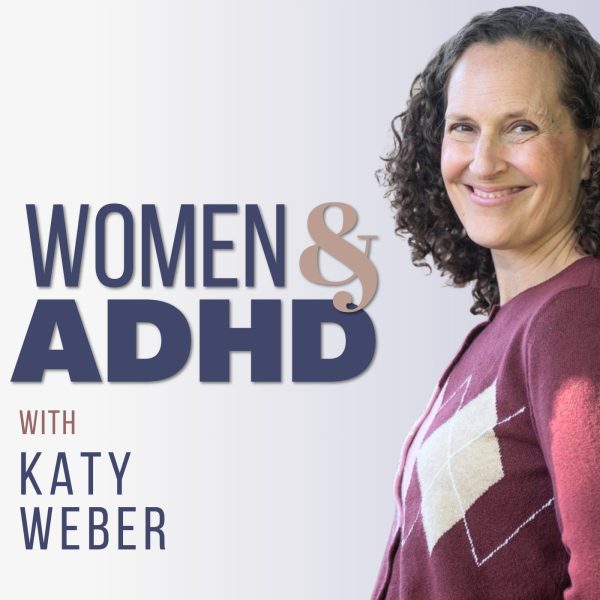
Women & ADHD
- Épisodes
- 222
- Parution
- toutes les deux semaines
- Dernier épisode
- 16 Nov 2026
À propos du podcast
A late diagnosis turned her world upside down. Now Katy Weber interviews women who discovered they have ADHD in adulthood, while exploring the topics and life experiences unique to adult-diagnosed neurodivergent women. Women & ADHD is a community for those who are finally understanding themselves, finding validation, and learning to lean into their strengths, both professionally and personally. For more information and support, visit https://www.womenandadhd.com.
Épisodes 222
Brooke Schnittman: ADHD and the lifelong impacts of bullying
Episode 221 with Brooke Schnittman.Brooke is an ADHD and executive function coach, a coach trainer, and the founder of Coaching With Brooke. She has more than 20 years of experience in special education and …
Notes de l’épisode
Episode 221 with Brooke Schnittman.
Brooke is an ADHD and executive function coach, a coach trainer, and the founder of Coaching With Brooke. She has more than 20 years of experience in special education and ADHD coaching. She created 3C Activation®, an ADHD and executive function coach training program, and wrote the book Activate Your ADHD Potential. Her team of certified coaches works across more than 40 countries. She has spoken for organizations like Capital One, IBM, ADDitude, and the International ADHD Conference.
Brooke returns to the podcast to discuss her surveys on bullying and the emotional experiences of adults with ADHD. Prompted by her own experiences with bullying, Brooke wanted to learn whether others in the ADHD community had experienced similar patterns.
Brooke describes two self-selected surveys of adults who reported having ADHD. In the first, 90.7% of 162 respondents reported childhood bullying. In the second, 129 eligible respondents reported experiences including bullying, rejection sensitivity, low self-confidence, anxiety and fear of speaking up. These surveys reflect the people who chose to respond; they aren’t representative estimates of all adults with ADHD, and they weren’t designed to show that bullying causes these experiences.
We talk about how repeated criticism, exclusion, or rejection can shape ways of coping, such as masking, people-pleasing, perfectionism, staying quiet, and watching closely for others’ reactions. They also discuss the difficulty of separating ADHD, trauma, and past experiences — and why it’s worth being curious about what may be underneath a behavior rather than assuming one cause.
Key topics:
- Brooke’s motivation for surveying her community about bullying and ADHD
- Childhood and adult bullying, and how it can look different over time
- What Brooke’s self-selected surveys reported—and what they can’t establish
- Rejection sensitivity, anxiety, self-confidence and fear of speaking up
- How criticism or exclusion may lead to masking, people-pleasing and perfectionism
- Hypervigilance and the challenge of distinguishing present facts from past experience
- ADHD, trauma and the limits of assuming a single explanation
- The experiences of women and girls whose ADHD wasn’t identified when they were younger
Website: coachingwithbrooke.com
Instagram: @coachingwithbrooke
Links & Resources:
- Episode 165 with Brooke Schnittman
- For the month of November, Brooke’s ABCs of ADHD digital workbook is 50% off: https://www.coachingwithbrooke.com/category/all-products
- Brooke’s best-selling book:
- https://www.coachingwithbrooke.com/activatebook
- Interested in coaching or becoming a coach? https://www.coachingwithbrooke.com/step-1
- - - - -
Episode edited by E Podcast Productions
- - - - -
Women & ADHD coaching: www.womenandadhd.com/coaching
- - - - -
Work 1-on-1 with Katy: www.womenandadhd.com/katy
- - - - -
Order the “Hey, it’s ADHD!” course: www.womenandadhd.com/adhdcourse
- - - - -
Did you love this episode? Click here to pledge a one-time donation to the podcast!
- - - - -
If you are a woman who was diagnosed with ADHD and you’d like to apply to be a guest on this podcast, visit womenandadhd.com/podcastguest.
Instagram: @womenandadhdpodcast
Tiktok: @womenandadhdpodcast
Twitter: @womenandadhd
Facebook: @womenandadhd
Advertising Inquiries: https://redcircle.com/brands
Privacy & Opt-Out: https://redcircle.com/privacyAmanda McCracken: ADHD, limerence, and learning to receive love
Episode 220 with Amanda McCracken.Amanda is an award-winning journalist and the author of “When Longing Becomes Your Lover: A True Story of Overcoming Limerence.” She also hosts The Longing Lab podcast and has …
Notes de l’épisode
Episode 220 with Amanda McCracken.
Amanda is an award-winning journalist and the author of “When Longing Becomes Your Lover: A True Story of Overcoming Limerence.” She also hosts The Longing Lab podcast and has given a TED talk on how longing keeps us from healthy relationships.
Amanda was diagnosed with ADHD at 36, after an email from her dad. She didn't connect it to the pattern running through her love life until she was writing her memoir. That pattern is limerence: obsessive romantic longing for someone you've idealized and put on a pedestal.
We talk about how ADHD traits like hyperfixation, perfectionism, and difficulty being present can shape the way women experience attraction. We also cover what it takes to move toward secure, trusting love.
Key topics:
- Getting an adult ADHD diagnosis, and why Amanda dismissed it for years
- Being the "good kid" next to a sibling who needed more support
- What limerence is, and how hyperfixation can make crushes feel all-consuming
- Masking, perfectionism, and the fear that someone will find the "real you"
- Why receiving love felt wrong, and how self-worth fits in
- How purity culture and Christian-pop romantic language blurred devotion and crushes
- The therapy turning point: "You're in love with the longing"
- Coping before diagnosis: drinking, hair-pulling and rigid control
- What was different about meeting her husband
- ADHD, creativity, and writing your way through heartbreak
- Menopause or ADHD? Executive function and cognitive load
Website: amandajmccracken.com
Instagram: @amandajmccracken
Links & Resources:
- Amanda’s book: When Longing Becomes Your Lover: Breaking from Infatuation, Rejection, and Perfectionism to Find Authentic Love: A True Story of Overcoming Limerence
- Amanda’s TED Talk: “How longing keeps us from healthy relationships”
- Amanda’s podcast: The Longing Lab
- - - - -
Episode edited by E Podcast Productions
- - - - -
Women & ADHD coaching: www.womenandadhd.com/coaching
- - - - -
Work 1-on-1 with Katy: www.womenandadhd.com/katy
- - - - -
Order the “Hey, it’s ADHD!” course: www.womenandadhd.com/adhdcourse
- - - - -
Did you love this episode? Click here to pledge a one-time donation to the podcast!
- - - - -
If you are a woman who was diagnosed with ADHD and you’d like to apply to be a guest on this podcast, visit womenandadhd.com/podcastguest.
Instagram: @womenandadhdpodcast
Tiktok: @womenandadhdpodcast
Twitter: @womenandadhd
Facebook: @womenandadhd
Advertising Inquiries: https://redcircle.com/brands
Privacy & Opt-Out: https://redcircle.com/privacyUnmasking Our Health: ADHD, IBS & the gut-brain connection
Episode 219 with Katy Weber & Kalin JohnsonWelcome back to our ongoing series, “Unmasking Our Health,” in which host Katy Weber teams up with medical expert Dr. Kalin Johnson, PharmD, to look beyond the …
Notes de l’épisode
Episode 219 with Katy Weber & Kalin Johnson
Welcome back to our ongoing series, “Unmasking Our Health,” in which host Katy Weber teams up with medical expert Dr. Kalin Johnson, PharmD, to look beyond the neurodivergent brain and explore what it means to live in a neurodivergent body.
In this episode, we explore the relationship between ADHD and gut health, including IBS, constipation, diarrhea, bloating, and abdominal pain. We discuss how the gut and brain communicate, why ADHD-related behaviors, routines, and medication can all affect digestion, and why a one-size-fits-all approach to gut health can miss what an individual actually needs.
The conversation also looks at what supportive care can involve: listening to your body, making manageable changes, and finding a provider who’s curious about the whole picture — not just one symptom.
In this episode, we cover:
- What IBS is and how it’s diagnosed
- How ADHD and gastrointestinal symptoms may be associated
- The two-way communication between the gut and brain
- How stress, routines, hydration, eating patterns, and body cues can affect digestion
- Potential effects of stimulants, SSRIs, and antibiotics on gut symptoms
- Why fiber, fermented foods, and other common recommendations aren’t right for everyone
- How to look for care that considers ADHD and the whole person
- Why small, sustainable changes may feel more manageable than a complete overhaul
Note: Nothing in this episode constitutes medical advice. Always consult with your physician and pharmacist before starting, stopping, or changing any medication.
Kalin’s website: kalinjohnson.com
Instagram: @kalinpharmd
Links & Resources:
- The Association Between Attention-Deficit Hyperactivity Disorder and Gastrointestinal Symptoms: A Systematic Review and Meta-Analysis
- Have a topic you want Katy and Kalin to cover? Contact us
- - - - -
Episode edited by E Podcast Productions
- - - - -
Women & ADHD coaching: www.womenandadhd.com/coaching
- - - - -
Work 1-on-1 with Katy: www.womenandadhd.com/katy
- - - - -
Order the “Hey, it’s ADHD!” course: www.womenandadhd.com/adhdcourse
- - - - -
Did you love this episode? Click here to pledge a one-time donation to the podcast!
- - - - -
If you are a woman who was diagnosed with ADHD and you’d like to apply to be a guest on this podcast, visit womenandadhd.com/podcastguest.
Instagram: @womenandadhdpodcast
Tiktok: @womenandadhdpodcast
Twitter: @womenandadhd
Facebook: @womenandadhd
Advertising Inquiries: https://redcircle.com/brands
Privacy & Opt-Out: https://redcircle.com/privacyGreer Jones: The relief (and complexity) of an adult diagnosis
Episode 218 with Greer Jones.Greer is the creator of The Unfinished Idea, a community that supports mamas raising neurodivergent kids. After her son, husband, and later herself were diagnosed, she walked …
Notes de l’épisode
Episode 218 with Greer Jones.
Greer is the creator of The Unfinished Idea, a community that supports mamas raising neurodivergent kids. After her son, husband, and later herself were diagnosed, she walked through a dark season of overwhelm, burnout, and isolation. Over time, she discovered people and rhythms that supported her neurodivergent brain, rebuilt her family’s routines, and found the lights that guided her out — community, real stories, and small wins that gave her hope again. Today, she uses her voice, lived experience, and practical tools to help overwhelmed neurodivergent moms feel understood, equipped, and confident in the lives they’re building.
In our conversation, Greer shares what it was like to pursue an adult diagnosis in the UK, advocate for her neurodivergent son, and make sense of the ways ADHD has shaped her life. We talk about the relief of finally having an explanation, the grief and self-compassion that can come with looking back, and why ADHD in women doesn’t always look like hyperactivity on the outside.
We explore what meaningful connection can look like when life is messy, schedules are unpredictable, and nobody has all the answers. And finally, we talk about the Beautifully Wired Summit — a free, three-day online event hosted by Greer, bringing together over 20 experts to share practical, real-life strategies for raising neurodivergent kids. From navigating meltdowns and school advocacy to creating doable daily routines, it’s packed with neuro-affirming tools that actually work. The summit takes place October 5th through 7th, and you can grab your free ticket right now by heading to womenandadhd.com/summit. I’ve also placed that link right at the top of the show notes for you.
Key topics:
- How Greer’s son’s diagnoses helped her recognize her own ADHD
- What Greer’s UK diagnosis process was like
- Why ADHD in women may not match familiar stereotypes
- The relief—and complexity—of receiving a diagnosis as an adult
- Advocating for a neurodivergent child in the school system
- Racing thoughts, emotional intensity, and decision fatigue
- How The Unfinished Idea grew into a podcast, business, and community
- Creating flexible, vulnerable connection for neurodivergent moms
- The Beautifully Wired Summit and its focus on ADHD and autism in girls and women
Website: theunfinishedidea.com
Instagram: @theunfinishedidea
Links & Resources:
- Greer’s podcast: Neurodivergent Conversations
- - - - -
Episode edited by E Podcast Productions
- - - - -
Women & ADHD coaching: www.womenandadhd.com/coaching
- - - - -
Work 1-on-1 with Katy: www.womenandadhd.com/katy
- - - - -
Order the “Hey, it’s ADHD!” course: www.womenandadhd.com/adhdcourse
- - - - -
Did you love this episode? Click here to pledge a one-time donation to the podcast!
- - - - -
If you are a woman who was diagnosed with ADHD and you’d like to apply to be a guest on this podcast, visit womenandadhd.com/podcastguest.
Instagram: @womenandadhdpodcast
Tiktok: @womenandadhdpodcast
Twitter: @womenandadhd
Facebook: @womenandadhd
Advertising Inquiries: https://redcircle.com/brands
Privacy & Opt-Out: https://redcircle.com/privacyUnmasking Our Health: Hypermobility & hypermobile Ehlers-Danlos syndrome (hEDS), Part 2
Episode 217 with Katy Weber & Kalin JohnsonWelcome back to our new series, “Unmasking Our Health,” in which host Katy Weber teams up with medical expert Dr. Kalin Johnson, PharmD, to look beyond the …
Notes de l’épisode
Episode 217 with Katy Weber & Kalin Johnson
Welcome back to our new series, “Unmasking Our Health,” in which host Katy Weber teams up with medical expert Dr. Kalin Johnson, PharmD, to look beyond the neurodivergent brain and explore what it means to live in a neurodivergent body.
After years of interviewing late‑diagnosed women and seeing the same patterns — chronic pain, fatigue, autoimmune issues, hormonal chaos, gut problems, “mystery” symptoms — Katy created the Unmasking Our Health series to explore the bigger questions behind neurodivergence: What if ADHD isn’t just about our brains, but about our whole bodies — and how and why is the medical system missing the full picture?
In Part 2 of a 2-part series, we continue the conversation on hypermobility, hypermobile Ehlers-Danlos Syndrome, and the often misunderstood symptoms that can show up alongside ADHD and autism. This episode focuses on the signs people miss, why those symptoms happen, and what kinds of support may help rather than hurt.
Kalin explains the connective tissue and autonomic nervous system connections behind bruising, fatigue, digestive issues, migraines, dizziness, pelvic floor problems, and joint pain, while Katy shares personal examples of how these patterns have shown up in her own life.
In this episode, we cover:
- A recap of Part 1, including hypermobility, hypermobile EDS, the Beighton score, and the connection with neurodivergence
- Why bruising, slow wound healing, nosebleeds, and fragile blood vessels can occur
- Proprioception, balance, spatial awareness, and why “clumsiness” may be more than distraction
- Fear of falling and the increased risk of pain or injury in hypermobile bodies
- Constant bracing, muscle guarding, and why hypermobile people may feel exhausted even while resting
- Digestive symptoms, including constipation, bloating, slow motility, and dysmotility
- Migraines, neck tension, craniocervical instability, POTS, and blood-flow regulation
- Dizziness upon standing, fluid pooling, low blood volume, electrolytes, and compression
- Pelvic floor issues, urinary symptoms, incomplete emptying, and prolapse
- Skin texture, softness, stretchiness, and translucency
- Why aggressive stretching and yoga can sometimes worsen instability and pain
- Strength training, swimming, pacing, and learning to stop before end range
- Estrogen, perimenopause, muscle building, and hypermobility symptoms
- Collagen, creatine, and what supplements can and cannot do
- Exercise intolerance, internalized beliefs about laziness, and body shame
- Finding healthcare providers who are knowledgeable, curious, and willing to listen
Note: Nothing in this episode constitutes medical advice. Always consult with your physician and pharmacist before starting, stopping, or changing any medication.
Kalin’s website: kalinjohnson.com
Instagram: @kalinpharmd
Links & Resources:
- The Beighton Scoring System
- Hypermobility Screening Tool
- Growing Up with Ehlers-Danlos Syndrome: 27 Telltale Signs
- Chronic Pain Partners
- Have a topic you want Katy and Kalin to cover? Contact us
- - - - -
Episode edited by E Podcast Productions
- - - - -
Women & ADHD coaching: www.womenandadhd.com/coaching
- - - - -
Work 1-on-1 with Katy: www.womenandadhd.com/katy
- - - - -
Order the “Hey, it’s ADHD!” course: www.womenandadhd.com/adhdcourse
- - - - -
Did you love this episode? Click here to pledge a one-time donation to the podcast!
- - - - -
If you are a woman who was diagnosed with ADHD and you’d like to apply to be a guest on this podcast, visit womenandadhd.com/podcastguest.
Instagram: @womenandadhdpodcast
Tiktok: @womenandadhdpodcast
Twitter: @womenandadhd
Facebook: @womenandadhd
Advertising Inquiries: https://redcircle.com/brands
Privacy & Opt-Out: https://redcircle.com/privacyElizabeth Ahmann & Micah Saviet: How clinicians and coaches can help ADHD clients flourish
Episode 216 with Elizabeth Ahmann & Micah SavietElizabeth Ahmann, ScD, RN, PCC, NBC-HWC is an ADHD and health and wellness coach, professor, researcher, and Micah Saviet, LCSW-C, NBC-HWC is a trauma-informed …
Notes de l’épisode
Episode 216 with Elizabeth Ahmann & Micah Saviet
Elizabeth Ahmann, ScD, RN, PCC, NBC-HWC is an ADHD and health and wellness coach, professor, researcher, and Micah Saviet, LCSW-C, NBC-HWC is a trauma-informed, neurodiversity-affirming clinician.
Their book, Flourishing with Adult ADHD, offers a research-informed, strengths-based, and trauma-informed framework for supporting adults with ADHD beyond symptom management. Grounded in neuroscience, psychology, public health, and wellness research, the book challenges deficit-based models and provides practical, affirming guidance for professionals supporting adults with ADHD.
Rather than focusing solely on coping strategies, this book centers flourishing — supporting adults with ADHD in developing self-trust, self-compassion, emotional regulation, clarity, and lives aligned with their values.
We talk about how coaching and therapy can work together, why Liz and Micah originally wrote the book for clinicians but found it resonated with adults with ADHD, and their hopes for the future of ADHD care, from better training to broader acceptance.
Key topics:
- Micah shares that he was diagnosed with ADHD at age 11 and describes how his hyperactivity was noticeable early on.
- Liz explains that she has not been diagnosed with ADHD, but family experience, especially with her husband, led her into ADHD coaching.
- The conversation reframes ADHD as a difference in attention and regulation, not simply a deficit.
- Micah and Liz explain that their book grew out of research on ADHD coaching and focus groups with experienced coaches.
- Shame comes up repeatedly as one of the biggest barriers to growth, self-understanding, and flourishing for adults with ADHD.
- They emphasize that many therapists and coaches still lack meaningful training in ADHD, especially adult ADHD, masking, and neurodivergence.
- The episode draws a clear distinction between a deficit-based medical model and a client-centered, strengths-based approach.
- They discuss how coaching and therapy can complement each other rather than compete, especially when grief, trauma, and executive functioning challenges overlap.
- Validation, self-compassion, psychoeducation, and mindfulness are presented as foundational tools for helping clients move away from self-criticism.
- The conversation also addresses diagnosis, stigma, trauma, education trauma, and the social conditions that can make ADHD feel more impairing than it is in isolation.
Website: https://www.pathways-ahead.com/ ; https://www.adulttraumaandadhdsolutions.com
Instagram: @adulttrauma_adhdsolutions
LinkedIn: https://www.linkedin.com/in/micah-saviet/ ; https://www.linkedin.com/in/lizahmann/
Links & Resources:
- Flourishing with Adult ADHD: The Evidence-Based Guide to Well-Being for Therapists, Coaches & Clients
- Kristin Neff’s self-compassion resources
- - - - -
Episode edited by E Podcast Productions
- - - - -
Women & ADHD coaching: www.womenandadhd.com/coaching
- - - - -
Work 1-on-1 with Katy: www.womenandadhd.com/katy
- - - - -
Order the “Hey, it’s ADHD!” course: www.womenandadhd.com/adhdcourse
- - - - -
Did you love this episode? Click here to pledge a one-time donation to the podcast!
- - - - -
If you are a woman who was diagnosed with ADHD and you’d like to apply to be a guest on this podcast, visit womenandadhd.com/podcastguest.
Instagram: @womenandadhdpodcast
Tiktok: @womenandadhdpodcast
Twitter: @womenandadhd
Facebook: @womenandadhd
Advertising Inquiries: https://redcircle.com/brands
Privacy & Opt-Out: https://redcircle.com/privacyUnmasking Our Health: Hypermobility & hypermobile Ehlers-Danlos syndrome (hEDS), Part 1
Episode 215 with Katy Weber & Kalin JohnsonWelcome back to our new series, “Unmasking Our Health,” in which host Katy Weber teams up with medical expert Dr. Kalin Johnson, PharmD, to look beyond the …
Notes de l’épisode
Episode 215 with Katy Weber & Kalin Johnson
Welcome back to our new series, “Unmasking Our Health,” in which host Katy Weber teams up with medical expert Dr. Kalin Johnson, PharmD, to look beyond the neurodivergent brain and explore what it means to live in a neurodivergent body.
After years of interviewing late‑diagnosed women and seeing the same patterns — chronic pain, fatigue, autoimmune issues, hormonal chaos, gut problems, “mystery” symptoms — Katy created the Unmasking Our Health series to explore the bigger questions behind neurodivergence: What if ADHD isn’t just about our brains, but about our whole bodies — and how and why is the medical system missing the full picture?
In part one of a 2-part series, we unpack hypermobile Ehlers-Danlos syndrome (hEDS) and hypermobility, and why these connective tissue conditions so often show up alongside ADHD and autism. This episode focuses on the lived experience, the diagnostic gray areas, and the body-wide symptoms that can look unrelated until you understand the connective tissue thread running through them.
We discuss how hypermobility is different from flexibility, why the Beighton score can miss real cases, and why symptoms like bruising, pain, dizziness, brain fog, and poor stamina often get mislabeled as “just clumsiness” or “just anxiety.”
In this episode, we cover:
- The difference between hypermobility spectrum disorder and hypermobile EDS, including the extra diagnostic criteria for hEDS beyond joint laxity
- Kalin explains the difference between flexibility and hypermobility using the rope-versus-bolts analogy
- The Beighton score is helpful as a screening tool, but it only checks five joints and can miss people whose hypermobility shows up elsewhere, especially with age
- Kalin shares her diagnosis story, including years of worsening symptoms, specialist dead ends, and being told it was mental health before the physical pattern was recognized
- We discuss why ADHD and autism appear more often in hypermobile people, with possible shared genetics, connective tissue differences in the brain, autonomic nervous system dysregulation, and altered sensory processing
- The connections between hEDS and POTS, orthostatic intolerance, fatigue, GI symptoms, interoception differences, mast cell issues, and inflammation
- Common real-life clues like “party tricks,” joint pain in yoga, easy bruising, weak grip, poor stamina, and the feeling of being “a creaky old lady” after sitting too long
- Why car rides, standing still, and long periods of upright posture can be especially hard because of blood flow, proprioception, and joint instability
- Why some people with hEDS need more numbing medication at the dentist, and why urinary leakage, pelvic floor fatigue, and foot pain can all be part of the same connective tissue story
- Practical next steps: track symptoms, document family history, protect joints and autonomic function, and look for a provider or physical therapist familiar with hEDS
Note: Nothing in this episode constitutes medical advice. Always consult with your physician and pharmacist before starting, stopping, or changing any medication.
Kalin’s website: kalinjohnson.com
Instagram: @kalinpharmd
Links & Resources:
- NYT Magazine article: Inflammation Keeps Us Alive. It's Also Making Us Sick.
- ADDitude Magazine: Bendy Bodies, ADHD Brains: Connecting the Dots
- The Beighton Scoring System
- Hypermobility Screening Tool
- Growing Up with Ehlers-Danlos Syndrome: 27 Telltale Signs
- Have a topic you want Katy and Kalin to cover? Contact us
- - - - -
Episode edited by E Podcast Productions
- - - - -
Women & ADHD coaching: www.womenandadhd.com/coaching
- - - - -
Work 1-on-1 with Katy: www.womenandadhd.com/katy
- - - - -
Order the “Hey, it’s ADHD!” course: www.womenandadhd.com/adhdcourse
- - - - -
Did you love this episode? Click here to pledge a one-time donation to the podcast!
- - - - -
If you are a woman who was diagnosed with ADHD and you’d like to apply to be a guest on this podcast, visit womenandadhd.com/podcastguest.
Instagram: @womenandadhdpodcast
Tiktok: @womenandadhdpodcast
Twitter: @womenandadhd
Facebook: @womenandadhd
Advertising Inquiries: https://redcircle.com/brands
Privacy & Opt-Out: https://redcircle.com/privacyDr. Brady Bradshaw: What parents need to know about Autism & ADHD in girls
Episode 214 with Dr. Brady BradshawIn this special interview episode, guest host and ADHD Life Coach Lindsey Buchanan sits down with her sister, psychiatrist Dr. Brady Bradshaw, MD, for an honest …
Notes de l’épisode
Episode 214 with Dr. Brady Bradshaw
In this special interview episode, guest host and ADHD Life Coach Lindsey Buchanan sits down with her sister, psychiatrist Dr. Brady Bradshaw, MD, for an honest, evidence-based conversation about ADHD and autism in girls and women.
Drawing on both medical expertise and deeply personal experience — Lindsey has her own ADHD diagnosis and is the mother of a daughter with Level 1 autism — this episode covers the symptoms, the overlap, the myths, and the path forward for families navigating neurodivergence.
In this episode, we cover:
Autism in Girls & Women:
- Why ADHD in females is so frequently missed or misdiagnosed
- The difference between how ADHD presents in boys vs. girls (external vs. internal symptoms)
- Key signs to look for: busy brain, daydreaming, excessive talking, forgetfulness, losing things, sleep disturbances
- The role of hormonal shifts (puberty, postpartum, perimenopause) in unmasking ADHD symptoms
- How high intelligence and anxiety can "protect" ADHD girls from detection — but at a serious cost
- What happens when smart girls hit the ceiling — the college transition and why it's a high-risk time
- The connection between undiagnosed ADHD and unhealthy coping mechanisms (vaping, caffeine, energy drinks)
- Why seeking a diagnosis doesn't automatically mean starting medication
Autism in Girls & Women:
- The neurodivergence umbrella: understanding where ADHD and autism both fit
- The important statistic: the majority of people with autism also have ADHD — but not vice versa
- Understanding Autism Spectrum Disorder Levels 1, 2, and 3 — and why Level 1 (formerly Asperger's) is so easy to miss
- Core diagnostic criteria: deficits in social communication AND insistence on sameness/repetitive behaviors
- How masking works in autistic girls with high intelligence
- Why puberty is another "watershed moment" for autism diagnoses in girls
- How insistence on sameness and rigidity is anxiety-driven — and what it actually feels like for the child
- The difference between ADHD rigidity and autism rigidity (and why it matters)
Debunking Myths:
- The science is clear: vaccines do NOT cause autism
- Why dietary changes (gluten-free, dairy-free) will not "fix" or cure autism
- The role of food sensitivities in autism — and when to actually see a GI doctor
- Why the desire to find a "cause" can lead families toward misinformation
After the Diagnosis — What's Next:
- Why parent education and parent coaching is the highest-yield first step
- How ABA therapy may not be right for every Level 1 autism child (and what PDA — Pathological Demand Avoidance — means for treatment)
- The importance of speech therapy, OT, and physical therapy — when applicable
- Why understanding a diagnosis is therapeutic in itself
- Lindsay's personal recommendation: the Mothers Together support group on Marco Polo
Websites: bradybradshawmd.com ; womenandadhd.com/lindsey
Links & Resources:
- Is This Autism? by Donna Henderson — recommended for understanding autism in girls and Level 1 autism
- ADHD 2.0 by Ned Hallowell & John Ratey — Dr. Bradshaw's top ADHD book recommendation
- - - - -
Episode edited by E Podcast Productions
- - - - -
Women & ADHD coaching: www.womenandadhd.com/coaching
- - - - -
Work 1-on-1 with Katy: www.womenandadhd.com/katy
- - - - -
Order the “Hey, it’s ADHD!” course: www.womenandadhd.com/adhdcourse
- - - - -
Did you love this episode? Click here to pledge a one-time donation to the podcast!
- - - - -
If you are a woman who was diagnosed with ADHD and you’d like to apply to be a guest on this podcast, visit womenandadhd.com/podcastguest.
Instagram: @womenandadhdpodcast
Tiktok: @womenandadhdpodcast
Twitter: @womenandadhd
Facebook: @womenandadhd
Advertising Inquiries: https://redcircle.com/brands
Privacy & Opt-Out: https://redcircle.com/privacyUnmasking Our Health: GLP-1s & ADHD
Episode 213 with Katy Weber & Kalin JohnsonIn this first episode of our new series “Unmasking Our Health,” host Katy Weber teams up with cohost Kalin Johnson, PharmD, to explore a side of ADHD in women that …
Notes de l’épisode
Episode 213 with Katy Weber & Kalin Johnson
In this first episode of our new series “Unmasking Our Health,” host Katy Weber teams up with cohost Kalin Johnson, PharmD, to explore a side of ADHD in women that isn’t talked about enough: What it’s like to live in a neurodivergent body.
After years of interviewing late‑diagnosed women and seeing the same patterns — chronic pain, fatigue, autoimmune issues, hormonal chaos, gut problems, “mystery” symptoms — Katy created the Unmasking Our Health series to explore the bigger questions behind neurodivergence: What if ADHD isn’t just about our brains, but about our whole bodies — and how and why is the medical system missing the full picture?
Our first topic for discussion: the explosion of GLP-1 medications (think Ozempic, Wegovy, Mounjaro) and what their surprising, wide-reaching effects are revealing about the deeply intertwined relationship between metabolic health, inflammation, hormones, and ADHD.
In this episode, we cover:
- What is metabolic psychiatry? And why it's expanding how we understand ADHD beyond just dopamine and norepinephrine
- GLP-1 medications and ADHD — what patients are actually reporting (quieter brain, less emotional reactivity, reduced compulsive behaviors, improved executive functioning)
- The inflammation connection — how chronic neuroinflammation creates "cognitive drag" and why reducing it may give the ADHD brain more bandwidth
- The vagus nerve and GLP-1 receptors — a fascinating look at how the gut communicates with the brain (and why 80% of vagal fibers run from the body to the brain, not the other way around!)
- Estrogen, perimenopause, and metabolic decline — why women over 50 are going on GLP-1s faster than any other population
- Drug interactions (and physiologic interactions) — what to watch for if you're on stimulants, SSRIs, or HRT while starting a GLP-1
- Food noise, reward-seeking, and binge eating — what GLP-1s are actually doing in the brain's dopamine reward circuits, and what that means for neurodivergent women with disordered eating histories
- Where is all of this going? Kalin shares her genuinely optimistic vision for how GLP-1 research is opening the door to a more holistic, systemic understanding of neurodivergent women's health
Note: Nothing in this episode constitutes medical advice. Always consult with your physician and pharmacist before starting, stopping, or changing any medication.
Kalin’s website: kalinjohnson.com
Instagram: @kalinpharmd
Links & Resources:
- Listen to Kalin's first episode: Episode 97 (August 2022)
- Have a topic you want Katy and Kalin to cover? Contact us
- - - - -
Episode edited by E Podcast Productions
- - - - -
Women & ADHD coaching: www.womenandadhd.com/coaching
- - - - -
Work 1-on-1 with Katy: www.womenandadhd.com/katy
- - - - -
Order the “Hey, it’s ADHD!” course: www.womenandadhd.com/adhdcourse
- - - - -
Did you love this episode? Click here to pledge a one-time donation to the podcast!
- - - - -
If you are a woman who was diagnosed with ADHD and you’d like to apply to be a guest on this podcast, visit womenandadhd.com/podcastguest.
Instagram: @womenandadhdpodcast
Tiktok: @womenandadhdpodcast
Twitter: @womenandadhd
Facebook: @womenandadhd
Advertising Inquiries: https://redcircle.com/brands
Privacy & Opt-Out: https://redcircle.com/privacyCaroline Maguire: Why do adult friendships feel so hard?
Episode 212 with Caroline Maguire“All the kids I worked with were like, 'I would love to have a friend.' All the adults were like, 'Something's wrong with me, I don't have friends.' And I was like — no, no, no …
Notes de l’épisode
Episode 212 with Caroline Maguire
“All the kids I worked with were like, 'I would love to have a friend.' All the adults were like, 'Something's wrong with me, I don't have friends.' And I was like — no, no, no. Nothing's wrong with you.”
Caroline Maguire is an ADHD coach, friendship expert, and author of the new book, “Friendship Skills for Neurodivergent Adults: A Guide for the Anxious, Uniquely Wired, and Easily Distracted.” If you’ve ever felt like you missed the “how to be a friend” manual — or that you can do intense one‑on‑one connection but still don’t feel like you truly belong anywhere — this conversation is for you.
We dig into why neurodivergent wiring affects the way we show up in friendships, and what it actually looks like to build connection on our own terms. Caroline offers a deeply neuroaffirming roadmap to adult friendship, with language for patterns many of us have felt but never named, plus practical tools that don’t ask you to mask or be “less” of yourself.
Key topics discussed:
- Caroline’s journey into ADHD coaching and why friendship became her niche
- The difference between connection vs. belonging for neurodivergent adults
- Key friendship mindsets: scarcity thinking, all‑or‑nothing, anxious over‑correcting, and the impulsive friendship cycle
- Fortressing: what it is, why we do it, and how it protects and isolates us
- The five levels of friendship and how mismatched expectations create pain
- Communirelating: explaining how your brain works without apologizing for it
- Practical strategies for structured socializing and automating check‑ins
Website: carolinemaguireauthor.com
Instagram: @authorcarolinem
Links & Resources:
- Friendship Skills for Neurodivergent Adults by Caroline Maguire
- Caroline’s Youtube channel
- - - - -
Episode edited by E Podcast Productions
- - - - -
Women & ADHD coaching: www.womenandadhd.com/coaching
- - - - -
Work 1-on-1 with Katy: www.womenandadhd.com/katy
- - - - -
Order the “Hey, it’s ADHD!” course: www.womenandadhd.com/adhdcourse
- - - - -
Did you love this episode? Click here to pledge a one-time donation to the podcast!
- - - - -
If you are a woman who was diagnosed with ADHD and you’d like to apply to be a guest on this podcast, visit womenandadhd.com/podcastguest.
Instagram: @womenandadhdpodcast
Tiktok: @womenandadhdpodcast
Twitter: @womenandadhd
Facebook: @womenandadhd
Advertising Inquiries: https://redcircle.com/brands
Privacy & Opt-Out: https://redcircle.com/privacyTory Berry & Chele Morony: DBT skills for neurodivergent brains
Episode 211 with Tory Berry & Chele Morony“People say DBT is for borderline personality disorder. I’m like, what are you talking about? DBT is for everyone. One of the most common refrains that we hear in the …
Notes de l’épisode
Episode 211 with Tory Berry & Chele Morony
“People say DBT is for borderline personality disorder. I’m like, what are you talking about? DBT is for everyone. One of the most common refrains that we hear in the group is ‘Where has this been? I needed this in high school!’”
This episode combines two of my favorite topics: ADHD coaching and Dialectical Behavior Therapy (DBT)!
Tory and Chele are a mother-daughter duo from Southern California who have created something really special in the neurodivergent support space.
Tory is the founder of ADHD Works Now, and she is also one of our amazing ADHD coaches at Women & ADHD.
Tory was diagnosed with both ADHD and autism in adulthood, and she’s channeled her own lived experience into helping other neurodivergent adults through 1-on-1 coaching and specially adapted DBT groups.
Chele is a Licensed Clinical Social Worker with over 35 years of experience. She is also Tory’s business partner, bringing a clinical perspective to their work together.
We talk about Tory’s adult diagnosis and how Chele missed her ADHD and autism in childhood, despite her own clinical training.
We also talk about the fundamentals of DBT, and how the focus on validation, acceptance, and practical skill development makes it particularly powerful for neurodivergent clients who've spent years asking, “What’s wrong with me?” And Tory & Chele share about their collaborative group approach and how they’re making DBT skills applicable to the neurodivergent experience.
Tory & Chele’s DBT groups fill up quickly. The June cohort is already full, but you can sign up at the link below for the next cohort waitlist.
Key topics discussed:
- Tori's journey from adult ADHD/autism diagnosis to becoming an ADHD coach
- The missed signs of ADHD in girls and women
- How DBT skills can be adapted for neurodivergent brains
- The importance of validation vs. invalidating environments
- Masking vs. authenticity — when and how to be "legible”
- The intersection of coaching and therapy
- Running neurodivergent-friendly DBT groups
Website: adhdworksnow.com
Links & Resources:
- - - - -
Episode edited by E Podcast Productions
- - - - -
Women & ADHD coaching: www.womenandadhd.com/coaching
- - - - -
Work 1-on-1 with Katy: www.womenandadhd.com/katy
- - - - -
Order the “Hey, it’s ADHD!” course: www.womenandadhd.com/adhdcourse
- - - - -
Did you love this episode? Click here to pledge a one-time donation to the podcast!
- - - - -
If you are a woman who was diagnosed with ADHD and you’d like to apply to be a guest on this podcast, visit womenandadhd.com/podcastguest.
Instagram: @womenandadhdpodcast
Tiktok: @womenandadhdpodcast
Twitter: @womenandadhd
Facebook: @womenandadhd
Advertising Inquiries: https://redcircle.com/brands
Privacy & Opt-Out: https://redcircle.com/privacyDani Donovan: How to get stuff done when you don’t feel like it
Episode 210 with Dani Donovan“I either get 30 minutes worth of work done in 8 hours or 8 hours worth of work done in 30 minutes — those are the only two options.”Dani is an ADHD content creator, speaker, and …
Notes de l’épisode
Episode 210 with Dani Donovan
“I either get 30 minutes worth of work done in 8 hours or 8 hours worth of work done in 30 minutes — those are the only two options.”
Dani is an ADHD content creator, speaker, and the celebrated author of “The Anti-Planner: How to Get Sh*t Done When You Don't Feel Like It.”
Dani became an overnight sensation when a flowchart she drew mapping out her winding, ADHD storytelling style went viral on Twitter. Since then, she has built a massive community by bringing radical vulnerability, humor, and data visualization to the neurodivergent experience. She’s spoken at major companies like Microsoft, Amazon, and Adobe, and she is the founder of The Anti-Boring Project.
We dive deep into misconceptions about ADHD, including being told you are “too smart to have ADHD.” Dani shares her story of growing up with teachers who dismissed her mother's ADHD inquiries because she was getting good grades.
We also explore the magic behind visual storytelling for ADHD brains, why traditional productivity systems tend to fail us, and how the “Anti-Planner” organizes strategies based on your current emotional resistance — such as feeling stuck, overwhelmed, or unmotivated.
Plus, Dani shares some exclusive details about an exciting new app she is prototyping!
Key topics discussed:
- How teachers dismissed her ADHD symptoms because she was "too smart"
- The therapist who recognized Dani’s ADHD through her communication style
- Growing up questioning authority and fighting unfairness
- Why ADHD brains connect with infographics and memes
- How a workplace joke became a career-defining moment
- Finding people with matching scars and shared experiences
- The Anti-Planner origins: From business field guide to revolutionary productivity system
- The five categories of executive dysfunction (stuck, overwhelmed, unmotivated, disorganized, discouraged)
- Perfectionism vs. Experimentation: Permission to keep quitting and trying new approaches
- Exclusive preview of Dani’s upcoming ADHD productivity app
Website: anti-planner.com
Instagram: @danidonovan
Tiktok: @danidonovan
Links & Resources:
The Anti-Planner: How to Get Sh*t Done When You Don't Feel Like It
- - - - -
Episode edited by E Podcast Productions
- - - - -
Women & ADHD coaching: www.womenandadhd.com/coaching
- - - - -
Work 1-on-1 with Katy: www.womenandadhd.com/katy
- - - - -
Order the “Hey, it’s ADHD!” course: www.womenandadhd.com/adhdcourse
- - - - -
Did you love this episode? Click here to pledge a one-time donation to the podcast!
- - - - -
If you are a woman who was diagnosed with ADHD and you’d like to apply to be a guest on this podcast, visit womenandadhd.com/podcastguest.
Instagram: @womenandadhdpodcast
Tiktok: @womenandadhdpodcast
Twitter: @womenandadhd
Facebook: @womenandadhd
Advertising Inquiries: https://redcircle.com/brands
Privacy & Opt-Out: https://redcircle.com/privacyJenna Free: ADHD, overwhelm, and how to heal your dysregulated nervous system
Episode 209 with Jenna Free “I think the biggest issue is with the current ADHD narrative. People are confusing ‘fight or flight’ and ADHD; they're putting it in a bundle and calling it ADHD. Then people …
Notes de l’épisode
Episode 209 with Jenna Free “I think the biggest issue is with the current ADHD narrative. People are confusing ‘fight or flight’ and ADHD; they're putting it in a bundle and calling it ADHD. Then people believe, ‘Well, this is how hard it needs to be.’” Jenna is a therapist living in Calgary, Alberta, who not only specializes in ADHD but also has ADHD herself. Jenna was diagnosed with ADHD at 32 while in grad school with two young children – so yes, she gets the overwhelm. …Alex Bellitter: Coaching vs. therapy for ADHD
Episode 208 with Alex Bellitter“People can feel like, ‘I don’t think this is an internal thing I’m trying to work through. I feel like I’m trying to navigate my environment, and I don’t have the tools …
Notes de l’épisode
Episode 208 with Alex Bellitter
“People can feel like, ‘I don’t think this is an internal thing I’m trying to work through. I feel like I’m trying to navigate my environment, and I don’t have the tools, education, and resources to do it.’”
Alex is the Senior Manager of Coaching at Shimmer, an ADHD community and coaching platform that’s redefining what support can look like for ADHD brains.
Alex does not have ADHD herself, but she’s spent years working with neurodivergent kids, adults, and now leading a team of over 50 ADHD coaches at Shimmer. She brings a background in coaching psychology, clinical psychology, and health and wellness to her work, and she’s passionate about delivering strengths‑based, evidence‑informed support that actually feels good to ADHDers.
In this conversation, we talk about:
- What coaching psychology is and why it’s such a powerful fit for ADHD
- The difference between therapy, coaching, and “healing” work, and how they can complement each other
- Why so many of us are misdiagnosed with depression first and how overwhelm, executive dysfunction, and chronic frustration can get mislabeled
- The ebb and flow of ADHD symptoms across the lifespan, hormones, menopause, grief, and “temporary neurodivergence”
- How Shimmer structures its coaching, body doubling, community, and AI tools to be genuinely ADHD‑friendly and shame‑free
- The promises and risks of AI for neurodivergent people — and what “good guardrails” actually look like
If you’ve ever wondered whether you’re “struggling enough” to count, questioned what’s “normal,” or felt confused about where ADHD ends, and environment, hormones, and capitalism begin … this episode is for you.
Website: linkedin.com/in/abellitter
Instagram: @shimmer.care
Links & Resources:
Episode 191 with Christal Wang
- - - - -
Episode edited by E Podcast Productions
Find the transcript of this episode at www.womenandadhd.com/transcripts
- - - - -
Women & ADHD coaching: www.womenandadhd.com/coaching
- - - - -
Work 1-on-1 with Katy: www.womenandadhd.com/katy
- - - - -
Order the “Hey, it’s ADHD!” course: www.womenandadhd.com/adhdcourse
- - - - -
Did you love this episode? Click here to pledge a one-time donation to the podcast!
- - - - -
If you are a woman who was diagnosed with ADHD and you’d like to apply to be a guest on this podcast, visit womenandadhd.com/podcastguest.
Instagram: @womenandadhdpodcast
Tiktok: @womenandadhdpodcast
Twitter: @womenandadhd
Facebook: @womenandadhd
Advertising Inquiries: https://redcircle.com/brands
Privacy & Opt-Out: https://redcircle.com/privacyRoberta Dombrowski: Breaking up with burnout
Episode 207 with Roberta Dombrowski“Work is one of the only socially acceptable forms of addiction. We get rewarded for not having boundaries and for always taking on more and more things.”Roberta is an …
Notes de l’épisode
Episode 207 with Roberta Dombrowski
“Work is one of the only socially acceptable forms of addiction. We get rewarded for not having boundaries and for always taking on more and more things.”
Roberta is an executive coach and founder of Learn Mindfully, where she helps leaders and teams thrive from the inside out.
After rising quickly through leadership roles to become a VP in the tech world at age 29, Roberta realized her success was coming at a cost — she found herself burned out, anxious, and physically affected by the pressure to prove herself constantly. On the outside, she was the high‑performing executive. On the inside, she was white‑knuckling her way through burnout, complex trauma, and the isolation of often being the only woman or person of color in the room.
In this conversation, Roberta and I discuss:
- How her late ADHD diagnosis helped her finally make sense of her childhood and school experience
- The overlap between ADHD, trauma, and burnout, especially for high‑achieving women, mothers, and entrepreneurs
- What trauma‑informed leadership actually looks like day‑to‑day (hint: it’s not just more bubble baths)
- Why work is “one of the only socially acceptable forms of addiction” — and how to step out of that cycle
- How to start loosening your grip on control, micromanagement, and over‑functioning without letting everything fall apart
If you’ve ever felt like your “success” is built on overfunctioning, perfectionism, and people-pleasing — and you’re desperate to break up with burnout but not sure how — this episode is definitely for you.
Website: learnmindfully.co
Instagram: @learn_mindfully
Links & Resources:
In Her Words (Roberta’s podcast)
Free resource: Leadership Energy Audit
Free resource: Reclamation Journal
Strong Ground: The Lessons of Daring Leadership, the Tenacity of Paradox, and the Wisdom of the Human Spirit by Brené Brown
Trauma Stewardship: An Everyday Guide to Caring for Self While Caring for Others by Laura van Dernoot Lipsky with Connie Burk
- - - - -
Episode edited by E Podcast Productions
Find the transcript of this episode at www.womenandadhd.com/transcripts
- - - - -
Women & ADHD coaching: www.womenandadhd.com/coaching
- - - - -
Work 1-on-1 with Katy: www.womenandadhd.com/katy
- - - - -
Order the “Hey, it’s ADHD!” course: www.womenandadhd.com/adhdcourse
- - - - -
Did you love this episode? Click here to pledge a one-time donation to the podcast!
- - - - -
If you are a woman who was diagnosed with ADHD and you’d like to apply to be a guest on this podcast, visit womenandadhd.com/podcastguest.
Instagram: @womenandadhdpodcast
Tiktok: @womenandadhdpodcast
Twitter: @womenandadhd
Facebook: @womenandadhd
Advertising Inquiries: https://redcircle.com/brands
Privacy & Opt-Out: https://redcircle.com/privacyMadeline Grace Matthews & Karla Pretorius: Finding our neurodivergent voice
Episode 206 with Madeline Grace Matthews & Karla Pretorius“I'm learning more and more how to be myself.”Madeline is 23, and she was diagnosed with autism and a mild cognitive disability as a child. Originally …
Notes de l’épisode
Episode 206 with Madeline Grace Matthews & Karla Pretorius
“I'm learning more and more how to be myself.”
Madeline is 23, and she was diagnosed with autism and a mild cognitive disability as a child. Originally from the U.S., she currently lives with her missionary family in Thailand. She is also the author of the recent book “Nineteen Letters to Myself: Guided Reflections and Prompts for Hope and Healing from a Neurodivergent Perspective.”
Madeline’s book started as a series of letters to her younger self — originally as a coping tool, and eventually as a way to make sense of her neurodivergence, as well as childhood trauma, big emotions, religious faith, and learning to see herself as “different, not less.”
Karla is a psychotherapist and PhD candidate who began working with Madeline in 2021 and helped her write and publish the book. In the first half of the episode, the three of us discuss the process of writing the book and the healing power of showing our younger selves kindness and acceptance.
In the second half of the episode, I sit down with Karla and hear a little more about her research on women and ADHD and the incredible work she’s doing in the neurodivergent community. Karla, who has ADHD herself, shares how she’s working to bridge academic research with lived experience.
If you’re the parent of a neurodivergent teen or if you’ve been diagnosed in adulthood and you’re on a journey of reparenting your inner child, or if you’ve ever felt like you were too much, not enough, or simply misunderstood — this episode is definitely for you.
Website: karlapretorius.com
Instagram: @therapy.neurodivergent
Links & Resources:
Nineteen Letters to Myself: Guided Reflections and Prompts for Hope and Healing from a Neurodivergent Perspective by Madeline Grace Mathews and Karla Pretorius
- - - - -
Episode edited by E Podcast Productions
Find the transcript of this episode at www.womenandadhd.com/transcripts
- - - - -
Women & ADHD coaching: www.womenandadhd.com/coaching
- - - - -
Work 1-on-1 with Katy: www.womenandadhd.com/katy
- - - - -
Order the “Hey, it’s ADHD!” course: www.womenandadhd.com/adhdcourse
- - - - -
Did you love this episode? Click here to pledge a one-time donation to the podcast!
- - - - -
If you are a woman who was diagnosed with ADHD and you’d like to apply to be a guest on this podcast, visit womenandadhd.com/podcastguest.
Instagram: @womenandadhdpodcast
Tiktok: @womenandadhdpodcast
Twitter: @womenandadhd
Facebook: @womenandadhd
Advertising Inquiries: https://redcircle.com/brands
Privacy & Opt-Out: https://redcircle.com/privacyJen Fry: Setting boundaries & saying no
Episode 205 with Jen Fry.“I like to tell people that I’m not nice. I’m kind, but I’m not nice. I think niceness is weaponized way too much against people.”Jen is an educator, speaker, and author of the book “I …
Notes de l’épisode
Episode 205 with Jen Fry.
“I like to tell people that I’m not nice. I’m kind, but I’m not nice. I think niceness is weaponized way too much against people.”
Jen is an educator, speaker, and author of the book “I Said No: How to Have Boundaries and Backbone While Not Being a Jerk.”
Saying no is supposed to be simple — but for so many women with ADHD, it feels loaded with guilt, overthinking, and the fear of disappointing everyone around you.
Jen is a former college volleyball coach with a PhD in sports geography, and she now works at the intersection of conflict, culture, and sport, speaking to teams and organizations around the country.
We talk about the ADHD tendency to be a people-pleaser, and why Jen proudly says she’s kind, not nice. In this conversation, we talk about ADHD, hyperfocus, time blindness, imposter syndrome, and why so many high-achieving women end up chronically overcommitted, burnt out, and resentful.
We also explore what it really takes to say no — not just to other people, but to our own overexcited ADHD brains, our endless ideas, and our impulse to fill every spare moment.
If you’ve ever struggled with boundaries, overcommitting, or worrying that saying no makes you “difficult,” this episode is going to hit very close to home.
Website: jenfrytalks.com
Instagram: @jenfrytalks
Links & Resources:
I Said No: How to Have Boundaries and Backbone While Not Being a Jerk by Dr. Jen Fry
The Power of Likeability (Forbes)
- - - - -
Episode edited by E Podcast Productions
Find the transcript of this episode at www.womenandadhd.com/transcripts
- - - - -
Women & ADHD coaching: www.womenandadhd.com/coaching
- - - - -
Work 1-on-1 with Katy: www.womenandadhd.com/katy
- - - - -
Order the “Hey, it’s ADHD!” course: www.womenandadhd.com/adhdcourse
- - - - -
Did you love this episode? Click here to pledge a one-time donation to the podcast!
- - - - -
If you are a woman who was diagnosed with ADHD and you’d like to apply to be a guest on this podcast, visit womenandadhd.com/podcastguest.
Instagram: @womenandadhdpodcast
Tiktok: @womenandadhdpodcast
Twitter: @womenandadhd
Facebook: @womenandadhd
Advertising Inquiries: https://redcircle.com/brands
Privacy & Opt-Out: https://redcircle.com/privacyRae Jacobson: The diagnosis boom … and backlash
Episode 204 with Rae Jacobson.“There is a difference between traits and impairment. If we dilute the idea of ADHD into something that just seems familiar, we risk shutting out the people who really need …
Notes de l’épisode
Episode 204 with Rae Jacobson.
“There is a difference between traits and impairment. If we dilute the idea of ADHD into something that just seems familiar, we risk shutting out the people who really need help.”
Rae is a journalist, an ADHD and learning disorders expert, and the Lead of Insight at Understood, where she also hosts the podcast Hyperfocus. Rae has spent over 20 years digging into the stories and science of neurodivergence. She’s a former senior editor at the Child Mind Institute, and her work has appeared in New York Magazine, the Daily Beast, Rolling Stone, Parenting, American Girl, and more.
Rae and I talk about her very winding path to an ADHD diagnosis: growing up as the “smart kid who did terribly at school,” getting diagnosed with LD-NOS, dyscalculia, and dysgraphia, and then finally, in her early 20s, realizing she has ADHD. Rae shares the life-changing experience of attending Landmark College — a school specifically for students with ADHD and learning disabilities.
We also wrestle with the current ADHD discourse: the difference between relatable traits and true impairment, what happens when “everyone has ADHD,” and why that can both broaden awareness and quietly shut people out of care. We talk about internalized ableism, the ongoing cycles of skepticism (“quit your whining”) and backlash online, and the need for voices that pair lived experience with journalistic fact-checking.
And of course, we talk about Hyperfocus, Rae’s podcast at Understood that zeroes in on what fascinates us most about ADHD, mental health, and learning.
Website: Understood.org
Instagram: @understoodorg
Links & Resources:
The Berkeley Girls with ADHD Longitudinal Study (S. Hinshaw)
- - - - -
Episode edited by E Podcast Productions
Find the transcript of this episode at www.womenandadhd.com/transcripts
- - - - -
Women & ADHD coaching: www.womenandadhd.com/coaching
- - - - -
Work 1-on-1 with Katy: www.womenandadhd.com/katy
- - - - -
Order the “Hey, it’s ADHD!” course: www.womenandadhd.com/adhdcourse
- - - - -
Did you love this episode? Click here to pledge a one-time donation to the podcast!
- - - - -
If you are a woman who was diagnosed with ADHD and you’d like to apply to be a guest on this podcast, visit womenandadhd.com/podcastguest.
Instagram: @womenandadhdpodcast
Tiktok: @womenandadhdpodcast
Twitter: @womenandadhd
Facebook: @womenandadhd
Advertising Inquiries: https://redcircle.com/brands
Privacy & Opt-Out: https://redcircle.com/privacyDr. Anupriya Gogne: ADHD & executive dysfunction in the perinatal period
Episode 203 with Dr. Anupriya Gonge.“For mothers, the executive functioning demands keep shifting. Just as you find your rhythm, everything changes again.”Dr. Anupriya Gogne is a board-certified addiction …
Notes de l’épisode
Episode 203 with Dr. Anupriya Gonge.
“For mothers, the executive functioning demands keep shifting. Just as you find your rhythm, everything changes again.”
Dr. Anupriya Gogne is a board-certified addiction psychiatrist who specializes in women’s mental health, She is also the Division Director of Outpatient Psychiatry at Brown University Health in Rhode Island. Over the past eight years, she has worked closely with adult and perinatal women navigating a wide range of psychiatric challenges. After her own late-in-life ADHD diagnosis, Dr. Gogne began to reframe much of what she was seeing in her clinical work — particularly in high-achieving women who had spent years feeling overwhelmed, misunderstood, or misdiagnosed. This personal and professional insight led her to write the book “Neurodevelopmental Disorders in Adult Women: Special Considerations in the Perinatal Period,” which offers a clinical guide for trainees and practitioners and sheds light on the often-overlooked experiences of neurodivergent women and mothers.
We discuss how ADHD often presents differently in women, especially during the perinatal period, and how executive dysfunction can be mistaken for laziness, depression, or character flaws. Dr. Gogne shares her own experience of being a high-functioning but chronically exhausted student and professional, and how the diagnosis helped her understand her lifelong struggles with attention, restlessness, and self-criticism. We talk about the gendered ways society responds to executive dysfunction in mothers vs. fathers, the importance of strengths-based and trauma-informed care, and the intersection of ADHD with culture, trauma, and hormonal transitions. Dr. Gogne also shares how cultural norms in India shaped her ability to mask and compensate for her symptoms, and why she believes ADHD is not a disorder, but rather a state of nervous system dysregulation that deserves more compassionate and individualized treatment.
In this episode, we discuss:
- Dr. Gogne’s late ADHD diagnosis and its impact on her clinical work
- The need for strengths-based, individualized approaches in perinatal psychiatry
- How mothers and fathers experience executive dysfunction differently
- How trauma and hormonal shifts intersect with executive dysfunction
Website: https://www.brownhealth.org/providers/anupriya-gogne-md
Links & Resources:
Neurodevelopmental Disorders in Adult Women: Special Considerations in the Perinatal Period by Dr. Anupriya Gogne
(Get 20% off with code: SPRAUT)
- - - - -
Episode edited by E Podcast Productions
Find the transcript of this episode at www.womenandadhd.com/transcripts
- - - - -
Women & ADHD coaching: www.womenandadhd.com/coaching
- - - - -
Work 1-on-1 with Katy: www.womenandadhd.com/katy
- - - - -
Order the “Hey, it’s ADHD!” course: www.womenandadhd.com/adhdcourse
- - - - -
Did you love this episode? Click here to pledge a one-time donation to the podcast!
- - - - -
If you are a woman who was diagnosed with ADHD and you’d like to apply to be a guest on this podcast, visit womenandadhd.com/podcastguest.
Instagram: @womenandadhdpodcast
Tiktok: @womenandadhdpodcast
Twitter: @womenandadhd
Facebook: @womenandadhd
Advertising Inquiries: https://redcircle.com/brands
Privacy & Opt-Out: https://redcircle.com/privacyLaura Kerbey: The hidden costs of masking
Episode 202 with Laura Kerbey.“Masking is bloody exhausting. Then again, not masking is scary because we worry people won’t like us or accept us.”Laura is an educator, consultant, and author who has been …
Notes de l’épisode
Episode 202 with Laura Kerbey.
“Masking is bloody exhausting. Then again, not masking is scary because we worry people won’t like us or accept us.”
Laura is an educator, consultant, and author who has been working with autistic children and young people for nearly 25 years. Laura is the founder of PAST, which stands for Positive Assessments Support and Training, and co-founder of KITE Therapeutic Learning Services, and she’s known internationally for her expertise in autism, PDA (Persistent Drive for Autonomy), and neurodivergent education.
She’s also the author of several books, including the newly released “The Kids’ Simple Guide to PDA” and “The Parents’ and Professionals’ Simple Guide to PDA” as well as The (Slightly Distracted) Woman’s Guide to Living with an Adult ADHD Diagnosis, which was released this past summer. Laura brings both professional expertise and lived experience to her work — she was diagnosed with ADHD in her forties and self-identifies as autistic.
In this episode, Laura and I discuss:
- Laura’s personal journey to her ADHD diagnosis in her forties, and her self-identification as autistic
- Why so many women are overlooked or misdiagnosed until adulthood
- The physical and mental impacts of masking and “seeming fine”
- Strategies for unmasking and advocating for oneself
- The power of reframing ADHD from “deficit” to difference
Laura is also offering a 6-week course in January for late-diagnosed and late-identifying women with ADHD, which is based on her book. For information or to register for the course: https://www.trybooking.com/uk/FFKX
Website: www.p-ast.co.uk
Instagram: @laura_kerbey
Facebook: @LauraKerbeyPast
Links & Resources:
The (Slightly Distracted) Woman’s Guide to Living with an Adult ADHD Diagnosis by Laura Kerbey
KITE Therapeutic Learning Services
- - - - -
Episode edited by E Podcast Productions
Find the transcript of this episode at www.womenandadhd.com/transcripts
- - - - -
Women & ADHD coaching: www.womenandadhd.com/coaching
- - - - -
Work 1-on-1 with Katy: www.womenandadhd.com/katy
- - - - -
Order the “Hey, it’s ADHD!” course: www.womenandadhd.com/adhdcourse
- - - - -
Did you love this episode? Click here to pledge a one-time donation to the podcast!
- - - - -
If you are a woman who was diagnosed with ADHD and you’d like to apply to be a guest on this podcast, visit womenandadhd.com/podcastguest.
Instagram: @womenandadhdpodcast
Tiktok: @womenandadhdpodcast
Twitter: @womenandadhd
Facebook: @womenandadhd
Advertising Inquiries: https://redcircle.com/brands
Privacy & Opt-Out: https://redcircle.com/privacyLindsey Buchanan: Releasing shame and finding self-compassion
Episode 201 with Lindsey Buchanan.“ADHD doesn’t always feel like you’re the abnormal one — often it just feels like everyone else isn’t cooperating.”Lindsey is an ADHD and executive functioning coach and a …
Notes de l’épisode
Episode 201 with Lindsey Buchanan.
“ADHD doesn’t always feel like you’re the abnormal one — often it just feels like everyone else isn’t cooperating.”
Lindsey is an ADHD and executive functioning coach and a member of our Women & ADHD coaching team. We talk about the surprising way she got diagnosed (spoiler: her psychiatrist sister broke it to her), the relief she felt after finally finding her people, and how self-compassion has been a cornerstone of her journey.
We also talk about the role of exercise and how vital it is for ADHD brains, we talk about how Lindsey has moved past some of her shame spirals around lateness and organization, and the ways she now made a career out of helping others “unwrap their gifts” through ADHD coaching.
In this episode, Lindsey and I discuss:
- Lindsey’s path to an adult ADHD diagnosis and how it reframed her life story
- The role of family, genetics, and self-advocacy in her journey
- Navigating shame, indecision, and societal expectations as a woman with ADHD
- The importance of movement, exercise, and honoring your needs
- How Lindsey transitioned from the corporate world to ADHD coaching
- Lindsey’s favorite tools and strategies for building self-awareness and self-compassion, including values work and the satisfaction wheel
- The power of community, asking for help, and redefining success
- Lindsey’s coaching philosophy: helping clients “unwrap their gifts” and integrate their strengths into daily life
If you love this episode and you’d like to hear even more of how Lindsey became an ADHD coach, don’t miss Episode 200 of Women & ADHD, where she shares more of her journey.
Website: womenandadhd.com/lindsey
Links & Resources:
Allow Me to Interrupt: A Psychologist Reveals the Emotional Truth Behind Women's ADHD by Gilly Kahn, PhD
- - - - -
Episode edited by E Podcast Productions
Find the transcript of this episode at www.womenandadhd.com/transcripts
- - - - -
Women & ADHD coaching: www.womenandadhd.com/coaching
- - - - -
Work 1-on-1 with Katy: www.womenandadhd.com/katy
- - - - -
Order the “Hey, it’s ADHD!” course: www.womenandadhd.com/adhdcourse
- - - - -
Did you love this episode? Click here to pledge a one-time donation to the podcast!
- - - - -
If you are a woman who was diagnosed with ADHD and you’d like to apply to be a guest on this podcast, visit womenandadhd.com/podcastguest.
Instagram: @womenandadhdpodcast
Tiktok: @womenandadhdpodcast
Twitter: @womenandadhd
Facebook: @womenandadhd
Advertising Inquiries: https://redcircle.com/brands
Privacy & Opt-Out: https://redcircle.com/privacyTeam Women & ADHD: A look back, a look ahead
Episode 200 with Katy and Team Women & ADHD.“Before any of us knew we had ADHD, we were all asking the same frustrated question: ‘What’s wrong with me??’”Episode 200! 🎉 In this special milestone episode, I’m …
Notes de l’épisode
Episode 200 with Katy and Team Women & ADHD.
“Before any of us knew we had ADHD, we were all asking the same frustrated question: ‘What’s wrong with me??’”
Episode 200! 🎉 In this special milestone episode, I’m taking a moment to reflect on what I’ve learned after nearly five years of hosting this podcast and talking with hundreds of brilliant women and adults socialized as girls with ADHD.
I share 10 of the most common themes I’ve observed over the years — from misdiagnosis and executive dysfunction to the healing power of community and the growing recognition that ADHD in women rarely looks the way it’s “supposed to.”
Then I’m joined by a few of the incredible coaches who make up Team Women & ADHD — Emily, Taucha, and Lindsey — for a heartfelt and insightful conversation about what brought each of them to this work and why coaching can be so transformational for neurodivergent women.
Together, we talk about shame, support, mindset, and what it really means to build a life that works with your brain, not against it.
Whether you’ve been here since Episode 1 or this is your first time tuning in — thank you. I’m so glad we’re taking this journey together!
Website: womenandadhd.com/coaching
- - - - -
Episode edited by E Podcast Productions
Find the transcript of this episode at www.womenandadhd.com/transcripts
- - - - -
Women & ADHD coaching: www.womenandadhd.com/coaching
- - - - -
Work 1-on-1 with Katy: www.womenandadhd.com/katy
- - - - -
Order the “Hey, it’s ADHD!” course: www.womenandadhd.com/adhdcourse
- - - - -
Did you love this episode? Click here to pledge a one-time donation to the podcast!
- - - - -
If you are a woman who was diagnosed with ADHD and you’d like to apply to be a guest on this podcast, visit womenandadhd.com/podcastguest.
Instagram: @womenandadhdpodcast
Tiktok: @womenandadhdpodcast
Twitter: @womenandadhd
Facebook: @womenandadhd
Advertising Inquiries: https://redcircle.com/brands
Privacy & Opt-Out: https://redcircle.com/privacyShannan Palma: Easing neurodivergent mental load with AI
Episode 199 with Shannan Palma. “Sometimes I know exactly what to do — but I just can’t make my body do it. And then comes the shame spiral, the anger, the anxiety.” Shannan is the founder and CEO of ITI …
Notes de l’épisode
Episode 199 with Shannan Palma. “Sometimes I know exactly what to do — but I just can’t make my body do it. And then comes the shame spiral, the anger, the anxiety.” Shannan is the founder and CEO of ITI Assistive Technologies and co-leader of the Autistic Self-Reliance Support Network (ASR). Shannan is autistic and has ADHD, and she’s building the kinds of tools she wished had existed when she was struggling most. …Raquel Devillé: Regulating our neurodivergent nervous systems
Episode 198 with Raquel Devillé. “The idea of just sitting still to meditate was always terrifying. I need movement — something active — otherwise I can’t calm down.” Raquel is a therapist, yoga teacher, and …
Notes de l’épisode
Episode 198 with Raquel Devillé. “The idea of just sitting still to meditate was always terrifying. I need movement — something active — otherwise I can’t calm down.” Raquel is a therapist, yoga teacher, and the author of It’s Not Your Period! Beyond Moods and Myths: Understanding Unexplainable Emotions and the Hidden Roots of Pain, Stress, and Anxiety. …Danielle Elliot: The rise in diagnoses: Why women? Why now?
Episode 197 with Danielle Elliot. “I would love to see the conversation move towards less questioning of women when they talk about having ADHD.” Danielle is a health and science journalist, documentarian, and …
Notes de l’épisode
Episode 197 with Danielle Elliot. “I would love to see the conversation move towards less questioning of women when they talk about having ADHD.” Danielle is a health and science journalist, documentarian, and creator and host of Climbing the Walls, a new 6-part podcast series produced by Understood.org that releases April 9 (in 2 days!). Danielle was diagnosed with ADHD at the age of 36 amid a surge of ADHD diagnoses in women since the pandemic. …Lisa Dee: Yes, you can be happy and healthy with ADHD
Episode 196 with Lisa Dee. “ADHD girls deserve to be healthy and happy. I refuse to subscribe to the doom-and-gloom narrative. I wanted something better, and I knew others did, too.” Lisa is an Irish health and …
Notes de l’épisode
Episode 196 with Lisa Dee. “ADHD girls deserve to be healthy and happy. I refuse to subscribe to the doom-and-gloom narrative. I wanted something better, and I knew others did, too.” Lisa is an Irish health and fitness coach based in London, and the founder of “Healthy Happy ADHD.” After building a successful fitness enterprise, Lisa's ADHD diagnosis at 31 sparked a personal health and nutrition transformation. …Natalie Baker: Can neurofeedback help treat ADHD?
Episode 195 with Natalie Baker. “Neurofeedback is really about identifying maladaptive brain waves, then training the brain to correct them.” Natalie is a licensed psychotherapist, a certified brain health …
Notes de l’épisode
Episode 195 with Natalie Baker. “Neurofeedback is really about identifying maladaptive brain waves, then training the brain to correct them.” Natalie is a licensed psychotherapist, a certified brain health coach, and a dedicated Buddhist practitioner and teacher based in New York City. Given her Western training in psychology and psychotherapy and her Eastern training in meditation, Natalie brings a broader, holistic perspective to mental health and well-being. …Unami Magwenzi: Lost passports & cross-cultural divides
Episode 194 with Unami Magwenzi. “I always felt like something didn’t quite click for me. I was capable and doing all these things professionally, but I never felt on top of anything.” Unami is a clinical …
Notes de l’épisode
Episode 194 with Unami Magwenzi. “I always felt like something didn’t quite click for me. I was capable and doing all these things professionally, but I never felt on top of anything.” Unami is a clinical psychologist, a pastor, a wife, and the mother of 4 children — 3 teenagers and a 5 year old. She is originally from Botswana in Southern Africa and now lives with her family in Perth, Western Australia. …Drew Turner: Reinvention after job loss & a diagnosis
Episode 193 with Drew Turner. “I was doing everything to make others happy, and then I wasn’t happy. A lot of that comes from ADHD and being empathetic, but ultimately it does a real disservice.” Drew Turner …
Notes de l’épisode
Episode 193 with Drew Turner. “I was doing everything to make others happy, and then I wasn’t happy. A lot of that comes from ADHD and being empathetic, but ultimately it does a real disservice.” Drew Turner lives near Austin, Texas, and was diagnosed with ADHD at the age of 29. …Charlotte Hastings: Addiction, attachment & cooking as therapy
Episode 192 with Charlotte Hastings. “I used to pray as a girl: ‘Please, let me sit in my seat. Please, don’t let me shoot my mouth off. Please, just let me be a good girl. I just want to be like everybody …
Notes de l’épisode
Episode 192 with Charlotte Hastings. “I used to pray as a girl: ‘Please, let me sit in my seat. Please, don’t let me shoot my mouth off. Please, just let me be a good girl. I just want to be like everybody else.’” Charlotte is a trained psychodynamic counselor, a nutrition and cookery instructor, and a former head of drama at a boarding school for dyslexic, autistic spectrum, and ADHD students in the UK. …
Voici les 40 derniers épisodes sur 222. Les épisodes plus anciens se trouvent dans le flux du podcast.
Podcasts similaires
Plus de podcasts : Éducation




C’est votre podcast ?
Confirmez-le avec une entrée dans votre flux : vous recevez ici un code, vous l’ajoutez comme podcast:txt dans le canal de votre flux, et nous le vérifions. Votre podcast apparaît ensuite comme « vérifié » sur SoundNode.