

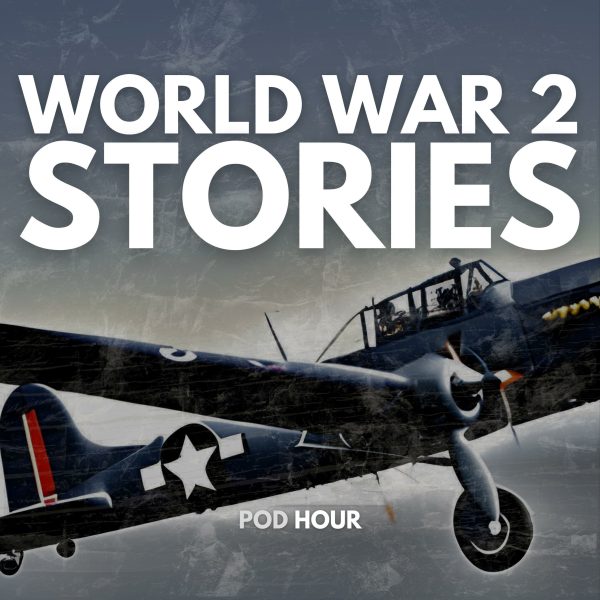
WW2 Stories & Real War Stories
- Épisodes
- 136
- Parution
- hebdomadaire
- Dernier épisode
- 14 Oct 2026
À propos du podcast
"WW2 Stories & Real War Stories" is a gripping podcast that dives into the untold tales of heroism, sacrifice, and determination from the most significant conflict in human history, World War II. Each episode explores the lesser-known battles, daring missions, and personal accounts of the brave individuals who shaped the course of the war. From the epic struggles on the Eastern Front to the courageous acts of the resistance fighters in occupied Europe, join us as we uncover the true stories behind the pivotal moments and unsung heroes of the Second World War.
Épisodes 136
The Yalta Conference: How Roosevelt, Churchill, and Stalin Divided Post-War Europe | WW2 Stories Podcast
In February 1945, as Nazi Germany crumbled, the three most powerful men in the world gathered in a palace on the Black Sea to decide the fate of a continent. The decisions Franklin Roosevelt, Winston Churchill …
Notes de l’épisode
In February 1945, as Nazi Germany crumbled, the three most powerful men in the world gathered in a palace on the Black Sea to decide the fate of a continent. The decisions Franklin Roosevelt, Winston Churchill, and Joseph Stalin made at Yalta would shape Europe for nearly half a century—and help set the stage for the Cold War.In this episode, host Philip Champion explores one of the most consequential diplomatic meetings of the twentieth century, examining what the Big Three decided, the constraints they faced, and the enduring controversy over whether Eastern Europe was betrayed.What You'll Discover:
The World in Early 1945: Why German defeat was inevitable and how Soviet military control of Eastern Europe shaped the negotiations
The Big Three: Roosevelt, gravely ill and seeking cooperation; Churchill, suspicious but representing a declining power; and Stalin, ruthless and negotiating from strength
The Fight Over Poland: The most contentious issue at Yalta—borders, governments, and the hollow promises of free elections
The Declaration on Liberated Europe: The democratic vision the West secured on paper and Stalin ignored in practice
The Fate of Germany: How the occupation zones agreed at Yalta began the division that would define the Cold War
The War Against Japan: Stalin's agreement to enter the Pacific war in exchange for concessions in Asia
The United Nations: How Yalta advanced the creation of the postwar international order
The Question of Betrayal: The enduring debate over whether the West abandoned Eastern Europe—or simply faced military realities it couldn't change
The Road to the Cold War: How Yalta foreshadowed the division of Europe and the Iron Curtain
Key Topics Covered:
Why Soviet occupation gave Stalin the upper hand at the negotiating table
The "Yalta betrayal" narrative and the arguments on both sides
How military reality constrained Roosevelt and Churchill's options
The origins of the Cold War and Yalta's role in them
The decades of communist rule that followed for Eastern Europe
Lessons about idealism, realism, and the limits of diplomacy
Perfect for fans of:
World War 2 diplomacy and the end of the war
Cold War origins and 20th-century geopolitics
Roosevelt, Churchill, and Stalin as leaders
The division of Europe and the fate of Eastern Europe
High-stakes negotiation and historical decision-making
Why This Episode Matters:Yalta is remembered as the moment three men divided a continent—but the truth is more complex than either the "betrayal" narrative or the celebration of Allied cooperation suggests. The Western leaders faced genuine constraints, above all a Soviet army already occupying the territories in question. This episode examines Yalta with nuance, exploring the choices, the constraints, and the profound consequences that followed for hundreds of millions of people. It's essential context for understanding not just the end of World War II, but the Cold War world it created.From the fight over Poland to the seeds of the Iron Curtain, from Roosevelt's failing health to Stalin's cold calculation, this is the complete story of the conference that shaped the modern world.
The Great Escape: The True Story of the Stalag Luft III Tunnel Breakout | WW2 Stories Podcast
You've seen the film. Now hear the true story. In March 1944, Allied airmen imprisoned in a camp the Germans believed was escape-proof tunneled their way to one of the largest mass breakouts of World War II …
Notes de l’épisode
You've seen the film. Now hear the true story. In March 1944, Allied airmen imprisoned in a camp the Germans believed was escape-proof tunneled their way to one of the largest mass breakouts of World War II. Seventy-six men crawled to freedom through a tunnel dug 30 feet underground. But the real story is more remarkable—and more tragic—than Hollywood ever showed.
In this episode, host Philip Champion tells the complete history of the Great Escape from Stalag Luft III, separating the historical reality from the famous 1963 film and honoring the men who sought freedom—including the 50 who were murdered for it.
What You'll Discover:
- The Escape-Proof Camp: Why the Germans built Stalag Luft III with sandy soil, raised barracks, and seismograph microphones to make tunneling impossible
- The Escape Organization: How Squadron Leader Roger Bushell—"Big X"—organized hundreds of prisoners into a secret escape industry
- Tom, Dick, and Harry: The three tunnels dug simultaneously, shored with bed boards, ventilated by hand-made pumps, and lit with electricity tapped from the camp
- The "Penguins": The ingenious methods prisoners used to hide tons of bright yellow tunnel sand from the guards
- The Forgers and Tailors: How prisoners created false documents, civilian clothes, maps, and compasses from scavenged materials
- The Night of the Escape: The tunnel that fell short, the exposed exit near a guard tower, and the tense escape of 76 men into the darkness
- The Manhunt: How the escapees tried to cross Nazi Germany—and why only three made successful "home runs" to freedom
- The Murder of the Fifty: Hitler's order to execute 50 recaptured prisoners, a war crime that included the murder of Roger Bushell himself
- Justice and the Legend: The postwar hunt for the perpetrators and how the 1963 film shaped—and altered—public memory
Key Topics Covered:
- The prisoner's duty to escape and tie down enemy resources
- The extraordinary engineering behind tunnel "Harry"
- What the famous film got right—and what it invented
- The Geneva Convention and the war crime that followed the escape
- How the murdered men were brought to justice and remembered
- The Great Escape as a symbol of the human desire for freedom
Perfect for fans of:
- World War 2 history and POW stories
- The 1963 film "The Great Escape" and the true story behind it
- Tales of ingenuity, engineering, and daring
- Stories of courage, sacrifice, and moral reckoning
- Military history and prisoner-of-war experiences
Why This Episode Matters:
The Great Escape is remembered as a thrilling adventure—and it was a genuine feat of human ingenuity and determination. But the real story carries a weight the popular image often obscures. The prisoners' quest for freedom led to the cold-blooded murder of 50 of their number, a war crime that transformed triumph into tragedy. This episode honors both sides of the story: the brilliant resourcefulness of men who refused to accept captivity, and the terrible price they paid. It's a testament to the unquenchable human desire for freedom—and a reminder of why the laws of war exist.
From the tunnels beneath the barracks to the manhunt across Nazi Germany, from Roger Bushell's vision to the murder of the fifty, this is the complete and true story of the Great Escape.
The 442nd Regiment: The Japanese American Heroes Who Fought While Their Families Were Interned | WW2 Stories Podcast
They fought with extraordinary courage for a country that had betrayed them. Their families were imprisoned in internment camps behind barbed wire. Yet the Japanese American soldiers of the 442nd Regimental …
Notes de l’épisode
They fought with extraordinary courage for a country that had betrayed them. Their families were imprisoned in internment camps behind barbed wire. Yet the Japanese American soldiers of the 442nd Regimental Combat Team became the most decorated unit for its size and length of service in United States military history. Their motto: "Go for Broke."
In this episode, host Philip Champion tells the inspiring and troubling story of the Nisei soldiers who proved their loyalty through sacrifice, transcending one of the gravest injustices in American history.
What You'll Discover:
The Injustice of Internment: How Executive Order 9066 led to the imprisonment of some 120,000 Japanese Americans—most of them U.S. citizens—without charge or trial
The Agonizing Decision to Serve: Why young Nisei men chose to fight for the country that imprisoned their families, many volunteering directly from the camps
The Formation of the Unit: The 100th Infantry Battalion, the 442nd Regimental Combat Team, and the meaning of "Go for Broke"
Combat in Italy: How the "Purple Heart Battalion" and the 442nd established their record through fierce fighting and heavy sacrifice
The Rescue of the Lost Battalion: The legendary operation in the Vosges Mountains where the 442nd suffered over 800 casualties to save 211 trapped Texans
The Most Decorated Unit: The Distinguished Service Crosses, thousands of Purple Hearts, and Medals of Honor that testify to their valor—including Daniel Inouye's
The Military Intelligence Service: The lesser-known Japanese American soldiers who served in the Pacific using their language skills against Japan
Recognition and Reckoning: The 1988 apology and reparations, the belated upgrading of awards, and the enduring legacy of the 442nd
Key Topics Covered:
The wartime hysteria and prejudice behind Japanese American internment
What loyalty and patriotism mean in the face of injustice
How the 442nd's record helped change attitudes toward Japanese Americans
Daniel Inouye and other veterans who shaped postwar America
Why the 442nd's story remains urgently relevant today
The dangers of judging people by ethnicity rather than character
Perfect for fans of:
World War 2 history and untold stories
Civil rights and social justice history
Stories of courage in the face of injustice
Japanese American history and the internment experience
Inspiring accounts of loyalty, sacrifice, and moral complexity
Why This Episode Matters:
The story of the 442nd is one of the most inspiring and troubling in American history—inspiring for the soldiers' extraordinary courage and loyalty, troubling for the profound injustice they faced. These men fought not for the America that had betrayed them, but for the America of its ideals: freedom, equality, and justice. Through their sacrifice, they proved their community's loyalty beyond any doubt and helped move the nation closer to its own promise. Their story stands as both a powerful indictment of prejudice and a testament to the highest ideals of citizenship and courage.
From the internment camps to the mountains of France, from "Go for Broke" to the rescue of the Lost Battalion, this is the complete story of the Japanese American soldiers who gave everything for a country that had doubted them.
The White Rose: Hans and Sophie Scholl's Fight Against the Nazis | WW2 Stories Podcast
In the heart of Nazi Germany, at the height of Hitler's power, a small group of university students dared to resist—not with weapons, but with words. They knew discovery meant almost certain death. Most were …
Notes de l’épisode
In the heart of Nazi Germany, at the height of Hitler's power, a small group of university students dared to resist—not with weapons, but with words. They knew discovery meant almost certain death. Most were executed before their 25th birthdays. They were the White Rose.In this episode, host Philip Champion tells the story of one of history's most inspiring examples of moral courage—the students of Munich who distributed anti-Nazi leaflets until their arrest and execution in 1943, led by siblings Hans and Sophie Scholl.What You'll Discover:
Germany Under the Swastika: The totalitarian police state, the Gestapo, and the atmosphere of fear that made open resistance almost unthinkable
The Scholl Siblings: How Hans and Sophie went from Nazi youth organizations to moral opposition, shaped by conscience, faith, and Hans's experiences on the Eastern Front
The Formation of the Group: The circle of medical students—Christoph Probst, Alexander Schmorell, Willi Graf—and Professor Kurt Huber who joined the resistance
The Leaflets: The eloquent, morally powerful documents that condemned the regime and, remarkably, explicitly denounced the murder of the Jews when most Germans stayed silent
The Arrest: The fateful day at the University of Munich when Sophie scattered leaflets from the atrium balcony and was caught
The Trial and Execution: The show trial before the notorious Judge Roland Freisler and the swift executions carried out the same day
The Final Leaflet's Journey: How the group's last leaflet reached the Allies, who dropped millions of copies over Germany
The Legacy: How the White Rose became a symbol of the "other Germany" and continues to inspire resistance to tyranny worldwide
Key Topics Covered:
Nonviolent resistance under a totalitarian regime
Sophie Scholl's courage in the face of certain death
The moral and religious foundations of the White Rose
Why the group condemned the Holocaust when so many were silent
The People's Court and Nazi political trials
What the White Rose means for questions of moral responsibility
Why their example still speaks powerfully to young people today
Perfect for fans of:
World War 2 resistance and home front history
Stories of moral courage and conscience
German history and the anti-Nazi resistance
The Holocaust and those who spoke out against it
Inspiring true stories of young people who changed history
Why This Episode Matters:The White Rose members died young, their resistance seemingly futile against the overwhelming power of the Nazi state. But their significance transcends any practical impact. In a society built on lies and terror, they spoke the truth. They refused to be complicit in evil. They proved that even under the most repressive tyranny, individuals can choose to resist. Their example poses a question to all of us: what is our duty when we witness injustice? This episode honors their courage and explores the enduring meaning of their sacrifice.From the Scholls' moral awakening to the guillotine at Stadelheim Prison, from the secret printing of leaflets to Sophie's final words, this is the complete story of the young idealists who dared to defy Hitler.
The Monuments Men: How Allied Art Experts Saved Europe's Treasures from the Nazis | WW2 Stories Podcast
Deep in an Austrian salt mine in 1945, a small group of American soldiers made one of history's greatest discoveries—thousands of stolen masterpieces by Michelangelo, Vermeer, and Rembrandt, hidden by the Nazis …
Notes de l’épisode
Deep in an Austrian salt mine in 1945, a small group of American soldiers made one of history's greatest discoveries—thousands of stolen masterpieces by Michelangelo, Vermeer, and Rembrandt, hidden by the Nazis and possibly marked for destruction. But these weren't ordinary soldiers. They were curators, scholars, and architects on an extraordinary mission. They were the Monuments Men.
In this episode, host Philip Champion tells the remarkable story of the Monuments, Fine Arts, and Archives program—the Allied unit that worked to protect and recover the cultural heritage of Western civilization amid the destruction of World War II.
What You'll Discover:
The Nazi Looting Machine: How Hitler's dream of a Führermuseum and Göring's greed drove the most systematic art theft in history, targeting museums, churches, and especially Jewish collections
The Birth of the Mission: How a small group of art experts traded museums for military uniforms to protect Europe's heritage in the war zones
Protecting Monuments Under Fire: The delicate balance between military necessity and cultural preservation, including the controversial destruction of Monte Cassino
The Hunt for Looted Art: The detective work that led to salt mines and castles hiding hundreds of thousands of stolen treasures
The Altaussee Discovery: The Austrian mine containing the Ghent Altarpiece, Michelangelo's Madonna of Bruges, and countless masterpieces—and the race to save them from destruction
The Collecting Points: The painstaking work of cataloging, researching, and returning stolen art to its rightful owners
The People Behind the Mission: George Stout, the pioneering conservator; Rose Valland, the French heroine who secretly documented Nazi looting at great personal risk; and the men who died in service
The Broader Losses: The treasures that couldn't be saved and the ongoing, unresolved issue of Nazi-looted art today
Key Topics Covered:
The Einsatzstab Reichsleiter Rosenberg (ERR) and organized Nazi plunder
The looting of Jewish art collections as part of the Holocaust
How the Monuments Men located hidden repositories across Germany and Austria
The Merkers mine and its art, gold, and currency
The challenge of restitution when owners were murdered in the Holocaust
The legacy in international law and the 1954 Hague Convention
Why cultural heritage is worth protecting even in wartime
Perfect for fans of:
World War 2 history from an unusual angle
Art history and museum culture
Stories of preservation amid destruction
The Holocaust and Nazi-era history
Tales of dedicated individuals against overwhelming odds
Why This Episode Matters:
In the midst of a war that revealed humanity's capacity for destruction and genocide, the Monuments Men worked to preserve the products of humanity's capacity for beauty and creativity. Their story is one of the war's most inspiring—a reminder that even in the darkest times, the cultural achievements of civilization are worth protecting. The masterpieces they rescued now hang in museums across Europe and the world, seen by millions who benefit from their work.
From the salt mines of Altaussee to the collecting points of Munich, from Hitler's looting machine to Rose Valland's secret courage, this is the complete story of the men and women who saved civilization's heritage from the wreckage of war.
The Blitz: How London Survived the German Bombing of Britain, 1940–1941 | WW2 Stories Podcast
For 57 consecutive nights, German bombers pounded London. Over eight months, roughly 43,000 British civilians were killed and hundreds of thousands of homes destroyed. It was a deliberate campaign to terrorize …
Notes de l’épisode
For 57 consecutive nights, German bombers pounded London. Over eight months, roughly 43,000 British civilians were killed and hundreds of thousands of homes destroyed. It was a deliberate campaign to terrorize a population into surrender—and it failed. This is the story of the Blitz.
In this comprehensive episode, host Philip Champion tells the story of Britain's ordeal from September 1940 to May 1941, when the people of London and cities across Britain endured relentless bombing meant to break their spirit, and instead forged one of history's most enduring examples of civilian resilience.
What You'll Discover:
The Road to the Blitz: How the fall of France, the Battle of Britain, and a fateful shift in German strategy turned the Luftwaffe's guns on Britain's cities
The First Night: The devastating September 7, 1940 raid on London's docklands that set the East End ablaze
Life Under the Bombs: Air raid sirens, Anderson and Morrison shelters, and the communities that formed deep in the London Underground
The Rescue Workers: The firefighters, air raid wardens, and ambulance crews who ran toward danger to save lives night after night
The RAF Response: How night-fighter radar, anti-aircraft defenses, and the earlier victory in the Battle of Britain shaped Britain's defense
The Human Cost: The staggering casualties, the destruction of homes and heritage, and the survival of St. Paul's Cathedral as a symbol of defiance
Why the Blitz Failed: How British morale held, the role of Churchill's leadership, and why the theory that bombing could break a population proved wrong
The Legacy: The "Blitz spirit," the escalation of warfare against civilians, and the complex reality behind the myth
Key Topics Covered:
The German theory of victory through terror bombing—and why it failed
The bombing of Coventry and other British cities beyond London
High-explosive versus incendiary bombs and the firefighting nightmare
Winston Churchill's leadership and morale in wartime Britain
The evacuation of children from Britain's cities
The iconic image of St. Paul's standing amid the smoke
How the Blitz shaped British national identity
The moral questions raised by bombing civilian populations
Perfect for fans of:
World War 2 home front history
The Battle of Britain and RAF history
Stories of civilian courage and resilience
Churchill and wartime leadership
London history and the British experience of WWII
Why This Episode Matters:
The Blitz was designed to shatter a nation's will through terror from the sky. Instead, it became a defining test of civilian resilience—one that disproved the theory that bombing could break a population and forged a legend that endures to this day. This episode honors both the genuine courage of those who endured and the real suffering they experienced, presenting a nuanced picture beyond the myth. It also confronts the uncomfortable truth that the Blitz was an early chapter in a war that would see the deliberate targeting of civilians escalate on all sides.
From the docklands ablaze to the shelters of the Underground, from the firefighters battling the flames to Churchill inspiring a nation, this is the complete story of how London and Britain survived the Blitz.
The Rape of Nanking: Inside the 1937 Nanjing Massacre in China | WW2 Stories Podcast
In the winter of 1937, over roughly six weeks, the Chinese capital of Nanking became the site of one of the worst atrocities of the twentieth century. In this episode, host Philip Champion tells the story of …
Notes de l’épisode
In the winter of 1937, over roughly six weeks, the Chinese capital of Nanking became the site of one of the worst atrocities of the twentieth century. In this episode, host Philip Champion tells the story of the Nanjing Massacre honestly and with the gravity it deserves—not to sensationalize, but to ensure the victims are remembered and the historical truth is preserved.
What This Episode Covers:
- The Road to Nanking: How the Second Sino-Japanese War and the brutal Battle of Shanghai brought Japanese forces to the gates of China's capital
- The Fall of the City: The chaotic collapse of Chinese defenses in December 1937 and the hundreds of thousands of civilians left behind
- The Nanking Safety Zone: How a small group of foreigners—led by German businessman and Nazi Party member John Rabe, alongside American missionary Minnie Vautrin—created a refuge that saved countless lives
- The Atrocities: An honest, sober account of the mass killings and mass sexual violence that unfolded over six weeks
- The Question of Numbers: Understanding the historical estimates and why the debate over figures should never obscure the reality of the atrocity
- Why It Happened: The role of dehumanizing ideology, military culture, and the breakdown of command and discipline
- The Witnesses and the Record: How contemporary documentation by foreign observers, survivor testimony, and even Japanese accounts established the historical truth
- Justice and Its Limits: The postwar tribunals, the incompleteness of accountability, and the ongoing controversy over acknowledgment and denial
- Legacy and Memory: The Nanjing Massacre Memorial Hall, Iris Chang's landmark book, and why remembering matters
Key Topics:
- The Second Sino-Japanese War and the invasion of China
- John Rabe, Minnie Vautrin, and the International Committee
- The historical evidence and the response to denialism
- The lasting impact on China-Japan relations
- Honoring the individual human beings behind the numbers
Why This Episode Matters:
The victims of Nanking cannot speak for themselves. This episode confronts a difficult chapter of history because remembering it is a moral obligation—to acknowledge the suffering of those who died, to honor those who tried to help, and to understand how such horrors become possible so that we may work to prevent them. It also examines the ongoing importance of historical truth in the face of denial.
This is not an easy listen, but it is an important one. Presented with care and respect, it seeks to bear witness to one of history's darkest hours.
Flying Tigers: How Claire Chennault's American Volunteers Fought Japan Before Pearl Harbor
Before the United States officially entered World War II, a group of American pilots was already at war with Japan—flying shark-faced fighters over the mountains and jungles of China and Burma, defending cities …
Notes de l’épisode
Before the United States officially entered World War II, a group of American pilots was already at war with Japan—flying shark-faced fighters over the mountains and jungles of China and Burma, defending cities from Japanese bombers, and becoming legends on both sides of the Pacific. They were the Flying Tigers.
In this comprehensive episode, host Philip Champion tells the remarkable story of the American Volunteer Group—the mercenaries, adventurers, patriots, and misfits who left the U.S. military to fight for China, led by the brilliant and controversial Claire Chennault, months before Pearl Harbor changed everything.
What You'll Discover:
- Claire Chennault's Vision: How a stubborn, retired Army captain whose fighter tactics were rejected by the military establishment created one of history's most famous air combat units
- The Secret Recruitment: The covert arrangements, private companies, and legal maneuvers that let American pilots fight for China while the U.S. remained officially neutral
- The Shark-Faced P-40s: The story behind the iconic aircraft design and the "Flying Tigers" name
- Innovative Combat Tactics: How Chennault's diving attacks and teamwork let outnumbered pilots defeat the more maneuverable Japanese fighters
- The First Victory: The December 20, 1941 defense of Kunming that proved someone was finally fighting back
- Life on the Ground: The primitive bases, tropical disease, and heroic ground crews who kept the fighters flying
- The Blood Chit: How Chinese civilians risked everything to rescue downed American pilots
- The Chennault-Stilwell Feud: The legendary personality clash that complicated the American war effort in China
- The Combat Record: Nearly 300 claimed Japanese aircraft destroyed—and the debate over the real numbers
- The End of the Volunteers: How the Flying Tigers were absorbed into the U.S. military in July 1942
Key Topics Covered:
- Why American pilots came to fight for China before U.S. entry into WWII
- The Second Sino-Japanese War and China's desperate need for air defense
- How the early warning network gave the Flying Tigers their crucial advantage
- The defense of the Burma Road supply lifeline
- Famous aces like David "Tex" Hill and Robert Neale
- The bonds forged between the Flying Tigers and the Chinese people
- The legend versus the reality of their combat achievements
- The lasting legacy in Sino-American relations and American aviation history
Perfect for fans of:
- World War 2 aviation and air combat history
- Stories of unconventional heroes and adventurers
- The China-Burma-India theater of WWII
- Military history before and after Pearl Harbor
- Tales of innovation, tactics, and underdog victories
Why This Episode Matters:
At a time when the news from the Pacific was almost entirely bad, the Flying Tigers provided a rare story of American success and heroism. They proved the Japanese weren't invincible in the air, boosted morale across the Allied world, and demonstrated tactical innovations that would influence American air doctrine. But beyond the legend of shark-faced fighters and dashing volunteer pilots lies a more complex story—of covert politics, a brilliant but difficult commander, primitive conditions, and the genuine bonds between Americans and the Chinese people they defended.
From Claire Chennault's rejected theories to the December skies over Kunming, from the Burma Road to the disbanding of the volunteer group, this is the complete story of the Americans who painted tigers' teeth on their fighters and challenged an empire before their own nation had entered the war.
Whether you're a longtime student of WWII history or discovering the Flying Tigers for the first time, this episode reveals the truth behind one of the war's most colorful and enduring legends.
Bletchley Park & the Enigma Code: How Alan Turing's Codebreakers Won WWII
Step inside the most secret operation of World War II—the Victorian mansion in the English countryside where Alan Turing and thousands of brilliant codebreakers cracked Nazi Germany's "unbreakable" Enigma code …
Notes de l’épisode
Step inside the most secret operation of World War II—the Victorian mansion in the English countryside where Alan Turing and thousands of brilliant codebreakers cracked Nazi Germany's "unbreakable" Enigma code and changed the course of history.
In this comprehensive episode, host Philip Champion tells the extraordinary story of Bletchley Park, where mathematicians, chess champions, crossword experts, and codebreakers waged a hidden war using logic, mathematics, and revolutionary machines—work so secret it remained classified for decades and so decisive it may have shortened WWII by two years.
What You'll Discover:
- The Enigma Machine Explained: How the Germans created a cipher with 158 quintillion possible settings that they believed was mathematically unbreakable
- The Polish Foundation: The three Polish mathematicians—Marian Rejewski, Jerzy Różycki, and Henryk Zygalski—who first cracked Enigma and handed their breakthroughs to Britain before the war
- Alan Turing's Genius: The troubled mathematician whose theoretical work founded computer science and whose Bombe machine automated the breaking of daily Enigma keys
- Breaking the Naval Enigma: How cracking U-boat communications turned the Battle of the Atlantic and saved Britain from starvation
- The Ultra Secret: The agonizing dilemmas of using intelligence without revealing the codes were broken
- The Birth of Computing: How Colossus—arguably the world's first programmable electronic computer—broke Hitler's highest-level communications
- The Women of Bletchley Park: The thousands of women who operated the Bombes and performed essential work, often unrecognized
- Alan Turing's Tragedy: The shameful postwar persecution, chemical castration, and death of the man who helped save Britain
- The Secret Revealed: How Bletchley Park's story stayed hidden until the 1970s and beyond
Key Topics Covered:
- How the Enigma code actually worked and why it seemed impossible to break
- The daring capture of German codebooks from U-110 and other vessels
- How Ultra intelligence shaped North Africa, D-Day, and the war in Europe
- The eccentric geniuses recruited through crossword competitions
- Winston Churchill's "geese that laid the golden eggs and never cackled"
- The lifelong secrecy that codebreakers maintained even from their own families
- Alan Turing's posthumous royal pardon and £50 note recognition
- Bletchley Park's lasting legacy in computing, cryptography, and modern intelligence
Perfect for fans of:
- World War 2 history and hidden wartime stories
- Alan Turing and the history of computing
- Codebreaking, cryptography, and cybersecurity
- The Imitation Game and Enigma-related films
- Stories of scientific genius and unconventional heroes
- Intelligence operations and military history
Why This Episode Matters:
The codebreakers of Bletchley Park won a secret war that helped win the larger war. General Eisenhower called their intelligence "decisive" to Allied victory. Yet for decades, their achievements remained hidden, their contributions unrecognized, and their pioneering work in computing obscured. This episode reveals how a group of brilliant, dedicated individuals broke the unbreakable, kept the secret, and changed both the war and the modern world—while also confronting the injustices some of them suffered, particularly the tragic treatment of Alan Turing.
From the mathematics of Enigma to the moral complexities of the Ultra secret, from the birth of the computer to the persecution of a national hero, this is the complete story of one of history's most important and least visible battles.
Whether you're a longtime student of WWII history or discovering Bletchley Park for the first time, this episode illuminates how the human mind—applied with brilliance, dedication, and courage—overcame a challenge that seemed truly impossible.
This episode is sponsored by WatchPolice. Find new watch releases, restocks, and price drops.
The Siege of Leningrad - September 8, 1941 – January 27, 1944 | WW2 Stories Podcast
Picture this: September 8, 1941. In the city of Leningrad — formerly Petrograd, formerly Saint Petersburg, Russia's second city and one of the great cultural capitals on earth — a thirteen-year-old girl named …
Notes de l’épisode
Picture this: September 8, 1941. In the city of Leningrad — formerly Petrograd, formerly Saint Petersburg, Russia's second city and one of the great cultural capitals on earth — a thirteen-year-old girl named Tanya Savicheva goes about her day. School has been suspended. Her father is dead. Outside the apartment windows, the city does not yet fully understand what it has just become. German forces of Army Group North have reached the southern shores of Lake Ladoga, sealing the last overland route out of the city. For the first time in the war, the ring around Leningrad is complete.
The Battle of the Bismarck Sea - March 2-4, 1943 - [WW2 Stories & Real War Battles]
In the vast expanses of the Pacific, nestled within the warm waters, lies the Bismarck Archipelago. A cluster of islands that, under ordinary circumstances, might have been simply a tropical paradise, was …
Notes de l’épisode
In the vast expanses of the Pacific, nestled within the warm waters, lies the Bismarck Archipelago. A cluster of islands that, under ordinary circumstances, might have been simply a tropical paradise, was transformed by the brutal realities of World War II into a strategic fulcrum that could tilt the balance of power in this broad, tumultuous theater. The archipelago became a stage for one of the most significant air-sea battles of the Pacific War, one that would send ripples through the campaigns that followed and leave an indelible imprint on the annals of military history: The Battle of the Bismarck Sea.
At the center of this impending storm stood two prominent figures: General Douglas MacArthur, the seasoned, determined American military leader, whose ambitious "Island-Hopping" strategy aimed to liberate and bypass islands in a methodical push towards Japan; and Admiral Isoroku Yamamoto, the seasoned Japanese naval commander, a veteran of the Russo-Japanese War, and architect of the Pearl Harbor attack. Both men were faced with difficult decisions and insurmountable pressure from their respective chains of command.
Leading up to the battle, the atmosphere was pregnant with tension. The Pacific war had seen a seesaw of power with neither side able to secure a decisive advantage. Every battle, every island, every ship, and every man would count. The Bismarck Sea was about to become the crucible where strategies would be tested, heroes would emerge, and the path of the war would take a pivotal turn.
The D-Day Medics of Angoville-au-Plain (World War 2 Stories)
Welcome back, history enthusiasts. I'm Philip Champion, and this is WW2 Stories. Before we begin today's episode, if you're a fan of World War 2 Stories, would you please follow our show on whatever platform …
Notes de l’épisode
Welcome back, history enthusiasts. I'm Philip Champion, and this is WW2 Stories. Before we begin today's episode, if you're a fan of World War 2 Stories, would you please follow our show on whatever platform you listen to and leave a comment? We would love to hear from you.
Battle off Samar: David vs. Goliath at Sea (World War 2 Stories)
Welcome back, history enthusiasts. I'm Philip Champion, and this is WW2 Stories. Before we begin today's episode, if you're a fan of World War 2 Stories, would you please follow our show on whatever platform …
Notes de l’épisode
Welcome back, history enthusiasts. I'm Philip Champion, and this is WW2 Stories. Before we begin today's episode, if you're a fan of World War 2 Stories, would you please follow our show on whatever platform you listen to and leave a comment? We would love to hear from you.
Battle of The Hague: Airborne Fiasco (World War 2 Stories)
Welcome back, history enthusiasts. I'm Philip Champion, and this is WW2 Stories. Before we begin today's episode, if you're a fan of World War 2 Stories, would you please follow our show on whatever platform …
Notes de l’épisode
Welcome back, history enthusiasts. I'm Philip Champion, and this is WW2 Stories. Before we begin today's episode, if you're a fan of World War 2 Stories, would you please follow our show on whatever platform you listen to and leave a comment? We would love to hear from you.
Operation Outward: Balloon Sabotage (World War 2 Stories)
Welcome back, history enthusiasts. I'm Philip Champion, and this is WW2 Stories. Before we begin today's episode, if you're a fan of World War 2 Stories, would you please follow our show on whatever platform …
Notes de l’épisode
Welcome back, history enthusiasts. I'm Philip Champion, and this is WW2 Stories. Before we begin today's episode, if you're a fan of World War 2 Stories, would you please follow our show on whatever platform you listen to and leave a comment? We would love to hear from you.
Oskar Schindler: Saving Jews Through Industry (World War 2 Stories)
Welcome back, history enthusiasts. I'm Philip Champion, and this is WW2 Stories. Before we begin today's episode, if you're a fan of World War 2 Stories, would you please follow our show on whatever platform …
Notes de l’épisode
Welcome back, history enthusiasts. I'm Philip Champion, and this is WW2 Stories. Before we begin today's episode, if you're a fan of World War 2 Stories, would you please follow our show on whatever platform you listen to and leave a comment? We would love to hear from you.
Battle of Crete: Airborne Invasion (World War 2 Stories)
Welcome back, history enthusiasts. I'm Philip Champion, and this is WW2 Stories. Before we begin today's episode, if you're a fan of World War 2 Stories, would you please follow our show on whatever platform …
Notes de l’épisode
Welcome back, history enthusiasts. I'm Philip Champion, and this is WW2 Stories. Before we begin today's episode, if you're a fan of World War 2 Stories, would you please follow our show on whatever platform you listen to and leave a comment? We would love to hear from you.
The Boy in the Striped Pyjamas: Summary, Review, Notes | WW2 Stories Playlist
Explore the intersection of Holocaust history, literature, and film in this essential WW2 Stories playlist examining how we remember, represent, and teach one of history's darkest chapters.What This Playlist …
Notes de l’épisode
Explore the intersection of Holocaust history, literature, and film in this essential WW2 Stories playlist examining how we remember, represent, and teach one of history's darkest chapters.
What This Playlist Covers:
This comprehensive three-part series analyzes the most influential Holocaust books and films of our time—examining what they reveal about history, how they've shaped public understanding, and the crucial distinctions between historical accuracy and artistic interpretation.
Episodes Included:
1. Schindler's List: What It Got Right and What It Got Wrong
- Steven Spielberg's Oscar-winning masterpiece analyzed
- Historical accuracy vs. dramatic necessity
- Oskar Schindler's true story and the Schindlerjuden
- Impact on Holocaust education and memory
- The role of cinema in preserving history
2. The Diary of a Young Girl by Anne Frank: Context, Significance & Review
- Anne Frank's diary as literature and historical document
- Life in the Secret Annex at Prinsengracht 263
- Nazi occupation of Amsterdam and the Frank family's fate
- Multiple versions and editorial decisions by Otto Frank
- Why this remains essential Holocaust testimony
3. The Boy in the Striped Pyjamas: A Powerful Fable Built on Historical Impossibility
- John Boyne's controversial bestseller examined
- Why historians warn against using this for Holocaust education
- Historical impossibilities in the plot and setting
- The dangers of emotionally powerful but inaccurate Holocaust fiction
- Alternatives for teaching Holocaust history accurately
Perfect For:
- Students and educators teaching or studying Holocaust history
- Book clubs discussing Holocaust literature
- Film enthusiasts interested in historical accuracy in cinema
- Anyone seeking to understand how we remember and represent genocide
- Readers wanting context on bestselling WWII books and films
- Parents and teachers choosing age-appropriate Holocaust education materials
Key Themes Explored:
✓ Historical accuracy vs. artistic license in Holocaust representation✓ The responsibility of fiction writers dealing with genocide✓ How films and books shape collective memory✓ The difference between testimony, historical fiction, and fable✓ Educational value and risks of popularized Holocaust narratives✓ The role of survivor testimony in preserving authentic history✓ Why some Holocaust stories succeed while others mislead
What Makes This Playlist Essential:
These three episodes provide critical context often missing from classroom discussions. While millions have read Anne Frank's diary, watched Schindler's List, or been moved by The Boy in the Striped Pyjamas, few understand the historical context, editorial decisions, and accuracy issues behind these works.
Host Philip Champion examines each work with both appreciation for its emotional power and critical analysis of its historical representation. Learn what Anne Frank's diary reveals about Nazi occupation, why Schindler's List simplified Emilie Schindler's role, and why The Boy in the Striped Pyjamas—despite its popularity—presents serious educational concerns.
Why Historical Accuracy Matters:
As Holocaust survivors age and pass away, books and films become primary sources of Holocaust education for younger generations. Understanding which representations are historically accurate and which are fictionalized is crucial for preserving authentic memory and preventing misconceptions about genocide.
This playlist equips listeners to:
- Distinguish between testimony, historical fiction, and allegory
- Recognize common misconceptions about the Holocaust
- Evaluate historical accuracy in popular media
- Understand the complexities of representing genocide in art
Bonus Value:
Each episode includes:
- Comprehensive historical context about Nazi persecution
- Discussion of how these works have influenced Holocaust education
- Guidance for educators using these materials
- Recommendations for historically accurate alternatives
- Analysis of editorial choices and their implications
The Diary of a Young Girl by Anne Frank: Historical Context, Significance & Review | World War 2 Stories Podcast
Explore one of the most important books of the 20th century in this comprehensive analysis of "The Diary of a Young Girl" by Anne Frank. From her 13th birthday in 1942 to her final entry in August 1944, we …
Notes de l’épisode
Explore one of the most important books of the 20th century in this comprehensive analysis of "The Diary of a Young Girl" by Anne Frank. From her 13th birthday in 1942 to her final entry in August 1944, we examine what makes the Anne Frank diary one of the most widely read Holocaust testimonies and why it remains essential reading decades later.
What You'll Discover:
- The Diary of Anne Frank: What It Contains: A detailed look at Anne's entries from the Secret Annex at Prinsengracht 263 in Amsterdam, where eight Jews hid for 25 months
- Anne Frank's Life and Background: From her childhood in Frankfurt to fleeing Nazi Germany, living in Amsterdam, and going into hiding in July 1942
- Historical Context: Nazi occupation of the Netherlands, anti-Jewish laws, deportations to Auschwitz and other concentration camps, and the Dutch resistance
- Literary Significance: How Anne Frank developed as a writer, her revision process after hearing about preserving wartime documents, and her ambition to become a famous author
- The Secret Annex Experience: Daily life in hiding, relationships with her family and the van Pels family, her romance with Peter, conflicts with her mother, and constant fear of discovery
- The Diary's Multiple Versions: Understanding Anne's original entries, her revised version, Otto Frank's editorial choices, and the Critical Edition that restored censored material
- Publication History: How Otto Frank (the only survivor of the eight in hiding) decided to publish his daughter's diary, initial reception, translations into 70+ languages, and adaptations
- Educational Impact: Why the diary of Anne Frank is taught in schools worldwide, its role in Holocaust education, and how it personalizes the genocide of six million Jews
- Controversies and Criticism: Editorial decisions, Holocaust denial claims (thoroughly debunked), copyright disputes, and debates about universalizing versus Jewish-specific persecution
- Anne Frank's Fate: The August 4, 1944 arrest, deportation to Auschwitz-Birkenau, transfer to Bergen-Belsen, and her death from typhus in February/March 1945
Key Topics Covered:
- What the Diary of a Young Girl reveals about Nazi persecution
- How Anne Frank's writing evolved from age 13 to 15
- The role of helpers Miep Gies, Bep Voskuijl, Johannes Kleiman, and Victor Kugler
- Life in the Secret Annex: rationing, silence, conflicts, and psychological pressure
- Anne's observations on antisemitism, war, human nature, and her own identity
- The famous quote: "In spite of everything, I still believe that people are really good at heart"
- Why this remains the most widely read Holocaust diary
- The Anne Frank House museum and its million+ annual visitors
- The Shoah Foundation and preservation of Holocaust testimony
- Comparing the diary to other Holocaust literature and memoirs
Perfect for:
- Students studying World War 2 and the Holocaust
- Readers of Holocaust literature and memoirs
- Those interested in coming-of-age stories in historical context
- Educators teaching Holocaust history
- Anyone seeking to understand Anne Frank's enduring cultural significance
- Book club discussions and literary analysis
- Understanding primary historical sources and testimony
Why This Episode Matters:
Host Philip Champion provides essential historical context often missing from classroom discussions of the Anne Frank diary, examining both its remarkable strengths as firsthand Holocaust testimony and its limitations as a single perspective on genocide. Learn why Anne Frank became an icon, what her diary reveals about life under Nazi occupation, and how one teenager's words reached hundreds of millions of readers worldwide.
Whether you've read the diary of Anne Frank multiple times or are encountering her story for the first time, this episode provides crucial historical background, literary analysis, and context about one of the most important books ever written.
Schindler's List: Summary, What It Got Right and What It Got Wrong (IMDB Top Movies)
Dive deep into Steven Spielberg's masterpiece "Schindler's List" (1993) - ranked among IMDB's Top 10 Movies of all time with an exceptional 9.0 rating. In this comprehensive analysis, we separate historical …
Notes de l’épisode
Dive deep into Steven Spielberg's masterpiece "Schindler's List" (1993) - ranked among IMDB's Top 10 Movies of all time with an exceptional 9.0 rating. In this comprehensive analysis, we separate historical fact from Hollywood fiction in one of cinema's most influential Holocaust films.
What You'll Discover:
- Schindler's List Historical Accuracy: Which events are documented fact and which were dramatized for the screen
- The True Story of Oskar Schindler: How the real Nazi industrialist saved 1,100+ Jews during the Holocaust
- What the Film Got Right: The accurate depiction of the Kraków Ghetto liquidation, Płaszów concentration camp, Amon Göth's sadism, and the famous "list"
- What the Film Changed: Composite characters, timeline compression, Emilie Schindler's minimized role, and invented scenes
- Academy Award Winner Analysis: Why this 7-time Oscar winner (including Best Picture and Best Director) became the definitive Holocaust film
- Critical Reception: How survivors, historians, and critics responded to Spielberg's portrayal
- Cultural Impact: The Shoah Foundation legacy and the film's role in Holocaust education
Perfect for fans of:
- Top-rated movies and IMDB classics
- World War 2 history and Holocaust education
- Film analysis and historical accuracy discussions
- Steven Spielberg's filmography
- Academy Award Best Picture winners
- True stories behind Hollywood adaptations
Episode Highlights:Host Philip Champion examines how Spielberg balanced dramatic necessity with historical responsibility, why certain creative choices were made, and whether a Hollywood film can adequately represent genocide. Learn about the real Itzhak Stern, discover what happened to the actual Schindlerjuden, and understand why this remains one of the highest-rated films in cinema history.
Whether you've seen Schindler's List multiple times or are discovering it for the first time, this episode provides essential context about what really happened in Nazi-occupied Poland and how one of cinema's greatest films brought that story to 320+ million viewers worldwide.
Keywords: Schindler's List accuracy, IMDB top movies, Holocaust films, Steven Spielberg movies, Oskar Schindler true story, Best Picture winners, World War 2 documentaries, Schindler's List rating, historical accuracy in film, Kraków Ghetto, Płaszów camp, Amon Göth, Academy Awards
WW2 Stories brings you comprehensive, engaging narratives about World War II's most compelling events, battles, and personal stories. Subscribe for weekly episodes.
Duration: ~44 minutes
Content Warning: Discussion of Holocaust atrocities and genocideSinking of the USS Indianapolis: Shark Nightmare (World War 2 Stories)
Welcome back, history enthusiasts. I'm Philip Champion, and this is World War 2 Stories. Today, we're going to witness one of the most harrowing survival ordeals in naval history—a story of a ship that helped …
Notes de l’épisode
Welcome back, history enthusiasts. I'm Philip Champion, and this is World War 2 Stories. Today, we're going to witness one of the most harrowing survival ordeals in naval history—a story of a ship that helped end World War II, only to become the site of the worst shark attack on humans ever recorded, and a tragedy that would haunt the United States Navy for generations. Before we go there, If you are a fan of World War 2 Stories, would you please follow our show on whatever platform you listen to and leave a comment, We would love to hear from you and your thoughts on all of our episodes.
Nuremberg Trials: Judging the Nazis (World War 2 Stories)
Welcome back, history enthusiasts. I'm Philip Champion, and this is WW2 Stories. Today, we're going to witness one of the most significant legal proceedings in human history—a trial that would not only judge …
Notes de l’épisode
Welcome back, history enthusiasts. I'm Philip Champion, and this is WW2 Stories. Today, we're going to witness one of the most significant legal proceedings in human history—a trial that would not only judge the architects of genocide and aggressive war, but would fundamentally reshape how the world holds leaders accountable for crimes against humanity.
If you are a fan of World War 2 Stories, would you please follow our show on whatever platform you listen to and leave a comment, We would love to hear from you.
Divine Wind: The Kamikaze Campaign and Japan's Final Gamble
Welcome back to WW2 Stories. I'm Philip Champion, and today we're going to explore one of the most desperate and tragic chapters of the Pacific War—a chapter that reveals how a nation facing defeat can …
Notes de l’épisode
Welcome back to WW2 Stories. I'm Philip Champion, and today we're going to explore one of the most desperate and tragic chapters of the Pacific War—a chapter that reveals how a nation facing defeat can transform its most cherished values into instruments of self-destruction, how young men can be convinced that their deaths are more valuable than their lives, and how warfare can descend into forms of violence that shock even hardened veterans.
Behind Barbed Wire: Executive Order 9066 and America's Concentration Camps
Welcome back to WW2 Stories. I'm Philip Champion, and today we're going to confront one of the darkest chapters in American history—a chapter that reveals how quickly fear and prejudice can transform a …
Notes de l’épisode
Welcome back to WW2 Stories. I'm Philip Champion, and today we're going to confront one of the darkest chapters in American history—a chapter that reveals how quickly fear and prejudice can transform a democracy into something unrecognizable, how easily constitutional rights can evaporate when wrapped in the language of national security, and how ordinary American families became prisoners in their own country for the simple crime of their ancestry.
When Courage Broke the Color Line: The Dorie Miller Story
Welcome back to WW2 Stories. I'm Philip Champion, and today we're going to tell you about a moment that changed everything—a moment when courage, desperation, and extraordinary heroism collided on the burning …
Notes de l’épisode
Welcome back to WW2 Stories. I'm Philip Champion, and today we're going to tell you about a moment that changed everything—a moment when courage, desperation, and extraordinary heroism collided on the burning decks of Pearl Harbor to shatter barriers that had stood for generations.
Japanese Fu-Go Balloon Bombs: Trans-Pacific Threat
Welcome back, history enthusiasts. I'm Philip Champion, and this is WW2 Stories. Today, we're going to explore one of the most audacious and technologically innovative weapons of World War II—a weapon so …
Notes de l’épisode
Welcome back, history enthusiasts. I'm Philip Champion, and this is WW2 Stories. Today, we're going to explore one of the most audacious and technologically innovative weapons of World War II—a weapon so advanced that it wouldn't be matched until the development of intercontinental ballistic missiles decades later. Yet it was built from paper, silk, and the dreams of desperate men who refused to accept that an ocean could protect their enemies from their reach.
The Double Cross System: Turning Spies
Welcome back, history enthusiasts. I'm Philip Champion, and this is WW2 Stories. Today, we're going to enter the shadowy world of espionage and counter-intelligence, where nothing is as it seems and trust is …
Notes de l’épisode
Welcome back, history enthusiasts. I'm Philip Champion, and this is WW2 Stories. Today, we're going to enter the shadowy world of espionage and counter-intelligence, where nothing is as it seems and trust is the most dangerous currency of all. This is a story of one of the most audacious and successful deception operations in military history—a game of chess played with human pawns, where British intelligence masters turned their enemies' own spies against them.
Women Airforce Service Pilots (WASPs): Breaking Barriers in the Sky
Welcome back, history enthusiasts. I'm Philip Champion, and this is WW2 Stories. Today, we're going to soar into the skies with a group of extraordinary American women who shattered every assumption about what …
Notes de l’épisode
Welcome back, history enthusiasts. I'm Philip Champion, and this is WW2 Stories. Today, we're going to soar into the skies with a group of extraordinary American women who shattered every assumption about what women could do in wartime. These weren't nurses or factory workers—though those roles were vital too. These were pilots, flying the most advanced military aircraft of their day, performing some of the most dangerous missions of World War II, and proving once and for all that skill, courage, and patriotism know no gender.
Anne Frank: Diary from the Annex
Welcome back, history enthusiasts. I'm Philip Champion, and this is WW2 Stories. Today, we're going to step away from the battlefields and strategy rooms to enter a very different kind of wartime experience—one …
Notes de l’épisode
Welcome back, history enthusiasts. I'm Philip Champion, and this is WW2 Stories. Today, we're going to step away from the battlefields and strategy rooms to enter a very different kind of wartime experience—one that unfolded not in the noise of combat, but in the enforced silence of a hidden attic in Amsterdam.
Battle of Leyte Gulf: The Largest Naval Clash
Welcome back, history enthusiasts. I'm Philip Champion, and this is WW2 Stories. Today, we're going to witness the largest naval battle in human history—a four-day clash of titans that would involve over …
Notes de l’épisode
Welcome back, history enthusiasts. I'm Philip Champion, and this is WW2 Stories. Today, we're going to witness the largest naval battle in human history—a four-day clash of titans that would involve over 200,000 naval personnel, hundreds of warships, and thousands of aircraft across hundreds of miles of Philippine waters.
Voici les 40 derniers épisodes sur 136. Les épisodes plus anciens se trouvent dans le flux du podcast.
Podcasts similaires
Plus de podcasts : Histoire







C’est votre podcast ?
Confirmez-le avec une entrée dans votre flux : vous recevez ici un code, vous l’ajoutez comme podcast:txt dans le canal de votre flux, et nous le vérifions. Votre podcast apparaît ensuite comme « vérifié » sur SoundNode.