

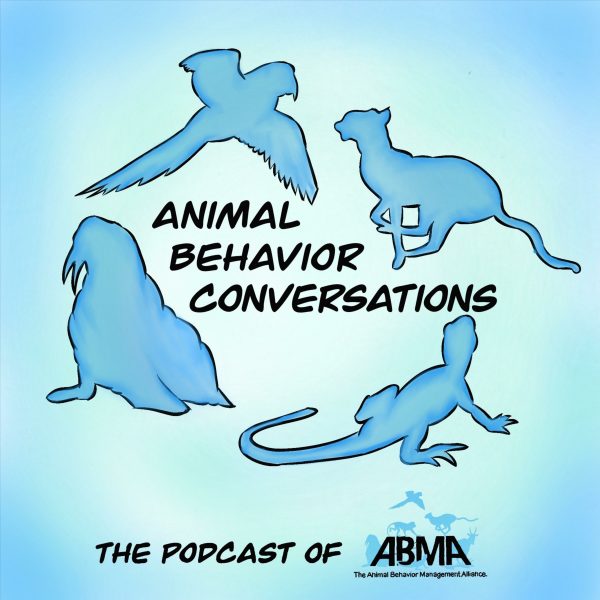
Animal Behavior Conversations: The Podcast of The ABMA
- Folgen
- 86
- Erscheint
- alle zwei Wochen
- Letzte Folge
- 13. Nov. 2026
Über den Podcast
The Animal Behavior Management Alliance (ABMA) strives to spread knowledge throughout the animal care field to help enhance animal care through operant conditioning. Each episode we will discuss a topic in the world of animal care and break down the science of behavior change. To achieve this, the podcast’s host, Shane Gorbett, will interview fellow animal care professionals and experts from across the world to discuss all things training, behavior, enrichment, welfare, and much more! This podcast will be a great resource for all trainers. Let's talk some training and banter about behavior!
Folgen 86
86: Improving Welfare Systems for Animals and Humans with Sabrina Brando (PhD), Interbeing
This episode is a live podcast recording at the 3rd Congreso de Cuidadores Internacionales hosted by Piscilago in Girardot, Colombia. This episode’s guest, Sabrina Brando is a psychologist (BSc Psychology, MSc …
Shownotes
This episode is a live podcast recording at the 3rd Congreso de Cuidadores Internacionales hosted by Piscilago in Girardot, Colombia. This episode’s guest, Sabrina Brando is a psychologist (BSc Psychology, MSc Animal Studies, PhD
Psychology, InnerMBA) and founder and director of AnimalConcepts (2004-2026), currently working under her own name and InterBeing. Sabrina and host, Shane, recorded this episode during a break of the conference. Sabrina was the keynote speaker for the conference and spoke about improving welfare systems for both animals and humans. The podcast begins by focusing on some of the systems that the field of animal care should focus on improving including education about welfare, habitat design, and integrating technology. The second half of the episode focuses on the importance of improving welfare systems for the humans who care for the animals. The episode finishes with Sabrina discussing the importance of 24/7 welfare across life spans and how we can strive to achieve this goal. For questions or suggestions about the podcast email [email protected] and to reach Sabrina you can contact her through her website or social media channels below.
https://www.sabrinabrando.com/
https://www.facebook.com/sabrina.brando.interbeing/
85: Reinforcement Systems with Mary Hunter, Behavior Explorer
This episode Mary Hunter, Behavior Explorer, provides some great learning and advice about Reinforcement Systems. This podcast is a companion to Mary’s presentation at the 2024 ABMA annual conference in 2024 …
Shownotes
This episode Mary Hunter, Behavior Explorer, provides some great learning and advice about Reinforcement Systems. This podcast is a companion to Mary’s presentation at the 2024 ABMA annual conference in 2024 titled “Reinforcement Systems: Building Interconnected behavior chains that lead to improved communication and accelerated teaching”. The episode begins by defining Reinforcement Systems and their practical application. Next Mary gives an in depth breakdown to the four dimensions of Reinforcement Systems: Reinforcer, Delivery System, Bridge, Ready Response. The episode ends with Mary discussing how a reinforcement system can improve communication, accelerate learning, and help problem solve various potential training challenges.
Stay tuned in for Mary’s "Training Tale" about how her horse has taught her care givers how and where to give her tactile reinforcement! For questions or suggestions about the podcast email [email protected]. To reach Mary and to learn more about Behavior Explorer and PORTL visit her websites https://behaviorexplorer.com/ and https://stalecheerios.com/
4:45 Introduction to Mary Hunter
6:30 PORTL
10:25 Definition of Reinforcement Systems
18:40 The Dimensions of a Reinforcement System: Reinforcer, Delivery System, Bridge, Ready Response
44:55 How can teaching a Reinforcement System increase communication and accelerate learning to avoid accidentally reinforced behaviors.
55:50 What challenges can be problem solved with Reinforcement Systems
1:02:25 “Training Tales”
84: Schedules of Reinforcement - Part 2 with Sue Pasquine, ZooTampa at Lowry Park & ABMA Board of Directors
This episode Sue Pasquine, ZooTampa at Lowry Park and an ABMA Board Member, helps to define and break down “Schedules of Reinforcement”. This episode is Part 2 of a two part series breaking down the most …
Shownotes
This episode Sue Pasquine, ZooTampa at Lowry Park and an ABMA Board Member, helps to define and break down “Schedules of Reinforcement”. This episode is Part 2 of a two part series breaking down the most commonly heard and used schedules of reinforcement. The episode aims to break down and discuss the four main types of intermittent reinforcement schedules. Sue explains and gives examples of Fixed Ratio (FR), Fixed Interval (FI), Variable Ratio (VR), and Variable Interval (VI) Schedules. To end the episode, we discuss two “flavors” of schedules of reinforcement which are not found in the literature but are used in practice. These “twists” to traditional reinforcement schedules include Variable Ratio of Reinforcement Variety (VRRV) and a continuous schedule that utilizes secondary reinforcers. Stay tuned in for Sue’s "Training Tale" about reimagining the zoo’s macaw flight and how they implemented a variable schedule od reinforcement. For questions or suggestions about the podcast email [email protected]. To learn more about the ABMA visit: https://www.theabma.org/
6:50 Overview of the four main types of intermittent schedules of reinforcement
9:15 Fixed Ratio Schedule (FR)
17:35 Fixed Interval Schedule (FI)
22:55 Variable Ratio Schedule (VR)
33:50 Variable Interval Schedule (VI)
40:00 “Flavor” of Schedule of Reinforcement: Variable Ratio with Reinforcement Variety (VRRV)
45:45 “Flavor” of Schedule of Reinforcement: Continuous Schedule Utilizing Secondary Reinforcers
58:30 “Training Tales”
83: Schedules of Reinforcement - Part 1 with Sue Pasquine, ZooTampa at Lowry Park
This episode Sue Pasquine, ZooTampa at Lowry Park and an ABMA Board Member, helps to define and break down “Schedules of Reinforcement”. This episode is Part 1 of a two part series breaking down the most …
Shownotes
This episode Sue Pasquine, ZooTampa at Lowry Park and an ABMA Board Member, helps to define and break down “Schedules of Reinforcement”. This episode is Part 1 of a two part series breaking down the most commonly heard and used schedules of reinforcement. The episode starts with definitions of schedules of reinforcement and the two categories nonintermittent and intermittent. Next, continuous reinforcement is discussed. Continuous is the best schedule to utilize when teaching a new item. Sue then provides some learning into non-intermittent schedules of reinforcement. The importance of knowing what schedules of reinforcement and consistency across team members was discussed. Sue also discusses how schedules come into play when shaping a new behavior. The discussion ends with advice for transitioning from a continuous reinforcement schedule to an intermittent schedule. Stay tuned in for Sue’s "Training Tale" about the power of asking why something is done and the benefits of well conditioned bridging.For questions or suggestions about the podcast email [email protected] and to reach Sue email.
3:55 Introduction to Sue Pasquine
9:45 Definition of Schedules of Reinforcements
12:10 Definition of Non-Intermittent schedules and Continuous Reinforcement
17:20 Definition of Intermittent schedules
25:55 The importance of knowing what schedule we are using and that a team is using the same schedule in the same situations
28:20 How schedules come into play when shaping a new behavior
33:50 Advice for moving from a continuos schedule to an intermittent schedule
41:00 “Training Tales”
82: Building Resiliency in Animals with Heidi Hellmuth, ABMA Founder
This episode Heidi Hellmuth, an ABMA founder, provides some great learning and advice for building resiliency, or coping skills, with animals. This podcast is a companion to Heidi’s presentation at the 2026 …
Shownotes
This episode Heidi Hellmuth, an ABMA founder, provides some great learning and advice for building resiliency, or coping skills, with animals. This podcast is a companion to Heidi’s presentation at the 2026 ABMA-IAATE annual conference titled “Building Resiliency in Animals from Anemones to Zebras”. The episodes starts with defining resiliency and practical applications to building resiliency in animals while also explaining what resiliency is not. Next Heidi discusses the importance of proactively vs reactively building resiliency and the positive effects it can have on an animals welfare and mental state. The episode ends with advice on how to start resiliency building, ideas for parts of an animal’s life and environment to focus on, and the benefits of giving animals more control and agency in their life. Stay tuned in for Heidi’s "Training Tale" about a hippo who learned to go on a scale in a unique way! For questions or suggestions about the podcast email [email protected] and to reach Heidi email [email protected]
6:55 Introduction to Heidi Hellmuth
13:50 Definition of resiliency
18:50 The importance of proactively vs reactively building resiliency
20:35 How an individual’s resilience can be an indictor of an animal’s welfare and mental state
24:00 What resiliency is not
27:40 The positive effects that building resiliency can have
31:35 Aspects of an animal’s life to focus on building resiliency
45:00 How can giving animals more control and agency in their life positively affect their resiliency
49:30 Potential risks involved in resiliency building
53:00 Ideas to start resiliency building
58:35 “Training Tales”
81: The Behaviors of Training the Trainers with Megan Sanders, BehaviorWorks
This episode continues on "The Behaviors of..." series which dives into the people side of the animal care field. This episode Megan Sanders, BehaviorWorks, discusses the behaviors of training the trainers and …
Shownotes
This episode continues on "The Behaviors of..." series which dives into the people side of the animal care field. This episode Megan Sanders, BehaviorWorks, discusses the behaviors of training the trainers and advice on coaching people through the science and practical application of training. This podcast is a companion to Megan’s presentation at the 2026 ABMA-IAATE annual conference titled “Training the Trainer: Behavior Skills Training Using PORTL to Improve Accuracy with Animal Trainers”. Megan starts the episode by demonstrating how we can take our knowledge of the science of training animals and apply that to training and coaching humans. Next, Megan discusses the importance of practicing skills in the “classroom” beforehand and advice on how to teach those skills. Finally, Megan provides some advice on giving and receiving feedback and how to best set yourself up for success if you are the one being training. Stay tuned in for Megan’s "Training Tale" about the simple way spider monkeys were recalled from the rainforest. For questions or suggestions about the podcast email [email protected] and to contact Megan email [email protected]
4:10 Introduction to Megan Sanders
13:00 How do we use the knowledge that we have about behavior modification in animals and bring that into how we teach people
16:30 Information on resources related to the science of behavior change and people
19:15 The importance of practicing skills before training an animal
30:35 Behavior Skills Training and how to apply that to teaching training
34:30 Teaching training skills in a classroom setting using PORTL
40: 25 Advice on giving feedback
45:45 Modeling as an effective teaching strategy
47:30 How to set yourself up for success if you are the one being trained
57:05 The behaviors of being effective at training trainers
1:02:40 “Training Tales”
80: Creating Reinforcing and Challenging Environments with Gerry Creighton, Global Elephant Care
This episode Gerry Creighton, Global Elephant Care, discusses the importance of and advice for creating reinforcing and challenging environments for animals. Gerry starts the podcast by detailing his journey …
Shownotes
This episode Gerry Creighton, Global Elephant Care, discusses the importance of and advice for creating reinforcing and challenging environments for animals. Gerry starts the podcast by detailing his journey and the evolution of the Dublin Zoo and then discussing what it means to “borrow animals” for training. He gives advice on creatinine environments where animals aren’t looking to us for reinforcers. Gerry also provides learning on giving animals appropriate, biological challenges and allowing animals to make their own decisions. The podcast ends with advice on how to effectively message to guests, and leadership, when environments are created that may limit the guest view of the animal. Stay tuned in for Gerry’s "Training Tale" about an elephant who learned the joy of positive reinforcement training! For questions or suggestions about the podcast email [email protected] and to reach Gerry email [email protected] To learn more about Global Elephant Care and Gerry’s book “Raised by the Zoo: My Life with Elephants and Other Animals” visit https://globalelephantcare.com/
5:20 Introduction to Gerry Creighton
21:50 “Borrowing Animals” for training
33:25 How can we give animals appropriate challenges in their life?
40:45 Creating environments where animals aren’t looking to us for reinforcers
50:15 Letting animals make their own decisions and how to listen to those decisions
1:01:40 Effectively messaging to guests and leadership if environments cause an animal to not be readily seen
1:08:40 “Training Tales”
79: Creating Dialogue when Training with Multiple Trainers with Amy Schilz, Cheyenne Mountain Zoo & International Center for the Care and Conservation of Giraffes
This episode Amy Schilz, Cheyenne Mountain Zoo & International Center for the Care and Conservation of Giraffes, provides some great learning and advice for creating a three way dialogue when training with …
Shownotes
This episode Amy Schilz, Cheyenne Mountain Zoo & International Center for the Care and Conservation of Giraffes, provides some great learning and advice for creating a three way dialogue when training with multiple trainers. This podcast is a companion to Amy’s presentation at the 2026 ABMA-IAATE annual conference titled “Three Way Communication: Creating Clear Contingencies for Learners Working with Multiple Trainers”. Amy starts the episode by discussing the three way dialogue when training with multiple trainers and how each party is providing cues. The discussion continues with information on how to give control to the animal to start, stop, and continue and the adjustments that we can, and should be making, after an animal says “no”. Finally, Amy explains advice for keeping criterion consistent and effectively planning and discussing all of the various considerations when training with multiple trainers. Stay tuned in for Amy’s "Training Tale" about the success of one of the newer trainers at Cheyenne Mountain Zoo.! For questions or suggestions about the podcast email [email protected] and to reach Amy email [email protected].
For more information on the International Center for the Care and Conservation of Giraffes visit these links:
Workshops:https://giraffecenter.cmzoo.org/Workshops
Conferences:https://giraffecenter.cmzoo.org/Conferences
"How To" video shorts:https://giraffecenter.cmzoo.org/Video-Shorts
3:00 Introduction to Amy Schilz
8:00 International Center for the Care and Conservation of Giraffes
14:50 Three Way Communication when training with multiple trainers
18:40 Advice for starting to train with multiple trainers
21:00 How are each party providing cues
30:00 Adjusting what we are doing after an animal says “no”
33:25 Advice for effectively navigating between schedules of reinforcement in a session
37:00 How to keep criterion consistent
44:10 How to give control to the animal and discuss amongst all trainers
51:35 Advice for making a plan with all of the considerations
53:45 “Training Tales”
78: Training Social Animals in a Group with One Trainer with SK Ivkovich, Dolphin Research Center
This episode SK Ivkovich, Dolphin Research Center, provides some great learning and advice for training social animals in a group with one trainer. This podcast is a companion to SK’s presentation at the 2026 …
Shownotes
This episode SK Ivkovich, Dolphin Research Center, provides some great learning and advice for training social animals in a group with one trainer. This podcast is a companion to SK’s presentation at the 2026 ABMA-IAATE annual conference titled “Three’s a Crowd? Benefits of Training Social Animals in a Multi-Animal Group with One Trainer”. SK starts the discussion by advocating for the many benefits, to both animals and humans, of training social animals in a group. SK also focuses on the importance of focusing on the individual in the group and the role of the social hierarchy. The episode finishes on some advice for how to get started training social animals in a group. Stay tuned in for SK’s "Training Tale" about DRC’s new harbor seals! For questions or suggestions about the podcast email [email protected] and to reach SK email [email protected]
To learn more about the Dolphin Research Center’s Professional Animal Trainer Program visit https://dolphins.org/drcti_professional_trainer_certificate_program and to learn more about the Dolphin Academy Program visit https://dolphins.org/drcti_professional_trainer_certificate_program
3:15 Introduction to SK Ivkovich
4:50 Information on Dolphin Research Center’s Professional Animal Trainer Program and Dolphin Academy Program
10:15 The benefits of training social animals in a group
18:00 The benefits to the trainers
22:10 How to focus on each individual while training in a group
25:50 The role of social hierarchy
39:50 Advice for starting a session with multiple animals
48:55 Bridging animals in a group
57:00 “Training Tale”
77: Recap of the 2026 ABMA-IAATE Joint Annual Conference in Cincinnati, Ohio, United States with Tzu Ying Lee, Tom Morath, & Brett Williams
This episode, through daily live recordings, features a recap of the 2026 ABMA-IAATE Annual Joint Conference (March 30-April 2, 2026) hosted by Cincinnati Zoo in Ohio, United States. Each day of the conference …
Shownotes
This episode, through daily live recordings, features a recap of the 2026 ABMA-IAATE Annual Joint Conference (March 30-April 2, 2026) hosted by Cincinnati Zoo in Ohio, United States. Each day of the conference, one of the presenters for the day discusses their presentation and other learning that impacted them.
Day 1: Brett Williams, North Carolina Zoo, United States
Day 2: Tzu Ying Lee, Mandai Wildlife Group, Singapore
Day 3: Tom Morath, Hawk Conservancy Trust & Nature’s A Hoot Podcast, United Kingdom
If you are an ABMA member be sure to log in to AnimalProfessional.com to watch most of the presentations from the 2026 conference. For questions or suggestions about the podcast email [email protected].
To purchase Podcast Merchandise visit the ABMA online store at: https://www.sawdustandinkapparel.com/abma26
Let's talk some training and banter about behavior!
8:40 Day One Recap: Brett Williams, North Carolina Zoo
24:50 Day Two Recap: Tzu Ying Lee, Mandai Wildlife Group
36:00 Day Three Recap: Tom Morath, Hawk Conservancy Trust & Nature’s a Hoot Podcast
76: The Behaviors of Partnering for Success - A Live Panel Recording from the ABMA-IAATE 2026 Annual Conference
This episode continues on "The Behaviors of..." series which dives into the people side of the animal care field. This episode, is a live panel recording from the 2026 ABMA-IAATE Joint Annual Conference in …
Shownotes
This episode continues on "The Behaviors of..." series which dives into the people side of the animal care field. This episode, is a live panel recording from the 2026 ABMA-IAATE Joint Annual Conference in Cincinnati, Ohio, United States with live submitted questions from conference attendees. The panelists discuss “The Behaviors of Partnering for Success” and give advice for both formal leadership and frontline staff. Among other topics asked by the live audience, the panelists discuss what it means to be a good teammate, setting up systems for success, how to “disagree well”, and how leadership and staff can partner together for success. The panelist are Chris Jenkins (Virginia Zoo in Norfolk), Cinnamon Eubanks (Saint Louis Zoo - Forest Park Campus), Kit Lacy (Cascades Raptor Center) and Erin Katzner (World Parrot Trust). For questions or suggestions about the podcast email [email protected]
6:20 What does “Partnering for Success” look like in the animal care field?
10:55 What is the difference between avian and mammalian trainers?
16:25 From a leadership perspective, what does it look like to partner for success with your staff?
25:05 Advice for staff to have a discussion about partnering with their leadership on a project or initiative
33:30 Advice for when there is resistance to change because what happens now “works”
43:00 Advice for disagreeing well
51:35 Setting up a departmental system for success
1:00:10 Advice for leaders to define roles and staff to work within those roles
1:09:40 Advice when collaboration with a peer isn’t reciprocated
1:16:10 The behaviors of a good teammate
1:21:55 What changes or advancements are the panelists most excited for and how can leadership and staff work together to achieve that goal
75: Enrichment - Where We're At and Where We're Going with a special guest panel of Nicki Boyd, Rick Hester, and Elly Neumann
To commemorate the 75th episode of the podcast, a special guest panel discuss current progressive practices in enrichment and the future of innovative enrichment strategies. The panel consists of Nicki Boyd …
Shownotes
To commemorate the 75th episode of the podcast, a special guest panel discuss current progressive practices in enrichment and the future of innovative enrichment strategies. The panel consists of Nicki Boyd (San Diego Zoo Wildlife Alliance), Rick Hester (Cheyenne Mountain Zoo & BehaviorWorks), and Elly Neumann (Jerusalem Zoo). The discussion starts with looking to nature to inform enrichment and using that knowledge to create environments that are responsive to the animals’ experience. Next, the panel discusses strategies for setting up an enrichment program for success. The panel also answers listeners questions about aggression and the evolution of audio enrichment. The episode ends with looking towards the future with the role of animal personality in enrichment and innovative ways to implement a free operant strategy for enrichment. Instead of a "Training Tale" to end the episode, each panelist gives their best advice for taking your enrichment to new heights. For questions or suggestions about the podcast or to ask any of the panelists a question email [email protected]
For more information on the ABMA’s virtual conference visit this link: https://www.theabma.org/virtual-conference
4:35 Introduction to panelists
8:00 The focus on the animals’ experience and creating a new system
17:10 Updating the animals’ environment
24:10 How to look to nature to inform enrichment
26:40 How can we set up keepers for success when it comes to planning, implementing, and tracking enrichment
43:40 If an animal is displaying aggressive behaviors towards enrichment, can that impact the animal’s behavior outside of interactions with enrichment?
51:15 The role individual animal personality plays in enrichment
59:40 Free Operant Enrichment
1:07:45 The evolution of “audio” enrichment
74: The Behaviors of Leadership at Any Level - A Live Panel Recording from the ABMA 2025 Virtual Conference
This episode continues on "The Behaviors of..." series which dives into the people side of the animal care field. This episode, is a live panel recording from the 2025 ABMA Virtual Conference with live …
Shownotes
This episode continues on "The Behaviors of..." series which dives into the people side of the animal care field. This episode, is a live panel recording from the 2025 ABMA Virtual Conference with live submitted questions from conference attendees. The panelists include leaders at all levels of animal care from keepers to curators to executive directors which give a holistic view and advice on what leadership can look like at any level in the animal care field. The panelist are Chris Jenkins, Clint Lusardi, Darren Minier, Julie Grove, Missy Lamar, Sandy Jabas, Shea Eaves, Stephanie Joe, Torianna Green, and Trelle Dandridge. Instead of the traditional "Training Tales", to end the episode the panelist provide their "Leadership Resource List" which can be found at the end of this episode's description. For questions or suggestions about the podcast email [email protected]
4:40 Introductions to the panelists and what does leadership mean to you?
22:45 Approaching management to encourage someone to take on a responsibility so that other coworkers feel motivated, seen, and heard
33:30 As a leader, when growing and supporting a newer leader that struggles with communication and tone, how do you best allow them to practice those skills without damaging relationships
52:20 What are the challenges of leading your peers and how do you overcome those challenges?
59:15 What advice do you have for a leader to hold their team accountable so that they are raising the team up to a higher standard instead of brining the higher achievers down to a lower standard?
1:04:20 What does it look like when a leader creates “a safe environment”?
1:09:25 What advice do you have for those who are leading amongst their peers?
1:26:20 How do you work around the thought of “You’re not my boss” when you are trying to be a leader at any level
1:33:10 For those who do not have the authority or responsibility of changing disciplinary action plans for a larger organization, what are some small changes we can make in our teams in order to model “Just Culture”
1:40:00 “Leadership Resource List”
“Leading Without Authority” by Keith Ferrazi
“It’s Your Ship” by Captain Michael Abrashoff
“Crucial Conversations”
“Just Culture”
“Radical Candor” by Kim Scott
73: Pets For Vets - ABMA's 2025 Premier Sponsor
This is a very special episode where we highlight ABMA’s 2025 Premier Sponsor: Pets for Vets with the organization’s founder and executive director Clarissa Black. Clarissa starts by discussing how the …
Shownotes
This is a very special episode where we highlight ABMA’s 2025 Premier Sponsor: Pets for Vets with the organization’s founder and executive director Clarissa Black. Clarissa starts by discussing how the organization was formed, what the organization does, and their very important mission. She then gives information on how trainers can get involved with the organization and the process for applying for a pet while sharing some incredible and life-changing success stories. Clarissa finishes the conversation by giving advice and learning into the world of therapy pet training and examples of some of the incredible training that is accomplished. Stay tuned in for Clarissa’s "Training Tale" of teaching her puppy appropriate social interactions using a stuffed panda bear. If you would like to see a picture of Bear, the dog who inspired Clarissa to develop Pets For Vets, check out ABMA's social media channels! For questions or suggestions about the podcast email [email protected]. To contact Clarissa email [email protected] and to learn more about Pets for Vets and how you can get involved visit https://petsforvets.com/
3:10 Intro to Clarissa Black
6:30 Overview and mission of Pets for Vets
10:20 How to get involved as a trainer
11:30 Success Stories
16:00 The process of choosing the specific pet for each veteran
18:50 How to apply for a pet
20:10 How to start your pet training journey
25:20 Lessons learned from zoological training that apply to pet training
30:35 Difference in training with animals that share our (home) environment
32:34 Nightmare training and other examples of training with therapy pets
38:55 Reciprocal expression and perception of behavior
45:05 Common challenges when training therapy dogs and other pets
51:00 “Training Tales”
72: Getting "Unstuck" in Training with Ryan Cartlidge, Animal Training Academy (ATA)
This episode Ryan Cartlidge, Animal Training Academy, discusses how to get “unstuck” in training. Ryan starts the episode by operationalizing what getting “stuck” in training may look like and the process of …
Shownotes
This episode Ryan Cartlidge, Animal Training Academy, discusses how to get “unstuck” in training. Ryan starts the episode by operationalizing what getting “stuck” in training may look like and the process of thinking “How do I get unstuck?” Ryan breaks down this process into three steps 1. Building a tool kit of knowledge 2. Having the Courage to Act and 3. Having the Systems for Learning in place. Throughout the entire episode Ryan details multiple tactics and learnings that can assist in getting unstuck such as understanding reinforcement systems, videoing your training sessions, utilizing flowcharts, and so much more! Stay tuned in for Ryan’s very unique "Training Tale" in which he was the learner. For questions or suggestions about the podcast email [email protected] and to contact Ryan and to learn more about Animal Training Academy connect with the organization in any way below:
Email >>>
Website >>> www.atamember.com
Instagram >>> https://www.instagram.com/animal_training_academy/?hl=en
Facebook >>> https://www.facebook.com/animaltrainingacademy/
If interested follow the link to a free month of ATA. Sign up for 30 free days of ATA membership and then after that time period, you can roll into a full membership. >>> https://atamember.com/thanks-for-subscribing/
6:20 Introduction to Ryan Cartlidge
12:35 Information about Animal Training Academy
16:00 What does it mean when we feel “stuck” in training
25:10 Starting the process of thinking “How do I get unstuck”?
32:50 Building a tool kit of knowledge and skills
1:00:40 Having the courage to act
1:15:10 Having the systems for learning in place
1:27:45 “Training Tale”
71: The Behaviors of a Unified and Supportive Team - Part 2 with Dave O'Connell, Bearizona
This episode continues on "The Behaviors of..." series which dives into the people side of the animal care field. This episode, which is a continuation of episode 29, Dave O’Connell, Bearizona, discusses “The …
Shownotes
This episode continues on "The Behaviors of..." series which dives into the people side of the animal care field. This episode, which is a continuation of episode 29, Dave O’Connell, Bearizona, discusses “The Behaviors of a Unified and Supportive Team”. The biggest takeaway from the entire episode is that one of the most important behaviors of a supportive team is the ability to talk with another. Through talking with one another we are able to create shared team goals, disagree in a productive and positive manner, give and receive growth minded feedback, and provide effective corrective feedback. Dave discusses that the behaviors of effective feedback include being timely, being specific, and being kind. Dave finishes off the learning by talking about the behaviors of creating supportive and growth-minded team culture. Stay tuned in for Dave’s "Training Tale" about how the Bearizona team continues their learning journey through “Lunch and Learns”. For questions or suggestions about the podcast email [email protected] and to contact Dave email [email protected]
For more information on the ABMA’s virtual conference visit this link: https://www.theabma.org/virtual-conference
To submit an abstract for the ABMA 2026 annual conference visit this link: https://www.theabma.org/abma-annual-conference
4:50 Introduction to Dave O’Connell
13:25 Creating shared goals
20:50 How to disagree well?
25:20 The behaviors of a team with a growth mindset
29:30 Giving and receiving constructive, growth-based feedback
41:20 Giving effective corrective feedback?
47:25 Advice for approaching leadership with feedback and suggestions?
55:15 The behaviors of a team with a unified and supportive culture
1:03:00 “Training Tales”
70: Chaining & Behavior Chains with Justin Garner, Busch Gardens Tampa Bay
This episode Justin Garner, Busch Gardens Tampa Bay, provides some great learning on behavior chains and the process of chaining. Justin starts by breaking down the process of chaining while giving practical …
Shownotes
This episode Justin Garner, Busch Gardens Tampa Bay, provides some great learning on behavior chains and the process of chaining. Justin starts by breaking down the process of chaining while giving practical application examples. The discussion then dives into how a behavior chain works and dissects what it means for each behavior in the chain to serve as both a discriminative stimulus and a conditioned reinforcer. Justin then explains the difference between backward and forward chaining and why it is recommended to utilize backward chaining. The discussion ends with advice on preventing behavior chain breakdown and an explanation on the difference between shaping and chaining. Stay tuned in for Justin’s "Training Tale" about a team and a mob of macropods reaching new heights in training. For questions or suggestions about the podcast email [email protected]
For more information on the ABMA’s virtual conference visit this link: https://www.theabma.org/virtual-conference
To submit an abstract for the ABMA 2026 annual conference visit this link: https://www.theabma.org/abma-annual-conference
To complete the podcast feedback survey visit this link: https://lp.constantcontactpages.com/sv/Rspt0Bk/abcpodcast2025
1:30 Upcoming ABMA offerings
5:35 Definition and practical application of chaining and behavior chains
15:30 Backward chaining
22:35 Forward chaining
26:15 Recommendation to utilize backward chaining
31:15 Advice on preventing behavior chain breakdowns
33:50 The difference between chaining and shaping
38:50 “Training Tales”
69: Changing Conditions to Change Motivation - Part 2 with Wouter Stellaard, Behavior 360 & The Kuzo Group
This episode wraps up (for now) the two episode arc discussing how changing conditions can change motivation with Wouter Stellaard, Behavior 360 and the Kuzo Group. Before listening to this episode, please take …
Shownotes
This episode wraps up (for now) the two episode arc discussing how changing conditions can change motivation with Wouter Stellaard, Behavior 360 and the Kuzo Group. Before listening to this episode, please take the time to listen to Part 1 of this topic which is episode 68 of the podcast. This episode is a direct continuation of Episode 68 in which Wouter discusses a multitude of ways in which we can change conditions to change motivation without utilizing diet/weight management. Wouter discusses strategies if you have come to “the last stop” and determined that the best decision is using food to change motivation. Topics covered include considerations on safety, non-food reinforcers, using all available resources, timing, specific situations, and the importance of record keeping and observations. The episode ends on a reminder that behavior and learning itself is reinforcing and how we should be adding things, not removing them from animals’ lives and behavioral repitoires. Stay tuned in for Wouter’s inspiring “Training Tale” about training the next generation of animal care givers. For questions or suggestions about the podcast email [email protected] and to contact Wouter email [email protected] or [email protected]
For more information and to register for the 2025 ABMA virtual conference visit this link: https://www.theabma.org/virtual-conference
To complete the podcast feedback survey visit this link: https://lp.constantcontactpages.com/sv/Rspt0Bk/abcpodcast2025
Let's talk some training and banter about behavior!
1:40 New ABMA Virtual Conference + Behavior Month Information
3:50 Short recap of Episode 68 - Part 1
10:25 Shifting from Diet/Weight Management to Behavior Management
14:05 Non-Food Reinforcers
17:50 The Last Stop: Using Food to Change Motivation
19:50 Timing of Sessions
21:20 Considerations for Using Food to Change Motivation
24:35 Importance of Record Keeping and Observations
26:15 Considerations About Safety
28:50 Using All the Resources Available to Make the Most Informed Decisions
33:50 Signs that Using Food is Detrimental
39:45 Can the Animal Physically Accomplish the Behavior
41:35 Definition of Depreciation and its Practical Application
44:50 Behavior and Learning are Reinforcing
52:30 “Training Tale”
68: Changing Conditions to Change Motivation - Part 1 with Wouter Stellaard, Behavior 360 & The Kuzo Group
This episode begins a two episode arc discussing how changing conditions can change motivation with Wouter Stellaard, Behavior 360 and the Kuzo Group. In this episode Wouter discusses the many, and not …
Shownotes
This episode begins a two episode arc discussing how changing conditions can change motivation with Wouter Stellaard, Behavior 360 and the Kuzo Group. In this episode Wouter discusses the many, and not exclusive, ways in which we can change conditions to change motivation that do not involve diet management. The episode begins by discussing motivation as a construct and a label and then breaking down motivating operations and setting events. Wouter educates on the many ways in which we can alter antecedents and the environment in order to effect motivation. Additionally, Wouter encourages listeners to evaluate ourselves and our shaping plans. Stay tuned in for Wouter’s “Training Tale” about getting into the weeds of training Calm Attentive Behaviors (CAB) with wolves at Bearizona. For questions or suggestions about the podcast email [email protected] and to contact Wouter email [email protected] or [email protected]
For more information and to register for the ABMA virtual courses visit this link: https://www.theabma.org/behavior-management-courses
To complete the podcast feedback survey visit this link: https://lp.constantcontactpages.com/sv/Rspt0Bk/abcpodcast2025
Let's talk some training and banter about behavior!
3:50 Introduction to Wouter Stellaard
9:40 A jumping off point for a discussion
11:35 Change from weight management mindset to behavior management mindset
15:10 Definition of Motivation
18:50 Motivation as a label
22:55 Motivation and the Study of One in One Moment
26:20 Definition of Motivating Operations and Setting Events
29:20 Relationship and Trust
30:40 Variety of reinforcers
31:10 Variety of asked behaviors, rate of reinforcement
33:20 Shifting the mindset to what we can do and away from the animal isn’t motivated
37:10 Antecedents and changing the environment
43:50 Evaluating ourselves
49:55 Differential Outcome Effect
52:00 Competing Reinforcers
56:30 Reevaluating our shaping plan
59:40 Low Motivation vs Reinforced Behavior
1:03:50 Social Structure and Hierarchy
1:13:50 “Training Tales”
67: Get Out of the Way and Let Behavior Happen with Ari Bailey, Natural Encounters, Inc.
This episode Ari Bailey, Natural Encounters, Inc., discusses a topic that she will be presenting on at the IAATE Symposium titled “Get Out of the Way and Let Behavior Happen.” The episode is a great …
Shownotes
This episode Ari Bailey, Natural Encounters, Inc., discusses a topic that she will be presenting on at the IAATE Symposium titled “Get Out of the Way and Let Behavior Happen.” The episode is a great conversation that focuses on recognizing when to fade out and when to implement specific tools such as baiting, prompts, target, etc. Ari also gives advice on how to approach others with ideas on changing or trying something new in the training process. The discussion finishes with Ari discussing how getting out of the way of the animal’s behavior can create more consistent and resilient behaviors and learners. Stay tuned in for Ari’s very unique "Training Tale" about the origin story of a terminology for different sizes of peanuts. For questions or suggestions about the podcast email [email protected] and to contact Ari email [email protected]
For more information and to register for the ABMA virtual courses visit this link: https://www.theabma.org/behavior-management-courses
To complete the podcast feedback survey visit this link: https://lp.constantcontactpages.com/sv/Rspt0Bk/abcpodcast2025
Let's talk some training and banter about behavior!
4:30 Introduction to Ari Bailey
12:55 “Get Out of the Way and Let the Behavior Happen”
21:10 How to recognize that it’s time to move on from an approximation
30:30 Using baiting, targets, prompts in the shaping process
42:00 Advice on how to approach teammates with moving to the next approximation
46:10 How to approach teammates about “testing” something new
53:00 How does this correlate to consistent and resilient behaviors?
1:02:05 “Training Tales”
66: Hierarchy of Behavior Change Procedure and Other Behavior Topics with Dr. Susan Friedman, Behavior Works
This episode Dr. Susan Friedman, Behavior Works, provides some great learning and insights into a multitude of current topics surrounding the science of behavior change. Dr. Friedman starts with discussing the …
Shownotes
This episode Dr. Susan Friedman, Behavior Works, provides some great learning and insights into a multitude of current topics surrounding the science of behavior change. Dr. Friedman starts with discussing the Hierarchy of Behavior Change Procedures; what it is, how we can view it to provide optimal welfare to animals, and also the importance of antecedent arrangement and the environment to behavior change. She also breaks down what it means and looks like in practice when we strive for most positive, least intrusive, effective intervention. Dr. Friedman then gives a summary on the free operant approach to enrichment. She finishes the discussion by diving into the concept of control by honoring the no and shaping the yes. Stay tuned in for Dr. Friedman’s very unique "Training Tale" about plant learning. For questions or suggestions about the podcast email [email protected] and to contact Dr. Friedman email [email protected]
For more information and to register for the ABMA virtual courses visit this link: https://www.theabma.org/behavior-management-courses
To complete the podcast feedback survey visit this link: https://lp.constantcontactpages.com/sv/Rspt0Bk/abcpodcast2025
Let's talk some training and banter about behavior!
5:10 Introduction to Dr. Susan Friedman and Behavior Works
19:25 Hierarchy of Behavior Change Procedures
27:00 Most Positive, Least Intrusive, Effective Intervention
36:20 The importance of antecedent arrangement and the environment on behavior
48:05 Free Operant approach to enrichment
1:07:00 Honor the No, Shape the Yes
65: Recap of the 2025 ABMA Annual Conference in Galveston, Texas, United States with Marie Filipe, Heidi Moomaw, Benjamin Fainted, Matthew Nguyen, & Li Shan Tan
This episode, through daily live recordings, features a recap of the 2025 ABMA Annual Conference (April 27 - May 2 2025) hosted by Moody Gardens in Galveston, Texas, United States. Each day of the conference …
Shownotes
This episode, through daily live recordings, features a recap of the 2025 ABMA Annual Conference (April 27 - May 2 2025) hosted by Moody Gardens in Galveston, Texas, United States. Each day of the conference, one of the presenters for the day discusses their presentation and other learning that impacted them.
Day 1: Marie Filipek, Zoo Tampa at Lowry Park
Day 2: Heidi Moomaw, Charles River Labs
Day 3: Benjamin Fainsod, Jerusalem Zoo
Day 4: Matthew Nguyen & Li Shan Tan, Resorts World Sentosa
If you are an ABMA member be sure to log in to Animalprofessional.com to watch most of the presentations and panels from the 2025 conference. For questions or suggestions about the podcast email [email protected]. Let's talk some training and banter about behavior!
Here is the link to the podcast survey. We really appreciate your feedback! https://lp.constantcontactpages.com/sv/Rspt0Bk/abcpodcast2025
Let's talk some training and banter about behavior!
5:10 Discussion of Conference Day 1 with Marie Filipek, Zoo Tampa at Lowry Park.
12:15 Discussion of Conference Day 2 with Heidi Moomaw, Charles River Labs
35:10 Discussion of Conference Day 3 with Benjamin Fainsod, Jerusalem Zoo
53:15 Discussion of Conference Day 4 with Matthew Nguyen & Li Shan Tan, Resorts World Sentosa
64: The Importance of Behavior in Modern Animal Care - A Live Panel Recording at the 2025 Annual Conference with panelist Tim Sullivan, Elly Neumann, Nicki Boyd, Anaka Nazareth, and Chris Jenkins
This episode was a live panel recording at the 2025 ABMA annual conference in Galveston Texas hosted by Moody Gardens. The expert panel consisted of Tim Sullivan - Brookfield Zoo, Elly Neumann - Jerusalem Zoo …
Shownotes
This episode was a live panel recording at the 2025 ABMA annual conference in Galveston Texas hosted by Moody Gardens. The expert panel consisted of Tim Sullivan - Brookfield Zoo, Elly Neumann - Jerusalem Zoo, Nicki Boyd- San Diego Zoo, Anaka Nazareth - National Aquarium, and Chris Jenkins - Natural Encounters Inc. The panel’s theme was “The Importance of Behavior in Modern Animal Care” with questions submitted in real time from the conference attendees. The panel discussed a wide range of topics ranging from the growth of the role behavior plays in welfare to the evolution and next steps in enrichment, to advice on getting buy-in for change. In the absence of a “Training Tale” for this episode, each of the panelists utilize their years of experience to provide their “Animal Behavior Advice”. For questions or suggestions about the podcast or to get in contact with the panelists email [email protected]. Let's talk some training and banter about behavior!
63: Training on the Continuum: Moving Away from Coercion and Towards Genuine Choice with Steve Martin, Natural Encounters, Inc.
This episode Steve Martin, President and CEO of Natural Encounters, Inc., discusses training on a continuum by moving away from coercion and towards genuine choice. Steve starts the episode by giving a review …
Shownotes
This episode Steve Martin, President and CEO of Natural Encounters, Inc., discusses training on a continuum by moving away from coercion and towards genuine choice. Steve starts the episode by giving a review of the concepts of choice and… control with some practical examples. The discussion then turns to breaking down behavioral degrees of freedom, genuine choice, and coercion with many more great practical examples. The episode ends with Steve outlining that real-world animal training requires us to train on the continuum but always striving towards providing genuine choice in order to enhance an animal’s welfare. Stay tuned in for Steve’s motivation and emotional "Training Tale" about a trainer from a show at the Singapore Zoo. For questions or suggestions about the podcast email [email protected] and to contact Steve email [email protected] Let's talk some training and banter about behavior!
3:45 Introduction to Steve Martin
9:25 Review of Choice and… Control
18:55 Degrees of Behavioral Freedom
28:20 Free Choice
30:35 Genuine Choice
44:05 Coercion
56:15 Training on the Continuum
1:04:15 “Training Tales”
62: Motivation and its Affect on Behavior with Mel Paynter & Alyse Stitt, Georgia Aquarium
This episode Mel Paynter and Alyse Stitt, Georgia Aquarium, discuss motivation in the context of animal behavior and training. In part 1 of this two episode discussion Mel and Alyse discuss what motivation is …
Shownotes
This episode Mel Paynter and Alyse Stitt, Georgia Aquarium, discuss motivation in the context of animal behavior and training. In part 1 of this two episode discussion Mel and Alyse discuss what motivation is, what it looks like in practice, and give some o-fish-ally great examples from the many aquatic species that they work with in the Ocean Voyager habitat at the Georgia Aquarium. They both dive deeper into breaking down and discussing some of the numerous stimuli and events that can affect motivation. The discussion finishes with their advice on how to productively and effectively use motivation as a tool in our training toolbox and not as a label. Stay tuned in for Mel and Alyse’s “Training Tales” that focus on how the fish they have worked with have taught them and changed their perspective. You can also learn more information about the 2025 ABMA annual conference by visiting www.abma.org For questions or suggestions about the podcast email [email protected] and to contact Mel and Alyse email [email protected] or [email protected] Let's talk some training and banter about behavior!
3:25 Introduction to Mel Paynter and Alyse Stitt
8:15 Overview of Ocean Voyager habitat at Georgia Aquarium
10:15 Definition of Motivation
13:45 Definition of Motivating Operations
Affects on Motivation:
17:10 Food and Enrichment
24:00 Breeding/Courtship
34:00 Social Structure/Situations
39:50 Environment
43:35 Weather/Seasonality
45:00 Learning History
47:50 Animal’s physical ability to do something
48:50 Previous access to resources
50:35 Differences in motivation among individuals
59:25 Advice for using motivation productively and effectively, not as a label
1:05:35 “Training Tales”
61: Fading with Shane Gorbett, Philadelphia Zoo
This episode Shane Gorbett, Philadelphia Zoo and host of the podcast, discusses and breaks down fading. Shane first discusses examples of what fading looks like in practice and how we can apply the artful …
Shownotes
This episode Shane Gorbett, Philadelphia Zoo and host of the podcast, discusses and breaks down fading. Shane first discusses examples of what fading looks like in practice and how we can apply the artful application of the science of behavior change in order to know when and how to fade. Shane also discusses the challenges of fading too quickly, too slowly, or not at all. Stay tuned in for Shane’s "Training Tale" about Nile crocodile crate training and the importance of paying attention to the communication that we provide to animals. Visit www.theabma.org for more information and for questions or suggestions about the podcast or to contact Shane, email [email protected] Let's talk some training and banter about behavior!
5:35 Introduction to Shane Gorbett
14:10 Definition of Fading and Examples
25:10 Fading to change a behavior’s cue.
28:00 How do we know when to fade?
31:50 What happens if we fade too quickly?
37:35 What happens if we fade too slowly?
39:05 What happens if we never fade at all?
42:55 “Training Tale”
60: Primary/Unconditioned & Secondary/Conditioned Reinforcers with Tricia Dees, Second Vice President of The ABMA
This episode Tricia Dees, the second vice president of the ABMA, continues on with the discussion from Episode 59 and goes deeper into primary/unconditioned and secondary/conditioned reinforcers. Tricia gives …
Shownotes
This episode Tricia Dees, the second vice president of the ABMA, continues on with the discussion from Episode 59 and goes deeper into primary/unconditioned and secondary/conditioned reinforcers. Tricia gives some common examples of primary/unconditioned and secondary/conditioned reinforcers but also talks about how individual preference plays a role in determining what is actually a reinforcer for each individual. The discussion then turns to why and how we can condition a reinforcer and the importance of watching the animal’s behavior to ensure that a conditioned reinforcer maintains its effectiveness. Stay tuned in for Tricia’s “Training Tale” about how she used learning from a presentation at an ABMA conference about zebra training with an otter. You can also learn more information about the 2025 ABMA annual conference by visiting www.abma.org For questions or suggestions about the podcast email [email protected] and to contact Tricia email [email protected] Let's talk some training and banter about behavior!
4:05 Introduction to Tricia Dees
6:10 Definition of a Primary/Unconditioned Reinforcer
8:50 Definition of a Secondary/Conditioned Reinforcer
11:50 Are primary and secondary reinforcers the same for every individual in a species?
19:25 Why would we condition a reinforcer?
22:00 Example of how to condition a reinforcer and how to tell if it is an effective reinforcer
30:45 How to tell if a conditioned reinforcer has lost its effectiveness as a reinforcer
36:30 “Training Tales”
59: Reinforcers and Punishers with Shawna Spencer, Coral World Ocean Park
Welcome back for the first episode of 2025! This episode Shawna Spencer, Coral World Ocean Park, dives deeper into breaking down reinforcers and punishers. This episode is full of examples and practical …
Shownotes
Welcome back for the first episode of 2025! This episode Shawna Spencer, Coral World Ocean Park, dives deeper into breaking down reinforcers and punishers. This episode is full of examples and practical applications. Shawna starts with a brief introduction to primary and secondary reinforcers before listing examples of common reinforcers and punishers. The episode finishes with a discussion about how reinforcers can change over time and how to tell if something is no longer a reinforcer for an animal. Stay tuned in for Shawna’s two doggone great “Training Tales”, one featuring dog training in German. You can also learn more information about the 2025 ABMA annual conference by listening or visiting www.abma.org For questions or suggestions about the podcast email [email protected] and to contact Shawna email [email protected] Let's talk some training and banter about behavior!
3:20 Introduction to Shawna Spencer
13:10 Information about the 2025 ABMA Annual Conference in Galveston, Texas
19:50 Definitions of Reinforcers and Punishers
23:05 What can be a reinforcer or punisher
25:10 Definition of Primary Reinforcers
25:45 Definition and application of Secondary Reinforcers
34:10 Examples of common reinforcers
42:10 Examples of common punishers
52:35 If something is a reinforcer will it always be a reinforcer?
57:40 How to tell if something is no longer a reinforcer?
1:01:00 “Training Tales”
58: Superstitious Behavior with Jose Bello, Disney's Animals, Science and Environment
This episode Jose Bello, Disney’s Animals, Science and Environment, discusses superstitious behavior. Jose starts with breaking down what it means for a behavior to be superstitious and examples of what that …
Shownotes
This episode Jose Bello, Disney’s Animals, Science and Environment, discusses superstitious behavior. Jose starts with breaking down what it means for a behavior to be superstitious and examples of what that looks like in a practical application. Next, Jose educates about the “potential danger” in labeling behaviors as superstitious and how taking the blame away from the animal and placing it on us as the trainers, can give us a better understanding of what is accidentally reinforcing or punishing a superstitious behavior. The episode ends with a discussion and a reminder that all behavior has function and how that mindset can help trainers and teams have a cohesive understanding of superstitious behaviors. Stay tuned in for Jose’s o-fish-ally great "Training Tale" about a guest’s reaction to water kenneling fish. For questions or suggestions about the podcast email [email protected] and to contact Jose email J[email protected] Let's talk some training and banter about behavior!
7:00 Introduction to Jose Bello
10:05 Definition and practical application of superstitious behavior
14:55 What does it look like if something is accidentally reinforced?
16:15 How to identify a superstitious behavior?
19:10 What is the potential “danger” in labeling a behavior as superstitious?
21:25 If there is a “potential danger”, should we still call behaviors superstitious?
23:50 How can having extra communication about superstitious behaviors arising from accidental reinforcement help with any labels that may come with the term?
25:50 Advice for recognizing that a behavior has been accidentally reinforced and isn’t just “something the animal always does”
28:05 Recognizing what is actually the reinforcer(s) or punisher(s) for a superstitious behavior?
29:30 All behavior has function
33:45 “Training Tales”
57: Training and Behavior in a Research Setting with Jonelle Mason, California National Primate Research Center - UC Davis
In a special ABMA Behavior Month 2024 episode, Jonelle Mason, California National Primate Research Center - UC Davis, discusses training and behavior in a research setting. Jonelle educates about the …
Shownotes
In a special ABMA Behavior Month 2024 episode, Jonelle Mason, California National Primate Research Center - UC Davis, discusses training and behavior in a research setting. Jonelle educates about the similarities and differences between training, cooperative care, and enrichment programs in a zoo compared to a research setting. Additionally, Jonelle talks about some of the unique challenges that arise and the future of behavior management within a research setting. Stay tuned in for Jonelle's "Training Tale" about training her pet corn snake to help with a regurgitation issue. For questions or suggestions about the podcast email [email protected] and to contact Jonelle email [email protected] Let's talk some training and banter about behavior!
4:35 Intro to Jonelle Mason
7:35 Comparison of behavior and training in a research vs zoo setting
16:45 Comparison of husbandry and cooperative care training
20:25 Considerations for research related training
29:10 Creating positive human-animal relationships
30:50 Enrichment programs in a research setting
33:30 Lessons from a research setting
35:10 The future of behavior management in a research setting
39:00 “Training Tale”
Hier stehen die neuesten 40 von 86 Folgen. Ältere Folgen findest du im Feed des Podcasts.
Ähnliche Podcasts
Mehr Kinder und Familie-Podcasts




Ist das dein Podcast?
Bestätige es mit einem Eintrag in deinem Feed: Du bekommst hier einen Code, trägst ihn als podcast:txt in den Kanal deines Feeds ein, und wir prüfen ihn. Danach steht dein Podcast als „verifiziert“ bei SoundNode.