

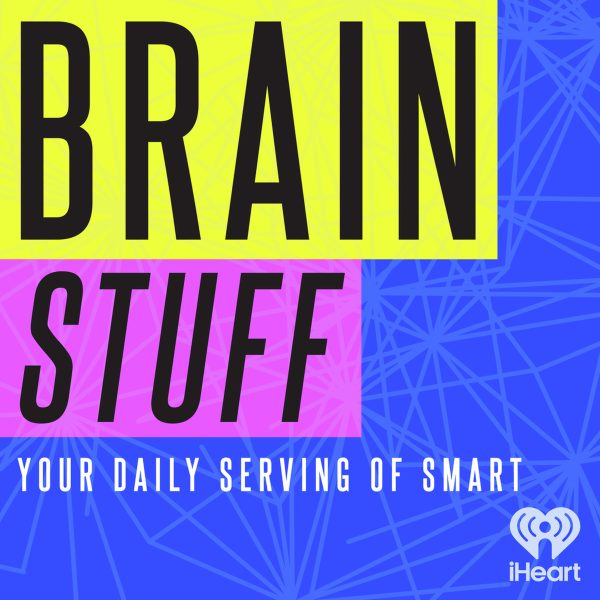
BrainStuff
- Folgen
- 2.362
- Erscheint
- mehrmals pro Woche
- Letzte Folge
- 13. Nov. 2026
Über den Podcast
Whether the topic is popcorn or particle physics, you can count on BrainStuff to explore -- and explain -- the everyday science in the world around us.
Folgen 2.362
Where Did Zippers Come From?
The zipper as we know it is barely over 100 years old, but it's the closure of choice for thousands of everyday products. Learn the history and physics behind the zipper (and why so many zipper tabs say 'YKK') …
Shownotes
The zipper as we know it is barely over 100 years old, but it's the closure of choice for thousands of everyday products. Learn the history and physics behind the zipper (and why so many zipper tabs say 'YKK') in today's episode of BrainStuff, based on these articles: https://science.howstuffworks.com/innovation/everyday-innovations/zipper.htm/printable; https://home.howstuffworks.com/home-improvement/household-hints-tips/cleaning-organizing/question469.htm
See omnystudio.com/listener for privacy information.
What Was Terrible About Ivan the Terrible?
Ivan IV Vasilyevich wasn't called 'the Terrible' during his lifetime, but he lived up to the name. Learn how he became Russia's first tsar, expanded his power, and terrorized his political enemies -- real and …
Shownotes
Ivan IV Vasilyevich wasn't called 'the Terrible' during his lifetime, but he lived up to the name. Learn how he became Russia's first tsar, expanded his power, and terrorized his political enemies -- real and imagined -- in today's episode of BrainStuff, based on this article: https://history.howstuffworks.com/history-vs-myth/ivan-terrible.htm
See omnystudio.com/listener for privacy information.
How Does the Thymus Work (and What Can Happen When It Doesn’t)?
The thymus is a small organ in the center of your chest that's responsible for getting your immune system's T cells ready to protect you from germs. Learn what we know and don't know about how the thymus works …
Shownotes
The thymus is a small organ in the center of your chest that's responsible for getting your immune system's T cells ready to protect you from germs. Learn what we know and don't know about how the thymus works (and about some of the autoimmune conditions that can emerge when it doesn't work as expected) in today's episode of BrainStuff.
See omnystudio.com/listener for privacy information.
BrainStuff Classics: How Does Venus Work?
Venus is the hottest planet, its years are shorter than its days, and its atmospheric pressure is 92 times greater than that on Earth. Learn how researchers think Venus got this way in today’s classic episode …
Shownotes
Venus is the hottest planet, its years are shorter than its days, and its atmospheric pressure is 92 times greater than that on Earth. Learn how researchers think Venus got this way in today’s classic episode of BrainStuff, based on this article: https://science.howstuffworks.com/46009-venus-explained.htm
See omnystudio.com/listener for privacy information.
Why Do We Eat Three Meals a Day?
The concept of eating three square meals a day only goes back about 150 years. Learn how technology, marketing, and other factors have shifted our meals and mealtimes in today's episode of BrainStuff, based on …
Shownotes
The concept of eating three square meals a day only goes back about 150 years. Learn how technology, marketing, and other factors have shifted our meals and mealtimes in today's episode of BrainStuff, based on this article: https://recipes.howstuffworks.com/biological-reason-to-eat-three-meals-day.htm
See omnystudio.com/listener for privacy information.
How Do Walkie-Talkies Work?
This technology is going on a hundred years old, but for reliable voice communication across relatively short distances, walkie-talkies are still relevant -- and sometimes preferable to cell phones. Learn how …
Shownotes
This technology is going on a hundred years old, but for reliable voice communication across relatively short distances, walkie-talkies are still relevant -- and sometimes preferable to cell phones. Learn how they work in today's episode of BrainStuff, based on this article: https://electronics.howstuffworks.com/walkie-talkies.htm
See omnystudio.com/listener for privacy information.
Dimetrodon Wasn't a Dinosaur -- So What Was It?
This four-legged prehistoric animal had a bony sail on its back and was probably scaly, but it was more closely to related to mammals than it was to dinosaurs. Learn about Dimetrodon and other synapsids in …
Shownotes
This four-legged prehistoric animal had a bony sail on its back and was probably scaly, but it was more closely to related to mammals than it was to dinosaurs. Learn about Dimetrodon and other synapsids in today's episode of BrainStuff, based on this article: https://animals.howstuffworks.com/extinct-animals/dimetrodon.htm
See omnystudio.com/listener for privacy information.
BrainStuff Classics: How Does Samhain Work?
Samhain is a pagan holiday -- celebrated between the fall equinox and winter solstice -- that helped form modern, secular Halloween celebrations. Learn about Samhain in today's episode of BrainStuff, based on …
Shownotes
Samhain is a pagan holiday -- celebrated between the fall equinox and winter solstice -- that helped form modern, secular Halloween celebrations. Learn about Samhain in today's episode of BrainStuff, based on this article: https://people.howstuffworks.com/culture-traditions/holidays-other/samhain.htm
See omnystudio.com/listener for privacy information.
What Really Happened at the 'Amityville Horror' House?
After a tragic set of murders in 1974, the next residents at a grand old house in Amityville, New York, claimed the home was demonically haunted. Their story spawned a horror sensation. But was the whole thing …
Shownotes
After a tragic set of murders in 1974, the next residents at a grand old house in Amityville, New York, claimed the home was demonically haunted. Their story spawned a horror sensation. But was the whole thing a money-making hoax? Did the murderer really hear voices there? Learn what we know (and still don’t know) about what happened in Amityville in today’s episode of BrainStuff, based on this article: https://history.howstuffworks.com/history-vs-myth/amityville-horror-house.htm
See omnystudio.com/listener for privacy information.
How Is Chocolate Made?
From the seed of a tropical tree to creamy candies, it takes a lot of science to turn cacao into chocolate. Learn how cacao is farmed, fermented, and processed into cocoa products -- plus its history as a drink …
Shownotes
From the seed of a tropical tree to creamy candies, it takes a lot of science to turn cacao into chocolate. Learn how cacao is farmed, fermented, and processed into cocoa products -- plus its history as a drink for 3,000 years -- in today's episode of BrainStuff, based on this article: https://science.howstuffworks.com/innovation/edible-innovations/chocolate.htm
See omnystudio.com/listener for privacy information.
Was James Dean's Final Car Cursed?
After James Dean died in a car crash at 24 years old, the remains of that car -- a silver Porsche 550 Spyder -- were implicated in a series of other accidents before the car apparently vanished. Learn about the …
Shownotes
After James Dean died in a car crash at 24 years old, the remains of that car -- a silver Porsche 550 Spyder -- were implicated in a series of other accidents before the car apparently vanished. Learn about the truth, fictions, and remaining mysteries behind Dean's supposedly cursed car in today's episode of BrainStuff, based on this article: https://history.howstuffworks.com/history-vs-myth/james-deans-car-cursed.htm
See omnystudio.com/listener for privacy information.
BrainStuff Classics: Does the Community of Lily Dale Reconnect the Living and the Dead?
Spiritualism is a 19th-century belief system that holds that the living can communicate with spirits of the dead through mediums. Learn about the community where spiritualism is famously practiced, Lily Dale …
Shownotes
Spiritualism is a 19th-century belief system that holds that the living can communicate with spirits of the dead through mediums. Learn about the community where spiritualism is famously practiced, Lily Dale, in today's classic episode of BrainStuff, based on this article: https://people.howstuffworks.com/lily-dale-where-living-and-dead-reconnect.htm
See omnystudio.com/listener for privacy information.
How Did the Philadelphia Experiment Work?
The Philadelphia Experiment is a fringe theory that says a secret military project made a WWII ship disappear (or time travel, or eat some of its crew). Learn about the hoax that got the story started -- and …
Shownotes
The Philadelphia Experiment is a fringe theory that says a secret military project made a WWII ship disappear (or time travel, or eat some of its crew). Learn about the hoax that got the story started -- and why it still persists today -- in this episode of BrainStuff, based on this article: https://people.howstuffworks.com/philadelphia-experiment.htm
See omnystudio.com/listener for privacy information.
Can Your Hair Really Turn White Overnight?
Tales of some great shock or fright suddenly turning a person's hair white go back thousands of years. Learn what researchers think is really going on -- and how our hair normally goes grey and white -- in …
Shownotes
Tales of some great shock or fright suddenly turning a person's hair white go back thousands of years. Learn what researchers think is really going on -- and how our hair normally goes grey and white -- in today's episode of BrainStuff, based on these articles: https://science.howstuffworks.com/science-vs-myth/everyday-myths/can-hair-turn-white-overnight.htm; https://health.howstuffworks.com/wellness/aging/aging-process/stress-gray-hair.htm
See omnystudio.com/listener for privacy information.
Why Are Brown Recluse Spiders Not All That Scary?
Brown recluse spiders rarely bite humans, and when they do, it only causes a reaction in about 10 percent of cases. Learn how to identify brown recluses and what their bites do in today's episode of BrainStuff …
Shownotes
Brown recluse spiders rarely bite humans, and when they do, it only causes a reaction in about 10 percent of cases. Learn how to identify brown recluses and what their bites do in today's episode of BrainStuff, based on this article: https://animals.howstuffworks.com/arachnids/brown-recluse-spider-bite.htm (If your urine turns black, seek medical treatment immediatly.)
See omnystudio.com/listener for privacy information.
BrainStuff Classics: When Has a Single Vote Decided an Election?
Voting is an incredibly important way to make your voice heard, but it's very rare for a candidate to win or lose by just one vote. Learn how rare -- and about a few times that it's happened -- in today's …
Shownotes
Voting is an incredibly important way to make your voice heard, but it's very rare for a candidate to win or lose by just one vote. Learn how rare -- and about a few times that it's happened -- in today's classic episode of BrainStuff, based on this article: https://people.howstuffworks.com/can-single-vote-change-election-outcome.htm
See omnystudio.com/listener for privacy information.
How Do You Grow a 3,000-Pound Pumpkin?
The largest pumpkins in the world now weigh well over a ton, and the record gets broken just about every year. But how (and why) would you go about growing one? Learn how competitive gourd growing works in …
Shownotes
The largest pumpkins in the world now weigh well over a ton, and the record gets broken just about every year. But how (and why) would you go about growing one? Learn how competitive gourd growing works in today's episode of BrainStuff, based on this article: https://home.howstuffworks.com/grow-giant-pumpkin.htm
See omnystudio.com/listener for privacy information.
How Do Your Nerves Tell Your Muscles to Function?
Every movement our bodies make -- from waving at a friend to pumping blood -- is goverened by complex electrochemical handshakes among our nerves and our muscles. Learn how voluntary, involuntary, and reflexive …
Shownotes
Every movement our bodies make -- from waving at a friend to pumping blood -- is goverened by complex electrochemical handshakes among our nerves and our muscles. Learn how voluntary, involuntary, and reflexive movements work in today's episode of BrainStuff, based on these articles: https://health.howstuffworks.com/human-body/systems/musculoskeletal/muscle.htm; https://health.howstuffworks.com/human-body/systems/nervous-system/nerve.htm
See omnystudio.com/listener for privacy information.
Why Did the Massive Maginot Line Fail to Stop Hitler?
After years of trench warfare in WWI, France built a line of massive underground bunkers and other defensive fortifications along hundreds of miles of its border. Learn how the Maginot Line worked -- and why it …
Shownotes
After years of trench warfare in WWI, France built a line of massive underground bunkers and other defensive fortifications along hundreds of miles of its border. Learn how the Maginot Line worked -- and why it failed to stop the Nazi invasion -- in today's episode of BrainStuff, based on this article: https://history.howstuffworks.com/world-war-ii/maginot-line.htm
See omnystudio.com/listener for privacy information.
BrainStuff Classics: Why Are Some Americans Cancelling Columbus Day?
Some U.S. cities and states have officially changed Columbus Day to Indigenous Peoples' Day. Learn why -- and why some Americans disagree with the change -- in this classic episode of BrainStuff, based on this …
Shownotes
Some U.S. cities and states have officially changed Columbus Day to Indigenous Peoples' Day. Learn why -- and why some Americans disagree with the change -- in this classic episode of BrainStuff, based on this article: https://people.howstuffworks.com/culture-traditions/holidays-other/columbus-day.htm
See omnystudio.com/listener for privacy information.
American Versus British English: What Are Biscuits, Muffins, and Pudding?
The English-language terms for different baked goods vary based on where English is being spoken. Learn why an American cookie is a British biscuit, an American biscuit is a British scone, our muffins have …
Shownotes
The English-language terms for different baked goods vary based on where English is being spoken. Learn why an American cookie is a British biscuit, an American biscuit is a British scone, our muffins have nothing to do with each other, and pudding doesn't have to involve pudding at all in today's episode of BrainStuff, based on this article: https://recipes.howstuffworks.com/tools-and-techniques/great-british-baking-terms-know-scones-from-biscuits.htm
See omnystudio.com/listener for privacy information.
How Do Sunspots Work?
When dark spots appear on the surface of the Sun, we're actually seeing the result of massive distortions in solar magnetic fields caused by roiling plasma -- and they appear in regular(ish) 11-year cycles …
Shownotes
When dark spots appear on the surface of the Sun, we're actually seeing the result of massive distortions in solar magnetic fields caused by roiling plasma -- and they appear in regular(ish) 11-year cycles. Learn what we know (and don't know!) about sunspots in today's episode of BrainStuff, based on this article: https://science.howstuffworks.com/sunspot.htm/printable
See omnystudio.com/listener for privacy information.
Did the Lost Continent of Lemuria Really Exist?
A sunken continent called Lemuria was first proposed as a scientific explanation for lemur populations in the mid-1800s, but it quickly became part of the mythology of Theosophist mystics and Tamil cultural …
Shownotes
A sunken continent called Lemuria was first proposed as a scientific explanation for lemur populations in the mid-1800s, but it quickly became part of the mythology of Theosophist mystics and Tamil cultural activists alike. Learn the truth and myths behind Lemuria (plus what Darwin had to do with it) in today's episode of BrainStuff, based on this article: https://history.howstuffworks.com/history-vs-myth/lemuria.htm
See omnystudio.com/listener for privacy information.
BrainStuff Classics: How Did a Mad King Design Disney's Castle?
Walt Disney based Sleeping Beauty's castle -- the centerpiece of Disneyland and the Disney logo -- on a real castle in the Bavarian Alps of Germany. Learn about Neuschwanstein Castle's strange and tragic …
Shownotes
Walt Disney based Sleeping Beauty's castle -- the centerpiece of Disneyland and the Disney logo -- on a real castle in the Bavarian Alps of Germany. Learn about Neuschwanstein Castle's strange and tragic history in this classic episode of BrainStuff, based on this article: https://history.howstuffworks.com/european-history/neuschwanstein-castle.htm
See omnystudio.com/listener for privacy information.
Could the Bird Flu Cause a Human Pandemic?
Since the early 2000s, the H5N1 bird flu has sickened wild and domestic birds around the world -- and sometimes humans and other mammals, too. Learn how this strain of avian influenza works (and why it seems …
Shownotes
Since the early 2000s, the H5N1 bird flu has sickened wild and domestic birds around the world -- and sometimes humans and other mammals, too. Learn how this strain of avian influenza works (and why it seems unlikey to cause a pandemic, but researchers are still watching it closely) in today's episode of BrainStuff, based on this article: https://science.howstuffworks.com/life/cellular-microscopic/bird-flu.htm
See omnystudio.com/listener for privacy information.
Where Do Butternut Squash Come From?
Humans started domesticating edible gourds thousands of years ago, but one of today's most popular varieties has been around for less than a century. Learn about the history and science behind butternut squash …
Shownotes
Humans started domesticating edible gourds thousands of years ago, but one of today's most popular varieties has been around for less than a century. Learn about the history and science behind butternut squash (plus how big the heaviest on record was) in today's episode of BrainStuff.
See omnystudio.com/listener for privacy information.
How Did the Great Stink of London Work?
In London in the summer of 1858, a Great Stink settled over the city. The sewage from its growing population was baking in the streets -- and infiltrating the city's water supply. Learn how this smelly …
Shownotes
In London in the summer of 1858, a Great Stink settled over the city. The sewage from its growing population was baking in the streets -- and infiltrating the city's water supply. Learn how this smelly situation led to some incredible sewer engineering still in use today (plus a change in the understanding of how infection works) in this episode of BrainStuff, based on this article: https://history.howstuffworks.com/historical-events/ridiculous-history-the-great-stink-london.htm
See omnystudio.com/listener for privacy information.
BrainStuff Classics: How Do Blue Whales Work?
It's a good question. The blue whale is the largest known animal to ever grace the planet (they may be twice as big as Megalodon was! Their tongues are as heavy as elephants!), but they're still mysterious …
Shownotes
It's a good question. The blue whale is the largest known animal to ever grace the planet (they may be twice as big as Megalodon was! Their tongues are as heavy as elephants!), but they're still mysterious. Learn what science knows (and doesn't know) about blue whales in today's classic episode of BrainStuff, based on this article: https://animals.howstuffworks.com/mammals/blue-whale.htm
See omnystudio.com/listener for privacy information.
Do Political TV Ads Really Change Minds?
Every U.S. election cycle, political campaigns bombard American televisions with advertisements for candidate X versus Y. But can these ads really make a difference, especially with shifts in the way we watch …
Shownotes
Every U.S. election cycle, political campaigns bombard American televisions with advertisements for candidate X versus Y. But can these ads really make a difference, especially with shifts in the way we watch TV? Learn when they actually work in today's episode of BrainStuff, based on this article: https://people.howstuffworks.com/do-campaign-tv-ads-change-voters-minds.htm
See omnystudio.com/listener for privacy information.
How Does Myasthenia Gravis Work?
What happens when your immune system attacks the point of communication between your nerves and muscles? That's an autoimmune condition called myasthenia gravis, and it leads to muscle weakness that starts …
Shownotes
What happens when your immune system attacks the point of communication between your nerves and muscles? That's an autoimmune condition called myasthenia gravis, and it leads to muscle weakness that starts around the eyes and can progress to the face, neck, and limbs. Learn about its symptoms, what causes them, and how different treatments can help relieve them in today's episode of BrainStuff.
See omnystudio.com/listener for privacy information.
Hier stehen die neuesten 40 von 2.362 Folgen. Ältere Folgen findest du im Feed des Podcasts.
Ähnliche Podcasts
Mehr Technologie-Podcasts



Ist das dein Podcast?
Bestätige es mit einem Eintrag in deinem Feed: Du bekommst hier einen Code, trägst ihn als podcast:txt in den Kanal deines Feeds ein, und wir prüfen ihn. Danach steht dein Podcast als „verifiziert“ bei SoundNode.