

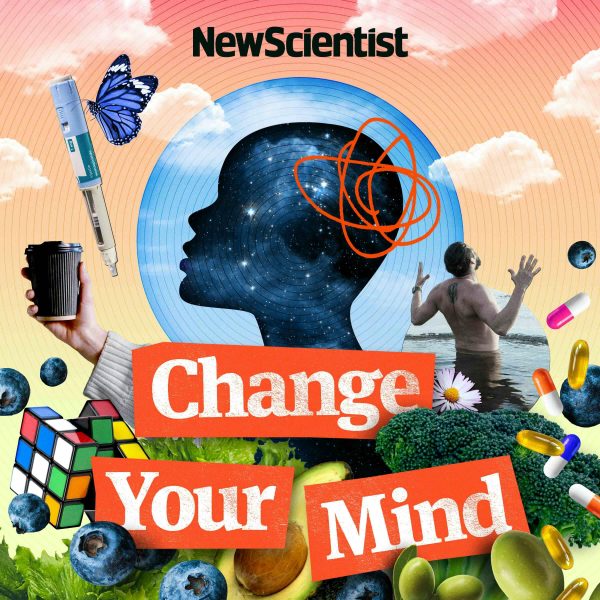
Change Your Mind with New Scientist
- Folgen
- 29
- Erscheint
- wöchentlich
- Letzte Folge
- 19. Nov. 2026
Über den Podcast
Change Your Mind from New Scientist brings you the brain health advice you really need to know. Every week, award‑winning science journalists Cat de Lange and Helen Thomson cut through wellness hype to find out what actually keeps your mind sharp, your mood steady and your memory strong. As friends, they’ve spent decades swapping stories, testing trends and exploring the latest neuroscience, and thought it was about time to share the tips and tricks that have genuinely changed their own lives. From cold plunges to coffee, supplements to sleep, Ozempic and AI they speak to leading experts and ask: does this really work? Expect smart conversations, clear answers, and practical takeaways - with plenty of laughs along the way. Because when you understand your brain, you really can change your mind - for the better. New Episodes every Thursday.
Folgen 29
Migraine: New Life-Changing Treatments Explained
Migraine is much more than a headache. It can bring visual disturbances, sensitivity to light and sound, nausea and days of brain fog, and its unpredictability can make everyday life difficult. In this episode …
Shownotes
Migraine is much more than a headache. It can bring visual disturbances, sensitivity to light and sound, nausea and days of brain fog, and its unpredictability can make everyday life difficult.
In this episode of Change Your Mind with New Scientist, health journalists Cat de Lange and Helen Thomson explore what happens in the brain during a migraine. Joined by Professor Peter Goadsby, a leading migraine researcher, they discuss the condition’s neurological basis, the role of hormones, and the new treatments targeting CGRP. In this episode we also unpack Cat’s own experience with Migraine and sort fact from fiction to tackle some of the internet’s favourite home remedies.
Produced by Emily Bird
We want to hear from you, get in touch at [email protected]
Find out more about migraine at New Scientist https://www.newscientist.com/article/2516371-fresh-understanding-of-the-causes-of-migraine-reveals-new-drug-targets/
ADHD - What you really need to know
Have you noticed that ADHD seems to be everywhere these days? More and more people are talking about it, and diagnoses are on the rise. But does that mean more of us are actually developing ADHD, or are we …
Shownotes
Have you noticed that ADHD seems to be everywhere these days? More and more people are talking about it, and diagnoses are on the rise. But does that mean more of us are actually developing ADHD, or are we simply getting better at recognising something that has always been there?
We often associate ADHD with childhood hyperactivity, but the condition is more complex, and growing awareness is prompting more people to seek a diagnosis. So what distinguishes ADHD from everyday traits, and what’s happening in the brain?
In this episode of Change Your Mind, health journalists Cat de Lange and Helen Thomson explore the science of ADHD. They discuss how it can affect attention, motivation and emotional regulation, why it may be missed in girls and women, and how hormonal changes could influence symptoms.
Joining them is neuroscientist Professor Ellie Dommett of King’s College London. Together, they look at what research can tell us about ADHD, the role of medication, and what evidence suggests about exercise and other ways to manage symptoms.
Produced by Emily Bird
Get in touch at [email protected]
Find out more about ADHD at New Scientist: https://www.newscientist.com/topic/adhd/
Sources:
ADHD history:
https://www.newscientist.com/article/2585608-calling-adhd-a-myth-is-pseudoscientific-and-dangerous/
Two to three times more common in boys:
https://aacap.org/AACAP/aacap/Families_and_Youth/Resource_Centers/ADHD_Resource_Center/ADHD_A_Guide_for_Families/How_Common_is_ADHD.aspx
Hormonal influence in women:
https://pmc.ncbi.nlm.nih.gov/articles/PMC12145478/
Explosion in diagnoses
https://www.newscientist.com/article/2371467-adhd-whats-behind-the-recent-explosion-in-diagnoses/
Listen to Cat’s friends podcast Behaviour Blueprint about ADHD medication in children
https://open.spotify.com/show/1zoPMe66io0FcAnmQUHLXe?si=7934bd51fae9426e
Ultra-processed food - Chris van Tulleken explains how diet impacts your brain
Chances are you’ve eaten something ultra-processed already today, but should you be worried? Many of us have a sense that ultra-processed food could be harming our bodies, but what impact does it have on our …
Shownotes
Chances are you’ve eaten something ultra-processed already today, but should you be worried?
Many of us have a sense that ultra-processed food could be harming our bodies, but what impact does it have on our brains? In this episode of Change Your Mind with New Scientist health Journalists Helen Thomson and Cat de Lange ask whether the food we eat is damaging our mental health, increasing our risk of dementia or even making us age prematurely.
With help from doctor, broadcaster and researcher Chris van Tulleken they explore how ultra-processed food really impacts the brain and whether we should be making changes to our own diets.
Produced by Emily Bird
Get in touch at [email protected]
Find out more about Ultra-processed foods at New Scientist: https://www.newscientist.com/article/2519704-how-worried-should-you-be-about-ultra-processed-foods/
Sources:
https://www.newscientist.com/article/2499135-why-not-all-ultra-processed-foods-are-bad-for-you/
Calories from UPF: https://www.ucl.ac.uk/news/2024/oct/toddlers-get-nearly-half-their-calories-ultra-processed-foods
https://www.ukri.org/news/families-left-in-dark-on-upfs-risks-to-children-ukri-dialogue/
Daniel Lieberman interview: https://www.youtube.com/watch?v=puRaNQpwW6U
The Glymphatic System - Can you boost your brain's deep-cleaning system to prevent Alzheimer’s?
We all know how important sleep is for our health, it’s a chance to rest our body and mind, but what if it’s also a vital opportunity for the brain to clear away waste? In this episode of Change Your Mind …
Shownotes
We all know how important sleep is for our health, it’s a chance to rest our body and mind, but what if it’s also a vital opportunity for the brain to clear away waste?
In this episode of Change Your Mind, health journalists Cat de Lange and Helen Thomson explore the glymphatic system, a hidden cleaning network deep in the brain that has alluded scientists for years. They’re asking how it helps keep the brain healthy, and why sleep could play such an important role.
Joining them is Maiken Nedergaard, a neuroscientist whose research helped uncover the system. Together, they look at how fluid moves through the brain, what scientists are learning about its links to sleep and conditions such as Alzheimer’s, and what might help support it.
Produced by Emily Bird
Get in touch at [email protected]
Find out more about the glymphatic system at New Scientist:
https://www.newscientist.com/article/2590514-can-we-harness-the-brains-deep-cleaning-system-to-prevent-alzheimers/
Does using AI deprive your brain of dopamine?
Series 3 of Change Your Mind with New Scientist is on it's way! But we couldn't leave you with nothing whilst we put together our next batch of myth-busting interviews with top brain experts. Cat de Lange and …
Shownotes
Series 3 of Change Your Mind with New Scientist is on it's way! But we couldn't leave you with nothing whilst we put together our next batch of myth-busting interviews with top brain experts. Cat de Lange and Helen Thomson share the very best tips and tricks they've picked up in their decades as Health Journalists.
We learn how avoiding AI could give our brains a dopamine hit and How to really make a habit stick.
Produced by Emily Bird
Has social media left you desensitised?
Bonus Brain Tips! Series 3 of Change Your Mind with New Scientist is on it's way! But we couldn't leave you with nothing whilst we put together our next batch of myth-busting interviews with top brain experts …
Shownotes
Bonus Brain Tips!
Series 3 of Change Your Mind with New Scientist is on it's way! But we couldn't leave you with nothing whilst we put together our next batch of myth-busting interviews with top brain experts. Cat de Lange and Helen Thomson share the very best tips and tricks they've picked up in their decades as Health Journalists.
We learn how protecting your hearing could be the secret to protecting against dementia and how to fight habituation and feel more alive.
Produced by Emily Bird
Your Brain Questions Answered: Lion’s Mane, Pets and Doodling
Can a growth mindset help you cope with exam pressure? Does writing by hand help you remember more? And what does the science really say about lion’s mane and pets? In this special listener Q&A, Cat de Lange …
Shownotes
Can a growth mindset help you cope with exam pressure? Does writing by hand help you remember more? And what does the science really say about lion’s mane and pets?
In this special listener Q&A, Cat de Lange and Helen Thomson bring series two of Change Your Mind with New Scientist to a close by answering questions from the inbox. Drawing on neuroscience research, they explore effective studying, stress, memory and the claims surrounding popular brain-health supplements.
Along the way, they consider why the way we take notes might matter, what doodling could be doing for your attention, and whether having a pet can benefit your brain.
Change Your Mind will be back with two shorter episodes of brain-boosting tips, before returning for series three with new expert guests and discoveries.
We want to hear your thoughts, so leave a comment or send your ideas and questions for future episodes to [email protected].
Produced by Emily Bird.
Exercise - What’s the right dose for your brain?
Exercise is often framed as a way to get fit, but what if its biggest benefits are happening in your brain? In this episode of Change Your Mind, Health Journalists Cat de Lange and Helen Thomson explore why …
Shownotes
Exercise is often framed as a way to get fit, but what if its biggest benefits are happening in your brain? In this episode of Change Your Mind, Health Journalists Cat de Lange and Helen Thomson explore why movement matters for our mood and long-term brain health, and why making exercise part of everyday life can feel like such a challenge.
Joining them is Brendon Stubbs, a leading researcher in physical activity and mental health. Together, they look at what science is beginning to reveal about exercise and the brain, whether some kinds of movement might be better than others, and how much you need to do to make a difference.
Produced by Emily Bird
Got a topic you'd like us to cover? Email us at [email protected]
Find out more about the brain benefits of exercise at New Scientist:
https://www.newscientist.com/article/2589563-short-bursts-of-exercise-can-boost-your-cognition/
Sources:
Astrocytes - ttps://www.newscientist.com/article/2586505-exercise-may-create-new-neurons-by-making-other-brain-cells-contract/
Depression as good as antidepressants
Endorphins: ttps://www.sciencedirect.com/science/article/abs/pii/S0306453021000470?via%3Dihub
Adolescence - What's going on with teenage mental health?
Is now really the worst time in history to be a teenager? This week, health Journalists Cat de Lange and Helen Thomson take on a topic that worries many parents: teenage mental health. Helping them wade through …
Shownotes
Is now really the worst time in history to be a teenager? This week, health Journalists Cat de Lange and Helen Thomson take on a topic that worries many parents: teenage mental health.
Helping them wade through the misinformation is Lucy Foulkes, a psychologist at the University of Oxford who specialises in teenage mental health and social development. She explains why adolescence is such a vulnerable time for the brain, and why it lasts much longer than you might expect. She also shares a surprising idea about whether all our talk about mental health might have unexpected downsides.
Are smartphones really villain they're made out to be, or is something bigger going on? Cat and Helen come away with practical ideas for supporting the teenagers in their lives, and a few habits they need to change themselves.
Got a topic you'd like us to cover? Email us at [email protected]
If you're struggling with any of the issues discussed in this episode, support is available from the UK Samaritans and the US Suicide and Crisis Lifeline.
Produced by Emily Bird.
Find out more about Adolescent Mental Health at New Scientist:
Lucy’s reading list:
https://www.amazon.co.uk/Its-Their-World-Adolescence-ParentingTM/dp/B0DJHQJXVH/
https://www.amazon.co.uk/Screensaver-Judgement-Free-Guide-Childs-Smartphone/dp/1805226479
https://www.amazon.co.uk/Smartphone-Solution-bestselling-clinical-psychologist/dp/0008773920
https://www.amazon.co.uk/Unlocked-Pete-Etchells/dp/0349432937/
Lucy’s podcast:
https://open.spotify.com/show/5kWA0hyOrlRAKpAC27Dk2e
Lucy’s books:
https://www.lucyfoulkes.co.uk/books
Lucy’s research:
https://www.lucyfoulkes.co.uk/research
The Vagus Nerve - Could this be the key to reducing your inflammation?
Feeling tempted by social media tips to “reset” your vagus nerve, fix your anxiety and banish inflammation? In this episode, Health Journalists Cat de Lange and Helen Thomson dig into the science behind vagus …
Shownotes
Feeling tempted by social media tips to “reset” your vagus nerve, fix your anxiety and banish inflammation? In this episode, Health Journalists Cat de Lange and Helen Thomson dig into the science behind vagus nerve stimulation.
With neurosurgeon and researcher Kevin Tracey, they explore how this a modern wellness obsession came about, what FDA‑approved implants can really do for conditions like rheumatoid arthritis, and why most DIY hacks may be running ahead of the evidence.
Produced by Emily Bird
We want to hear your thoughts, leave a comment or send in your ideas for future episodes to [email protected]
Find out more about The Vagus Nerve at New Scientist: https://www.newscientist.com/article/2388223-unravelling-the-secrets-of-the-vagus-nerve-will-revolutionise-medicine/
Sources:
The Great Nerve book by Kevin Tracey
https://www.penguin.co.uk/books/470370/the-great-nerve-by-tracey-dr-kevin/978140597850
Linda Watkins paper:
https://pubmed.ncbi.nlm.nih.gov/7746479/
Kevin’s original paper triggering the discovery of inflammation and vagus nerve: https://pubmed.ncbi.nlm.nih.gov/9361344/
Testing the inflammation-vagus nerve theory:
https://pubmed.ncbi.nlm.nih.gov/10839541/
Earlobe experiment:
https://jasontsukahara.com/publications/2021-ijp-vagus-pupil/2021-ijp-vagus-pupil.pdf
Small human study recording non invasive vagus stimulation and brain response
Blue Spaces - How spending time near water can boost your mental health
Why do so many of us feel calmer, clearer and more creative by the sea, a river or a lake? In this episode, Cat de Lange and Helen Thomson dive into the science of blue spaces. Picking apart the theories behind …
Shownotes
Why do so many of us feel calmer, clearer and more creative by the sea, a river or a lake? In this episode, Cat de Lange and Helen Thomson dive into the science of blue spaces. Picking apart the theories behind why water captures our attention and how time spent near water can change how we feel pain, our stress levels and even long-term physical health. …Eco-anxiety - How to Cope with your Stress about Climate Change
If after a record-breaking summer of heatwaves our warming planet is weighing heavily on your mind, you are not alone. Climate anxiety is on the rise, especially among young people, but what makes it different …
Shownotes
If after a record-breaking summer of heatwaves our warming planet is weighing heavily on your mind, you are not alone. Climate anxiety is on the rise, especially among young people, but what makes it different from “ordinary” anxiety, and how should we respond? In this episode of Change Your Mind with New Scientist Cat de Lange and Helen Thomson talk to psychotherapist and climate-aware therapy expert Caroline Hickman about why eco anxiety is a rational response to a warming world, how it is…Cognitive Reserve - How to Future-Proof your Brain
In this episode of Change Your Mind, Health Journalists Helen Thomson and Cat de Lange explore the science of cognitive reserve, the brain’s hidden resilience that can help delay the symptoms of dementia. They …
Shownotes
In this episode of Change Your Mind, Health Journalists Helen Thomson and Cat de Lange explore the science of cognitive reserve, the brain’s hidden resilience that can help delay the symptoms of dementia. They talk to Professor Yaakov Stern, a leading researcher in the field, to uncover what cognitive reserve actually is, how it’s measured, and why some people stay mentally sharp despite significant brain changes. …Ozempic: Could Weight-Loss Drugs have Surprising Brain Benefits?
In this episode of Change Your Mind with New Scientist, Health Journalists Helen Thomson and Cat de Lange dive into the headline grabbing class of drugs behind the Ozempic boom to ask what these medications are …
Shownotes
In this episode of Change Your Mind with New Scientist, Health Journalists Helen Thomson and Cat de Lange dive into the headline grabbing class of drugs behind the Ozempic boom to ask what these medications are really doing to our brains? Beyond weight loss and diabetes, early evidence hints at wide‑ranging effects on appetite, addiction, mood, and even long‑term brain health. …Rest - How Taking a Break Can Boost Your Brain
Are you getting enough rest? In this episode of Change Your Mind, health journalists Helen Thomson and Cat de Lange dive into the psychology and neuroscience of rest to find out how we can make the most of our …
Shownotes
Are you getting enough rest? In this episode of Change Your Mind, health journalists Helen Thomson and Cat de Lange dive into the psychology and neuroscience of rest to find out how we can make the most of our downtime. They’re joined by Claudia Hammond, broadcaster, author, and visiting professor at the University of Sussex, to unpack the surprising ways your brain lights up when you switch off. …Caffeine - Could Your Morning Coffee be Protecting Your Brain?
Can your daily coffee actually be good for your brain, or should we be listening to the influencers who claim we need to cut it out? In this episode of Change Your Mind, Health Journalists Helen Thomson and Cat …
Shownotes
Can your daily coffee actually be good for your brain, or should we be listening to the influencers who claim we need to cut it out? In this episode of Change Your Mind, Health Journalists Helen Thomson and Cat de Lange dive into the science of caffeine: to find out whether we can enjoy our coffee fix guilt free. …Bonus Brain Tips - How to Maintain your Friendships and how to use Sunlight to get Better Sleep.
Series 2 of Change Your Mind with New Scientist is on it's way! But we couldn't leave you with nothing whilst we put together our next batch of myth-busting interviews with top brain experts. Cat de Lange and …
Shownotes
Series 2 of Change Your Mind with New Scientist is on it's way! But we couldn't leave you with nothing whilst we put together our next batch of myth-busting interviews with top brain experts. Cat de Lange and Helen Thomson share the very best tips and tricks they've picked up in their decades as Health Journalists.
We learn how texting could be good for your brain health and how a morning walk in the sun could lead to a better night's sleep.
Produced by Emily Bird
Bonus Brain Tips - How To Hack Your Nap and How to Beat Chronic Stress
Series 2 of Change Your Mind with New Scientist is on it's way! But we couldn't leave you with nothing whilst we put together our next batch of myth-busting interviews with top brain experts. Cat de Lange and …
Shownotes
Series 2 of Change Your Mind with New Scientist is on it's way! But we couldn't leave you with nothing whilst we put together our next batch of myth-busting interviews with top brain experts. Cat de Lange and Helen Thomson share the very best tips and tricks they've picked up in their decades as Health Journalists. We learn why coffee could be the surprising secret to a successful nap, and why simple tricks can be the most effective in tackling chronic stress. Produced by Emily BirdQ&A special: When do you really become an adult? Plus booze, bad sleep and more
Does your brain really stop developing at 25? How much damage does a bad night's sleep actually do? And if you stop drinking alcohol, can your brain recover? In this special listener Q&A, Cat de Lange and Helen …
Shownotes
Does your brain really stop developing at 25? How much damage does a bad night's sleep actually do? And if you stop drinking alcohol, can your brain recover? In this special listener Q&A, Cat de Lange and Helen Thomson wrap up the first series of Change Your Mind with New Scientist by tackling your questions. Drawing on the latest neuroscience, they separate fact from fiction on some of the biggest brain health topics we've covered so far. …Smell - The Surprising Link Between Olfaction and Dementia
Our sense of smell is often dismissed as our less important than sight and hearing, but what if it’s quietly shaping our memories, mood and long‑term brain health? In this episode, Health Journalists Helen …
Shownotes
Our sense of smell is often dismissed as our less important than sight and hearing, but what if it’s quietly shaping our memories, mood and long‑term brain health? In this episode, Health Journalists Helen Thomson and Cat de Lange explore the surprising brain superhighway between scent, emotion and memory, to explore why certain smells can yank you back to childhood and why smell could hold the key to healthy brain aging. …Solitude - How Time Alone Can Strengthen Your Mental Resilience
Health Journalists Cat de Lange and Helen Thomson just want some time to themselves... but not everyone feels that way, for others moments alone can be deeply uncomfortable. Research shows that solitude could …
Shownotes
Health Journalists Cat de Lange and Helen Thomson just want some time to themselves... but not everyone feels that way, for others moments alone can be deeply uncomfortable. Research shows that solitude could be incredibly important for our mental health, so whether we’re craving it or avoiding we should probably learn how to do it right, In this episode of Change Your Mind from New Scientist, Helen and Cat explore the surprising science of solitude. …Microplastics - Are Tiny Plastics Harming Our Brains?
Microplastics can be found everywhere from freshly falling Antarctic snow to the bottom of the Mariana Trench and our brains are no exception. In this episode of Change Your Mind with New Scientist, Health …
Shownotes
Microplastics can be found everywhere from freshly falling Antarctic snow to the bottom of the Mariana Trench and our brains are no exception. In this episode of Change Your Mind with New Scientist, Health Journalists Cat de Lange and Helen Thomson trace the origins of microplastics and nanoplastics to tell the story of how they end up in the food we eat, the water we drink and the air we breathe. …Brain Training - Can a Game really Protect You from Dementia?
In this episode of Change Your Mind, Science Journalists Cat de Lange and Helen Thomson ask whether brain training is finally shaking off its flaky reputation and if a simple computer game could really cut your …
Shownotes
In this episode of Change Your Mind, Science Journalists Cat de Lange and Helen Thomson ask whether brain training is finally shaking off its flaky reputation and if a simple computer game could really cut your risk of dementia. For years, Sudoku and brain game apps promised to “keep your brain young”, then were largely dismissed as only making you better at the game itself. So why is brain training back in the headlines now? …Microbiome - Explaining how your Gut affects your Mood
What if the key to a healthier brain isn't in your head at all? This week on Change Your Mind, Health Journalists Cat de Lange and Helen Thomson dive into the fascinating world of the gut microbiota, to ask …
Shownotes
What if the key to a healthier brain isn't in your head at all? This week on Change Your Mind, Health Journalists Cat de Lange and Helen Thomson dive into the fascinating world of the gut microbiota, to ask whether the trillions of microbes living inside us could be influencing everything from our mood and stress levels to how we think and feel. With microbiome testing kits, probiotics and gut-health products booming in popularity, how much of the hype is backed by science? …Manifesting - Is there any Neuroscience behind the Mood-Board?
Manifestation has gone mainstream. From vision boards and affirmations to TikTok trends promising abundance and success, millions of people believe they can turn their thoughts into reality. But is there any …
Shownotes
Manifestation has gone mainstream. From vision boards and affirmations to TikTok trends promising abundance and success, millions of people believe they can turn their thoughts into reality. But is there any science behind it? In this episode of Change Your Mind, New Scientist journalists Cat de Lange and Helen Thomson investigate the neuroscience of manifestation. Can visualising your goals really change your behaviour? Why does the brain focus so heavily on negative outcomes? …Cold-Water Swimming and Sauna - Can hot and cold therapies boost mental health?
If you’ve ever wondered whether the cold‑water swimming craze is a genuine brain booster or just a very chilly fad, this episode is for you. New Scientist journalists Cat de Lange and Helen Thomson plunge into …
Shownotes
If you’ve ever wondered whether the cold‑water swimming craze is a genuine brain booster or just a very chilly fad, this episode is for you. New Scientist journalists Cat de Lange and Helen Thomson plunge into the science behind cold dips, ice baths and saunas, asking whether they really can lift mood, protect the brain and build resilience, or if a warm pool and a chat with friends would do just as much. …Supplements - The Surprising Pill that Actually Helps your Brain
If the wellness industry has you wondering whether your daily supplements are helping your brain, or just draining your bank account, this episode is for you. New Scientist journalists Cat de Lange and Helen …
Shownotes
If the wellness industry has you wondering whether your daily supplements are helping your brain, or just draining your bank account, this episode is for you. New Scientist journalists Cat de Lange and Helen Thomson reveal the science behind multivitamins, omega-3s, vitamin D, creatine and more, separating the snake oil from the evidence that actually stands up. …Rethinking Anxiety - The Simple Shift that Changed my Life
In the very first episode of Change Your Mind, New Scientist journalists Cat de Lange and Helen Thomson tackle one of the most common, and misunderstood, mental health challenges: anxiety. Why do some people …
Shownotes
In the very first episode of Change Your Mind, New Scientist journalists Cat de Lange and Helen Thomson tackle one of the most common, and misunderstood, mental health challenges: anxiety. Why do some people bounce back from stress while others feel trapped in a constant state of alarm? And why is anxiety rising so sharply, especially among younger generations? …Welcome to Change your Mind with New Scientist
Change Your Mind from New Scientist brings you the brain health advice you really need to know. Every week, award‑winning science journalists Cat de Lange and Helen Thomson cut through wellness hype to find out …
Shownotes
Change Your Mind from New Scientist brings you the brain health advice you really need to know. Every week, award‑winning science journalists Cat de Lange and Helen Thomson cut through wellness hype to find out what actually keeps your mind sharp, your mood steady and your memory strong. As friends, they’ve spent decades swapping stories, testing trends and exploring the latest neuroscience, and thought it was about time to share the tips and tricks that have genuinely changed their own lives. …
Ähnliche Podcasts
Mehr Gesundheit und Fitness-Podcasts




Ist das dein Podcast?
Bestätige es mit einem Eintrag in deinem Feed: Du bekommst hier einen Code, trägst ihn als podcast:txt in den Kanal deines Feeds ein, und wir prüfen ihn. Danach steht dein Podcast als „verifiziert“ bei SoundNode.