

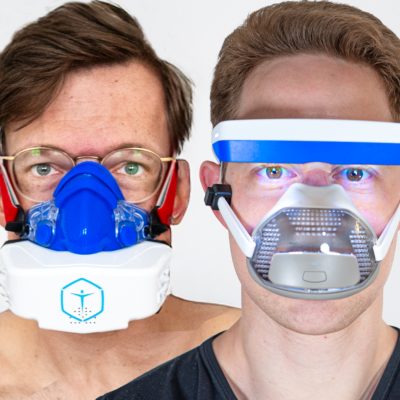
Apple Sleep Updates, Wearable Subscriptions & The Philosophy of Self-Tracking (Fit For Science Episode 5)
Shownotes
Data scientists Rob and Stephan discuss Apple's latest sleep algorithm improvements, the evolving landscape of wearable subscriptions, and three reasons for personal (health) tracking.
📝Summary
In this episode, the hosts examine the rapid iteration cycles of health technology, starting with Apple’s recent algorithmic improvements to sleep stage detection. They explore the "subscriptionification" of the wearable industry, comparing business models from Whoop, Oura, and Eight Sleep while debating the value of AI-driven health coaching and gamification metrics like "biological age". The discussion transitions into nutritional tracking, covering the medical origin of continuous glucose monitors (CGMs) and the practical challenges of picture-based food logging. Finally, they dive into three reasons behind self-quantification, highlighting for example how the Hawthorne effect, where the act of observation itself alters behavior, can be a powerful tool for behavior change.
⏳Chapters
00:00:00 Apple Sleep Algorithm: Improved deep sleep and awake detection
00:09:00 Continuous Sleep: Moving beyond 30-second epoch sleep stages
00:13:20 Data Repositories: The lack of centralized sleep data compared to genomics
00:17:20 Subscription Models: The industry shift from ownership to service licenses
00:35:00 AI Coaching: The utility and hype of AI advisors in wearables
00:44:00 Eight Sleep: Thermal regulation, bed tracking, and high-tier costs
01:13:50 CGM Deep Dive: Continuous glucose monitoring and individual responses
01:29:30 Nutrition Tracking: From barcodes to picture-based food logging
01:35:20 The Hawthorne Effect: Using observation as a tool for behavior change
01:42:00 Management Philosophy: Drucker and Kelvin on the necessity of measurement
01:47:40 Technological Optimism: Staying healthy to witness the future
📚Resources
Apple sleep staging paper with updated appendix: https://www.apple.com/health/pdf/Estimating_Sleep_Stages_from_Apple_Watch_Oct_2025.pdf
The Quantified Scientist - Can Wearables Predict How You Feel?: https://youtu.be/iwZrtb6tlUo
Apple Health uses SDNN (Standard Deviation of Normal-to-Normal intervals) as its metric for Heart Rate Variability, while others (such as Oura, Garmin, and Fitbit) use RMSSD.
Eight Sleep: https://www.eightsleep.com/
Dexcom G7 & Stelo: https://www.dexcom.com/
FreeStyle Libre by Abbott: https://www.freestyle.abbott/
Levels Health App: https://framer.levels.com/
A glucose spike is a rapid rise in blood sugar, defined generally as above 140 mg/dL.
Nature Medicine paper on individual variations in glycemic responses: https://www.nature.com/articles/s41591-025-03719-2
Clarification: Not Ultrahuman (https://www.ultrahuman.com/) but Supersapiens (https://www.supersapiens.com/) use CGMs for optimal metabolic fueling/efficiency.
rTracker app by Robert Miller: https://apps.apple.com/us/app/rtracker-track-it-your-way/id486541371
Star Trek Qs (immortal species): https://en.wikipedia.org/wiki/Q_(Star_Trek)
Isaac Asimov's Foundation as TV series: https://en.wikipedia.org/wiki/Foundation_(TV_series)
Three Body Problem as TV series: https://en.wikipedia.org/wiki/3_Body_Problem_(TV_series)
🎙️About
Fit For Science is a deep-dive podcast hosted by two biological data scientists, Rob and Stephan, exploring the intersection of research, health tech, and data-driven lifestyle design.
Learn more: https://www.fitforscience.com/
Subscribe on your favorite platforms
YouTube: https://www.youtube.com/@FitForScience
Spotify: https://open.spotify.com/show/56TjUxuMsPETb0kGEJ7nwf
Apple Podcasts: https://podcasts.apple.com/us/podcast/fit-for-science/id1863479802
Amazon Music: https://music.amazon.de/podcasts/c3e54ee7-4a2c-442e-a59f-553fbfb02b11/fit-for-science
⚠️Disclaimer: This podcast represents our own opinions and is for informational purposes only. It does not constitute medical or financial advice or a professional relationship.