

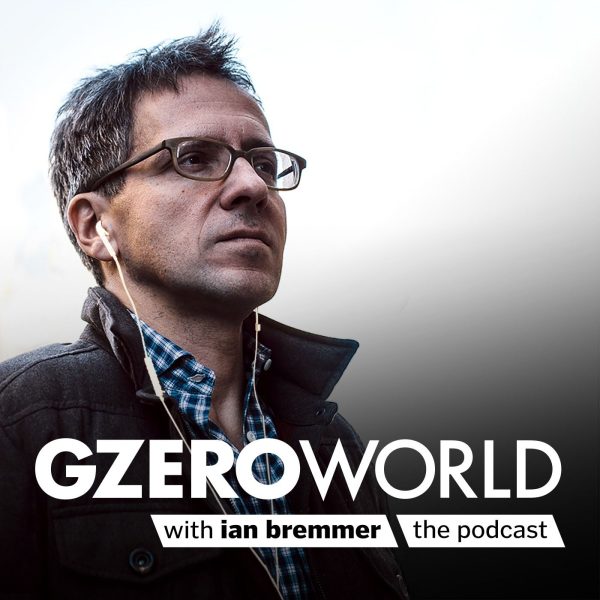
GZERO World with Ian Bremmer
- Folgen
- 452
- Erscheint
- wöchentlich
- Letzte Folge
- 21. Nov. 2026
Über den Podcast
The United States will no longer play global policeman, and no one else wants the job. This is not a G-7 or a G-20 world. Welcome to the GZERO, a world made volatile by an intensifying international battle for power and influence. Every week on this podcast, Ian Bremmer will interview the world leaders and the thought leaders shaping our GZERO World.
Folgen 452
Latin America's political future, with Michelle Bachelet and Iván Duque
Latin America’s political pendulum is swinging to the right. After years of left-wing governments dominating much of the region, conservative leaders are gaining ground, promising to tackle crime, revive …
Shownotes
Latin America’s political pendulum is swinging to the right. After years of left-wing governments dominating much of the region, conservative leaders are gaining ground, promising to tackle crime, revive struggling economies, and restore order. Yet through decades of political swings, many of the region’s biggest challenges remain unresolved. Is there still room for moderate politics in an increasingly polarized region?
On the latest episode of the GZERO World podcast, Ian Bremmer sits down with two former presidents from opposite sides of the political spectrum: Chile’s Michelle Bachelet and Colombia’s Iván Duque. They have come together to help shape a new UN-backed report on Latin America’s future, making the case for greater regional cooperation and pragmatic solutions to shared challenges. They discuss what the left and right have gotten wrong, why security and economic opportunity should transcend partisan divides, and whether the political center can survive.
The conversation also explores Latin America’s place in a rapidly changing world. As President Trump asserts greater US influence in the Western Hemisphere and China expands its economic footprint, how can countries protect their sovereignty and avoid getting caught between competing superpowers? And as artificial intelligence transforms the global economy, can the region seize new opportunities without falling further behind?
Host: Ian Bremmer
Guest: Michelle Bachelet and Iván Duque
Subscribe to the GZERO World with Ian Bremmer Podcast on Apple Podcasts, Spotify, or your preferred podcast platform, to receive new episodes as soon as they're published.
Hosted by Simplecast, an AdsWizz company. See pcm.adswizz.com for information about our collection and use of personal data for advertising.
The high-stakes race to control AI, with Ben Buchanan
The race for artificial intelligence supremacy is accelerating, and the stakes couldn't be higher. The US and China are competing to develop increasingly powerful AI systems that could transform economies …
Shownotes
The race for artificial intelligence supremacy is accelerating, and the stakes couldn't be higher. The US and China are competing to develop increasingly powerful AI systems that could transform economies, militaries, and the global balance of power. But as the technology advances, so do the risks. Could the race to build superintelligent machines outpace humanity's ability to control them?
On the GZERO World podcast, Ian Bremmer speaks with Ben Buchanan, former White House AI advisor and co-author of The Bitter Struggle: Superintelligence, Superpowers, and the Fate of the World, about the competition shaping the future of AI. Buchanan explains why Washington has sought to restrict China's access to advanced chips, how AI could give authoritarian governments new tools for surveillance and repression, and why the technology's development poses unique challenges for democracies.
Ultimately, the question isn't just whether America can win the AI race. It's whether it can do so without undermining the democratic principles it's trying to defend.
Host: Ian Bremmer
Guest: Ben Buchanan
Subscribe to the GZERO World with Ian Bremmer Podcast on Apple Podcasts, Spotify, or your preferred podcast platform, to receive new episodes as soon as they're published.
Hosted by Simplecast, an AdsWizz company. See pcm.adswizz.com for information about our collection and use of personal data for advertising.
Europe under pressure, with Polish Foreign Minister Radoslaw Sikorski
How worried should Europe be that Russia’s war in Ukraine could spill beyond its borders? For nearly five years, the war has largely stayed where it started: inside Ukraine. But Russia is increasingly taking …
Shownotes
How worried should Europe be that Russia’s war in Ukraine could spill beyond its borders? For nearly five years, the war has largely stayed where it started: inside Ukraine. But Russia is increasingly taking the fight beyond the battlefield. Moscow has stepped up a campaign of hybrid warfare across Europe—arson, cyberattacks, disinformation, even assassinations.
Where is the line between a war in Ukraine and a wider war in Europe? And what happens if that line is crossed? Polish Foreign Minister Radosław Sikorski joins Ian Bremmer to assess the state of the war, Europe’s resolve, and how NATO should respond to escalating attacks across the continent. With US financial support for Kyiv halted, Europe is shouldering the cost of Ukraine’s defense, and arguing it deserves a greater say in how the war ends. Can Europe defend itself and support Ukraine without help from the United States?
Guest: Ian Bremmer
Host: Radoslaw Sikorski
Subscribe to the GZERO World with Ian Bremmer Podcast on Apple Podcasts, Spotify, or your preferred podcast platform, to receive new episodes as soon as they're published.
Hosted by Simplecast, an AdsWizz company. See pcm.adswizz.com for information about our collection and use of personal data for advertising.
Middle East elections and escalation, with Brett McGurk
As Israel and the US head toward elections, the Middle East faces the prospect of further escalation. The Iran war has no clear endpoint, Houthi attacks are threatening US partners, and governments across the …
Shownotes
As Israel and the US head toward elections, the Middle East faces the prospect of further escalation. The Iran war has no clear endpoint, Houthi attacks are threatening US partners, and governments across the region are questioning whom they can count on.
On the GZERO World podcast, Ian Bremmer speaks with Brett McGurk, former White House Middle East coordinator, about Washington’s objectives and the difficult choices ahead. Drawing on his experience negotiating with Iran, McGurk explains why economic pressure needs to serve a realistic diplomatic goal. But he is skeptical that an agreement is close: “They will wait out the Americans.”
McGurk also considers what an Israeli government led by Gadi Eisenkot could change, particularly in the West Bank, and shares a personal encounter that shaped his understanding of the former military chief. He explains why Israel’s security doctrine after October 7 is likely to endure regardless of who becomes prime minister.
With American voters weary of foreign entanglements, McGurk argues that pulling back can create new dangers. The challenge is to maintain partnerships and diplomatic engagement without repeating the mistakes of past interventions.
Subscribe to the GZERO World with Ian Bremmer Podcast on Apple Podcasts, Spotify, or your preferred podcast platform, to receive new episodes as soon as they're published.
Hosted by Simplecast, an AdsWizz company. See pcm.adswizz.com for information about our collection and use of personal data for advertising.
2026 Midterms and the battle for Congress, with Amy Walter and Liam Donovan
Could a blue wave be coming in November? With the 2026 midterms approaching, Democrats are hoping to flip both chambers of Congress, while Republicans are fighting to hold onto their narrow majorities. But the …
Shownotes
Could a blue wave be coming in November? With the 2026 midterms approaching, Democrats are hoping to flip both chambers of Congress, while Republicans are fighting to hold onto their narrow majorities. But the battle for the House and Senate looks very different, and even with voter frustration mounting, the outcome is far from certain.
On the GZERO World podcast, Ian Bremmer sits down with Amy Walter, editor-in-chief of the Cook Political Report, and Republican strategist Liam Donovan to examine the state of the midterm races. They discuss why the Iran war and rising gas prices have become major political liabilities for Republicans, whether Trump can mobilize his base despite his declining popularity, and why Democrats are focusing on affordability, corruption, and voter frustration rather than cultural issues.
But the stakes extend well beyond November. What would a Democratic-controlled Congress actually mean for the final two years of Trump's presidency? Could a major Democratic victory change the party's direction, or simply reinforce its opposition to Trump? And as both parties look toward 2028, is JD Vance positioned to inherit the Republican nomination, and what kind of candidate could emerge for Democrats?
Subscribe to the GZERO World with Ian Bremmer Podcast on Apple Podcasts, Spotify, or your preferred podcast platform, to receive new episodes as soon as they're published.
Hosted by Simplecast, an AdsWizz company. See pcm.adswizz.com for information about our collection and use of personal data for advertising.
Three years after October 7, with Aaron David Miller
Three years after the October 7 attacks, Gaza remains divided and without a clear path forward. Hamas has been severely weakened militarily but retains significant influence, while Palestinians continue to face …
Shownotes
Three years after the October 7 attacks, Gaza remains divided and without a clear path forward. Hamas has been severely weakened militarily but retains significant influence, while Palestinians continue to face difficult humanitarian conditions and little prospect of a political breakthrough.
On the GZERO World Podcast, Ian Bremmer sits down with former US Middle East negotiator Aaron David Miller to take stock of Israel and the region three years later. They discuss why Hamas has proven so difficult to dislodge, what Israel’s October 27 election could actually change, and why a new government may look different at home without dramatically changing Israel’s approach to Gaza, Lebanon, and Iran.
They also examine the changing US-Israel relationship as bipartisan support erodes, Israel’s shifting image among Americans, and a regional balance increasingly shaped by Israel, Turkey, and Iran. Miller argues that changing leadership could improve Washington’s relationship with Israel – but that the broader Middle East remains deeply fragmented, with few signs of an easy way out.
Host: Ian Bremmer
Guest: Aaron David Miller
Subscribe to the GZERO World with Ian Bremmer Podcast on Apple Podcasts, Spotify, or your preferred podcast platform, to receive new episodes as soon as they're published.
Hosted by Simplecast, an AdsWizz company. See pcm.adswizz.com for information about our collection and use of personal data for advertising.
The great US-China superpower rivalry, with Elizabeth Economy
President Trump and China’s Xi Jinping traded handshakes, toasts, and pandas at a diplomatic summit at the White House last week, but beneath all the pageantry, the rivalry between the world’s two most powerful …
Shownotes
President Trump and China’s Xi Jinping traded handshakes, toasts, and pandas at a diplomatic summit at the White House last week, but beneath all the pageantry, the rivalry between the world’s two most powerful countries is only getting more intense. Hoover Institution Senior Fellow Elizabeth Economy joins Ian Bremmer on the GZERO World podcast for a look at what’s really driving the relationship between the US and China right now, where each side has leverage, and whether the US is falling behind in the race for global influence and technological dominance.
From Beijing's perspective, the second Trump administration has handed China some useful opportunities as well as challenges. On one hand, Washington is no longer pressing Beijing about human rights issues and has stepped back from its leadership role in global institutions, giving China an opening. On the other, the Trump administration still views China as its biggest strategic competitor, both in terms of tech competition and national security. Bremmer and Economy look at the state of the US-China rivalry—from computer chips to AI to space dominance—and where it goes from here.
Host: Ian Bremmer
Guest: Elizabeth Economy
Subscribe to the GZERO World with Ian Bremmer Podcast on Apple Podcasts, Spotify, or your preferred podcast platform, to receive new episodes as soon as they're published.
Hosted by Simplecast, an AdsWizz company. See pcm.adswizz.com for information about our collection and use of personal data for advertising.
The UN at a crossroads, with Secretary-General António Guterres
This week on the GZERO World Podcast, Ian Bremmer sits down with UN Secretary-General Antonio Guterres on the sidelines of the General Assembly for the final time in his official capacity as UN chief. After a …
Shownotes
This week on the GZERO World Podcast, Ian Bremmer sits down with UN Secretary-General Antonio Guterres on the sidelines of the General Assembly for the final time in his official capacity as UN chief. After a decade as the UN’s top diplomat, the former Portuguese Prime Minister is leaving his position at a moment of great global instability. Wars grind on in Ukraine and Iran with no end in sight. Humanitarian crises in Gaza and Sudan have exposed how little leverage the international system has when powerful states and their partners act with impunity. With faith in global institutions at an all-time low, does the world’s most ambitious experiment in multilateralism still have a place?
While Guterres will be the first to acknowledge that the UN is weakened, he says it is far from obsolete. The old superpowers are discovering their limits, while middle and rising powers are demanding more influence. Those countries need a place to negotiate rules, build coalitions, and keep competition from becoming confrontation. For all its failures, the United Nations is still the only table where all 193 member states still have a seat. Guterres and Bremmer discuss all of that, as well as the erosion of international law, limits of superpowers, and why he believes AI is the most urgent challenge facing humanity.
Host: Ian Bremmer
Guest: António Guterres
Subscribe to the GZERO World with Ian Bremmer Podcast on Apple Podcasts, Spotify, or your preferred podcast platform, to receive new episodes as soon as they're published.
Hosted by Simplecast, an AdsWizz company. See pcm.adswizz.com for information about our collection and use of personal data for advertising.
Bioweapons, AI, and the end of the world, with Annie Jacobsen
For decades, nuclear war has represented the ultimate doomsday scenario. But investigative journalist and author Annie Jacobsen says biological warfare may pose an even greater overall threat. Unlike nuclear …
Shownotes
For decades, nuclear war has represented the ultimate doomsday scenario. But investigative journalist and author Annie Jacobsen says biological warfare may pose an even greater overall threat. Unlike nuclear weapons, which require tightly controlled materials, enormously expensive delivery systems, and specialized expertise, the barriers to developing biological weapons can be far lower. And artificial intelligence could lower them further.
Ian Bremmer sits down with Jacobsen to discuss how AI is changing the landscape of catastrophic risk. As increasingly powerful models make sophisticated scientific knowledge easier to access, they could allow bad actors to bypass years of specialized training and dramatically shorten the path from an idea to a potentially dangerous capability.
They also explore the struggle to govern a technology developing faster than regulators can respond, the gaps in existing AI safeguards, and what governments and tech companies could do to identify dangerous vulnerabilities before they are exploited. And they step back to a larger question at the heart of Jacobsen’s work: Why does humanity keep developing technologies with the potential to threaten its own survival – and can our ability to manage those risks ever catch up with our ability to create them?
Subscribe to the GZERO World with Ian Bremmer Podcast on Apple Podcasts, Spotify, or your preferred podcast platform, to receive new episodes as soon as they're published.
Hosted by Simplecast, an AdsWizz company. See pcm.adswizz.com for information about our collection and use of personal data for advertising.
The enduring legacy of 9/11, with former Defense Secretary Mark Esper
This week marks 25 years since 9/11—the deadliest terror attack the world has ever seen and a defining moment in American history. The attacks transformed US politics and national security. The war on terror …
Shownotes
This week marks 25 years since 9/11—the deadliest terror attack the world has ever seen and a defining moment in American history. The attacks transformed US politics and national security. The war on terror became the organizing principle of American foreign policy. Former Secretary of Defense Mark Esper joins Ian Bremmer on the GZERO World Podcast to reflect on the day that forever changed how Americans thought about national security, and how the United States wielded its enormous power around the world.
How much did we learn from the post-9/11 era and do we risk repeating the same mistakes? 25 years after the US launched its war on terror, America is once again fighting a war in the Middle East without a clear endgame or exit strategy. The United States is on the back foot in its war with Iran, Esper says. The original goal of getting Tehran to the negotiating table about its nuclear program isn’t even being discussed anymore. And meanwhile, the United States is dropping the ball on countering its biggest existential threat: China.
Host: Ian Bremmer
Guest: Mark Esper
Subscribe to the GZERO World with Ian Bremmer Podcast on Apple Podcasts, Spotify, or your preferred podcast platform, to receive new episodes as soon as they're published.
Hosted by Simplecast, an AdsWizz company. See pcm.adswizz.com for information about our collection and use of personal data for advertising.
The race to build humanity's future in space, with Chris Hadfield
More than half a century after humans last walked on the Moon, the next era of space exploration is taking shape. Getting there is cheaper, private companies are playing a much bigger role, and discoveries like …
Shownotes
More than half a century after humans last walked on the Moon, the next era of space exploration is taking shape. Getting there is cheaper, private companies are playing a much bigger role, and discoveries like vast reserves of lunar water have made the prospect of establishing a permanent presence on the Moon far more realistic. Ian Bremmer sits down with Canadian astronaut Chris Hadfield to talk about what this new space age could look like. …The global aid crisis, with David Miliband
What happens when the world’s safety net disappears? For decades, international aid has helped fight poverty, stop disease outbreaks, and keep fragile societies from falling over the edge. But after the …
Shownotes
What happens when the world’s safety net disappears? For decades, international aid has helped fight poverty, stop disease outbreaks, and keep fragile societies from falling over the edge. But after the shutdown of USAID last year, the relief system is in danger of collapsing entirely. International Rescue Committee President & CEO David Miliband joins Ian Bremmer on the GZERO World Podcast to talk about the long shadow cast by America’s retreat from global aid and what comes next. …The UK a decade after Brexit, with Rory Stewart
Ten years ago, Britain voted to leave the European Union in one of the most consequential political decisions of the 21st century. Supporters promised greater sovereignty, stronger economic growth, and a more …
Shownotes
Ten years ago, Britain voted to leave the European Union in one of the most consequential political decisions of the 21st century. Supporters promised greater sovereignty, stronger economic growth, and a more independent future. Instead, Brexit ushered in a decade of political upheaval, economic uncertainty, and a fundamental rethinking of Britain's role in the world. …Lebanon's best chance for peace, with Kim Ghattas
While the world’s attention has focused on the Strait of Hormuz and the escalating conflict between the United States and Iran, another potentially transformative front has opened in Lebanon. Israeli attacks …
Shownotes
While the world’s attention has focused on the Strait of Hormuz and the escalating conflict between the United States and Iran, another potentially transformative front has opened in Lebanon. Israeli attacks against the Iranian-backed group Hezbollah have left more than 4,000 people dead and displaced over a million. Now, a fragile ceasefire has raised a question diplomats have struggled with for decades: Can Hezbollah actually be disarmed? …Inside Ukraine's strategy to pressure Putin, with Dmytro Kuleba
For more than four years, Russia has wagered that it can outlast Ukraine. The Kremlin has more troops, more resources, and a greater tolerance for casualties, betting that Kyiv—and its Western allies—will …
Shownotes
For more than four years, Russia has wagered that it can outlast Ukraine. The Kremlin has more troops, more resources, and a greater tolerance for casualties, betting that Kyiv—and its Western allies—will eventually lose the will to keep fighting. But that assumption is being tested. Ukraine is carrying out increasingly sophisticated strikes deep inside Russian territory, forcing Moscow to defend military bases, energy infrastructure, and even symbolic strongholds like Crimea. …The human cost of Iran's war, with Yeganeh Torbati
Iran’s government emerged from the war with a powerful new story to tell: it withstood attacks from the United States and Israel, kept its grip on power, and gained fresh leverage in the region. But that is not …
Shownotes
Iran’s government emerged from the war with a powerful new story to tell: it withstood attacks from the United States and Israel, kept its grip on power, and gained fresh leverage in the region. But that is not how the conflict looks from inside the country. For ordinary Iranians, the conflict has brought more fear, deeper economic pain, and little sign that the political change many hoped for is any closer. …America at 250: Patriotism, Trump, and America's future, with Bill Maher
America turns 250 at a time when even celebrating the country can feel political. In the latest episode of the GZERO World podcast, Ian Bremmer sits down with comedian and political commentator Bill Maher to …
Shownotes
America turns 250 at a time when even celebrating the country can feel political. In the latest episode of the GZERO World podcast, Ian Bremmer sits down with comedian and political commentator Bill Maher to discuss patriotism, polarization, and the arguments Americans are having over what their country represents. Maher argues that patriotism should not belong to US President Donald Trump or any one political party. …The future of the Democratic party, with Josh Shapiro
What can Democrats learn from winning in America's ultimate swing state? On the latest episode of the GZERO World podcast, Ian Bremmer sits down with Pennsylvania Governor Josh Shapiro to discuss the future of …
Shownotes
What can Democrats learn from winning in America's ultimate swing state? On the latest episode of the GZERO World podcast, Ian Bremmer sits down with Pennsylvania Governor Josh Shapiro to discuss the future of the Democratic Party, the growing crisis of trust in American institutions, and the biggest challenges facing the country at home and abroad. …World Cup politics, with the Financial Times' Simon Kuper
The World Cup descends on North America this week, bringing with it billions of viewers, billions of dollars, and no shortage of political controversy. But according World Cup Fever author Simon Kuper, none of …
Shownotes
The World Cup descends on North America this week, bringing with it billions of viewers, billions of dollars, and no shortage of political controversy. But according World Cup Fever author Simon Kuper, none of that is new - the tournament has always reflected the world around it. …The Supreme Court's biggest tests ahead, with Emily Bazelon
From birthright citizenship to the independence of federal agencies, the Supreme Court is poised to decide a series of cases that could redefine the balance of power in Washington. Yale legal scholar and New …
Shownotes
From birthright citizenship to the independence of federal agencies, the Supreme Court is poised to decide a series of cases that could redefine the balance of power in Washington. Yale legal scholar and New York Times Magazine staff writer Emily Bazelon joins Ian Bremmer to assess what's at stake and whether the judiciary remains an effective check on presidential authority. …Winners and losers of the Iran war, with Kori Schake
Operation Epic Fury may be over, but the Iran war is far from resolved. On this week's episode, American Enterprise Institute Kori Schake joins Ian Bremmer to discuss the conflict's global ripple effects. With …
Shownotes
Operation Epic Fury may be over, but the Iran war is far from resolved. On this week's episode, American Enterprise Institute Kori Schake joins Ian Bremmer to discuss the conflict's global ripple effects. With the Strait of Hormuz effectively closed to commercial shipping, the US finds itself in what Schake calls a Mexican standoff, unable to force Iran's hand without dramatic escalation, and unwilling to accept the humiliation of ceding control of one of the world's most critical waterways. …How AI is transforming warfare and the US military with Katrina Manson
Ian Bremmer's guest this week is author and Bloomberg defense tech reporter Katrina Manson, who spent years reporting on Project Maven for her new book on the Pentagon's AI push. The program launched in 2017 …
Shownotes
Ian Bremmer's guest this week is author and Bloomberg defense tech reporter Katrina Manson, who spent years reporting on Project Maven for her new book on the Pentagon's AI push. The program launched in 2017 with a narrow mandate: use machine learning to process drone footage. It has since expanded into something far more ambitious. Autonomous weapons, drone swarming technology, and AI-assisted targeting are now central to how the Pentagon talks about modern warfare. …Cuba's Trump standoff and economic crisis with Michael Bustamante
Historian Michael Bustamante joins Ian Bremmer to discuss Cuba's economic freefall, Trump's end game, and the hopes of Cuban Americans. This week, Ian Bremmer sits down with University of Miami historian and …
Shownotes
Historian Michael Bustamante joins Ian Bremmer to discuss Cuba's economic freefall, Trump's end game, and the hopes of Cuban Americans. This week, Ian Bremmer sits down with University of Miami historian and Cuba expert Michael Bustamante to make sense of the US-Cuba standoff. Cuba is in its worst crisis in 30 years, with basic necessities like fuel, water and food in short supply. Between one and two million Cubans have left in the past five years, the largest exodus in the island's history. …North Korea's nuclear gamble pays off, with the WSJ's Jonathan Cheng
North Korea has nuclear weapons, a succession plan hiding in plain sight, and a personality cult that has outlasted Stalin's and Mao's combined. Wall Street Journal's Beijing bureau chief Jonathan Cheng argues …
Shownotes
North Korea has nuclear weapons, a succession plan hiding in plain sight, and a personality cult that has outlasted Stalin's and Mao's combined. Wall Street Journal's Beijing bureau chief Jonathan Cheng argues the world keeps misreading Pyongyang because it insists on reducing it to an authoritarian state. North Korea is also a religious society, built on a divine rule centered on a "god-king", Cheng argues. …Assessing the Iran War's "structural damage" with Harvard economist Gita Gopinath
Rising energy prices, higher inflation, and growing economic uncertainty — a Harvard economist says the fallout from the Iran war is already being felt. On the GZERO World Podcast, Ian Bremmer sits down with …
Shownotes
Rising energy prices, higher inflation, and growing economic uncertainty — a Harvard economist says the fallout from the Iran war is already being felt. On the GZERO World Podcast, Ian Bremmer sits down with Harvard economist and former IMF Deputy Managing Director Gita Gopinath to unpack how the conflict is rippling through the global economy. As oil and gas prices surge, inflation is climbing, adding new costs for households and businesses and putting pressure on growth worldwide. …Viktor Orbán's last stand, and the future of Europe's far right with Ivan Krastev
Ian Bremmer sits down with Ivan Krastev, Chairman of the Centre for Liberal Strategies and political scientist, to discuss Hungary's consequential upcoming election and what it means for the far right globally …
Shownotes
Ian Bremmer sits down with Ivan Krastev, Chairman of the Centre for Liberal Strategies and political scientist, to discuss Hungary's consequential upcoming election and what it means for the far right globally. For sixteen years, Viktor Orbán has dominated Hungarian politics, rewriting rules, consolidating power, and positioning himself as Europe's leading nationalist and Donald Trump's closest ally on the continent. …Rahm Emanuel on Trump's Iran war “of choice” and midterm implications
Ian Bremmer and Rahm Emanuel discuss the deepening conflict in the Middle East, US foreign policy under Trump, and the upcoming midterms. Rahm Emanuel argues that this is a war of choice, one President Trump …
Shownotes
Ian Bremmer and Rahm Emanuel discuss the deepening conflict in the Middle East, US foreign policy under Trump, and the upcoming midterms. Rahm Emanuel argues that this is a war of choice, one President Trump made himself, not one driven by external pressures like Israel’s influence. While the Prime Minister of Israel has long pushed for military action, Emanuel stresses that the responsibility for war ultimately lies with the US president, not foreign actors. …Unpacking Iran’s competing endgames with Brookings Institution’s Thomas Wright
Ian Bremmer sits down with Thomas Wright, Brookings Institution fellow and former Senior Director at the US National Security Council, to unpack the deepening war in Iran and the divergent strategies shaping …
Shownotes
Ian Bremmer sits down with Thomas Wright, Brookings Institution fellow and former Senior Director at the US National Security Council, to unpack the deepening war in Iran and the divergent strategies shaping it. What are the possible outcomes for the widening conflict in Iran? What began as a dramatic opening strike has evolved into a far more complex war, with Washington, Jerusalem, and Tehran all pursuing different aims. …Tariffs: what comes next with Paul Krugman and Scott Lincicome
While Washington has become more hostile to globalization, Americans continue to buy foreign goods in record numbers. Lincicome notes that economic nationalism is “about an inch deep,” with support collapsing …
Shownotes
While Washington has become more hostile to globalization, Americans continue to buy foreign goods in record numbers. Lincicome notes that economic nationalism is “about an inch deep,” with support collapsing when Americans face higher prices for domestic products. The conversation also explores the impact of tariffs on businesses and consumers. …Iran at war with Carnegie’s Karim Sadjadpour
Ian Bremmer sits down with Karim Sadjadpour of the Carnegie Endowment for Peace to examine Iran’s precarious position on the global stage and the forces shaping the country. At the heart of the discussion is …
Shownotes
Ian Bremmer sits down with Karim Sadjadpour of the Carnegie Endowment for Peace to examine Iran’s precarious position on the global stage and the forces shaping the country. At the heart of the discussion is the regime’s internal fragility. Sadjadpour explains that many inside Iran, including elements of the Revolutionary Guards, are “waiting for Ayatollah Khamenei to die.” The conversation also explores Iran’s isolation in the international arena. …
Hier stehen die neuesten 40 von 452 Folgen. Ältere Folgen findest du im Feed des Podcasts.
Ähnliche Podcasts
Mehr Nachrichten-Podcasts





Ist das dein Podcast?
Bestätige es mit einem Eintrag in deinem Feed: Du bekommst hier einen Code, trägst ihn als podcast:txt in den Kanal deines Feeds ein, und wir prüfen ihn. Danach steht dein Podcast als „verifiziert“ bei SoundNode.