

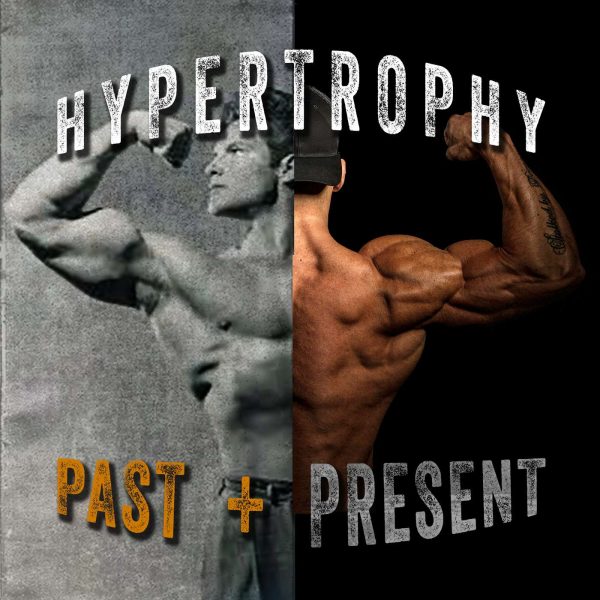
Hypertrophy Past and Present
- Folgen
- 78
- Erscheint
- wöchentlich
- Letzte Folge
- 16. Nov. 2026
Über den Podcast
A deep dive into the science of muscle growth. Hosted by Chris Beardsley and Jake Doleschal, this podcast explores hypertrophy training through the lens of pre-steroid era bodybuilding and modern muscle physiology.
Folgen 78
078 Do anabolic steroids actually speed up recovery?
In this episode of Hypertrophy Past & Present, Jake and Chris break down the full-body routine Bill Pearl used to win his first Mr. Universe title as a natural lifter, before diving into whether fatigue …
Shownotes
In this episode of Hypertrophy Past & Present, Jake and Chris break down the full-body routine Bill Pearl used to win his first Mr. Universe title as a natural lifter, before diving into whether fatigue mechanisms are necessary for hypertrophy, and whether anabolic steroids speed up recovery.
Key topics include
- Bill Pearl’s contest-winning full-body routine
- Pearl’s early experience with anabolic steroids and why lifters can respond differently to the same dose
- What happens inside a muscle as a set approaches failure, and why the last few reps can contribute disproportionately to fatigue
- Why gaining muscle faster and recovering faster between workouts are two separate questions
- How anabolic steroids might affect muscle repair and tendon adaptation, and what that could mean for how natural and enhanced lifters train
Want to train like a Silver-Era bodybuilder? Join our Hypertrophy Past & Present Training group on TrainHeroic, featuring Silver-Era-inspired training programs adapted using modern exercise science.
https://marketplace.trainheroic.com/workout-plan/team/hypertrophy-past-and-present
077 When is the best time of day to train for muscle growth?
In this episode of Hypertrophy Past & Present, Jake and Chris break down Peary Rader’s minimalist full-body routine from the 1940s before digging into Rader’s advice to train later in the day. Could afternoon …
Shownotes
In this episode of Hypertrophy Past & Present, Jake and Chris break down Peary Rader’s minimalist full-body routine from the 1940s before digging into Rader’s advice to train later in the day. Could afternoon workouts give you an edge, and does better performance in the gym translate into more muscle growth?
Key topics include
- Peary Rader’s five-exercise routine, including the 20-rep breathing squat, and how Jake and Chris would modernise it
- Why Rader favoured late-afternoon and evening workouts
- How muscle temperature, motivation, and motor unit recruitment could influence training performance throughout the day
- How to get more out of early-morning workouts
Want to train like a Silver-Era bodybuilder? Join our Hypertrophy Past & Present Training group on TrainHeroic, featuring Silver-Era-inspired training programs adapted using modern exercise science.
https://marketplace.trainheroic.com/workout-plan/team/hypertrophy-past-and-present
076 Is maximising the stimulus the same as maximising muscle growth?
In this episode of Hypertrophy Past & Present, Jake and Chris explore the high-volume, full-body training routine of Silver-Era bodybuilder Al Berman and how they would modify it using modern exercise science …
Shownotes
In this episode of Hypertrophy Past & Present, Jake and Chris explore the high-volume, full-body training routine of Silver-Era bodybuilder Al Berman and how they would modify it using modern exercise science. They then dive into the science of maximising muscle growth, discussing why maximising the hypertrophy stimulus of a single workout may not be the best strategy for maximising growth over the week, and how training volume, frequency, fatigue and stimulus saturation all influence the results.
Key topics include:
- Al Berman's 1951 full-body training routine and how Jake and Chris would modernise it
- Can a single set stimulate muscle growth, or is there a minimum volume threshold?
- Diminishing returns: Why each additional set provides progressively less muscle growth
- How fatigue and stimulus saturation limit the hypertrophy stimulus of a workout
- Why maximising the stimulus of a single workout isn't necessarily the best way to maximise weekly muscle growth
Want to train like a Silver-Era bodybuilder? Join our Hypertrophy Past & Present Training group on TrainHeroic, featuring Silver-Era-inspired training programs adapted using modern exercise science.
https://marketplace.trainheroic.com/workout-plan/team/hypertrophy-past-and-present
075 How much is too much? Fatigue accumulation
In this episode of Hypertrophy Past & Present, Jake and Chris explore the training routine of Mr Universe short division winner John Isaacs and why Silver-Era bodybuilders increased their training volumes …
Shownotes
In this episode of Hypertrophy Past & Present, Jake and Chris explore the training routine of Mr Universe short division winner John Isaacs and why Silver-Era bodybuilders increased their training volumes before competitions. They then dive into the science of accumulated fatigue, discussing how excessive training can influence muscle swelling, recovery, and hypertrophy, and why more training isn't necessarily better.
Key topics include:
- John Isaacs' Silver-Era training routine and how Reg Park modified it before competition
- Why bodybuilders increased training volume before competitions, and whether muscle swelling was part of the goal
- Does training fatigue accumulate? Why different studies have produced conflicting findings
- How muscle damage, inflammation, and fatigue influence recovery and muscle growth
- Why some individuals can recover from significantly more training volume than others
- How long accumulated fatigue takes to dissipate, and whether you need to stop training to recover
Want to train like a Silver-Era bodybuilder? Join our Hypertrophy Past & Present Training group on TrainHeroic, featuring Silver-Era-inspired training programs adapted using modern exercise science.
https://marketplace.trainheroic.com/workout-plan/team/hypertrophy-past-and-present
074 Do indirect sets build muscle? Science vs Evidence
In this episode of Hypertrophy Past & Present, Jake and Chris explore the concept of indirect training volume and whether exercises like bench presses and pulldowns can maximise growth in the triceps and …
Shownotes
In this episode of Hypertrophy Past & Present, Jake and Chris explore the concept of indirect training volume and whether exercises like bench presses and pulldowns can maximise growth in the triceps and biceps. Chris explains how motor unit recruitment changes our understanding of indirect sets, and why evidence-based and science-based approaches can lead to very different conclusions.
Key topics include:
- A silver-era training routine from Mr America and Mr Universe winner, Jack Delinger
- Do indirect sets count towards muscle growth?
- Motor unit recruitment and why indirect training may lead to earlier hypertrophy plateaus
- The differences between evidence-based and science-based approaches to hypertrophy
- Why more training volume isn't necessarily better
Want to train like a Silver-Era bodybuilder? Join our Hypertrophy Past and Present Training group on TrainHeroic.com
073 Part 2: A science-based lower body day with Soren Lemrant
In this episode of Hypertrophy Past & Present, Jake and Chris are joined once again by Soren Lemrant for part two of his unconventional training routine. This time, Soren breaks down his lower-body workout …
Shownotes
In this episode of Hypertrophy Past & Present, Jake and Chris are joined once again by Soren Lemrant for part two of his unconventional training routine. This time, Soren breaks down his lower-body workout, explaining his unique exercise selections, creative uses of gym machines, and attempts to target muscles that most bodybuilders overlook.
Key topics include:
- Training the upper abs, lower abs, and obliques
- Why hip internal and external rotation is usually neglected
- Unconventional exercises for the lower body muscles
- The similarities between Soren's approach and Silver-Era bodybuilding methods
Check out Soren on social media at lemrant_da_lifta2
Want to train like a Silver-Era bodybuilder? Join our Hypertrophy Past and Present Training group on TrainHeroic.com
072 Why you’re probably reading hypertrophy studies wrong
In this episode of Hypertrophy Past & Present, Jake and Chris start with a bizarre 1950s workout from Barton Horvath before breaking down how to actually understand hypertrophy research. They discuss what …
Shownotes
In this episode of Hypertrophy Past & Present, Jake and Chris start with a bizarre 1950s workout from Barton Horvath before breaking down how to actually understand hypertrophy research. They discuss what common measurements such as muscle thickness, cross-sectional area, EMG and strength testing really tell us, where they can mislead us, and why understanding the physiology behind a study matters as much as reading its results.
Key topics include:
- Barton Horvath’s 1950s “unusual” routine
- What researchers actually mean when they measure “hypertrophy,” and the differences between muscle thickness, cross-sectional area, muscle volume and muscle biopsies
- What EMG can and cannot tell us about muscle activation, recruitment and exercise selection
- What researchers actually mean by “recovery"
- Why vertical jump performance can be more sensitive to fatigue than maximal isometric strength
- The difference between a large numerical effect and a statistically significant effect
Want to train like a Silver-Era bodybuilder? Join our Hypertrophy Past and Present Training group on TrainHeroic.com
071 How to use AI to learn about hypertrophy
In this episode of Hypertrophy Past & Present, Jake and Chris start with a 1947 Steve Reeves workout before accidentally going down an AI rabbit hole. They discuss the difference between “evidence-based” and …
Shownotes
In this episode of Hypertrophy Past & Present, Jake and Chris start with a 1947 Steve Reeves workout before accidentally going down an AI rabbit hole. They discuss the difference between “evidence-based” and “science-based” thinking, and how AI can be used to understand research and design training without simply accepting the first (usually incorrect) answer it gives you.
Key topics include:
- Steve Reeves’ 1947 full-body routine, including his rest-pause approach
- The difference between evidence-based and science-based approaches to interpreting training research
- Why AI often defaults to conventional answers when asked about training and hypertrophy
- How giving AI source material can dramatically change its answers
- Using AI to interrogate research, identify patterns in studies, test hypotheses, and accelerate learning
- The limitations of using AI to write bodybuilding programs from scratch
- How coaches and lifters can use AI without outsourcing their critical thinking
Want to train like a Silver-Era bodybuilder? Join our Hypertrophy Past and Present Training group on TrainHeroic.com
070 A 67 exercise upper body workout with Soren Lemrant
In this episode of Hypertrophy Past & Present, Jake and Chris welcome their first-ever guest, Soren, the “67-set upper day guy.” Soren takes us through his upper-body workout exercise by exercise, explaining …
Shownotes
In this episode of Hypertrophy Past & Present, Jake and Chris welcome their first-ever guest, Soren, the “67-set upper day guy.” Soren takes us through his upper-body workout exercise by exercise, explaining the reasoning behind some of his more unconventional setups.
Key topics include:
- Soran’s 67-set upper-body workout and the philosophy behind training so many individual muscle functions
- Modifying pec decks ad pullover machines to target different regions of the chest
- Training the lats through sagittal, frontal, and scapular-plane movements
- Direct training for the traps, scapular muscles, neck, and shoulder rotators
- How Soren manages 67 exercises without spending several hours in the gym
Check out Soren on social media at lemrant_da_lifta
Want to train like a Silver-Era bodybuilder? Join our Hypertrophy Past and Present Training group on TrainHeroic.com
069 Evaluating a new hypertrophy model
In this episode of Hypertrophy Past & Present, Jake and Chris begin with Vern Weaver’s 1961 two-day-per-week routine, providing an interesting example of how effective training can potentially be structured …
Shownotes
In this episode of Hypertrophy Past & Present, Jake and Chris begin with Vern Weaver’s 1961 two-day-per-week routine, providing an interesting example of how effective training can potentially be structured around only two weekly gym sessions. The conversation then shifts into the philosophy of hypertrophy research: what actually constitutes a scientific model, what a hypertrophy model is supposed to explain, and how different models have shaped both research and training recommendations. Chris traces the progression from muscle damage and metabolic stress explanations through to the stimulating reps model, before examining a recently proposed alternative in which every repetition provides some degree of hypertrophy stimulus.
Key topics include:
- Vern Weaver’s 1961 two-day-per-week bodybuilding routine
- What a scientific model actually is
- How the muscle damage and metabolic stress models arose to explain unexpected findings in the strength-training literature
- Whether criticisms of “the last five reps” are actually criticisms of the stimulating reps model or simply disagreements about its practical application
- A recently proposed model in which every repetition provides some hypertrophy stimulus
- How someone might go about constructing a new hypertrophy model
Want to train like a Silver-Era bodybuilder? Join our Hypertrophy Past and Present Training group on TrainHeroic.com
068 Optimal volumes and frequencies for each muscle
In this episode of Hypertrophy Past & Present, Jake and Chris begin by reviewing an early female bodybuilding routine: a six-day-per-week program. Despite some problems with the weekly structure, the relatively …
Shownotes
In this episode of Hypertrophy Past & Present, Jake and Chris begin by reviewing an early female bodybuilding routine: a six-day-per-week program. Despite some problems with the weekly structure, the relatively low number of sets per exercise and surprisingly comprehensive exercise selection make it one of the more interesting Golden-Era routines covered on so far! …067 Why you’re not progressing (and why it might not be a plateau)
In this episode of Hypertrophy Past & Present, Jake and Chris begin by reviewing Stuart McRobert’s 1989 hardgainer routine, a minimalist two-day-per-week program designed as an alternative to the increasingly …
Shownotes
In this episode of Hypertrophy Past & Present, Jake and Chris begin by reviewing Stuart McRobert’s 1989 hardgainer routine, a minimalist two-day-per-week program designed as an alternative to the increasingly extreme bodybuilding routines of the late 1980s. The conversation then explores an important distinction: is every period of stalled progress really a plateau, or are there times when we should simply expect progress to slow or stop? …066 Do you need to feel a muscle for it to grow?
In this episode of Hypertrophy Past & Present, Jake and Chris begin with another Leroy Colbert routine, this time examining an over 100 set silver-era routine. The conversation then explores whether you …
Shownotes
In this episode of Hypertrophy Past & Present, Jake and Chris begin with another Leroy Colbert routine, this time examining an over 100 set silver-era routine. The conversation then explores whether you actually need to “feel” a muscle for it to grow, what the pump can tell us about muscle recruitment, and where the mind-muscle connection may or may not be useful. …065 How anabolics changed the fitness industry
In this episode of Hypertrophy Past & Present, Jake and Chris begin with Leroy Colbert’s late-1970s enormous volume training plan. The conversation then explores whether using pre-steroid bodybuilders as a …
Shownotes
In this episode of Hypertrophy Past & Present, Jake and Chris begin with Leroy Colbert’s late-1970s enormous volume training plan. The conversation then explores whether using pre-steroid bodybuilders as a model for natural training is really an “appeal to tradition,” before examining the evidence that anabolic steroids can directly stimulate muscle growth even without resistance training. …064 Is time under tension important for muscle growth?
In this episode of Hypertrophy Past & Present, Jake and Chris begin with Reg Park’s 1949 pre-contest routine, which involved training six days per week, twice per day, including the infamous 20-rep breathing …
Shownotes
In this episode of Hypertrophy Past & Present, Jake and Chris begin with Reg Park’s 1949 pre-contest routine, which involved training six days per week, twice per day, including the infamous 20-rep breathing squat. This leads into a deep dive on time under tension: Does making a set last longer actually increase muscle growth? …063 Are workouts over an hour killing your gains?
In this episode of Hypertrophy Past & Present, Jake and Chris begin with a full-body routine from legendary bodybuilding coach Vince Gironda and the unusual reliance on isolation exercises. The conversation …
Shownotes
In this episode of Hypertrophy Past & Present, Jake and Chris begin with a full-body routine from legendary bodybuilding coach Vince Gironda and the unusual reliance on isolation exercises. The conversation then shifts to workout duration: Is there any truth to the claim that workouts must be kept under 45, 60 or 90 minutes? …062 How to overcome a hypertrophy plateau
In this episode of Hypertrophy Past & Present, Jake and Chris begin with an early 1950s “muscular bulk” routine from Jack Delinger. They discuss the minimalist, barbell-only full-body program and how exercise …
Shownotes
In this episode of Hypertrophy Past & Present, Jake and Chris begin with an early 1950s “muscular bulk” routine from Jack Delinger. They discuss the minimalist, barbell-only full-body program and how exercise variety may need to gradually increase as a bodybuilder becomes more advanced. …061 Does training hard help or hinder hypertrophy?
In this episode of Hypertrophy Past & Present, Jake and Chris begin with a 1972 routine from Bradley J. Steiner and discuss what makes it one of the more sensible "golden era" bodybuilding programs they've …
Shownotes
In this episode of Hypertrophy Past & Present, Jake and Chris begin with a 1972 routine from Bradley J. Steiner and discuss what makes it one of the more sensible "golden era" bodybuilding programs they've reviewed so far and whether splitting exercises across consecutive days is likely to be more or less effective than performing all exercises in a single workout. …060 How to make your second set more stimulating
In this episode of Hypertrophy Past & Present, Jake and Chris begin with Steve Michalik’s enormous 1972 Mr. America routine and why silver-era routines are the best data set for natural training routines. From …
Shownotes
In this episode of Hypertrophy Past & Present, Jake and Chris begin with Steve Michalik’s enormous 1972 Mr. America routine and why silver-era routines are the best data set for natural training routines. From there, Jake and Chris explore how the hypertrophy dose-response relationship interacts with the stimulating reps model. …059 Hypertrophy is muscle-fibre specific
In this episode of Hypertrophy Past & Present, Jake and Chris begin with Alan Stephan’s classic Silver Era full-body routine, which he reportedly followed for years while building enormous strength and muscle …
Shownotes
In this episode of Hypertrophy Past & Present, Jake and Chris begin with Alan Stephan’s classic Silver Era full-body routine, which he reportedly followed for years while building enormous strength and muscle. This leads into a deeper discussion about exercise variation, whether exercises really “stop working”, and why good natural bodybuilding programs often end up looking repetitive. …058 Does mTOR determine your optimal training frequency?
In this episode of Hypertrophy Past & Present, Jake and Chris begin with a classic Clancy Ross full-body routine from the Silver Era, then move into a discussion about training frequency, mTOR, muscle protein …
Shownotes
In this episode of Hypertrophy Past & Present, Jake and Chris begin with a classic Clancy Ross full-body routine from the Silver Era, then move into a discussion about training frequency, mTOR, muscle protein synthesis, and whether training again before the previous hypertrophy stimulus has “finished” is actually a problem. …057 Full Body A/A/A vs A/B, which is right for you?
In this episode of Hypertrophy Past & Present, Jake and Chris discuss a full body training A/A/A program from Steve Reeves before exploring how to choose between repeating the same full body workout three times …
Shownotes
In this episode of Hypertrophy Past & Present, Jake and Chris discuss a full body training A/A/A program from Steve Reeves before exploring how to choose between repeating the same full body workout three times per week or alternating between two different full body workouts. …056 Most deloads are too short
In this episode of Hypertrophy Past & Present, Jake and Chris discuss deloads. The episode begins with a look at a training program used by six-time Mr. Olympia Dorian Yates before exploring the physiology of …
Shownotes
In this episode of Hypertrophy Past & Present, Jake and Chris discuss deloads. The episode begins with a look at a training program used by six-time Mr. Olympia Dorian Yates before exploring the physiology of accumulated fatigue and recovery. Key topics include: • Dorian Yates' Olympia-era training program • Why training hard does not automatically mean you need a deload • The difference between planned deloads and reactive deloads • How accumulated fatigue affects hypertrophy training •…055 How to build the biggest back possible
In this episode of Hypertrophy Past & Present, Jake and Chris discuss how to build the biggest back possible. The episode begins with a back specialization routine from Silver Era educator Peary Rader before …
Shownotes
In this episode of Hypertrophy Past & Present, Jake and Chris discuss how to build the biggest back possible. The episode begins with a back specialization routine from Silver Era educator Peary Rader before breaking down the most effective modern exercises for lats, traps, rear delts, and spinal erectors. …054 Strength vs Hypertrophy: Is Powerbuilding the Solution?
In this episode of Hypertrophy Past & Present, Jake and Chris analyse a Reg Park power-focused routine and use it as a starting point to discuss powerbuilding. The episode explores how lifters can structure …
Shownotes
In this episode of Hypertrophy Past & Present, Jake and Chris analyse a Reg Park power-focused routine and use it as a starting point to discuss powerbuilding. The episode explores how lifters can structure training depending on whether they lean more toward bodybuilding, powerlifting, or a true middle ground. Key topics include: • Reg Park’s power routine from his Mr. …053 Progression Models and the Truth About Progressive Overload
In this episode of Hypertrophy Past & Present, Jake and Chris analyse a 1940s training routine from silver era bodybuilder George Eiferman, including his progression model. The episode explores how silver era …
Shownotes
In this episode of Hypertrophy Past & Present, Jake and Chris analyse a 1940s training routine from silver era bodybuilder George Eiferman, including his progression model. The episode explores how silver era lifters approached progression and how confusion around progression models has influenced the modern bodybuilding. …052 Resting 2-3 minutes between sets isn't "optimal"
In this episode of Hypertrophy Past & Present, Jake and Chris follow up last week's episode on drop sets by diving deeper into the physiology of fatigue and rest periods. Using an extreme high-volume routine …
Shownotes
In this episode of Hypertrophy Past & Present, Jake and Chris follow up last week's episode on drop sets by diving deeper into the physiology of fatigue and rest periods. Using an extreme high-volume routine from Serge Nubret, the episode explores why different exercises, rep ranges, and proximity to failure dramatically change the amount and type of fatigue that accumulates during training. …051 The silver era perfected drop sets 75 years ago
In this episode of Hypertrophy Past & Present, Jake and Chris explore the origins and physiology of drop sets, beginning with a 1949 drop set routine from Henry J. Atkin. The episode examines how “multiple …
Shownotes
In this episode of Hypertrophy Past & Present, Jake and Chris explore the origins and physiology of drop sets, beginning with a 1949 drop set routine from Henry J. Atkin. The episode examines how “multiple poundage system” training was originally performed in the silver era, before transitioning into a physiological breakdown of why modern drop set research may not support many of the claims made about the method today. Key topics include: • Henry J. …050 Are circuits for hypertrophy the next big thing?
In this episode of Hypertrophy Past & Present, Jake and Chris explore the use of circuits in hypertrophy training, starting with a 1960s circuit-style routine published by John McCallum. The episode examines …
Shownotes
In this episode of Hypertrophy Past & Present, Jake and Chris explore the use of circuits in hypertrophy training, starting with a 1960s circuit-style routine published by John McCallum. The episode examines how circuit-style training was used in the silver era, before transitioning into a physiology-first breakdown of when circuits might actually make sense for muscle growth today, and when they likely fall short. …049 The data says you need more first sets
In this episode of Hypertrophy Past & Present, Jake and Chris break down a 1950s weightlifting plan from Paul Anderson, one of the strongest men to ever live. The episode begins with a deep dive into Anderson’s …
Shownotes
In this episode of Hypertrophy Past & Present, Jake and Chris break down a 1950s weightlifting plan from Paul Anderson, one of the strongest men to ever live. The episode begins with a deep dive into Anderson’s low volume, high frequency training structure, before expanding into a physiology-first explanation of why low per session volume and high frequency training still makes sense today. …
Hier stehen die neuesten 40 von 78 Folgen. Ältere Folgen findest du im Feed des Podcasts.
Ähnliche Podcasts
Mehr Gesundheit und Fitness-Podcasts







Ist das dein Podcast?
Bestätige es mit einem Eintrag in deinem Feed: Du bekommst hier einen Code, trägst ihn als podcast:txt in den Kanal deines Feeds ein, und wir prüfen ihn. Danach steht dein Podcast als „verifiziert“ bei SoundNode.