

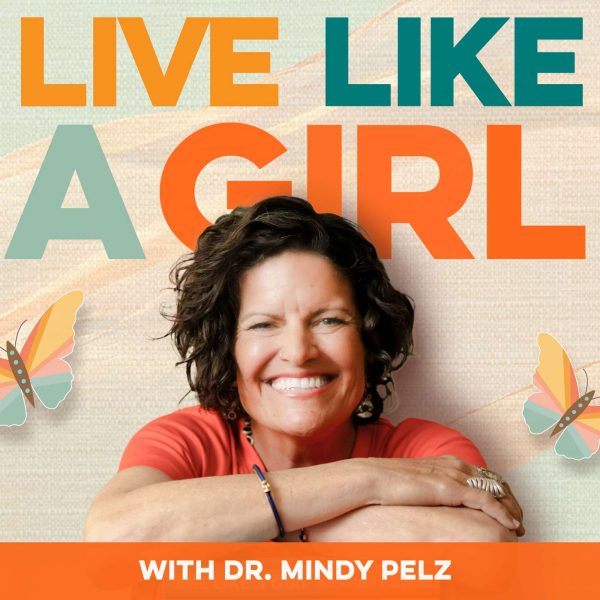
Live Like a Girl with Dr. Mindy Pelz
- Folgen
- 381
- Erscheint
- wöchentlich
- Letzte Folge
- 16. Nov. 2026
Über den Podcast
We were taught that doing anything "like a girl" was a weakness. Dr. Mindy Pelz is here to prove it's your greatest strength. A renowned advocate for women's health, Dr. Mindy is passionately committed to helping women embrace and trust their body's natural healing processes. Drawing on an extensive background in women's health, she's developed groundbreaking, science-backed approaches that help women work with their hormones, not against them, through every stage of life, from cycling to perimenopause to the wisdom of the years beyond. On Live Like a Girl, Dr. Mindy helps you come home to your own body. Every Monday, she sits down with some of the brightest minds in health and wellness for honest, meaningful conversations that hand you the knowledge, tools, and science to do health your way. No more pushing through, gaslighting yourself, or shrinking to fit. Just permission to live in rhythm with the body you were designed to have and to finally feel at home in it. Press play, and let's live like a girl.
Folgen 381
Belly Fat or Bloating? A Gut Health Conversation with Dr. Sarah Myhill
Belly fat is one of the topics you ask me about most, but where does your gut health fit into the picture?I invited Dr. Sarah Myhill to talk about her perspective on gut fermentation, cravings, and ketogenic …
Shownotes
Belly fat is one of the topics you ask me about most, but where does your gut health fit into the picture?
I invited Dr. Sarah Myhill to talk about her perspective on gut fermentation, cravings, and ketogenic eating. One thing I wanted to understand was why she changes someone’s food before introducing fasting.
We also talk about a question I hear from women navigating menopause: do we actually need more
IN THIS CONVERSATION
- Understand the difference between belly fat and bloating
- Learn how your food choices help you prepare for fasting
- Rethink your snacking habits and what drives your cravings
- Find meal ideas to make a lower-carb routine easier to follow
_
RESOURCES MENTIONED
- Continuous Glucose Monitor (CGM)
- Ketone Monitor
- The Infection Game by Dr. Sarah Myhill and Craig Robinson
- Fast Like a Girl
_
MORE ON DR. SARAH MYHILL
- Food for the Brain
- Website: drmyhill.co.uk
- Paleo-Ketogenic Book
- Facebook: Dr. Sarah Myhill
- X: @myhillnews
- Instagram: @drmyhill
- YouTube: @drmyhill
For more resources related to today’s episode, visit the podcast episode page: drmindypelz.com/ep387
_
STAY CONNECTED WITH ME:
- Facebook: Dr. Mindy Pelz
- Facebook Group: Resetter Collaborative
- Instagram: @dr.mindypelz
- Substack: @drmindypelz
- Tiktok: @drmindypelz
DISCLAIMER: This podcast is intended for educational and informational purposes only and is not a substitute for professional medical advice. Always consult a qualified healthcare professional before making changes to your diet, fasting routine, or lifestyle.
Stevia is Dead - This Sweetener Shrinks Fat Cells & Drops Insulin 33%
Is the sweetener in your morning coffee affecting your blood sugar and insulin?In this solo episode, Dr. Mindy Pelz breaks down the science behind stevia, allulose, monk fruit, and other sugar alternatives. She …
Shownotes
Is the sweetener in your morning coffee affecting your blood sugar and insulin?
In this solo episode, Dr. Mindy Pelz breaks down the science behind stevia, allulose, monk fruit, and other sugar alternatives. She explores what the research reveals about their effects on blood sugar, hormones, and metabolism, plus simple ways to reduce sugar cravings, retrain your taste buds, and make smarter choices for your health.
Resources Mentioned
- Continuous glucose monitors (CGMs) and blood glucose testing
- Eat Like a Girl by Dr. Mindy Pelz
- Reset Academy
For more resources related to today’s episode, visit the podcast episode page: https://www.drmindypelz.com/ep33X
Connect with Dr. Mindy:- Join Reset Academy
- Watch the episodes on YouTube
- Follow Dr. Mindy on Instagram
- Subscribe to Dr. Mindy’s newsletter
Disclaimer: This podcast is intended for educational and informational purposes only and is not a substitute for professional medical advice. Always consult a qualified healthcare professional before making changes to your diet, fasting routine, or lifestyle.
You've Tried EVERYTHING to Lose Weight… Here's Why Nothing Is Working with Dr. Dan Siegel
I’ve been hearing from so many women in their 40s and 50s who feel like they’ve hit a wall. They’re overwhelmed, not sleeping well, reacting differently to their families, and wondering why things that used to …
Shownotes
I’ve been hearing from so many women in their 40s and 50s who feel like they’ve hit a wall. They’re overwhelmed, not sleeping well, reacting differently to their families, and wondering why things that used to feel manageable suddenly don’t.
In this episode of Live Like a Girl, I’m sitting down with Dr. Dan Siegel, psychiatrist and author, to talk about what happens when your nervous system gets stuck in stress and how you start working with it.
We talk about menopause, burnout, sleep, and the beliefs we carry from earlier in life. Dan also walks us through his Wheel of Awareness and a simple journaling practice called SIFT, which helps you pay attention to what you’re feeling in your body and mind.
_
IN THIS EPISODE:
- How to tell if your nervous system is overwhelmed or shut down
- Why stress can feel different during perimenopause and menopause
- What your need for independence, connection, or certainty says about you
- How old experiences and beliefs can affect the way you feel today
- The Wheel of Awareness and the SIFT journaling exercise
- Why rest alone may not address the deeper reasons behind burnout
- How to reconnect with your own needs, purpose, and sense of worth
_
MORE ON DR. DAN SIEGEL
- Website: https://drdansiegel.com/
- Wheel of Awareness practice: https://drdansiegel.com/wheel-of-awareness/
- Mindsight Institute: https://mindsightinstitute.com/
- Dr. Dan Siegel’s Books: https://drdansiegel.com/books/
- Instagram: https://www.instagram.com/drdansiegel/
- Facebook: https://www.facebook.com/drdansiegel/
- YouTube: youtube.com/user/mindsightinstitute/
- X: https://x.com/DrDanSiegel
For more resources related to today’s episode, visit the podcast episode page: https://www.drmindypelz.com/ep385/
Connect with Dr. Mindy:- Join Reset Academy
- Watch the episodes on YouTube
- Follow Dr. Mindy on Instagram
- Subscribe to Dr. Mindy’s newsletter
Disclaimer: This podcast is intended for educational and informational purposes only and is not a substitute for professional medical advice. Always consult a qualified healthcare professional before making changes to your diet, fasting routine, or lifestyle.Why You Wake Up at 2 AM After 40 and How to Sleep Better
Sleep changed for me during perimenopause. I used to fall asleep the minute my head hit the pillow. Then I started struggling to fall asleep and waking up in the middle of the night, even when I was exhausted …
Shownotes
Sleep changed for me during perimenopause. I used to fall asleep the minute my head hit the pillow. Then I started struggling to fall asleep and waking up in the middle of the night, even when I was exhausted. If you're experiencing this after 40, I want to share what helped me.
In this solo episode of Live Like a Girl, I'm walking you through five steps to create a nighttime routine that supports better sleep. We're talking about estrogen, cortisol, blood sugar, and why your evening habits matter more than you might realize.
I'll show you how I think about evening lighting, dinner, magnesium-rich foods, caffeine, scrolling, and calming your nervous system before bed. At the end, I'll give you three simple things to try tonight and a two-week plan to help you see what works for your body.
IN THIS EPISODE
- Why women start waking up at 2 or 3 a.m. during perimenopause and menopause
- The connection between estrogen, cortisol, insulin, and sleep
- How to set up the three hours before bedtime
- Foods rich in magnesium and how Mindy uses them at dinner
- What to know about magnesium drinks and supplements
- Why late dinners, caffeine, and phone scrolling disrupt sleep
- Three easy habits to start tonight
RESOURCES MENTIONED
- FREE Magnesium smoothie recipes
- Fresh Pressed Olive Oil
- Qualia Magnesium+
- Free Nervous System Quiz
- Age Like a Girl
- Reset Academy
- Gut health conversation with Dr. Rajsree Nambudripad
For more resources related to today’s episode, visit the podcast episode page: drmindypelz.com/ep384/
Connect with Dr. Mindy:- Join Reset Academy
- Watch the episodes on YouTube
- Follow Dr. Mindy on Instagram
- Subscribe to Dr. Mindy’s newsletter
Disclaimer: This podcast is intended for educational and informational purposes only and is not a substitute for professional medical advice. Always consult a qualified healthcare professional before making changes to your diet, fasting routine, or lifestyle.
Bloating, Belly Fat & GLP-1: What Your Gut Is Trying to Tell You with Dr. Rajsree Nambudripad
Bloating is one of the most common complaints I hear from women, especially during perimenopause and menopause. And what's frustrating is that so many women are eating healthy, doing everything they think they …
Shownotes
Bloating is one of the most common complaints I hear from women, especially during perimenopause and menopause. And what's frustrating is that so many women are eating healthy, doing everything they think they should be doing, and still struggling with digestive issues.
In this episode of Live Like a Girl, I'm joined by integrative medicine physician and gut health expert Dr. Rajsree Nambudripad to talk about what's going on in your gut and some of the everyday habits that might be contributing to bloating.
We talk about why giving your gut a break between meals is so important, how your gut bacteria influence hunger hormones like GLP-1, and why stress and even the way you eat your meals affect digestion.
We also get into the changes that happen during menopause, the difference between bloating and belly fat, and why some of the foods we consider healthy aren't always easy on our digestive systems.
_
IN THIS EPISODE:
- Why constant snacking might be contributing to bloating
- How spacing out your meals supports gut health
- The connection between your gut bacteria, GLP-1, and hunger
- How to tell the difference between bloating and belly fat
- Why digestion changes during perimenopause and menopause
- How stress and your nervous system affect digestion
- What to know about fasting, fiber, and supplements for gut health
_
MORE ON DR. RAJSREE NAMBUDRIPAD
- Website: oc-integrativemedicine-com
- Supplements by Dr. Rajsree
- YouTube: @drrajsree
- IG: @dr_rajsree_nambudripad
- FB: @OCintegrativemedicine
For more resources related to today’s episode, visit the podcast episode page: https://www.drmindypelz.com/ep383/
Connect with Dr. Mindy:- Join Reset Academy
- Watch the episodes on YouTube
- Follow Dr. Mindy on Instagram
- Subscribe to Dr. Mindy’s newsletter
Disclaimer: This podcast is intended for educational and informational purposes only and is not a substitute for professional medical advice. Always consult a qualified healthcare professional before making changes to your diet, fasting routine, or lifestyle.
Why Your Health Tools Aren't Working (and Why It's Not Your Fault)
What if your body has never once been working against you?In this special solo episode of Live Like a Girl, you'll hear Dr. Mindy Pelz's live keynote from Hay House's Empower Your Life weekend, an event …
Shownotes
What if your body has never once been working against you?
In this special solo episode of Live Like a Girl, you'll hear Dr. Mindy Pelz's live keynote from Hay House's Empower Your Life weekend, an event honoring what would have been Louise Hay’s 100th birthday.
Dr. Mindy shares how a single YouTube video on autophagy took her from a busy functional health clinic to writing Fast Like a Girl, and why the book she thought was a fasting manual turned out to be a women’s empowerment book. She then lays out the five principles she believes every woman should see her body through, and connects each one to Louise Hay’s teachings.
Along the way, she opens up about escaping the Palisades fire, the near-death experience that left her hypervigilant for years, learning to surf at 56, and why she rode a Big Wheel down her driveway on her birthday.
Resources Mentioned
- Free Nervous System Questionnaire
- Fast Like a Girl by Dr. Mindy Pelz
- Eat Like a Girl by Dr. Mindy Pelz
- Age Like a Girl by Dr. Mindy Pelz
- Who Are You Becoming? Age Like a Girl Conversation Deck
- Leanne Morgan: Why Your Best Years Might Start After 50 (Live Like a Girl)
- You Can Heal Your Life by Louise Hay
For more resources related to today’s episode, visit the podcast episode page: drmindypelz.com/ep382
Connect with Dr. Mindy:- Join Reset Academy
- Watch the episodes on YouTube
- Follow Dr. Mindy on Instagram
- Subscribe to Dr. Mindy’s newsletter
Disclaimer: This podcast is intended for educational and informational purposes only and is not a substitute for professional medical advice. Always consult a qualified healthcare professional before making changes to your diet, fasting routine, or lifestyle.Not Getting Weight Loss Results? Your Body KNOWS You Have A Father Wound with Terri Cole
Have you ever wondered why you feel the need to prove yourself, struggle to set boundaries, or constantly put everyone else's needs before your own?In this episode of Live Like a Girl, I'm joined by licensed …
Shownotes
Have you ever wondered why you feel the need to prove yourself, struggle to set boundaries, or constantly put everyone else's needs before your own?
In this episode of Live Like a Girl, I'm joined by licensed psychotherapist and bestselling author Terri Cole to discuss her new book, Father Wound, and how our relationships with our fathers can shape our self-worth, relationships, and behaviors long into adulthood.
Terri explains why so many high-achieving women struggle with perfectionism, people-pleasing, and overfunctioning. I also open up about my own father wound, the childhood experiences that shaped me, and what I'm learning about healing these patterns during midlife.
_
IN THIS EPISODE:
- What a father wound is and how to recognize the signs
- Why childhood criticism can lead to perfectionism and people-pleasing
- How father wounds influence relationships and boundaries
- The connection between childhood experiences and nervous system patterns
- Why old emotional wounds may become more apparent during menopause
- How to begin healing and reclaiming your self-worth
_
TERRI'S NEW BOOK, FATHER WOUND:
_
MORE ON TERRI COLE
- Website: terricole.com
- Book website: fatherwoundbook.com
- Instagram: https://www.instagram.com/terricole/
- FB Page: https://www.facebook.com/TerriColeLCSW
- YouTube: https://www.youtube.com/user/terricoleny
- Podcast: https://terricole.com/itunes
For more resources related to today’s episode, visit the podcast episode page: drmindypelz.com/ep381
Connect with Dr. Mindy:- Join the Reset Academy
- Watch the episodes on YouTube
- Follow Dr. Mindy on Instagram
- Subscribe to Dr. Mindy’s newsletter
Disclaimer: This podcast is intended for educational and informational purposes only and is not a substitute for professional medical advice. Always consult a qualified healthcare professional before making changes to your diet, fasting routine, or lifestyle.Can Yogurt Help You Lose Weight? The GLP-1 and Gut Health Connection
What if one of the simplest ways to support your weight loss journey is already sitting in your refrigerator?In this solo episode, Dr. Mindy Pelz breaks down a fascinating study examining how probiotic-rich …
Shownotes
What if one of the simplest ways to support your weight loss journey is already sitting in your refrigerator?
In this solo episode, Dr. Mindy Pelz breaks down a fascinating study examining how probiotic-rich yogurt may influence hunger, blood sugar, and your body's natural GLP-1 production. The findings offer a closer look at why the bacteria in your food matter and how certain fermented foods may support your metabolic health.
Dr. Mindy explains the connection between your gut microbiome and two important appetite-related hormones, GLP-1 and ghrelin, including why hunger can become more challenging as you lose weight. She also shares what to look for on a yogurt label, why she prefers protein-rich Greek yogurt, and how pairing fermented foods with fiber can help you build more satisfying meals.
You'll walk away with practical ways to incorporate yogurt, kefir, kimchi, and other fermented foods into your eating window, along with a better understanding of how food and fasting can work together.
In this episode, you'll learn:
- What a study involving 140 adults found about probiotic yogurt, blood sugar, and hunger-related hormones
- How your gut bacteria are connected to natural GLP-1 production
- Why certain probiotic strains and CFU counts are worth understanding
- The difference between GLP-1 and ghrelin and how they influence appetite
- Why Dr. Mindy recommends plain Greek yogurt over many flavored varieties
- Four fermented foods to consider adding to your meals
- How pairing probiotics with fiber can support gut health
- Simple ways to incorporate these foods into a fasting lifestyle
RESOURCES MENTIONED
- FREE Fasting & Food Guide
- Fresh Pressed Olive Oil
- Study: Yogurt & Vitamin D (Food Science & Nutrition, 2022)
For more resources related to today’s episode, visit the podcast episode page: drmindypelz.com/ep380
Connect with Dr. Mindy:- Join Reset Academy
- Watch the episodes on YouTube
- Follow Dr. Mindy on Instagram
- Subscribe to Dr. Mindy’s newsletter
Disclaimer: This podcast is intended for educational and informational purposes only and is not a substitute for professional medical advice. Always consult a qualified healthcare professional before making changes to your diet, fasting routine, or lifestyle.
Terry Real: How to Reinvent Your Marriage When You've Grown Apart
Have you reached a point in your marriage where you feel like you've changed, but your relationship hasn't?In this episode of Live Like a Girl, I'm joined by renowned couples therapist Terry Real to explore why …
Shownotes
Have you reached a point in your marriage where you feel like you've changed, but your relationship hasn't?
In this episode of Live Like a Girl, I'm joined by renowned couples therapist Terry Real to explore why so many women begin questioning their relationships during midlife and menopause, and what it takes to reconnect when you've grown apart.
We talk about resentment, emotional intimacy, the childhood patterns that shape how we handle conflict, and how to communicate your needs without pushing your partner further away. Terry also shares his approach to relational empowerment and why reinventing your relationship may be another option worth exploring.
IN THIS EPISODE:
- Why marriage can feel different after menopause
- How resentment builds when your needs go unspoken
- The difference between individual and relational empowerment
- How childhood experiences influence relationship conflicts
- Practical ways to communicate, reconnect, and repair
DON'T LEAVE IT – REINVENT IT | LIVE VIRTUAL WORKSHOP | October 27, 2026 | 9 AM–12 PM PT
Join Terry and me for a special 3-hour workshop exploring how to create a new chapter in your relationship. Your $47 registration includes access for you and your partner, live Q&A, and a full replay.
SAVE YOUR SEAT: https://www.drmindypelz.com/reinvent
_
MORE ON TERRY REAL
- YouTube: https://www.youtube.com/@realterryreal
- Instagram: https://www.instagram.com/realterryreal/
- Facebook: https://www.facebook.com/TerryRealRLI/
- Website: https://terryreal.com/
For more resources related to today’s episode, visit the podcast episode page: https://www.drmindypelz.com/ep379/
Connect with Dr. Mindy:
- Join Reset Academy
- Watch the episodes on YouTube
- Follow Dr. Mindy on Instagram
- Subscribe to Dr. Mindy’s newsletter
Disclaimer: This podcast is intended for educational and informational purposes only and is not a substitute for professional medical advice. Always consult a qualified healthcare professional before making changes to your diet, fasting routine, or lifestyle.
Insulin Resistance? 6 Daily Habits That Can Make a Difference
Insulin resistance can develop gradually, sometimes long before you notice changes in your blood sugar. And while genetics and other health factors play a role, the habits you practice every day can have a …
Shownotes
Insulin resistance can develop gradually, sometimes long before you notice changes in your blood sugar. And while genetics and other health factors play a role, the habits you practice every day can have a meaningful impact on your metabolic health.
In this solo episode of Live Like a Girl, Dr. Mindy Pelz shares six practical habits that can help support insulin sensitivity, particularly for women navigating midlife and hormonal changes.
She explains why the quality of your carbohydrates matters, how a 10-minute walk after meals can influence your blood sugar response, and why building muscle is one of the most valuable things you can do for your metabolism as you age.
You'll also learn how fiber and fermented foods support gut health, why sugary beverages deserve a closer look, and how your sleep routine can affect the way your body responds to insulin.
In this episode, you'll learn:
- What insulin resistance is and how it develops
- Why carbohydrate quality matters for blood sugar regulation
- How pairing carbohydrates with protein or fat can support a steadier glucose response
- The benefits of walking for 10 minutes after meals
- Why resistance training and muscle mass matter for women over 40
- How fiber, legumes, and fermented foods support gut health
- The impact of sugary beverages on blood sugar
- Why sleep consistency matters for insulin sensitivity
- Three practical habits you can start today
Resources Mentioned
For more resources related to today’s episode, visit the podcast episode page: drmindypelz.com/ep378
Connect with Dr. Mindy:- Join Reset Academy
- Watch the episodes on YouTube
- Follow Dr. Mindy on Instagram
- Subscribe to Dr. Mindy’s newsletter
Disclaimer: This podcast is intended for educational and informational purposes only and is not a substitute for professional medical advice. Always consult a qualified healthcare professional before making changes to your diet, fasting routine, or lifestyle.The Toxic Ingredients Hiding in Your “Healthy” Food with Vani Hari (Food Babe)
Food activist and Food Babe founder Vani Hari returns to Live Like a Girl to break down what's actually hiding in many of the foods we buy every day.We get into ultra-processed foods, ingredient labels, added …
Shownotes
Food activist and Food Babe founder Vani Hari returns to Live Like a Girl to break down what's actually hiding in many of the foods we buy every day.
We get into ultra-processed foods, ingredient labels, added flavors, artificial sweeteners, food dyes, MSG, cooking oils, food noise, and the simple grocery-store habits Vani uses with her own family. Vani also shares how to make the transition toward more real food without making food boring or giving up birthdays, holidays, French fries, pizza, and the traditions you love.
_
IN THIS EPISODE:- How to identify ultra-processed foods
- What Vani looks for on ingredient labels
- Ingredients she personally avoids
- Food noise and highly palatable foods
- Helping kids develop a wider palate
- Easy real-food swaps
- Navigating holidays and celebrations
_
RESOURCES MENTIONED- Food Babe Feast Cookbook
- Vani’s speech at HHS in Washington DC
- Vani’s speech at HHS in Washington DC
- Vani’s Senate Testimony
_
MORE ON VANI HARI
Vani Hari, widely known as the Food Babe, is a food activist, author, entrepreneur, and founder of FoodBabe.com. For more than two decades, she has investigated ingredients used in the American food supply and advocated for changes in the way major food companies formulate their products.- Facebook: @thefoodbabe
- Instagram: @thefoodbabe
- YouTube: @thefoodbabe
For more resources related to today’s episode, visit the podcast episode page: drmindypelz.com/ep377
Connect with Dr. Mindy:- Join Reset Academy
- Watch the episodes on YouTube
- Follow Dr. Mindy on Instagram
- Subscribe to Dr. Mindy’s newsletter
Disclaimer: This podcast is intended for educational and informational purposes only and is not a substitute for professional medical advice. Always consult a qualified healthcare professional before making changes to your diet, fasting routine, or lifestyle.The GLP-1 Foods I Want Every Woman Eating
GLP-1 is a hormone your body naturally produces, and the foods you eat can influence its release. In this episode, I'm walking you through 10 everyday foods that support your natural GLP-1 response, satiety …
Shownotes
GLP-1 is a hormone your body naturally produces, and the foods you eat can influence its release. In this episode, I'm walking you through 10 everyday foods that support your natural GLP-1 response, satiety, and gut health, with practical ways to start adding them to your meals.
We get into fiber, protein, resistant starch, fermented foods, polyphenols, and why I've become increasingly focused on building meals around protein and fiber. I'll also show you what happens when you cook and cool potatoes, why plant variety matters, and some of the foods currently sitting in my own refrigerator.
_
IN THIS EPISODE:- How your body naturally produces GLP-1
- 10 foods to add to your grocery list
- Fiber and food noise
- Protein and satiety
- Supporting your gut microbiome
- Why plant diversity matters
- How I build a protein-and-fiber-forward meal
- Simple ways to put these foods together
_
RESOURCES MENTIONED:For more resources related to today’s episode, visit the podcast episode page: drmindypelz.com/ep376
_
CONNECT WITH DR. MINDY:- Join Reset Academy
- Watch the episodes on YouTube
- Follow Dr. Mindy on Instagram
- Subscribe to Dr. Mindy’s newsletter
Disclaimer: This podcast is intended for educational and informational purposes only and is not a substitute for professional medical advice. Always consult a qualified healthcare professional before making changes to your diet, fasting routine, or lifestyle.
Leanne Morgan: Why Your Best Years Might Start After 50
Leanne Morgan spent more than 20 years pursuing comedy before her career exploded in her 50s. Now, at 60, she's selling out arenas, starring in her own Netflix series, and living a life that once felt almost …
Shownotes
Leanne Morgan spent more than 20 years pursuing comedy before her career exploded in her 50s. Now, at 60, she's selling out arenas, starring in her own Netflix series, and living a life that once felt almost impossible.
In this conversation, we talk about what changed when Leanne stopped worrying so much about what everyone else thought and started trusting herself. We get into menopause, imposter syndrome, aging, ambition, health, family, and what happens when a woman's life gets bigger at the exact age she was taught it should start getting smaller.
In this episode:
- Leanne's 27-year road to success
- Almost giving up in her early 50s
- Menopause and finding confidence
- Prioritizing health while touring
- Aging, body image, and longevity
- Why Leanne won't “fake peace” anymore
- Family, friendship, and learning to say no
- Reinventing yourself later in life
_
MORE ON LEANNE MORGAN
- Leanne Season 2 Airing on Netflix
- The Time of Our Lives Tour
- What in the World?! by Leanne Morgan
- Instagram: @leannemorgancomedy
- Facebook: @leannemorgancomedy
- X: @leannecomedy
- YouTube: @LeanneMorganComedy
- TikTok: @leannemorgancomedy
For more resources related to today’s episode, visit the podcast episode page: https://www.drmindypelz.com/ep375/
_CONNECT WITH DR. MINDY
- Join Reset Academy
- Watch the episodes on YouTube
- Follow Dr. Mindy on Instagram
- Subscribe to Dr. Mindy’s newsletter
Disclaimer: This podcast is intended for educational and informational purposes only and is not a substitute for professional medical advice. Always consult a qualified healthcare professional before making changes to your diet, fasting routine, or lifestyle.The 10-Minute Morning Routine for Cortisol & Belly Fat
Chronic stress can influence your metabolism, sleep, appetite, blood sugar, and where your body tends to carry fat—which makes your nervous system an important part of the belly-fat conversation.In this solo …
Shownotes
Chronic stress can influence your metabolism, sleep, appetite, blood sugar, and where your body tends to carry fat—which makes your nervous system an important part of the belly-fat conversation.
In this solo episode, I’m breaking down what happens to cortisol after you wake up and sharing the simple 10-minute morning routine I want you to try for the next 30 days.
We’ll talk about morning light, your phone, breathwork, movement, hydration, exercise, and how to identify the stressors that may be setting the tone for your entire day. I’ll also explain what I mean by becoming “cortisol flexible” and how you can start working with your stress response instead of constantly feeling controlled by it.
In this episode:
- Cortisol, chronic stress, and belly fat
- What happens to cortisol after waking
- Why morning light matters
- The problem with reaching for your phone immediately
- A five-minute breathing practice
- When to move and exercise
- How to perform a morning stress audit
- Becoming more "cortisol-flexible"
- My 10-minute morning routine
- A 30-day challenge you can start tomorrow
Plus: Take my free Nervous System Questionnaire below to discover your current nervous system state and the practices that may support you.
Resources Mentioned
For more resources related to today’s episode, visit the podcast episode page: drmindypelz.com/ep374
Connect with Dr. Mindy:- Join Reset Academy
- Watch the episodes on YouTube
- Follow Dr. Mindy on Instagram
- Subscribe to Dr. Mindy’s newsletter
Disclaimer: This podcast is intended for educational and informational purposes only and is not a substitute for professional medical advice. Always consult a qualified healthcare professional before making changes to your diet, fasting routine, or lifestyle.Why Changing Your Body Won’t Fix How You Feel About Yourself with Dr. Marisa Franco
So many women believe they’ll finally feel better about themselves when they lose the weight, change their body, or reach the goal. But changing the outside doesn’t always change how we feel on the …
Shownotes
So many women believe they’ll finally feel better about themselves when they lose the weight, change their body, or reach the goal. But changing the outside doesn’t always change how we feel on the inside.
Psychologist and author Dr. Marisa G. Franco joins me to explore where our sense of self-worth actually comes from and how old experiences can continue shaping the way we see ourselves years later.
We talk about body image as we age, menopause, insecurity, nervous system patterns, reparenting, vulnerability, and why learning to acknowledge the parts of ourselves we’d rather push away may be an important part of building genuine self-worth.
In this episode:
- Self-worth vs. confidence
- Body image and menopause
- How old memories shape the way we see ourselves
- Why insecurity can feel protective
- Reparenting and Internal Family Systems
- Interrupting negative thought spirals
- Vulnerability and deeper relationships
- Learning to value who you are now
_
RESOURCES MENTIONED
_
MORE ON MARISA FRANCO
- Instagram: @drmarisagfranco
- Substack Newsletter: Attached by Dr. Marisa Franco
- LinkedIn: Dr. Marisa G Franco
- Website: https://drmarisagfranco.com/
- NEW! Book Worth
- Best Selling Book Platonic
For more resources related to today’s episode, visit the podcast episode page: drmindypelz.com/ep373
Connect with Dr. Mindy:- Join Reset Academy
- Watch the episodes on YouTube
- Follow Dr. Mindy on Instagram
- Subscribe to Dr. Mindy’s newsletter
Disclaimer: This podcast is intended for educational and informational purposes only and is not a substitute for professional medical advice. Always consult a qualified healthcare professional before making changes to your diet, fasting routine, or lifestyle.Creatine for Women: How to Take It, How Much You Need & What It Actually Does
Think creatine is only for bodybuilders or worried it's going to make you bulky or gain weight? Let's talk about what creatine actually does.In this episode, I'm breaking down the research on creatine …
Shownotes
Think creatine is only for bodybuilders or worried it's going to make you bulky or gain weight? Let's talk about what creatine actually does.
In this episode, I'm breaking down the research on creatine, including studies looking specifically at women, and showing you how I personally use it as part of my strength and muscle-building routine.
We'll talk about creatine monohydrate, dosage, consistency, water retention, resistance training, protein, loading phases, and why maintaining muscle becomes increasingly important as we age.
I'm also giving you a simple challenge you can start today: 30 days of consistent creatine paired with two strength-training sessions each week.
In this episode:
- What creatine actually does
- Why creatine isn't just for men
- Does creatine make you gain weight?
- Creatine and water retention
- Why training matters
- The type of creatine I use
- How much creatine to take
- Why I take creatine every day
- Whether you can put creatine in coffee
- Creatine and protein
- Simple resistance exercises you can do at home
- My 30-day creatine challenge
Resources Mentioned
- Qualia Creatine+, use code MINDY at checkout for 15% off
- FREE Nervous System Questionnaire
- Reset Academy
- Age Like a Girl
- Resistance Bands
For more resources related to today’s episode, visit the podcast episode page: drmindypelz.com/ep372
Connect with Dr. Mindy:- Join Reset Academy
- Watch the episodes on YouTube
- Follow Dr. Mindy on Instagram
- Subscribe to Dr. Mindy’s newsletter
Disclaimer: This podcast is intended for educational and informational purposes only and is not a substitute for professional medical advice. Always consult a qualified healthcare professional before making changes to your diet, fasting routine, or lifestyle.How Many Carbs Should You Actually Eat? with Dr. Ben Bikman
Are carbs actually bad for you, or have we been asking the wrong question? In this episode, I'm sitting down with metabolic scientist Dr. Ben Bikman to unpack one of the most confusing nutrition conversations …
Shownotes
Are carbs actually bad for you, or have we been asking the wrong question? In this episode, I'm sitting down with metabolic scientist Dr. Ben Bikman to unpack one of the most confusing nutrition conversations happening right now.
We talk about how to know how many carbs your body can handle, why your muscle mass and activity level matter, how carbohydrate quality changes your metabolic response, and why the answer may be different depending on where a woman is in her hormonal life.
Ben also explains what happens to insulin sensitivity across the menstrual cycle and after menopause, why fiber matters, how he thinks about food pairing, what a CGM can tell you, and why his perspective on GLP-1 medications has evolved.
In this episode:
- Are carbs actually bad for you?
- How many carbohydrates should you eat?
- Good carbs vs. highly refined carbs
- Why fiber changes the conversation
- Why muscle gives you more metabolic “wiggle room”
- Carbohydrates, blood sugar, stress, and sleep
- Can food naturally stimulate GLP-1?
More on Dr. Ben Bikman
Dr. Ben Bikman is a metabolic scientist and professor whose research focuses on insulin resistance, metabolic health, and the ways nutrition influences human metabolism. He is the author of Why We Get Sick and the upcoming book The Carb Crisis, which explores carbohydrates through the lens of metabolism and other factors that may influence how our bodies respond to the foods we eat.
- The Carb Crisis Book: https://link.amazon/B096Jd0u4
- Website: http://benbikman.com/
- Instagram: https://www.instagram.com/benbikmanphd
- Facebook: https://www.facebook.com/BenjaminBikmanPhD
- YouTube: https://www.youtube.com/@benbikman
- TikTok: https://www.tiktok.com/@benbikmanphd
- X: https://x.com/BenBikmanPhD
For more resources related to today’s episode, visit the podcast episode page: drmindypelz.com/ep371
Connect with Dr. Mindy:- Join Reset Academy
- Watch the episodes on YouTube
- Follow Dr. Mindy on Instagram
- Subscribe to Dr. Mindy’s newsletter
Disclaimer: This podcast is intended for educational and informational purposes only and is not a substitute for professional medical advice. Always consult a qualified healthcare professional before making changes to your diet, fasting routine, or lifestyle.The Biggest Fasting Mistakes That’s Blocking Your Fat Loss
Fasting gets a lot of attention for what happens while you’re not eating, but what happens when you start eating again deserves just as much attention.In this solo episode, Dr. Mindy breaks down one of the most …
Shownotes
Fasting gets a lot of attention for what happens while you’re not eating, but what happens when you start eating again deserves just as much attention.
In this solo episode, Dr. Mindy breaks down one of the most overlooked parts of fasting: the refeed.
She explains why longer isn’t always better when it comes to fasting, how the eating and fasting windows work together, and why protein, carbohydrates, fiber, fermented foods, and plant diversity can all have a place in your fasting rhythm.
She also takes on some of the biggest conversations happening around fasting right now, including thyroid health, muscle loss, the gut microbiome, fasting after 45, GLP-1, autophagy, meal timing, and whether women really need to eat protein first thing in the morning.
In This Episode
- Why fasting longer isn’t necessarily fasting better
- Why your first meal after a fast deserves more attention
- What happens to thyroid hormones during extended fasting and refeeding
- Why carbohydrates and protein matter after longer fasts
- What fasting may change within your gut microbiome
- Why plant diversity and fermented foods matter during your eating window
- The debate around fasting for women over 45
- Why Mindy cycles fasting rather than using the same fasting window every day
- Whether you really need protein immediately after waking
- How to experiment with an eating window that works for your body and lifestyle
- The difference between your sugar-burning and fat-burning states
- How nutrients can stimulate your body’s natural GLP-1 response
For more resources related to today’s episode, visit the podcast episode page: drmindypelz.com/370
Connect with Dr. Mindy:- Join Reset Academy
- Watch the episodes on YouTube
- Follow Dr. Mindy on Instagram
- Subscribe to Dr. Mindy’s newsletter
Disclaimer: This podcast is intended for educational and informational purposes only and is not a substitute for professional medical advice. Always consult a qualified healthcare professional before making changes to your diet, fasting routine, or lifestyle.Why You Can’t Stop Using Food for Comfort with Kelly McDaniel
Why can changing the way you eat feel so emotional, even when you know exactly what you want to change?In this conversation, I sit down with therapist and Mother Hunger author Kelly McDaniel to explore the …
Shownotes
Why can changing the way you eat feel so emotional, even when you know exactly what you want to change?
In this conversation, I sit down with therapist and Mother Hunger author Kelly McDaniel to explore the deeper emotional and relational layers that can become intertwined with food.
Through Kelly’s Mother Hunger framework, we look at how early experiences with nurturing, safety, attachment, and caregiving may influence the way some of us relate to food later in life—and why food can sometimes become connected with comfort, connection, routine, and relief.
We also talk about emotional eating, body image, nervous system regulation, fasting, food noise, GLP-1 medications, and the messages about our bodies that can be passed from one generation to the next.This conversation gave me an entirely new way to think about some of the struggles I’ve seen women experience when changing how they eat, because sometimes there may be more happening beneath the surface than what’s on the plate.
In this episode:- Kelly’s Mother Hunger framework
- Why food can become emotionally significant
- What Kelly means by “surrogate comfort”
- Why changing eating patterns can bring up difficult emotions
- Food and nervous system regulation
- What mothers can unintentionally teach daughters about their bodies
- Kelly’s perspective on food noise and GLP-1 medications
- How support and connection can help us create new patterns
MORE ON KELLY MCDANIEL
For more resources related to today’s episode, visit the podcast episode page: drmindypelz.com/ep369
Connect with Dr. Mindy:- Join Reset Academy
- Watch the episodes on YouTube
- Follow Dr. Mindy on Instagram
- Subscribe to Dr. Mindy’s newsletter
Disclaimer: This podcast is intended for educational and informational purposes only and is not a substitute for professional medical advice. Always consult a qualified healthcare professional before making changes to your diet, fasting routine, or lifestyle.Trying Everything to Lose Weight? These 5 Things Matter More Than You Think
You’re exercising more, fasting more, changing what you eat, and trying everything you know to support your weight, and yet the scale still doesn’t seem to move.In this solo episode, Dr. Mindy breaks down five …
Shownotes
You’re exercising more, fasting more, changing what you eat, and trying everything you know to support your weight, and yet the scale still doesn’t seem to move.
In this solo episode, Dr. Mindy breaks down five foundational habits she wants you to look at before assuming your body simply isn’t responding. She explores how fibre-rich foods can support satiety and your gut microbiome, why walking after meals can benefit blood sugar, how meal timing interacts with your circadian rhythm, and why sleep and consistency deserve a much bigger place in the weight-loss conversation.She also explores GLP-1, food noise, nervous system state, and what research tells us about maintaining weight loss after stopping GLP-1 medications.
The takeaway is refreshingly practical: instead of chasing another complicated strategy, start by looking at the everyday rhythms you can actually repeat.
Resources Mentioned
- FREE Nervous System Questionnaire
- Time & Light: Missing Pieces of a Healthy Lifestyle with Dr. Satchin Panda
- The Cancer Conversation Women Aren't Having Yet with Dr. Leigh Erin Connealy
- Reset Academy
- Eat Like a Girl
- Age Like a Girl
For more resources related to today’s episode, visit the podcast episode page: drmindypelz.com/ep368
Connect with Dr. Mindy:- Join Reset Academy
- Watch the episodes on YouTube
- Follow Dr. Mindy on Instagram
- Subscribe to Dr. Mindy’s newsletter
Disclaimer: This podcast is intended for educational and informational purposes only and is not a substitute for professional medical advice. Always consult a qualified healthcare professional before making changes to your diet, fasting routine, or lifestyle.Why So Many Women Feel Disconnected From Their Bodies with Emma-Louise Boynton
Women spend so much time trying to change their bodies, but how often are we taught how to actually experience and enjoy them?In this conversation, I sit down with Emma-Louise Boynton to explore what happens …
Shownotes
Women spend so much time trying to change their bodies, but how often are we taught how to actually experience and enjoy them?
In this conversation, I sit down with Emma-Louise Boynton to explore what happens when we begin reconnecting with our bodies through pleasure, presence, and curiosity rather than constant criticism. We talk about body image, intimacy, sex therapy, self-pleasure, mindfulness, and the small everyday practices that can help you feel more at home in your body.
Because your relationship with your body affects far more than how you see yourself, it shapes how you experience your life.
_
MORE ON EMMA-LOUISE BOYNTON
- Pleasure: The Reclamation of my Body by Emma-Louise Boynton
- Instagram: @emmalouiseboynton
- LinkedIn: Emma-Louise Boynton
- Substack: @emmalouiseboynton
- Pleasure: The Reclamation of my Body Audiobook: Spotify
- Website: emma-louseboynton.com
For more resources related to today’s episode, visit the podcast episode page: drmindypelz.com/ep367
Connect with Dr. Mindy:- Join Reset Academy
- Watch the episodes on YouTube
- Follow Dr. Mindy on Instagram
- Subscribe to Dr. Mindy’s newsletter
Disclaimer: This podcast is intended for educational and informational purposes only and is not a substitute for professional medical advice. Always consult a qualified healthcare professional before making changes to your diet, fasting routine, or lifestyle.10 Foods That Naturally Boost GLP-1 & Quiet Food Noise
If you’re constantly thinking about food, battling afternoon cravings, or struggling to feel satisfied after eating, your fullness hormones may be an important part of the conversation.In this solo episode, Dr …
Shownotes
If you’re constantly thinking about food, battling afternoon cravings, or struggling to feel satisfied after eating, your fullness hormones may be an important part of the conversation.
In this solo episode, Dr. Mindy breaks down the foods that can support your body’s natural GLP-1 production and explains how fiber, protein, resistant starch, fermented foods, and omega-3-rich foods influence satiety. You’ll learn practical ways to build meals that help you feel fuller longer, support your gut microbiome, and work with your body’s natural appetite signals.
Resources Mentioned- Qualia Magnesium+, use code MINDY for 15% off
- Reset Academy
- Wise Goat Organics Fermented Foods, use code MINDY for 20% off
- Eat Like a Girl
For more resources related to today’s episode, visit the podcast episode page: drmindypelz.com/ep366
Connect with Dr. Mindy:- Join Reset Academy
- Watch the episodes on YouTube
- Follow Dr. Mindy on Instagram
- Subscribe to Dr. Mindy’s newsletter
Disclaimer: This podcast is intended for educational and informational purposes only and is not a substitute for professional medical advice. Always consult a qualified healthcare professional before making changes to your diet, fasting routine, or lifestyle.How to Make Healthy Food Actually Taste Good with Chef Nyesha Arrington
What if a healthier relationship with food started with enjoying it more?In this episode of Live Like a Girl, Dr. Mindy sits down with acclaimed chef and Next Level Chef mentor Nyesha Arrington for a …
Shownotes
What if a healthier relationship with food started with enjoying it more?
In this episode of Live Like a Girl, Dr. Mindy sits down with acclaimed chef and Next Level Chef mentor Nyesha Arrington for a conversation about food that goes far beyond calories, macros, or following the “perfect” diet.
Nyesha shares how cooking with her grandmother shaped her relationship with food from childhood, why recipes can carry memories and identity across generations, and how years in professional kitchens taught her to see food as art, connection, and eventually, fuel.
They also get practical: cooking oils, salt, spices, kitchen tools, meal prep, fasting, strength training, hydration, and the small upgrades Nyesha has made that helped her feel dramatically better in her body.
Plus, Nyesha opens up about leadership in high-pressure kitchens, working alongside Gordon Ramsay, earning the title of “Chef,” and why she refuses to fit into anyone else’s definition of what a woman should look like.
In This Episode, You’ll Learn
- How childhood experiences can shape your relationship with food
- Why food is closely tied to memory and identity
- How Nyesha shifted from cooking purely for taste to thinking about food as fuel
- Which cooking oils she keeps in her own kitchen
- Why salt and spices can completely change a meal
- The kitchen tools every home cook actually needs
- How meal prep helps Nyesha make better choices when life gets busy
- Why she uses fasting during periods when she needs deep focus
- How strength training and sleep became part of her wellness routine
- What working in elite restaurant kitchens taught her about leadership
- Why she refuses to make herself more “digestible” for anyone else
Resources Mentioned
- Olive Oil
- Bone Broth, use code MINDY10
More on Chef Nyesha Arrington
Nyesha Arrington is an acclaimed chef, television personality, and co-star of FOX’s Next Level Chef. Trained in Michelin-starred kitchens, she has become known for her creative approach to food, mentorship, and commitment to thoughtfully sourced ingredients. She also hosts and produces Eater’s Plateworthy and is passionate about wellness, functional fitness, and using food to bring people together.
- Instagram: @nyeshajoyce
- Native by Nyesha
For more resources related to today’s episode, visit the podcast episode page: drmindypelz.com/ep365
Connect with Dr. Mindy:- Join Reset Academy
- Watch the episodes on YouTube
- Follow Dr. Mindy on Instagram
- Subscribe to Dr. Mindy’s newsletter
Disclaimer: This podcast is intended for educational and informational purposes only and is not a substitute for professional medical advice. Always consult a qualified healthcare professional before making changes to your diet, fasting routine, or lifestyle.Why Everything Feels Harder After 40: Nervous System, Burnout & Letting Go
What if the changes you’re experiencing after 40 are asking you to look at more than your hormones?In this solo episode of Live Like a Girl, Dr. Mindy walks through how she believes women can use the menopausal …
Shownotes
What if the changes you’re experiencing after 40 are asking you to look at more than your hormones?In this solo episode of Live Like a Girl, Dr. Mindy walks through how she believes women can use the menopausal transition to better understand their nervous systems, reconnect with parts of themselves they may have lost, and begin building the next chapter of life more intentionally.
She explores why so many women arrive in midlife already overwhelmed, why learning to regulate your nervous system may need to come before another health protocol, and how years of putting everyone else first can shape the way women experience this transition.
Later in the episode, LeAnn Rimes joins Dr. Mindy for a candid conversation about overwhelm, perfectionism, boundaries, HRT, nutrition, self-care, and what it looks like to listen to your body while living a very full life.
And for a limited time, you can get Age Like a Girl for $7 with free shipping in the U.S. and Canada only, while supplies last.
In This Episode, You’ll Learn- Why nervous system regulation matters so much after 40
- How years of over-functioning can catch up with women in midlife
- Why play, curiosity, creativity, and speaking your truth matter
- How to build your own lifestyle toolbox for menopause
- Why women need community as they age
- Why saying no can become an important form of self-care
- What it means to create the next chapter of your life on your terms
Resources Mentioned
- FREE Nervous System Questionnaire
- Age Like a Girl (Get your copy for $7 & FREE shipping, limited-time offer)
- Reset Academy
- Qualia Senolytic, use code MINDY for 15% off
For more resources related to today’s episode, visit the podcast episode page: drmindypelz.com/ep364
Connect with Dr. Mindy:- Join Reset Academy
- Watch the episodes on YouTube
- Follow Dr. Mindy on Instagram
- Subscribe to Dr. Mindy’s newsletter
Disclaimer: This podcast is intended for educational and informational purposes only and is not a substitute for professional medical advice. Always consult a qualified healthcare professional before making changes to your diet, fasting routine, or lifestyle.Dr. David Perlmutter on Menopause, Metabolism & Protecting Your Brain
Women are far more likely than men to develop Alzheimer’s disease, and Dr. David Perlmutter believes one of the most important pieces of that story is metabolic health.In this episode of Live Like a Girl, Dr …
Shownotes
Women are far more likely than men to develop Alzheimer’s disease, and Dr. David Perlmutter believes one of the most important pieces of that story is metabolic health.
In this episode of Live Like a Girl, Dr. Perlmutter joins Dr. Mindy to explain what happens when the brain’s immune cells shift from protective to destructive, why menopause may increase vulnerability, and how blood sugar, insulin resistance, visceral fat, inflammation, mitochondrial health, and lifestyle all influence brain aging.
They also discuss HRT, GLP-1 medications, ketones, fasting, fiber, exercise, BNDF, sleep, and what women can begin doing in their 30s, 40s, and 50s to support long-term cognitive health.
In This Episode, You’ll Learn- Why women face a higher risk of Alzheimer’s
- How menopause may affect brain metabolism
- Why belly fat and insulin resistance matter for brain health
- The blood markers Dr. Perlmutter watches most closely
- What emerging research says about GLP-1 drugs and the brain
- The lifestyle habits Dr. Perlmutter prioritizes for prevention
Resources Mentioned
More on Dr. David Perlmutter
- https://drperlmutter.com/
- http://braindefenders.com/
- https://www.instagram.com/davidperlmutter/
- https://www.youtube.com/user/DavidPerlmutterMD
- https://x.com/davidperlmutter
- linkedin.com/in/david-perlmutter-md
For more resources related to today’s episode, visit the podcast episode page: https://www.drmindypelz.com/ep363/
Connect with Dr. Mindy:- Join Reset Academy
- Watch the episodes on YouTube
- Follow Dr. Mindy on Instagram
- Subscribe to Dr. Mindy’s newsletter
Disclaimer: This podcast is intended for educational and informational purposes only and is not a substitute for professional medical advice. Always consult a qualified healthcare professional before making changes to your diet, fasting routine, or lifestyle.
How to Train Your Body to Burn Fat After 40
If you’re eating less, exercising more, and fasting harder but still struggling to lose weight after 40, Dr. Mindy wants you to approach fat loss differently. This solo episode of Live Like a Girl is a special …
Shownotes
If you’re eating less, exercising more, and fasting harder but still struggling to lose weight after 40, Dr. Mindy wants you to approach fat loss differently. This solo episode of Live Like a Girl is a special compilation of two of Dr. Mindy’s teachings on fat burning and metabolic health after 40.
In the first half, she breaks down why fat loss can become more challenging as estrogen changes and shares five strategies for training your body to become more metabolically flexible, from strength training and walking to fasting, protein pacing, and sleep.
Then she turns to dietary fat and explains why the type of fat you eat matters. She walks through visceral fat, omega fatty acids, and five foods she uses to support a healthier metabolic environment.
The common thread throughout both conversations: fat loss after 40 requires a strategy that works with your changing metabolism.
In This Episode, You’ll Learn
- Why fat loss can become harder after 40
- How estrogen influences metabolism and body-fat distribution
- What protein pacing means and how Mindy uses it
- Why walking is an underrated metabolic tool
- The difference between visceral and subcutaneous fat
- Why Mindy pays attention to the types of dietary fats she eats
- Five foods she recommends adding to a fat-loss strategy
Resources Mentioned:
For more resources related to today’s episode, visit the podcast episode page: drmindypelz.com/ep362
Connect with Dr. Mindy:- Join Reset Academy
- Watch the episodes on YouTube
- Follow Dr. Mindy on Instagram
- Subscribe to Dr. Mindy’s newsletter
Disclaimer: This podcast is intended for educational and informational purposes only and is not a substitute for professional medical advice. Always consult a qualified healthcare professional before making changes to your diet, fasting routine, or lifestyle.Laila Ali: Why I Stopped Trying to Outwork My Hormones
Laila Ali spent years training to win. As an undefeated professional boxer, her body was her career. She knew exactly how to train harder, eat less, and make weight when she needed to. Then perimenopause …
Shownotes
Laila Ali spent years training to win. As an undefeated professional boxer, her body was her career. She knew exactly how to train harder, eat less, and make weight when she needed to. Then perimenopause changed the rules.
In this episode of Live Like a Girl, Laila joins Dr. Mindy for an honest conversation about what happened when her old strategies stopped working, why she eventually stopped trying to outwork her hormones, and how fasting helped her build a completely different relationship with her body.
They talk about long fasts, exercising while fasting, food noise, refeeding, sugar cravings, body image, the scale, stress, and what it means to train for health instead of performance.Laila also shares how she talks to her teenage daughter about fasting, why she refuses to make healthy eating feel like punishment, and the lesson she learned from becoming a boxer against Muhammad Ali’s wishes: sometimes the most important thing you can do is listen to the spark inside you.
In this episode, you'll learn:- Why Laila stopped trying to outwork her hormones
- How fasting changed her relationship with food and control
- What she learned from doing longer fasts
- How she exercises during a fast
- Why refeeding matters after an extended fast
- How she thinks about weight, muscle, and body image now
- Why stress can derail even strong health routines
- How she talks to her daughter about fasting
- Why she no longer counts macros
- What Muhammad Ali taught her about following your own path
__
Resources & Supplements Mentioned- A Spark of Greatness by Laila Ali
- Laila's Organic Spice Blends
- Zero Fasting App
- Fast Like a Girl
- Qualia Creatine+ (use code MINDY for 15% off)
- Infrared Sauna
- Red Light Therapy
- Electrolytes
- Bone Broth (use code MINDY10 for 10% off)
__
More on Laila Ali- A Spark of Greatness by Laila Ali
- Laila's Organic Spice Blends
- Food for Life by Laila Ali
- Website: lailaali.com
- Instagram: @thereallailaali
- Facebook: @LailaAli
For more resources related to today’s episode, visit the podcast episode page: drmindypelz.com/ep361
__
Connect with Dr. Mindy:- Join Reset Academy
- Watch the episodes on YouTube
- Follow Dr. Mindy on Instagram
- Subscribe to Dr. Mindy’s newsletter for tools and research on fasting, hormones, and metabolic health
Disclaimer: This podcast is intended for educational and informational purposes only and is not a substitute for professional medical advice. Always consult a qualified healthcare professional before making changes to your diet, fasting routine, or lifestyle.
5 Signs Your Nervous System Is Healing, Even If You Feel Worse First
Healing your nervous system does not always feel peaceful at first.In this solo episode of Live Like a Girl, Dr. Mindy explains why fatigue, crying, irritability, digestive changes, and even discomfort with …
Shownotes
Healing your nervous system does not always feel peaceful at first.
In this solo episode of Live Like a Girl, Dr. Mindy explains why fatigue, crying, irritability, digestive changes, and even discomfort with stillness can sometimes show up as your nervous system begins moving out of a chronically activated state.
She breaks down the relationship between heart rate variability, vagal tone, the sympathetic and parasympathetic nervous systems, and why learning to move more easily between stress and recovery may be one of the most important skills you can build for your health.
Resources Mentioned
In this episode you'll learn:
- Why increased fatigue may appear when your body finally begins resting
- Why crying and irritability can surface during nervous system healing
- How your digestion reflects your nervous system state
- Why stillness can feel unsafe when your body is accustomed to constant activation
- How 4-7-8 breathing can support the parasympathetic nervous system
- Why nature can be one of the simplest nervous system tools
- How magnesium and sleep routines may help
- Why humming, gargling, and chanting can support vagal tone
- When getting support from a practitioner or community may be helpful
For more resources related to today’s episode, visit the podcast episode page: drmindypelz.com/ep360
Connect with Dr. Mindy:- Join Reset Academy
- Watch the episodes on YouTube
- Follow Dr. Mindy on Instagram
- Subscribe to Dr. Mindy’s newsletter
Disclaimer: This podcast is intended for educational and informational purposes only and is not a substitute for professional medical advice. Always consult a qualified healthcare professional before making changes to your diet, fasting routine, or lifestyle.How My Opinion of Fasting Changed After Talking to Dr. Jason Fung
I’ve been teaching fasting for years, but this conversation with Dr. Jason Fung made me rethink a few things.Dr. Fung joins me to share how his thinking has evolved since publishing The Obesity Code, including …
Shownotes
I’ve been teaching fasting for years, but this conversation with Dr. Jason Fung made me rethink a few things.
Dr. Fung joins me to share how his thinking has evolved since publishing The Obesity Code, including what newer research suggests about longer fasts and why modified fasting may be more useful than many people realize.We talk about whether a strict water-only fast is always necessary, how fasting aids such as bone broth, avocado, or olives may help someone continue longer, and why using a little support during a fast is not automatically “cheating.”
Dr. Fung also breaks down the three types of hunger and explains why food noise is not always a sign that your body needs fuel. Sometimes hunger is physical. Sometimes it is emotional. And sometimes it is simply a pattern your brain has learned from your environment.
This conversation reminded me that fasting does not have to be rigid to be effective. The goal is not to win at fasting. The goal is to use it in a way that supports your metabolic health and still works in your real life.
In this episode you'll learn:
- How Dr. Fung’s thinking has evolved since writing The Obesity Code
- Why the calorie-focused model of weight loss leaves out hormones
- What the body decides to do with the calories you eat
- The difference between water-only fasting and modified fasting
- Why modified fasting may be easier to sustain
- Whether eating during a fasting window automatically eliminates the benefits
- Dr. Fung’s perspective on GLP-1 medications
- How to approach the first meal after a fast
- Dr. Fung’s three foundational rules for metabolic health
_
Resources Mentioned:
_
More on Dr. Jason FungDr. Jason Fung is a physician, researcher, and bestselling author known for his work on fasting, insulin resistance, obesity, type 2 diabetes, and metabolic health. He is the author of The Obesity Code, The Complete Guide to Fasting, The Diabetes Code, The Cancer Code, and The Hunger Code. He is also a co-founder of The Fasting Method, an online community that provides education, coaching, and support on fasting and metabolic health.
- The Hunger Code
- Website: doctorjasonfung.com
- YouTube: @drjasonfung
- Instagram: @drjasonfung
For more resources related to today’s episode, visit the podcast episode page: drmindypelz.com/ep359
_
Connect with Dr. Mindy:- Join Reset Academy
- Watch the episodes on YouTube
- Follow Dr. Mindy on Instagram
- Subscribe to Dr. Mindy’s newsletter
Disclaimer: This podcast is intended for educational and informational purposes only and is not a substitute for professional medical advice. Always consult a qualified healthcare professional before making changes to your diet, fasting routine, or lifestyle.The 5 Weight-Loss Lies Keeping Women Stuck
For decades, women have been taught to lose weight by eating less, doing more cardio, and watching the number on the scale.But losing weight is not always the same as becoming healthier.In this solo episode …
Shownotes
For decades, women have been taught to lose weight by eating less, doing more cardio, and watching the number on the scale.
But losing weight is not always the same as becoming healthier.
In this solo episode, Dr. Mindy breaks down a recent meta-analysis showing that adults between 60 and 75 years old were able to lose body fat, gain lean muscle, improve blood pressure, and build functional strength through resistance training.
She also challenges five of the most persistent weight-loss myths women have been taught, including the idea that cardio is the best way to burn fat, hunger is a willpower problem, and the scale is the most important measure of progress.
You’ll learn how protein, resistance training, sleep, blood-sugar tracking, and progressive challenge can help you improve body composition without sacrificing your muscle or metabolic health.
Weight loss is not a character test. It is a strategy, and most women were simply given the wrong one.
Resources Mentioned
For more resources related to today’s episode, visit the podcast episode page: drmindypelz.com/ep358
Connect with Dr. Mindy:- Join Reset Academy
- Watch the episodes on YouTube
- Follow Dr. Mindy on Instagram
- Subscribe to Dr. Mindy’s newsletter
Disclaimer: This podcast is intended for educational and informational purposes only and is not a substitute for professional medical advice. Always consult a qualified healthcare professional before making changes to your diet, fasting routine, or lifestyle.
Hier stehen die neuesten 40 von 381 Folgen. Ältere Folgen findest du im Feed des Podcasts.
Ähnliche Podcasts
Mehr Gesundheit und Fitness-Podcasts





Ist das dein Podcast?
Bestätige es mit einem Eintrag in deinem Feed: Du bekommst hier einen Code, trägst ihn als podcast:txt in den Kanal deines Feeds ein, und wir prüfen ihn. Danach steht dein Podcast als „verifiziert“ bei SoundNode.