

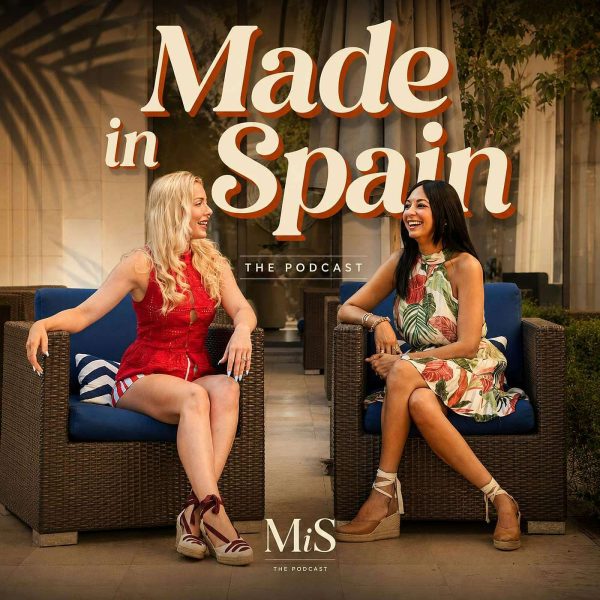
Made in Spain
- Folgen
- 50
- Erscheint
- alle zwei Wochen
- Ort
- Spain
- Letzte Folge
- 11. Nov. 2026
Über den Podcast
Whether you’re an expat chasing the dream, a traveller inspired by European elegance or a foodie seeking the perfect paella, Made in Spain is your insider’s guide to all things chic, cultural and quintessentially Spanish. Join hosts Nalini Sharma and Laura Senior García for a glamorous mix of travel, food, fashion and the rich cultural narratives that make Spain a global icon of style and sophistication. Nalini is a former Canadian TV presenter, who has previously covered red carpet and live events, and major news stories. She channels the same wit and curiosity to the Made in Spain podcast, offering sharp, unscripted takes on everything from Spanish traditions to expat surprises. Laura, a seasoned leadership coach and global traveler, shares her deep, first-hand knowledge of Spain—not just as her birthplace, but as a country she continues to rediscover. With a British father and Spanish mother, she considers herself a global citizen with deep roots in Spain. Her insights connect Spain’s rich past with its modern evolution, offering a unique and personal perspective on life, culture, and luxury in Spain today. Every episode of Made in Spain explores the country’s hidden gems and exclusive experiences, but it’s more than just a guide—it’s a conversation. The show’s Slice of Life segment gives listeners an unfiltered peek into Nalini and Laura’s daily experiences – the joys, frustrations, and unexpected moments that make life in Spain, and beyond, full of surprises. Sometimes, it’s about the reality of settling into a new country – at other times, it’s about their travels, funny mishaps, or behind-the-scenes stories from researching the podcast. No matter the topic, listeners feel like they are right there with them, stepping into their world.
Folgen 50
48. A Quiet Spanish Town And A Killing With No Convictions
Send us Fan MailThree bangs in the night, then silence. In a town of roughly 6,000 people near Benidorm, that’s not just unusual, it’s terrifying, because fireworks normally come with shouting kids and …
Shownotes
Three bangs in the night, then silence. In a town of roughly 6,000 people near Benidorm, that’s not just unusual, it’s terrifying, because fireworks normally come with shouting kids and laughter. Instead, the police are in a garage, and the mayor of Polop has been shot.
We tell this story differently on purpose: you get the ending up front. Seven people stand trial for the murder of Alejandro Ponsoda, and all seven are acquitted. No appeal follows, not from the prosecution and not from the family’s side, which leaves a chilling legal reality nearly two decades later: in the eyes of the Spanish state, nobody killed the mayor of Polop. Using court records and a Valencian public television documentary, we walk through what’s known, what’s alleged, and where the case falls apart, including the weight placed on a single protected witness and the way the Spanish jury system reaches “not guilty”.
From there, we widen the lens to the Spain of the mid-2000s property boom, where land rezoning and planning permissions can reshape a whole municipality and create motives that are hard to prove in court. And because it’s late October, we also pivot into local tradition: Todos los Santos, cemetery visits, and the more sombre way many Spanish families mark this season. Finally, we take a short historical detour into the Spanish Inquisition and the witch trials associated with Zugarramurdi, another example of how quickly a small community can turn on itself.
If you enjoy smart, careful true crime storytelling rooted in real places in Spain, subscribe, share this with a friend, and leave us a review. What do you think happened in Polop?Kapitel
Kapitel werden geladen …
47. Paloma Moreno, De Flores y Floreros: From Corporate Career to Ballet Flats Made in Spain
Send us Fan MailThe English Version! One decision can split your life in two. Keep the “serious” international career everyone recognises, or walk away and build the thing you can’t stop thinking about. In this …
Shownotes
The English Version! One decision can split your life in two. Keep the “serious” international career everyone recognises, or walk away and build the thing you can’t stop thinking about. In this episode we’re joined by Paloma Moreno, founder and CEO of De Flores y Floreros, the Spanish brand of handmade ballet flats and luxury flat shoes, who takes us from a high-speed corporate world to the slow, demanding reality of artisan footwear made in Spain. A health scare becomes the wake-up call, but what follows is not a fairytale. It is prototypes, production minimums, long lead times and the constant pressure of cash flow in the fashion industry.
We talk about what makes a shoe brand truly different when the market is already full of pretty designs. The shoe as the main thread of a look, bold textures and prints, and comfort engineered from the inside out. Paloma explains the identity of De Flores y Floreros, how Madrid drives her inspiration and why the Valencian Community remains essential to Spanish shoemaking. She also breaks down the craftsmanship behind each pair, including why a single design passes through around 23 pairs of hands, and what that level of specialisation protects.
If you care about women entrepreneurs, sustainable growth, luxury flats and ballet pumps, or how product innovation actually happens, you’ll love the practical detail, including the interchangeable insole built for different climates and seasons. We also get into the brand’s daring creative rhythm. Seventy to seventy-five new designs per collection, never repeated, and more than 3,300 models in 15 years, plus a major milestone with a tribute to Cristóbal Balenciaga.
This is Made in Spain’s first episode recorded in Spanish, and it is available in both languages. Listen in whichever one feels like home.
Subscribe for more founder stories, share this with a friend who loves great shoes, and leave us a review to help others find the show. What part of building a brand do you want us to unpack next?
Kapitel
Kapitel werden geladen …
47. Paloma Moreno, De Flores y Floreros: de la carrera corporativa a las bailarinas hechas en España
Send us Fan MailOur first episode in Spanish!! Look for the English version on our feed coming out October 14th. Una sola decisión puede partir tu vida en dos: seguir con la carrera internacional “seria” que …
Shownotes
Our first episode in Spanish!! Look for the English version on our feed coming out October 14th. Una sola decisión puede partir tu vida en dos: seguir con la carrera internacional “seria” que todo el mundo reconoce, o dejarla atrás y construir aquello en lo que no puedes dejar de pensar. Hoy nos acompaña Paloma Moreno, fundadora y CEO de De Flores y Floreros, la marca de bailarinas y zapatos planos de lujo hechos a mano en España. Paloma nos lleva de un mundo corporativo a toda velocidad a la realidad lenta y exigente del calzado artesanal. Un susto de salud se convierte en la llamada de atención, pero lo que viene después no es un cuento de hadas; son prototipos, mínimos de producción, plazos de entrega largos y la presión constante del flujo de caja en la industria de la moda.
Hablamos de qué hace que una marca de zapatos sea realmente diferente cuando el mercado ya está lleno de diseños bonitos. El zapato como hilo conductor de un look, texturas y estampados atrevidos, y una comodidad diseñada desde dentro hacia fuera. Paloma explica la identidad de De Flores y Floreros, cómo Madrid inspira cada colección y por qué la Comunidad Valenciana sigue siendo esencial para el calzado español. También desgrana la artesanía detrás de cada par, incluido por qué un solo diseño pasa por unas 23 manos distintas, y qué protege ese nivel de especialización.
Si te interesan las mujeres emprendedoras, el crecimiento sostenible, las bailarinas y los zapatos planos de lujo, o cómo ocurre de verdad la innovación de producto, te encantarán los detalles prácticos, como la plantilla intercambiable pensada para distintos climas y estaciones. Además entramos en el ritmo creativo de la marca, que no es poca cosa: entre 70 y 75 diseños nuevos por colección, sin repetir nunca, y más de 3.300 modelos en 15 años, con un hito reciente en forma de homenaje a Cristóbal Balenciaga.
Suscríbete para más historias de fundadores, comparte este episodio con alguien que ame los buenos zapatos y déjanos una reseña para que más gente descubra el podcast. ¿Qué parte de construir una marca quieres que desgranemos en el próximo episodio?
#DeFloresyFloreros #PalomaMoreno #MadeInSpain #HechoEnEspaña #Bailarinas #CalzadoArtesanal #ZapatosHechosEnEspaña #MujeresEmprendedoras #EmprendedorasEspañolas #ModaEspañola #Balenciaga #MadeInSpainPodcast
Kapitel
Kapitel werden geladen …
46. Cuenca In Six Hours
Send us Fan MailCuenca is the stop you’ve probably seen on the Madrid to Alicante train route and completely ignored, and that’s exactly why we decided to get off. What we found is a UNESCO World Heritage city …
Shownotes
Cuenca is the stop you’ve probably seen on the Madrid to Alicante train route and completely ignored, and that’s exactly why we decided to get off. What we found is a UNESCO World Heritage city that feels carved into the landscape: a medieval old town stacked on a finger of rock between two river gorges, with streets that can be so quiet you start listening for your own footsteps.
We start at the Cuenca train station, which surprised us with contemporary design that reads more like an art installation than a transport hub. From there we dig into the city’s headline act, the Casas Colgadas (the Hanging Houses): what they’re actually called, how they were built to survive a near-vertical cliff edge, and how restorations in the 20th century left just three hanging on today. If you’ve ever wondered why some Spanish towns feel “overrun” while others still feel local, Cuenca is a perfect case study.
Then we move to the cathedral, a building with French Gothic DNA, lightning strikes, rebuilds, and a façade that still shows its scars. We also share a favourite discovery for art lovers: Fernando Zóbel’s museum and the unlikely story of serious Spanish abstract art living in a small city of roughly 50,000 people.
We finish with a practical, honest day-trip playbook: cheap transport into town, what’s walkable, why the Parador de Cuenca is worth your time, and the taxi scramble that had us running for the train. If you enjoy smart travel stories, subscribe, share the episode with a friend, and leave us a review.Kapitel
Kapitel werden geladen …
45. What does it mean to be Spanish?
Send us Fan Mail“He’s not really Spanish.” Hearing that twice, from two different taxi drivers, after one of our kids named his favourite Spain player, stopped us in our tracks. If someone is born in Barcelona …
Shownotes
“He’s not really Spanish.” Hearing that twice, from two different taxi drivers, after one of our kids named his favourite Spain player, stopped us in our tracks. If someone is born in Barcelona, raised in a neighbourhood he proudly signals with a postcode celebration, and plays for the national team, what else do people think is required to belong? That single comment opens a much bigger conversation about Spanish identity, race, migration, and the stubborn idea that a nation has one “look”.
We follow the thread from the World Cup’s surge of patriotism into the deeper forces that shape how Spain sees itself: centuries of layered history, the legacy of Al-Andalus, the turning point of 1492, and how culture can carry memory through language and food. Then we jump forward to the 20th century, the Spanish Civil War, and Franco’s dictatorship, including why the Spanish flag can still feel politically charged in everyday life and why regional languages and autonomy remain so emotionally powerful.
To keep it grounded, we also asked around ten people from different backgrounds what “feeling Spanish” means to them. Their answers bring out surprising common ground: pride in traditions, life lived in the street, the joy and the arguments around food, and a shared frustration with politicians. We finish with a slice of life from watching the final, tinto de verano in absurdly large glasses, and that pure moment where sport makes strangers hug like old friends.
If you’ve ever had questions about where national identity really comes from, press play, and join the conversation! If you love the podcast subscribe, share the episode with a friend, and leave us a review. What makes someone Spanish to you?Kapitel
Kapitel werden geladen …
44. La Vila Joiosa’s Moors And Christians
Send us Fan MailAt three o’clock in the morning, a whole town stands on a dark Costa Blanca beach, staring out to sea. You hear oars and drums before you see anything, then torches flare, gunpowder cracks over …
Shownotes
At three o’clock in the morning, a whole town stands on a dark Costa Blanca beach, staring out to sea. You hear oars and drums before you see anything, then torches flare, gunpowder cracks over the water, and the boats come in. La Vila Joiosa’s Moros y Cristianos is not a quiet heritage display. It’s a full-bodied Spanish fiesta built around the Desembarco, a reenactment of a 1538 raid that locals still treat as part of who they are.
We walk through the history that makes this ritual make sense: the age of Barbary corsairs, coastal villages living in fear, and the town’s belief that Santa Marta intervened when they “should have lost”. From there, we zoom out to how Moors and Christians festivals work across the Valencian Community and beyond, why Alicante holds so much prestige, and what makes La Vila different thanks to its marine landing. We also pull back the curtain on the logistics, from artisan-made costumes that are anything but fancy dress, to the memberships, peñas and comparsas that keep the whole thing running like a well-oiled machine year after year.
Then we get into the questions people whisper from the outside. Is Moros y Cristianos racist, or is it respectful reenactment with pride on both sides? We share what we heard and what we found. And because this is Spain, we finish with the traditional fuel: El Nardo, an iced coffee and absinthe mix that locals say gives you energy and courage, plus a brilliant art-book project, Un Desembarco Genial, that reimagines the landing through the styles of artists like Goya and Van Gogh.
Subscribe, download, and if you enjoy the show, share it with a friend and leave us a review. What’s the most unforgettable local festival tradition you’ve ever seen?Kapitel
Kapitel werden geladen …
43. Spain’s Wildest Summer Fiestas
Send us Fan MailYour dream summer trip to Spain can turn magical or messy depending on one thing: whether you understand how Spanish festivals actually work. We’re Nalini and Laura, and we go past the postcard …
Shownotes
Your dream summer trip to Spain can turn magical or messy depending on one thing: whether you understand how Spanish festivals actually work. We’re Nalini and Laura, and we go past the postcard version of fiestas to the real story underneath the confetti.
We start in Pamplona with San Fermín and the running of the bulls, unpacking the event’s roots in cattle herding and religion, how it moved from October to July, and why it remains both globally famous and locally controversial. We talk about animal welfare, the way tourism has changed the atmosphere, and the part public pressure plays when traditions evolve. Then we get practical: what Pamplona’s ordinances say about clothing, timing, behaviour, and why filming on the route can earn you a fine. We also tackle this year’s headline grabbing “Joker” TikTok behaviour and why chasing views can put other people in danger.
From there we hop across Spain’s summer festival map: Alicante’s Hogueras de San Juan with its burning monuments and the crowd soaking banyà, Haro’s La Batalla del Vino where thousands throw wine before breakfast, Bilbao’s Aste Nagusia created through a public competition, Málaga’s Feria and the rules that keep casetas safe, and Buñol’s La Tomatina with ticketing, goggles, and the truth about “food waste” tomatoes grown specifically for the event.
We finish with a few slice of life updates: our experience on Spanish radio, a cava we loved, a sobering fireworks safety story from La Hoya, and the oddly emotional calm of watching a solar eclipse. If you’re planning Spain travel, love Spanish culture, or just want smart festival advice, press play, subscribe, and leave us a review. Which Spanish fiesta would you travel for, and what would you skip?Kapitel
Kapitel werden geladen …
42. A Private Walking Experience Through Valencia’s Hidden Heart
Send us Fan MailValencia looks polished from the outside, but the real city lives in the details you only catch on foot. We’re joined by Paul, a photographer and the founder of Streets of Valencia, and he …
Shownotes
Valencia looks polished from the outside, but the real city lives in the details you only catch on foot. We’re joined by Paul, a photographer and the founder of Streets of Valencia, and he guides us through a private walking tour that turns the Old Town into a living timeline, full of small stories you would never spot alone.
We start in Plaza de la Virgen with the Turia River and why water shaped everything from the Roman founding of Valentia to the irrigation channels still used in local agriculture. From there we drop into the Roman layer at L’Almoina, talk about what was uncovered in the 1980s, and keep moving past cathedral corners, orange trees and worn stone marks that hint at the city’s trading past. We also stop to notice modern Valencia, including how Plaza de la Reina has changed through pedestrianisation, shade design and the everyday politics of keeping locals comfortable.
Food is where the walk becomes instantly practical. Inside Mercat Central Valencia, Paul points out what’s seasonal and why this market still feels like a place locals shop, not just a tourist attraction. We get a clear, no-nonsense guide to paella valenciana, from bomba rice near Albufera to the all-important stock, the rule against stirring, and the joy of socarrat. The route ends with La Lonja de la Seda, Valencia’s UNESCO silk exchange, plus the city’s famously cheeky gargoyles, before we step into El Carmen and the Portal de Valldigna, a doorway into the old quarter.
If you love Valencia travel tips, guided walks, local food culture and the hidden history of the Valencia Old Town, hit subscribe, share this with a friend planning a trip, and leave us a review with the one place you’d put on your perfect Valencia walking route.Kapitel
Kapitel werden geladen …
41. Spanish Food Beyond Tapas
Send us Fan MailTapas isn’t just a menu section, it’s a social system. We’re Nalini and Laura, two friends living in Spain, and we pull apart what Spanish food looks like when you stop treating it like a …
Shownotes
Tapas isn’t just a menu section, it’s a social system. We’re Nalini and Laura, two friends living in Spain, and we pull apart what Spanish food looks like when you stop treating it like a checklist and start seeing it as daily life: the pre-lunch vermouth, the quick bite at the bar, and the way a whole afternoon can unfold one small plate at a time. Along the way, we share the best folklore we found on how tapas may have started, including the story of a glass of sherry “covered” with jamón to keep out the dust. We also get practical and specific: what makes tapas different from pinchos, why toothpicks matter, and how the honour system works in parts of northern Spain. Then we widen the lens with snacks that deserve more love, like altramuz (brined lupini beans) and how Spain’s Arabic influence shows up in both food history and language. If you care about Spanish cuisine, Spanish bar culture, or food travel in Spain, these details help you order with confidence and eat like locals actually eat. From there we head into sauce territory, where opinions get loud. Why is mayonnaise everywhere in Spain, and what’s the Menorca link that complicates the “it’s French” assumption? Why does alioli taste so different from mayo, and what’s with the old superstition that it can “break” if the wrong person comes too close? We finish with the chaotic joy of chanchullo (crisps mixed with tinned seafood and pickles), the iconic Gilda pincho with its 1940s film backstory, and a slice of life featuring a striking local find: submarine-aged wine from an artisan garage winery near Altea.If you enjoyed this deep dive into Spanish food beyond tapas, subscribe for more, share the episode with a friend who loves a good snack, and leave us a review so more people can find the show. Learn more about your ad choices. Visit megaphone.fm/adchoices40. Spain’s Olive Oil Obsession
Send us Fan MailYour olive oil habit might be costing you flavour, money, or both. We head off on a little “Triple O” mission (oil obsession) to visit Señoríos de Reyu, a single-estate producer a winding drive …
Shownotes
Your olive oil habit might be costing you flavour, money, or both. We head off on a little “Triple O” mission (oil obsession) to visit Señoríos de Reyu, a single-estate producer a winding drive inland from the Alicante coast, and the day changes how we think about every casual drizzle in the kitchen. When you learn that olive trees flower heavily but only around three per cent of those flowers become olives, “cheap” extra virgin suddenly feels a lot less straightforward.
We talk through what makes a premium Spanish olive oil producer different: growing, harvesting, processing, and bottling all on site rather than sending olives to a co-operative. We get into coupage blends, why modern machinery protects quality, and how sustainability can be built into the land itself with biodiversity projects, composting, and using every part of the olive so nothing goes to waste. And yes, we nerd out over packaging and design, including aluminium bottles that better protect oil from light, heat, and air plus a bold designer collaboration that turns a bottle into a collectible.
Then we get practical. We share what to look for on an olive oil label (harvest date that goes beyond the year, origin wording, acidity) and we bust one of the biggest myths: “cold pressed” or “first press” as a guarantee of superiority. We also give a quick shout-out to other award-winning Spanish olive oils we love, and we answer a listener email about Aena airports and how to request free support for invisible disabilities and neurodivergent travel in Spain.
If you enjoy food travel, Spanish culture, and smart buying tips you can use immediately, hit play. Subscribe, share with a fellow olive oil obsessive, and leave us a review and tell us: what do you check first when you pick up a bottle?Kapitel
Kapitel werden geladen …
39. The Business Of Podcasting
Send us Fan MailPodcasting looks simple from the outside: press record, tell a story, publish, repeat. Then you step into the industry and realise it is a mix of language quirks, listener psychology …
Shownotes
Podcasting looks simple from the outside: press record, tell a story, publish, repeat. Then you step into the industry and realise it is a mix of language quirks, listener psychology, algorithms, advertising money, and a lot of behind-the-scenes learning. We share what surprised us most after visiting the London Podcast Show, including the sheer scale of the event, how intense short networking meetings can be, and why you need to protect your energy if you want to make genuine connections.
We also zoom out to the history of podcasting itself, from how the word “podcast” was coined (and why it still carries the ghost of the iPod), to a small detail we love: many Spanish speakers say “poscat” because that consonant pairing is awkward in Spanish. From there, we get honest about why podcasts feel so comforting, how they have replaced parts of radio for many listeners, and the downside no one wants to admit: recommendation engines can trap us in beliefs we already hold, feeding an echo chamber one autoplay at a time.
Finally, we talk numbers and strategy. The podcast market is massive, podcast advertising works because listeners actually pay attention, and big-name deals show how valuable attention has become. But the heart of it stays small and human: a clear theme, a real relationship with your audience, and the grit to keep going when you feel out of your depth. If you care about the business of podcasting, starting a podcast, or growing a travel podcast community around Spain, you will take away practical lessons and a few laughs along the way. Subscribe for more, share this with a friend who loves audio, and leave us a review: what makes you hit play on a podcast every week?Kapitel
Kapitel werden geladen …
38. Denia, Where The Mediterranean Remembers Itself
Send us Fan MailDenia is the kind of place that makes you stop mid sentence and look up. A city on Spain’s Costa Blanca sitting between a castle and the sea, continuously inhabited for thousands of years, and …
Shownotes
Denia is the kind of place that makes you stop mid sentence and look up. A city on Spain’s Costa Blanca sitting between a castle and the sea, continuously inhabited for thousands of years, and somehow still calm enough to feel personal. We’re sharing why Denia earns its reputation as a UNESCO Creative City of Gastronomy, and how to experience it without turning your day into a rushed itinerary.
We talk through Denia’s layered history, from its Greek beginnings to the Roman Dianium connection, then move into what you actually do when you arrive: wander the old town, eye up the castle, and head to the port and marina for that waterfront energy. We also get practical about the ferry to the Balearic Islands (Ibiza and Mallorca) and why it can be slower and pricier than flying, even though it still makes sense if you’re travelling with a car or staying longer.
The biggest surprise is the one most people miss: Jardín de l’Albarda, a conservation led botanical garden just outside Denia that feels like a secret garden hidden in a residential neighbourhood. We share costs, tips, why it’s brilliant for families and photographers, and why a simple coffee and cake there can become the most memorable part of the day. From gamba roja de Dénia and fideuà to a mindset of vivir despacio, we end on what slow travel can teach you about everyday life.
If you enjoyed this coastal guide and our slice of life chat, subscribe, share the episode with a friend who needs a slower weekend, and leave us a review. What’s your perfect Denia plan, castle first or lunch first?Kapitel
Kapitel werden geladen …
37. Spain’s Weekly Markets Up Close
Send us Fan MailSpain’s weekly markets are not a cute holiday extra, they’re a living timetable that shapes how towns eat, shop, and socialise. We’re Nalini Sharma and Laura Senior Garcia, and we take you right …
Shownotes
Spain’s weekly markets are not a cute holiday extra, they’re a living timetable that shapes how towns eat, shop, and socialise. We’re Nalini Sharma and Laura Senior Garcia, and we take you right into that rhythm, from the everyday fruit and veg stalls to one of the Costa Blanca’s most famous Saturday traditions: the Jalón flea market in the Jalón Valley.
We talk through how market culture evolves from village trading into covered city mercats, and why the market is also a social gathering point where generations mix, gossip flows, and a simple bocadillo can turn into a lifelong memory. We share what Jalón looks like on the ground: the riverbed layout, the competitive parking, the thrill of crystal, china and odd collectibles, and a practical tip for browsing antiques without getting completely lost, using AI on your phone to get a rough benchmark on authenticity and value.
Then the mood shifts. We describe an unsettling stall selling Nazi memorabilia and why seeing it among “normal” market finds hits differently, alongside the legal grey areas and the historical backdrop many visitors never hear about. To round out the weekend, we zoom out to nearby Moraira, Benissa and Calpe, and we get into local Moscatel wine and olive oil, plus a genuinely off-the-beaten-path lunch recommendation at Casa del Maco.
If you’re planning Costa Blanca travel, love local food culture, or just want to understand Spain beyond the beach, come along. Subscribe, share the show with a friend, and leave us a review so more people can find Made in Spain.Kapitel
Kapitel werden geladen …
36. What Does “Made In Spain” Really Mean Today
Send us Fan MailWhat does "Made in Spain" actually mean? In this episode, Nalini and Laura take the podcast name literally and dig into the Spanish brands quietly carrying the country's soul — from a …
Shownotes
What does "Made in Spain" actually mean? In this episode, Nalini and Laura take the podcast name literally and dig into the Spanish brands quietly carrying the country's soul — from a Madrid espadrille shop that's stood on the same corner since 1845, to the secretive leather workshops of Ubrique that craft bags for the world's biggest luxury houses.
Inside this episode:
- Casa Hernanz, the family-run espadrille maker just off Plaza Mayor, five generations in
- Ubrique: the hidden engine behind Loewe, Polène, Strathberry and more
- Mint & Rose's quiet luxury out of Valencia, plus Pokihomba's handcrafted boho hats from Barcelona
- La Bien Hecha's modern bags made the old-school way
- The unspoken language of the Spanish fan (and where to buy a beautiful one in Madrid)
- La Chinata's Pimentón de la Vera — Spain's protected smoked paprika, fourth-generation family business
- Fun facts on Lladró porcelain, world-leading olive oil, and 1917, an award-winning Cava you can only buy direct
- Laura's first Romería de Santa Faz — pilgrims, canes, rosemary, and a few shots of Jäger before 10am
- Plus a show-and-tell on Medicube skincare and Netflix's Running Point
Sentence of the day: hecho con amor — because something made the way it was five centuries ago still tastes better than anything made at scale.
This episode is powered by GoKo Energy — clean, natural energy made with coconut water, natural caffeine, and real fruit. No crash, no jitters. Order at gokoenergy.com.
Follow us @madeinspainpodcast on Instagram, TikTok, and YouTube, and subscribe wherever you get your podcasts so you never miss an episode.
Kapitel
Kapitel werden geladen …
35: Valencia: Sun, Paella & the City That Has It All
Send us Fan MailValencia keeps topping global “best places to live” lists, but most people still only talk about Madrid and Barcelona. We wanted to change that with a grounded, travel-friendly Valencia guide …
Shownotes
Valencia keeps topping global “best places to live” lists, but most people still only talk about Madrid and Barcelona. We wanted to change that with a grounded, travel-friendly Valencia guide that mixes practical tips with the kind of history that makes you look at a city differently the moment you arrive.
We get into the essentials first: how big Valencia really is, why it feels so liveable, how easy it is to walk the centre, and why parking can test your patience. We talk transport hacks like the multi-day tourist card, plus why Valencia Airport can be a cheaper way to land in Spain. Then we zoom out to the layers beneath the postcard views, from Roman Valentia to Moorish irrigation that still shapes the region today. The Tribunal de las Aguas, a centuries-old water court that meets outside the cathedral, might be the most “only in Valencia” detail we’ve ever found, and yes, we also go down the Holy Grail rabbit hole.
From there it’s all about what to do and what to eat. We share our take on the City of Arts and Sciences, Oceanogràfic Valencia as a conservation-focused attraction, and Bioparc Valencia as an immersive habitat-style zoo, with notes for families and anyone who cares about animal welfare. On the food side, we revisit paella Valencia, what the original recipe looks like, and the one rule that helps you blend in: don’t order paella for dinner. We also cover horchata de chufa, where to eat in Valencia, and seasonal highlights like Noche de San Juan and La Tomatina near Buñol. We finish with a slice of life on social media backlash, tourism tensions, and why we still believe hospitality is the soul of Spain.
If this helped you plan a Valencia weekend break, subscribe, share the episode with a travel-loving friend, and leave us a review so more listeners can find the show.Kapitel
Kapitel werden geladen …
34. Valor Adult Pleasure Chocolate and Easter in Spain
Send us Fan MailChocolate shows up everywhere at Easter, but Spain tells a different story once you look past the shop displays. We’re leaning into that contrast by taking you to Villajoyosa in Alicante, home …
Shownotes
Chocolate shows up everywhere at Easter, but Spain tells a different story once you look past the shop displays. We’re leaning into that contrast by taking you to Villajoyosa in Alicante, home of Valor, the historic Spanish chocolate brand founded in 1881 and still family-owned today. What starts as a “local factory next door” quickly turns into a global business that exports to over 60 countries, and we talk through what that kind of growth looks like when your cocoa has to be sourced abroad.
We also get nerdy about Spanish chocolate tradition: cacao arriving in Spain in the 1500s via Seville, the original thick and bitter drink, and why hot chocolate here still feels like a ritual rather than a quick mug of cocoa. If you’ve ever searched for Spanish hot chocolate, chocolate con churros, or the best food experiences in Spain, you’ll recognise the details that matter: texture, timing, and how these treats anchor social moments. We also share what the free Valor factory tour is like, the surprisingly memorable “placer adulto” advertising that helped shape the brand, and why Valor cafés are such a smart extension.
Then we shift to Semana Santa and Easter in Spain, including the key 2026 dates, the cities that deliver the most intense Holy Week atmosphere (think Seville, Malaga, Valladolid), and the seasonal sweets and street-level senses that define it all, from torrijas and mona de Pascua to incense and palm braiding. Stick around for our first ever giveaway with the boutique hotel Mansión Iturbe in Pátzcuaro, Mexico, and tell us what your ultimate Easter treat is. Subscribe, share, and leave a review so more curious travellers and food lovers can find us.Kapitel
Kapitel werden geladen …
33. Part 2: Trinidad Carnival Survival Guide
Send us Fan MailCrossing the stage at dawn. Dancing for 12+ hours. Costumes you choose months ahead. Trinidad Carnival sounds like a party, but the lived reality is a full-body, full-logistics adventure, and …
Shownotes
Crossing the stage at dawn. Dancing for 12+ hours. Costumes you choose months ahead. Trinidad Carnival sounds like a party, but the lived reality is a full-body, full-logistics adventure, and we’re telling you what we wish we’d known before we landed in Port of Spain.
We start with the journey from Spain, including the messy parts: route planning, time zone tactics, and the moment a train strike and an electric Uber nearly made us miss our flight. From there, we get into how Trinidad Carnival actually works on the ground, from picking a band and section to understanding what “playing mas” means. We played with Hearts (Bacchanal In Bloom, Wild Bloom) and talk through costume timing, deposits, delivery, and why hotels and packages need to be booked shockingly early.
Then we break down the two-day rhythm: Monday wear vs Tuesday wear, why stockings are basically non-negotiable, and how professional Carnival makeup becomes part of the production. We also share the real survival checklist: shoes, hydration, sunscreen, sleep, safety, and how the parade flow works with music trucks, moving drinks carts, lunch stops, and crowd management. If you’ve ever wondered whether you could do it, we answer honestly and we even debate how we’d do Carnival differently next time.
We also share a special giveaway with a boutique “museum hotel” in Pátzcuaro, Mexico, plus our take on Road March controversy, soca culture, and where Carnival lives outside Trinidad. If you enjoy this peek into living Carnival, subscribe, share the episode with a friend, and leave us a review so more travellers find it.Kapitel
Kapitel werden geladen …
32. Part 1: Carnival In Port Of Spain, Trinidad
Send us Fan MailPort of Spain flips a switch when Carnival season hits, and suddenly the city isn’t just hosting a festival, it’s showing you what identity feels like when it’s sung, danced, and defended in …
Shownotes
Port of Spain flips a switch when Carnival season hits, and suddenly the city isn’t just hosting a festival, it’s showing you what identity feels like when it’s sung, danced, and defended in public. We’ve just come back from Trinidad and Tobago, and this first part of our two-part Carnival series is our debrief on what surprised us most: the pace of the capital, the warmth of the people, and the sense that even outsiders get pulled into something that feels generational.
We trace the roots of Trinidad Carnival through colonial history and cultural remixing, from French masquerade traditions to Canboulay and the pushback against suppression that helped shape modern street culture. That context changes how you hear everything, especially soca music. Once we understood soca as the high-tempo evolution of calypso built for the road, it made sense why it’s everywhere, why artists grind all season, and why Road March matters so much.
Then we get practical and very honest about the Carnival ecosystem: fetes like Hyatt Lime, ticket access, day parties, cooler party culture, and why waking up at 3am for Soca Street somehow becomes a highlight. We also share a few slice-of-life details that taste like Trinidad to us, from Crix crackers to salted prunes steeped in tequila, plus our giveaway with a boutique museum hotel in Patzcuaro, Mexico.
If you’re curious about Trinidad Carnival, Port of Spain travel, soca culture, and what it really feels like on the ground, hit play, subscribe, share this with a friend, and leave us a review. What part of Carnival would you want to try first?Kapitel
Kapitel werden geladen …
31. Buying property in Spain - Sunshine Is Free; Mistakes Are Expensive
Send us Fan MailDreaming of a home in Spain but unsure what’s real and what’s just sunshine? We pull back the curtain on the Costa Blanca North market and walk you through the parts most foreigners never see …
Shownotes
Dreaming of a home in Spain but unsure what’s real and what’s just sunshine? We pull back the curtain on the Costa Blanca North market and walk you through the parts most foreigners never see: why many listings start overpriced, how verbal offers actually work, and the legal power of a well-written arras contract. With luxury broker Darcy Maxim as our guide, we map the stretch from Denia to Alicante, show how different nearby towns feel in daily life, and explain why a great agent becomes your researcher, negotiator, and project manager in a system that isn’t built like the US or UK.
We get practical fast. Inspections aren’t standard in Spain, so we break down how to commission your own and what to test, from electrics and HVAC to humidity and roofs. We talk furniture inventories, because deals often wobble over “personal items,” and we outline a clear sequence from shortlisting and viewings to negotiation, deposit, and the notary. Expect a formal closing: assigned seats, a full deed reading, identity checks, and verified funds. It’s slower, yes, but designed to keep the transaction clean.
If you’re investing, we cover where returns still make sense and how to match budget to strategy. With around €500k, consider off-plan new builds with 10–20 percent uplift at delivery or a sea-view refurb with bright, Mediterranean finishes. At €1.5m, scarcity, views, and walkability lead, with rentals strong if you follow evolving local rules. We also share hard-won lessons from rental horror stories and why platform protection matters. Love Spain for the lifestyle, but buy with discipline: test towns at night, question the price, and never sign blind.
Enjoyed the conversation? Follow, rate, and share the show, and tell us your target budget and biggest question about buying in Spain so we can help in a future episode.Kapitel
Kapitel werden geladen …
30. How a mom built a 20-Year children’s brand rooted in Spain
Send us Fan MailA love letter to Spanish craft and the power of intention. We sit down with Kathryn Thomas, founder of Alice Kathleen & Company, to trace a 20-year journey from a mother’s search for thoughtful …
Shownotes
A love letter to Spanish craft and the power of intention. We sit down with Kathryn Thomas, founder of Alice Kathleen & Company, to trace a 20-year journey from a mother’s search for thoughtful clothing to a slow fashion brand defined by timeless design, beautiful fabrics, and shoes built start to finish in Spain. Kathryn opens her sketchbook and her process, sharing how Valencian textiles shaped the brand’s signature and how multi-atelier shoemaking—soles, dyes, and hand-lasted uppers—preserves generational skill you can feel in every step.
We talk about what makes children’s clothing truly enduring: fabric you trust against a child’s skin, fit that moves from playground to party, and finishing details that reward care. She explains how she balances tradition with modern taste by evolving color palettes and subtle fits while guarding the core silhouette. She also reveals why the brand moved from trunk shows to tightly curated collections to protect intellectual property and keep a distinct voice in a crowded market.
Beyond design, we explore culture and memory. From Sunday dressing in Spain to everyday elegance in the American Southeast, these pieces mark births, holidays, and family strolls—and end up in “forever boxes” to be passed down. Kathryn shares the thrill of finally visiting her Spanish partners, previews athletic-inspired capsules influenced by a family passion for tennis, and speaks directly to loyal and new customers with a simple pledge: no shortcuts, ever. If you care about slow fashion, Spanish craftsmanship, children's wear quality, or building a brand with heart, you’ll feel right at home here.
If this story resonates, follow the show, share with a friend who loves craft, and leave us a review—what heirloom piece would you save for the next generation?Kapitel
Kapitel werden geladen …
29. Inside Spanish Wine Culture And A Family Micro-Winery
Send us Fan MailSpain’s wine isn’t just a tasting note—it’s a way of living that turns an ordinary lunch into a small celebration. We dive into the everyday elegance of drinking by the glass, the surprising …
Shownotes
Spain’s wine isn’t just a tasting note—it’s a way of living that turns an ordinary lunch into a small celebration. We dive into the everyday elegance of drinking by the glass, the surprising value you can find under ten euros, and the regional gems that make Spain a world leader by vineyard area and character. From cava’s crisp sparkle to buttery local whites and deep, contemplative reds, we sketch a map you can actually drink, matching mood and meal without the snobbery.
We share a favourite field trip: Masos de Guadalest, a family micro-winery tucked into the mountains near Guadalest. It’s intimate, thoughtful, and beautifully run—a place where three-wine tastings come with simple tapas, olive oil flights, and a tour that explains why staying small keeps quality high. The family’s project doubles as rural revival, proving that craft hospitality can bring life back to mountain towns without losing authenticity. Think curated experiences, fair pricing, and a view you’ll carry home with the bottles.
Along the way, we weigh tortilla against the briny punch of a gilda, admit our rosé reluctance, and celebrate the joy of cava at any hour. We chart the must-know regions—Rioja’s age-worthy tempranillo, Catalonia’s traditional-method sparkling, Galicia’s seafood-loving Albariño, and the Basque Country’s zippy Txakoli poured from a height. Then our slice of life takes a lively detour to Trinidad Carnival prep, complete with a mango chow that set our mouths on fire and a shout-out to our band and costumes. It’s all tied together by a Spanish phrase we love: al pan, pan; y al vino, vino—call things what they are, including your taste.
If this blend of practical tips, regional highlights, and real-life adventures speaks to you, hit follow, subscribe, and leave a comment with your favourite Spanish bottle or tapas pairing. Got questions or local tips? Email us at Ola at madeinspainpodcast.com and join the conversation. Cheers.Kapitel
Kapitel werden geladen …
28. Beauty In Spain, Demystified
Send us Fan MailBeauty shouldn’t feel like a secret handshake. In this episode, we open the door on Spain’s beauty and wellness scene — where confidence is built through transparency, cultural openness, and …
Shownotes
Beauty shouldn’t feel like a secret handshake. In this episode, we open the door on Spain’s beauty and wellness scene — where confidence is built through transparency, cultural openness, and access that feels refreshingly normal.
Click through the link in the description to start your language-learning journey.
Buy $10 and get $5 free for your first lesson using our exclusive promo code MADEINSPAIN. The discount is available for the first 50 users only.
Web: https://go.italki.com/madeinspain2601
App: https://go.italki.com/madeinspain2601appFrom PRP for hair and skin to the polynucleotide treatments everyone’s whispering about, we break down real costs, honest results, and how to book smartly in Spain without the gatekeeping.
We share first-hand experience about how Spain’s private dermatology system makes high-quality care genuinely accessible.
We also explore the full spectrum of clinics, from neighbourhood medispas to elite longevity centres offering full diagnostics and personalised health roadmaps.
Not into needles? We spotlight an unexpected Spanish beauty favourite hiding in plain sight: Mercadona’s Deliplus line — from makeup dupes and sturdy brushes to pigment-fighting serums and the cult dragon’s blood cream travellers request by name.
Beyond treatments and products, we unpack a cultural shift that feels uniquely Spanish: people openly talk about what they’ve had done. That honesty helps you make better decisions, set realistic expectations, and stop chasing perfection in silence.
We round things out with simple seasonal habits — citrus-forward nutrition, plus early notes on Madrid’s upcoming F1 for anyone pairing self-care with a major city event.
Subscribe for more grounded guides to living well in Spain. Share this episode with a friend planning a beauty trip, and leave a review with your favourite Spanish product or clinic tip — your recommendations shape future episodes.
Kapitel
Kapitel werden geladen …
27. Murcia’s Cathedrals, Tapas, And Travel Style
Send us Fan MailLooking for a city that gives you history, flavour, and space to breathe? We head to Murcia and find a place where the cathedral hums with local life, tapas are taught in dialect, and style is …
Shownotes
Looking for a city that gives you history, flavour, and space to breathe? We head to Murcia and find a place where the cathedral hums with local life, tapas are taught in dialect, and style is less about labels and more about respect. We start with a listener’s question on how to pack without shouting “tourist,” then build a practical wardrobe for Spain: neutral layers, a light blazer or trench, flat shoes that can handle cobbles, and a black dress you can dress up or down. The goal isn’t to hide; it’s to show up well in rooms that still care about showing up well.
Our walk lands at the Catedral de Santa María, a time capsule that traces Gothic bones through Renaissance, Baroque, and neoclassical details. Instead of queues and selfie sticks, we find quiet, low-cost entry during museum hours, and a full house for Mass that proves it’s still a working church. A few blocks away, we step into Murcia’s “casino,” which isn’t a casino at all but a 19th‑century social club with Moorish-inspired interiors, salons, and a courtyard that feels like a pocket Alhambra. It’s the kind of building that explains a city’s pride: member-funded, carefully kept, and open to curious visitors.
Food ties it together. We taste pastelitos, learn about paparajote, and dive into tapas that carry grammar lessons: marinera with oil-cured anchovy, marinero with vinegar-cured boquerón, and the matrimonio that marries both. Because Murcia sits in the Orchard of Europe, produce shines, prices stay gentle, and the best finds are often places without perfect ratings but full of locals. Add the Mar Menor coastline, golf, small-town castles like Lorca, spring festivals, Holy Week processions, and concert dates that are kinder on the wallet, and you’ve got a destination that beats the obvious without trying.
If this guide helps you see Spain with fresh eyes, follow the show, share it with a friend planning a trip, and leave a quick review. Your notes help us choose the next city to explore and the next local table to sit at.Kapitel
Kapitel werden geladen …
26. Christmas In Madrid: Lights, Traditions, And Travel Tips
Send us Fan MailPlanning a girls’ trip or a festive getaway and want Spain to feel effortless, joyful, and great value? We kick off with a listener question and map out a smart Madrid hub strategy: take fast …
Shownotes
Planning a girls’ trip or a festive getaway and want Spain to feel effortless, joyful, and great value? We kick off with a listener question and map out a smart Madrid hub strategy: take fast trains, book early for the lowest fares, and choose destinations that deliver big experiences without long drives. Alicante shines in May with easy rail links and beach weather, Sevilla brings Andalusian heart in two days, and the Basque coast rewards food lovers and sea seekers. We share where to save, where to spend, and how to walk away with memories that outlast price tags.
From there we slip into December and watch Madrid light up. The city invests in energy-efficient displays, lively markets, and neighbourhood scenes that turn a night walk into an event. We talk belenes, chestnuts roasted on street corners, and the social rhythm that keeps you outdoors and together. The Spanish holiday calendar runs long: Nochebuena on the 24th, a relaxed lunch on the 25th, grapes for luck at midnight on New Year’s, then the Cabalgata and gifts on Three Kings. Expect hot chocolate with Roscon de Reyes, busy restaurants, and a festive mood that feels both sacred and playful.
We also unpack El Gordo, the Christmas lottery that’s more community ritual than mega-jackpot, and highlight how Madrid handles big stages—from an 80,000-strong NFL game at the Bernabéu to arena shows that start on time and keep crowds safe. For splurges, think med-spas, well-run beach clubs on the mainland coast, and Spanish-made fashion or artisan jewelry. For savings, book trains early and take advantage of seasonal sales. And if Zara or Mango is on your list, the prices here often beat what you pay abroad for the same pieces.
If you enjoyed the stories and tips, tap follow, share this with a friend planning Spain, and leave a quick review telling us where you’d base your own trip. Your ideas and questions shape what we explore next.Kapitel
Kapitel werden geladen …
25. Cadiz, Flamenco, And The Atlantic
Send us Fan MailThe Atlantic changes everything. Drive across the vast bridge into Cadiz and the city tightens around you: lanes narrow, façades lean in, and the wind smells like old voyages and fresh salt. We …
Shownotes
The Atlantic changes everything. Drive across the vast bridge into Cadiz and the city tightens around you: lanes narrow, façades lean in, and the wind smells like old voyages and fresh salt. We set out to understand why this port at the edge of Spain feels so singular, and found answers in history, humour, and a cave that sings.
Cadiz claims the mantle of Western Europe’s oldest continuously inhabited city, a Phoenician outpost older than Rome where Columbus launched two voyages and a gold-domed cathedral once guided sailors home. Gaditanos learned to laugh sharp and loud; their carnival favours satire over glitter, scoring the news with bite and melody. The sea feeds a daily ritual too: anglers posted along the promenade, rods bowed to Atlantic depth, and a local devotion to red tuna that borders on religion. The beaches are wilder here, the dunes higher, the water colder, and the horizon points straight to North Africa.
The heart of our journey beats underground at La Cueva del Pájaro Azul. Tucked beneath the Barrio del Pópulo, this former Phoenician shipyard is now an intimate tablao where flamenco unfolds with no microphones and no distance. A singer’s cry, a guitarist’s pulse, palms clapping, heels carving rhythm into wood: the room compresses sound into something raw and immediate. We trace the cave’s story from shipbuilders to smugglers to a mid-century golden era that drew legends, and we talk duende in the only place it truly makes sense—close enough to feel the air shift when the dancer turns.
This trip stretches further than a map suggests. Andalusia grows avocados and even mangoes now; Jerez’s horses step like drums; Madrid’s Time Warp festival pounds hard techno through IFEMA till dawn. Tradition and modern energy share a charge: precision, surrender, and the thrill of a room moving as one. If Cadiz is on your list, give it time: walk the old town, watch the fishermen, eat tuna two ways, find the cave, and let the Atlantic wind write the rest. Enjoy the journey south with us, and if you loved this, tap follow, share it with a friend, and leave a quick review!Kapitel
Kapitel werden geladen …
24. Alicante Crowned Spain’s Gastronomic Capital 2025
Send us Fan MailA city best known for its airport and beaches just stole our hearts with rock and flavour. We start beneath the mountain in Busot’s Cuevas de Canelobre, where a chill 18°C air, vaulted …
Shownotes
A city best known for its airport and beaches just stole our hearts with rock and flavour. We start beneath the mountain in Busot’s Cuevas de Canelobre, where a chill 18°C air, vaulted limestone, and centuries-old formations set the mood for a story about time, patience, and the hidden power of place. From there we surface into a surge of taste: Alicante has been named Spain’s Capital of Gastronomy for 2025, and the title feels earned the second you start eating your way through town.
We walk you through Alicante Gastronómica at the IFA convention centre, a sprawling, well-run festival that blends market energy with masterclass insight. Think 260 exhibitors, 130 chefs, live competitions for tortilla and arroces, pastry art from Paco Torreblanca, and generous tastings that range from olive oils to unexpected sips like Chinese whisky. It’s the kind of event where you can chat to producers, learn why a fish broth matters, and pick up tips you’ll actually use. Along the way we spotlight the dishes that define the region—arroz a banda, pericana, salazones—and the sweet icon with its own denomination, turrón de Jijona.
To make your itinerary sing, we share two standouts at different moods and price points. Manero brings polished tapas, preserved seafood, tomato salads, truffled omelettes, and a stellar Russian salad in a room with vintage charm. Natsu Ramen delivers fast, soulful bowls that justify the queue and prove Alicante’s palate is wider than many imagine. Add in strong Arabic and halal options, plus local wines, mistela, and gins that speak of citrus and scrub, and you’ve got a city ready to reward curiosity without breaking the budget.
Hungry for more journeys like this? Follow and subscribe so you never miss a plate, share the episode with a friend who loves Spain, and leave a quick review to help others find the show. What should we eat next time we’re in Alicante? Tell us on Instagram.Kapitel
Kapitel werden geladen …
23. Inside The Royal Andalusian School Of Equestrian Art
Send us Fan MailStep through the gates of Jerez and into a world where horses dance, leather is stitched by hand, and a French‑style palace shelters Spain’s living equestrian heritage. We head to the Royal …
Shownotes
Step through the gates of Jerez and into a world where horses dance, leather is stitched by hand, and a French‑style palace shelters Spain’s living equestrian heritage. We head to the Royal Andalusian School of Equestrian Art to see how classical dressage and Doma Vaquera are taught, preserved, and performed with precision and heart. From the first moments on the grounds, the details floored us: spotless stables, braids like artwork, and a team that treats horsemanship as a craft worth a lifetime.
We tour the carriage museum inside a former sherry bodega and discover how engineering and elegance once ruled the streets: royal wedding coaches, ingenious suspensions, and the right‑hand driving legacy that still shapes the UK. In the saddlery room, students work leather the old way, building saddles layer by layer with natural stuffing and careful stitching. This is a real school with five disciplines—dressage, saddlery, grooming, vet, and carriage driving—offering multi‑year training to a select few. For riders, bespoke clinics put you on schoolmaster horses that feel like professors, compressing years of learning into focused sessions.
Then the music starts. Como Bailan Los Caballos Andaluces unfolds like a ballet: pirouettes, lateral work, airs above the ground, and synchronised patterns that make a 600‑kilo stallion look weightless. It’s not spectacle for spectacle’s sake; it’s trust, timing, and quiet aids in perfect balance. Along the way we connect the dots between Jerez and sherry—why the region led early electrification, how British merchants and Spanish producers built a global trade, and what makes Pedro Ximénez taste like sunshine concentrated in a glass.
If you love travel, craftsmanship, or horses, this journey belongs on your list. Hit play, get inspired, and share the episode with someone who needs a little Andalusian magic. Subscribe for more Spanish stories, leave a review to help others find us, and tell us: would you ride, study, or just sit back and watch the dance?Kapitel
Kapitel werden geladen …
22. Spain’s October: Spirit, Saints, And Steins
Send us Fan MailSpain’s October doesn’t pick a lane. One night brings witches, costumes, and playful scares; the next morning, families file into cemeteries with buckets, brushes, and armfuls of flowers. We …
Shownotes
Spain’s October doesn’t pick a lane. One night brings witches, costumes, and playful scares; the next morning, families file into cemeteries with buckets, brushes, and armfuls of flowers. We lean into that contrast and explore why it feels so right: a season that holds both noise and hush, thunder and reflection.
We start with Halloween’s Spanish footprint—Galician echoes of pagan rites, La Noche de las Brujas, and the idea of the veil between worlds. One of us loves the eerie creativity of full-on spooky costumes; the other side-eyes the commercial frenzy. From there we step into 1 November, when All Saints Day turns the country toward remembrance. We talk about social expectations around tending graves, the rows of abuelas at flower stalls, and the flavours that mark the day: huesos de santo from Madrid’s convent lore and panellets from Catalonia and Valencia.
Curiosity pulls us across the Atlantic to Día de Muertos, recognised by UNESCO and rich with colour, marigolds, and altars set with favourite foods. We unpack the calavera story—born from satire—and the deeper message that remembering our dead can be communal, joyful, and grounding. Then we swing back to steins and brass bands as Oktoberfest takes over Spanish coastal towns. Even if you don’t drink beer, the spectacle is irresistible, and the tradition’s origin is surprising: an 1810 royal wedding that turned into a global ritual.
Between sips and stories, we share a slice of life in lederhosen, sample regaliz licorice bark, and reflect on a borrowed Thanksgiving that centres gratitude without the gift-wrapping. A Spanish saying ties it all together: no hay octubre sin trueno ni santos sin duelo. Storms will come; sorrow belongs to remembrance. If this blend of spooky, sacred, and social sounds like your kind of autumn, hit play, subscribe, and leave a review to tell us which tradition speaks to you most.Kapitel
Kapitel werden geladen …
21. First Light in Jávea
Send us Fan MailFirst light hits Spain in Javea, and that’s where our day begins: a deliberate detour off the motorway, a coastline that rewards patience, and a kayak glide into La Cova de la Granadella where …
Shownotes
First light hits Spain in Javea, and that’s where our day begins: a deliberate detour off the motorway, a coastline that rewards patience, and a kayak glide into La Cova de la Granadella where the water lights up like stained glass. We map Javea’s three faces – the fortress old town, the working port, and the Arenal’s soft sand – and share the small facts that change how you travel: the easternmost sunrise, pirate alarms woven into church walls, and a raisin trade once called “black gold.”
Curiosity pulls us inland to a narrow street and The Archives, a mother–son vintage boutique with a philosophy that feels both stylish and sane. Deborah restores luxury handbags by hand, while Manoa decodes the craft of authentication, from stitching and hardware to those quiet LV stamp tells. It’s a masterclass in buying well, repairing better and keeping pieces in circulation because they deserve more years, not more landfills. You’ll hear how to spot fakes, why date codes matter, and how sustainable fashion can still feel glamorous.
We round the night in Benidorm, where Pride’s closing concert turns into a neighbourhood party: tribute acts, kids on shoulders, abuelas down from the flats with beers in hand. The vibe is welcoming, the parade joyful, and yes, not every tribute lands– an uneasy Amy Winehouse moment reminds us homage has edges – but the wider feeling is freedom shared in public. Between scenes we dip into very Spanish comforts: ensaladilla rusa on crisp breadsticks, a friendly debate on whether mayonnaise is Menorcan or French, and a plastic-cup salute with Tinto de Verano because sometimes convenience is the right flavour.
Come for the sunrise, stay for the bag spa, dance for the encore. If this journey made you smile, learn, or plan a trip, tap follow, rate the show, and share it with a friend who loves Spain’s coast and its hidden stories. Your reviews help us keep exploring and bring back the good stuff.Kapitel
Kapitel werden geladen …
20. La Tomatina: Spain's Epic Food Fight
Send us Fan MailEver wondered what happens when you mix 10,000 locals, 22,000 visitors, and 150,000 kilograms of tomatoes in a tiny Spanish town? We plunged headfirst into the chaotic wonder of La Tomatina to …
Shownotes
Ever wondered what happens when you mix 10,000 locals, 22,000 visitors, and 150,000 kilograms of tomatoes in a tiny Spanish town? We plunged headfirst into the chaotic wonder of La Tomatina to find out!
This annual festival transforms the sleepy town of Buñol into ground zero for the world's largest food fight. Armed with media passes and a healthy dose of caution, we navigated the narrow cobblestone streets alongside revelers from across the globe. The atmosphere was electric – locals offering food and drinks from their homes, music pumping through the streets, and morning drinks flowing freely (though we stayed sober for the drive home).
What struck us most was the surprising diversity of participants. From young children gleefully pelting their parents with tomatoes to elderly folks with canes, La Tomatina draws people of all ages. The festival follows strict traditions: the greasy pole challenge where brave souls attempt to climb for a ham, the cannon blast at noon signaling the start, and the precision one-hour timeline that ends exactly at 1 PM – a remarkable display of punctuality in a country not typically known for it!
We learned the fascinating history behind this bizarre tradition, which began spontaneously in 1945 and was once banned by Franco for being "un-Spanish." Today, it's one of Spain's most internationally recognized festivals, inspiring similar events worldwide. The tomatoes themselves aren't even edible varieties – they're specifically grown for the festival, addressing concerns about food waste.
Whether you're planning your own tomato-soaked adventure or just curious about Spain's more unusual traditions, this episode offers an intimate glimpse into an event that defies easy explanation. As we discovered, La Tomatina isn't just about throwing tomatoes – it's about release, community, and the strangely therapeutic joy of embracing absurdity.
Ready to add this messy bucket-list experience to your travel plans? Listen now for our complete survival guide, including how to secure tickets, what to wear, and why you absolutely need goggles!Kapitel
Kapitel werden geladen …
Hier stehen die neuesten 40 von 50 Folgen. Ältere Folgen findest du im Feed des Podcasts.
Ähnliche Podcasts
Mehr Gesellschaft und Kultur-Podcasts




Ist das dein Podcast?
Bestätige es mit einem Eintrag in deinem Feed: Du bekommst hier einen Code, trägst ihn als podcast:txt in den Kanal deines Feeds ein, und wir prüfen ihn. Danach steht dein Podcast als „verifiziert“ bei SoundNode.