

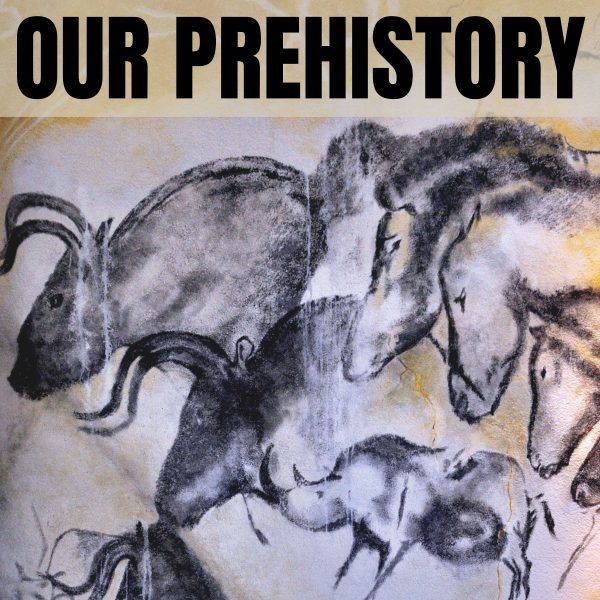
Our Prehistory
- Folgen
- 51
- Erscheint
- monatlich
- Letzte Folge
- 21. Juli 2026
Über den Podcast
The history of humanity before civilization is populated by an array of cultures throughout the millennia and across the continents. The earliest humans followed diverse customs and survival strategies, explored the unknown, adapted to exotic ecosystems, thrived in good times, and fell into oblivion in others. This podcast relates that story, starting with the origin of our species and tracing the development of human life before written records.
Folgen 51
51. Epipaleolithic
The Levant witnessed a gradual transition from simple nomadic societies to more complex sedentism. The earliest signs of this fundamental change in human life appeared during the Last Glacial Maximum.Support the show
50. Southwest Asia: Upper Paleolithic Hub [Preview]
Migration out of Africa, interbreeding with Neanderthals, and colonization of Eurasia. What can stone tools, bone tools, and ornaments discovered in the Middle East tell us about those fateful events?Support the show
49. Ritual and Violence in Africa
19,000 to 12,000 years ago ... As shifts to social dynamics took place in Africa, both human creativity and brutality flourished.Support the show
48. Broad Spectrum Origins in Africa
25,000 to 12,000 years ago ... Human life was gradually changing across Africa at the end of the Pleistocene. One element of this transformation was a shift in what people ate.Support the show
47. Last Glacial Maximum of Africa [Preview]
25,000 years ago ... Right at the peak of the Last Ice Age, most people living on the African continent finally embraced microlithic tools, an innovation that had been around for tens of thousands of …
Shownotes
25,000 years ago ... Right at the peak of the Last Ice Age, most people living on the African continent finally embraced microlithic tools, an innovation that had been around for tens of thousands of years.
46. Spread of the Late Stone Age
45,000 to 30,000 years ago ... Signs of Late Stone Age culture start appearing across sub-saharan Africa, hinting at long-distance contact between once isolated peoples.Support the show
45. Late Stone Age of Africa
60,000 to 45,000 years ago ... Signs of cultural change started to appear among hunter gatherers in Africa, leading to the end of the Middle Stone Age, a period that had lasted hundreds of thousands of …
Shownotes
60,000 to 45,000 years ago ... Signs of cultural change started to appear among hunter gatherers in Africa, leading to the end of the Middle Stone Age, a period that had lasted hundreds of thousands of years.
44. Post Clovis [Preview]
12,800 to 11,700 years ago ... In the cold of the Younger Dryas, at the peak of megafauna extinction, the descendants of Clovis fragmented into a range of new cultures across North America.Support the show
43. American Megafauna Extinctions
Around 13,000 years ago, a wide range of large animal species started disappearing. The circumstances strongly implicate humans.Support the show
42. Fishtail Points and Early South America
13,000 to 12,000 years ago... From megafauna hunters in Tierra del Fuego to Amazonian rock painters, the formation of early South America hunter gatherer societies was a complex process, and a sudden burst of …
Shownotes
13,000 to 12,000 years ago... From megafauna hunters in Tierra del Fuego to Amazonian rock painters, the formation of early South America hunter gatherer societies was a complex process, and a sudden burst of distinct human cultures appeared at the end of the Ice Age.
41. Clovis and the Western Stemmed Tradition [Preview]
The first North American cultures appeared around 13,000 years ago, when megafauna roamed a continent still largely devoid of humans. Support the show
40. Arrival in America
Homo sapiens, the only hominin to colonize every continent on the planet, finally reaches America. But who were the first Americans and when did they arrive? Support the show
39. Terminal Pleistocene of Southeast Asia
19,000 to 11,700 years ago ... In the Himalayan foothills of Thailand and the southern islands of Wallacea, the adoption of new funerary rituals, ornaments, and tools by hunter gatherer societies coincided with …
Shownotes
19,000 to 11,700 years ago ... In the Himalayan foothills of Thailand and the southern islands of Wallacea, the adoption of new funerary rituals, ornaments, and tools by hunter gatherer societies coincided with global warming and large human migrations.
38. Rock Art of Southeast Asia [Preview]
53,000 to 13,000 years ago ... Recent dating of rock paintings in Indonesia has redefined our understanding of the oldest art produced by humans and raised the possibility of an extremely old and widespread …
Shownotes
53,000 to 13,000 years ago ... Recent dating of rock paintings in Indonesia has redefined our understanding of the oldest art produced by humans and raised the possibility of an extremely old and widespread Pan-Eurasian and Sahulian style.
37. Rainforest Adaptations in Asia
The first Homo sapiens to reach Southeast Asia quickly learned how to survive in rainforests, overcoming the unique challenges of this rainy biome.Support the show
36. Hoabinhian and Indian Microlithic
Incredibly stable traditions of stone tool making remained in use for tens of thousands of years in South and Southeast Asia.Support the show
35. Cultural Variation of the Final Paleolithic [Preview]
19,000 to 11,700 years ago ... Stirring of future fundamental transformations in the human way of life begin in parts of northeast Asia at the end of the Paleolithic.Support the show
34. Invention of Pottery
20,000 to 11,700 years ago ... As the planet thawed after the Last Glacial Maximum, human life continued to evolve. A range of technologies appeared among the groups living in East Asia, one of which would …
Shownotes
20,000 to 11,700 years ago ... As the planet thawed after the Last Glacial Maximum, human life continued to evolve. A range of technologies appeared among the groups living in East Asia, one of which would eventually play a role in shaping our modern world.
33. Microblades
30,000 to 20,000 years ago ... A powerful new stone tool technology broke through longstanding cultural boundaries.Support the show
32. Middle Upper Paleolithic [Preview]
35,000 to 25,000 years ago ... The first major changes to the cultures of Siberia and Japan take place after the arrival of Homo sapiens result in peak in artistic production.Support the show
31. Origin of the Late Paleolithic of East Asia
50,000 to 30,000 years ago ... The start of a new period of prehistory in China, Korea, and Japan began with the arrival of Homo sapiens and the quick development of regionally distinctive cultures.Support the show
30. Colonization of Asia
60,000 to 40,000 years ago ... As Homo sapiens dispersed across Asia, they followed two different routes and these movements shaped the earliest cultures of this continent.Support the show
29. Sahulian Terminal Pleistocene [Preview]
20,000 to 12,000 years ago ... As the world warmed, humans extended their reach in Sahul, migrated away from the rising seas, developed new funerary rituals, and learned new ways to manage animal …
Shownotes
20,000 to 12,000 years ago ... As the world warmed, humans extended their reach in Sahul, migrated away from the rising seas, developed new funerary rituals, and learned new ways to manage animal populations.
28. Last Glacial Maximum of Sahul
28,600 to 17,700 years ago ... Global cooling altered the ecosystems of Sahul and forced its human populations to adapt. Support the show
27. Pleistocene Rock Art of Sahul
50,000 to 12,000 ... Prehistoric paintings and engravings provide insights into the rituals, technology, and worldviews of Australians, tens of thousands of years ago.Support the show
26. Early Sahulian Lifeways [Preview]
50,000 to 30,000 years ago ... Isolated from people on other continents, the oldest traditions of Sahulians evolved along a unique cultural pathway.Support the show
25. Arrival in Sahul
65,000 to 40,000 years ago ... By crossing the ocean between Asia and the coasts of New Guinea and Australia, Homo sapiens dispersed to and colonized a third continent.Support the show
24. Upper Paleolithic of Europe: Revolution and Equilibrium
48,000 to 11,000 years ago ... Long term trends reveal dramatic changes in social complexity and the impact of climate, population size, and migration on cultural variation.Support the show
23. Tanged-Point and Flat-Blade Cultures [Preview]
12,850 to 11,670 years ago ... The last gasp of the Ice Age led people across northern Europe to adopt a different way of life, one that resembled the customs of long lost cultures. Cultures: Swiderian …
Shownotes
12,850 to 11,670 years ago ... The last gasp of the Ice Age led people across northern Europe to adopt a different way of life, one that resembled the customs of long lost cultures. Cultures: Swiderian, Ahrensburgian, Desnenian, Bromme, Laborian.
22. Younger Dryas of Southern Europe
12,850 to 11,670 years ago ... In the Mediterranean Basin of Europe, the resilience of stone age societies was on display during the last gasp of the Ice Age. Support the show
Hier stehen die neuesten 40 von 51 Folgen. Ältere Folgen findest du im Feed des Podcasts.
Ähnliche Podcasts
Mehr Geschichte-Podcasts







Ist das dein Podcast?
Bestätige es mit einem Eintrag in deinem Feed: Du bekommst hier einen Code, trägst ihn als podcast:txt in den Kanal deines Feeds ein, und wir prüfen ihn. Danach steht dein Podcast als „verifiziert“ bei SoundNode.