

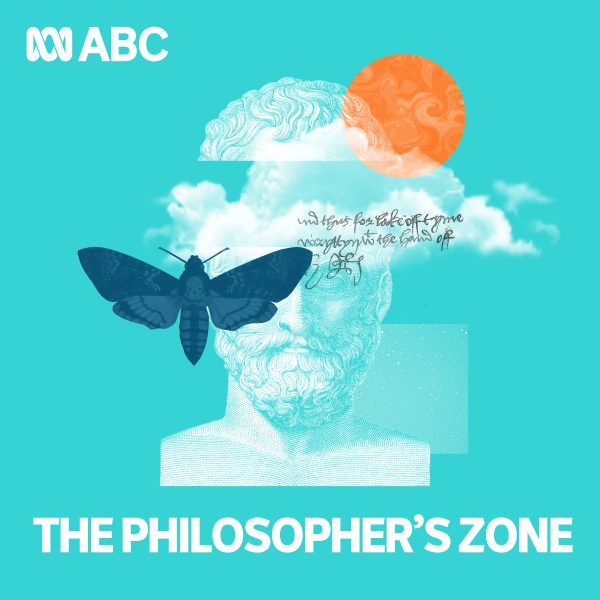
Philosopher’s Zone
- Folgen
- 241
- Erscheint
- wöchentlich
- Letzte Folge
- 13. Nov. 2026
Über den Podcast
The simplest questions often have the most complex answers. The Philosopher's Zone is your guide through the strange thickets of logic, metaphysics and ethics.
Folgen 241
Are you a person? Social roles and human identity in early Confucianism
Confucianism is often described as a philosophy that puts social roles at the centre of human life, to the extent that social roles don't just shape our responsibilities but actually constitute who we are. But …
Shownotes
Confucianism is often described as a philosophy that puts social roles at the centre of human life, to the extent that social roles don't just shape our responsibilities but actually constitute who we are. But what does it mean when our social roles change - does the new social role create an entirely new person? This week we're looking to early Confucian texts and exploring the possibility that maybe we're not really 'persons' at all.
Guest: Jenny Hung, Assistant Professor of Philosophy, The Hong Kong University of Science and Technology
Producer: David Rutledge
What is pleasure?
Is everything we do just for pleasure? For the Ancient Greek hedonists, and utilitarians such as Jeremy Bentham (1748-1832), pleasure is what motivates us. And for most of us, if we think of a good life, we're …
Shownotes
Is everything we do just for pleasure? For the Ancient Greek hedonists, and utilitarians such as Jeremy Bentham (1748-1832), pleasure is what motivates us. And for most of us, if we think of a good life, we're probably imagining one filled with things that bring us pleasure. Because of its role in motivation, pleasure is now a major topic in psychology, biology and neuroscience - but pleasure is a surprisingly ambiguous concept. Not all pleasures are good, and in fact some can make us worse off. What can philosophy tell us about pleasure and the role it plays in our lives?
Guest: Katarzyna de Lazari-Radek, Professor of Philosophy at the University of Łódź, Poland
Producers: Declan Humphreys, Lecturer in the School of Science, Technology and Engineering, University of the Sunshine Coast, QueenslandDavid Rutledge
The Philosophy of Pleasure: An Introduction by Katarzyna de Lazari-Radek (Routledge, 2024)
Lives Well Lived - podcast with Katarzyna de Lazari-Radek and Peter Singer
Can't Unthink It - podcast with Declan Humphreys, about the little ideas philosophers just can't get out of their heads
05 | Unsteady State | Politics for the future and the past
When your political system runs to a three-year electoral cycle, it's hard to avoid the kind of short-term thinking that aims to please today's voters, while paying little more than lip service to future …
Shownotes
When your political system runs to a three-year electoral cycle, it's hard to avoid the kind of short-term thinking that aims to please today's voters, while paying little more than lip service to future generations. And while this has long been a concern for liberal democracies, today it's an existential issue, as the decisions we make now about climate change will affect the lives of citizens over decades and even centuries from now. Indigenous philosophies have long recognised the importance of government that honours its obligations to future - and even past - generations. But what does this look like in practice? and what ethical issues come into play when Western philosophy treats Indigenous knowledge traditions as a resource to be 'mined'?
This episode is fifth in a five-part series.
Guest: Krushil Watene, Associate Professor of Philosophy at the University of Auckland, Aoteraroa New Zealand
Producer: David Rutledge
Pursuing Climate Justice: Practice-Centred Theory, Indigenous Communities, and Engaged Philosophical Inquiry by Krushil Watene in Brooke A. Ackerly et al (eds): The Oxford Handbook of Grounded and Engaged Normative Theory (Oxford Academic 2026)
Episode 1 | Unsteady State | Politics and the good life - The Philosopher's Zone, October 4 2026
Episode 2 | Unsteady State | Who owns Antarctica? - The Philosopher's Zone, October 11 2026
Episode 3 | Unsteady State | What the Right gets wrong about Nietzsche - The Philosopher's Zone, October 18 2026
Episode 4 | Unsteady State | Confucianism and crisis - The Philosopher's Zone, October 25 2026
04 | Unsteady State | Confucianism and crisis
With liberal democracy in crisis around the world, we're talking about Confucianism and how Confucian political theory addresses such problems as economic inequality and rampant individualism. This week's guest …
Shownotes
With liberal democracy in crisis around the world, we're talking about Confucianism and how Confucian political theory addresses such problems as economic inequality and rampant individualism. This week's guest is interested in developing a reconstructed Confucianism that incorporates aspects of American pragmatist philosophy — in particular the work of John Dewey, who visited China in the 1920s and made a huge intellectual and cultural impact there.
This episode is fourth in a five-part series.
Guest: Sor-hoon Tan, Professor of Philosophy at Singapore Management University
Producer: David Rutledge
Confucian Democracy: A Deweyan Reconstruction of Confucianism by Sor-hoon Tan (SUNY Press 2004)
The crisis of liberal democracy and the Confucian challenge: a pragmatist response by Sor-hoon Tan in Journal of Social and Political Philosophy (2022)
Toward Confucian economic democracy: a relational alternative to possessive individualism by Sor-hoon Tan in Democratic Theory: An Interdisciplinary Journal (2026)
01 | Unsteady State | Politics and the good life - The Philosopher's Zone, October 4 2026
02 | Unsteady State | Who owns Antarctica? - The Philosopher's Zone, October 11 2026
03 | Unsteady State | What the Right gets wrong about Nietzsche - The Philosopher's Zone, October 18 2026
05 | Unsteady State | Politics for the future and the past - The Philosopher's Zone, November 1 2026
03 | Unsteady State | What the Right gets wrong about Nietzsche
Friedrich Nietzsche is a difficult figure to pin down politically. He's popularly known as the favourite philosopher of the architects of the Holocaust, and of today's neo-Nazis and far-right ideologues who …
Shownotes
Friedrich Nietzsche is a difficult figure to pin down politically. He's popularly known as the favourite philosopher of the architects of the Holocaust, and of today's neo-Nazis and far-right ideologues who venerate strength, domination and the exercise of traditionally male-coded virtues. But then there's the other Nietzsche, the Nietzsche who was a fierce critic of German nationalism and antisemitism, and whose work has gone on to become central to feminism and queer theory. What can Nietzsche tell us about today's febrile climate of state and gender politics?
This episode is third in a five-part series.
Guest: Adrian Daub, Professor of Comparative Literature and German Studies at Stanford University, co-host of the podcast In Bed With the Right
Producer: David Rutledge
The Cancel Culture Panic: How an American Obsession Went Global by Adrian Daub (Stanford University Press 2024)
What Tech Calls Governing by Adrian Daub (Stanford University Press 2026)
Episode 1 | Unsteady State | Politics and the good life - The Philosopher's Zone, October 4 2026
Episode 2 | Unsteady State | Who owns Antarctica? - The Philosopher's Zone, October 11 2026
Episode 4 | Unsteady State | Confucianism and crisis - The Philosopher's Zone, October 25 2026
Episode 5 | Unsteady State | Politics for the future and the past - The Philosopher's Zone, November 1 2026
02 | Unsteady State | Who owns Antarctica?
What can Antarctica teach us about statehood and sovereignty?The continent has no government, no citizens, no permanent human population. Its native inhabitants are mostly seals and penguins who, as far as we …
Shownotes
What can Antarctica teach us about statehood and sovereignty?
The continent has no government, no citizens, no permanent human population. Its native inhabitants are mostly seals and penguins who, as far as we know, take little interest in politics.
But according to this week's guest, Antarctica offers a remarkable political experiment, one that challenges some of our most basic assumptions about territory and political community.
Since the Antarctic Treaty came into force in 1961, the usual question of who owns the territory has been set aside. Instead, Antarctica is governed according to a model of 'joint guardianship', raising the intriguing possibility that this remote frozen continent might have something crucial to teach us about how politics could work elsewhere.
This episode is second in a five-part series.
Guest: Alejandra Mancilla, Professor of Philosophy at the University of Oslo, Norway
Producer: David Rutledge
From Sovereignty to Guardianship: Governing Antarctica, Governing the World by Alejandra Mancilla (Oxford University Press 2026)
Episode 1 | Unsteady State | Politics and the good life - The Philosopher's Zone, October 4 2026
Episode 3 | Unsteady State | What the Right gets wrong about Nietzsche - The Philosopher's Zone, October 18 2026
Episode 4 | Unsteady State | Confucianism and crisis - The Philosopher's Zone, October 25 2026
Episode 5 | Unsteady State | Politics for the future and the past - The Philosopher's Zone, November 1 2026
01 | Unsteady State | Politics and the good life
What if your government decided what 'the good life' looks like, then rewarded you for living it and penalised you for straying?In a growing number of countries, that's already happening.Liberal democratic …
Shownotes
What if your government decided what 'the good life' looks like, then rewarded you for living it and penalised you for straying?
In a growing number of countries, that's already happening.
Liberal democratic theory has long held that the good life is for each citizen to define for themselves, and that the state should stay out of it. But some governments are now rejecting that idea, defining the good life for their citizens and using a mix of incentives and penalties to bring people into line.
Many liberals call this authoritarianism, and accuse the leaders behind it of being driven by greed or a desire for power.
But this week we're asking if the picture is more complex, and if liberals are making a dangerous mistake in misunderstanding the appeal of the 'good life state'.
This episode is a recording of the 2026 Alan Saunders Lecture, produced in collaboration with the Australasian Association of Philosophy.
Guest: Alexandre Lefebvre, Professor of Politics and Philosophy at The University of Sydney
Producer: David Rutledge
Liberalism as a Way of Life by Alexandre Lefebvre (Princeton University Press 2024)
Episode 2 | Unsteady State | Who owns Antarctica? - The Philosopher's Zone, October 11 2026
Episode 3 | Unsteady State | What the Right gets wrong about Nietzsche - The Philosopher's Zone, October 18 2026
Episode 4 | Unsteady State | Confucianism and crisis - The Philosopher's Zone, October 25 2026
Episode 5 | Unsteady State | Politics for the future and the past - The Philosopher's Zone, November 1 2026
Technology and the lure of ancient Athens
One of the more utopian promises of technology has always been that it will free us from the necessity of work - but not having to work poses its own problems. What will we do instead? how will we make money? …
Shownotes
One of the more utopian promises of technology has always been that it will free us from the necessity of work - but not having to work poses its own problems. What will we do instead? how will we make money? and what might a leisure-oriented society look like? Technophiles - from the early cybernetics enthusiasts to today's AI promoters - have looked to ancient Athens as an example of a society where citizens were free to engage in culture, reflection and political participation. But was ancient Athens really such a place? and how likely is it that today's tech lords will deliver 'the good life' to us all?
Guest: Michele Kennerly, Associate Professor Communication Arts and Sciences, and Classics and Mediterranean Studies, Pennsylvania State University
Producer: David Rutledge
Automated Athens: Ancient Greek Ideals in the Early Age of Automation by Michele Kennerly (University of Chicago Press 2026)
Sympathy, himpathy and feminism
Australian feminist philosopher Kate Manne memorably coined the term "himpathy" to describe what happens when a man commits a crime against a woman and finds himself the object of disproportionate sympathy. But …
Shownotes
Australian feminist philosopher Kate Manne memorably coined the term "himpathy" to describe what happens when a man commits a crime against a woman and finds himself the object of disproportionate sympathy. But as useful as this description is, the psychological mechanism behind himpathy remains unexplored in Manne's account. To remedy this, we're turning this week to Catharine Macaulay, a fascinating late 18th century English philosopher whose work on sympathy provides some valuable psychological insights.
Guest: Elena Gordon, Assistant Professor of Philosophy at University College Dublin
Producer: David Rutledge
Catharine Macaulay on cultivating our sympathetic potential - Elena Gordon in Journal of Modern Philosophy Volume 7 (2025)
About Catharine Macaulay
Signal, noise and interpersonal conflict
If someone's behaving badly, it can be hard to know how much of their behaviour stems from a deep character flaw, and how much of it is incidental - the stuff we might charitably filter out as unreflective of …
Shownotes
If someone's behaving badly, it can be hard to know how much of their behaviour stems from a deep character flaw, and how much of it is incidental - the stuff we might charitably filter out as unreflective of their true self. And the same goes for achievement: how much credit for a Nobel prize should go to the person themselves, and how much to their fortunate circumstances, or to the people who helped them? This week we're asking if philosophy can help us discern the signal from the noise.
Guest: Mark Schroeder, Professor of Philosophy at the University of Southern California
Producer: David Rutledge
When Things Get Personal: A Philosophical Guide to Conflict by Mark Schroeder (Princeton University Press 2026)
Feminism, generosity and cross-cultural support
Western feminists often express support for women in Muslim majority countries, but sometimes that support is couched in the language of pity, as though Muslim women were held captive by their religion and …
Shownotes
Western feminists often express support for women in Muslim majority countries, but sometimes that support is couched in the language of pity, as though Muslim women were held captive by their religion and culture, and in need of 'rescue'. This week, a conversation about how to offer cross-cultural support without paternalism, and how the insight of Simone de Beauvoir can illuminate the issue.
Guest: Sameema Zahra, psychotherapist and Lecturer in Philosophy, Australian Catholic University Brisbane
Producer: David Rutledge
Simone de Beauvoir demonstrated how to show solidarity across radical differences - Sameema Zahra essay for ABC Religion & Ethics
Philosophers in the Therapy Room - podcast with Sameema Zahra and Hora Zabarjadi Sar
Getting angry at the system
If I pick up a tree branch and smash your window with it, you're going to be angry, and your anger will rightly be directed at me. But if a tree branch smashes your windscreen during a cyclone whose intensity …
Shownotes
If I pick up a tree branch and smash your window with it, you're going to be angry, and your anger will rightly be directed at me. But if a tree branch smashes your windscreen during a cyclone whose intensity has been caused by global warming, you're still going to be angry — but who or what exactly should you be angry with? This week, a conversation about responsibility for systemic injustice.
Guest: Stephanie Collins, Associate Professor in Philosophy, Monash University Melbourne
Producer: David Rutledge
Who's afraid of Cultural Marxism?
Cultural Marxism is many things to many people — at one end of the political spectrum, it's the hidden force behind political correctness, identity politics and 'wokeness', while at the other end it's a …
Shownotes
Cultural Marxism is many things to many people — at one end of the political spectrum, it's the hidden force behind political correctness, identity politics and 'wokeness', while at the other end it's a shopworn conspiracy theory that explains nothing much at all. So what is Cultural Marxism? Did a group of Marxist intellectuals in the mid-20th century really set out to reshape Western culture? And if they did, how convincingly does their story stack up as a tale of secret plots and calculated ideological subversion?
Guest: Alexander Howard, Senior Lecturer in English and Writing, University of Sydney
Producer: David Rutledge
'Cultural Marxism' is a conspiracy theory for our time - Alexander Howard in The Conversation July 2026
The Cultural Marxism Conspiracy: Why the Right Blames the Frankfurt School for the Decline of the West by A.J.A. Woods (Verso 2026)
Conspiracy theories, anti-Semitism and fun - The Philosopher's Zone, December 2022
Habermas and the retreat of reason
The great German philosopher Jürgen Habermas, who died in March, wrote in his later works about what he called Unheimlichkeit — roughly translated as "the unease of the times" — to describe the global retreat …
Shownotes
The great German philosopher Jürgen Habermas, who died in March, wrote in his later works about what he called Unheimlichkeit — roughly translated as "the unease of the times" — to describe the global retreat of liberal democracy, the fraying of the rules-based international order, and the increasing polarisation and hostility of public discourse. And yet, to the end he defended Enlightenment reason and the utility of rational debate. In a world that seems to be losing its democratic bearings, has Habermas' day passed? Or is the problem more that we haven't read him carefully enough?
Guest: Peter J. Verovšek, Assistant Professor in the History of European Integration, University of Groningen, The Netherlands
Producer: David Rutledge
Did Jürgen Habermas's death also mark the end of his vision of democratic life? - Peter Verovšek for ABC Religion & Ethics
Visual art as philosophy
When it comes to the ideal philosophical medium, most of us would identify the written word - or maybe the spoken word, if we're fans of Socratic dialogue - and this is because for centuries, philosophy has …
Shownotes
When it comes to the ideal philosophical medium, most of us would identify the written word - or maybe the spoken word, if we're fans of Socratic dialogue - and this is because for centuries, philosophy has been a linguistic practice. But this week we're arguing that visual art can be philosophy, and looking at how visual art can represent concepts in ways that haven't traditionally been recognised by Western epistemic traditions.
Guest: Taylor-Jai McAlister, clinical psychologist and postdoctoral Research Fellow in Philosophy, Macquarie University, Sydney
Producer: David Rutledge
Defining Aboriginality - Taylor-Jai McAlister on The Philosopher's Zone, November 2023
How smart are machines, anyway?
Ever since AI was founded in the 1950s, people have talked and written about 'intelligence' as though we all broadly agree on what that word means. But there's considerable debate on that score, and among the …
Shownotes
Ever since AI was founded in the 1950s, people have talked and written about 'intelligence' as though we all broadly agree on what that word means. But there's considerable debate on that score, and among the debaters are philosophers - like this week's guest - who question the degree to which machines can be said to be intelligent at all, and think that claims of intelligence can all too easily deflect attention from the real ethical issues around AI.
Guest: Tim Crane, Professor of Philosophy at the Central European University (CEU) in Vienna, Austria
Producer: David Rutledge
Hegel: The philosopher with the (one) big idea
GWF Hegel (1770-1831) wanted to construct nothing less than a complete explanation of reality - nature, consciousness, art, history, politics, the lot - based on a single self-explanatory idea. Whether or not …
Shownotes
GWF Hegel (1770-1831) wanted to construct nothing less than a complete explanation of reality - nature, consciousness, art, history, politics, the lot - based on a single self-explanatory idea. Whether or not he succeeded is an interesting question (spoiler: he didn't), but more interesting is the question of why philosophy has become so much less ambitious since then, and what we can learn from Hegel today.
Eco-grief and environmental loss
Philosophers have traditionally thought of grief as something that attaches to immediate loss - the death of a loved one, something terrible that's happened to us personally. But as the environmental crisis …
Shownotes
Philosophers have traditionally thought of grief as something that attaches to immediate loss - the death of a loved one, something terrible that's happened to us personally. But as the environmental crisis continues to wreak havoc on human and non-human lives, the philosophy of emotions needs a concept that captures a response to loss that perhaps hasn't happened yet, or loss that affects other people we may never meet: eco-grief.
Colonising space
There's something about space that's always captured the human imagination, but what happens when space begins to capture the imagination of billionaire tech entrepreneurs? In the past, we've visited space for …
Shownotes
There's something about space that's always captured the human imagination, but what happens when space begins to capture the imagination of billionaire tech entrepreneurs? In the past, we've visited space for scientific purposes, but now the grand vision is colonisation, permanent human settlement on the Moon, Mars and even further afield, with such ventures along the way as asteroid mining, which promises to deliver untold riches. The technical challenges are immense - as are the ethical ones.
Can pregnancy be a job? the ethics of commercial surrogacy
Commercial surrogacy - the practice of paying someone to gestate your child and then hand it over when it's born - is banned in Australia, but it has its supporters. Defenders of commercial surrogacy argue that …
Shownotes
Commercial surrogacy - the practice of paying someone to gestate your child and then hand it over when it's born - is banned in Australia, but it has its supporters. Defenders of commercial surrogacy argue that it should be legal for someone to receive payment for the labour of carrying a child, on the grounds that surrogacy constitutes a legitimate form of work. But are there some things that just shouldn't be for sale? This week we're testing the arguments.
Belief, emotion and trust
The traditional philosophical view of belief is that it's a rational cognitive affair, evidence based and directed toward truth. According to this account, things like delusion and religious belief are "edge …
Shownotes
The traditional philosophical view of belief is that it's a rational cognitive affair, evidence based and directed toward truth. According to this account, things like delusion and religious belief are "edge cases", exceptions that prove the rule. But this week we're considering not only that belief may be closely tied to emotion, but that it may actually be a form of emotion itself.
Communication in an age of crisis
Collins Dictionary made "permacrisis" their word of the year in 2022 - a prescient choice because since then, the crises have just kept coming. Permacrisis is forcing us to take a close look at the way we …
Shownotes
Collins Dictionary made "permacrisis" their word of the year in 2022 - a prescient choice because since then, the crises have just kept coming. Permacrisis is forcing us to take a close look at the way we communicate, because while free public discourse is one of the cornerstones of democracy, there's something about the nature of today's public discourse that fuels crisis, and keeps us frozen in a fight-or-flight posture.
Can sport survive AI?
Elite sport is traditionally a celebration of the human, but for how much longer? We watch in awe as athletes perform feats of skill, strength and endurance, and experience the high drama of triumph and defeat …
Shownotes
Elite sport is traditionally a celebration of the human, but for how much longer? We watch in awe as athletes perform feats of skill, strength and endurance, and experience the high drama of triumph and defeat - but it's all on a human scale, or at least it has been until now. Sport and technology have always been intertwined, but with the advent of AI, this week we're wondering if the human element of sport - the physical dimension, but also the ethical - might be under threat.
Purity, filth and 'promiscuous defecators': why we're weird about poo
Why are we so repelled yet fascinated by bodily waste? Today we're talking purity, pollution, colonial sanitation regimes, medicine and public health, and how they've been shaped by our deeply ambivalent …
Shownotes
Why are we so repelled yet fascinated by bodily waste? Today we're talking purity, pollution, colonial sanitation regimes, medicine and public health, and how they've been shaped by our deeply ambivalent attitudes to the stuff we all produce (ideally) every day, but rarely think about deeply.
Bad faith and 'just asking questions'
There's a certain kind of question that raises suspicion as to the motives of the person asking it. 'Was the Holocaust really as bad as historians have made out?' 'Is there really a scientific consensus on …
Shownotes
There's a certain kind of question that raises suspicion as to the motives of the person asking it. 'Was the Holocaust really as bad as historians have made out?' 'Is there really a scientific consensus on climate change?' 'How do we now for sure that vaccines aren't harmful?' These kinds of questions can be read on the surface as innocent enquiry, but sometimes they can function as a kind of epistemic sabotage, casting doubt on settled issues and seeking to undermine confidence in established truth. How can we tell the difference between sincerity and bad faith? And how should we respond to the latter?
'Natural' disasters and climate justice
To call the effects of a fire, flood or cyclone these days a 'natural' disaster only tells part of the story, as climate change makes us realise that vulnerability to harm is often the result of factors that …
Shownotes
To call the effects of a fire, flood or cyclone these days a 'natural' disaster only tells part of the story, as climate change makes us realise that vulnerability to harm is often the result of factors that actually have little to do with weather events. Land theft, displacement, poverty and the legacies of colonial rule can all multiply climate harms, which means that climate justice is more than simply a matter of sustainable energy development or transitioning to a greener economy.
Where am I? Buddhist philosophy and the self
Behind the familiar Buddhist doctrine that "there is no self" lies a centuries-long tradition of dispute and disagreement. Reductionists believe that the self is no more than a bundle of sense impressions and …
Shownotes
Behind the familiar Buddhist doctrine that "there is no self" lies a centuries-long tradition of dispute and disagreement. Reductionists believe that the self is no more than a bundle of sense impressions and mental states that add up to nothing of substance or permanence, while emergentists believe that the self is something more - something related to these impressions and mental states, but not reducible to them. We're not going to settle the argument this week, but we will be exploring the ethical ramifications and asking what's at stake.
Common sense vs reason: when philosophy gets weird
There are certain things about the world that we think we know for sure, and yet philosophical reason tells us cannot be true. Can you fly? are you real? is the world a hallucination? The answers seem …
Shownotes
There are certain things about the world that we think we know for sure, and yet philosophical reason tells us cannot be true. Can you fly? are you real? is the world a hallucination? The answers seem self-evident, but this week we're exploring philosophical thought experiments that pull the rug out from under common sense and intuitive certainty.
Adam Smith, economics and moral philosophy
Scottish philosopher Adam Smith (1723-1790) is often described as an arch capitalist, the "father of modern economics" - and at a glance it's easy to see why. His Inquiry Into the Nature and Causes of the …
Shownotes
Scottish philosopher Adam Smith (1723-1790) is often described as an arch capitalist, the "father of modern economics" - and at a glance it's easy to see why. His Inquiry Into the Nature and Causes of the Wealth of Nations provided the theoretical foundation for free market capitalism and the economic policies that prevailed throughout the Industrial Revolution. But to see Smith as an extreme free market ideologue is to get him badly wrong.
Can AIs be friends?
Artificial intelligence is beginning to revolutionise many aspects of human existence - but how does it rate on friendship? The question is less theoretical than it seems: media reports of people developing …
Shownotes
Artificial intelligence is beginning to revolutionise many aspects of human existence - but how does it rate on friendship? The question is less theoretical than it seems: media reports of people developing 'relationships' with chatbots are becoming more common, and while we may instinctively recoil from this prospect, it's not clear that AIs could never deliver at least some of the benefits of genuine friendship.
Hier stehen die neuesten 40 von 241 Folgen. Ältere Folgen findest du im Feed des Podcasts.
Ähnliche Podcasts
Mehr Gesellschaft und Kultur-Podcasts




Ist das dein Podcast?
Bestätige es mit einem Eintrag in deinem Feed: Du bekommst hier einen Code, trägst ihn als podcast:txt in den Kanal deines Feeds ein, und wir prüfen ihn. Danach steht dein Podcast als „verifiziert“ bei SoundNode.