

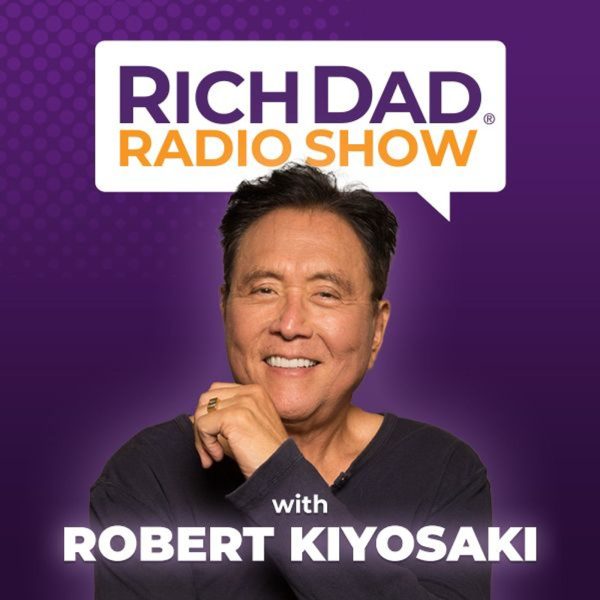
Rich Dad Radio Show: In-Your-Face Advice on Investing, Personal Finance, & Starting a Business
- Folgen
- 680
- Erscheint
- mehrmals pro Woche
- Letzte Folge
- 14. Nov. 2026
Über den Podcast
Join Robert Kiyosaki, best-selling author of Rich Dad Poor Dad, for The Rich Dad Radio Show — the podcast that challenges conventional financial wisdom and delivers real-world lessons on money, investing, and entrepreneurship. Each week, Robert and his expert guests explore how today's economy affects your wealth and reveal the strategies the rich use to thrive in any market. From real estate to precious metals, stocks to entrepreneurship, Robert breaks down complex financial topics with humor, candor, and decades of experience. If you're ready to think differently, break free from the rat race, and take control of your financial future, this is the show for you.
Folgen 680
Homeless at 38. Financially Free 3 Years Later. Here's How.
In this episode, Robert explains why being broke wasn't failure. It was a test, the same test rich families teach their kids to face, and the one school never gives you. You'll hear the four words his rich dad …
Shownotes
In this episode, Robert explains why being broke wasn't failure. It was a test, the same test rich families teach their kids to face, and the one school never gives you. You'll hear the four words his rich dad taught him that kept him in that car, why success can destroy a business faster than failure, and the hidden fear that keeps most people working for a paycheck their entire lives. If you've ever wondered why some people build wealth and financial freedom while others stay stuck, this episode will change how you see money, risk, and fear.
How to Learn From Investment Mistakes and Build Wealth
Want to learn from investment mistakes instead of letting the fear of failure keep you from building wealth? Most people spend their lives trying to avoid financial mistakes. They follow conventional advice …
Shownotes
Want to learn from investment mistakes instead of letting the fear of failure keep you from building wealth?
Most people spend their lives trying to avoid financial mistakes.
They follow conventional advice, trust financial experts, and choose what feels safe.
But what if avoiding failure is one of the biggest mistakes an investor can make?
In this episode of The Rich Dad Show, Robert Kiyosaki, alongside Kim Kiyosaki and fellow investors and entrepreneurs, challenges the traditional approach to financial success.
Robert shares how his early experiences in the mining industry helped shape his understanding of entrepreneurship, risk, and investment opportunities.
He also discusses a gold mining venture in China that went terribly wrong.
It was an expensive failure. But Robert argues that what happened next would never have been possible without it.
Kim shares a similar lesson from a real estate investment that didn't work out—and how that experience influenced a later opportunity.
Together, they explore why investors need more than financial advice, why starting small matters, and how real-world experience can teach lessons that books and classrooms cannot.
But the conversation goes beyond learning from mistakes.
Robert and his guests challenge the way most people define assets, question conventional retirement and investment strategies, and examine why cash flow, financial education, and the people you surround yourself with can influence your financial future.
They also discuss the risks of early-stage mining investments, the importance of building a strong business team, and why some investors believe relying entirely on traditional financial institutions can leave individuals without enough control over their money.
And one investor shares a painful lesson from the 2008 real estate crash that raises an important question:
What happens when you own an investment you can no longer afford to hold?
For anyone interested in real estate, entrepreneurship, gold and silver, or building wealth outside conventional financial strategies, this episode offers a different way to think about risk and failure.
Because financial education isn't just about knowing what to do when everything goes right. It's about developing the knowledge and experience to respond when things go wrong.
The question isn't whether you'll ever make an investment mistake.
It's whether you'll learn enough from it to become a better investor.
WARNING: The Collapse Already Started — And How to Get Out
Working more and still falling behind? That's not bad luck. The next financial collapse isn't coming with sirens and headlines like 2008. It's already here, quietly draining your paycheck through debt …
Shownotes
Working more and still falling behind? That's not bad luck. The next financial collapse isn't coming with sirens and headlines like 2008. It's already here, quietly draining your paycheck through debt, inflation, and minimum payments. In this episode, Robert Kiyosaki reveals what this system is really taking from you (it's not your money) and the one word that tells you which side of the collapse you're on.
How to Grow a Business During an Economic Downturn
Wondering how to grow a business during an economic downturn when customers are spending less, expenses are rising, and uncertainty makes every decision feel riskier? Most business owners respond to tough …
Shownotes
Wondering how to grow a business during an economic downturn when customers are spending less, expenses are rising, and uncertainty makes every decision feel riskier?
Most business owners respond to tough economic conditions the same way: They cut spending, reduce expenses, and wait for things to improve.
But what if the decisions that seem safest are actually putting their businesses at greater risk?
In this encore episode of The Rich Dad Radio Show, Robert Kiyosaki sits down with Vic Keller, serial entrepreneur, investor, and founder of KLV Capital and Experience Ventures, to challenge conventional thinking about surviving and growing a business during difficult economic times.
Vic knows what it takes to build businesses from the ground up. After leaving a career at JPMorgan, he started his first company with limited resources and went on to build multiple businesses that Berkshire Hathaway eventually acquired.
But his experience raises an important question: What separates businesses that survive an economic downturn from those that fail—even when they have great products and loyal customers?
Robert shares the story of a successful retailer who had nearly everything a business owner could want: a prime location, knowledgeable employees, high-quality products, and affluent customers.
Yet the business still struggled.
What went wrong?
Robert and Vic examine why some entrepreneurs make their biggest mistakes when the economy slows, what private equity investors look for when evaluating a business, and why the people surrounding an entrepreneur may matter more than the business idea itself.
They also challenge a common assumption about business growth: that success depends primarily on having enough capital.
For entrepreneurs considering starting a business, expanding an existing company, or navigating uncertain economic conditions, this conversation offers a different perspective on leadership, marketing, customer relationships, and recognizing opportunity.
Because when the economy gets difficult, the biggest threat to your business may not be the downturn itself. It may be how you respond to it.
00:00 Introduction 00:29 Meet Vic Keller 03:15 First Product Breakthrough 04:26 Recession Mindset Shift 07:02 Batten Down Hatches 09:57 Market Harder Not Less 12:51 Retention Is Everything 15:42 Private Equity Checklist 16:47 People and Partnerships 21:01 Mission-Driven Leadership 23:29 Ethics and Leading Forward 27:44 Final Takeaways ----- Disclaimer: The information provided in this video is for educational and informational purposes only. It should not be considered as financial advice or a recommendation to buy or sell any financial instrument or engage in any financial activity.
The content presented here is based on the speaker's personal opinions and research, which may not always be accurate or up-to-date. Financial markets and investments carry inherent risks, and individuals should conduct their own research and seek professional advice before making any financial decisions.
-----
DESCRIPTION:
📚 Get the FREE Rich Dad Wealth Kit: Guide to Silver + Gold Playbook + Wealth Defense Guide. Plus up to $10,000 in free silver with qualifying purchases.** (U.S. Residents Only)
🌐 https://prioritygold.com/richdad
📱 Call 866-703-9895 or text GUIDE to 24999 now. Kits available while supplies last.
If I Had to Start Over From Zero, I'd Learn These 5 Things First
In this episode of The Rich Dad Radio Show, Robert Kiyosaki breaks down the five money lessons school never taught you. You'll learn the real definition of wealth, why the most popular purchase in America can …
Shownotes
In this episode of The Rich Dad Radio Show, Robert Kiyosaki breaks down the five money lessons school never taught you. You'll learn the real definition of wealth, why the most popular purchase in America can keep you broke for decades, what's quietly happening to every dollar in your savings account, and how the rich use the one money tool your parents warned you about.
Why Robert Kiyosaki Buys Gold and Silver Instead of Saving Dollars
Understanding why the U.S. dollar is fake money, according to Robert Kiyosaki, starts with a question most people never ask: What makes the money in your wallet valuable? You work for dollars. You save dollars …
Shownotes
Understanding why the U.S. dollar is fake money, according to Robert Kiyosaki, starts with a question most people never ask: What makes the money in your wallet valuable? You work for dollars. You save dollars. You trust those dollars to help fund your retirement.
But what happens when the currency you're saving continues to lose purchasing power? In this special edition of The Rich Dad Radio Show, Robert Kiyosaki revisits conversations with precious metals experts Jim, Charles Goyette, Kevin DeMeritt, Jay Martin, and Doomberg to challenge what most Americans believe about money.
Robert shares a lesson he learned while serving in Vietnam that changed how he viewed gold, silver, and the U.S. dollar. It's a story about a gold coin, a failed negotiation, and a realization that his formal education hadn't prepared him to understand.
The conversation raises an uncomfortable question: If gold and silver have served as money for thousands of years, why do so many people trust paper currency more? The guests examine what changed when the United States moved away from gold-backed currency, why government debt and monetary expansion matter to investors, and what the movement of physical gold between countries could signal about confidence in the global financial system.
They also challenge a common assumption about precious metals: that gold and silver are simply investments people buy because they expect prices to rise.
But are rising prices really the most important thing investors should be watching?
And what should you understand about physical ownership, storage, and risk before deciding whether precious metals belong in your financial strategy?
The Rich Dad lesson: Before you decide where to invest your money, make sure you understand what money actually is.
-----
FREE Rich Dad Kit: 3 guides to help shield your retirement savings. Go to 🌐 prioritygold.com/richdad, 📱call 866-703-9895 or text GUIDE to 24999. (U.S. residents only).
----- Disclaimer: The information provided in this video is for educational and informational purposes only. It should not be considered as financial advice or a recommendation to buy or sell any financial instrument or engage in any financial activity.
The content presented here is based on the speaker's personal opinions and research, which may not always be accurate or up-to-date. Financial markets and investments carry inherent risks, and individuals should conduct their own research and seek professional advice before making any financial decisions.
EXPOSED: The 3-Word Test That Keeps 97% of People Broke — And How to Pass It
Rich dad asked Robert Kiyosaki to rank three words. 97 out of 100 people rank them the same way, and it's why they never get rich. In 1973, Robert was 25, just home from Vietnam, with $3,000 saved. He asked his …
Shownotes
Rich dad asked Robert Kiyosaki to rank three words. 97 out of 100 people rank them the same way, and it's why they never get rich. In 1973, Robert was 25, just home from Vietnam, with $3,000 saved. He asked his rich dad to let him invest alongside him. The answer was "Not for you." Not long after, rich dad asked him to rank three words, and how Robert answered shaped the next twenty years of his life. In this episode, Robert tells the full story, and why the order you put those three words in may be deciding your financial future right now.
How the Financial System Works Against Ordinary Investors
Understanding how the financial system works is essential for anyone trying to protect their wealth, evaluate investments, and make informed financial decisions. Most people focus on earning money, saving for …
Shownotes
Understanding how the financial system works is essential for anyone trying to protect their wealth, evaluate investments, and make informed financial decisions.
Most people focus on earning money, saving for retirement, and investing in traditional financial products. But few understand how banks create credit, how central banks influence financial markets, or how debt and regulation affect the assets they own.
In this special edition of The Rich Dad Radio Show, Robert Kiyosaki and Kim Kiyosaki revisit conversations with financial experts who challenge conventional thinking about money, banking, inflation, energy, and investing.
The central question: Are you making financial decisions based on how you think the system works—or how it actually operates?
What you'll learn: -How the financial system works beyond traditional saving and investing -Why exponential growth matters when evaluating economic trends -How banks create credit and manage deposits -Why bank balance sheets and financial stability matter -What central bank digital currencies are and why they raise privacy concerns -How central bank policies can influence inflation and asset prices -Why energy and natural resources matter to economic activity -How private equity firms use debt to acquire businesses -Why corporate leverage can create risks for employees and investors -How financial education helps investors ask better questions about money
Throughout these conversations, Robert returns to a consistent message: Financial education gives people a better foundation for making decisions about their money.
Understanding debt, banking, monetary policy, and investment structures doesn't eliminate financial risk.
But it helps investors recognize risks they might otherwise overlook.
You don't have to control the financial system to understand it. And the more you understand it, the better equipped you are to make informed financial decisions.
00:00 Best Of Rewind 00:05 Three Es Framework 00:39 Exponential Growth Basics 01:18 Stadium Eyedropper Story 04:03 We Are Near The Top 04:48 Debt And Fake Money 06:41 Energy Powers Economy 09:36 Banks Create Dollars 11:31 CBDC Privacy Threat 15:48 FDIC And Eurodollars 19:02 Central Banks Fabricate Money 26:58 What Private Equity Is 30:09 Unregulated And Unaccountable 33:17 Pensions And Bankruptcy Risk 36:28 Final Takeaways -----
FREE Rich Dad Kit: 3 guides to help shield your retirement savings. Go to 🌐 prioritygold.com/richdad, 📱call 866-703-9895 or text GUIDE to 24999. (U.S. residents only).
----- Disclaimer: The information provided in this video is for educational and informational purposes only. It should not be considered as financial advice or a recommendation to buy or sell any financial instrument or engage in any financial activity.
The content presented here is based on the speaker's personal opinions and research, which may not always be accurate or up-to-date. Financial markets and investments carry inherent risks, and individuals should conduct their own research and seek professional advice before making any financial decisions.
How the Rich Get Tax-Free Cash Without Selling Anything
When the poor need money, they sell. When the rich need money, they do something completely different. Here's what YOU were never taught. Most people were trained to liquidate. Need cash? Sell the gold. Sell …
Shownotes
When the poor need money, they sell. When the rich need money, they do something completely different.
Here's what YOU were never taught.
Most people were trained to liquidate. Need cash? Sell the gold. Sell the stock. Sell the property. Robert Kiyosaki explains why that one habit costs you twice: you lose the asset's protection, and you may hand the government a piece of the gain. Then he shows why the rich borrow instead, why a loan is not taxable income, and the rules that separate the investor who keeps his assets from the one who loses them anyway.
In This Episode: ● Why selling your gold or stocks for cash can cost you twice ● How the rich borrow against their assets instead of selling them ● Why borrowed money is not taxed as income ● How a cash-out refinance lets you keep a rental property and get your money back ● Why a home equity loan (HELOC) is not the same as borrowing against a rental ● What a margin call is, and how lenders decide when to send one ● The 25% loan-to-value rule for borrowing against gold, silver, and paper assets ● Rich dad's rule: borrowed money must buy an asset that pays the loan ● Sell vs. borrow: a $27,500 down payment case study, run both ways ● How one investor who swore he'd never sell was forced to sell at the bottom
This episode is for educational purposes only and is not tax, legal, or investment advice. Talk to your tax advisor before borrowing against any asset.
This Episode was sponsored by:
How Rich Investors Find Opportunities Others Miss
How do the rich find investment opportunities that most people overlook? According to Robert Kiyosaki, the difference isn't luck. It's financial education, understanding cash flow, knowing how to evaluate risk …
Shownotes
How do the rich find investment opportunities that most people overlook?
According to Robert Kiyosaki, the difference isn't luck. It's financial education, understanding cash flow, knowing how to evaluate risk, and surrounding yourself with people who recognize opportunities others don't.
In this episode of The Rich Dad Radio Show, Robert Kiyosaki and Kim Kiyosaki welcome stock market expert Andy Tanner and resource investor Marin Katusa to explore how experienced investors identify opportunities in real estate, stocks, natural resources, and emerging investment markets.
While most people focus on market headlines, stock prices, and conventional financial advice, the Rich Dad approach asks a different set of questions:
Where is the value? How does the asset generate cash flow? What are the risks? And what does the average investor fail to understand?
Andy Tanner explains why he evaluates stocks the same way a business owner evaluates a company.
Rather than buying a stock simply because its price might rise, Andy studies the underlying business, its financial statements, and its ability to produce income.
He compares this approach to real estate investing, where investors evaluate rental income, expenses, and long-term cash flow instead of relying exclusively on property appreciation.
The lesson is simple: Understanding what an asset produces can matter more than guessing what someone will pay for it tomorrow.
Marin Katusa shares lessons from financing natural resource projects around the world.
He explains why an investment that looks attractive on paper can carry risks that many investors fail to recognize.
Government intervention, political instability, management incentives, project economics, and the price investors pay can all determine whether an opportunity deserves further consideration.
Marin challenges the belief that investors must accept enormous risks to pursue significant returns.
Instead, he emphasizes understanding an asset's underlying value, evaluating management, and recognizing when the market may have mispriced risk.
The conversation turns to carbon credits, an emerging market that Marin believes offers investment potential.
He explains how carbon credit projects work, why corporations purchase credits, and how environmental initiatives may create new business opportunities.
Robert and Kim discuss why they became interested in investing alongside Marin and how they evaluate opportunities outside conventional asset classes.
The discussion illustrates an important Rich Dad principle: Investors who continue learning may recognize unfamiliar opportunities before those markets attract widespread attention.
But early opportunities also carry uncertainty. Investors must examine regulatory exposure, business fundamentals, pricing, and the potential for loss rather than assume that a growing market guarantees profitable investments.
Robert, Kim, and Andy also discuss the importance of mentors.
Andy shares how reading Rich Dad Poor Dad changed his thinking, but finding experienced people to learn from helped him begin applying those lessons.
Kim recalls the role mentors played when she and Robert first learned about investing in publicly traded companies and resource businesses.
Their experiences reinforce a central lesson: Financial education isn't simply knowing what to buy. It's learning how to evaluate opportunities and developing relationships with people who can challenge your assumptions.
In this episode, you'll learn: -How experienced investors find investment opportunities others overlook -Why cash flow matters when evaluating real estate and stocks -How to analyze a business instead of speculating on stock prices -Why buying below an asset's underlying value matters -How political and management risks affect investment decisions -What carbon credits are and why investors are studying the market -How emerging industries can create new investment opportunities -Why mentors can accelerate financial education -How to evaluate unfamiliar investments before committing capital -Why continuous learning matters as markets and industries change
The wealthiest investors don't necessarily have access to a crystal ball. They develop the knowledge, relationships, and judgment to evaluate opportunities that others may not understand.
As Robert and Kim emphasize, financial education requires continuous learning—and the willingness to apply what you've learned.
The goal isn't to chase the next big investment. It's to become the kind of investor who knows how to recognize value, evaluate risk, and make informed decisions.
00:00 Introduction 01:08 Meet the Experts and Market Complexity 03:24 Why 401k Plans Fail 04:19 Marin Katusa Resource Investing Story 06:27 Political Risk and Nationalization 12:05 Rules for Safer Resource Deals 13:55 Buy Businesses Not Tickers 15:28 Carbon Credits Teaser 17:58 Carbon Credits Explained 23:01 Blue Carbon and Making Credits 26:19 Capitalism Solves Climate Problems 27:35 Keep Learning and Take Action 30:01 Final Thoughts and Thanks
AI just hacked the Pentagon. War. Inflation. The biggest stock market bubble in history. Most Americans insure their house, car, and health — but have zero protection for their money. Rich Dad's answer has never changed. Gold.
Get the free Rich Dad Wealth Kit U.S. Residents Only.
https://prioritygold.com/richdad
Text GUIDE to 24999.
The 5 Money Moves YOU MUST Make Right Now
As markets plunged, Robert Kiyosaki and Kim were closing on a 300-unit apartment building in Tulsa for $17 million—while TV experts urged viewers to stay the course. In this episode, Kiyosaki uses that contrast …
Shownotes
As markets plunged, Robert Kiyosaki and Kim were closing on a 300-unit apartment building in Tulsa for $17 million—while TV experts urged viewers to stay the course. In this episode, Kiyosaki uses that contrast to lay out five money moves: rethink the security of jobs and savings, turn paychecks into assets, distinguish borrowing for cash-flowing investments from borrowing for consumption, and question advice from people paid to sell financial products. He also tells the story of how a private-investment deal opened his eyes to who gets access to what he calls the "best investments." The episode challenges familiar ideas about financial safety—and makes a clear case for why its advice may not suit everyone.
Why Financial Education Matters More Than Financial Advice
Understanding financial education vs financial advice starts with one critical distinction: advice tells you what someone else thinks you should do, while education helps you develop the knowledge to make your …
Shownotes
Understanding financial education vs financial advice starts with one critical distinction: advice tells you what someone else thinks you should do, while education helps you develop the knowledge to make your own decisions.
In this episode of The Rich Dad Radio Show, Robert Kiyosaki and Kim Kiyosaki sit down with Rich Dad advisor Andy Tanner and former Wall Street executive and author Nomi Prins to examine what investors need to understand about markets, central banks, risk, and their own financial future.
Nomi explains how central bank policies have shaped financial markets and why she believes the actions of the Federal Reserve and other central banks have created a growing disconnect between Wall Street and the real economy.
Andy brings that discussion directly to investors.
When markets rise for years, it's easy to believe that buying, holding, and waiting will always work. But Andy argues that financially educated investors don't simply prepare for markets to go up. They learn how markets work, understand risk, and consider how they will respond when conditions change.
That leads to one of the episode's biggest Rich Dad challenges: Are you learning how to invest, or are you simply paying someone else to tell you what to do?
Robert argues that financial education should give investors more control over their decisions. Rather than asking, "What should I buy?" he encourages people to study money, understand different asset classes, and develop the ability to evaluate opportunities for themselves.
The group also discusses the importance of preparing instead of predicting. Andy explains how professional investors use strategies such as hedging to manage risk rather than assuming they can accurately predict whether markets will rise or fall.
You'll learn:
-The difference between financial education and financial advice
-How central bank policies can affect financial markets
-Why the stock market and real economy don't always move together
-Why investors should prepare for both rising and falling markets
-How hedging can help investors think differently about risk
-Why Robert challenges conventional retirement investing
-How investor positioning can matter more than predicting the market
-Why mistakes and losses can become part of financial education
-How emotions can interfere with investment decisions
-Why investors need to develop their own knowledge before putting money at risk
Robert, Kim, Andy, and Nomi also challenge the conventional belief that making an investing mistake automatically means you've failed. Each shares how experience—including losing money—can expose weaknesses in your knowledge, strategy, or temperament.
The goal isn't to know exactly what the Federal Reserve, stock market, inflation, or economy will do next.
It's to become the kind of investor who doesn't need someone else to provide every answer.
Financial education isn't about being told what to do. It's about developing the ability to think, evaluate risk, adapt, and make informed financial decisions for yourself.
00:00 Introduction 03:12 Nomi on Central Banks 07:46 Fed Treasury Collusion 09:59 Stock Bubble and 401s 15:48 Hedging and Crash Prep 21:38 Where Opportunity Is 23:45 Cashflow Game Mindset 27:34 Learning Through Losses 30:32 Boomers and Safety Nets 34:50 Do the Work
----
Nobody is coming to save you. America pays $1.1 trillion a year in interest — more than Medicare, more than defense. Rich Dad says you must take care of you.
📚 Get the free Rich Dad Wealth Kit (U.S. Residents Only):
🌐 https://prioritygold.com/richdad
📱 Text GUIDE to 24999.
The Case for Real Assets in a Paper-Money World
In 1971, an ounce of gold cost $35; in this episode, Rich Bontrager and Priority Gold's Michael Klaus compare that with a price of roughly $4,100 and examine what the shift says about the dollar's buying power …
Shownotes
In 1971, an ounce of gold cost $35; in this episode, Rich Bontrager and Priority Gold's Michael Klaus compare that with a price of roughly $4,100 and examine what the shift says about the dollar's buying power. They discuss why central banks are adding gold, silver's industrial demand—from solar panels to computer chips—and claims of a multiyear silver supply deficit. Klaus also explains how a precious-metals IRA rollover works and what investors should consider before moving retirement funds. A pointed conversation about the case for hard assets—and the numbers and forecasts behind it.
Nobody is coming to save your retirement. Rich Dad's Robert Kiyosaki has been saying the same thing for 30 years. Get out of paper. Get into real assets. Stop trusting a system that was never built to make you wealthy. Most people agree. Very few know what to do about it. That's why Priority Gold is offering U.S. residents a FREE Rich Dad Kit with 3 guides to help you understand your options to shield your wealth and retirement savings in 2026 and beyond.
-----
Claim your FREE Rich Dad Kit today:
Get your guides at prioritygold.com/richdad
Call 866-703-9895
Or simply text GUIDE to 24999 to claim your guides.Offer available to U.S. residents only.
Good Debt, Bad Debt, and the Cost of Learning the Difference
Robert Kiyosaki says his 58-foot sailboat and private jet earn their keep by being rented out—and uses them to explain his provocative claim that more debt can help you escape debt. In this episode, he …
Shownotes
Robert Kiyosaki says his 58-foot sailboat and private jet earn their keep by being rented out—and uses them to explain his provocative claim that more debt can help you escape debt. In this episode, he contrasts loans paid from your own paycheck with borrowing to buy assets whose customers generate the cash to repay them. He also walks through a stock-options example, describes how crypto lending and staking can produce yield, and warns that leverage can wipe you out just as quickly as it can build wealth. His bottom line: learn first, start small, and know exactly who's paying.
How to Invest in Real Estate During Uncertain Markets
Real estate investing during uncertain markets requires investors to understand more than property prices. Market selection, debt, taxes, cash flow, economic trends, and the people on your team can all affect …
Shownotes
Real estate investing during uncertain markets requires investors to understand more than property prices. Market selection, debt, taxes, cash flow, economic trends, and the people on your team can all affect whether an opportunity makes financial sense.
In this episode of The Rich Dad Radio Show, Robert Kiyosaki and Kim Kiyosaki join tax strategist Tom Wheelwright and real estate investor Jason Hartman to discuss how financially educated investors approach real estate when markets are changing.
Robert challenges the conventional reaction to uncertainty: waiting on the sidelines until everything feels safe. He argues that changing markets can create opportunities, but only for investors who understand what they are buying, why they are buying it, and the risks involved.
Jason explains what he looks for in real estate markets, including cash-flow potential, affordability, business and landlord environments, demographics, and economic growth. He also discusses diversification across markets and why investors should conduct their own due diligence rather than blindly handing their money to someone offering a deal.
Tom adds another piece many investors overlook: tax strategy. He explains why the tax code can reward certain types of investment and how debt, depreciation, and other incentives can influence the economics of real estate. Rather than viewing taxes as something separate from investing, Tom argues that investors should understand tax consequences as part of the investment itself.
The conversation also examines how changing work patterns and consumer behavior could reshape commercial real estate. The group discusses hotel conversions, smaller office footprints, housing demand, healthcare, and other areas where changing economic needs may create new uses for existing assets.
You'll learn: -How investors can evaluate real estate during uncertain markets -Why cash flow matters when choosing a market -What Jason looks for in landlord- and business-friendly markets -Why due diligence matters before purchasing property -How debt can affect both returns and tax benefits -Why tax strategy belongs in the investment conversation -How commercial real estate may adapt to changing demand -Why Robert and Kim rely on experienced coaches and advisors -How financial education can help investors adapt as markets change
One theme connects every part of the discussion: strategies that worked in the past may not work the same way today.
The goal isn't to predict every market move. It's to keep learning, understand the changing environment, surround yourself with experienced people, and develop the financial education necessary to evaluate opportunities for yourself.
EXPOSED: The 1965 Coin — And the Sequence That Shows YOU Where Wealth Is Moving Next
There's a sequence that shows you exactly where wealth moves next — and it starts with a coin the government quietly changed in 1965. Most people never noticed. Robert Kiyosaki breaks down what that coin …
Shownotes
There's a sequence that shows you exactly where wealth moves next — and it starts with a coin the government quietly changed in 1965. Most people never noticed. Robert Kiyosaki breaks down what that coin proves, the 1971 collapse that followed, and the sequence he's used for decades to spot wealth before it moves.
How the Rich Legally Reduce Taxes and Build Wealth
Understanding how to legally reduce taxes can change the way you approach investing, business, and wealth building. Robert Kiyosaki and tax expert Tom Wheelwright explain why the tax code doesn't simply collect …
Shownotes
Understanding how to legally reduce taxes can change the way you approach investing, business, and wealth building. Robert Kiyosaki and tax expert Tom Wheelwright explain why the tax code doesn't simply collect money—it also contains incentives designed to encourage specific economic activities. In this episode of The Rich Dad Radio Show, Robert sits down with his longtime tax advisor, educator, and mentor Tom Wheelwright, CPA, to challenge one of the most common assumptions about taxes: that earning more money automatically means you must pay more in taxes. Tom explains that governments use tax incentives to encourage activities they want to promote, including creating jobs, building businesses, producing energy, investing in housing, and developing other parts of the economy. Investors who understand those incentives can make different financial decisions than employees who primarily earn taxable wages. Robert and Tom use the CASHFLOW Quadrant to explain why employees, self-employed professionals, business owners, and investors can face very different tax situations. The goal isn't to hide income or avoid taxes illegally. It's to understand the rules and structure investments and businesses within the law. They also explore why Robert views debt and taxes as essential parts of financial education. Using real estate as an example, Robert explains how investors can use financing to acquire assets, increase a property's income and value, and potentially refinance that property. Because borrowed money generally isn't treated as taxable income, refinancing can allow investors to access equity without creating the same tax event that selling an appreciated asset may create. Tom also explains why investing directly in certain activities can receive different tax treatment than simply buying publicly traded securities. He uses energy, housing, business investment, and job creation to illustrate how tax incentives can influence where sophisticated investors put their money. You'll learn how tax incentives work, why business owners and investors may receive different tax treatment than employees, how leverage can affect both investment returns and tax benefits, and why Robert consults tax professionals before making major investment decisions. The episode also highlights an important distinction: legal tax planning is not tax evasion. Robert and Tom repeatedly emphasize education, proper reporting, professional advice, and following the law rather than hiding income or taking improper deductions. Their larger Rich Dad lesson is that financial education requires more than learning how to earn, save, and invest money. You also need to understand how taxes affect your financial decisions. Instead of asking only, "How much money can I make?" sophisticated investors also ask: "What does the tax law encourage me to do?" Understanding that question can help investors evaluate opportunities differently, keep more of what they earn, and use the tax code as part of a broader wealth-building strategy. 00:00 Taxes Aren't Patriotic 01:24 1913 Debt and Tax System 03:54 Cashflow Quadrant Tax Rates 09:39 Legal Tax Strategy Worldwide 12:35 Government Incentives Explained 13:05 Oil Drilling Tax Breaks 16:51 Debt Leverage and Real Estate 19:00 Marx Progressive Tax Warning 22:14 Tax Code Roadmap 29:08 Inflation and Bracket Creep 30:17 Debt Free vs Capitalist Debt ----- We're giving away a free wealth defense kit to every listener who claims one today. 3 guides covering everything you need to know about defending your wealth and retirement savings in 2026. Created by our partner Priority Gold. Completely free to US Residents Only. 🌐 https://prioritygold.com/richdad 📱 Text GUIDE to 24999 ----- Disclaimer: The information provided in this video is for educational and informational purposes only. It should not be considered as financial advice or a recommendation to buy or sell any financial instrument or engage in any financial activity. The content presented here is based on the speaker's personal opinions and research, which may not always be accurate or up-to-date. Financial markets and investments carry inherent risks, and individuals should conduct their own research and seek professional advice before making any financial decisions.
"A World of Too Much Money" — And the Lie Keeping YOU From It
"A world of too much money." That's the world Rich Dad said you could choose — and the world most people never find, because of a lie almost nobody questions. Robert Kiyosaki breaks down the Facebook post that …
Shownotes
"A world of too much money." That's the world Rich Dad said you could choose — and the world most people never find, because of a lie almost nobody questions.
Robert Kiyosaki breaks down the Facebook post that went viral overnight: "You can choose to live in a world of not enough money or a world of too much money. That choice is up to you." Behind that quote is a lesson from Robert's own second mentor — his "other rich dad" — an architect almost nobody's heard of, who proved with physics, not positive thinking, that scarcity was never a law of nature. It was manufactured.
In this episode: why the universe is built for abundance, the real difference between chasing money and chasing a mission, and the century-old system that profits when you believe the lie instead of the proof.
That's the lie. And once you see it, you're already standing closer to a world of too much money.
How Real Estate Investors Use Debt to Build Wealth
Real estate investing with debt can give investors leverage to acquire larger assets, generate cash flow, and build equity—but Robert Kiyosaki argues that debt only becomes a useful financial tool when you …
Shownotes
Real estate investing with debt can give investors leverage to acquire larger assets, generate cash flow, and build equity—but Robert Kiyosaki argues that debt only becomes a useful financial tool when you understand how to manage it. In this episode of The Rich Dad Radio Show, Robert Kiyosaki sits down with longtime friend and real estate investor Ken McElroy to challenge conventional thinking about debt and explain how experienced investors use leverage, other people's money (OPM), cash flow, and refinancing to build wealth through real estate. Robert starts with one of Rich Dad's most contrarian ideas: not all debt is bad debt. While getting out of debt can make sense for someone who doesn't understand how to use leverage, Robert and Ken explain why sophisticated investors may deliberately use debt to acquire income-producing assets. That distinction becomes especially important as higher interest rates, maturing loans, and falling property values put pressure on parts of the real estate market. Ken explains how higher borrowing costs change what investors can afford to pay for properties. At the same time, distressed owners and deals that can no longer support their existing debt can create opportunities for educated investors who understand how to analyze a property. But lower prices alone don't make a good deal. Robert and Ken emphasize the Rich Dad principle that your profit is made when you buy, not when you sell. Instead of buying property and hoping prices rise, they focus on acquiring assets that can produce cash flow. The conversation also breaks down how investors use OPM, or other people's money, to acquire real estate. By combining investor equity with bank financing, experienced operators can control larger assets without supplying all the capital themselves. Ken explains how the strategy can go a step further. An investor can acquire an underperforming property, improve its operations, increase occupancy or income, and potentially increase its value. That increased value may then allow the investor to refinance the property and return some or all of the original invested capital without selling the asset. Ken calls one potential outcome an "infinite return"—when investors recover their original capital while retaining ownership of the cash-flowing property. You'll learn why Robert and Ken focus on cash flow instead of speculation, how higher interest rates affect real estate deals, why distressed markets can create opportunities, how debt and equity work together, how refinancing can return investor capital, and why financial education and experience become even more important when using leverage. The central lesson is simple: debt itself doesn't create wealth. The strategy is knowing how to find the right property, buy it at the right price, create value, generate cash flow, manage the financing, and adapt when market conditions change. For investors with the education and experience to use debt intelligently, Robert and Ken argue that a difficult real estate market may create more than risk—it may create opportunity. 00:00 Introduction 00:36 Debt Money and Real Estate 01:44 Office Crash and Conversions 03:48 Deals in a High Rate Market 05:09 Avoid Amateurs and Flippers 12:13 Buy During the Crash 13:21 OPM and Value Add Basics 17:35 Infinite Return Explained 18:57 San Antonio Distressed Deal 21:34 Truth Mindset and Wrap Up ----- We're giving away a free wealth defense kit to every listener who claims one today. 3 guides covering everything you need to know about defending your wealth and retirement savings in 2026. Created by our partner Priority Gold. Completely free to US Residents Only. 🌐 https://prioritygold.com/richdad 📱 Text GUIDE to 24999 ----- Disclaimer: The information provided in this video is for educational and informational purposes only. It should not be considered as financial advice or a recommendation to buy or sell any financial instrument or engage in any financial activity. The content presented here is based on the speaker's personal opinions and research, which may not always be accurate or up-to-date. Financial markets and investments carry inherent risks, and individuals should conduct their own research and seek professional advice before making any financial decisions.
EXPOSED: The Tax Bill Hiding Inside Your Retirement Account — And How to Get Out
Most people think their 401(k), mutual fund, bond, or annuity is protecting their retirement. Robert Kiyosaki breaks down why these four "safe" products are actually four different versions of the same promise …
Shownotes
Most people think their 401(k), mutual fund, bond, or annuity is protecting their retirement. Robert Kiyosaki breaks down why these four "safe" products are actually four different versions of the same promise — and what happens when you find out a promise isn't a possession.
In this episode: the hidden tax flaw that can charge you on money you never made... why "diversified" often means "de-worsified"... the real difference between good debt and bad debt... and why real assets — not paper — are the only things that have ever actually protected anyone's retirement.
This is how you get out.
Why Buy Gold and Silver Now? 5 Reasons Investors Should Know
Why buy gold and silver when investors have stocks, bonds, real estate, and other places to put their money? In this episode of The Rich Dad Radio Show, Robert Kiyosaki and Kim Kiyosaki sit down with legendary …
Shownotes
Why buy gold and silver when investors have stocks, bonds, real estate, and other places to put their money? In this episode of The Rich Dad Radio Show, Robert Kiyosaki and Kim Kiyosaki sit down with legendary natural-resource investor Rick Rule to examine the case for owning precious metals—and why protecting purchasing power has become increasingly important for investors. Rick argues that the case for gold and silver isn't built on fear or speculation. It's built on arithmetic. He identifies five forces behind his outlook for precious metals: monetary expansion, growing government debt and deficits, negative real interest rates, historically low allocations to precious metals, and the possibility that major institutional investors could shift capital away from traditional debt instruments. At the center of the discussion is a simple problem: purchasing power. When inflation rises faster than the return on savings and fixed-income investments, investors can earn interest while still becoming poorer in real terms. Rick explains why this dynamic changes the traditional definition of a "safe" investment and why gold has historically attracted investors concerned about the depreciation of fiat currencies. Robert also challenges the conventional idea of saving cash. He explains why he prefers gold and silver as stores of value, while Rick offers a different perspective: cash can provide liquidity during a financial crisis, giving an investor the ability—and confidence—to buy assets when others are forced to sell. That leads to an important distinction. Rick considers physical gold and silver highly liquid, but he also describes precious metals as "volatile cash." An investor must understand how that volatility affects his or her ability to deploy capital when other opportunities appear. Robert, Kim, and Rick also discuss: -Why gold can function as a store of value without relying on a counterparty -How inflation erodes purchasing power -Why government debt and deficits matter to investors -The danger of negative real interest rates -Why traditional bonds may not provide the protection investors expect -How institutional capital could affect demand for precious metals -The role of cash during a liquidity crisis -Why gold and silver can serve as financial protection -How political and monetary risk can influence investment decisions Rick's central argument is that investors shouldn't own gold simply because they expect a crisis. They should understand the economic reasons for owning it—and know what conditions would eventually make those reasons disappear. As Robert has taught for decades, financial education means taking responsibility for your financial future rather than blindly trusting traditional assumptions about money, saving, and investing. This episode explains why gold and silver remain part of that conversation—and why investors should understand the forces affecting the purchasing power of their money. 00:00 Intro 04:49 Why Metals Matter Now 08:28 Five Bullish Drivers 17:27 Pensions and Self-Defense 21:57 Bonds vs Cash Liquidity 25:00 Gold as Volatile Cash 29:29 Macro Risks and Politics 33:15 Gold Ban and Coercion 36:12 Confiscation and Inflation Bite 41:31 Wrap Up and Final Thanks ----- 🚨 Trump just amplified a $10,000 gold forecast on Truth Social. Jim Rickards has $1M+ of his own money in physical gold. Robert Kiyosaki agrees. The fundamentals haven't changed. 📚 Get the free Rich Dad Wealth Kit (U.S. Residents Only): 🌐 https://pgold.info/4x6zxU5 📱 Text GUIDE to 24999. ----- Disclaimer: The information provided in this video is for educational and informational purposes only. It should not be considered as financial advice or a recommendation to buy or sell any financial instrument or engage in any financial activity. The content presented here is based on the speaker's personal opinions and research, which may not always be accurate or up-to-date. Financial markets and investments carry inherent risks, and individuals should conduct their own research and seek professional advice before making any financial decisions.
How the Rich Manufacture Luck — And How YOU Can Too
Robert Kiyosaki lost nearly $1,000,000 in one phone call — and it taught him how the rich actually MANUFACTURE luck instead of waiting for it. In this episode, Robert breaks down why "bad luck" is the wrong …
Shownotes
Robert Kiyosaki lost nearly $1,000,000 in one phone call — and it taught him how the rich actually MANUFACTURE luck instead of waiting for it. In this episode, Robert breaks down why "bad luck" is the wrong word for most financial disasters, why two lottery winners ended up broke and even in jail, and the one mental shift — L.U.C.K. — that separates people who build wealth from people who wait for it. If you've ever felt like luck happens to other people, this episode shows YOU how to build it yourself.
How to Avoid the Biggest Real Estate Investing Mistakes
Real estate investing mistakes can turn an opportunity to build wealth into an expensive financial lesson—especially when investors enter the market chasing fast profits without the education or experience to …
Shownotes
Real estate investing mistakes can turn an opportunity to build wealth into an expensive financial lesson—especially when investors enter the market chasing fast profits without the education or experience to evaluate a deal. In this episode of The Rich Dad Radio Show, Robert Kiyosaki and Kim Kiyosaki join longtime real estate investors Robert Helms and Russell Gray to expose the side of real estate investing that get-rich-quick pitches rarely discuss. Real estate can create tremendous cash flow and wealth, but Robert argues that it is also a sophisticated investment that rewards education, experience, patience, and discipline. New investors often make the mistake of starting too big before they've developed the skills to recognize problems, manage properties, evaluate partners, or survive changing market conditions. Russell shares one of the most expensive lessons from his own investing career: believing he was smart enough to figure everything out himself. Over time, he discovered that successful investors tend to ask questions, seek help, listen carefully, and remain humble enough to learn from people with more experience. Kim makes another critical distinction: there is no get-rich-quick formula in real estate. She and Robert started with a small two-bedroom house and gradually moved into larger properties as their knowledge and experience grew. Mistakes became part of their education—from vacancies and rent decisions to bad property managers and tenants who created unexpected problems. The discussion also challenges one of the most common assumptions about investing: that success comes from buying low and selling high. Instead, the Rich Dad approach focuses on cash flow. When an investment generates positive cash flow, an investor may have greater staying power through market fluctuations. Robert Helms explains why focusing on income rather than constantly worrying about property prices can help investors ride through changing markets while loan paydown and inflation potentially build equity over time. The group also explains how to recognize warning signs of a bad real estate investment. Guaranteed returns, extravagant marketing, speculative buying, easy lending, and promises of rapidly rising property values can encourage investors to make emotional decisions instead of examining the fundamentals. As Russell explains, hype becomes dangerous when it gets investors emotionally excited enough to stop asking basic questions about the deal, market, economy, and underlying fundamentals. In this episode, you'll learn: -The biggest real estate investing mistakes beginners make -Why starting small can reduce the cost of your early mistakes -Why get-rich-quick real estate promises should raise red flags -How cash flow changes the way you evaluate investment property -Why trusting partners isn't enough—and why investors must verify -How experienced investors evaluate risk before entering a deal -Why market hype can signal danger -How easy lending and speculation can precede market downturns -Why financial education matters before making bigger investments -How relationships, mentors, and experienced partners can strengthen your investing strategy -Why investors should prepare for difficult markets instead of assuming prices will always rise The lesson isn't that investors should avoid real estate. It's that real estate investing requires financial education before financial commitment. Start small. Learn the fundamentals. Understand the numbers. Focus on cash flow. Build relationships with experienced people. And don't let a booming market—or someone promising easy money—convince you that education and experience no longer matter. As the discussion makes clear, investors don't need to avoid every mistake. They need to make sure the mistakes they make become part of their education rather than mistakes large enough to take them out of the game. 00:00 Introduction 00:46 Hype Versus Education 04:26 Start Small Lessons 06:49 Trust But Verify 10:37 Kim Real World Mishaps 16:34 Cash Flow Not Trading 18:16 Bubble Signs And BS Pitches 20:30 Easy Lending Warning Signs 23:58 Financial Education Baby Steps 27:40 Scaling Up Past Small Deals 33:54 Recession Resistant Strategy 35:10 Warehousing and Logistics Trend 36:12 Choosing the Right People 36:26 Final Thanks and Sign Off ----- Still haven't bought gold or silver yet? Neither had thousands of people before they called Priority Gold. Get the free Rich Dad Wealth Kit 📚. Three guides covering gold, silver, and wealth defense — completely free. (U.S. Residents Only)📱Text GUIDE to 24999. ----- Disclaimer: The information provided in this video is for educational and informational purposes only. It should not be considered as financial advice or a recommendation to buy or sell any financial instrument or engage in any financial activity. The content presented here is based on the speaker's personal opinions and research, which may not always be accurate or up-to-date. Financial markets and investments carry inherent risks, and individuals should conduct their own research and seek professional advice before making any financial decisions.
The K-Shaped Economy: Why YOUR Wages Will Never Catch Up
Robert Kiyosaki explains why the same economy can produce record stock highs and record grocery bills at the exact same time — and why that's not a contradiction, it's a design. There aren't two versions of one …
Shownotes
Robert Kiyosaki explains why the same economy can produce record stock highs and record grocery bills at the exact same time — and why that's not a contradiction, it's a design. There aren't two versions of one economy. There are two separate economies, split down the middle, and most people don't even know which one they're standing in.
If your entire financial plan is "ask for a raise" or "wait for a promotion," Robert lays out exactly why that plan may never work again — and what to do instead.
How Real Estate Investors Use Tax Laws to Build Wealth
Real estate tax benefits aren't loopholes—they're incentives written into the tax law to encourage investors to provide housing and put capital to work. In this episode of The Rich Dad Radio Show, Robert and …
Shownotes
Real estate tax benefits aren't loopholes—they're incentives written into the tax law to encourage investors to provide housing and put capital to work. In this episode of The Rich Dad Radio Show, Robert and Kim Kiyosaki sit down with tax expert Tom Wheelwright and real estate investor Ken McElroy to explain how sophisticated investors combine real estate, debt, depreciation, cash flow, and professional advice to legally reduce their tax burden while building wealth. Tom explains one of Rich Dad's foundational tax lessons: instead of viewing the tax code only as a list of penalties, investors can study what activities the government wants to encourage. Housing and commercial real estate are among those activities, and tax provisions such as depreciation can reward investors who put their money—and borrowed money—to work. Ken then explains why debt plays such an important role in their real estate strategy. Rather than paying entirely with their own cash, experienced investors can use financing to control larger assets while tenants generate income that helps service the debt. Robert and Kim explain how they combine that leverage with cash flow and depreciation as part of their long-term investing strategy. The discussion also explores why borrowed money generally isn't treated as income. When an investment property increases in value, an investor may be able to refinance and access equity through a new loan rather than selling the asset. Because the borrowed funds must be repaid, Tom explains why that loan proceeds themselves aren't treated as taxable income. You'll learn: -How real estate tax benefits work -Why the tax code incentivizes investment in housing -How depreciation can reduce taxable income -Why debt can increase both investment leverage and potential tax benefits -How refinancing can provide access to equity without selling an asset -Why Robert and Kim focus on cash flow rather than flipping properties -How Ken McElroy creates value by improving underperforming properties -Why professional investor status can affect available tax benefits -How a strong real estate, tax, legal, and property-management team becomes more important as investments grow Ken also walks through a real investment in which his team acquired a distressed property, invested in improvements, increased its value, refinanced it, returned investor capital, and continued owning an asset that produced cash flow. The example demonstrates why Rich Dad views financial education and management expertise—not simply owning property—as the real foundation of successful real estate investing. Robert, Kim, Tom, and Ken repeatedly emphasize that these strategies require knowledge and experienced advisors. New investors shouldn't jump directly into sophisticated leverage or other people's money. Start small, learn with your own capital, build experience, and strengthen your team as your investments become more complex. The Rich Dad lesson is contrarian but simple: instead of asking only how much money you can earn, learn how the tax rules, debt, and cash-flowing assets work together—and make financial education part of your investing strategy. 00:00 Introduction 00:33 Asset Classes And Taxes 01:43 Real Vs Paper Diversification 04:58 Property Management Matters 06:19 From Manager To Investor 07:40 Cash Is A Liability 10:17 Depreciation And Debt 14:45 Infinite Returns Strategy 18:50 Why Borrowing Is Tax-Free 21:40 Cashflow Investing Rules 23:00 Debt As Money 24:00 Tax-Free Debt Plan 24:24 Disaster Property Story 26:43 Refi Infinite Returns 31:59 Flipping Versus Holding 34:17 Start Small Build Team 38:03 Kenny Advice Mindset 42:52 Final Thanks ----- $40 trillion. That's what America owes. Jim Rickards is predicting $200 silver and $10,000 gold. Robert Kiyosaki's pick right now? Silver. Savers of cash are the biggest losers. Get the free Rich Dad Wealth Kit from Priority Gold: Text GUIDE to 24999. U.S. Residents Only. ----- Stop online threats before they become real-world attacks. Visit ironwall.com/RICHDAD and request a free Risk Assessment to see exactly how exposed your executives are. (SARA - THIS IS FOR AUDIO ONLY DESCRIPTION) ----- Disclaimer: The information provided in this video is for educational and informational purposes only. It should not be considered as financial advice or a recommendation to buy or sell any financial instrument or engage in any financial activity. The content presented here is based on the speaker's personal opinions and research, which may not always be accurate or up-to-date. Financial markets and investments carry inherent risks, and individuals should conduct their own research and seek professional advice before making any financial decisions.
The Only Four Things Worth Investing In
Robert Kiyosaki says there are only four things on Earth worth putting your money into — and everything else, every mutual fund, every 401(k) you're afraid to open, is just one of those four wearing a different …
Shownotes
Robert Kiyosaki says there are only four things on Earth worth putting your money into — and everything else, every mutual fund, every 401(k) you're afraid to open, is just one of those four wearing a different name. In this episode, Robert breaks down all four asset classes and reveals which one Wall Street has spent a century pushing hardest on people like you — and why it's almost never the one that makes anyone rich.
How War With Iran Could Send Oil Prices Higher
The Iran war and oil prices are closely connected because conflict around the Strait of Hormuz can disrupt one of the world's most important energy corridors—and the consequences can spread throughout the …
Shownotes
The Iran war and oil prices are closely connected because conflict around the Strait of Hormuz can disrupt one of the world's most important energy corridors—and the consequences can spread throughout the global economy.
In this episode of The Rich Dad Radio Show, Robert Kiyosaki sits down with retired U.S. Army Colonel Douglas Macgregor to examine the conflict involving Iran from both a geopolitical and investor perspective. Drawing on their military backgrounds, Robert and Macgregor challenge the conventional narrative surrounding war, energy, and America's strategic interests.
Robert argues that understanding oil means understanding much more than the price at the pump. Petroleum touches transportation, agriculture, fertilizer, plastics, manufacturing, and countless products throughout the economy. Macgregor expands that argument by explaining why strategic resources have shaped military and geopolitical decisions for generations.
The conversation examines the Strait of Hormuz and why military conflict can make global commerce difficult even without a complete physical blockade. Macgregor argues that insurance, risk, and capital flight can disrupt shipping and energy markets simply because companies cannot operate normally in a war zone.
Robert and Macgregor also explore a broader Rich Dad lesson: investors don't have to view geopolitical turmoil only as victims. Understanding how war affects oil, commodities, inflation, and hard assets can help investors recognize how changes in the real economy may affect their financial decisions.
In this episode, you'll learn:
-How conflict with Iran could affect global oil prices -Why the Strait of Hormuz matters to energy markets -Why war can contribute to inflation -How higher oil prices can ripple through food, transportation, manufacturing, and consumer prices -Why oil and other natural resources remain strategically important -How geopolitics can create both financial risks and investment opportunities -Why Macgregor believes the United States needs a clearer long-term national strategy -How investors can think differently about geopolitical risk
Robert's underlying message is distinctly Rich Dad: don't simply react to economic disruption—understand what's driving it. Financial education gives investors a framework for recognizing how war, energy, inflation, and hard assets connect.
00:00 Oil Runs Civilization 00:40 Meet Colonel MacGregor 03:32 West Point Reality Check 06:39 Strategy America Lacks 08:09 Hard Assets Wake Up 10:38 Hormuz and Iran Setup 14:02 Why War With Iran 18:31 Israel First Politics 22:45 Hormuz Closure Fallout 25:41 Taiwan and Overreach 28:44 Semper Fi Farewell
----- Nixon called the dollar "temporary" in 1971. Fifty-four years later the world is building the alternative. Central banks are buying gold faster than any time in fifty years. Cash is trash. Get the free Rich Dad Wealth Kit from Priority Gold: Text GUIDE to 24999. U.S. Residents Only.
----- Stop online threats before they become real-world attacks. Visit ironwall.com/RICHDAD and request a free Risk Assessment to see exactly how exposed your executives are.
----- Disclaimer: The information provided in this video is for educational and informational purposes only. It should not be considered as financial advice or a recommendation to buy or sell any financial instrument or engage in any financial activity.
The content presented here is based on the speaker's personal opinions and research, which may not always be accurate or up-to-date. Financial markets and investments carry inherent risks, and individuals should conduct their own research and seek professional advice before making any financial decisions.
Borrow Until You Die: The Wealth Strategy the Banks Hope You Never Learn
So much of what we were taught to be right YOU... is wrong. Completely wrong. You know savers are losers. But do you know what the rich actually do and, more importantly, why? They buy. Buy more. Keep buying …
Shownotes
So much of what we were taught to be right YOU... is wrong. Completely wrong. You know savers are losers. But do you know what the rich actually do and, more importantly, why? They buy. Buy more. Keep buying. Today Robert shows us exactly why - and how we can do it in the way that actually builds wealth. Not the way that looks good on paper. The way that sets YOU free.
Why Bitcoin Matters in an Inflationary Economy
Bitcoin and inflation sit at the center of a much bigger debate about money, technology, debt, and the future of the global economy. In this episode of The Rich Dad Radio Show, Robert Kiyosaki talks with Jeff …
Shownotes
Bitcoin and inflation sit at the center of a much bigger debate about money, technology, debt, and the future of the global economy. In this episode of The Rich Dad Radio Show, Robert Kiyosaki talks with Jeff Booth, entrepreneur and author of The Price of Tomorrow, about why technological progress should make goods and services cheaper—and why many people are experiencing exactly the opposite. Booth argues that technology naturally creates deflation by allowing businesses and individuals to produce more value with fewer resources. But today's debt-based monetary system depends on continued growth, monetary expansion, and inflation. As those two forces move in opposite directions, Booth believes governments and central banks face a problem they cannot solve simply by creating more money. Robert and Jeff examine how this conflict affects asset prices, housing, debt, purchasing power, and the growing divide between people who own assets and those who don't. They also challenge the assumption that rising prices always represent economic growth, arguing that currency debasement can make assets appear more valuable while money itself loses purchasing power. Then they turn to Bitcoin. Booth explains why he views Bitcoin differently from other cryptocurrencies and blockchains. He makes the case that Bitcoin's scarcity, decentralization, security, and proof-of-work structure could provide an alternative to a monetary system that continually expands the supply of money. The discussion also explores how artificial intelligence, automation, digital technology, and cheaper energy could accelerate deflation—and why Booth believes those advances make the conflict with an inflationary monetary system even more important to understand. If technology allows society to do more with less, why should everything keep getting more expensive? Robert Kiyosaki and Jeff Booth challenge investors to look beyond individual markets and consider the monetary system underneath them. Understanding Bitcoin and inflation may ultimately require asking a bigger question: What happens when rapidly advancing technology collides with a financial system that depends on prices and debt continuing to rise? 00:00 Inequality and Inflation 00:31 Free Market Deflation 01:27 Technology Lowers Prices 03:24 Debt-Fueled Bubble 04:41 System Trap Explained 05:39 From Silver to Fiat 07:32 Why Bitcoin Matters 10:29 Scarcity vs Abundance 12:01 Politics and Base Money 13:19 Bitcoin Discipline Pricing 18:03 Bitcoin vs Altcoins 21:44 Kodak Lesson for Fed 27:12 Digitally Native Currency 29:27 Inflation and Climate 33:30 Closing Thoughts ----- Robert Kiyosaki was asked why he keeps buying gold and silver. His answer — the world economy is in great trouble and he doesn't trust our leaders or central banks to solve it. In fact they are the problem. U.S. debt is approaching $39 trillion. Robert has been buying real gold and silver since 1965 — not ETFs, not paper, the real thing. Gold and silver just retraced and Robert bought more. Legendary investor Jim Rogers says gold and silver are going to the moon. Get the free Rich Dad Wealth Kit from Priority Gold: Text GUIDE to 24999. U.S. Residents Only. ----- Stop online threats before they become real-world attacks. Visit ironwall.com/RICHDAD and request a free Risk Assessment to see exactly how exposed your executives are. ----- Disclaimer: The information provided in this video is for educational and informational purposes only. It should not be considered as financial advice or a recommendation to buy or sell any financial instrument or engage in any financial activity. The content presented here is based on the speaker's personal opinions and research, which may not always be accurate or up-to-date. Financial markets and investments carry inherent risks, and individuals should conduct their own research and seek professional advice before making any financial decisions.
Why China, India, and Russia Are Buying So Much Silver (And What It Means for YOUR Money)
In this episode, Robert breaks down why China, India, and Russia are racing to secure silver — and why it has almost nothing to do with jewelry, and everything to do with what each government sees coming …
Shownotes
In this episode, Robert breaks down why China, India, and Russia are racing to secure silver — and why it has almost nothing to do with jewelry, and everything to do with what each government sees coming. Robert also shares his own price prediction for silver — and the reasoning behind it — plus why he thinks even one silver coin can change how you see money.
Hier stehen die neuesten 40 von 680 Folgen. Ältere Folgen findest du im Feed des Podcasts.
Ähnliche Podcasts
Mehr Wirtschaft-Podcasts



Ist das dein Podcast?
Bestätige es mit einem Eintrag in deinem Feed: Du bekommst hier einen Code, trägst ihn als podcast:txt in den Kanal deines Feeds ein, und wir prüfen ihn. Danach steht dein Podcast als „verifiziert“ bei SoundNode.