

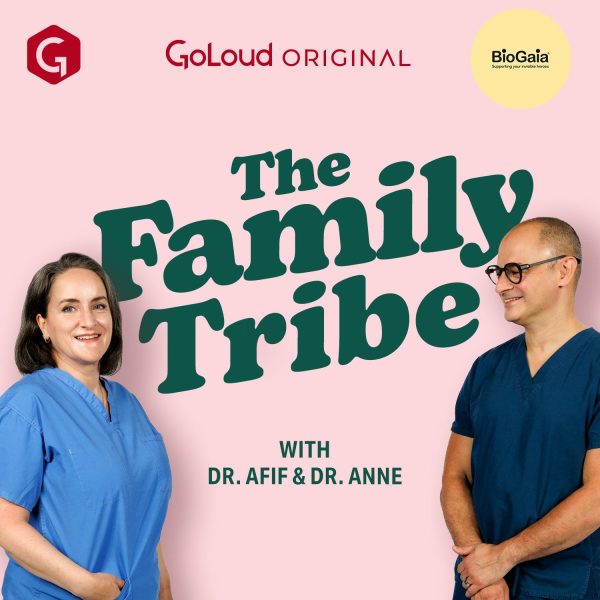
The Family Tribe
- Folgen
- 164
- Erscheint
- wöchentlich
- Letzte Folge
- 12. Nov. 2026
Über den Podcast
Parenting doesn’t come with a manual — but The Family Tribe is here to be part of the village that helps you through it.
Hosted by husband-and-wife medical experts Dr Afif El Khuffash and Dr Anne Doherty, The Family Tribeoffers honest, evidence-based advice for parents and guardians of children from newborns right through to teenagers. Bringing together more than 40 years of combined clinical experience, as well as their own lived experience as parents, Afif and Anne help listeners navigate the chaos, love, worry, tears and awe of family life.
With two episodes each week, the podcast cuts through the noise of online advice and misinformation to explore the topics that matter most — from pregnancy, newborn care and child development to mental health, family relationships, teenage challenges and common parenting worries.
Main episodes are released every Tuesday, with a shorter Baby Bonus episode focused on pregnancy and baby health every Thursday.
Expect myth-busting conversations, expert interviews, real listener stories, well-known guests and practical guidance designed to reassure, inform and support parents, guardians and the wider family at every stage of the journey.
Folgen 164
The Baby Tribe - Baby Formula: What’s Worth It, What’s Marketing, and What to Avoid
Three years after our original formula episode, Afif and Anne revisit the supermarket shelf to work out what parents actually need to know in 2026. They break down Stage 1, Stage 2 and Stage 3 formulas …
Shownotes
Three years after our original formula episode, Afif and Anne revisit the supermarket shelf to work out what parents actually need to know in 2026. They break down Stage 1, Stage 2 and Stage 3 formulas, comfort, hungry baby, anti-reflux, goat’s milk, lactose-free and hypoallergenic formulas, and look at the evidence behind claims such as “organic”, “gold” and “advanced”. They also discuss supermarket own-brand formulas, palm oil, why goat’s milk formula is not a suitable alternative for cow’s milk protein allergy, and when specialist formulas are genuinely indicated. The key message is simple: for most healthy babies who need formula, the best option is usually the simplest nutritionally appropriate formula they tolerate well, not the one with the fanciest label.
Hyperemesis: It's Not Just Morning Sickness
For some women, pregnancy sickness means a few weeks of nausea. For others, it can mean months of relentless vomiting, hospital admissions, severe dehydration, and an illness that takes over every aspect of …
Shownotes
For some women, pregnancy sickness means a few weeks of nausea. For others, it can mean months of relentless vomiting, hospital admissions, severe dehydration, and an illness that takes over every aspect of their lives.
This week on Family Tribe, Afif and Anne are joined by Dr. Naomi Smith, GP, trustee of Hyperemesis Ireland, and patient representative involved in developing Ireland's newly published national guidelines on Hyperemesis Gravidarum (HG).
Both Naomi and Anne have experienced hyperemesis themselves, and they share their deeply personal experiences of an illness that is too often misunderstood, underestimated, or dismissed as simply part of pregnancy.
Together, we explore what actually causes hyperemesis, including fascinating new discoveries involving the hormone GDF15, why early treatment matters, and what medications are available and considered safe during pregnancy.
We also discuss the potentially life-threatening complications of severe HG, from dehydration and electrolyte disturbances to malnutrition, neurological complications, and the need for high-dependency care.
Importantly, Naomi explains what's changed in Ireland's new national guidelines, why urine ketones should no longer determine whether a woman receives treatment, and how the voices of women who have experienced HG helped shape the recommendations.
And, of course, we talk about the emotional toll, the impact on relationships and families, and why simply listening to women can make an enormous difference.
There's also a rather unfortunate story involving Afif, garlic chips, and a complete lack of sympathy. Some things never change.
The message is simple: Hyperemesis is real. It can be serious. It is treatable. And women deserve to be heard long before they reach breaking point.
Links and resources2026 Irish National Clinical Guideline: Hyperemesis Gravidarum and Nausea/Vomiting in Pregnancy
https://www.hyperemesis.ie/healthcare-professionals/guidelines/
Hyperemesis Ireland: Information, resources and support for women and families affected by HG.
Instagram: Hyperemesis Ireland
https://www.instagram.com/hyperemesisireland/
If you're struggling with severe pregnancy sickness, speak to your GP or maternity team. You do not need to wait until you're severely dehydrated or losing significant weight to ask for help.
This episode includes discussions of severe illness, mental health difficulties and pregnancy termination.
Follow Family Tribe wherever you listen to podcasts, and please share this episode with someone who might need to hear it.
RSV: The Injection Keeping Babies Out Of Hospital
RSV season is here, and Ireland’s infant RSV immunisation programme is now in its third winter.In this episode, Afif and Anne explain what RSV does to babies, why some develop bronchiolitis severe enough to …
Shownotes
RSV season is here, and Ireland’s infant RSV immunisation programme is now in its third winter.
In this episode, Afif and Anne explain what RSV does to babies, why some develop bronchiolitis severe enough to need hospital care, and revisit their own experience when their 4-week-old son was admitted with RSV.
They also look at nirsevimab, the long-acting antibody now used to protect babies through RSV season, and the latest evidence showing substantial reductions in RSV-related hospitalisations in both Australia and Ireland.
They discuss who is eligible in Ireland, how the immunisation works, side effects, and why preventing RSV admissions matters for both families and the wider hospital system.
Useful links
Botox, Fillers and “Salmon Sperm”: What’s Worth It? With Dr Grace Daly
Botox, lip filler and “salmon sperm” treatments are everywhere. But what can they realistically achieve, what are the risks, and how do you choose someone you can trust?This week, Afif and Anne are joined by Dr …
Shownotes
Botox, lip filler and “salmon sperm” treatments are everywhere. But what can they realistically achieve, what are the risks, and how do you choose someone you can trust?
This week, Afif and Anne are joined by Dr Grace Daly, a dentist working in facial aesthetics, for a frank conversation about cosmetic treatments and the pressure to change how we look.
Grace explains the differences between Botox, hyaluronic acid fillers and polynucleotides, why results don’t always match expectations, and when she tells a patient that more treatment isn’t the answer.
We discuss:
• Pregnancy and breastfeeding, including why evidence and clinic policies can differ
• “Preventative Botox” and the pressure to start younger
• Filler complications, migration and how long results can last
• Teenagers, social media and conversations about changing their appearance
• Checking a practitioner’s credentials and looking beyond the cheapest offer
• Why a consultation should leave room for saying noThere’s also Afif’s unexpected Camino tattoo, Anne’s response, and a skincare confession involving Head & Shoulders.
Find Grace on Instagram: @agewithgrace_
Enjoyed the episode? Follow The Family Tribe, leave a review and share it with someone who would find this conversation useful.
BT: RSV: The Injection Keeping Babies Out of Hospital
RSV season is here, and Ireland’s infant RSV immunisation programme is now in its third winter.
In this episode, Afif and Anne explain what RSV does to babies, why some develop bronchiolitis severe enough to need hospital care, and revisit their own experience when their 4-week-old son was admitted with RSV.
They also look at nirsevimab, the long-acting antibody now used to protect babies through RSV season, and the latest evidence showing substantial reductions in RSV-related hospitalisations in both Australia and Ireland.
They discuss who is eligible in Ireland, how the immunisation works, side effects, and why preventing RSV admissions matters for both families and the wider hospital system.
Useful links
The Baby Tribe: Is Your Phone Interrupting Your Toddler?
We spend plenty of time worrying about children’s screen time. But what happens when the adults are the ones reaching for their phones?Following our recent Family Tribe discussion about children and technology …
Shownotes
We spend plenty of time worrying about children’s screen time. But what happens when the adults are the ones reaching for their phones?
Following our recent Family Tribe discussion about children and technology, Afif and Anne turn their attention to parents’ device use and the small attempts at communication we can miss while checking a message.
A new study from Calgary examined 107 parent-child pairs, with toddlers aged 13 to 18 months. It found that parental technology use during play was associated with more missed communication cues, alongside small associations with language scores. Crucially, it did not establish that phone use causes language delay.
We explore what these findings mean in everyday family life, including:
• How pointing, sounds, gestures and play become conversations before fluent speech.
• What “technoference” means and what the research can actually tell us.
• Why nappy changes and ordinary routines offer opportunities to connect.
• Parental exhaustion, independent play and the pressure to be constantly available.
• Why this study cannot give parents a prescribed number of phone-free minutes.
• Practical ways to protect shared attention and return to an interaction after an interruption.There is also an escaped toddler, a cold coffee and an uncomfortable question about whether adults follow their own screen rules.
Study discussed
Keskin G, McArthur BA, Marsh A, et al. Missed Child Communication Cues During Parent Technology Use and Child Language Development. JAMA Pediatrics. Published online 4 October 2026.
If this episode resonates, share it with another parent and explore our recent Family Tribe episode on children and technology.
What Pregnancy Really Does to Your Body
Why can pregnancy leave you utterly exhausted before there is even a visible bump? How does your body adapt to support a growing baby? And why might your favourite shoes never fit quite the same way again?This …
Shownotes
Why can pregnancy leave you utterly exhausted before there is even a visible bump? How does your body adapt to support a growing baby? And why might your favourite shoes never fit quite the same way again?
This week on The Family Tribe, Prof Afif EL-Khuffash and Dr Anne Doherty explore the extraordinary changes happening throughout a woman’s body during pregnancy.
Anne shares her experience of first trimester exhaustion and pregnancy sickness, including why years of demanding hospital shifts had not prepared her for how tired she would feel. Afif reflects on what partners can miss when so much of that work is invisible.
Together, they discuss changes in the heart, circulation, breathing, kidneys and metabolism, alongside the less glamorous realities of reflux, constipation, pelvic discomfort, acne and changing feet. They also explore research into the maternal brain and why pregnancy deserves greater understanding and respect.
You can be amazed by what your body is doing and still feel sick, sore, exhausted or completely fed up. Needing treatment, rest or support does not diminish that achievement.
We finish with symptoms that deserve medical assessment, mental health support, and practical ways families can help during pregnancy and after birth.
Useful HSE information
Share this episode with a partner, friend or family member who would benefit from understanding what pregnancy asks of a woman’s body.
The Baby Tribe: CMV and Autism: What Does the New Research Really Tell Us?
Afif and Anne examine a new Swedish study of almost 3.7 million people exploring associations between diagnosed congenital infections, autism and intellectual disability.They explain what TORCH infections are …
Shownotes
Afif and Anne examine a new Swedish study of almost 3.7 million people exploring associations between diagnosed congenital infections, autism and intellectual disability.
They explain what TORCH infections are, why comparing siblings strengthens the research, and why an association still cannot establish the cause of an individual child’s diagnosis. They also discuss a crucial limitation: clinically recognised infections do not represent every baby who acquires an infection before birth.
With CMV as the main focus, the conversation separates maternal illness from congenital infection and explores what families can take from the evidence, including practical prevention advice, antenatal screening and hearing and developmental follow-up.
Throughout, the message is clear: this research cannot tell a parent why their child is autistic, and it should not become another source of guilt.
Study discussed
Sjöqvist and colleagues. Congenital TORCH Infections and Neurodevelopmental Outcomes. JAMA Pediatrics, published online 21 September 2026.
Read the paper and access its supplementary tables
Useful information
HSE: Understanding the different types of CMV infection in pregnancy
HSE: Vaccines before pregnancy, including rubella protection
If you have a specific concern about an exposure during pregnancy or your child’s development, speak with your maternity team, GP or paediatric team.
Síle Seoige: Can You Be Grateful and Still Struggle?
Can you feel incredibly lucky to be a mother and still admit that it’s hard?Afif travels to Galway for an honest, funny and moving conversation with Síle Seoige about motherhood at 38 and 42, miscarriage, and …
Shownotes
Can you feel incredibly lucky to be a mother and still admit that it’s hard?
Afif travels to Galway for an honest, funny and moving conversation with Síle Seoige about motherhood at 38 and 42, miscarriage, and the anxiety of pregnancy after loss. Síle shares a moment in a swimming pool when grief caught her completely off guard, and explains why having another baby doesn’t erase what came before.
They discuss being heard and believed during labour, making space for partners’ grief, and the pressure to appear constantly grateful. Afif also opens up about how working in neonatal intensive care shaped his fears during his own family’s pregnancy.
Plus, returning home to Galway, finding the confidence to put family before work, and talking to children about Palestine, compassion and injustice.
An episode about the feelings parents don’t always give themselves permission to have.
This episode includes discussion of miscarriage and pregnancy after loss.
Baby Bonus: He Was Here: Dylan McKenna On Fatherhood After Baby Loss.
Content note: This episode discusses stillbirth, bereavement and mental health. Please listen when it feels right for you. Irish support details are included below.“If I have a son, I’m a father.”Dylan …
Shownotes
Content note: This episode discusses stillbirth, bereavement and mental health. Please listen when it feels right for you. Irish support details are included below.
“If I have a son, I’m a father.”
Dylan McKenna’s son Hunter was stillborn on 15 October 2025. In this episode, released on Hunter’s first birthday and Pregnancy and Infant Loss Remembrance Day, Dylan joins Afif and Anne to share his son’s story and what the past year has meant for him as a dad.
Dylan speaks about losing his own father during Caitlín’s pregnancy, the hope Hunter brought to their lives, and the devastating experience of leaving hospital without him. He explains why recognising bereaved parents as mothers and fathers matters, and how even well-meant words can leave them feeling unseen.
We explore fathers’ mental health, the exhaustion of appearing to cope at work, and the challenges of supporting each other when grief feels different for each partner. Dylan also shares his experience of counselling and his plans to connect with other bereaved fathers through Féileacáin.
As Dylan and Caitlín prepare to welcome Hunter’s little brother, he describes the fear, guilt and growing joy of pregnancy after loss, and their determination that both sons will always have a place in their family.
We also hear about his request for the Late Late Toy Show to light a Christmas tree blue and pink in memory of babies who have died, and why that small gesture could mean so much to families watching.
A conversation about love, fatherhood, saying our children’s names and continuing to show up for grieving parents.
Support in Ireland
If this conversation brings up difficult feelings, support is available:
Féileacáin: Call 085 249 6464 for support following stillbirth or neonatal death. Visit feileacain.ie.
Féileacáin Fathers: Connection and peer support for bereaved dads through football and social activities. Visit feileacainfathers.com or email [email protected].
A Little Lifetime Foundation: Bereavement support and counselling, including a dedicated dads’ group. Visit alittlelifetime.ie or email [email protected].
Irish Hospice Foundation Bereavement Support Line: Freephone 1800 80 70 77, Monday to Friday, 10am to 1pm, for support with grief or concern about someone who is grieving. More information.
Samaritans Ireland: Call 116 123, free, 24 hours a day, if you need someone to listen. samaritans.org.
Do Older Mothers Live Longer? The Science of Pregnancy and Ageing
Can having a baby later in life really help you live longer? And what do scientists actually mean when they say pregnancy changes your biological age?This week on The Family Tribe, Afif and Anne investigate the …
Shownotes
Can having a baby later in life really help you live longer? And what do scientists actually mean when they say pregnancy changes your biological age?
This week on The Family Tribe, Afif and Anne investigate the research behind the headlines linking motherhood, ageing and longevity. They explore the remarkable demands pregnancy places on the body, changes in biological ageing markers during pregnancy and after birth, and why having your first baby later is a different question from having your last baby later.
Along the way, they discuss telomeres, epigenetic clocks, genetics, menopause and family size, asking whether later motherhood might reflect better underlying health rather than cause a longer life.
There is also Anne’s recollection of planning her family around turning 35, a discussion of age-related pregnancy risks, and some strong feelings about the phrase “geriatric pregnancy”.
With plenty of teasing and a healthy scepticism towards Instagram science, this is a conversation about understanding the evidence without turning it into another reproductive deadline. Your child’s birth certificate cannot predict your lifespan.
Baby Bonus: What Makes a Positive Birth Experience? Martha’s Story
What happens when Anne’s lifelong best friend joins the podcast? Afif discovers just how much history he has missed, and a birth story somehow involves an offer to do the midwives’ hair. In this bonus episode …
Shownotes
What happens when Anne’s lifelong best friend joins the podcast? Afif discovers just how much history he has missed, and a birth story somehow involves an offer to do the midwives’ hair. In this bonus episode, we welcome Martha Galvin, hairdresser, business owner, mother of three boys and honorary fifth Doherty sister. Martha shares the stories of her first son’s arrival and the later birth of her twins. She reflects on preparing for labour, discussing her preferences with her maternity team, choosing pain relief and understanding what might happen if plans needed to change. At the heart of her experience was feeling heard, supported and involved in the decisions being made. Martha also introduces her planned podcast, The Invisible Bag, exploring the unseen experiences and worries people carry through life. An affectionate, candid conversation about birth, friendship and the people who help us feel supported. Every birth is different, and Martha’s story reflects the choices and circumstances that were right for her. Put the kettle on, join us, and share this episode with someone who loves a good birth story.
Should We Ban Children from Social Media?
Would banning teenagers from social media make them safer? And what might we miss if we judge their online lives by screen time alone? This week on The Family Tribe, Afif and Anne explore teenagers, technology …
Shownotes
Would banning teenagers from social media make them safer? And what might we miss if we judge their online lives by screen time alone? This week on The Family Tribe, Afif and Anne explore teenagers, technology and the daily negotiations happening in family homes, including their own. Maggie explains why she felt she received access to social media too late, while Faisal’s experience shows how recognising a problem and asking for help can become part of learning to manage it. There is also an alarming screen-time total that turns out to involve rather more Lego than expected. Alongside these family stories, Afif and Anne discuss Irish online safety rules, research on teenage mental health, school phone restrictions and the arguments for and against blanket bans. An honest conversation about setting limits, listening to teenagers and recognising our own scrolling habits.
Follow The Family Tribe, leave a rating or review, and share this episode with a parent navigating the same conversations.
Content note: This episode includes discussion of self-harm and suicide.
Should We Worry About Microplastics in Baby Bottles?
Headlines about babies swallowing millions of plastic particles can make an ordinary bottle feed feel like a parenting mistake. So what does the research actually tell us?In this episode of Baby Tribe Shorts …
Shownotes
Headlines about babies swallowing millions of plastic particles can make an ordinary bottle feed feel like a parenting mistake. So what does the research actually tell us?
In this episode of Baby Tribe Shorts, Afif and Anne explore microplastics in baby bottles, silicone teats and milk storage bags. They revisit the Trinity College Dublin study behind many of the headlines, discuss why measuring particles is surprisingly complicated, and explain the distinction between detecting exposure and demonstrating harm.
They also separate microplastics from BPA, consider the practical drawbacks of glass bottles, and discuss why concerns about plastic should never undermine established advice on sterilisation and formula preparation. Along the way, Afif loses patience with Instagram fearmongering, Anne recalls a toddler licking a shoe, and a disagreement over millimetres becomes surprisingly competitive.
An episode about feeding choices, scientific uncertainty and helping parents make decisions without unnecessary guilt.
Can GLP-1 Drugs Do More Than Help You Lose Weight?
Weight-loss drugs are everywhere in the headlines. But what might they mean for our health beyond the number on the scales?This week, Professor Afif EL-Khuffash and Dr Anne Doherty explore GLP-1 medicines and …
Shownotes
Weight-loss drugs are everywhere in the headlines. But what might they mean for our health beyond the number on the scales?
This week, Professor Afif EL-Khuffash and Dr Anne Doherty explore GLP-1 medicines and the research into their effects on the heart, kidneys, liver and painful knees. They explain how these medicines influence blood sugar and appetite, unpack “food noise”, and discuss why managing obesity involves much more than willpower.
They also explore emerging research on alcohol cravings, the findings in Alzheimer’s disease, and the practical realities of treatment, including side effects, nutrition, maintaining muscle and medical supervision. For breastfeeding parents, Afif explains what the available research can tell us, what remains unknown, and why individual circumstances matter.
Along the way, Anne questions both the evidence and Afif’s increasingly busy social calendar.
Science, scepticism and a little marital cross-examination as we explore what these medicines can offer, and where the questions remain.
This episode provides general information and does not replace individual medical advice.
Baby Bonus: Are Birth Interventions Rising for the Right Reasons?
In this Baby Tribe Short, Afif and Anne look at a recent New South Wales paper asking why birth interventions are rising. The study found that so-called cascade interventions, including induction or …
Shownotes
In this Baby Tribe Short, Afif and Anne look at a recent New South Wales paper asking why birth interventions are rising. The study found that so-called cascade interventions, including induction or augmentation, epidural or spinal analgesia, and instrumental birth or intrapartum caesarean section, increased over time, even among women labelled low risk.
But what does “low risk” really mean? And does a rise in intervention automatically mean harm, overmedicalisation, or poor practice?
Afif and Anne unpack what the paper shows, what it does not show, and why the missing outcome data matters. They discuss maternal risk, hospital culture, birth preferences, induction, epidurals, caesarean birth, and the danger of drawing strong conclusions from incomplete data.
The big question is whether mothers and babies are doing better because of them.
Link to paper: https://www.mdpi.com/3042-898X/1/1/2
The Baby Grew Up: What Makes a Family in 2026?
Baby Tribe has grown up.In the first episode of The Family Tribe, Afif and Anne explain why they are widening the conversation from babies to the whole messy, funny and complicated world of family life.They …
Shownotes
Baby Tribe has grown up.
In the first episode of The Family Tribe, Afif and Anne explain why they are widening the conversation from babies to the whole messy, funny and complicated world of family life.
They reflect on 18 years of parenting, raising teenagers, marriage, multicultural family life, ageing parents, disappearing villages, financial pressure and bringing up children in a digital world that none of us fully understands.
Along the way, they discuss 3:30 am wake-ups at every age, negotiating with teenagers through ChatGPT, growing up in Palestinian and West of Ireland families, and why loading a dishwasher remains one of marriage’s most dangerous tests.
They also share what they wish they had understood when their children were small, including the fleeting nature of ordinary moments and the unexpected joy of not only loving the adults your children become, but genuinely liking them.
The baby grew up. The podcast did too. Welcome to The Family Tribe.
Welcome To The Family Tribe
Parenting doesn’t come with a manual but The Family Tribe is here to be part of the village that helps you through it.Hosted by husband-and-wife medical experts Dr Afif El Khuffash and Dr Anne Doherty, The …
Shownotes
Parenting doesn’t come with a manual but The Family Tribe is here to be part of the village that helps you through it.
Hosted by husband-and-wife medical experts Dr Afif El Khuffash and Dr Anne Doherty, The Family Tribe offers honest, evidence-based advice for parents and guardians of children from newborns right through to teenagers. Bringing together more than 40 years of combined clinical experience, as well as their own lived experience as parents, Afif and Anne help listeners navigate the chaos, love, worry, tears and awe of family life.
With two episodes each week, the podcast cuts through the noise of online advice and misinformation to explore the topics that matter most — from pregnancy, newborn care and child development to mental health, family relationships, teenage challenges and common parenting worries.
Main episodes are released every Tuesday, with a shorter Baby Bonus episode focused on pregnancy and baby health every Thursday.
Expect myth-busting conversations, expert interviews, real listener stories, well-known guests and practical guidance designed to reassure, inform and support parents, guardians and the wider family at every stage of the journey.
BTS: Is Private Maternity Care Really Safer?
A large Australian study comparing public and private maternity care seemed to show better outcomes for mothers and babies in private obstetric-led care, including lower rates of stillbirth, NICU admission …
Shownotes
A large Australian study comparing public and private maternity care seemed to show better outcomes for mothers and babies in private obstetric-led care, including lower rates of stillbirth, NICU admission, severe perineal tears, and maternal haemorrhage. But the story is much more complicated than the headline suggests.
In this episode of Baby Tribe Shorts, Afif and Anne unpack the study and ask whether it really proves that private care is safer, or whether the results reflect something deeper: differences in patient selection, continuity of care, intervention thresholds, and the fact that public hospitals often absorb the highest-risk pregnancies.
They also discuss why the findings may not translate neatly to Ireland, where private obstetric care usually sits within public maternity hospitals rather than separate private maternity units. The take-home message is not that public care is worse, but that fragmented care, lack of continuity, and risk transfer matter. A high-risk hospital having worse outcomes does not mean it gives worse care. Sometimes it simply means it is looking after the patients who need the most help.
Link to Article: https://obgyn.onlinelibrary.wiley.com/doi/10.1111/1471-0528.18286
BTS: Paracetamol, Pregnancy and Autism: What Parents Need to Know
In this episode of Baby Tribe Shorts, Afif and Anne tackle the anxiety caused by recent headlines linking paracetamol use in pregnancy with autism, ADHD and intellectual disability. They walk through a major …
Shownotes
In this episode of Baby Tribe Shorts, Afif and Anne tackle the anxiety caused by recent headlines linking paracetamol use in pregnancy with autism, ADHD and intellectual disability. They walk through a major Lancet systematic review and meta-analysis, explaining why the best-quality evidence, especially sibling comparison studies, does not support a causal link between paracetamol use in pregnancy and these neurodevelopmental outcomes.
The episode also explains why paracetamol remains the recommended first-line option for pain and fever in pregnancy, why untreated fever can itself be harmful, and why earlier studies may have suggested a risk because of confounding, recall bias and the reasons people take medication in the first place. The key message for parents is clear: use paracetamol when needed, at recommended doses, and don’t let fear-driven headlines make pregnancy harder than it already is.
https://www.thelancet.com/journals/lanogw/article/PIIS3050-5038(25)00211-0/fulltext
BTS: Should Everyone Be Induced at 39 Weeks?
In this episode of Baby Tribe Shorts, Afif and Anne take a closer look at one of the most influential obstetric studies of the last decade: the ARRIVE trial.The trial is often used in conversations about …
Shownotes
In this episode of Baby Tribe Shorts, Afif and Anne take a closer look at one of the most influential obstetric studies of the last decade: the ARRIVE trial.
The trial is often used in conversations about elective induction at 39 weeks, especially for low-risk first-time mothers. But what did it actually show? Did induction improve outcomes for babies? Did it really reduce C-section rates? And what happens when the findings of a carefully controlled clinical trial are applied to busy real-world maternity units?
Afif and Anne break down the design of the trial, including who was included, how the induction and expectant management groups were managed, and why the distinction between internal validity and external validity matters. They discuss the key findings, including the lack of significant difference in neonatal outcomes, the reported reduction in C-section rates, and the importance of patience, staffing, careful selection, and clinical context when translating research into practice.
This is not an anti-induction episode. It is an episode about nuance. Induction at 39 weeks may be a reasonable option for some women, but the ARRIVE trial does not mean that every low-risk pregnancy should automatically end at 39 weeks. As always, the real question is not just “what did the study show?” but “does this apply to this person, in this hospital, with these resources, and these priorities?”
Link to Trial: https://www.nejm.org/doi/full/10.1056/NEJMoa1800566
134: Baby Gadgets, Gimmicks and Red Flags
This week on Baby Tribe, Afif and Anne take a closer look at the baby products being marketed to exhausted parents, from sleep pods, reflux pillows and weighted sleep suits to formula prep machines, nasal …
Shownotes
This week on Baby Tribe, Afif and Anne take a closer look at the baby products being marketed to exhausted parents, from sleep pods, reflux pillows and weighted sleep suits to formula prep machines, nasal aspirators, rectal wind devices, baby monitors, walkers and bouncers. The episode is not about shaming parents for buying products that promise help. It is about asking better questions before clicking “add to cart”. Does the product support safety, or does it introduce risk? Is it solving a real problem, or selling reassurance to tired parents? And does it follow the basic principles of safe sleep, safe feeding, safe movement and sensible monitoring? With practical advice, plenty of honesty, and a healthy suspicion of pastel-coloured nonsense, this episode gives parents a simple framework for deciding what is useful, what is unnecessary, and what should probably stay out of the cot, the bottle, the buggy, or the baby’s holes. https://www2.hse.ie/babies-children/first-aid/choking-in-babies/ Learn more about your ad choices. Visit megaphone.fm/adchoices133: The Freebirth Movement: Choice, Risk and Accountability
In this episode of The Baby Tribe, Afif speaks with Irish Times journalist Ellen Coyne about her reporting on the rise of freebirth in Ireland: giving birth without a midwife, doctor or trained medical …
Shownotes
In this episode of The Baby Tribe, Afif speaks with Irish Times journalist Ellen Coyne about her reporting on the rise of freebirth in Ireland: giving birth without a midwife, doctor or trained medical professional present. Ellen discusses what led her to investigate the movement, the concerns raised by senior midwives, the lack of clear data around unassisted births, and how online communities can frame freebirth as empowering while failing to fully engage with the risks. After the interview, Afif and Anne debrief the issue from neonatal and obstetric perspectives. They explore why some women may feel drawn away from maternity services, including previous trauma, poor communication, lack of continuity of care and fear of intervention. They also examine the role of social media, doulas, birthkeepers and unregulated advice in shaping decisions during one of the most vulnerable times in a woman’s life. This is not a conversation about shaming women. It is about safety, autonomy, trust and accountability. Birth trauma is real. Consent matters. But real empowerment is not being left alone with risk. It is having accurate information, respectful care and skilled support available when things change. Birth is not a purity test. There is no gold medal for suffering. https://www.irishtimes.com/health/2026/06/06/free-births-in-ireland-concern-grows-for-women-choosing-births-without-medical-help/ Learn more about your ad choices. Visit megaphone.fm/adchoices132: Bad Science in a Pretty Font - Caesareans, Risk and Birth Misinformation
In this episode of The Baby Tribe, Afif and Anne take on one of the most emotionally charged topics in maternity care: caesarean birth. Online birth content often presents two true statements side by side …
Shownotes
In this episode of The Baby Tribe, Afif and Anne take on one of the most emotionally charged topics in maternity care: caesarean birth. Online birth content often presents two true statements side by side: caesareans carry more risk than vaginal birth, and caesarean rates are rising. The implied conclusion is often that unnecessary caesareans are harming women. But is that a fair interpretation of the evidence? Afif and Anne unpack why context matters, especially the concept of confounding by indication: the idea that the reason someone receives an intervention is often linked to the outcome being measured. Using a NICU analogy, they explain why comparing caesarean outcomes with uncomplicated vaginal births can be deeply misleading. They also discuss planned versus emergency caesareans, absolute versus relative risk, the risks of doing nothing, and why both hospital maternity care and private birth care can carry their own biases. The episode includes a breakdown of a 2023 systematic review and meta-analysis comparing planned caesarean delivery with planned vaginal delivery in randomized trials. This is not an episode about promoting caesareans or dismissing vaginal birth. It is about evidence, nuance, and helping women recognise the difference between informed consent and fear-based messaging. Learn more about your ad choices. Visit megaphone.fm/adchoices131: Alcohol, Pregnancy and Breastfeeding: No Shame, No Myths, Just Biology
Alcohol, pregnancy and breastfeeding are surrounded by myths, slogans and a fair amount of internet nonsense. In this episode, Afif and Anne look at what alcohol actually does before conception, during …
Shownotes
Alcohol, pregnancy and breastfeeding are surrounded by myths, slogans and a fair amount of internet nonsense. In this episode, Afif and Anne look at what alcohol actually does before conception, during pregnancy and while breastfeeding. They discuss paternal alcohol exposure, fetal alcohol spectrum disorder, the “sober enough to feed” slogan, pumping and dumping, beer and milk supply, and the misleading comparison between breastmilk and orange juice. No shame, no panic, just biology. Learn more about your ad choices. Visit megaphone.fm/adchoices130: Vitamin K at Birth: The Tiny Injection Social Media Got Wrong
In this episode, Afif and Anne take a deep dive into vitamin K at birth and the growing wave of misinformation surrounding it online. They explore why newborn babies are naturally low in vitamin K, how clotting …
Shownotes
In this episode, Afif and Anne take a deep dive into vitamin K at birth and the growing wave of misinformation surrounding it online. They explore why newborn babies are naturally low in vitamin K, how clotting works, and what vitamin K deficiency bleeding (VKDB) actually is. The discussion covers the differences between intramuscular and oral vitamin K, why the injection remains the most reliable protection, and the devastating consequences VKDB can have, including brain bleeding and death. Along the way, they unpack some of the most common myths circulating on social media, from claims about “toxins” and cancer to misconceptions around breastfeeding and “natural” birth. As always, the episode combines evidence-based medicine with honesty, humour, and practical conversations about how healthcare professionals and parents can navigate fear, risk, and misinformation together. Learn more about your ad choices. Visit megaphone.fm/adchoices129: When Baby Sleep Advice Becomes Dangerous
In this episode of The Baby Tribe, Afif speaks to BBC journalist Divya Talwar about her investigation into unsafe advice given by some self-described baby sleep experts. Divya explains why the BBC pursued the …
Shownotes
In this episode of The Baby Tribe, Afif speaks to BBC journalist Divya Talwar about her investigation into unsafe advice given by some self-described baby sleep experts. Divya explains why the BBC pursued the story, what parents told her, and how exhaustion, social media credibility and gaps in postnatal support can leave families vulnerable to advice that may conflict with safer sleep guidance. After the interview, Afif and Anne debrief the key issues: normal infant sleep, back-to-sleep guidance, clear cot spaces, front sleeping, loose bedding, breathing monitors, reflux and allergy claims, and how parents can judge whether someone offering sleep advice is properly qualified and working within safe boundaries. This episode is not about blaming tired parents. It is about helping families find support that is safe, evidence-based and honest about its limits. BBC Documentary: https://www.bbc.com/news/articles/ce84e1vn1l2o Safe co-sleeping: https://profafif.substack.com/p/co-sleeping-all-you-need-to-know?r=4l3k10 Learn more about your ad choices. Visit megaphone.fm/adchoices128: Leaking Isn’t Normal: Pelvic Floor Health, Surgery & the Mesh Debate
Pelvic floor problems affect a huge number of women, yet many suffer in silence, unsure what’s normal and what isn’t. In this episode, we’re joined by Consultant Obstetrician and Gynaecologist and …
Shownotes
Pelvic floor problems affect a huge number of women, yet many suffer in silence, unsure what’s normal and what isn’t. In this episode, we’re joined by Consultant Obstetrician and Gynaecologist and urogynaecology specialist Breffini Anglim O'Regan to break down everything you need to know about pelvic floor health, from prolapse and urinary incontinence to the real impact of pregnancy, childbirth, and ageing. We explore the full range of treatment options, from physiotherapy and pessaries to surgical interventions, including a clear and balanced look at the mesh surgery controversy, what it is, why it was widely used, what went wrong for some women, and why it is still being used in other countries but not in Ireland. We also unpack why leakage is not something women should just “put up with,” the role of vaginal estrogen and why it is often misunderstood, how to know when to seek help, and what questions to ask before considering surgery, with the aim of giving women clear, evidence-based information so they can make informed decisions about their own bodies without fear, stigma, or misinformation. Learn more about your ad choices. Visit megaphone.fm/adchoices127: When Birth Doesn’t Go to Plan: Understanding Postpartum Care
In this episode of The Baby Tribe, Afif and Anne tackle an important but often overlooked topic: what happens when things don’t go to plan after a baby is born. While most women recover well after delivery, a …
Shownotes
In this episode of The Baby Tribe, Afif and Anne tackle an important but often overlooked topic: what happens when things don’t go to plan after a baby is born. While most women recover well after delivery, a small number require closer monitoring or escalation of care. Anne, a consultant obstetric anaesthesiologist, explains how maternity teams identify early warning signs, what triggers a move from the postnatal ward to high dependency or intensive care, and what that experience looks like in practice. They break down the differences between ward care, HDU, and ICU, the most common reasons mothers need escalation such as haemorrhage, infection, and preeclampsia, and why early recognition is so important for good outcomes. The episode also explores the emotional impact of unexpected complications, how hospitals support mothers and babies during these situations, and what symptoms should never be ignored after going home. This is an honest, reassuring, and informative conversation designed to give parents a clearer understanding of how maternity care works when it matters most. Learn more about your ad choices. Visit megaphone.fm/adchoices126: I Thought I’d Be a Mother… Then Life Took a Different Turn
We all grow up with a version of how life is supposed to go. Meet someone, settle down, have kids. But what happens when that version doesn’t unfold the way you expected? In this episode, comedian Aideen …
Shownotes
We all grow up with a version of how life is supposed to go. Meet someone, settle down, have kids. But what happens when that version doesn’t unfold the way you expected? In this episode, comedian Aideen McQueen joins us for a funny, honest, and deeply personal conversation about identity, addiction, recovery, and coming to terms with not having children. From always imagining herself as a mother to confronting that reality in her 40s, Aideen shares the emotional complexity of grief, acceptance, and finding purpose in unexpected places. This isn’t a story about giving up. It’s a story about redefining what a meaningful life looks like and discovering that care, connection, and fulfilment can exist in many different forms. FInd Aideen and info on all her shows at: https://www.instagram.com/comedymcqueen/ Sponsored by Happytummy.ie Learn more about your ad choices. Visit megaphone.fm/adchoices125: Clare McKenna on Finding Your Version of Wellness (Without the Pressure)
Parenting is hard enough… so when did “wellness” become another thing to get right? In this episode, we’re joined by Clare McKenna, host of Alive & Kicking and author of Would You Be Well?, to unpack the modern …
Shownotes
Parenting is hard enough… so when did “wellness” become another thing to get right? In this episode, we’re joined by Clare McKenna, host of Alive & Kicking and author of Would You Be Well?, to unpack the modern obsession with wellness and why, for many parents, it’s doing more harm than good. We explore Clare’s journey from chasing diets, routines, and “perfect health” to realising that wellness had quietly become another source of pressure. Together, we talk about how social media, unrealistic expectations, and guilt-driven habits are shaping how we think about health… and why so many parents feel like they’re getting it wrong. Afif shares his own experience of going all-in on fitness and achieving the goal… only to feel worse. Anne reflects on how motherhood reshapes identity, routine, and self-care in ways nobody prepares you for. This episode is about stripping things back. Not perfection. Not optimisation. Just figuring out what actually works in real life. If your version of wellness is making you feel worse… it might be time to rethink it. Proudly sponsored by www.happytummy.ie Learn more about your ad choices. Visit megaphone.fm/adchoices
Hier stehen die neuesten 40 von 164 Folgen. Ältere Folgen findest du im Feed des Podcasts.
Ähnliche Podcasts
Mehr Kinder und Familie-Podcasts

Ist das dein Podcast?
Bestätige es mit einem Eintrag in deinem Feed: Du bekommst hier einen Code, trägst ihn als podcast:txt in den Kanal deines Feeds ein, und wir prüfen ihn. Danach steht dein Podcast als „verifiziert“ bei SoundNode.