

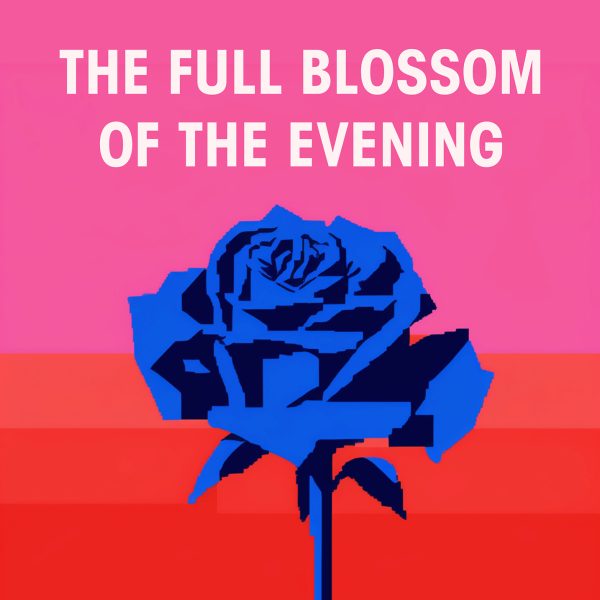
The Full Blossom of the Evening: A Podcast about David Lynch and Twin Peaks
- Folgen
- 21
- Erscheint
- unregelmäßig
- Letzte Folge
- 11. Sep. 2026
Über den Podcast
Broadcasting from the Bookhouse, Indigo and Hilary discuss motifs, allusions, and resonances across David Lynch’s work and Twin Peaks.
Folgen 21
The Comic Art of David Lynch, with guest Jeff Trexler
David Lynch's comic The Angriest Dog in the World ran for ten years in the LA Reader, but most of the strips have not been seen since their original publication...until now. Jeff Trexler of the Comic Book Legal …
Shownotes
David Lynch's comic The Angriest Dog in the World ran for ten years in the LA Reader, but most of the strips have not been seen since their original publication...until now. Jeff Trexler of the Comic Book Legal Defense Fund has assembled a nearly complete archive of "Dogs" and hosted a series of panel discussions on Lynch's comic art. In this episode, Jeff joins Indigo and Hilary to discuss the significance of comics and animation in Lynch's oeuvre.
Thank you to Jeff for providing this slide deck with some of the strips and images mentioned in the episode: https://rb.gy/vi875g
Rita Hayworth
Rita Hayworth appears only briefly on a poster in Mulholland Drive, but her life and work are deeply woven into the fabric of that film. Indigo and Hilary intended to focus on Gilda, but instead woke up to the …
Shownotes
Rita Hayworth appears only briefly on a poster in Mulholland Drive, but her life and work are deeply woven into the fabric of that film. Indigo and Hilary intended to focus on Gilda, but instead woke up to the magnificent star behind the eponymous character.
Picnic at Hanging Rock, with guest Mileta Rien
Fans of Twin Peaks have long discussed the uncanny resonances between the series and Peter Weir's 1975 film Picnic at Hanging Rock. Indigo, Hilary, and Mileta enter this ongoing conversation with an additional …
Shownotes
Fans of Twin Peaks have long discussed the uncanny resonances between the series and Peter Weir's 1975 film Picnic at Hanging Rock. Indigo, Hilary, and Mileta enter this ongoing conversation with an additional focus on the 1967 novel by Joan Lindsay that inspired Weir's film.
Show notes from Mileta: If you would like to help support to Aboriginal people's ongoing efforts toward self-determination, please consider donating to
Seed Indigenous Youth Climate Network Empowering Aboriginal and Torres Strait Islander young people to protect Country, culture and communities. *** A moving discussion of displacement, both historical and contemporary: Sydney Writers Festival 2021 Opening Night Address.
'Writers Melissa Lucashenko, Tara June Winch and Evelyn Araluen discuss literature, who gets a voice, and the ways that stories define and shape us all.' *** I meant to talk about the Aboriginal tracker character in Picnic, who is given no dialogue and, to add insult to injury, fails where white-knight Mike succeeds. In the film he appears once in the background and then only briefly. The film Tracker turns a critical gaze on this aspect of Australian history: TRACKER - TrailerThe Wizard of Oz
David Lynch said, “There is not a day that goes by when I don’t think of the Wizard of Oz.” Exploring the story through its origins in defining cultural movements of the early twentieth century, Indigo and …
Shownotes
David Lynch said, “There is not a day that goes by when I don’t think of the Wizard of Oz.” Exploring the story through its origins in defining cultural movements of the early twentieth century, Indigo and Hilary discuss the meaning of this American fairy tale and how it echoes in Lynch’s life and work.
Horne's Department Store
Mark Frost's inspiration for naming Horne's Department Store in Twin Peaks came from a Pittsburgh institution he encountered during his time at Carnegie Mellon University. Indigo and Hilary spend their …
Shownotes
Mark Frost's inspiration for naming Horne's Department Store in Twin Peaks came from a Pittsburgh institution he encountered during his time at Carnegie Mellon University. Indigo and Hilary spend their Frost-awarded "bonus points" sharing details from the history of the real-life Horne's, as well as some personal memories of the store.
Caspary's "Laura" and Otto's
Names like Jacoby and Lydecker come to Twin Peaks straight from Laura, the 1943 novel by Vera Caspary and 1944 film directed by Otto Preminger. Indigo and Hilary discuss thematic parallels between the stories …
Shownotes
Names like Jacoby and Lydecker come to Twin Peaks straight from Laura, the 1943 novel by Vera Caspary and 1944 film directed by Otto Preminger. Indigo and Hilary discuss thematic parallels between the stories of Laura Hunt and Laura Palmer.
The Glass Menagerie
Robert Engels intentionally referenced Tennessee Williams’ play The Glass Menagerie when he added the blue rose to Twin Peaks' symbolism in Fire Walk with Me. Indigo and Hilary explore the implications of this …
Shownotes
Robert Engels intentionally referenced Tennessee Williams’ play The Glass Menagerie when he added the blue rose to Twin Peaks' symbolism in Fire Walk with Me. Indigo and Hilary explore the implications of this allusion and discuss some of the reasons Engels may have felt compelled to link the world of Twin Peaks to the dreamy interiority of The Glass Menagerie.
Read the play online here: https://hama-univ.edu.sy/newsites/humanities/wp-content/uploads/2022/10/Glass-Menagerie-PDFDrive-.pdf
Satoshi Kon & the Collective Dream
Called "Anime's David Lynch", Satoshi Kon cited Lynch as an influence, but some of his work seems to predict rather than reflect the themes of Lynch's films and Twin Peaks: The Return. Longtime Kon fan Indigo …
Shownotes
Called "Anime's David Lynch", Satoshi Kon cited Lynch as an influence, but some of his work seems to predict rather than reflect the themes of Lynch's films and Twin Peaks: The Return. Longtime Kon fan Indigo and neophyte Hilary discuss Kon's work through a Lynchian lens.
The Books of Fire Walk with Me
Laura Palmer interacts with two identifiable texts in Fire Walk with Me: William Thackeray's The Rose and the Ring and William Saroyan's The Human Comedy. Indigo and Hilary discuss the thematic resonances of …
Shownotes
Laura Palmer interacts with two identifiable texts in Fire Walk with Me: William Thackeray's The Rose and the Ring and William Saroyan's The Human Comedy. Indigo and Hilary discuss the thematic resonances of both stories in the film and Twin Peaks.
Thanks to Twin Peaks Blog for the investigations that led to this episode! https://twinpeaksblog.com/2025/01/02/twin-peaks-prop-laura-palmers-home-university-bookshelf-volume-5/
Psychic Self-Defense, with guest John Bernardy
Mark Frost cited Dion Fortune's occult classic Psychic Self-Defense as a source for terms and concepts woven into the Twin Peaks mythology. Indigo and Hilary are joined by John Bernardy of The Blue Rose Task …
Shownotes
Mark Frost cited Dion Fortune's occult classic Psychic Self-Defense as a source for terms and concepts woven into the Twin Peaks mythology. Indigo and Hilary are joined by John Bernardy of The Blue Rose Task Force Podcast to discuss everything from the creation of Artificial Elementals to the defensive capabilities of coffee and cherry pie.
Nos Oncles: Tati & Lynch
Jacques Tati created worlds and films that allowed David Lynch to dream. Indigo and Hilary discuss what made these artists, in Lynch’s words, “kindred souls”.
O Captain! My Captain!
Sadgati praptirastu, David Lynch, with blue skies and golden sunshine all along the way.
Four Quartets & The Return, part 2
Indigo and Hilary fare forward into the remaining three poems of T.S. Eliot's Four Quartets and discuss the poems' resonances within The Return. Read Four Quartets here …
Shownotes
Indigo and Hilary fare forward into the remaining three poems of T.S. Eliot's Four Quartets and discuss the poems' resonances within The Return.
Read Four Quartets here: https://www.lettersjournal.org/wp-content/uploads/2017/05/fourquartets.pdf
Four Quartets & The Return, part 1
Is it Time Future or is it Time Past? When Audrey Horne first appears in The Return, she's standing in front of a copy of T.S. Eliot's Four Quartets; the language and themes of this book of poems strongly …
Shownotes
Is it Time Future or is it Time Past? When Audrey Horne first appears in The Return, she's standing in front of a copy of T.S. Eliot's Four Quartets; the language and themes of this book of poems strongly suggest its presence is not incidental. In the first of this two-part episode, Indigo and Hilary discuss Burnt Norton and its resonances within Twin Peaks Read Four Quartets here: https://www.lettersjournal.org/wp-content/uploads/2017/05/fourquartets.pdfThe Wild Ones: Marlon & Wally
Called "the most influential subcultural movie of all time," the 1953 film The Wild One echoes in all three seasons of Twin Peaks, especially in the character of Wally Brando. Indigo and Hilary discuss the …
Shownotes
Called "the most influential subcultural movie of all time," the 1953 film The Wild One echoes in all three seasons of Twin Peaks, especially in the character of Wally Brando. Indigo and Hilary discuss the incredible impact of the film and its star, Marlon Brando, on American culture and then explore the significance of both in Twin Peaks.
Lynch/Wonderland
Lewis Carroll's novels Alice's Adventures in Wonderland and Through the Looking-Glass and What Alice Found There share uncanny resonances with the worlds of Twin Peaks, Inland Empire, and other David Lynch …
Shownotes
Lewis Carroll's novels Alice's Adventures in Wonderland and Through the Looking-Glass and What Alice Found There share uncanny resonances with the worlds of Twin Peaks, Inland Empire, and other David Lynch Films. Indigo and Hilary discuss why they think the Lynchian universe has a deeper kinship with Wonderland than it does with Oz.
Good Times on Our Street
Called “a children’s book that permanently lodged itself in David’s mind”, Good Times on Our Street clearly influenced works like Blue Velvet and Twin Peaks, as well as Lynch’s general approach to ‘the art …
Shownotes
Called “a children’s book that permanently lodged itself in David’s mind”, Good Times on Our Street clearly influenced works like Blue Velvet and Twin Peaks, as well as Lynch’s general approach to ‘the art life’. Indigo and Hilary discuss the tangible resonances of the imagery, themes, and dual purposes of this American basal reader in David Lynch’s world.
In Cold Blood & Twin Peaks
Truman Capote's In Cold Blood and Twin Peaks share some uncanny resonances. Indigo and Hilary discuss these, as well as how both texts reflect shifts in American culture since the 1960s.
The Little Girl Who Lives Down the Lane
Discussing the 1974 novel by Laird Koenig and 1976 film it inspired, Indigo and Hilary explore thematic connections between these texts and Twin Peaks. "Is it the story of the little girl who lived down the …
Shownotes
Discussing the 1974 novel by Laird Koenig and 1976 film it inspired, Indigo and Hilary explore thematic connections between these texts and Twin Peaks. "Is it the story of the little girl who lived down the lane? Is it?" Yes, Audrey, we think it is.
Lynch & Lolita
Stanley Kubrick's film Lolita has discernible fingerprints on Twin Peaks, Eraserhead, and other films by David Lynch. Indigo and Hilary discuss these, as well as the parallels between Laura Palmer and Vladimir …
Shownotes
Stanley Kubrick's film Lolita has discernible fingerprints on Twin Peaks, Eraserhead, and other films by David Lynch. Indigo and Hilary discuss these, as well as the parallels between Laura Palmer and Vladimir Nabokov's Lolita.
Ähnliche Podcasts
Mehr TV und Film-Podcasts

Ist das dein Podcast?
Bestätige es mit einem Eintrag in deinem Feed: Du bekommst hier einen Code, trägst ihn als podcast:txt in den Kanal deines Feeds ein, und wir prüfen ihn. Danach steht dein Podcast als „verifiziert“ bei SoundNode.