

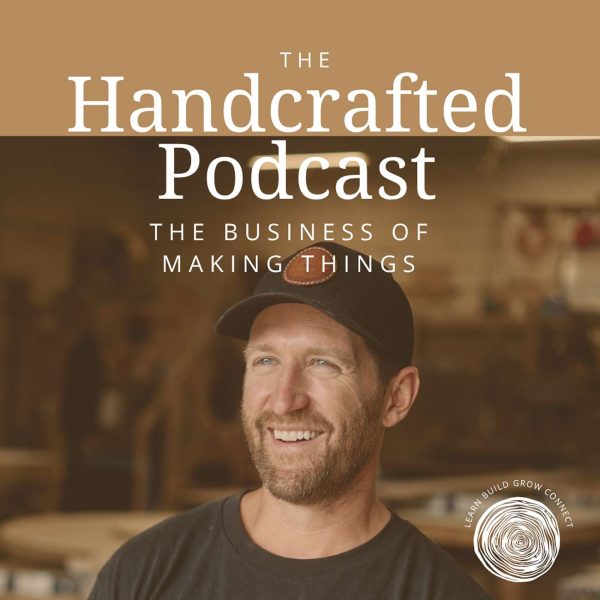
The Handcrafted Podcast: The Business of making things
- Folgen
- 85
- Erscheint
- wöchentlich
- Letzte Folge
- 23. Nov. 2026
Über den Podcast
The Handcrafted Podcast: The Business of Making Things" is where craftsmanship meets business strategy. Hosted by Paul, founder of Philadelphia Table Co. and The Handcrafted Network, this podcast dives into the mindset, pricing, marketing, and systems that help makers turn their craft into a thriving business. Whether you're a woodworker, artisan, or creative entrepreneur, you’ll learn the strategies to build a profitable, sustainable business—because great craftsmanship deserves great business strategy.
Folgen 85
Black Friday Sales: Are You Hurting Your Brand?
Episode SummaryIn this episode, Paul breaks down why Black Friday sales aren't always a smart move for makers, especially those building a luxury brand. While discounts can drive short-term revenue, they …
Shownotes
Episode Summary
In this episode, Paul breaks down why Black Friday sales aren't always a smart move for makers, especially those building a luxury brand. While discounts can drive short-term revenue, they can also change how customers perceive the value of your work. Paul explains why Philadelphia Table Company avoids sales, how discounting can create an expectation of future price cuts, and why protecting your brand's long-term value may be more important than chasing a quick boost in sales.
But not every business needs the same strategy. For makers selling smaller, giftable products like cutting boards, lamps, or leather goods, Black Friday can be a great opportunity. Paul explores alternatives to traditional discounts, including bundled offers, added value, and storytelling that gives customers a compelling reason to buy without undermining your pricing. He also shares why the Handcrafted Network is built around showing the messy reality of running a business, not just the polished version everyone sees.
Key Takeaways
- Discounting can devalue your brand. Once customers see a $10,000 table selling for $6,000, they may question whether it was ever worth $10,000.
- Luxury brands should think long-term. Avoiding sales may sacrifice some immediate revenue, but it can help build stronger pricing power and brand value over time.
- Different products require different strategies. Black Friday promotions can make sense for smaller, giftable products, even when they don't make sense for high-end custom furniture.
- Add value instead of cutting prices. Free delivery, complimentary accessories, or special packages can encourage purchases without lowering the perceived value of your craftsmanship.
- Sales are about storytelling. If you're going to offer a promotion, explain why. A compelling story can make an offer feel intentional rather than desperate.
- Show people your messy kitchen. Real business growth happens when makers openly share their struggles, mistakes, and challenges instead of pretending everything is perfect.
The big takeaway
Don't sacrifice the long-term value of your brand for short-term sales. Whether you choose to participate in Black Friday or skip it entirely, make sure your pricing strategy supports the kind of business you're trying to build.
Hiring a Salesperson: The Next Step in Scaling My Business
Episode SummaryIn this episode of The Handcrafted Podcast, Paul shares his thought process behind hiring his first dedicated salesperson at Philadelphia Table Company. After years of handling nearly every sales …
Shownotes
Episode Summary
In this episode of The Handcrafted Podcast, Paul shares his thought process behind hiring his first dedicated salesperson at Philadelphia Table Company. After years of handling nearly every sales conversation himself, he's realizing that being the primary salesperson is becoming a bottleneck to growth. He breaks down how he's structuring the position, simplifying the sales process, and creating a system that allows someone else to sell without needing to understand every detail of custom furniture pricing.
Paul also discusses the advantages of selling standardized collection pieces, using design deposits to initiate custom projects, and building relationships with interior designers and architects. He explores commission structures, commercial sales opportunities, and why hiring a salesperson isn't just about generating more revenue. It's about creating a business that can grow without the owner needing to be involved in every transaction.
Key Takeaways
- You don't have to do all the selling: As your business grows, handling every sales conversation yourself can become a major bottleneck.
- Simplify the sales process: Standardized products with clear pricing make it easier to bring someone new into a sales role.
- Separate custom work from standard products: Selling a design deposit allows a salesperson to move custom projects forward without needing to quote complicated commissions.
- Incentivize performance: A base salary plus commission rewards sales growth while giving employees financial stability.
- Relationships create opportunities: Building connections with interior designers, architects, and commercial clients can open doors to larger projects.
- Hire to remove yourself as the bottleneck: The goal isn't simply to sell more. It's to build a business that can operate and grow without the owner handling everything.
The big takeaway: Hiring your first salesperson isn't just about adding another employee. It's about creating the systems, pricing structures, and processes that allow your business to grow beyond you.
Systems & Processes: You need em'
Systems and processes aren't just for big companies. Whether you're a solo maker or running a growing shop, understanding the entire customer journey is one of the most important steps toward building …
Shownotes
Systems and processes aren't just for big companies. Whether you're a solo maker or running a growing shop, understanding the entire customer journey is one of the most important steps toward building a more efficient business.
In this episode, Paul breaks down the systems used at Philadelphia Table Company, walking through the entire process from marketing and sales to design, operations, production, quality control, and delivery.
Rather than getting caught up in documenting every technical detail of making something, Paul explains why it's more valuable to map out the bigger picture, assign ownership to each stage, and create clear handoffs between responsibilities.
He also shares how this approach helps identify hiring needs, empowers employees to take ownership, and creates consistent customer touchpoints that build trust throughout the process.
Key Takeaways:
- Why even a one-person shop needs systems and processes.
- How to map your entire customer journey from first inquiry to final delivery.
- Why assigning ownership and creating clear handoffs makes teams more effective.
- How systems help identify gaps and determine your next hire.
- Why proactive customer communication reduces confusion and builds confidence.
- How AI can help you document and organize your own processes.
The big takeaway: A good system isn't about creating more rules or paperwork. It's about giving every part of your business a clear path forward so you can grow without having to personally manage every step.
Paul also shares how members of the Handcrafted Network can access his customer journey worksheet to start building their own systems.
The Value of Long-Term Thinking: Stop Chasing Quick Fixes
Running a business means constantly solving problems. But are you actually fixing the problem, or just finding a way to get through another week?In this episode of The Handcrafted Podcast, Paul talks about the …
Shownotes
Running a business means constantly solving problems. But are you actually fixing the problem, or just finding a way to get through another week?
In this episode of The Handcrafted Podcast, Paul talks about the difference between short-term fixes and long-term strategies, and why some of the best business decisions take months or even years to pay off.
Drawing from a recent cash flow challenge at Philadelphia Table Company, Paul shares how shifting toward collection-based furniture and raising prices on custom work helped improve profitability. Instead of chasing quick sales, the company focused on building a more sustainable business—with recent projects generating gross margins of 50–65%, well above their typical 40% target.
Paul also discusses the importance of giving strategies enough time to work, creating space to think beyond the day-to-day chaos, and resisting the temptation to abandon a good plan when results aren't immediate.
The takeaway: Sometimes the best solution to today's problem isn't a quick fix. It's a long-term strategy you're willing to stick with.
Special Episode: No Shortcuts—Building Through Uncertainty
Summary:In this special episode of The Handcrafted Network, Paul steps out from behind the microphone and joins Fyfe Barraclough on The Flywheel Lab for a candid conversation about business, leadership, and …
Shownotes
Summary:
In this special episode of The Handcrafted Network, Paul steps out from behind the microphone and joins Fyfe Barraclough on The Flywheel Lab for a candid conversation about business, leadership, and navigating uncertainty.
Paul shares the story behind Philadelphia Table Company—from touring with a band signed to RCA Records and building furniture between shows to leading a team of 12 makers. He opens up about the difficult season he’s currently navigating, the Stockdale Paradox, and the challenge of confronting reality while maintaining faith that things will improve. The conversation also explores sustainable growth, the myth of overnight success, learning to lead different personalities, and why makers must balance creative fulfillment with the realities of running a profitable business.
Key Takeaways
- Face reality without losing hope. Strong leadership requires acknowledging difficult circumstances while remaining confident that you can work through them.
- There are no shortcuts. Sustainable businesses are built through years of focused effort, experimentation, mistakes, and incremental improvement.
- Creativity and business are not opposites. Making meaningful work requires understanding the customer, communicating its value, and building a business capable of supporting it.
- Focus creates momentum. Constantly chasing new ideas can prevent entrepreneurs from giving one opportunity enough time to succeed.
- Leadership requires clarity. Clear roles, responsibilities, expectations, and job titles give people ownership and help them grow.
- Different people need different leadership. Effective management means understanding what motivates each person instead of leading everyone the same way.
- Uncertainty is part of entrepreneurship. You do not need to have the entire path figured out before taking the next step.
Core idea: Building a meaningful business is not about finding a shortcut—it is about facing uncertainty honestly, staying focused, and continuing to move forward.
AI as a Tool: Working Smarter Without Losing the Craft
AI doesn’t have to replace craftsmanship—it can support the business behind it. In this episode, Paul shares how he uses tools like ChatGPT and Claude to save time, stay organized, and make better-informed …
Shownotes
AI doesn’t have to replace craftsmanship—it can support the business behind it. In this episode, Paul shares how he uses tools like ChatGPT and Claude to save time, stay organized, and make better-informed decisions at Philadelphia Table Company.
From forecasting cash flow and analyzing sales to editing product photos, searching client emails, improving the website, and organizing company information, Paul breaks down practical ways makers can use AI without handing over their creativity or judgment. The goal isn’t to let AI run the business. It’s to use it as another powerful tool that helps small businesses compete, operate more efficiently, and become more profitable.
Key Takeaways
- AI should support the craft—not replace it. The furniture is still designed and built by skilled people; AI helps with the administrative work surrounding it.
- Use AI to create reports, not make major decisions for you. Better information can guide decisions about cash flow, hiring, spending, and growth, but the business owner should remain in control.
- Connect the information you already have. Financial records, project timelines, sales data, and invoicing history can work together to create useful cash-flow projections.
- AI can simplify repetitive creative work. It can help edit product photography, organize image folders, audit a website, and maintain a consistent visual style.
- Searching your email can become much easier. AI can locate old client conversations, confirm project details, summarize disputes, and help prepare responses.
- Start with the problem you want to solve. Explain the challenge to the AI, ask what tools or connections are needed, and let it guide you through the process.
- Small businesses need every responsible advantage available. When margins are tight, saving time and improving organization can directly support profitability.
Core idea: Use AI to strengthen the business behind your craft while keeping creativity, judgment, and decision-making human.
Weathering the Storm: The Stockdale Paradox for Makers
Join the network. After reflecting on the Texas Woodworking Festival and the supportive community within the Handcrafted Network, Paul shares a lesson for navigating difficult seasons in business and life.The …
Shownotes
After reflecting on the Texas Woodworking Festival and the supportive community within the Handcrafted Network, Paul shares a lesson for navigating difficult seasons in business and life.
The Stockdale Paradox teaches us to confront the harsh reality of our circumstances while maintaining unwavering faith that we will ultimately prevail. Using the metaphor of captaining a ship through turbulent seas, Paul explains that we cannot control the storm—but we can prepare, choose our direction, and keep moving forward.
This honest episode is a reminder that struggling does not mean failing, you are not alone, and the only way through a difficult season is to face it with realism, hope, and perseverance.
4 Hills I’ll Die On as a Maker & Business Owner
SummaryIn this episode of The Handcrafted Podcast, Paul shares four business beliefs that recently sparked conversation on social media—and explains why he stands behind each one. He also opens with a personal …
Shownotes
Summary
In this episode of The Handcrafted Podcast, Paul shares four business beliefs that recently sparked conversation on social media—and explains why he stands behind each one. He also opens with a personal reflection on getting through difficult periods by focusing on one problem, one hour, and one day at a time rather than trying to solve everything at once.
The four “hills” are:
- Capture your work properly. If you spend hundreds of hours creating a piece, don’t spend ten minutes documenting it. Great photography and video are part of the business, not an afterthought.
- Follow-up is one of the easiest ways to make more money. Paul shares a real example of reconnecting with a lead after two weeks and potentially turning it into a table-and-chairs order.
- Sometimes you need to turn down work to build the business you actually want. Saying no to an interesting but off-brand banjo display case freed up time to pursue work that fits PTC’s strengths. At the same time, newer makers shouldn’t necessarily niche too early—experimentation can help reveal what the business should become.
- If your content only shows how you make something, you’re attracting makers—not buyers. Tutorial content often appeals to other craftspeople. Instead, makers should think about who they actually want as customers and create content that makes those people want the product, appreciate the craftsmanship, and trust the business.
RERUN: Going Beyond Expectations: The Power of Unreasonable Hospitality
Unfortunately, one of my dogs was hit and killed by a car unexpectedly. As you can imagine it's hard to muster the strength and poise needed to record a new podcast episode. Here is one of my favs that …
Shownotes
Unfortunately, one of my dogs was hit and killed by a car unexpectedly. As you can imagine it's hard to muster the strength and poise needed to record a new podcast episode. Here is one of my favs that seems to have been overlooked.
In this RERUN episode, Paul explores how makers and creative business owners can transform their client experience by going above and beyond what’s expected — a concept inspired by Will Guidara’s book Unreasonable Hospitality. Drawing lessons from world-class hospitality, he shares how simple, thoughtful gestures can turn ordinary interactions into unforgettable moments that clients rave about. Paul breaks down how this philosophy applies directly to custom furniture and creative businesses, and how delivering “legendary” experiences can become your most powerful sales tool.
Key Takeaways:
- Bare minimum isn’t enough. Exceptional product quality and good service are simply the baseline. The real magic happens when you exceed expectations in ways that surprise and delight.
- Three levels of experience:
- One-size-fits-all — Small touches every client receives (e.g., elevating delivery or sample interactions).
- One-size-fits-some — Experiences tailored to certain groups (e.g., custom gestures for pet owners or retirees).
- One-size-fits-one — Hyper-personalized moments that show you’re truly listening (e.g., picking up on a client’s passing comment and acting on it).
- It’s about thought, not money. High-impact gestures don’t have to be expensive — they need to feel intentional, personal, and memorable.
- Experiences drive word-of-mouth. Memorable interactions turn clients into storytellers and brand advocates, amplifying your reputation without traditional marketing.
- Empower your team to create “legends.” Encourage them to notice details, act creatively, and share wins so these moments become part of your culture.
For questions or to share your own “legendary” client stories, reach out to [email protected]
Join the Network
Who Are You Really Doing It For?
Join the network. Summary:As makers, we often assume customers value the same things we do. But the details we obsess over—perfect grain matching, a single-maker process, sustainability, or endless …
Shownotes
Summary:
As makers, we often assume customers value the same things we do. But the details we obsess over—perfect grain matching, a single-maker process, sustainability, or endless customization—may not be the reasons customers choose us.In this episode, Paul explores the importance of understanding who your work is actually for and what those customers truly value. He challenges makers to separate customer needs from personal preferences and ego—and to question whether the “moat” protecting their business might also be keeping them trapped.
Key Takeaways
- Not every product, service, or creative choice is meant for every audience.
- Ask customers why they chose you instead of assuming you already know.
- The details you value most may not be the details your customers value.
- Great craftsmanship should serve the customer—not just the maker’s ego.
- What helped build your business may not be what takes it to the next level.
- A competitive moat can protect your business, but it can also limit its growth.
- When you encounter a reason you “can’t” grow, examine whether that limitation is real or self-imposed.
- Ask yourself: Who am I doing this for, and what are they actually coming to me for?
The Difference Between Craftsmanship and Perfectionism
The Handcrafted Network Summary: Perfectionism can feel like craftsmanship, but often it’s just procrastination in disguise. In this episode, Paul talks about finding the line between maintaining a high …
Shownotes
The Handcrafted Network Summary: Perfectionism can feel like craftsmanship, but often it’s just procrastination in disguise. In this episode, Paul talks about finding the line between maintaining a high standard and wasting time on details your customer doesn’t notice or value. He explores wabi-sabi, the beauty of imperfection, and why handmade work doesn’t need to look machine-made to be excellent. …B2B vs. D2C: The Two Ways to Grow Your Business
Join the network Most makers think about selling directly to customers, but there’s another powerful path: selling to other businesses. In this episode, Paul breaks down the strengths and weaknesses of …
Shownotes
Join the network Most makers think about selling directly to customers, but there’s another powerful path: selling to other businesses. In this episode, Paul breaks down the strengths and weaknesses of direct-to-consumer (D2C) and business-to-business (B2B) sales—and why the strongest businesses often use both. Key Takeaways: D2C is easier to start, harder to scale. …Are You Solving the Right Problem?
Explore the Network. Summary Business owners often jump straight into fixing whatever problem seems most obvious—but that may not be the problem actually holding the business back. In this episode, Paul shares …
Shownotes
Explore the Network. Summary Business owners often jump straight into fixing whatever problem seems most obvious—but that may not be the problem actually holding the business back. In this episode, Paul shares how he thought Philadelphia Table Company needed a salesperson, only to realize that sales weren’t the bottleneck at all. The real issue was production capacity and an increasingly long queue. …Office Hours: The Problems That Show Up When Your Business Starts Growing
Join the Network Summary: In this Office Hours episode, Paul answers five real-world questions about the growing pains makers face as their businesses expand. He covers why being busy doesn’t necessarily mean …
Shownotes
Join the Network Summary: In this Office Hours episode, Paul answers five real-world questions about the growing pains makers face as their businesses expand. He covers why being busy doesn’t necessarily mean being profitable, when it makes sense to start turning down work, how to build a quality-control culture with employees, whether to raise prices when leads are slow, and how to stop yourself from becoming the bottleneck in your own company. …5 Ways to Get Better at Sales
Learn about the Network Paul shares five practical sales habits that help makers turn more inquiries into paying clients—without relying on pushy scripts or gimmicky closing techniques. Reply quickly, even if …
Shownotes
Learn about the Network Paul shares five practical sales habits that help makers turn more inquiries into paying clients—without relying on pushy scripts or gimmicky closing techniques. Reply quickly, even if it is only to acknowledge the inquiry and set expectations. Track every lead and record project details, timing, preferences, and past conversations. Tell the story behind the product instead of responding with only a price. …How to Be Better Than Everyone Else
Learn about the Network (Free Trial) This episode challenges the assumption that the way to beat your competition is simply by making a better product. While great craftsmanship is the price of admission, the …
Shownotes
Learn about the Network (Free Trial) This episode challenges the assumption that the way to beat your competition is simply by making a better product. While great craftsmanship is the price of admission, the businesses that truly stand out focus on improving everything surrounding the product—the customer experience, communication, delivery, and the countless small details competitors overlook. …Craft Every Step of the Way
Join the Network. Summary: Your craftsmanship shouldn’t start and end with the product. Every touchpoint—from your website and social media to sales conversations, design presentations, samples, communication …
Shownotes
Join the Network. Summary: Your craftsmanship shouldn’t start and end with the product. Every touchpoint—from your website and social media to sales conversations, design presentations, samples, communication, and delivery—should reflect the same level of care as the thing you’re making. If you want to charge a premium for a 10/10 product, the entire experience needs to feel 10/10. …Talk Story: Why Storytelling Makes Your Business More Valuable
Free Trial Summary: Storytelling is one of the most powerful tools you can use in business. Whether you're selling a product, explaining a design decision, marketing your work, or motivating your team, people …
Shownotes
Free Trial Summary: Storytelling is one of the most powerful tools you can use in business. Whether you're selling a product, explaining a design decision, marketing your work, or motivating your team, people connect with and remember stories far more than facts. Instead of simply telling customers what something costs or what you do, build a narrative around why it exists and how it was created. …The Invisible Ceiling: Pricing, Systems, Creativity & Knowing What to Say No To
Free Trial In this Office Hours episode, Paul answers four listener questions about pricing, hiring, social media, and taking on projects outside your niche. He explains why raising prices never feels …
Shownotes
Free Trial In this Office Hours episode, Paul answers four listener questions about pricing, hiring, social media, and taking on projects outside your niche. He explains why raising prices never feels comfortable, how to know when you've built a real business instead of just another job, why you shouldn't create for Instagram instead of yourself, and how to decide when an opportunity is worth pursuing. …Don't Niche Too Soon: Let Your Customers Build Your Business
Free Trial In this episode, Paul challenges one of the most common pieces of business advice: "Find your niche." While niching down is important eventually, he argues that many makers do it far too early—before …
Shownotes
Free Trial In this episode, Paul challenges one of the most common pieces of business advice: "Find your niche." While niching down is important eventually, he argues that many makers do it far too early—before they've collected enough real-world data about what customers actually want. …Own Your Audience: Why Makers Need an Email List
Summer Special ! Start your free trial. Summary: This episode argues that makers should stop relying only on social media or handing out business cards, and instead start collecting emails so they can “own” …
Shownotes
Summer Special ! Start your free trial. Summary: This episode argues that makers should stop relying only on social media or handing out business cards, and instead start collecting emails so they can “own” their audience. The main idea is to use email marketing in a luxury, story-driven way—less “buy now,” more behind-the-build narratives, project highlights, inspiration, and client/project stories. Key points: Social media audiences belong to the platform, not you. …The $500 Decision That Changes Everything
Start your free trial! In this episode, Paul shares a recent change to Philadelphia Table Company's sales process that has dramatically improved closing rates: replacing an immediate 60% deposit with a $500 …
Shownotes
Start your free trial! In this episode, Paul shares a recent change to Philadelphia Table Company's sales process that has dramatically improved closing rates: replacing an immediate 60% deposit with a $500 design deposit. What started as advice from another furniture maker has quickly become one of the most impactful changes to the customer journey, reducing friction, accelerating decisions, and creating a healthier sales pipeline. …The Sales Muscle: How to Generate Revenue When Cash Flow Gets Tight
Start your Free Trial. Summary: Paul shares a candid update on Philadelphia Table Company's recent cash flow challenges and the practical steps he took to stabilize the business. From accelerating collections …
Shownotes
Start your Free Trial. Summary: Paul shares a candid update on Philadelphia Table Company's recent cash flow challenges and the practical steps he took to stabilize the business. From accelerating collections and leaning on vendor relationships to aggressively pursuing sales opportunities, he breaks down the mindset and tactics that helped pull the company out of a difficult period. The core lesson: growth often requires doing the uncomfortable things you've been avoiding. …The Cash Flow Crunch: Navigating Growth, Uncertainty, and Survival Mode
Join the Network Summary In this candid episode, Paul pulls back the curtain on a real-time cash flow crisis at Philadelphia Table Company. Rather than presenting a polished success story, he shares the …
Shownotes
Join the Network Summary In this candid episode, Paul pulls back the curtain on a real-time cash flow crisis at Philadelphia Table Company. Rather than presenting a polished success story, he shares the anxiety, decision-making, and lessons that come with running and growing a custom furniture business during a slow sales period. Paul discusses how a significant drop in May sales, combined with delayed commercial project payments, created unexpected financial pressure. …The 5 Traits of a Great Business (And How Makers Can Apply Them)
Alex Hormozi Podcast. Join The Network. Summary: In this episode, Paul breaks down a business framework popularized by Alex Hormozi and translates it specifically for makers, woodworkers, and custom furniture …
Shownotes
Alex Hormozi Podcast. Join The Network. Summary: In this episode, Paul breaks down a business framework popularized by Alex Hormozi and translates it specifically for makers, woodworkers, and custom furniture businesses. He explores the five characteristics that make businesses stronger, more scalable, and more profitable—and challenges listeners to evaluate their own businesses through that lens. …Your Style Is the Moat: How Makers Build Work That Can’t Be Compared
Join Us Summary: In this episode, Paul reflects on attending the ICFF design show in New York and uses the experience as a jumping-off point to explore one of the hardest questions for makers: What is your …
Shownotes
Join Us Summary: In this episode, Paul reflects on attending the ICFF design show in New York and uses the experience as a jumping-off point to explore one of the hardest questions for makers: What is your personal style, and why does it matter? He discusses the tension between inspiration and imitation, custom work versus collections, and how developing a recognizable creative identity can become a competitive advantage. …What Interior Designers Actually Value: Survey Insights That Could Change Your Marketing Strategy
Join the Network: Article Here: Paul breaks down findings from an interior designer industry survey and translates them into practical takeaways for furniture makers, woodworkers, and custom vendors. The …
Shownotes
Join the Network: Article Here: Paul breaks down findings from an interior designer industry survey and translates them into practical takeaways for furniture makers, woodworkers, and custom vendors. The episode focuses on where clients are willing to spend, what luxury buyers prioritize, and how makers can better position their businesses to work with interior designers and repeat clients. …Why Clients Don’t Choose You: The “Why Not?” Exercise That Can Transform Your Business
Year of growth course. Summary: In this episode, Paul dives into a powerful mindset shift that came from intentionally slowing down and creating space to think. While reflecting during quiet moments with his …
Shownotes
Year of growth course. Summary: In this episode, Paul dives into a powerful mindset shift that came from intentionally slowing down and creating space to think. While reflecting during quiet moments with his newborn son, he began exploring a question most business owners never ask deeply enough: not just “Why do customers choose us?” but “Why don’t they?” Using Philadelphia Table Company as a real-world example, Paul breaks down how identifying “why nots” can reveal the biggest growth…AI for Makers: The Right Tool for the Right Job
Join the Community Summary: Paul breaks down how he’s actually using AI tools inside his business—not hypothetically, but in real, practical ways that save time, improve communication, and support growth. The …
Shownotes
Join the Community Summary: Paul breaks down how he’s actually using AI tools inside his business—not hypothetically, but in real, practical ways that save time, improve communication, and support growth. The core takeaway: there’s no single “all-in-one” AI. Each tool has strengths, and understanding how to use them strategically is what creates leverage. He also reinforces a broader mindset shift—don’t wait for perfect. …Office Hours: Pricing Fear, Better Clients, and Breaking Out of the Shop
Join the Network Summary: In this Office Hours episode, Paul answers real questions from listeners navigating the transition from maker to business owner. The conversation covers skepticism about the …
Shownotes
Join the Network Summary: In this Office Hours episode, Paul answers real questions from listeners navigating the transition from maker to business owner. The conversation covers skepticism about the Handcrafted Network, the mental hurdles of raising prices, the struggle to step out of production, and how to attract higher-quality clients. Throughout the episode, Paul emphasizes that the hardest part of building a craft business isn’t the craft—it’s the business side. …
Hier stehen die neuesten 40 von 85 Folgen. Ältere Folgen findest du im Feed des Podcasts.
Ähnliche Podcasts
Mehr Kunst-Podcasts







Ist das dein Podcast?
Bestätige es mit einem Eintrag in deinem Feed: Du bekommst hier einen Code, trägst ihn als podcast:txt in den Kanal deines Feeds ein, und wir prüfen ihn. Danach steht dein Podcast als „verifiziert“ bei SoundNode.